Cooking & Recipe Channels Are Quietly Winning Faceless YouTube: The Appetizing AI Narrator Playbook — Plus the 3x International Dubbing Bonus (2026)
Food is the biggest evergreen vertical on YouTube, and hands-only recipe videos never need your face. Here's the 2026 playbook: formats, the narrator voice that makes food sound delicious, scripts, monetization — and the dubbing strategy giving culinary channels up to 3x international growth.
1. Why Cooking Is 2026's Most Underrated Faceless Niche
Three structural advantages make food unusual among faceless niches:
- The format is naturally faceless. The best-performing cooking content has always been overhead and close-up shots of hands, pans, and ingredients. You're not hiding — you're filming the way viewers prefer.
- Evergreen compounding. A "how to make butter chicken" video earns search traffic for years. Recipe queries are among the most stable search demand on YouTube, and seasonal spikes (holidays, Ramadan, Thanksgiving) return annually.
- It travels better than any other niche. Finance content is country-specific; food is global. That's why culinary channels are among the biggest winners from dubbing — multilingual-content analyses report cooking and entertainment channels seeing as much as 3x growth from dubbed versions, and creators overall finding that 25%+ of watch time can come from non-primary languages.
Meanwhile, most faceless-channel guides push everyone toward the same five saturated niches. Fewer AI-voiceover creators compete in food because it requires actual cooking — which is precisely your moat.
2. The 5 Hands-Only Formats That Work Right Now
- Overhead recipe long-form (8–12 min). The classic: full recipe, narrated steps, tips woven in. This is your search-traffic engine.
- Recipe Shorts (30–60 sec). One dish, fast cuts, narrator delivering the recipe in rhythm with the edits. Your discovery engine — post 3–5 per long-form video from the same footage.
- Budget/challenge formats. "$10 week of dinners," "5 meals from one chicken." Narrative structure means better retention than pure how-to.
- Science-of-cooking explainers. "Why your rice is always mushy." Higher watch time, endlessly shareable, and the narrator carries the entire video over B-roll.
- Quiet ASMR cooking with narration bookends. Sizzles and chopping sounds carry the middle; a warm narrator opens with the hook and closes with the recipe summary. This hybrid respects the ASMR audience while staying searchable.
3. The Narrator Voice That Makes Food Sound Delicious
Food narration has a specific sound, and getting it wrong is the fastest way to feel like a spam channel. What works:
- Warm and unhurried, not hype. The "extreme sports trailer" AI voice that works for motivation content kills appetite appeal. You want the tone of someone sharing a family recipe, not selling a course.
- Mid-low pitch with a smile. Voices with audible warmth outperform neutral announcer reads on food content, where comfort is the emotional product.
- Consistency across every video. Your narrator IS your brand. Faceless-content analyses in 2026 report substantially higher retention for channels with a clear, consistent voiceover identity versus generic stock narration.
Browse SpeakSay's voice library and shortlist three warm narrators, then test each on the same 60-second recipe script. Pick the one that makes you hungry — that's not a joke; it's the actual test. If you want a narrator nobody else has, use Voice Remix to tune warmth, pace, and character into a signature voice unique to your channel.
Find your channel's voice today — free
Test warm narrator voices on your own recipe script in minutes, no credit card required. Lock in the voice before you film a single dish.
4. Recipe Scripts: Pacing, Sensory Language, and the 8-Second Rule
Recipe narration fails when it reads like an instruction manual. Structure yours like this:
- Hook in 8 seconds. Lead with the payoff or the problem: "This is the crispiest chicken you'll ever make — and there's no frying involved."
- Sensory beats, not just steps. "Stir until it smells nutty and turns deep gold" retains viewers; "stir for 3 minutes" doesn't. Write for ears and appetite.
- Narrate ahead of the visual. The voice introduces the step a beat before the hands do it — this is the rhythm viewers experience as "well-produced."
- Breathing room. Leave gaps for sizzle and chop sounds. A recipe video narrated wall-to-wall feels like spam; one with 20–30% natural-sound space feels premium.
- Close with the recap. A 15-second ingredient-and-step summary drives saves and comments — both strong algorithm signals.
Generate the narration with SpeakSay's text-to-speech studio, adjusting pace per section — slightly brisker for prep, slower for the money shots.
5. Passing YouTube's "Inauthentic Content" Test
Since YouTube's July 2026 policy rename, monetization reviewers look harder at mass-produced content. Cooking channels have a built-in advantage: you filmed the footage yourself. You are, by definition, not reusing someone else's material.
Stay clearly on the right side by adding the human layer only you can provide: your recipe variations, your failures ("I tested this three ways — two were terrible"), your local ingredients and substitutions. An AI narrator reading your original recipe over your original footage is exactly the kind of AI-assisted-but-authentic content YouTube says it pays.
6. The 3x Bonus: Dubbing Your Recipes for International Viewers
This is the step almost no small food channel takes, and it's the highest-leverage one. Food is the rare niche where a video needs zero cultural adaptation — butter chicken is searched in every language.
- The data: multilingual creator analyses report culinary channels seeing up to 3x growth from dubbed versions, with over 500 million YouTube users not speaking English as a first language and roughly three-quarters of viewers preferring content in their native tongue.
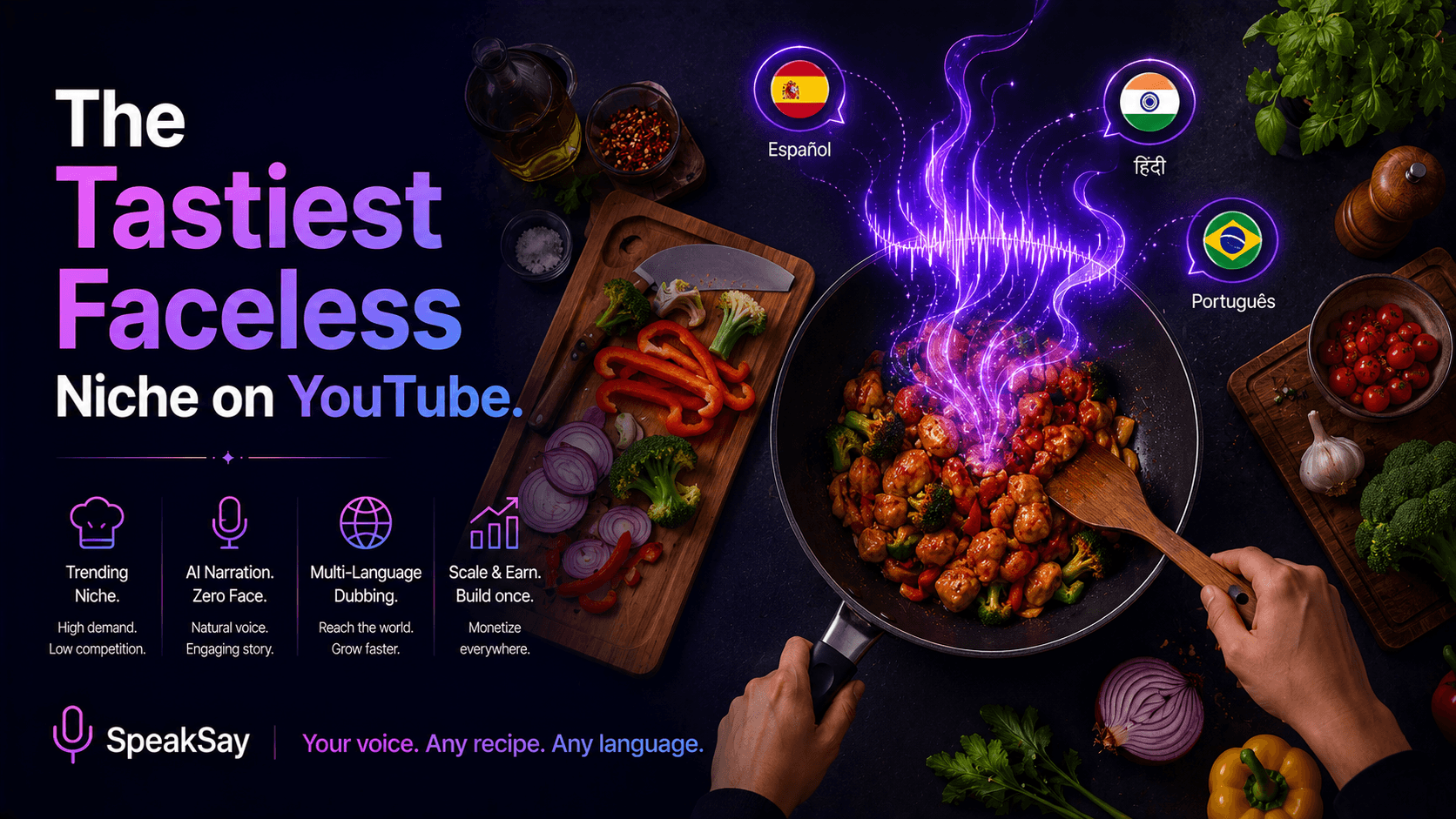
- The workflow: take your five best-performing videos, generate dubbed narration in Spanish, Portuguese, and Hindi with the same warm delivery — or keep your channel's exact narrator identity across languages by using a cloned voice that speaks all of them — and upload as multi-language audio tracks or region-specific re-uploads.
- Prioritize by demand: check which countries already appear in your analytics; dub for the audiences that found you despite the language barrier.
7. Monetization: RPM, Sponsors, and Where Food Channels Really Earn
| Revenue stream | Reality for food channels |
|---|---|
| AdSense RPM | Moderate ($2–6 typical) — food is broad-audience. Volume and evergreen catalog make it compound. |
| Sponsorships | Strong: cookware, meal kits, grocery apps sponsor mid-size channels because purchase intent is high. |
| Affiliate (equipment/ingredients) | Excellent fit — every video naturally features linkable products. |
| Your own products | The endgame: digital recipe books and meal plans, narrated audio versions included. |
The catalog effect matters more than any single RPM number: 150 evergreen recipe videos each earning a little, forever, in multiple languages, is the actual business model.
8. The Weekly Production Workflow
- Batch-cook Saturday: film 2–3 recipes in one kitchen session (overhead + close-ups).
- Script Sunday: write narration for each, using the sensory-beat structure above.
- Generate narration: one pass in your signature SpeakSay voice; regenerate individual lines you want warmer or slower.
- Edit: cut visuals to the narration rhythm; leave natural-sound gaps.
- Derive Shorts: 3–5 vertical cuts per recipe with condensed narration.
- Dub winners monthly: add Spanish/Portuguese/Hindi tracks to your top performers.
One narrator. Every recipe. Every language.
SpeakSay gives your channel a signature voice for narration, Shorts, and dubbed versions — with plans that scale as your catalog compounds.
9. FAQ
Can a cooking channel really work without showing my face or using my voice?Yes — hands-only overhead cooking is the dominant format in the niche, and an AI narrator handles the voice. Viewers care about the food and the clarity of instruction, not the presenter's identity.
Will YouTube monetize AI-narrated cooking videos?Yes, provided the content is original. Your own footage, your own recipes, and an AI voice reading your own script is AI-assisted original content. What gets demonetized under the 2026 "inauthentic content" policy is mass-produced or repetitious material with no original value.
What's the best AI voice style for recipe videos?Warm, mid-low pitch, unhurried, with an audible smile. Avoid hype voices and flat announcer reads. Test candidates on the same script and choose the one with the most appetite appeal.
Do I need different voices for Shorts and long-form?Same narrator identity, slightly faster delivery on Shorts. Consistency of voice across formats is a major retention and brand factor for faceless channels.
Which languages should I dub into first?Check your existing audience geography first, then default to Spanish, Portuguese, and Hindi — large audiences, strong food-content demand, and less competition than English.