How to Make AI Voices Sound Human (Pro Techniques 2026 Guide)
AI voice generator, make AI voice sound human, human-like AI voice, AI voice over tips, AI voice YouTube, realistic AI voice, voice over strategies 2026, AI narration techniques, improve YouTube watch time voice over, AI speech optimization
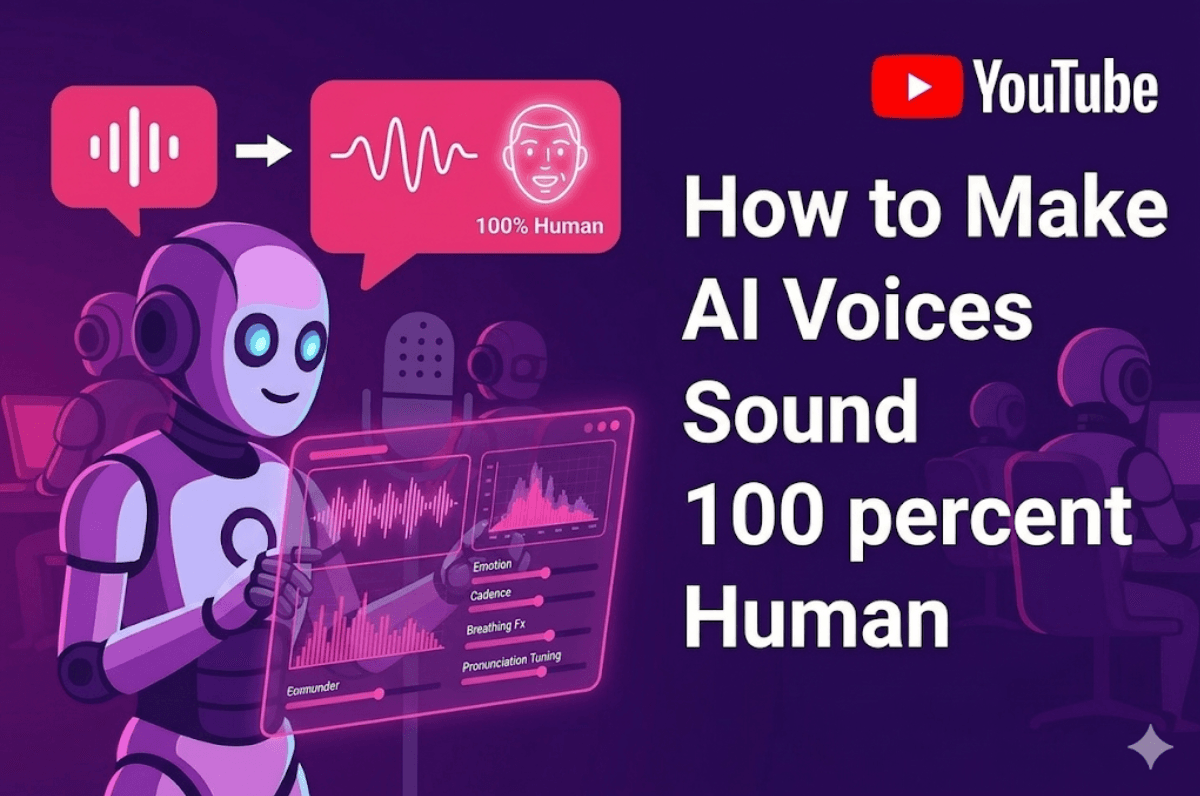
How to Make AI Voices Sound Human (Pro Techniques)
AI voice technology in 2026 has reached a level where, in many cases, people can no longer tell the difference between synthetic and real voices. But here’s the truth — most creators still struggle to make their AI voiceovers sound natural.
If your AI voice sounds robotic, flat, or unnatural, it directly impacts engagement, retention, and YouTube watch time. In this guide, you’ll learn how to make AI voices sound human using proven, professional techniques.
Table of Contents
- Why Most AI Voices Still Sound Robotic
- The Core Principles of Human-Like AI Voice
- Pro Techniques to Make AI Voices Sound Human
- Advanced AI Voice Optimization Techniques
- Common Mistakes That Reduce Voice Quality
- Best Workflow for AI Voice Over Creation
- Final Thoughts
Why Most AI Voices Still Sound Robotic
Many creators fail because they don’t optimize for human-like AI voice patterns. Even the best AI voice generators will sound robotic without proper scripting and delivery control.
Most scripts are written like blogs — not like speech. This leads to unnatural pacing and low retention.
The Core Principles of Human-Like AI Voice
To create a realistic AI voice, you must replicate natural speech behavior:
- Conversational tone (not formal writing)
- Dynamic pacing and pauses
- Emotional variation
- Natural imperfections
These factors directly impact YouTube watch time and audience retention.
Pro Techniques to Make AI Voices Sound Human
1. Write Conversational Scripts (High Impact SEO Keyword)
If you want to make AI voice sound human, start with conversational writing.
Short sentences, contractions, and natural phrasing improve realism instantly.
2. Use Emotional Prompting
Modern AI voice tools respond better when you guide tone and emotion.
Example: “Speak in a calm tone that builds excitement gradually.”
3. Optimize Pacing and Pauses
Proper pacing is essential for AI voice over optimization:
- Short pauses improve clarity
- Long pauses emphasize key points
- Break complex ideas into smaller lines
4. Add Human Imperfections
To achieve a human-like AI voice, include natural fillers:
- “you know”
- “honestly”
- “here’s the thing”
5. Use Emotion-Driven Words
Stronger words improve AI narration quality and delivery.
6. Structure for Natural Breathing
Simulating breathing improves realistic AI speech flow.
7. Match Voice Energy with Content
Different tones improve viewer engagement and watch time.
8. Use SSML for Advanced Control
SSML allows fine-tuning of:
- Pitch
- Speed
- Pauses
- Emphasis
This is essential for advanced AI voice optimization.
Advanced AI Voice Optimization Techniques
Audio Post-Processing
Enhance AI voice quality with:
- Compression
- EQ adjustments
- Background ambiance
Voice Cloning for Realism
Voice cloning helps create ultra-realistic AI voices that mimic human speech.
Consistency Testing
Test long-form output to ensure stable voice performance.
Common Mistakes That Reduce Voice Quality
- Monotone AI voice
- Long, complex sentences
- No emotional variation
- Over-polished delivery
Avoid these to improve YouTube voice over retention.
Best Workflow for AI Voice Over Creation
- Write SEO-optimized conversational script
- Add tone and emotion prompts
- Generate AI voice
- Edit pacing and timing
- Apply audio enhancements
- Test and optimize
This workflow improves both search rankings and viewer engagement.