Can You Legally Use AI Voices in Paid Ads? AI Voiceover Commercial Rights Explained (2026)
AI voiceovers are everywhere in ads — but can you legally use them in paid commercials and client work? Here's what "commercial rights" actually means, what to check before you publish, and how to stay safe.
1. The short answer
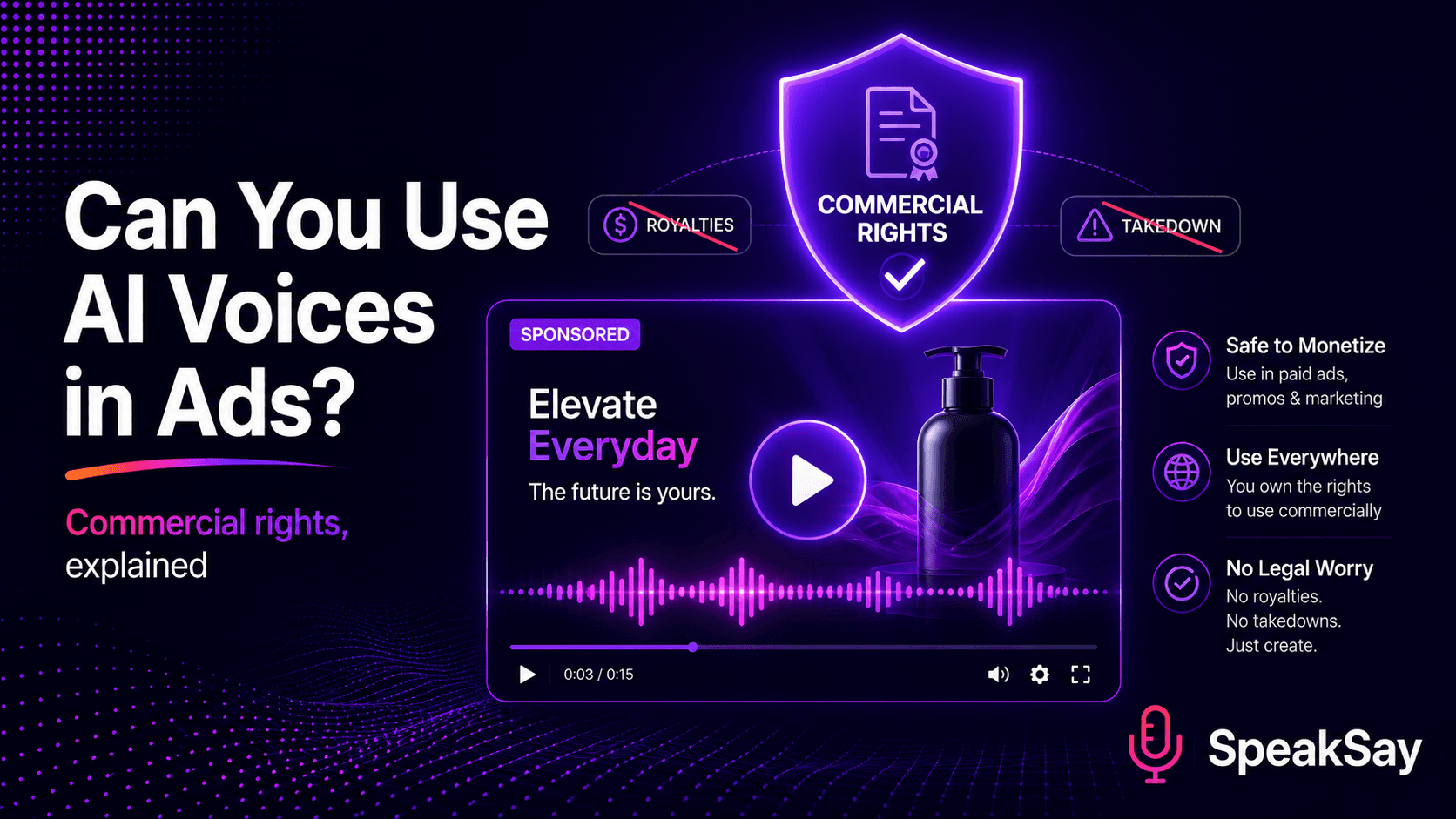
Yes — you can legally use AI voices in paid ads, if the tool you're using grants commercial-use rights for the audio you generate, and if the voice isn't an unauthorized clone of a real, identifiable person. Those two conditions are the whole game. Most reputable AI voice platforms offer commercial rights on their paid plans; the mistakes happen when people assume a free tier covers commercial use, or when they clone a celebrity's voice and run it in an ad.
The rest of this guide is about confirming those two conditions so you can publish with confidence.
2. What "commercial rights" actually means
"Commercial rights" (or a "commercial license") means the platform grants you permission to use the audio you generate for money-making purposes — ads, sponsored content, products you sell, client campaigns. It's distinct from "personal use," which typically covers private, non-revenue projects only.
A genuine commercial license should make these clear:
- Permitted uses — ads, monetized video, podcasts, audiobooks, products, client work.
- Ownership of output — that you own or have a broad license to the audio file you create.
- No per-use royalties — you pay for the plan, not a cut of every ad impression.
- Scope — whether the rights persist if you cancel, and any caps on reach or platforms.
If a tool advertises "commercial use," don't stop there — read what that phrase covers for your specific plan. The label and the fine print don't always match.
3. Why creators are so confused (and nervous)
Walk through any AI voice marketplace and you'll see the same selling point repeated: voiceovers "with full commercial rights" and "no legal worries." When that many vendors lead with reassurance, it tells you something — the underlying confusion and fear are real and widespread.
Three things drive the anxiety. First, terms differ wildly between tools, and they change. Second, free tiers often look identical to paid output but quietly forbid commercial use. Third, high-profile disputes over AI voices that sound like real people have made everyone jumpy about where the lines are. The result: capable creators stall on campaigns because they're not sure they're allowed to ship — even when they usually are.
4. The 6-point license checklist before you publish
Run any AI voice tool through this before you put it in a paid ad:
| Check | What you're confirming |
|---|---|
| 1. Plan tier | Commercial rights are active on your plan — not just a higher tier. |
| 2. Permitted uses | "Advertising" / "paid media" is explicitly allowed. |
| 3. Ownership | You own or hold a broad license to the generated audio. |
| 4. Royalties | No ongoing per-play or per-impression fees. |
| 5. Voice source | The voice is a licensed/synthetic voice, not an unauthorized real-person clone. |
| 6. Persistence | You keep the rights to already-published work if you downgrade or cancel. |
If all six are green, you're on solid ground. If any are unclear, get it in writing from the provider before the campaign goes live — especially for paid media with real spend behind it.
Create ad voiceovers you're cleared to use
SpeakSay's paid plans come with commercial rights so you can put your voiceovers into real, paid campaigns — without the licensing guesswork.
5. The other risk: voice likeness and impersonation
Commercial rights cover the tool's permission to use the output. They do not give you the right to imitate a specific real person. Cloning a celebrity, a politician, or any identifiable individual's voice and running it in an ad is a separate — and serious — risk involving likeness and publicity rights, regardless of what your TTS license says.
Stay safe by using synthetic or properly licensed voices, cloning only your own voice (or a voice you have explicit, documented consent to use), and avoiding anything designed to make listeners think a real person endorsed your product when they didn't. The license question and the likeness question are two different gates — clear both.
6. Commercial rights for agencies and client work
Agencies and freelancers have an extra layer to think about: you're not just using the audio, you're delivering it to a client who will use it commercially too. Make sure your plan's license allows you to create work on behalf of clients and that the rights can flow to the end client's campaign.
Practical guardrails for client work:
- Confirm "for clients" is allowed — some personal licenses don't cover work-for-hire.
- Document the rights you're passing along in your deliverable or contract.
- Keep consistency — using one platform across a client's campaign keeps the brand voice uniform and the licensing simple.
Done right, AI narration is a margin booster for agencies: broadcast-ready voice without studio bookings, instant revisions, and no per-spot talent fees.
7. Royalties, attribution, and the fine print
Two details quietly separate a good license from a painful one. Royalties: a clean commercial license lets you pay for the plan and keep what you earn — no cut of ad revenue, no per-impression fee. Attribution: some tools require you to credit them; for a polished ad, you usually don't want a forced credit, so check whether attribution is required or optional.
Also look for reach or distribution caps (some licenses limit how many views or platforms output can appear on) and what happens at renewal. The cleanest tools keep it simple: you have rights to what you create, full stop.
8. How SpeakSay handles commercial rights
SpeakSay is built for creators and businesses who need to actually publish — ads, monetized videos, podcasts, and client work. Paid plans include commercial usage rights so you can put your voiceovers into revenue-generating projects without parsing legal jargon line by line, and you keep a consistent, brand-ready voice across every campaign.
That clarity is the point: you shouldn't have to choose between moving fast and staying covered. Pick a plan with commercial rights, use synthetic or your-own-consented voices, and ship.
Need a one-time license instead of a subscription?
If you'd rather pay once and keep commercial rights for the long haul, SpeakSay's lifetime plan covers ongoing ad and client work without a recurring bill.
FAQ
Can I legally use an AI voice in a paid commercial?Yes, as long as your AI voice tool grants commercial-use rights on your plan and the voice isn't an unauthorized clone of a real, identifiable person. Confirm both before you run paid media.
Does the free version of a voice tool include commercial rights?Usually not. Free tiers commonly allow personal use only, even when the audio sounds identical to paid output. Check the license for your specific tier before using it in ads.
Do I owe royalties every time my AI-voiced ad plays?With a clean commercial license, no — you pay for the plan and keep what you earn. Some tools impose per-use fees or reach caps, so verify there are no ongoing royalties in the fine print.
Can I use AI voices in ads I make for clients?Only if your license permits work created on behalf of clients and allows the rights to extend to the end client's commercial use. Confirm "for clients" / work-for-hire is covered and document it in your deliverable.
Is it legal to clone a celebrity's voice for an ad?No — that raises likeness and publicity-rights issues separate from your TTS license, and it's a serious risk. Use synthetic voices, or clone only your own voice or a voice you have explicit consent to use.