News
Latest news and announcements.
Second Edition, Stale Audiobook: How to Update an AI-Narrated Audiobook When Your Book Changes, Without Re-Recording Everything (2026)
When you revise a nonfiction book, the audiobook quietly goes out of date. This guide shows how to find what changed, re-render only the affected passages in the same voice, proof just those spots, and re-publish the update.
Hear Your Interview Answers Before the Interviewer Does: How to Practise Job Interview Answers With a Clone of Your Own Voice (2026)
Most people rehearse interview answers silently and discover the rambling on the day. This guide shows how to hear each answer in a clone of your own voice, edit for length and clarity, and then practise saying it aloud. Own voice only, for rehearsal only, never used in the interview.
Your Readers Are Aging Out of Print: How a Small Local Newspaper or Town Newsletter Can Publish a 10-Minute Weekly Audio Edition With an AI Podcast (2026)
Many small papers and town newsletters have readers who struggle with small print, and no audio at all. This guide shows a small publisher how to turn the week's best stories into a short audio edition with an AI podcast, with a human editor still responsible for every name and fact.
Nobody Reads the Assembly Manual: How Small E-commerce Sellers Can Add a QR Code Audio Walkthrough With Text to Speech (2026)
Printed manuals are small, skipped or badly translated. This guide shows a small seller how to turn assembly and setup steps into a short audio walkthrough with text to speech, put it behind a QR code on the insert, and keep safety warnings where they belong.
Your Monthly Market Update Gets Deleted Unread: How a Real Estate Agent Can Send a 2-Minute Audio Update in Their Own Cloned Voice (2026)
Agents send monthly market emails that clients skim or ignore. A two-minute audio update in your own voice feels personal, takes about 15 minutes to produce, and keeps you in front of past clients and your sphere.
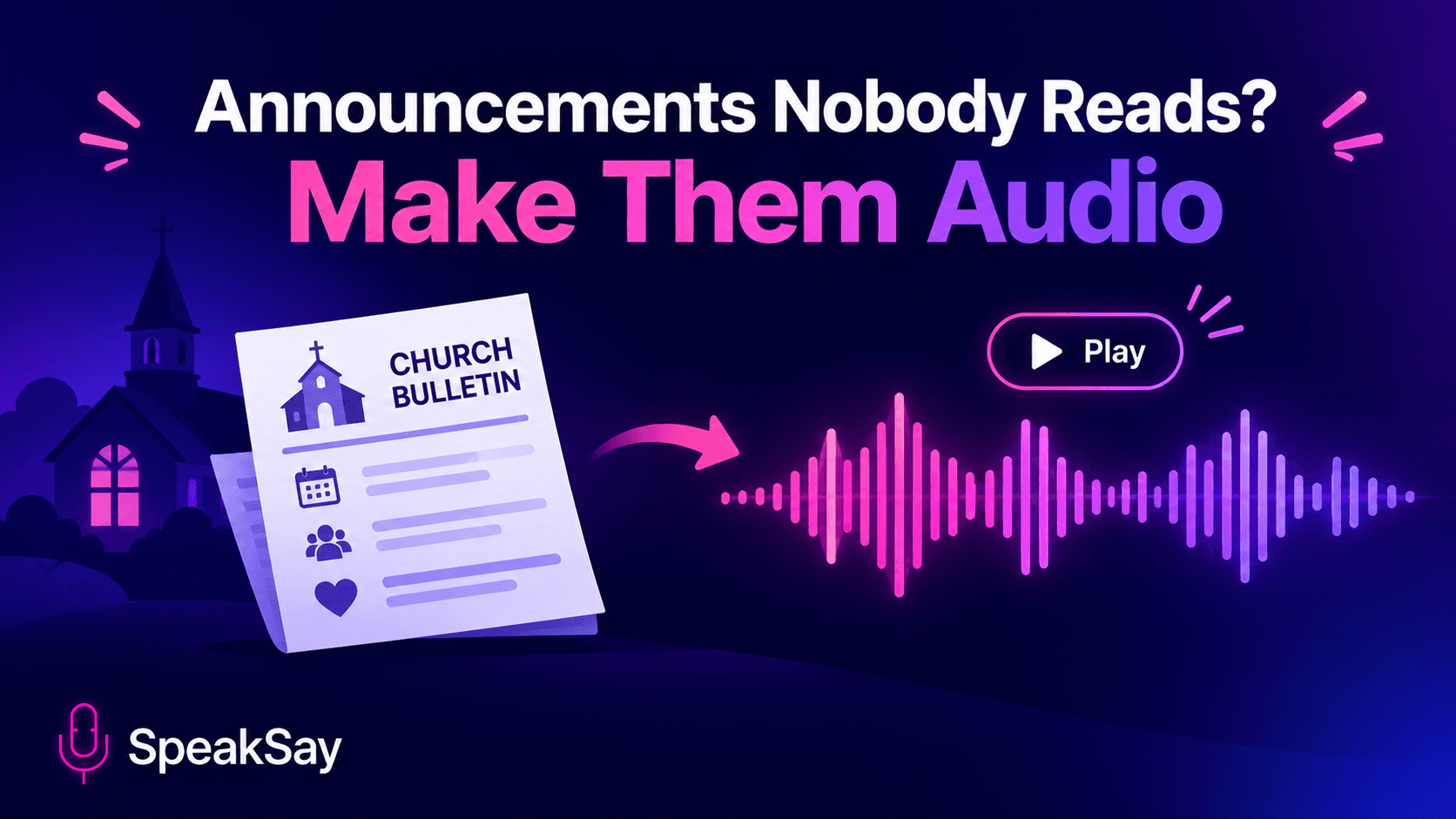
Nobody Reads the Church Bulletin: How to Turn Weekly Announcements Into a 90-Second Audio Track With Text to Speech (2026)
Announcements get buried in bulletins, slides and emails. Here is a repeatable 20-minute weekly routine that turns them into a short, clear audio track members can hear on your website, in the email, or on the way to church.
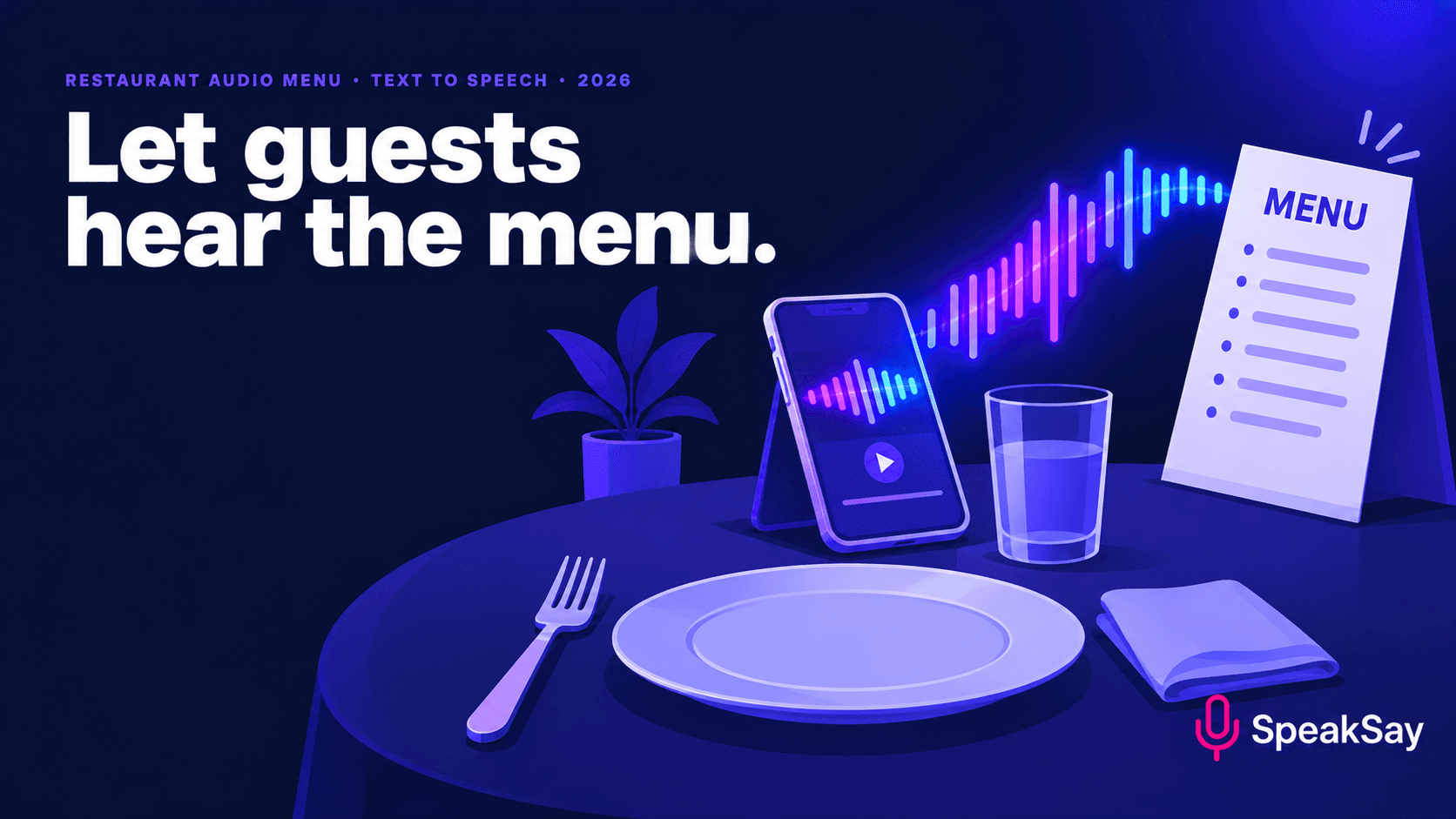
Read the Menu to Me: How a Restaurant Can Offer an Audio Menu for Blind and Low-Vision Guests With Text to Speech (2026)
Small type, low contrast and PDF menus that screen readers cannot parse leave some guests asking staff to recite the menu. This guide shows how to write a menu for the ear, turn it into audio with text to speech, and keep it current as the specials change.
It's Your Life Story: Should an AI Voice Narrate Your Memoir Audiobook, or Should You? A Decision Guide for First-Person Authors (2026)
A memoir is the one genre where the narrator is supposed to be the author. Here is how to choose between your own recording, a stock AI voice and a clone of your own voice, with a short test you can run before you commit
Giving Tuesday Is December 1: How a Small Nonprofit Can Turn Its Impact Report Into a 5-Minute Audio Update Donors Actually Finish (AI Podcast, 2026)
Impact reports are long, and most donors skim them. This guide shows small nonprofits how to turn a one-page impact summary into a short audio update before Giving Tuesday on December 1, 2026, with a script structure, consent rules for stories and a send plan.
Earnings Season Is Here and Nobody Can Read 40 Filings: Turn 10-Qs and Earnings Releases Into a Weekly Audio Briefing With AI Podcast (2026)
Q3 earnings season began this week with the big banks, and the filings keep coming through early November. This guide shows how to turn the public documents you follow into a short audio briefing, what to put in it, how to check the numbers, and where the line sits between a briefing and advice.
ElevenLabs' 3x Credit Promo Ended October 12: How to Price a Month of AI Voiceover at the Real Rate Before You Commit a Channel or Client Budget (2026)
A launch promotion made one popular AI voice platform look three times as generous until October 12. This guide shows how to work out what a finished minute of voiceover really costs once a promotion ends, including retakes, and how to decide whether the plan you are on still fits.
Talking Pumpkin, Skeleton at the Door: Build a Motion-Activated Halloween Porch Voice With Voice Remix Before October 31 (2026)
A voice that greets trick-or-treaters turns a porch into the house everyone remembers. This guide covers writing a set of short lines for different ages, turning a recorded take into a creepy or friendly character voice, setting loudness for the street, and being a considerate neighbour.
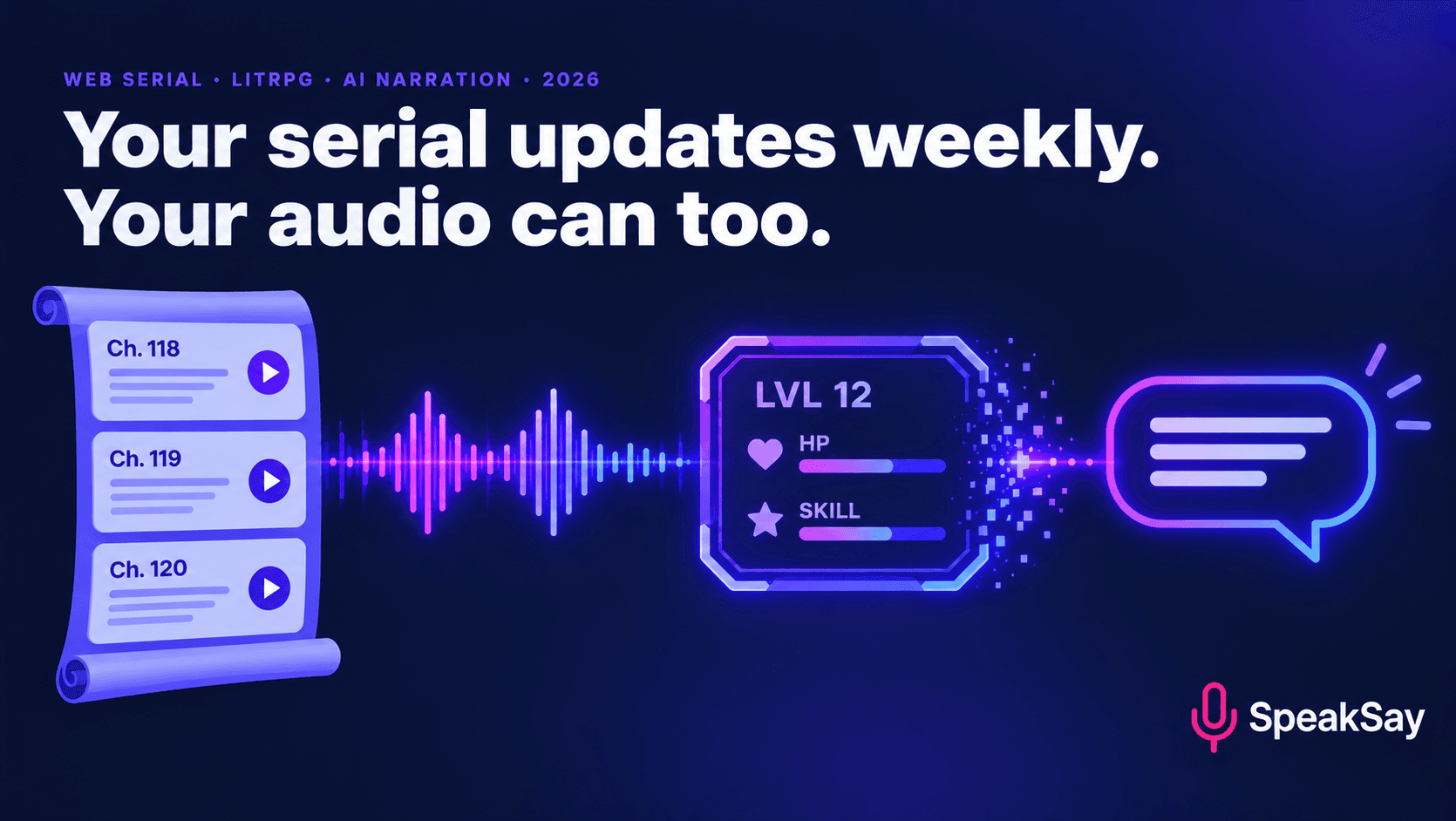
Your Web Serial Updates Every Week and a Narrator Can't: How LitRPG and Web Serial Authors Can Offer Chapter Audio Without a Studio (2026)
Web serial and LitRPG authors publish a chapter or two a week, often for hundreds of chapters. Traditional audiobook production is built for finished books. This guide covers how to voice a serial on its own schedule, how to handle stat blocks and system messages, and how to keep audio in step with chapters you keep editing.
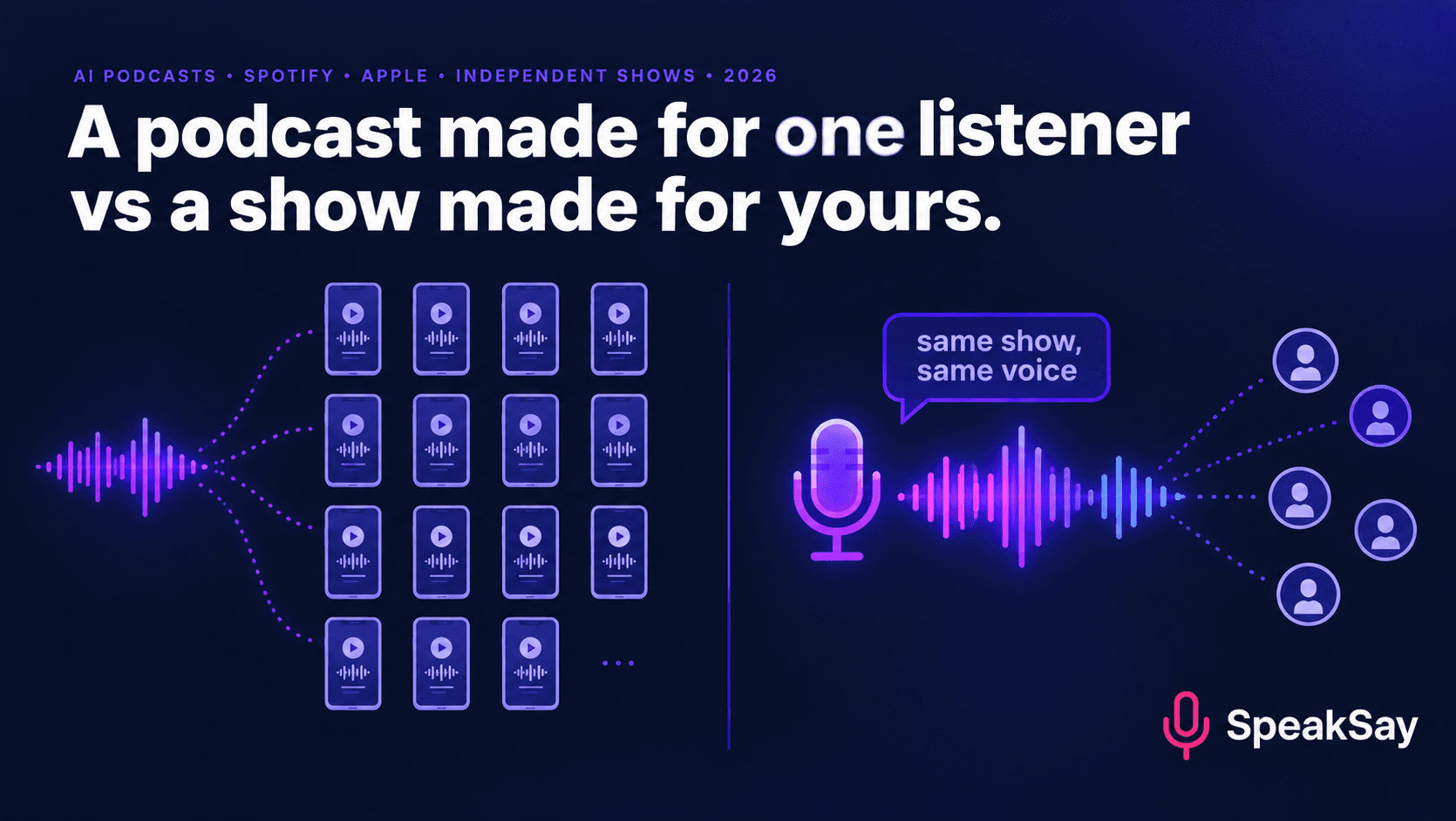
Spotify Makes a Podcast for Each Listener and Apple Just Licensed the Tech Behind Another: What an Independent Show Has That a Personalized Feed Can't Copy (2026)
Spotify has announced AI-generated personal podcasts, and a regulatory filing reported on October 10 shows Apple licensing technology from the personalized-podcast startup Huxe. If a feed can generate an episode on any topic, what is a show for? Here is a practical plan for independent podcasters, with the limits of what we know.
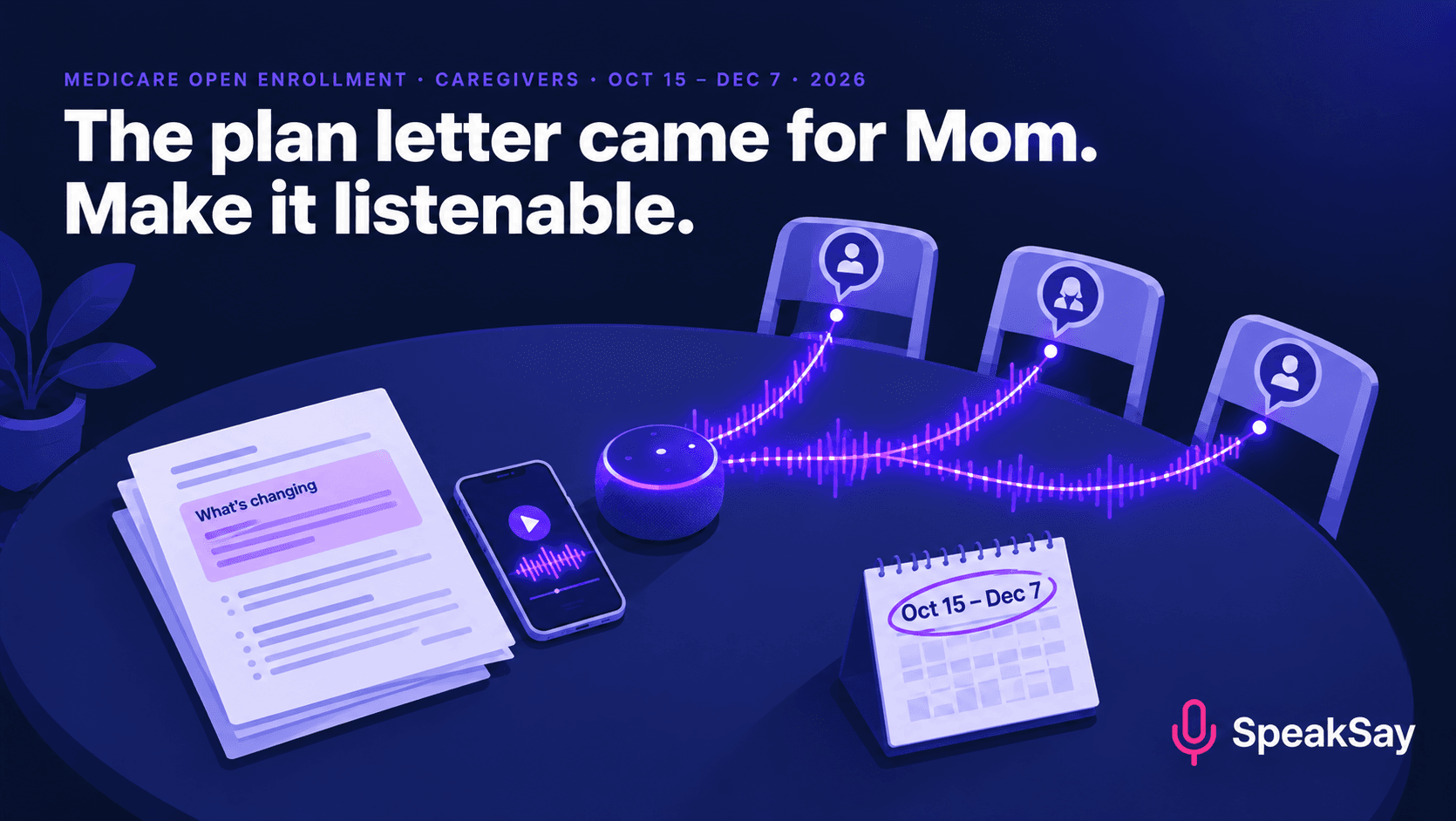
The Annual Notice of Change Arrived for Mom: Turn the Plan Letter Into a Short Audio Summary the Whole Family Can Hear (Medicare Open Enrollment 2026)
Medicare plan letters arrive by September 30, open enrollment runs October 15 to December 7, and in many families the adult child ends up reading the fine print. Here is how to turn the Annual Notice of Change into a three-minute audio summary a parent and the whole family can hear, without storing identifiers or recommending a plan
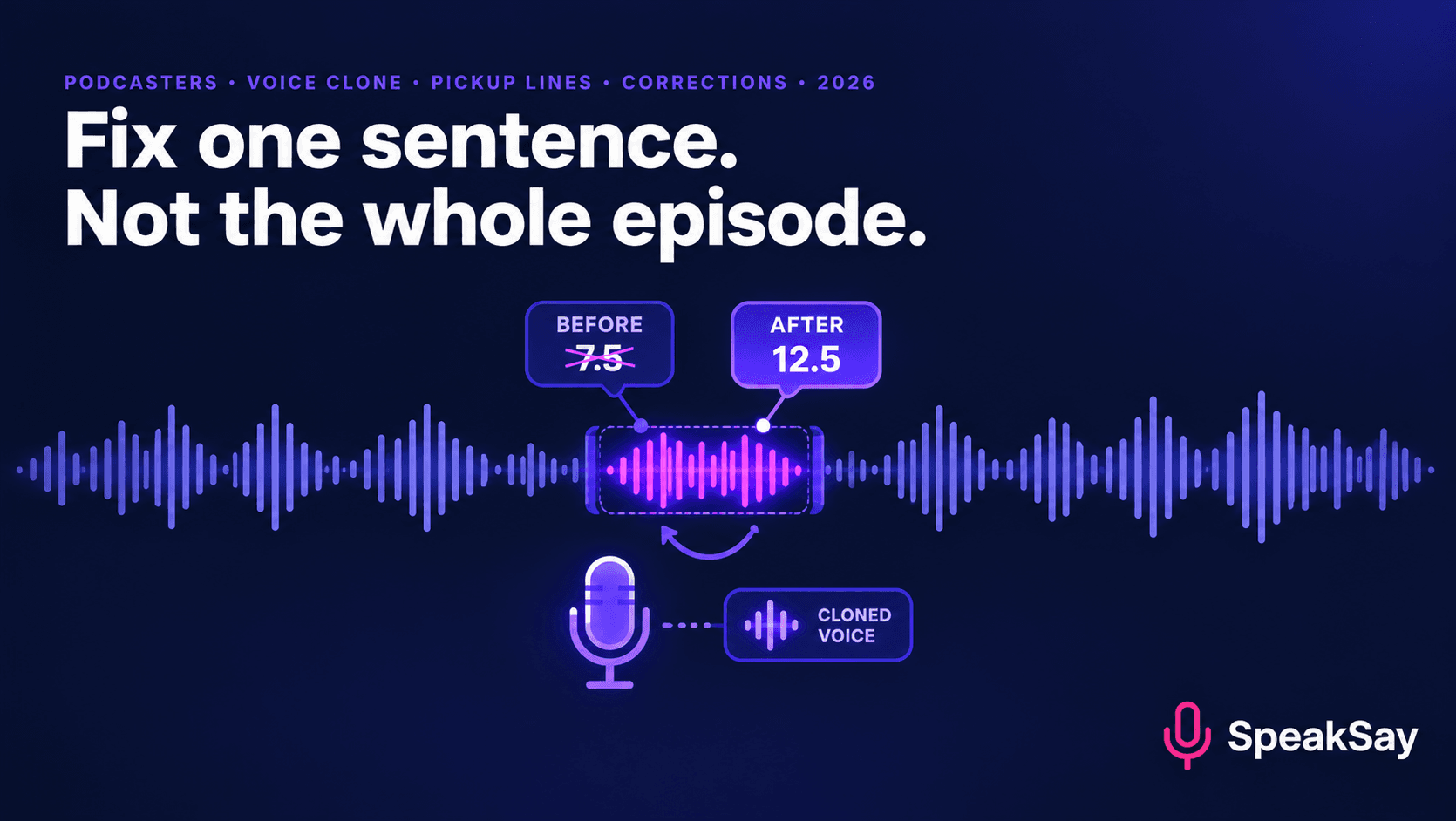
You Said the Wrong Price in Episode 41 and It Already Has Thousands of Downloads: How to Fix One Sentence in a Published Episode With a Pickup Line in Your Own Cloned Voice (2026)
A wrong price, a sponsor who changed their offer, a name you mispronounced. Re-recording the whole episode is overkill, and leaving it up is worse. Here is a careful workflow for replacing a single sentence with a pickup line in your own cloned voice, plus when you should add a spoken correction instead.
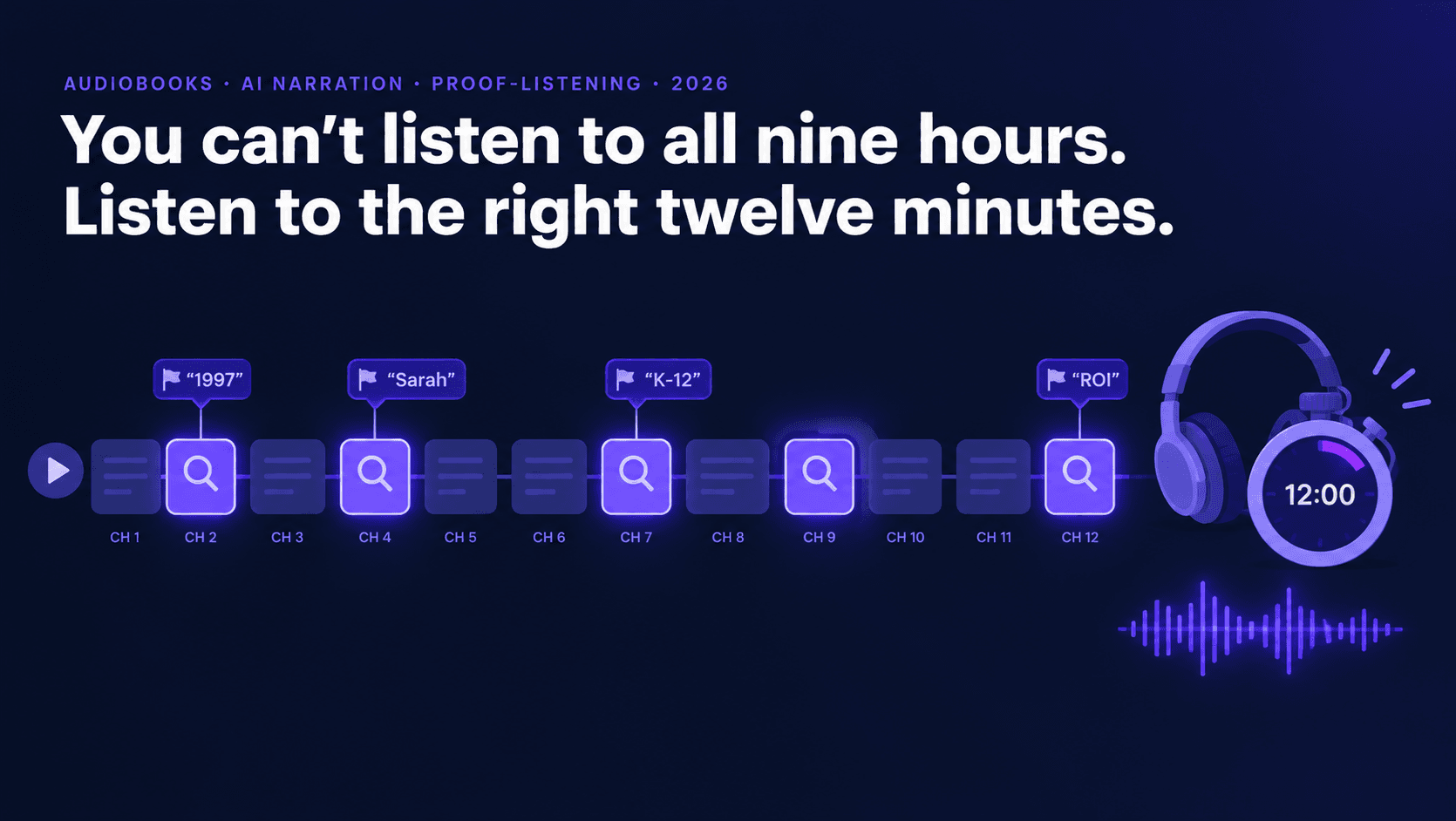
Nobody Has Time to Proof-Listen a 9-Hour AI Audiobook at 1x: A Risk-First Sampling Method That Catches the Errors Listeners Actually Notice (2026)
A nine-hour audiobook holds roughly 84,000 spoken words, and every mispronounced name or misread number is yours to catch before listeners do. Here is a risk-first sampling method for indie authors using AI narration: find the words most likely to go wrong, test them first, then listen to a planned sample instead of hoping.
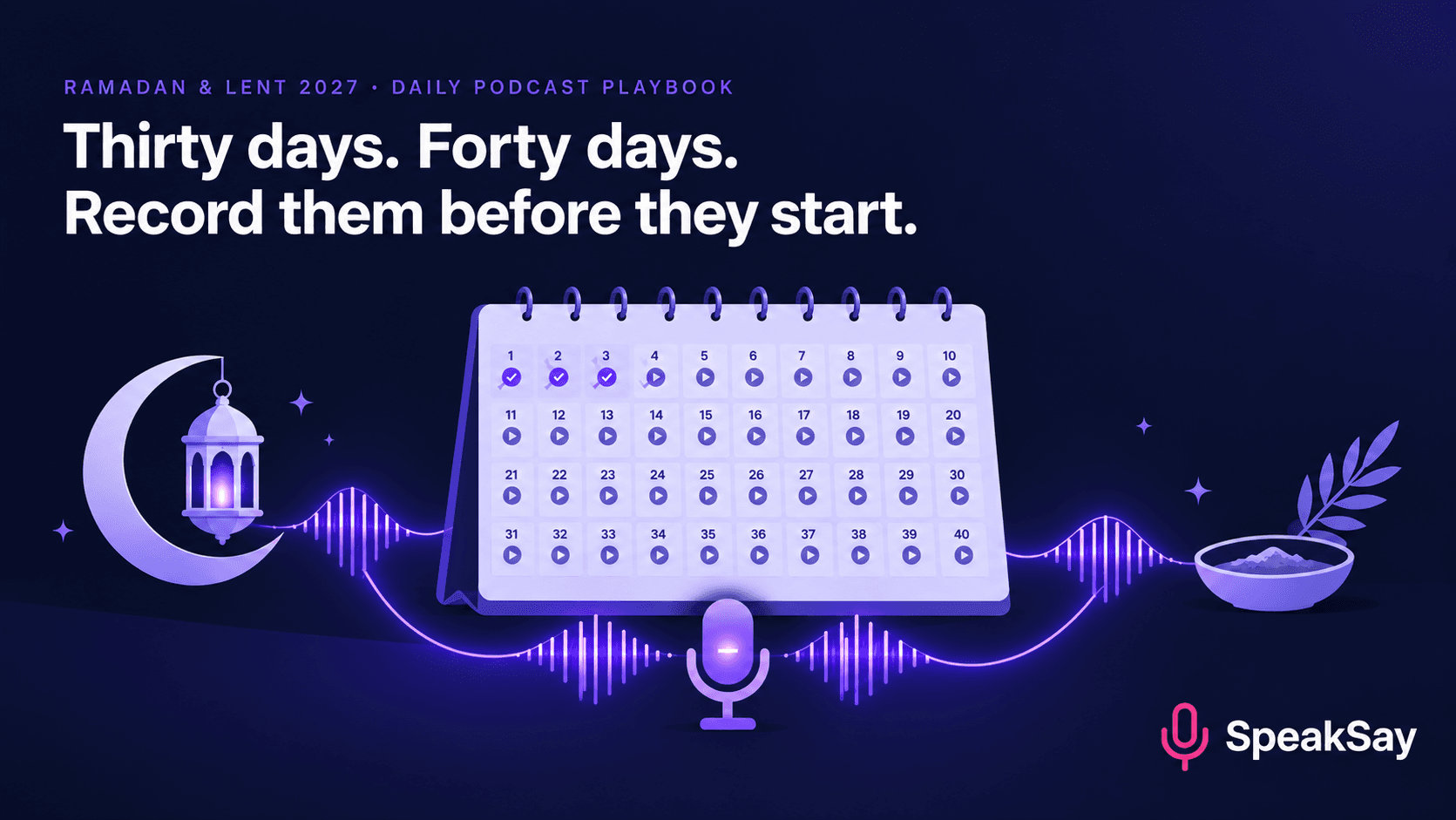
Ramadan Starts Feb 8, Lent Feb 10: How to Plan a 30- or 40-Day Daily Podcast With AI Voices (2027 Playbook for Mosques, Parishes, Schools and Creators)
Ramadan is projected to begin February 8, 2027 and Lent begins February 10. A daily series is a promise to publish 30 or 40 days in a row, and the weeks before are when it is easiest to produce. Here is a calendar, a script structure, the moon-sighting problem and the parts of a faith series AI should not voice.
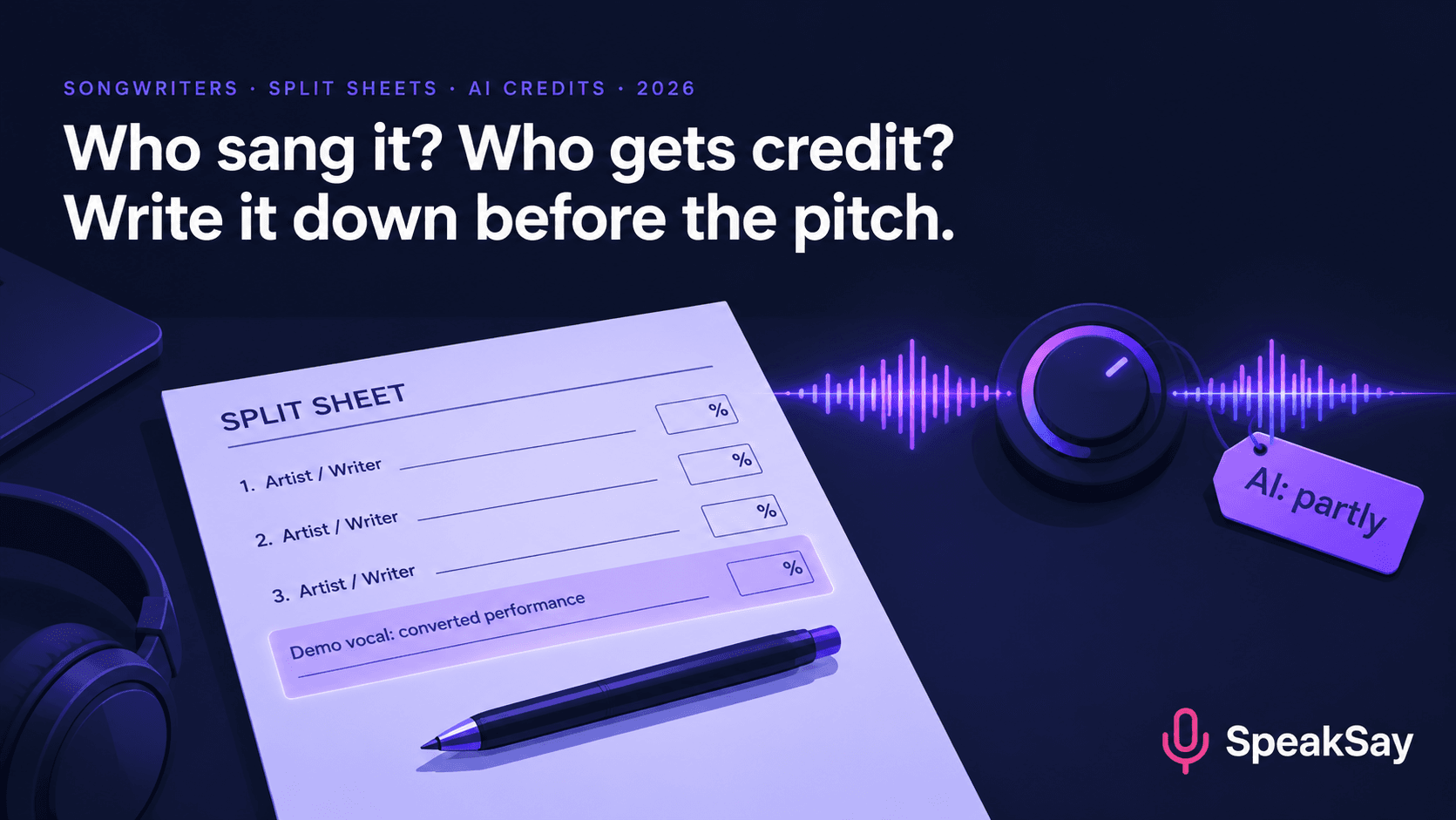
Your Co-Writer Sang the Demo and AI Turned It Into the Artist's Register: Who Gets Credited? Split Sheets and AI Credits for Songwriters (2026)
AI credit fields arrived in music metadata in 2026, and most songwriters' split sheets still have no line for a converted demo vocal. Here is what to write down before you pitch: who performed, which tool changed it, what the split sheet should say and what it should not claim. Not legal advice.
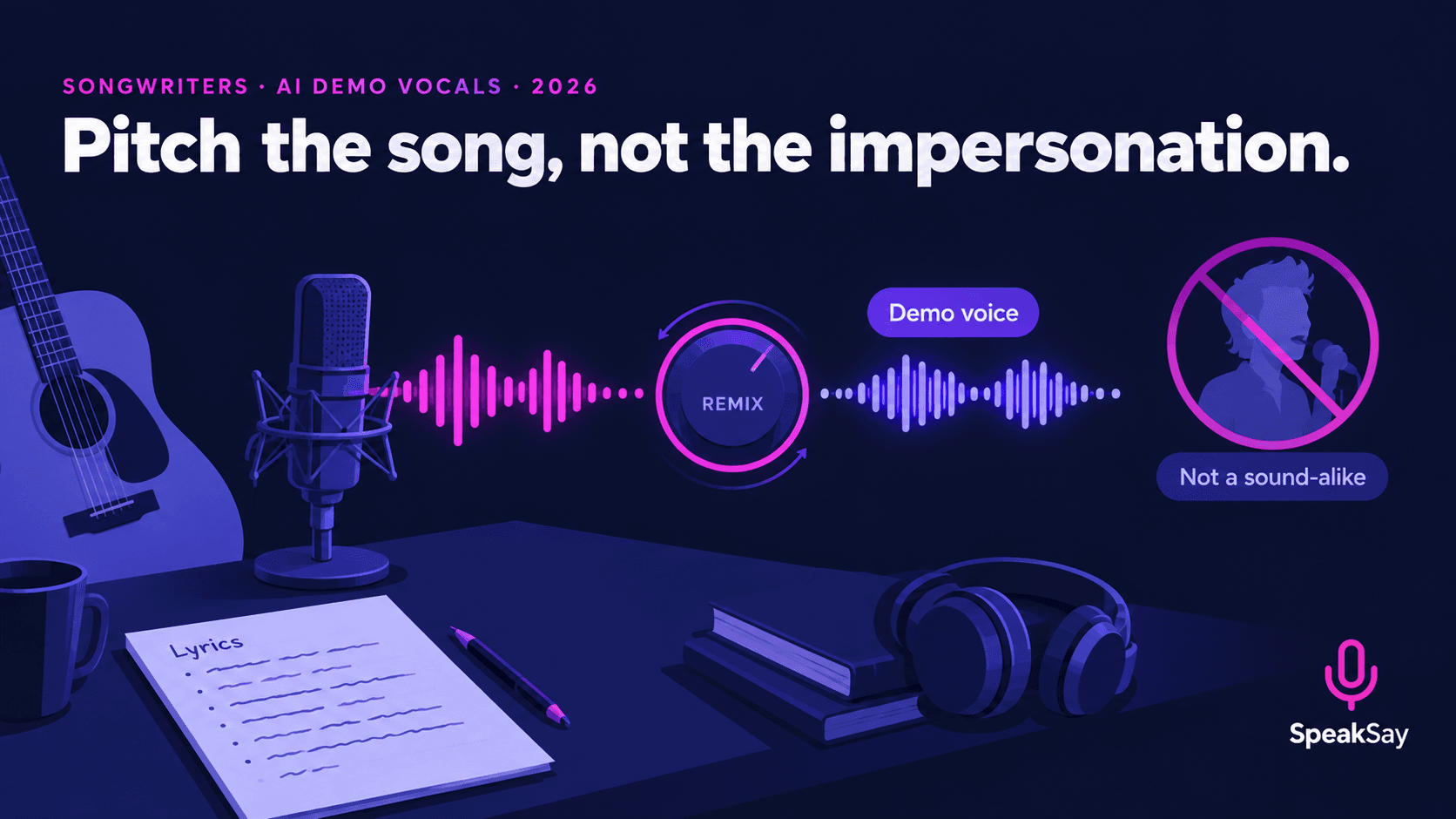
Songwriters Are Pitching With AI Sound-Alikes of the Artist. Here's a Demo That Gets the Song Heard Without Borrowing Anyone's Voice (2026)
Some songwriters now put an AI copy of the target artist's voice on their pitch demos. It's quick and cheap, but it's legally exposed under laws like Tennessee's ELVIS Act and it pitches the wrong thing. Here's how to make a demo in the right register and gender with your own sung guide vocal and Voice Remix, and when a human demo singer is still the better call.
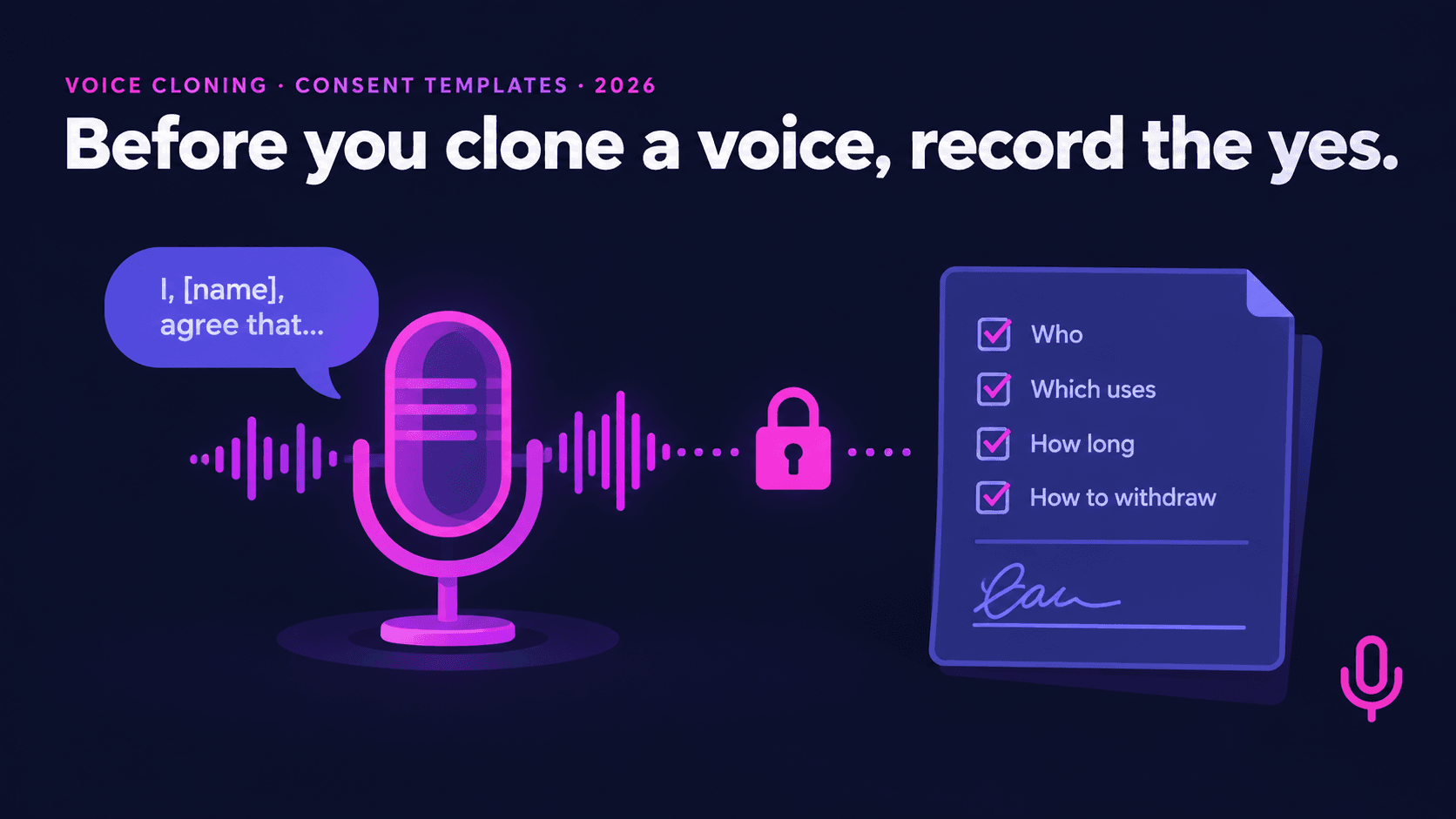
Google Now Requires a Spoken Consent Recording Before It Clones a Voice: How to Write and Record One (Scripts for Your Own Voice, Hired Talent, Clients and Family) (2026)
Google's new Gemini TTS will replicate a voice from 30 seconds of audio, but only after the voice owner records a spoken consent statement that matches the sample. Microsoft and ElevenLabs have similar checks. Here's what a good consent recording says, five scripts you can adapt, and the written record that should sit next to it.
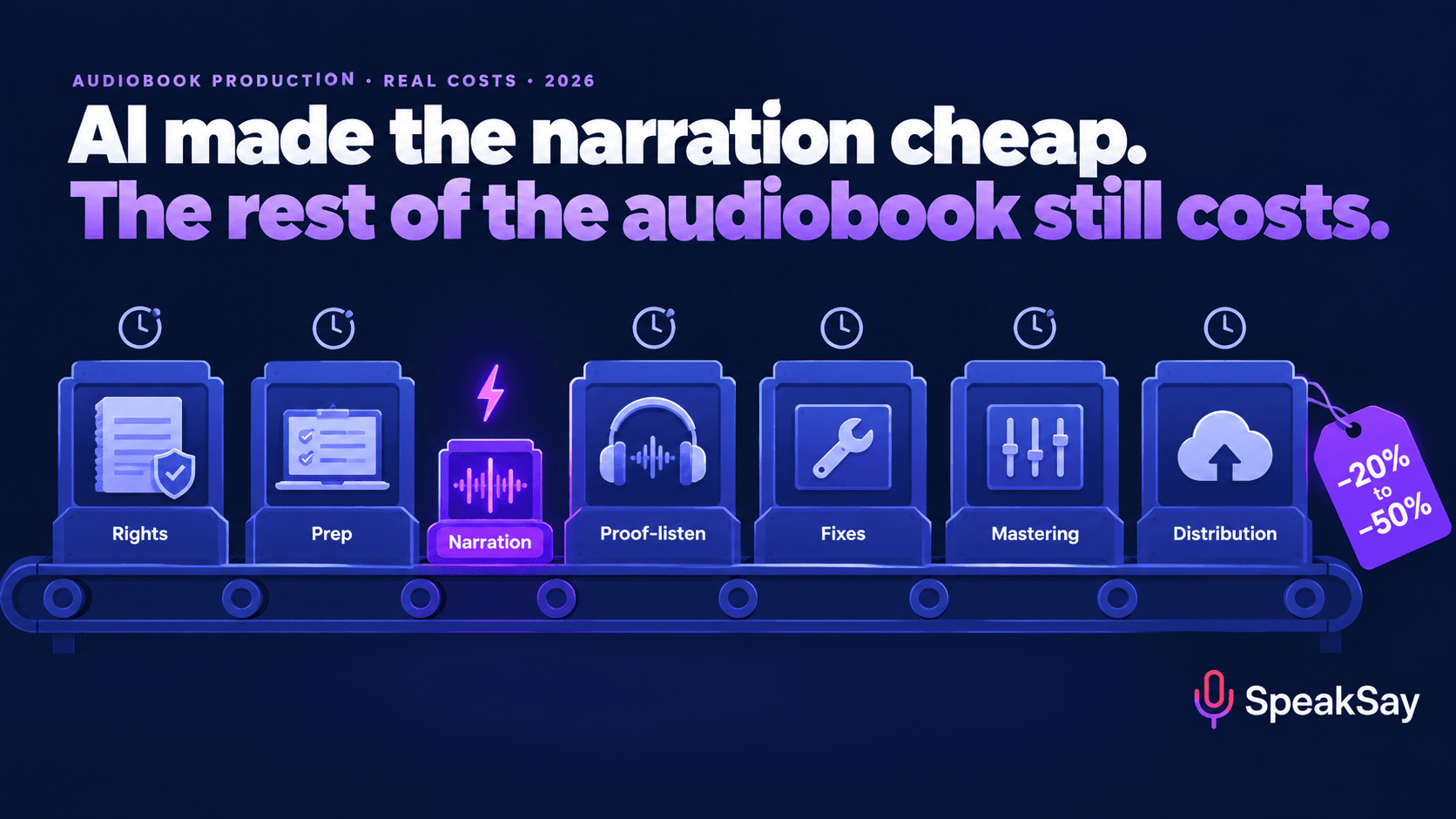
AI Narration Was Supposed to Cut Audiobook Costs by 90%. Producers Report 20–50%: Where the Savings Leak and How to Keep Them (2026)
Vendors promise 85–95% savings from AI narration. The Frankfurt Book Fair's 2026 white paper found producers reporting 20% in their second year of using AI and 50% in their third. The gap isn't a scam. It's everything around the narration that AI doesn't replace. Here's a stage-by-stage map of where audiobook money goes, five places savings leak, and how an indie author or small publisher keeps more of them.
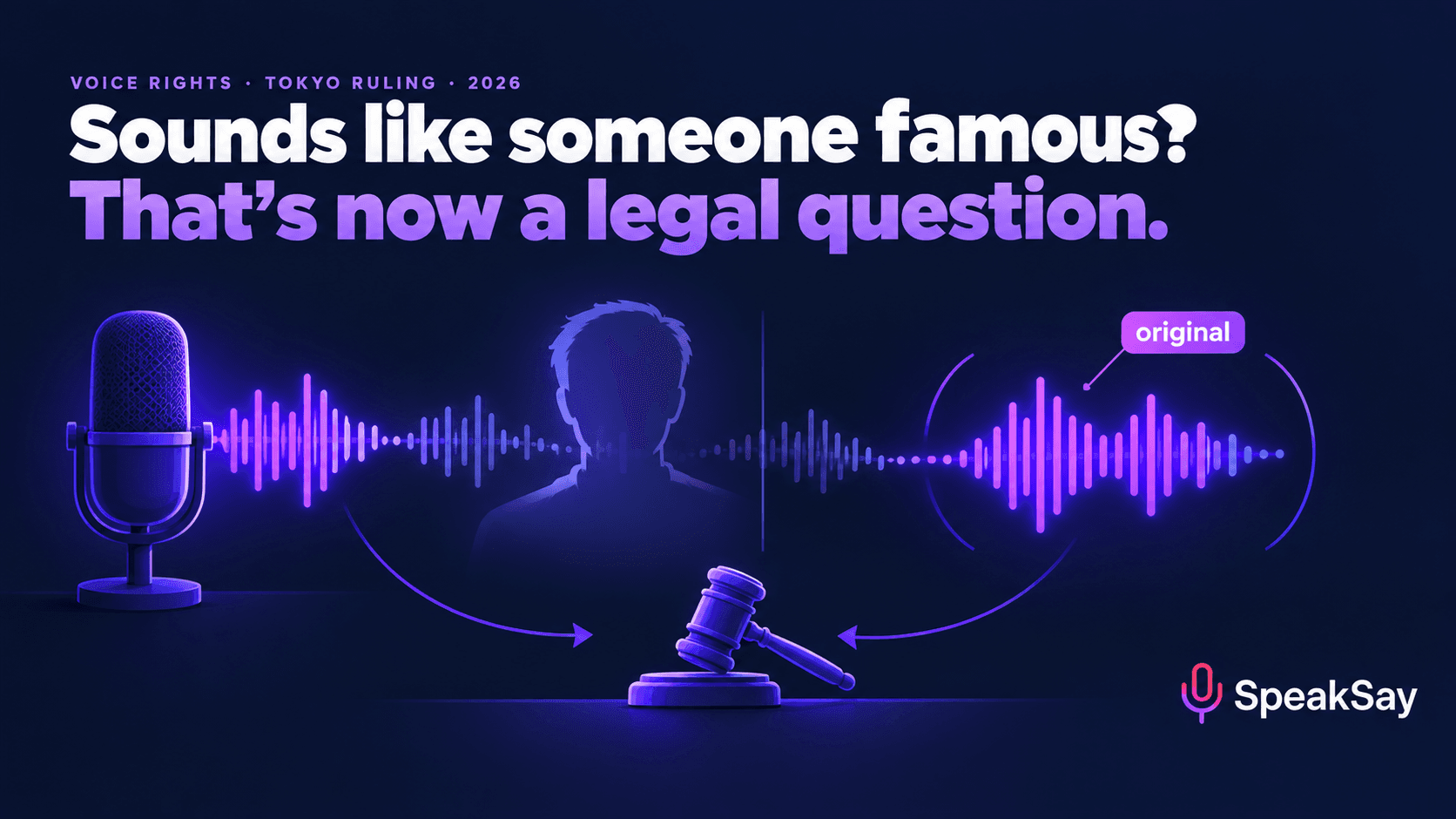
A Tokyo Court Says a Voice Can Be Protected Like a Face: If Your AI Narrator Sounds Like a Famous Voice Actor, Change It Before You Monetize (2026)
On September 30, 2026, a Tokyo court recognised that a voice can be protected by publicity rights when it's used for its commercial appeal. The case involved a monetized narration account in a very common faceless niche. Here's what was decided, why "it's a generic voice" isn't a plan, and a six-check audit to make sure your narrator is yours.
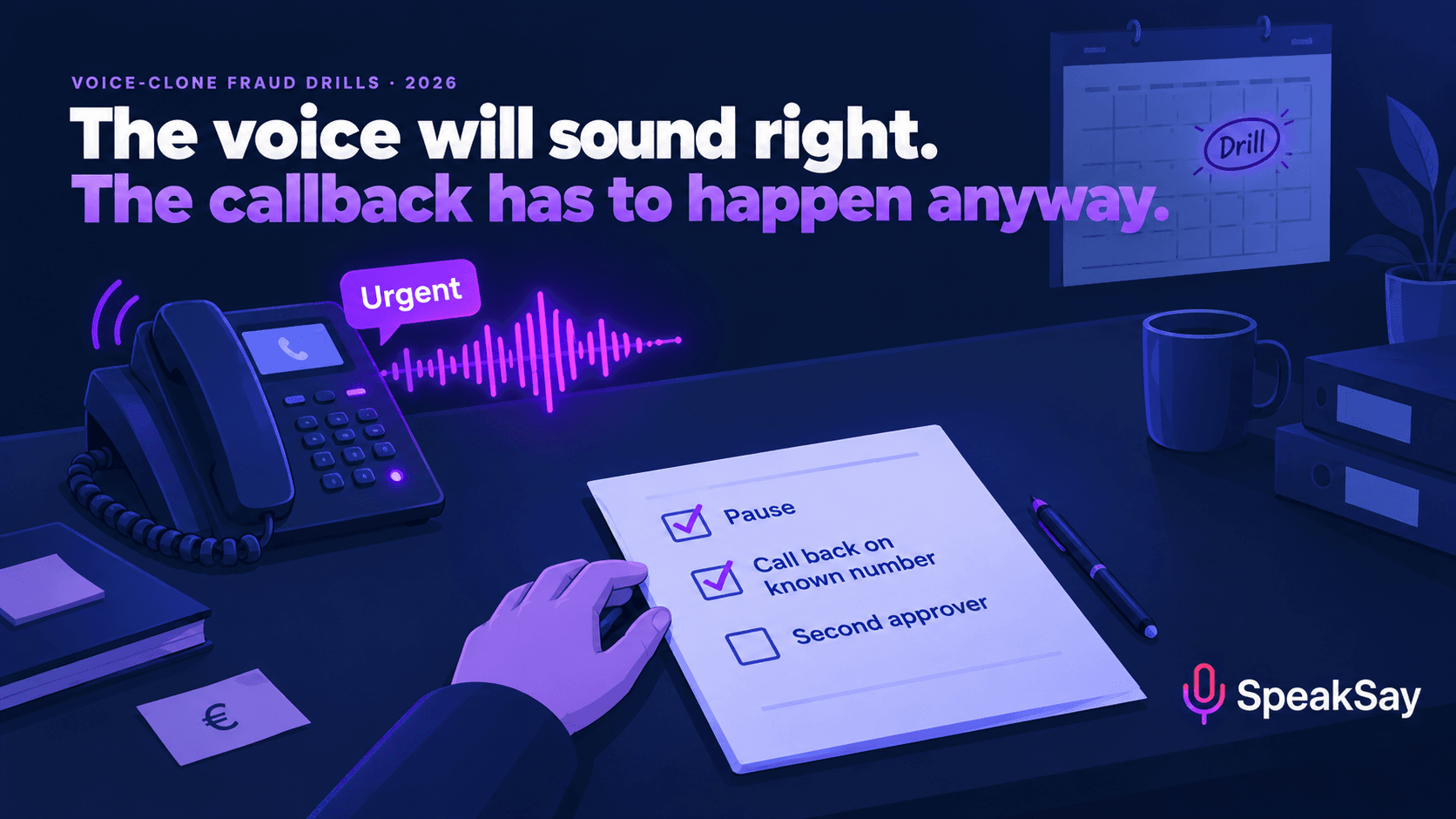
A Cloned Voice Helped Move €95 Million: Run a Consent-Based Voice-Clone Fraud Drill on Your Finance Team (2026)
A cloned voice helped persuade an Italian private bank to move €95 million. The lesson isn't "learn to spot fakes"; people can't reliably. It's "make the callback happen every time". Here's how a small business can run a consent-based drill using a clone of its own executive's voice, with legal sign-off, no money at risk and a no-blame debrief.
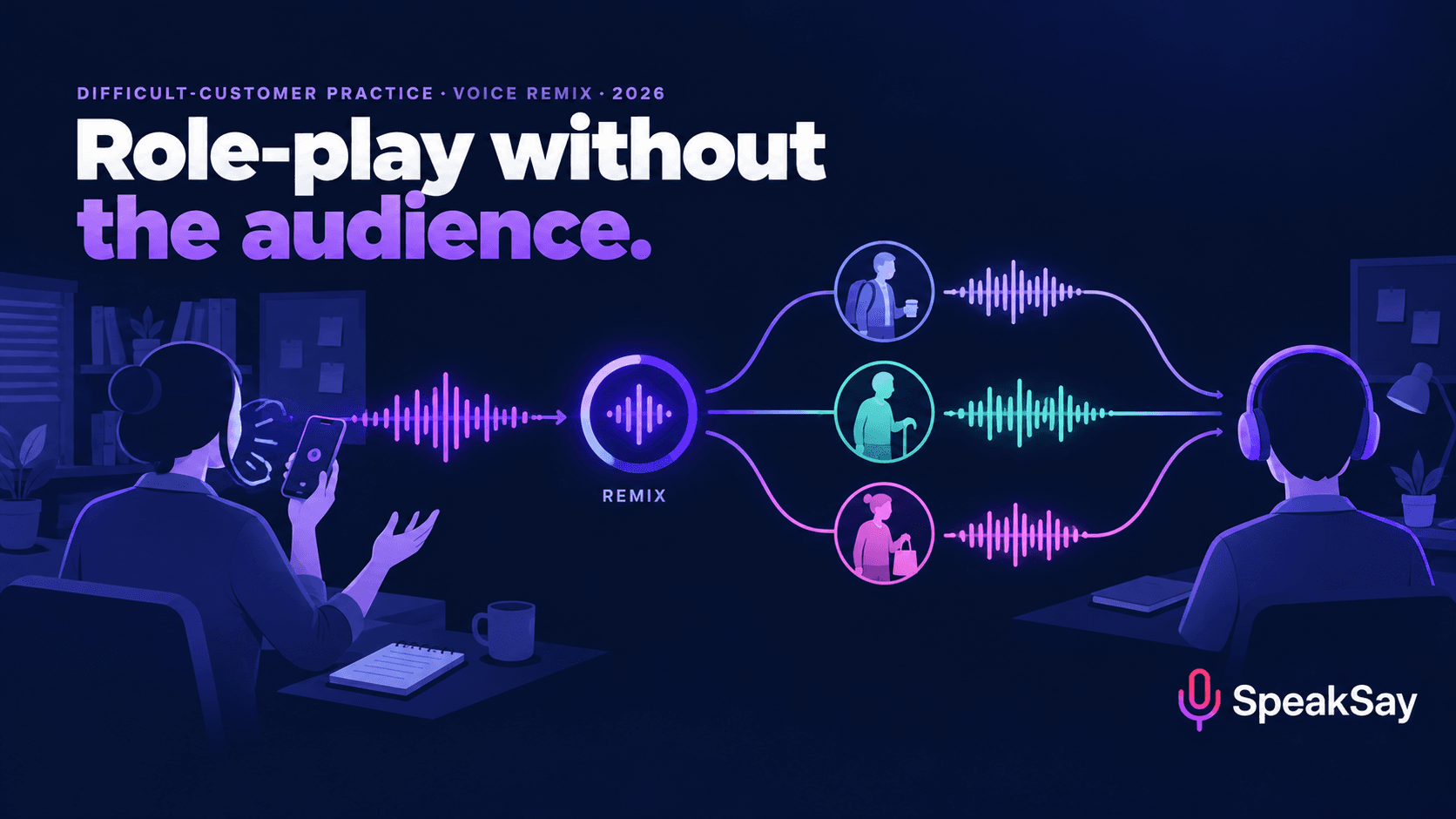
Everyone Hates Role-Play: Build a Difficult-Customer Call Library Your Team Can Practise Alone (Voice Remix, 2026)
Role-play is the training method everyone groans at. It's exposing in front of colleagues, and the "customer" is obviously a co-worker. Here's a different way: the trainer performs realistic difficult customers, Voice Remix turns each performance into a stranger's voice, and trainees practise their replies privately. Includes scenario design, a casting table, the pause-and-respond format and a simple scoring sheet.
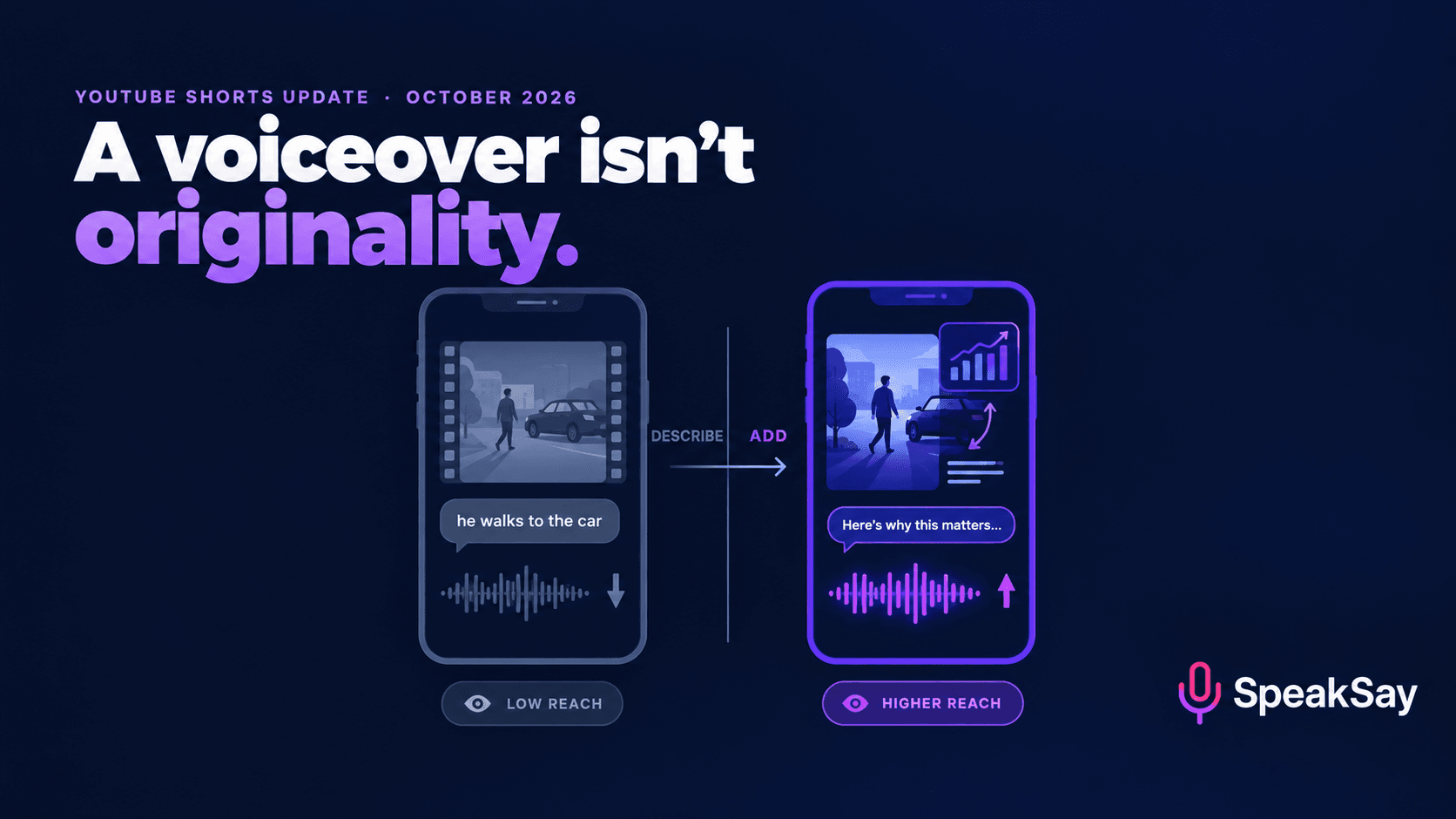
YouTube Says a Voiceover Doesn't Make a Clip Original: What Faceless Shorts Channels Must Change After the October 1 Update (2026)
On October 1, 2026, YouTube said the Shorts feed will cut reach for channels that mostly re-upload other people's clips, and that a voiceover describing what's on screen doesn't count as adding value. Here's what the update says and what it leaves unsaid. You'll also get a line-by-line "describe vs add" test for your scripts and a plan to move a clip channel onto original work.
Your Audiobook and Your Ebook Can Be One Product: Build a Read-Along Edition With AI Narration (EPUB 3 Media Overlays, 2026)
A read-along ebook highlights each word as a narrator reads it. The format is a decade old, support is patchy, and almost nobody explains which stores play it. AI narration changes the economics, and because you generate the audio from the text, you already know where each sentence starts. Here is which books suit it, where it works, and how to build one.
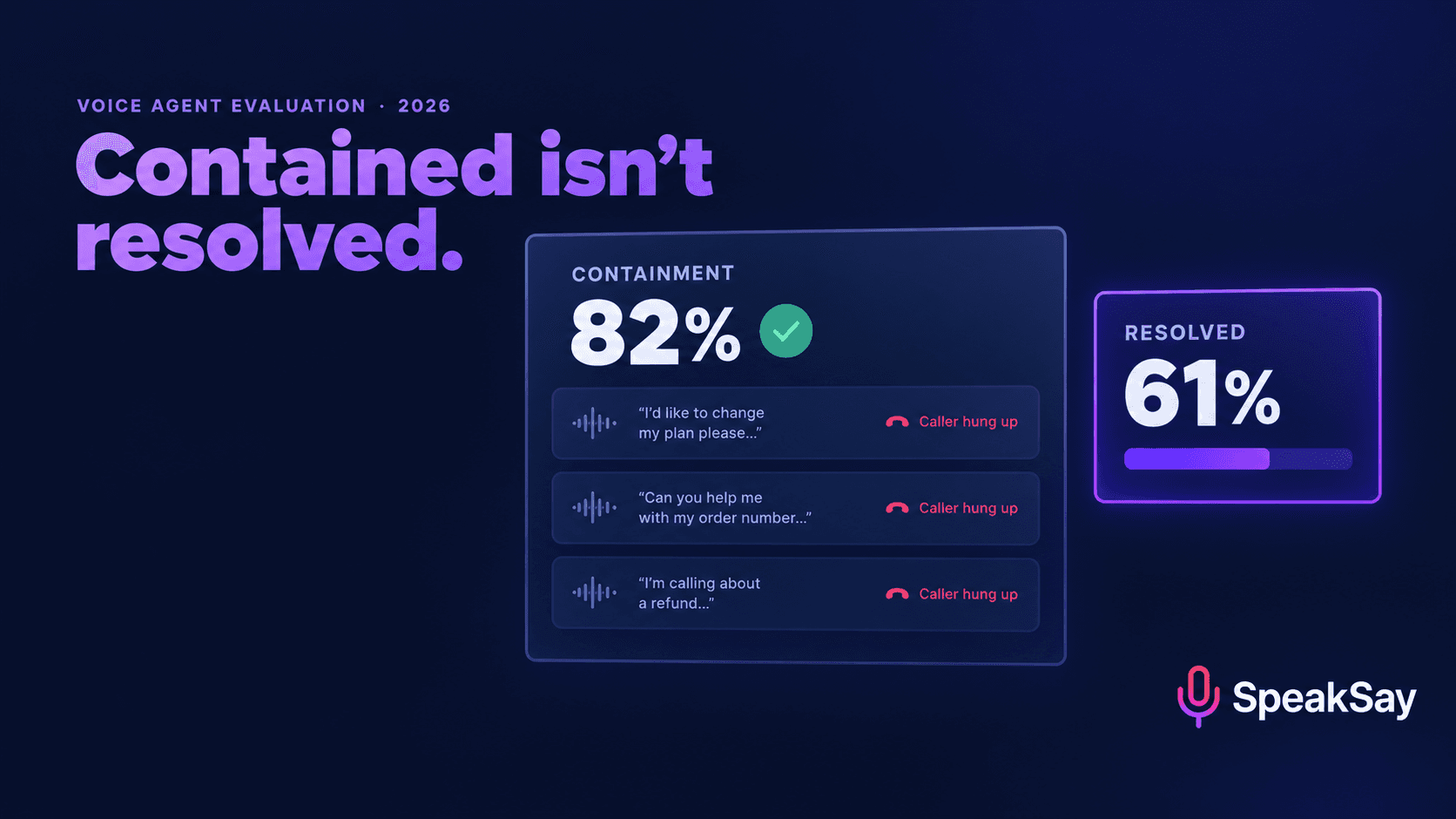
Your Voice Agent Passed Every Test and Still Fails Callers: Measuring Task Success, Containment and Escalation (2026)
Latency is low, word error rate is fine and containment looks great, yet callers are still unhappy. Containment counts a caller who gave up as a success. This guide covers the outcome metrics that matter for a voice agent, the guard metric each one needs, and where the agent's voice itself shows up in the data.
Keep the Christmas Program Narrator Live and Pre-Record Everything Else: A Voice Remix Guide for Schools, Churches and Community Stages (2026)
The live narrator is the one part of a children's Christmas program you shouldn't pre-record, because a live narrator can watch the children and pace the show. Almost everything else can be prepared in advance: offstage voices, character voices nobody can cast, at-home rehearsal tracks and a backup narration in case your volunteer is ill. Here is how one volunteer and Voice Remix can cover it all.
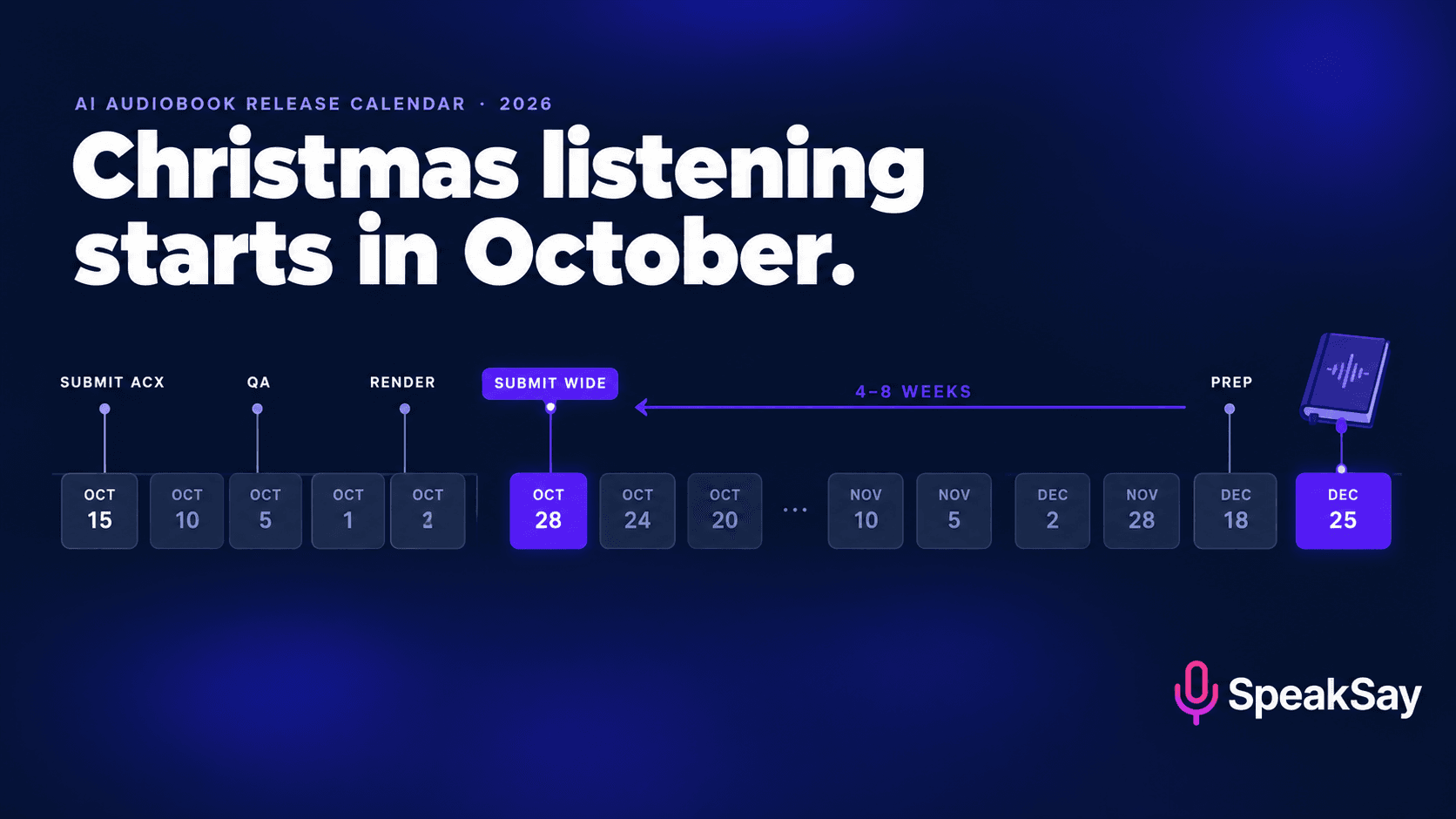
Want Your AI-Narrated Audiobook Live by Christmas? Work Backwards From December 25 — the Window Closes in October (2026)
The narration takes days. Getting it onto every store takes weeks. If you want an AI-narrated audiobook available when people unwrap new devices and subscriptions on December 25, the real deadline is your distributor's processing time, not your production time. A backwards calendar for 2026, plus the late plan if you miss it.
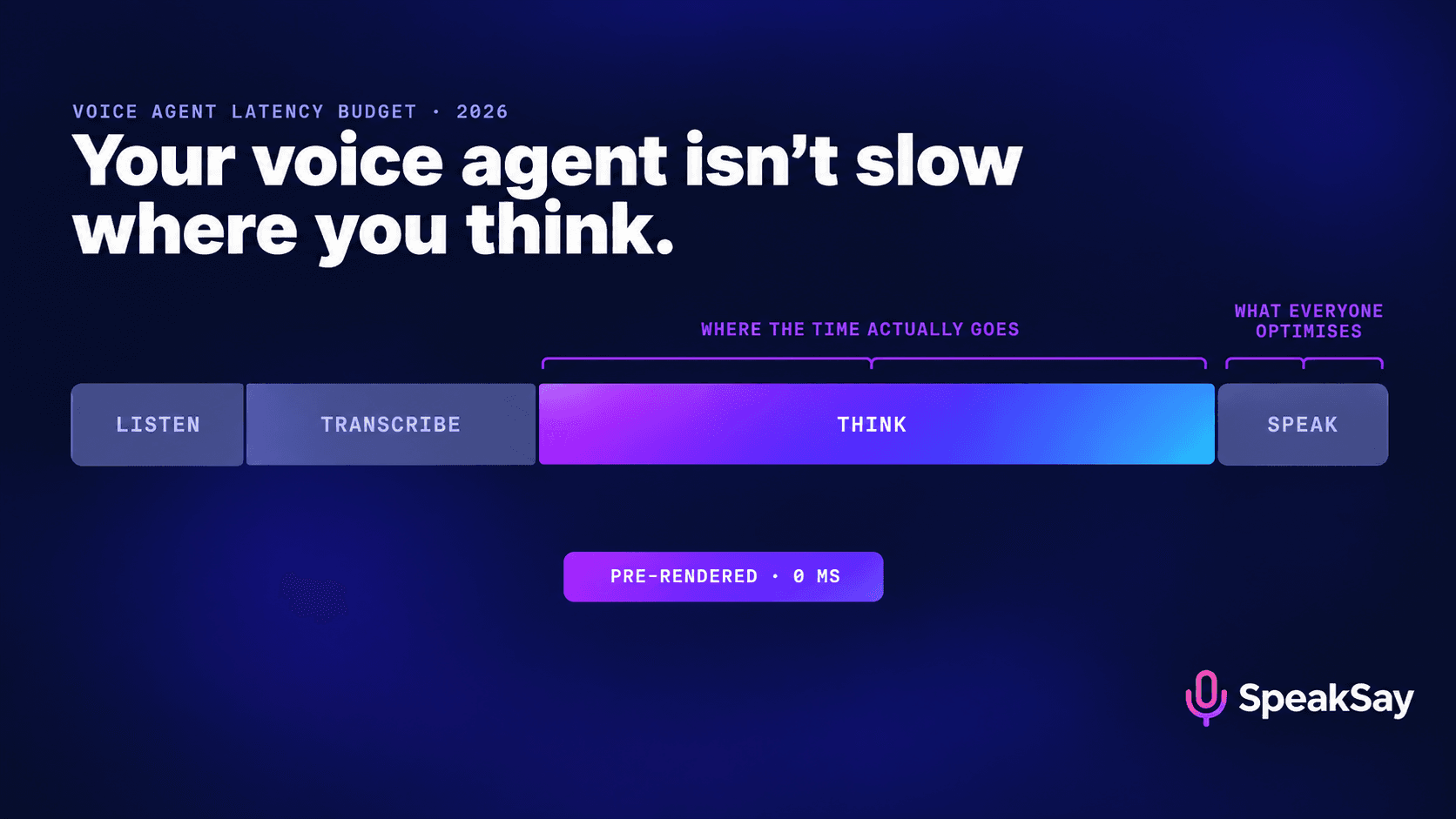
Your Voice Agent Isn't Slow Where You Think: A Latency Budget for Real-Time Text-to-Speech (2026)
Teams shave 40 ms off their TTS vendor and the agent still feels slow, because text-to-speech is rarely the biggest slice of the pause. Here is a turn-by-turn latency budget, what "time to first audio" really measures, and the cheapest fix most teams skip: pre-rendering every line you can predict.
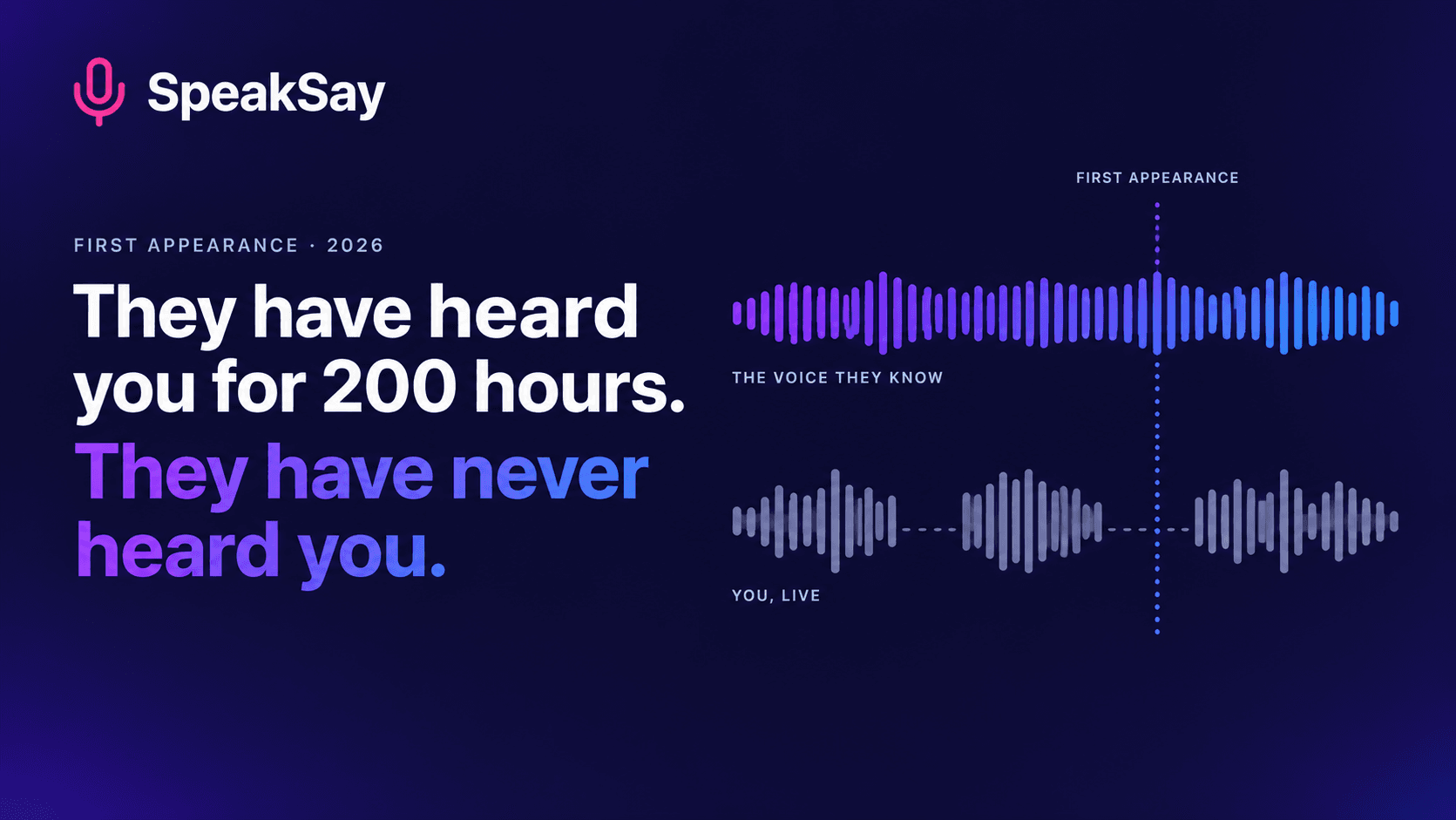
Your Audience Has Never Heard You: What Happens the First Time a Faceless Channel Goes Live (2026)
The fear is that people will be angry you used an AI voice. That is almost never what happens. What happens is a continuity problem: the voice your audience has spent two hundred hours with turns out to belong to nobody, and they find out by accident, mid-livestream. The fix is sequencing, not ethics — and it has a deadline set by whether you own the voice.
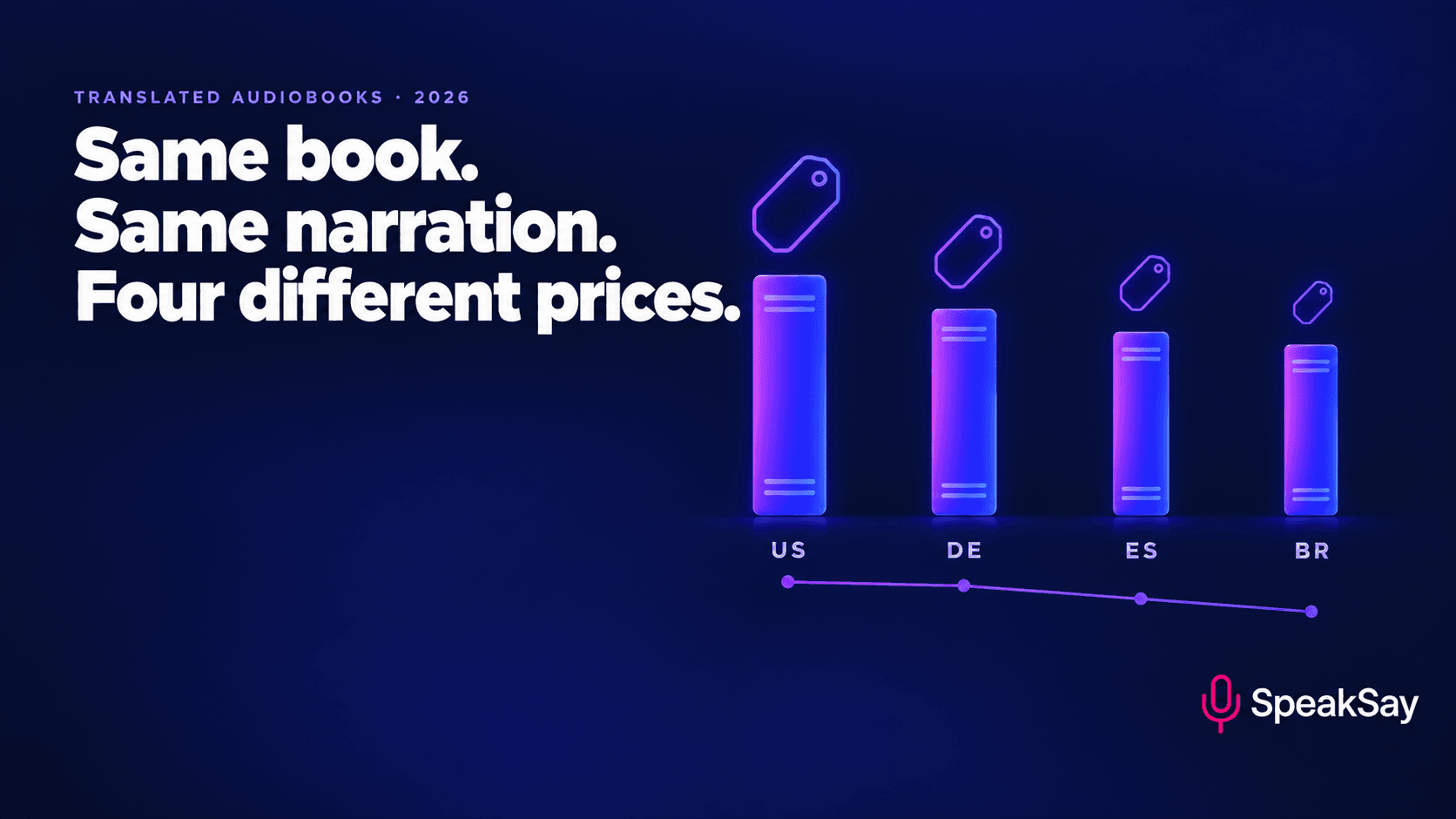
You Translated the Audiobook. Now Price It: Per-Market Pricing and Promotion for Non-English AI-Narrated Editions (2026)
Producing a Spanish or German audiobook edition stopped being a pipe dream in 2026 — AI narration and AI-assisted translation collapsed the cost. Almost nobody then adjusts the price, the promotion or the launch sequence for the market they are selling into, and the edition underperforms for reasons that have nothing to do with the translation.
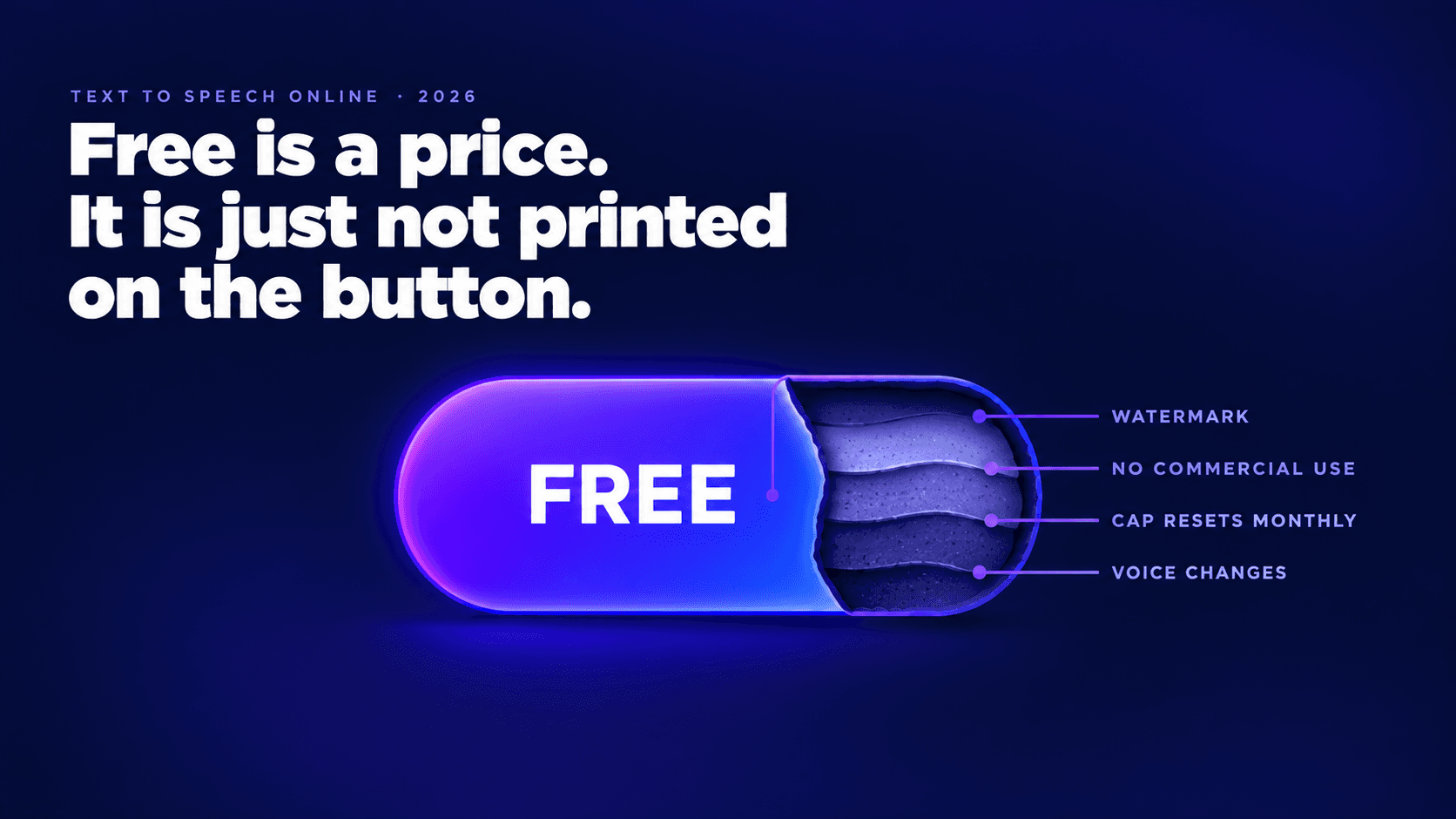
Text to Speech Online in 2026: What the Free Tools Actually Cost You
Free text to speech is genuinely useful, and most of the guides ranking it are useless — because they rank tools on voice quality when the thing that will actually stop your project is a licence clause, a download button that is not there, or a voice that quietly changes between episode four and episode five.
Listeners Are Returning AI-Narrated Audiobooks: The 2026 Guide to Returns, Refunds and the Seven-Day Royalty Clawback
Returns are the one audiobook metric almost no indie author watches, and the only one that can take back money you have already earned. Here is how the windows work, why "I found out it was AI" is a stated return reason, and the three places you control that decide your return rate.
Stop Pre-Producing Q4 in September: The Late-Decision Content Calendar AI Audio Makes Possible (2026)
Every seasonal guide tells creators to lock Q4 in September and batch it all now. That advice is a fossil — it encodes production lead time, not anything anybody learned about audiences. Remove the lead time and the constraint stops binding, but the habit survives, and it makes you publish decisions taken before the season existed. Here is the alternative: lock the slot, hold the content, render last — with an honest account of which parts of a Q4 calendar genuinely cannot be decided late.
Getting Your AI-Narrated Audiobook Into Libraries (2026): OverDrive, Libby, Hoopla and the "Digital Voice" Label
There is no blanket ban on AI narration at the library platforms. There is also no direct upload route, no guaranteed shelf space, and a mandatory "Digital Voice" label on your narrator credit that most authors discover after the book is already live. Here is how the channel actually works.
AI Voices for Live Events, Venues and PA Systems (2026): The Announcement Playbook Nobody Writes
Every AI voice guide assumes your listener is wearing headphones. Venue announcements are the opposite: a reverberant room, a horn speaker with no bass, ninety decibels of crowd, and a listener who is not paying attention. Here is the casting spec, the script rules, the pause maths — and the one category of announcement you must never generate.
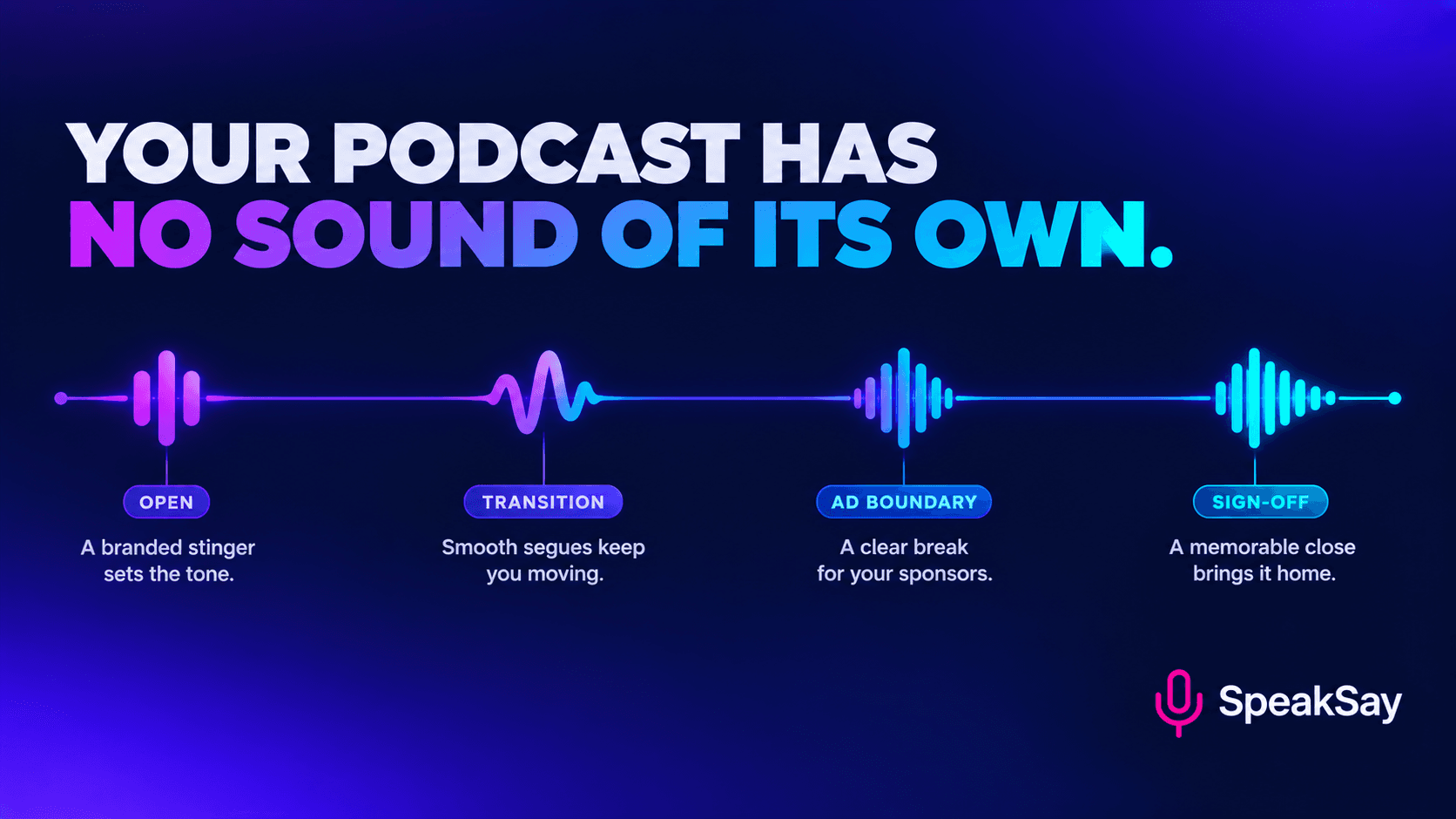
Your AI Podcast Sounds Like Everyone Else's Because It Has No Sonic Identity — The 2026 Audio Branding Playbook
Stock voice, stock intro music, stock structure. Listeners can't tell your show from the twenty others in their feed because there is nothing to tell apart. Here's how to build an audio identity — stinger, tag, transitions, sign-off — for a show made with AI voices.
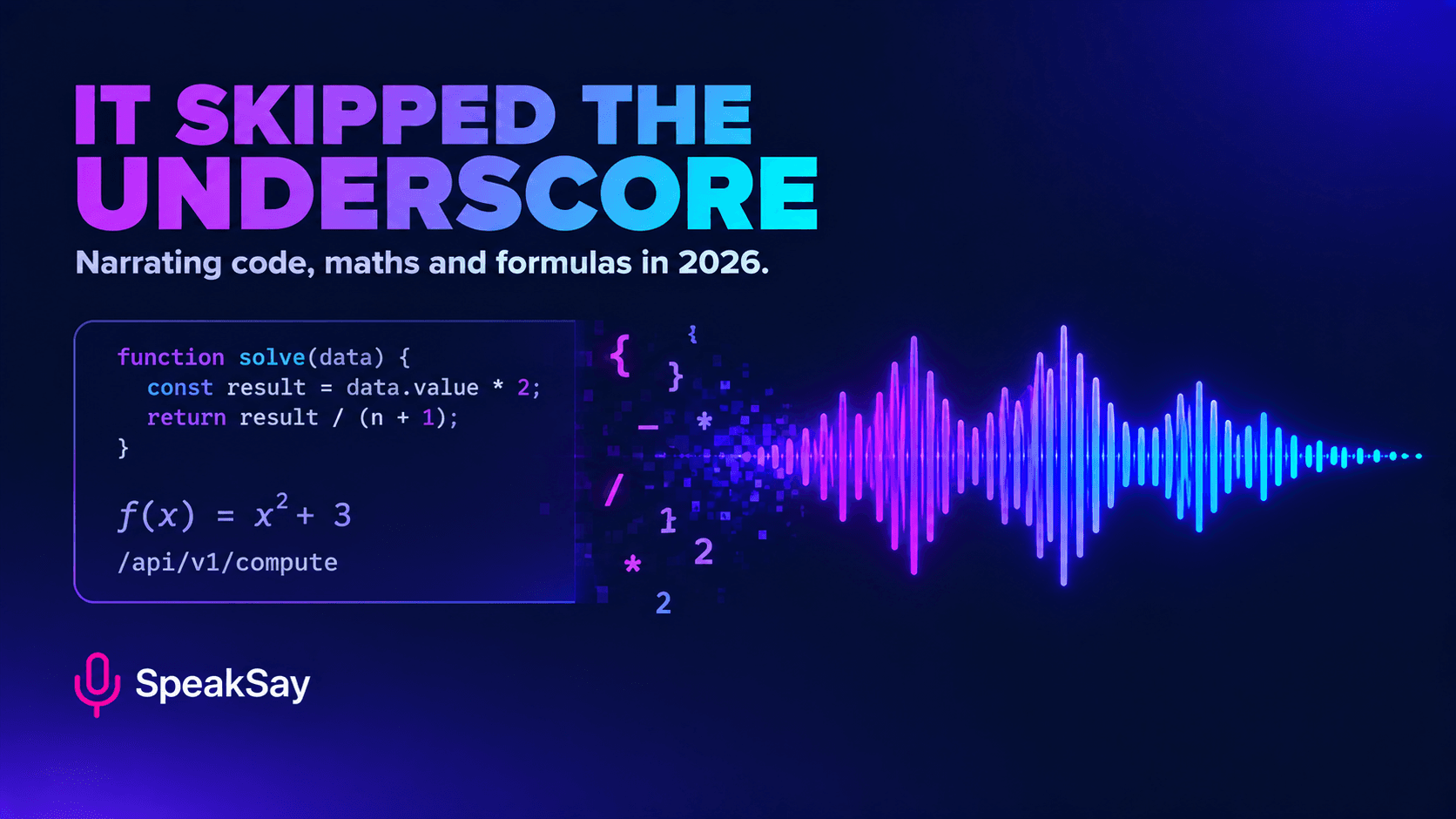
Your AI Voice Reads Code as Gibberish: How to Narrate Code, Formulas and Maths Aloud (2026 Guide)
Generated voices silently drop underscores, read slashes as pauses, turn x squared into "x two" and pronounce camelCase as one mangled word. For programming, maths and data channels that is not a cosmetic bug — it makes the tutorial wrong. Here is the full transcription ruleset, with tables you can copy.
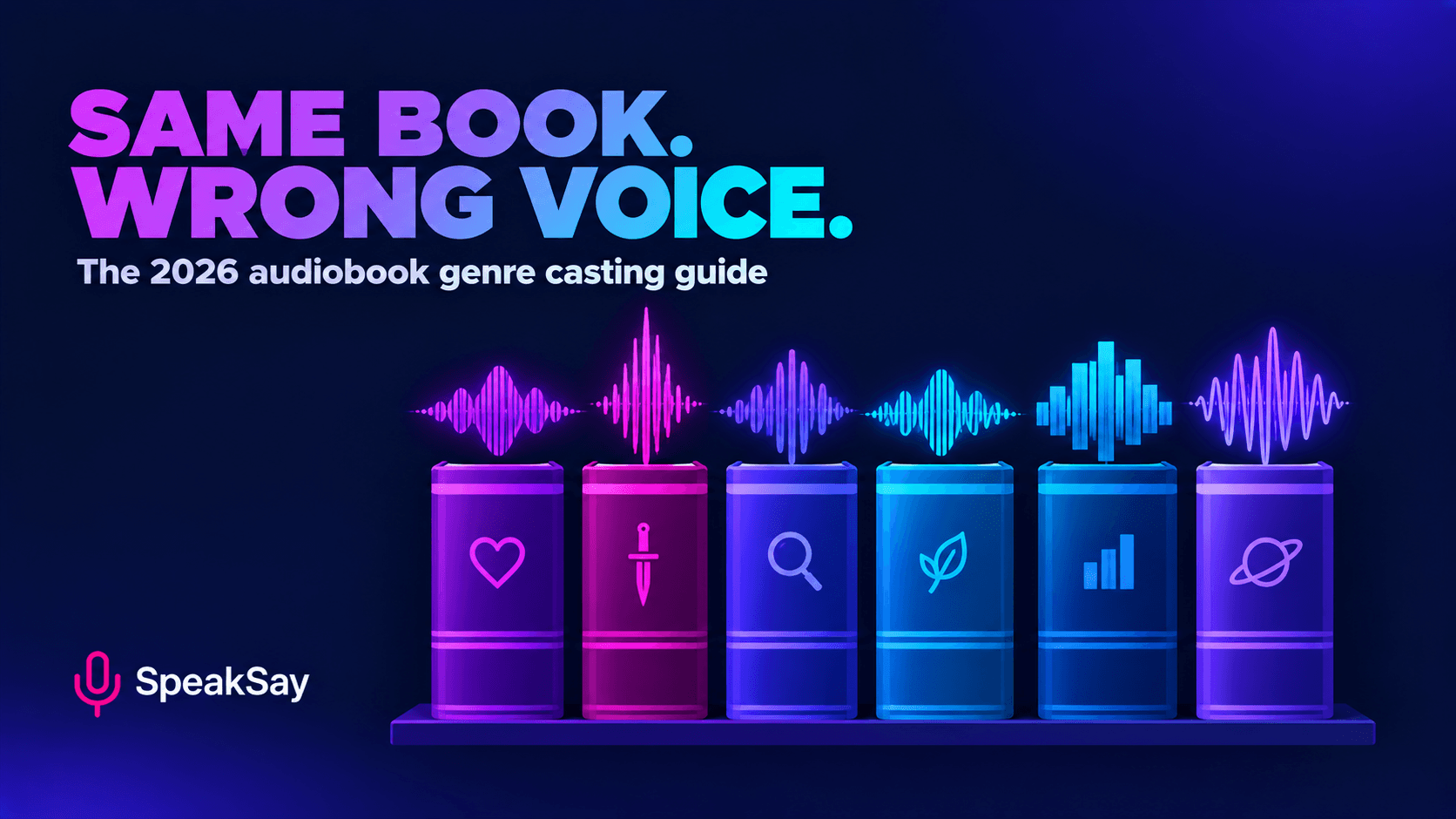
Apple Shipped Romance-Tuned AI Voices. Here Is the 2026 Genre Casting Guide for AI Audiobook Narration
Production stopped being the bottleneck for indie audiobooks. Casting became it. Retailers now ship genre-tuned narration voices, but the choice is still yours to get wrong — and a thriller read in a memoir voice will not sell. Here is the genre-by-genre casting spec, with rate, warmth, register and sample-test protocol.
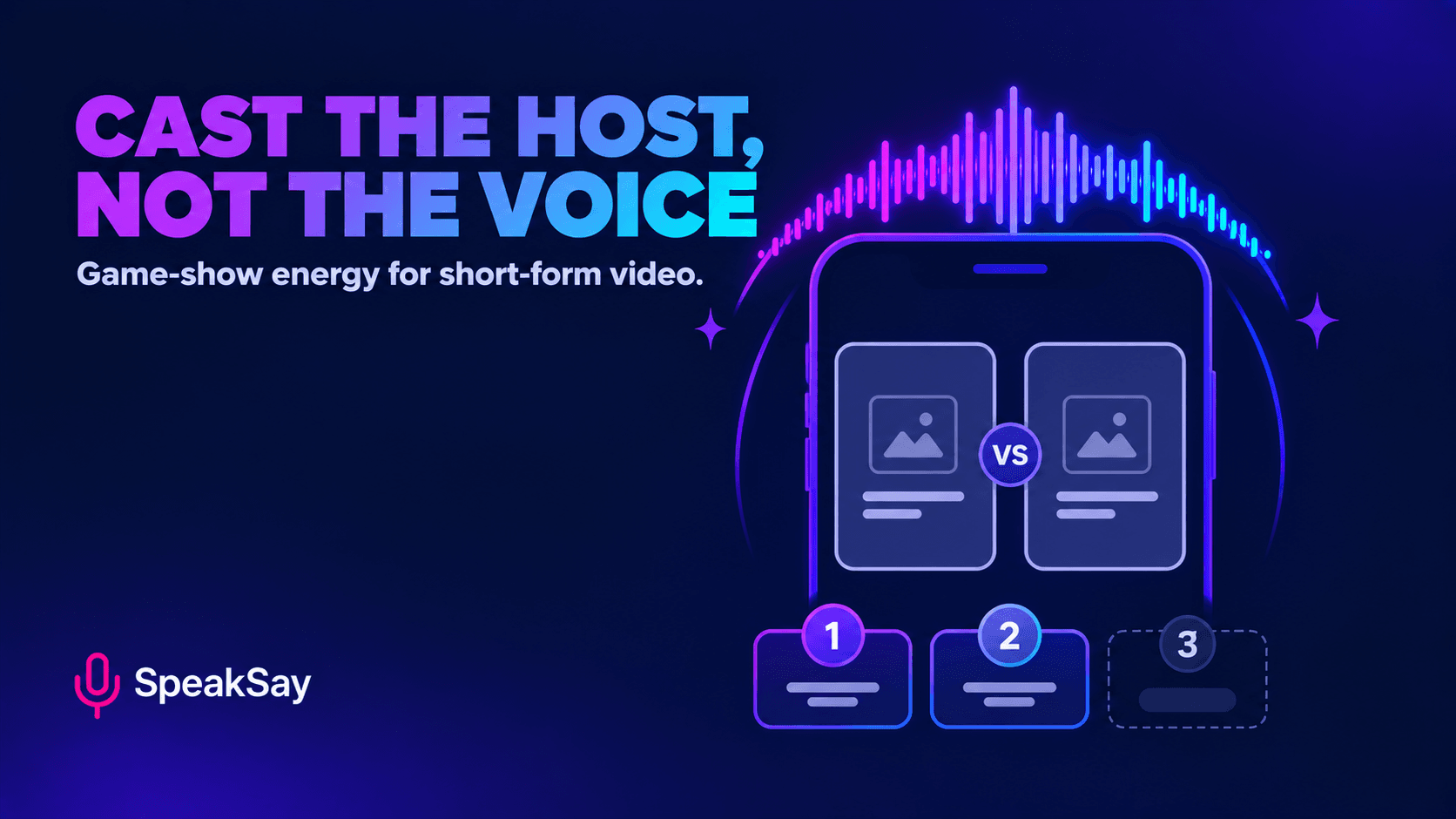
Blind Rankings and This-or-That Are Shorts' Most Repeatable Format: How to Build a Game-Show Host Voice (2026)
Game-format Shorts — blind rankings, this-or-that, tier lists, rapid-fire quizzes — are repeatable, bingeable and algorithm-friendly. What makes them work is not the graphics, it is the host. Here is how to build a game-show host voice with the right escalation, reveal beats and scoring rhythm.
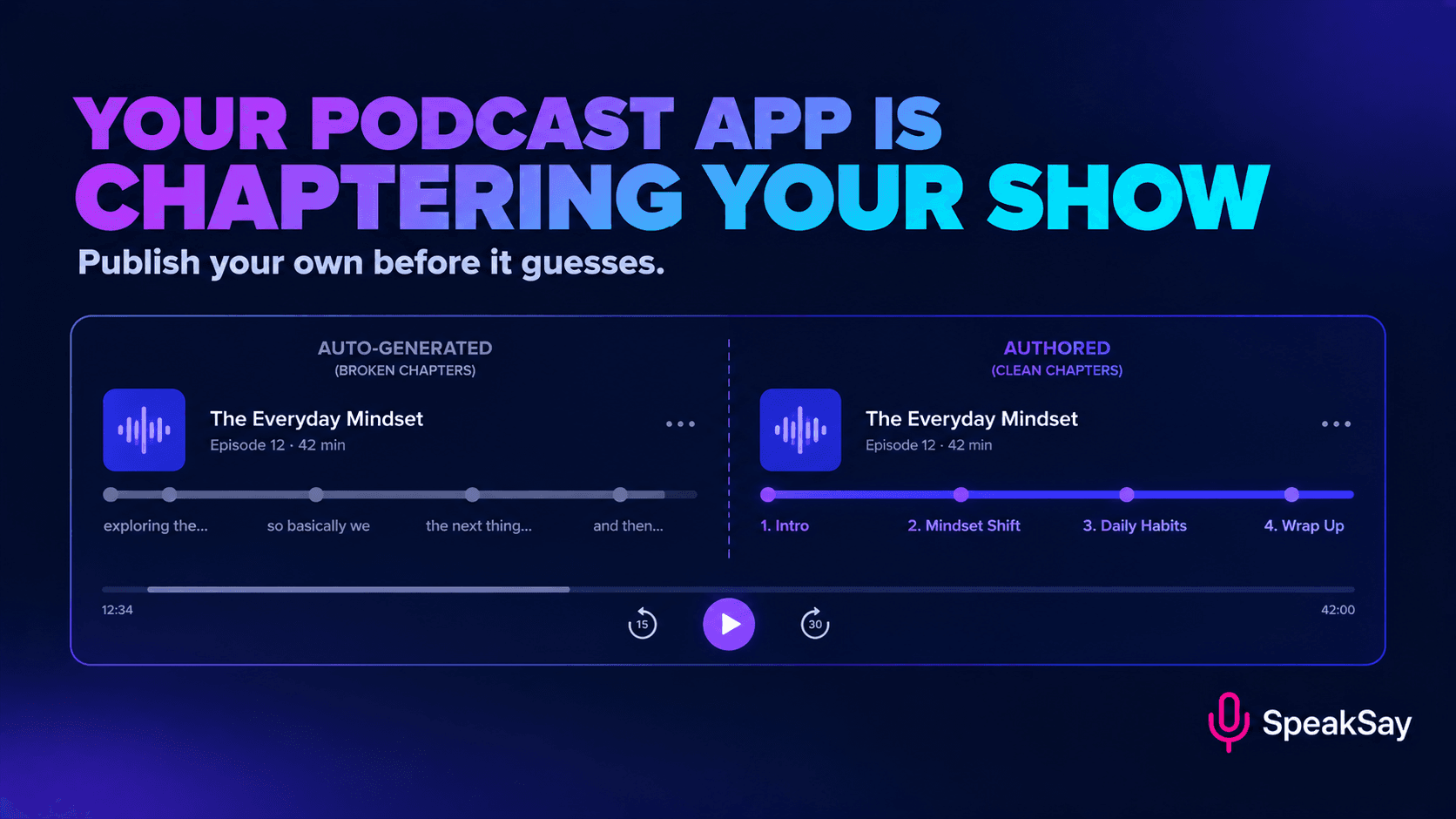
Podcast Apps Are Auto-Chaptering Your Show — Badly. Publish Your Own Chapters Before They Do (2026)
Players now generate chapter markers for shows that never asked for them — cutting mid-sentence, spoiling narrative episodes and covering your episode title. Here is how chapters actually get published, and why an AI-produced show can author them almost for free.
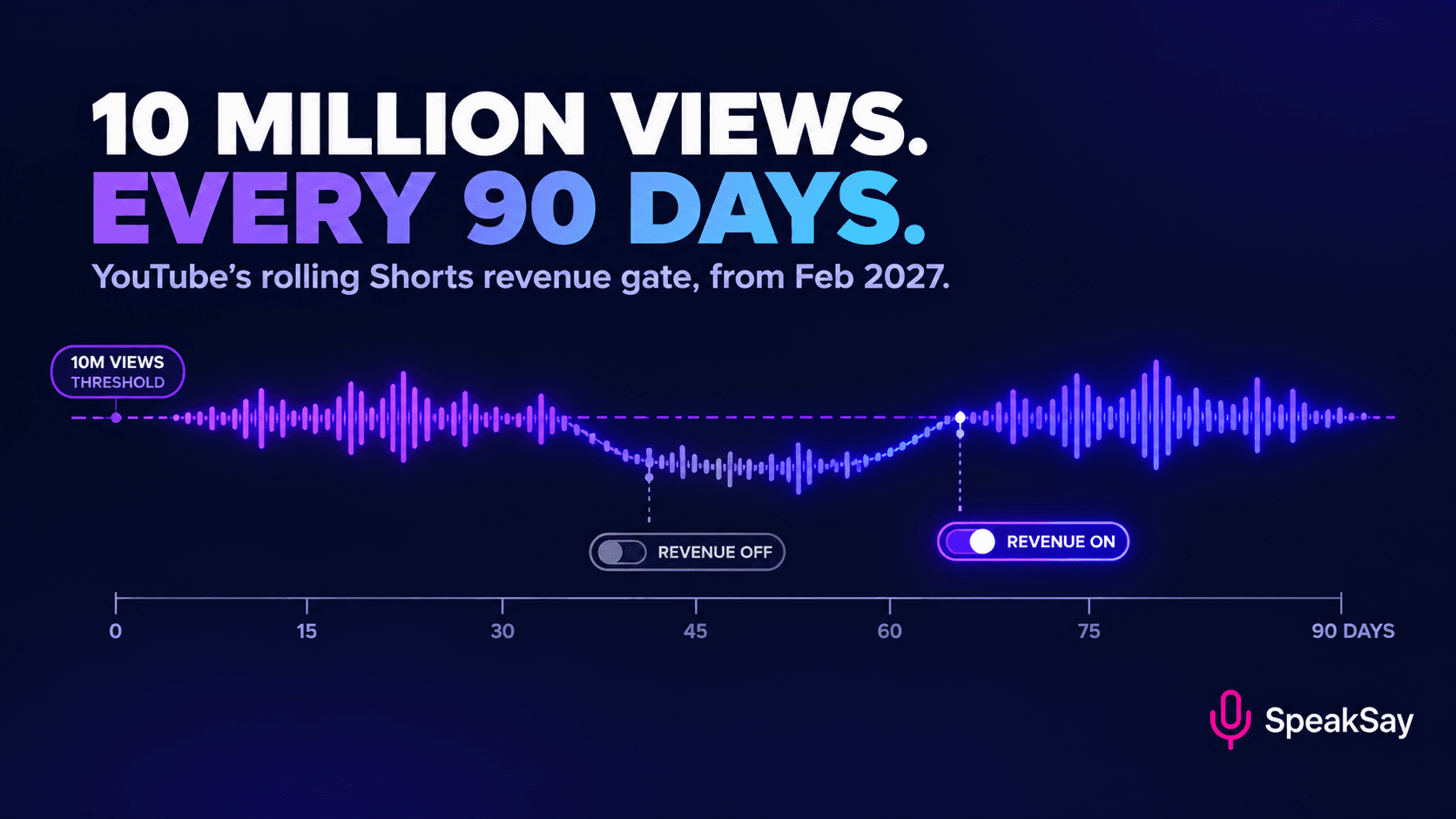
YouTube's Shorts Revenue Switch Turns Off Every 90 Days From February 2027: The Volume Plan Faceless Channels Need Now
Most coverage of YouTube's Partner Program rewrite focused on the higher entry bar. The part that will actually bite existing faceless channels is different: from 1 February 2027, Shorts revenue sharing is a rolling test you can fail in any 90-day window. Here is the cadence maths, the voice-variety problem it creates, and the production plan that keeps the switch on.
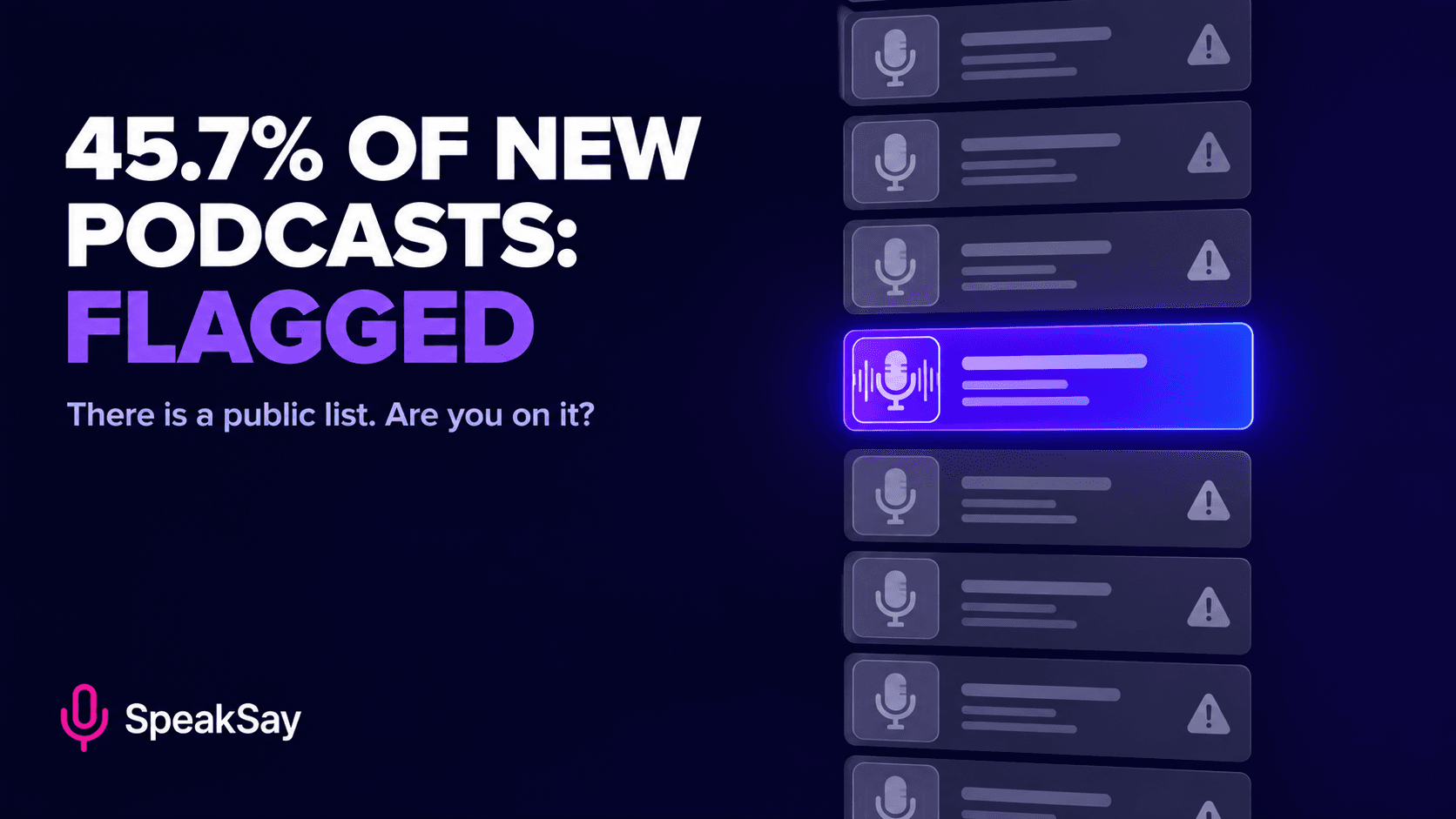
45% of New Podcasts Are Flagged as AI — and There's a Public List: How to Stay Off the Podcast Index "Problematic" Feed (2026)
The Podcast Index publishes an API listing new shows marked as spam, phishing or "low-effort AI" — and apps and hosts use it to curate. Here is what triggers the flag, how to check, and how an AI-assisted show reads as a real one.
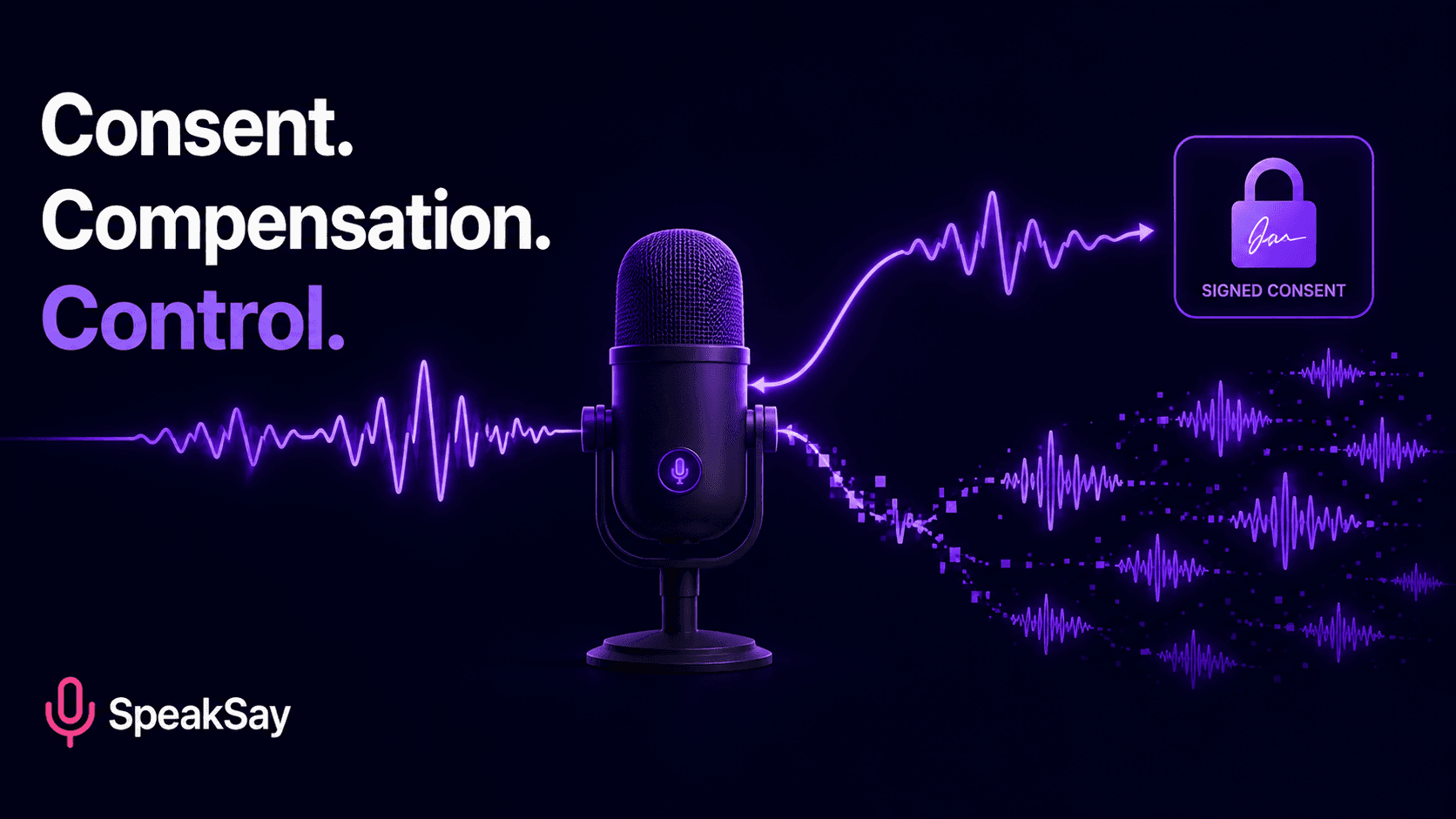
Actors Are Campaigning to Ban AI Voice Cloning: What "Save Our Voices Now" Means If You Clone Your OWN Voice (2026)
British actors and comedians are backing a campaign called Save Our Voices Now, and creators who clone their own voice are asking whether they are now the bad guys. Read the campaign's actual asks - consent, compensation, control - and you get a clear, defensible answer, plus templates you can publish today.
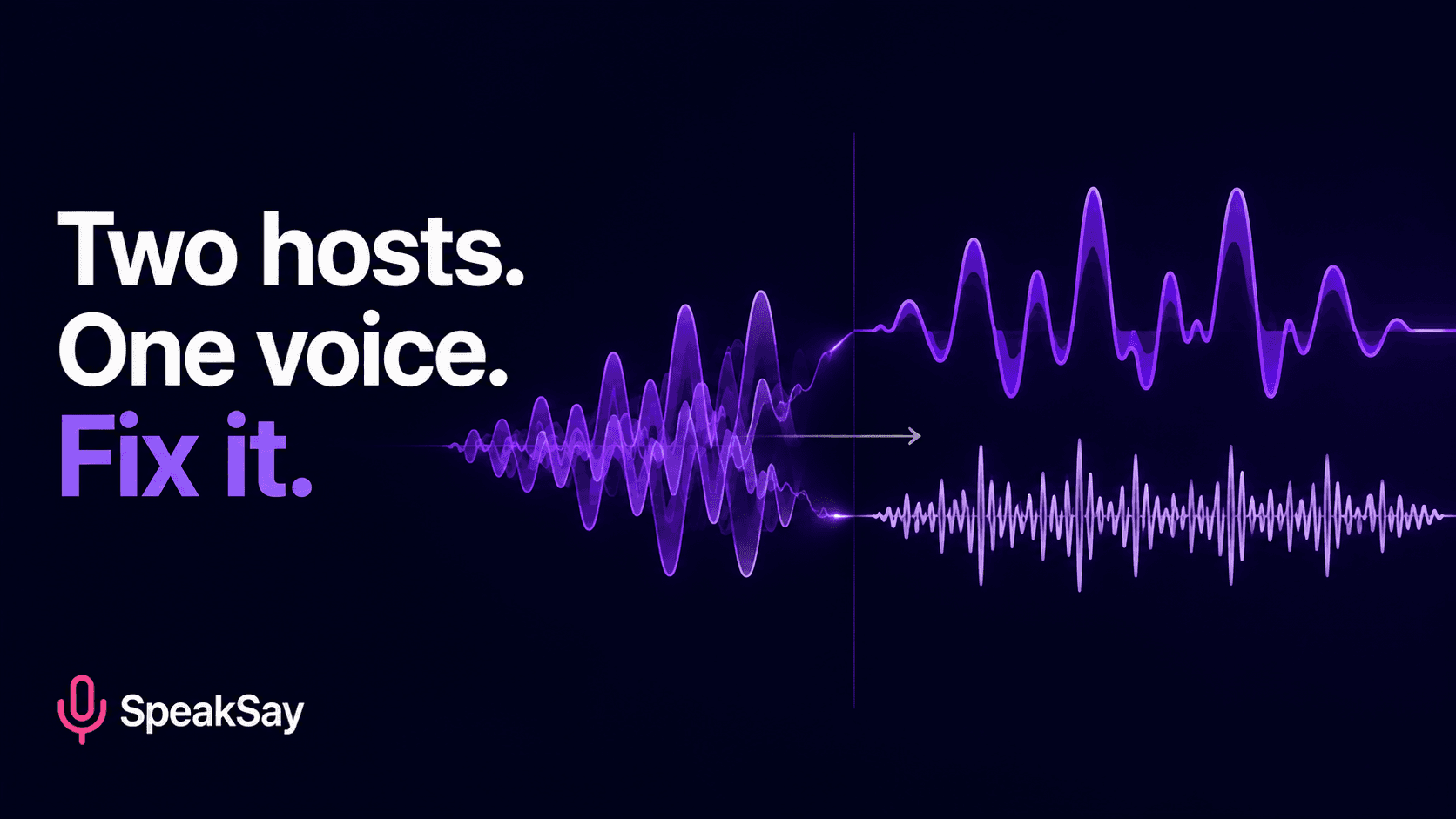
Your Listeners Can't Tell Your Two AI Hosts Apart: The 2026 Voice-Casting Guide for Multi-Host Podcasts
If your two-host AI podcast sounds like one person arguing with themselves, the problem is not your script - it is your casting. This guide gives you a six-axis contrast model, a minimum-contrast scoring rule, a reproducible 60-second blind test, and a repair plan for shows already published with confusable hosts.
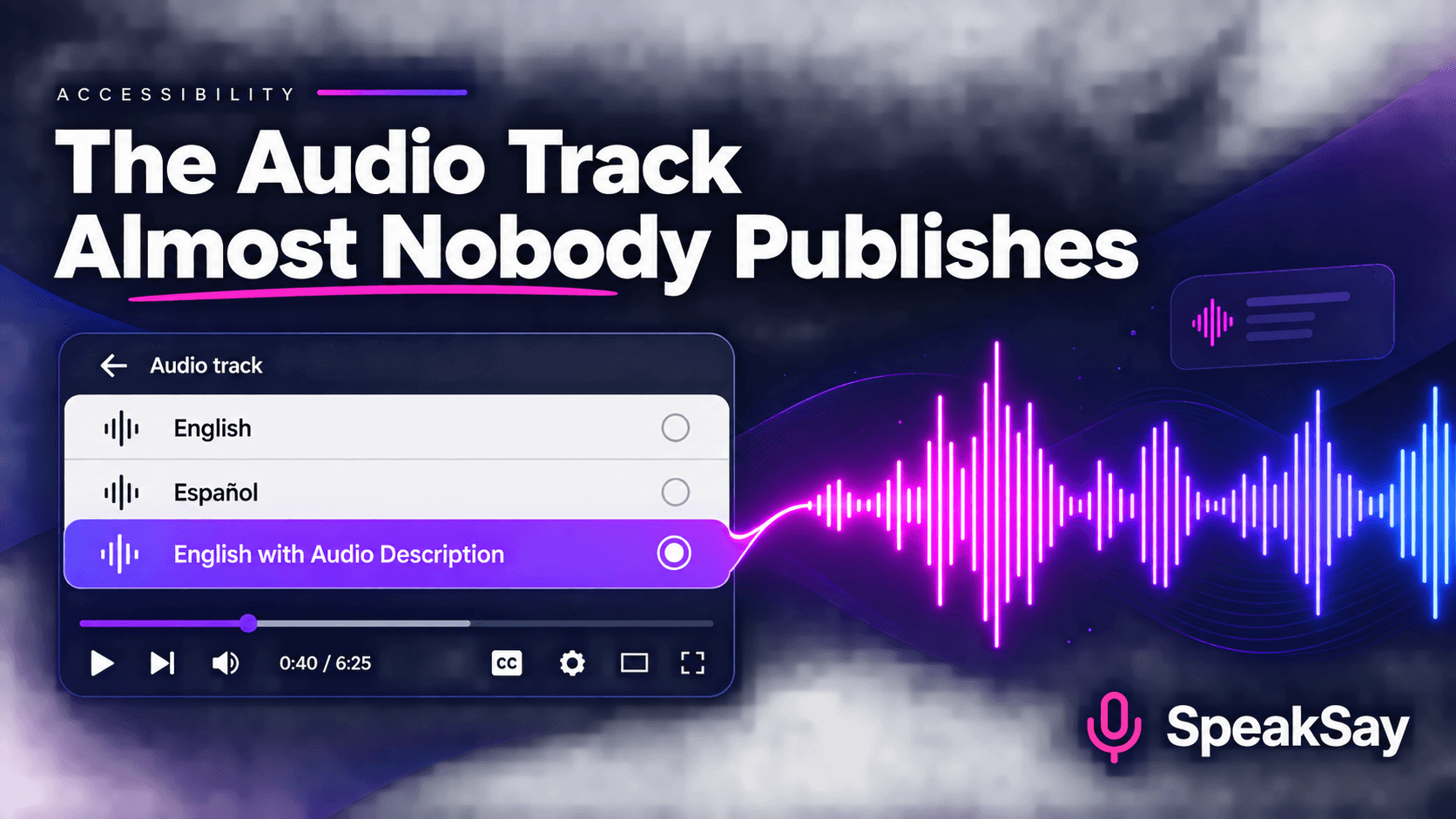
YouTube Now Has an Audio Description Track — and Almost Nobody Uses It: The 2026 Guide for Faceless and Visual Channels
Viewers can now select "English with Audio Description" from the audio menu the same way they select a language. Producing that track used to mean a studio, a describer and a mixing session. It is now a script-and-voice job — and script-first creators already have most of what they need.
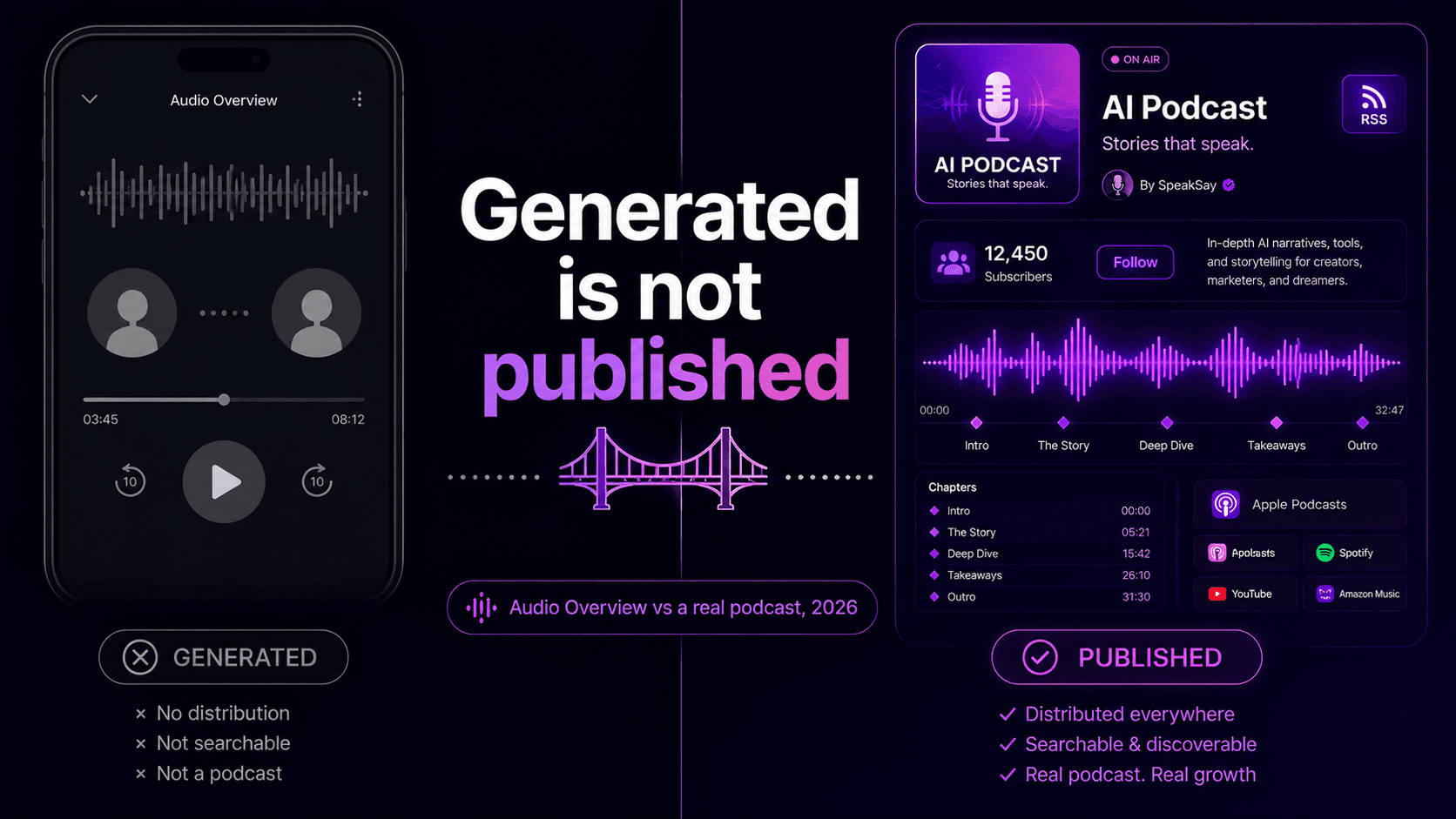
Audio Overview Is Now Inside the Gemini App: Free AI Podcasts for Everyone, and the 6 Things It Still Cannot Do
Google put its AI podcast maker in the Gemini app, and millions of people now have a two-host show they can generate in thirty seconds. Here is exactly where the free tool ends, what the gap between generating audio and publishing a podcast actually contains, and how to decide whether you need to cross it.
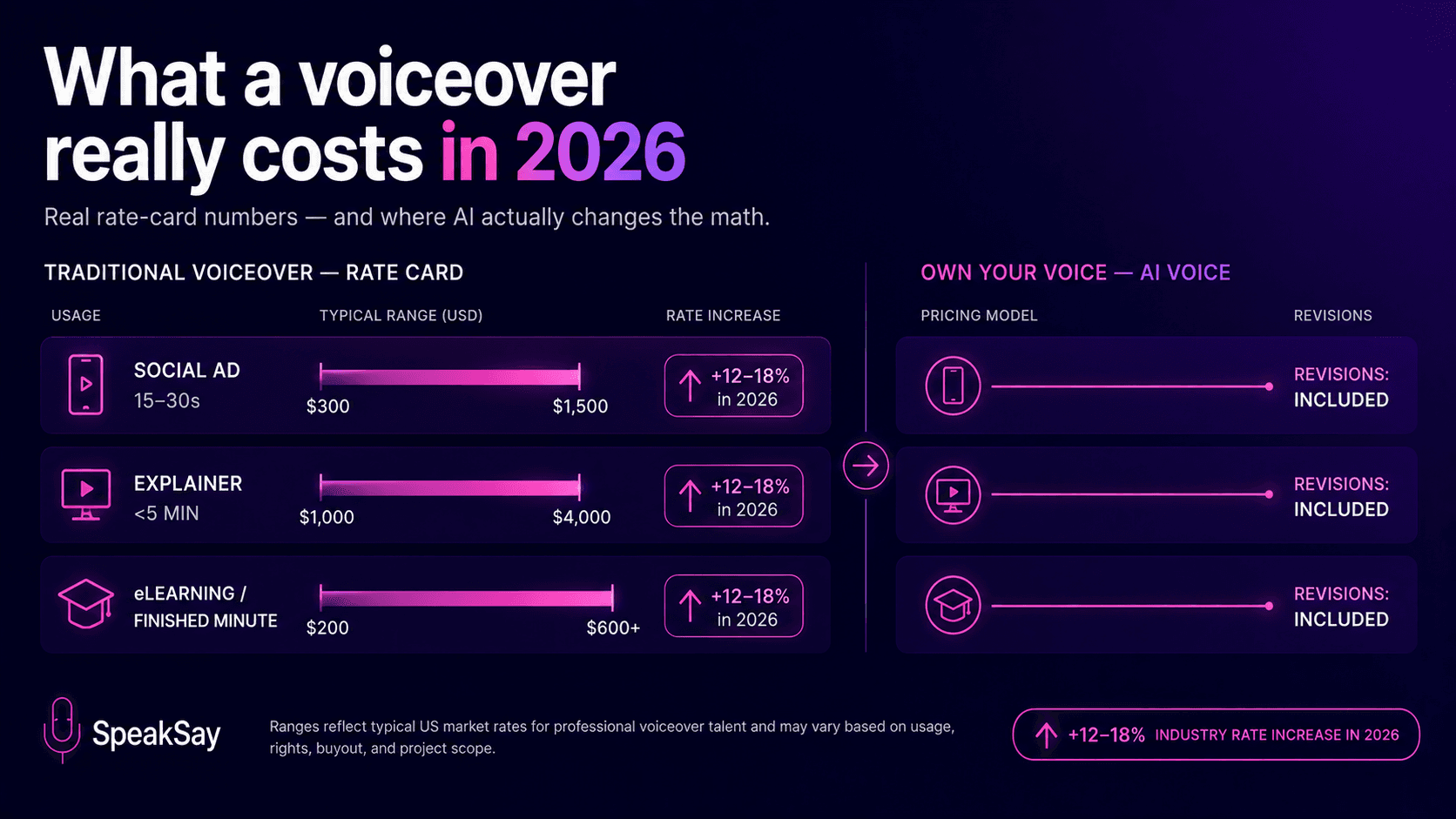
How Much Does a Voiceover Cost in 2026? Real Rate-Card Numbers (and What Changes When You Use AI)
Non-union voiceover rates rose 12–18% across the board in the 2026 GVAA update, and most buyers are still budgeting from three-year-old blog posts. Here are the real numbers by project type, how usage and buyouts work, and an honest breakdown of where AI wins and where a human is still worth every cent.
Spotify Starts Badging "AI Persona" Artists in Mid-September 2026: What AI Song Covers, Remixes & Synthetic Vocals Must Disclose Now
Spotify's AI Persona badge rolls out mid-September 2026, and AI-persona artists get dropped from algorithmic recommendations. Here is exactly what triggers the badge, how DDEX AI credits work, and how to release AI vocals without losing your reach.
Prove the Voice Is Yours: Content Credentials, SynthID & the 2026 Voice-Provenance Setup Every Creator Should Have
C2PA is now an ISO standard, OpenAI joined its steering committee in May 2026, and voice clones are being argued over as evidence in court. Almost no creator has provenance switched on. Here is the four-layer setup that actually holds up.
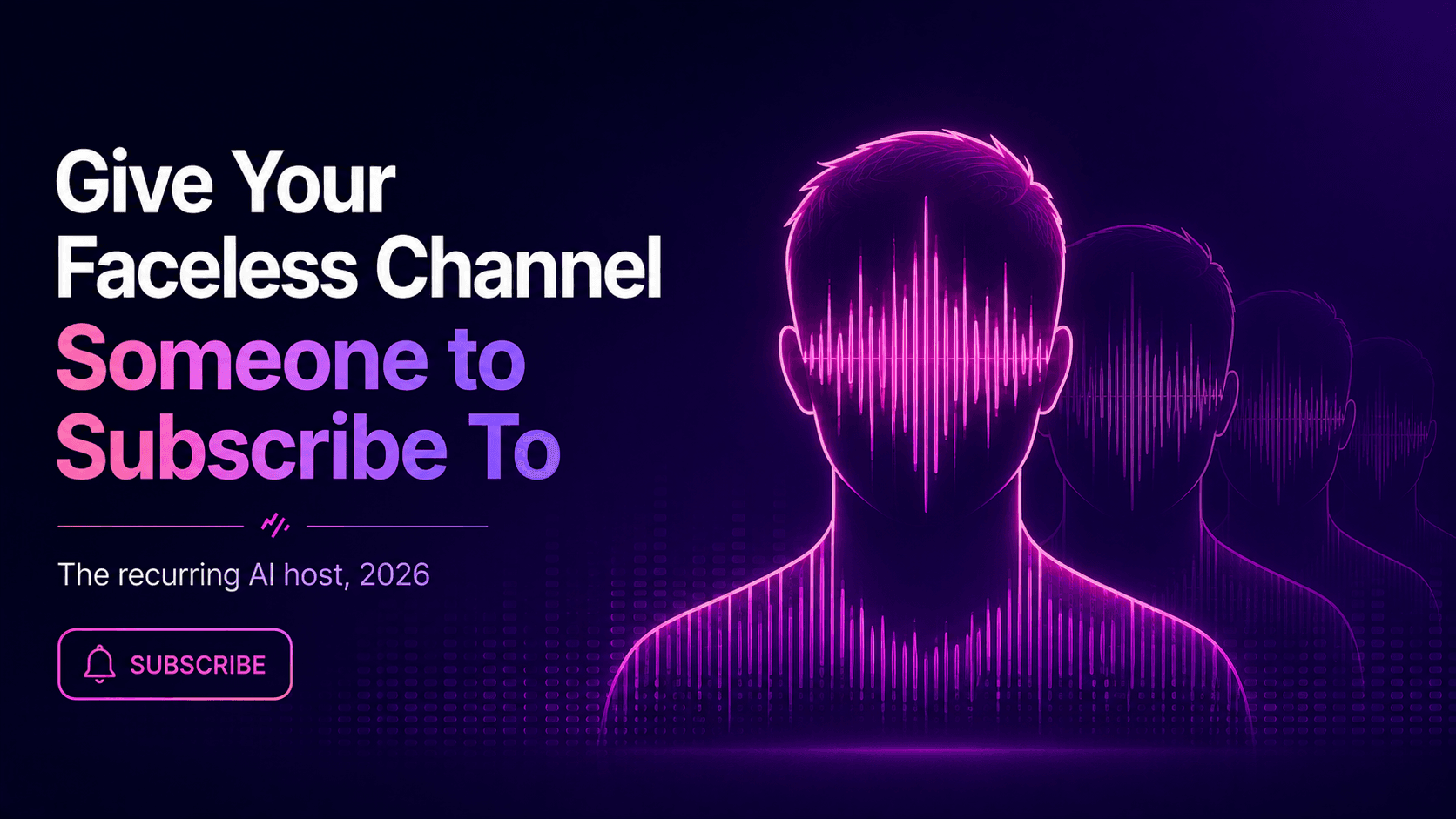
Faceless Channels Have Nothing to Subscribe To: Build a Recurring AI Character Host Viewers Actually Follow (2026)
Faceless channels convert views into subscribers at a fraction of the rate of on-camera ones, because there's nobody to follow. The fix isn't a better voice — it's a character. Here's the character bible, the voice-design recipe, and the continuity rules.
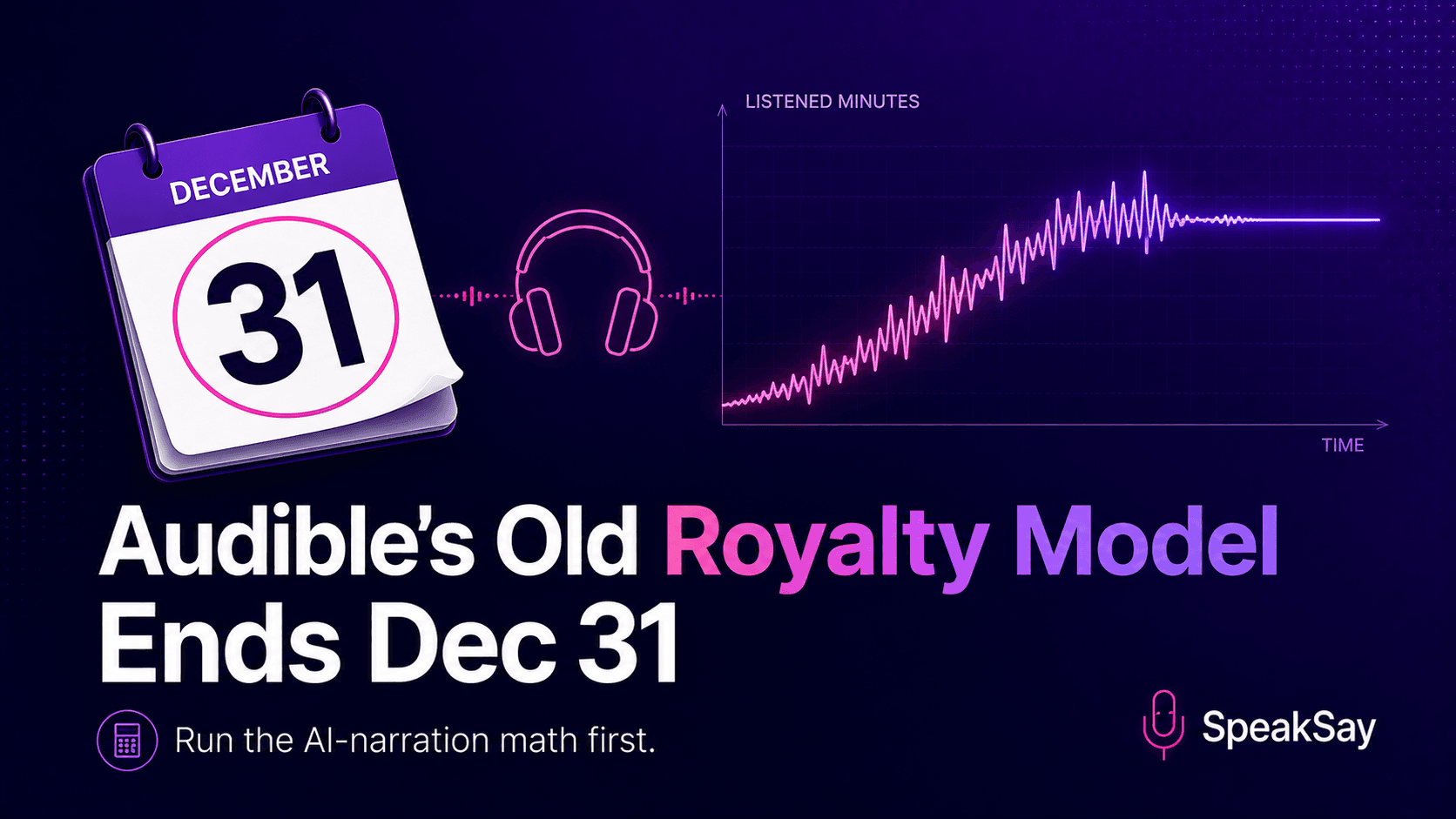
Audible's Old Royalty Model Dies December 31, 2026: The AI-Narration Math Indie Authors Need to Run Before Then
Audible's legacy royalty model is being retired at the end of 2026 and the replacement pays on listened minutes, not sales. That changes which books are worth producing, how long they should be, and whether AI narration still pencils out. Here's the math.
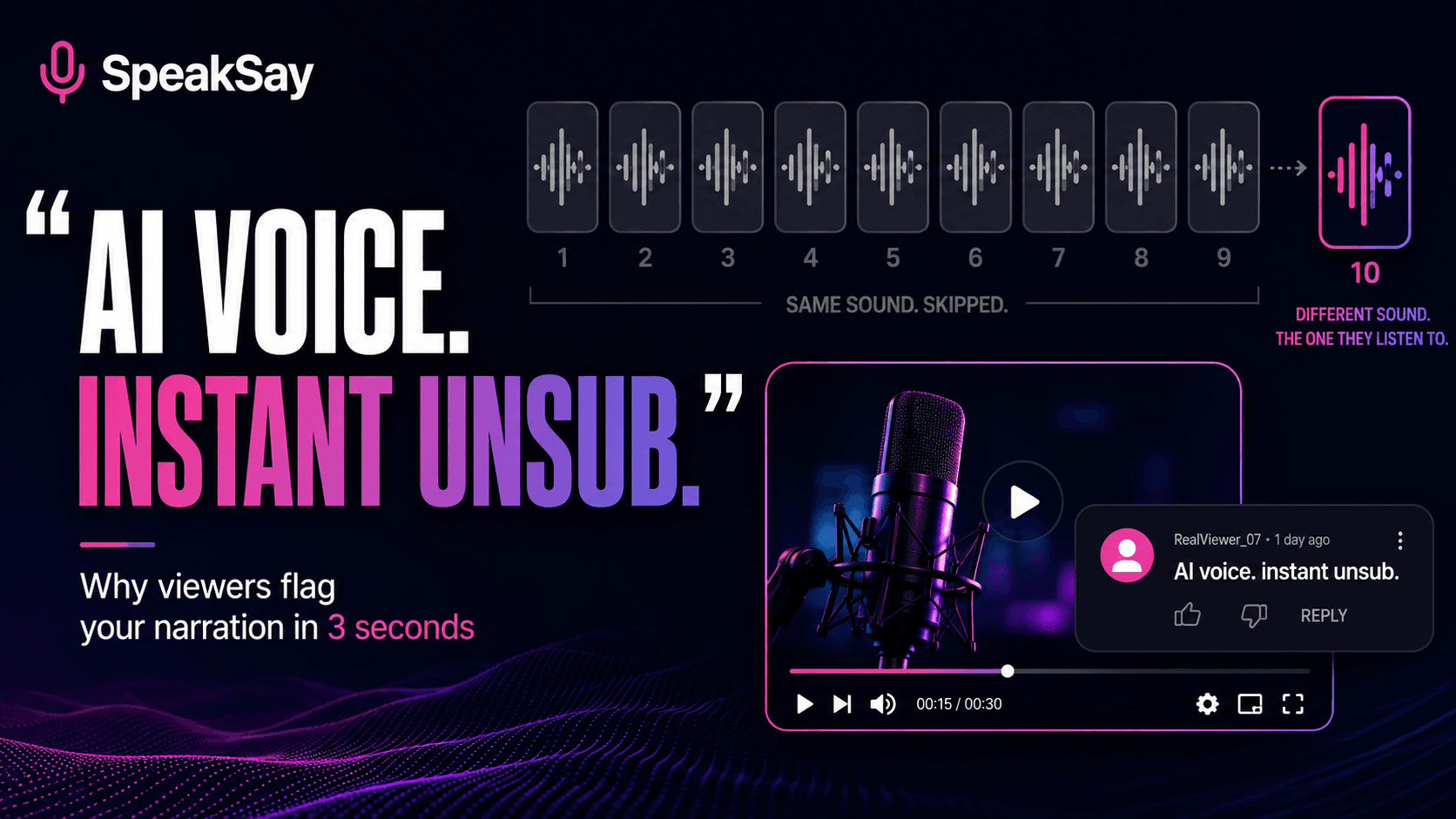
YouTube Just Deleted 16 AI Channels and 4.7 Billion Views: What They Had in Common — and the Human-Input Test Your Faceless Channel Must Pass (2026)
YouTube wiped 16 major AI channels, 4.7 billion views and roughly $10 million a year in revenue. AI wasn't the reason. Here is the pattern the deleted channels shared, and the seven-point human-input test your faceless channel needs to pass before the next sweep.
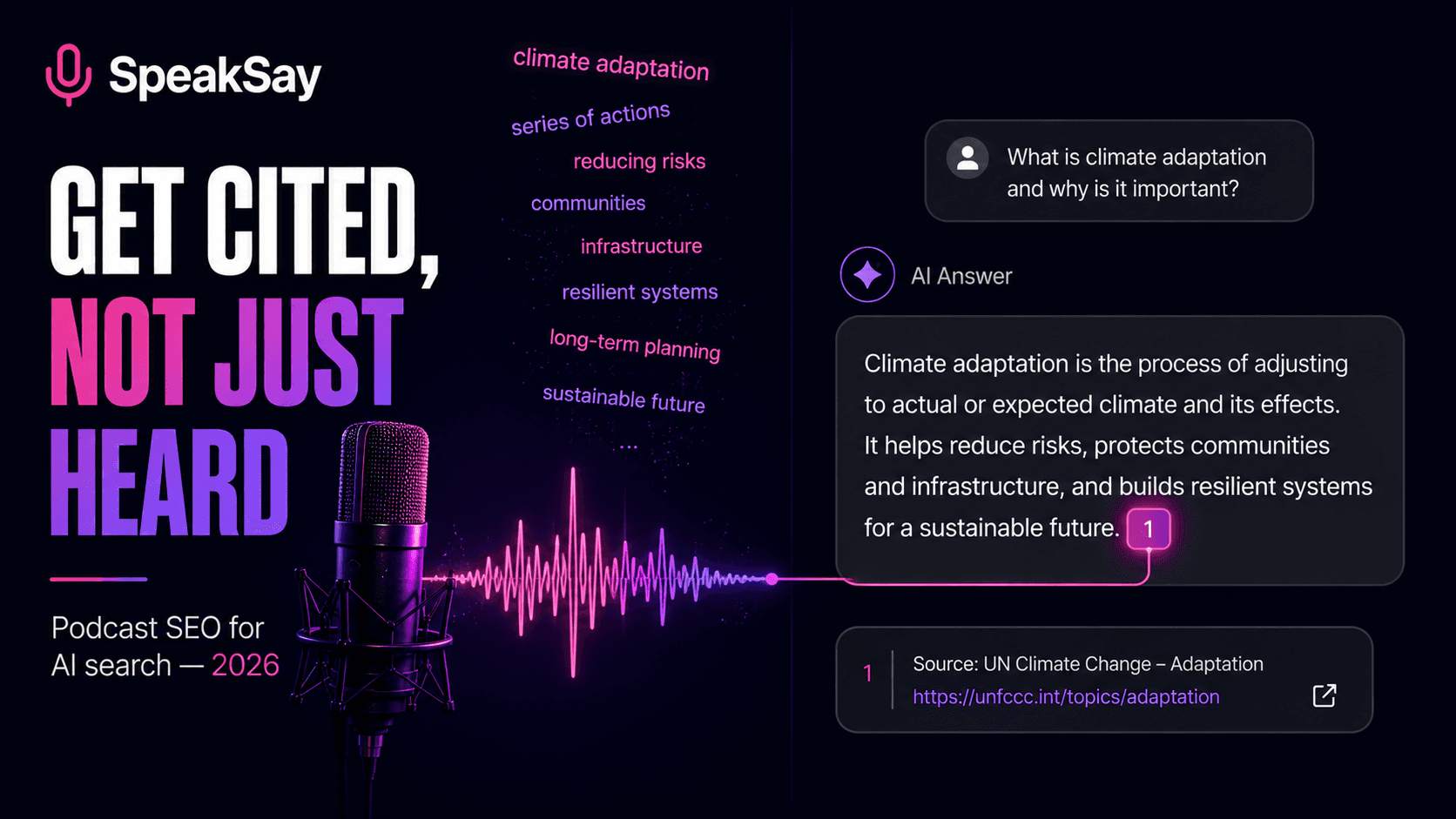
Nobody Browses Apple Podcasts Anymore — They Ask ChatGPT: How to Get Your AI Podcast Cited in AI Search (2026)
Podcast discovery moved. People ask an assistant a question and get an answer with three sources — and a podcast without a transcript is invisible in that layer. Here's the full citation stack: transcripts, episode pages, schema, show notes and the question-first structure that gets your show quoted.
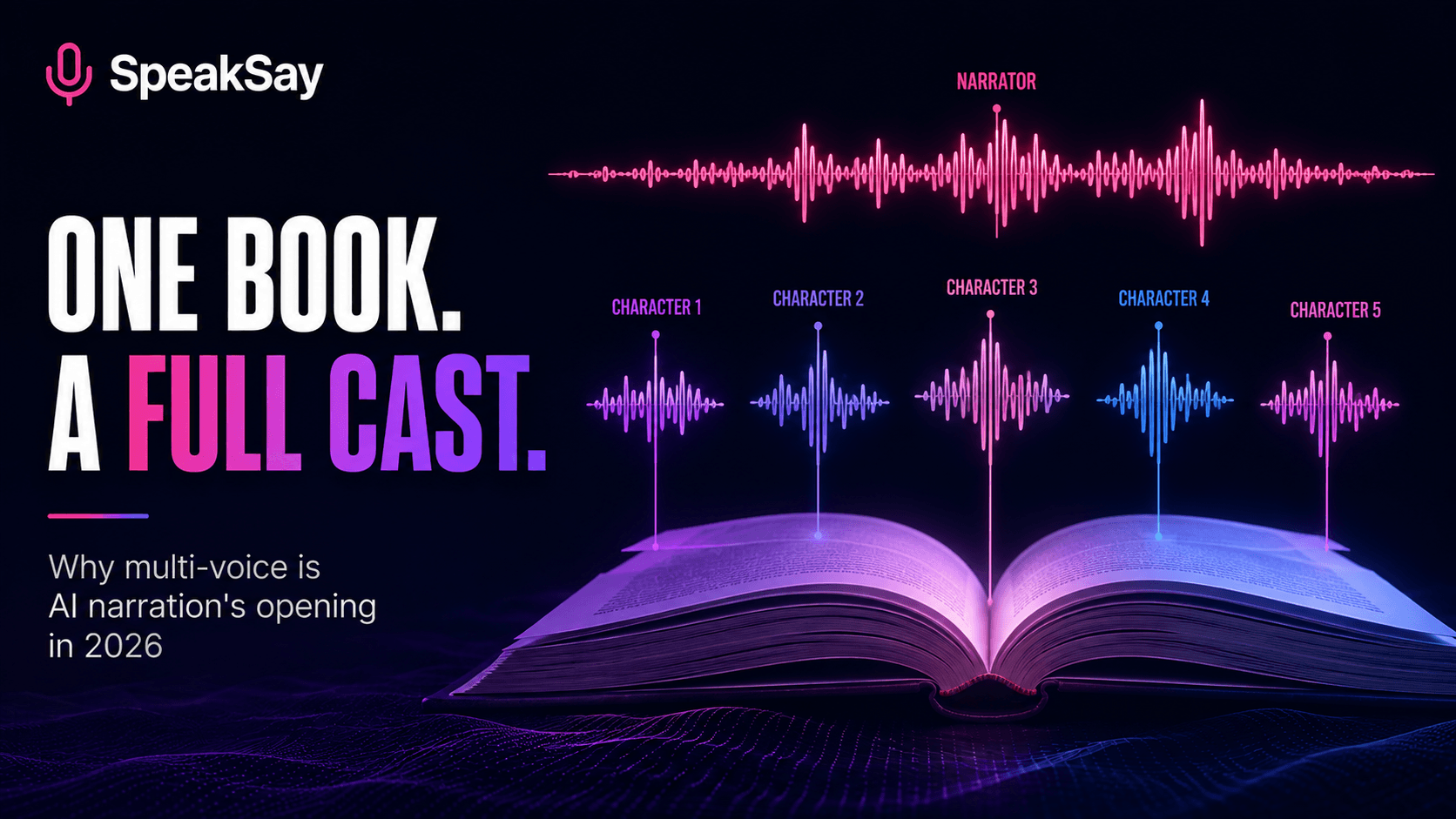
Listeners Are Cooling on AI Narration — Except for One Format: Why Full-Cast AI Audiobooks Are Indie Authors' 2026 Opening
Willingness to try AI-narrated audiobooks fell from around 70% to 61% this year. But the same research found listeners who actively prefer AI for multi-voice productions — the format human narration prices out of reach for indies. Here's how to produce a full-cast audiobook that earns that preference.
Business Case Study Channels Are Faceless YouTube's Highest-Value Audience: The 2026 AI Narrator Playbook
Rise-and-fall business stories attract the most valuable audience on faceless YouTube — and the sponsors to match. The bottleneck isn't research. It's that most creators narrate a corporate thriller in the voice of a customer service hold message. Here's the two-register narrator setup that fixes it.
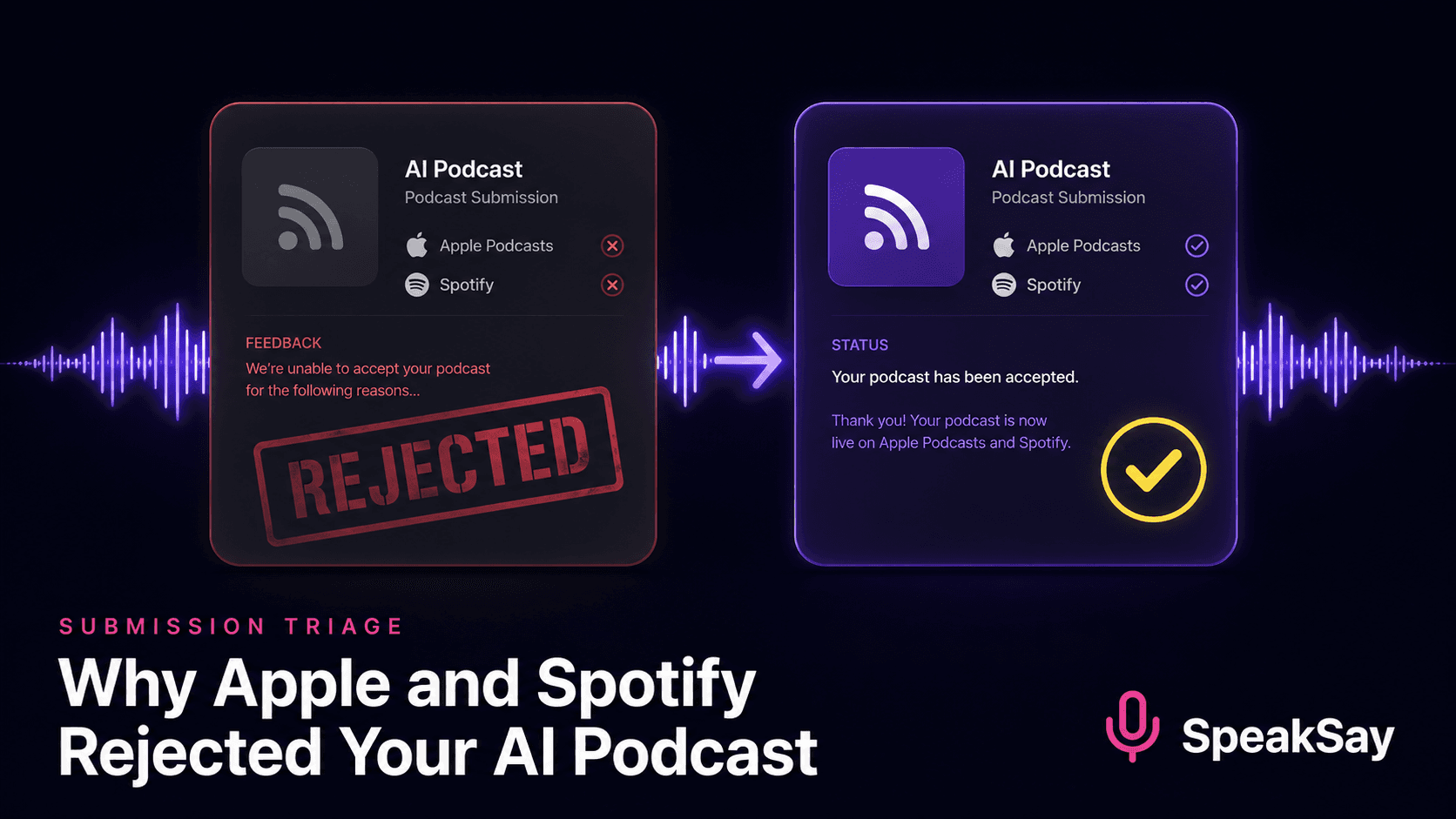
Your AI Podcast Got Rejected by Apple or Spotify? The 2026 Submission Fix List (RSS, Art, Disclosure & Detection Signals)
Directories tightened podcast intake in 2026 as AI-generated shows flooded the catalogue. Most rejections are still boring and fixable - invalid feeds and non-compliant artwork - but a growing share are quality and disclosure signals. Here's the full triage list.
Your Employer May Already Own an AI Clone of Your Voice: The Contract Clauses Radio Hosts, Podcasters & In-House Talent Must Read (2026)
An entertainment attorney warned in August 2026 that broadcast employment agreements are a blind spot on AI voice cloning - most are silent on synthetic replicas, and standard likeness language may already permit them. Here are the exact clauses to find in your contract tonight, and what to do about them.
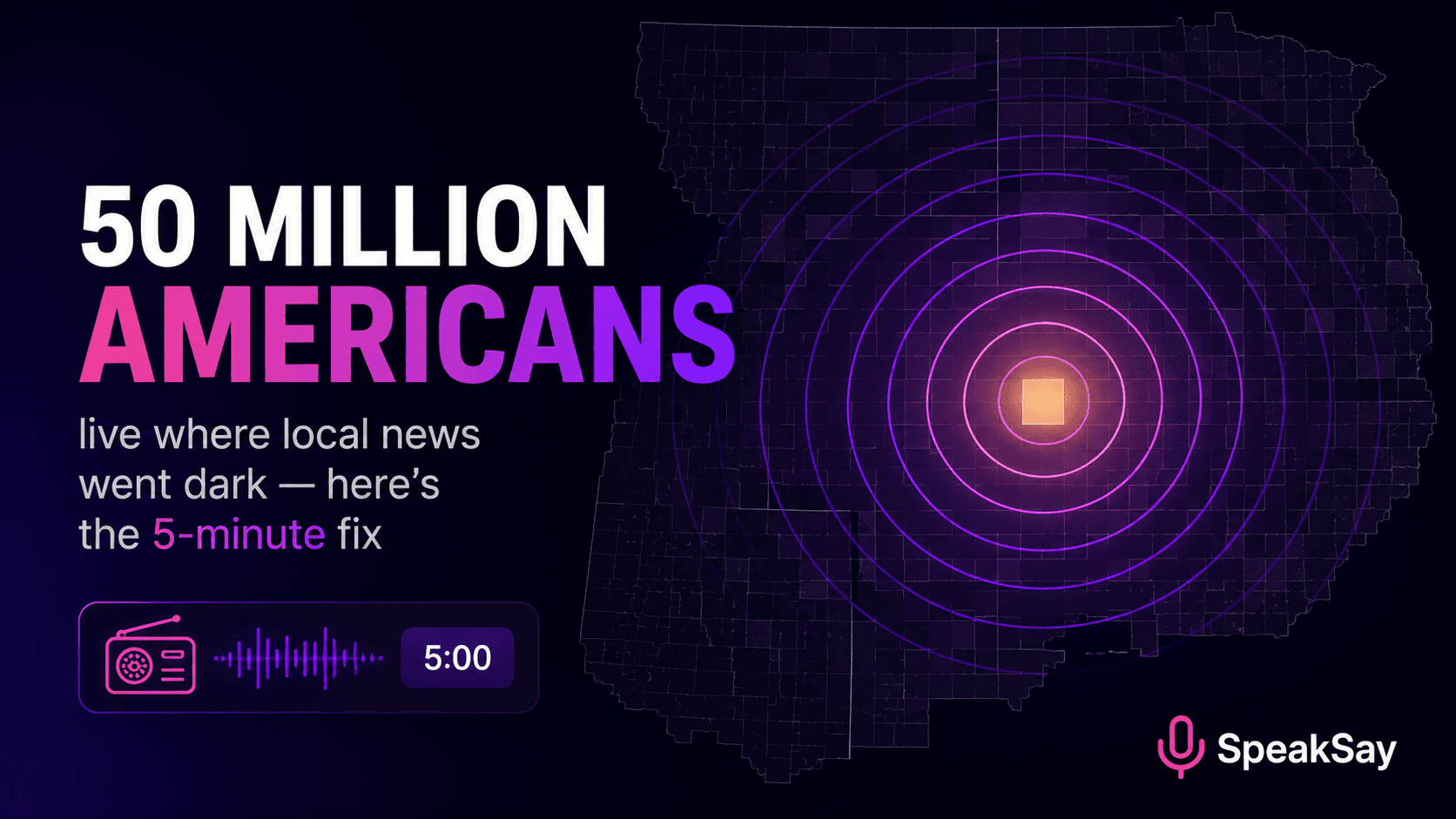
50 Million Americans Live in a Local News Desert: How to Launch a Hyperlocal Daily Audio Briefing With AI (2026)
News desert counties hit a record high and roughly 50 million Americans now have little or no local news. Over 300 local news startups launched to fill the gap — almost none can afford daily audio. Here is how one person produces a credible five-minute weekday briefing.
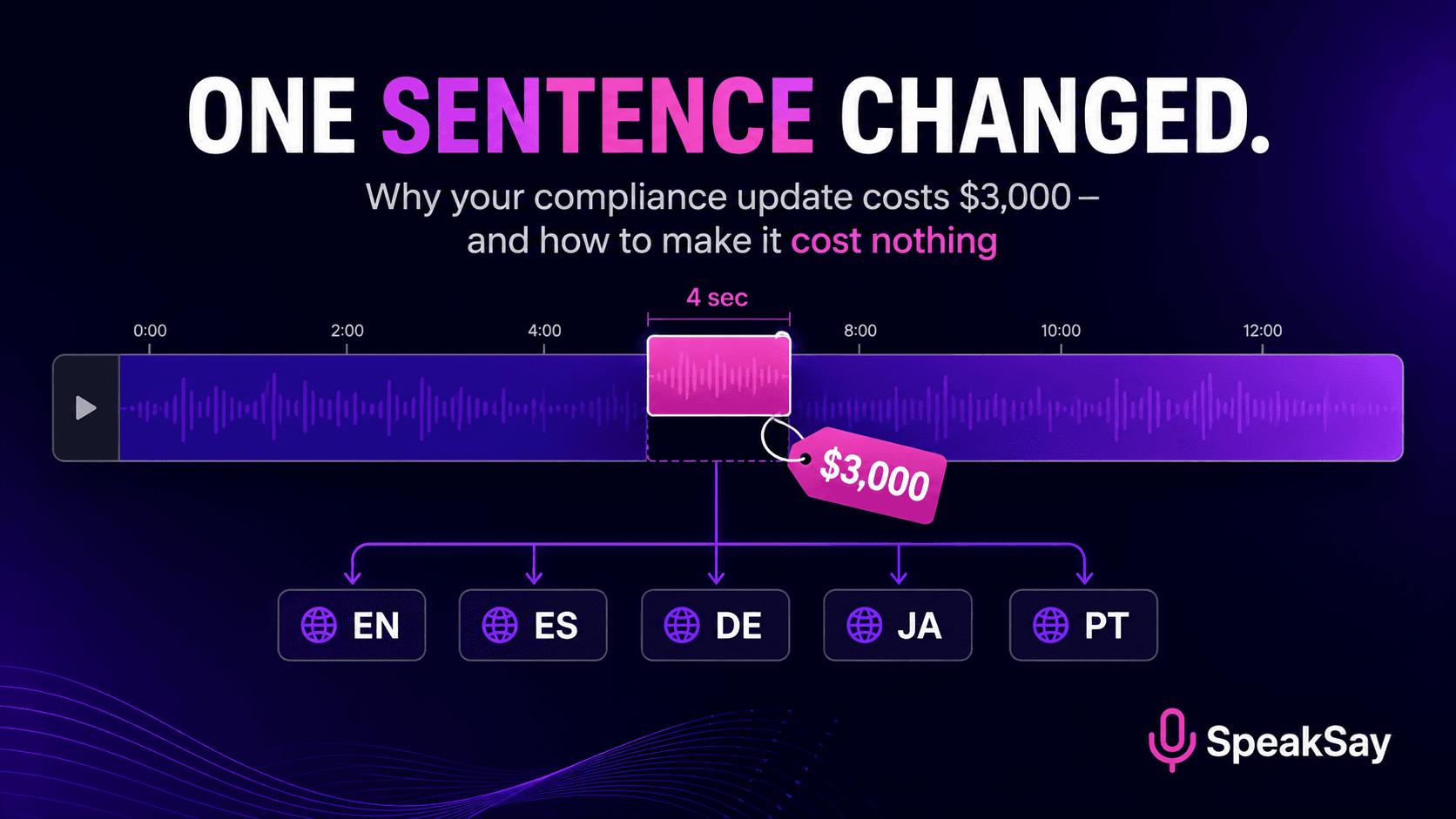
Every Compliance Update Costs You $3,000 in Re-Recording: The Corporate Training Voice-Clone Playbook (2026 L&D Guide)
A standard corporate voiceover runs $250–$2,500. Localizing one three-minute module into five languages adds $3,000–$10,000. Updating a finished video can cost up to 80% of the original production budget. Here is how L&D teams turn narration into a re-editable asset instead.
Car & Automotive Faceless Channels in 2026: The AI Narrator Playbook for YouTube's Most Loyal Gearhead Audience
Automotive is one of YouTube's biggest, most loyal audiences — and one of the least crowded faceless niches. Here's the full 2026 playbook: sub-niches, formats, monetization math, and the AI narrator voice that makes gearheads trust you.
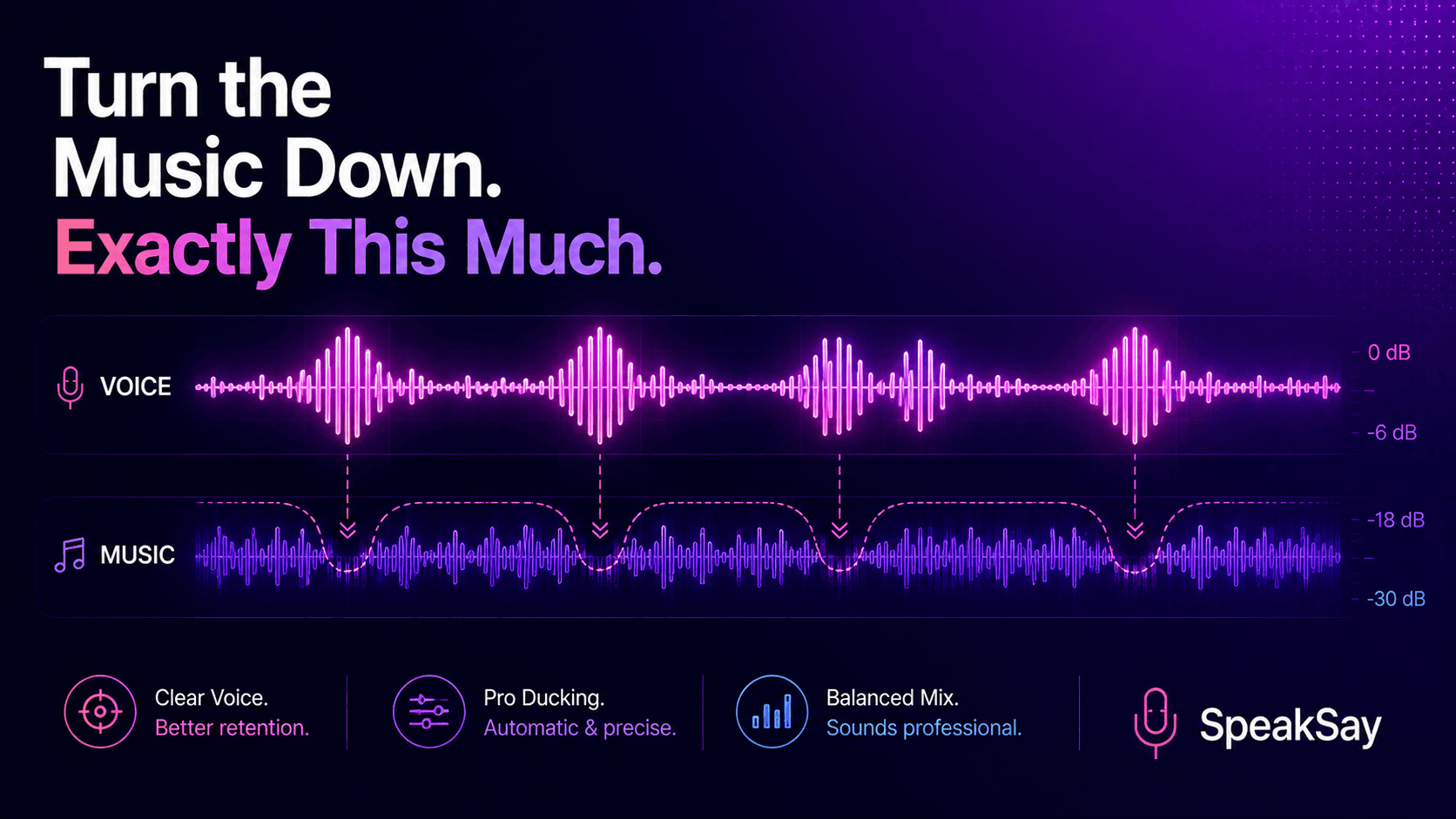
Background Music Is Drowning Your Voiceover: The 2026 Mixing Guide (Levels, Ducking & Free Tools)
"I can't hear the narrator" is the most common complaint on faceless videos — and the fix is four numbers and one technique. Here are the exact dB targets, the EQ carve that clears space for speech, and the free tools to do it.
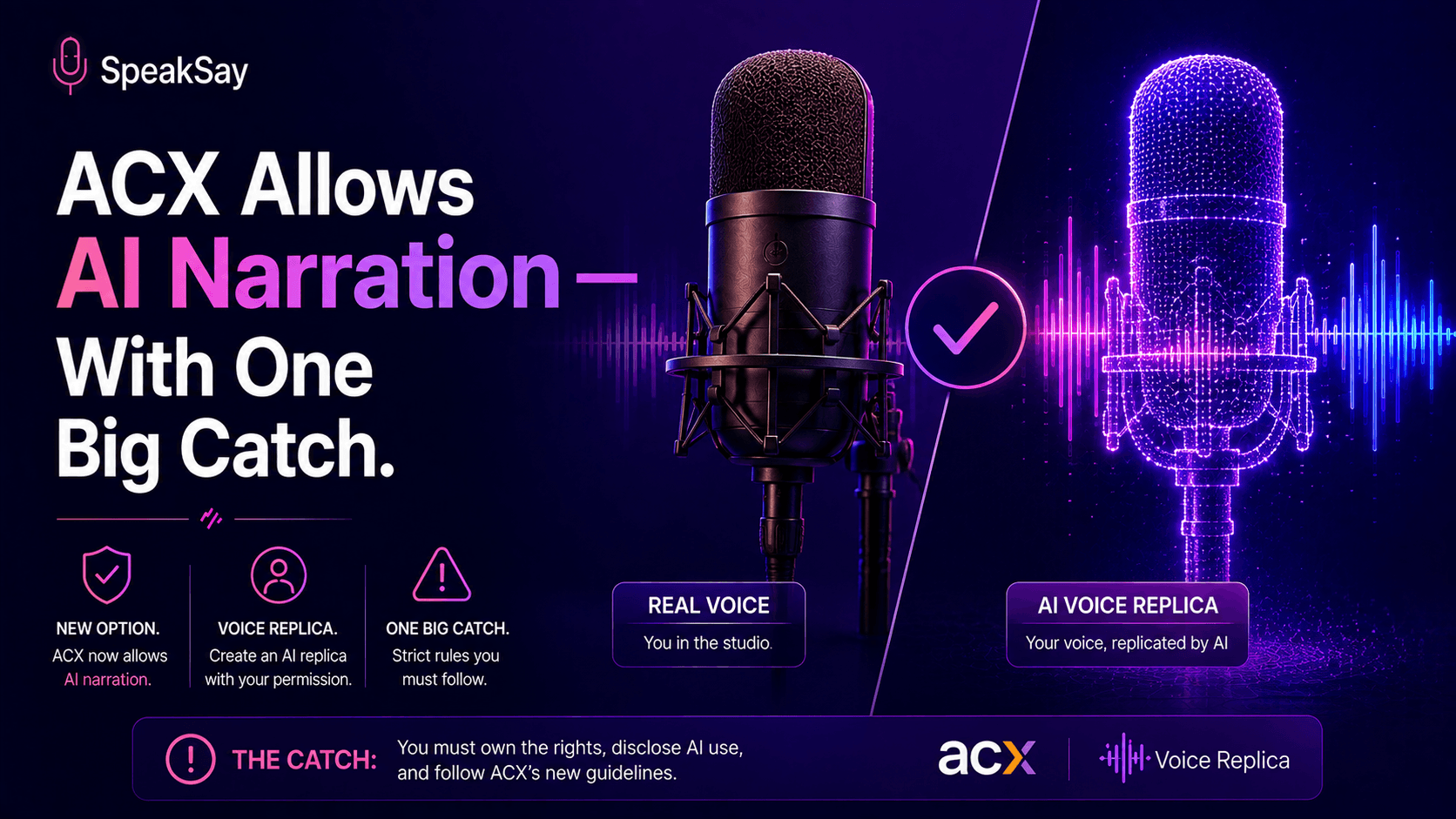
ACX Now Allows AI Narration — but Only Voice Replicas: The 2026 Rules for Authors & Narrators
ACX's 2026 rules still ban unauthorized AI narration — but its new Voice Replica program lets narrators use authorized clones of their own voices. Here's what's legal where, and the decision map for authors and narrators.
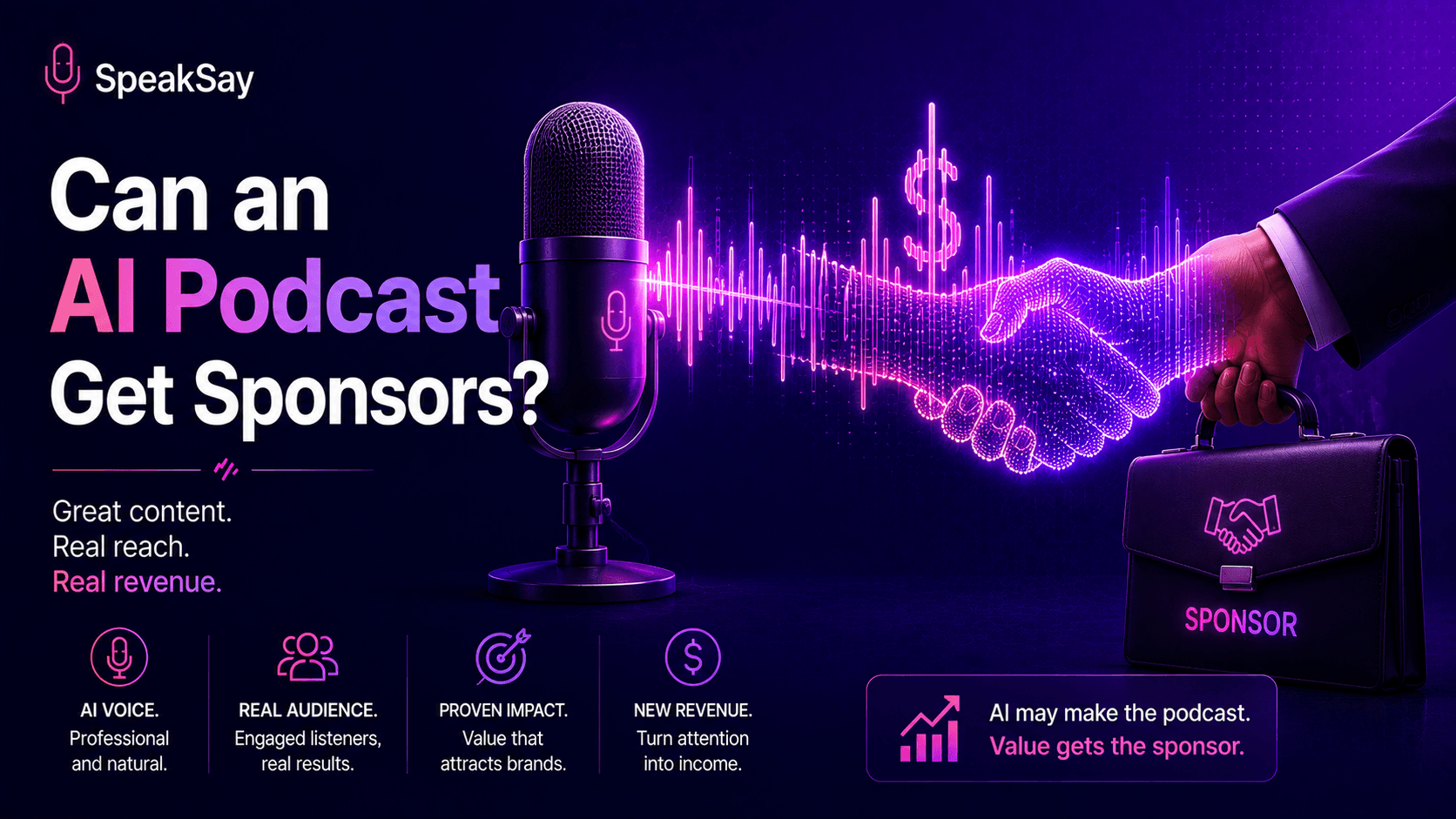
Can an AI Podcast Get Sponsors? How to Land Ads & Sponsorships for an AI-Made Show (2026)
53% of podcasters expect more sponsorship deals in 2026 thanks to AI audience matching — but AI-made shows face disclosure rules and "podslop" stigma. Here's the qualification playbook that gets an AI podcast paid.
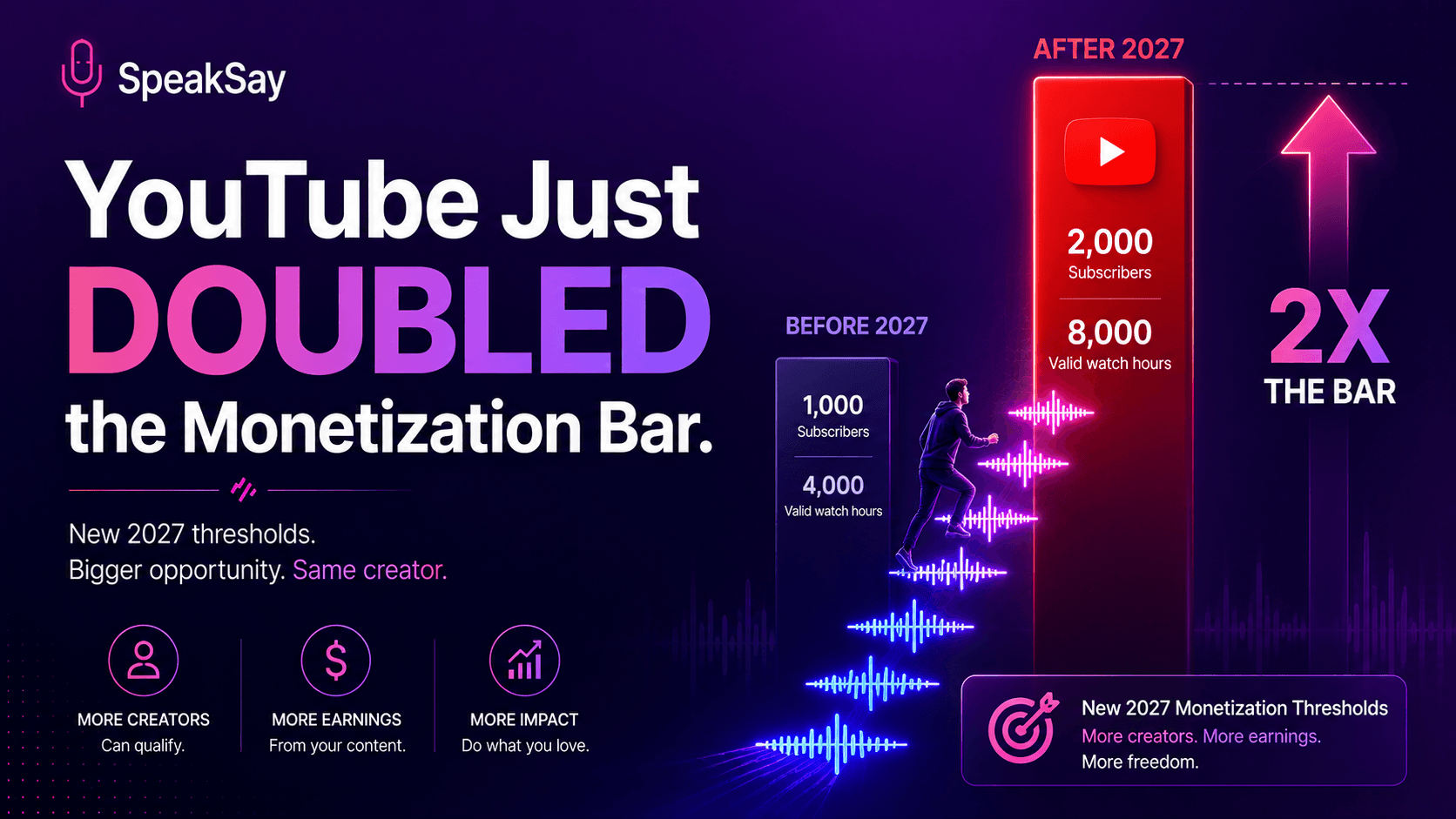
YouTube Just Doubled the Monetization Bar (August 2026): The New Survival Math for Faceless AI-Voice Channels
YouTube's August 2026 announcement doubles watch-hour requirements and demands 10M Shorts views for revenue sharing from February 2027. Here's the old-vs-new math, the grandfather window, and why long-form AI narration just became the smartest path in.
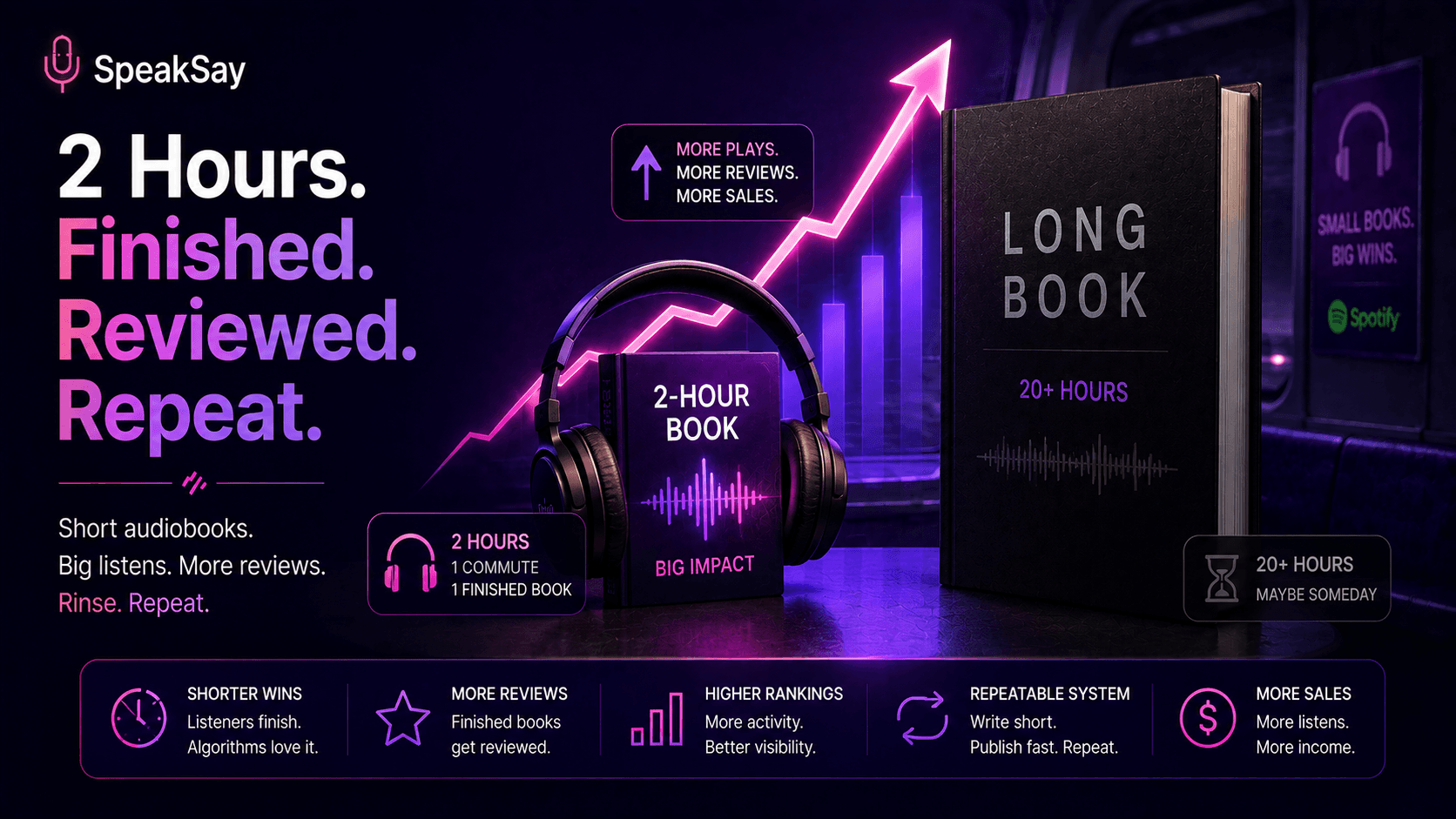
The 2-Hour Audiobook Is Outselling the 12-Hour Epic: Micro-Audiobooks & Short Nonfiction Audio (2026)
Spotify's audiobook boom rewards titles listeners can actually finish. Your novellas, guides, and long essays aren't "too short" — with AI narration they're finally profitable. Here's the micro-audiobook strategy.
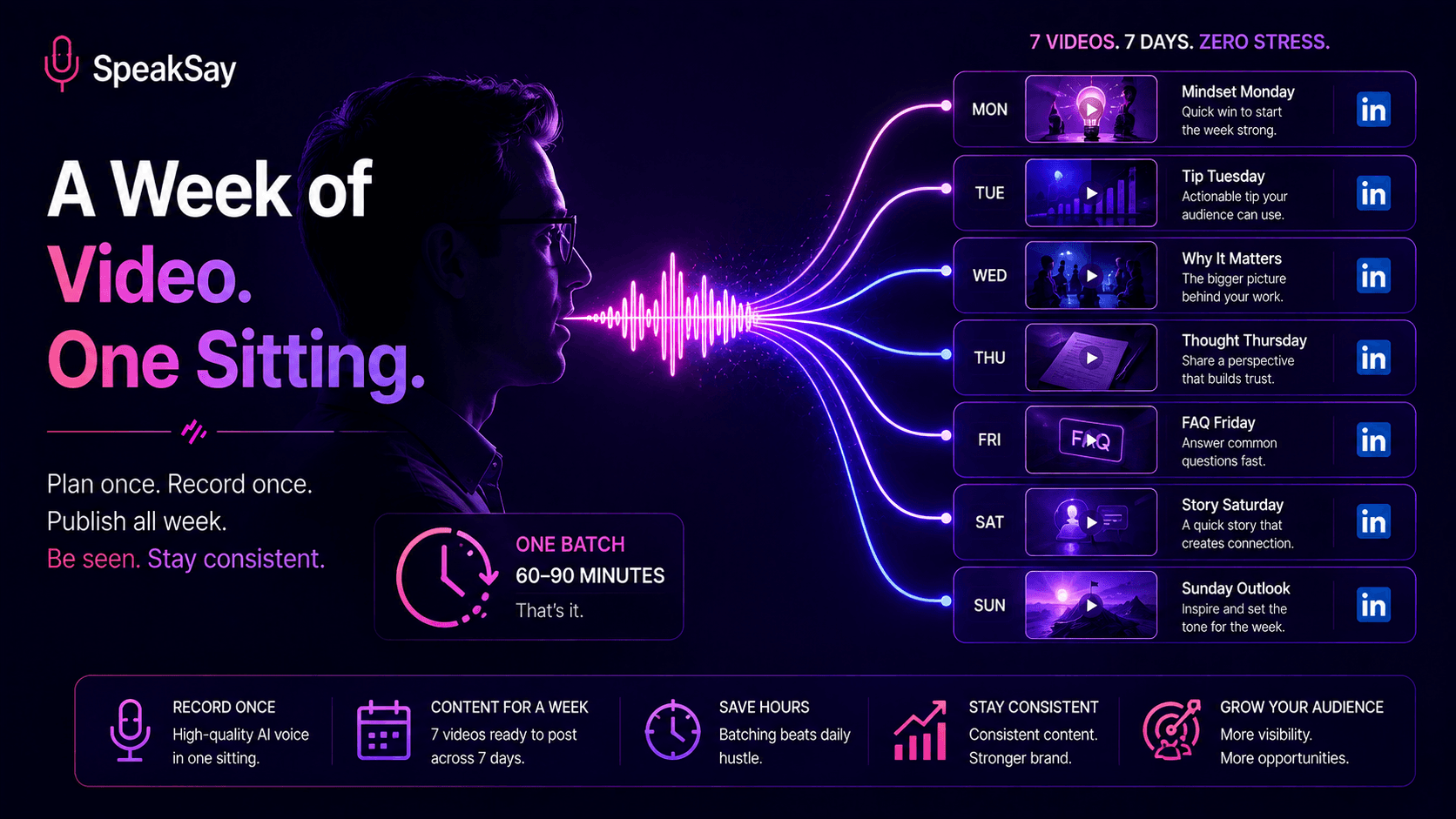
Post Video Daily on LinkedIn Without Recording Daily: The Thought-Leadership Voice Clone Workflow (2026)
LinkedIn's algorithm wants video; your calendar doesn't. The 2026 workflow: write like you always did, publish it as video in your own cloned voice — batched a week at a time, in thirty minutes
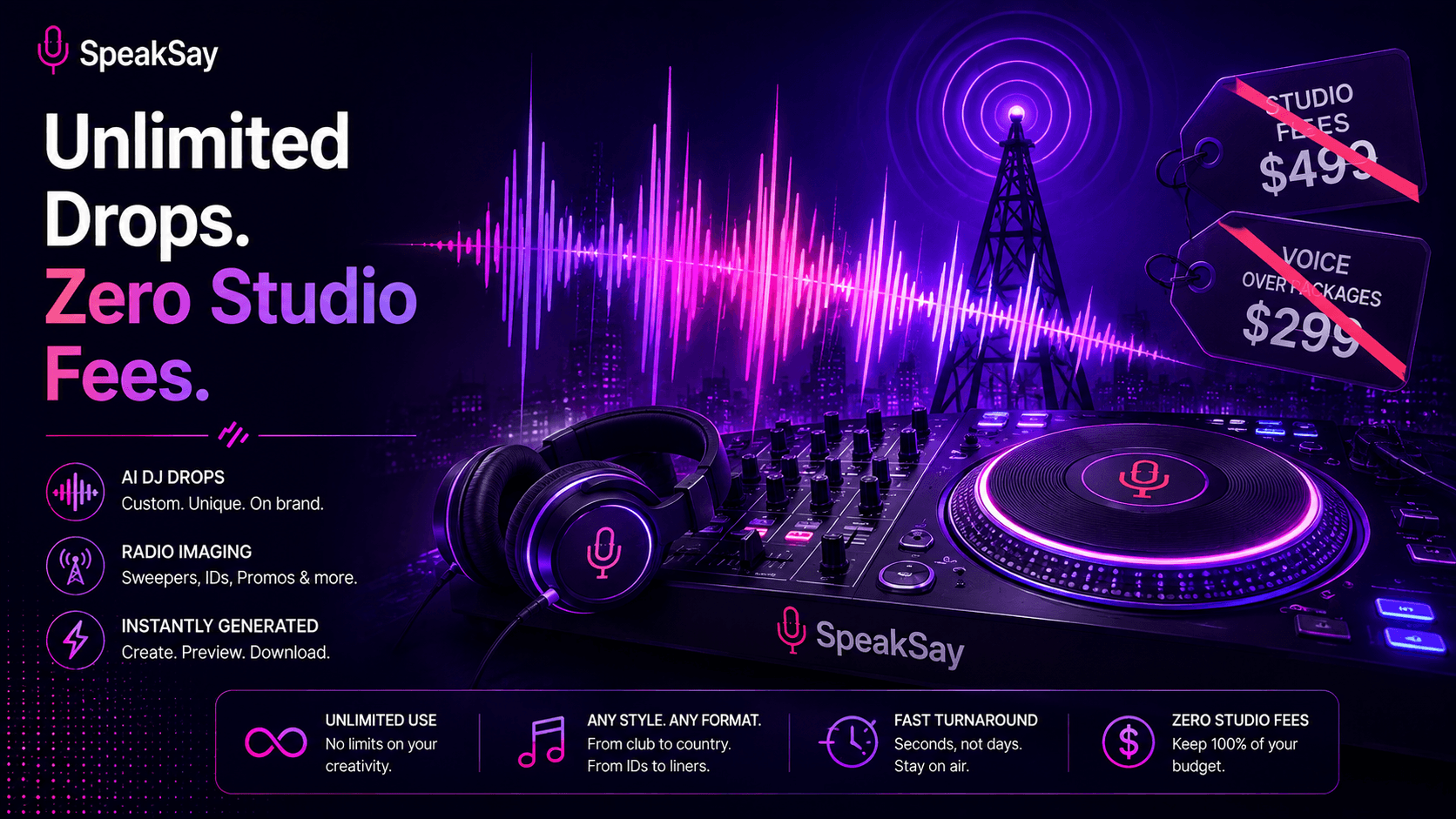
DJ Drops, Radio Sweepers & Station IDs With AI Voices: Stop Paying $50 a Drop (2026)
Custom DJ drops and radio imaging used to mean $25–$100 per cut and days of turnaround. In 2026, DJs, internet radio stations and podcasters design a signature imaging voice once and generate unlimited drops in minutes. Here's the full workflow.
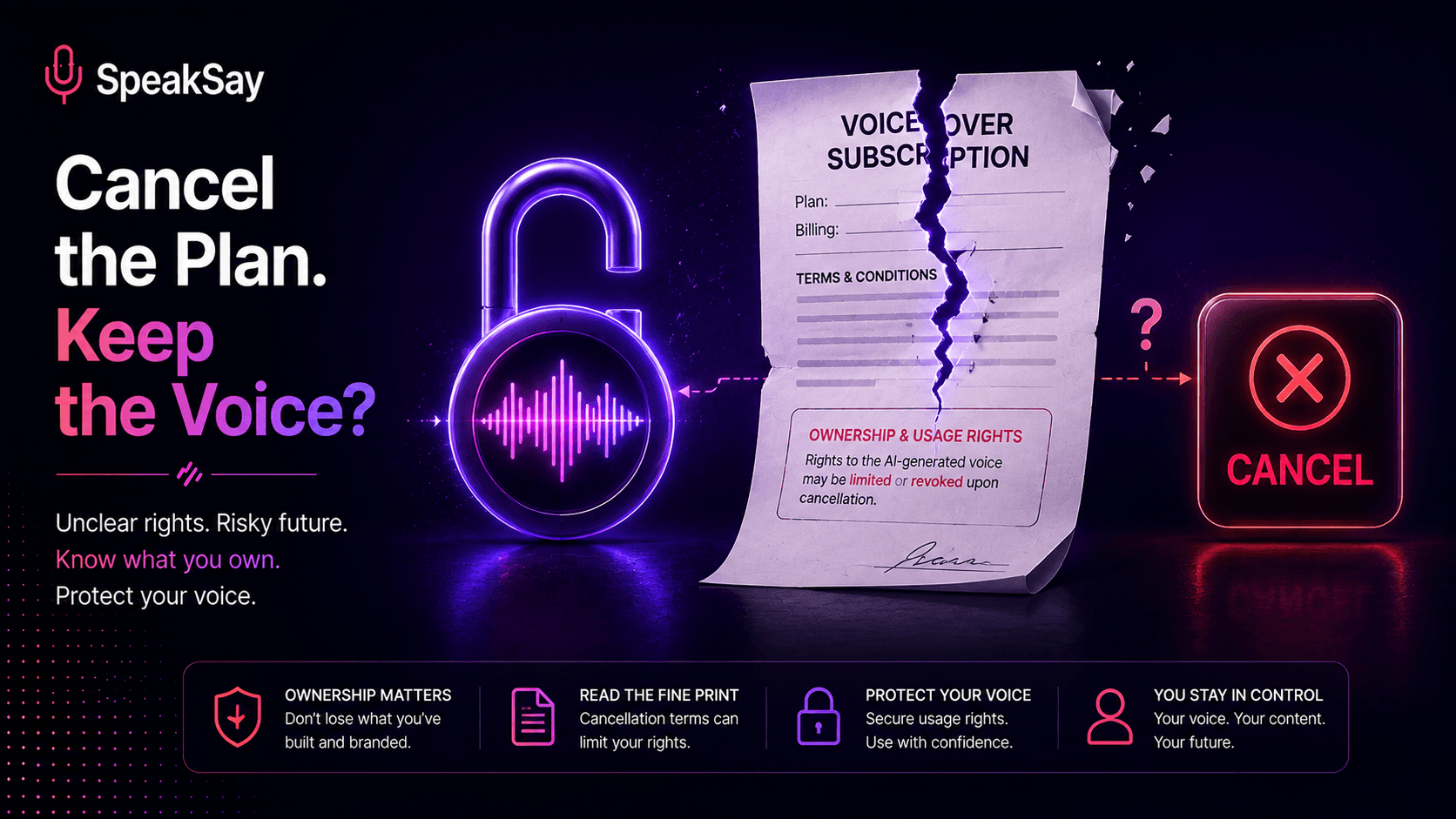
Do You Keep the Rights to Your AI Voiceovers After You Cancel? AI Voice Ownership Rules Explained (2026)
You cancelled your AI voice subscription — can you still monetize the 200 videos you made with it? The 2026 plain-language guide to AI voiceover ownership: paid vs free tiers, attribution traps, platform differences, and how to end license anxiety for good.
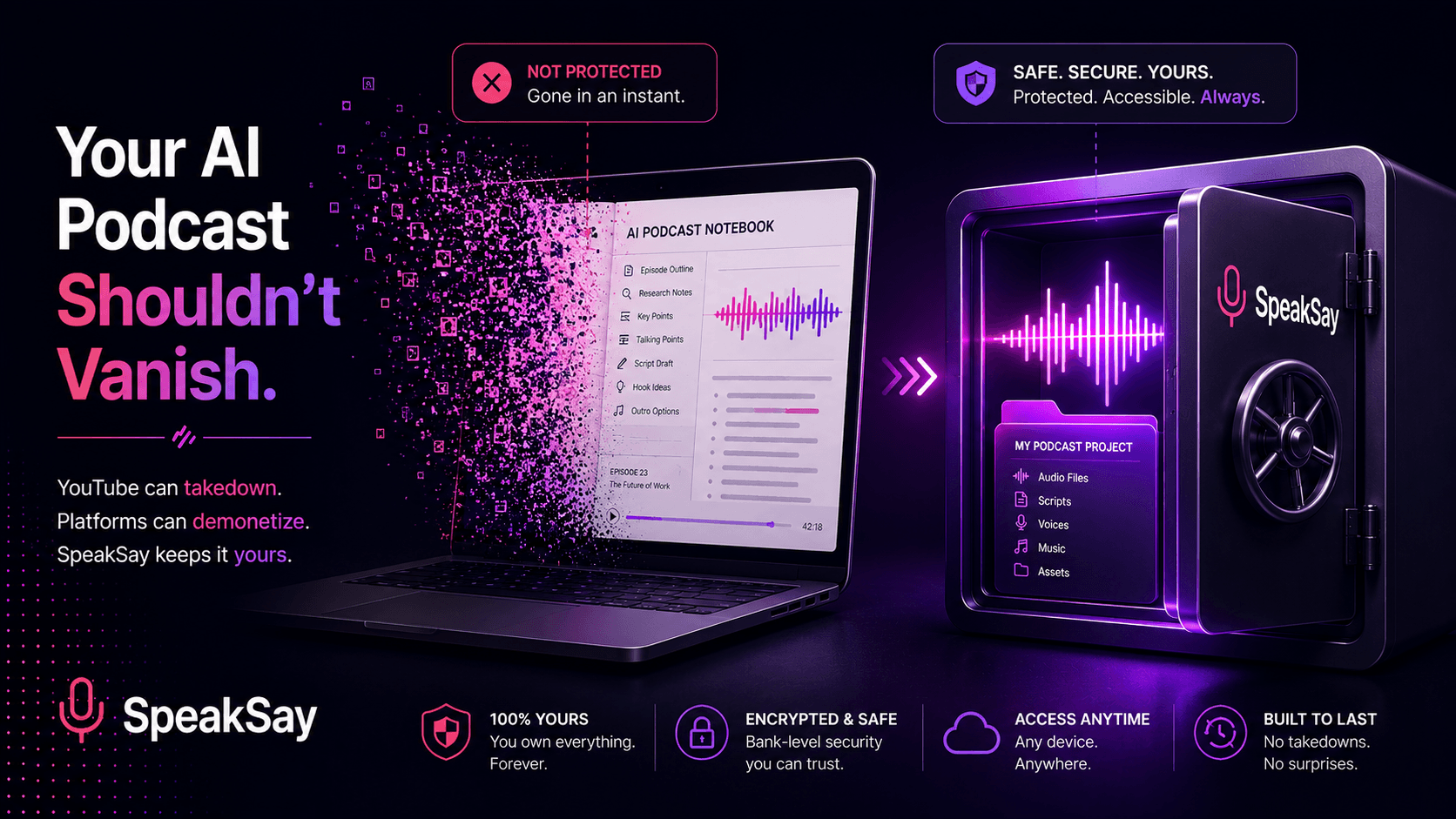
You're Paying for 5 AI Audio Tools: The 2026 Consolidation Math (TTS + Cloning + Podcast + Remix in One Bill)
A TTS subscription here, a voice cloner there, a podcast generator, a voice changer, a grab-bag of one-off utilities — creator audio stacks quietly hit $100+/month. Here's the audit worksheet, the real math for a typical faceless creator, and when consolidation (or a lifetime plan) beats the stack.
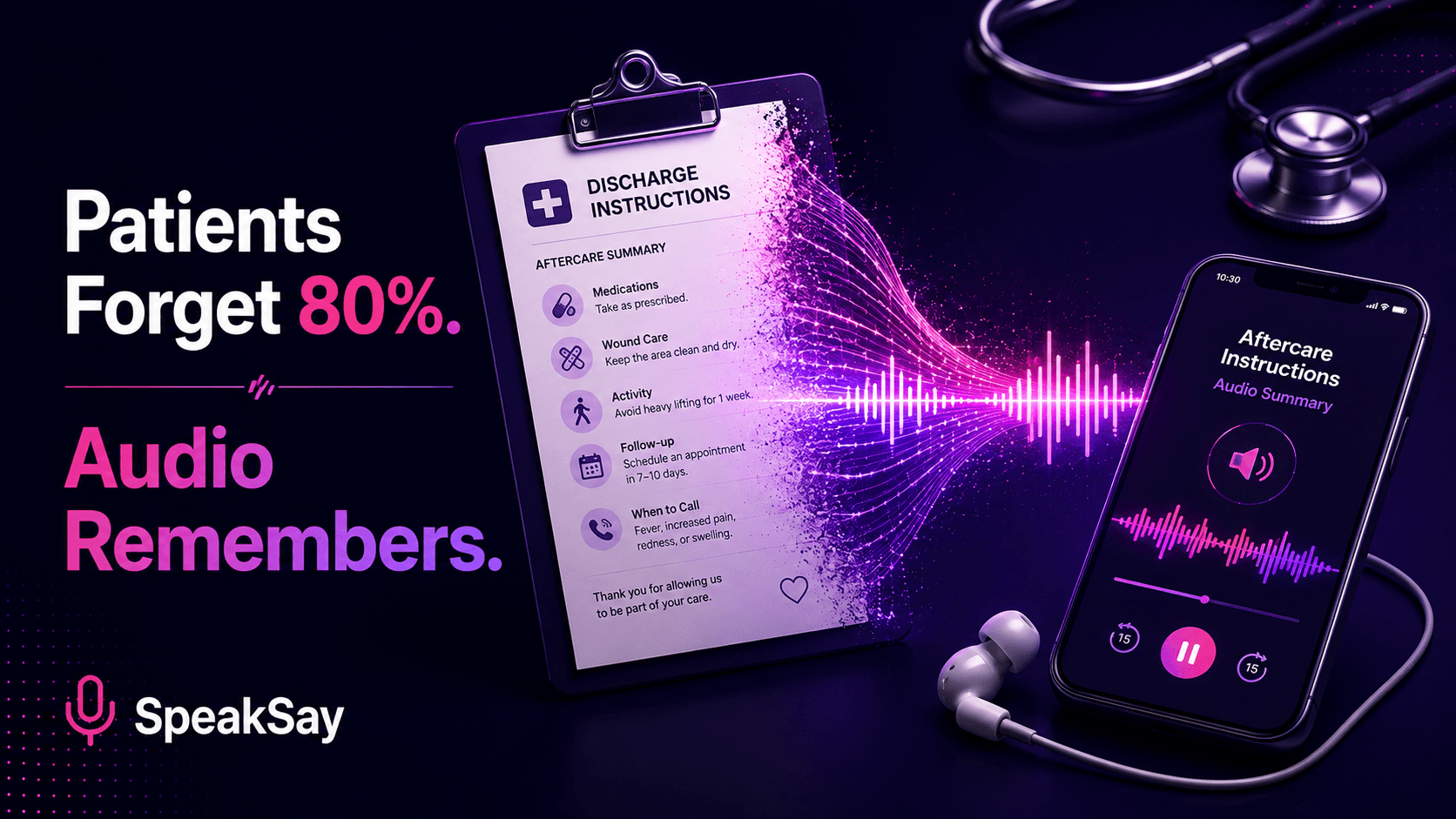
Patients Forget 80% of What Doctors Say: Clinics Are Turning Aftercare Instructions Into Audio With AI (2026)
Research shows patients immediately forget 40–80% of verbal medical instructions. Clinics are fixing it with AI-voiced aftercare audio — in the clinician's own voice, in every language their patients speak.
Your Voice Might Already Be on an AI Platform Without Your Consent: How Creators Check, File Takedowns & Lock Down Their Voice (2026)
Creators keep finding their voices on AI platforms they never signed up for — even as those platforms raise millions. Here's how to check if your voice is out there, get it taken down, and make the official version of your voice the one you control.
Nonprofits: Stop Choosing Between Mission and Marketing Budget — AI Voiceovers for Fundraising, Donor Updates & Multilingual Outreach (2026)
Every dollar a nonprofit spends on video production is a dollar donors expected to fund the mission. In 2026, nonprofits are cloning their founder's voice once and producing appeals, thank-yous, impact reports, and multilingual outreach in minutes. The complete guide.
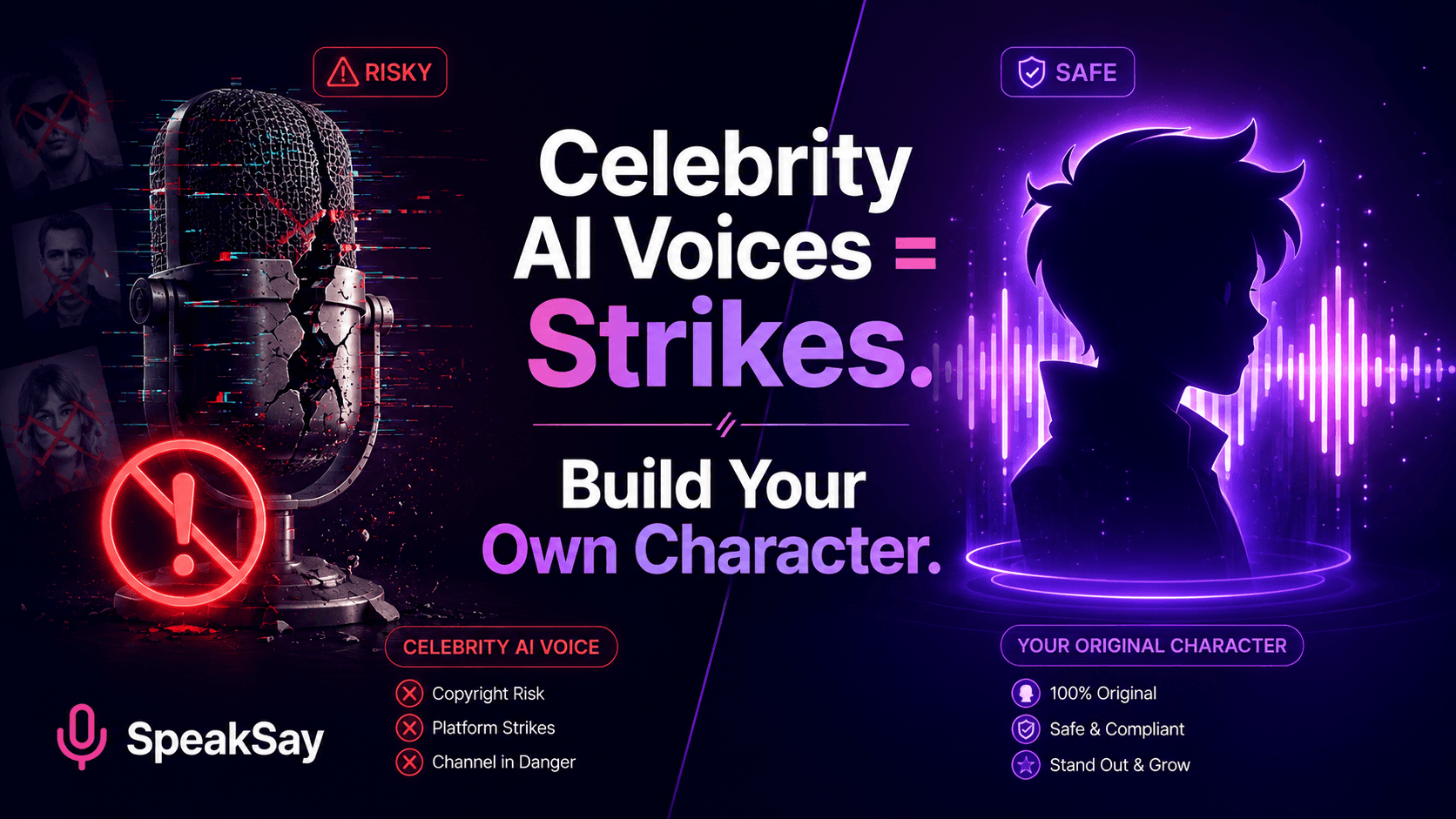
AI Celebrity Voices Are a Copyright Strike Waiting to Happen: Build an Original Parody Character Instead (2026)
Searching for an AI celebrity voice generator? Read this first. Between the NO FAKES Act, platform bans, and estate lawsuits, celebrity voice clones are 2026's fastest route to strikes and takedowns. Here's the legal landscape — and how to build an original parody character with the same comedic punch.
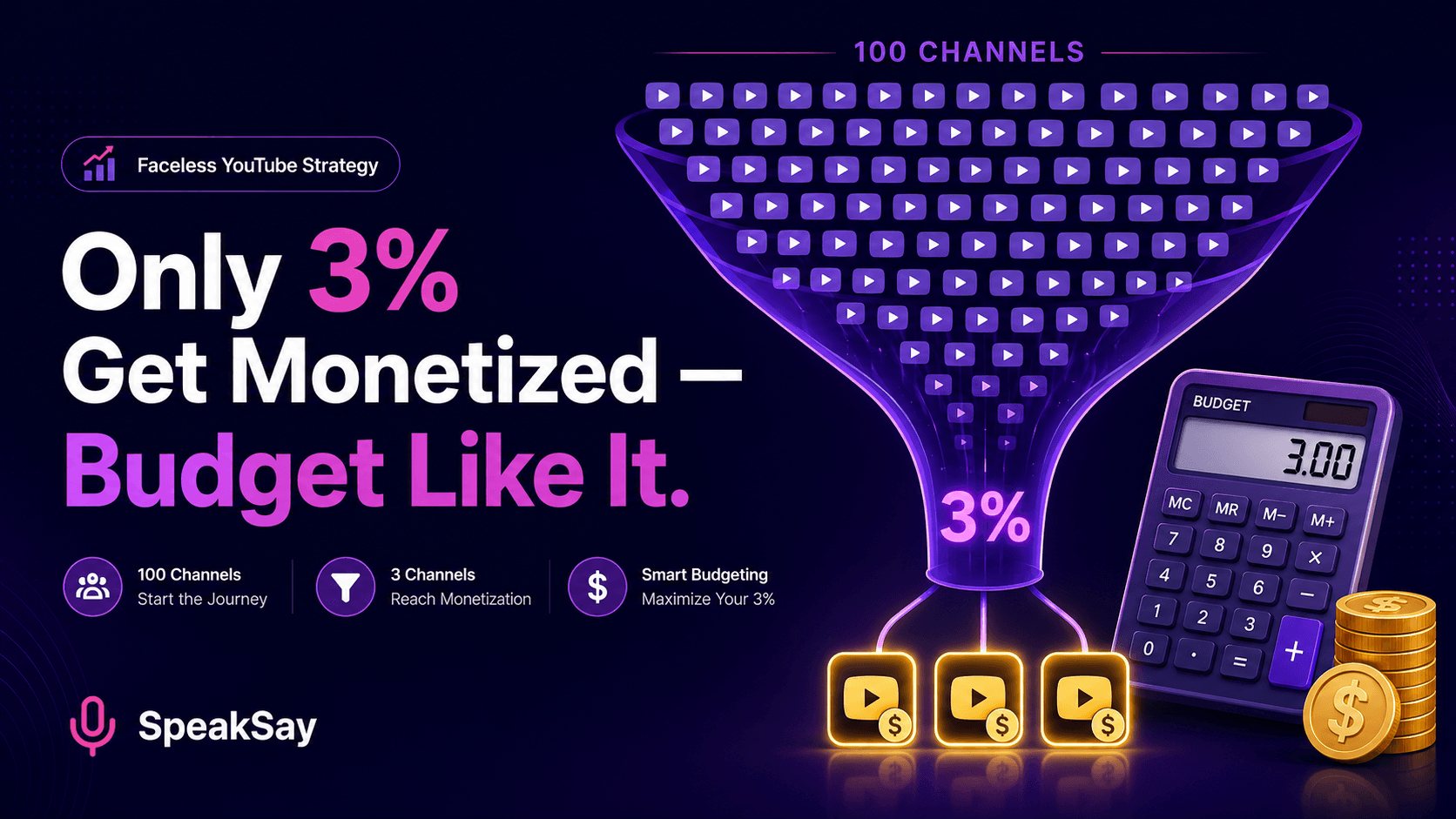
Only 3% of Faceless YouTube Channels Ever Get Monetized: The 2026 Startup Cost & Budget Math That Puts You in the 3%
97% of faceless channels never break even — usually because they overspend on tools before earning a cent. Here's the real 2026 startup budget, line by line, and how to keep your voice costs from killing the channel.
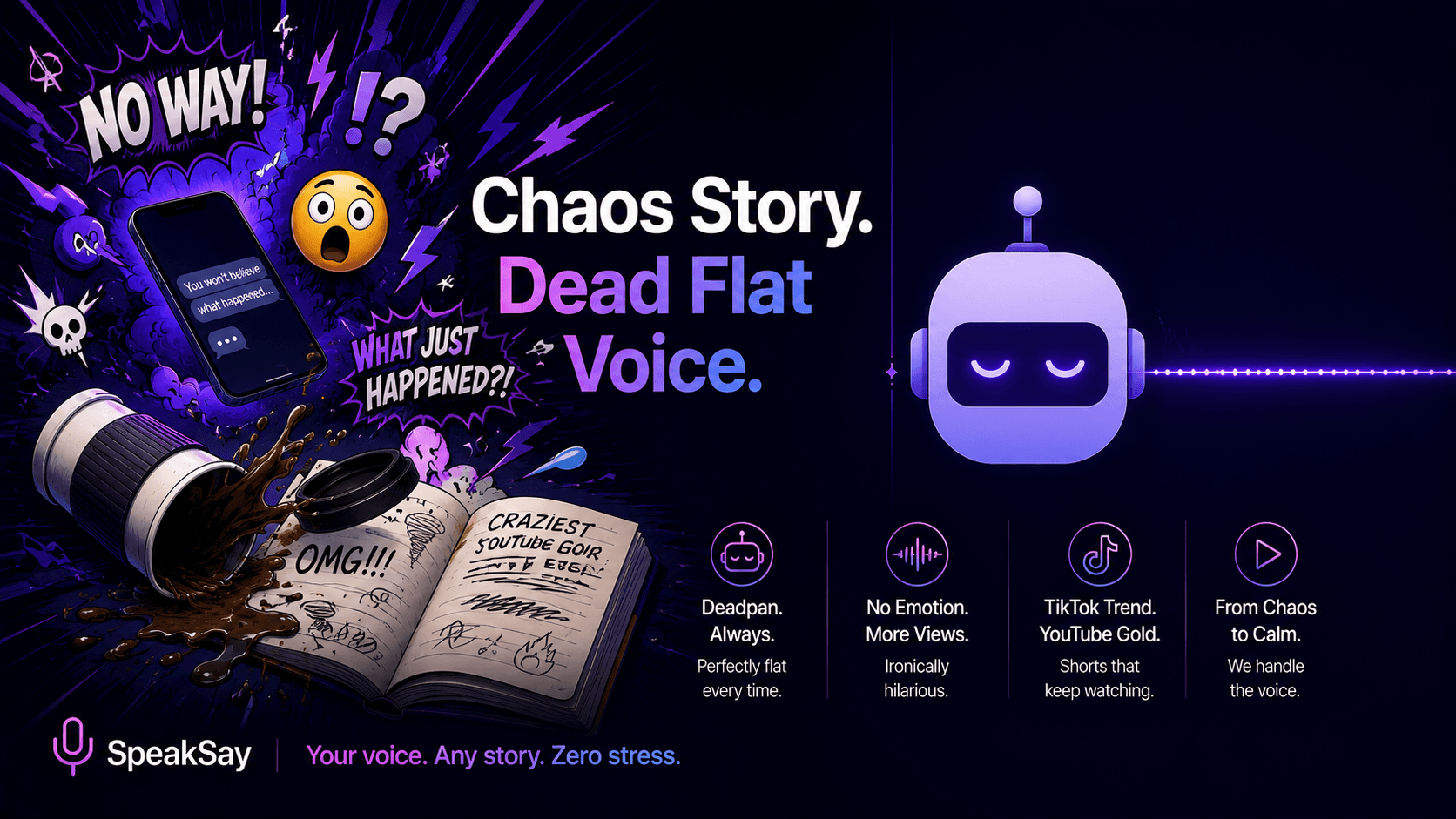
TikTok's Deadpan Robot Narrator Trend: Why Flat AI Voices Are Going Viral — and How to Make Yours (2026)
The funniest voice on TikTok right now has no emotions at all. Deadpan robot narration over chaotic human stories is the platform's breakout comedy format of summer 2026 — here's why the contrast works, why the stock voices are played out, and how to build a deadpan narrator that's actually yours.
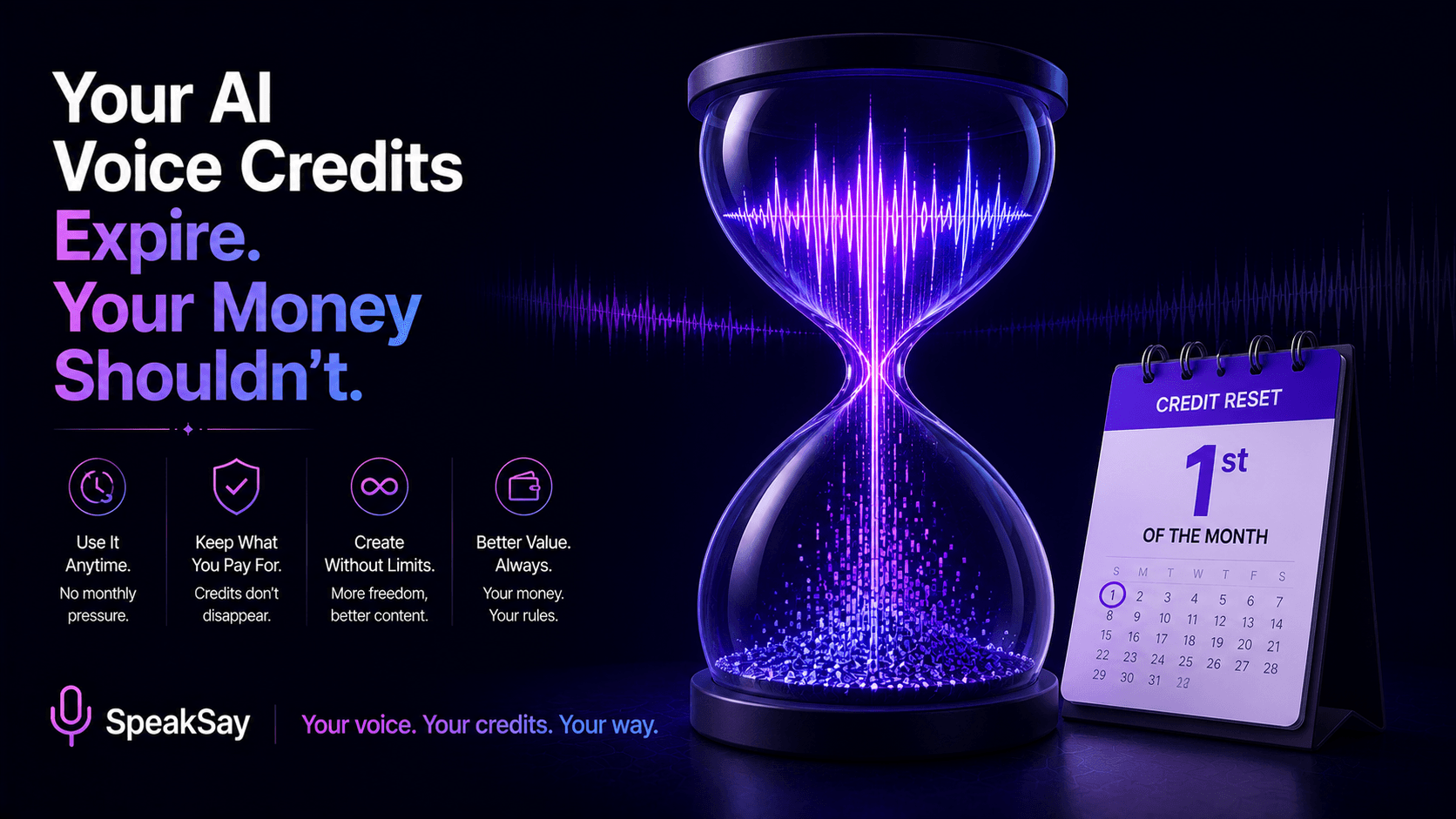
Do Unused AI Voice Credits Roll Over? The Use-It-or-Lose-It Subscription Trap Costing Creators Hundreds (2026)
Most AI voice subscriptions quietly delete your unused credits every month. Here's the real math on what the use-it-or-lose-it trap costs creators per year — and how to escape it for good.
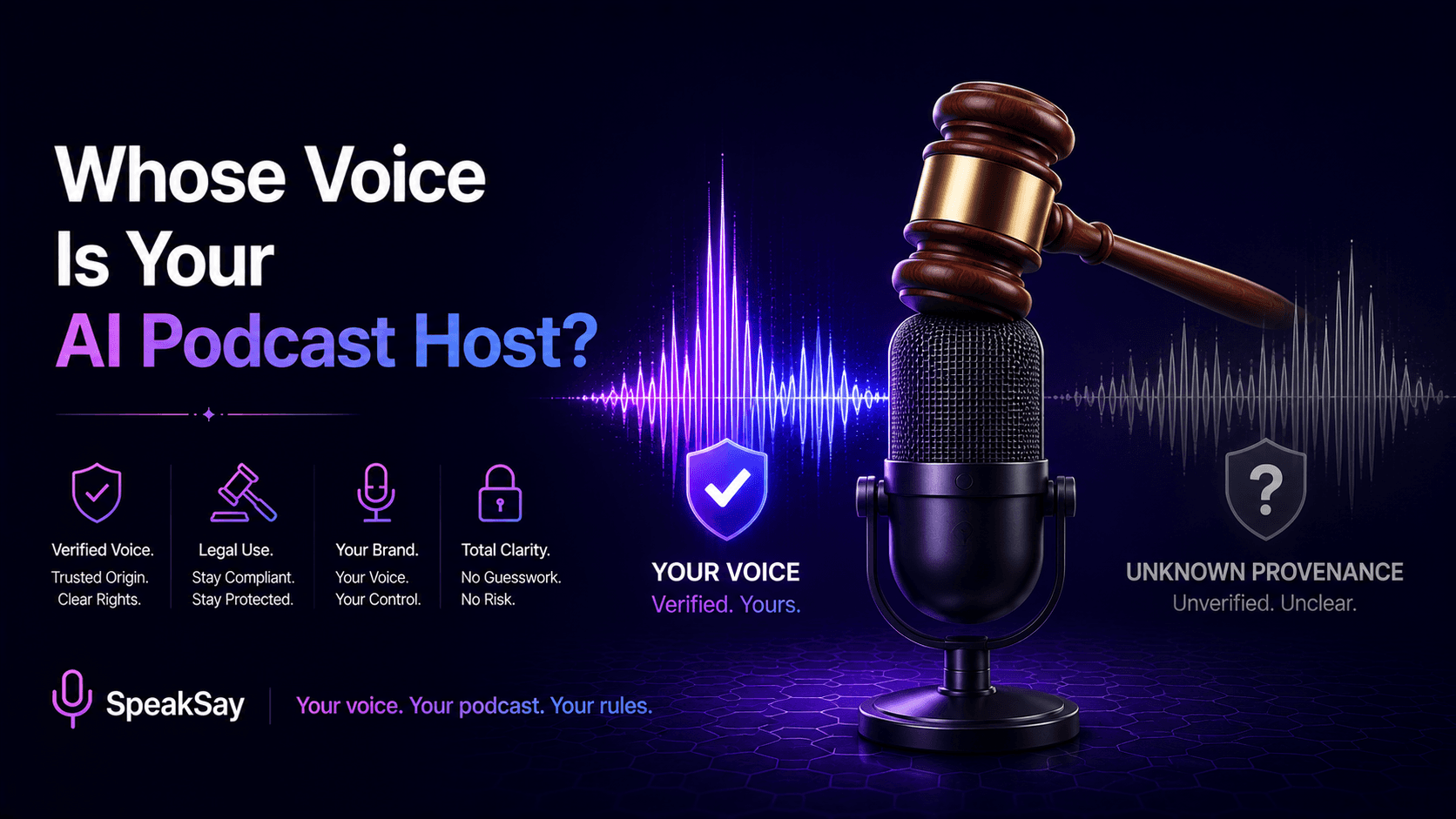
Google Got Sued Over Its AI Podcast Host's Voice: How to Make Sure YOUR Podcast Voice Is Legally Yours (2026)
NPR's David Greene says Google's AI podcast host is a dead ringer for his voice — and he's suing. If you publish AI podcasts with stock host voices, here's what the case means for you, and the two ways to make your podcast voice legally yours.
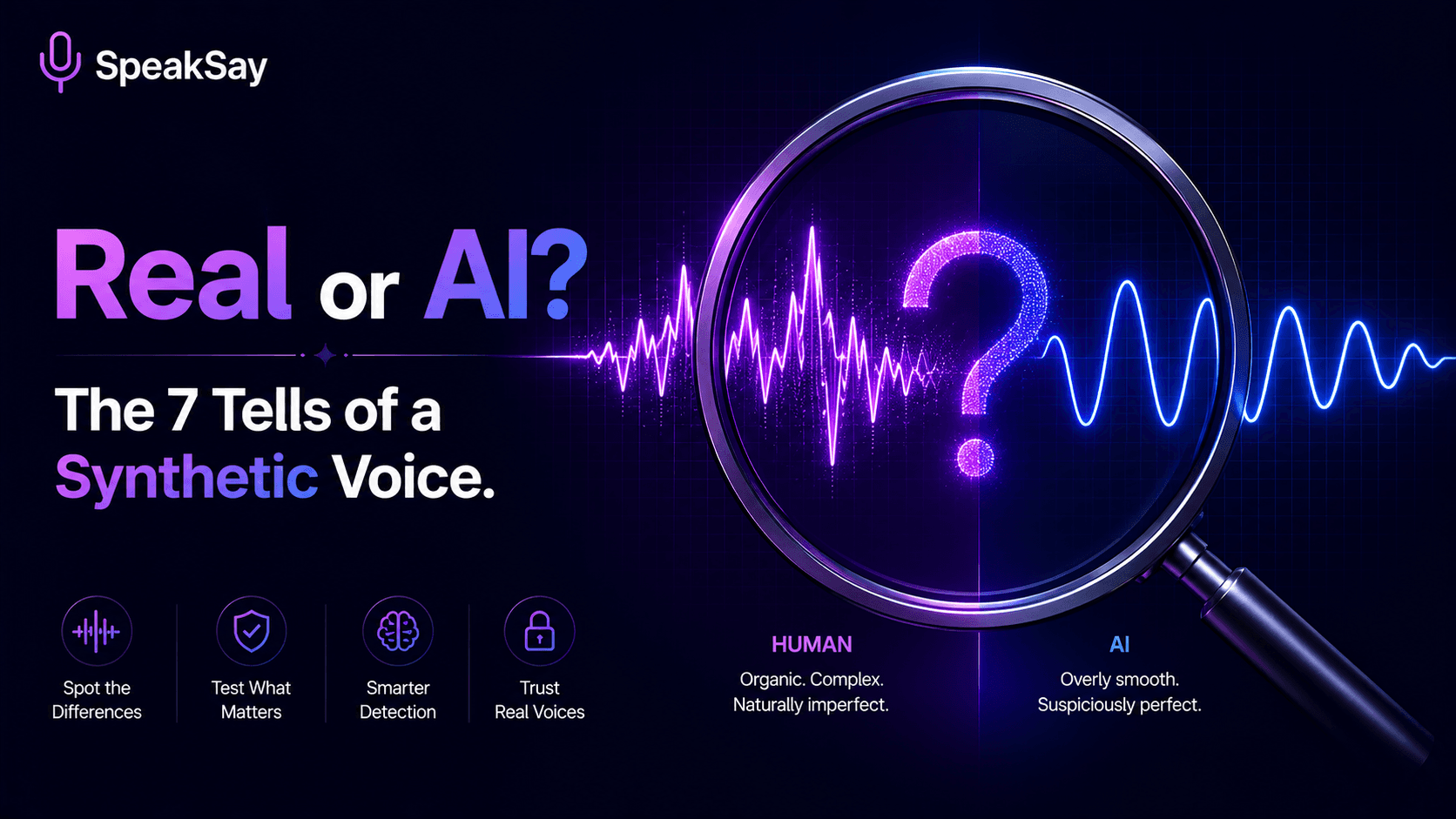
How to Tell If a Voice Is AI-Generated (2026): 7 Signs, Detection Tools, and Why $893M Was Lost to Voice Scams
AI voices are now good enough to fool family members — and fraudsters know it, with AI-enhanced scams costing Americans $893 million. Here are the 7 audible tells of a synthetic voice, how detection tools actually perform, and the verification habits that beat any deepfake.
Motivation & Discipline Channels Pull Billions of Views: The Intense AI Narrator Playbook (2026)
Motivational and discipline content is one of 2026's fastest-growing faceless niches — but every channel uses the same recycled "hustle" voice, and a flat AI read kills the intensity that makes these clips shareable. Here's the voice craft, pacing curves and originality playbook for narration that actually hits.
Lovo Filed for Bankruptcy: What Happens to Your Voices & Projects — and the Best Lovo Alternatives (2026)
Lovo Inc. filed Chapter 7 bankruptcy in late May 2026, weeks before the Lehrman v. Lovo hearing. Here's what liquidation means for your Genny projects, custom voices and prepaid credits — the export-everything checklist to run today — and how to pick a shutdown-proof alternative.
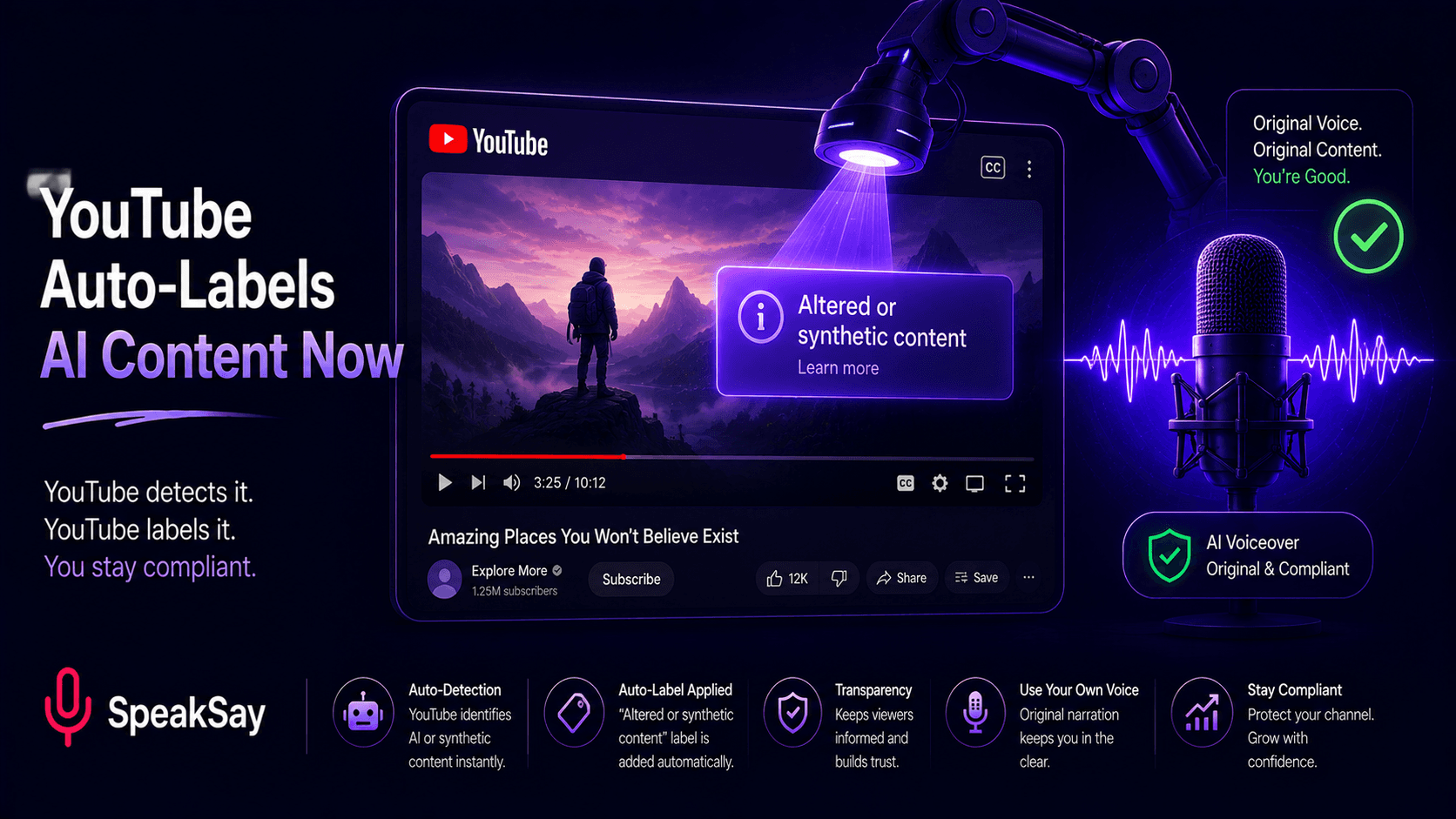
YouTube Now Auto-Labels AI Content (2026): What Triggers Detection, the Disclosure-Box Mistake That Flags Your Channel, and How Voiceover Creators Stay Clean
YouTube now uses internal detection to auto-apply AI labels to undisclosed synthetic content — and thousands of creators are flagging themselves by checking the disclosure box when they don't need to. Here's exactly what triggers detection, when the box is required, and the AI voiceover workflow that stays clean.
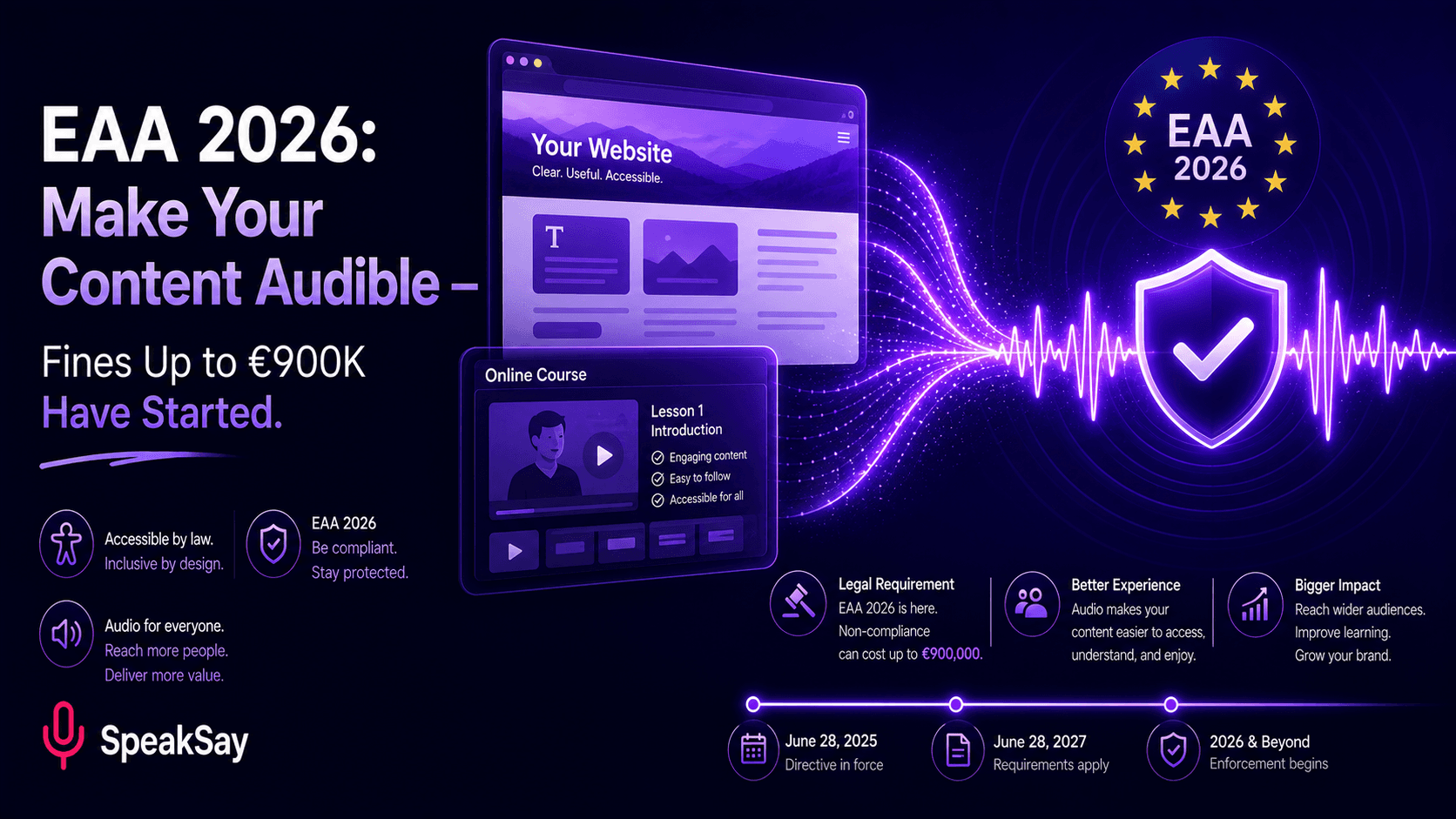
The EAA Fines Have Started (Up to €900K): How to Add Audio & TTS Accessibility to Your Website, Courses and Docs in 2026
EAA enforcement is live — the first lawsuits were filed in late 2025 and fines range from €60K to roughly €900K. Here's how audio versions and text-to-speech make your website, courses and documents accessible fast, without an agency-sized budget.
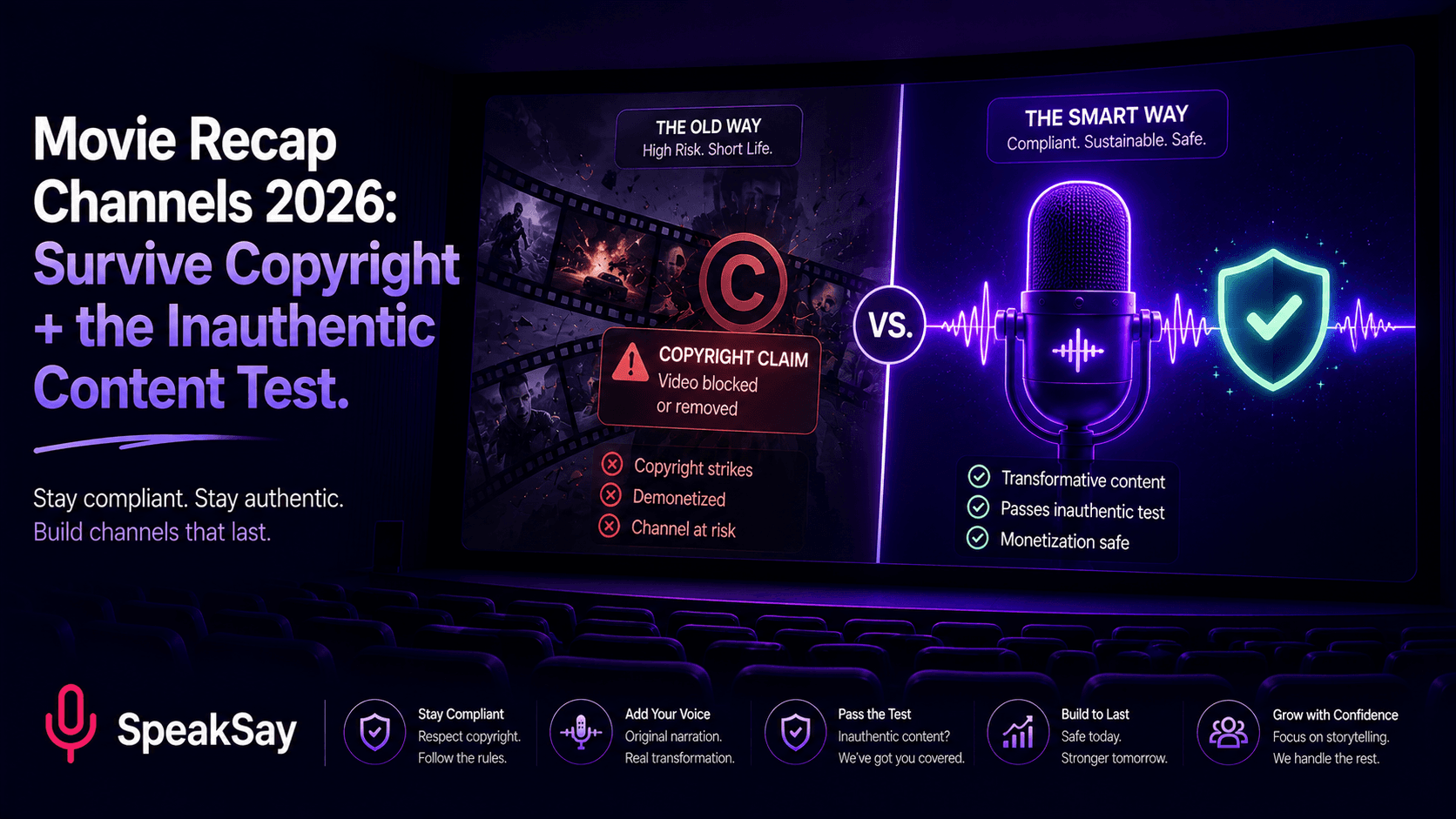
Movie Recap Channels in 2026: Copyright Claims, the "Inauthentic Content" Test, and the AI Narrator Setup That Survives Both
Movie recap channels get squeezed from two sides — copyright claims on footage and YouTube's July 2026 "inauthentic content" policy. Here's the originality stack and AI narrator setup that keeps recap channels claimed less and monetized.
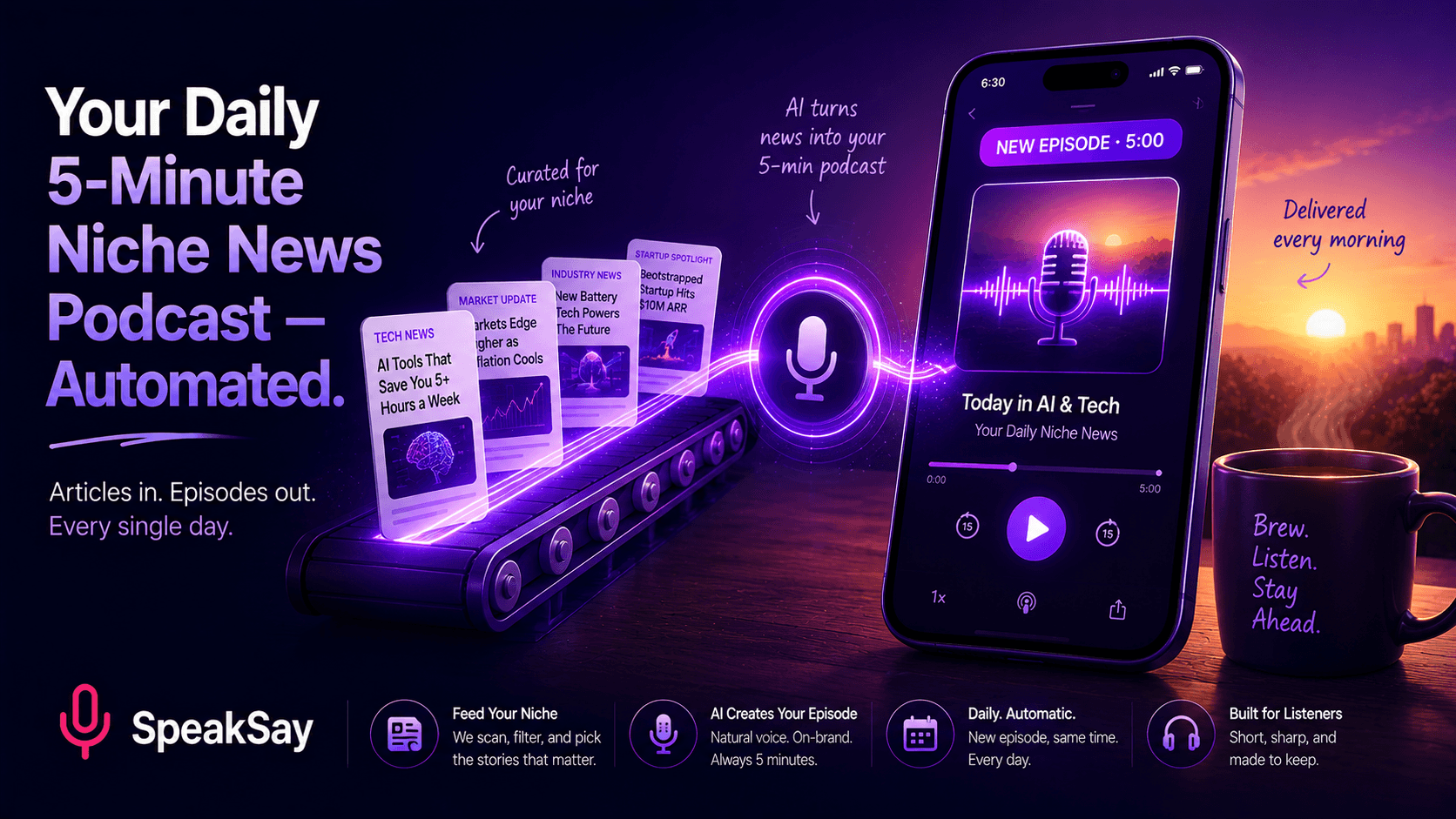
Launch a Daily 5-Minute Niche News Podcast With AI (2026): The Automation Workflow That Publishes Every Morning
Daily shows build the most loyal podcast audiences — but producing one manually burns creators out in weeks. Here's the AI workflow that turns your niche's news into a publishable 5-minute episode every morning, in your own voice
Your Podcast Only Reaches English Listeners: How to Localize Episodes Into 20+ Languages in Your OWN Voice (2026)
Re-recording every episode per language is impossible and hiring per-language voice actors kills your margins. Here's the 2026 workflow podcasters use to clone their voice once and publish natural-sounding episodes in 20+ languages.
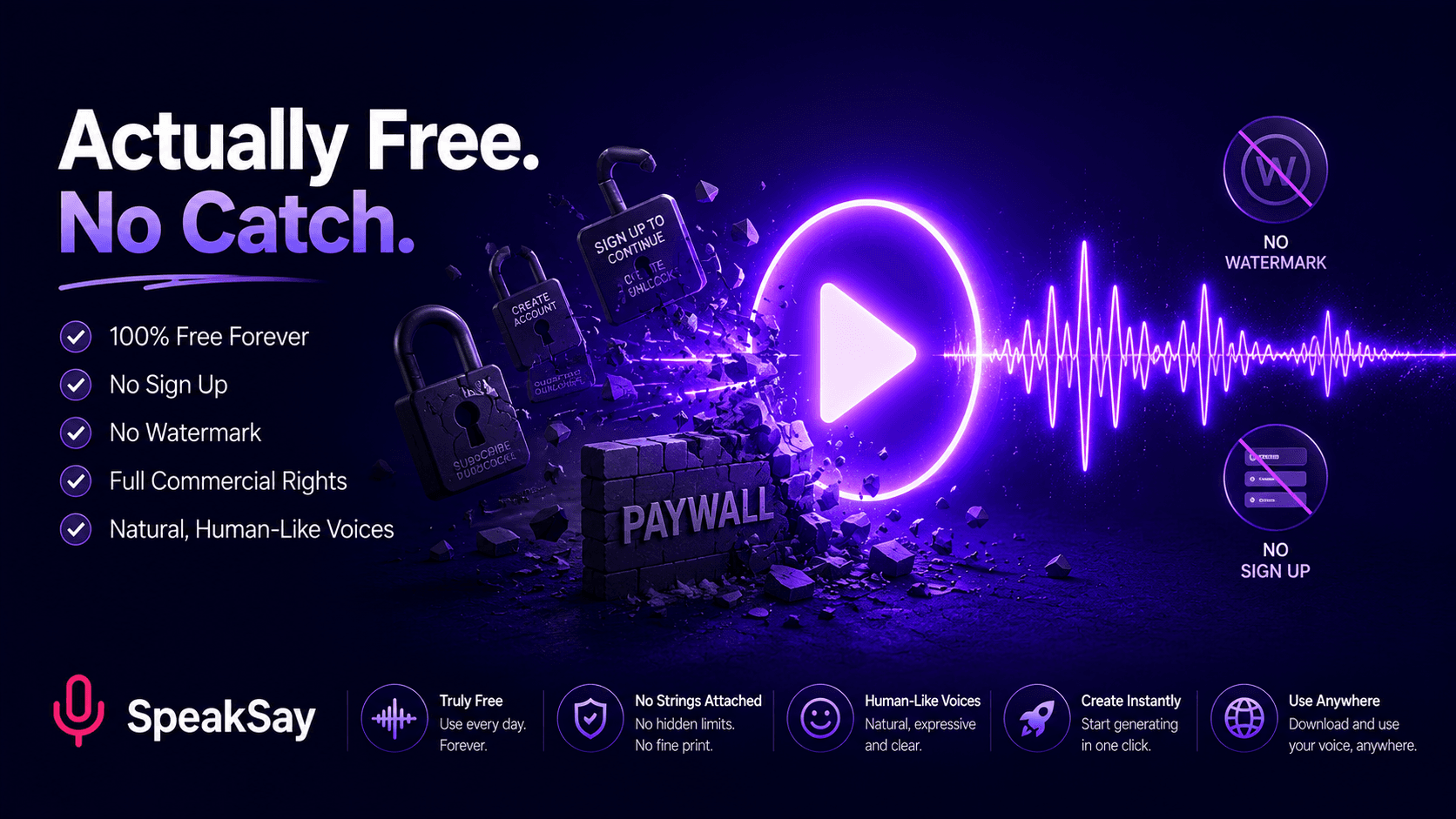
Best Free AI Voice Generators in 2026 (No Signup, No Watermark): Tested for YouTube, TikTok & Podcasts
Most "free" AI voice generators gate the download behind a signup, cap you at 30 seconds, or stamp a watermark on your audio. We tested what's actually free in 2026 — and when paying finally makes sense.
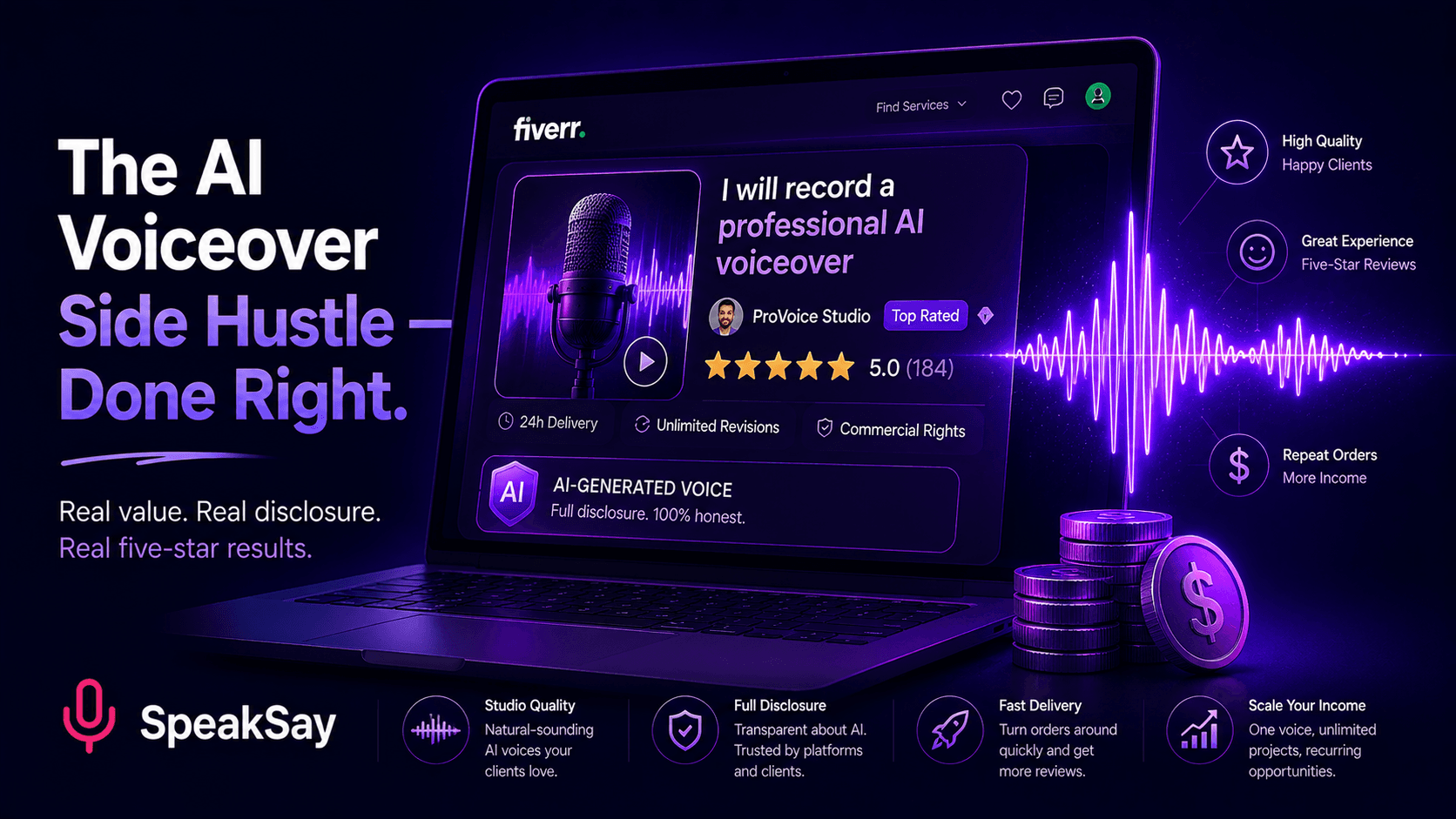
Selling AI Voiceovers on Fiverr in 2026: The Disclosure Rules, the $2K–$5K/Month Workflow, and What Gets Gigs Banned
Fiverr allows AI voiceover gigs — if you follow its disclosure and rights rules. Here's what's allowed, what gets sellers banned, and the workflow behind the sellers quietly earning $2,000–$5,000 a month
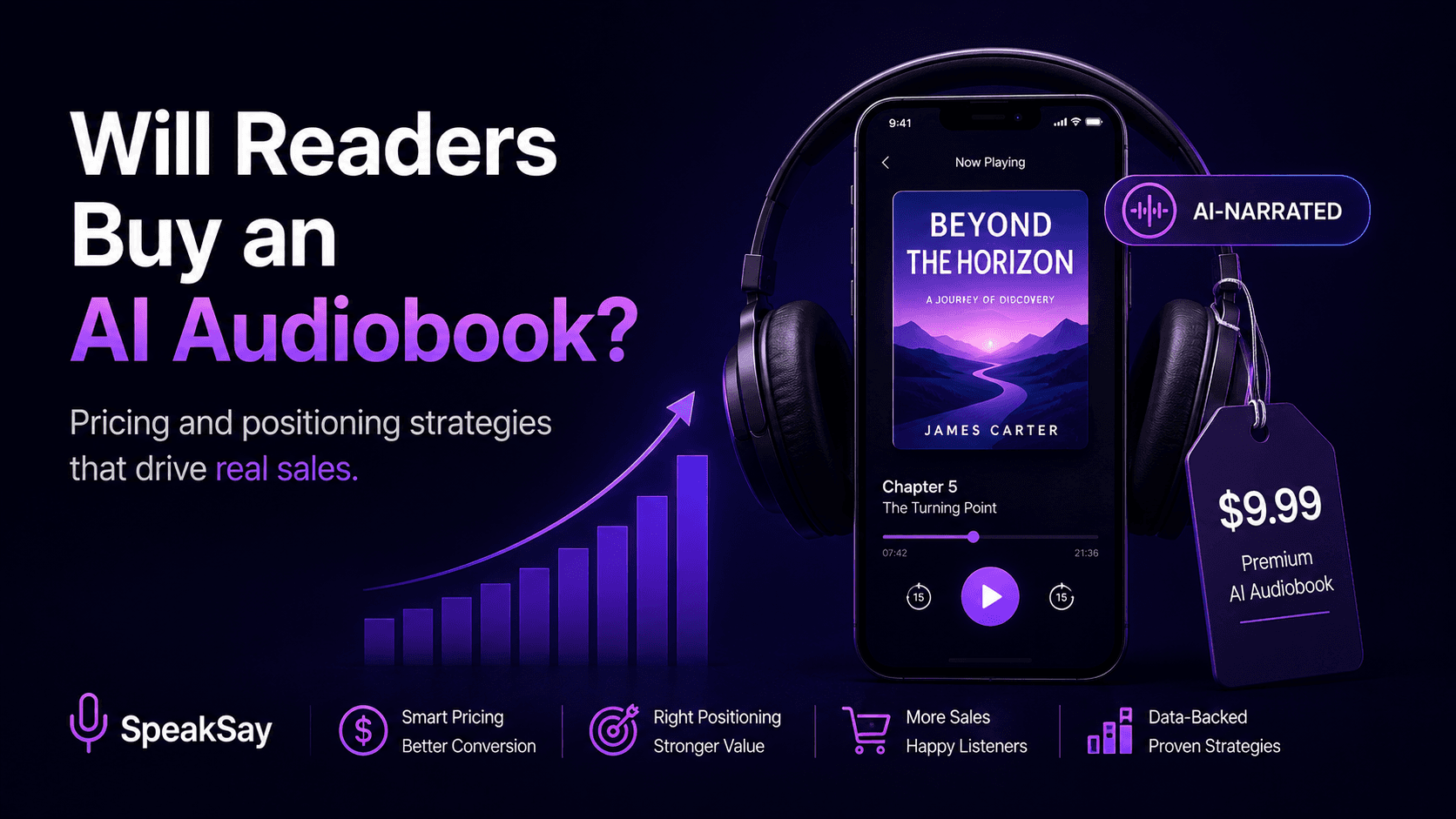
Will Readers Actually Buy an AI-Narrated Audiobook? The 2026 Pricing, Disclosure & Positioning Playbook
Producing an AI audiobook is now the easy part. Selling it is where authors get burned. Honest 2026 data on where AI narration sells (and where it flops), how to price against $0.99 human-read deals, and the disclosure wording that builds trust instead of killing sales.
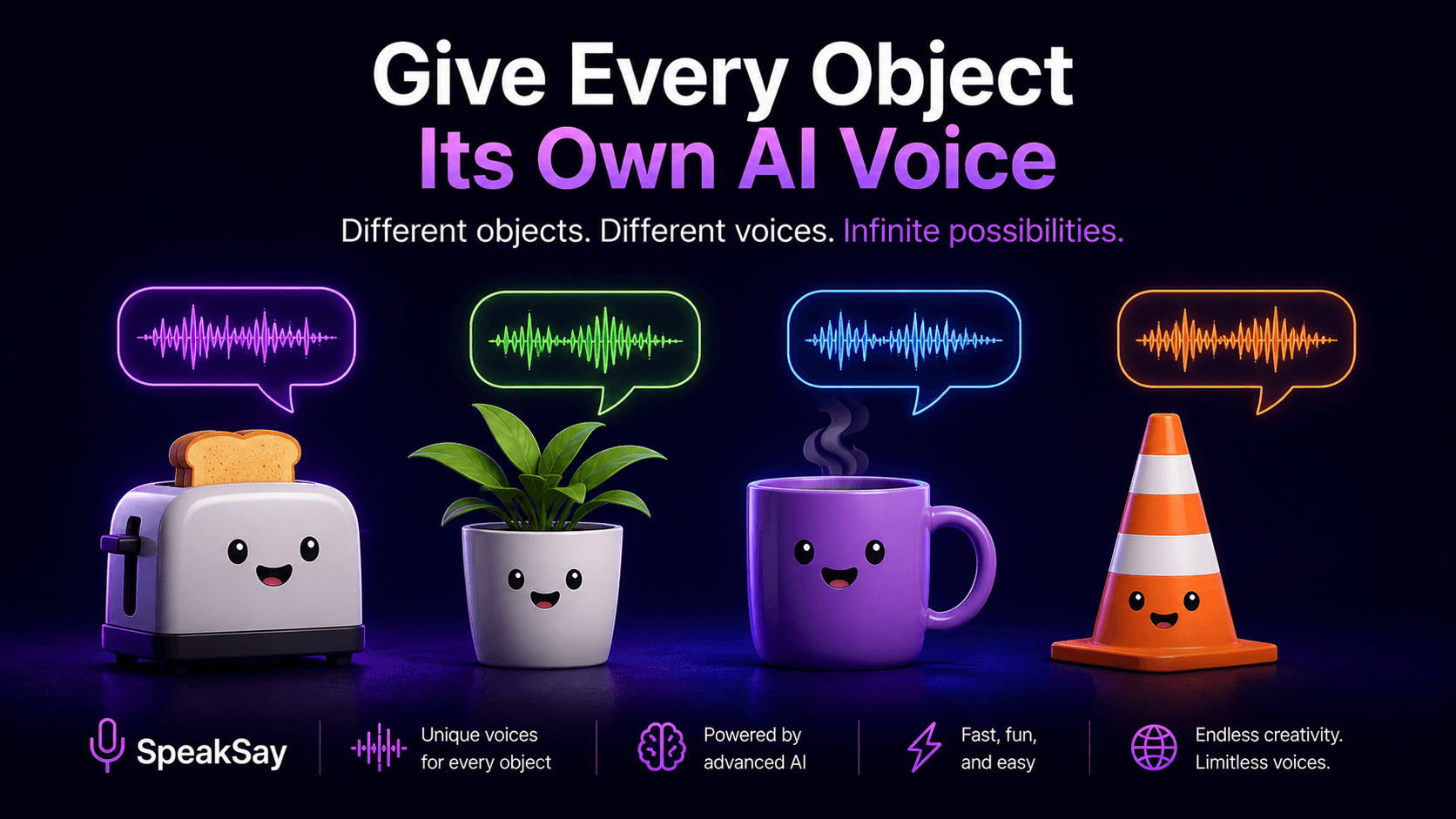
Talking Objects Are 2026's Fastest-Growing Faceless Format: How to Give Every Object Its Own AI Voice (Object POV Guide)
Object POV videos — where a toaster complains about Mondays or a traffic cone narrates its week — are one of the fastest-growing faceless formats on Shorts and TikTok in 2026. The channels that win give every object a distinct, consistent voice. Here's the full workflow.
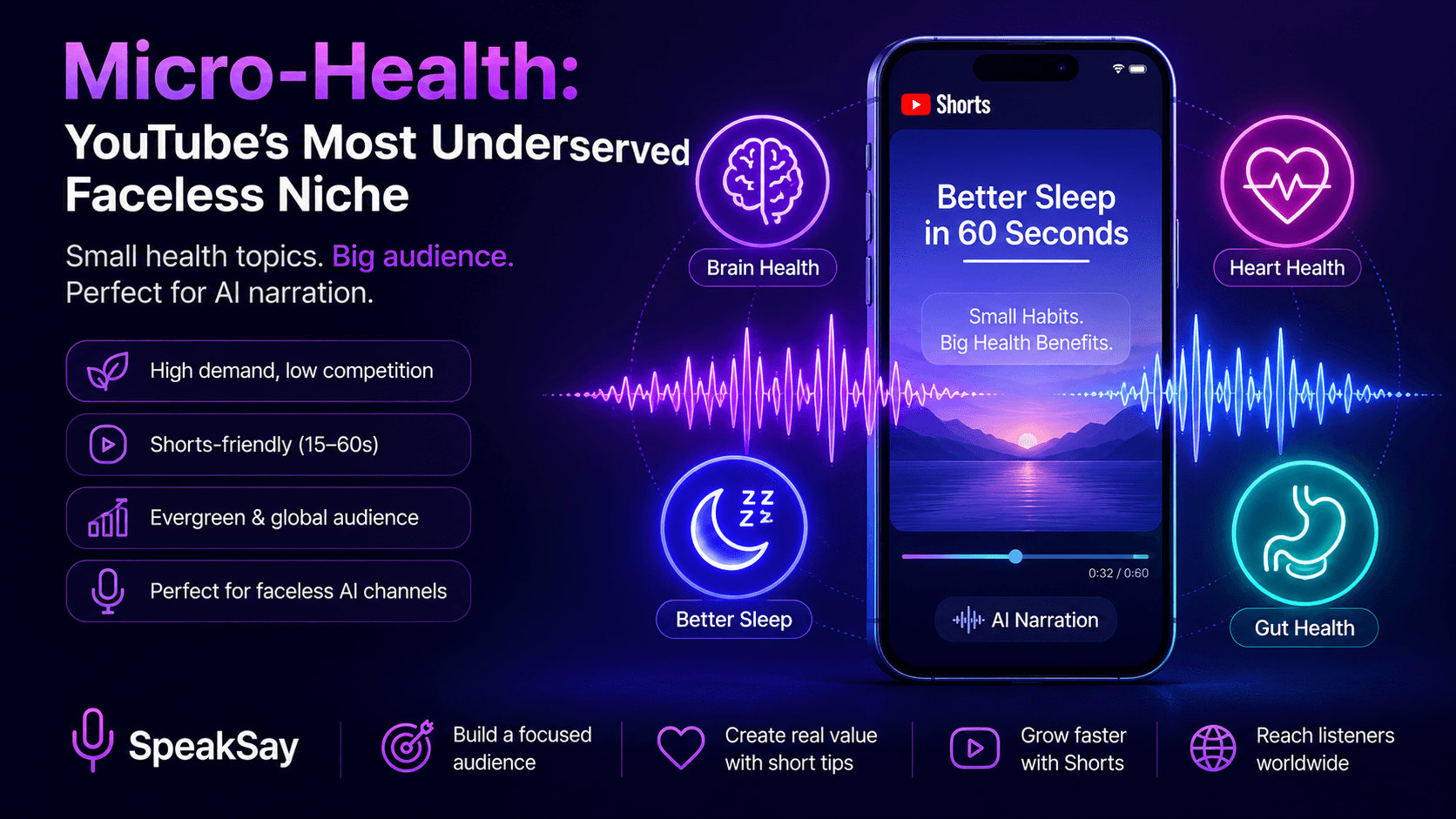
Micro-Health Is YouTube's Most Underserved Faceless Niche (2026): The AI Voice Playbook for 30–60 Second Health Facts
Health content is one of YouTube's biggest categories — and almost all of it is face-cam doctors. The faceless micro-health Shorts space is wide open in 2026. Here's the niche data, the formats that work, and the AI voice setup that makes viewers trust a channel with no face.
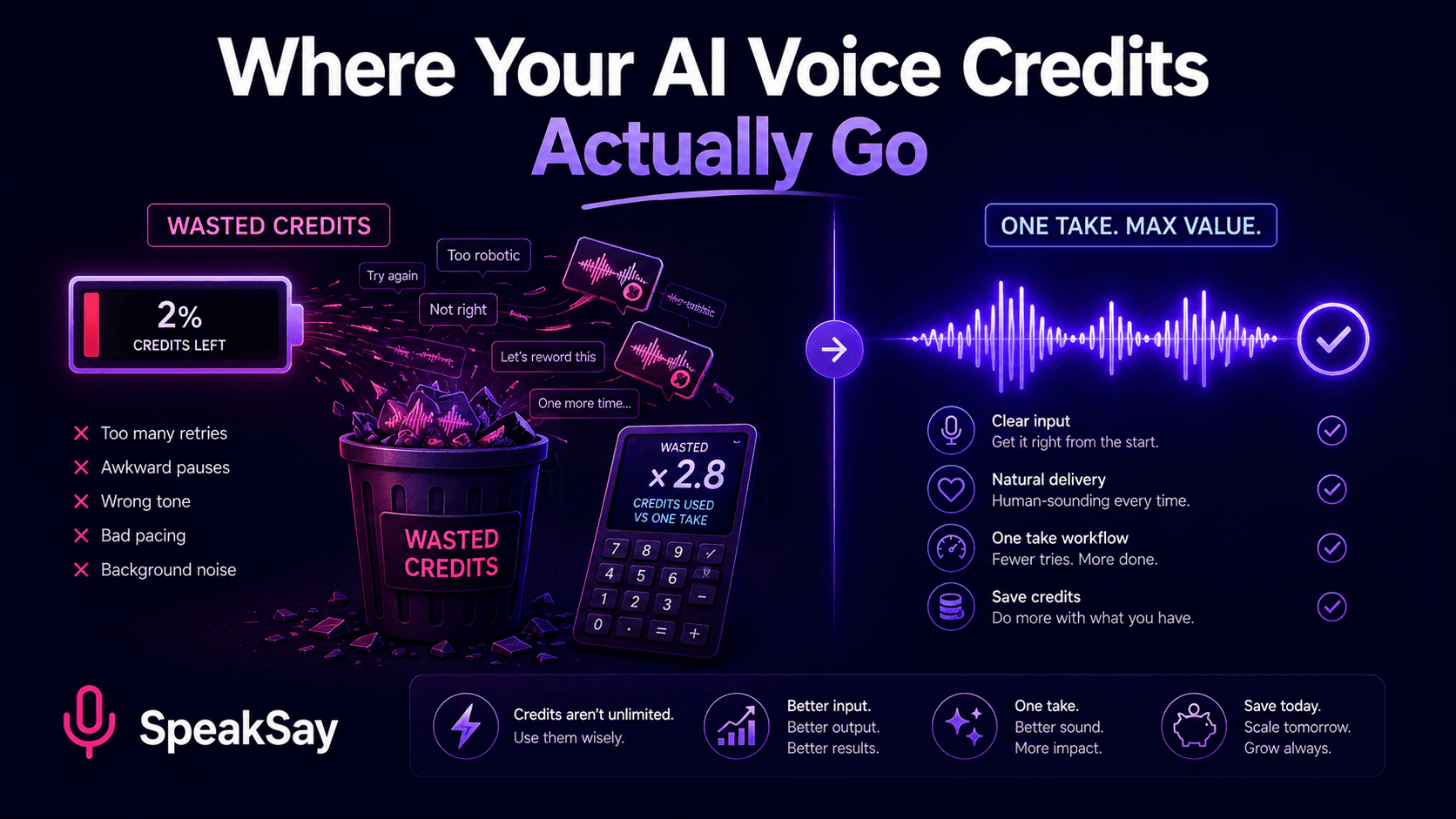
Why AI Voiceovers Use 2–3x More Credits Than Advertised — and the One-Take Workflow That Stops the Waste (2026)
Users report their real AI voiceover cost is ~2.8x the advertised rate because glitched takes, language switches, and volume jumps force paid regenerations. Here's the proofing workflow that gets clean audio in one take.
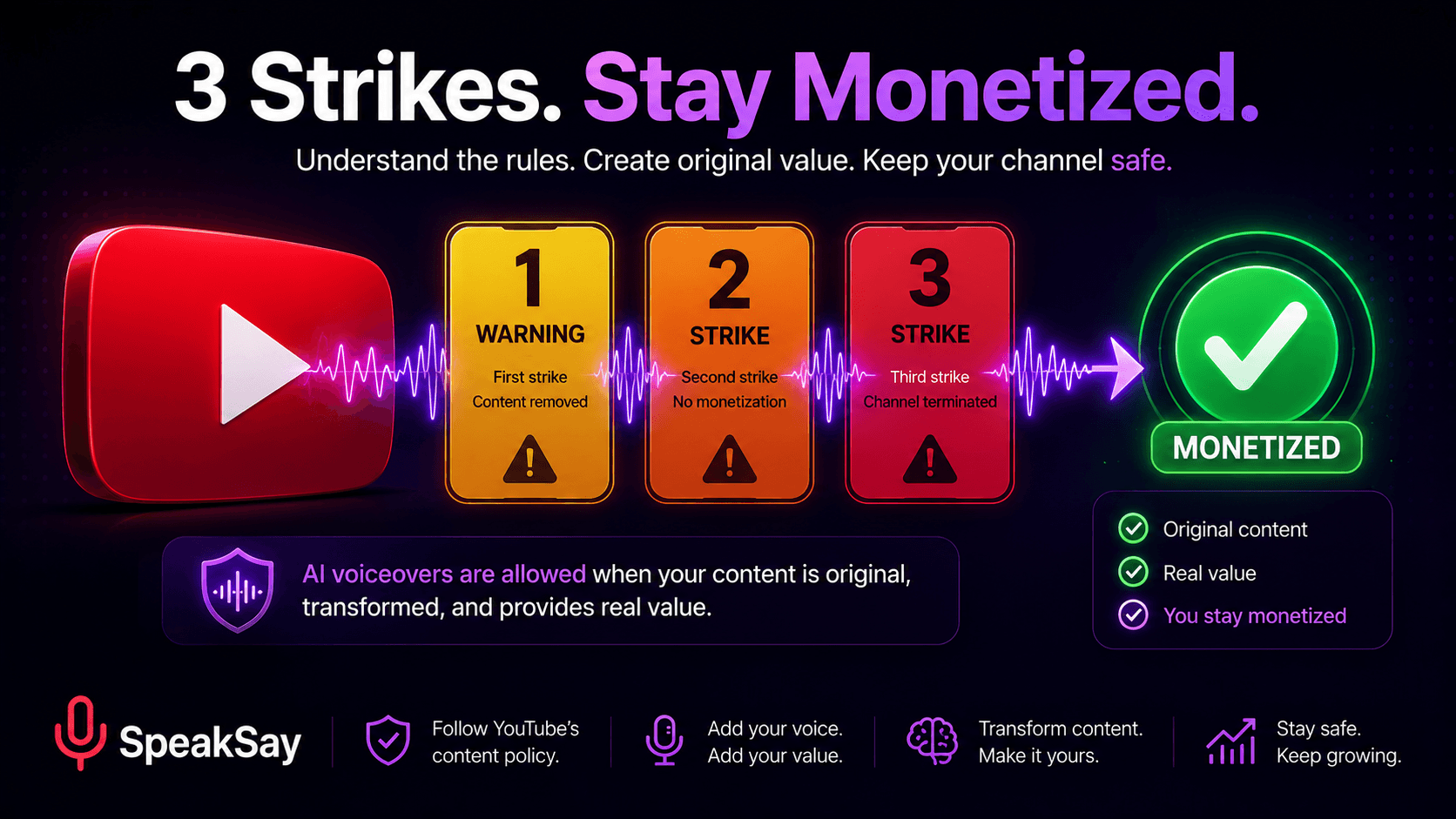
YouTube's 3-Strike Rule for Mass-Produced AI Content (2026): How to Upload Daily With AI Voiceovers and Stay Monetized
YouTube's 2026 spam policy now hits "mass-produced" AI channels with a three-strike system ending in permanent YPP removal. Here's exactly what triggers strikes — and the production stack that lets you upload daily without becoming a target.
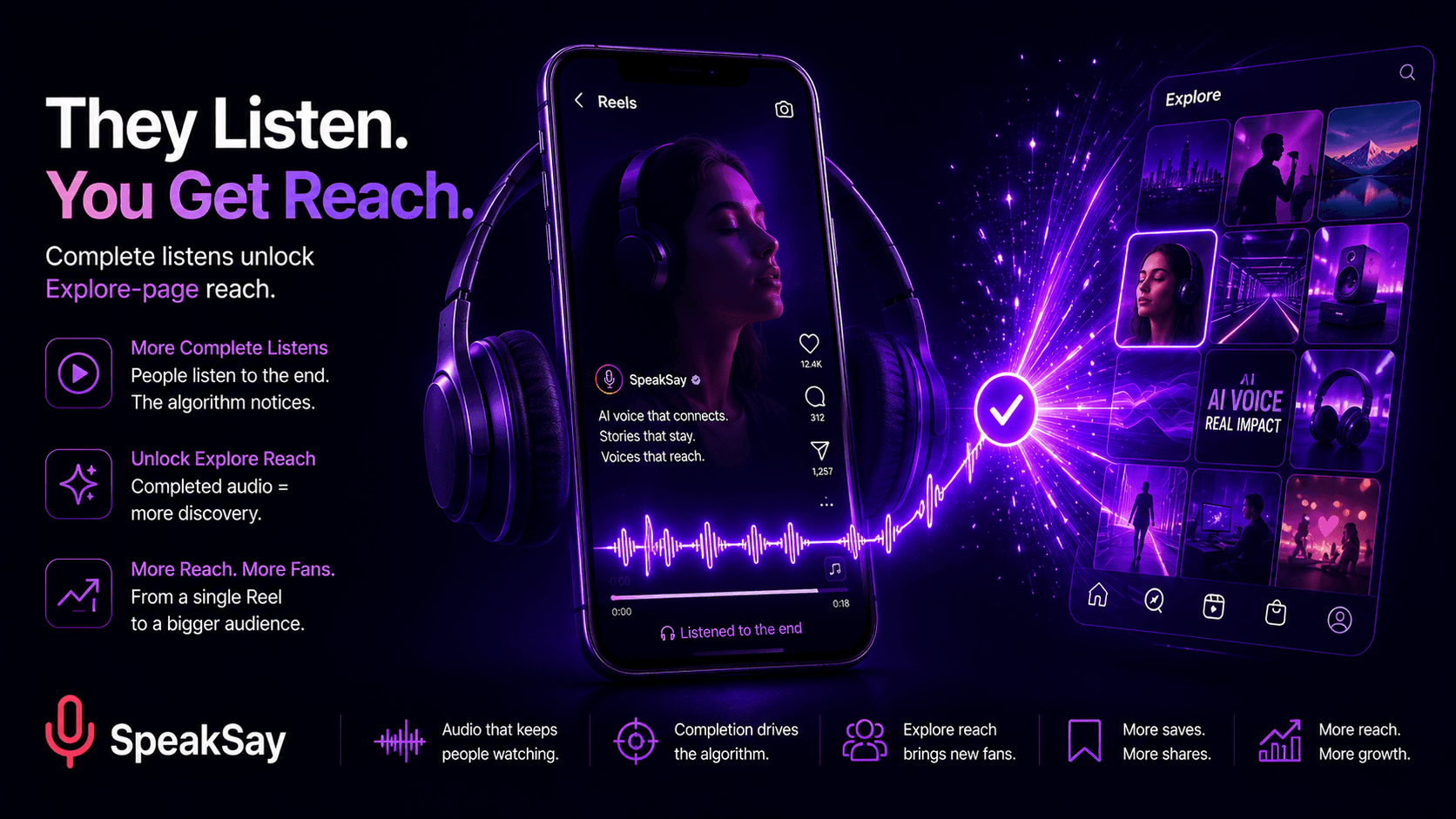
Instagram's Algorithm Now Rewards Audio Retention (2026): The AI Voiceover Playbook for Faceless Reels
In 2026, a Reel whose audio gets heard to the end is ~3x more likely to hit Explore — and faceless creators are winning with AI voiceovers. But everyone uses the same native voices. Here's the audio-retention playbook that stands out.
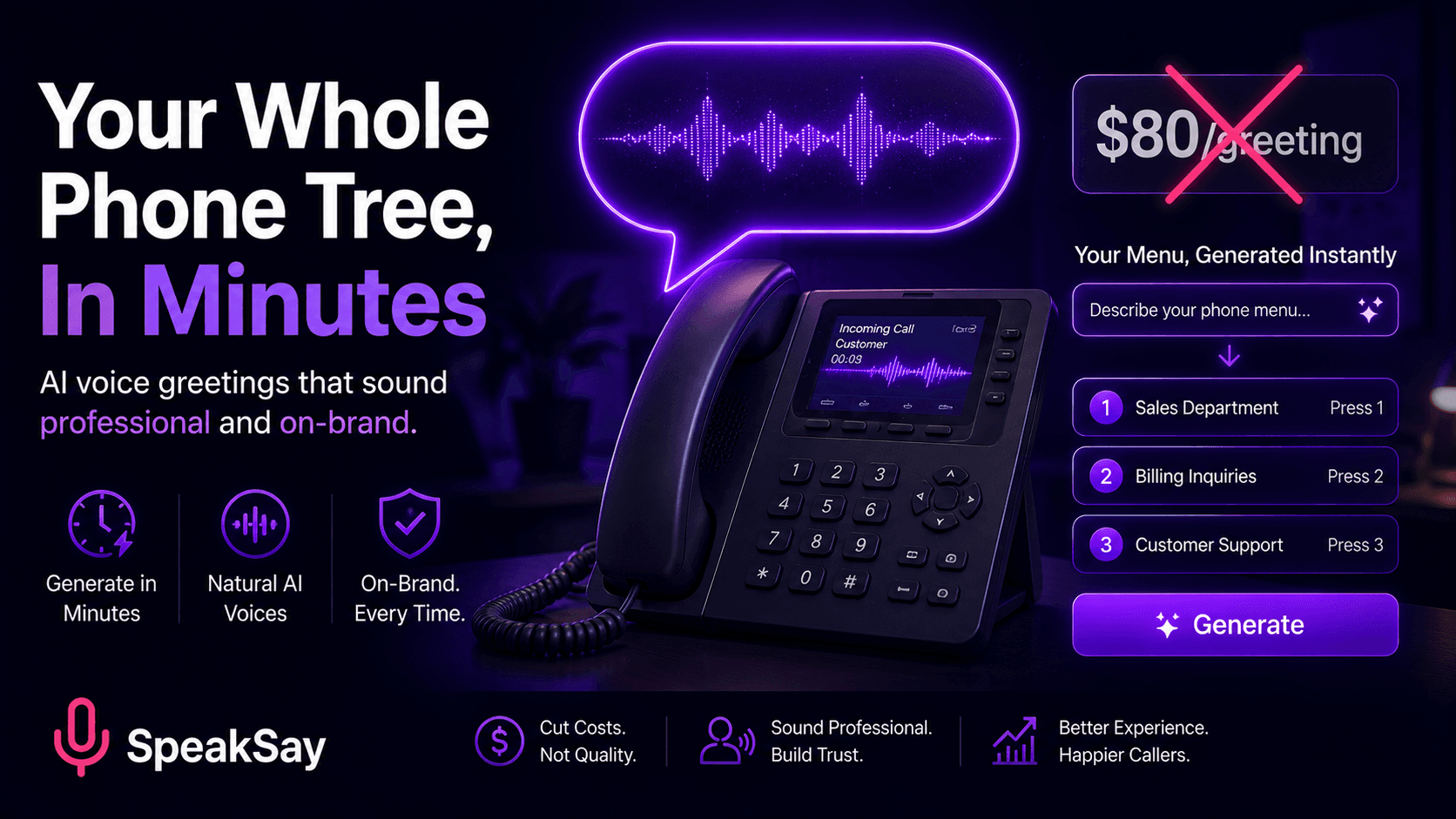
Stop Paying $80 Per Phone Greeting: AI Voices for IVR, Voicemail & On-Hold Messages (2026 Small-Business Guide)
Voice actors charge $75–$200+ per phone greeting and take days to deliver — then you pay again every time your hours change. Here's how small businesses record entire phone systems with AI voices in 2026: IVR menus, voicemail, and on-hold messages, updated in minutes for the cost of a coffee.
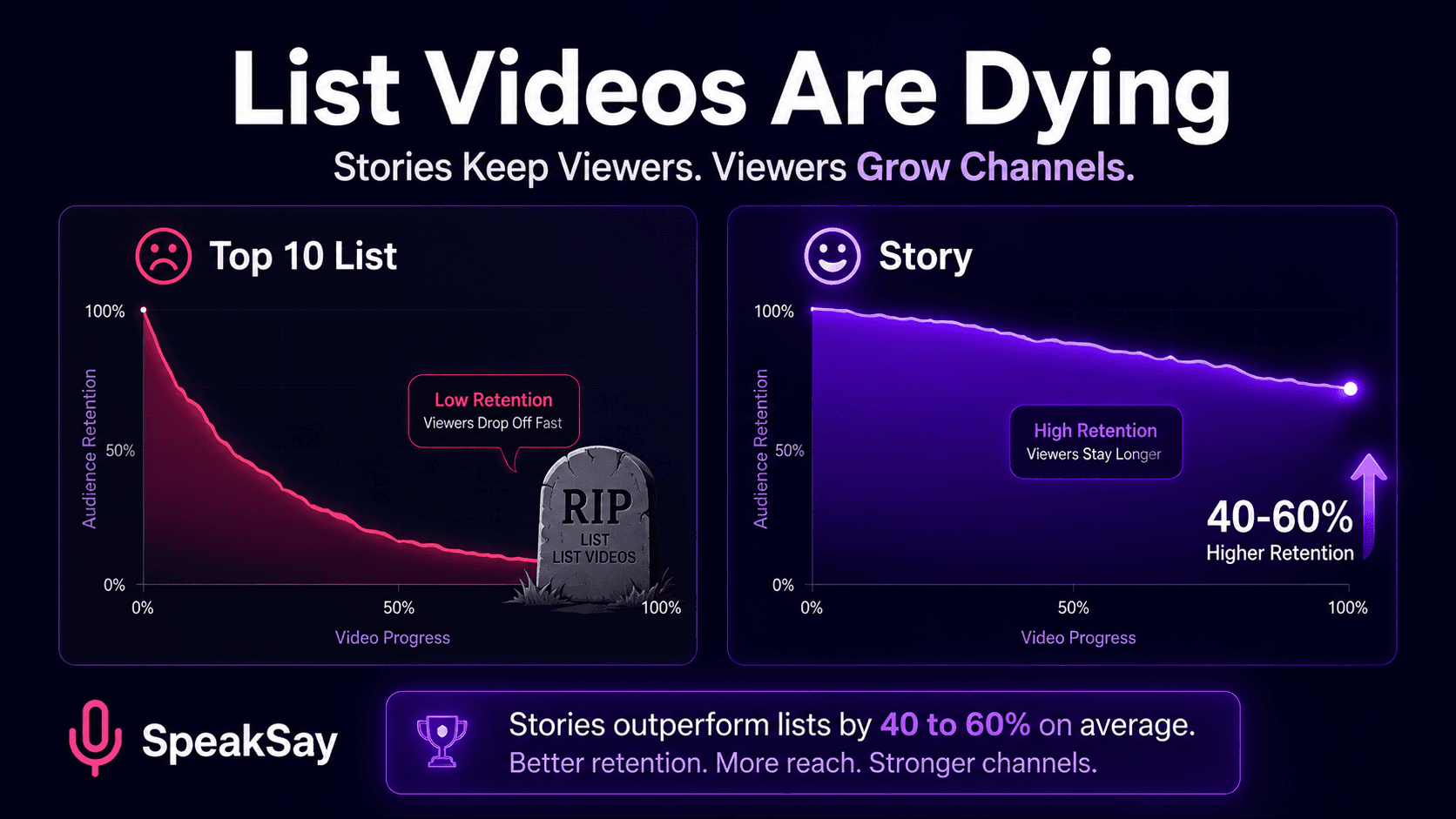
List Videos Are Dying: Narrative Scripts Get 40–60% Better Retention — the 2026 Faceless Video Script + AI Voice Workflow
2026 data shows narrative formats beat list videos by 40–60% on retention — and the algorithm now pushes retention over raw views. Here's the script framework and AI narration workflow to make the switch.
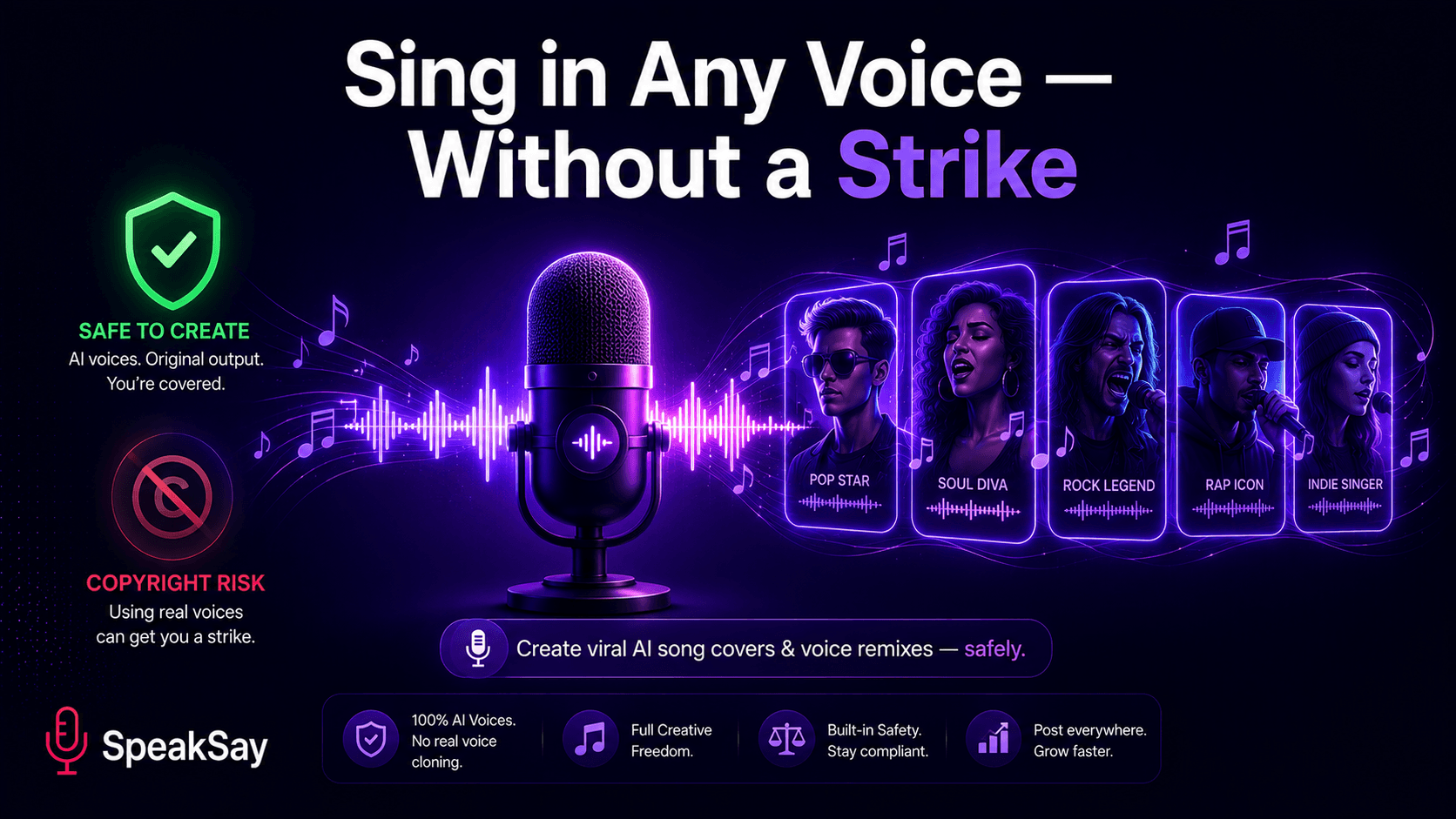
Sing in Any Voice: How to Make AI Song Covers & Music Voice Remixes That Go Viral (Without a Strike) in 2026
AI song covers are one of the biggest short-form formats — and one of the fastest ways to catch a copyright or voice-clone strike if you do it wrong. Here's how AI voice remixing actually works, what's safe vs. risky in 2026, and a repeatable workflow for covers that survive platform detection.
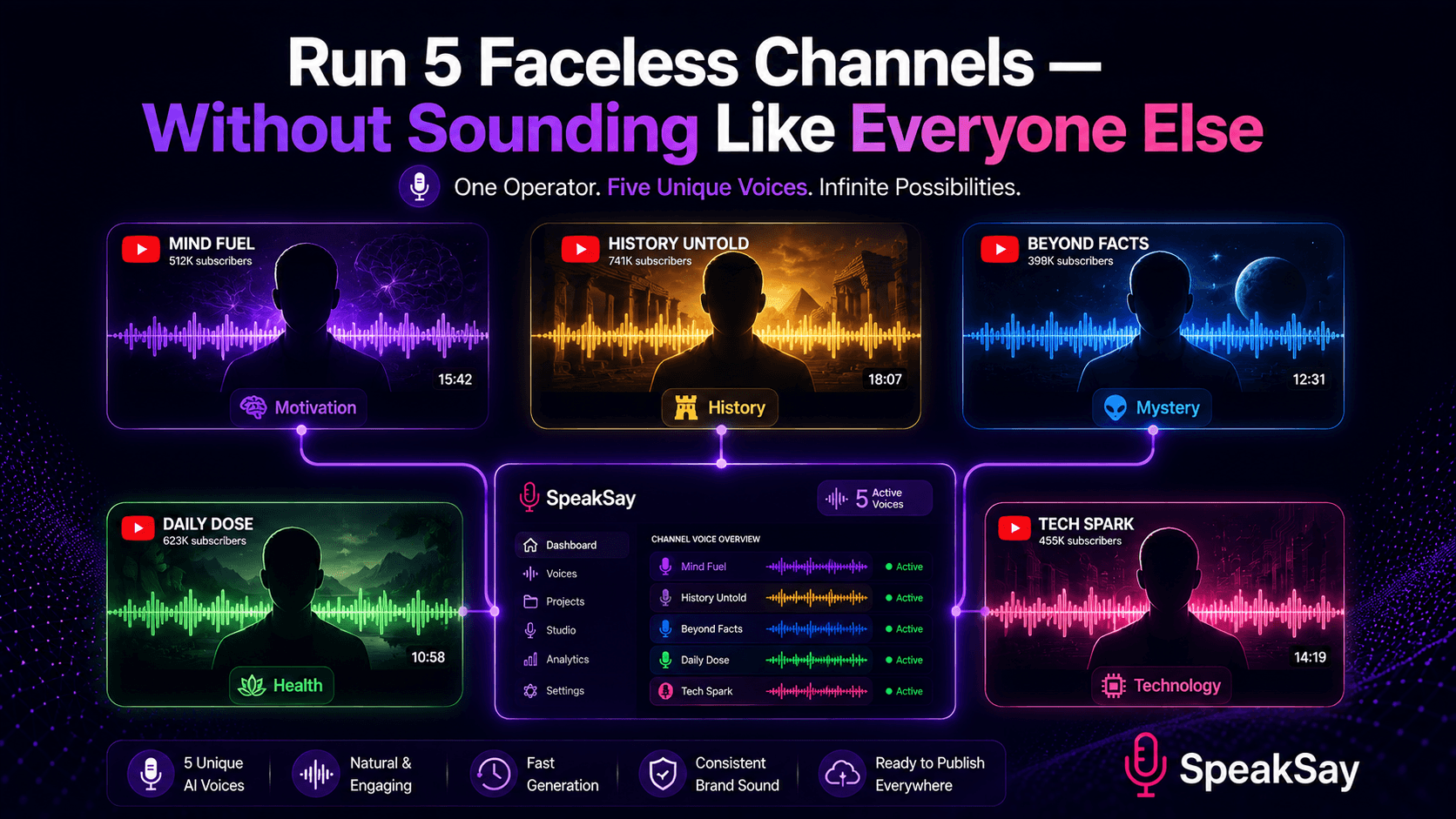
How to Run Multiple Faceless YouTube Channels in 2026 (Without Sounding Like Every Other AI Channel)
Copy-paste automation channels are getting demonetized in 2026. Here's how to scale a portfolio of faceless channels where each one has its own signature AI voice — so YouTube treats you as many creators, not one spam farm.
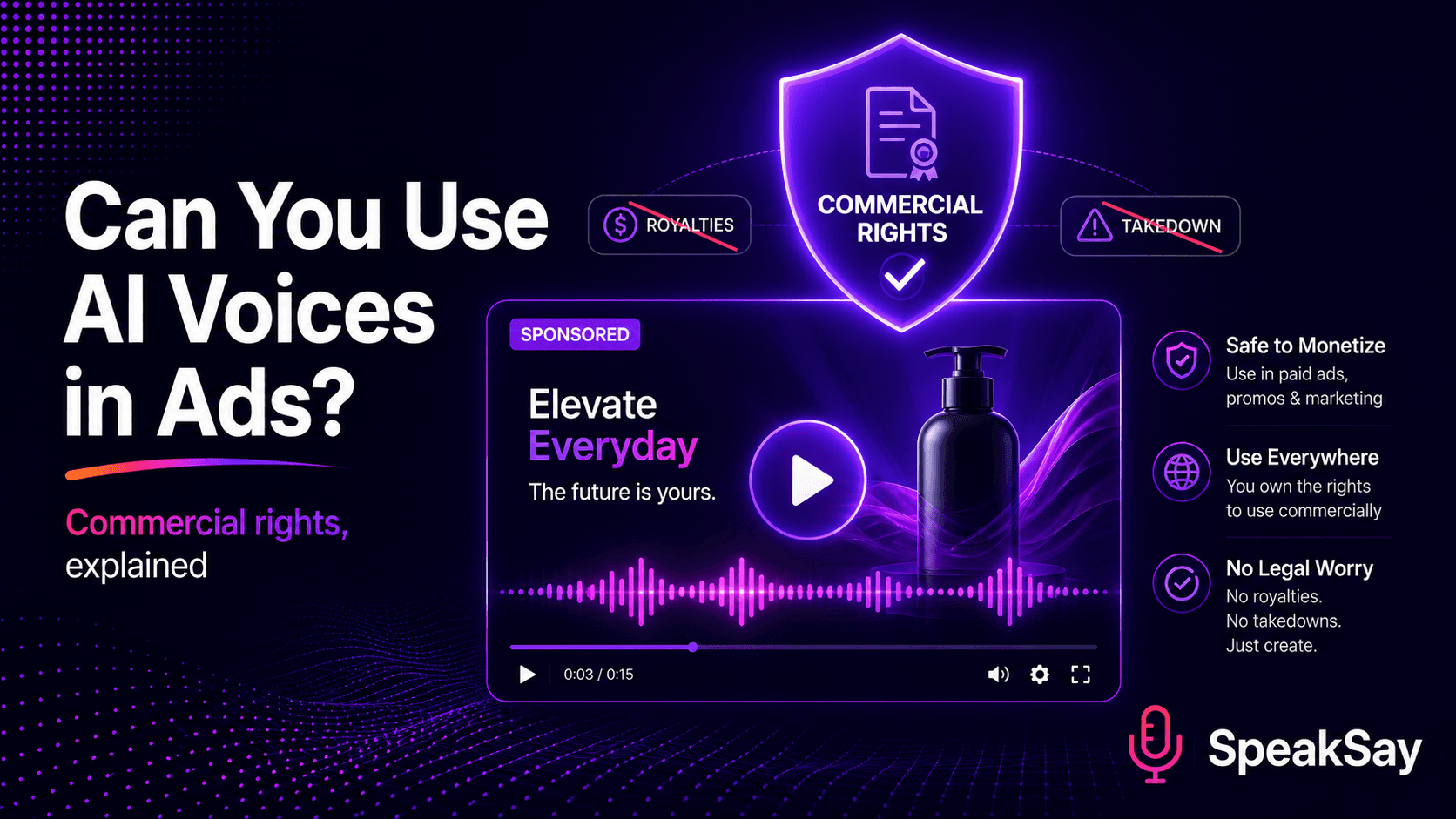
Can You Legally Use AI Voices in Paid Ads? AI Voiceover Commercial Rights Explained (2026)
AI voiceovers are everywhere in ads — but can you legally use them in paid commercials and client work? Here's what "commercial rights" actually means, what to check before you publish, and how to stay safe.
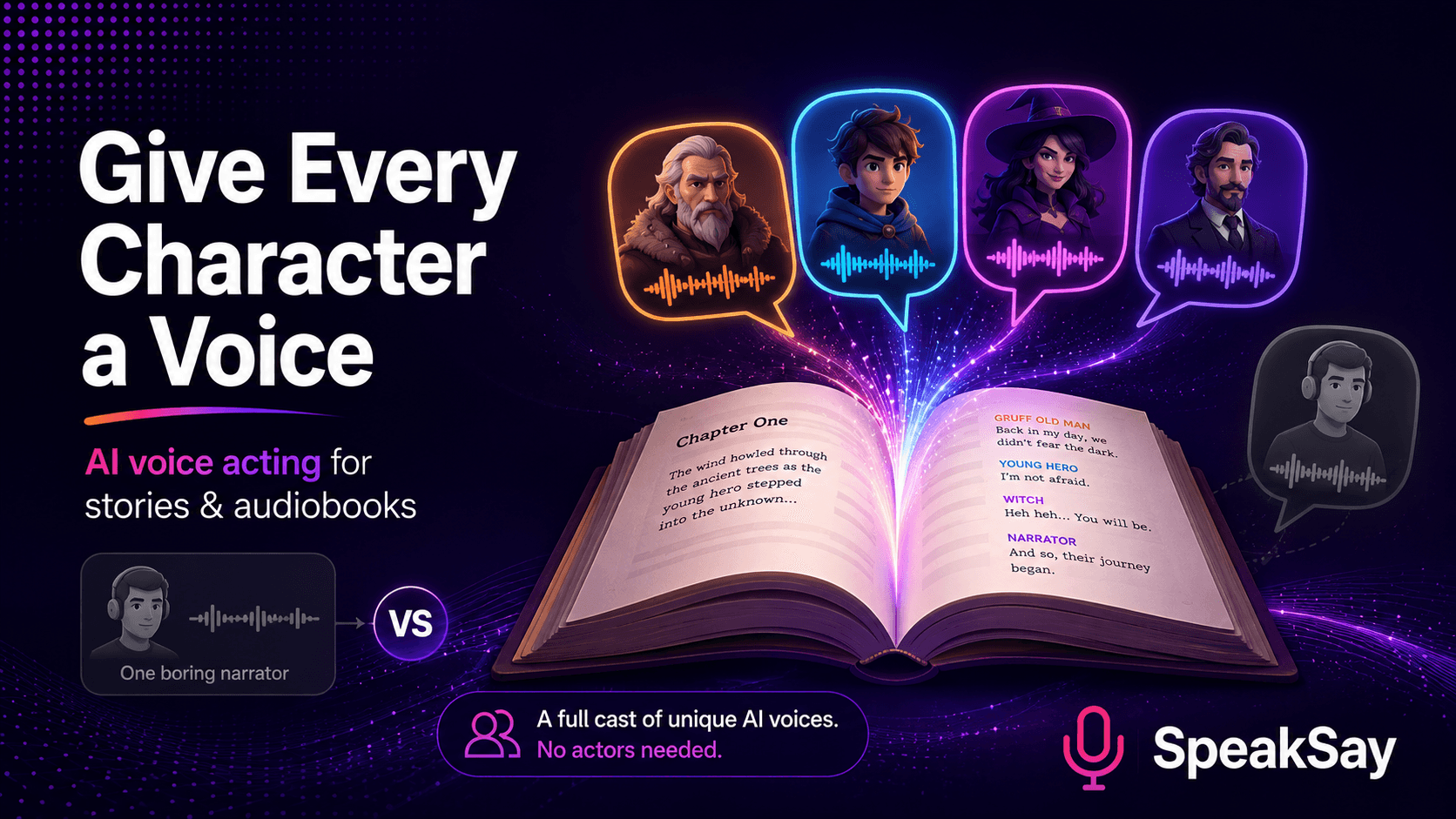
How to Create Multiple AI Character Voices for Story Videos & Audiobooks (No Voice Actors Needed, 2026)
A single monotone narrator kills immersion. Here's how to give every character in your story videos or audiobook its own distinct AI voice — a full cast, no actors, consistent across a whole series.
Best ElevenLabs Alternatives in 2026 (Ranked by Price, Voice Quality & Commercial Rights)
ElevenLabs raised prices roughly 239% year over year. Here are the best alternatives in 2026, ranked honestly by price-per-hour, voice quality, voice cloning, and commercial rights — so you can switch without guessing.
Best Murf AI Alternatives for Faceless YouTube Channels (2026 Comparison)
Murf AI is a solid studio editor, but at $0.30/minute or capped subscriptions it gets expensive when you're publishing 10+ faceless videos a week. Here are the best Murf AI alternatives in 2026 for high-volume faceless YouTube — compared on cost at scale, voice consistency, and repurposing.
Give your words a voice
Start free with 10,000 credits. No credit card required.