Voice Technology
Everything about voice synthesis and audio technology
A Station Announcer for Your Model Railroad: Original Voices for Hobby Layouts With Voice Remix (2026)
A silent layout feels like a diorama. A believable announcer makes it a station. Here is how to create an original announcer voice for a model railroad.
The 4-Minute Client Update: How Consultants, Lawyers and Accountants Can Turn a Monthly Email Into a Private Audio Briefing With an AI Podcast (2026)
Your monthly client email is probably skimmed. A four-minute private audio briefing, made from the same notes, is easier to consume. Here is the format, the script, and the confidentiality rules.
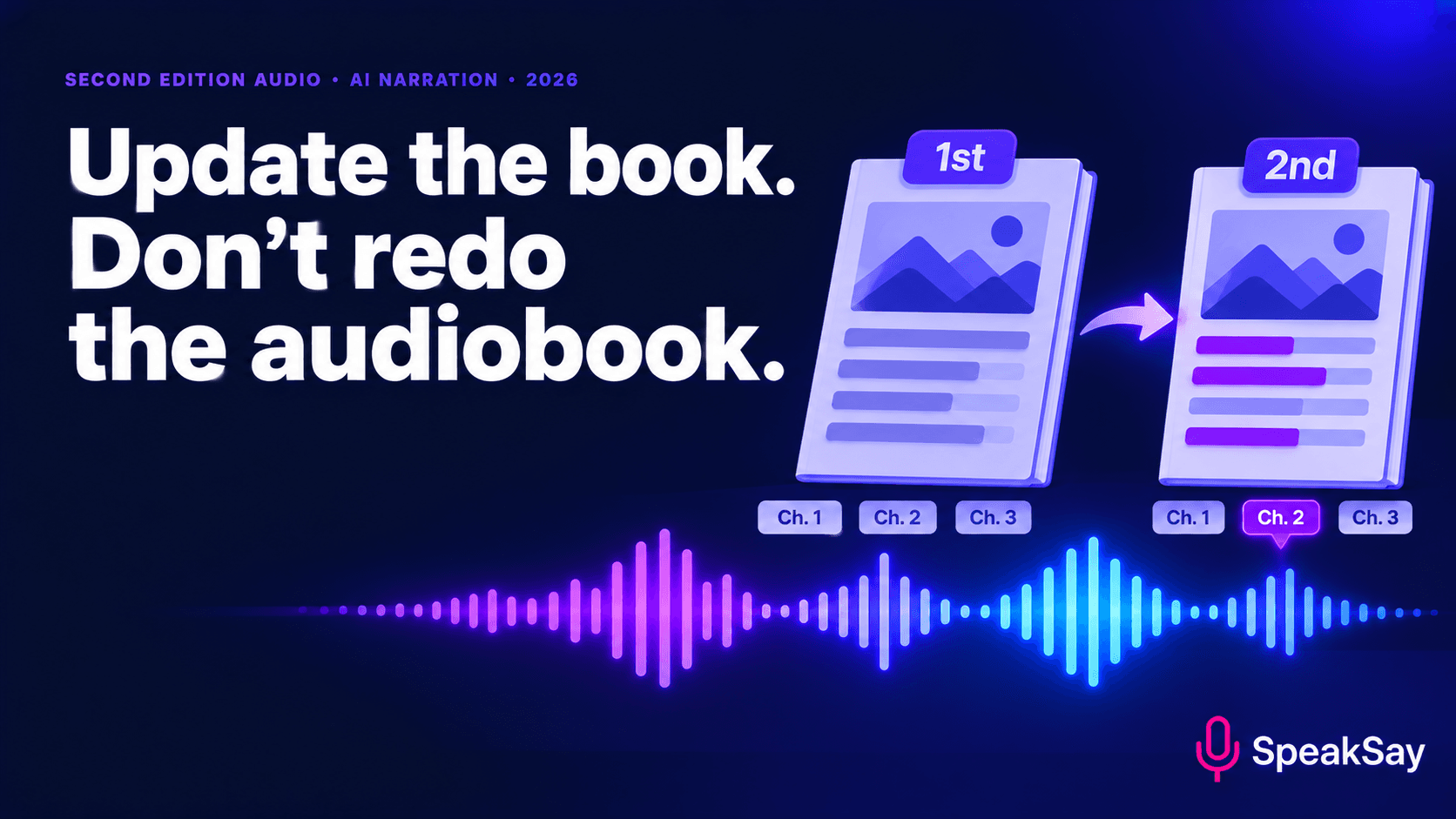
Second Edition, Stale Audiobook: How to Update an AI-Narrated Audiobook When Your Book Changes, Without Re-Recording Everything (2026)
When you revise a nonfiction book, the audiobook quietly goes out of date. This guide shows how to find what changed, re-render only the affected passages in the same voice, proof just those spots, and re-publish the update.
Game Night With a Host: How to Run a Holiday Family Trivia Night With an Original Game-Show Host Voice (Voice Remix, 2026)
Family trivia works better when somebody other than the organiser is in charge of the questions. This guide shows how to build an original game-show host voice with Voice Remix, record the intros, questions and reactions, and run a holiday trivia night from a phone and a speaker.
Are We There Yet? How to Make a Custom Holiday Road Trip Audio Adventure for Kids With Original Character Voices (Voice Remix, 2026)
Thanksgiving and December travel mean hours in the car with restless kids. Build a 30-to-60 minute audio adventure with original characters, stop-and-answer puzzles and chapter breaks timed to your route.
The Clue Is Talking: How to Make Scavenger Hunt Audio Clues for Kids With Original Character Voices (Birthdays and Christmas Morning, 2026)
Paper clues need a grown-up to read them, and the grown-up usually knows the answer. This guide shows how to write short clues, give them to an original character with a remixed voice, hide the audio around the house, and avoid the usual problems with volume and noise.
Say It Once, Hear It Often: How Teachers Can Give Audio Feedback on Student Work in Their Own Cloned Voice (2026)
Written comments are skimmed, and recording every comment by hand takes longer than writing it. This guide shows how a teacher can write short feedback, hear it in a clone of their own voice, and send it as audio, while keeping student data, consent and school policy at the centre.
One Mic, Five Characters: How Animators and Indie Filmmakers Can Make Animatic Scratch Dialogue With Distinct Character Voices Using Voice Remix (2026)
An animatic needs dialogue to judge timing, but a team of two cannot record five distinct characters. Here is a workflow that keeps your own timing and gives each character a different voice, plus the rules for when scratch audio must be replaced.
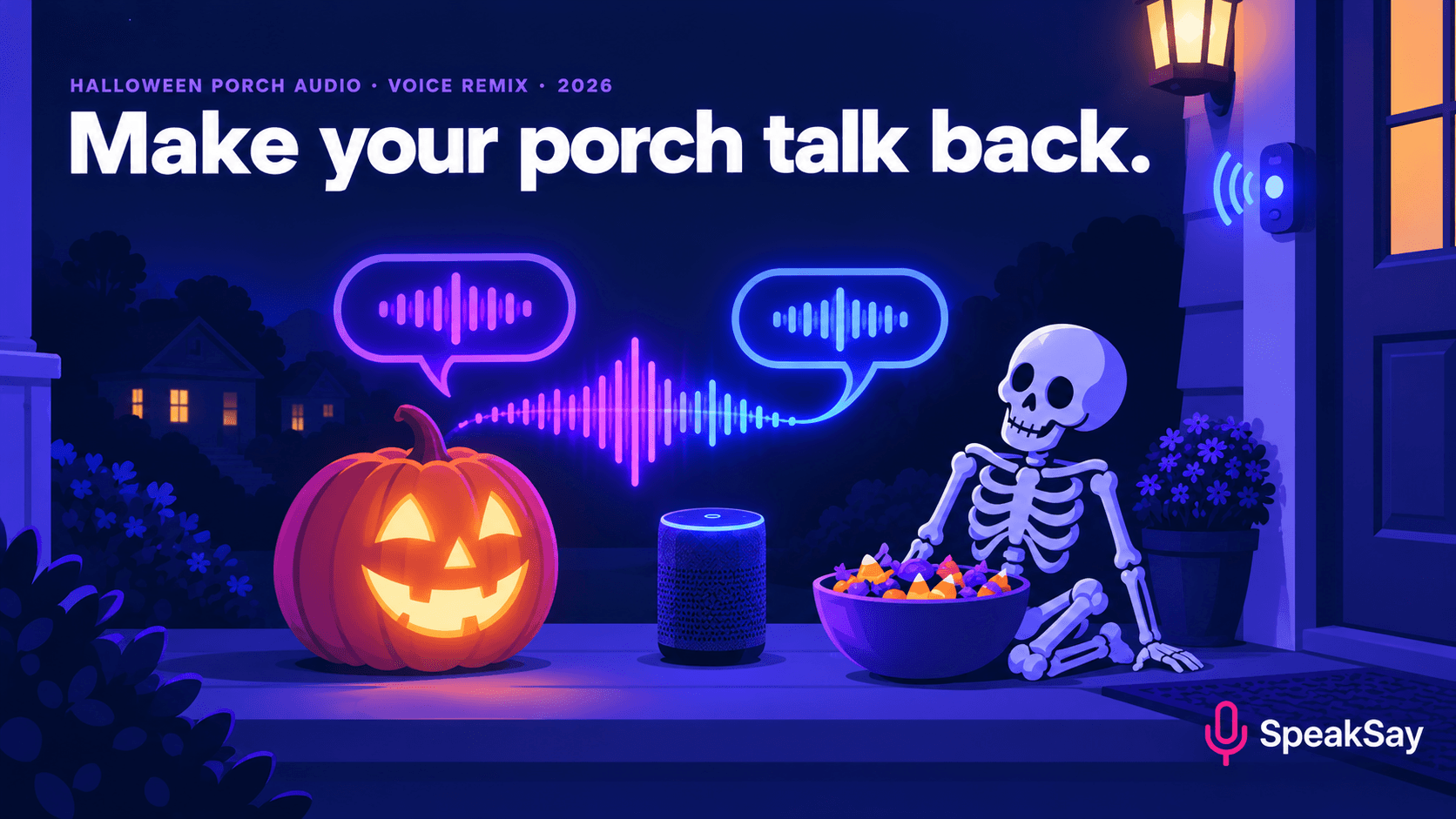
Talking Pumpkin, Skeleton at the Door: Build a Motion-Activated Halloween Porch Voice With Voice Remix Before October 31 (2026)
A voice that greets trick-or-treaters turns a porch into the house everyone remembers. This guide covers writing a set of short lines for different ages, turning a recorded take into a creepy or friendly character voice, setting loudness for the street, and being a considerate neighbour.
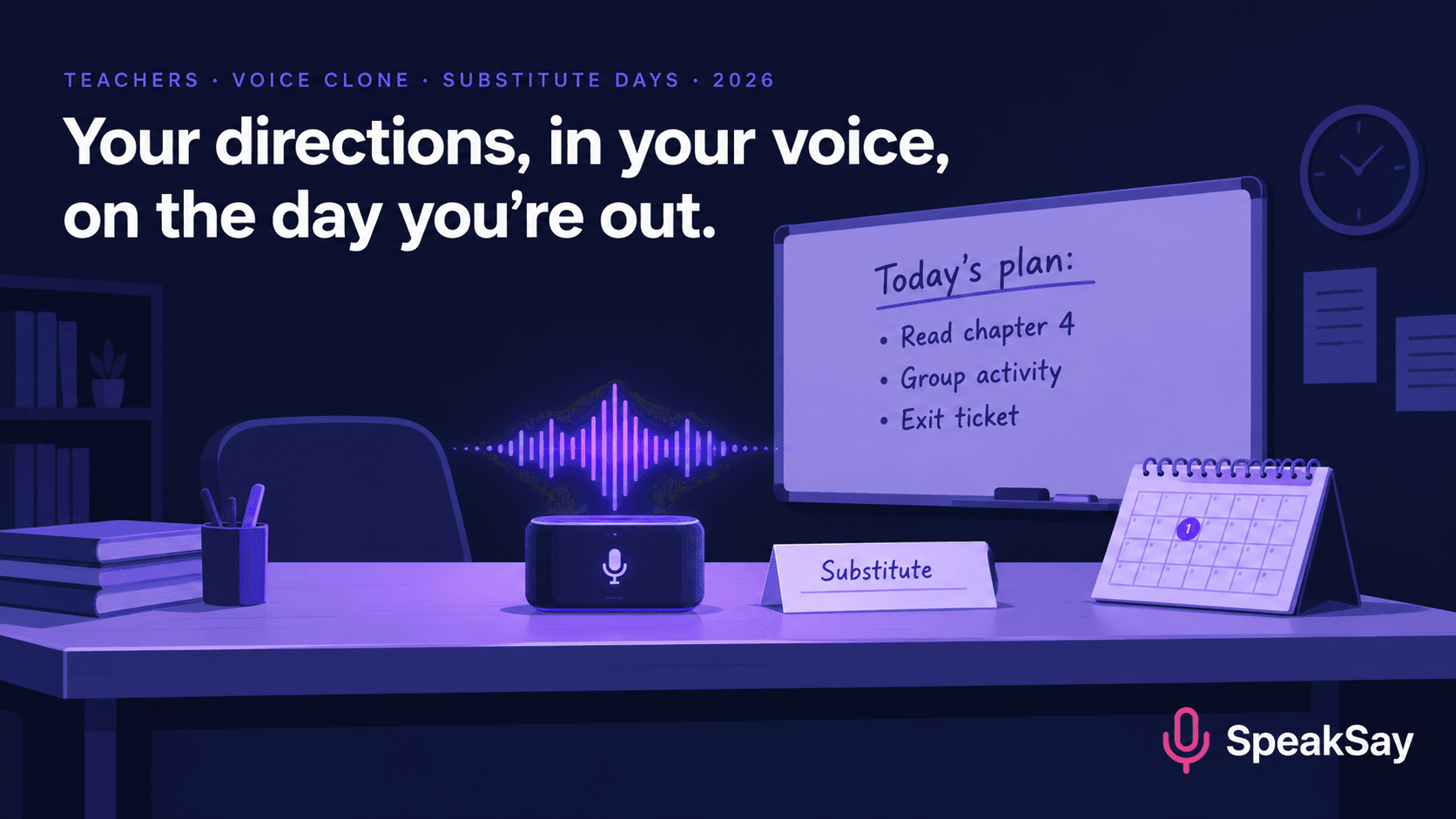
Teachers Miss About 11 of 186 School Days a Year: Record Your Directions Once and Let Your Own Voice Guide the Substitute Day (2026)
cher-voice-clone-substitute-day-audio-directions-2026 Excerpt: US teachers miss around 11 school days a year, and last-minute absences are the ones least likely to get a substitute. A teacher's voice clone, used only for routines and directions, can keep the class on track when the teacher can't be there. Here is what to voice, what not to, and what to check with your school first.
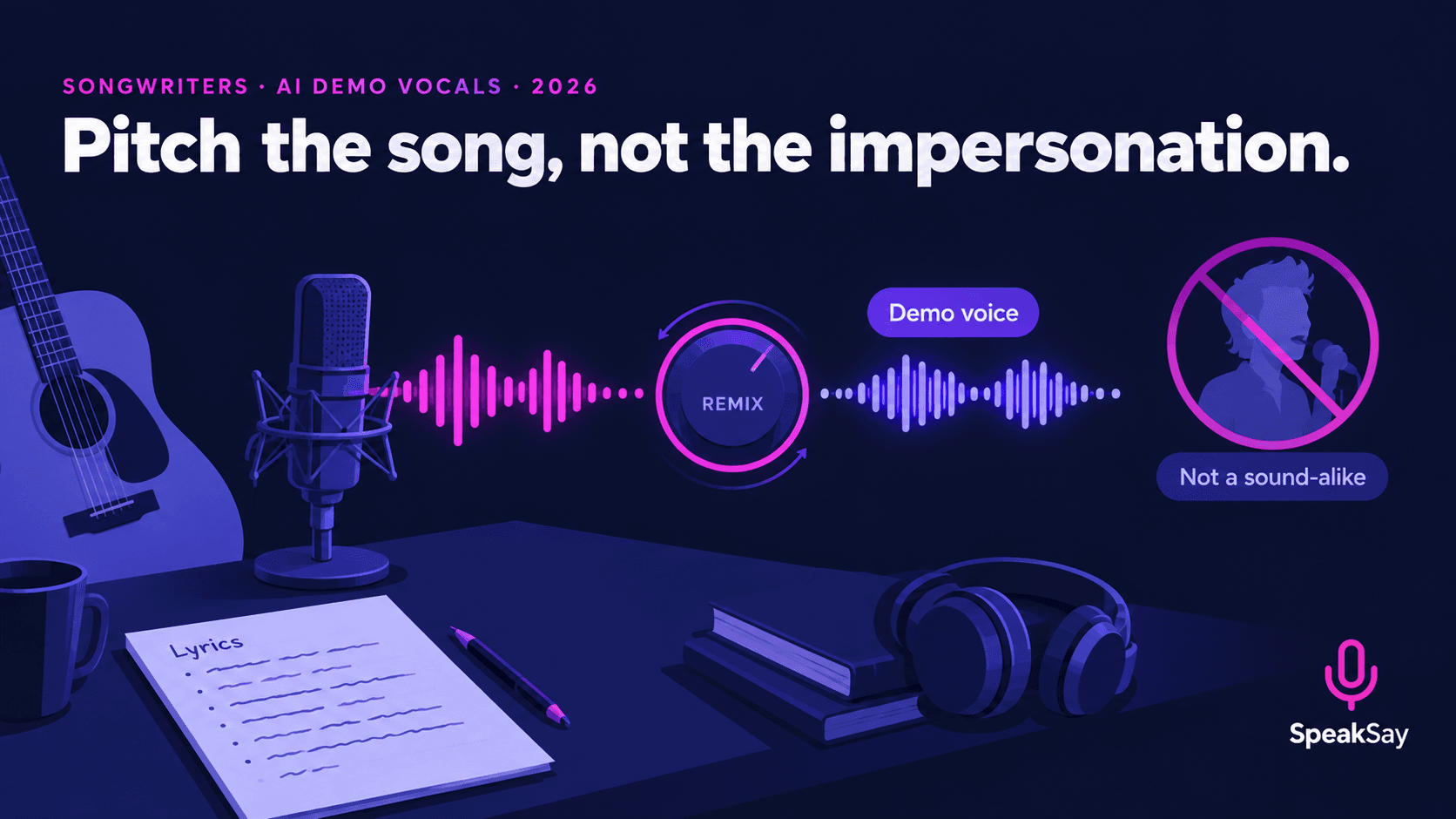
Songwriters Are Pitching With AI Sound-Alikes of the Artist. Here's a Demo That Gets the Song Heard Without Borrowing Anyone's Voice (2026)
Some songwriters now put an AI copy of the target artist's voice on their pitch demos. It's quick and cheap, but it's legally exposed under laws like Tennessee's ELVIS Act and it pitches the wrong thing. Here's how to make a demo in the right register and gender with your own sung guide vocal and Voice Remix, and when a human demo singer is still the better call.
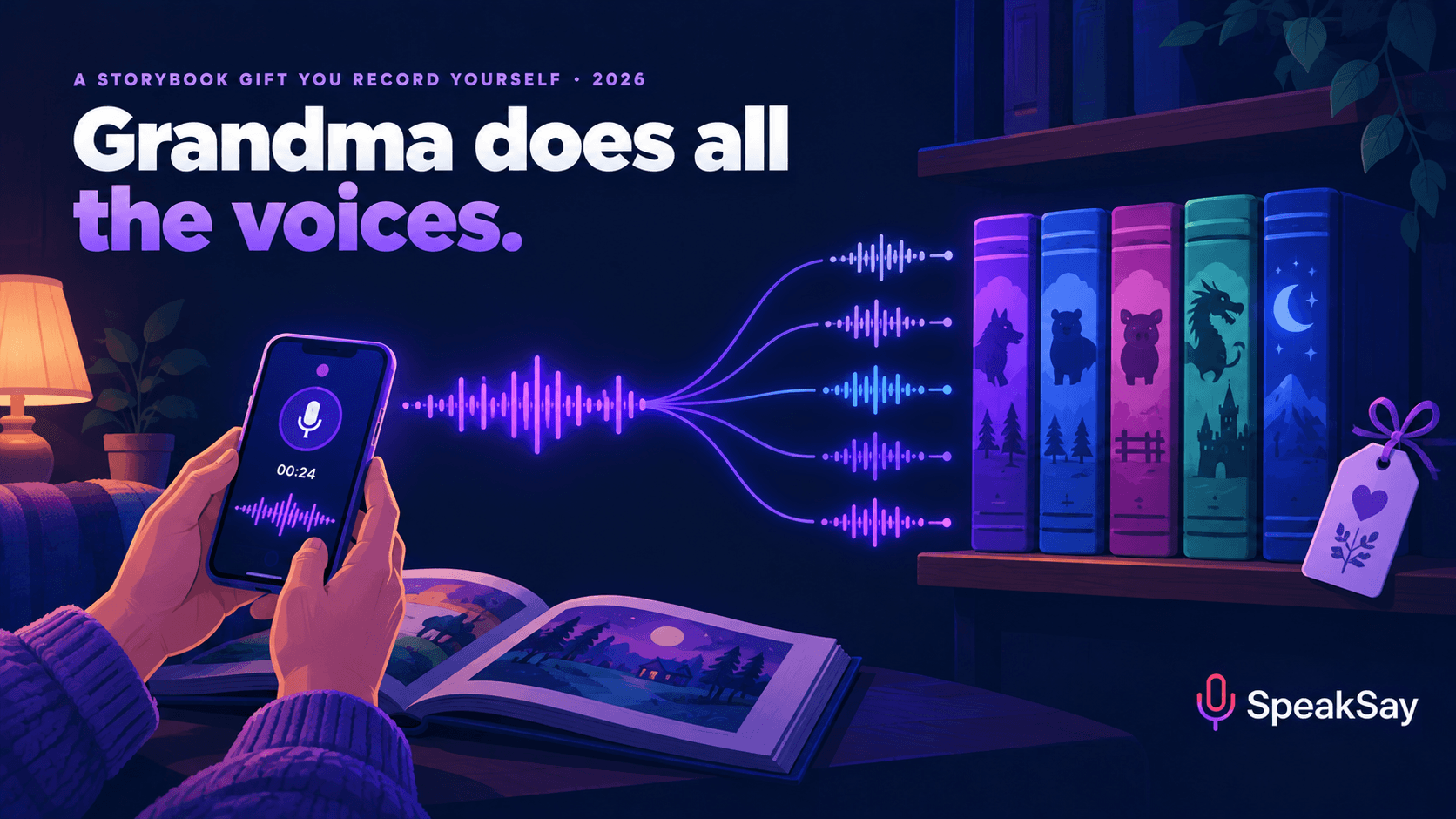
Grandma Does All the Voices: Record a Storybook Gift for the Grandkids and Voice Every Character Yourself (2026)
A recordable storybook holds one story. With a phone and an afternoon, a grandparent can record a whole shelf of bedtime stories in their own voice, and with Voice Remix they can voice the wolf, the bear and the dragon too while keeping their own timing. Here's how to choose the stories, record them, make the character voices, package the gift and finish before Christmas.
NotebookLM Is Testing a 30-Minute Lecture Mode. Your Students Would Rather Hear You: Turn Your Notes Into Lectures in Your Own Cloned Voice (2026)
NotebookLM has been testing a single-host Lecture format that turns your sources into talks up to about 30 minutes long. For students studying on their own, that's useful. For instructors, it's a stranger's voice interpreting your material. Here's when to use it, when to lecture in your own cloned voice instead, and a workflow for building a semester of short audio lectures that sound like you.
Your Students Can Tell It's You: Record Multi-Speaker Listening Dialogues Alone With Voice Remix (2026 Guide for Language Teachers)
When one teacher records every part of a listening dialogue, every speaker sounds like the teacher, and "What does the man suggest?" stops being a listening question. Text-to-speech fixes the voices but gives you tidy textbook speech. Here's a third way: perform the conversation with real hesitations and interruptions, then use Voice Remix to make each part a different speaker.
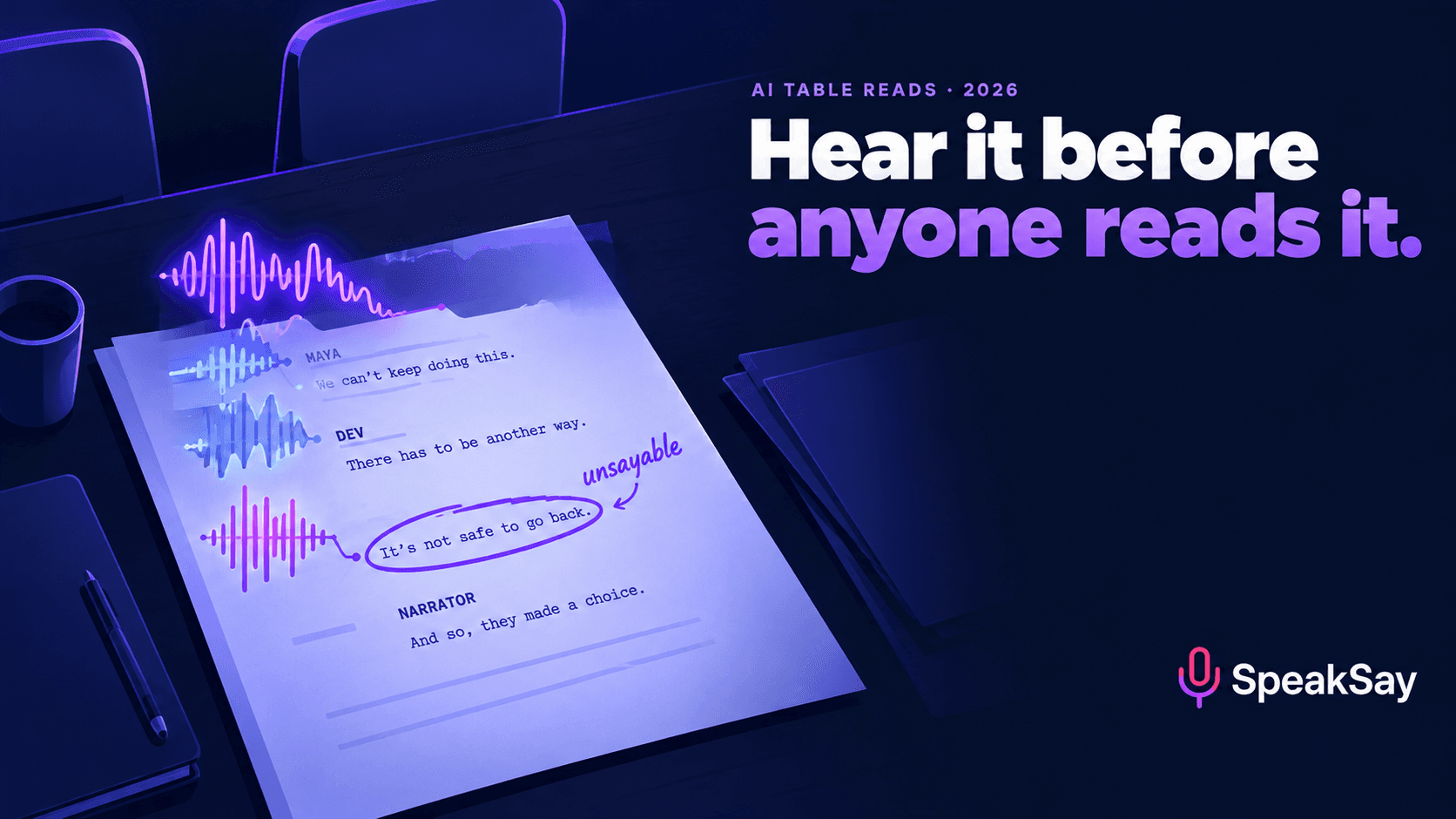
No Actors for a Table Read? Hear Your Screenplay in Distinct AI Voices Before Anyone Else Does (2026)
A table read is the cheapest way to find out your dialogue doesn't work, and most writers can't get one. An AI table read won't give you a performance, but it will tell you which characters all sound like you, which lines can't be said aloud and which scenes run long. Here is how to cast it, what to listen for and where it misleads you
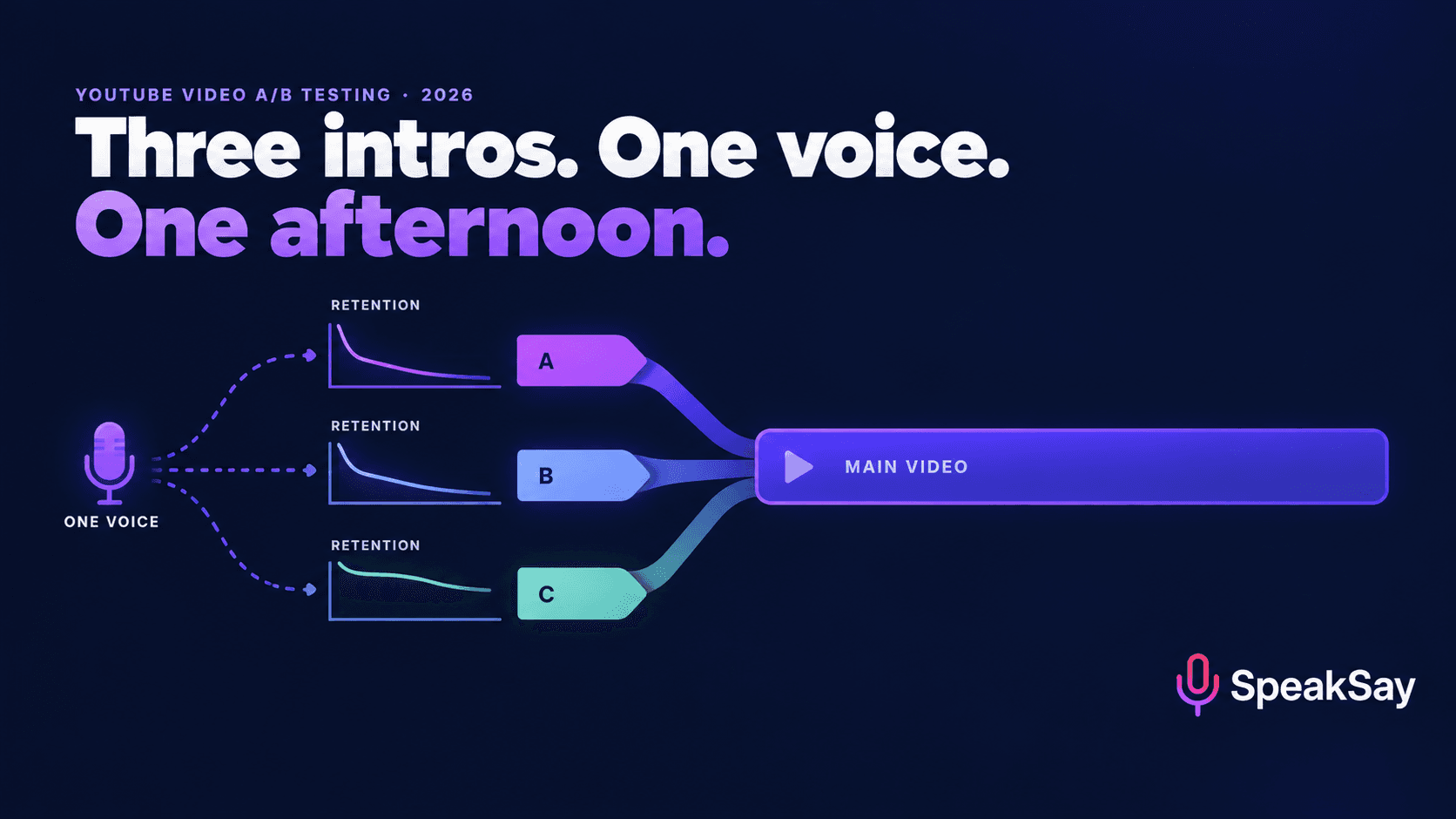
Audible Lets Listeners Talk to Renfield. Here's the Character Audio Indie Authors Can Make Without Waiting for an Invite (2026)
On October 1, 2026, Audible began a US and UK beta of Interactive Story, real-time AI conversations with a character, starting with Renfield in its Dracula production. Indie authors have no way in, and an unscripted chatbot is risky for a small author anyway. Here's what Audible launched, what listeners want from it, and five kinds of scripted character audio you can make and sell this month.
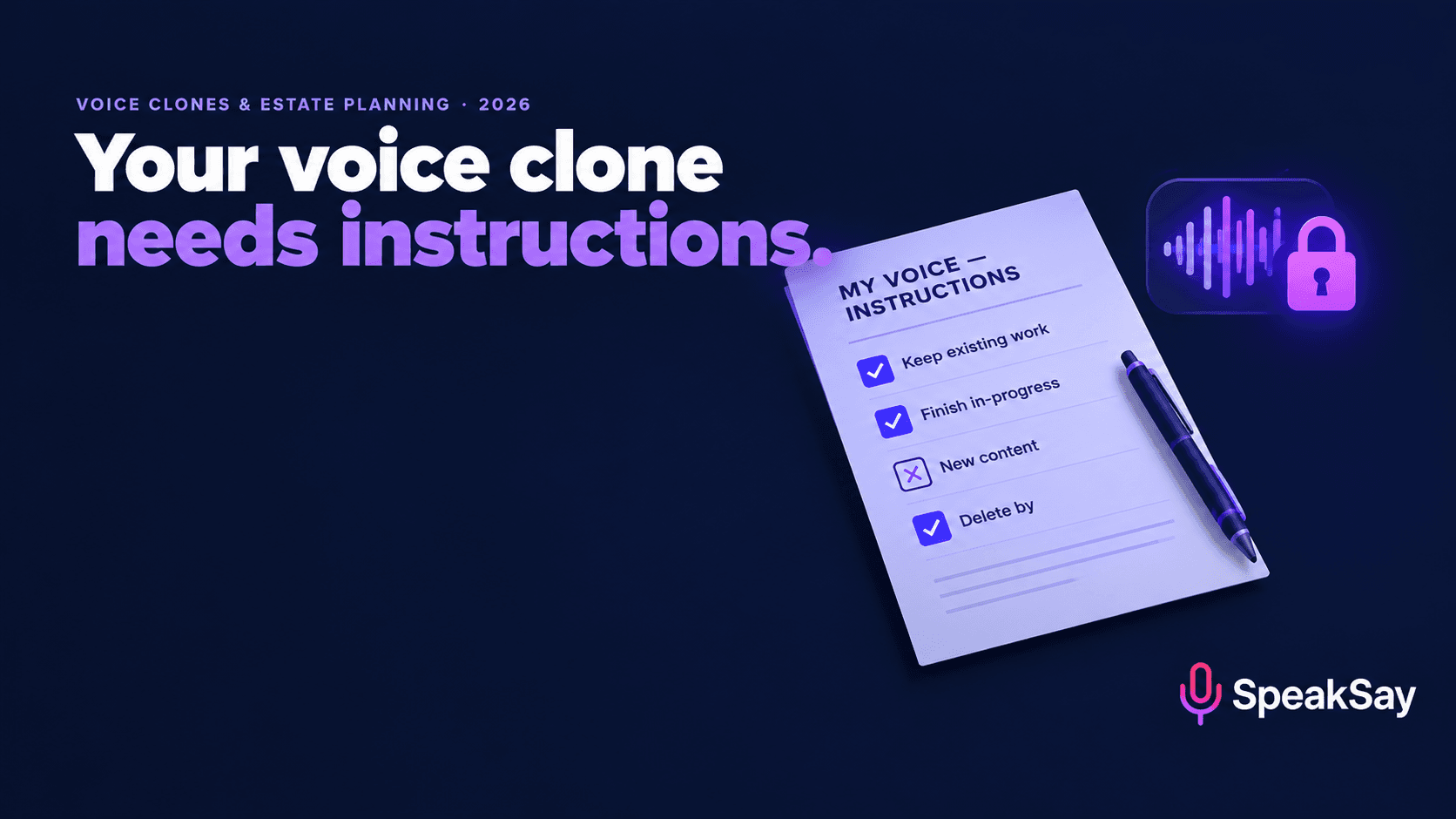
Nobody Watches the Four-Hour Council Meeting: Turn Public Meetings Into an Accurate Five-Minute Audio Recap (2026)
City councils, school boards and HOAs make decisions in meetings almost nobody watches. AI recaps are spreading, and the early ones show the risks: invented tone, missing votes, wrong budget figures. A civic recap needs a different spec from a podcast. Here it is: one neutral narrator, motions read verbatim, votes by name, every number checked, and a link back to the record.
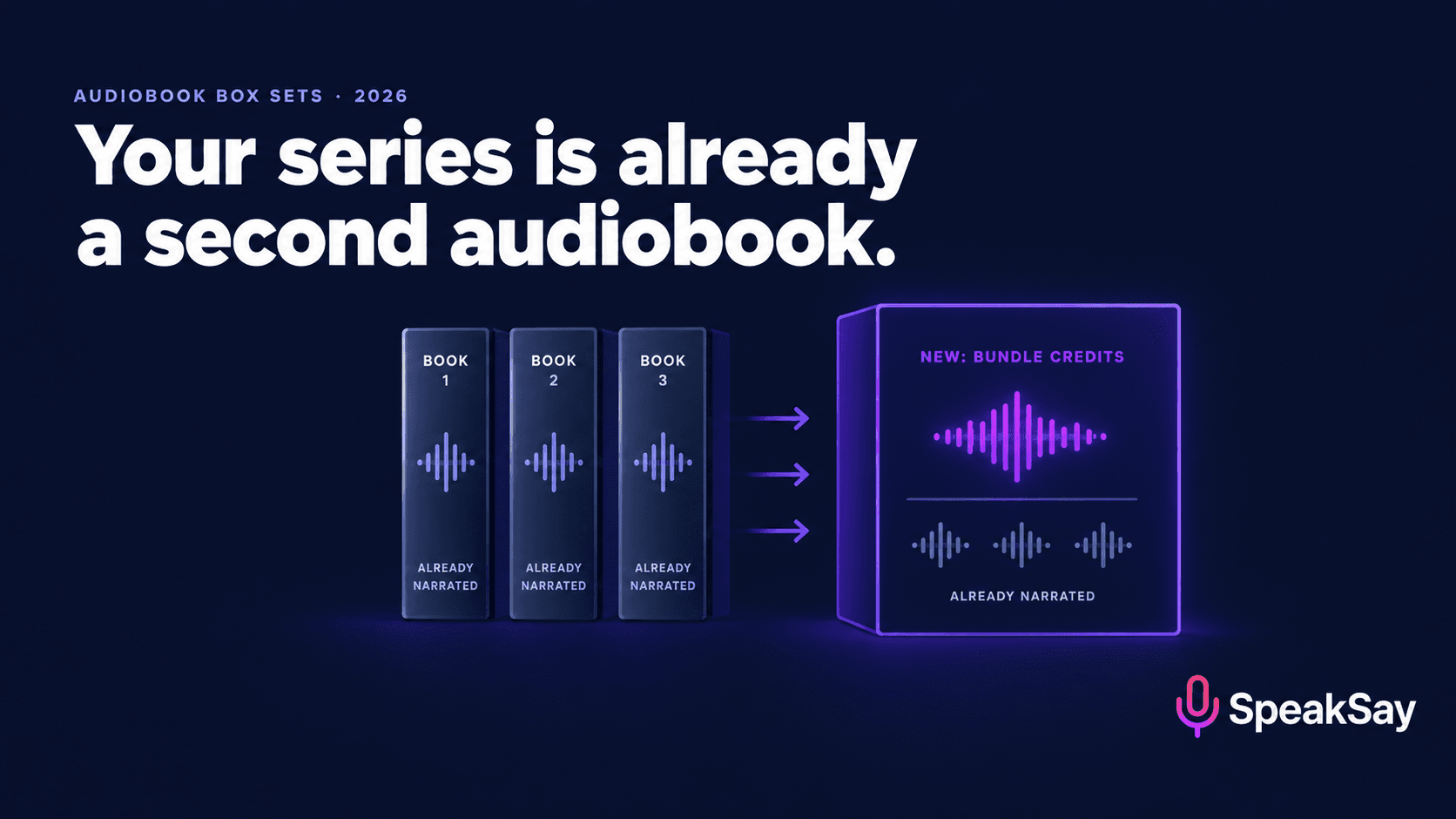
Your Finished Series Is a Second Audiobook: Build a Box Set From Narration You Already Own (2026)
If you've narrated two or more books in a series, a box set is a new product that needs almost no new audio. ACX's bundle rules are strict, though: you need a Kindle bundle first, each book can be in only one bundle, agreements must match and the bundle needs its own credits. Here is the 2026 checklist, plus the voice-consistency check AI-narrated series need.
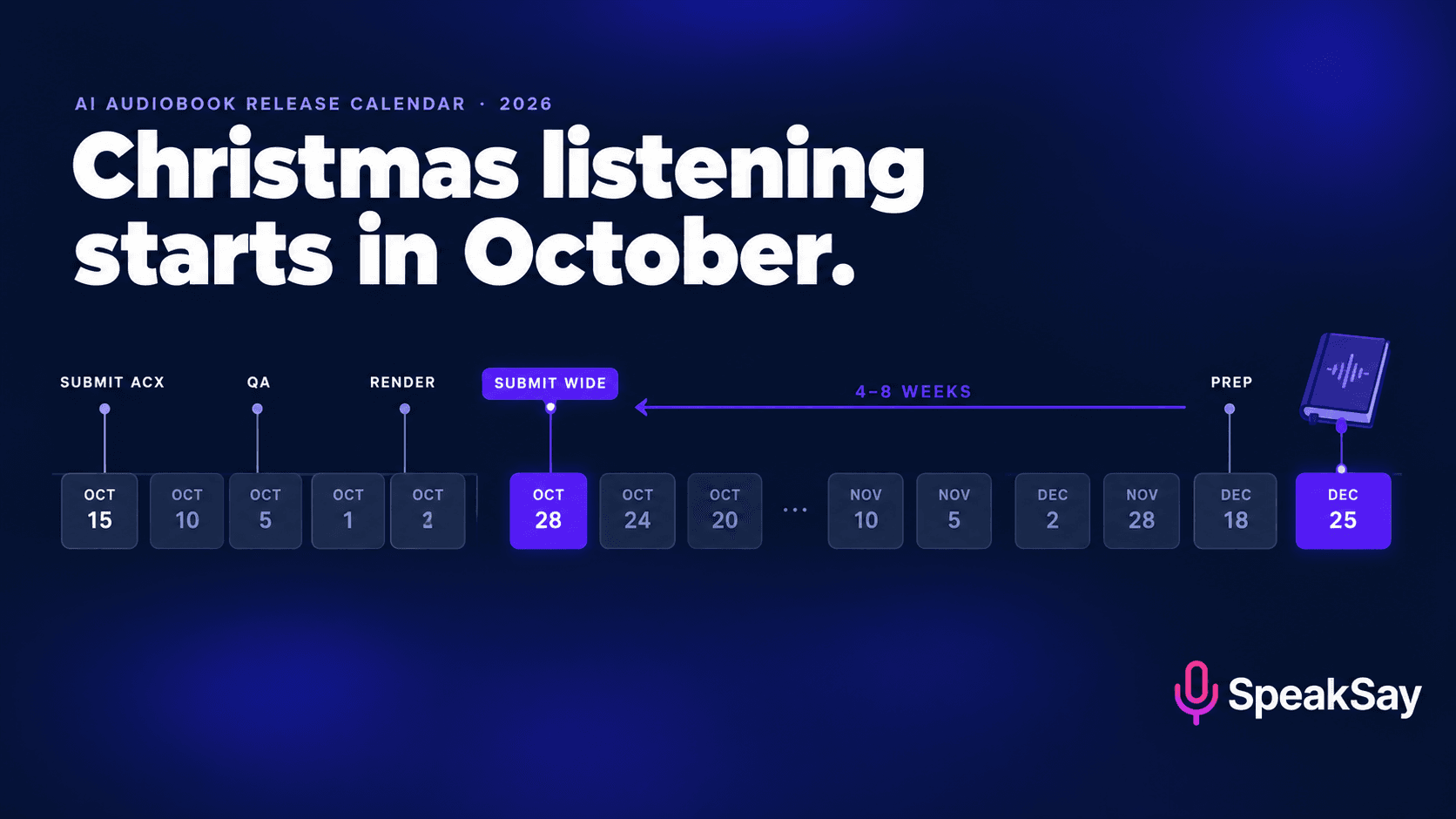
Want Your AI-Narrated Audiobook Live by Christmas? Work Backwards From December 25 — the Window Closes in October (2026)
The narration takes days. Getting it onto every store takes weeks. If you want an AI-narrated audiobook available when people unwrap new devices and subscriptions on December 25, the real deadline is your distributor's processing time, not your production time. A backwards calendar for 2026, plus the late plan if you miss it.
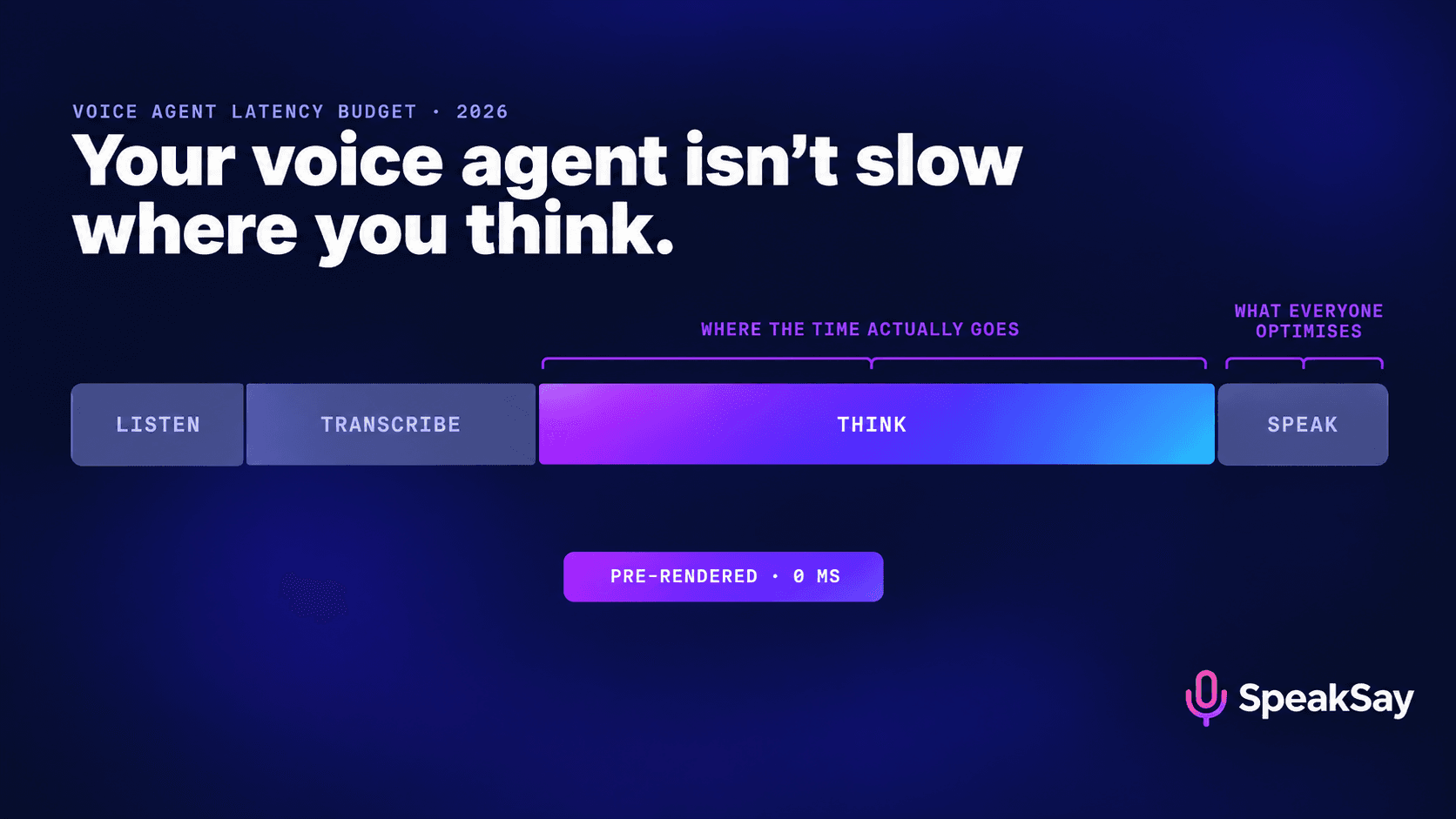
Black Friday Copy Expires Every 72 Hours: Build a Dated Holiday Audio Ad Set in One Afternoon (2026)
Holiday audio ads fail for a boring reason: the offer, the deadline and the price change every few days, and nobody books a voice actor four times in a week. Here is a modular script system, a 2026 date-by-date variant calendar, and a one-afternoon workflow for rendering the whole set in one consistent AI voice.
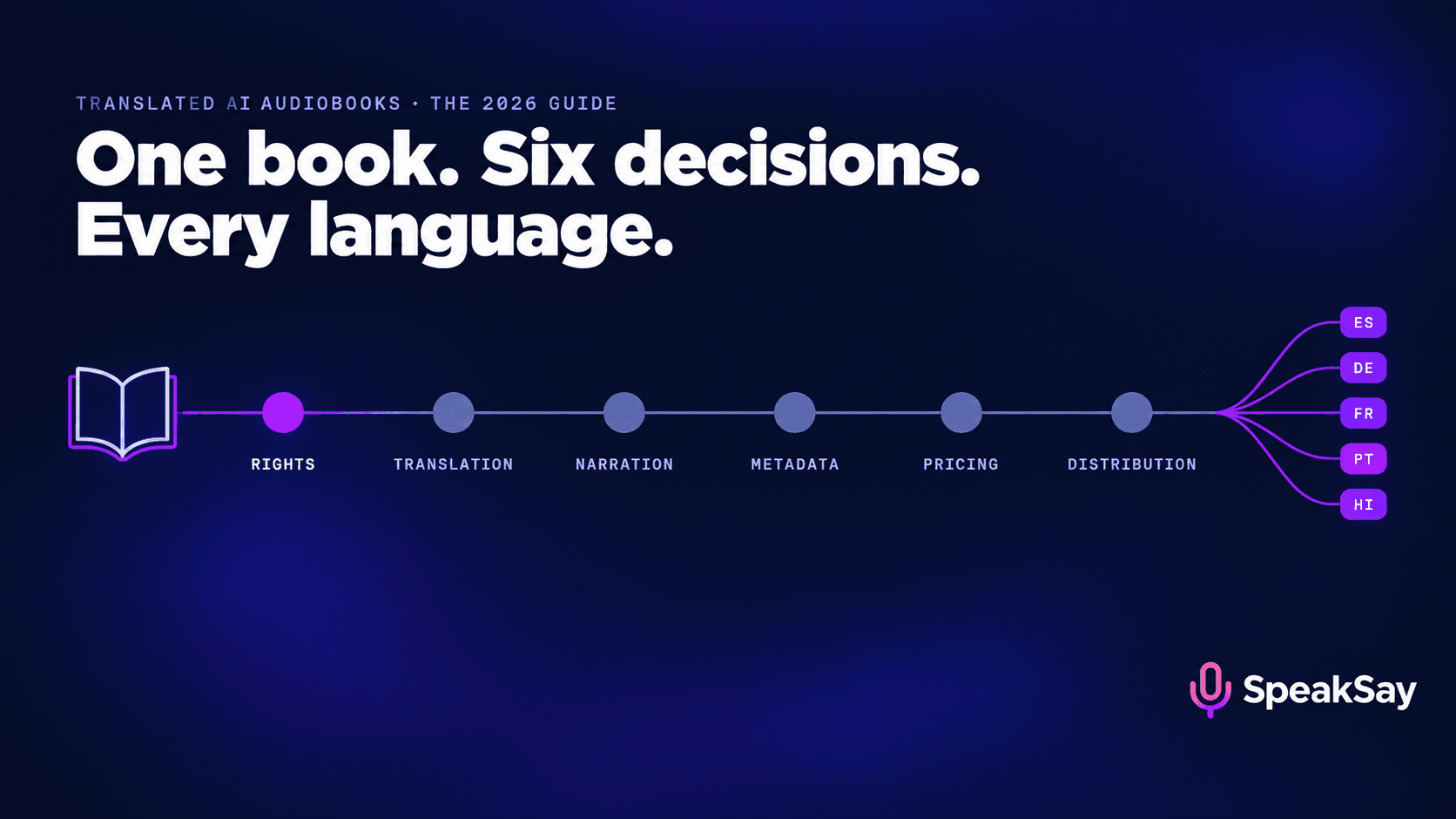
Translated AI Audiobooks: The Complete 2026 Guide (Rights, Translation, Narration, Metadata, Pricing, Distribution)
Publishing your audiobook in another language is six decisions in a fixed order, and most failed translated editions got the order wrong. This hub walks the whole path — rights, translation, narration, metadata, pricing and distribution — with the one question to answer at each step and a link to the deep guide for each.
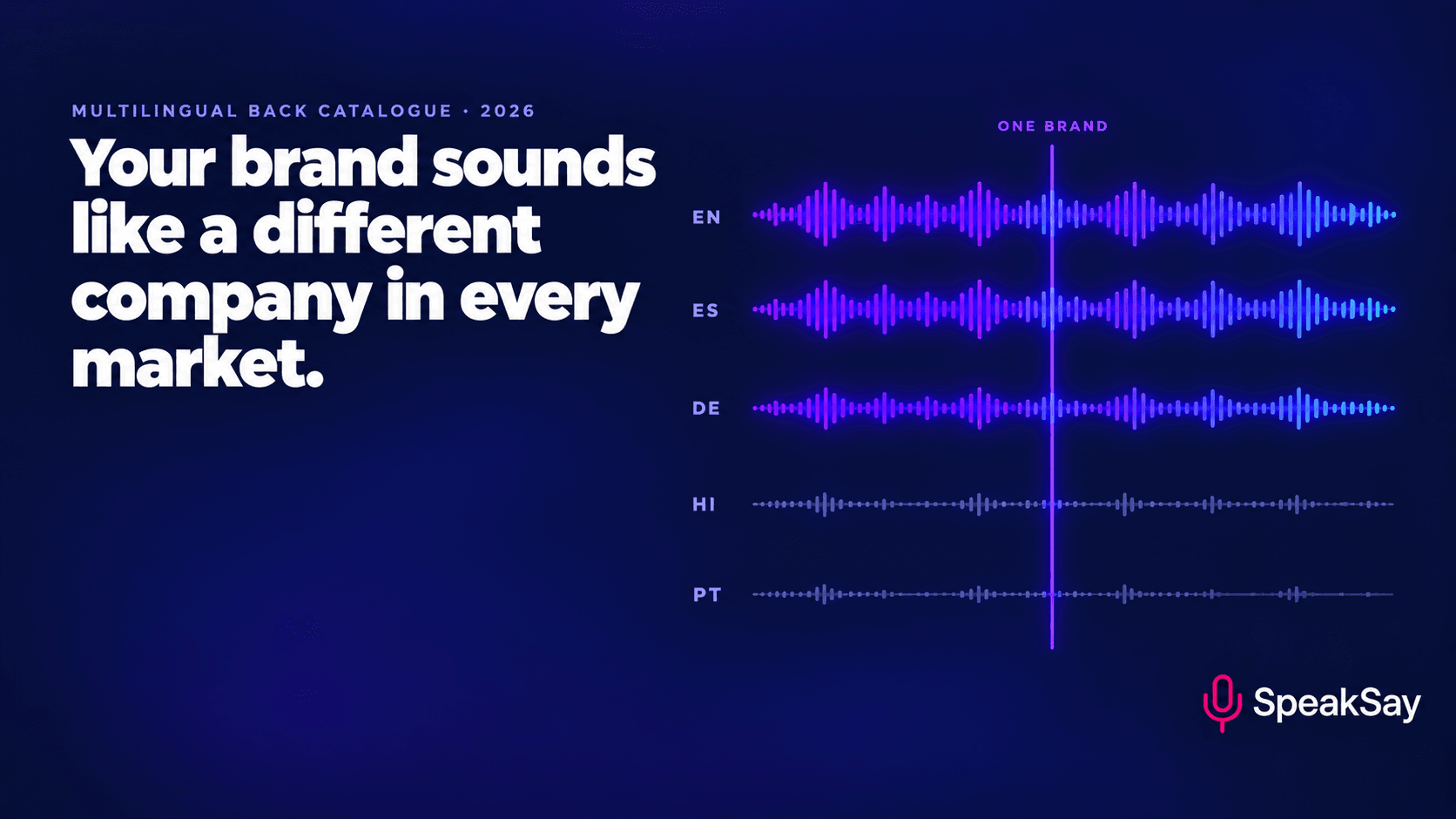
Your Spanish Channel and Your Hindi Channel Are Not on the Same Model: Auditing Multilingual Voice Drift Across a Back Catalogue (2026)
Every dubbing platform advertises a hundred languages. Quality is genuinely comparable in about ten of them. If you have been publishing in five or six markets for a year, your catalogue is now sitting on several different model generations at once — and you have almost certainly never listened to the weakest one.
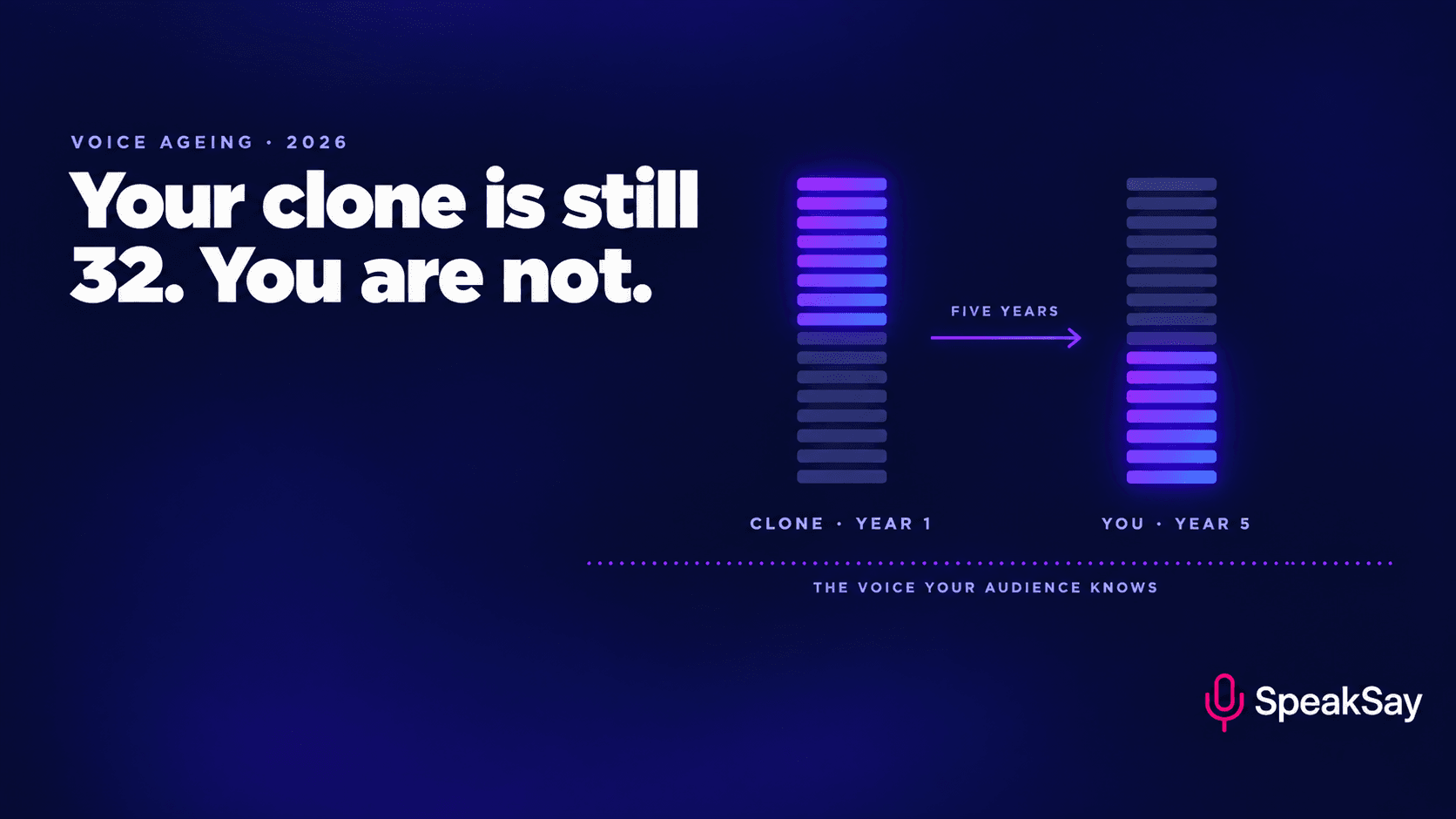
Your Clone Is Still 32 and You Are Not: Managing Voice Ageing Across a Multi-Year Channel (2026)
Everyone worries about the model changing underneath their voice clone. Almost nobody plans for the opposite problem — the model holds perfectly still while the person it was built from changes. Five years in, the gap between your recorded voice and your rendered one is audible, and it shows up in the worst possible place: a live appearance.
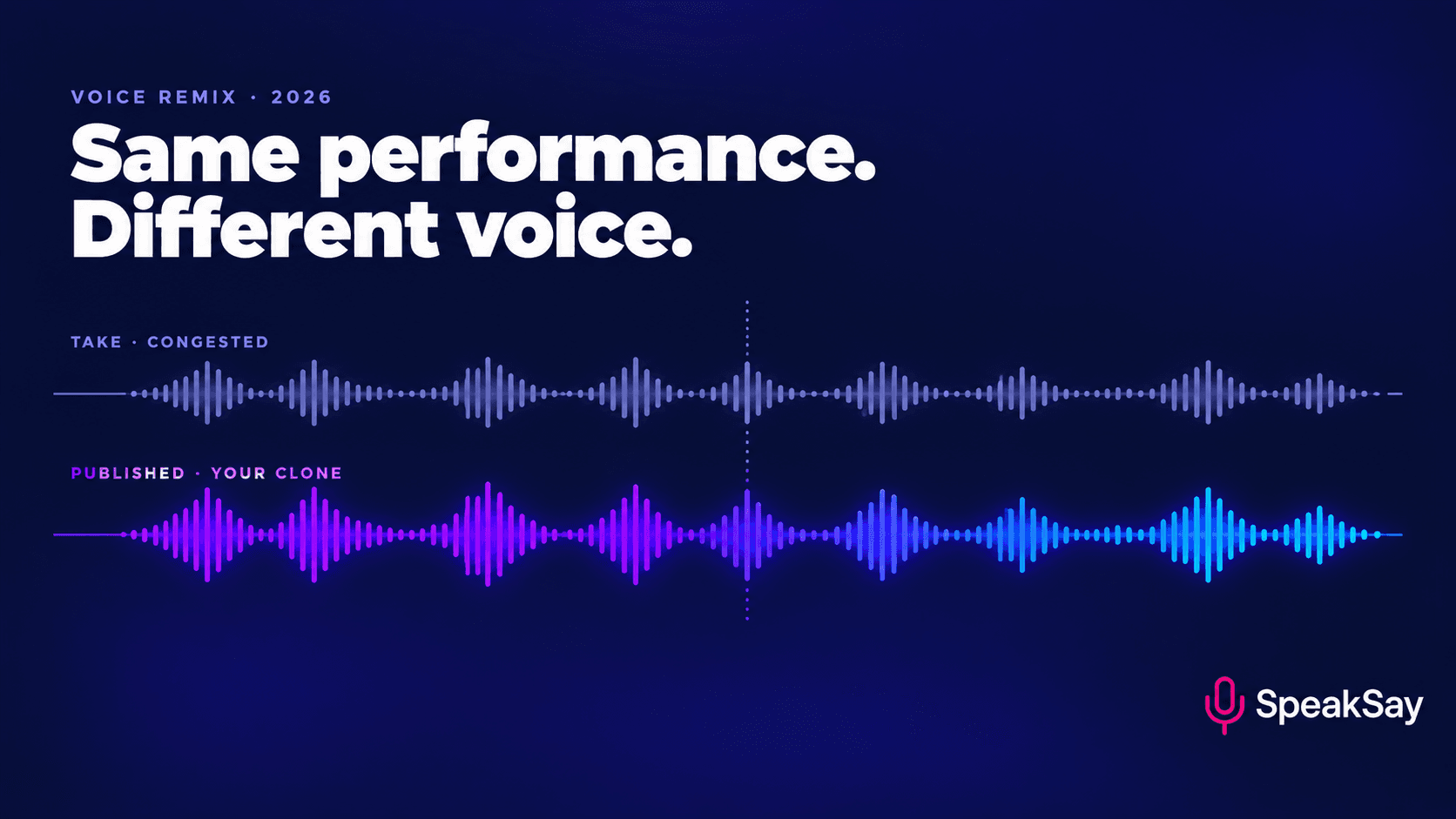
You Recorded the Whole Script With a Cold: Publishing in Your Own Voice When Your Voice Is Gone (2026 Voice Remix Guide)
The entire voiceover internet answers "I have a cold and I publish Thursday" with "reschedule." That is not advice, it is a shrug. A cold breaks your timbre and usually leaves your performance completely intact — which means the take you just recorded is more salvageable than it sounds.
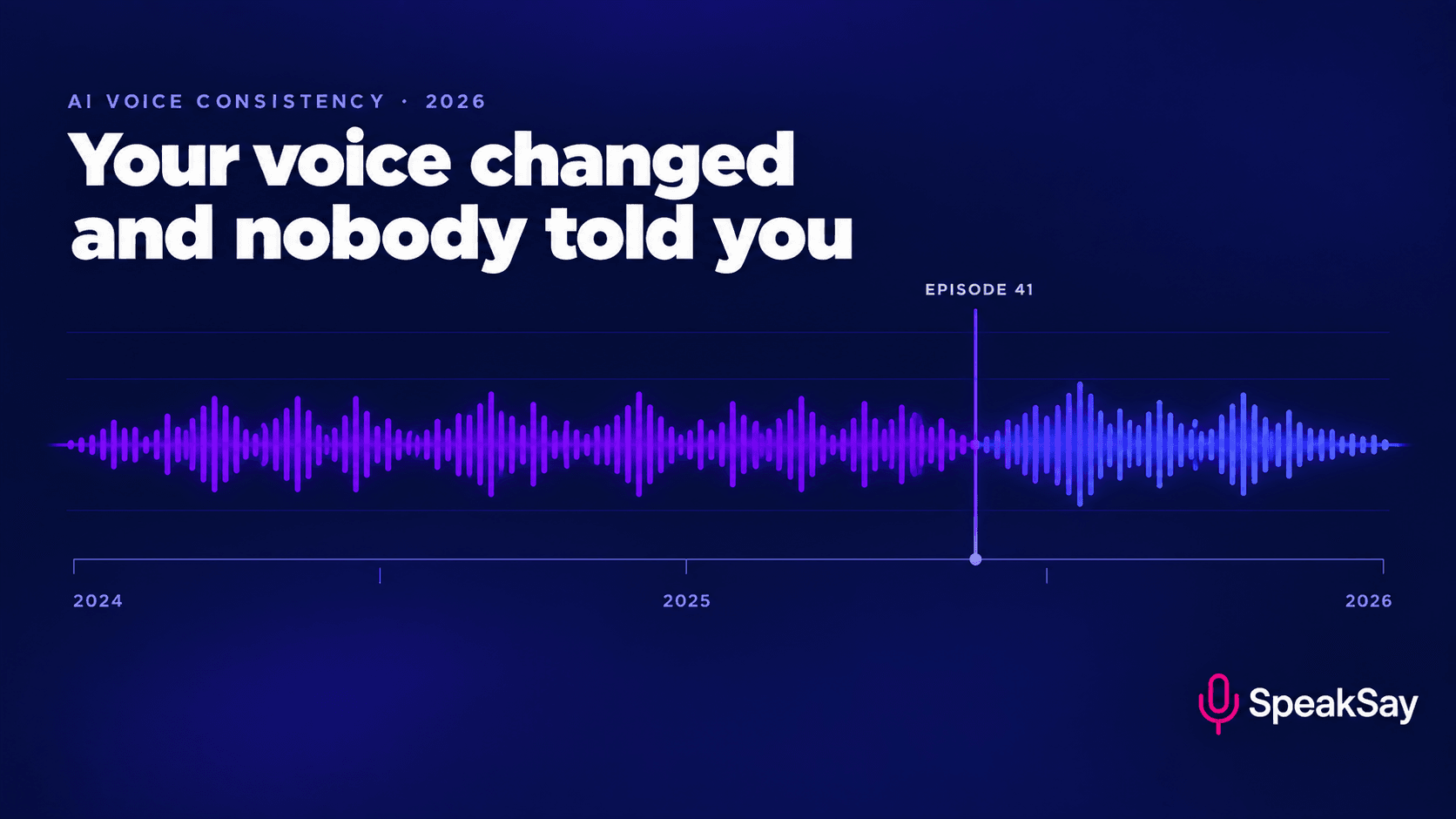
You Upgraded the Voice Model and Broke Your Back Catalogue: AI Voice Consistency Across a Multi-Year Channel (2026)
Your AI narrator sounds slightly different in episode 41 than it did in episode 12 — and you never changed the voice. Model versions move underneath you. Here is what actually drifts, why listeners register it without being able to name it, and how to decide what to re-render.
Publish Your Audiobook in Languages You Don't Speak: The 2026 Rights, Voice and QC Playbook for Indie Authors
AI narration removed one of the two costs that kept foreign-language audio editions out of reach for indie authors. It did not remove the other one — and it created a new problem, which is that you now cannot evaluate the thing you are about to publish. Here is the order of operations that works.
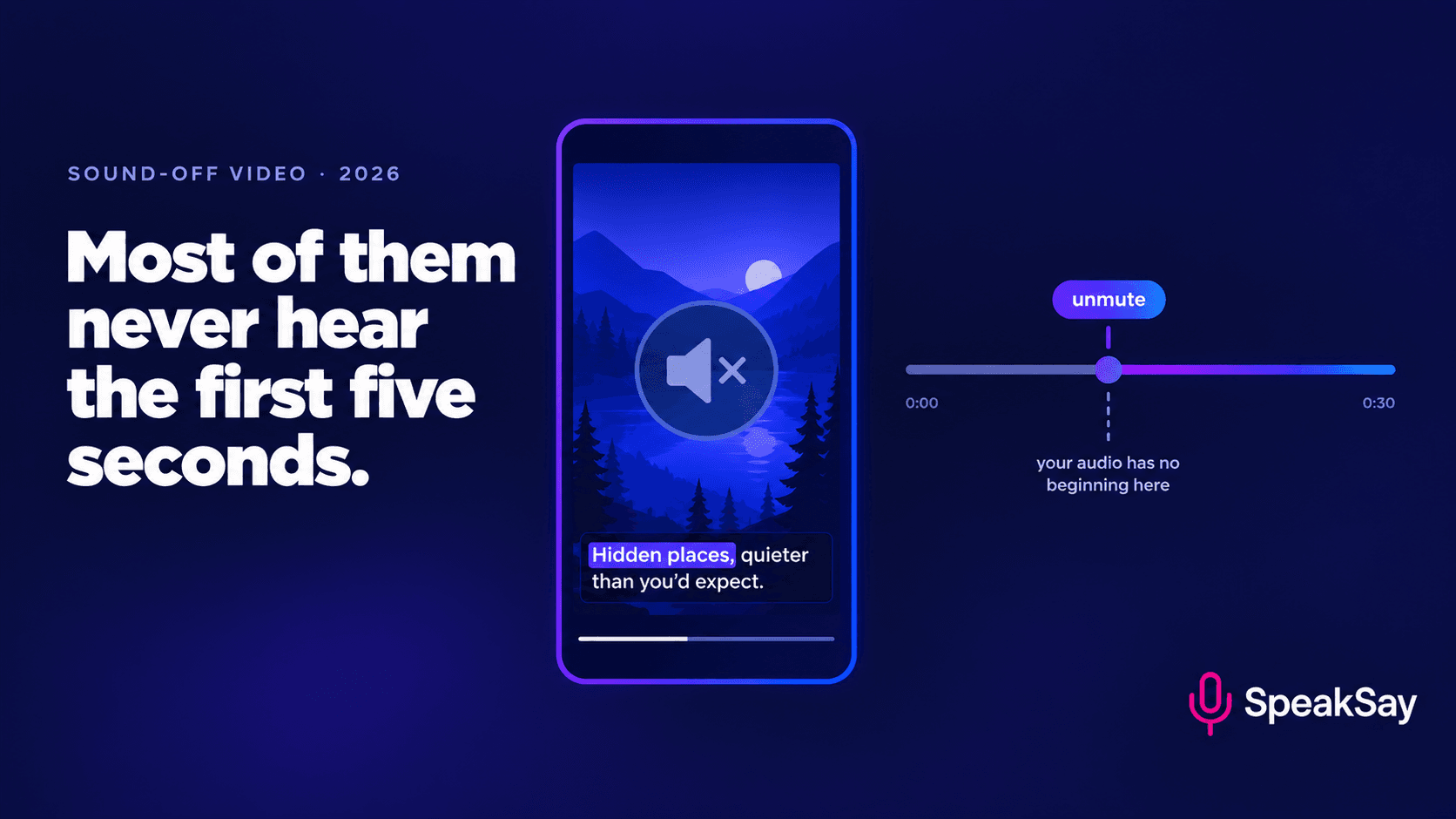
Your Video Starts Muted: Writing and Casting AI Voiceover for Feeds Where Nobody Hears the First Five Seconds (2026)
Around 75% of mobile video views on Facebook, Instagram and LinkedIn happen with the sound off — and on Facebook it is higher still. Meanwhile 80% of TikTok viewing is sound-on. Cross-posting one edit to both is the mistake. Here is how to write a voiceover that survives being read, and rewards being unmuted.
You Can't Record Loud at 11 PM: How to Perform Quietly and Still Publish a Full-Voice Read (2026 Voice Remix Guide)
If you record in a shared flat, a family home, a hotel room or an open-plan office, you are not fighting noise — you are fighting volume, and volume is a performance variable, not an acoustics one. A restrained read is clean and dead, and no EQ, compressor or noise remover puts the life back. This guide covers how to perform at low volume so there is something worth carrying, and how speech-to-speech conversion supplies the projection you physically could not.
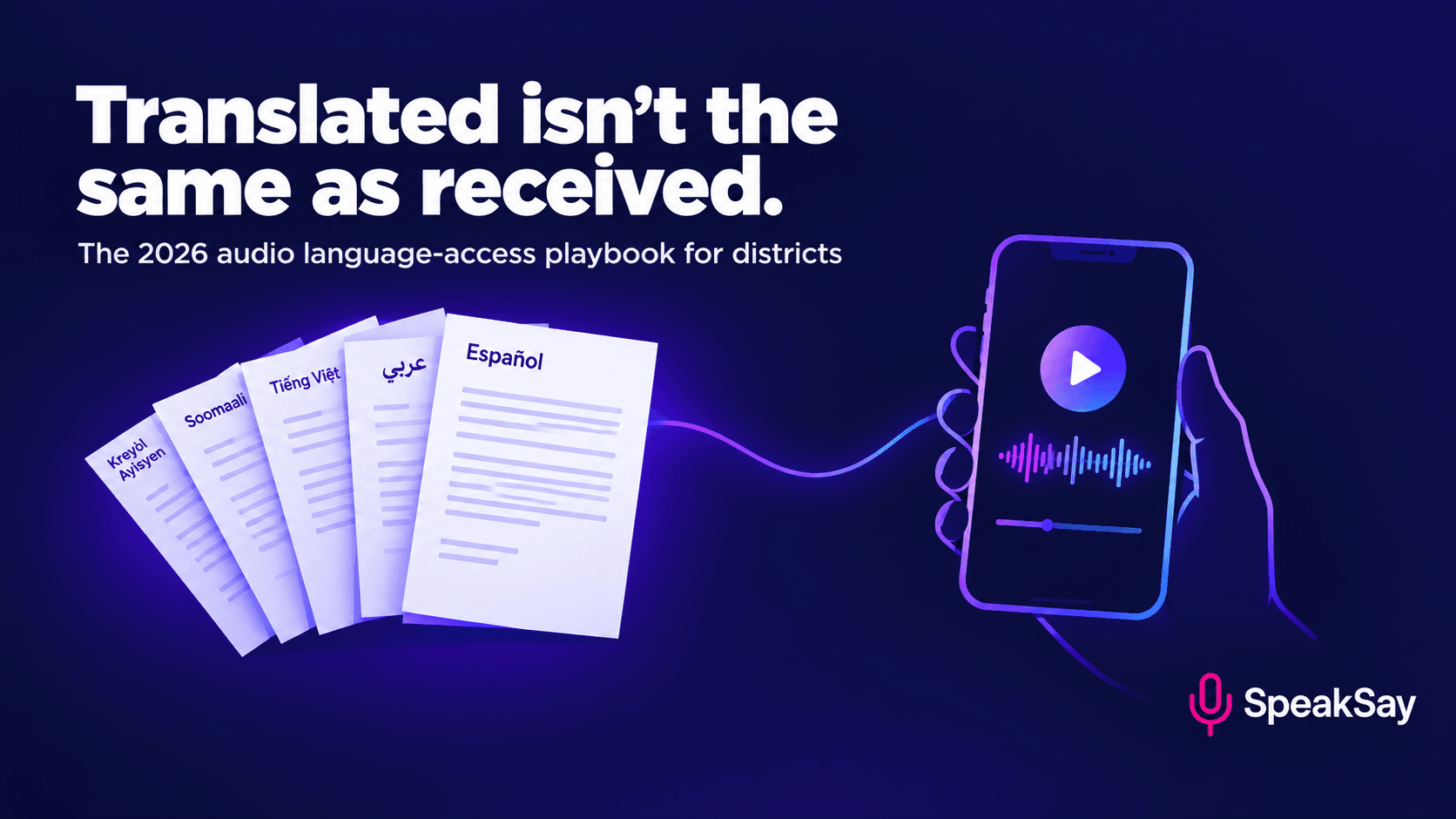
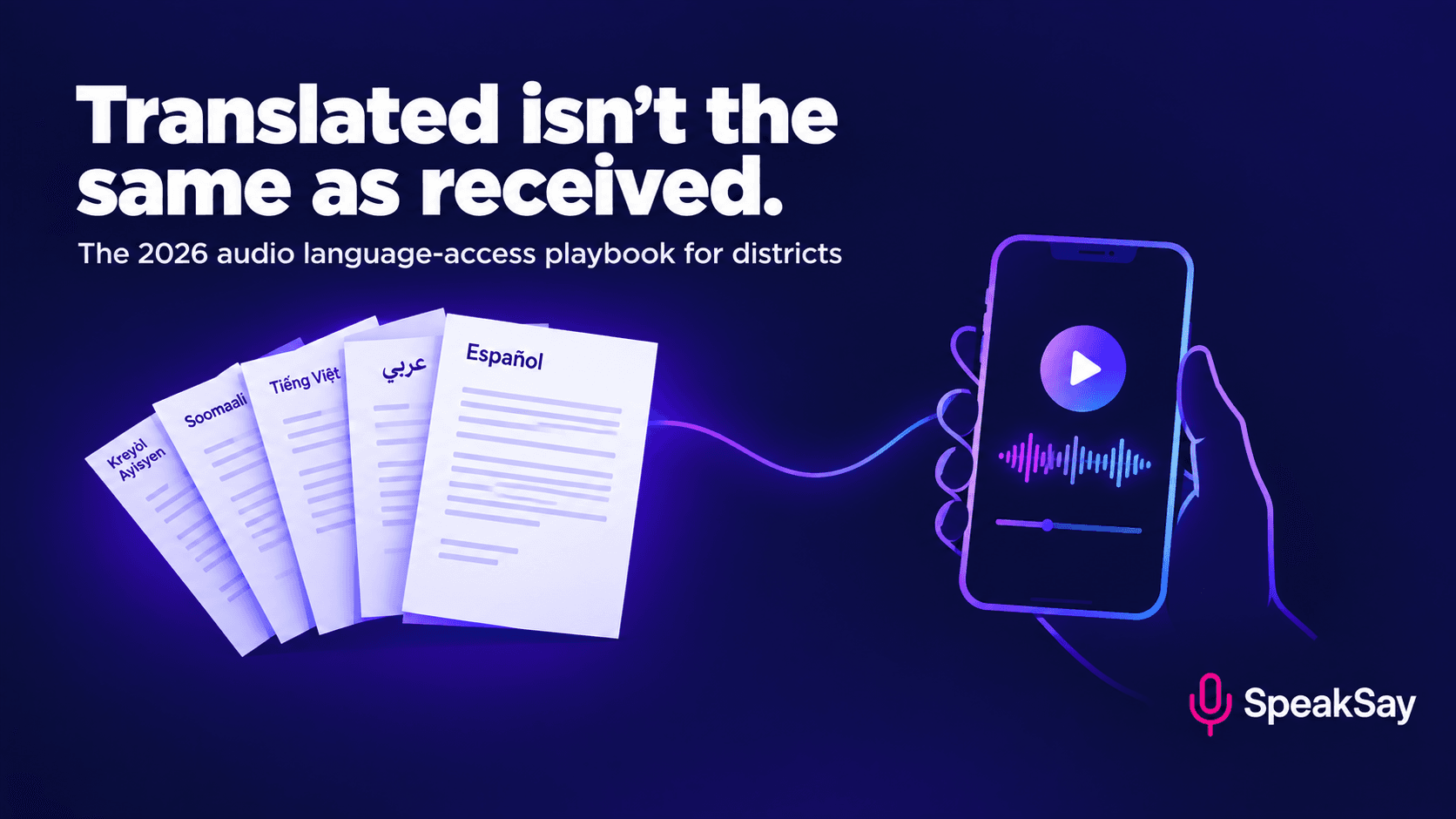
School Districts Translate the Newsletter and Lose the Families Anyway: The 2026 Audio Language-Access Playbook
Title VI requires districts to communicate meaningfully with limited-English-proficient parents, and districts respond with translated PDFs. A translated PDF assumes a reader — the exact assumption that fails for oral-tradition languages, unstandardised written forms and low-literacy adults. Audio closes that gap, and its cost scales with languages rather than documents. Here is how to build the layer, and where it must not go.
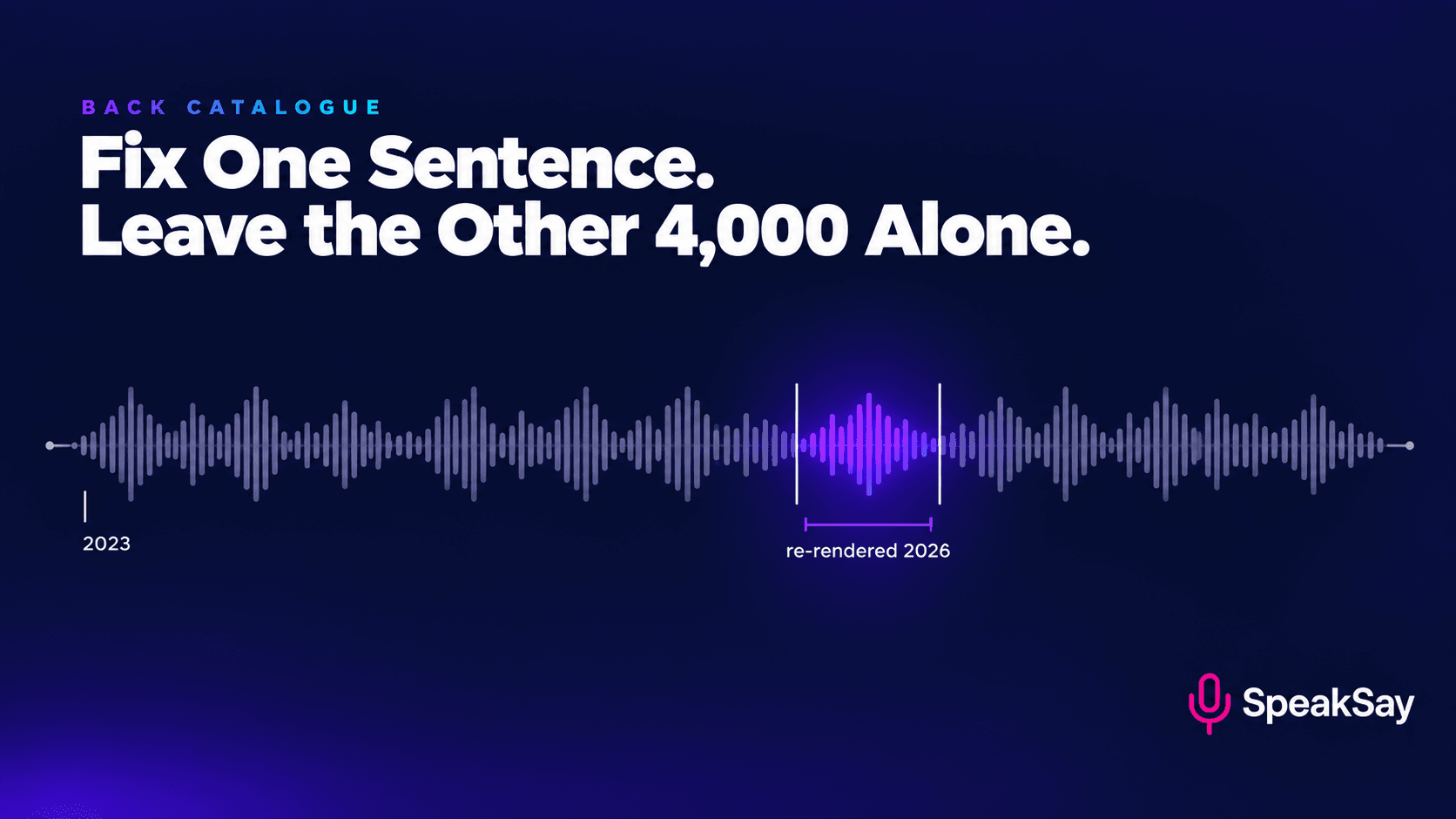
Getting Your AI-Narrated Audiobook Into Libraries (2026): OverDrive, Libby, Hoopla and the "Digital Voice" Label
There is no blanket ban on AI narration at the library platforms. There is also no direct upload route, no guaranteed shelf space, and a mandatory "Digital Voice" label on your narrator credit that most authors discover after the book is already live. Here is how the channel actually works.
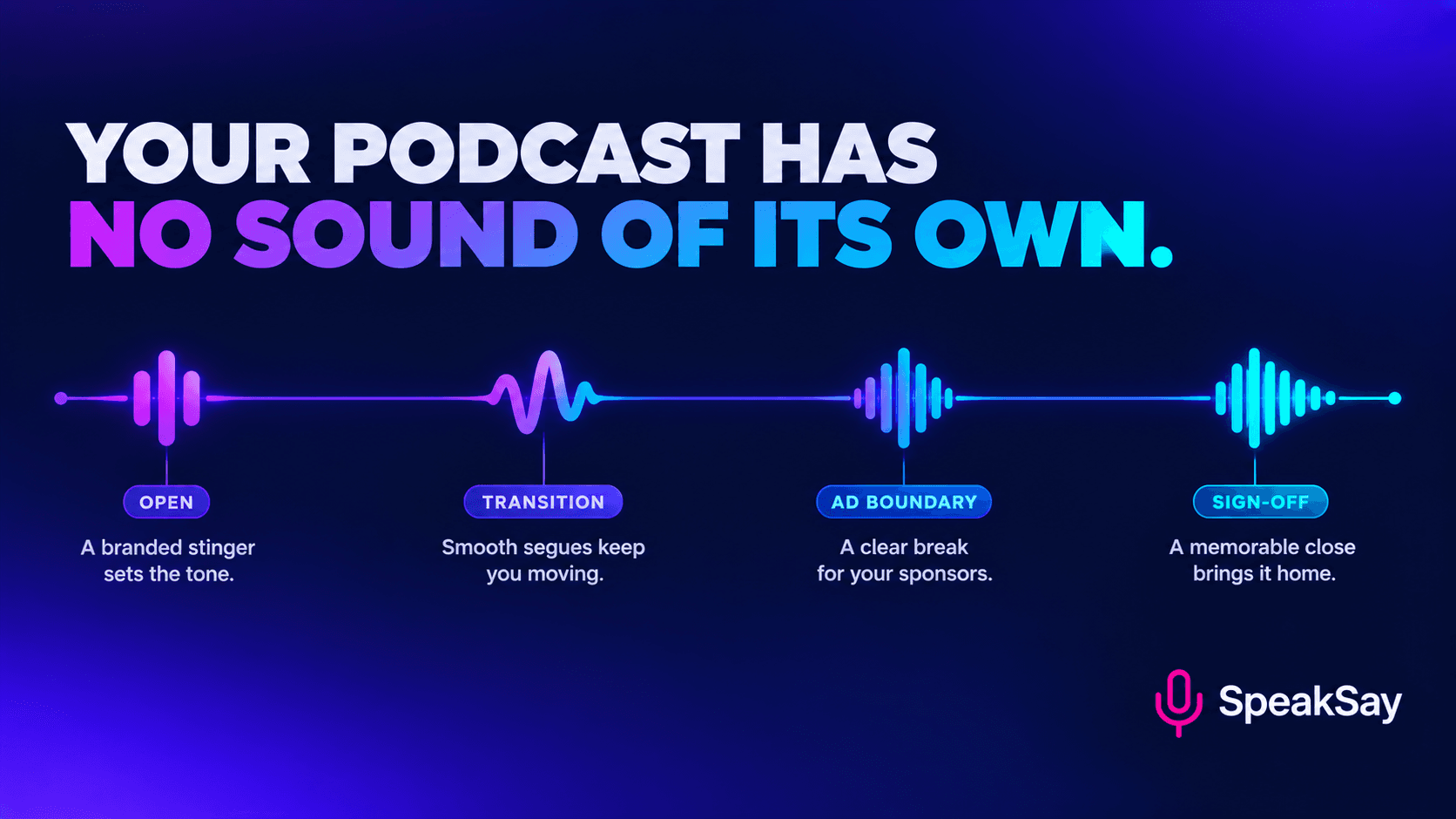
Your AI Podcast Sounds Like Everyone Else's Because It Has No Sonic Identity — The 2026 Audio Branding Playbook
Stock voice, stock intro music, stock structure. Listeners can't tell your show from the twenty others in their feed because there is nothing to tell apart. Here's how to build an audio identity — stinger, tag, transitions, sign-off — for a show made with AI voices.
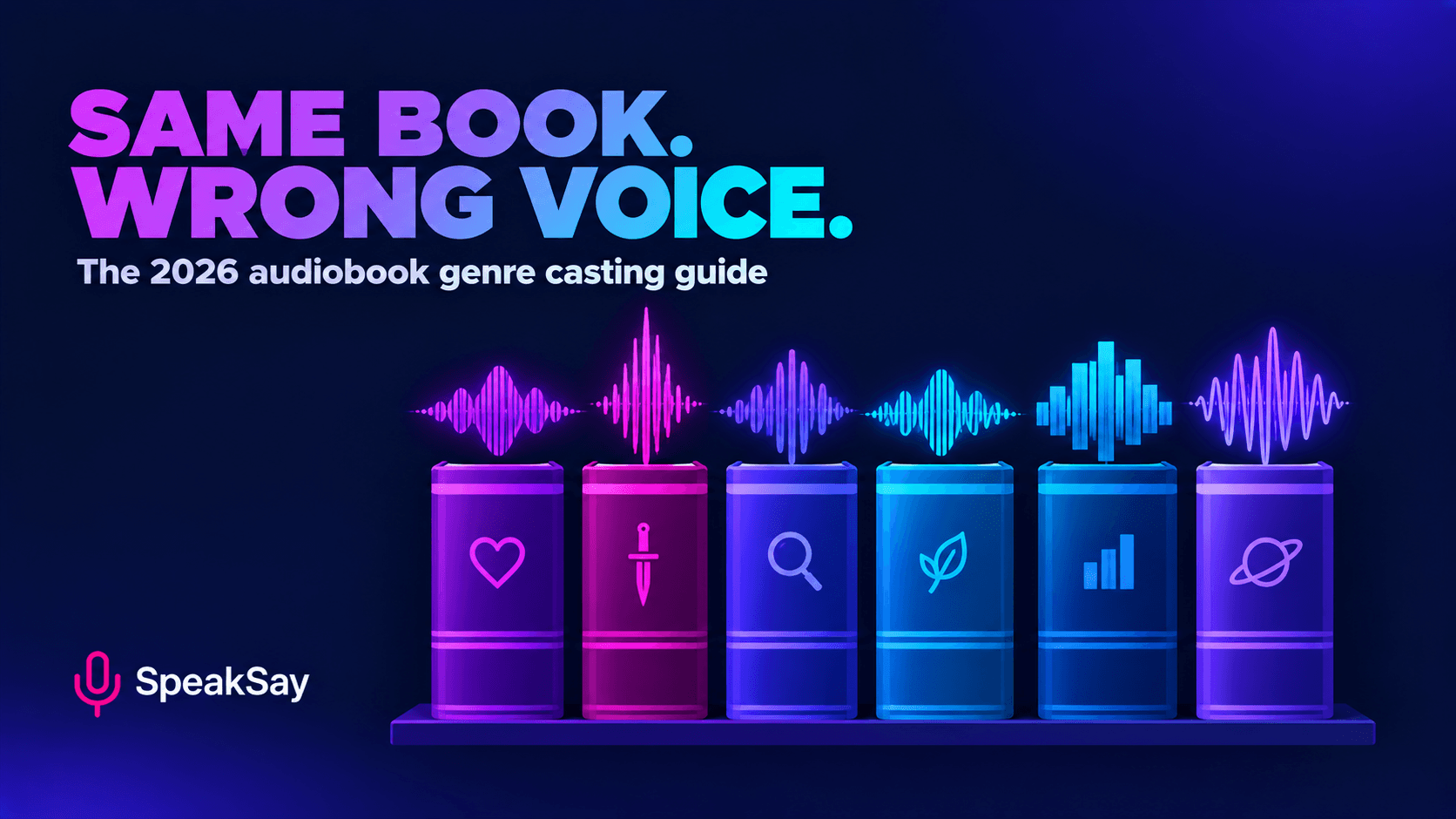
Apple Shipped Romance-Tuned AI Voices. Here Is the 2026 Genre Casting Guide for AI Audiobook Narration
Production stopped being the bottleneck for indie audiobooks. Casting became it. Retailers now ship genre-tuned narration voices, but the choice is still yours to get wrong — and a thriller read in a memoir voice will not sell. Here is the genre-by-genre casting spec, with rate, warmth, register and sample-test protocol.
Should You Ever Change Your Channel's AI Voice? The 2026 Voice-Rebrand and Forced-Migration Playbook
Voice tools keep shutting down, and stock presets keep spreading to thousands of channels. Both push creators into a voice change nobody plans for. Here's when it's worth it, how to match a lost voice, and how to transition a back catalogue without losing your audience.
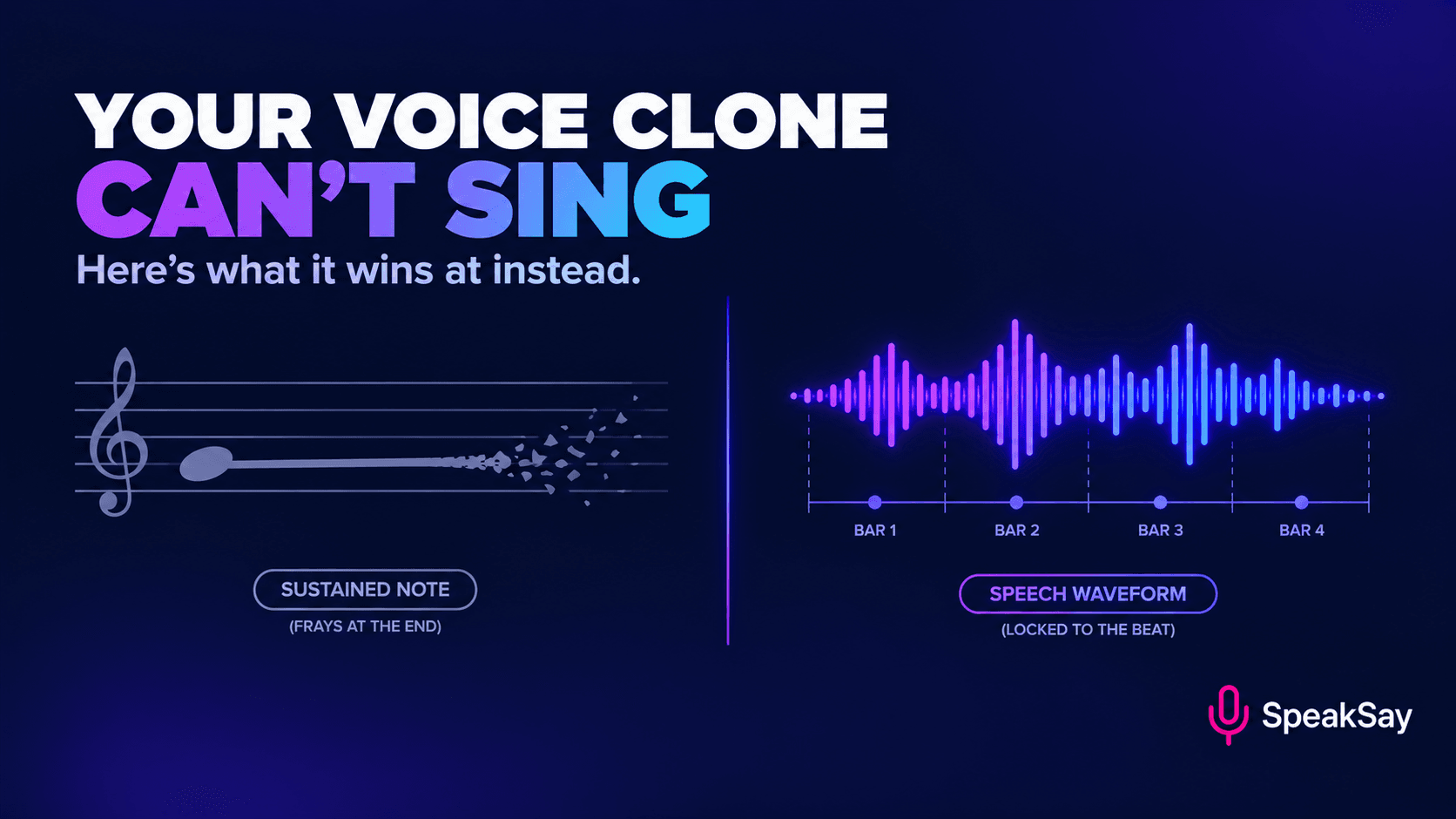
Why Your Voice Clone Can't Sing (and What to Make Instead)
Speech clones fail at singing for a structural reason, not a settings reason — strained high notes, blurred runs, smeared consonants, flattened emotion. Here's the honest explanation, and the music formats a speech voice genuinely wins at.
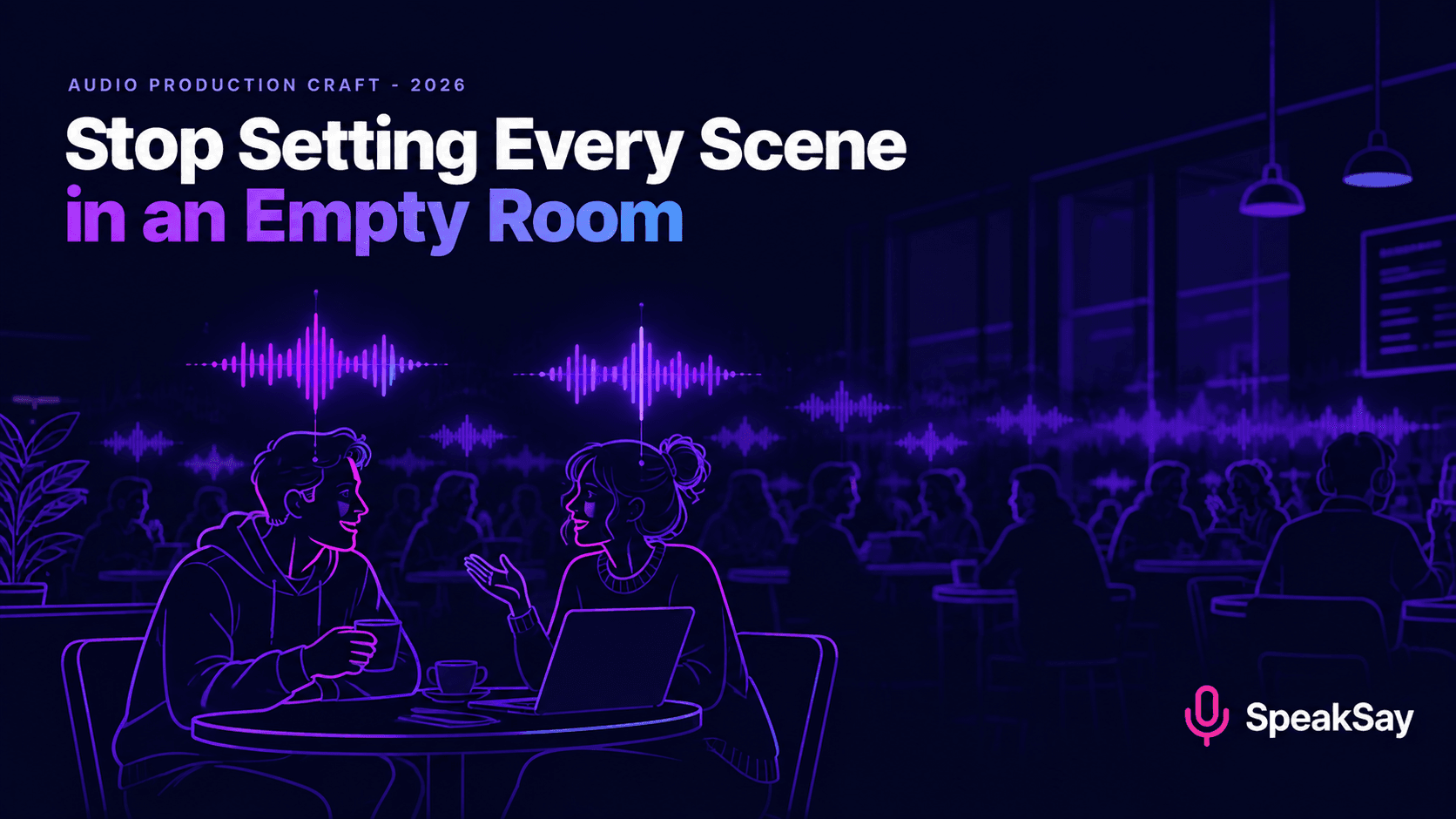
Your Story Videos Sound Like They're Set in an Empty Room: How to Build Crowd Voices, Background Chatter and Announcements With AI (2026)
Everyone casts the characters and nobody builds the world. A cafe scene with two clean voices and silence behind them sounds like a recording booth. Here is how to build walla - crowd beds, background chatter, PA announcements - with AI voices, including the unintelligibility rule that makes or breaks it.
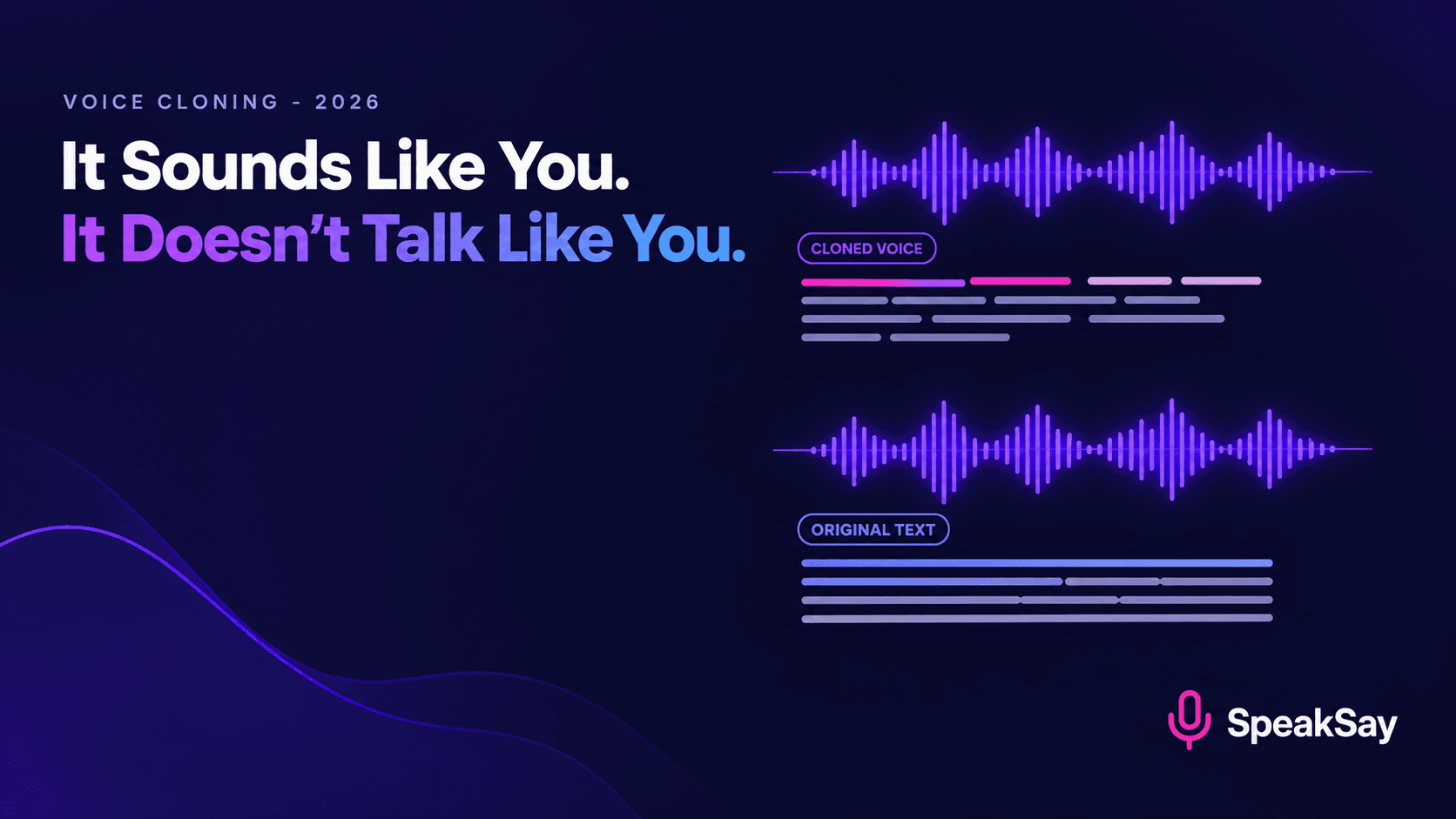
Your Voice Clone Sounds Like You but Doesn't Talk Like You: The 2026 Idiolect Playbook
Your clone passes a blind timbre test and your audience still says it doesn't sound like you. That gap is lexical, not acoustic. Here is how to mine your own transcripts, build an idiolect sheet, and rewrite scripts so the person comes back - not just the voice.
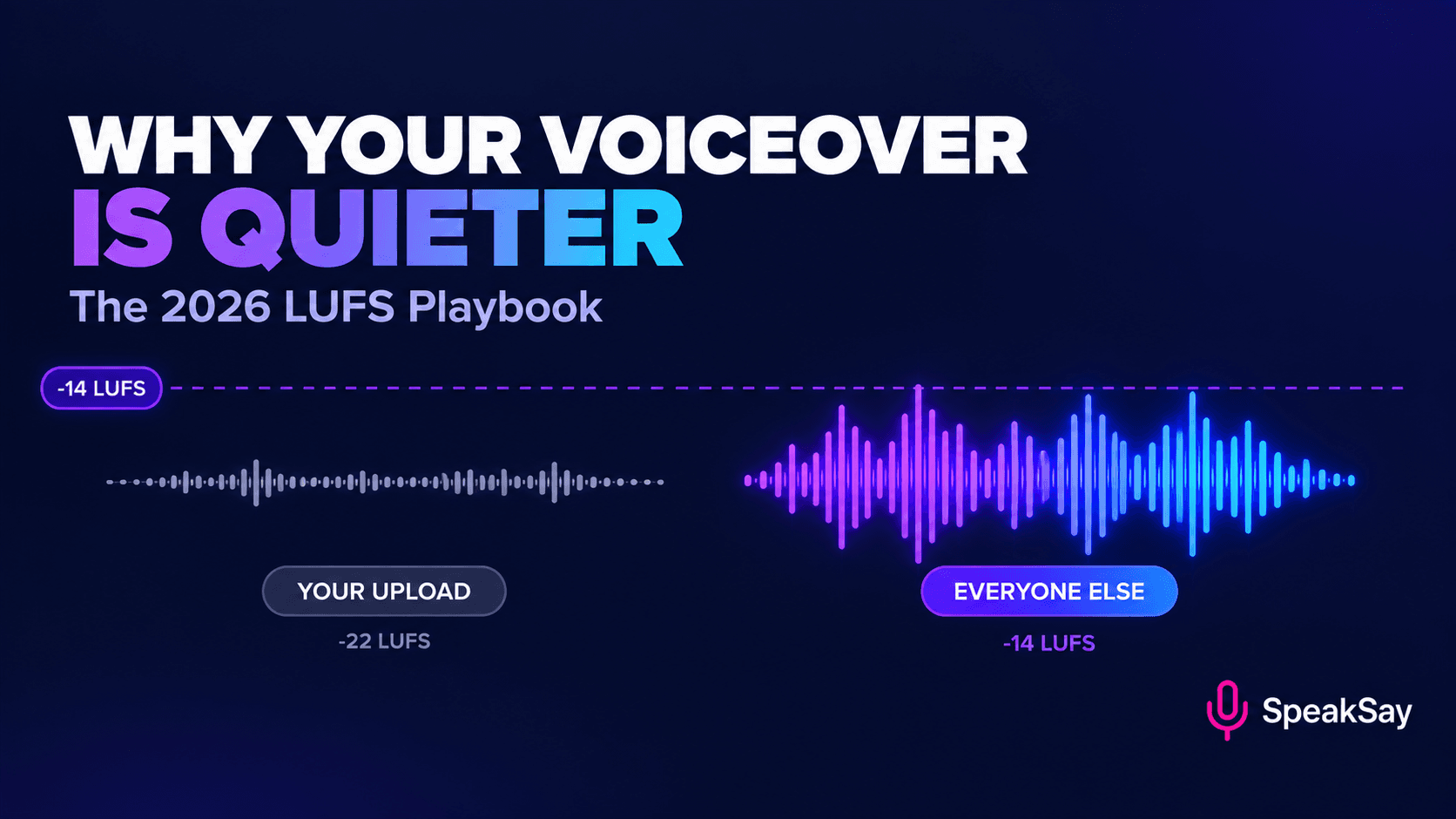
Your AI Voiceover Sounds Quieter Than Everyone Else's: The 2026 Loudness Playbook
Your video sounds fine on your laptop and then plays back noticeably quieter than every other video in the feed. That is loudness normalisation, and every platform does it differently. Here are the targets, the measure-then-fix order, and why AI voiceover trips this more than recorded audio.
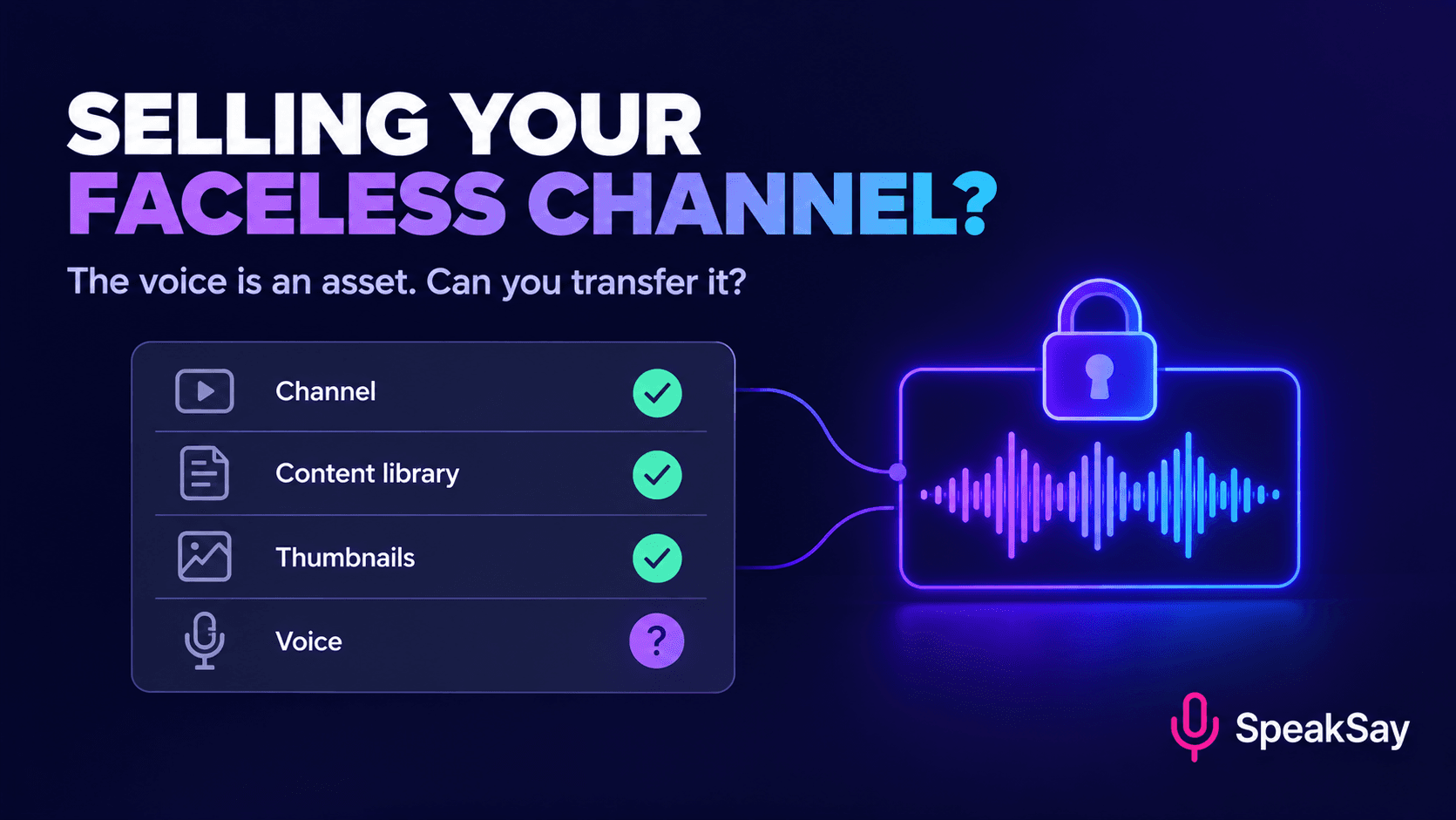
Thinking of Selling Your Faceless Channel? The Voice Is an Asset, and Most Sellers Cannot Transfer It
Faceless channels change hands as businesses. The thing that makes the channel recognisable - the narrator voice - is usually the one asset the seller cannot hand over. Here is what buyers check, what actually transfers in each ownership situation, and how to make your voice a transferable asset before you ever list.
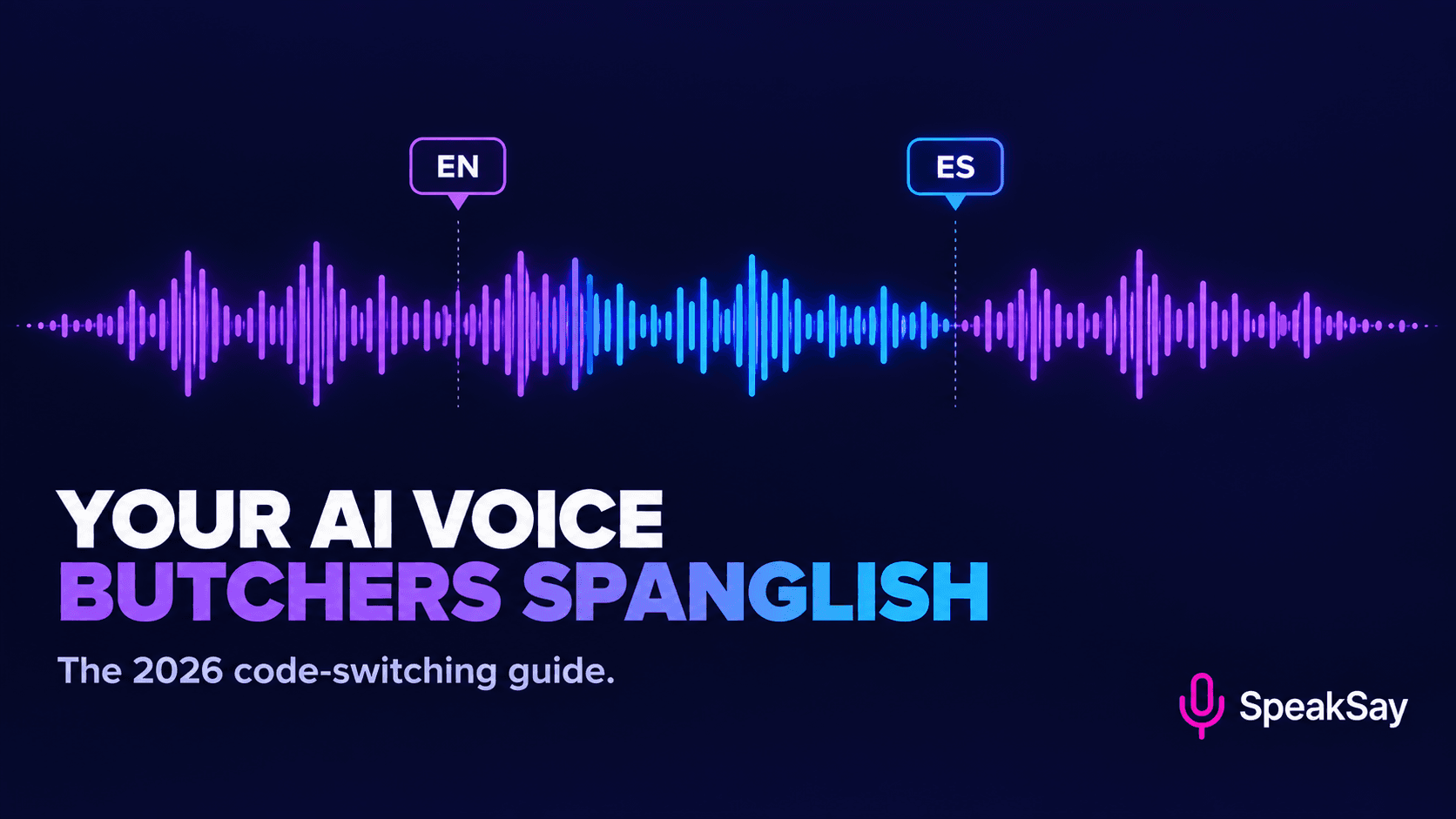
Your AI Voice Butchers Spanglish: How to Make Code-Switching Voiceovers That Sound Native
Bilingual creators do not speak one language per video. They switch mid-sentence. Text-to-speech assigns one language per generation, so a Spanish word inside an English sentence gets English phonology - and your audience hears immediately that you are not one of them. Here is the workflow that fixes it.
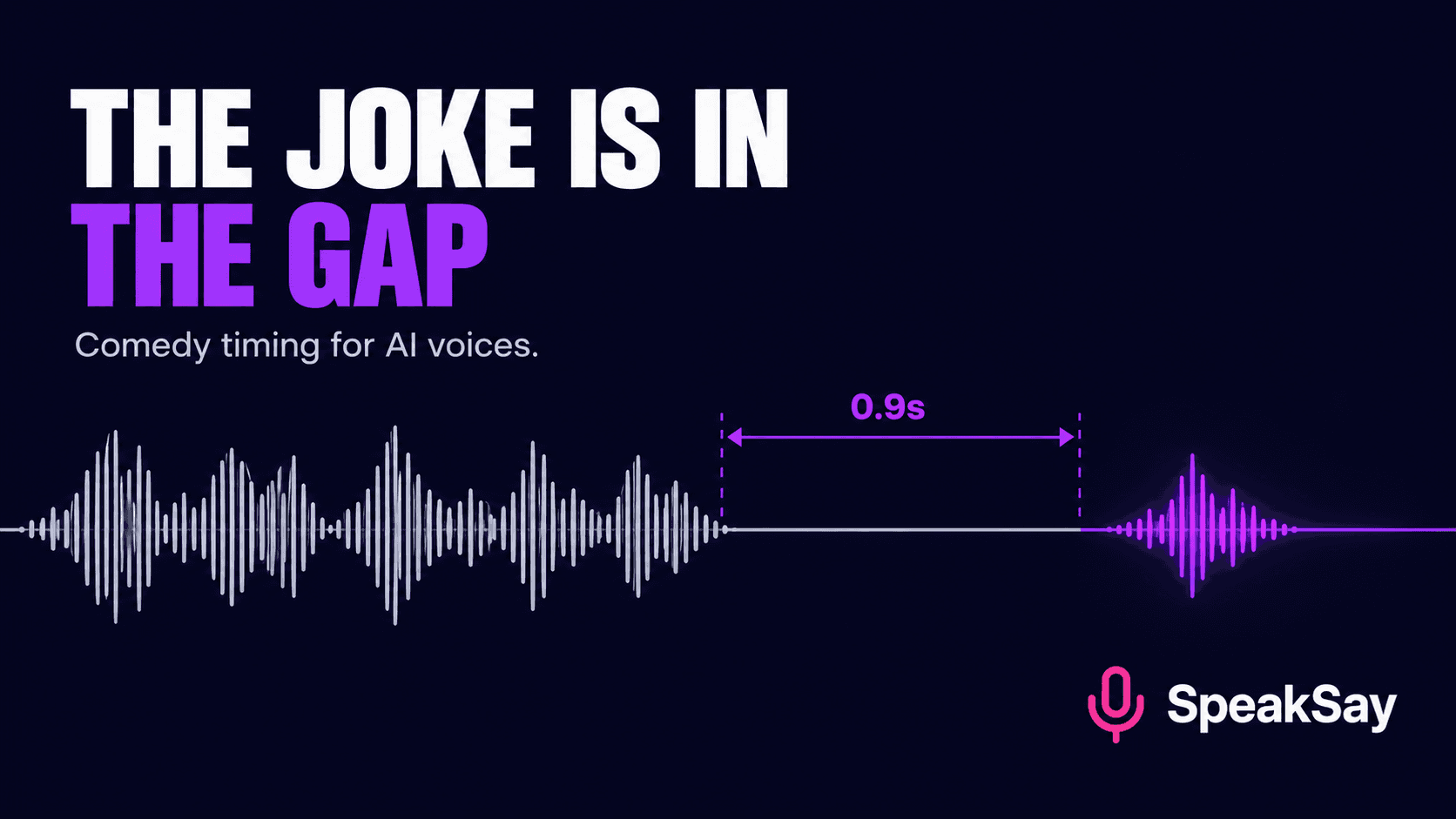
Your AI Voice Can't Land a Punchline: The 2026 Comedy Timing Playbook for Sarcasm, Irony and the Beat Before the Joke
Comedy is the biggest short-form format and the one AI voice fails hardest at — because creators keep reaching for emotion presets when the problem is timing. Beat maps, the straight-read rule, and why sarcasm is contour, not attitude.
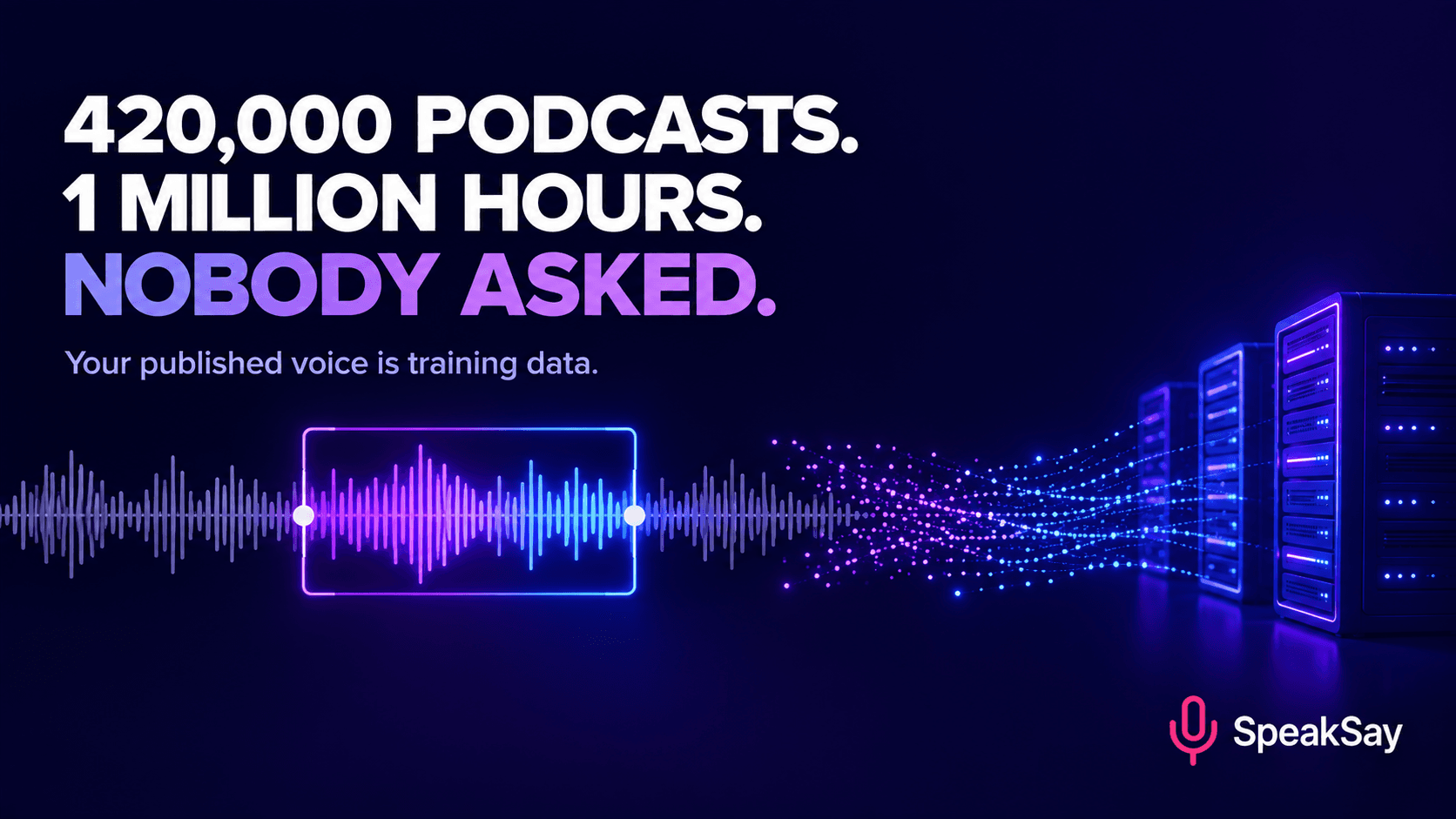
Your Published Voice Is Training Data: How AI Companies Harvested 420,000 Podcasts — and What Creators Can Actually Do (2026)
An AI music company pulled roughly a million hours of audio from 420,000 podcasts through a public directory. If you have ever published your voice, you are probably in a dataset. Here is what is realistically defensible now — and what is not.
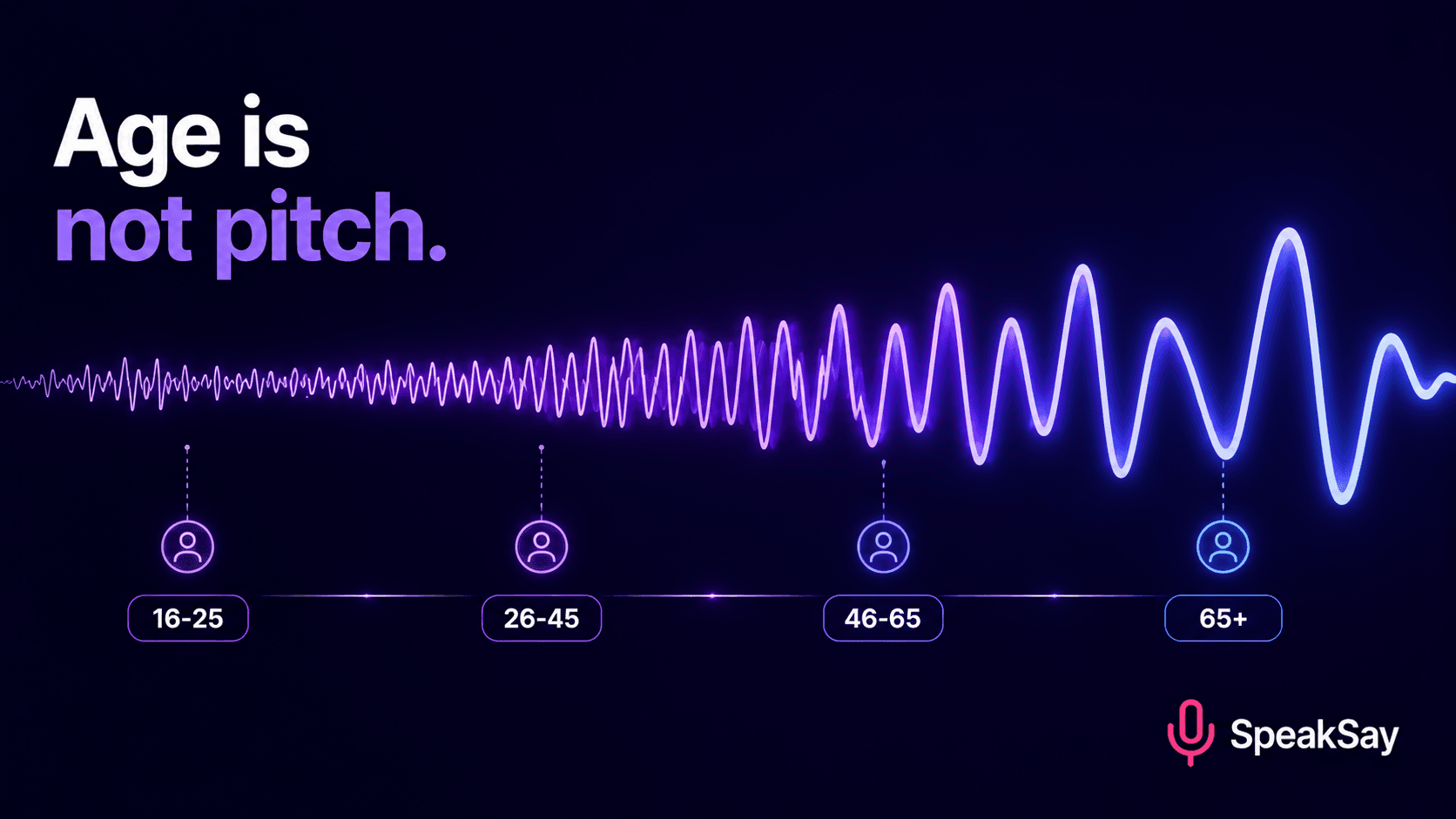
Make an AI Voice Sound Older or Younger: The 2026 Voice-Age Casting Guide (and the One Line You Must Not Cross)
Pitch-shifting does not age a voice — it resizes the body it came from, which is why the results sound like a chipmunk or a slowed record. This guide covers the five markers that actually read as age, a casting sheet for four ranges, script-level ageing, timeline continuity, and the boundary you must not cross.
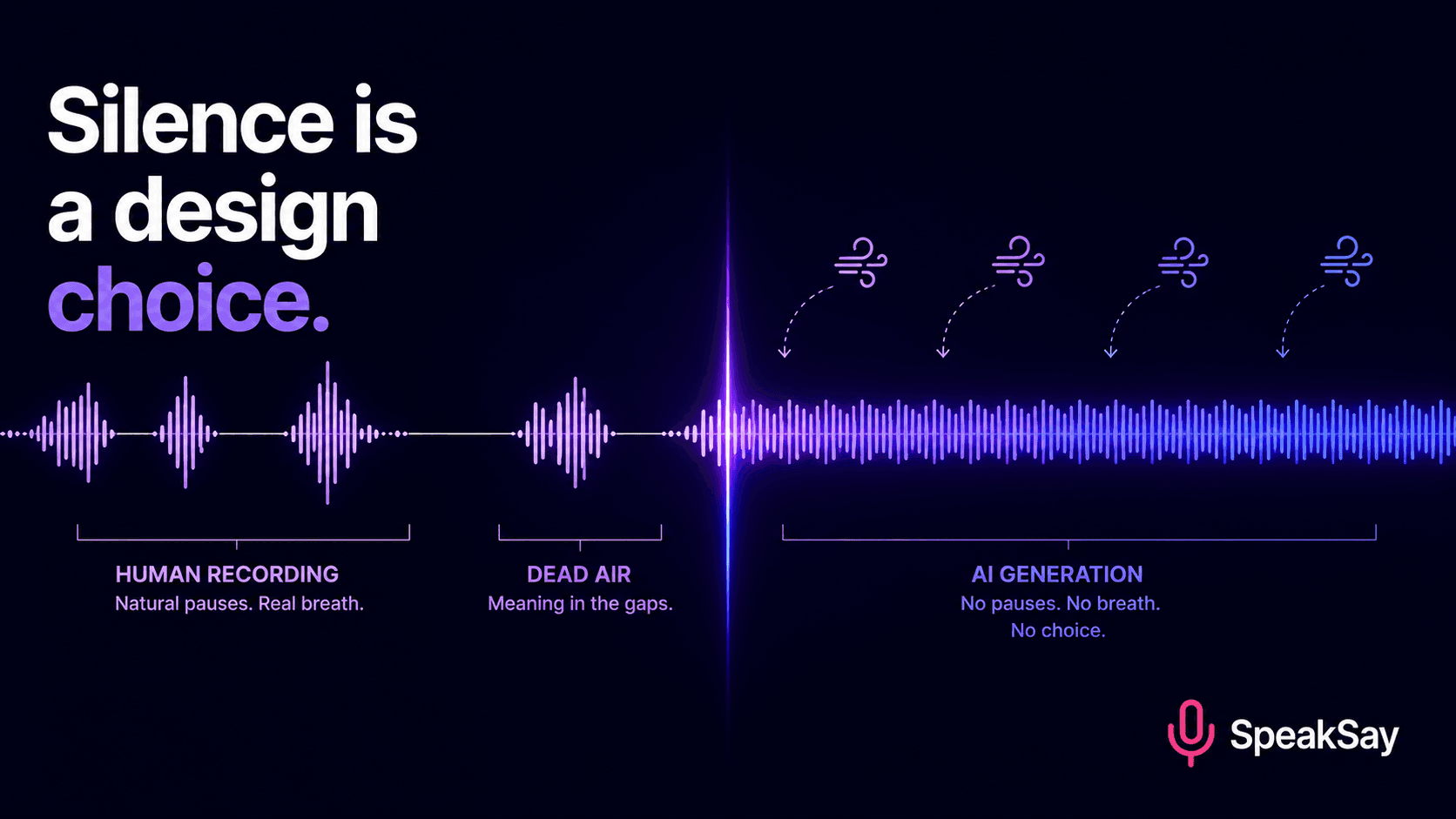
Dead Air Is Costing You Retention — and Your AI Voice Isn't Breathing: The 2026 Silence Playbook
Creators have two opposite silence problems: recorded audio full of dead air listeners skip, and AI narration that never breathes and quietly wears people out. This playbook gives you the durations, the trim settings and the breath placement rules to fix both.
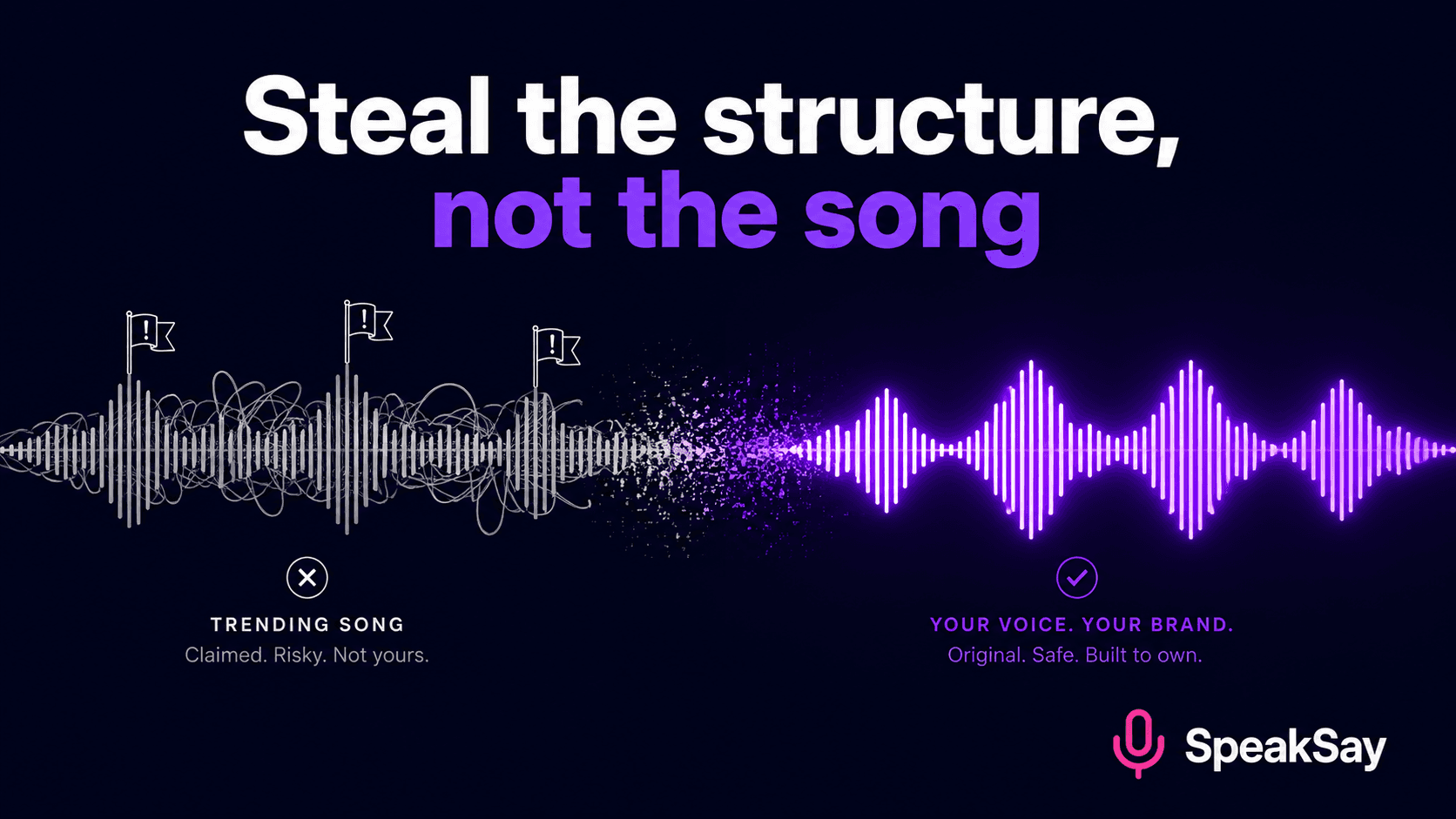
Trending Audio Is a Copyright Claim Waiting to Happen: How to Build Original Voice Hooks That Ride the Trend Without the Track (2026)
Trending sounds feel free until a video performs and the claim arrives. This 2026 playbook shows how to transpose a trending sound's beat grid and emotional arc into an original voice hook you own outright - with copy-paste templates, a claim-safe checklist, and a signature-sound strategy.
Engineering & Megaproject Faceless Channels in 2026: The Authority AI Narrator Playbook (Plus the Pronunciation Problem Nobody Solves)
Engineering and megaproject channels have an audience that fact-checks you in the comments — and a script full of words most AI voices get wrong. Here is the two-register casting model, the pronunciation lexicon workflow, and the chapter-level narration system that makes a 20-minute documentary survivable.
Overproduced Audio Is Killing Your Reach: The Lo-Fi AI Voice Aesthetic Winning Shorts in 2026
Every AI voice guide teaches you to sound more polished. The feed is rewarding the opposite. Single-take, badly-lit, phone-mic content is outperforming studio-grade production, and the audio is a large part of why. Here is how to deliberately un-polish an AI voice without making it sound broken.
In a World…": How to Make the Movie Trailer Voice for Your Own Videos (2026 Guide)
Every movie trailer voice generator sells you the same deep timbre — and then your trailer still doesn't sound like a trailer. That's because the effect is mostly pacing, silence and music placement, not the voice. Here is the craft guide, with copy-and-paste trailer scripts.Every movie trailer voice generator sells you the same deep timbre — and then your trailer still doesn't sound like a trailer. That's because the effect is mostly pacing, silence and music placement, not the voice. Here is the craft guide, with copy-and-paste trailer scripts.
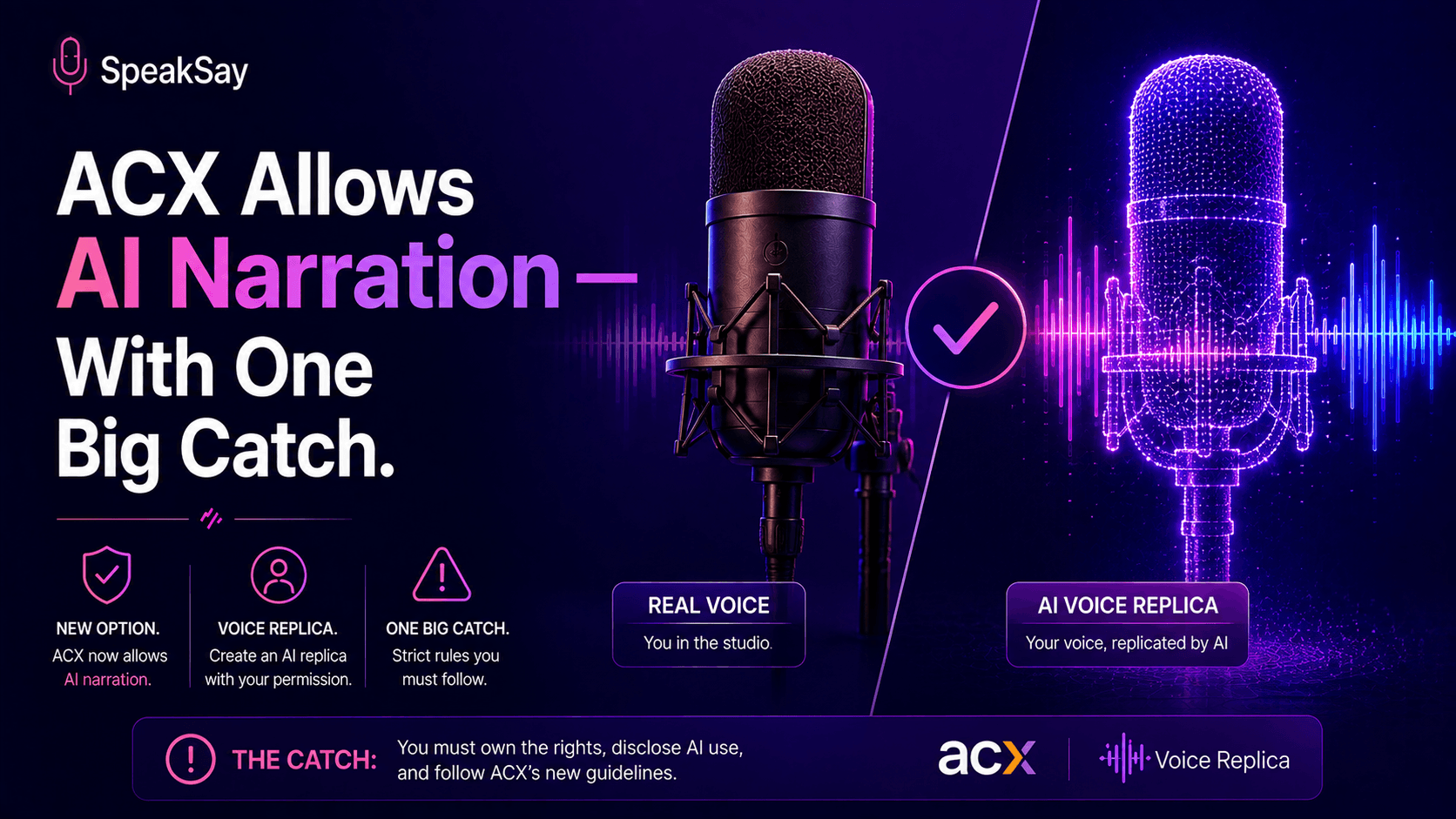
ACX Now Allows AI Narration — but Only Voice Replicas: The 2026 Rules for Authors & Narrators
ACX's 2026 rules still ban unauthorized AI narration — but its new Voice Replica program lets narrators use authorized clones of their own voices. Here's what's legal where, and the decision map for authors and narrators.
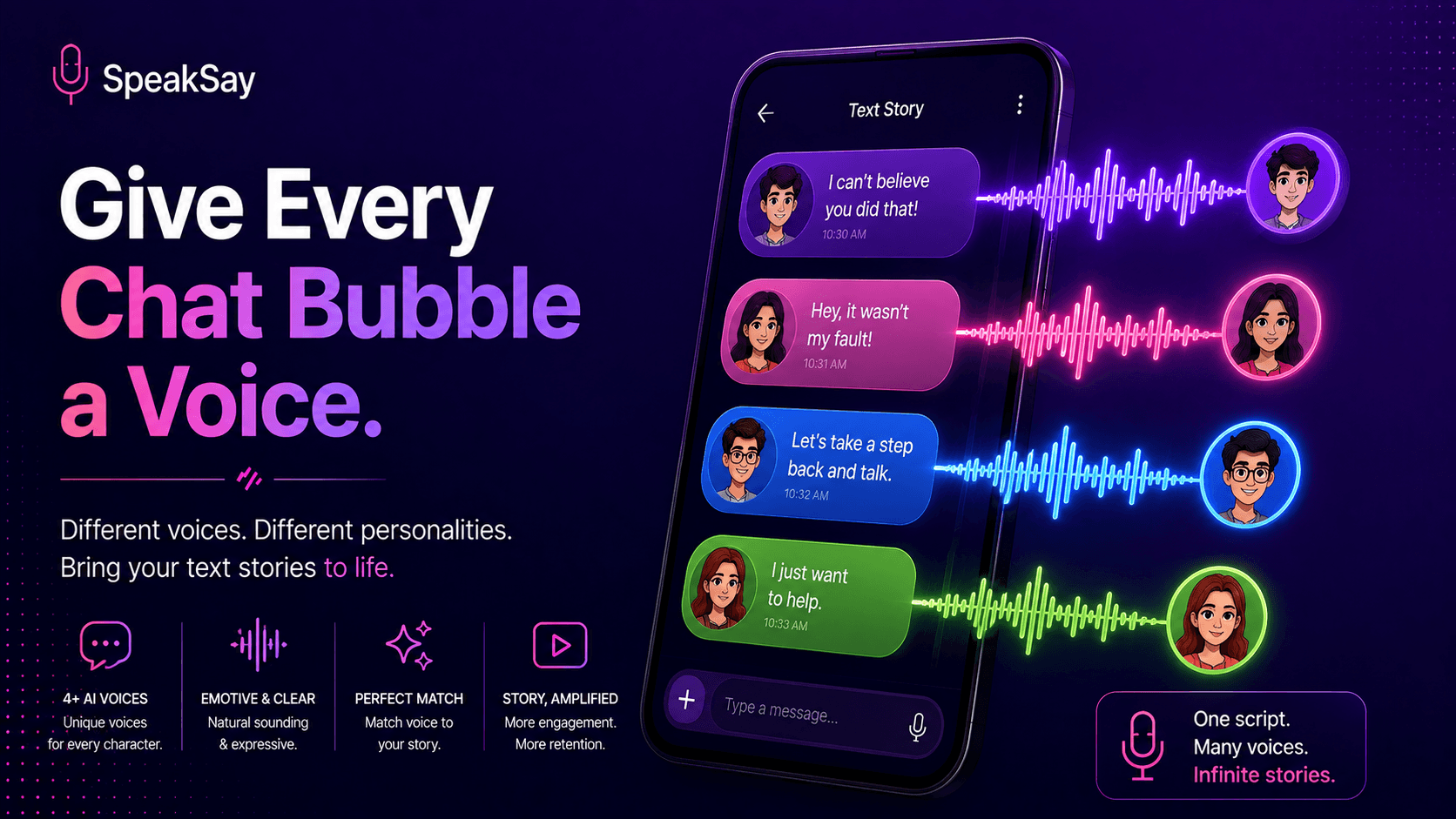
Fake Text Story Videos Still Print Views in 2026: Give Every Chat Bubble Its Own AI Voice
Text-message story videos remain one of the highest-retention faceless formats — but one robotic default voice for every character kills them. Here's the 2026 workflow for casting a distinct AI voice per chat bubble.
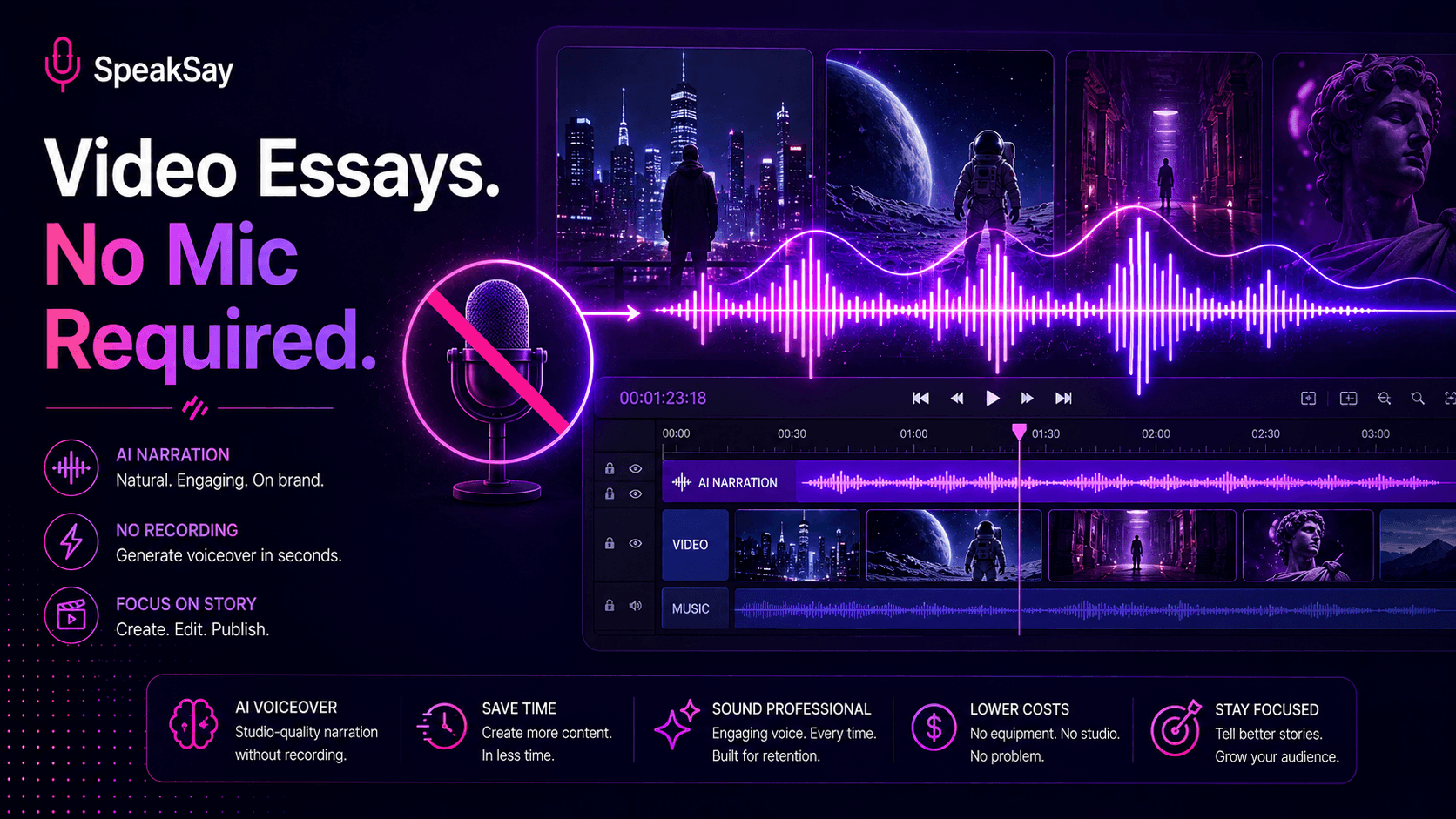
Video Essay Channels Without Recording Your Voice: The 2026 AI Narration Playbook for YouTube's Smartest Format
Video essays are YouTube's most respected format — and the one where narration matters most. Here's how to start a video essay channel in 2026 with AI narration: niche selection, script structure, voice choice, and the monetization math.
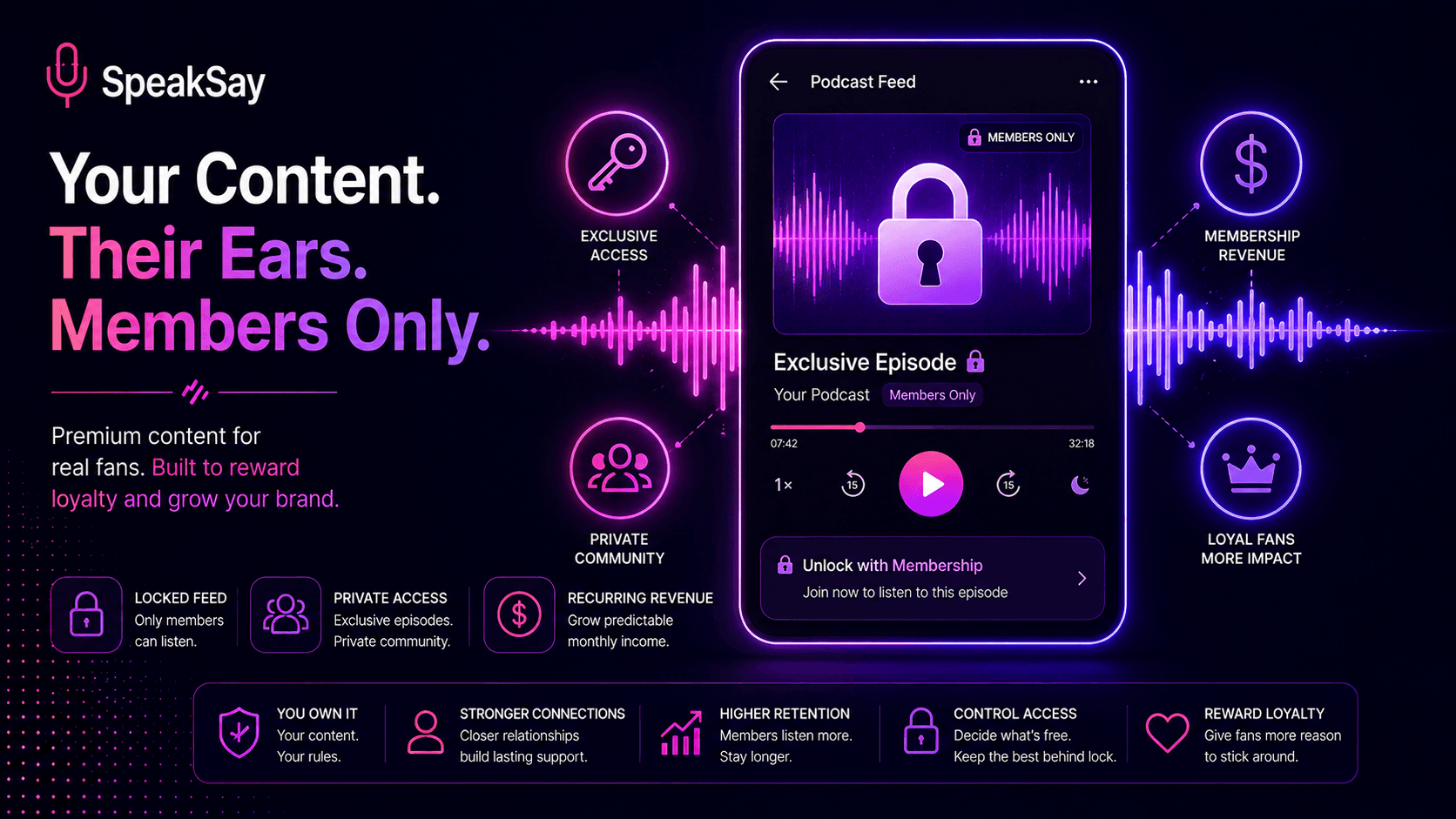
Sell a Private Podcast: Turn Your Course, Coaching or Community Content Into a Members-Only Audio Feed (2026)
Your members don't finish your videos, and your course library goes unopened. A private members-only podcast meets them where they actually are — commutes, gyms, school runs — and cuts churn. Here's how to build one with AI from content you already have.
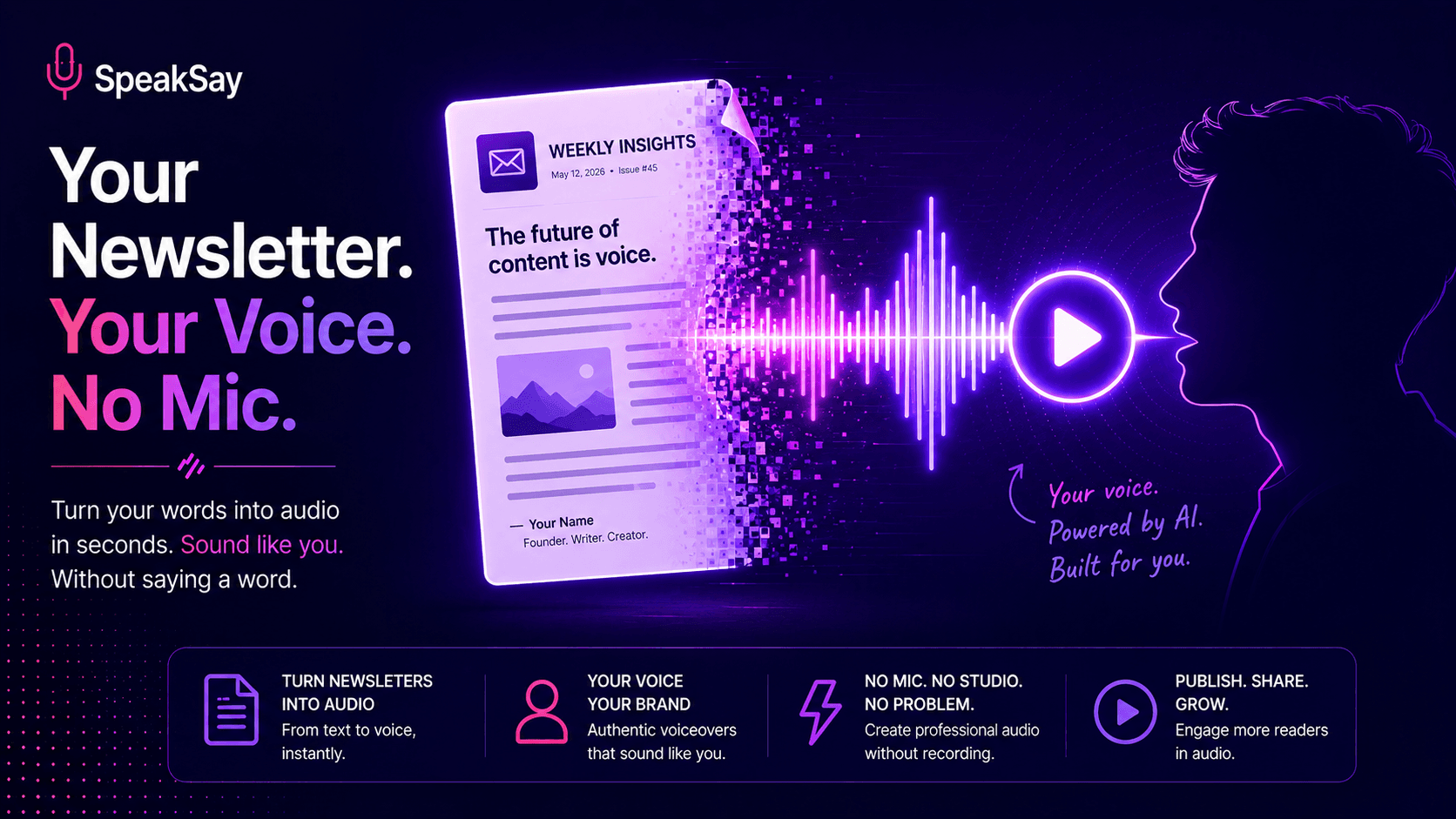
Give Your Newsletter an Audio Edition in YOUR Voice — Without Recording Every Week (2026 Substack Playbook)
Audio editions lift newsletter engagement and paid conversions — but narrating every post takes hours, so most writers quit by week three. The 2026 fix: clone your voice once, and every post ships with an audio edition that sounds like you.
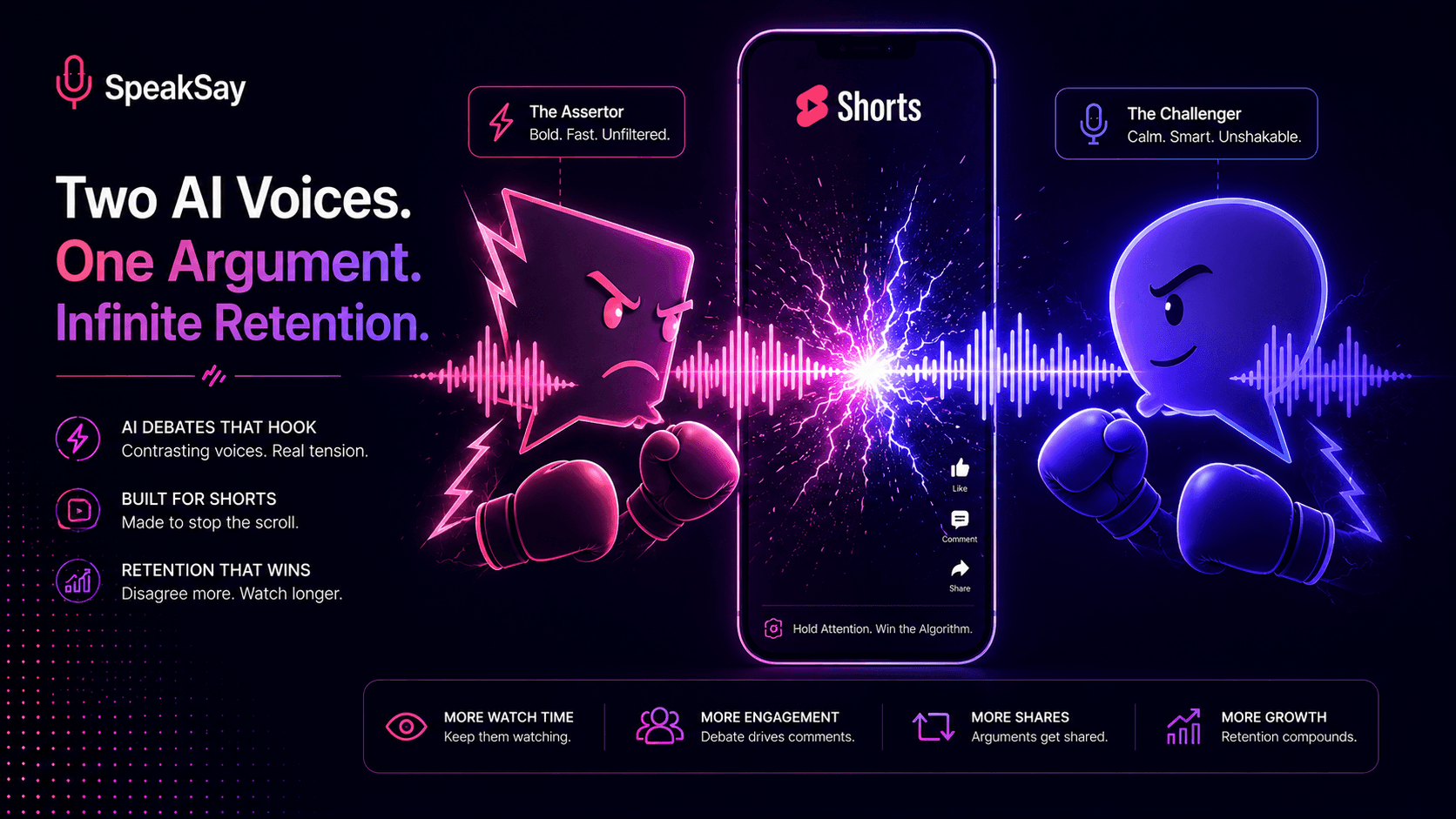
Two AI Voices Arguing Is the Most Watchable Format on Shorts: Build a Debate/Dialogue Show With Voices You Control (2026)
Debate-style AI audio is everywhere — but stock two-host tools give you zero control over the voices or the takes. Here's how to design two original characters, script 45-second arguments, and produce a debate Shorts series people fight about in the comments.
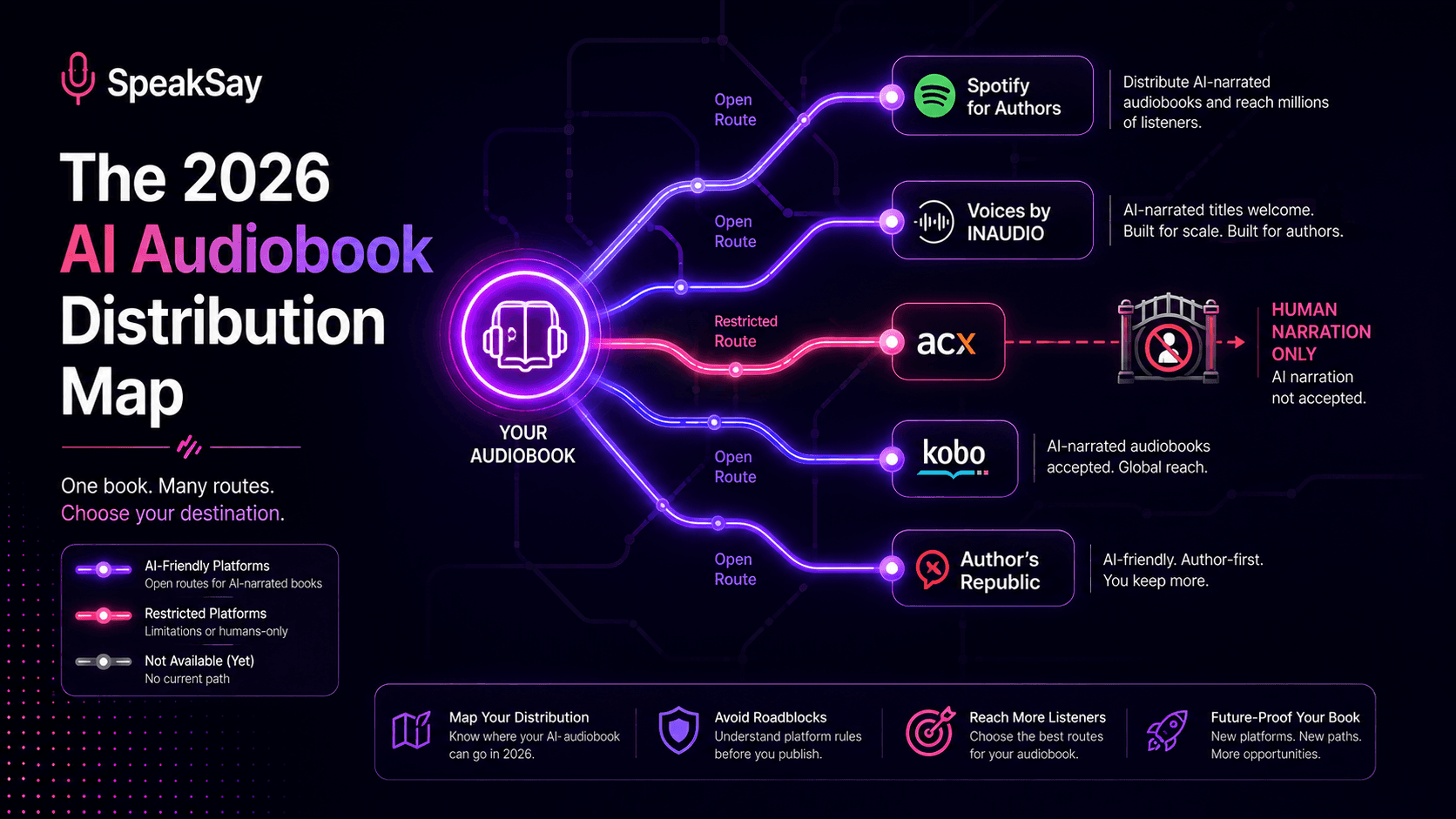
Findaway Voices Is Gone — Meet Voices by INaudio & Spotify for Authors: The 2026 AI Audiobook Distribution Map
Findaway Voices rebranded to Voices by INaudio, Spotify launched its own direct-upload portal, and ACX still refuses AI narration. Here's the platform-by-platform 2026 map for publishing an AI-narrated audiobook — and the narration workflow that keeps every door open.
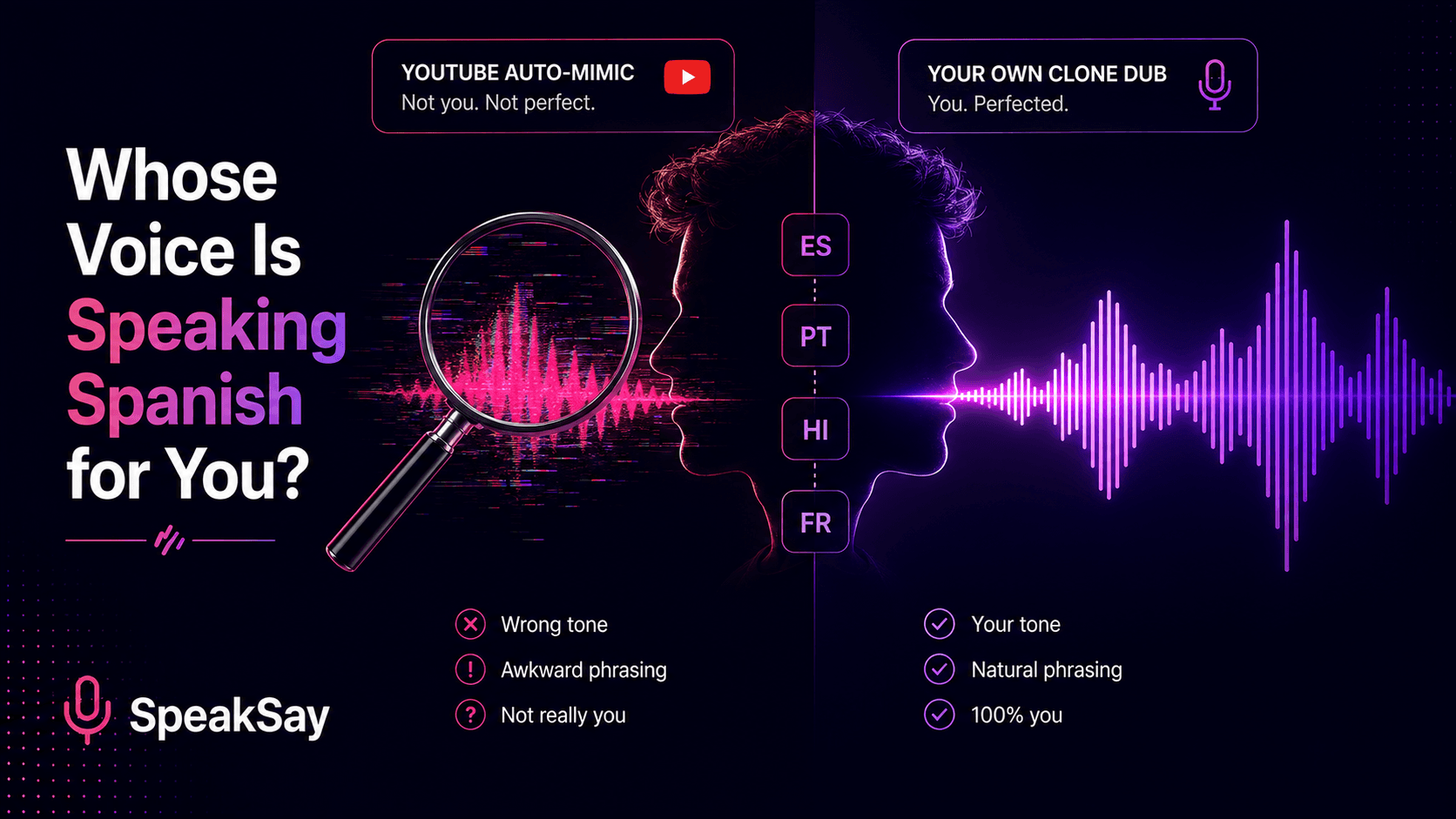
YouTube's Voice-Mimic Dubbing Just Went Global: Should You Trust Gemini's Copy of Your Voice — or Upload Your Own Dub? (2026 Audit Playbook)
YouTube's Gemini-powered dubbing now mimics your actual voice and is rolling out to all eligible creators. It's free reach — but you're publishing audio in languages you can't check. Here's the audit checklist, and the workflow for replacing weak tracks with dubs you control.
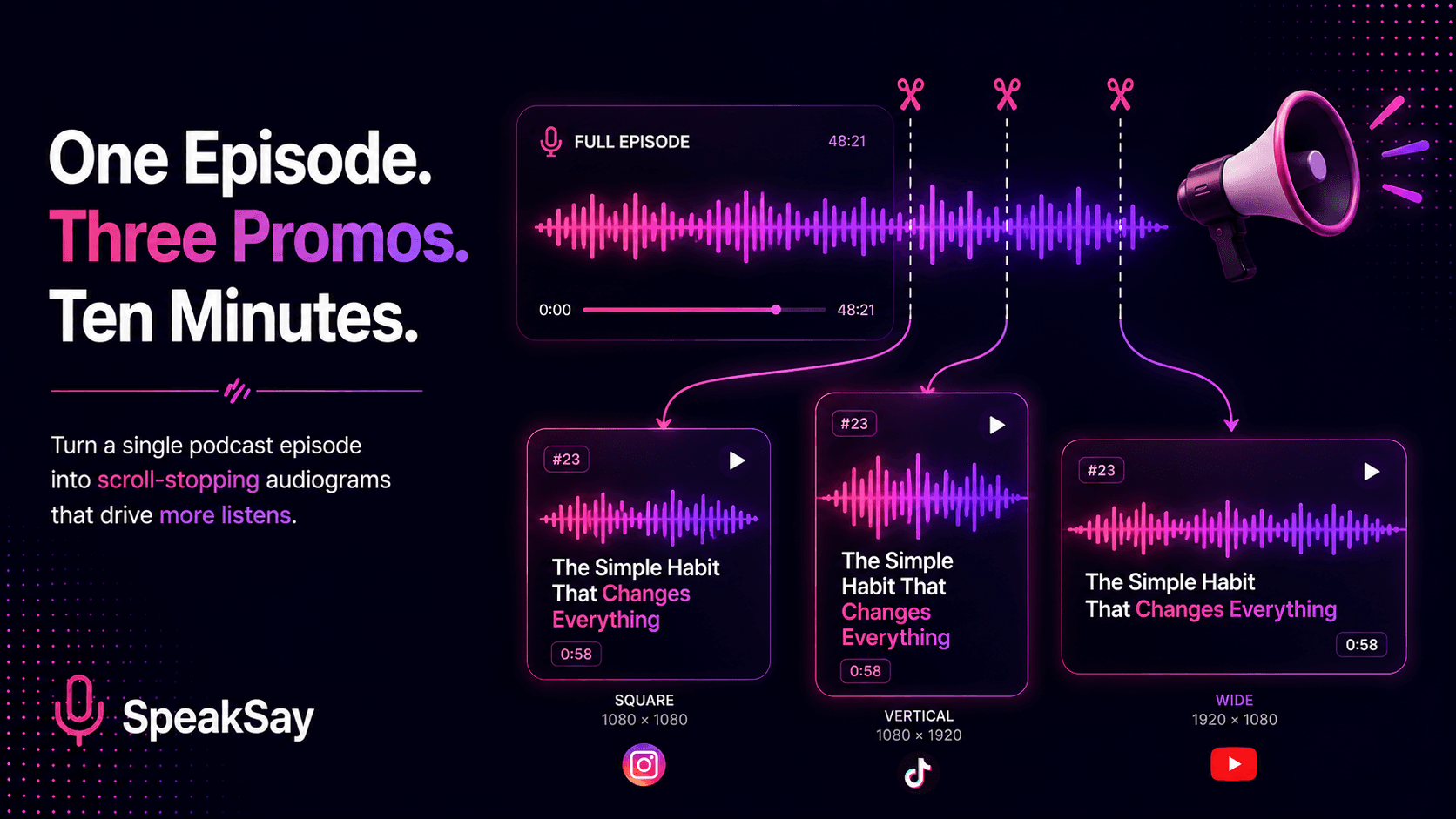
Nobody Hears Your Best Episode: Podcast Trailers & Audiograms With AI Voices (2026 Promotion Playbook)
You spent ten hours on the episode and zero on promoting it. Trailers and audiograms are the highest-converting podcast promo assets — and with AI voices they take minutes, not sessions. Here's the system.
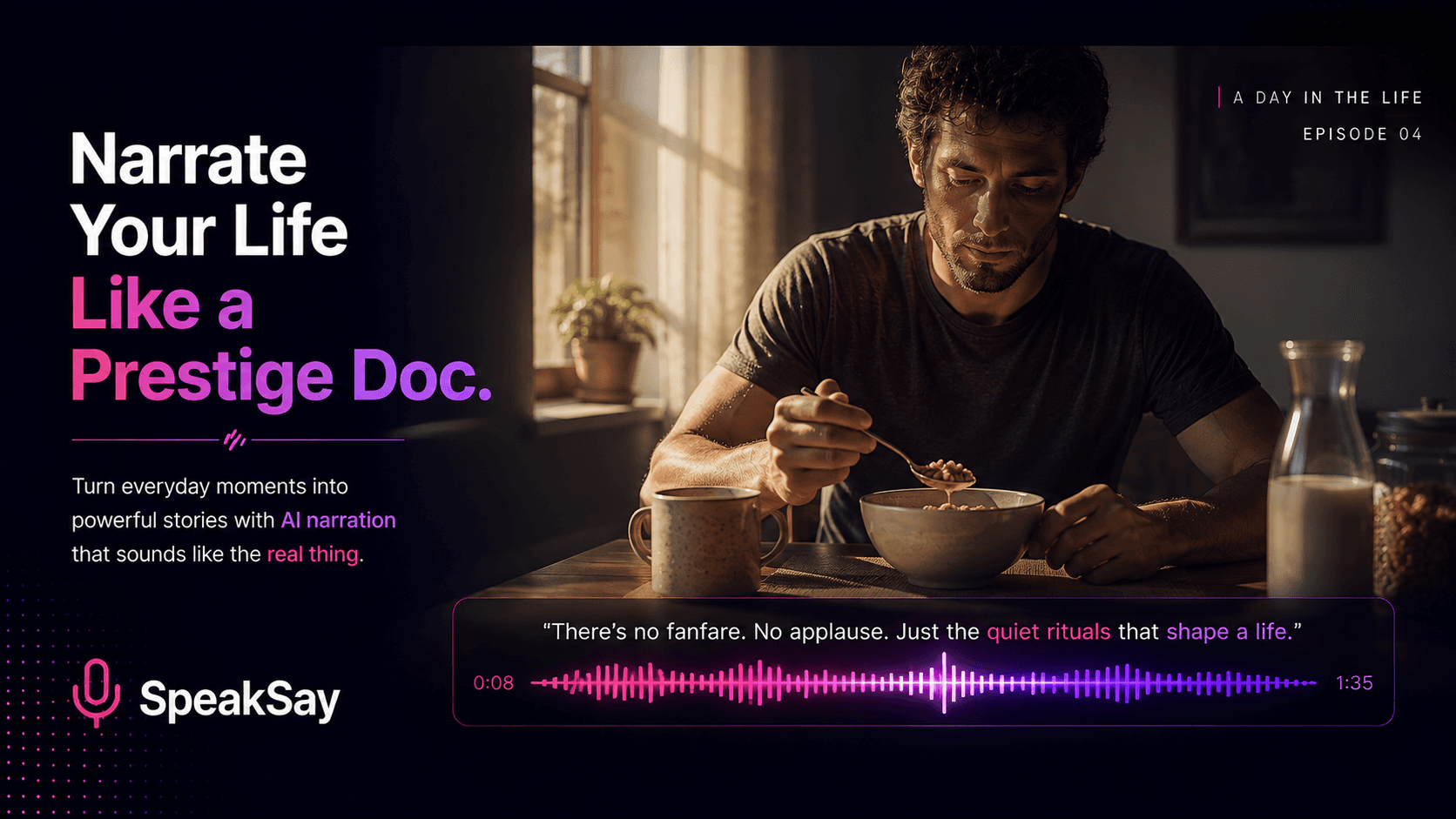
The "Netflix Documentary" Parody Format Is Everywhere: How to Build an Original Documentary Narrator Voice for Skits (2026)
The chair-sit "Netflix Documentary" bit crossed from TikTok to Reels this month. The whole joke lives in the narrator's voice — here's how to build an original prestige-doc narrator with AI instead of imitating a real one.
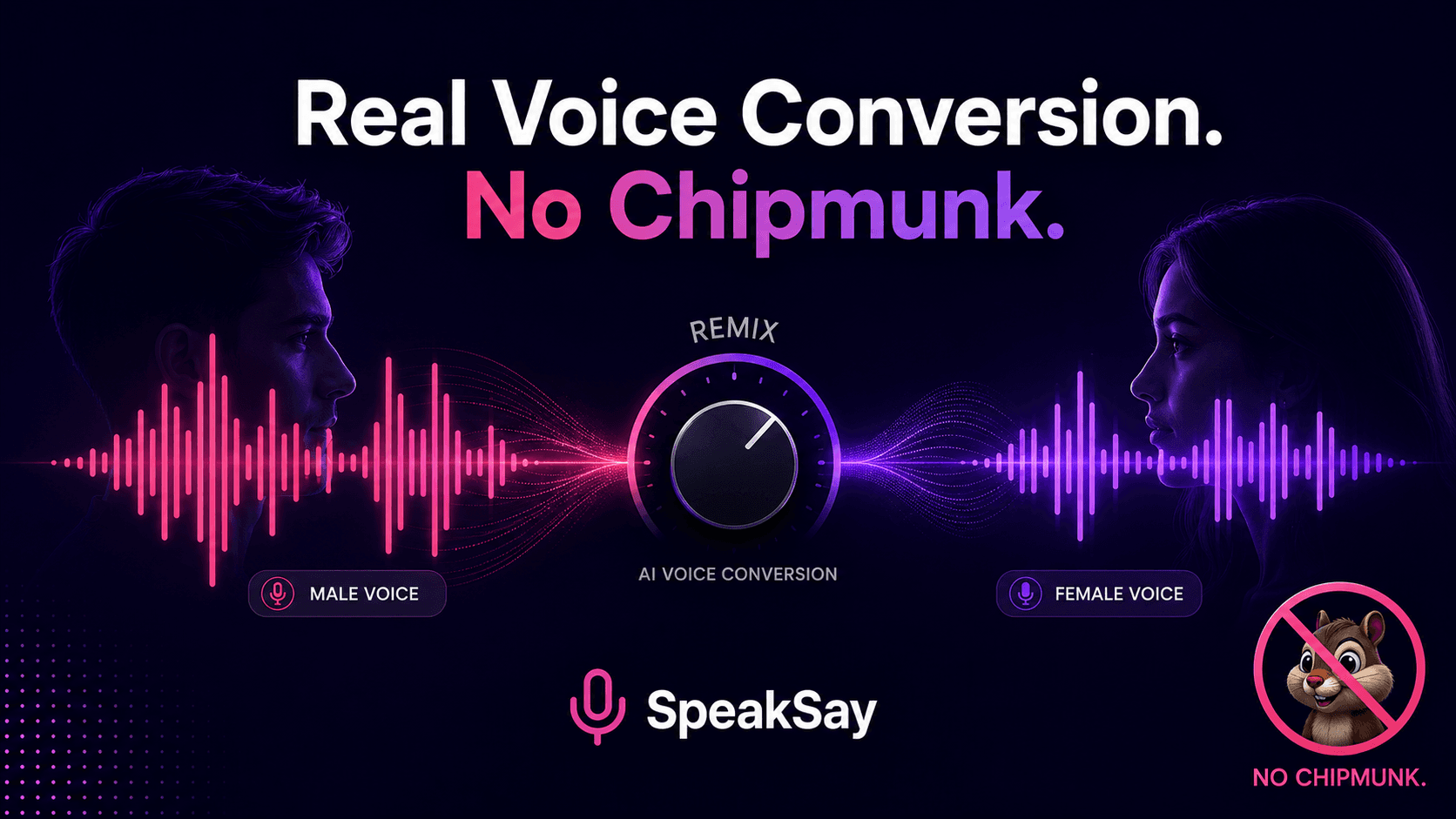
Male-to-Female AI Voice Changer That Doesn't Sound Like a Chipmunk: Character Voices for VTubers, Story Accounts & Skits (2026)
Pitch-shift voice changers give you two settings: chipmunk and demon. Here's how AI voice conversion actually works in 2026 — keeping your performance and timing while swapping the voice identity completely.
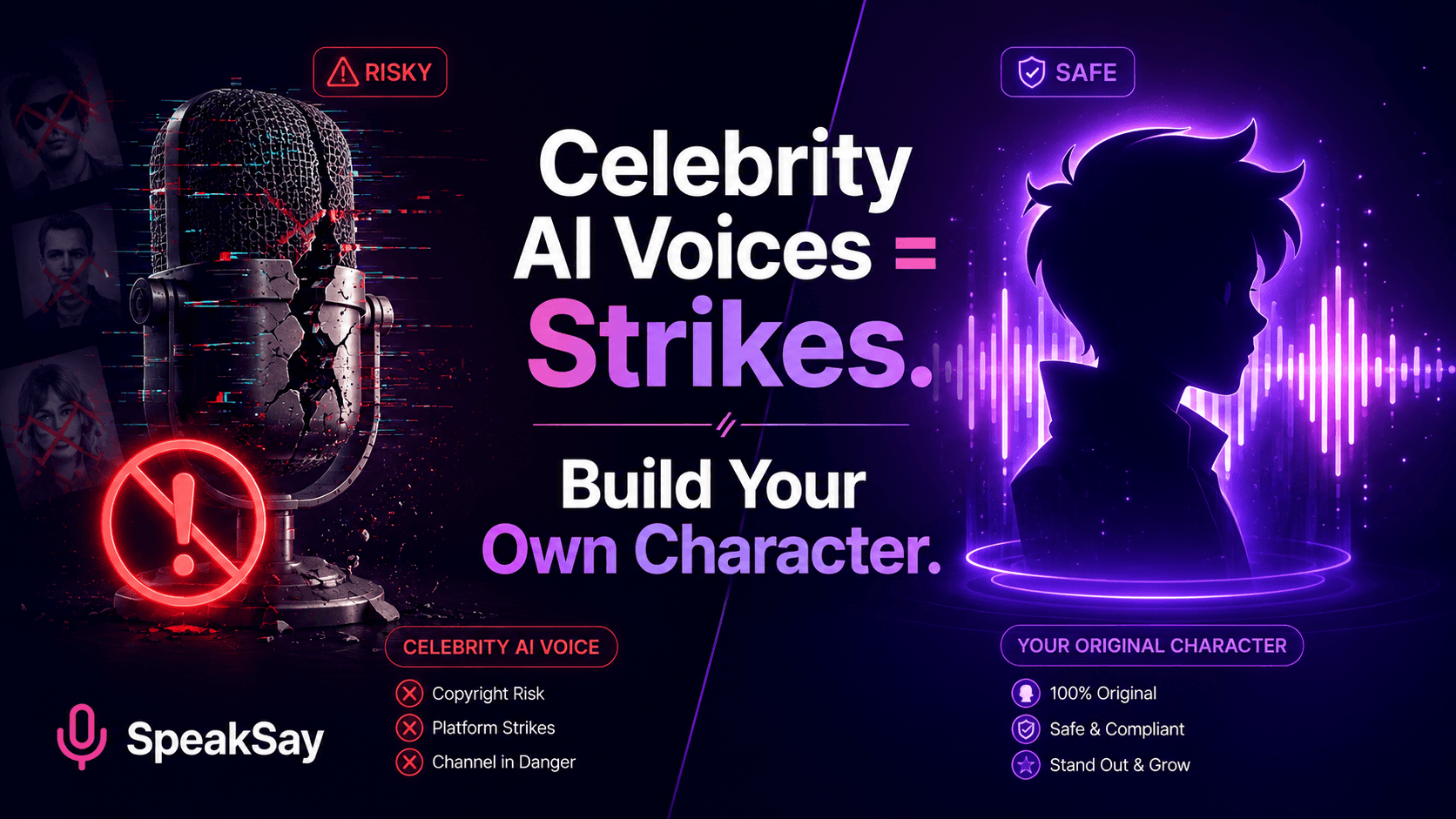
AI Celebrity Voices Are a Copyright Strike Waiting to Happen: Build an Original Parody Character Instead (2026)
Searching for an AI celebrity voice generator? Read this first. Between the NO FAKES Act, platform bans, and estate lawsuits, celebrity voice clones are 2026's fastest route to strikes and takedowns. Here's the legal landscape — and how to build an original parody character with the same comedic punch.
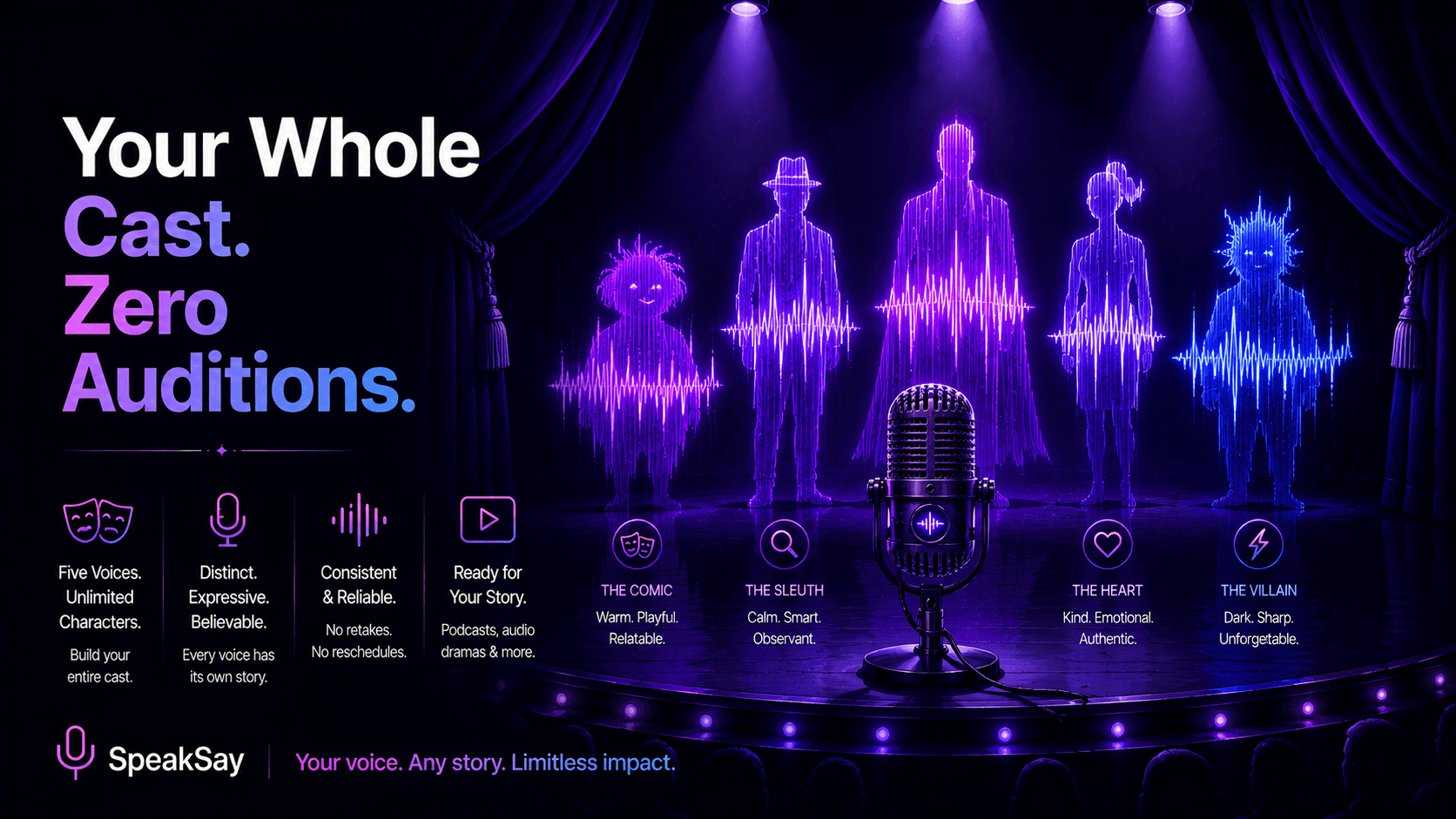
Fiction Podcasts & Audio Dramas in 2026: Voice a Full Cast With AI — No Auditions, No Flaky Volunteer Actors
Indie audio dramas die in casting: months of auditions, unpaid actors with day jobs, and a lead who disappears mid-season. Here's the 2026 workflow for building a full, consistent AI voice cast — narrator, heroes, villains — and shipping every episode on schedule.
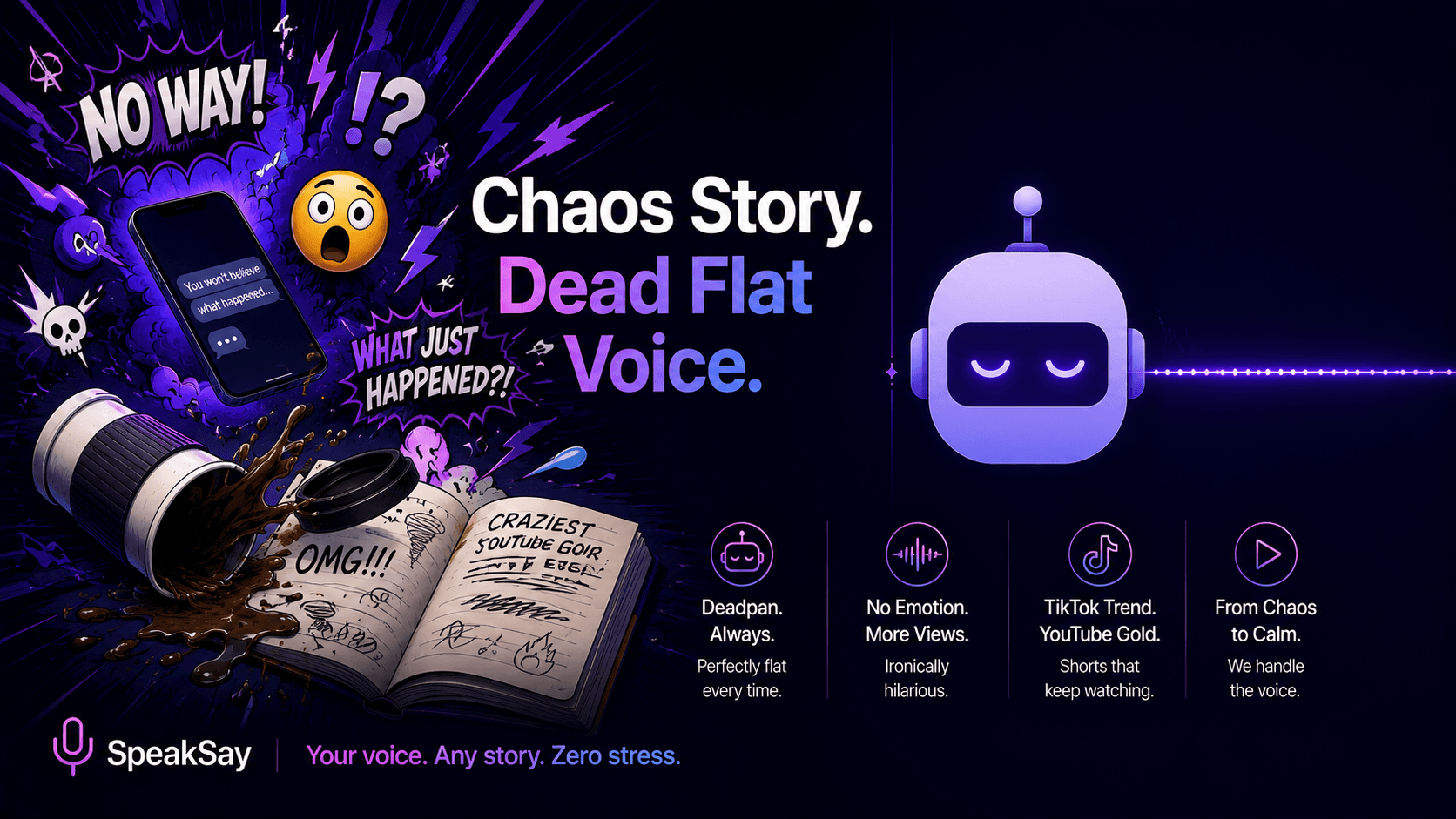
TikTok's Deadpan Robot Narrator Trend: Why Flat AI Voices Are Going Viral — and How to Make Yours (2026)
The funniest voice on TikTok right now has no emotions at all. Deadpan robot narration over chaotic human stories is the platform's breakout comedy format of summer 2026 — here's why the contrast works, why the stock voices are played out, and how to build a deadpan narrator that's actually yours.
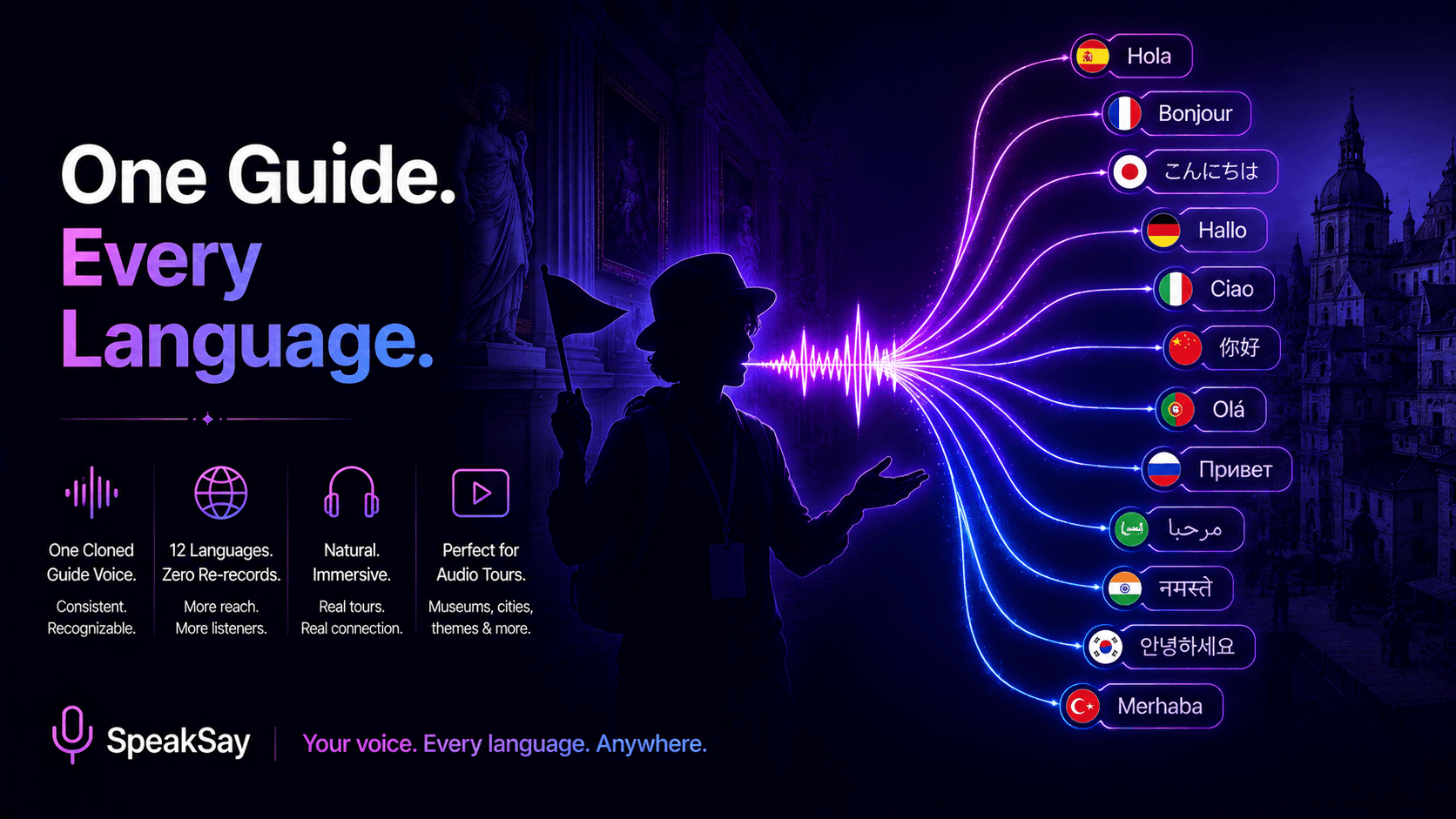
Turn Your Best Tour Guide Into a 12-Language Audio Guide: AI Voice Cloning for Museums, Tours & Airbnb Hosts (2026)
Traditional audio-guide production costs thousands per language and goes stale the moment an exhibit changes. Here's how museums, tour operators and hosts clone their most charismatic guide once and deliver every tour in 12+ languages — updated by typing, not re-recording.
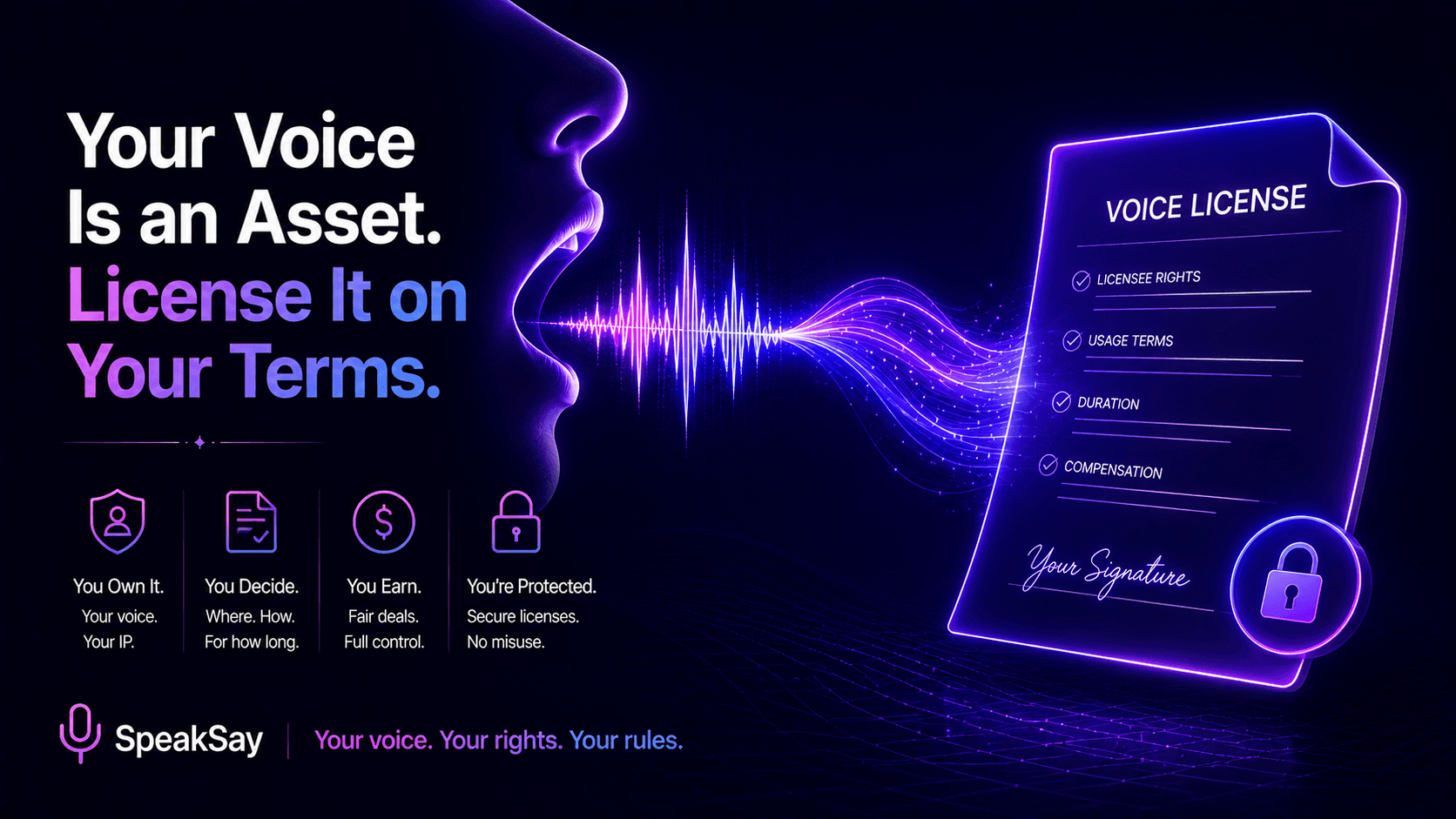
Netflix Just Licensed Gene Wilder's Voice: How to Turn YOUR Voice Into a Licensable, Revenue-Earning Asset (2026)
Netflix's estate-approved AI recreation of Gene Wilder's voice made one thing official: voices are now licensable IP. Here's what the deal means for working creators — and how to clone, control, and license your own voice so it earns without you behind the mic.
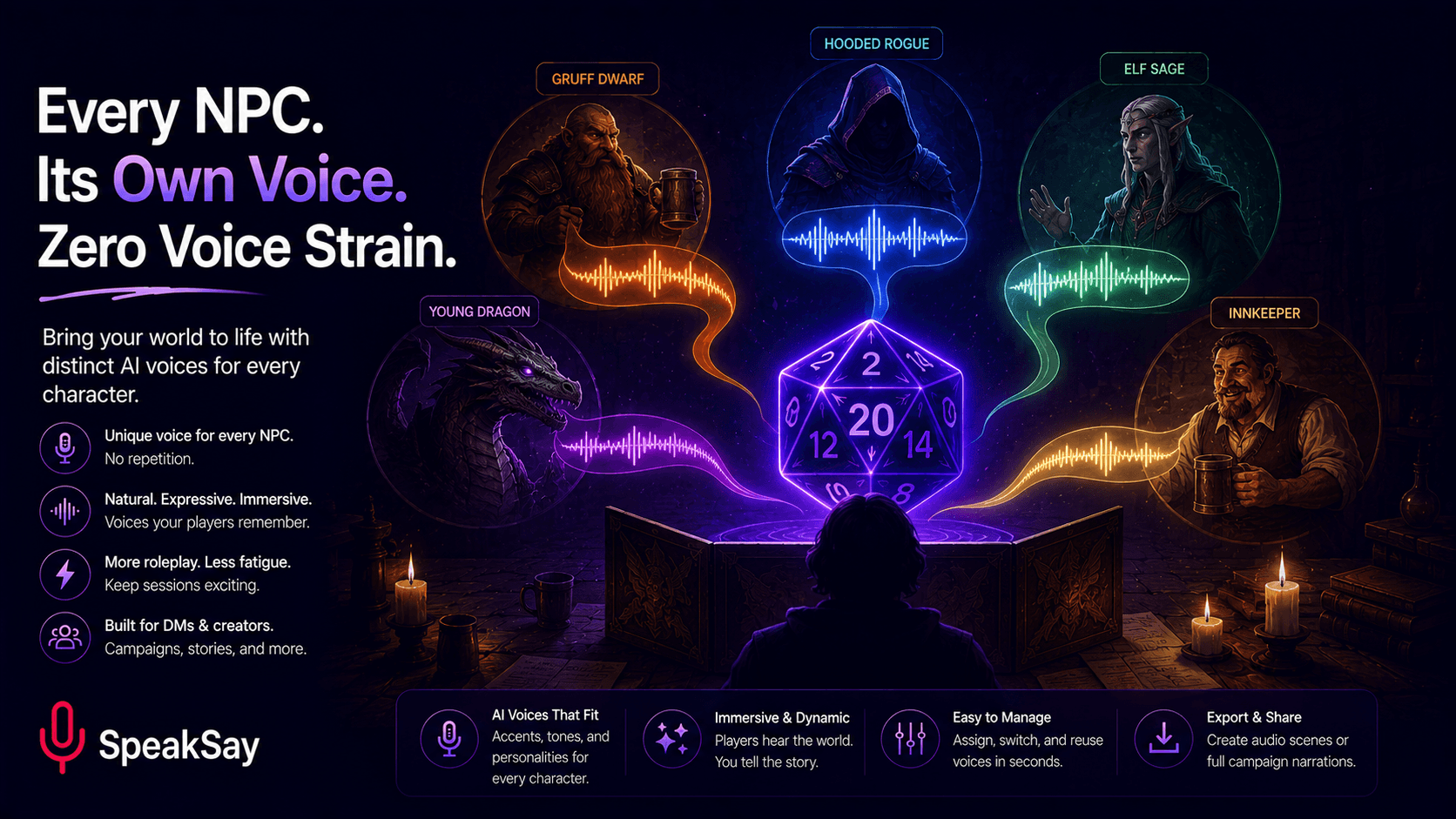
AI Voices for D&D: How Dungeon Masters Give Every NPC a Distinct Voice (2026 Guide)
You can run tactical combat and improvise a living world — but can you do twelve distinct character voices for four hours straight? Here's how DMs build a reusable AI voice cast for every NPC, prep key dialogue and recaps, and keep voices consistent across a whole campaign.
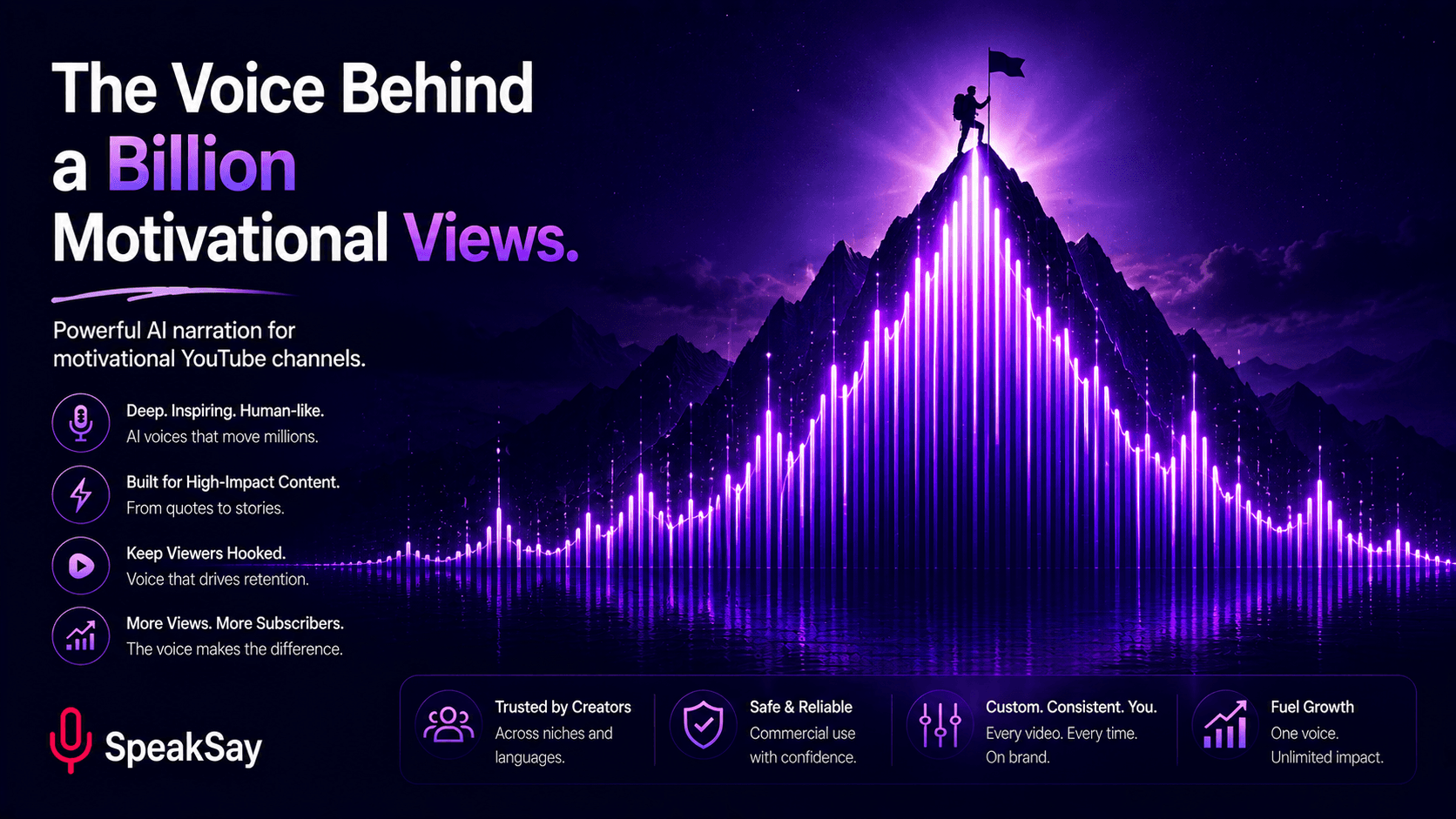
Motivation & Discipline Channels Pull Billions of Views: The Intense AI Narrator Playbook (2026)
Motivational and discipline content is one of 2026's fastest-growing faceless niches — but every channel uses the same recycled "hustle" voice, and a flat AI read kills the intensity that makes these clips shareable. Here's the voice craft, pacing curves and originality playbook for narration that actually hits.
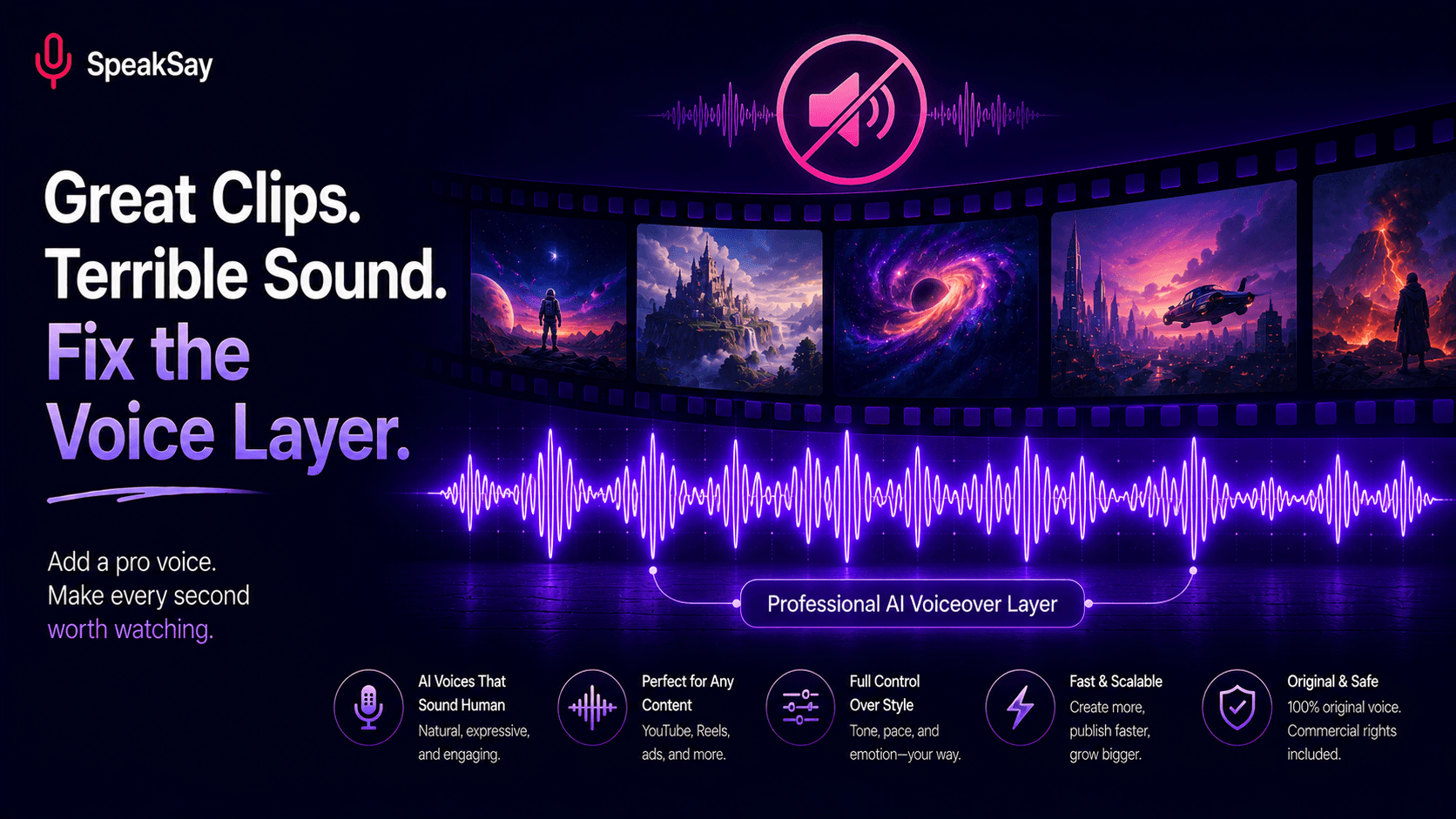
Your Veo & Sora Clips Look Amazing but Sound Terrible: The AI Voiceover Workflow for AI-Generated Videos (2026)
AI video generators create stunning clips with silent, garbled or wildly inconsistent audio — and a narrator that changes tone every 8 seconds kills retention. Here's the script-first voice-layer workflow that makes stitched AI clips sound like one continuous, professional video.
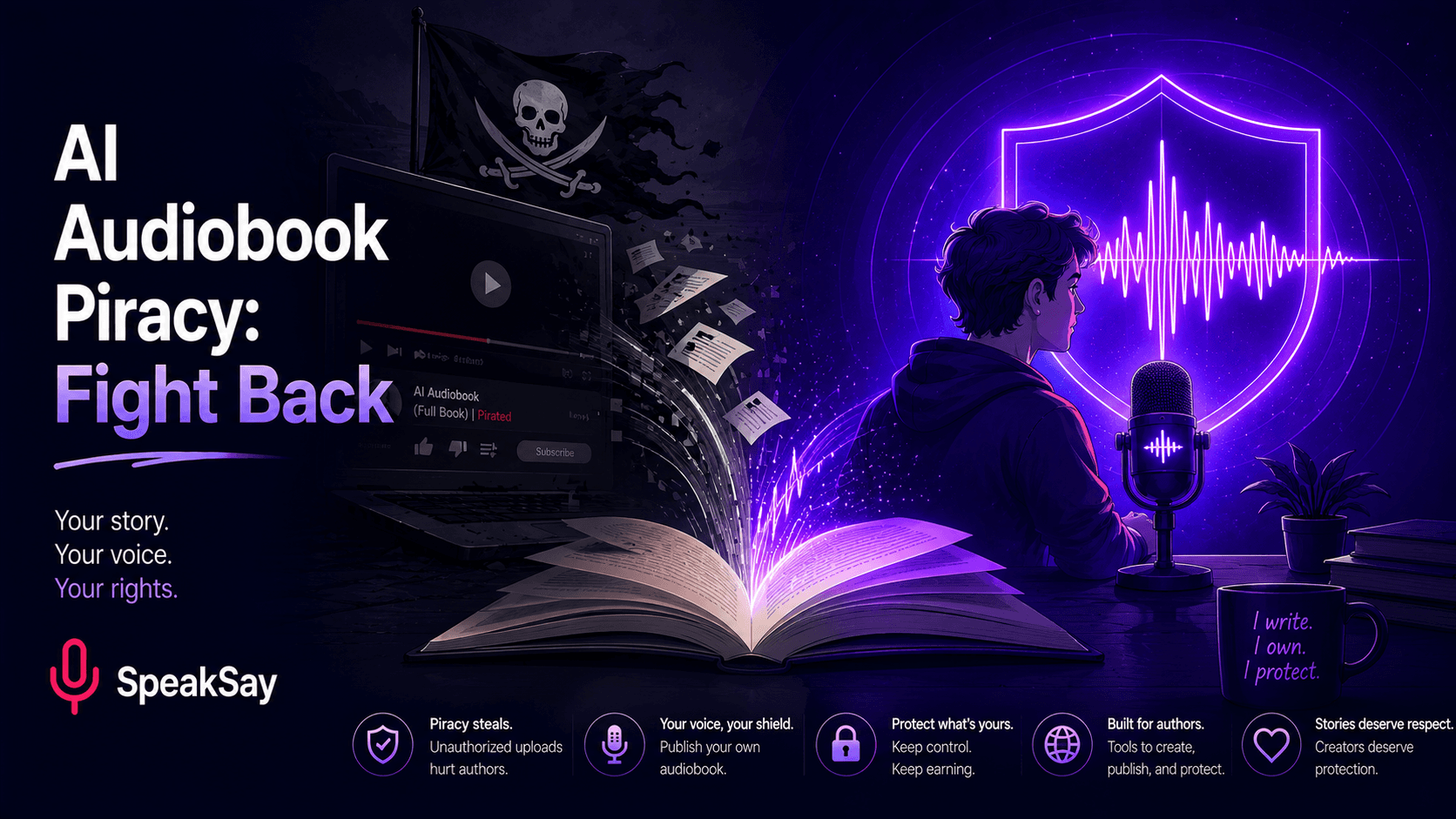
AI Pirates Are Uploading Stolen Audiobooks to YouTube: How Indie Authors Fight Back in 2026 (Takedowns + the Own-Voice Advantage)
A New York Times exposé revealed AI-enabled audiobook piracy at massive scale on YouTube — from literary fiction to Harry Potter. Here's the indie author's 2026 defense playbook: the takedown workflow that works, why your own cloned voice is a moat pirates can't fake, and how going wide fast leaves no vacuum for thieves to fill.
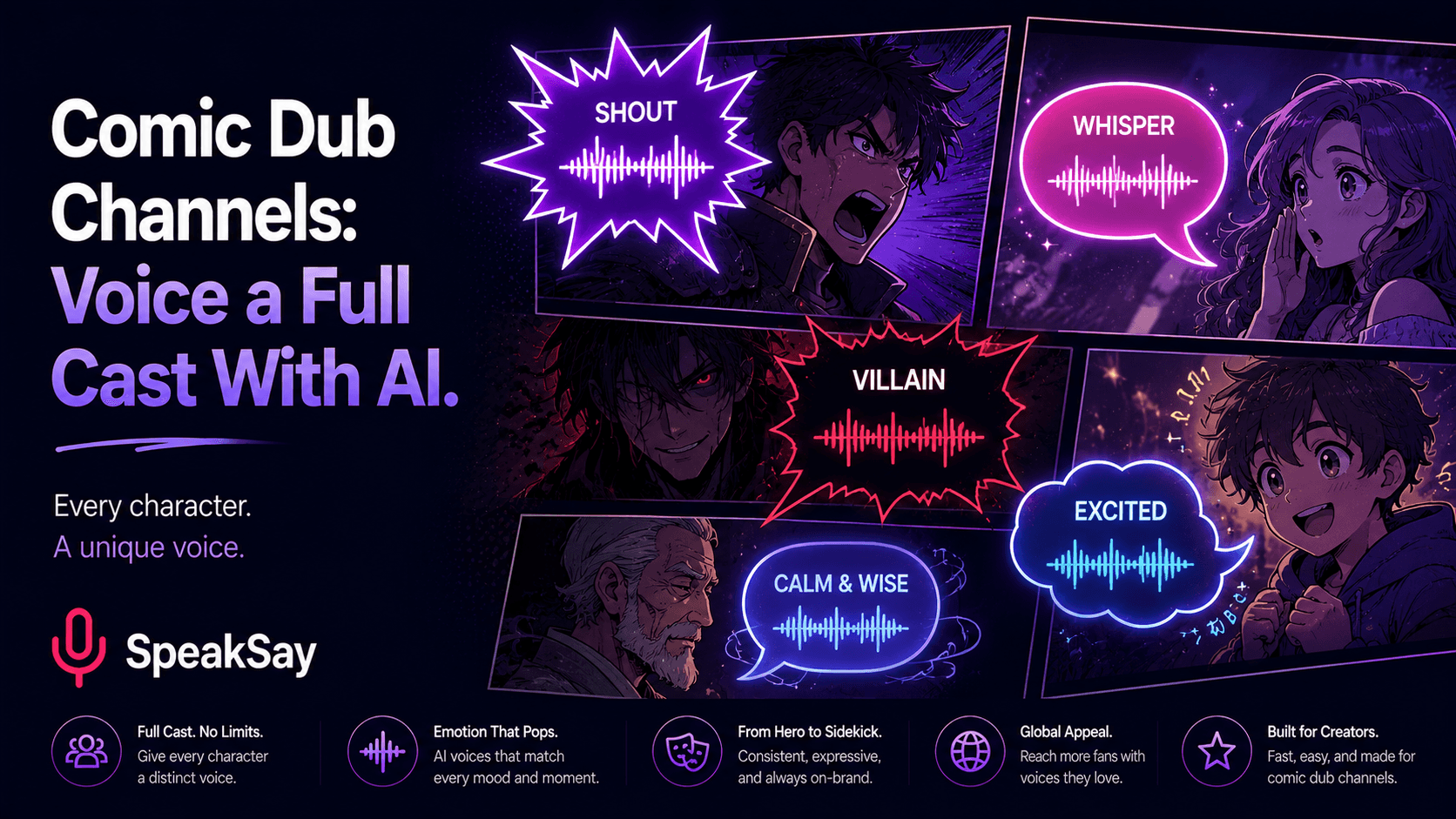
Comic Dub & Webtoon Dub Channels in 2026: Voice a Full Character Cast With AI (No Voice-Actor Auditions)
Comic dub channels need 5–10 consistent character voices per series — and unpaid voice-actor collabs keep collapsing mid-season. Here's how solo creators design a full AI cast, keep every character consistent, and ship episodes weekly.
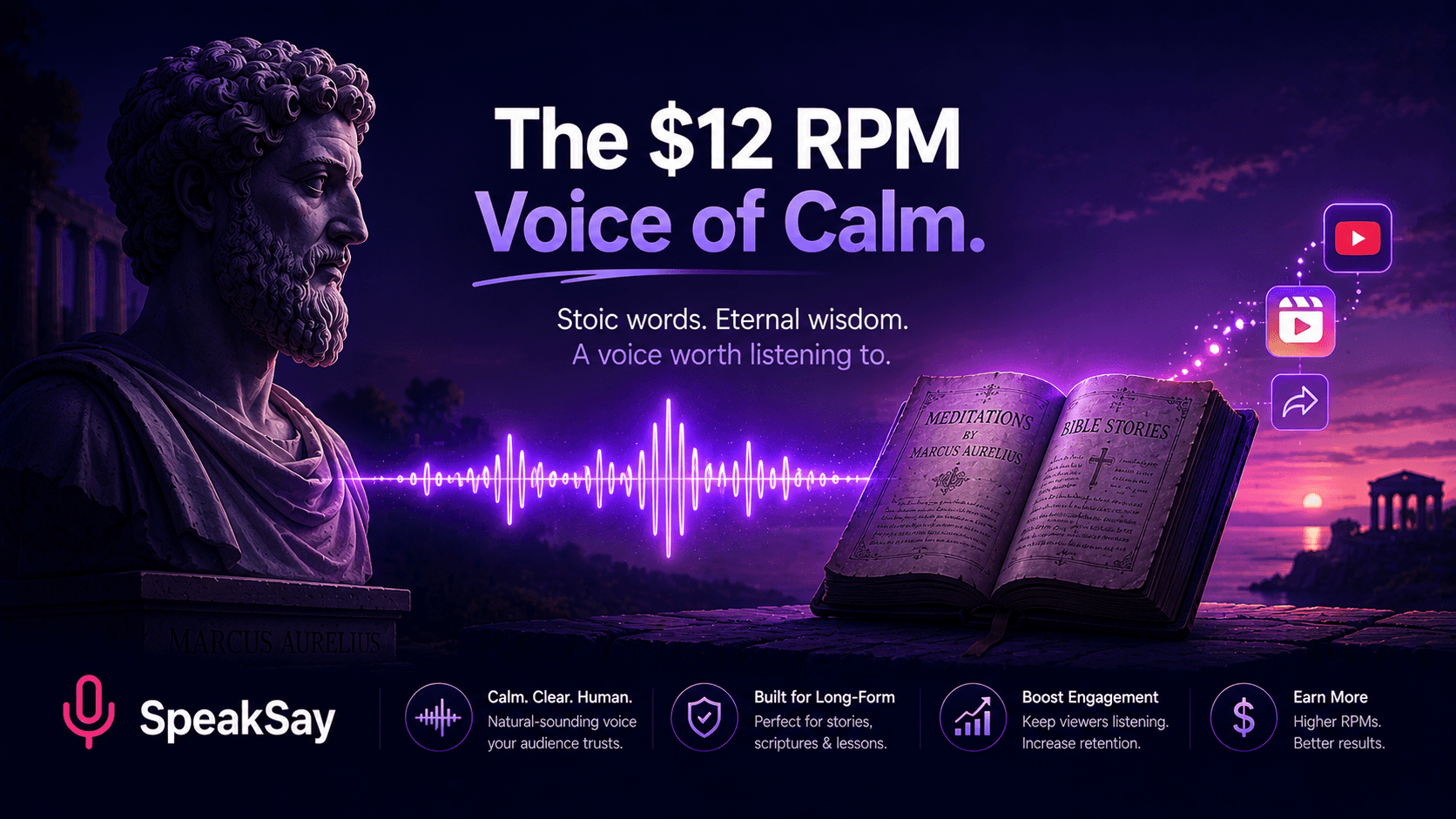
Stoic & Bible Story Channels Earn $8–18 RPM With Massive Shareability: How to Build the Deep, Calm AI Narrator They All Use (2026)
Faith and philosophy channels are among YouTube's highest-RPM faceless niches — but nearly all of them use the same three stock AI voices. Here's how to build a signature calm narrator that makes your channel recognizable in two seconds.
AI Lip-Sync Videos Are 2026's Top Shorts Format — Why Default Avatar Voices Flop and How to Give Yours a Real One
AI avatar videos are one of the highest-volume viral formats of 2026 — and most of them die in two seconds because of the voice. Here's the voice-first workflow that fixes it.
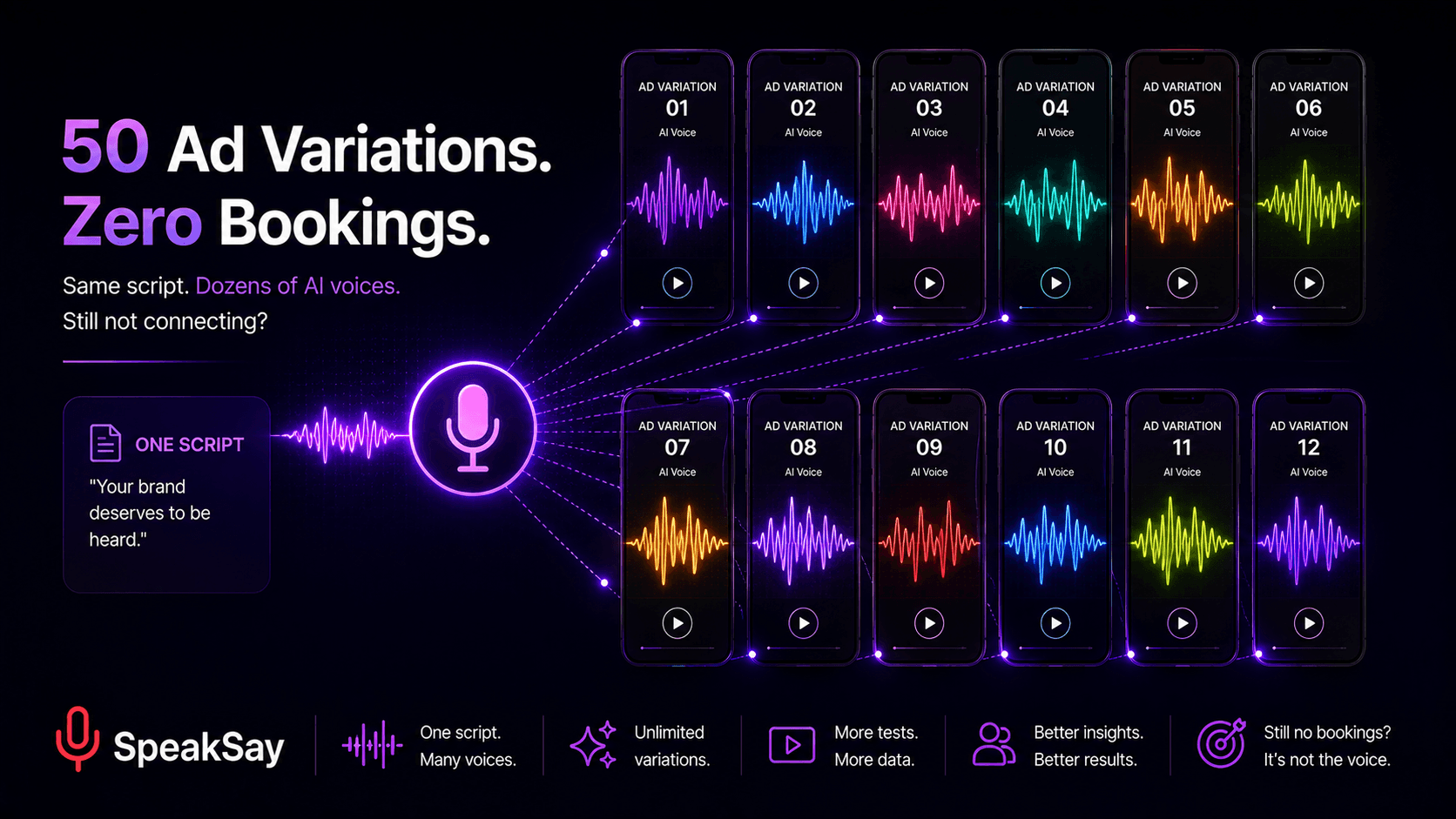
AI Voiceovers for UGC-Style Ads: How Brands Test 50 Ad Variations Without Booking a Single Creator (2026)
58% of AI marketing videos now use AI voiceovers — but most still sound like corporate reads. Here's the workflow performance marketers use to batch 50 native-sounding ad variations in an afternoon.
Can AI Narrate Fiction Yet? Romance & Novel Narration in 2026 — Where It Fails and the Multi-Voice Workflow That Works
AI narration is now indistinguishable from human for nonfiction — but novels are harder. Here's an honest genre-by-genre verdict, and the multi-voice workflow that finally makes AI-narrated fiction listenable.
True Crime Faceless YouTube Channels in 2026: Best AI Narrator Voices + the Originality Rules That Keep You Monetized
True crime is still one of YouTube's highest-retention, highest-CPM faceless niches — but the July 2026 "inauthentic content" rules punish template narration. Here's the AI narrator voice playbook that keeps you original and monetized.
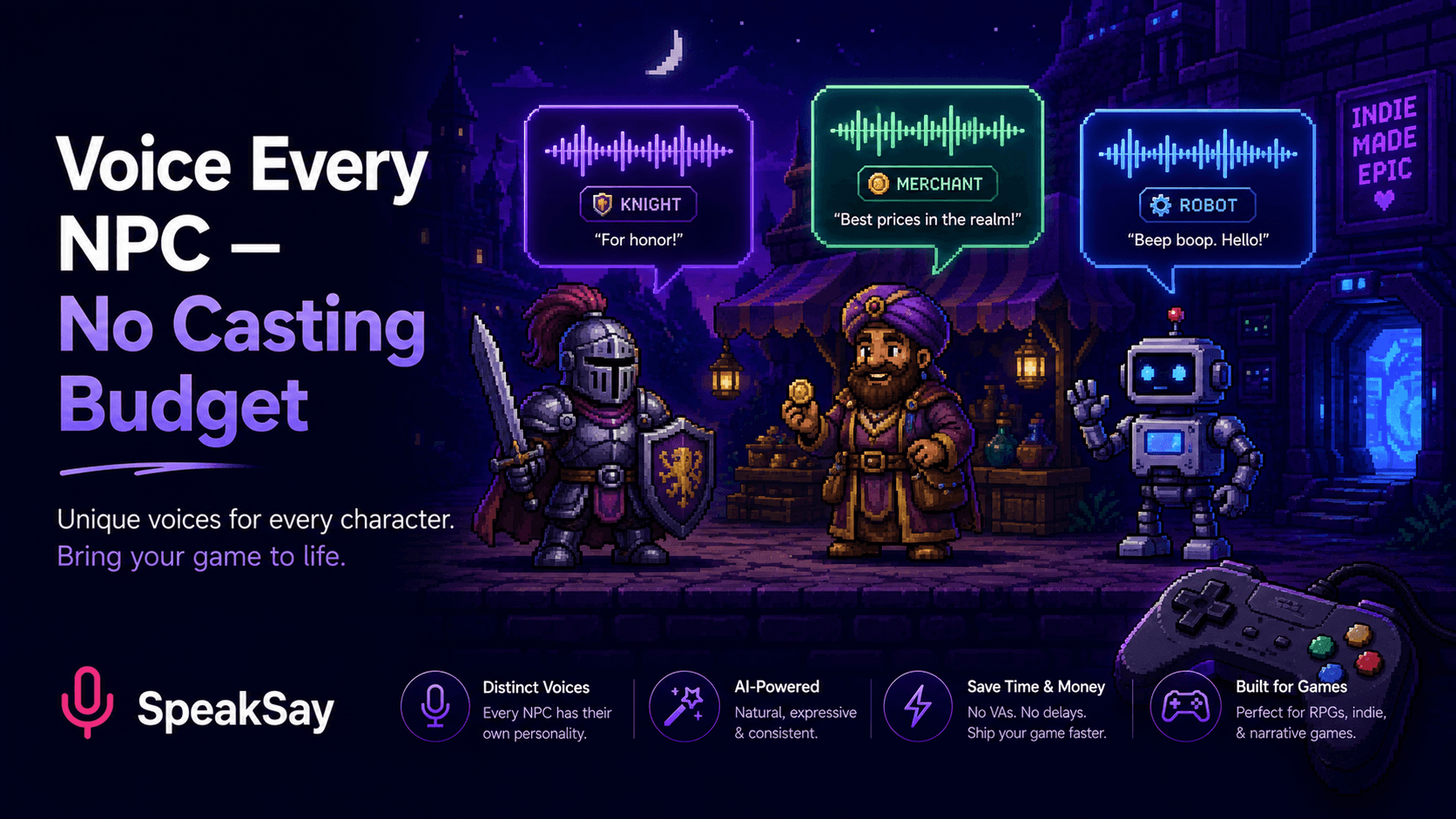
AI Voices for Indie Games in 2026: How to Voice Every NPC and Character Without Hiring Voice Actors
Per-line voice acting rates make fully-voiced indie games unaffordable — and every script rewrite means re-booking actors. Here's the 2026 AI pipeline for designing distinct character voices, batch-generating dialogue trees, and re-generating lines instantly when the script changes.
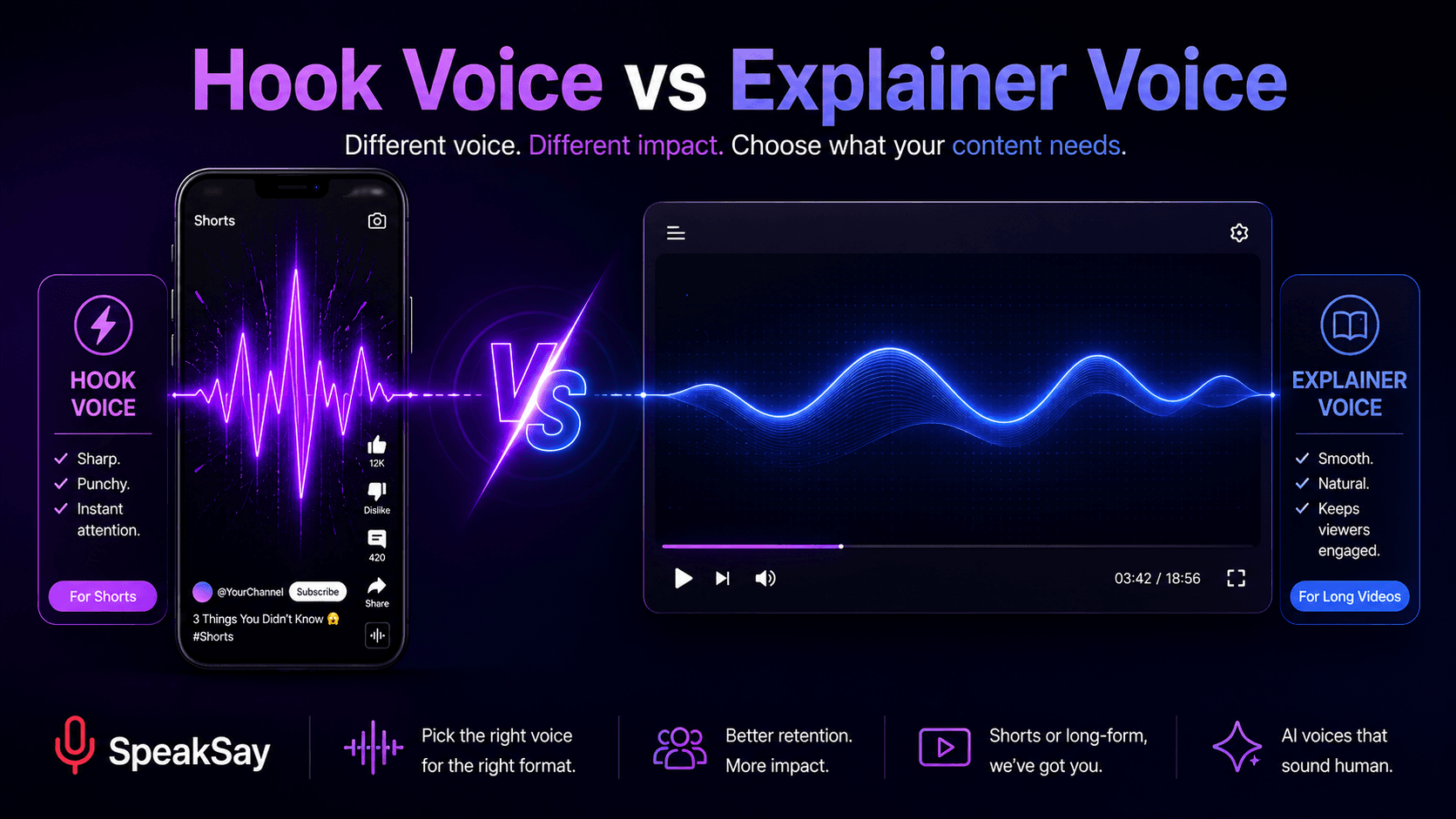
Hook Voice vs Explainer Voice: Why the Same AI Voice Fails on Shorts and Long-Form (2026 Voice-Pairing Guide)
The voice that stops a scroll in 2 seconds will exhaust viewers over 10 minutes — and the voice that carries a documentary dies on Shorts. Here's the 2026 voice-pairing framework serious channels use.
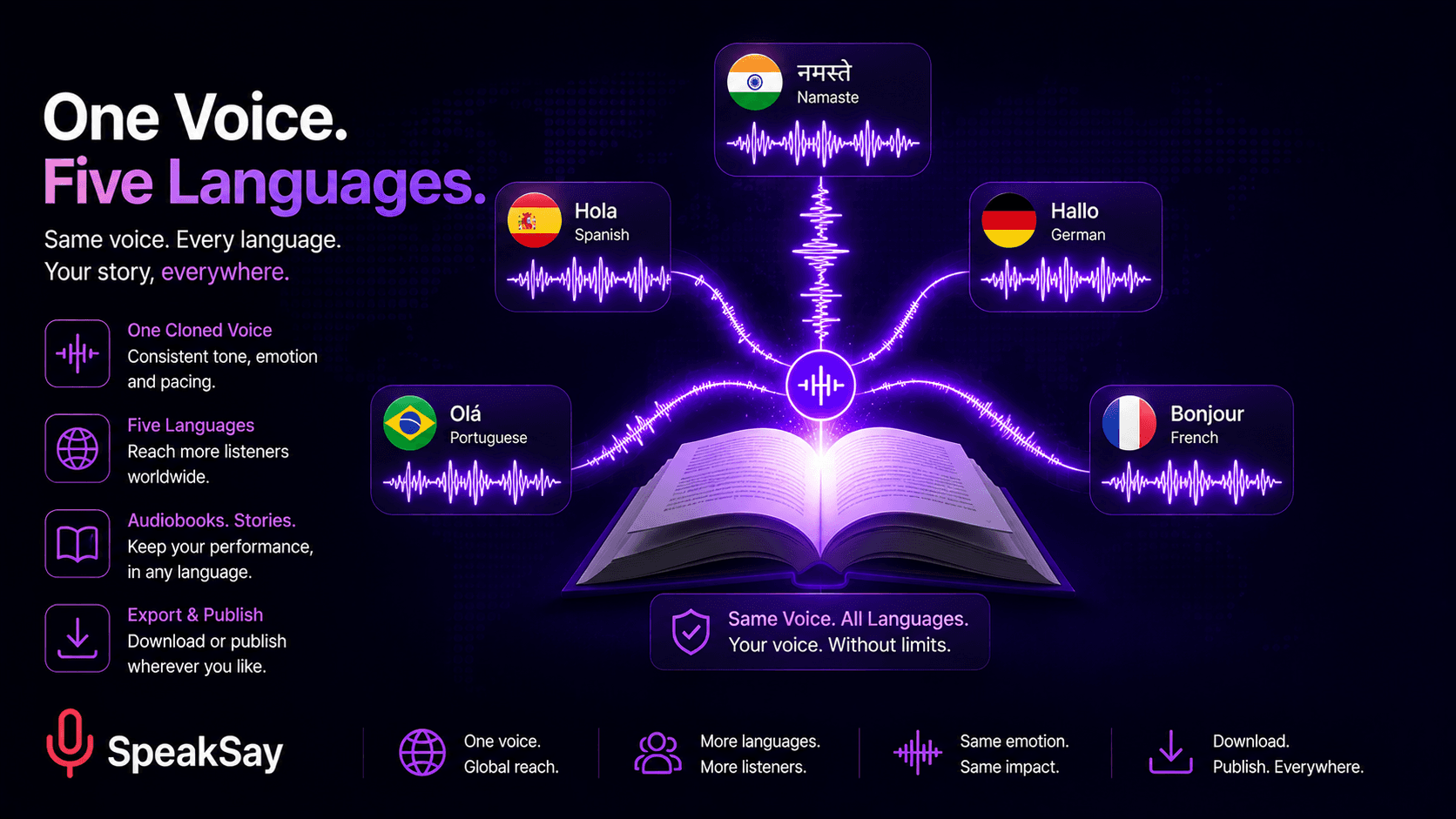
How to Translate Your Audiobook Into Other Languages With Your Own Cloned Voice (2026 Indie Author Guide)
Audible now offers AI translation — but only through publishers, locked to their platform and their voices. Here's how indie authors clone their own voice once and sell audiobook editions in five languages everywhere, rights intact.
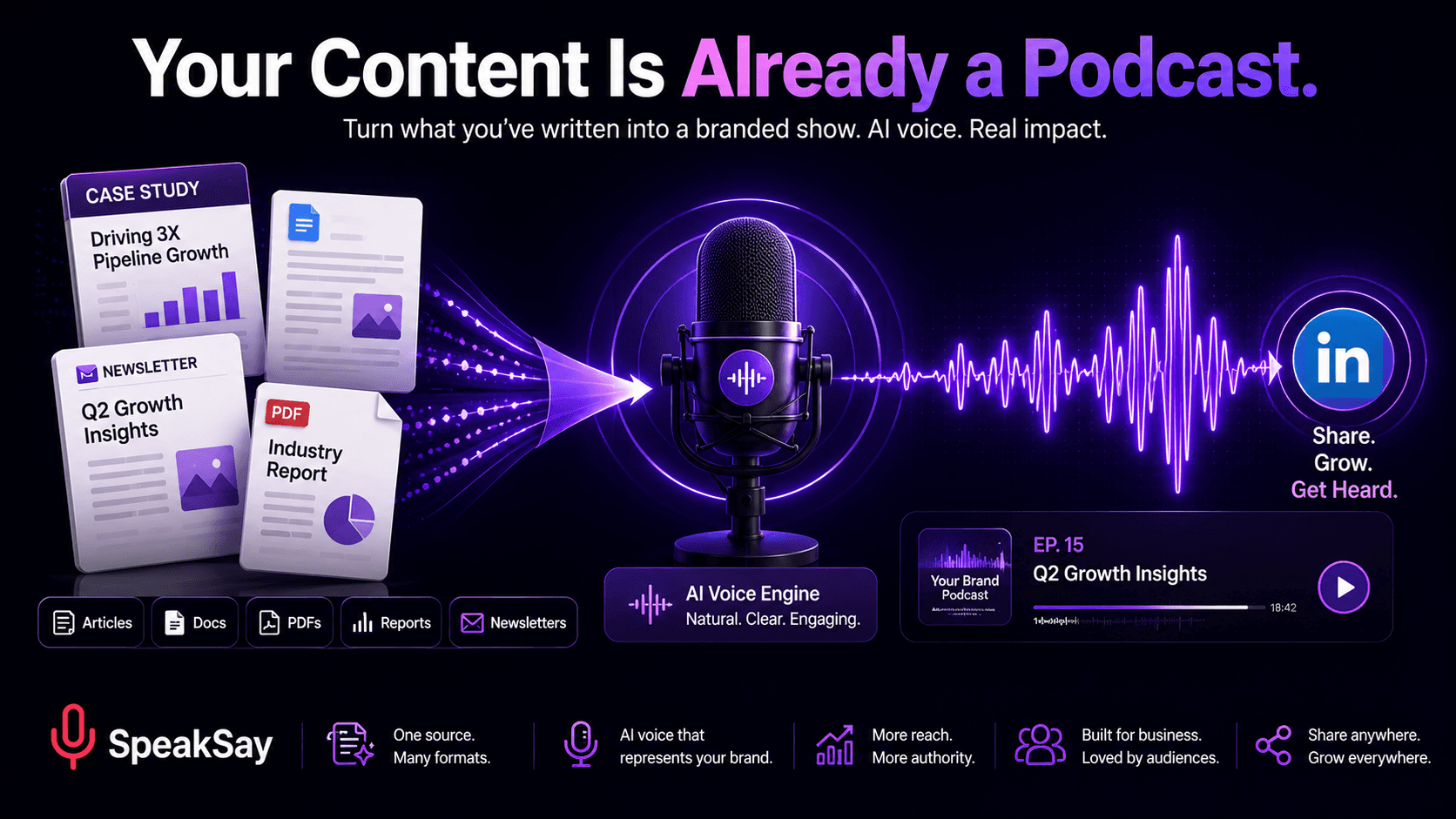
How to Launch a Branded B2B Podcast With AI Voices — From Content You Already Have (2026 Guide)
Agencies quote $3,000–$10,000 per branded podcast episode. Your case studies, docs, and newsletters already contain the material — here's how marketing teams turn them into a weekly B2B podcast with a consistent branded AI host
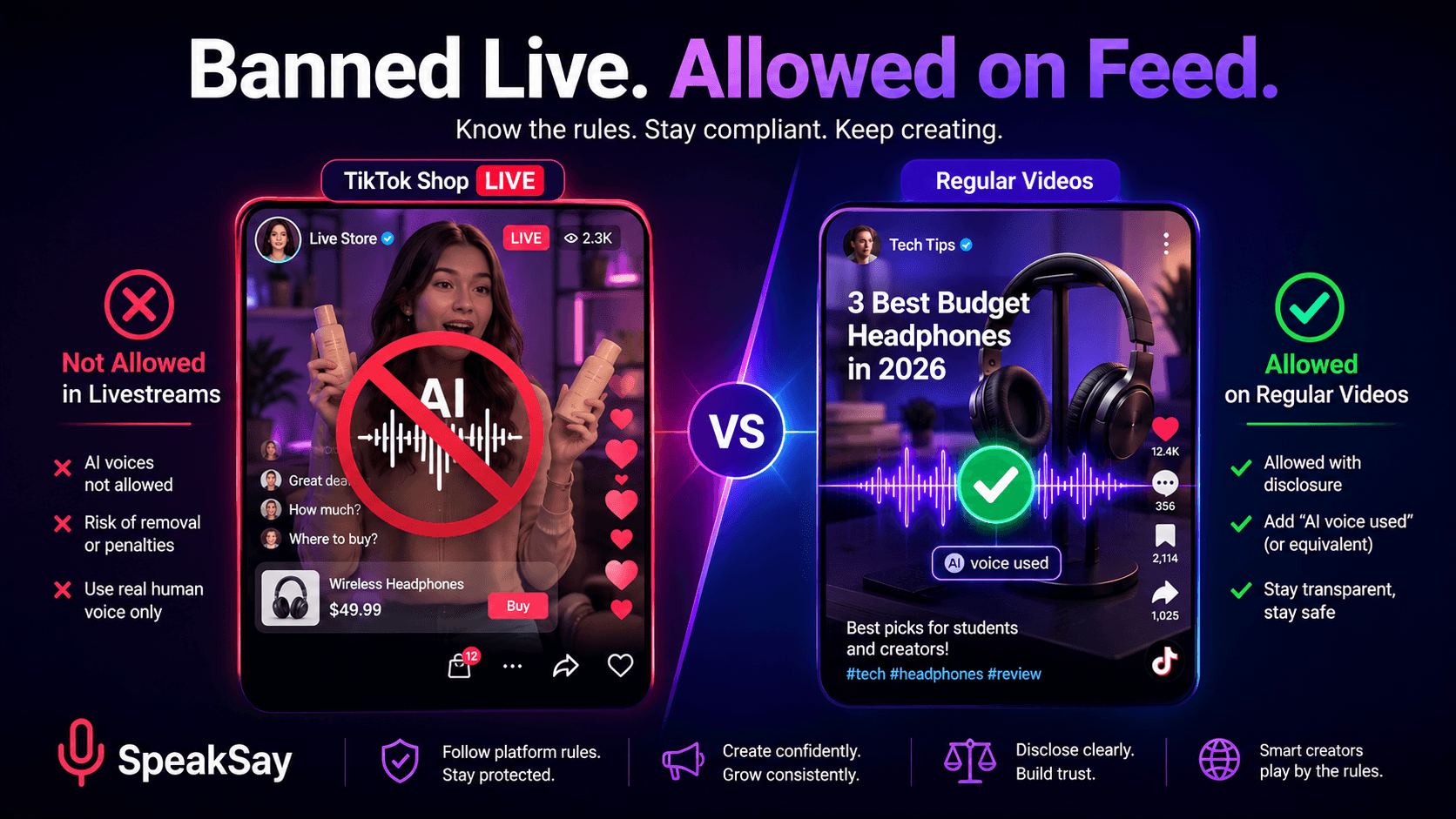
TikTok's AI Voice Ban Explained (2026): Where AI Voices Are Banned, Where They're Allowed, and How Shop Affiliates Still Scale
TikTok now prohibits AI voices in Shop livestreams, enforced through Creator Health Ratings — and sellers are panicking about their AI-voiced product videos. The ban is narrower than the headlines. Here's the actual rulebook and the workflow that still scales.
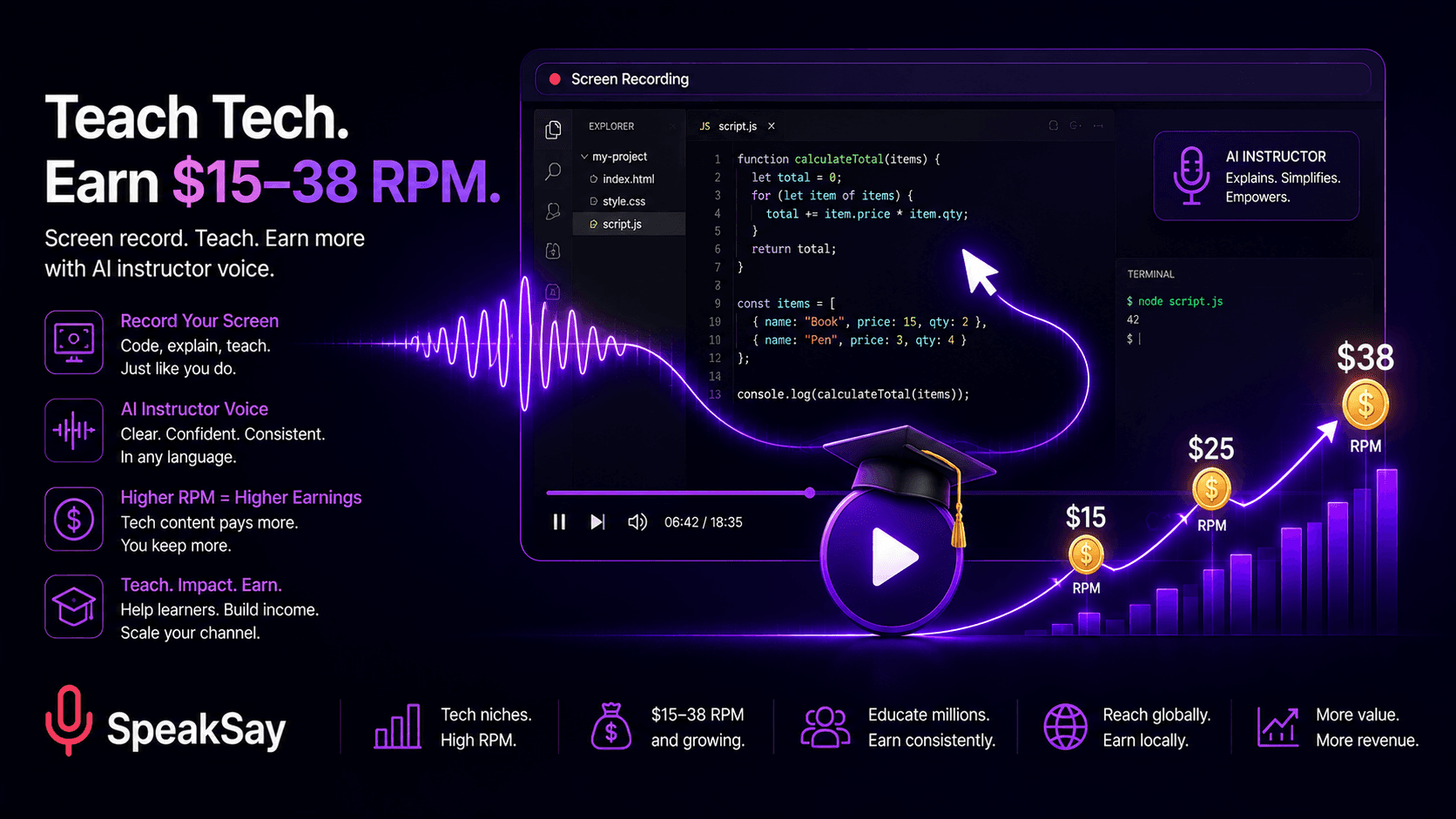
AI & Tech Education YouTube Channels: 2026's Fastest-Growing Faceless Niche ($15–38 RPM) and the Voice Setup That Works
AI and tech education is 2026's fastest-growing faceless category, with RPMs of $15–38 and demand outpacing supply. The catch: tutorial viewers bail instantly on a robotic narrator. Here's the full voice + workflow playbook.
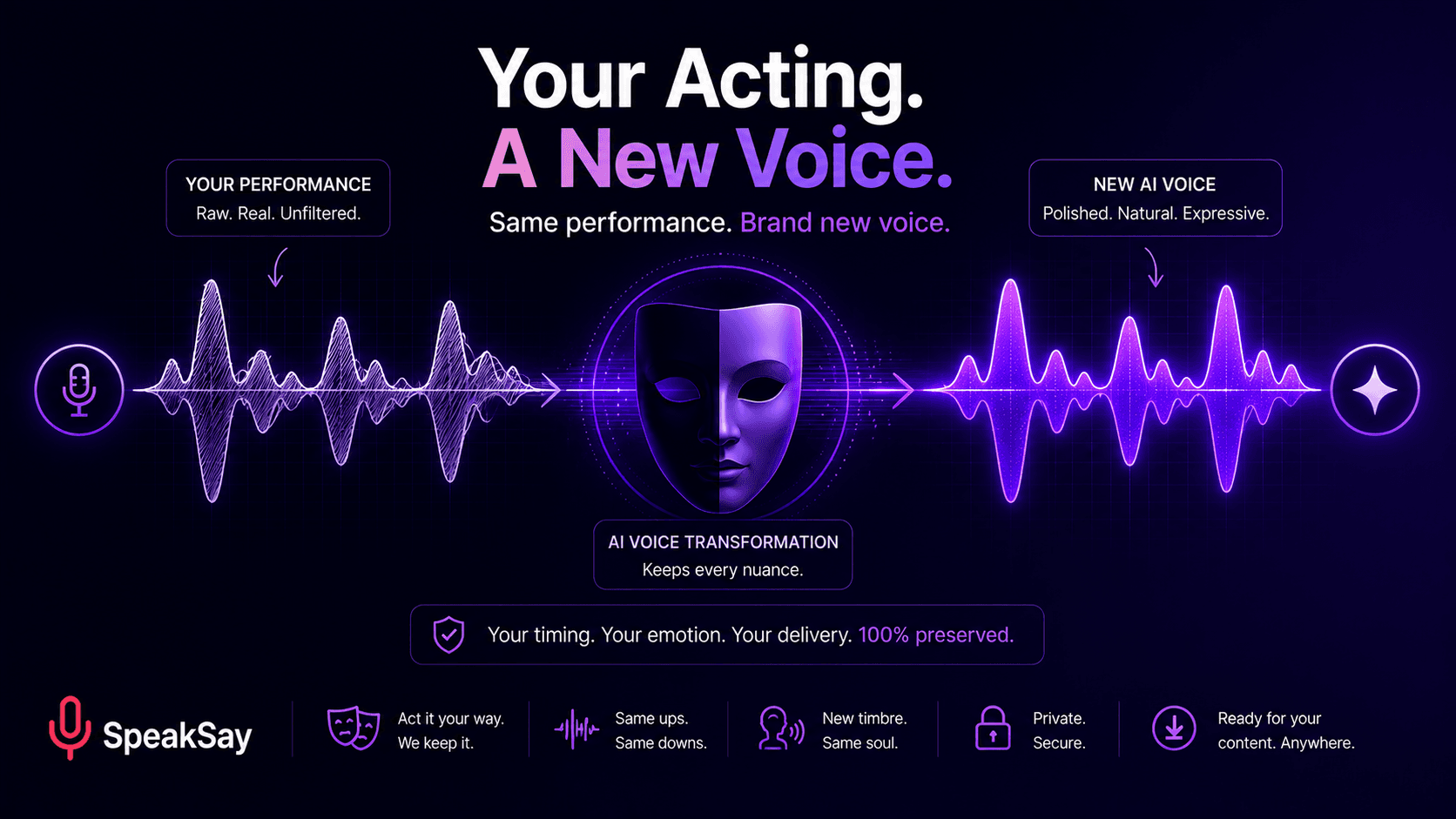
Speech-to-Speech AI Voices (2026): Record Your Performance, Swap the Voice — Keep Every Ounce of Emotion
Typed text-to-speech can sound flat on dramatic scripts — but many creators hate their own recorded voice. Speech-to-speech solves both: record the performance yourself, then swap the voice while keeping your timing, emphasis, and emotion.
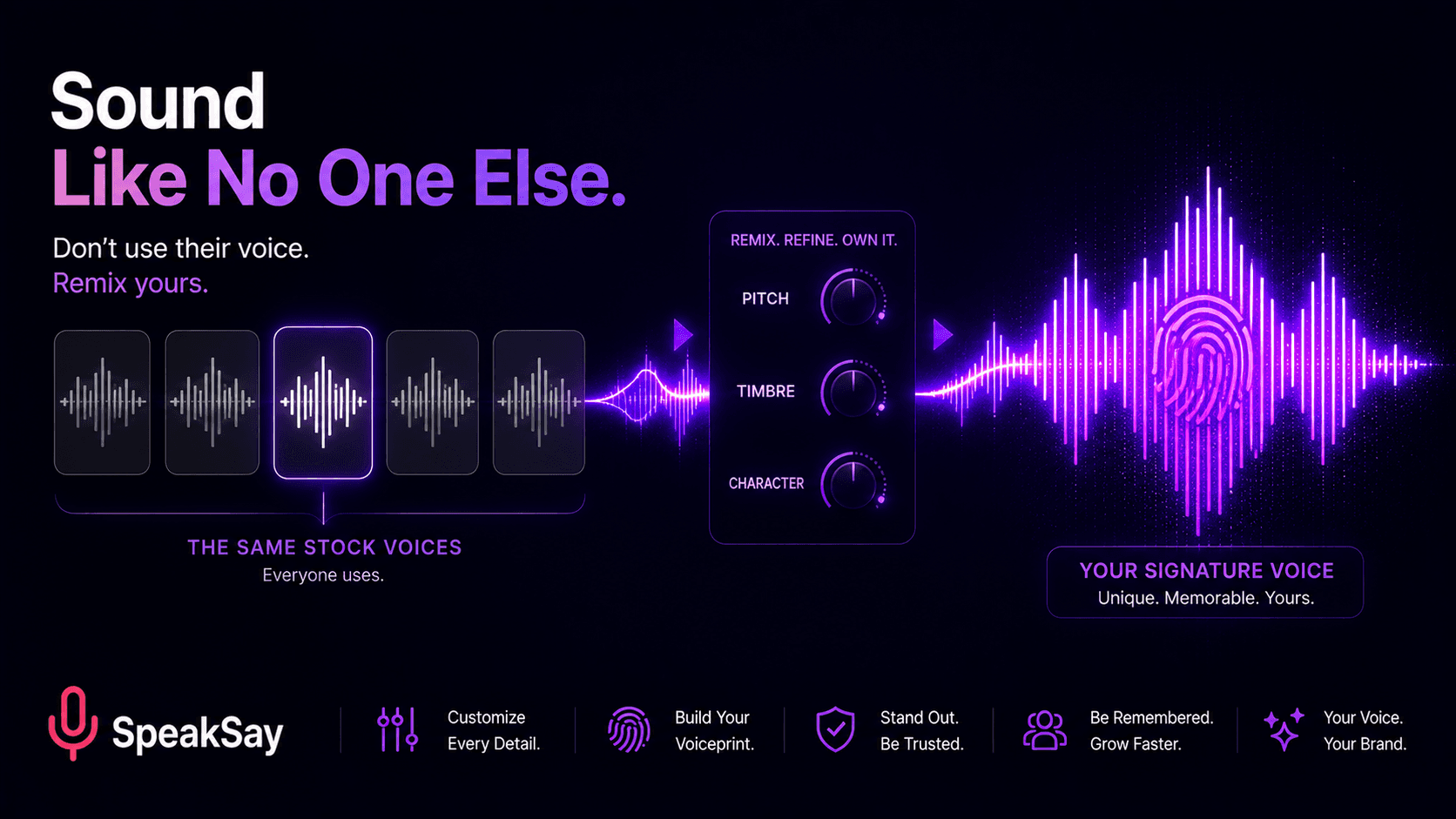
Stock AI Voices Are Everywhere: How to Build a Signature Brand Voice Nobody Else Has (2026 Voice Remix Playbook)
Audiences in 2026 punish content that feels mass-produced — and the same five stock AI voices are the loudest mass-production signal there is. Here's the step-by-step remix playbook for building a signature channel voice nobody else can use.
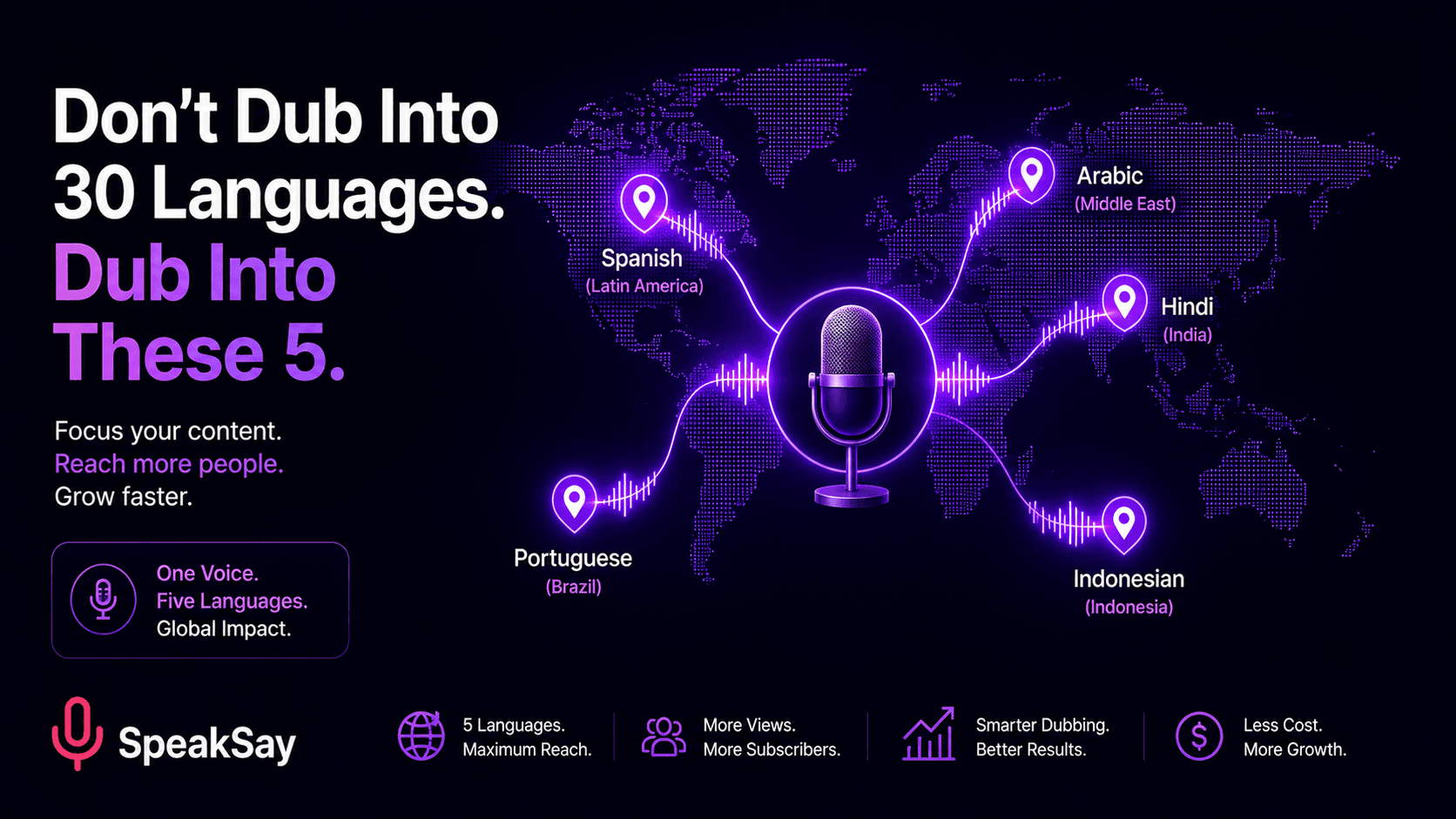
The 5 Best Languages to Dub Your YouTube Videos Into First (2026 Data: Audience Size, RPM & Competition)
Dubbing tools promise 100+ languages, but nobody can QA thirty dubs. Here's the data-ranked shortlist — audience size, RPM, and competition — and the one-language-a-week workflow that actually grows international revenue.
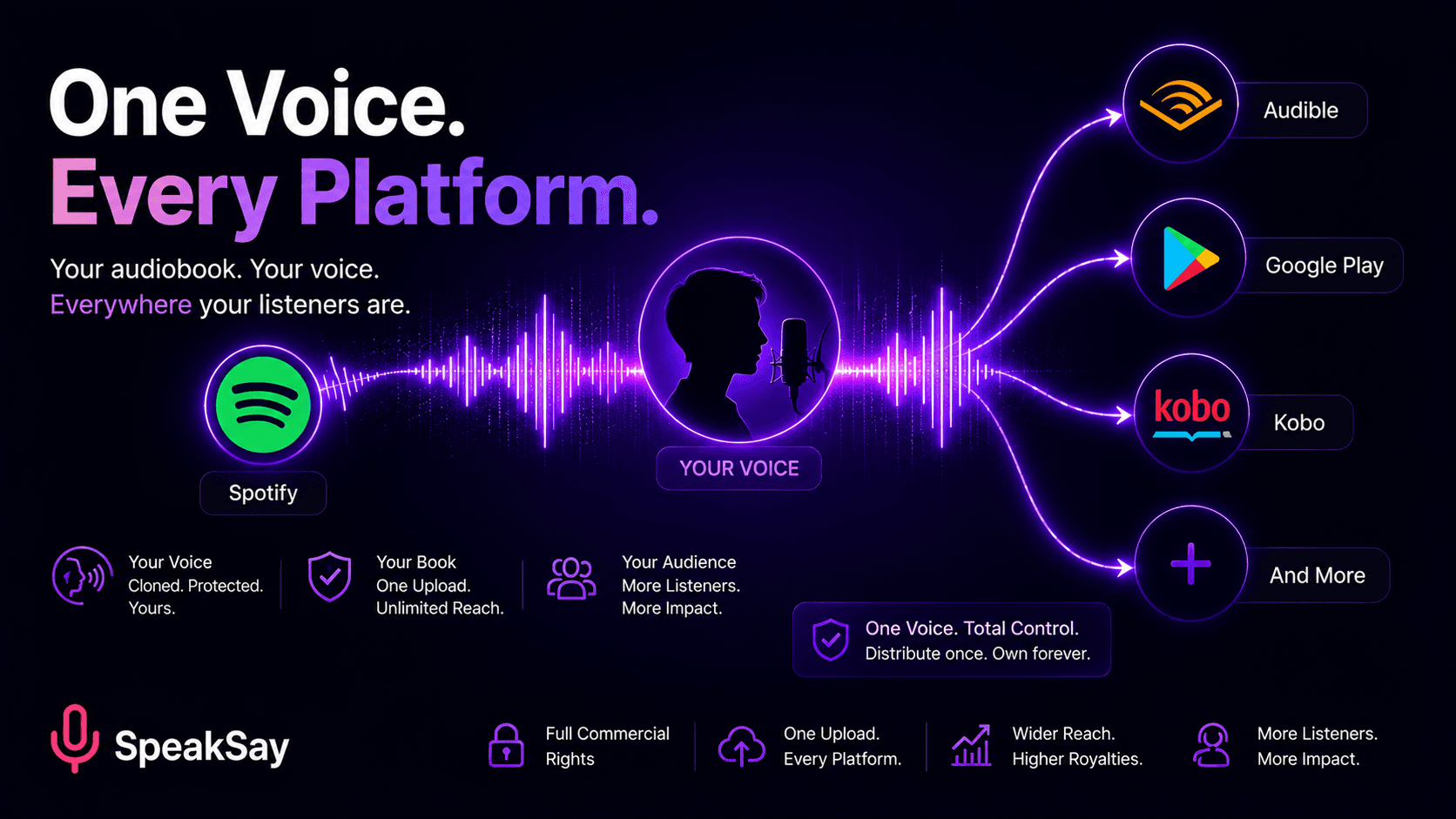
Spotify's New AI Audiobook Tool (2026): What Authors Get, What They Give Up — and How to Go Wide With Your OWN Voice
Spotify's June 2026 AI audiobook beta makes narration nearly free — but the fine print matters. Here's what authors get, what they give up, and how to publish an AI audiobook in your own cloned voice on every platform at once
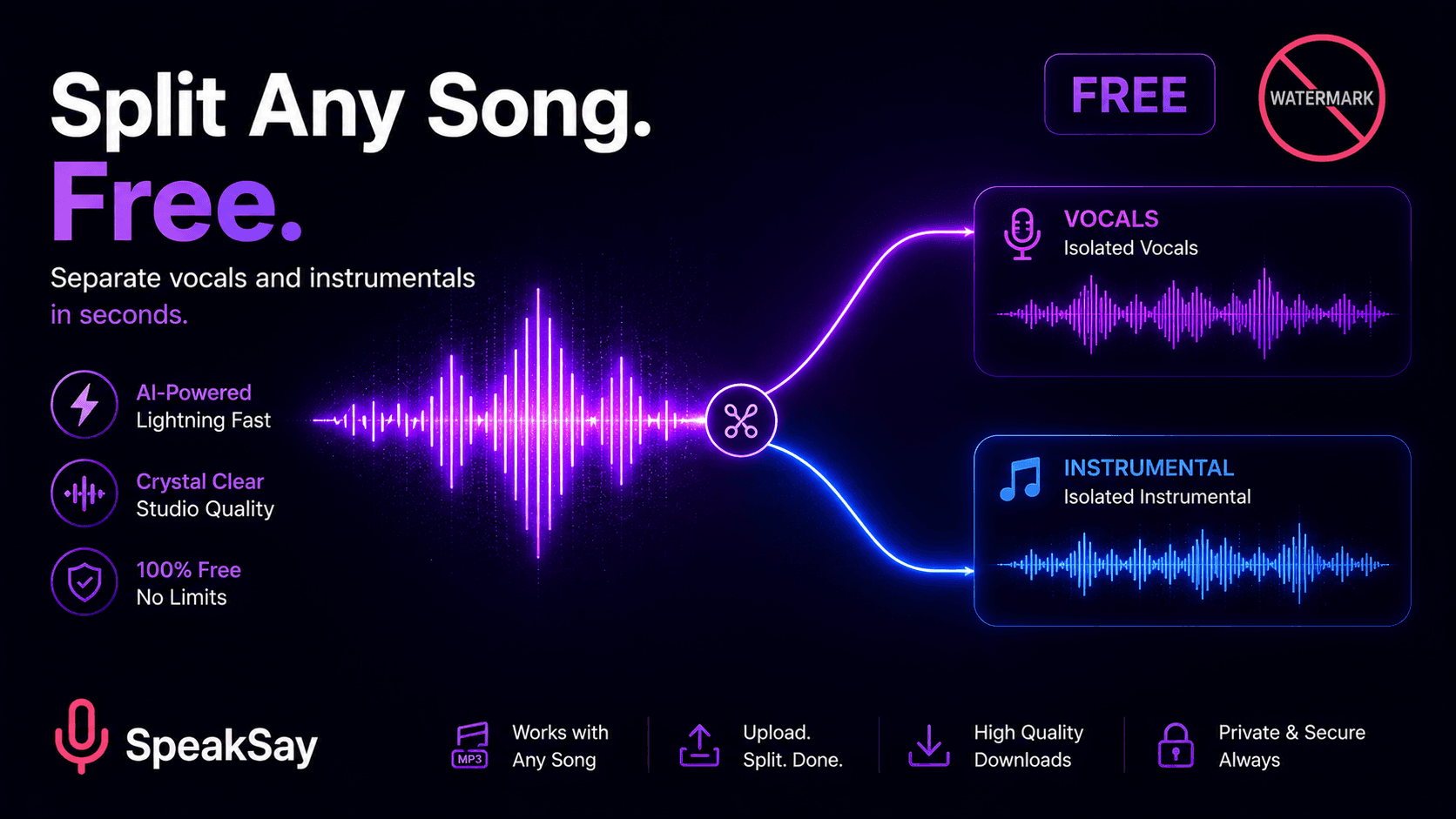
How to Remove Vocals From Any Song or Video for Free (2026): Karaoke Tracks, Remixes & Voice Edits
Most "free" vocal removers cap your file length, stamp a watermark on the output, or hide the download behind a paywall. Here's how to actually remove vocals from any song or video for free in 2026 — and what creators do next with the acapella and instrumental.
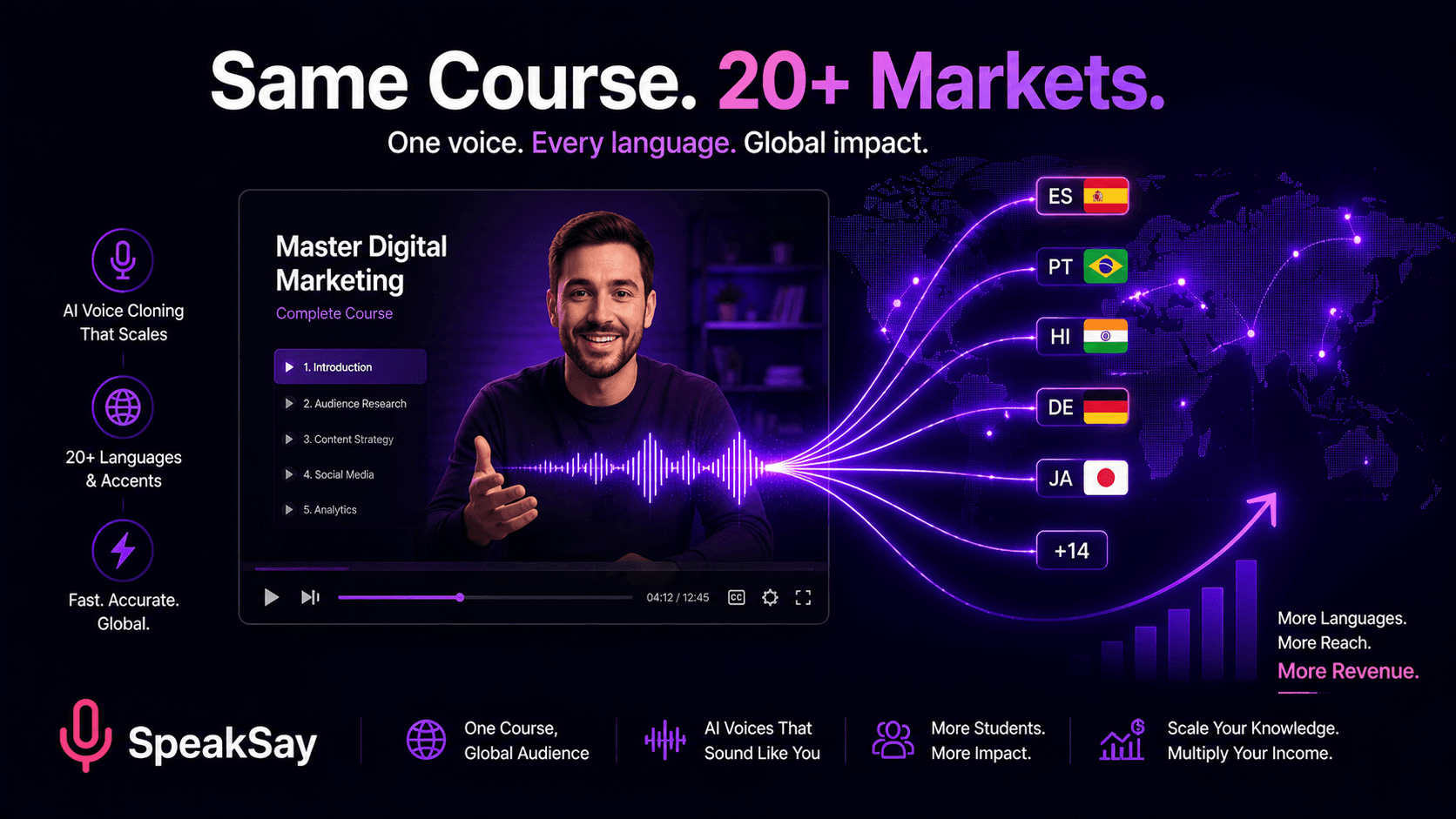
Your Course Only Sells in English: How Creators Localize Courses Into 20+ Languages With AI Dubbing (2026)
You spent months building a course — and it only sells in one language. AI dubbing now cuts localization costs by 70–90%, and voice cloning means every translated lesson is still taught in YOUR voice. Here's the 2026 workflow course creators use to open 20+ new markets without re-recording a single lesson.
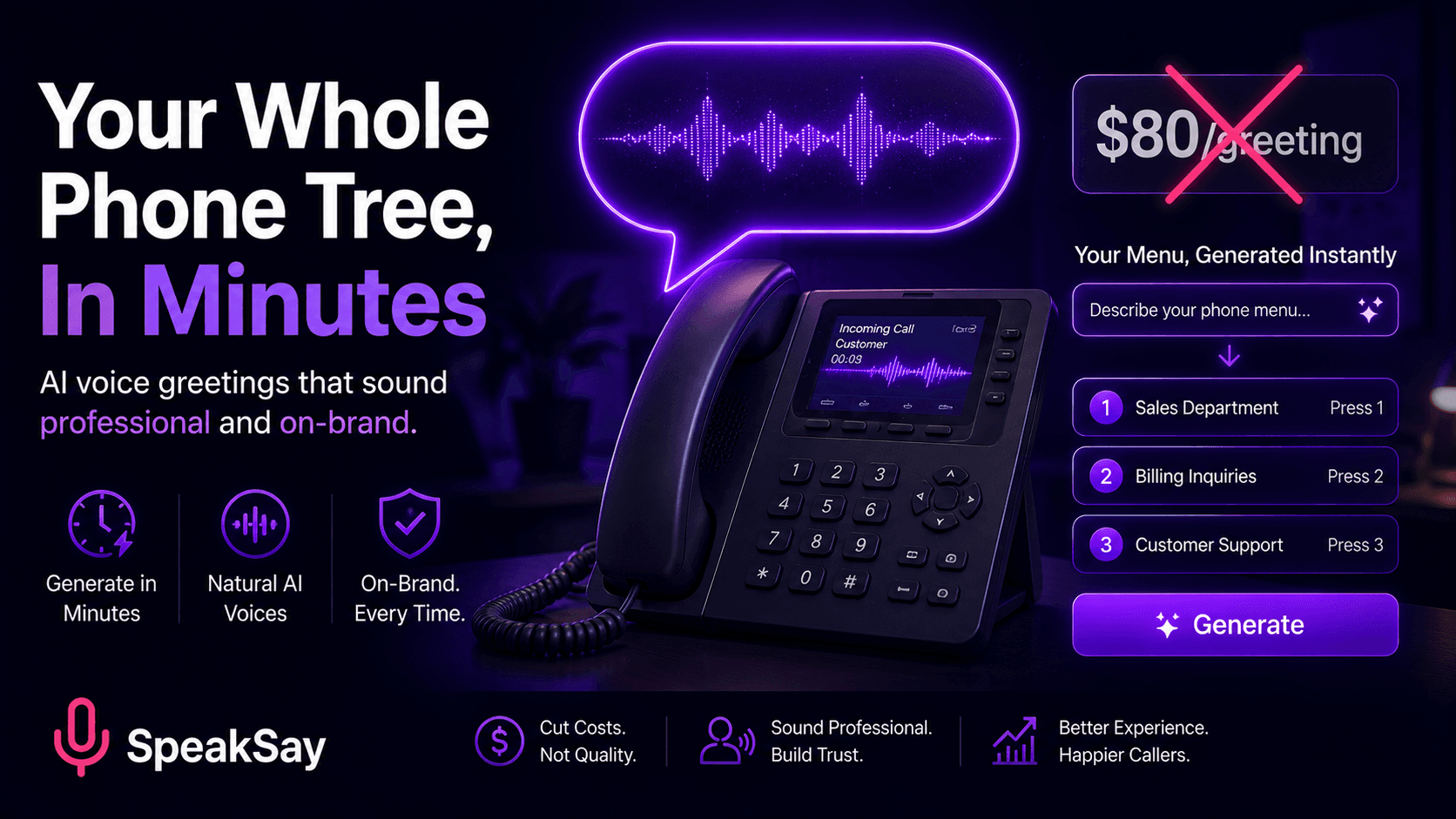
Stop Paying $80 Per Phone Greeting: AI Voices for IVR, Voicemail & On-Hold Messages (2026 Small-Business Guide)
Voice actors charge $75–$200+ per phone greeting and take days to deliver — then you pay again every time your hours change. Here's how small businesses record entire phone systems with AI voices in 2026: IVR menus, voicemail, and on-hold messages, updated in minutes for the cost of a coffee.
Your AI Voice Clone Sounds Too Perfect? How to Keep Your Rasp, Accent & Character (2026)
AI voice clones in 2026 have a strange new problem: they sound too clean. If your clone erased your rasp, flattened your accent, or made you sound ten years younger, here's why it happens — and how to get your real voice character back.
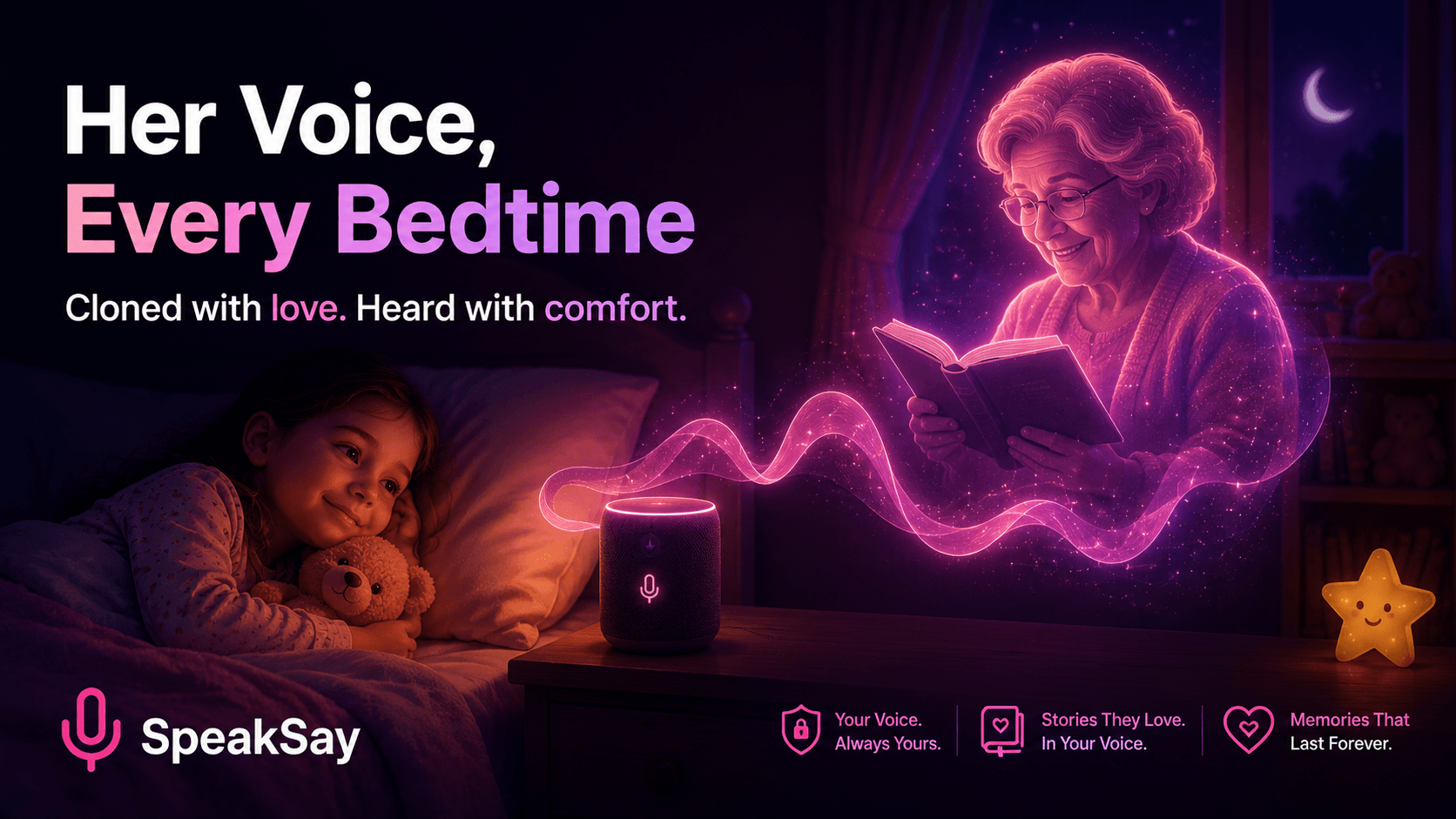
Grandma's Voice, Forever: How Families Are Cloning Loved Ones' Voices for Bedtime Stories and Voice Banking (2026)
Families are cloning grandparents' voices to read bedtime stories from thousands of miles away — and patients with ALS or Parkinson's are banking their voices before speech loss. Here's the consent-first way to do both in 2026.
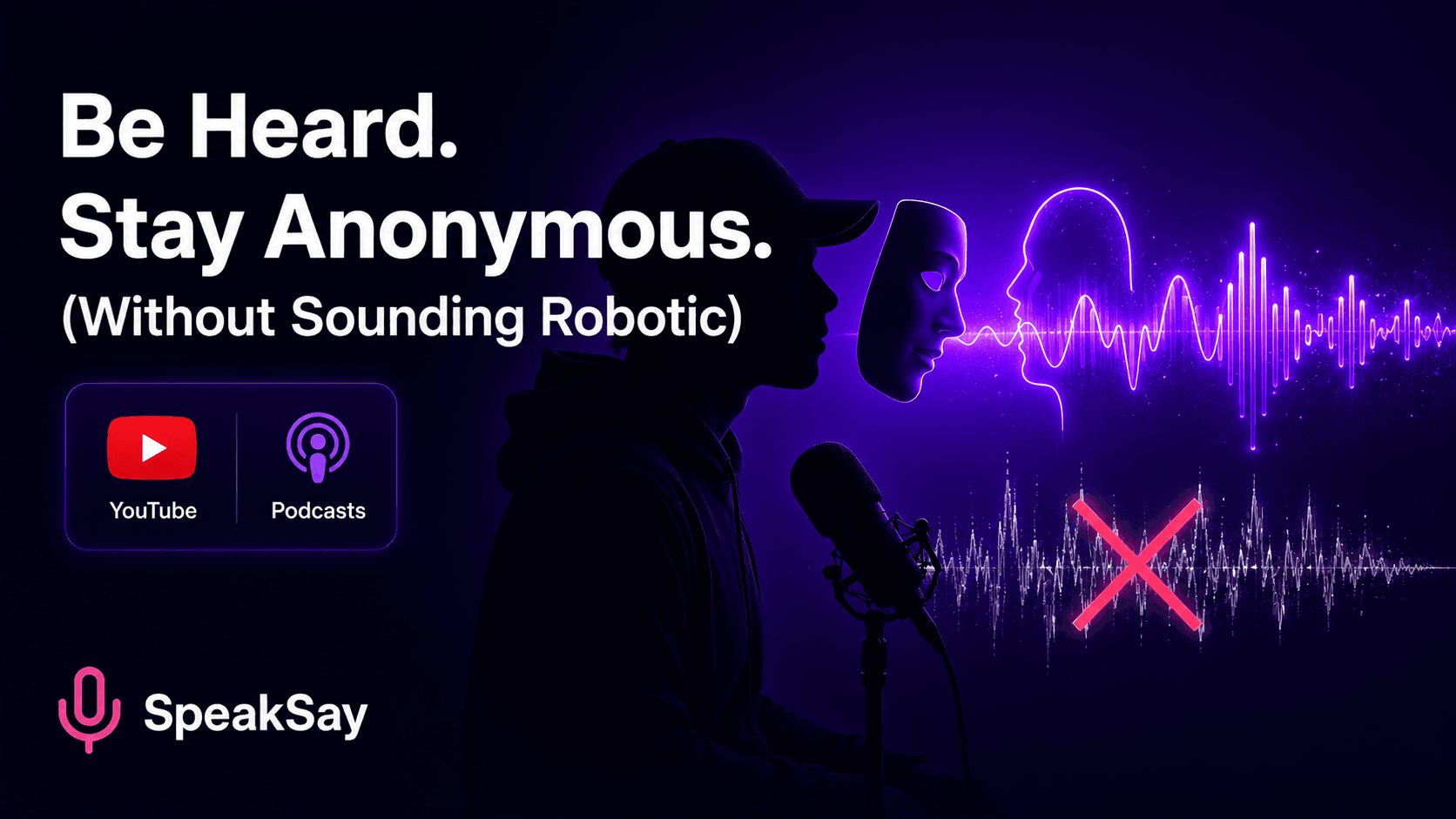
How to Start a YouTube Channel or Podcast Without Your Real Voice (Voice Privacy Without Sounding Robotic, 2026)
Want to create content without coworkers, family, or strangers recognizing your voice? Robotic voice changers kill trust, and generic stock AI voices now trigger YouTube's inauthentic-content flags. Voice remix is the third option: your performance, a different identity.
Your Voice Clone Sounds Nothing Like You? 9 Recording Mistakes That Ruin AI Voice Clones (2026 Fix Guide)
Voice clones don't fail in the AI — they fail at the microphone. Monotone reads, noisy rooms, wrong-language samples and six more input mistakes starve the model of what makes you sound like you. Here's the fix checklist.
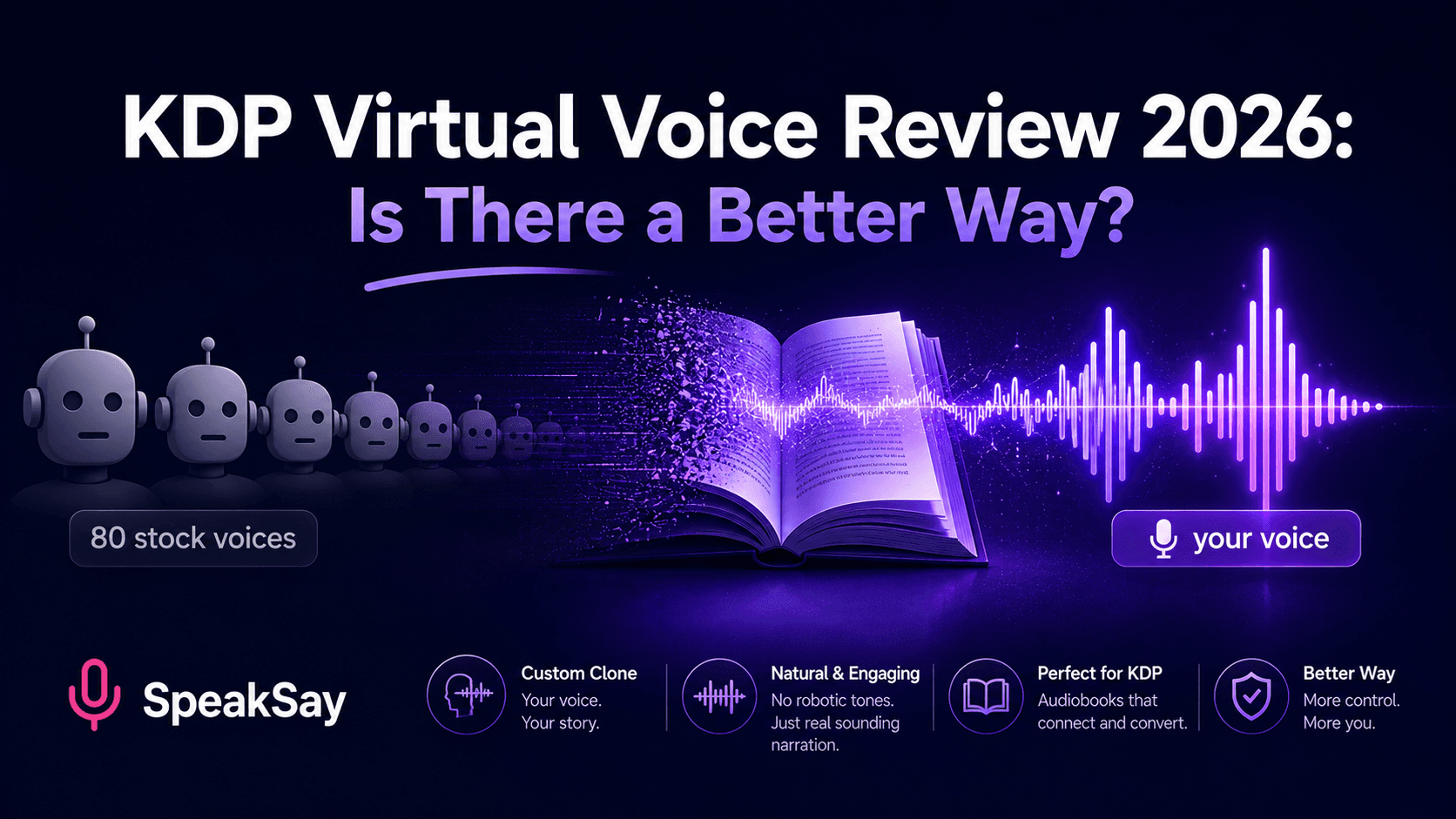
Amazon KDP Virtual Voice Review 2026: Why Authors Say It Sounds Stiff — and How to Publish a Better AI Audiobook Everywhere
KDP's Virtual Voice made AI audiobooks push-button easy — and authors are already complaining about stiff narration, pronunciation hacks and the same 80 voices on every book. Here's the honest 2026 review, the royalty math, and the workflow that gives you a distinctive audiobook you actually own.
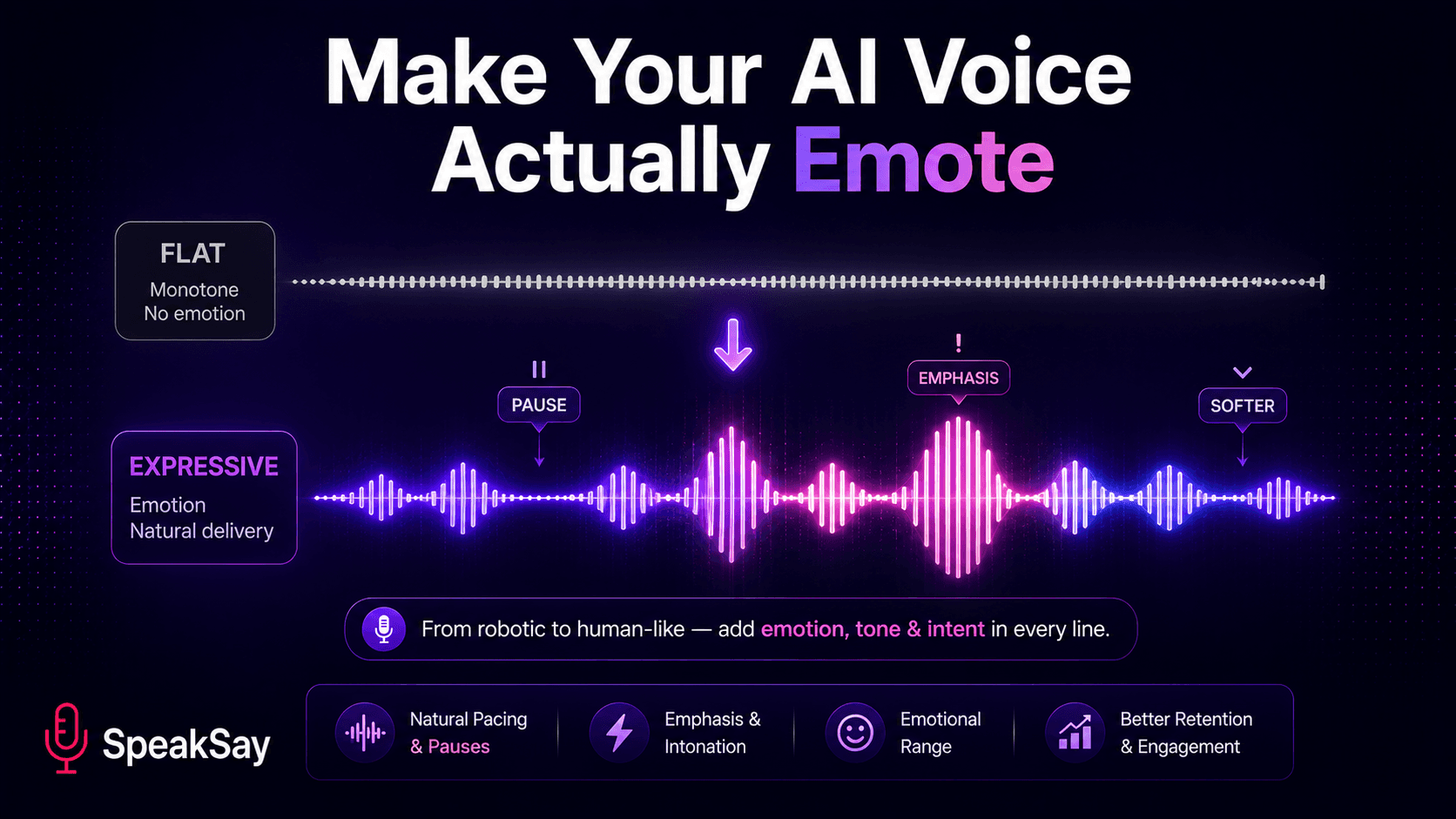
Why Your AI Voice Sounds Flat and Emotionless — How to Make It Actually Emote (2026 Guide)
Your AI narration is accurate but dead — no warmth, no emphasis, no feeling. The cause is rarely the model; it's the input. Here's how to direct an AI voice to emote, from reference clips to emphasis and pauses, so it sounds like a person who cares.
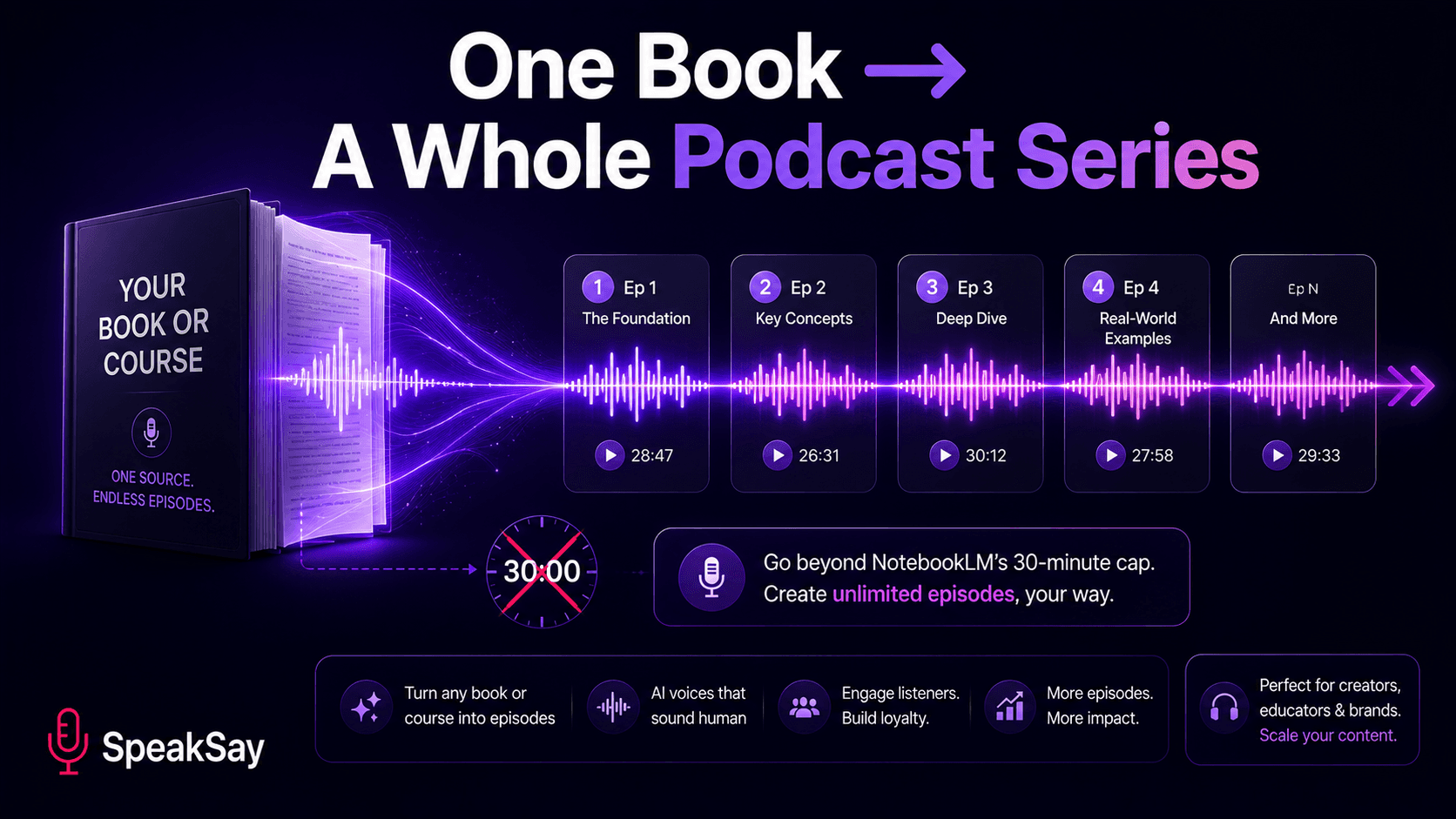
NotebookLM Caps Your Podcast at 30 Minutes? How to Turn a Whole Book or Course Into a Multi-Episode AI Podcast Series (2026)
NotebookLM's audio is great until you hit the wall: one uncontrollable episode that cuts off around 30 minutes with the same two hosts. Here's how to turn an entire book, course, or research pile into a structured, multi-episode AI podcast series you actually control.
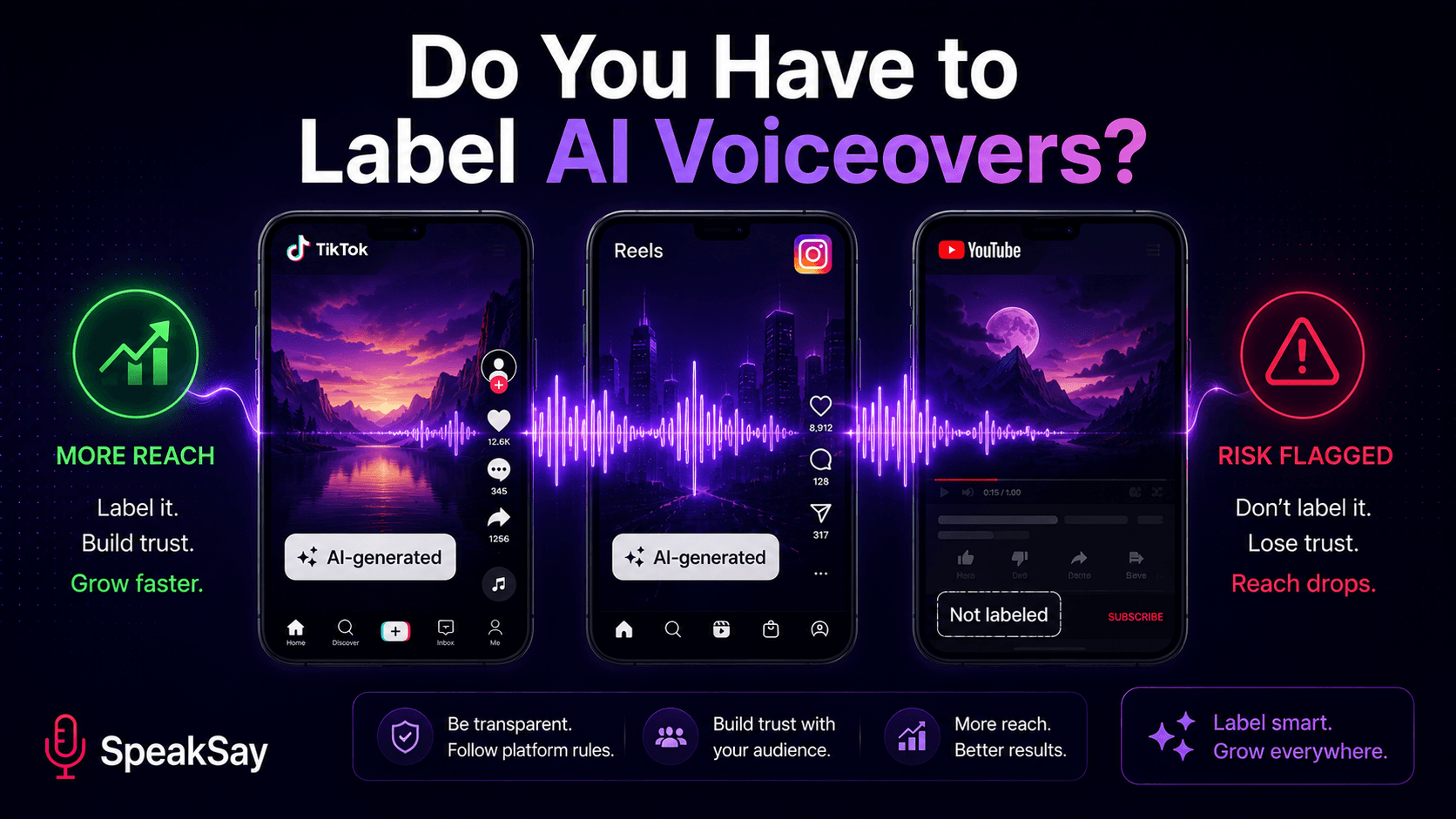
Do You Have to Label AI Voiceovers in 2026? TikTok, Instagram & YouTube Disclosure Rules (and How to Keep Your Reach)
TikTok now fingerprints synthetic voices, Instagram reads AI metadata, and YouTube wants disclosure on realistic content. Here's exactly when you must label an AI voiceover in 2026 — and why self-labeling protects your reach better than getting auto-flagged.
How to Remove Background Noise From Voiceovers & Podcasts for Free (2026)
Hiss, hum, and room noise are the fastest way to sound amateur. Here's how to clean up your voiceovers and podcasts for free in 2026 — and how to skip cleanup entirely with clean AI narration.
How to Clone Your Own Voice for YouTube Narration (and Keep It Consistent Across 100 Videos)
Re-recording narration for every video is the silent killer of faceless channels. Here's how to clone your own voice once, keep it perfectly consistent across a hundred uploads, and stay on the right side of consent and disclosure.
NotebookLM Sounds Robotic in Your Language? How to Make Natural Multilingual AI Podcasts (2026)
NotebookLM's Audio Overviews shine in English and stumble in everything else — and the length controls are English-only. Here's how to turn any source into a natural-sounding AI podcast in your language.
How to Make the Viral AI Narrator Voice Behind 2026's Weirdest Shorts (Step by Step)
The surreal AI-creature Shorts flooding your feed all share one thing: a distinctive narrator voice. Here's how to make that voice yourself and ship dozens of variations fast.
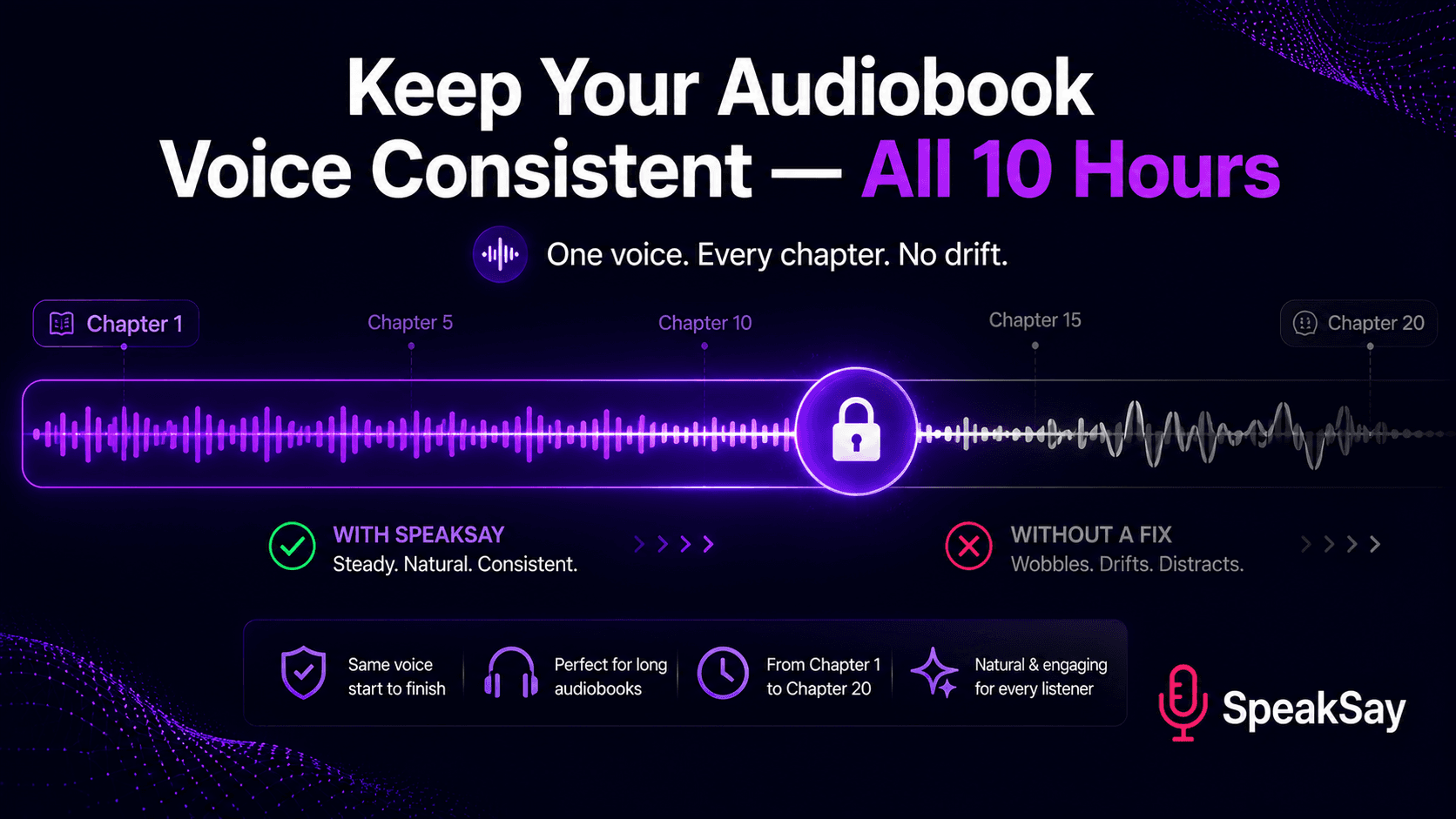
Why AI Audiobook Voices Drift Over 10+ Hours — and How to Keep Yours Consistent (2026)
A voice that sounds perfect for 500 words can drift in tone and speed across a full audiobook. Here's why AI narration drifts over long-form projects — and the workflow that keeps hour nine sounding like minute one.
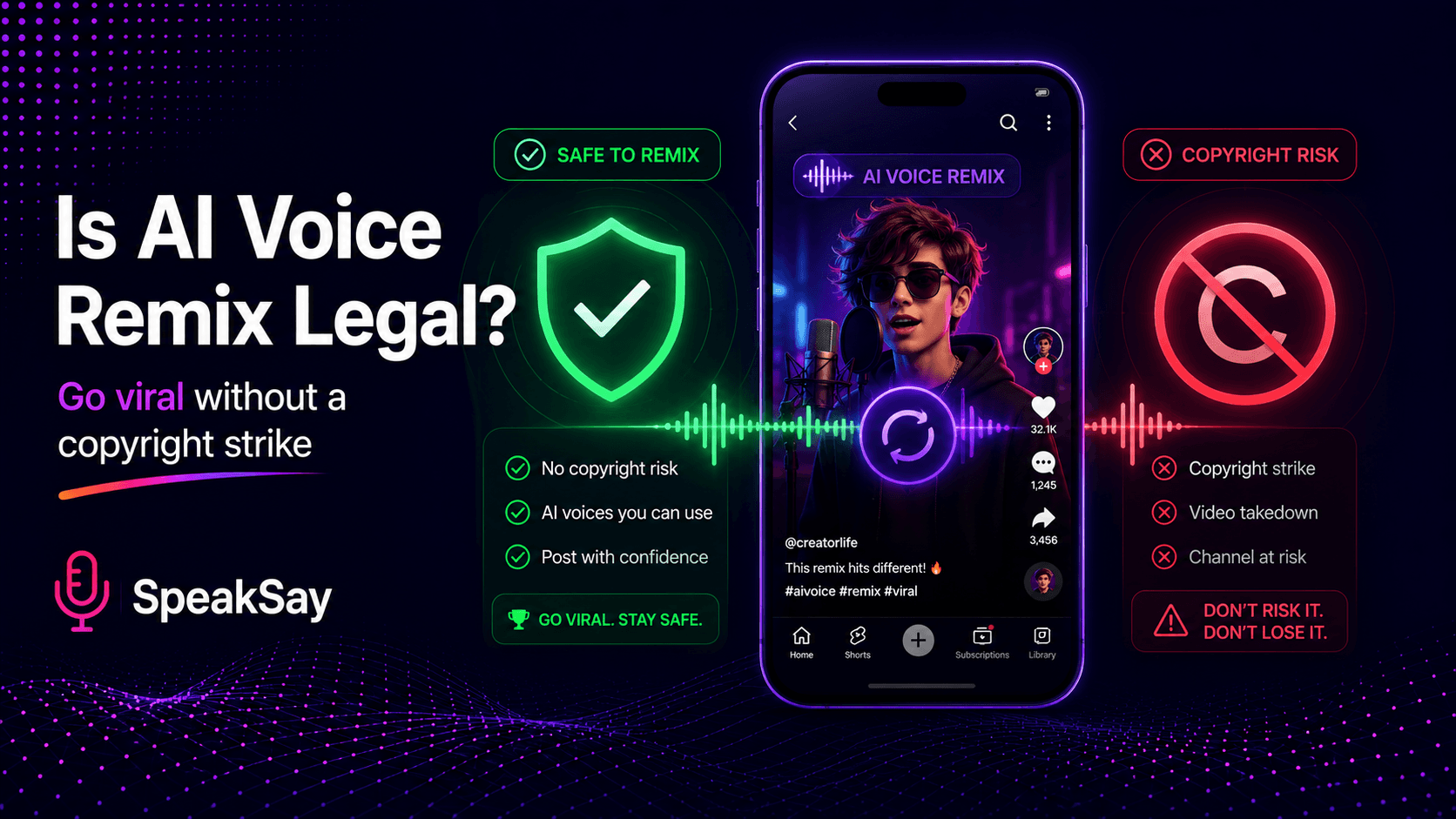
Is AI Voice Remix Legal on YouTube & TikTok? How to Make Viral Voice Edits Without a Copyright Strike (2026)
AI voice remixes are everywhere — and so are copyright strikes and takedowns. Here's what's actually risky, what's safe, and how to make viral voice edits in 2026 without endangering your channel.
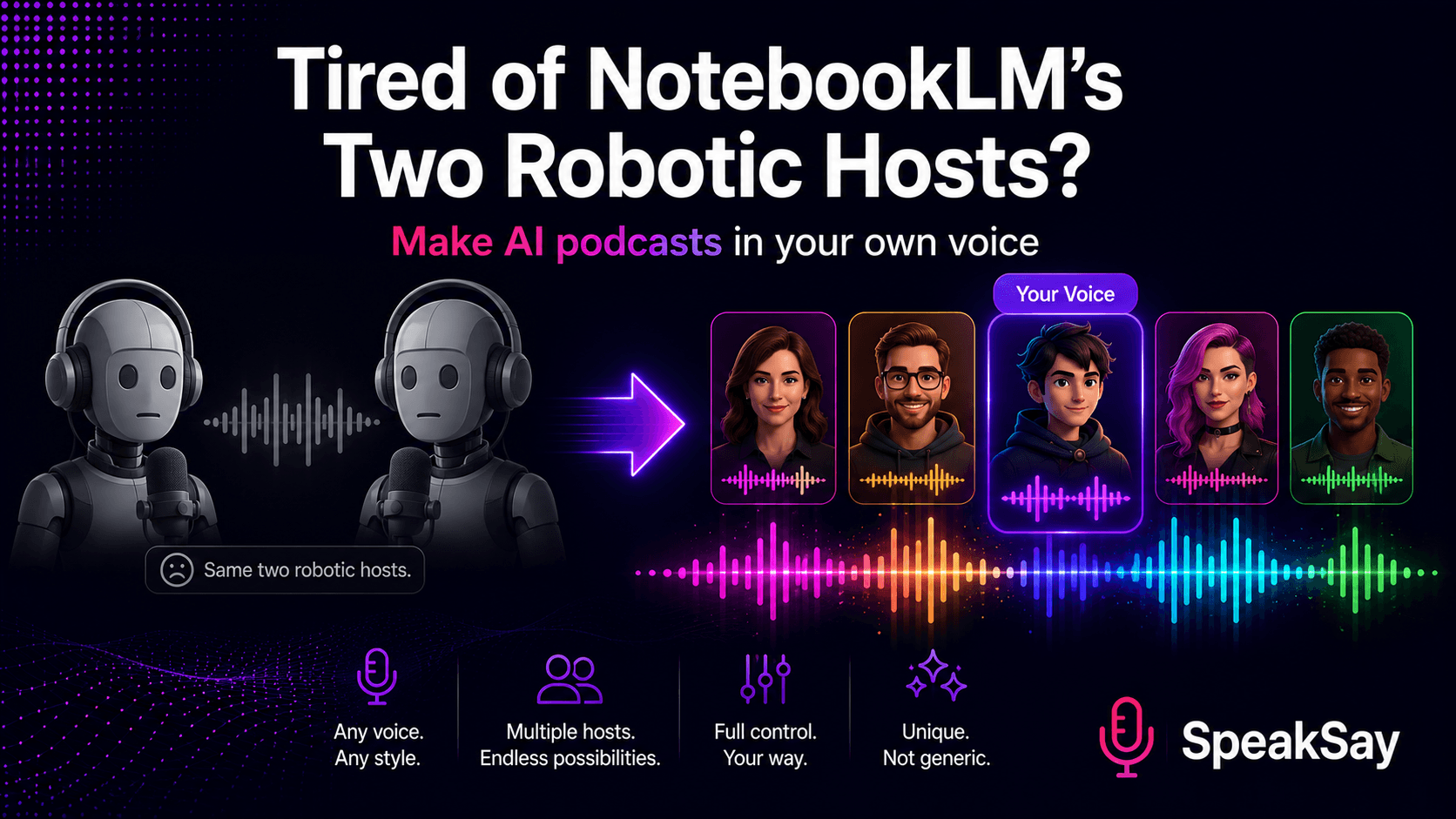
Tired of NotebookLM's Same Two Robotic Hosts? Make AI Podcasts in Your Own Voice & Style (2026)
NotebookLM Plus gives you more audio — but the same two robotic hosts and the same format. Here's how to make AI podcasts with custom voices, your own cloned voice, and full control over style.
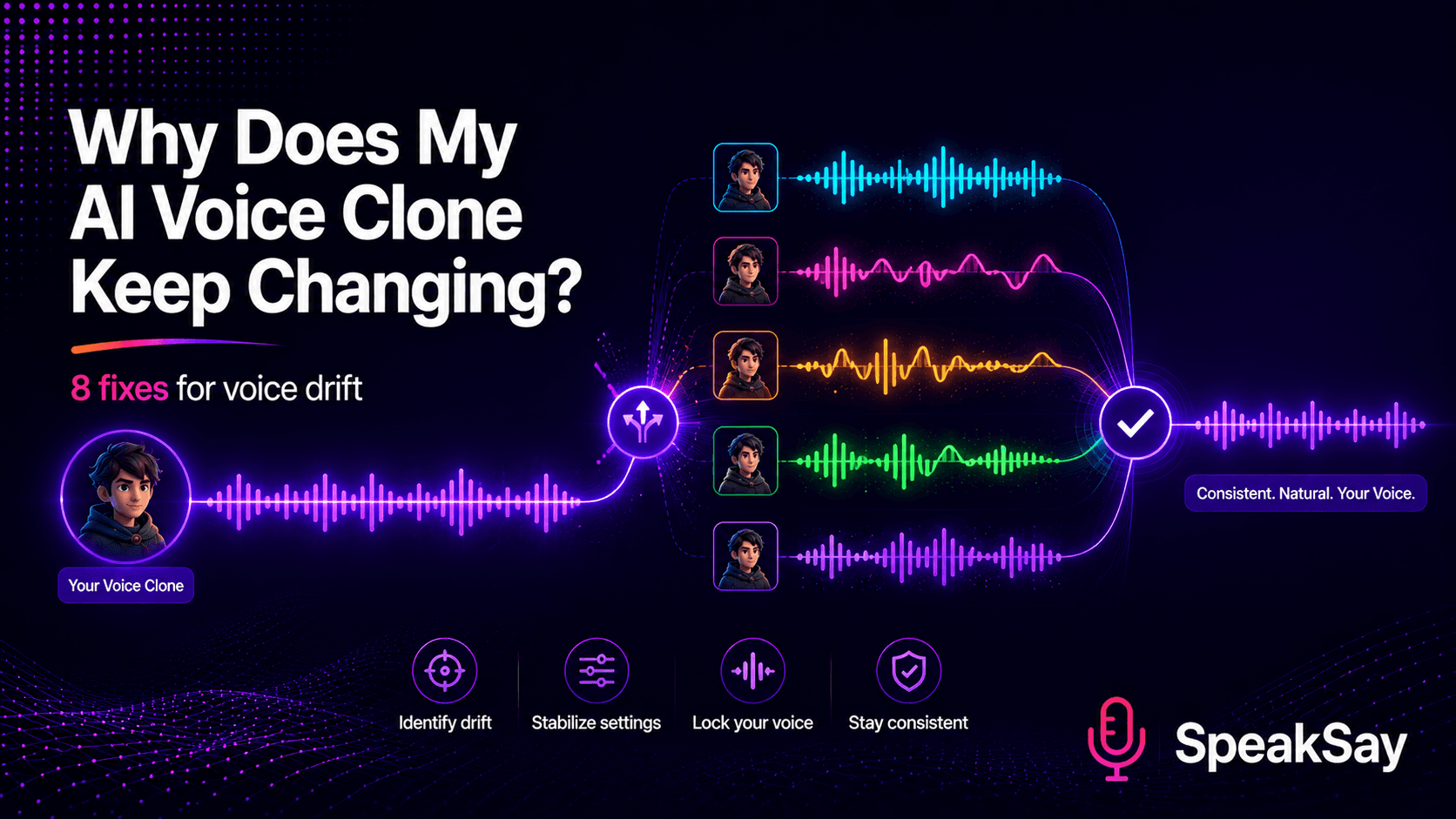
Why Does My AI Voice Clone Sound Different in Every Video? 8 Fixes for Voice Drift (2026)
Your cloned voice sounds perfect in one clip and "off" in the next. Here's why AI voice drift happens — and 8 concrete fixes to keep your narration consistent across every video.
Can You Legally Use AI Voices in Paid Ads? AI Voiceover Commercial Rights Explained (2026)
AI voiceovers are everywhere in ads — but can you legally use them in paid commercials and client work? Here's what "commercial rights" actually means, what to check before you publish, and how to stay safe.
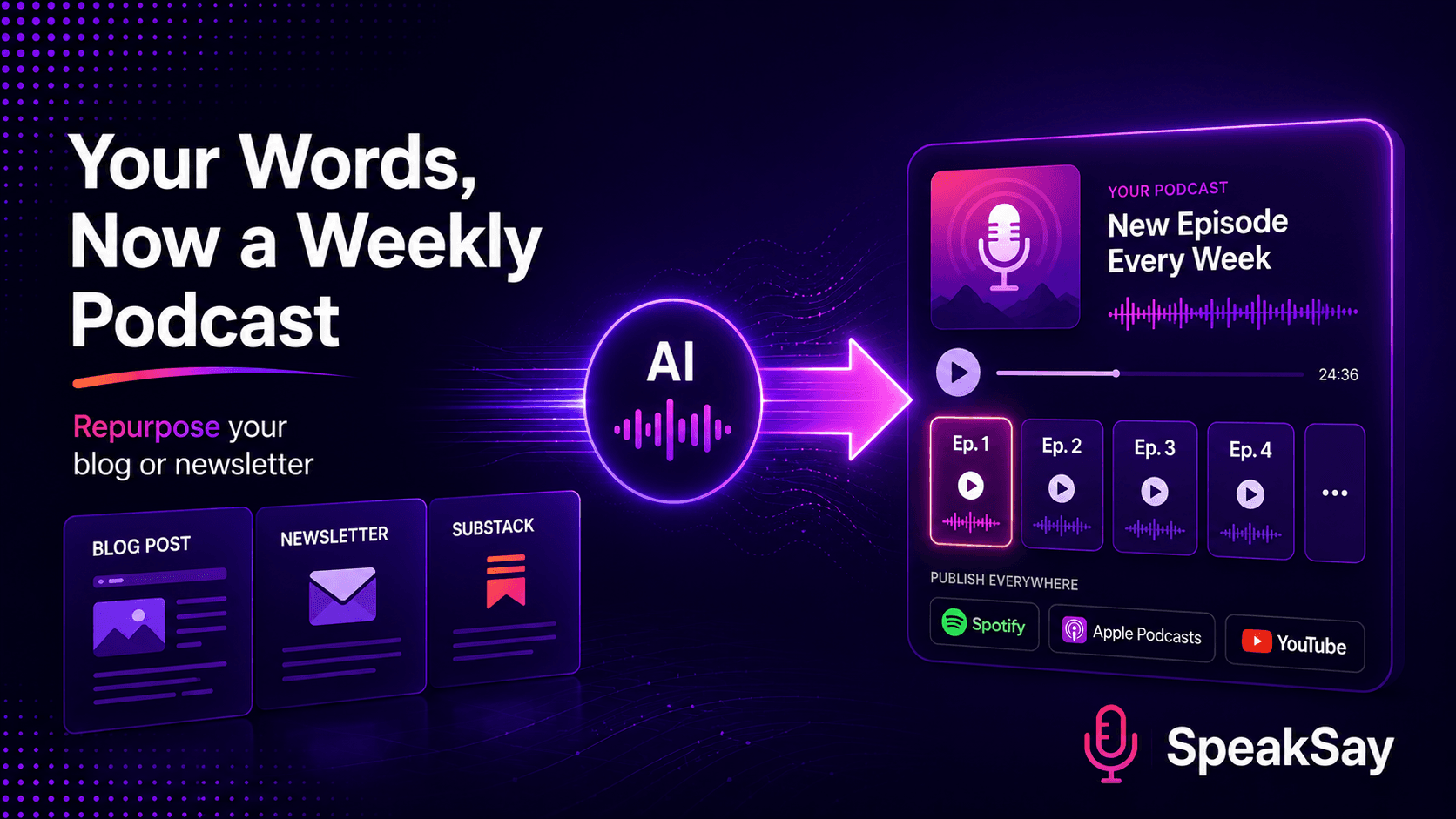
Turn Your Blog, Newsletter or Substack Into a Weekly AI Podcast (2026 Repurposing Workflow)
You've already written months of content. Here's the 2026 workflow to turn your blog, newsletter, or Substack into a consistent, branded podcast — without recording, on a weekly schedule.
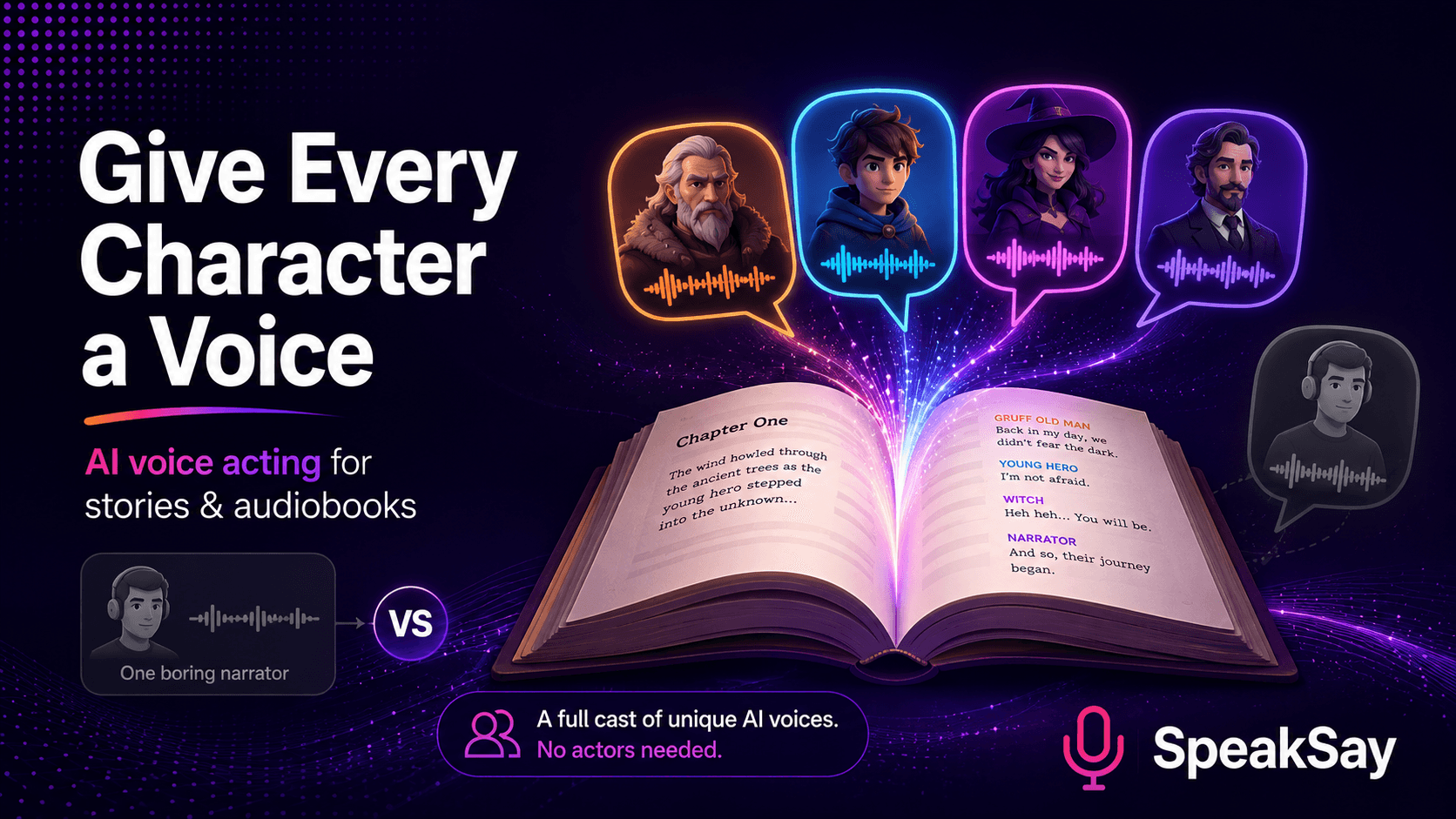
How to Create Multiple AI Character Voices for Story Videos & Audiobooks (No Voice Actors Needed, 2026)
A single monotone narrator kills immersion. Here's how to give every character in your story videos or audiobook its own distinct AI voice — a full cast, no actors, consistent across a whole series.
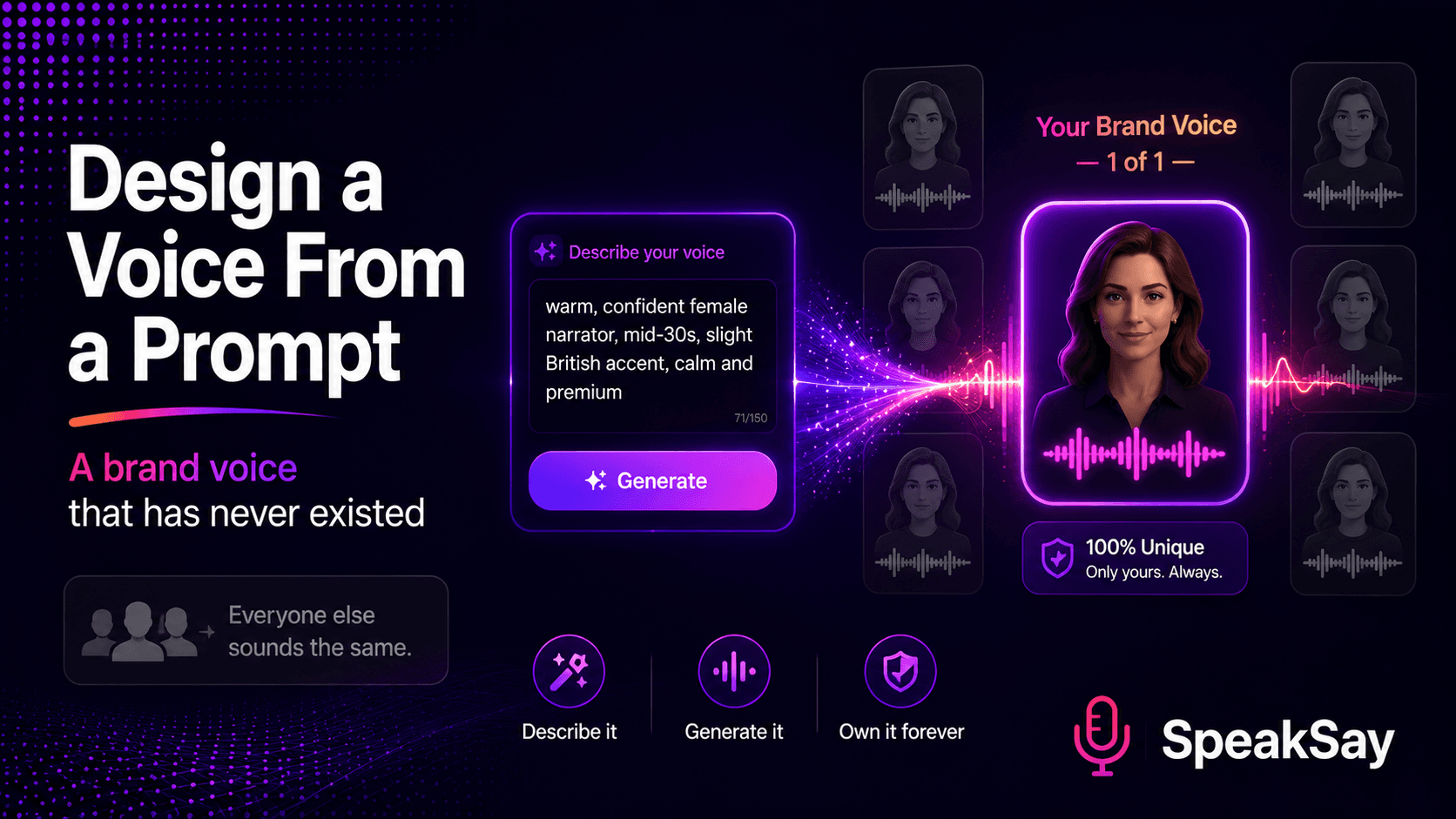
How to Create a Custom AI Voice for Your Brand From a Text Prompt (Voice Design Studio, 2026)
: Stock AI voices make every channel sound the same, and cloning needs a real person to record. Voice Design Studio lets you describe a voice in a prompt and generate an original, brand-owned voice in seconds.
Best ElevenLabs Alternatives in 2026 (Ranked by Price, Voice Quality & Commercial Rights)
ElevenLabs raised prices roughly 239% year over year. Here are the best alternatives in 2026, ranked honestly by price-per-hour, voice quality, voice cloning, and commercial rights — so you can switch without guessing.
Best ElevenLabs Alternative for Voice Cloning in 2026 (Free vs Paid, Tested)
ElevenLabs locks voice cloning behind its paid Creator plan and restricts commercial use on lower tiers. We tested the best free and paid voice cloning alternatives in 2026 — open-source models, hosted tools, and the no-GPU middle ground — so you can clone your voice without overpaying or fighting setup.
Play.ht Shut Down — 7 Best Alternatives & How to Migrate Your Voices (2026)
Meta acquired Play.ht and shut it down for good on December 31, 2025 — taking accounts, files, and API access with it. Here are the 7 best Play.ht alternatives in 2026 and a step-by-step plan to migrate your voices and projects without losing work.Play.ht Shut Down: 7 Best Alternatives & Migration Guide (2026)
Give your words a voice
Start free with 10,000 credits. No credit card required.