Technology
Latest trends and updates in technology
Hear Your Thesis Before Your Committee Does: Listen-Back Proofreading and Defense Prep With Text to Speech (2026)
Your eyes skip the errors your ears catch. Here is a chapter-by-chapter listen-back routine for theses and dissertations, plus how to use it to rehearse your defense.
Your Own Edition of a Public-Domain Classic: How to Make an Annotated Audiobook With AI Narration (2026)
A public-domain text is free to use, but a free audiobook edition is not free of decisions. Learn how to check status, add original value with notes and intros, and publish an edition that is yours
Your Lesson, Between Lessons: How Private Tutors Can Send Practice Recaps in Their Own Cloned Voice (2026)
Students forget most of a lesson by midweek. A two-minute recap in the tutor's own voice keeps practice on track without extra teaching hours. Workflow, consent and privacy rules included.
Study Your Driver Handbook by Ear: Turn Your Own Permit or CDL Notes Into Drive-Time Audio (2026)
A driver manual is long, dry and written for the eyes. Here is how to turn your own condensed notes into question-and-answer audio you can review on a commute, and what to check before you share it.
Give Your DIY Smart Home Its Own Voice: Original Announcement Voices for Home Automation Projects With Voice Remix (2026)
Home automations announce doorbells, laundry and timers in a default voice. Here is how makers can design an original voice, generate a reusable library of short clips, and avoid soundalike pitfalls.
Class Notes Nobody Reads: How Alumni Offices Can Turn Updates Into a Short Audio Digest With an AI Podcast (2026)
Class notes are some of the most-wanted and least-read content an alumni office produces. Here is how to turn them into a five-minute audio digest, with consent and fact-checking built in.
Add a "Listen to This Post" Player to Your Blog: Turn Written Posts Into Audio With Text to Speech (2026)
Your blog posts already exist. Here is how to add an audio version to each one with text to speech: prepare the text, pick one voice, level the loudness, host the MP3 and keep a transcript on the page.
Picture Book, Now With Page-Turn Cues: How Children's Authors Can Make a Read-Along Audio Edition With AI Narration (2026)
A picture book is built on pictures and page turns, so a flat audio read does not work. Here is how to script an audio edition spread by spread, with pauses, a page-turn cue and the right voice.
The Weekly Team Email Parents Skip: How a Youth Sports Coach or League Can Send a 3-Minute Audio Recap With an AI Podcast (2026)
Schedules, snack rotas and field changes get buried in group chats. A three-minute weekly audio recap, made from notes you already have, gets the message through without adding hours to a coach's week.
Your ARC Readers Don't Have Time to Read: How Indie Authors Can Give Reviewers and Launch Teams an Audio Advance Copy With AI Narration (2026)
Advance readers say yes and then run out of time. An audio ARC, even of just the first chapters, fits commutes and chores and can raise the number of early reviews. Here is how to make one safely and fairly.
The Holiday Letter Nobody Finishes: How to Turn Your Family Newsletter Into a 5-Minute Audio Episode With an AI Podcast (2026)
The annual family letter is long, skimmed and printed on a single page, and the relatives who most want to hear from you are the ones far away. This guide shows how to cut it to a five-minute script, turn it into a short audio episode, and share it privately.
Nobody Reads the HOA Newsletter: How a Community Association Can Turn Board Decisions Into a 4-Minute Monthly Audio Digest With an AI Podcast (2026)
Residents skip the monthly HOA newsletter and then say nobody told them. A 4-minute audio digest, built from the same board notes, reaches the people who never open the PDF. Here is the format, the script and the limits.
It's Your Life Story: Should an AI Voice Narrate Your Memoir Audiobook, or Should You? A Decision Guide for First-Person Authors (2026)
A memoir is the one genre where the narrator is supposed to be the author. Here is how to choose between your own recording, a stock AI voice and a clone of your own voice, with a short test you can run before you commit
The Newsletter Families Skim: How a Principal or PTA Can Send a 90-Second Weekly Audio Announcement in Every Home Language With Text to Speech (2026)
A weekly school newsletter is long, written in one language and read on a phone in a corridor. Here is a repeatable way to turn it into a 90-second audio announcement, with a human check on every translation.
Giving Tuesday Is December 1: How a Small Nonprofit Can Turn Its Impact Report Into a 5-Minute Audio Update Donors Actually Finish (AI Podcast, 2026)
Impact reports are long, and most donors skim them. This guide shows small nonprofits how to turn a one-page impact summary into a short audio update before Giving Tuesday on December 1, 2026, with a script structure, consent rules for stories and a send plan.
Nobody Reads the Changelog: How Software Teams Can Turn Release Notes Into a 90-Second Audio Update With Text to Speech (2026)
Release notes get written, posted and ignored. This guide shows product and support teams how to turn each release into a short audio update with text to speech, including a script template, how to say version numbers and code terms, and a way to keep a library of updates current.
Record the Thanksgiving Table, Keep the Stories: Turn Family Recipes and Memories Into a Short Audio Episode Everyone Can Replay (AI Podcast Method, 2026)
Every family has a recipe nobody wrote down and a story only one person tells properly. This guide shows how to record both at the table, get consent, turn the notes into a short audio episode with an AI podcast tool, and share it with relatives who couldn't be there.
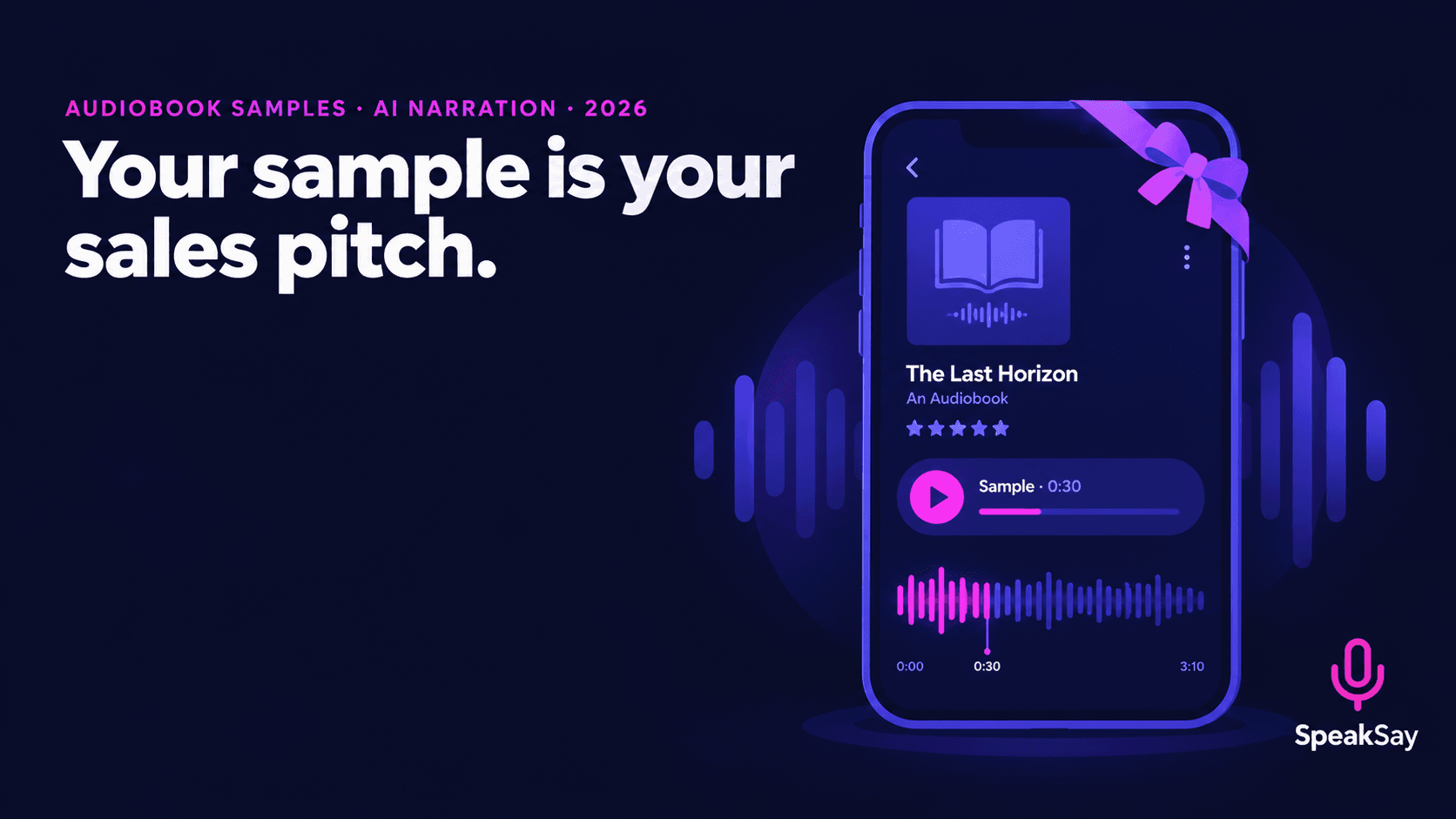
The Five Minutes That Sell Your Audiobook: How to Choose and Polish the Retail Sample Before Holiday Gift Buyers Press Play (AI Narration, 2026)
Most listeners decide on an audiobook in the first few minutes of the sample. This guide shows indie authors how to pick the right passage, fix the problems a sample exposes, and prepare it for gift shoppers before the holiday buying season.
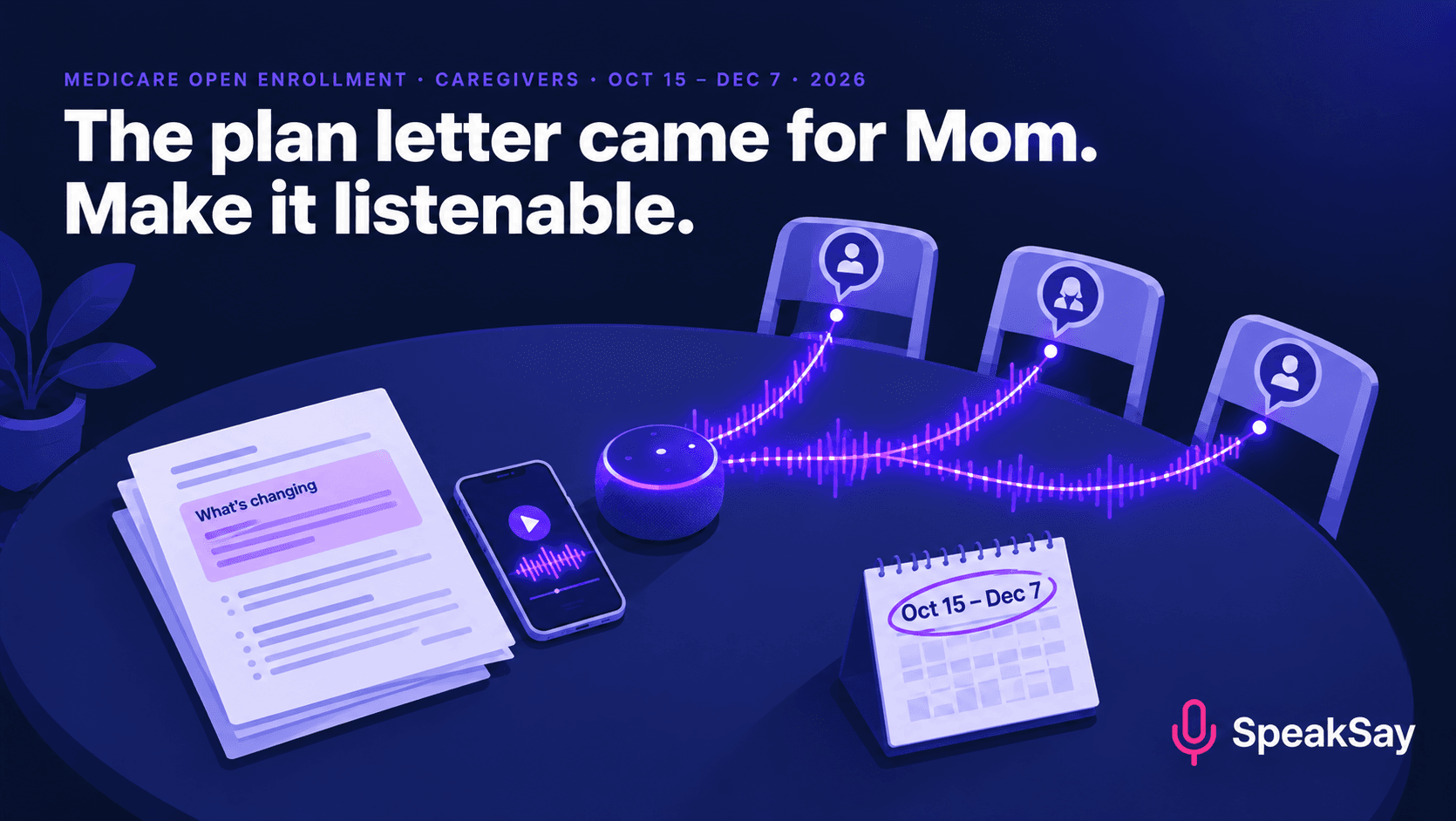
The Annual Notice of Change Arrived for Mom: Turn the Plan Letter Into a Short Audio Summary the Whole Family Can Hear (Medicare Open Enrollment 2026)
Medicare plan letters arrive by September 30, open enrollment runs October 15 to December 7, and in many families the adult child ends up reading the fine print. Here is how to turn the Annual Notice of Change into a three-minute audio summary a parent and the whole family can hear, without storing identifiers or recommending a plan
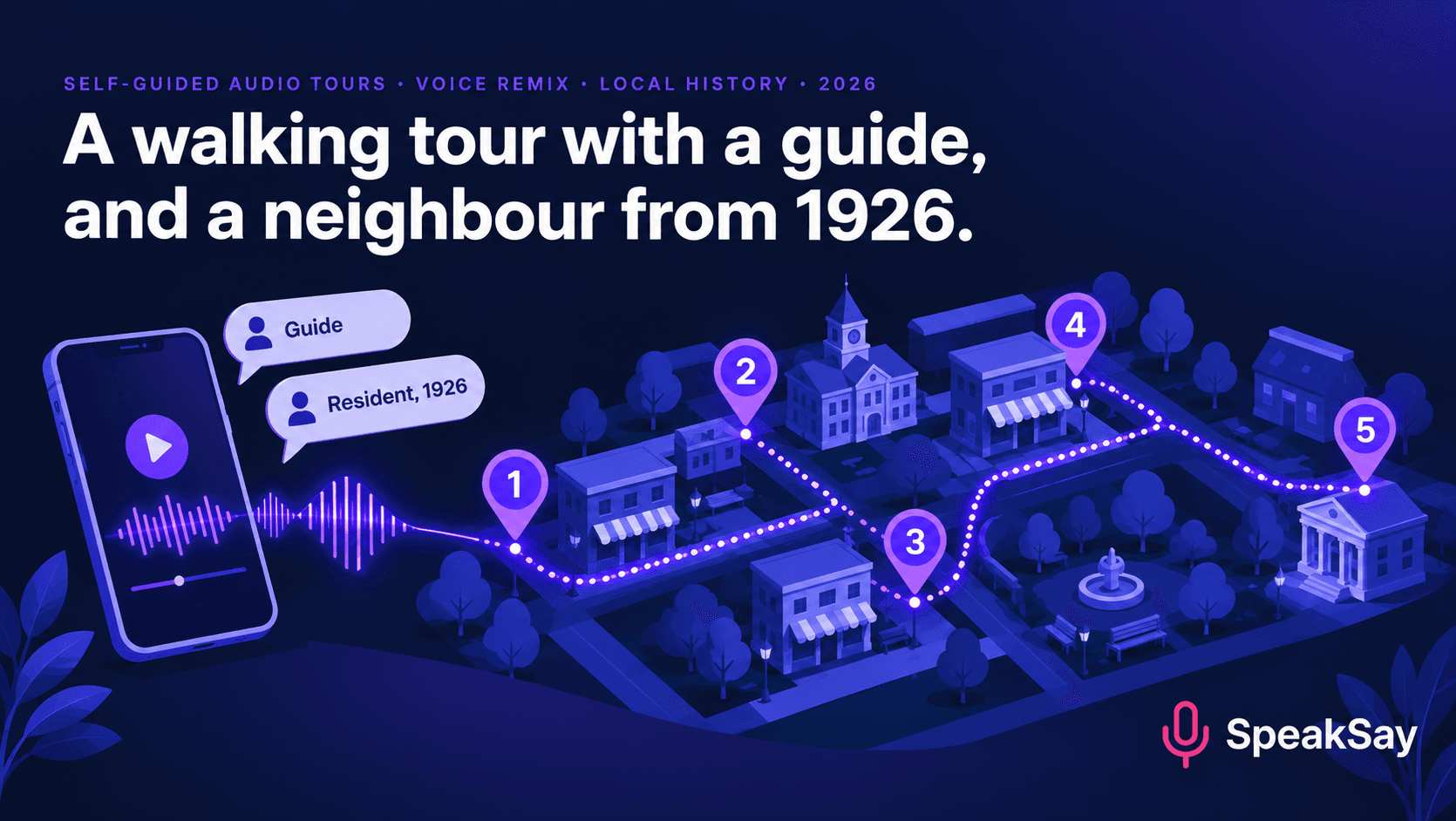
Build a Self-Guided Audio Walking Tour With Two Voices, a Guide and a Resident From the Past: A Voice Remix Plan for Historical Societies, Main Streets and Local Businesses (2026)
A printed brochure can't tell a story, and a live guide can't be there every Saturday. A self-guided audio tour with two voices, a present-day guide and a resident speaking from the past, can. Here is how to plan stops, write short scripts, record with Voice Remix, and get people to listen on location.
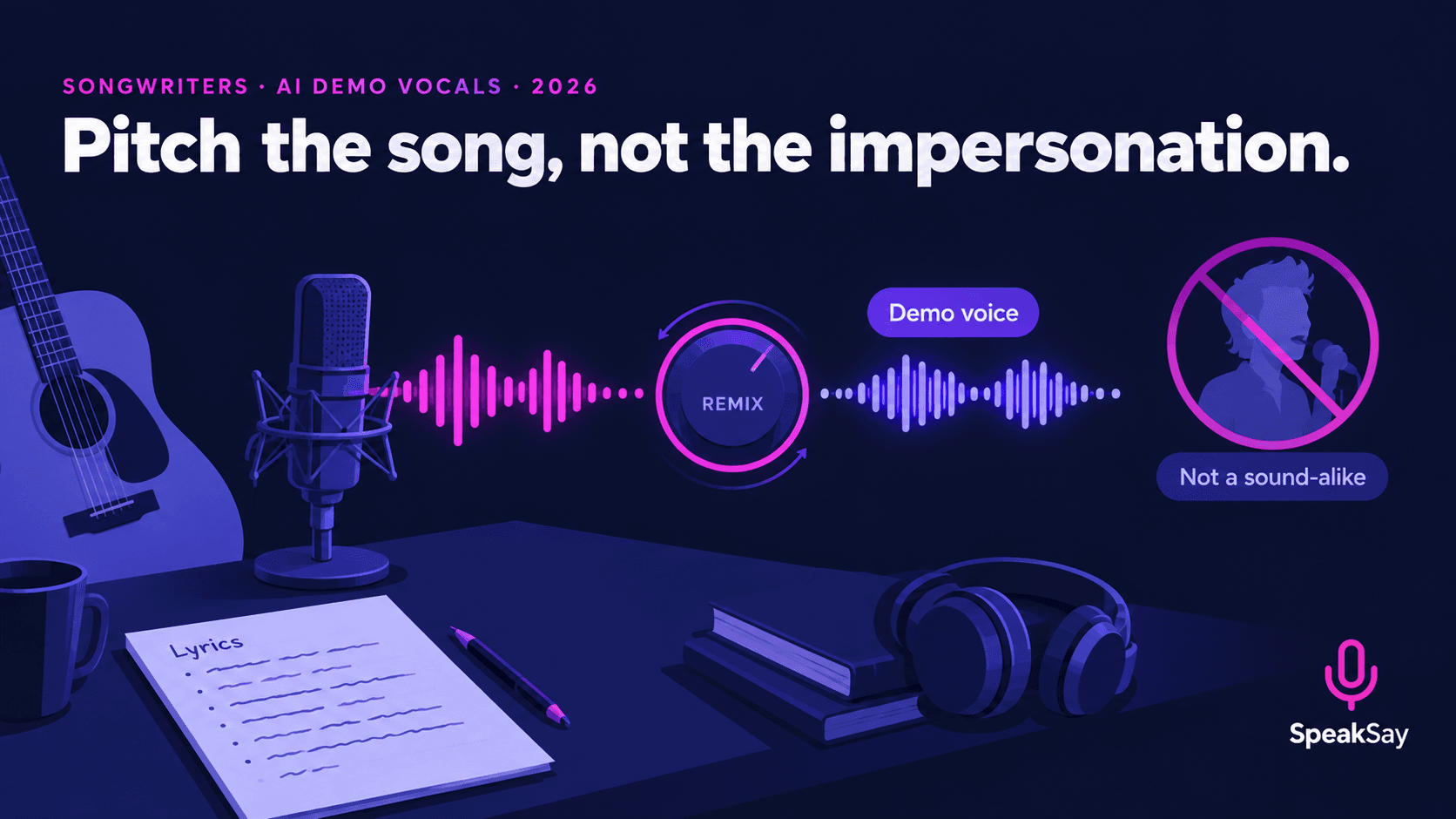
Songwriters Are Pitching With AI Sound-Alikes of the Artist. Here's a Demo That Gets the Song Heard Without Borrowing Anyone's Voice (2026)
Some songwriters now put an AI copy of the target artist's voice on their pitch demos. It's quick and cheap, but it's legally exposed under laws like Tennessee's ELVIS Act and it pitches the wrong thing. Here's how to make a demo in the right register and gender with your own sung guide vocal and Voice Remix, and when a human demo singer is still the better call.
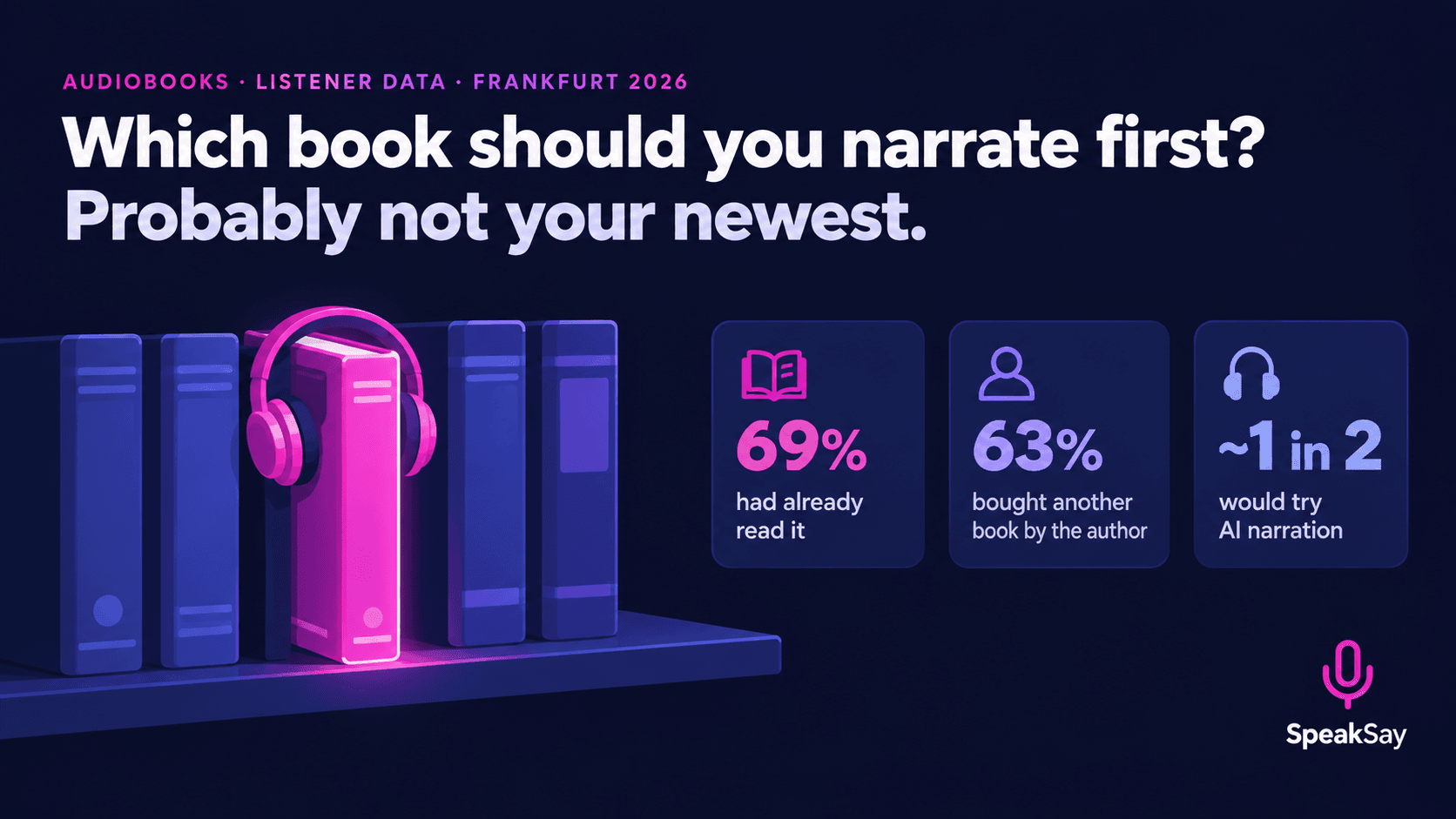
69% of Audiobook Listeners Had Already Read the Book: What Audible's 18,000-Listener Survey Says About Which Title to Narrate First (2026)
Most authors narrate their newest book first. A new Audible-commissioned survey of 18,000 consumers suggests that's backwards: most listeners had already read the book, audio sends them on to an author's other titles, and openness to AI narration is higher for fiction. Here's a scoring method for picking the title that earns its audio edition.
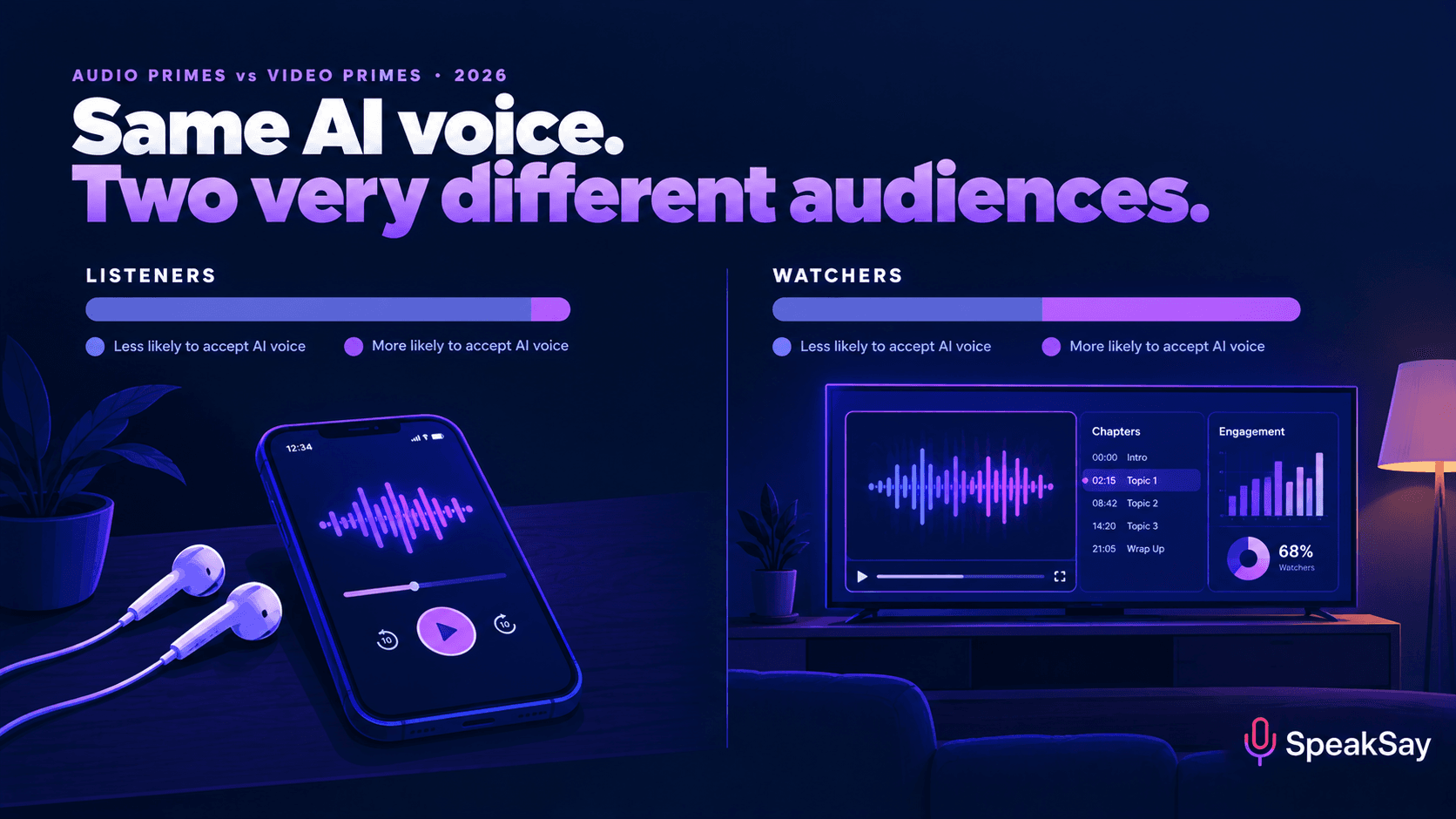
AI Voices Cost You Listeners Everywhere, but Three Times Less on Video: What Audio Primes vs Video Primes Means for an AI-Voiced Podcast (2026)
New audience research splits podcast fans into people who mostly listen and people who mostly watch. Both groups lean against AI voices, but listeners lean against them more than three times as hard. If you make an AI-voiced show, that changes where you publish first, what the screen has to do, and how you disclose.
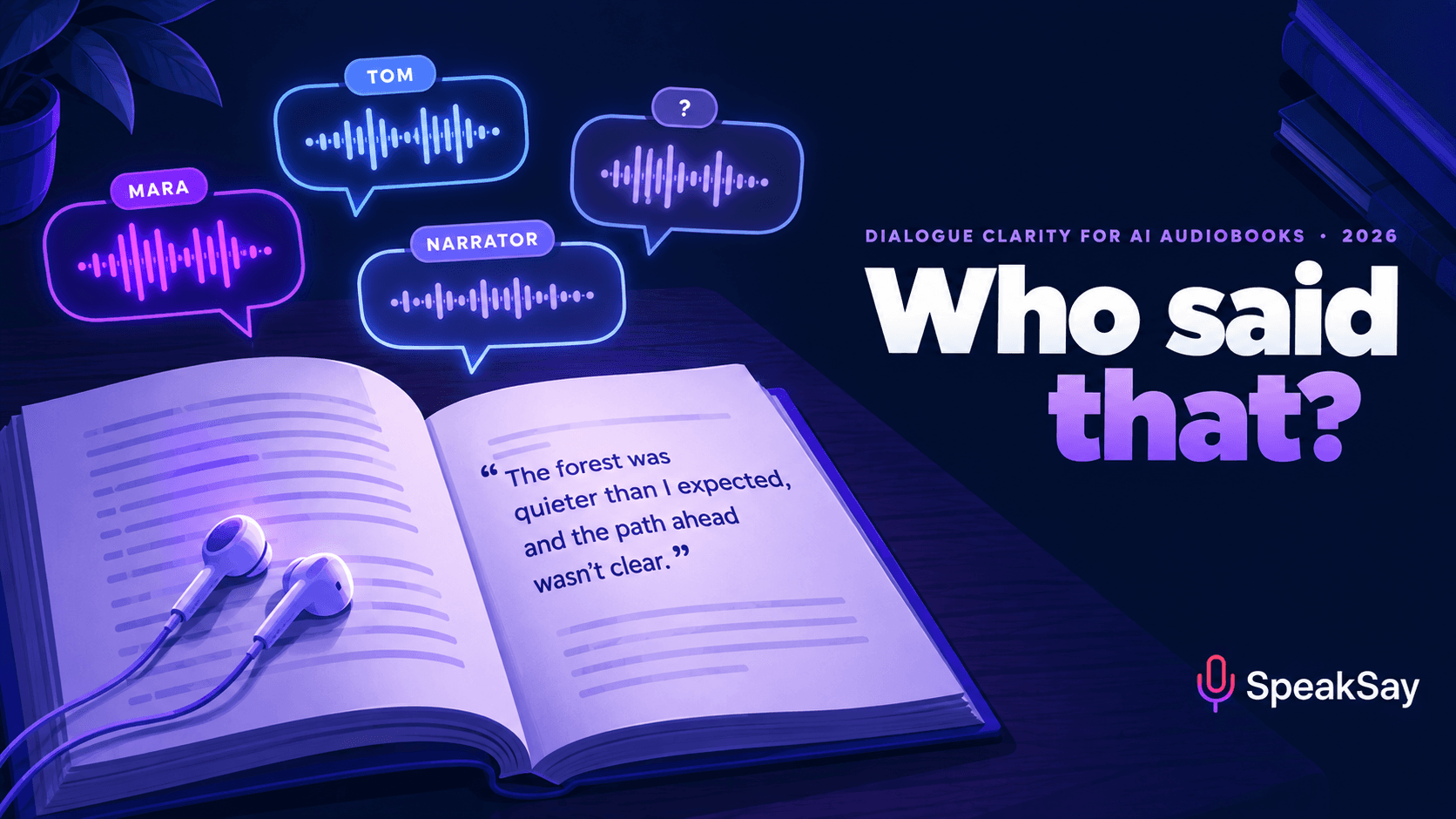
Audible Just Built a Screen to Show Who's Talking. Your AI-Narrated Audiobook Has to Do It With Sound Alone (2026)
Audible's new Character Guide shows listeners who is speaking in real time, because following a cast by ear is hard. Your indie audiobook won't get that screen. Here is the "ear edit" that makes dialogue followable by sound alone: tagging rules, how to voice thoughts, scene-break pauses, character contrast, and a ten-minute test.
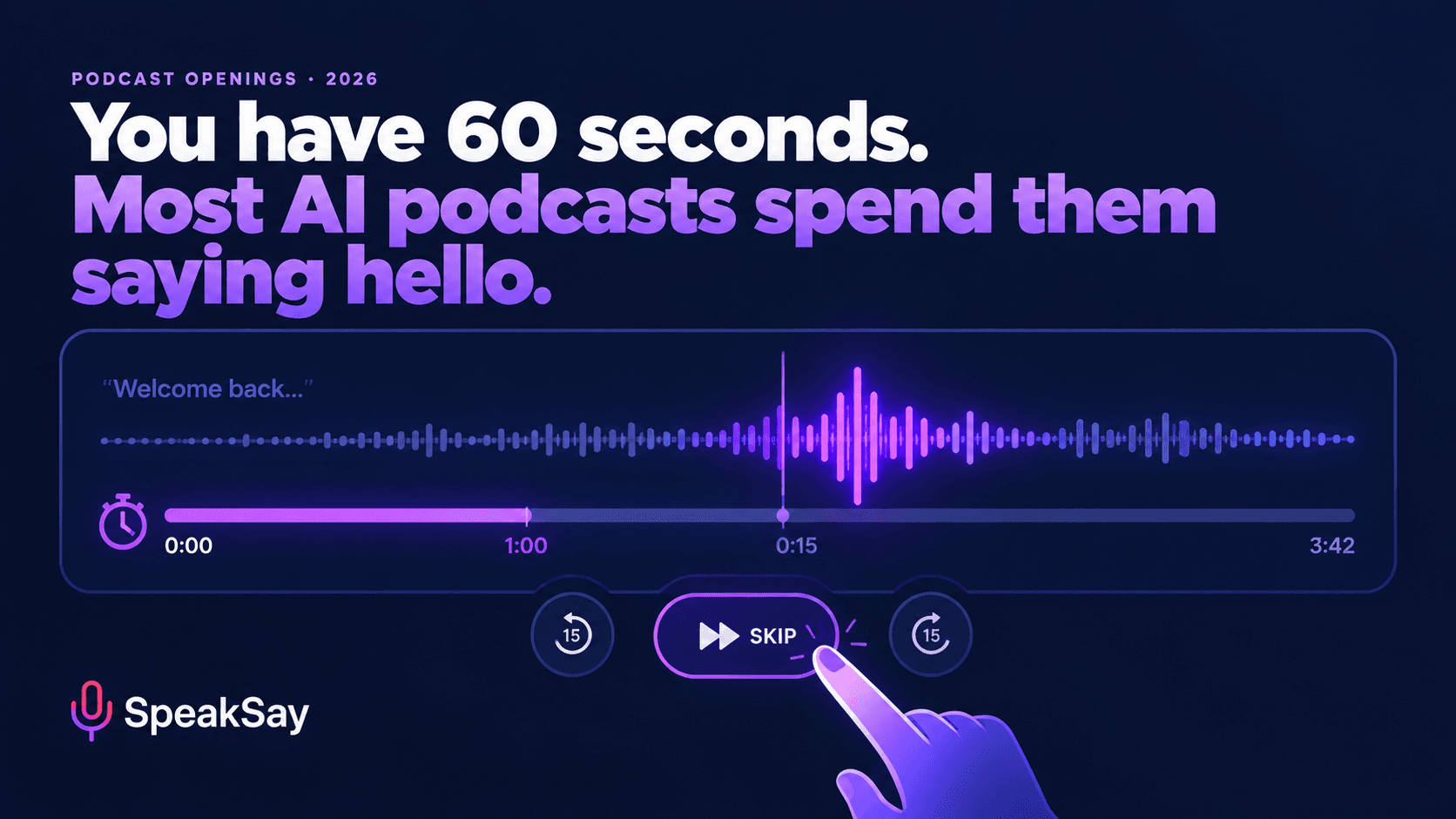
18% of Podcast Superfans Quit a New Show in the First Minute: Rebuild the Opening of Your AI-Produced Episodes (2026)
The Podcast Study 2026 found that even superfans, the most patient listeners there are, give up on a new podcast within 60 seconds 18% of the time, and 21% would definitely leave a favourite show if its host left. AI-produced episodes are especially prone to slow, generic openings. Here's a 60-second audit, four openings that work and a fix you can apply to your next episode.
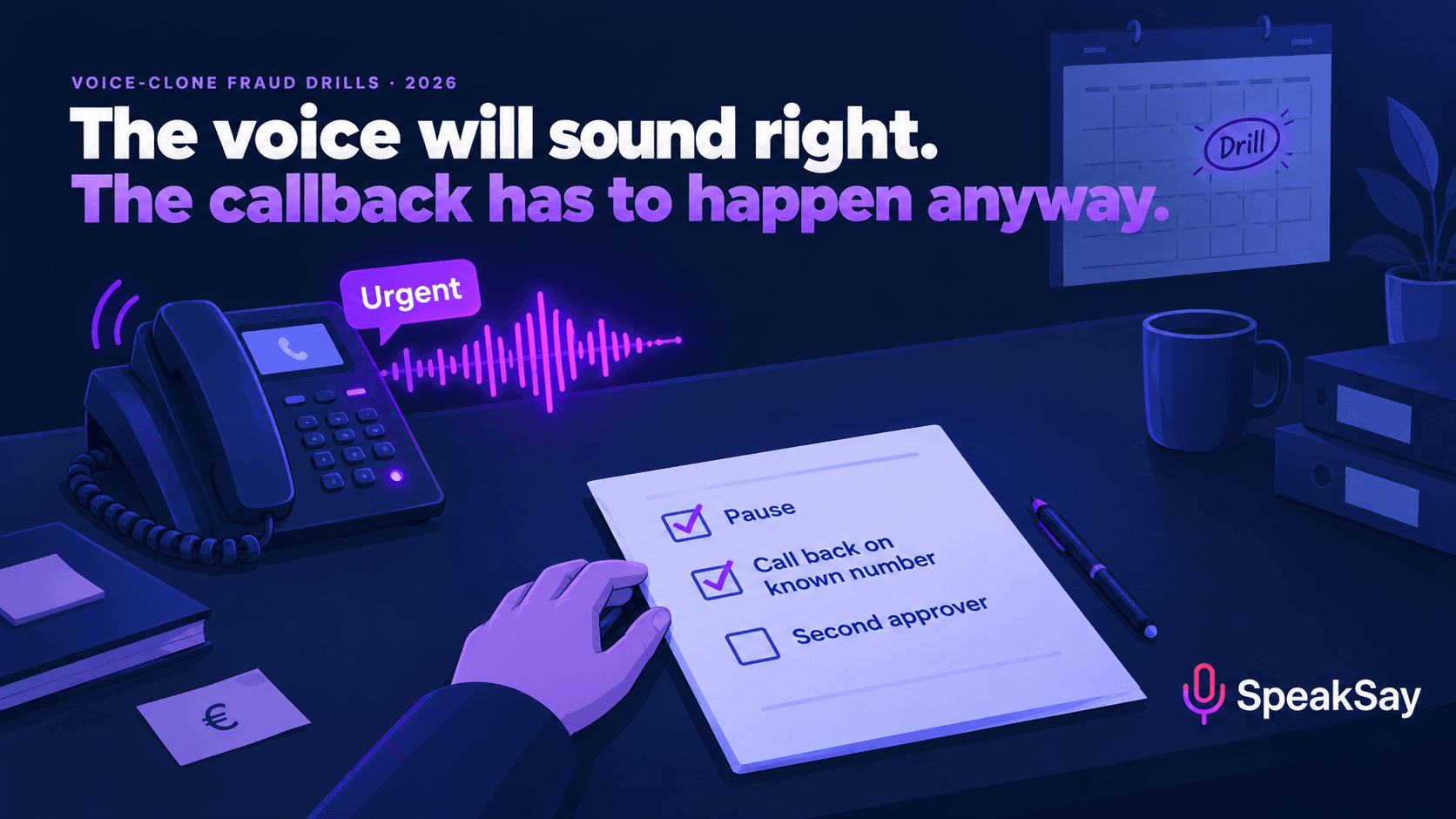
Spotify Counts Your Audiobook at 1x Speed: How Runtime and Narration Pace Spend a Listener's 12- or 15-Hour Allowance (2026)
On October 7, 2026 Spotify said audiobooks are going from 22 markets to more than 180, with 12 hours a month included in Premium in markets like Mexico, Brazil, Spain and Italy. Listening time is reportedly counted at 1x even when people listen faster, so your book's runtime, not its word count, is what uses up a listener's month. Here's the words-per-hour maths, the pace trade-offs and how to plan a book that fits.
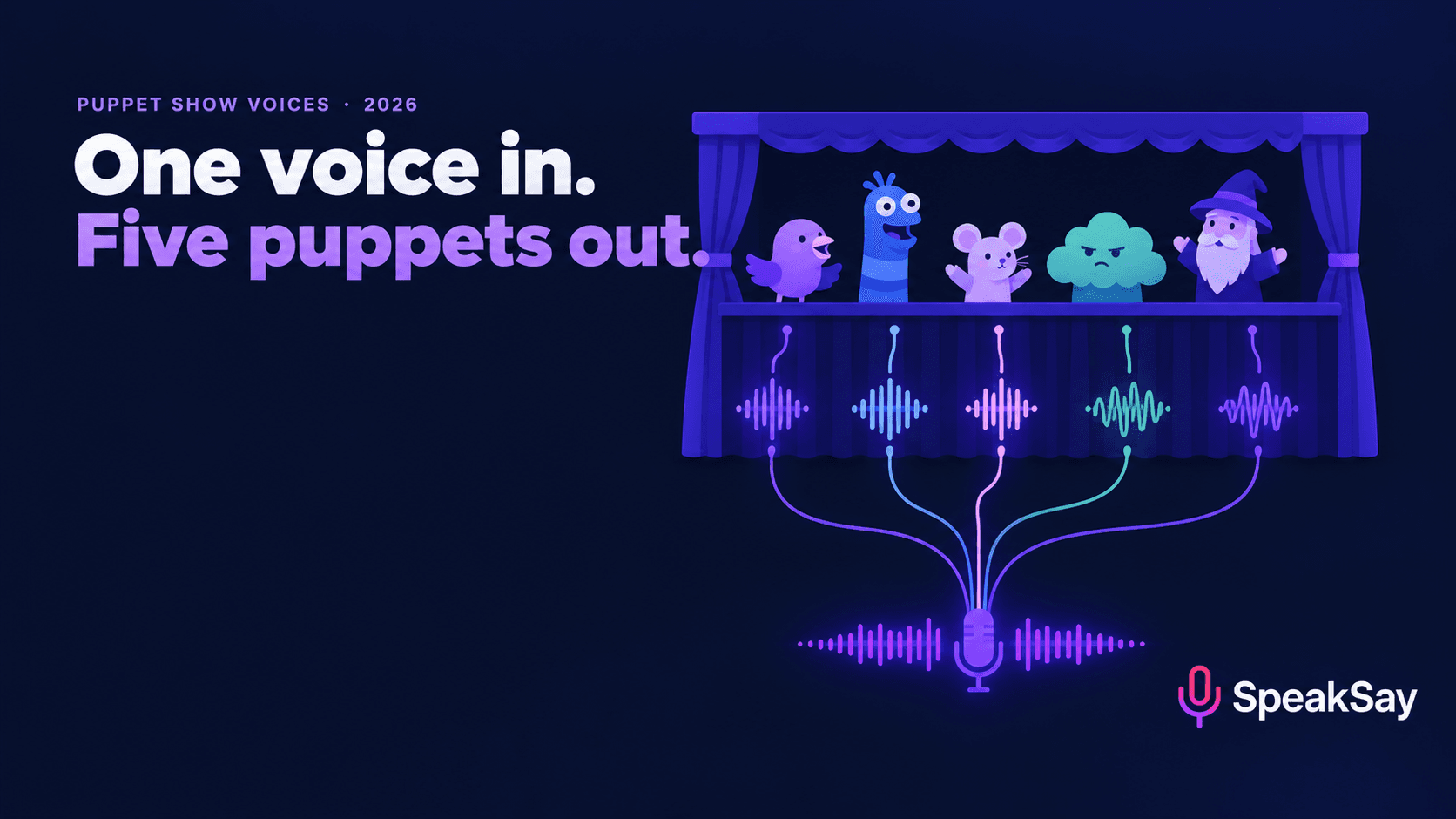
One Puppeteer, Five Puppet Voices: Pre-Record Your Puppet Show Tracks With Voice Remix (2026)
Many puppet teams already perform to pre-recorded tracks, so puppeteers can focus on movement instead of microphones and lines. The hard part is the recording: two good voices, five characters, and everyone sounding like everyone. Here's how to record every part yourself, remix each character into a distinct voice, and build a track your puppeteers can sync to.
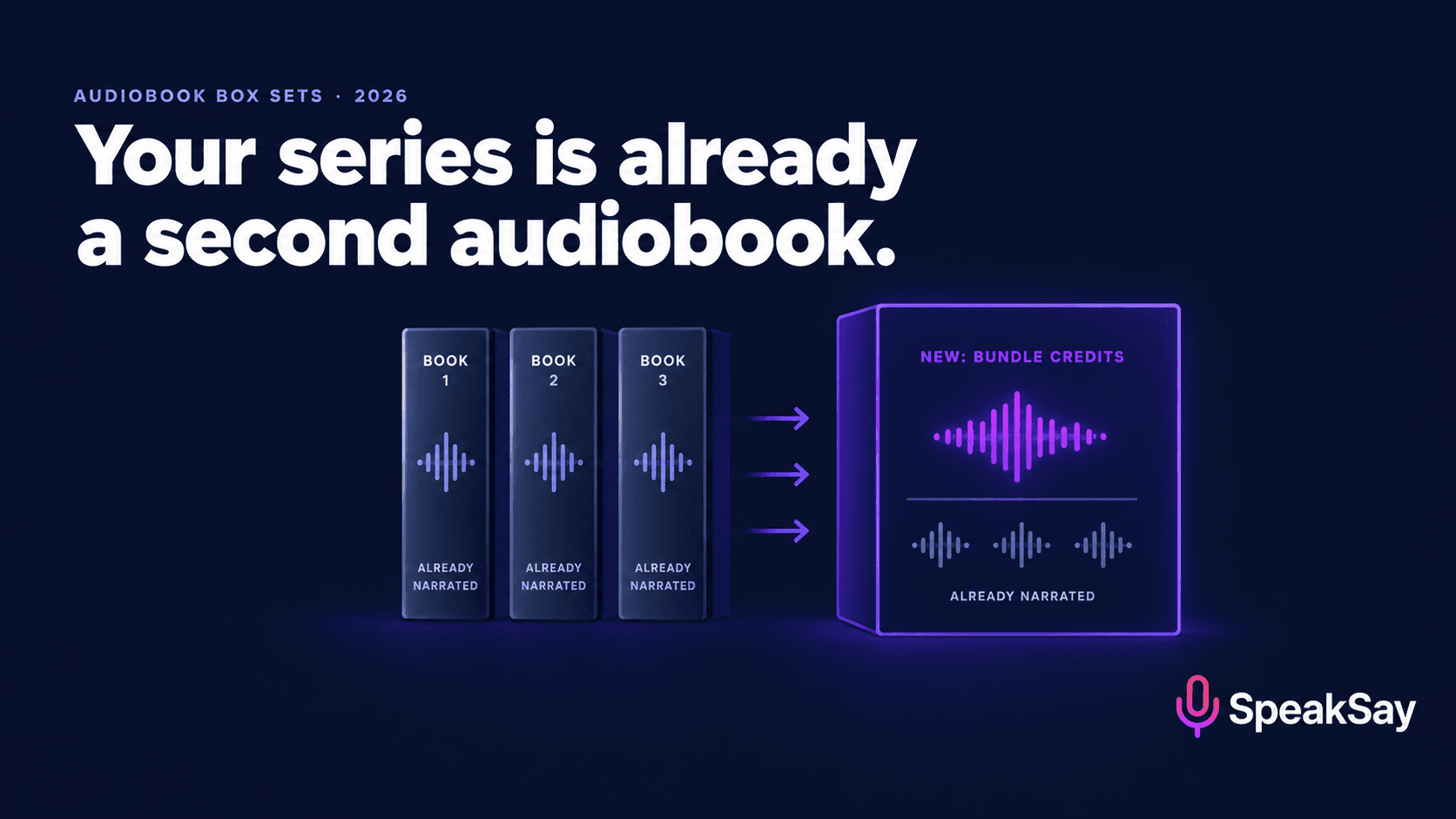
Keep the Christmas Program Narrator Live and Pre-Record Everything Else: A Voice Remix Guide for Schools, Churches and Community Stages (2026)
The live narrator is the one part of a children's Christmas program you shouldn't pre-record, because a live narrator can watch the children and pace the show. Almost everything else can be prepared in advance: offstage voices, character voices nobody can cast, at-home rehearsal tracks and a backup narration in case your volunteer is ill. Here is how one volunteer and Voice Remix can cover it all.
Q4 Is When Your Podcast Ad Slots Are Worth the Most: Price, Package and Produce Holiday Inventory Before November (2026)
Advertisers spend more on podcasts in Q4 than in any other quarter, and most small shows sell those weeks at the same rate as February — or don't sell them at all. Here is how to count your real holiday inventory, set a Q4 rate card, build packages advertisers can buy in one email, and produce dated host-read variants without recording every one.
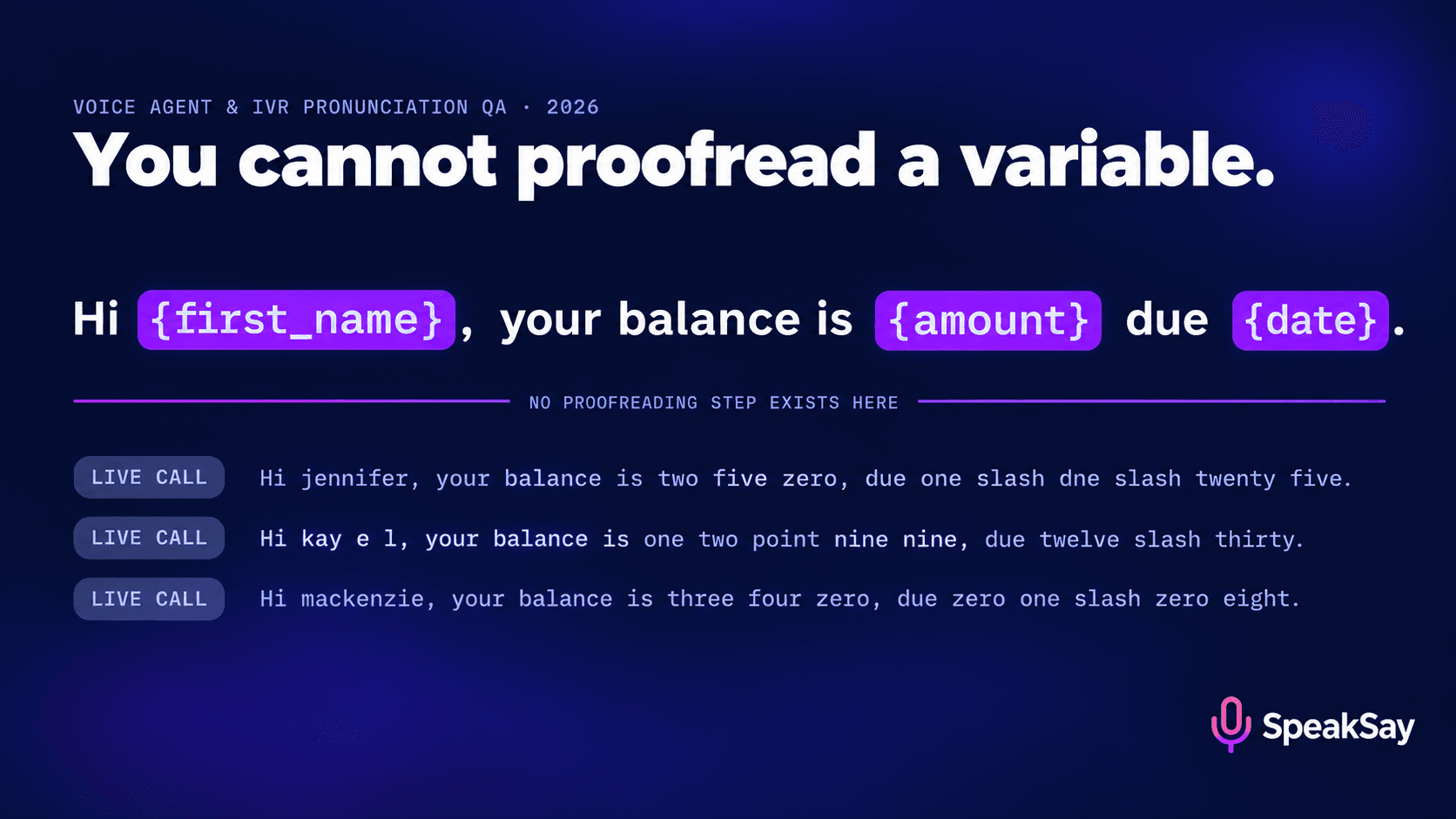
You Cannot Proofread a Variable: Pronunciation and Locale QA for Voice Agents, IVR and Phone Systems (2026)
Your voice agent demo sounded perfect because you wrote the demo text. In production the sentences are assembled at runtime from customer names, amounts, dates, medication names and addresses — strings nobody will ever read before they are spoken. Overall audio quality scores hide this completely. Here is the metric that exposes it, and the QA process that fixes it at the data boundary instead of the text boundary.
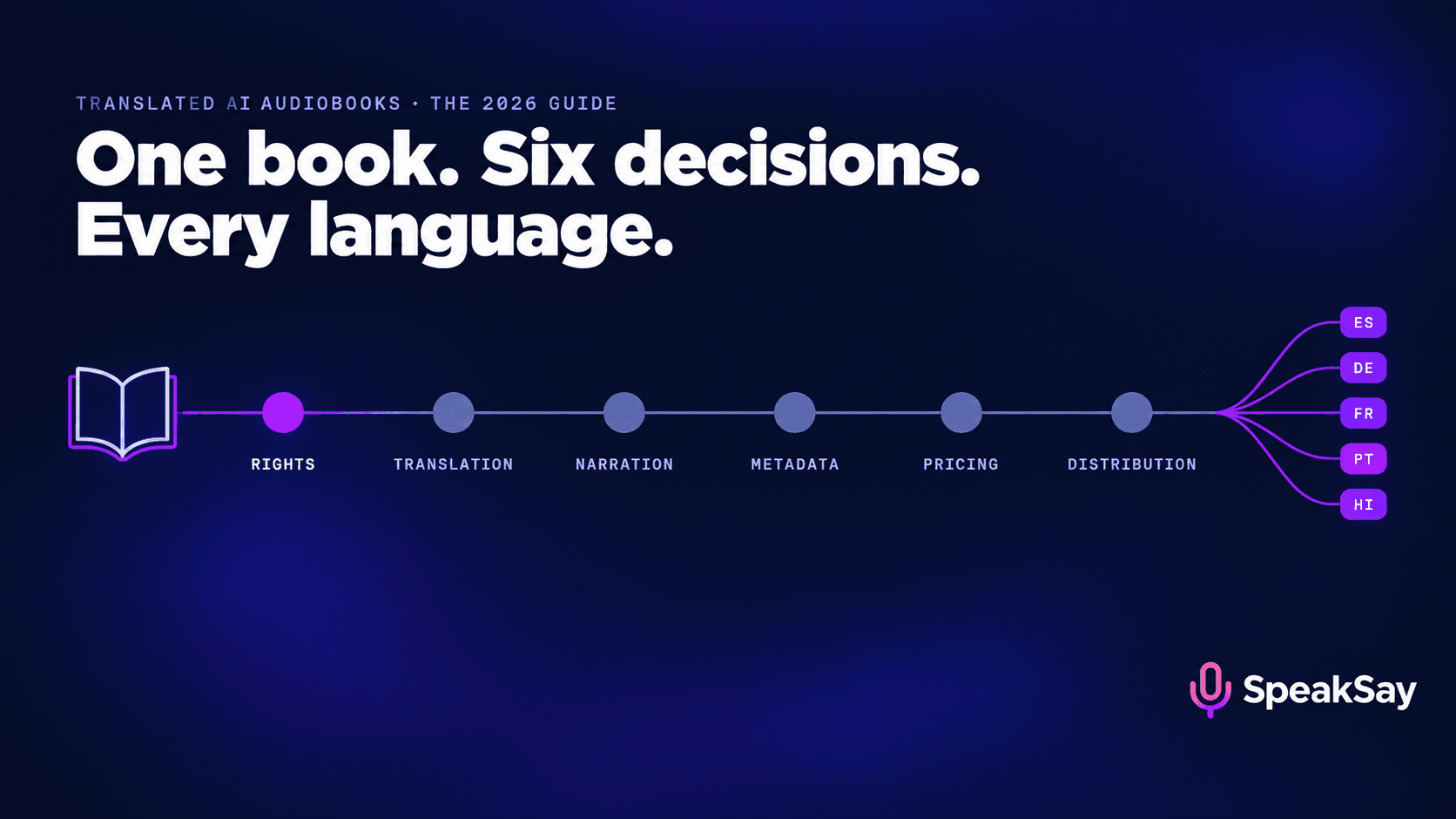
Translated AI Audiobooks: The Complete 2026 Guide (Rights, Translation, Narration, Metadata, Pricing, Distribution)
Publishing your audiobook in another language is six decisions in a fixed order, and most failed translated editions got the order wrong. This hub walks the whole path — rights, translation, narration, metadata, pricing and distribution — with the one question to answer at each step and a link to the deep guide for each.
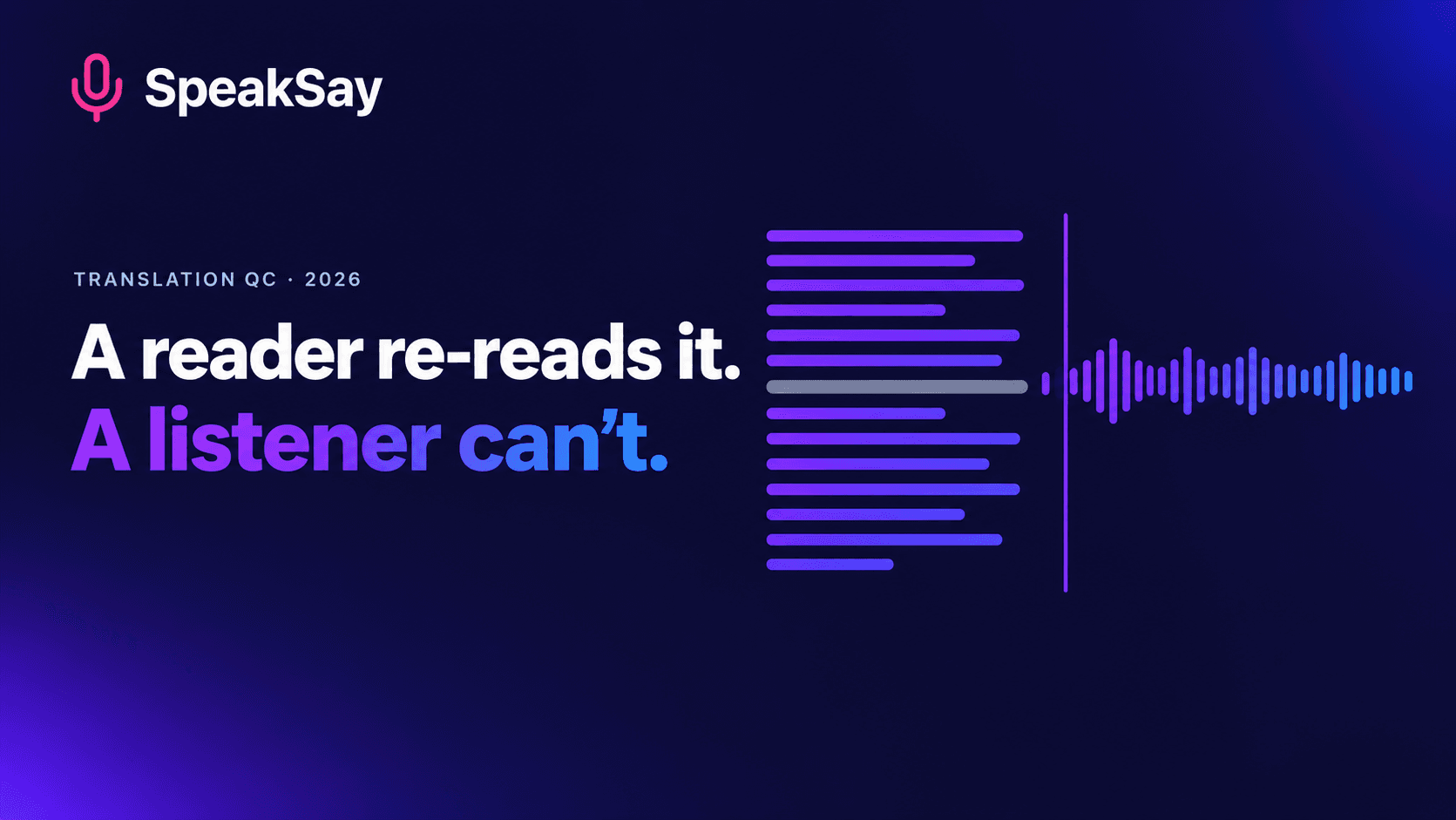
Where Does the Translation Actually Come From? Sourcing and QC-ing a Translator for AI-Narrated Foreign Editions (2026)
AI narration removed the production cost of a foreign-language audiobook and AI translation removed the text cost. What nobody budgeted for is the thing that cannot be automated: you cannot QC a language you do not speak. Here is where the text comes from, what each route costs in 2026, and how to judge it without the language.
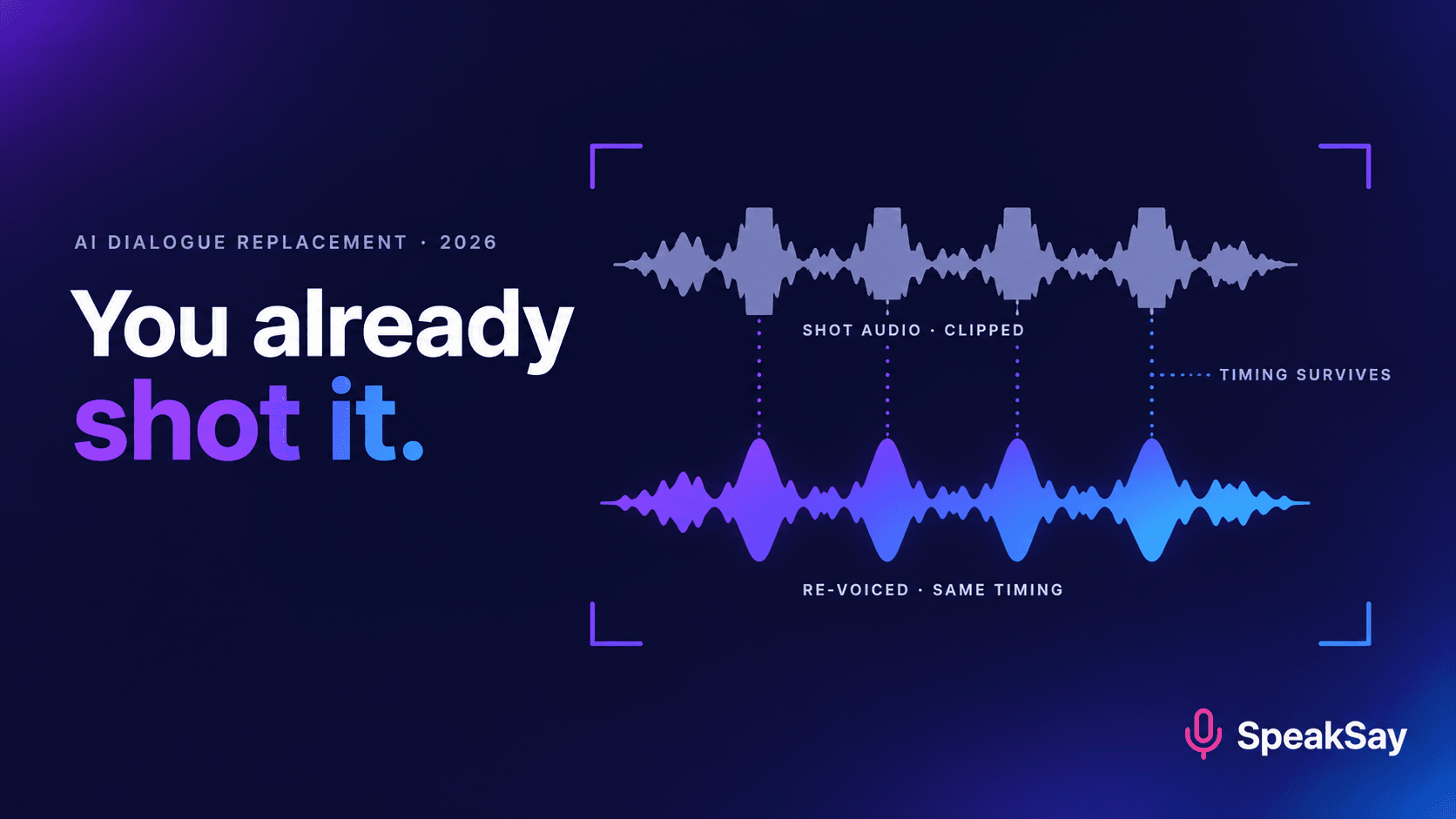
You Already Shot It and the Audio Is Unusable: Re-Voicing On-Camera Footage With Voice Conversion (2026)
The footage is good and the sound is ruined. Reshooting is impossible and a noise reducer cannot fix clipping, room reverb or wind. The 2026 answer is the one film has used for decades — re-perform the lines and replace the audio — except the conversion step now handles the part that used to need a studio
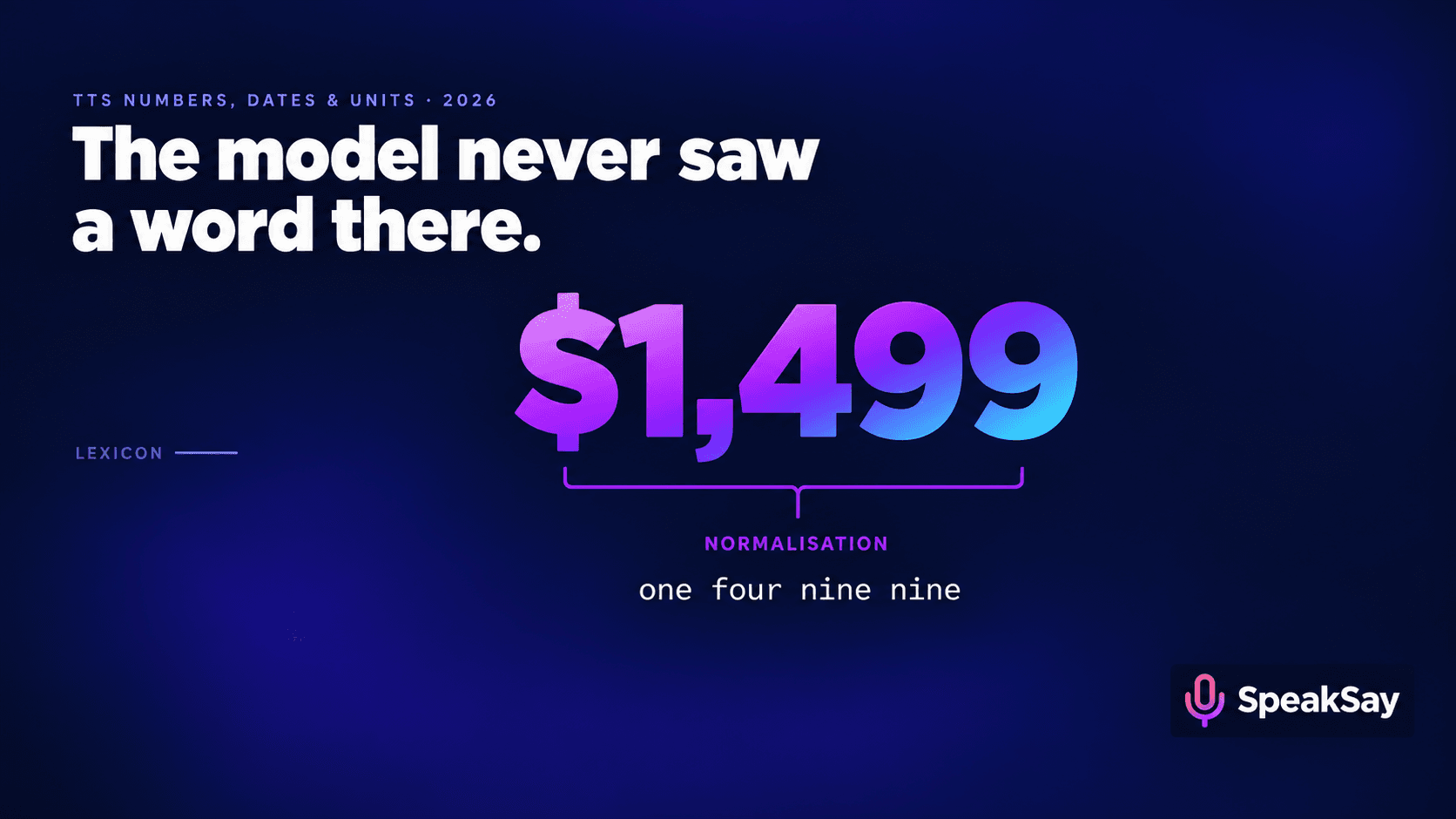
Your AI Voice Reads "$1,499" as "One Four Nine Nine": The Numbers, Dates and Units Pass Nobody Runs (2026)
There are two kinds of text-to-speech pronunciation failure and almost everyone applies the wrong fix to one of them. A pronunciation dictionary will never fix a price, because there is no dictionary entry for "$1,499" — the model never sees a word there at all. This is the normalisation pass: what breaks, what to write instead, and the sixty-second test that grades any voice before you commit.
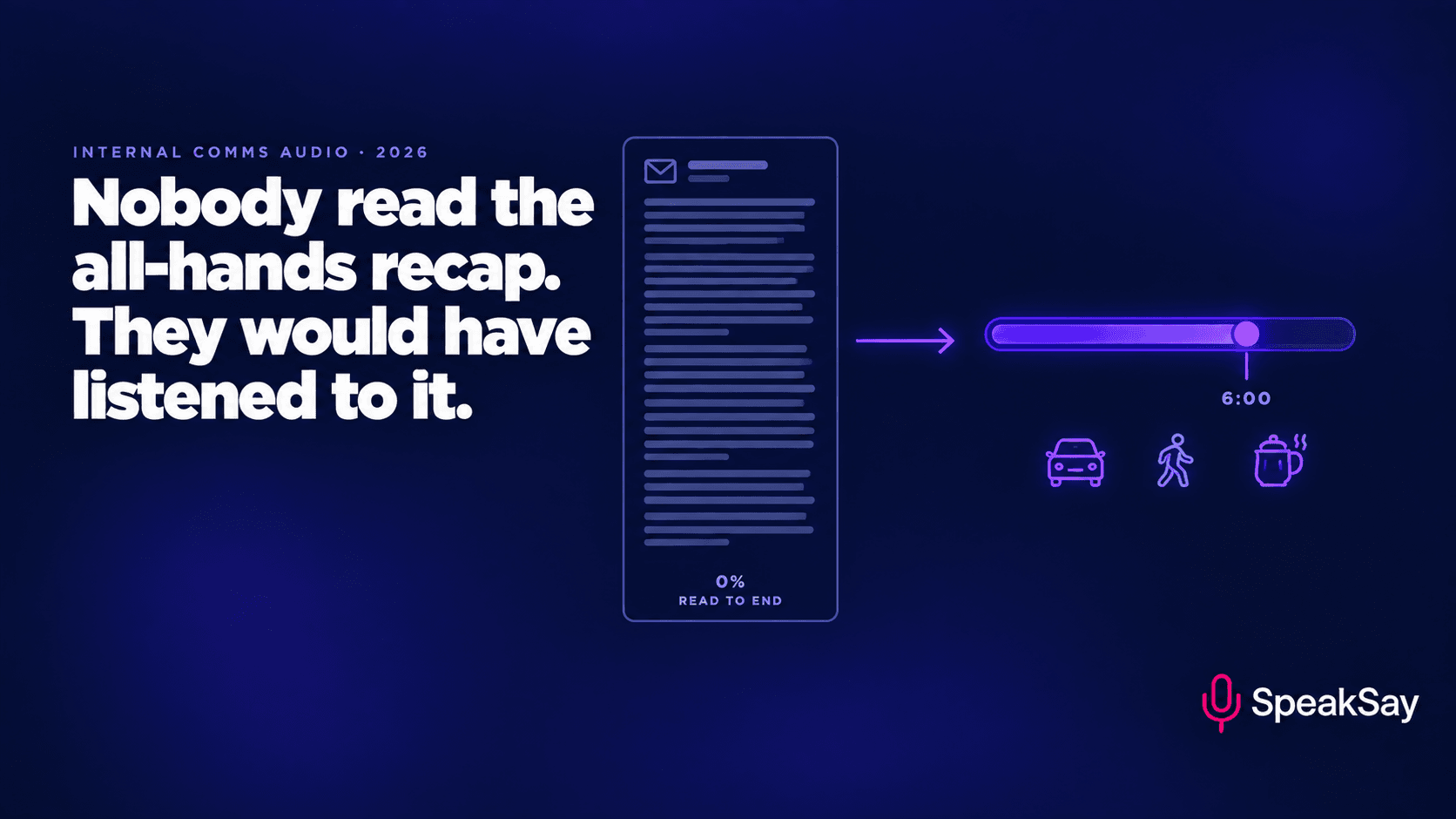
Nobody Reads the All-Hands Recap: Turning Internal Comms Into a Six-Minute AI Audio Briefing (2026)
Internal communications teams write thorough, accurate, well-structured updates that a minority of staff open and almost nobody finishes. The problem is not the writing. It is that the only container on offer requires sitting still and looking at a screen — the two things your deskless, commuting and back-to-back-meeting colleagues cannot do.
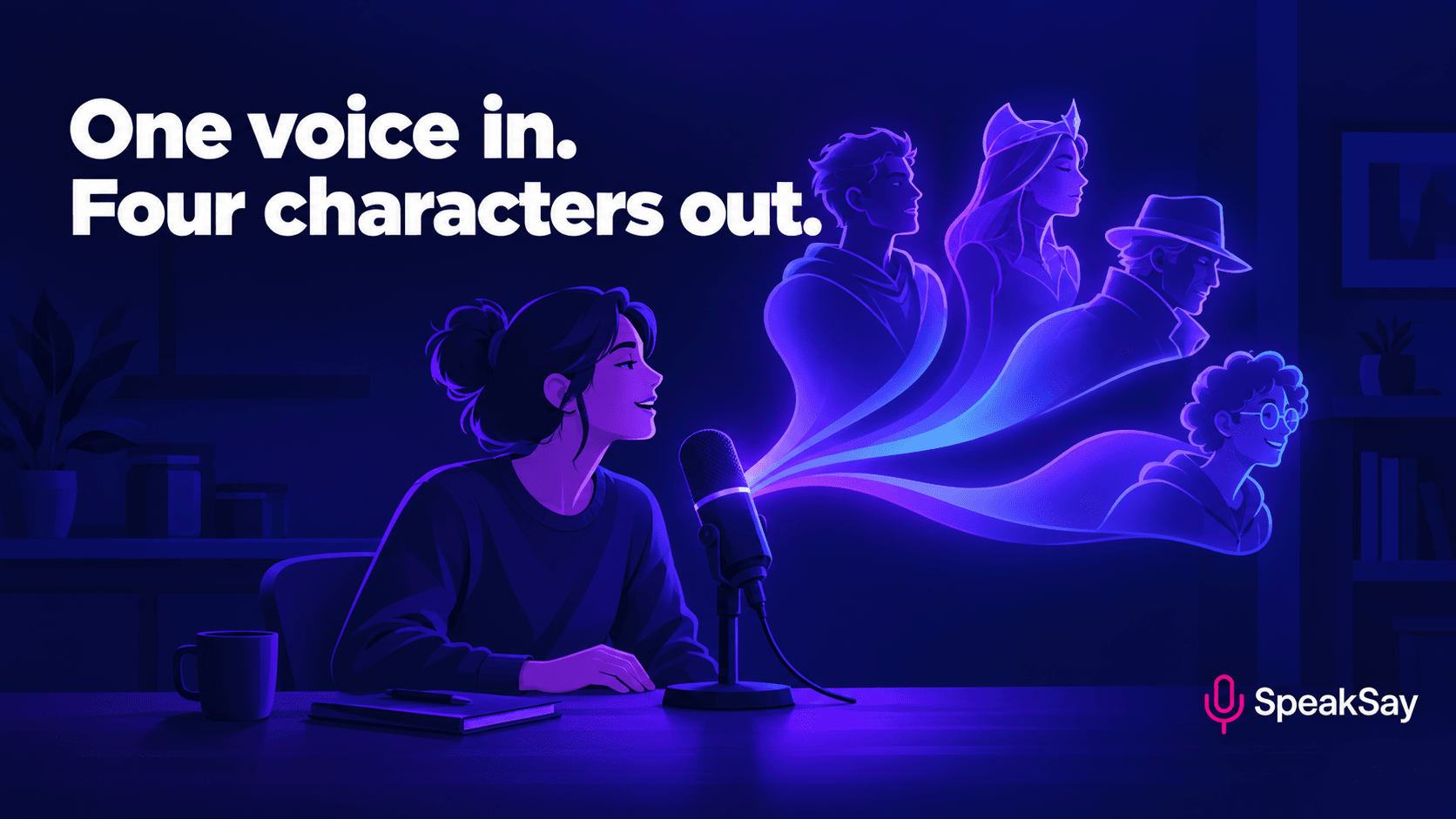
You Don't Need a Cast, You Need One Good Take: Voicing Every Character Yourself With AI Voice Conversion (2026)
Preset-cast AI dialogue sounds wrong because text-to-speech has to guess the interpretation, and interpretation is the whole of dialogue. Speech-to-speech voice conversion flips the process: you act every part yourself, then swap the vocal identity, keeping your timing, breath and subtext intact.
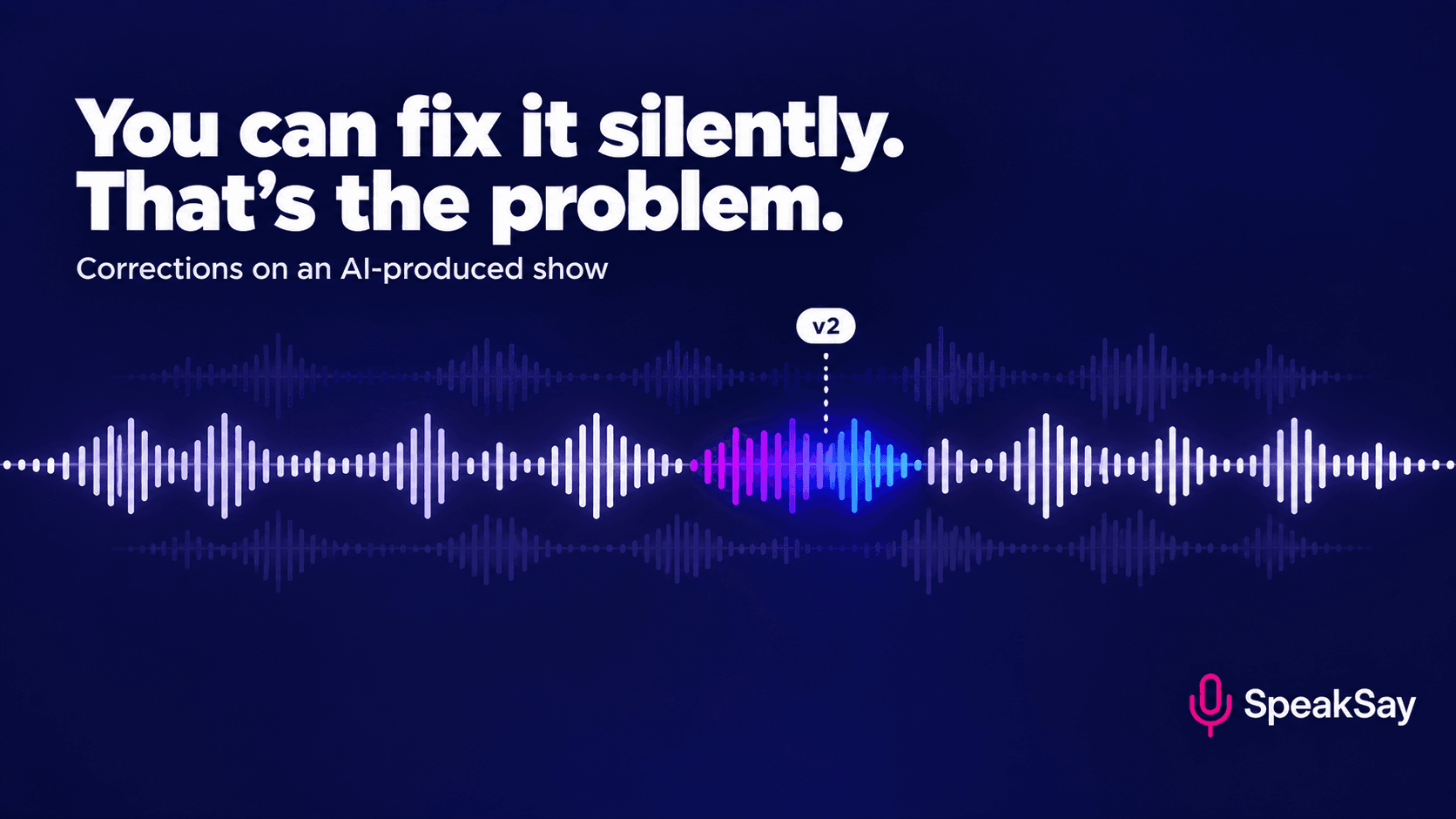
You Got a Fact Wrong and You Can Re-Render the Episode. Should You? Corrections on an AI-Produced Podcast (2026)
The convention of correcting a podcast in the next episode exists because re-recording used to be expensive. AI production removed the cost and quietly removed the convention with it, without replacing it. This is a decision table for four kinds of error, the RSS mechanics of what actually happens when you replace a file, and the case for a written corrections policy before you need one.
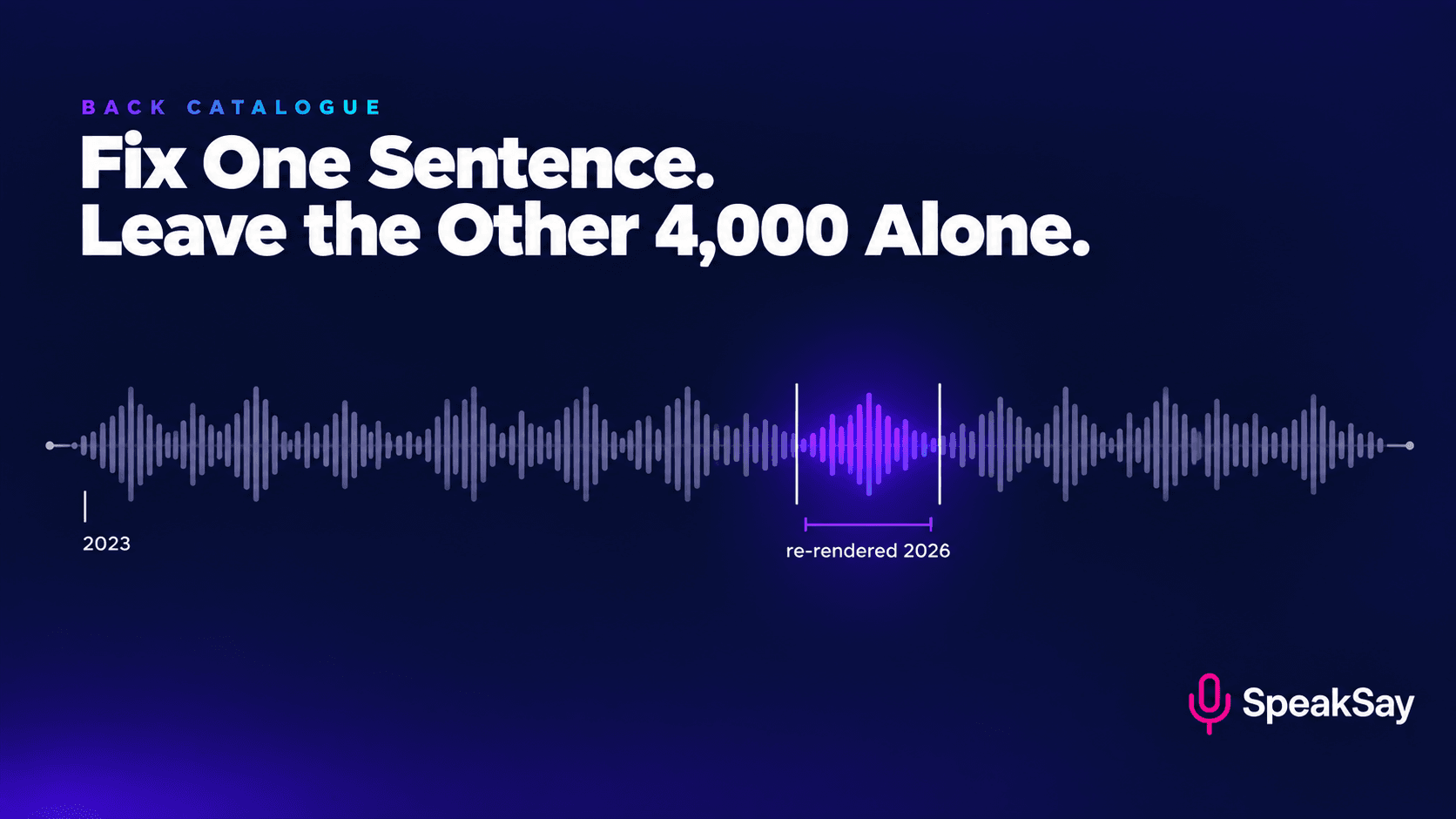
Your Back Catalogue Says "This Year" and It's Three Years Old: Re-Rendering Dated Lines Without Re-Recording (2026)
Your best-performing video still says "the current version is 4.2" and the current version is 9. You can't edit a published file, re-uploading loses the watch history, and a human narrator cannot re-record one sentence to match a session from three years ago. A stored voice can — if you wrote the script so it could be patched.
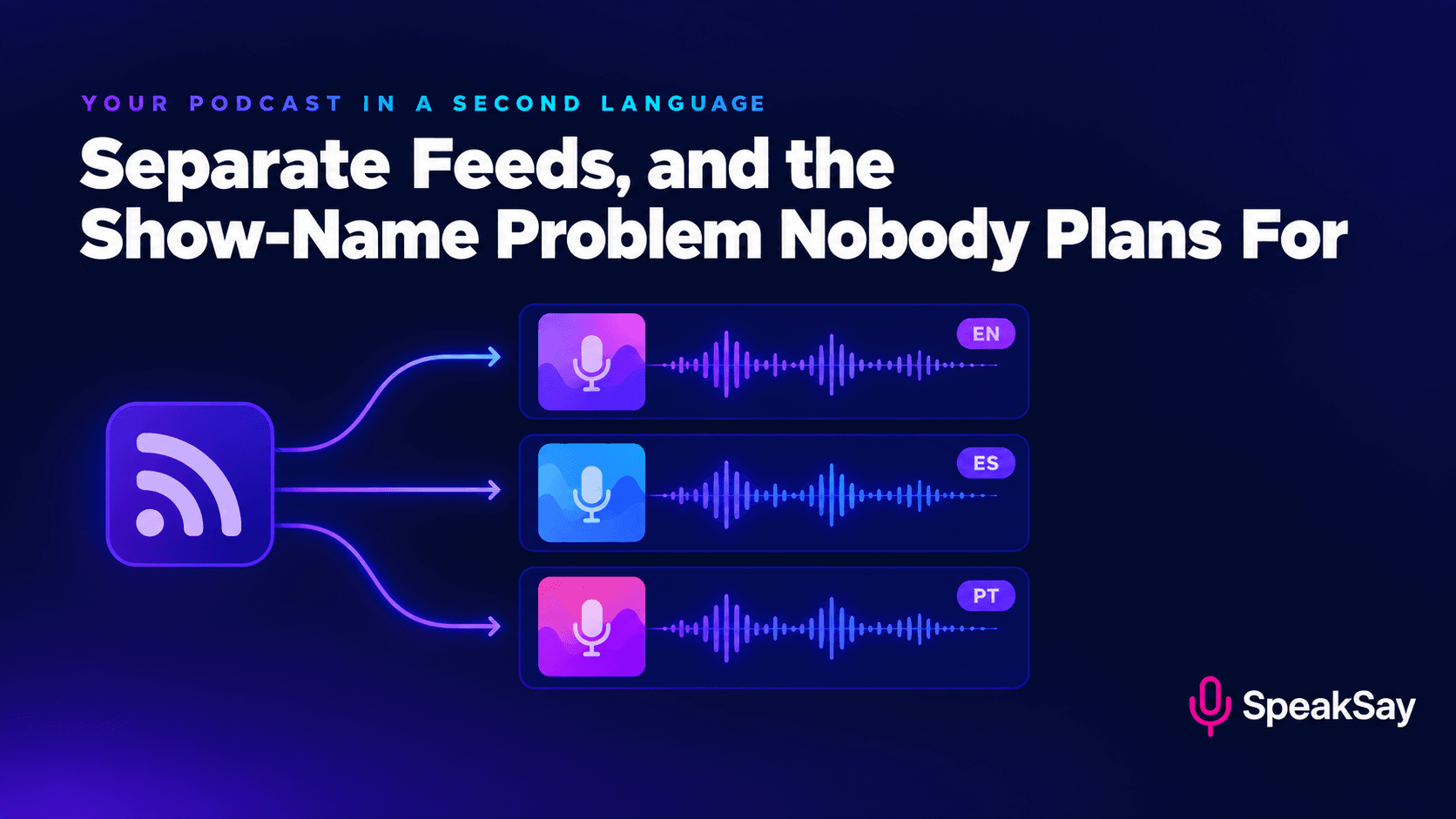
Your AI Voice Says the Number Before Anyone Has Found the Axis: How to Narrate Charts and Data Videos (2026)
A viewer reads a chart in two stages — shape in about two seconds, detail in five to ten. Most data narration talks straight through the first stage and dumps numbers into the second. Here is the orientation beat, the shape-before-number rule, the percent-versus-percentage-point trap, and a chart-type-by-chart-type voice playbook.
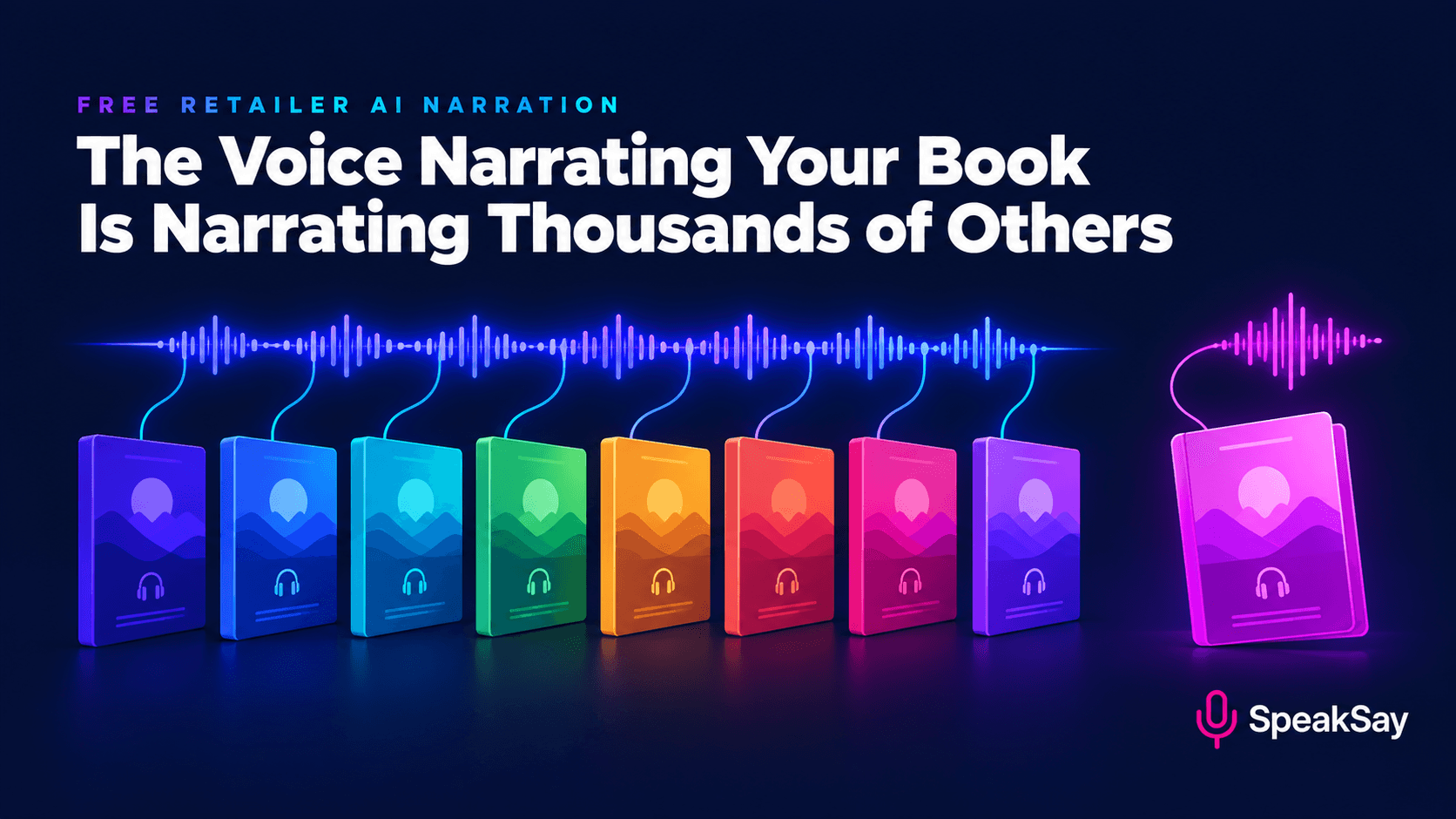
Spotify Just Made AI Narration Free for Every Author. The Cost Is That Your Narrator Now Narrates Everyone Else's Book Too (2026)
Free, no upfront cost, no exclusivity — the retailer AI narration offer looks like it has no downside. The downside is narrator collision: a small shared voice pool means the voice on your audiobook is the voice on thousands of others. Here is what that costs, when it does not matter, and the hybrid most authors should actually run.
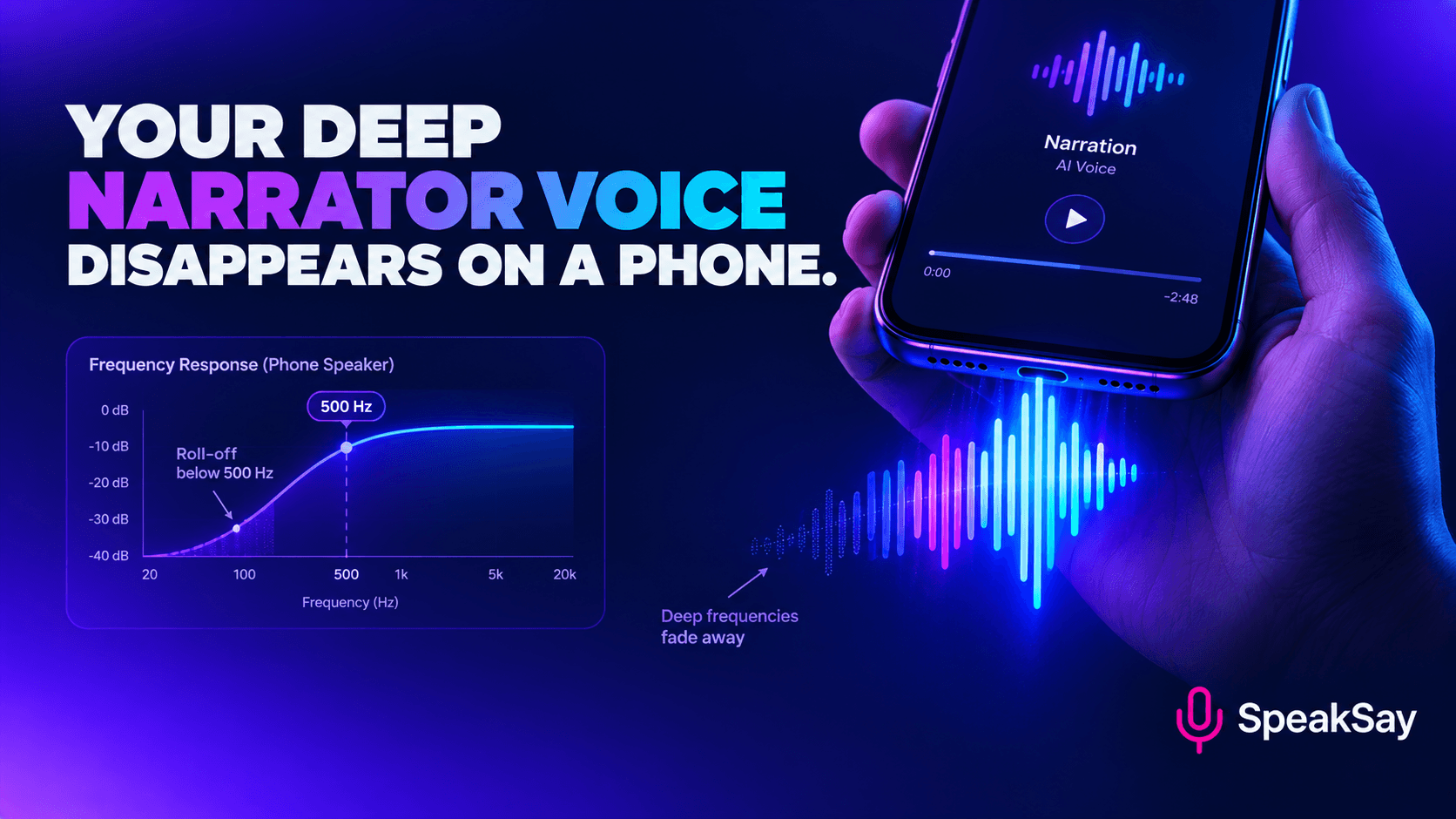
Find the BPM of Any Song Free — and Lock Your Voiceover to the Beat (2026 Guide)
Tapping the tempo by ear gets you within two or three BPM, which is enough to drift a full beat out of phase by the end of a forty-five second Short. Detect the exact number first — then use the bar maths, the syllable budget and the downbeat rule that make a spoken voice sit inside music instead of on top of it.
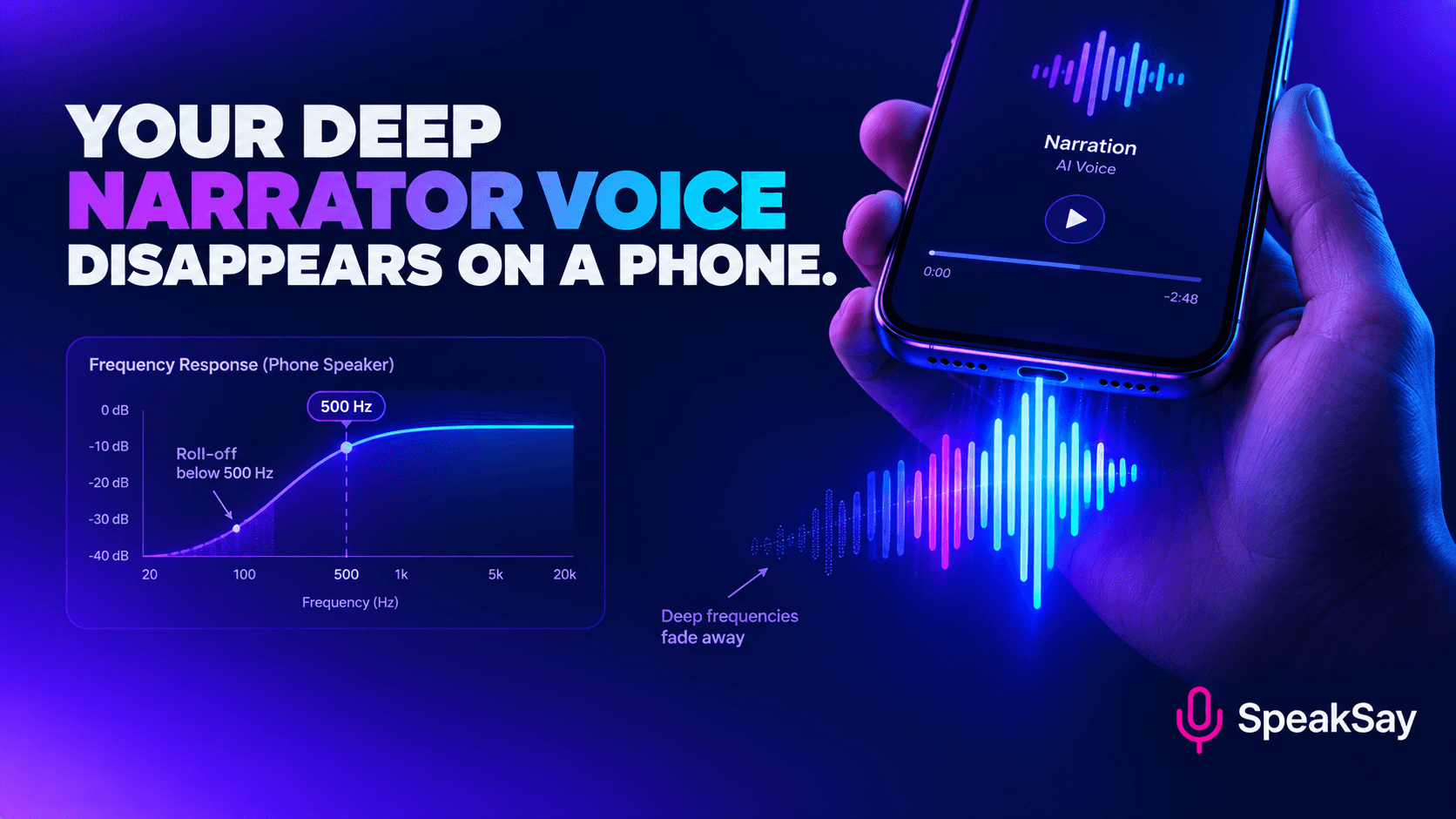
Maritime & Shipping Faceless Channels in 2026: The Ocean-Scale AI Narrator Playbook
Maritime channels have no visual drama to hide behind — a hull, a crane, a chart. The voice carries everything. Here is the casting spec, the two-register split, the TEU/DWT/port-name lexicon and the speculation boundary that separates a shipping channel people subscribe to from one that feels empty.
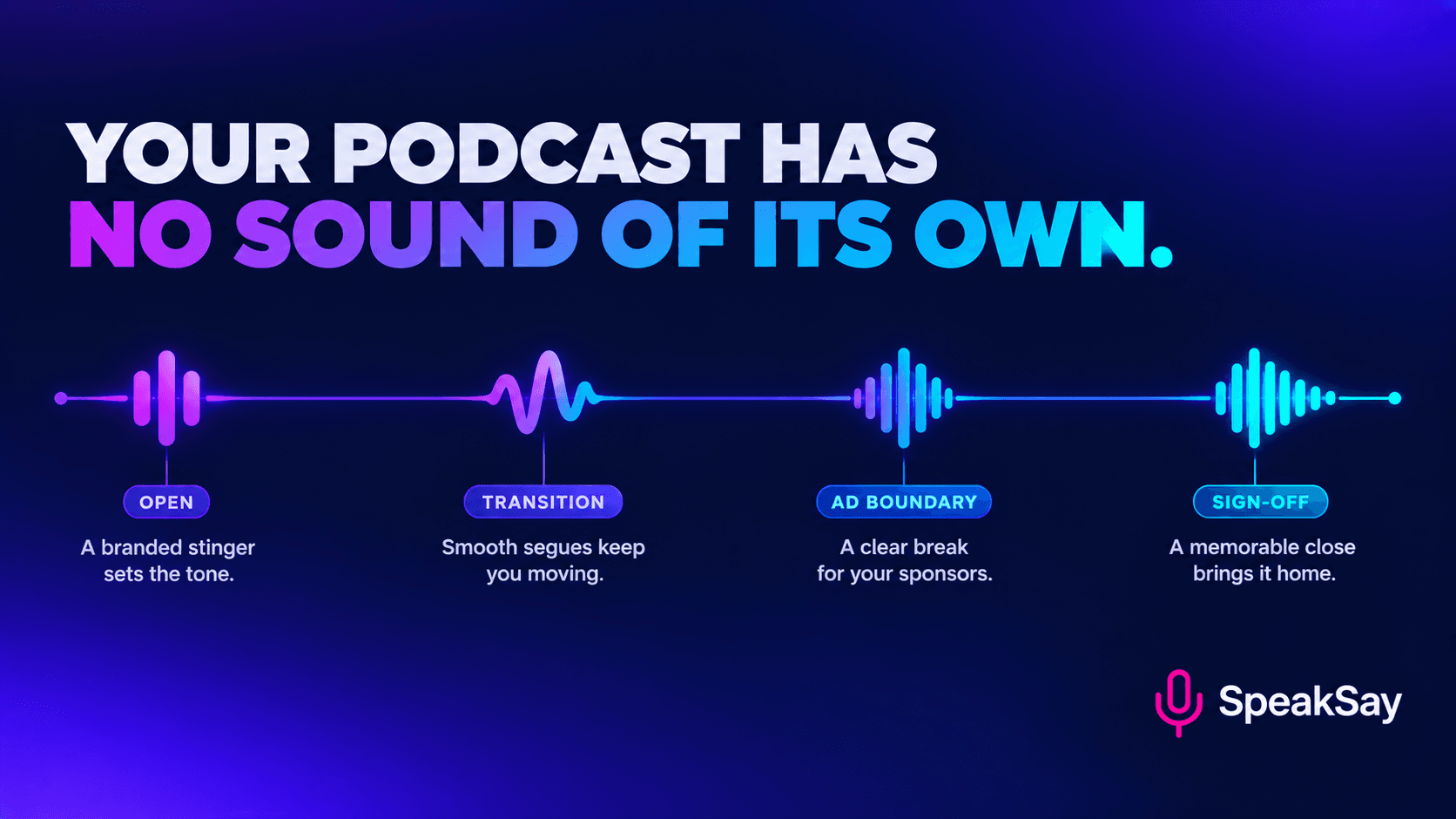
Most of Your Listeners Play It at 1.5x: How Speed Listening Changes What You Should Produce (2026 AI Audiobook Guide)
You master an audiobook at 1.0x and almost nobody hears it that way. Speed listening breaks specific things — consonants, pauses, music beds, chapter transitions — and it breaks AI narration differently from human narration. Here's what to change.
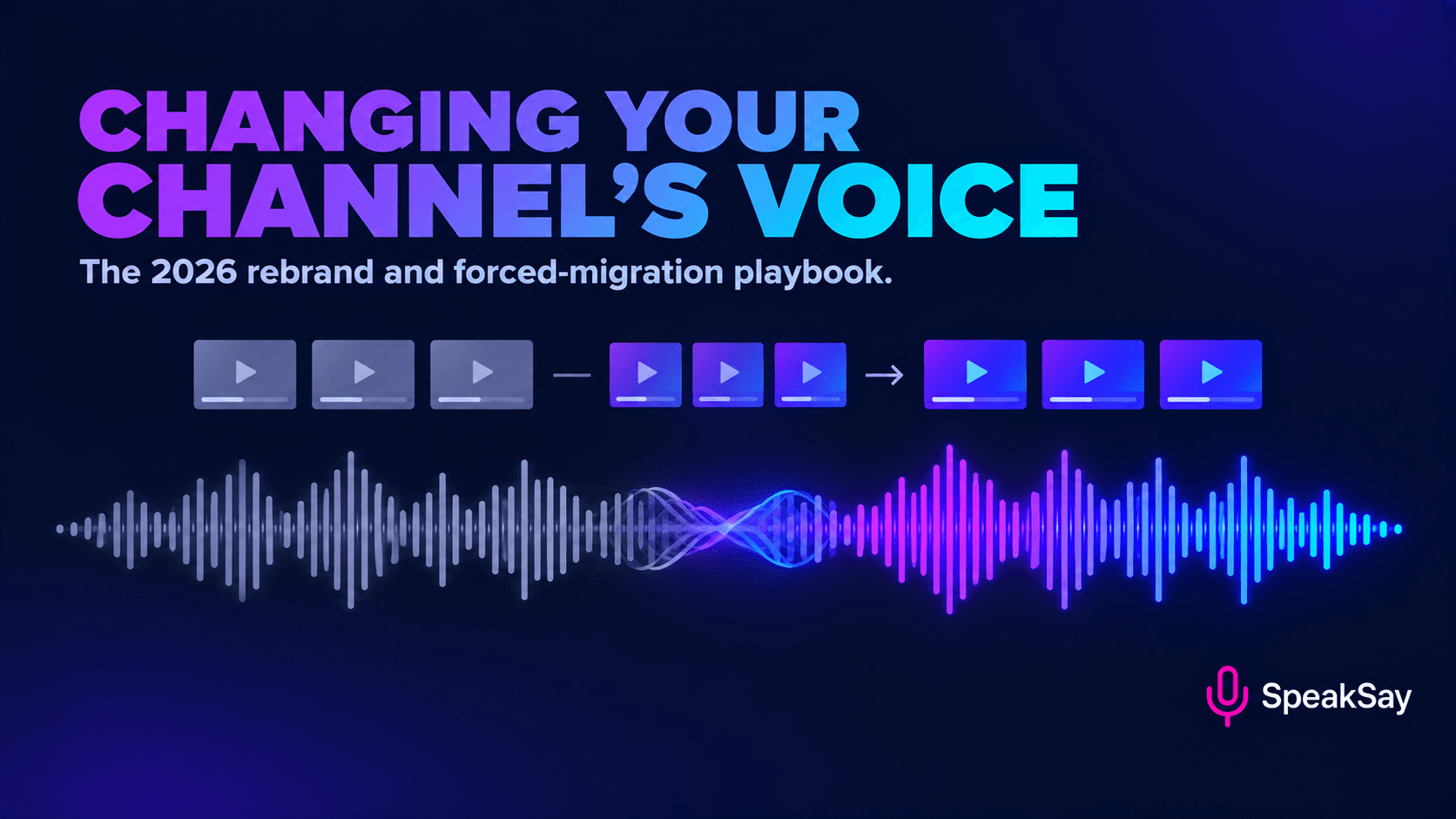
Should You Ever Change Your Channel's AI Voice? The 2026 Voice-Rebrand and Forced-Migration Playbook
Voice tools keep shutting down, and stock presets keep spreading to thousands of channels. Both push creators into a voice change nobody plans for. Here's when it's worth it, how to match a lost voice, and how to transition a back catalogue without losing your audience.
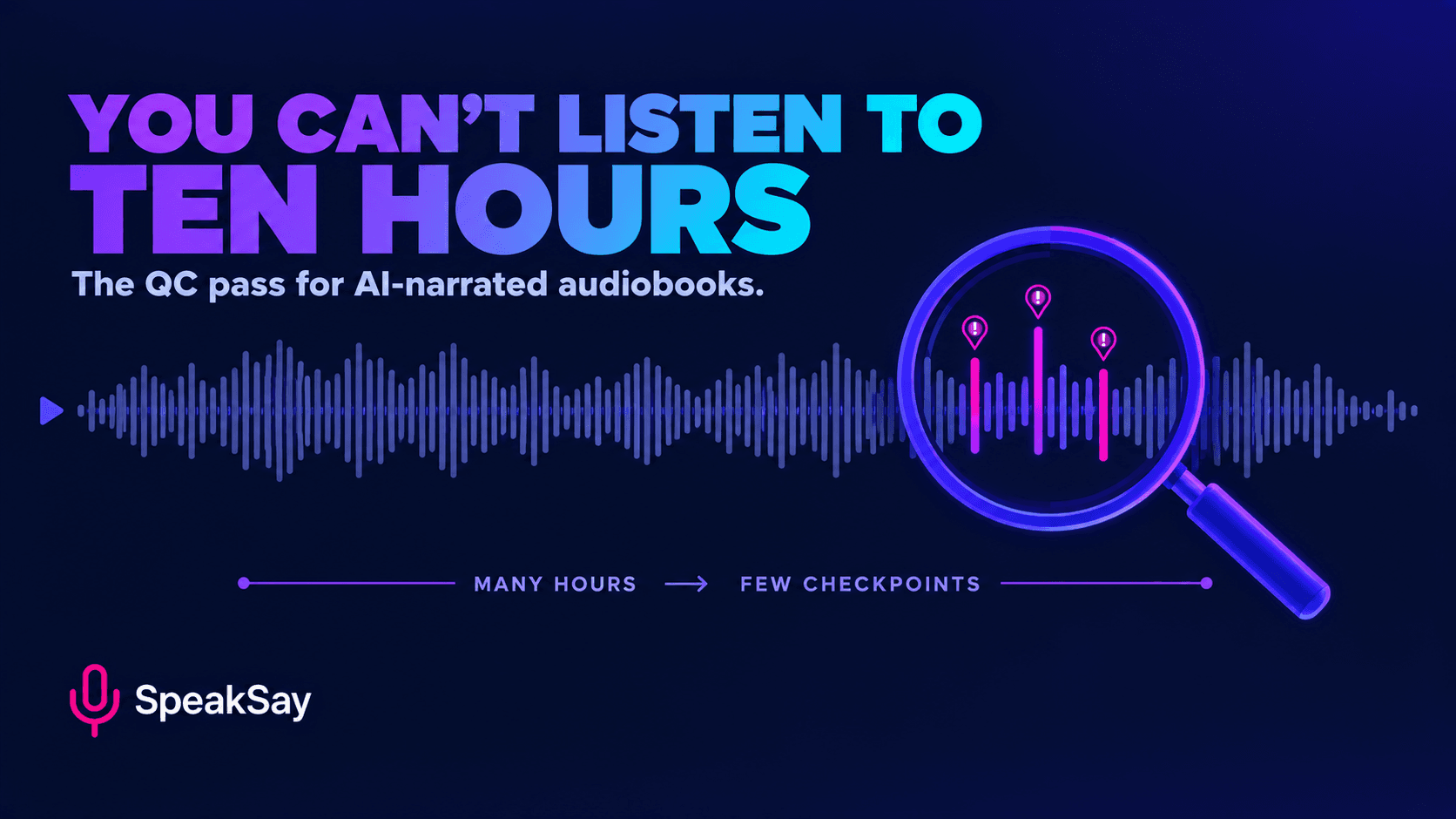
You Can't Listen to Ten Hours: The 2026 QC Pass for AI-Narrated Audiobooks
Full-length listening doesn't scale, and it isn't how you find narration errors anyway. Here's the targeted QC pass — homograph hit-lists, text-diff detection, sampling maths and patch hygiene — that catches the defects that get audiobooks returned.
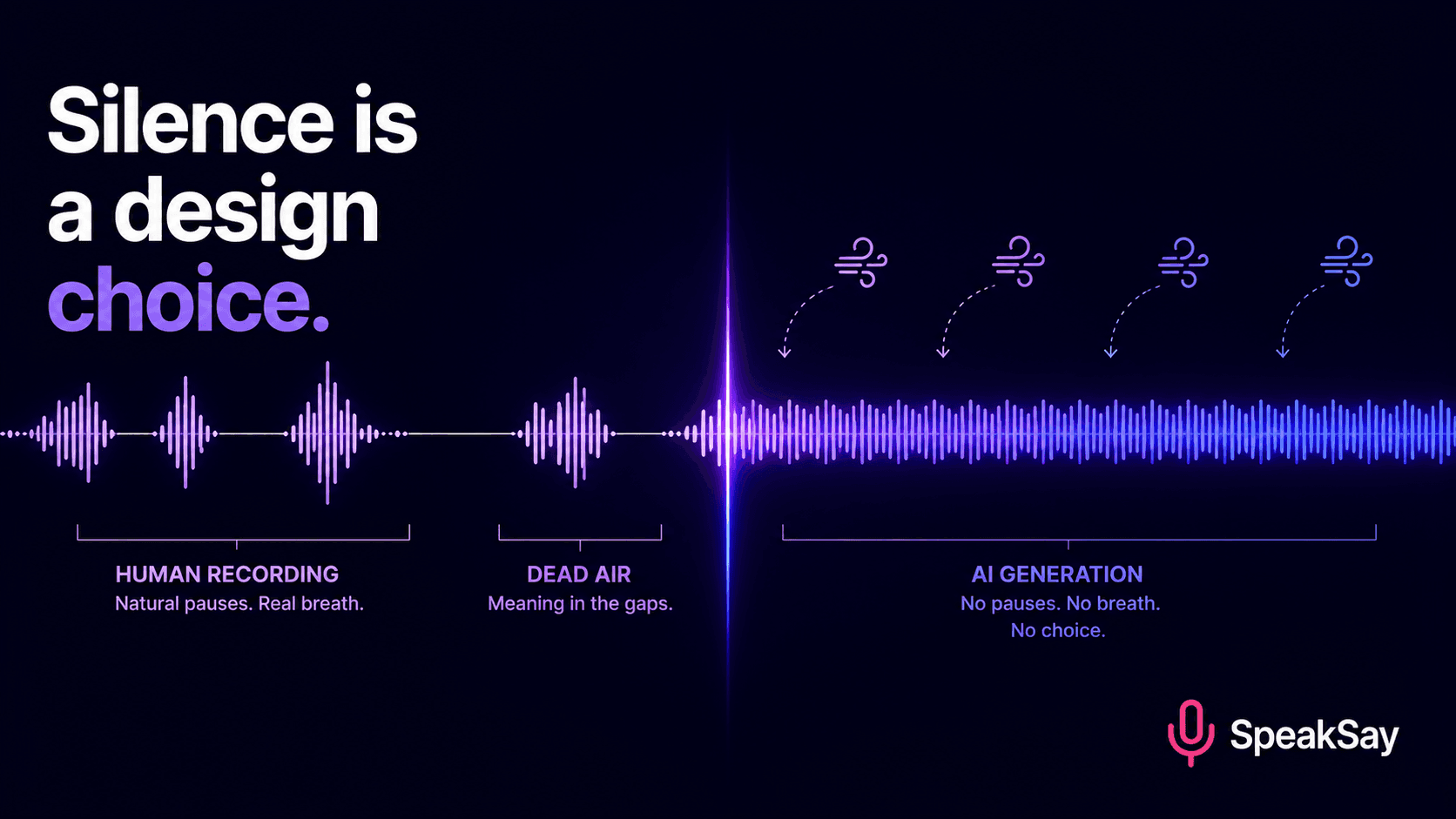
Your Podcast Back Catalog Is Unsold Ad Inventory: The 2026 Dynamic Ad Insertion Playbook for AI-Made Shows
Every evergreen episode you have already published is still being downloaded, and most of them carry either silence or a dead promo code for a sponsor who left two years ago. This playbook covers dynamic ad insertion mechanics, ad marker placement by episode length, a back-catalogue audit template, and how to keep host-read ads sounding like your show.
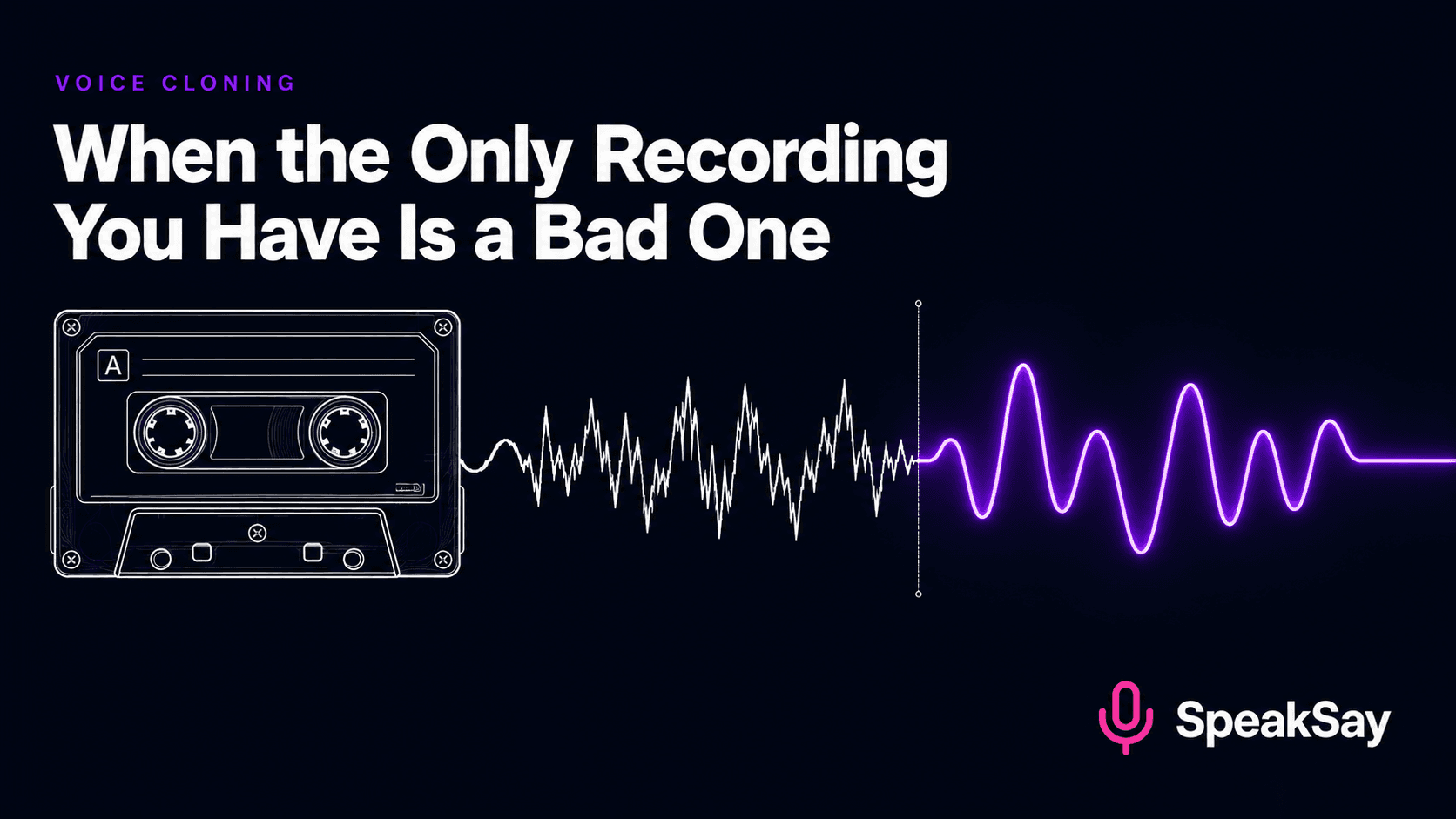
The Only Recording You Have Is Bad: How to Clone a Voice From Old Tapes, Zoom Calls and Phone Audio (2026)
Every voice-cloning guide assumes a quiet room and a good microphone. But the people who need cloning most — families with one cassette, publishers with a 1998 interview, teams whose founder has left — cannot re-record anything. Here is the triage flow, the repair order, and the honest expectations by source type.
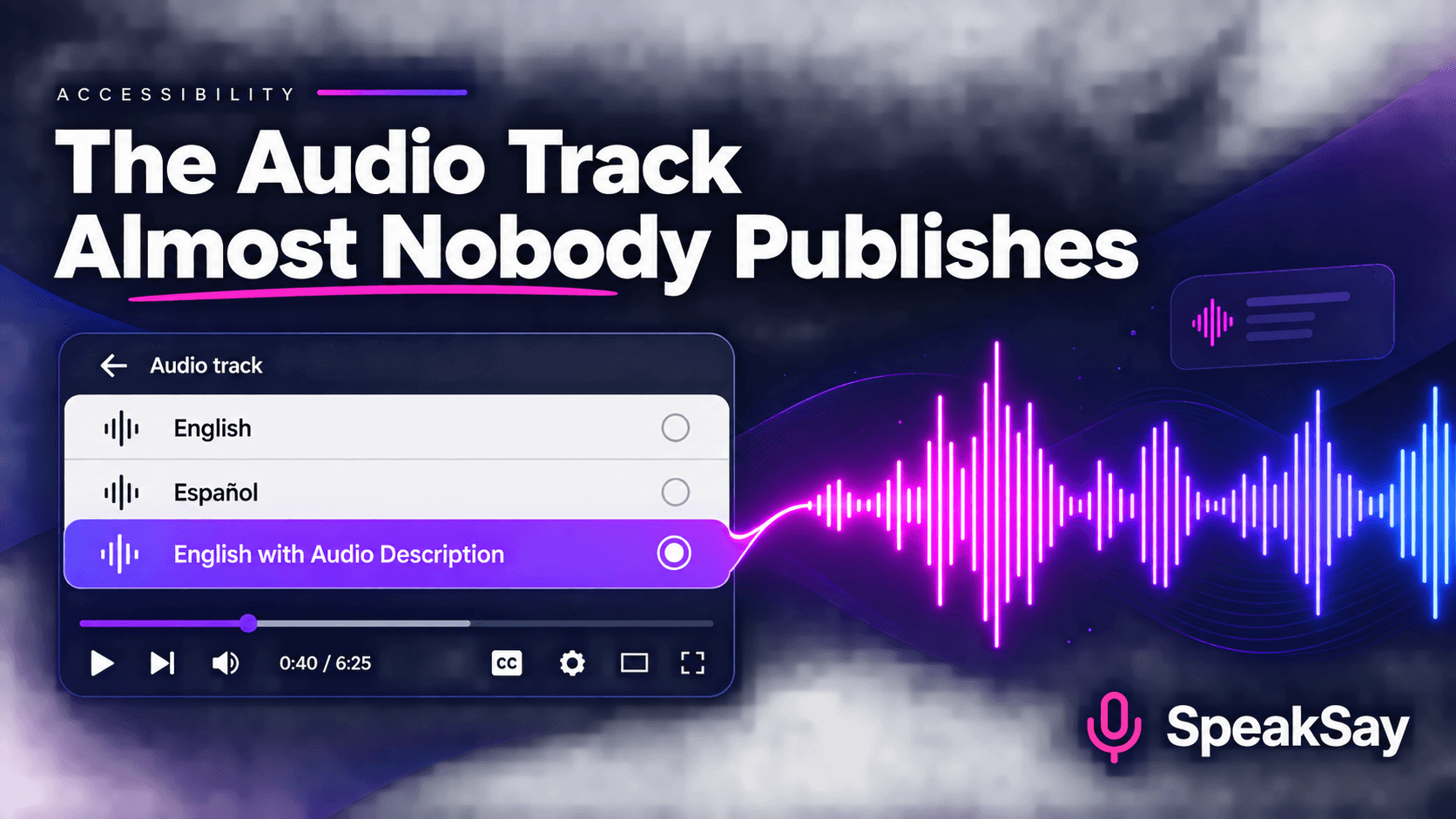
YouTube Now Has an Audio Description Track — and Almost Nobody Uses It: The 2026 Guide for Faceless and Visual Channels
Viewers can now select "English with Audio Description" from the audio menu the same way they select a language. Producing that track used to mean a studio, a describer and a mixing session. It is now a script-and-voice job — and script-first creators already have most of what they need.
Stop Podcasting Forever: Why 8-Episode Limited Series Beat Weekly Shows in 2026 (The AI Season Playbook)
Around nine in ten podcasts stop before episode four. The problem usually isn't discipline — it's that the weekly-forever format is a commitment nobody should have signed. Here is how to design, batch-produce and finish an eight-episode season instead.
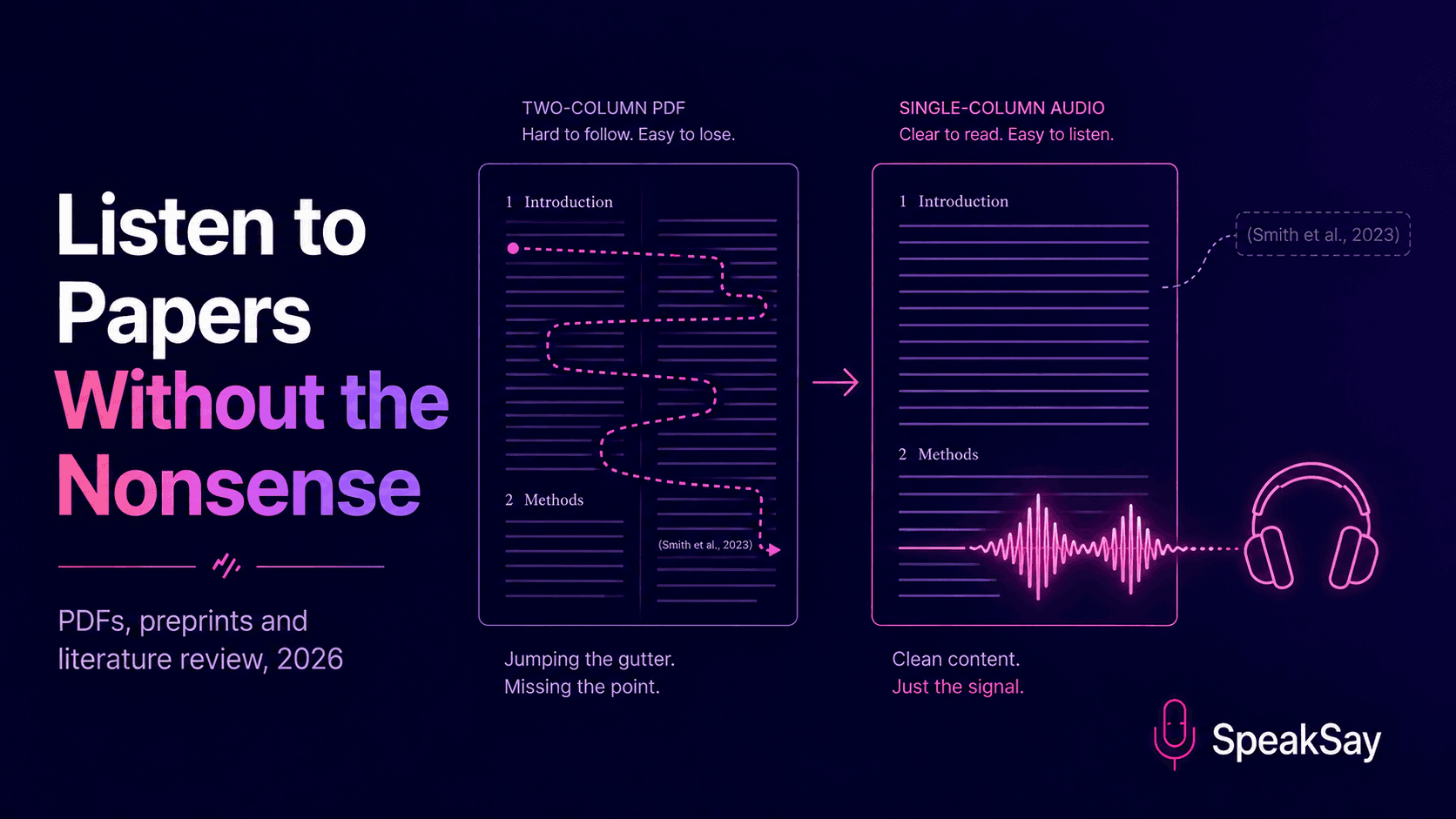
Researchers Read 40 Papers a Week — By Listening: Turn PDFs, Preprints and Journal Articles Into Audio That Actually Makes Sense (2026)
Academic PDFs are the worst possible input for text-to-speech: two columns read across the gutter, citations interrupt every third sentence, equations become symbol soup. Here's the pre-processing recipe and the two-mode workflow that makes listening to papers actually work.
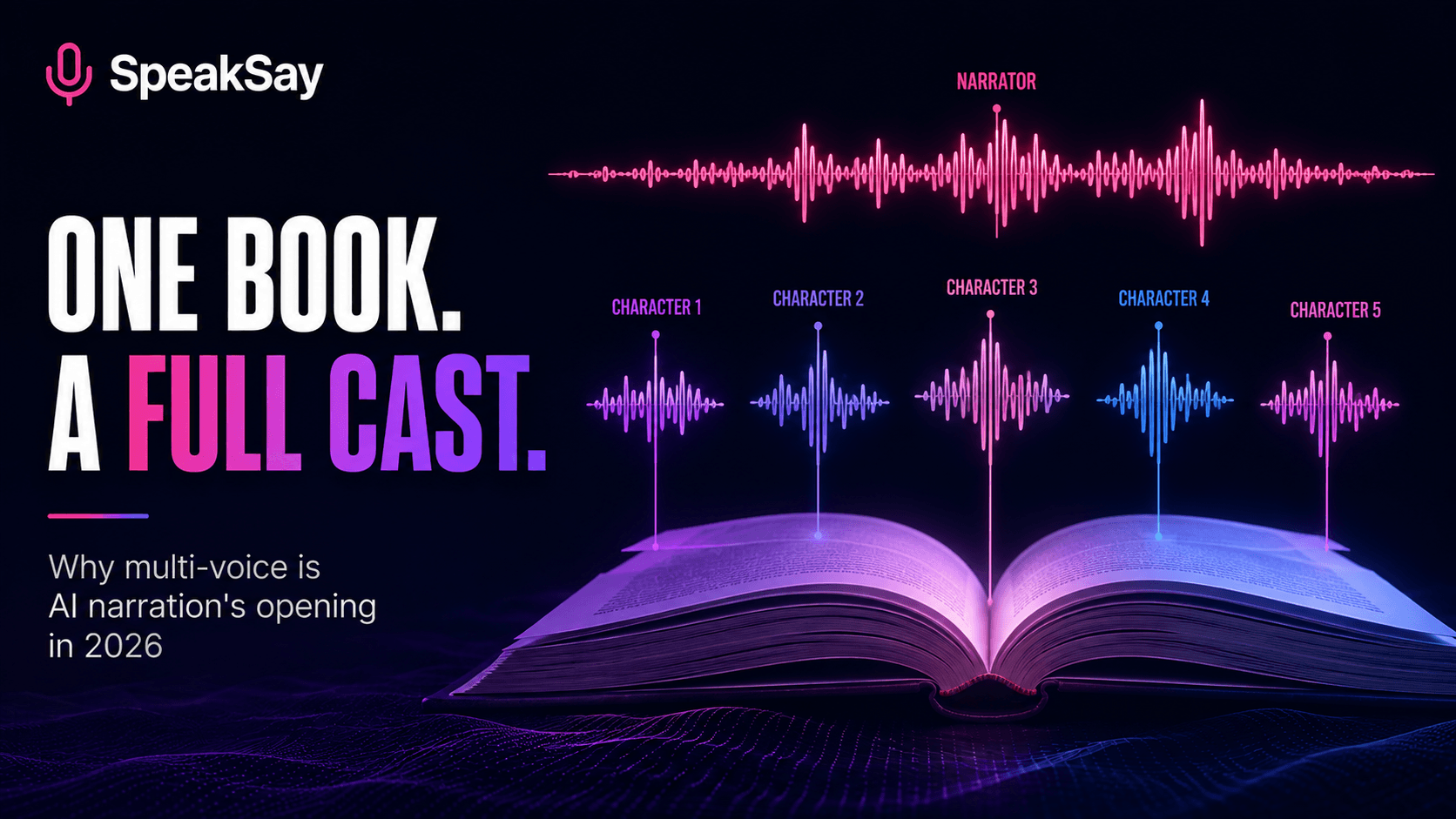
Listeners Are Cooling on AI Narration — Except for One Format: Why Full-Cast AI Audiobooks Are Indie Authors' 2026 Opening
Willingness to try AI-narrated audiobooks fell from around 70% to 61% this year. But the same research found listeners who actively prefer AI for multi-voice productions — the format human narration prices out of reach for indies. Here's how to produce a full-cast audiobook that earns that preference.
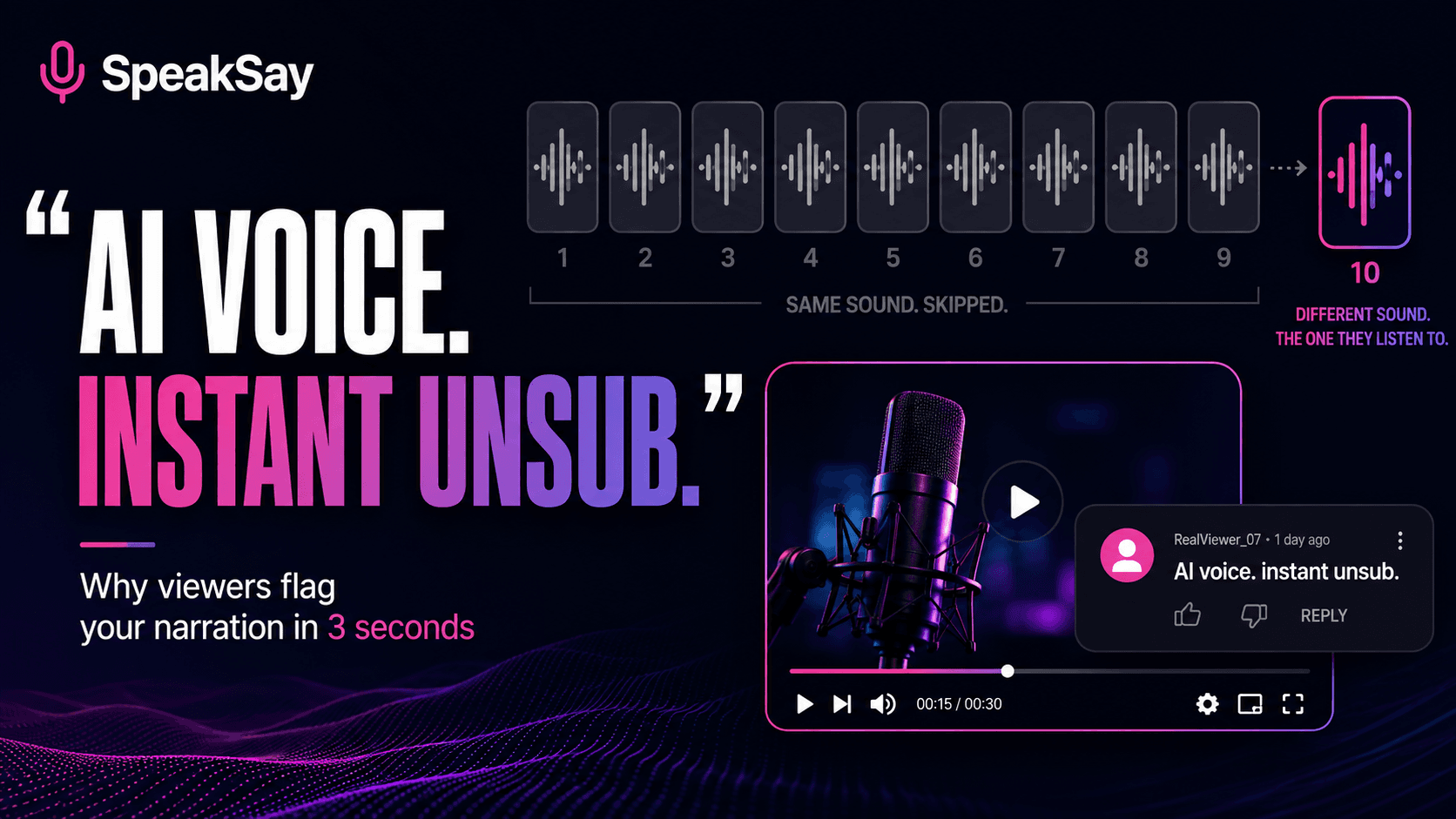
Instant Unsub — AI Voice": Why Viewers Flag Your Narration in 3 Seconds, and How to Fix It in 2026
Viewers aren't detecting that your voice is synthetic. They're recognising it — the same handful of default voices narrate thousands of channels. A 2026 Nielsen finding puts long-exposure irritation 28% higher with unchanging AI narration. Here's what actually triggers the backlash and the five fixes that stop it.
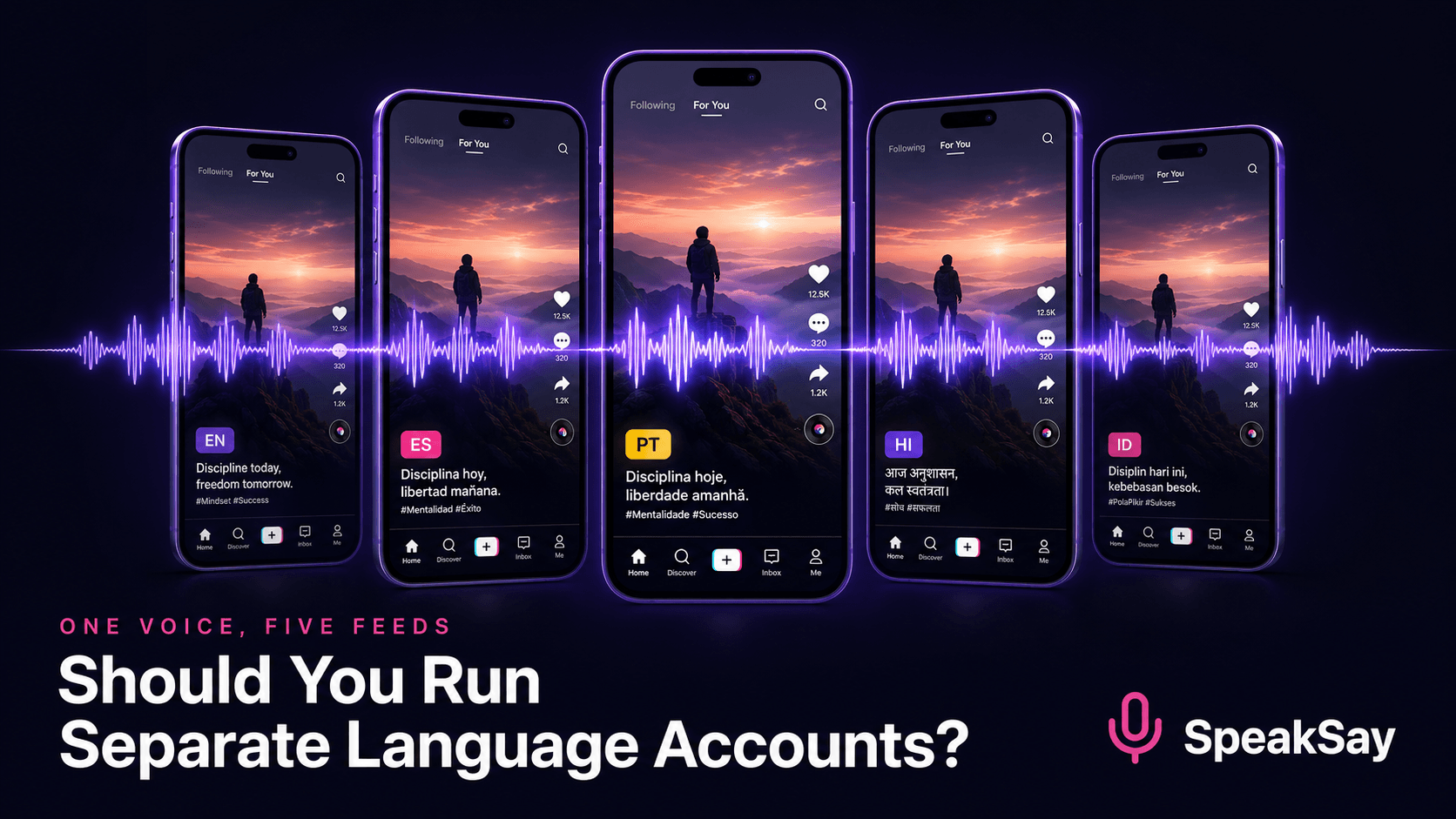
One Account or Five? How Creators Localize Short-Form Video Into 5 Languages Without Losing the Algorithm (2026)
TikTok still gives creators no built-in dubbing, Instagram's translations can't be exported and aren't available everywhere, and the feed now cross-references device and app language - which caps single-language creators. Here's the account architecture and the dubbing workflow that actually scales.
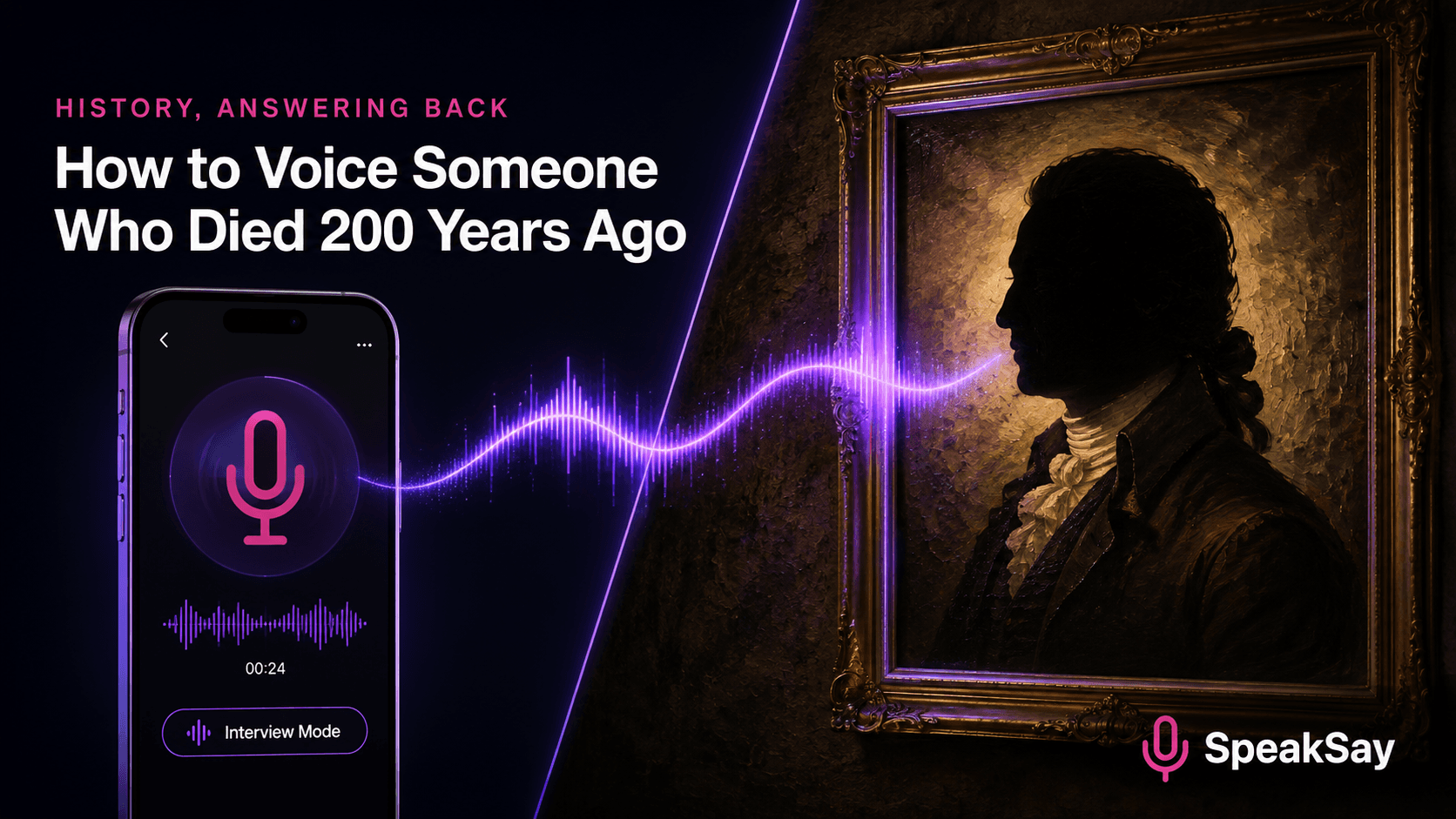
Interview a Historical Figure" Is Shorts' Smartest New Format: How to Voice Someone Who Died 200 Years Ago (2026 Guide)
The format is simple - ask a question, let a historical figure answer - and it works because it turns a lecture into a conversation. The hard part is the voice. Most attempts sound like a present-day American narrator wearing a costume. Here's how to build era-accurate character voices, and where the legal line actually sits.
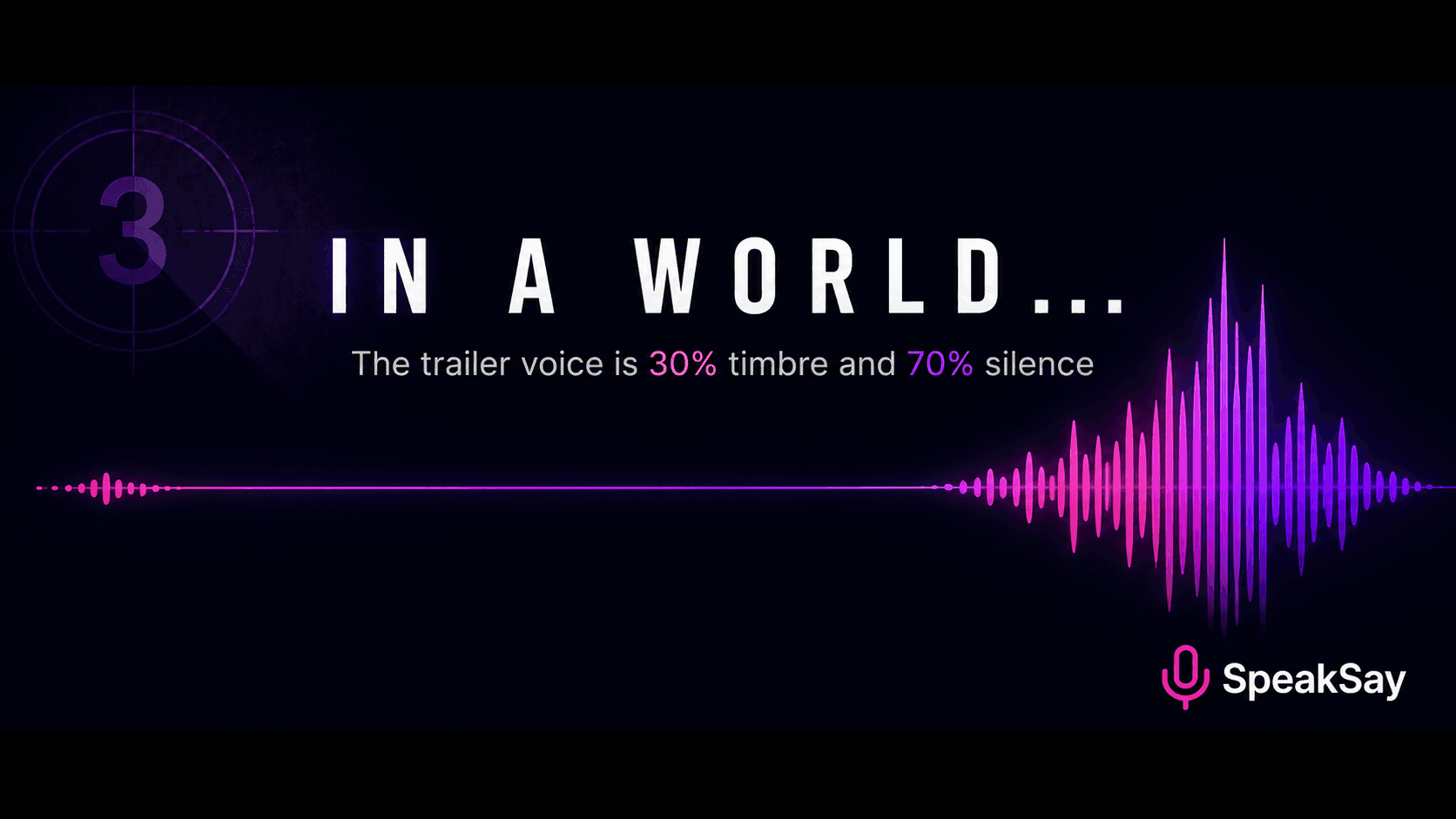
In a World…": How to Make the Movie Trailer Voice for Your Own Videos (2026 Guide)
Every movie trailer voice generator sells you the same deep timbre — and then your trailer still doesn't sound like a trailer. That's because the effect is mostly pacing, silence and music placement, not the voice. Here is the craft guide, with copy-and-paste trailer scripts.Every movie trailer voice generator sells you the same deep timbre — and then your trailer still doesn't sound like a trailer. That's because the effect is mostly pacing, silence and music placement, not the voice. Here is the craft guide, with copy-and-paste trailer scripts.
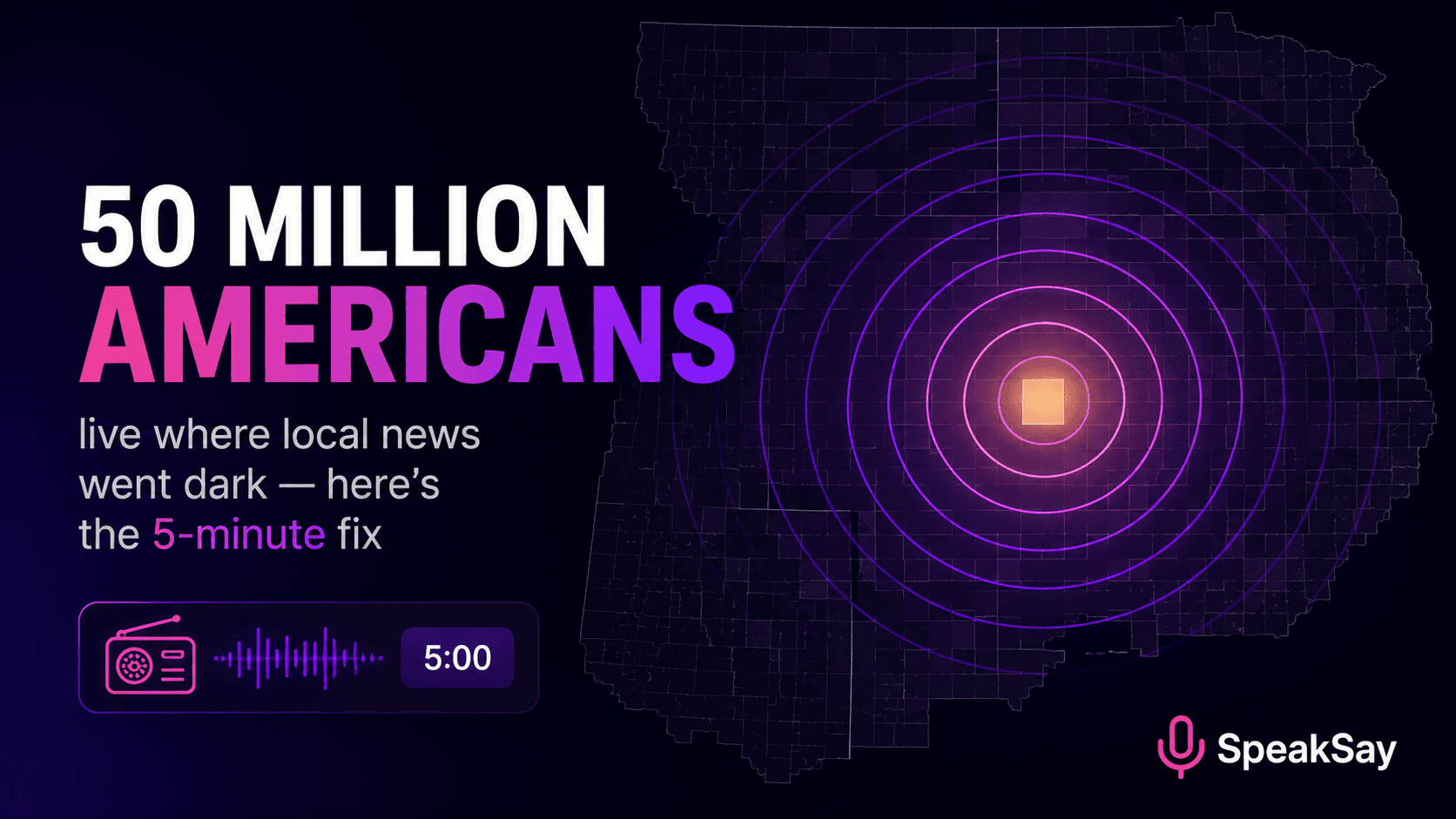
50 Million Americans Live in a Local News Desert: How to Launch a Hyperlocal Daily Audio Briefing With AI (2026)
News desert counties hit a record high and roughly 50 million Americans now have little or no local news. Over 300 local news startups launched to fill the gap — almost none can afford daily audio. Here is how one person produces a credible five-minute weekday briefing.
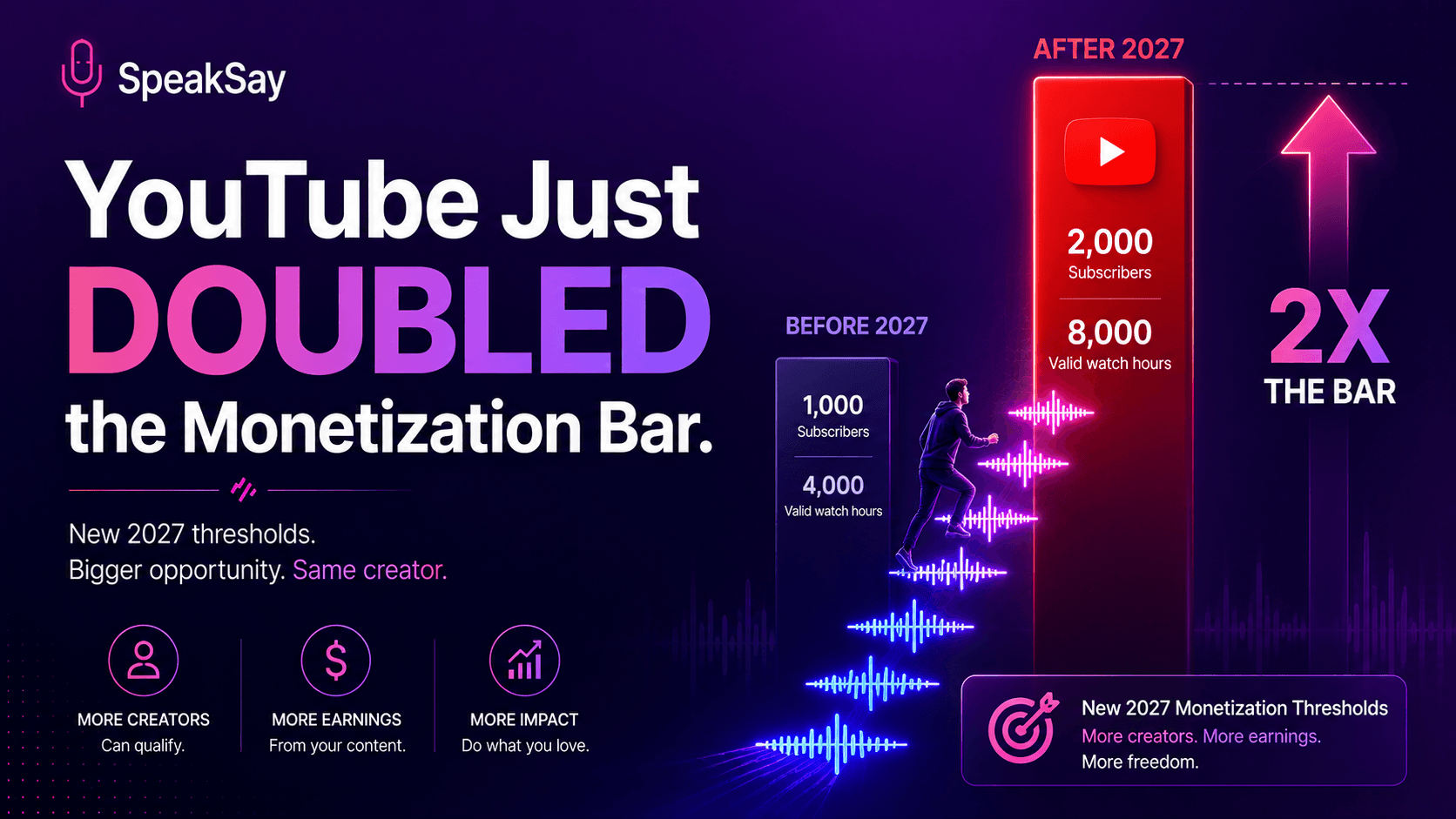
YouTube Just Doubled the Monetization Bar (August 2026): The New Survival Math for Faceless AI-Voice Channels
YouTube's August 2026 announcement doubles watch-hour requirements and demands 10M Shorts views for revenue sharing from February 2027. Here's the old-vs-new math, the grandfather window, and why long-form AI narration just became the smartest path in.
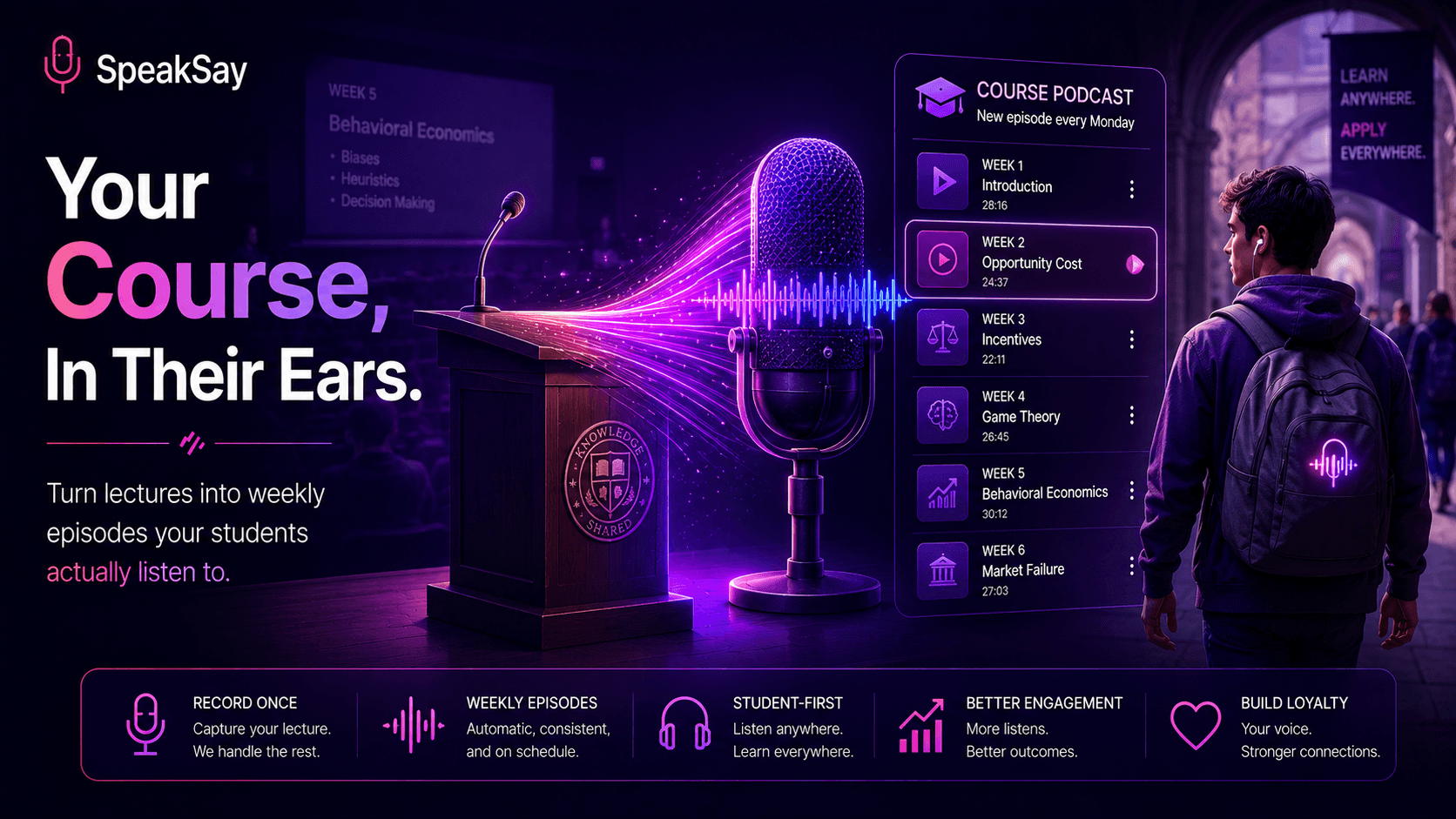
Professors: Give Your Course a Companion Podcast Students Actually Use (2026 Higher-Ed Guide)
Lecture recordings go unwatched and students cram from AI summaries of dubious accuracy. The fix: a weekly 15-minute companion podcast generated from YOUR lecture notes — accurate by construction, consumed voluntarily.
Your Twitch Alerts All Sound the Same Robot: Custom TTS Voices for Donations, Alerts & Channel Points (2026)
Every stream's donation TTS is the same default voice — a meme, but zero brand identity. Here's how streamers build custom alert voices and donation-tier voice drops without real-time CPU cost.
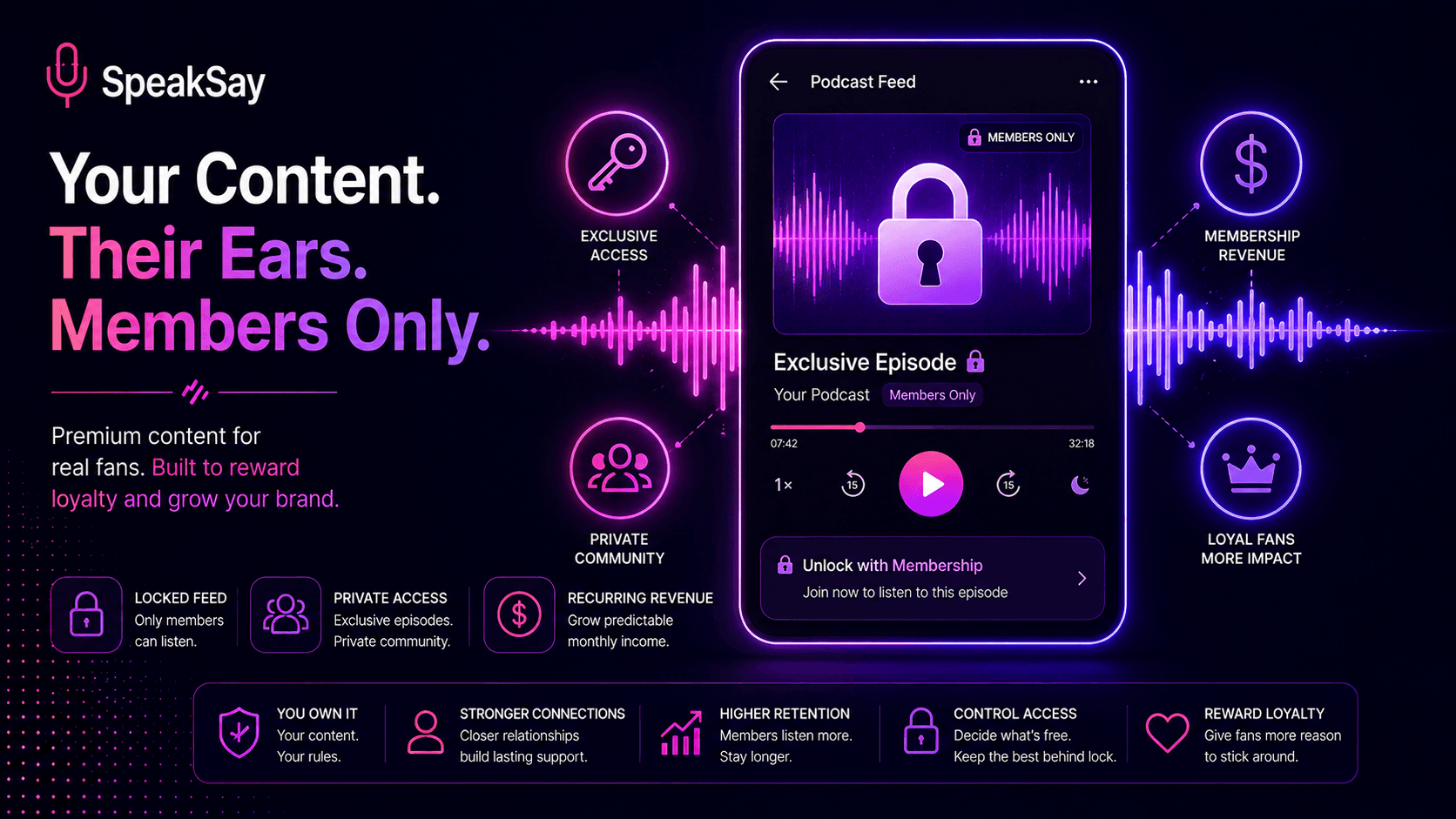
Sell a Private Podcast: Turn Your Course, Coaching or Community Content Into a Members-Only Audio Feed (2026)
Your members don't finish your videos, and your course library goes unopened. A private members-only podcast meets them where they actually are — commutes, gyms, school runs — and cuts churn. Here's how to build one with AI from content you already have.
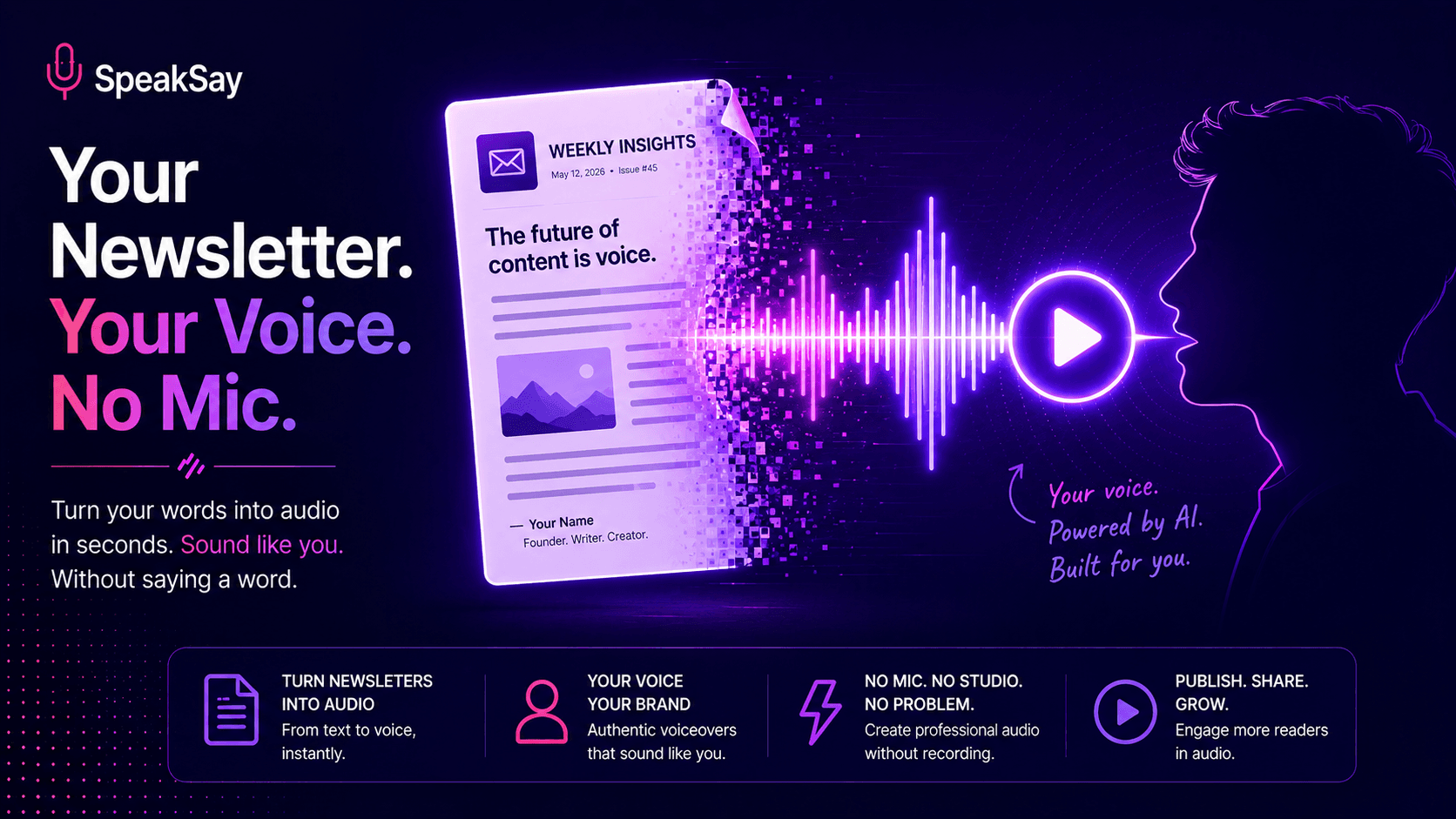
Give Your Newsletter an Audio Edition in YOUR Voice — Without Recording Every Week (2026 Substack Playbook)
Audio editions lift newsletter engagement and paid conversions — but narrating every post takes hours, so most writers quit by week three. The 2026 fix: clone your voice once, and every post ships with an audio edition that sounds like you.
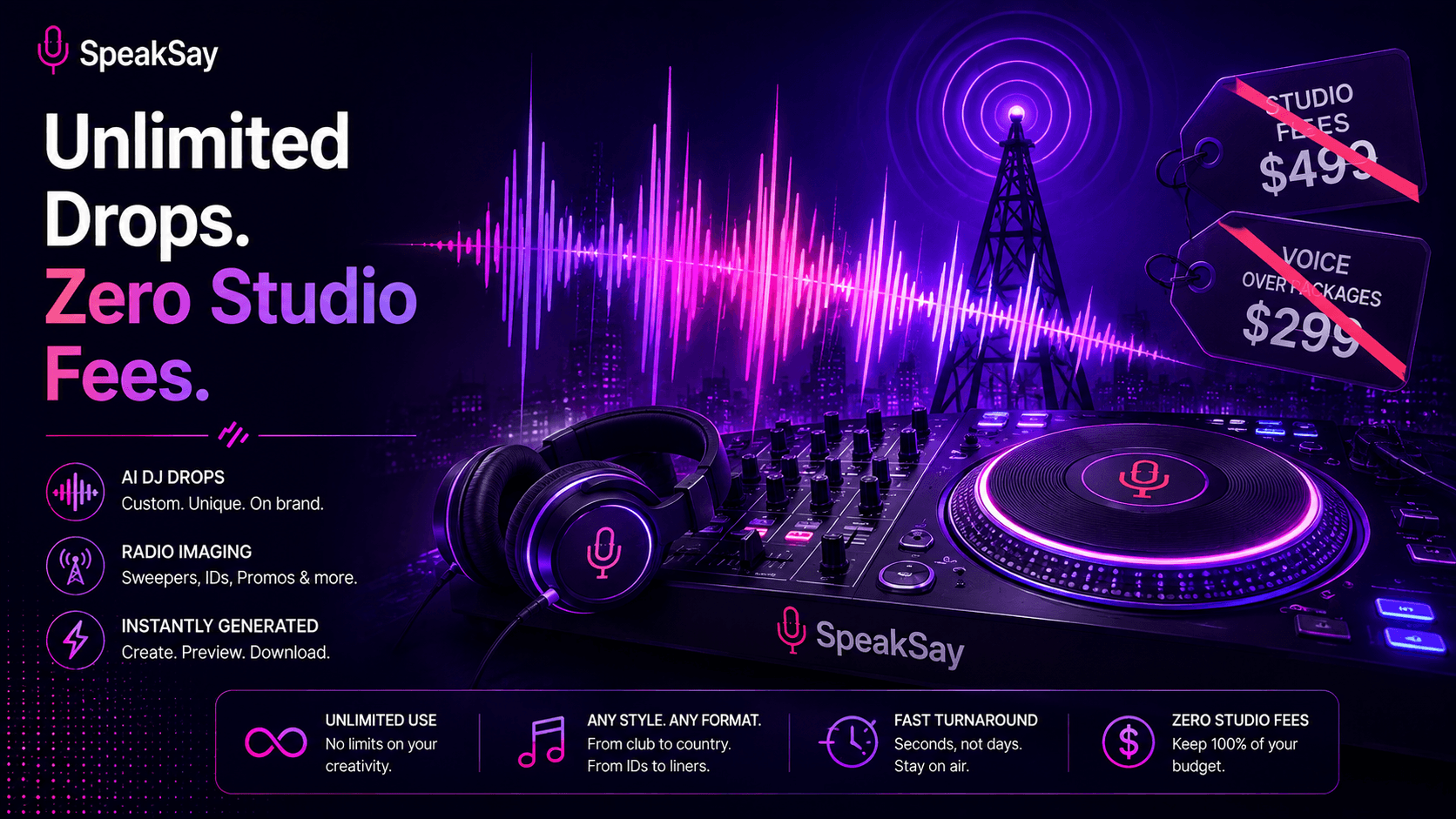
DJ Drops, Radio Sweepers & Station IDs With AI Voices: Stop Paying $50 a Drop (2026)
Custom DJ drops and radio imaging used to mean $25–$100 per cut and days of turnaround. In 2026, DJs, internet radio stations and podcasters design a signature imaging voice once and generate unlimited drops in minutes. Here's the full workflow.
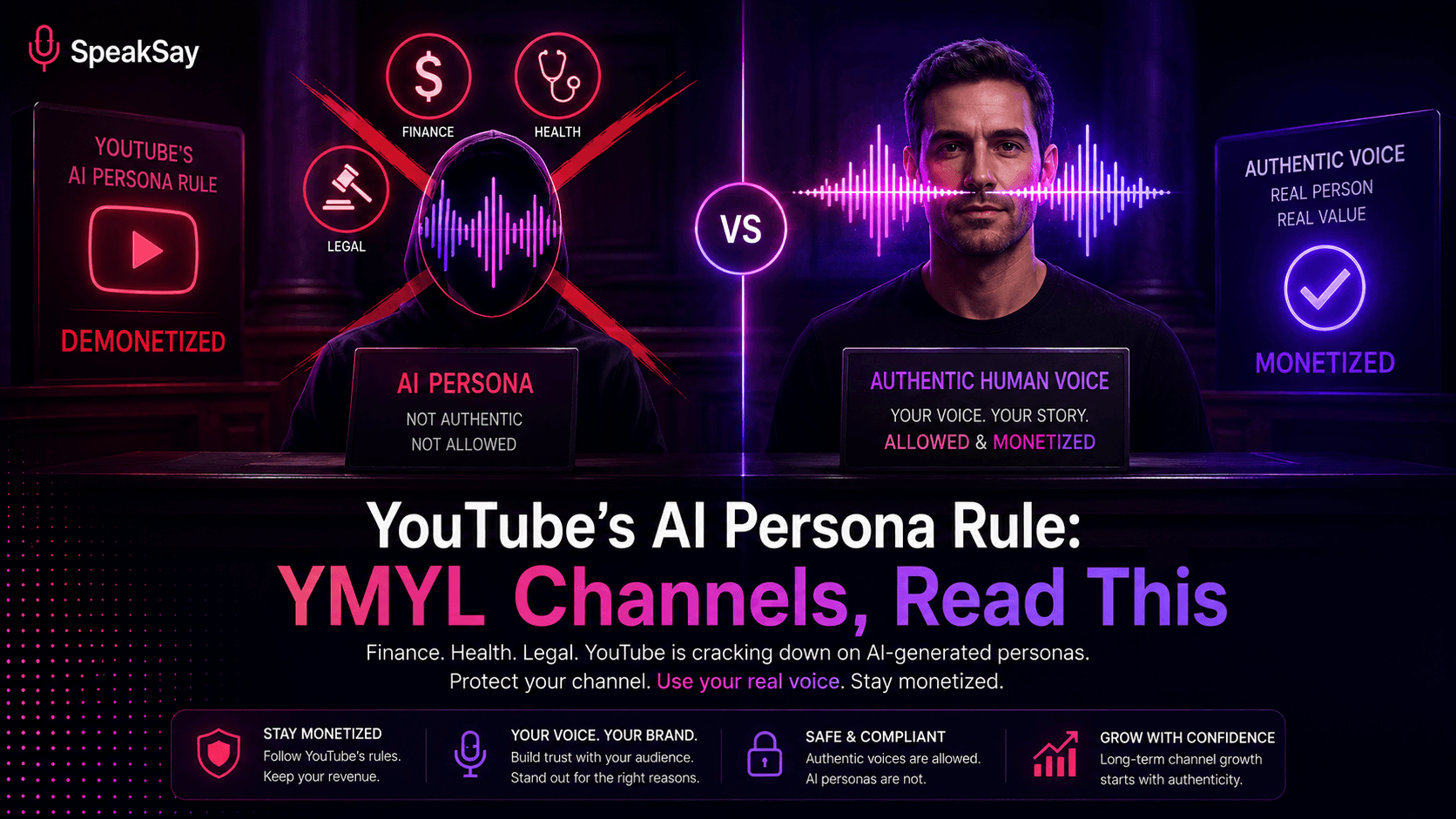
YouTube's New "AI Persona" Rule Hits Finance, Health & Legal Channels Hardest (2026): How YMYL Faceless Creators Stay Monetized
YouTube's 2026 "inauthentic content" enforcement singles out AI personas discussing finance, health and legal topics. Here's exactly what the policy says, why high-RPM YMYL niches are the bullseye, and the own-voice workflow that keeps your channel monetized.
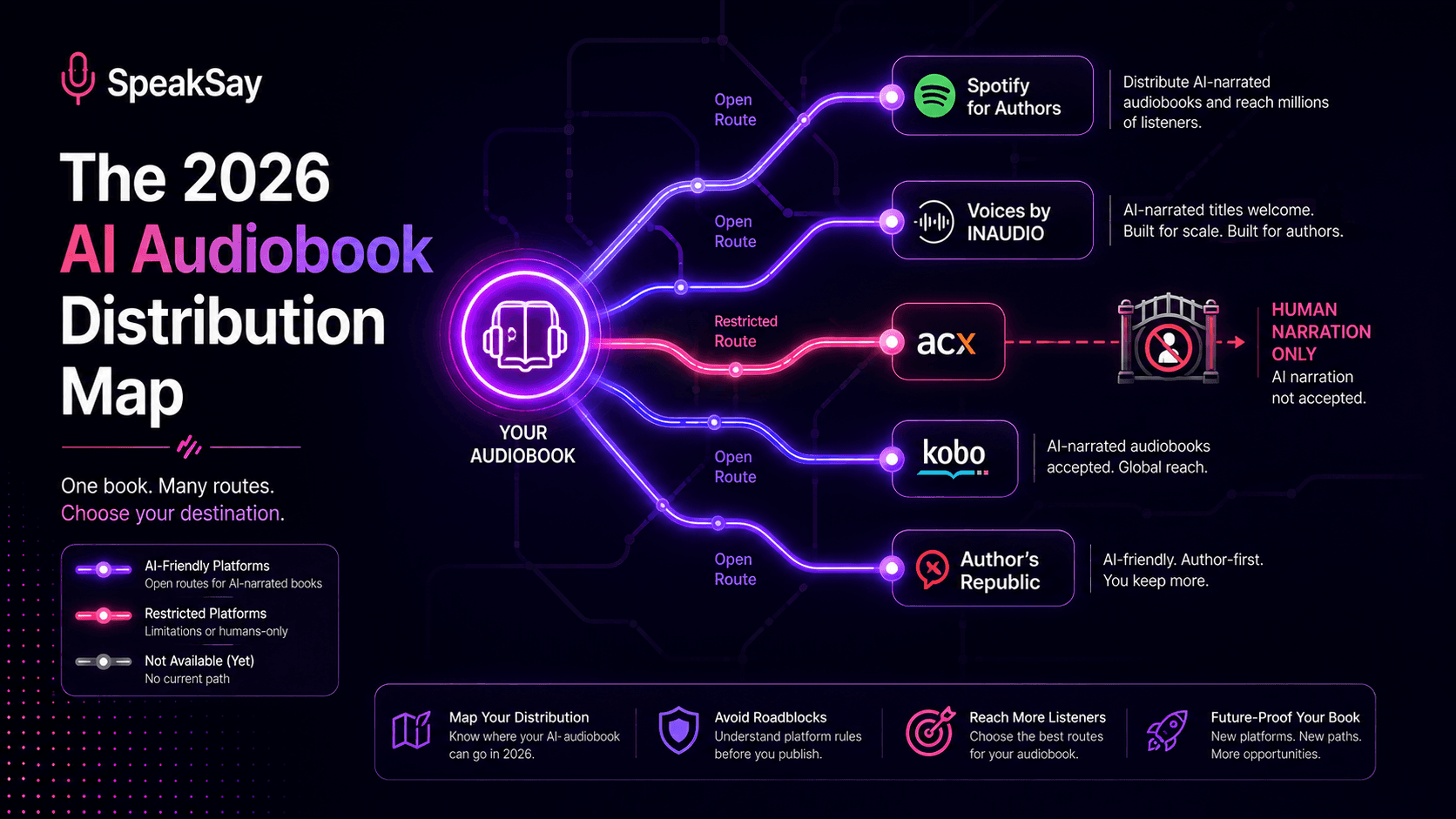
Findaway Voices Is Gone — Meet Voices by INaudio & Spotify for Authors: The 2026 AI Audiobook Distribution Map
Findaway Voices rebranded to Voices by INaudio, Spotify launched its own direct-upload portal, and ACX still refuses AI narration. Here's the platform-by-platform 2026 map for publishing an AI-narrated audiobook — and the narration workflow that keeps every door open.
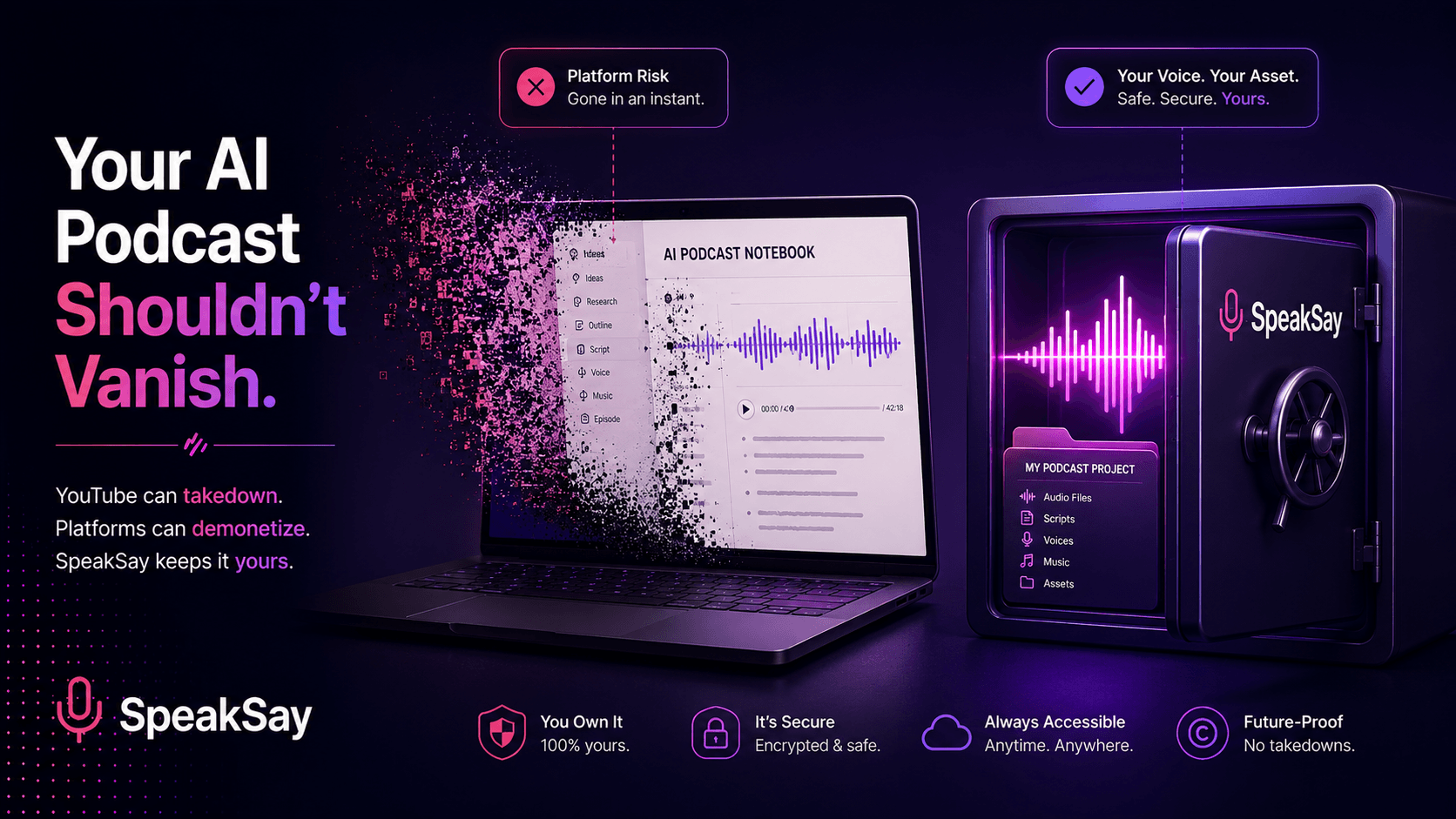
Gemini Notebook Keeps Eating Your Podcasts: Vanishing Notebooks, Failed Audio Generations — and How to Build an AI Podcast Pipeline You Actually Own (2026)
Notebooks disappearing, Audio Overviews cutting off mid-sentence, and zero error logs — Gemini Notebook (formerly NotebookLM) has a reliability problem. Here's how to protect your work today and build an AI podcast pipeline you actually own.
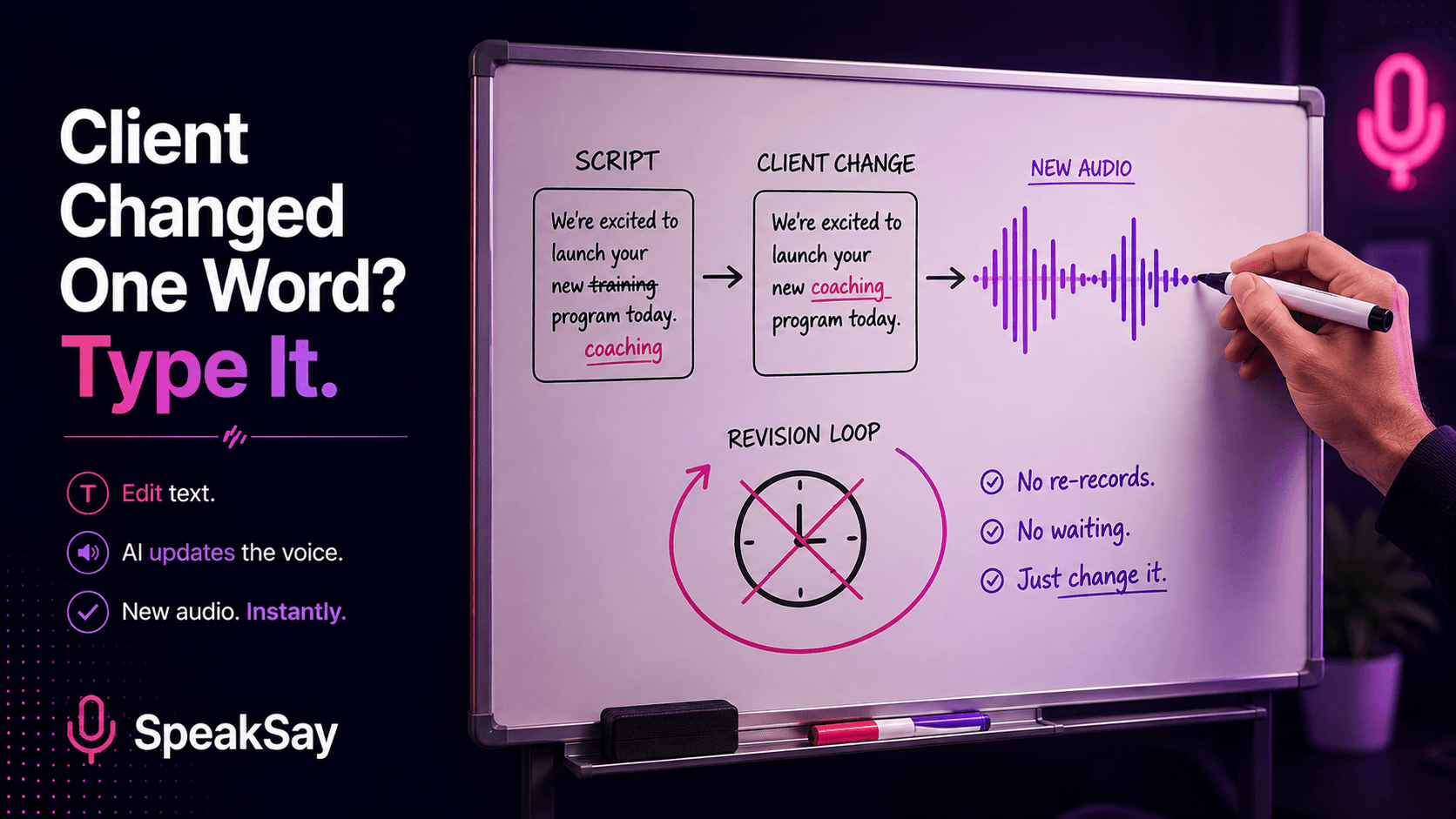
Explainer Video Voice Over in 2026: Why Agencies Stopped Booking VO Artists for Every Revision
The explainer video's dirty secret is the revision loop: every client tweak used to mean re-booking a voice artist, pickup fees, and days of delay. Here's the 2026 AI voice workflow agencies use instead.
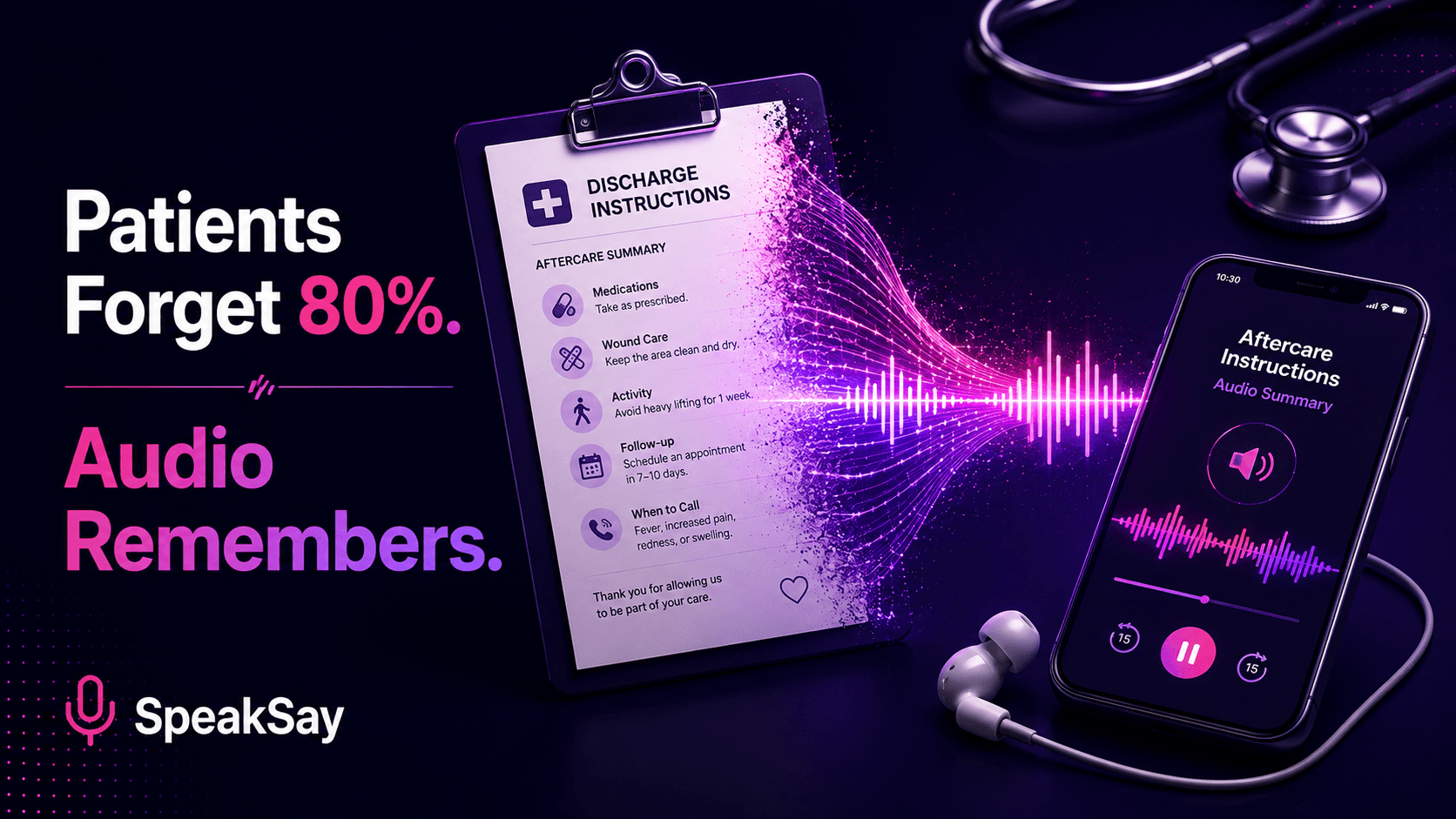
Patients Forget 80% of What Doctors Say: Clinics Are Turning Aftercare Instructions Into Audio With AI (2026)
Research shows patients immediately forget 40–80% of verbal medical instructions. Clinics are fixing it with AI-voiced aftercare audio — in the clinician's own voice, in every language their patients speak.
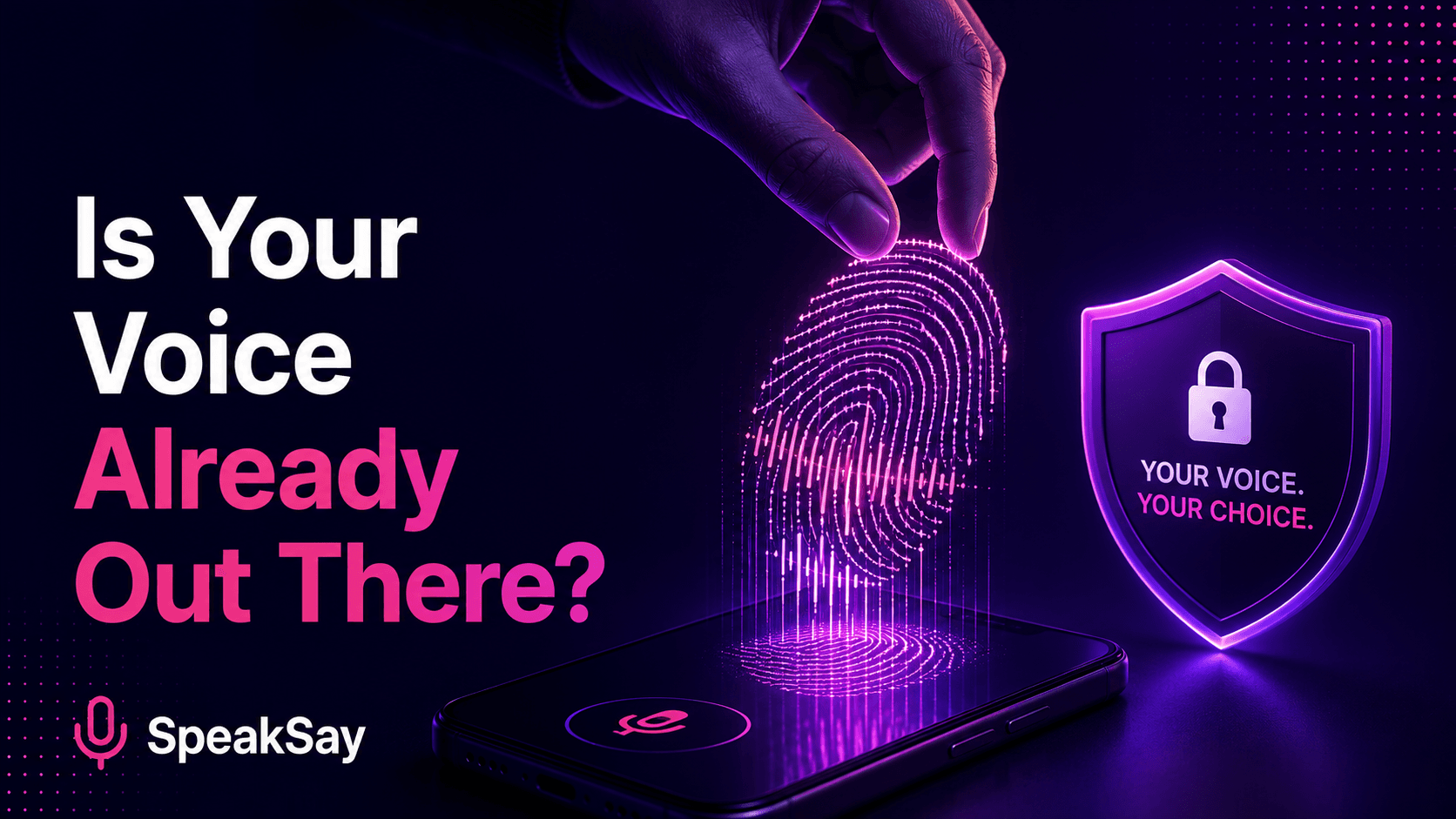
Your Voice Might Already Be on an AI Platform Without Your Consent: How Creators Check, File Takedowns & Lock Down Their Voice (2026)
Creators keep finding their voices on AI platforms they never signed up for — even as those platforms raise millions. Here's how to check if your voice is out there, get it taken down, and make the official version of your voice the one you control.
Nonprofits: Stop Choosing Between Mission and Marketing Budget — AI Voiceovers for Fundraising, Donor Updates & Multilingual Outreach (2026)
Every dollar a nonprofit spends on video production is a dollar donors expected to fund the mission. In 2026, nonprofits are cloning their founder's voice once and producing appeals, thank-yous, impact reports, and multilingual outreach in minutes. The complete guide.
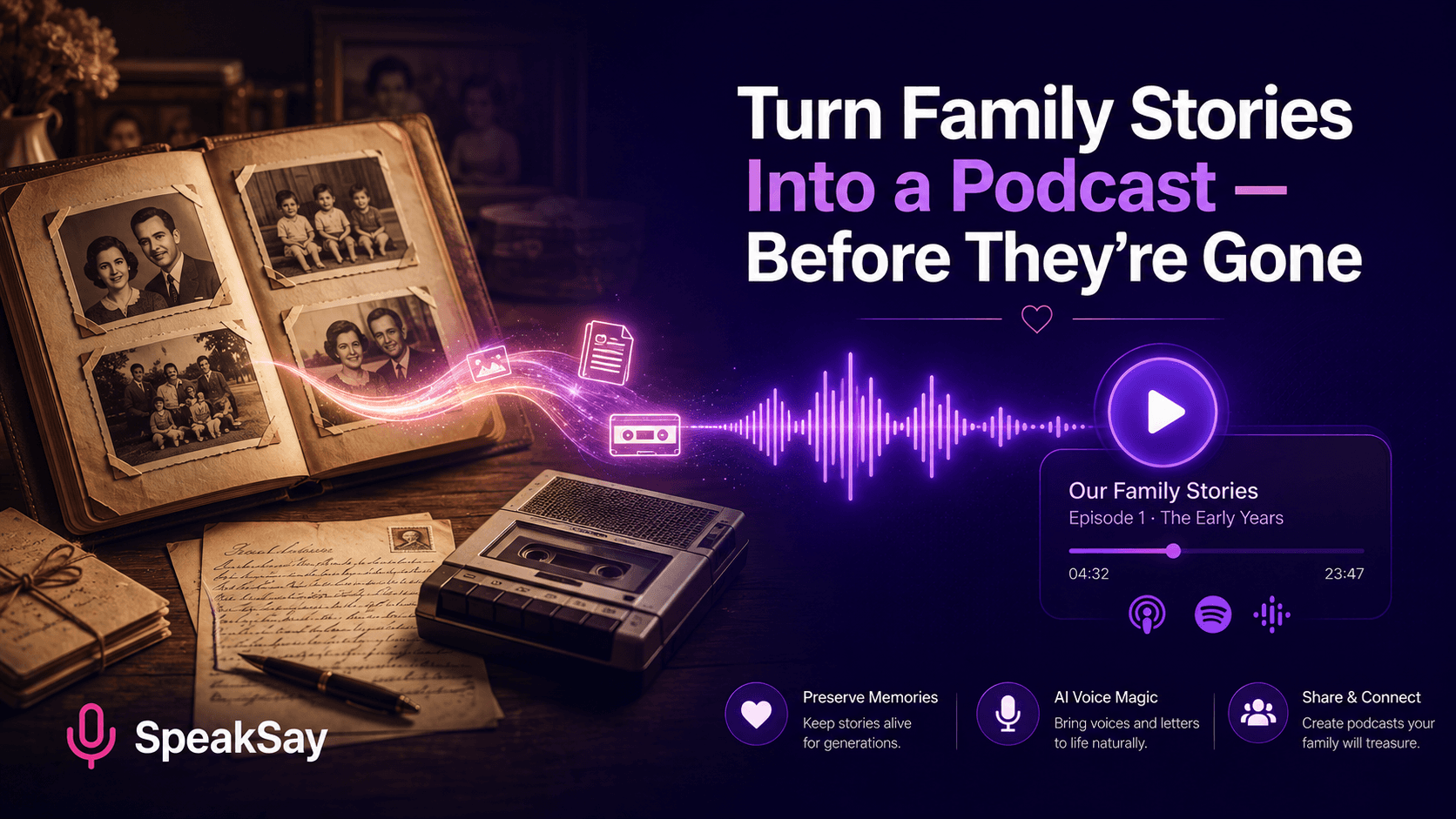
Your Grandparents' Stories Will Disappear: How Families Are Making Private Family-History Podcasts With AI (2026)
Family stories rarely survive three generations. In 2026, families are turning interviews, letters, and diaries into private, produced podcast episodes with AI — some narrated in a consented clone of a loved one's own voice. Here's the complete workflow.
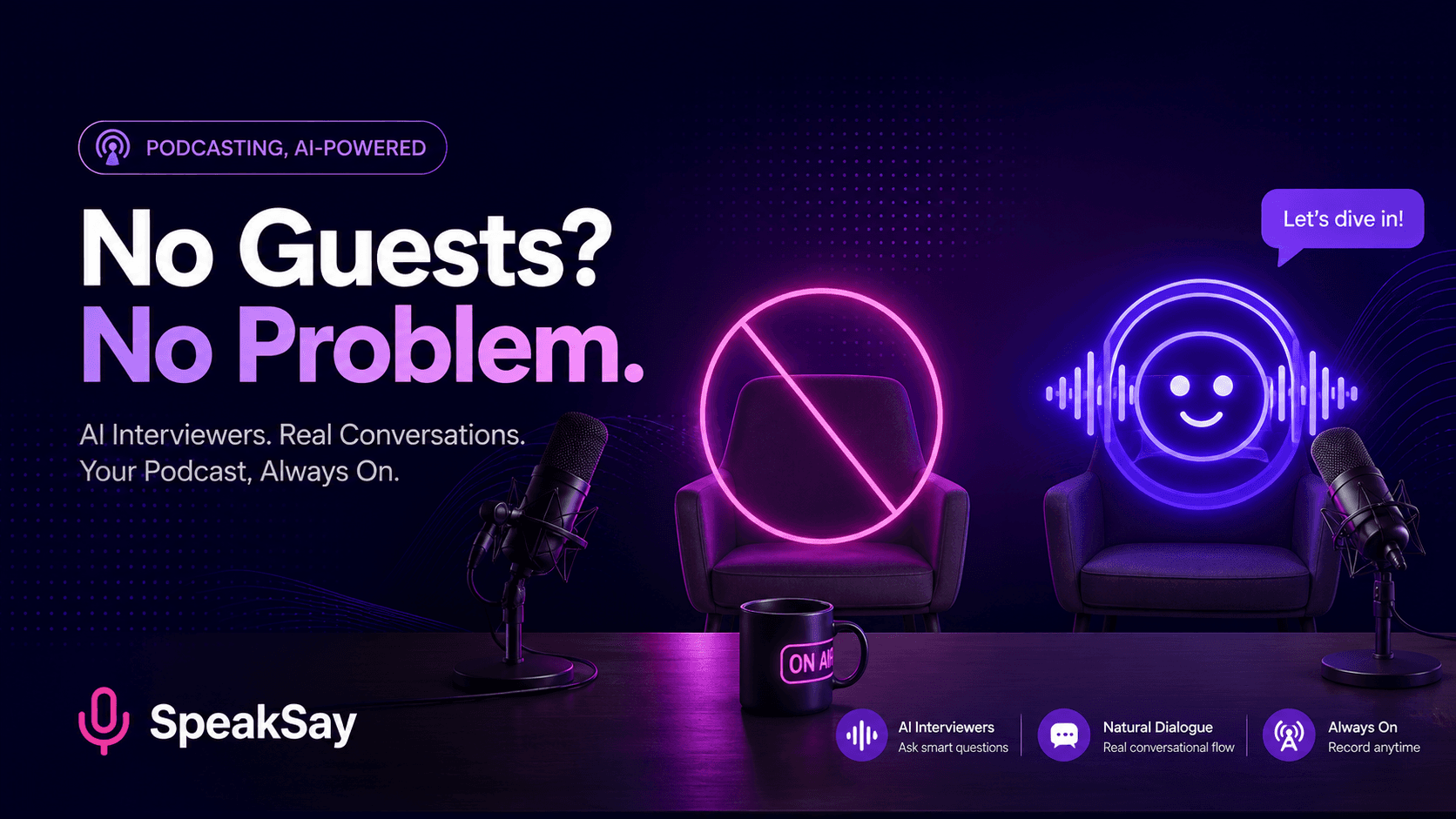
Can't Book Podcast Guests? Flip It: Let an AI Host Interview YOU (2026 Guestless Interview Workflow)
Guest booking is one of the top reasons podcasts die by episode three. The 2026 fix: flip the format — an AI interviewer asks the questions your audience would, and you deliver the expertise. Here's the full workflow.
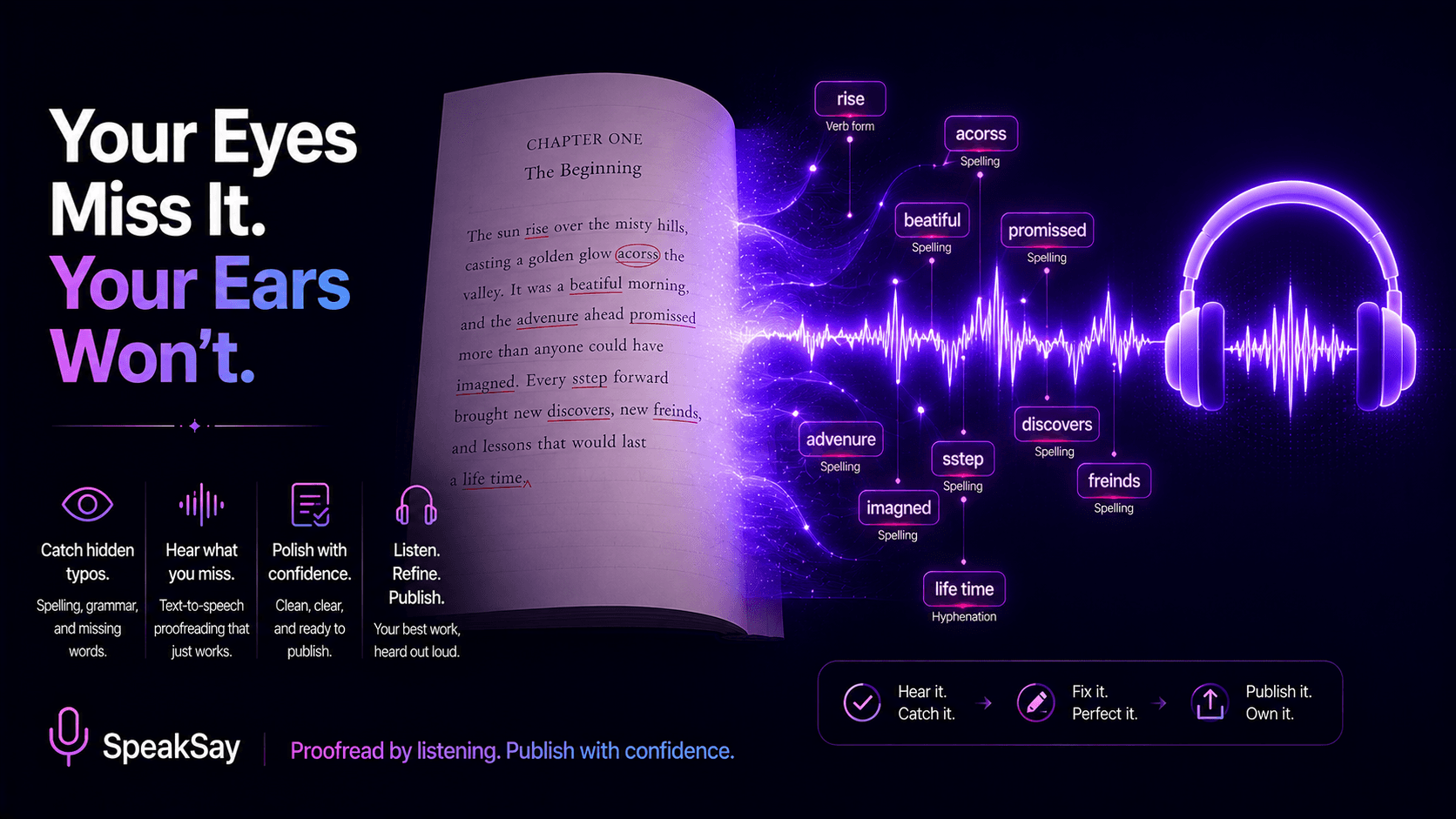
The Editing Trick Your Eyes Can't Do: Proofread Your Book by Listening With Text-to-Speech (2026)
You've read your manuscript five times and typos still slip through. That's not carelessness — it's how the brain reads. Here's how authors use natural AI text-to-speech to hear every run-on, repeated word, and missing article their eyes skip.
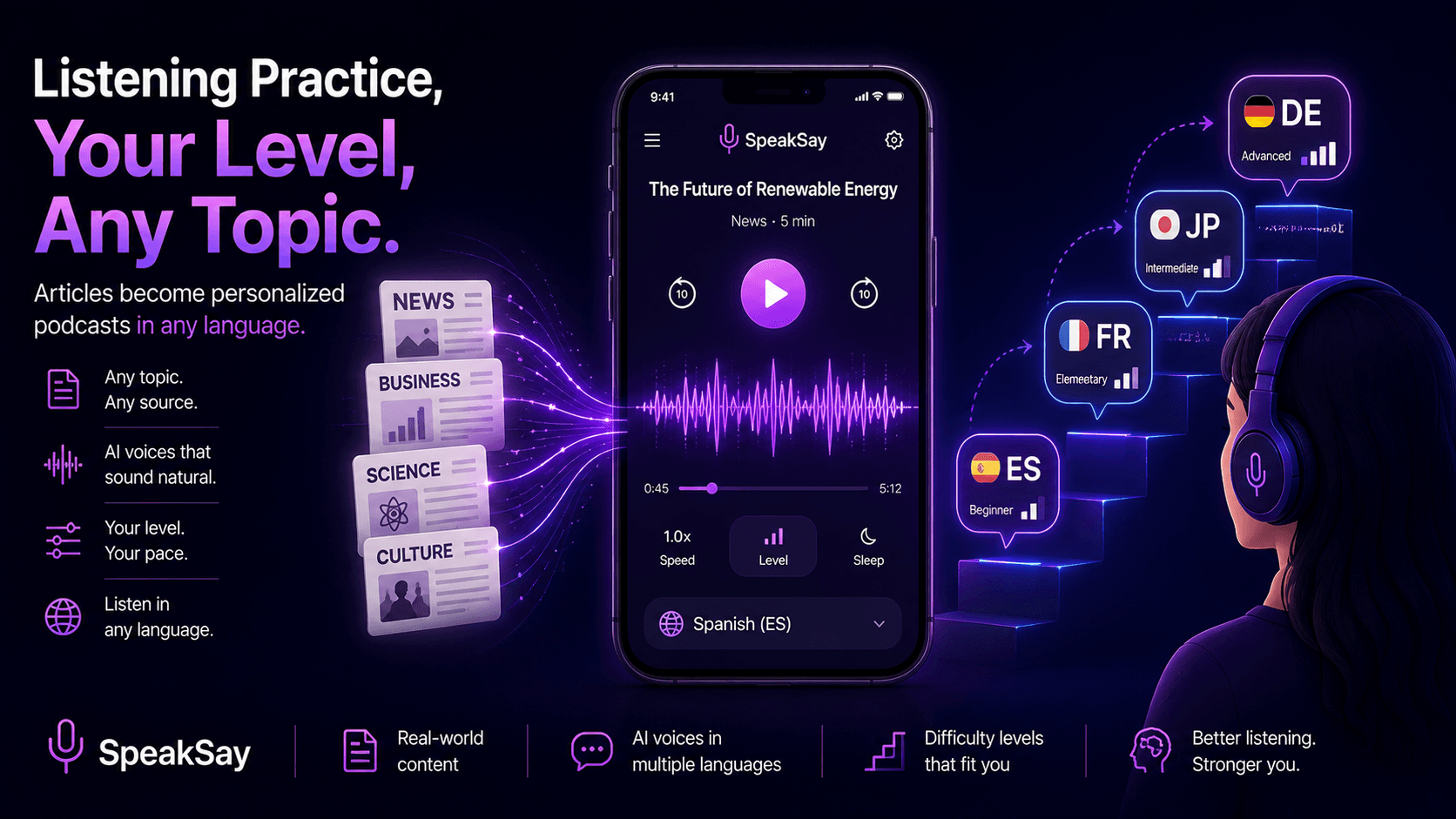
Comprehensible Input on Demand: Turn Any Article Into Listening Practice in Your Target Language (2026)
Learner podcasts are boring, native podcasts are too fast, and the gap between them is where most language learners stall. Here's how to turn any article you actually care about into level-appropriate listening practice — even a daily personal podcast — with AI voices.
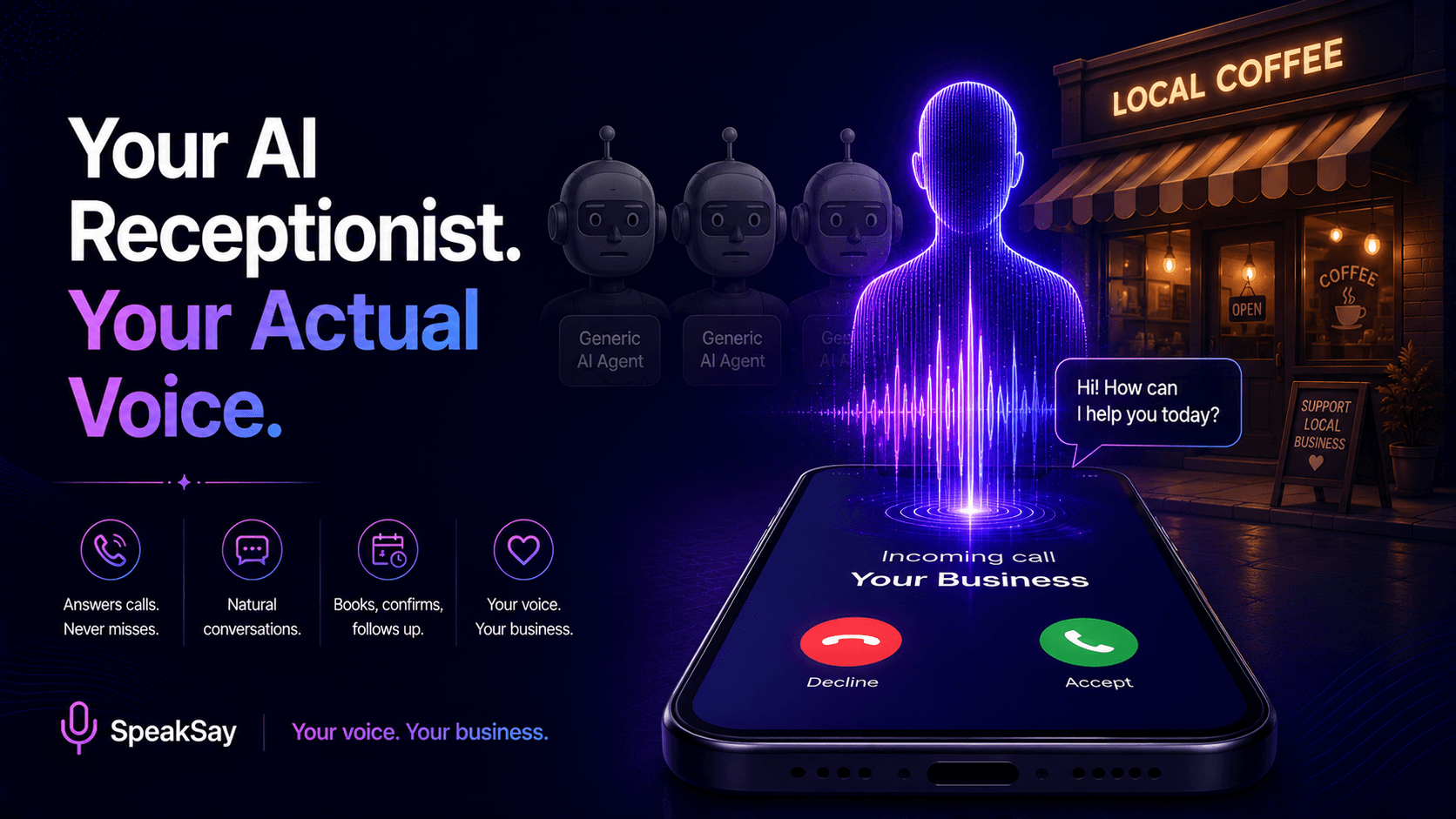
AI Phone Agents Are Here, but They All Sound the Same: Give Yours Your OWN Voice (2026 Small-Business Guide)
Every business is getting an AI receptionist in 2026 — and they all sound like the same robot. Here's how to clone your own voice so your AI phone agent, voicemail, and after-hours line sound like the human your customers actually know.
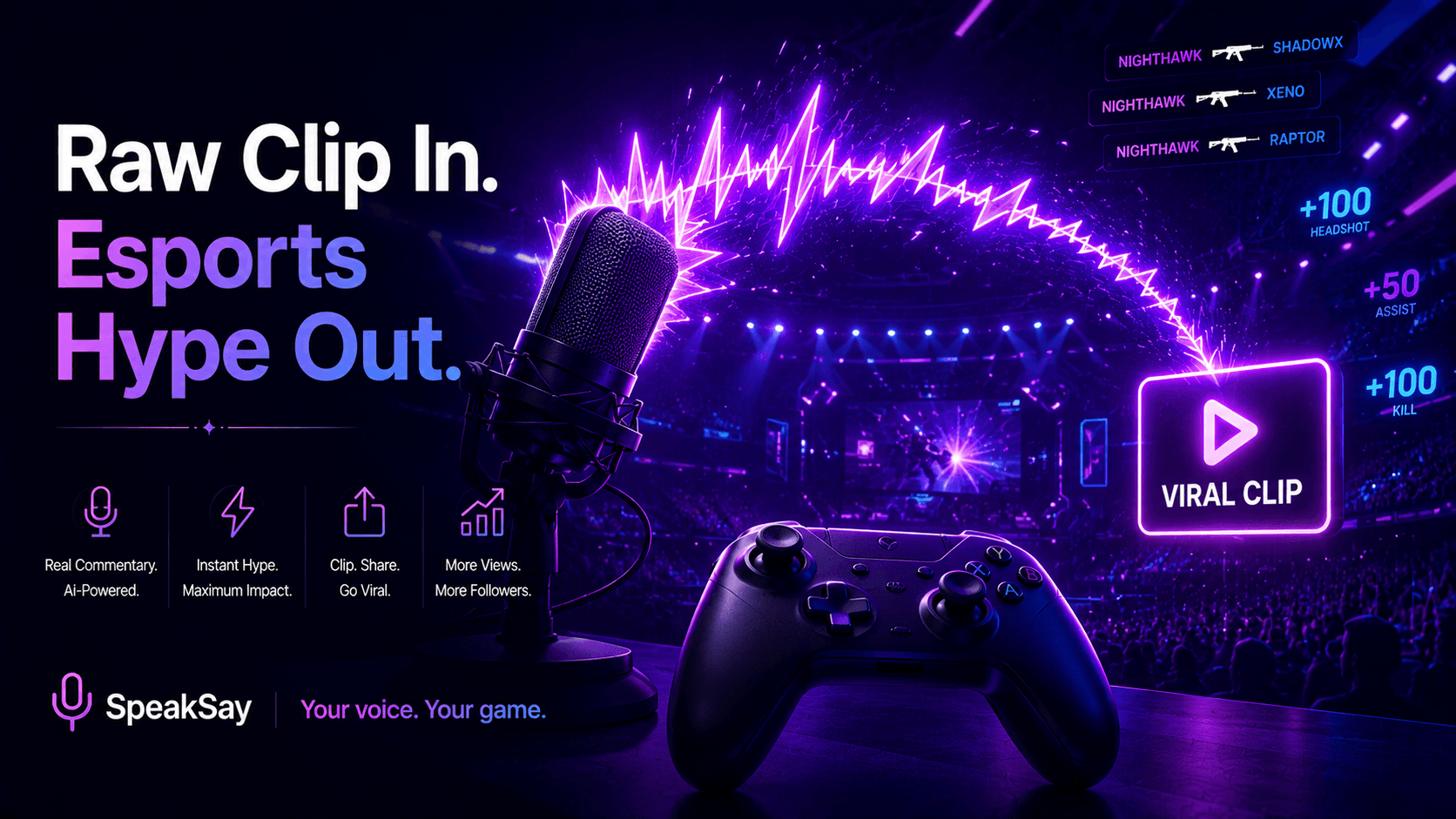
Turn Raw Gameplay Into Esports-Style Hype: How to Add an AI Commentary Voice to Gaming Clips (2026)
Silent gameplay clips die in the algorithm — and in 2026 they can get flagged as reused content too. Here's how to add an esports-caster AI commentary voice to your gaming clips, even if you hate your own mic.
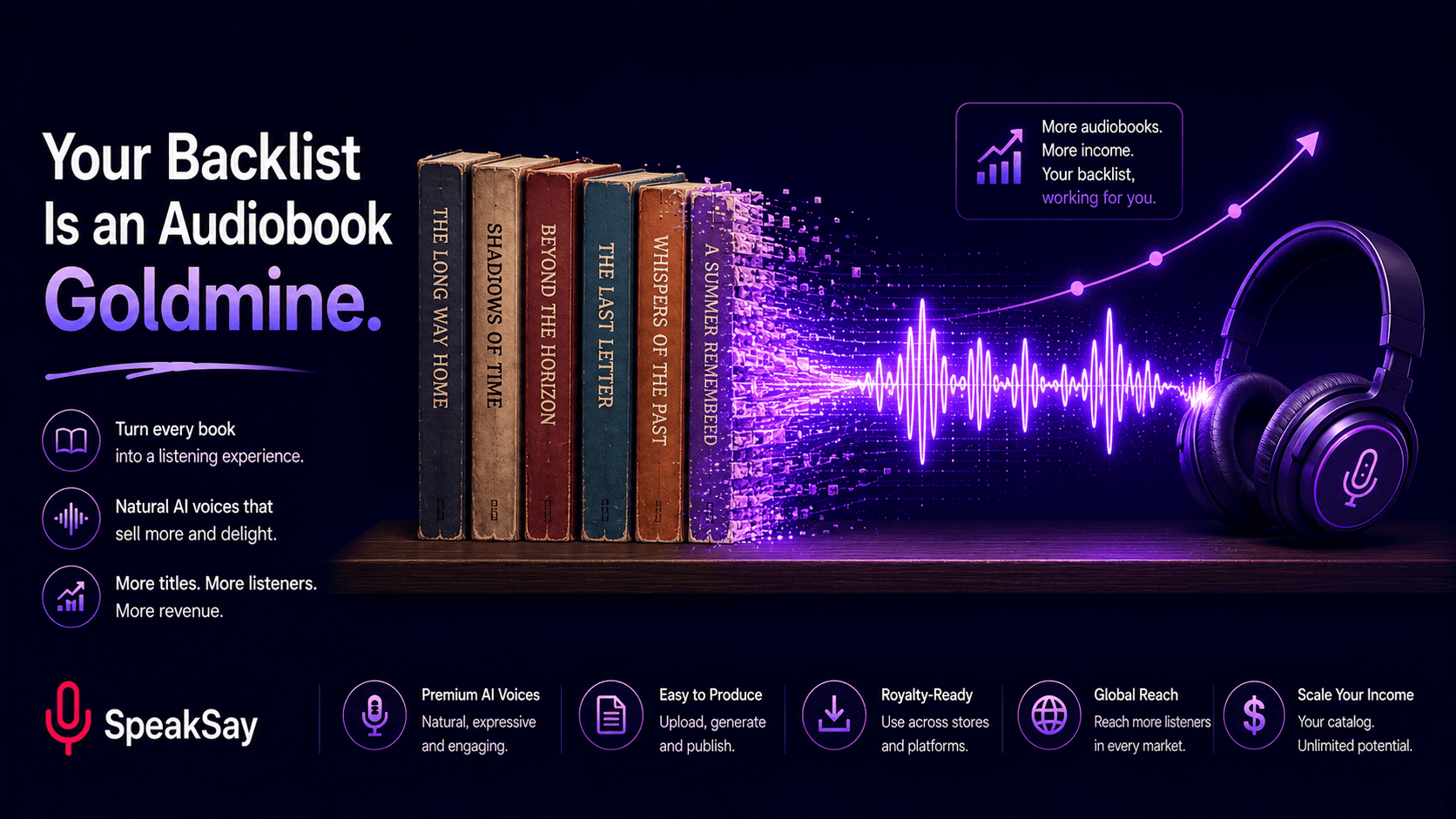
Your Backlist Is an Untapped Audiobook Goldmine: How Indie Authors Convert 5–20 Old Books to Audio in a Month (2026)
Human narration at $2,000–$5,000 per title meant your backlist never earned audio editions. In 2026, AI narration produces a finished audiobook in about a day for under $100 — and wide platforms accept disclosed digital narration. Here's the batch pipeline for converting an entire backlist in 30 days, with one consistent series narrator and margin math that actually works.
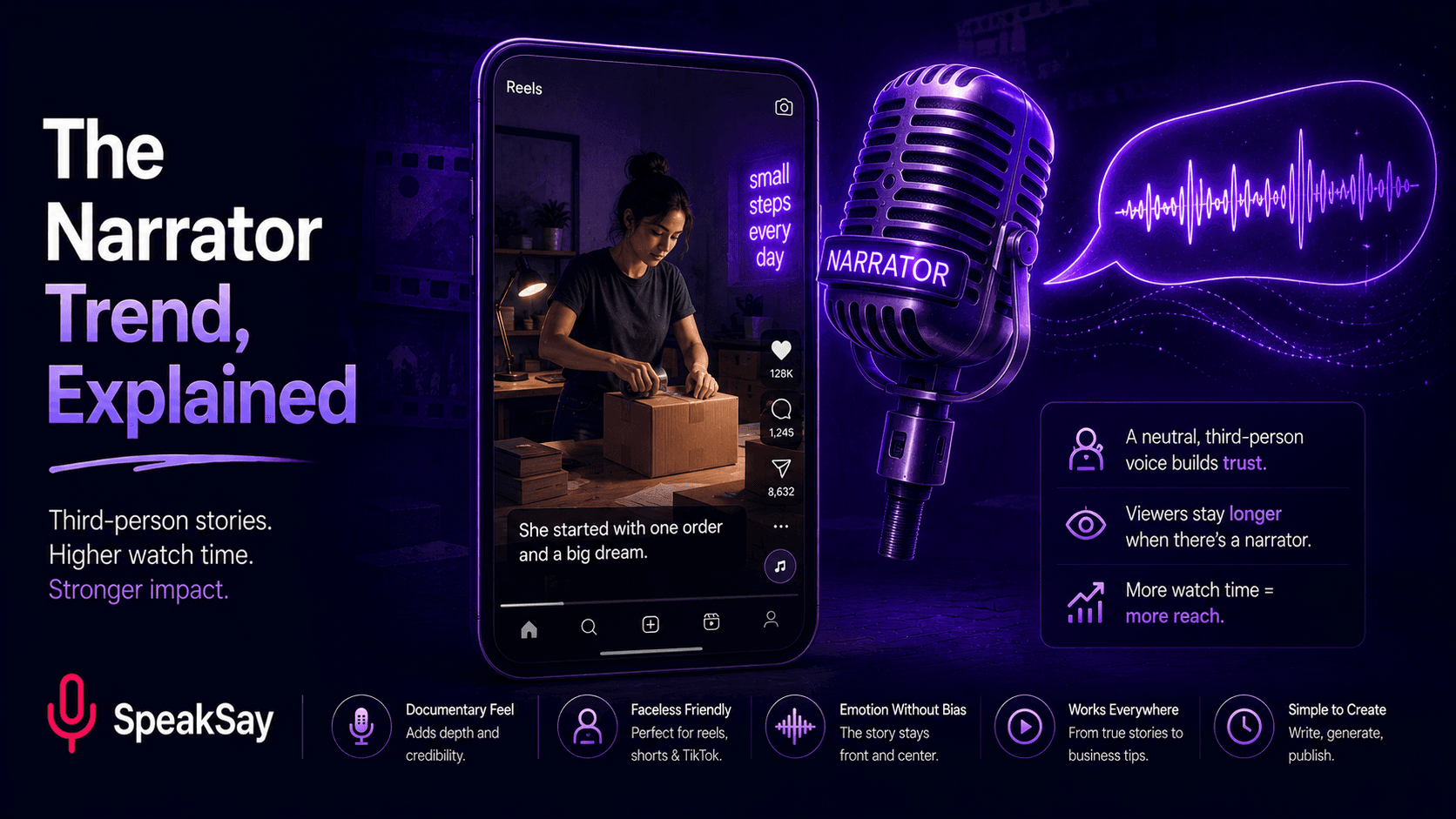
The "Third-Person Narrator" Format Is Taking Over Reels & TikTok: How to Narrate Your Own Life With an AI Voice (2026 Trend Guide)
The deadpan third-person narrator format is everywhere on TikTok and Reels in 2026 — one AI-narrated reel hit 14 million views. Here's how the format works beat by beat, how to build a signature narrator voice instead of the same CapCut default everyone uses, and how small businesses are riding it.
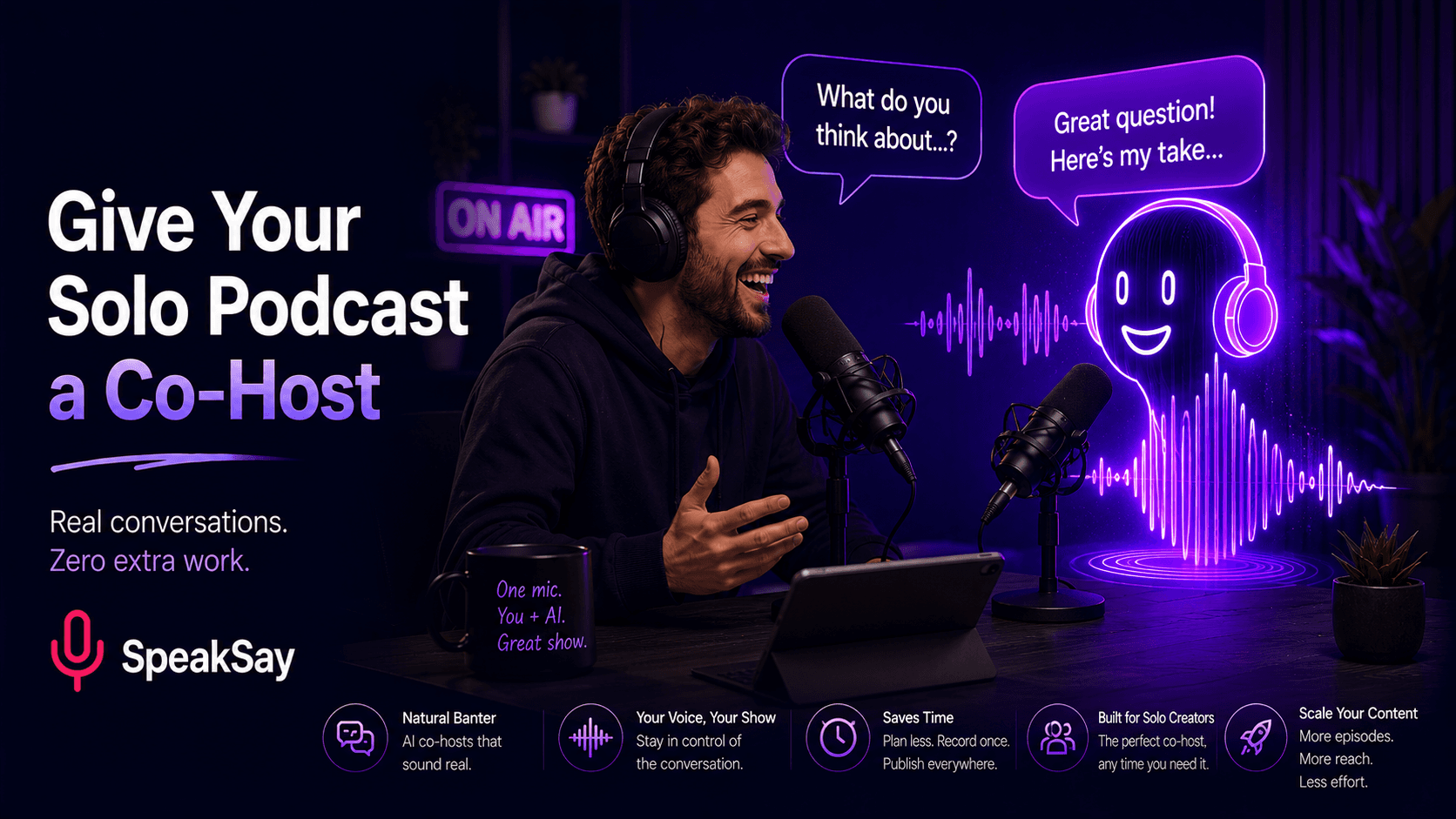
Solo Podcasts Have a Retention Problem: How to Add an AI Co-Host That Actually Banters Back (2026 Guide)
Solo monologues are the hardest format in podcasting — for listeners and hosts alike. Here's the 2026 hybrid workflow: keep your own voice as the anchor and add a designed AI co-host with a real personality, turning your outline into two-voice dialogue that holds attention without surrendering your show to two AI strangers.
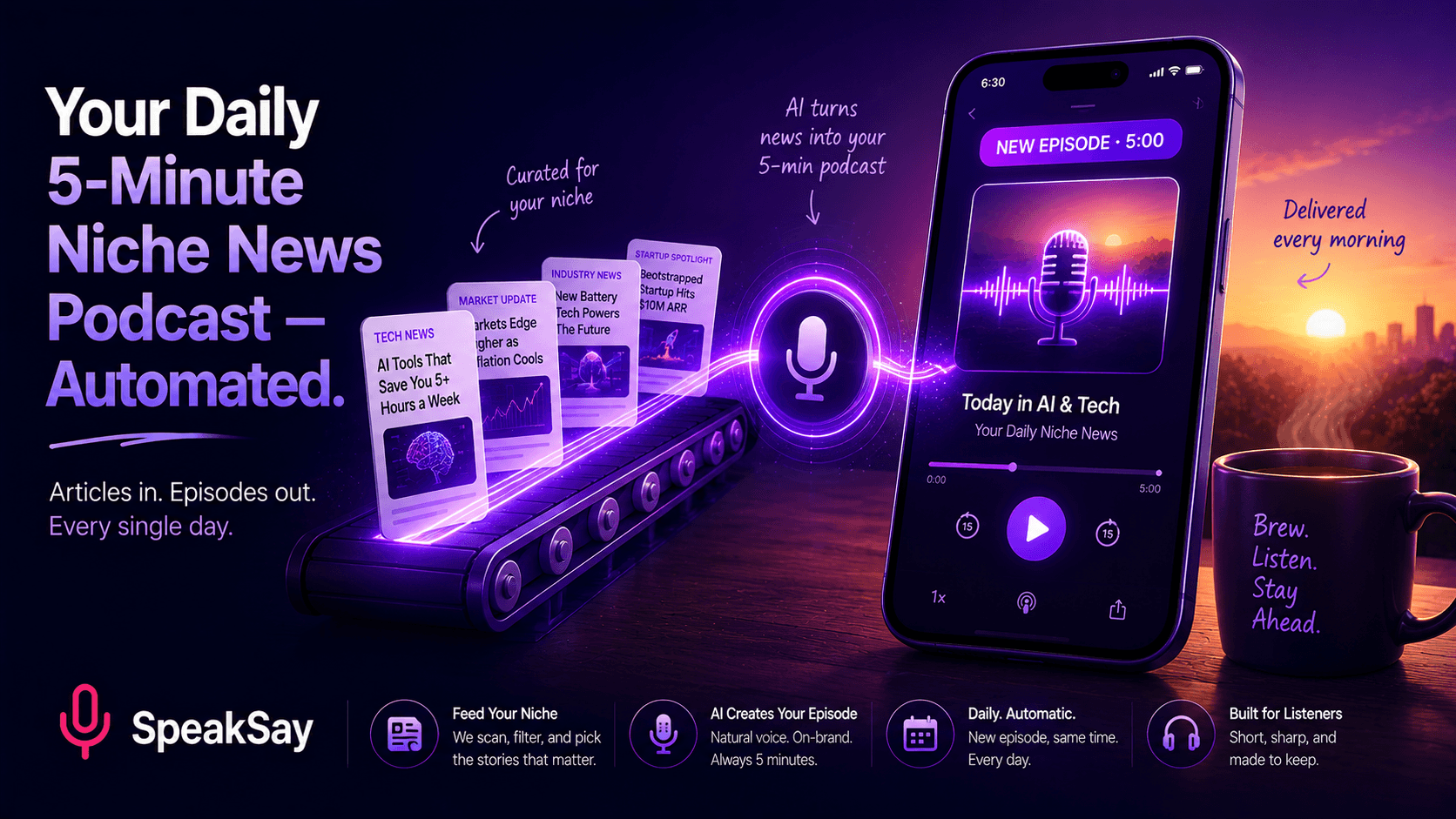
Launch a Daily 5-Minute Niche News Podcast With AI (2026): The Automation Workflow That Publishes Every Morning
Daily shows build the most loyal podcast audiences — but producing one manually burns creators out in weeks. Here's the AI workflow that turns your niche's news into a publishable 5-minute episode every morning, in your own voice
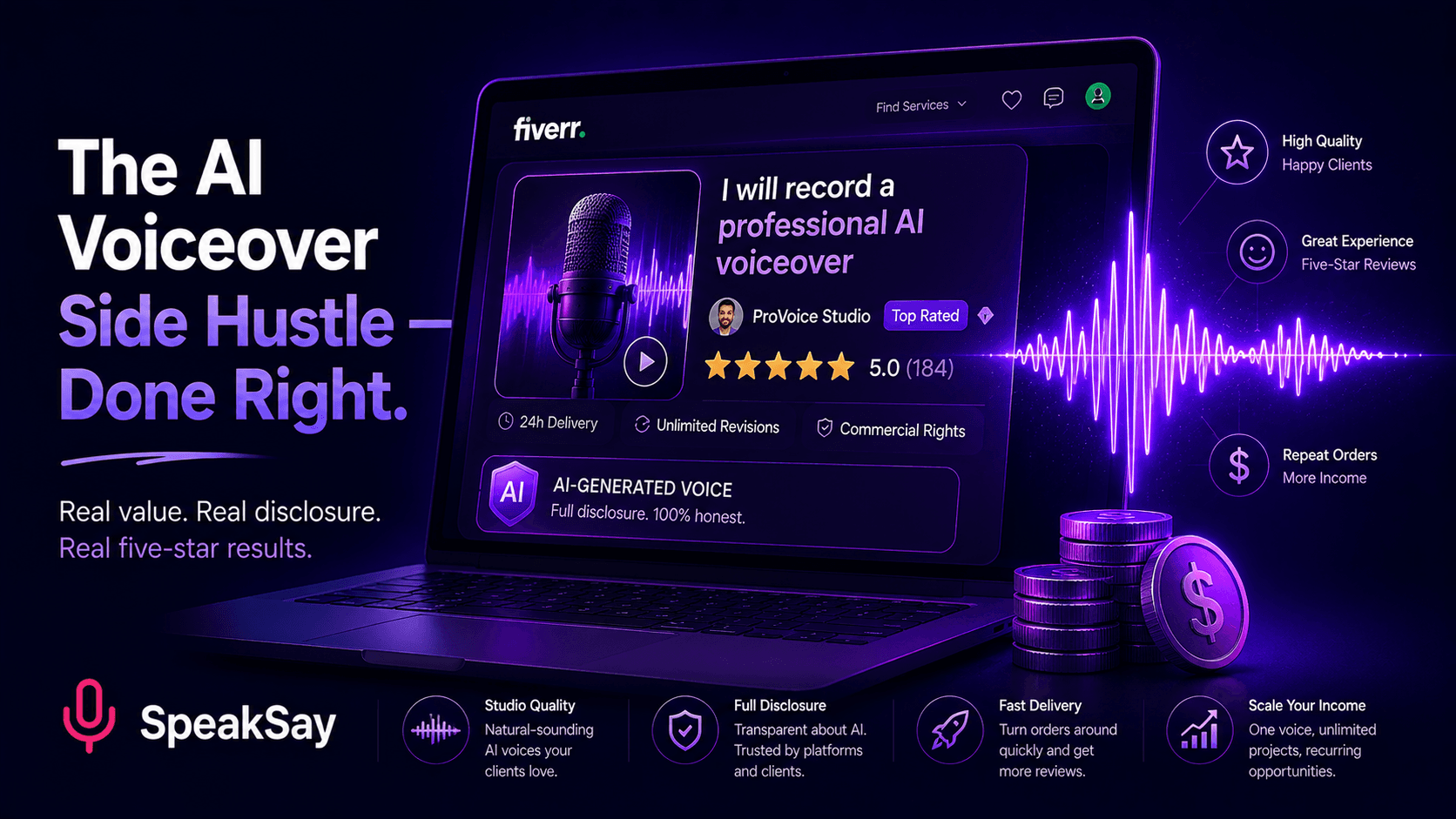
Selling AI Voiceovers on Fiverr in 2026: The Disclosure Rules, the $2K–$5K/Month Workflow, and What Gets Gigs Banned
Fiverr allows AI voiceover gigs — if you follow its disclosure and rights rules. Here's what's allowed, what gets sellers banned, and the workflow behind the sellers quietly earning $2,000–$5,000 a month
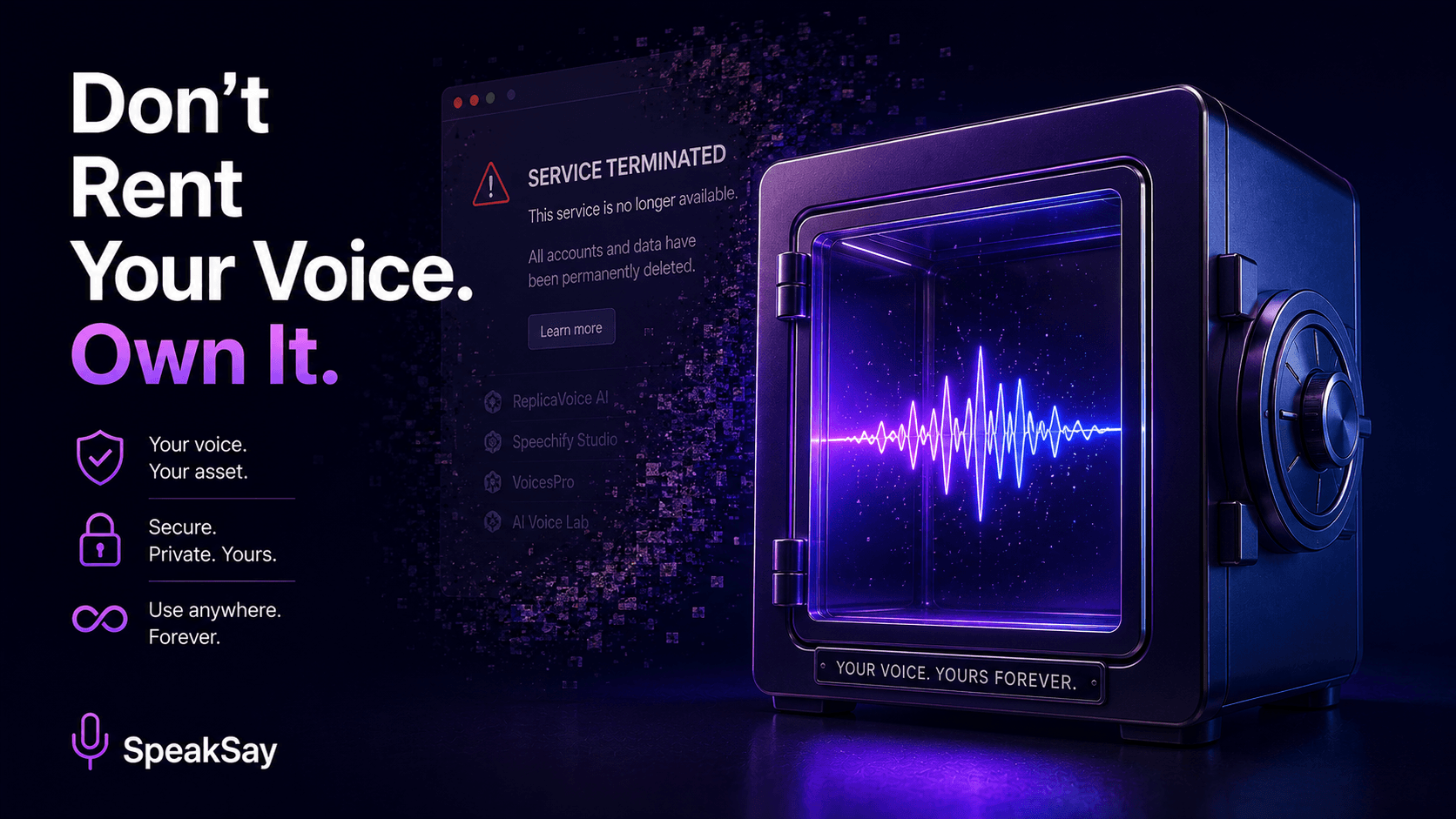
Your AI Voice App Could Vanish Overnight: How to Lawsuit-Proof and Shutdown-Proof Your Channel's Voice (2026)
PlayHT deleted every voice clone with no migration path. Nine class actions hit voice AI companies in May 2026. Here's how to make sure your channel's voice survives whatever happens to the platform behind it.
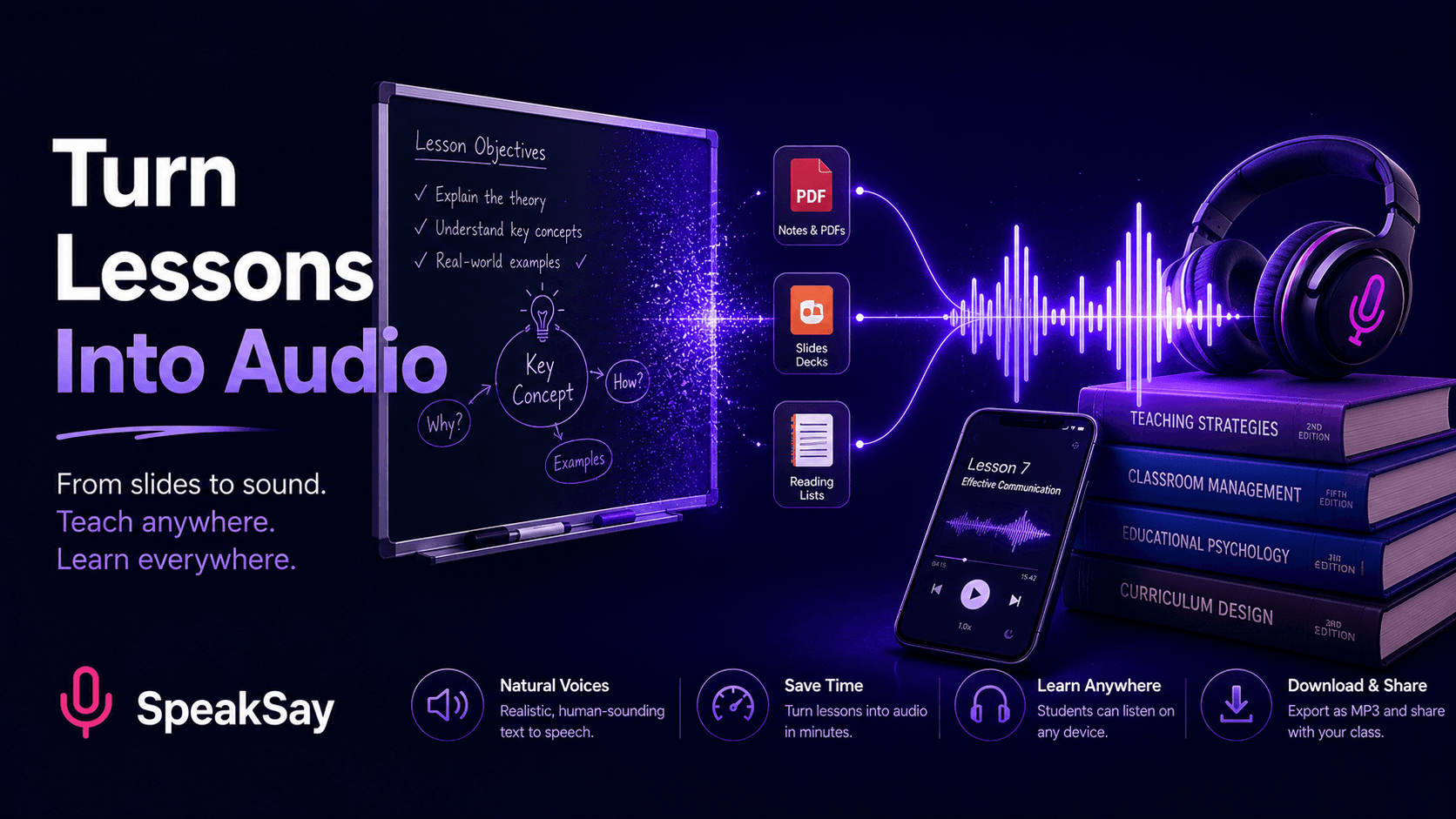
How Teachers Turn Lessons, Slides & Reading Lists Into Audio and Study Podcasts With AI (2026 Classroom Guide)
Recording yourself reading every handout doesn't scale — but your dyslexic, ELL, and commuting students need audio. Here's the 2026 workflow for batch-converting classroom materials into natural audio and multi-episode study podcasts.
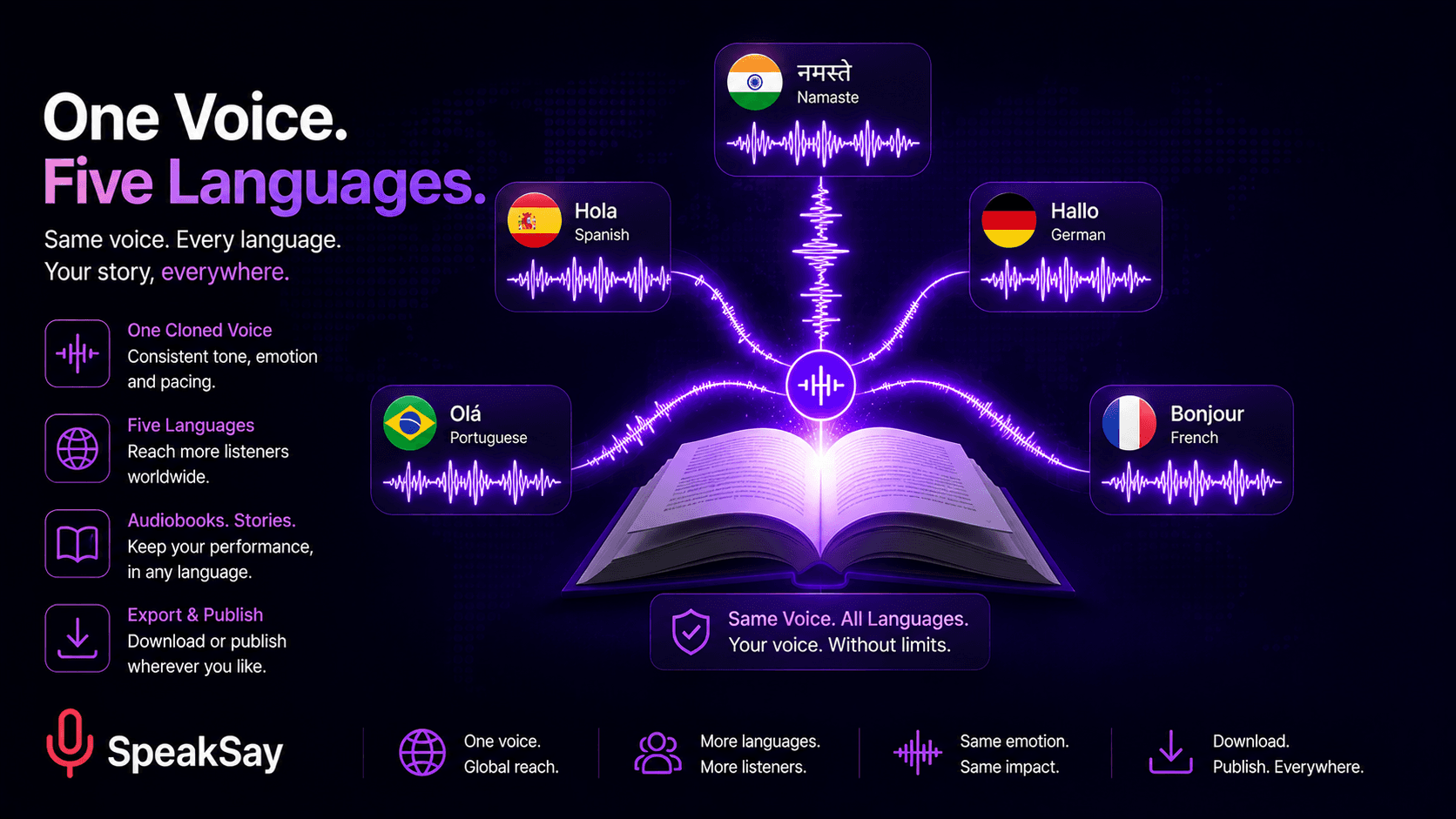
How to Translate Your Audiobook Into Other Languages With Your Own Cloned Voice (2026 Indie Author Guide)
Audible now offers AI translation — but only through publishers, locked to their platform and their voices. Here's how indie authors clone their own voice once and sell audiobook editions in five languages everywhere, rights intact.
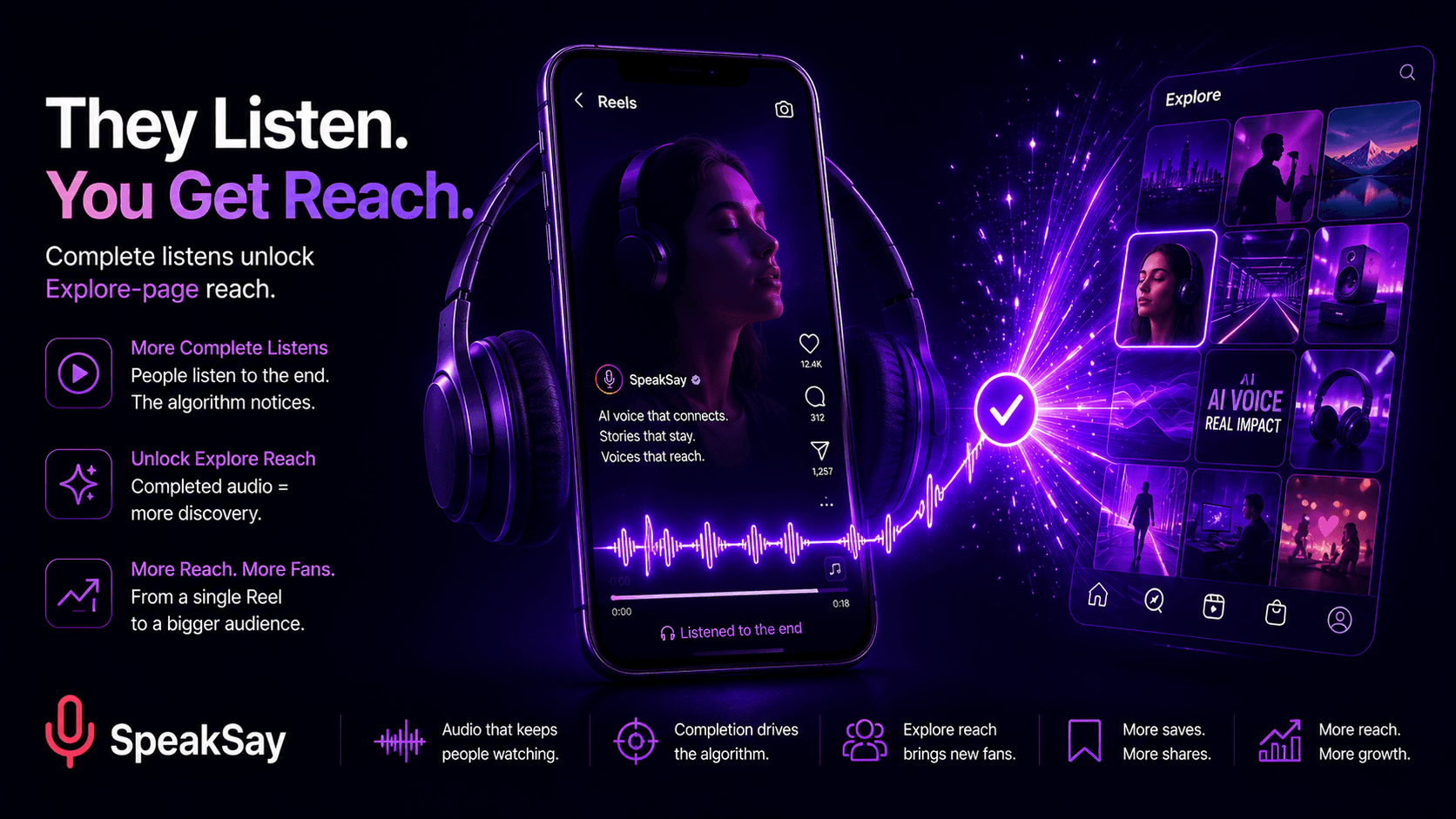
Instagram's Algorithm Now Rewards Audio Retention (2026): The AI Voiceover Playbook for Faceless Reels
In 2026, a Reel whose audio gets heard to the end is ~3x more likely to hit Explore — and faceless creators are winning with AI voiceovers. But everyone uses the same native voices. Here's the audio-retention playbook that stands out.
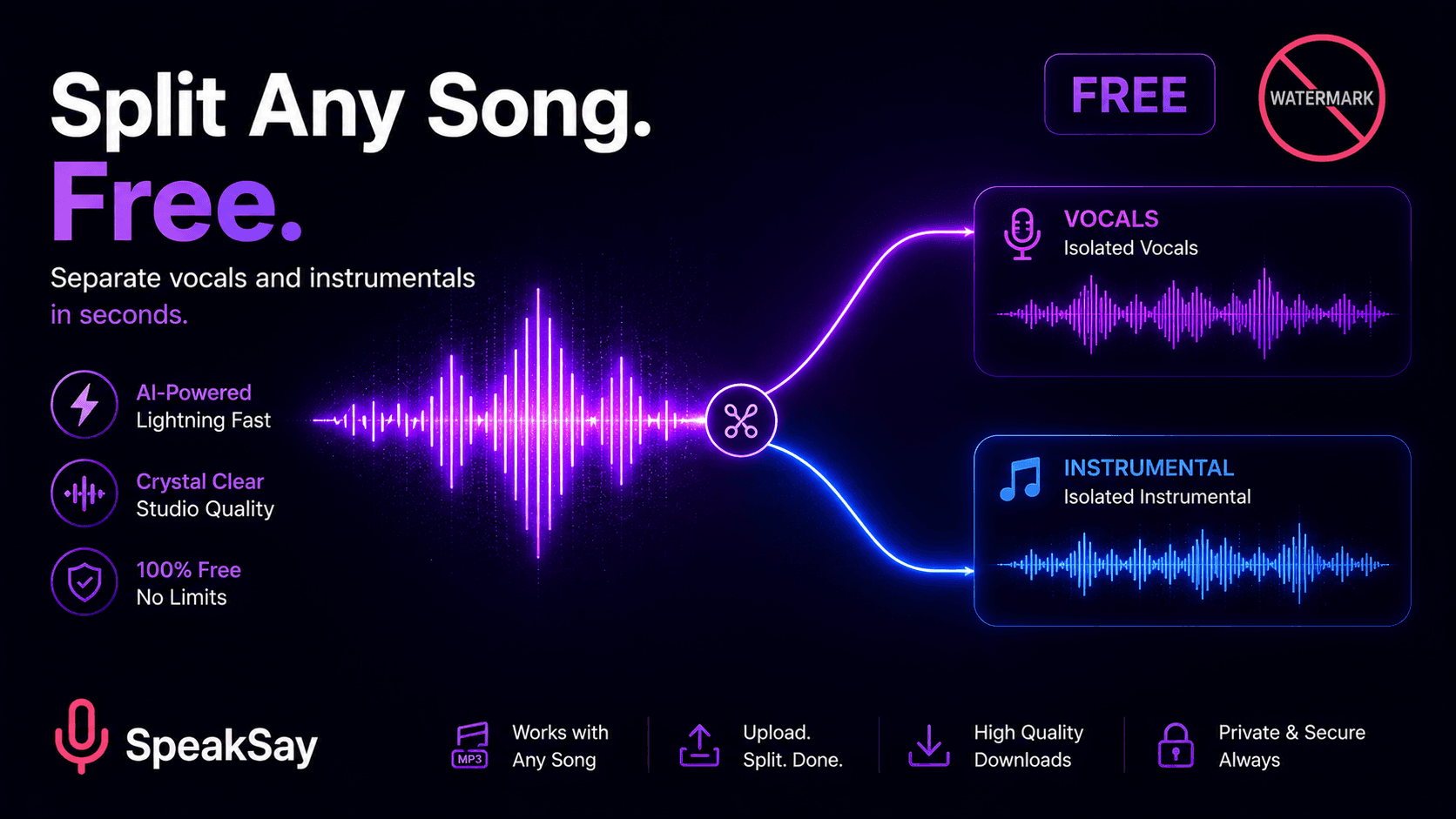
How to Remove Vocals From Any Song or Video for Free (2026): Karaoke Tracks, Remixes & Voice Edits
Most "free" vocal removers cap your file length, stamp a watermark on the output, or hide the download behind a paywall. Here's how to actually remove vocals from any song or video for free in 2026 — and what creators do next with the acapella and instrumental.
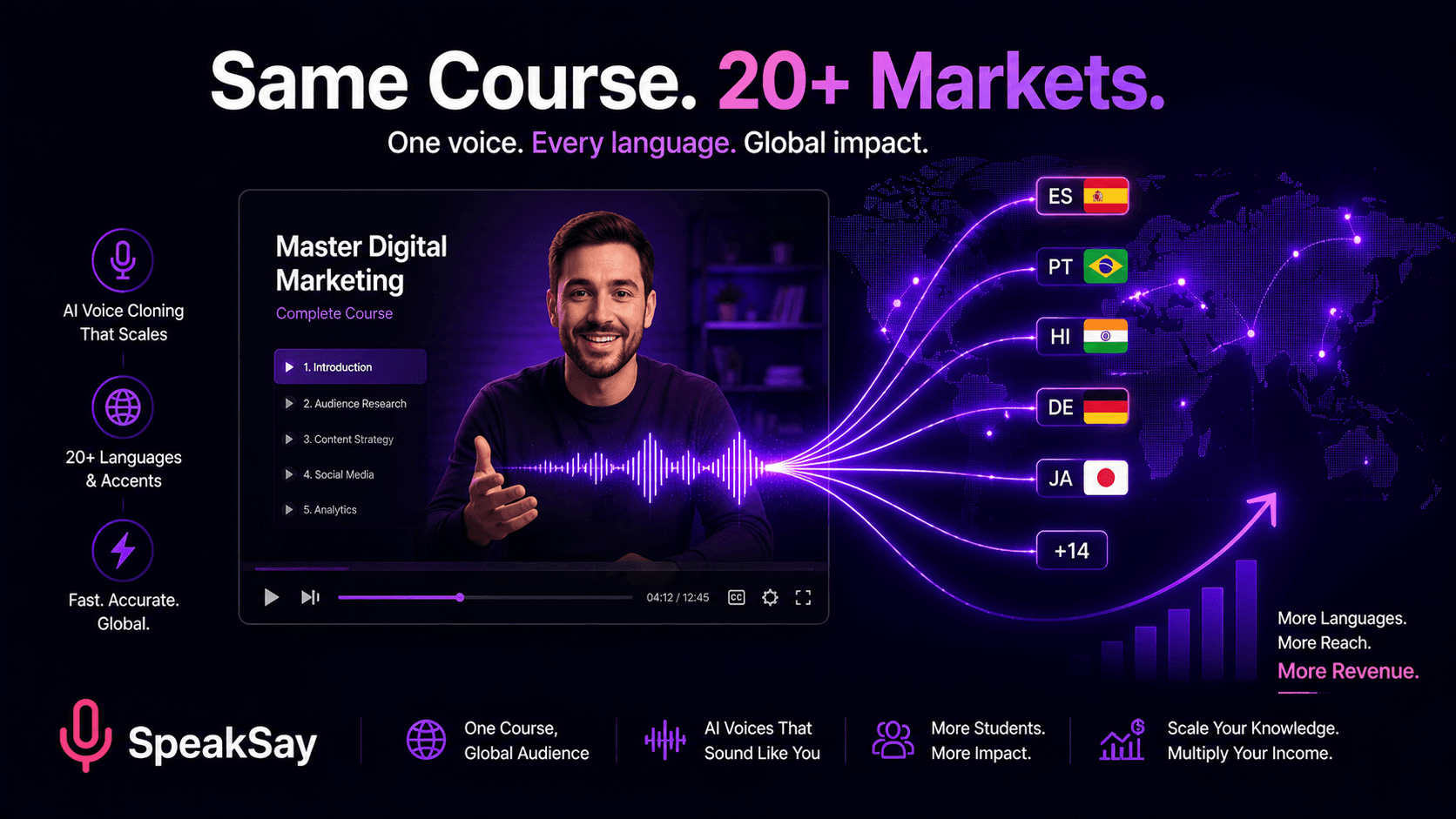
Your Course Only Sells in English: How Creators Localize Courses Into 20+ Languages With AI Dubbing (2026)
You spent months building a course — and it only sells in one language. AI dubbing now cuts localization costs by 70–90%, and voice cloning means every translated lesson is still taught in YOUR voice. Here's the 2026 workflow course creators use to open 20+ new markets without re-recording a single lesson.
Your AI Voice Clone Sounds Too Perfect? How to Keep Your Rasp, Accent & Character (2026)
AI voice clones in 2026 have a strange new problem: they sound too clean. If your clone erased your rasp, flattened your accent, or made you sound ten years younger, here's why it happens — and how to get your real voice character back.
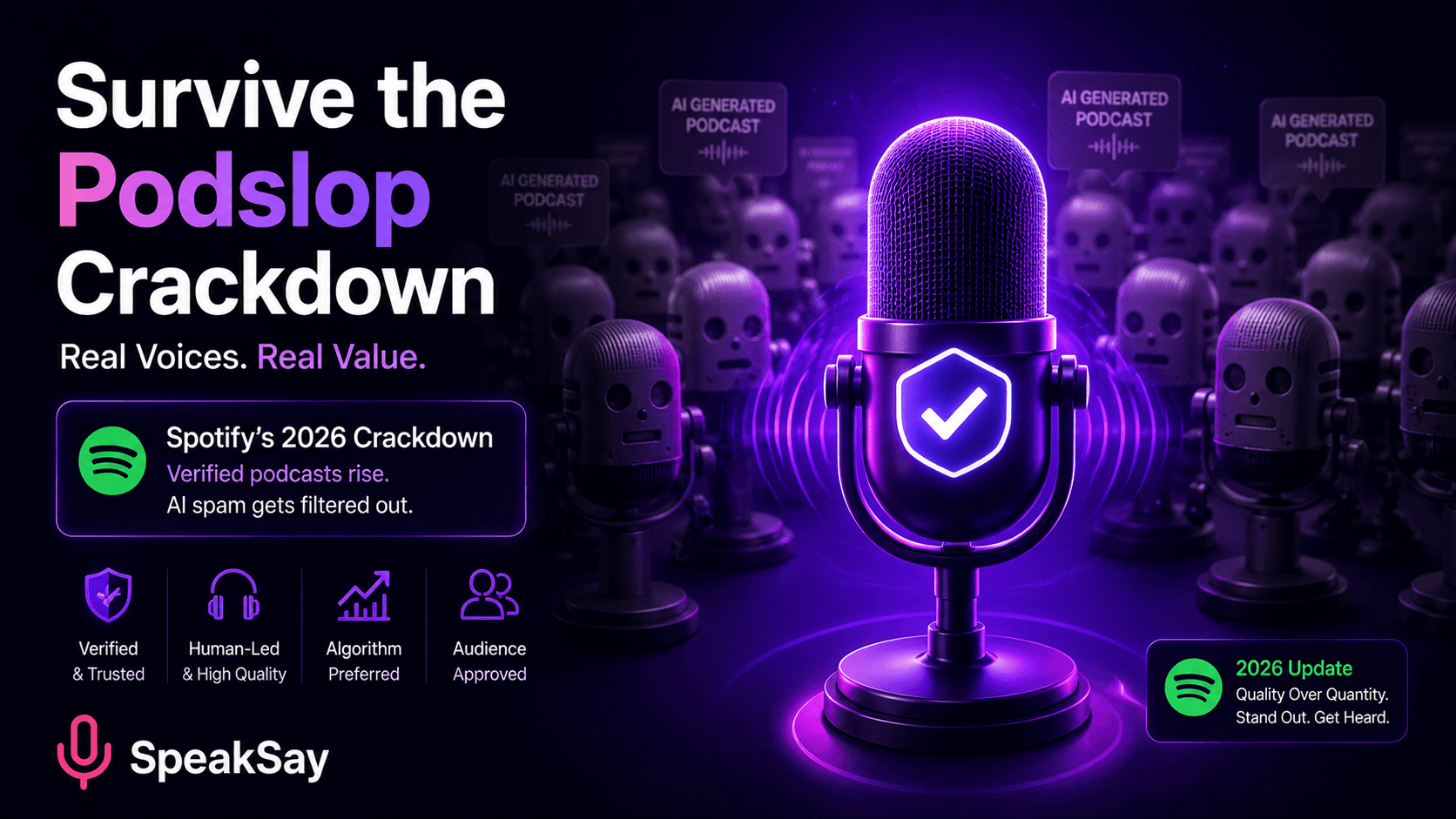
Spotify Is Verifying Podcasters and Banning AI Impersonators: How to Keep Your AI Podcast Monetized in the "Podslop" Crackdown (2026)
Spotify now verifies podcasters and bans AI impersonation, and hosts like RSS.com are demonetizing "podslop." Here's exactly what gets AI podcasts flagged in 2026 — and the workflow that keeps yours verifiable, trusted, and earning.
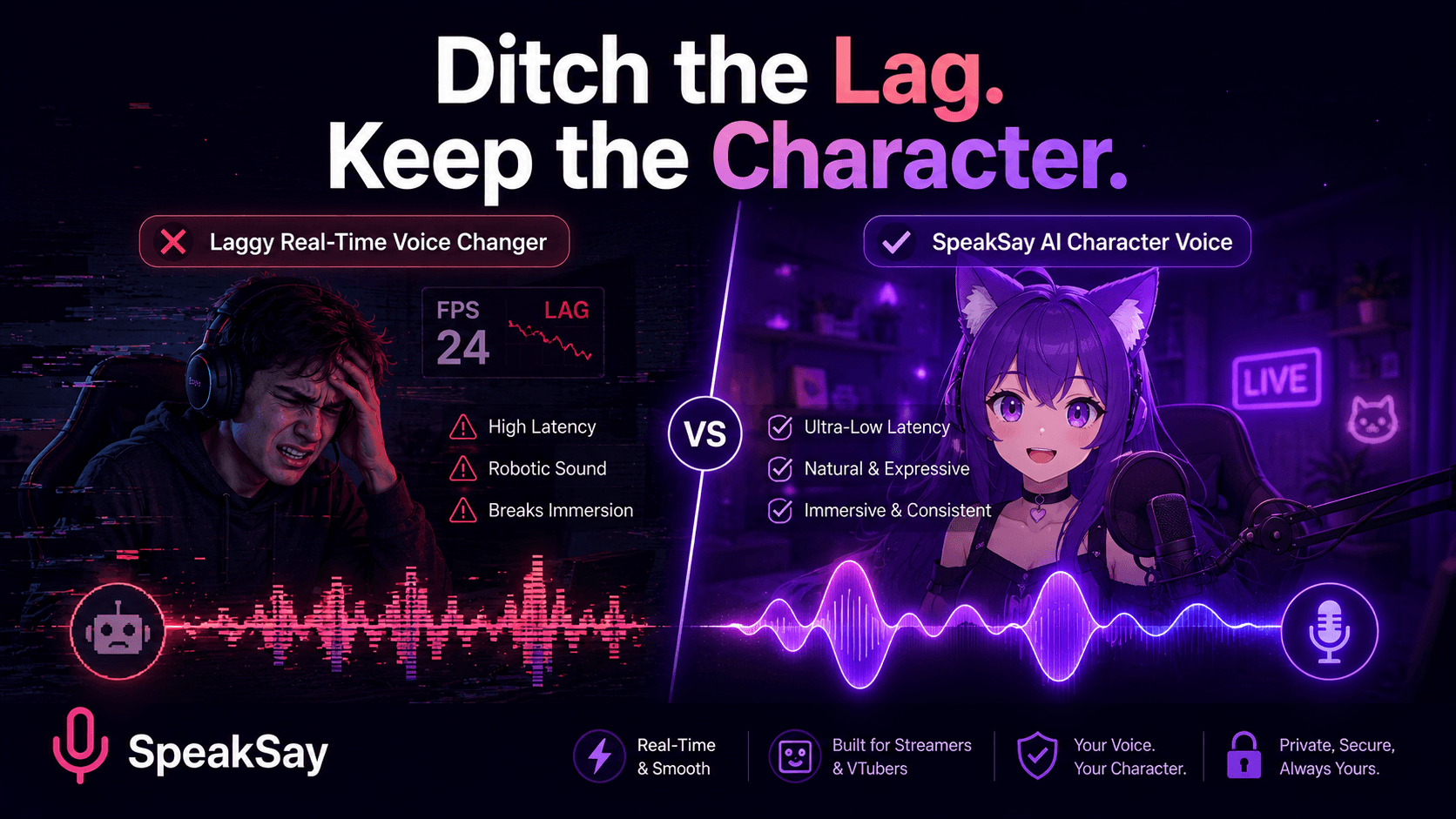
Real-Time Voice Changers Lag, Eat Your CPU and Sound Robotic: How Streamers & VTubers Build a Signature AI Character Voice Instead (2026)
Live voice changers steal frames from your game and glitch mid-stream. Here's how streamers and VTubers build a signature AI character voice for VODs, highlights, intros and alerts — studio quality, zero latency.
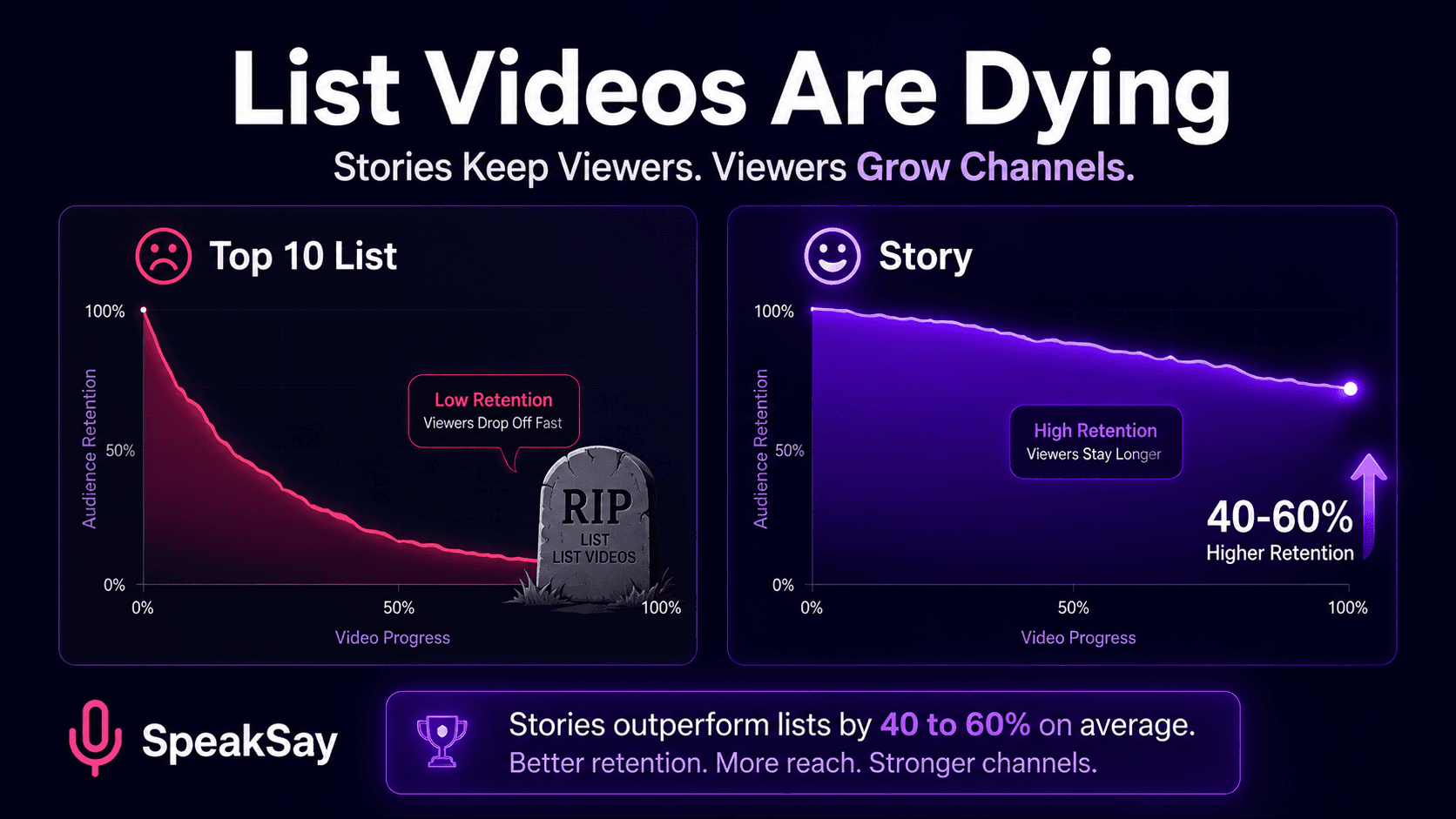
List Videos Are Dying: Narrative Scripts Get 40–60% Better Retention — the 2026 Faceless Video Script + AI Voice Workflow
2026 data shows narrative formats beat list videos by 40–60% on retention — and the algorithm now pushes retention over raw views. Here's the script framework and AI narration workflow to make the switch.
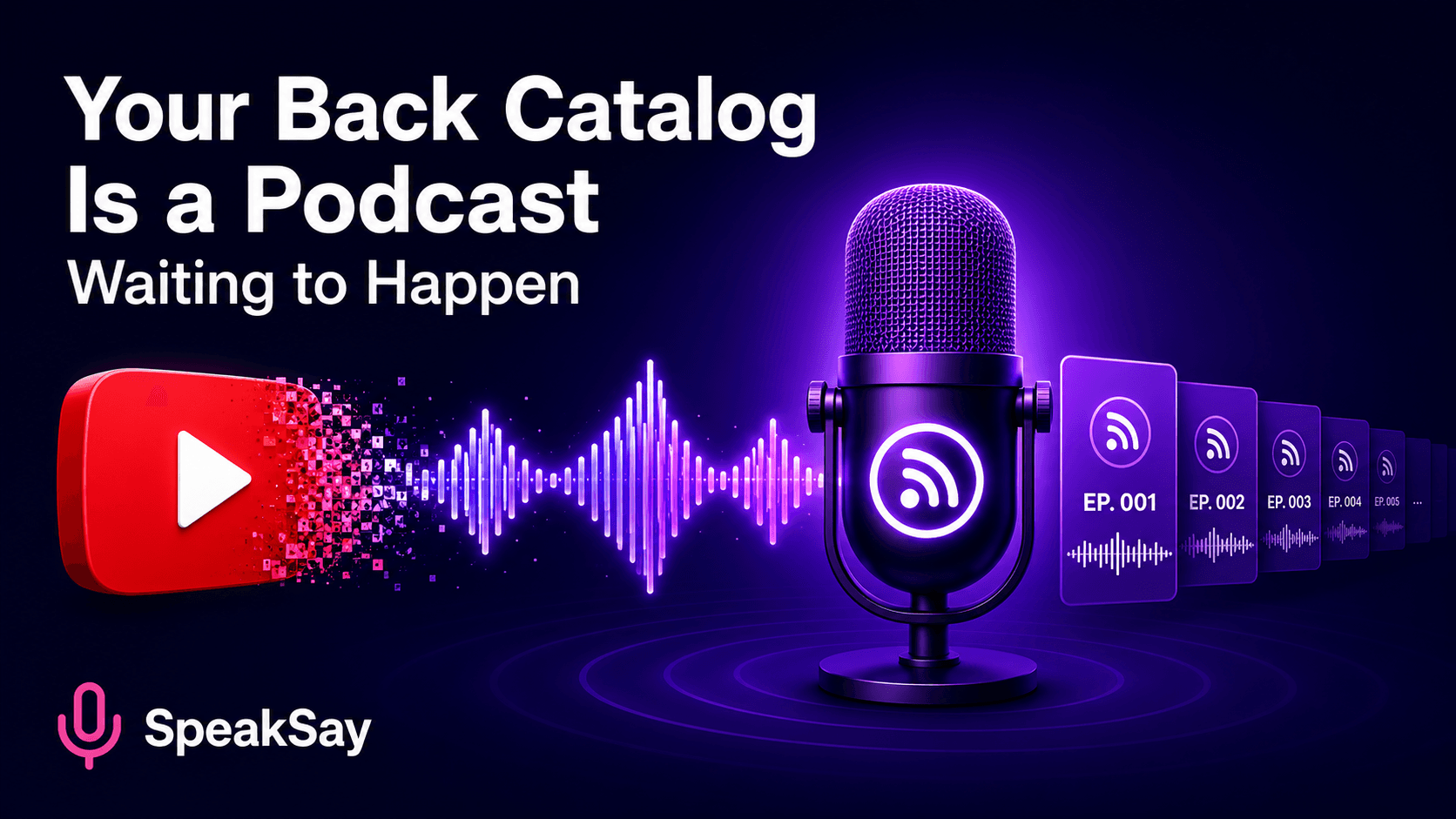
Turn Your YouTube Channel Into a Podcast: Repurpose Your Back Catalog Into Real Audio Episodes With AI (2026)
Ripping your video audio into an RSS feed makes a bad podcast — and Spotify's podslop crackdown punishes lazy rips. Here's the 2026 workflow: restructure transcripts into audio-native episodes and re-narrate them in your own cloned voice.
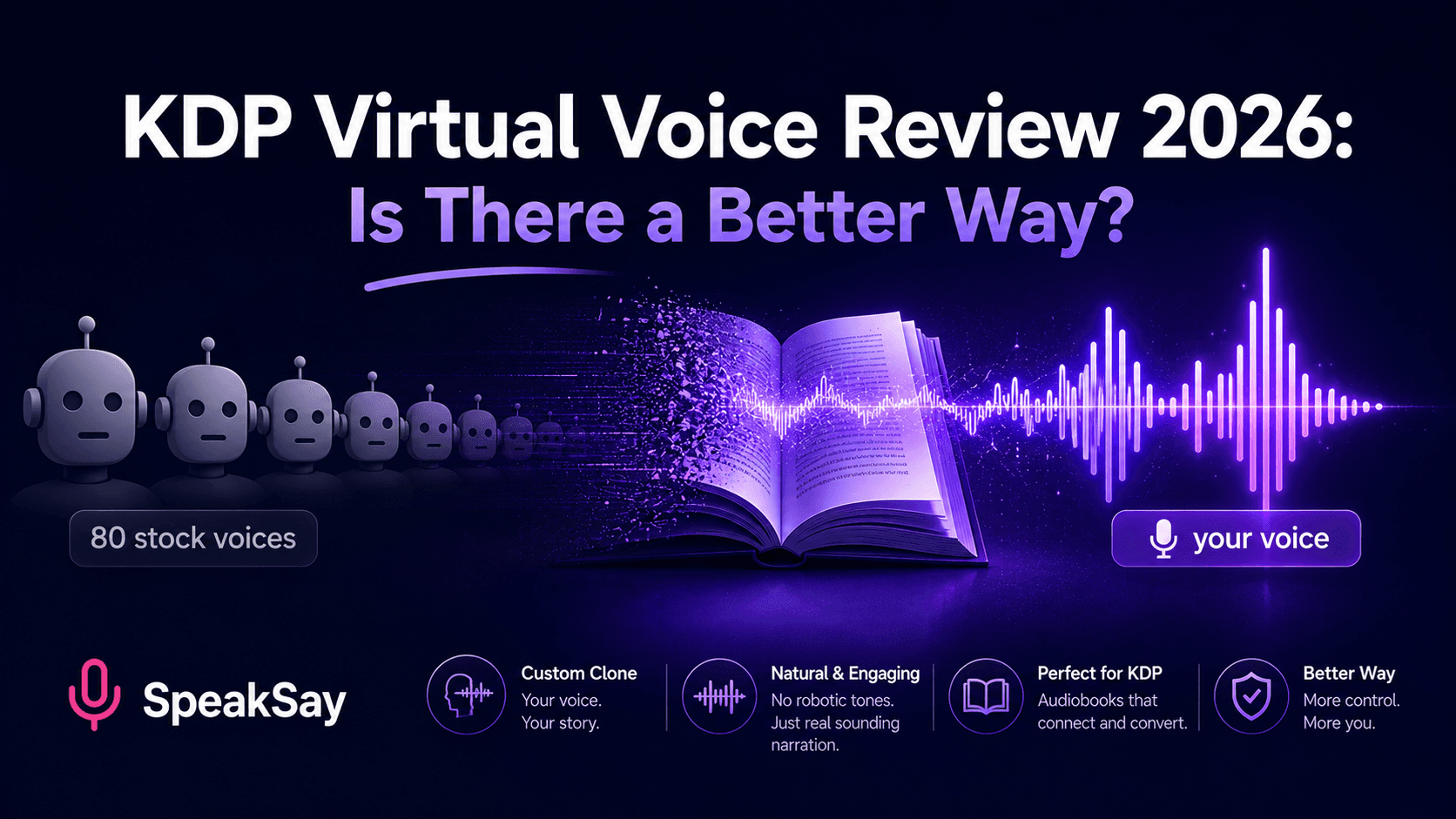
Amazon KDP Virtual Voice Review 2026: Why Authors Say It Sounds Stiff — and How to Publish a Better AI Audiobook Everywhere
KDP's Virtual Voice made AI audiobooks push-button easy — and authors are already complaining about stiff narration, pronunciation hacks and the same 80 voices on every book. Here's the honest 2026 review, the royalty math, and the workflow that gives you a distinctive audiobook you actually own.
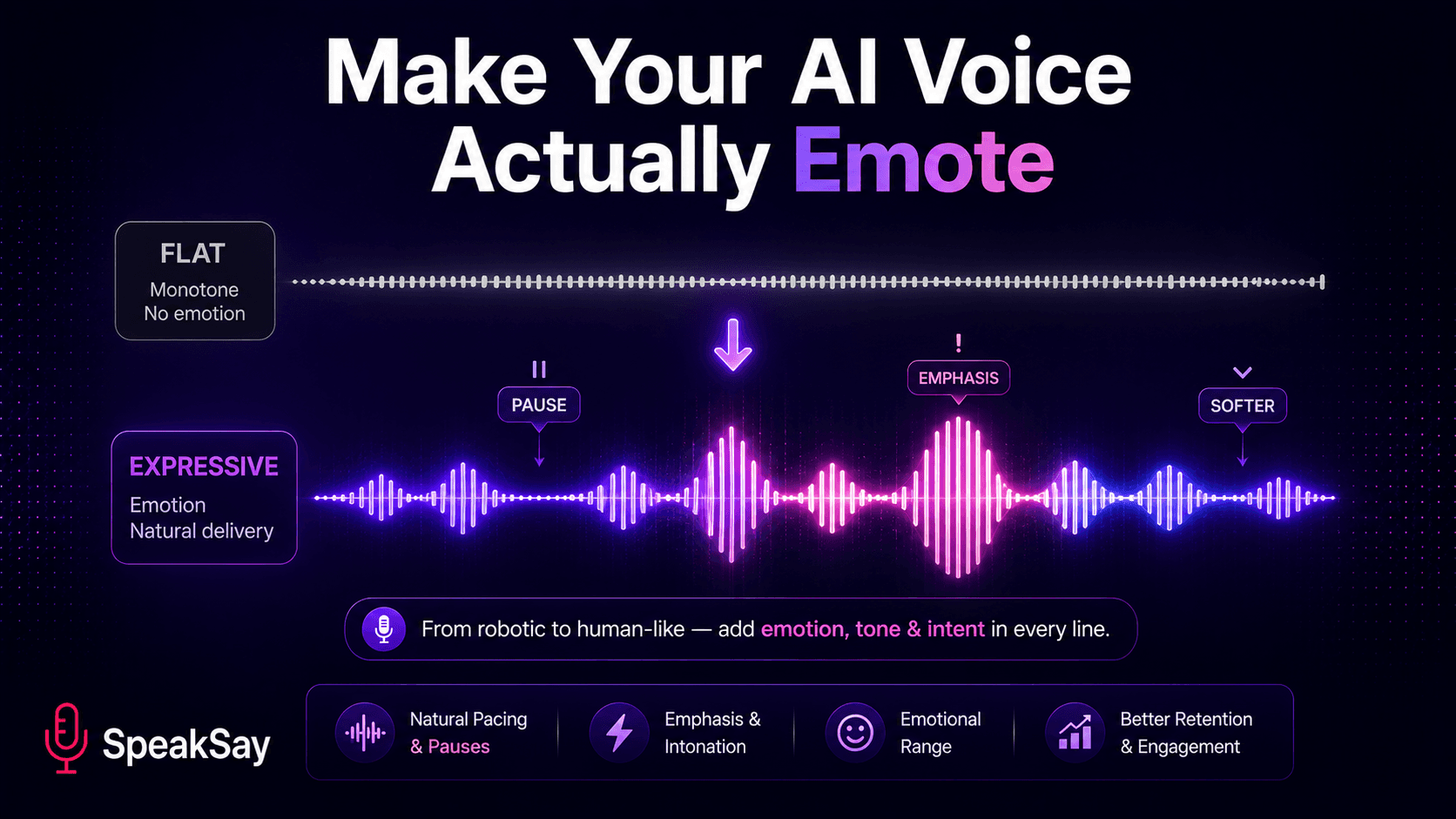
Why Your AI Voice Sounds Flat and Emotionless — How to Make It Actually Emote (2026 Guide)
Your AI narration is accurate but dead — no warmth, no emphasis, no feeling. The cause is rarely the model; it's the input. Here's how to direct an AI voice to emote, from reference clips to emphasis and pauses, so it sounds like a person who cares.
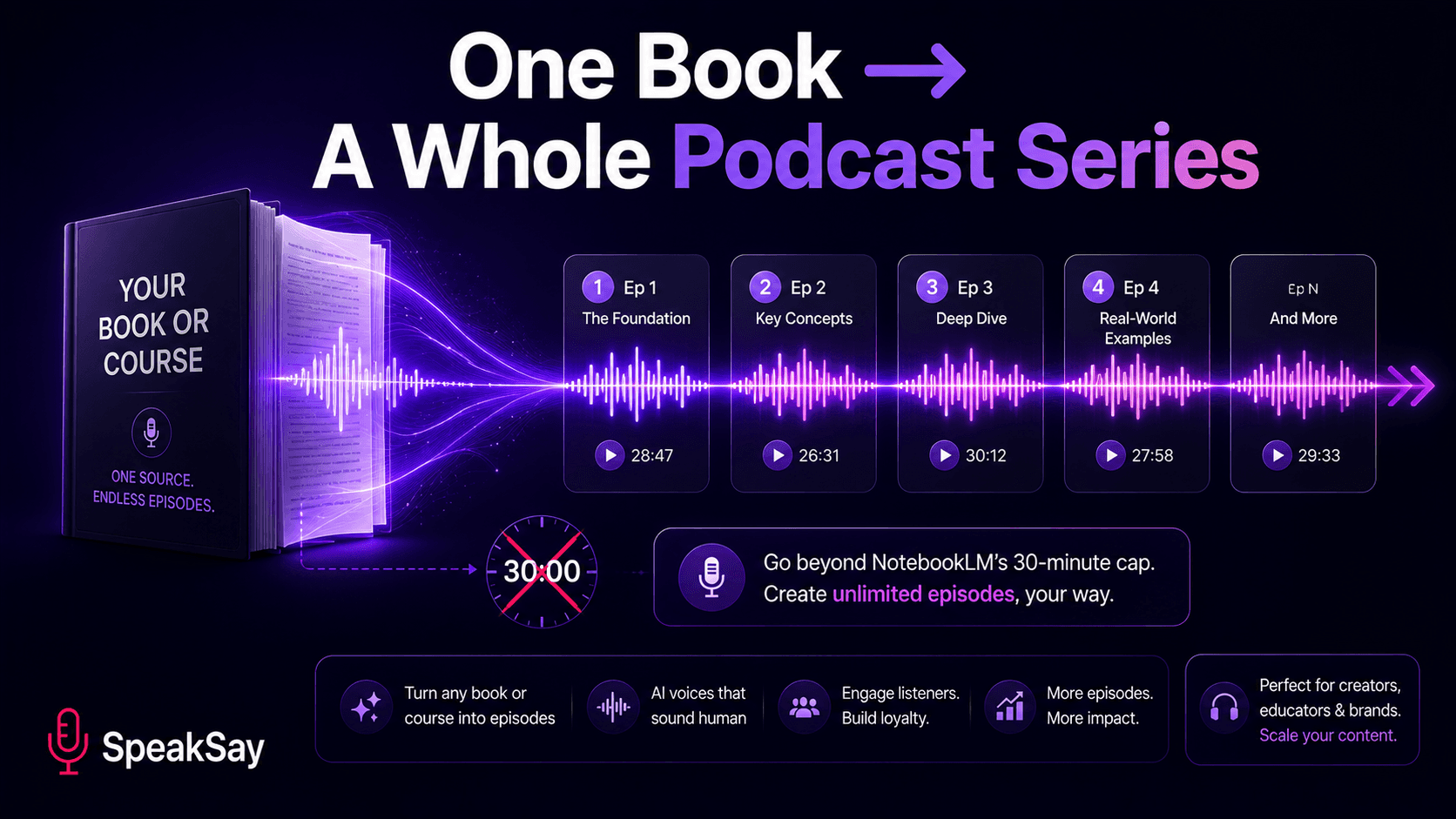
NotebookLM Caps Your Podcast at 30 Minutes? How to Turn a Whole Book or Course Into a Multi-Episode AI Podcast Series (2026)
NotebookLM's audio is great until you hit the wall: one uncontrollable episode that cuts off around 30 minutes with the same two hosts. Here's how to turn an entire book, course, or research pile into a structured, multi-episode AI podcast series you actually control.
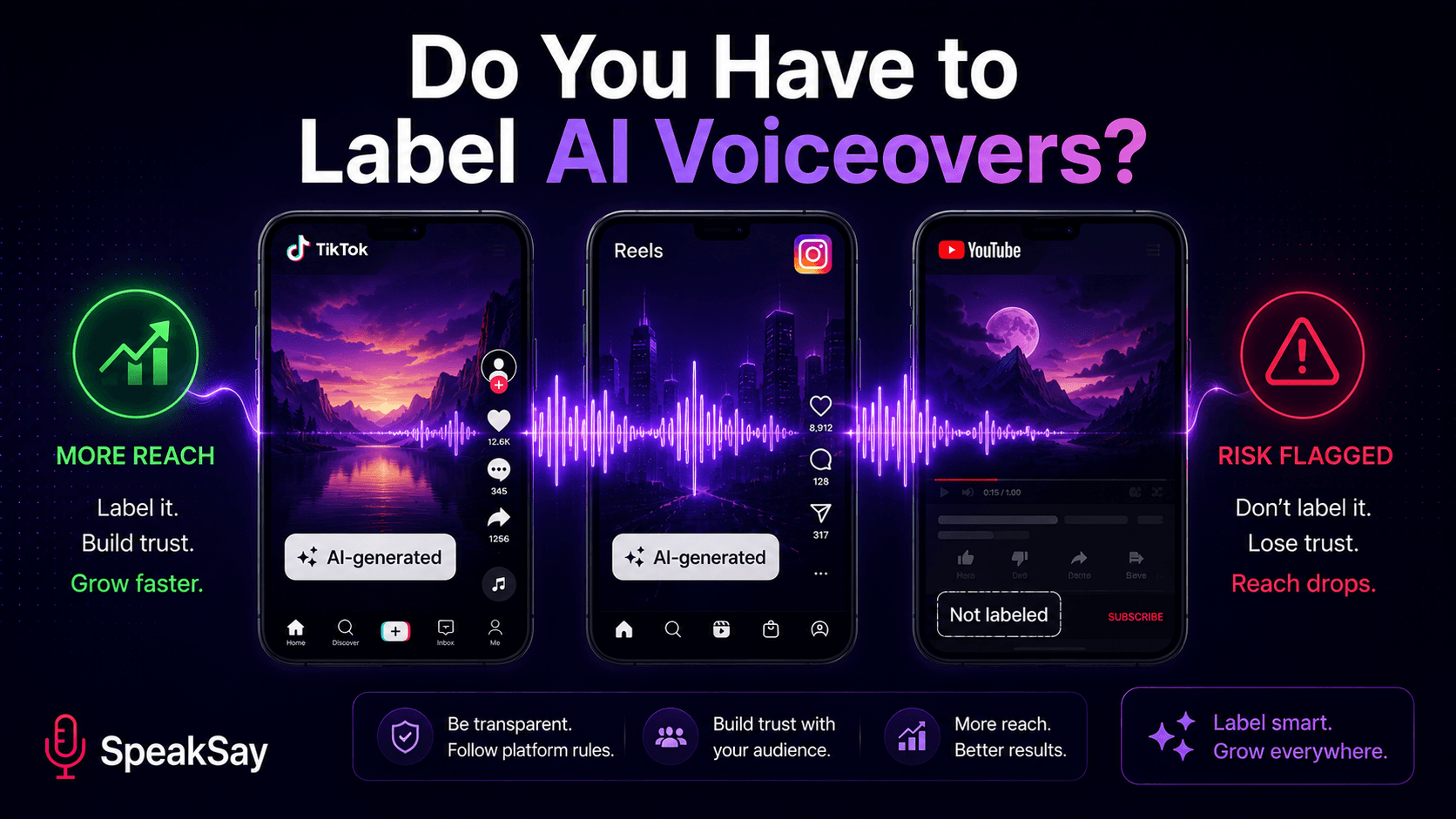
Do You Have to Label AI Voiceovers in 2026? TikTok, Instagram & YouTube Disclosure Rules (and How to Keep Your Reach)
TikTok now fingerprints synthetic voices, Instagram reads AI metadata, and YouTube wants disclosure on realistic content. Here's exactly when you must label an AI voiceover in 2026 — and why self-labeling protects your reach better than getting auto-flagged.
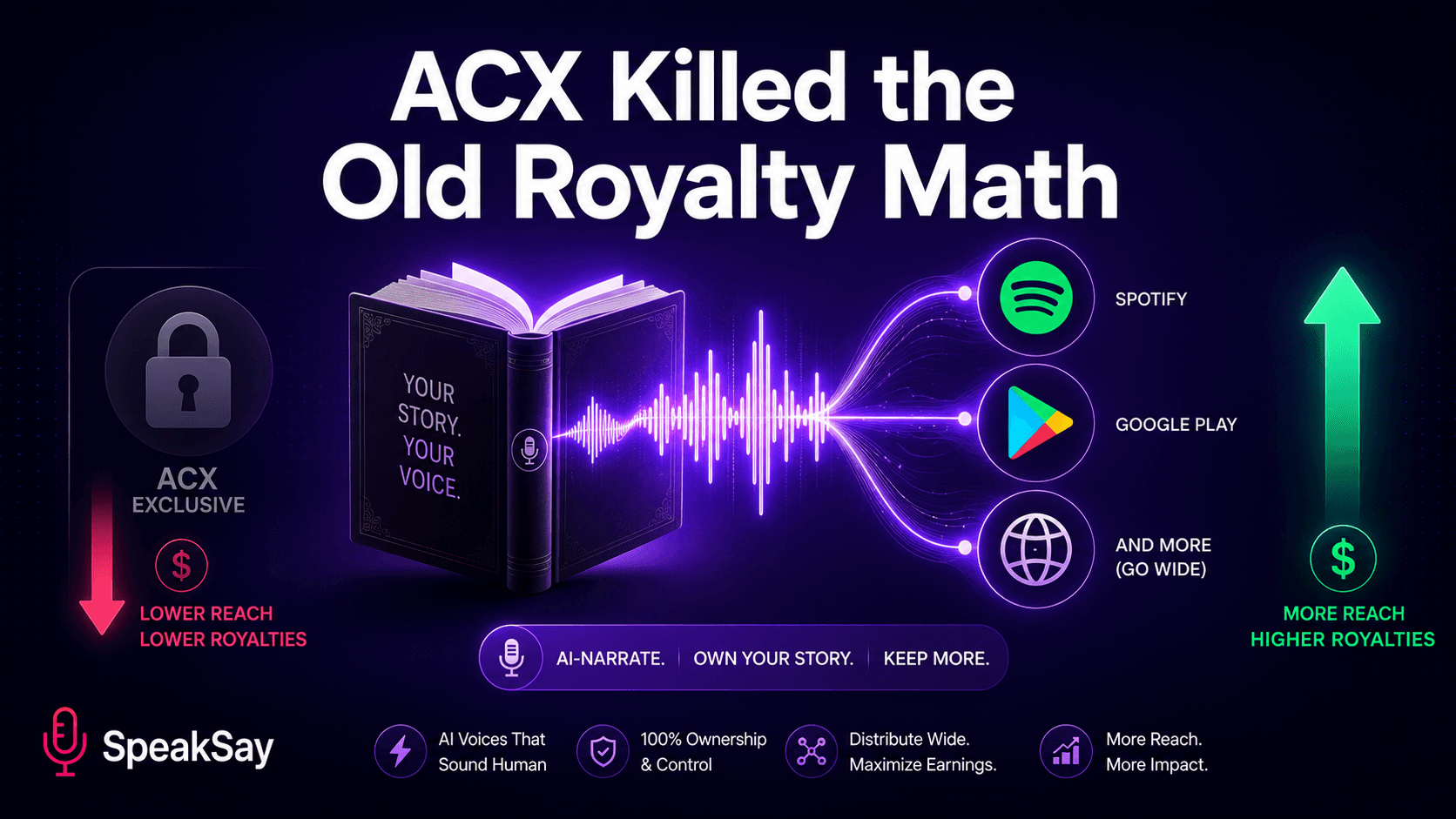
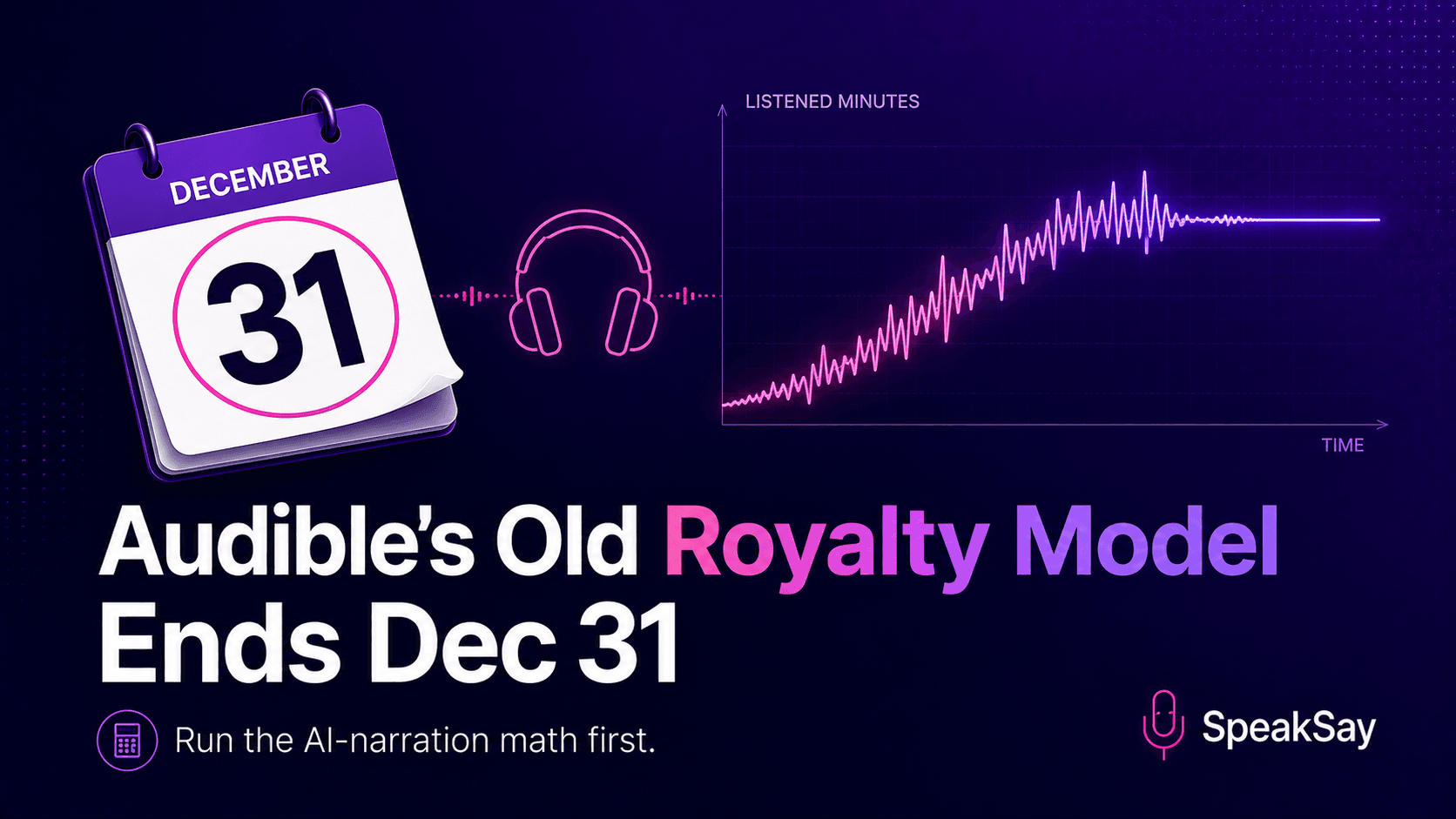
ACX Killed the Old Royalty Math (2026): Should You AI-Narrate Your Audiobook and Go Wide Instead?
Audible's new "Member Value" model pays on listening time, not sales — and indie authors are watching per-listen earnings shrink. Here's how the change works, whether AI narration plus wide distribution is now the smarter play, and a workflow to narrate your whole backlist once.
How to Remove Background Noise From Voiceovers & Podcasts for Free (2026)
Hiss, hum, and room noise are the fastest way to sound amateur. Here's how to clean up your voiceovers and podcasts for free in 2026 — and how to skip cleanup entirely with clean AI narration.
How Solo Podcasters Are Monetizing With AI Host-Read Ads (2026 Workflow)
Host-read ads pay the best in podcasting — but recording every spot by hand is a bottleneck for solo creators. Here's the 2026 workflow to batch episodes and generate sponsor reads in your own voice.
Is AI Voice Cloning Legal in 2026? The NO FAKES Act, Consent Rules & How to Clone a Voice the Right Way
Worried you'll get sued for cloning a voice? Here's what the NO FAKES Act and 2026 consent rules actually require — plus a simple checklist to clone voices safely and legally.
Can You Still Monetize Faceless YouTube Channels with AI Voiceovers in 2026?
YouTube's 2025 policy update scared faceless creators into thinking AI voiceovers kill monetization. They don't. Here's exactly what's allowed, what gets you demonetized, and how to keep your AI-narrated channel ad-safe in 2026.
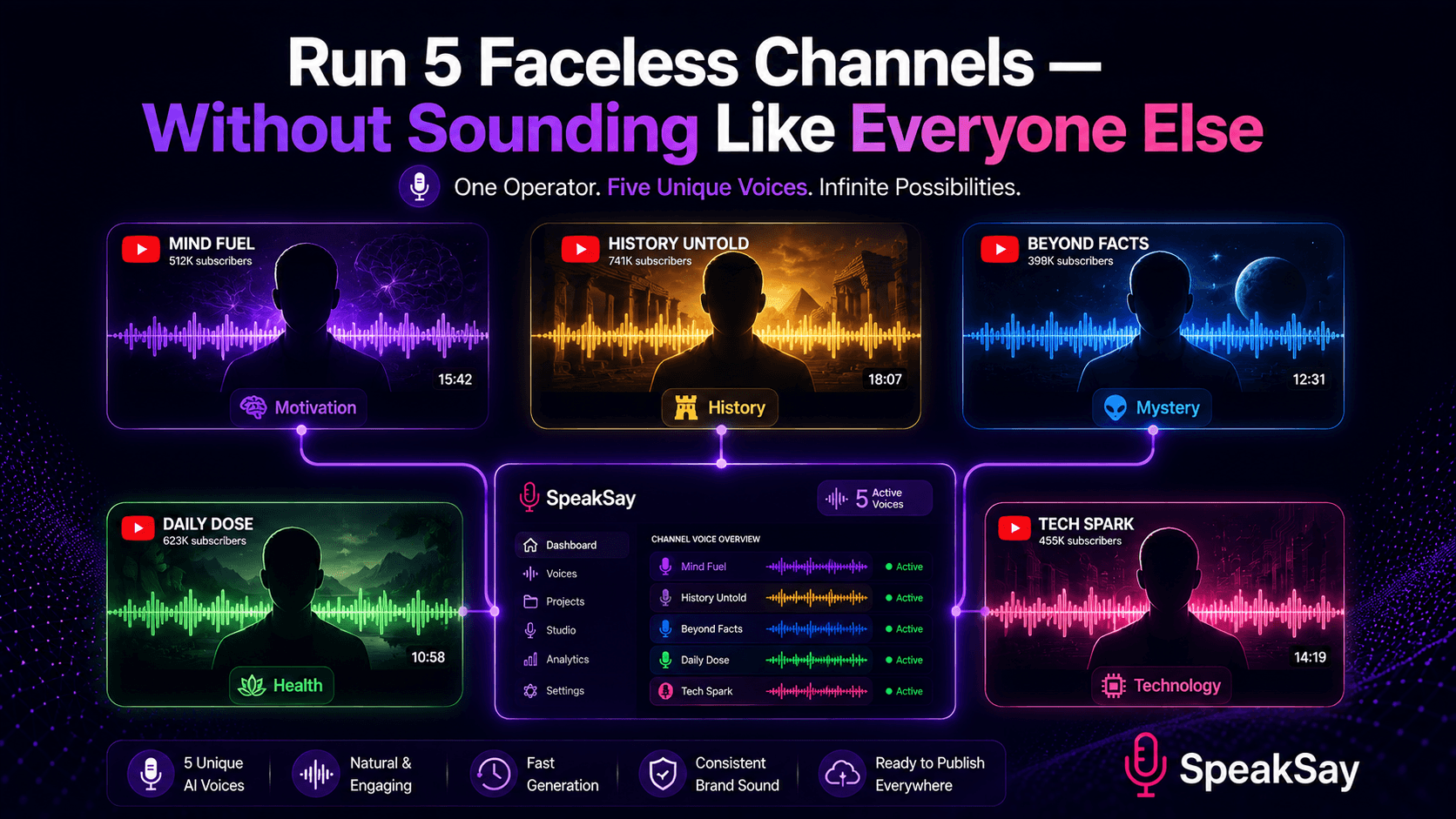
How to Run Multiple Faceless YouTube Channels in 2026 (Without Sounding Like Every Other AI Channel)
Copy-paste automation channels are getting demonetized in 2026. Here's how to scale a portfolio of faceless channels where each one has its own signature AI voice — so YouTube treats you as many creators, not one spam farm.
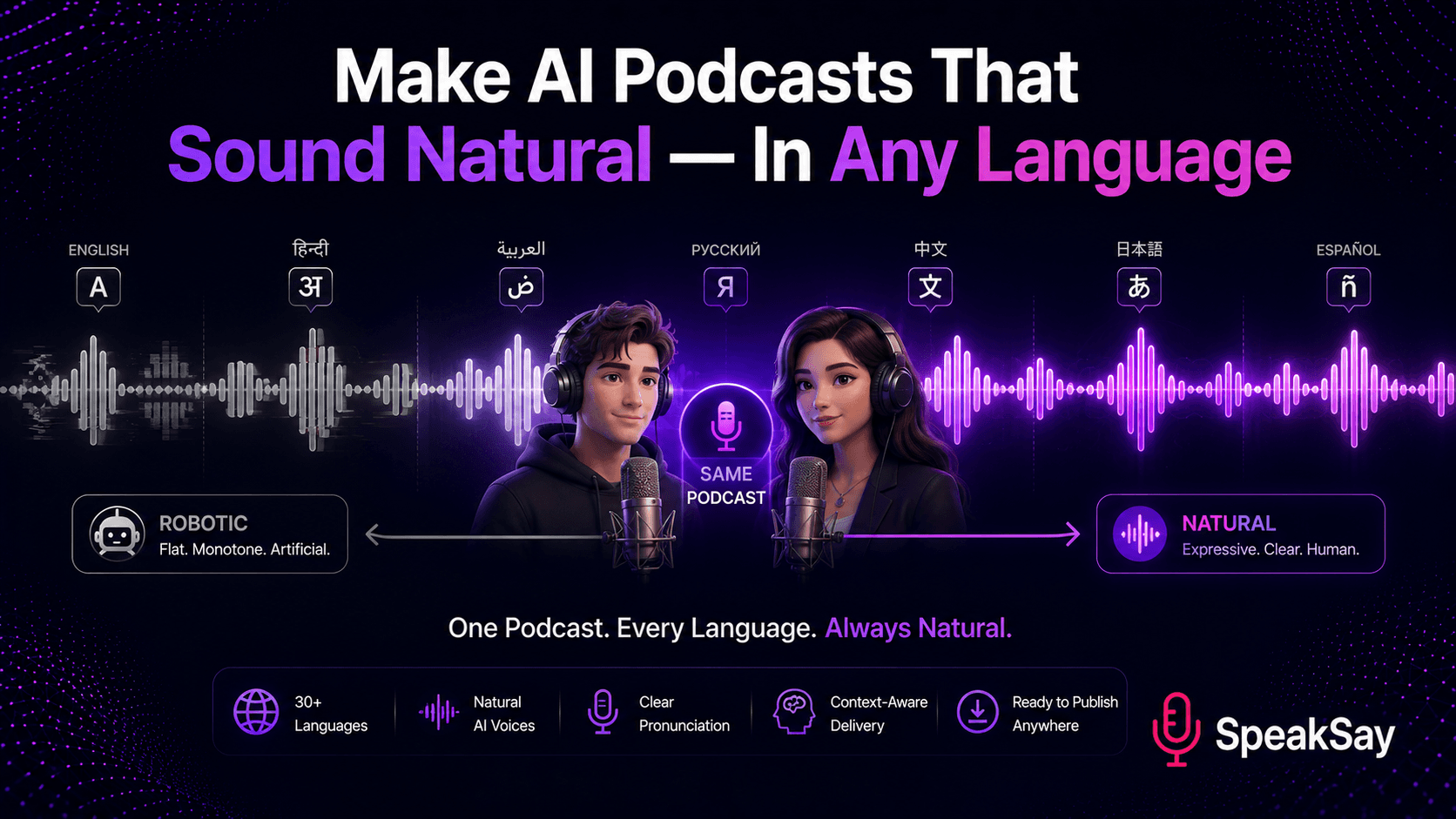
NotebookLM Sounds Robotic in Your Language? How to Make Natural Multilingual AI Podcasts (2026)
NotebookLM's Audio Overviews shine in English and stumble in everything else — and the length controls are English-only. Here's how to turn any source into a natural-sounding AI podcast in your language.
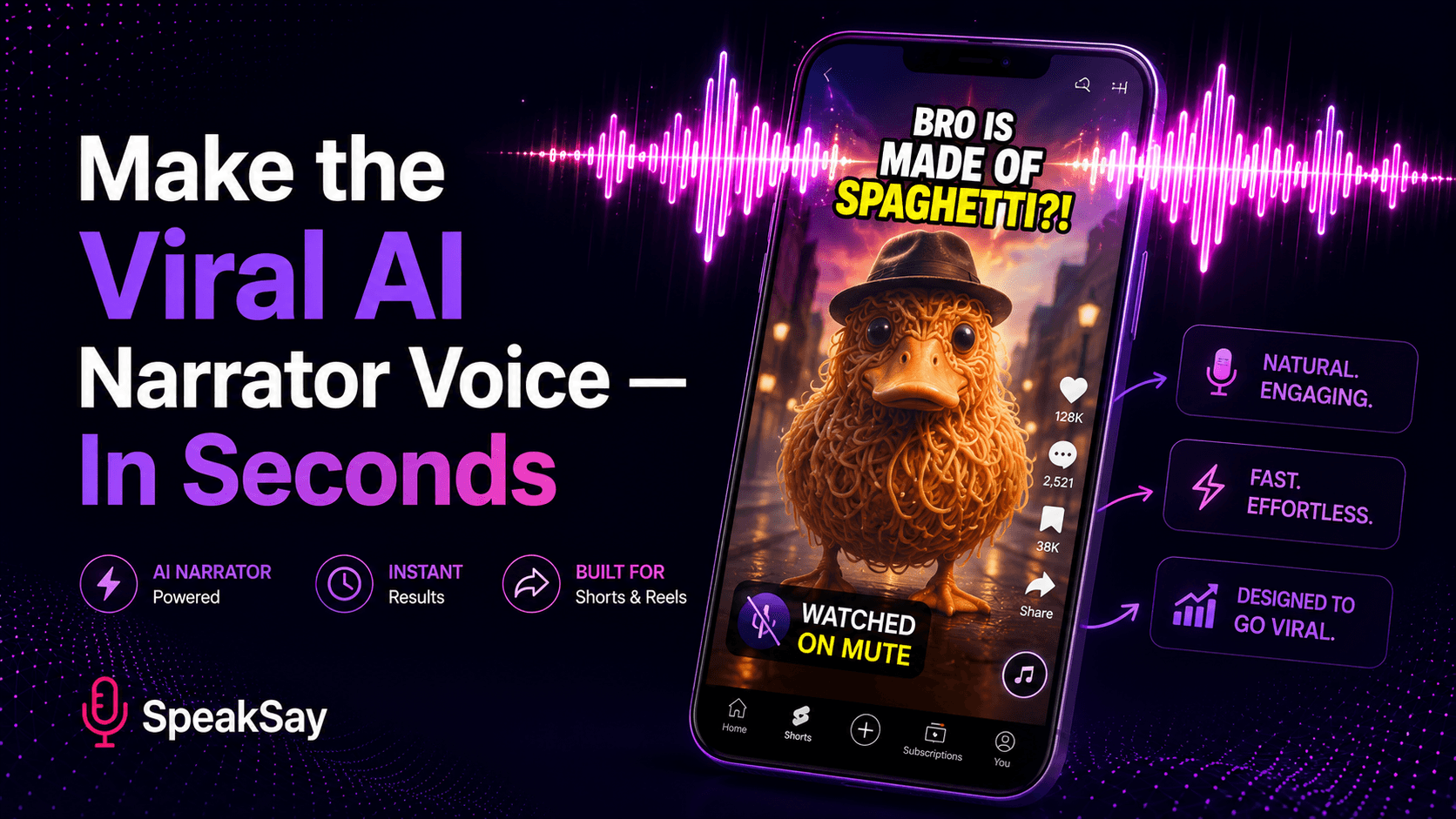
How to Make the Viral AI Narrator Voice Behind 2026's Weirdest Shorts (Step by Step)
The surreal AI-creature Shorts flooding your feed all share one thing: a distinctive narrator voice. Here's how to make that voice yourself and ship dozens of variations fast.
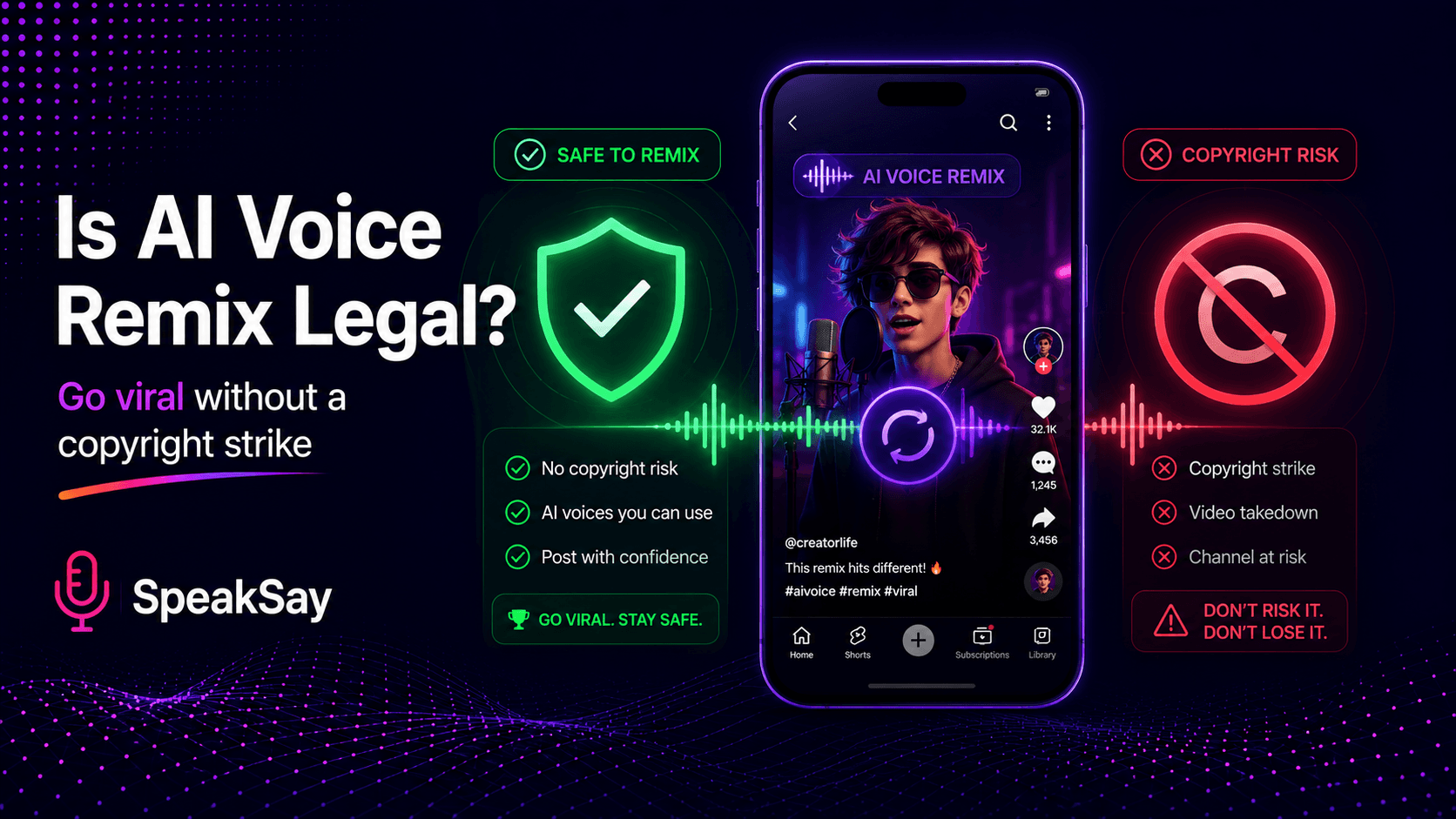
Is AI Voice Remix Legal on YouTube & TikTok? How to Make Viral Voice Edits Without a Copyright Strike (2026)
AI voice remixes are everywhere — and so are copyright strikes and takedowns. Here's what's actually risky, what's safe, and how to make viral voice edits in 2026 without endangering your channel.
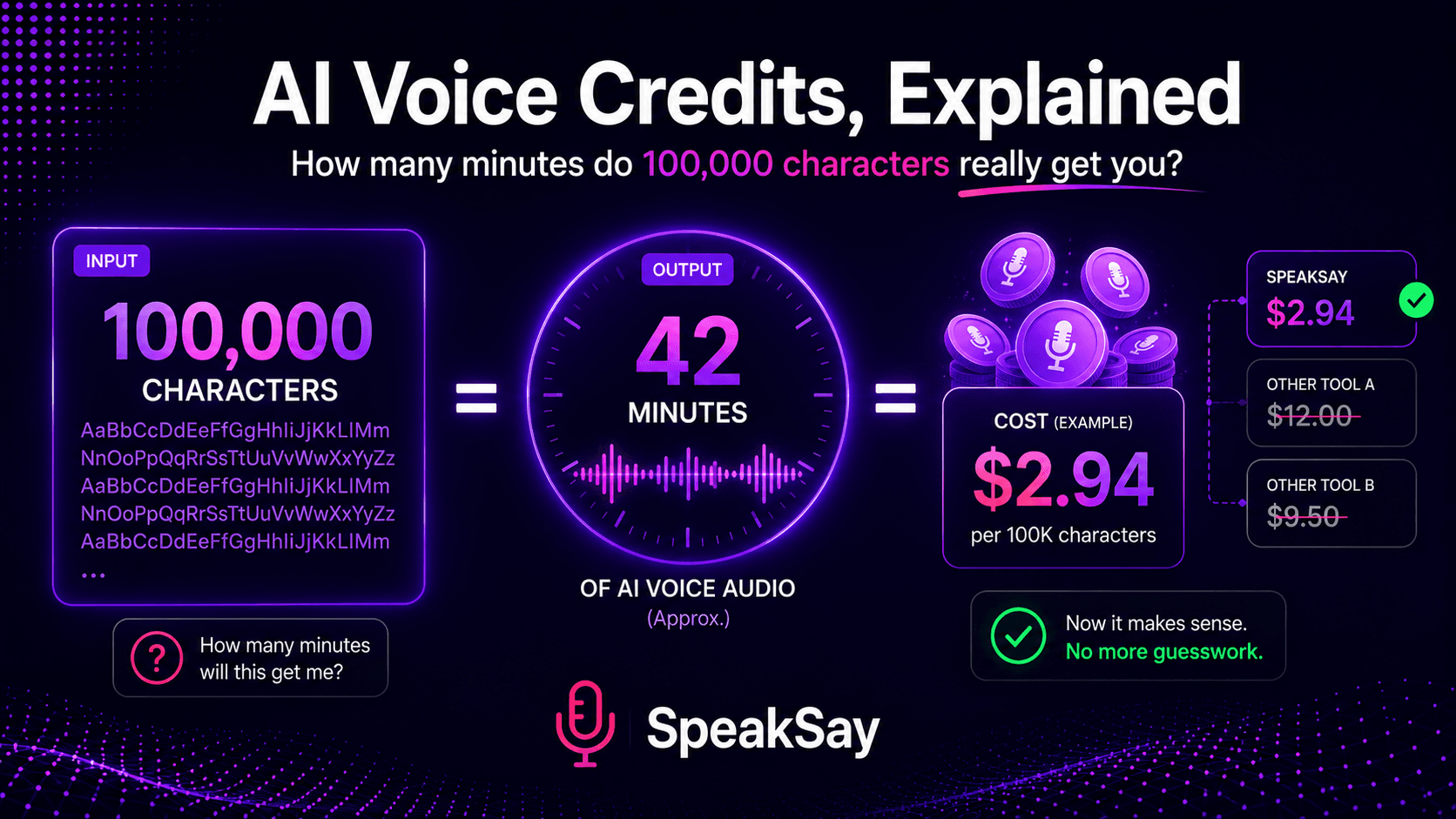
AI Voice Credits Explained: How Many Minutes Do 100,000 Characters Actually Get You? (2026)
Credits, characters, per-million pricing — AI voice billing is deliberately confusing. Here's a plain-English breakdown of how characters become minutes, what it really costs, and how to stop doing mental math.
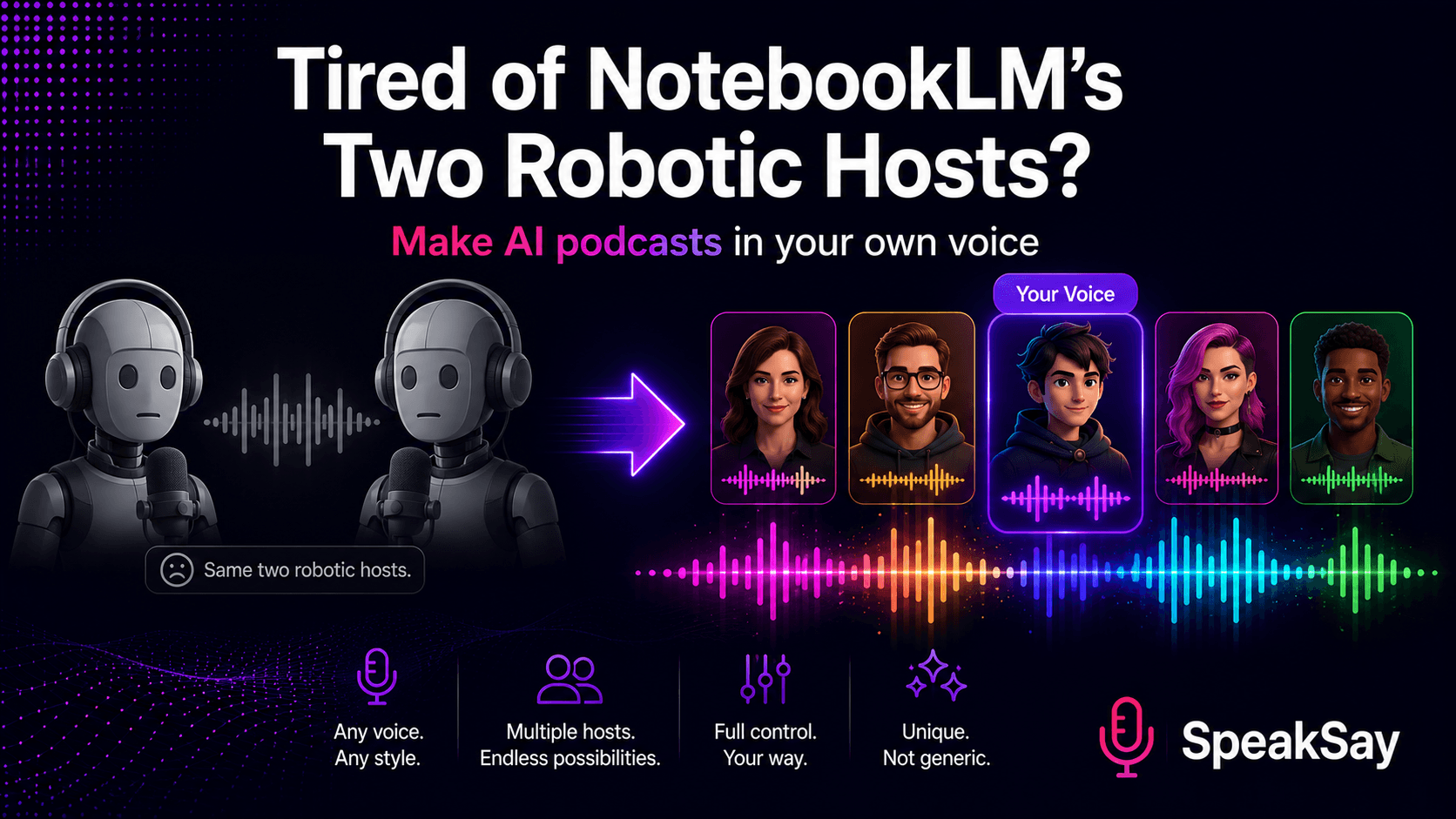
Tired of NotebookLM's Same Two Robotic Hosts? Make AI Podcasts in Your Own Voice & Style (2026)
NotebookLM Plus gives you more audio — but the same two robotic hosts and the same format. Here's how to make AI podcasts with custom voices, your own cloned voice, and full control over style.
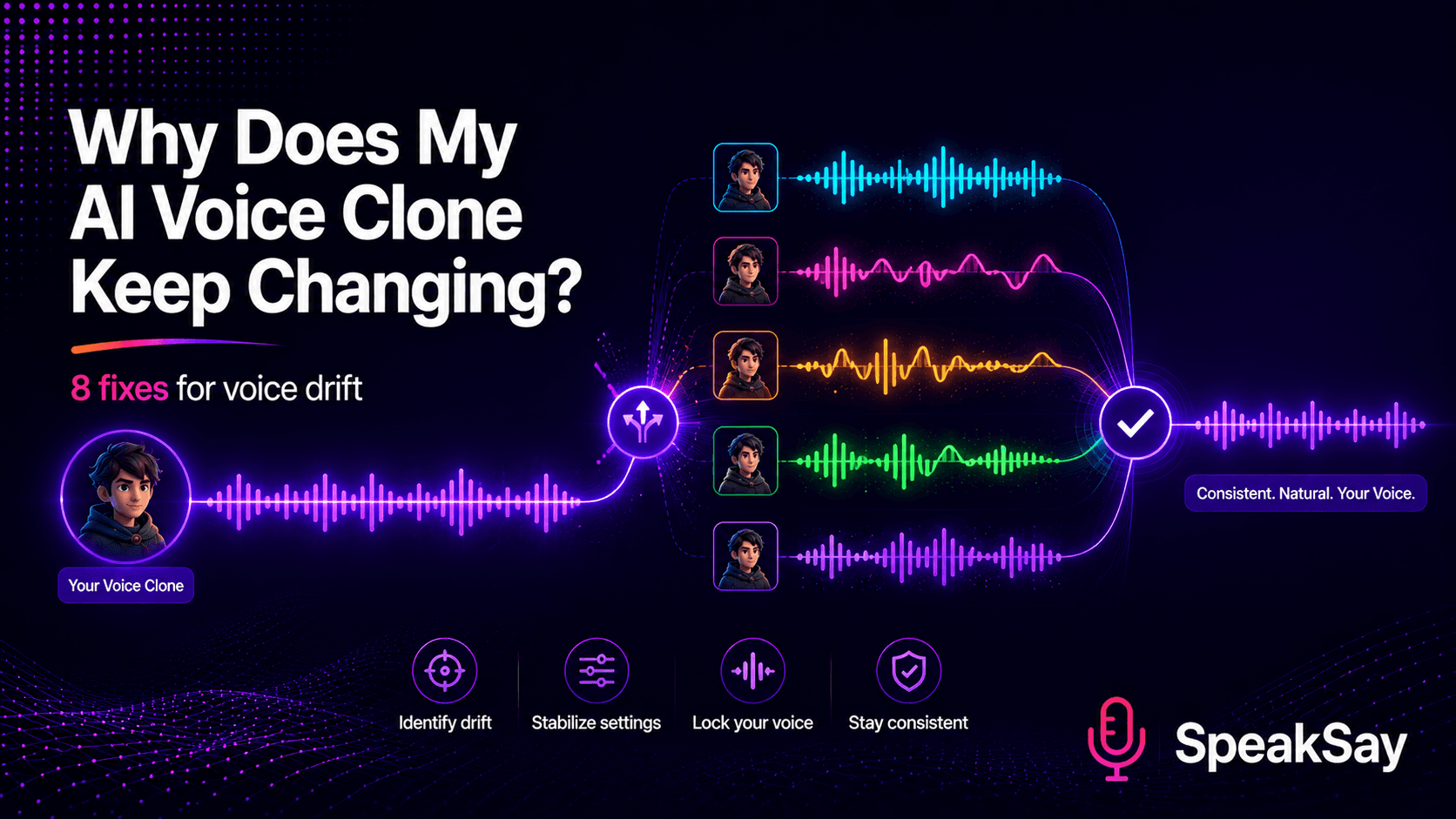
Why Does My AI Voice Clone Sound Different in Every Video? 8 Fixes for Voice Drift (2026)
Your cloned voice sounds perfect in one clip and "off" in the next. Here's why AI voice drift happens — and 8 concrete fixes to keep your narration consistent across every video.
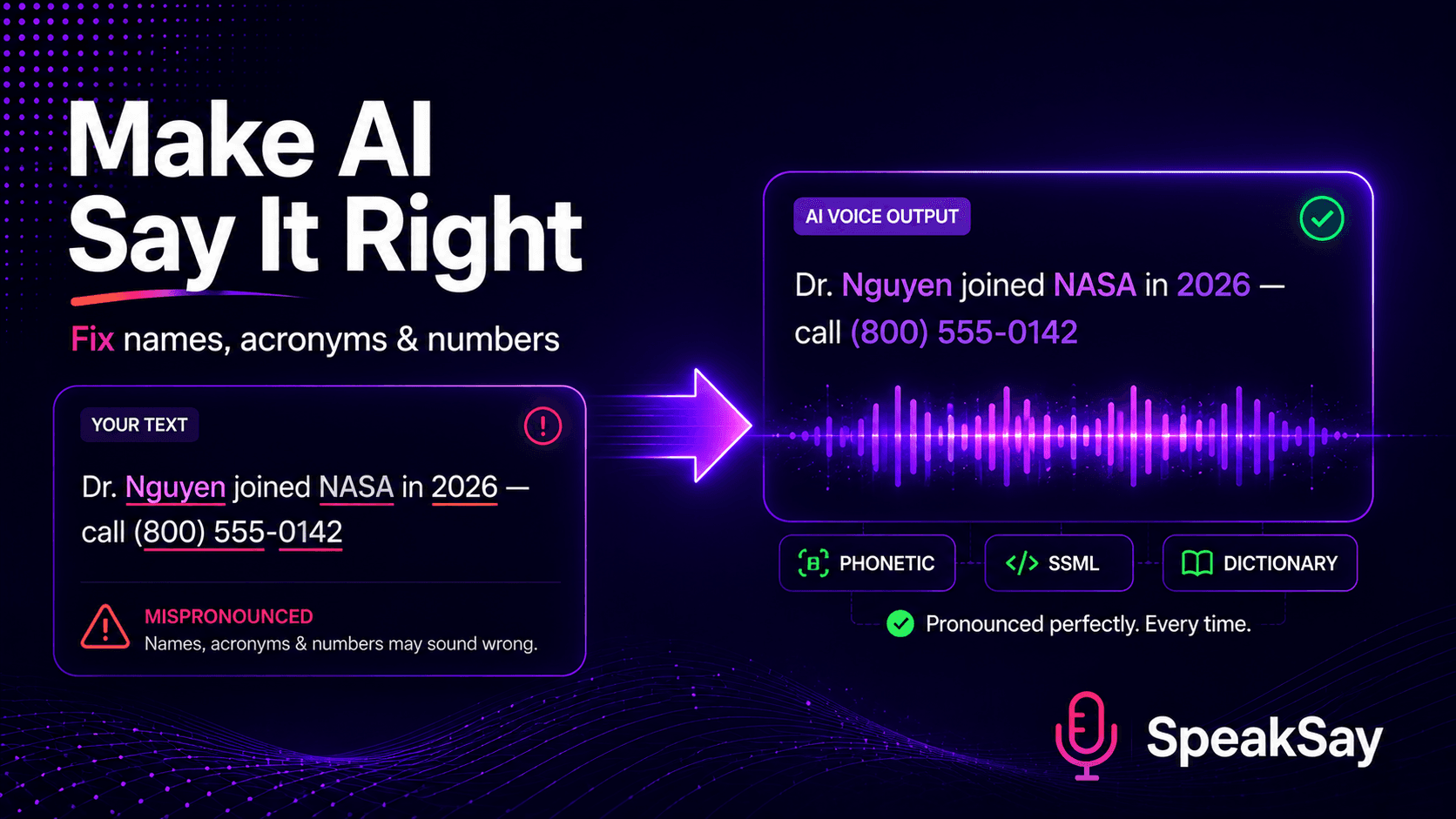
AI Voiceover Mispronouncing Names, Acronyms & Numbers? 7 Fixes for Perfect Pronunciation (2026)
Your AI voice nails the script then butchers a brand name, spells out the wrong acronym, or reads "2026" as a phone number. Here are 7 concrete fixes to get perfect pronunciation every time.
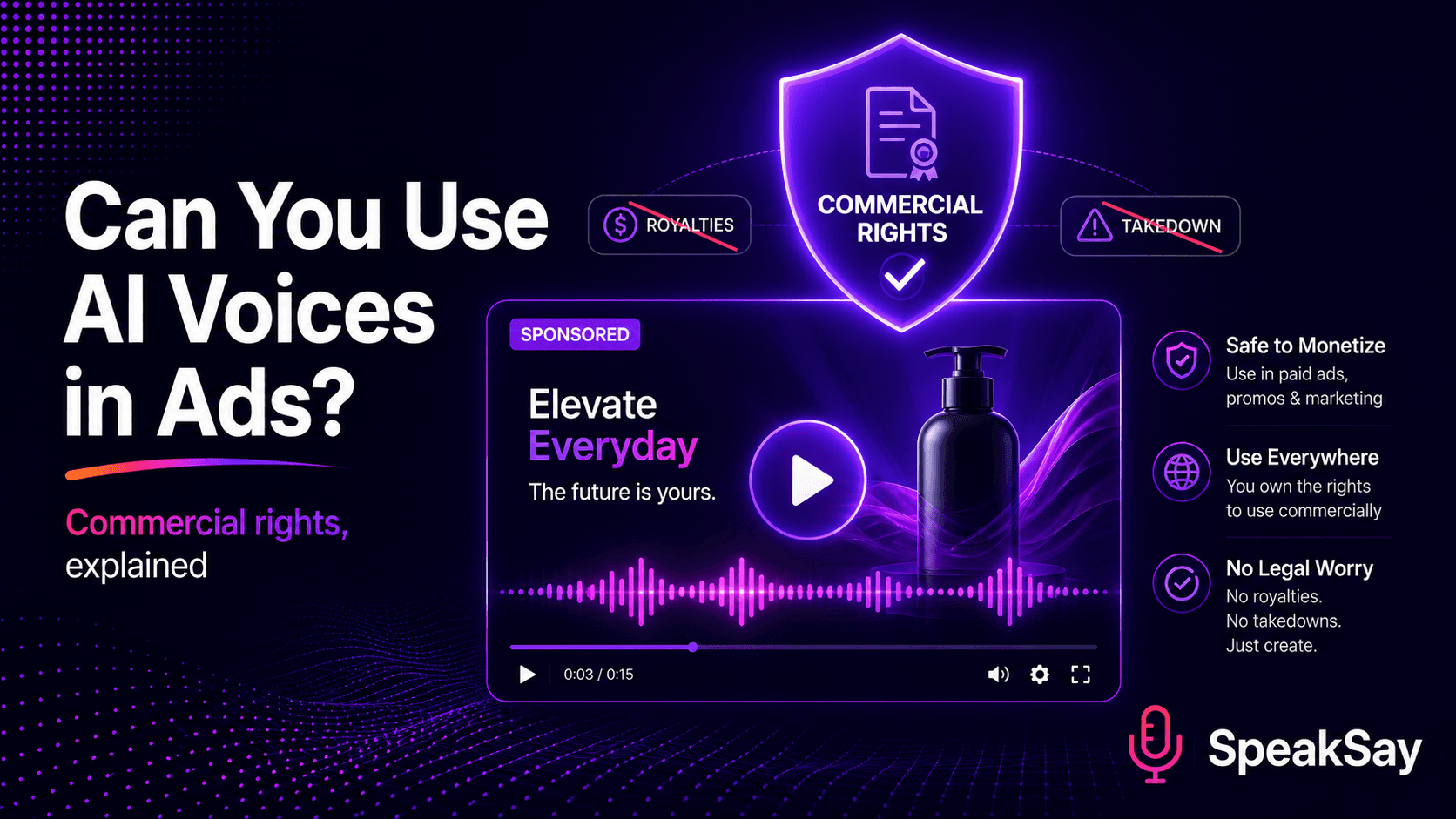
Can You Legally Use AI Voices in Paid Ads? AI Voiceover Commercial Rights Explained (2026)
AI voiceovers are everywhere in ads — but can you legally use them in paid commercials and client work? Here's what "commercial rights" actually means, what to check before you publish, and how to stay safe.
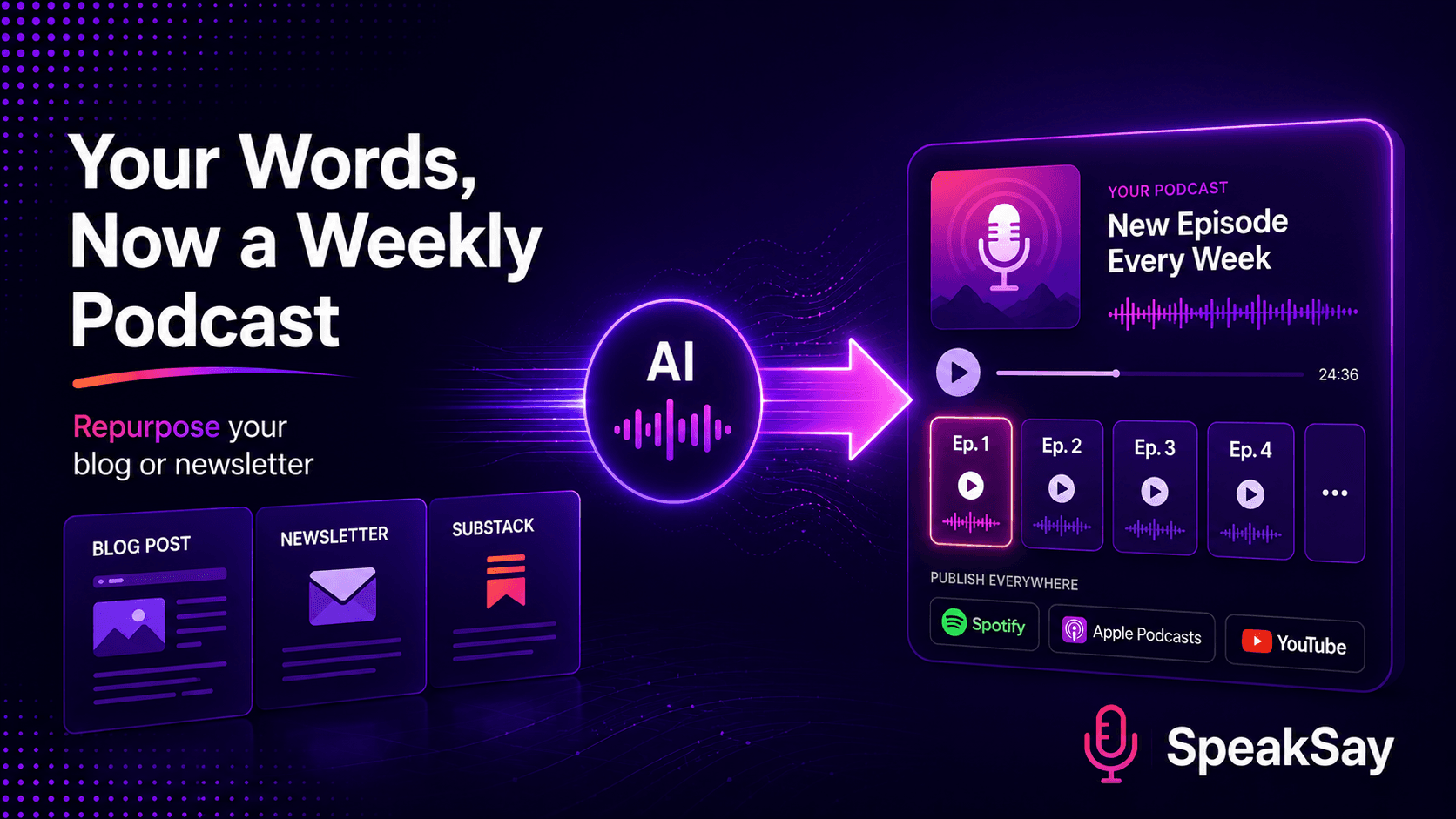
Turn Your Blog, Newsletter or Substack Into a Weekly AI Podcast (2026 Repurposing Workflow)
You've already written months of content. Here's the 2026 workflow to turn your blog, newsletter, or Substack into a consistent, branded podcast — without recording, on a weekly schedule.
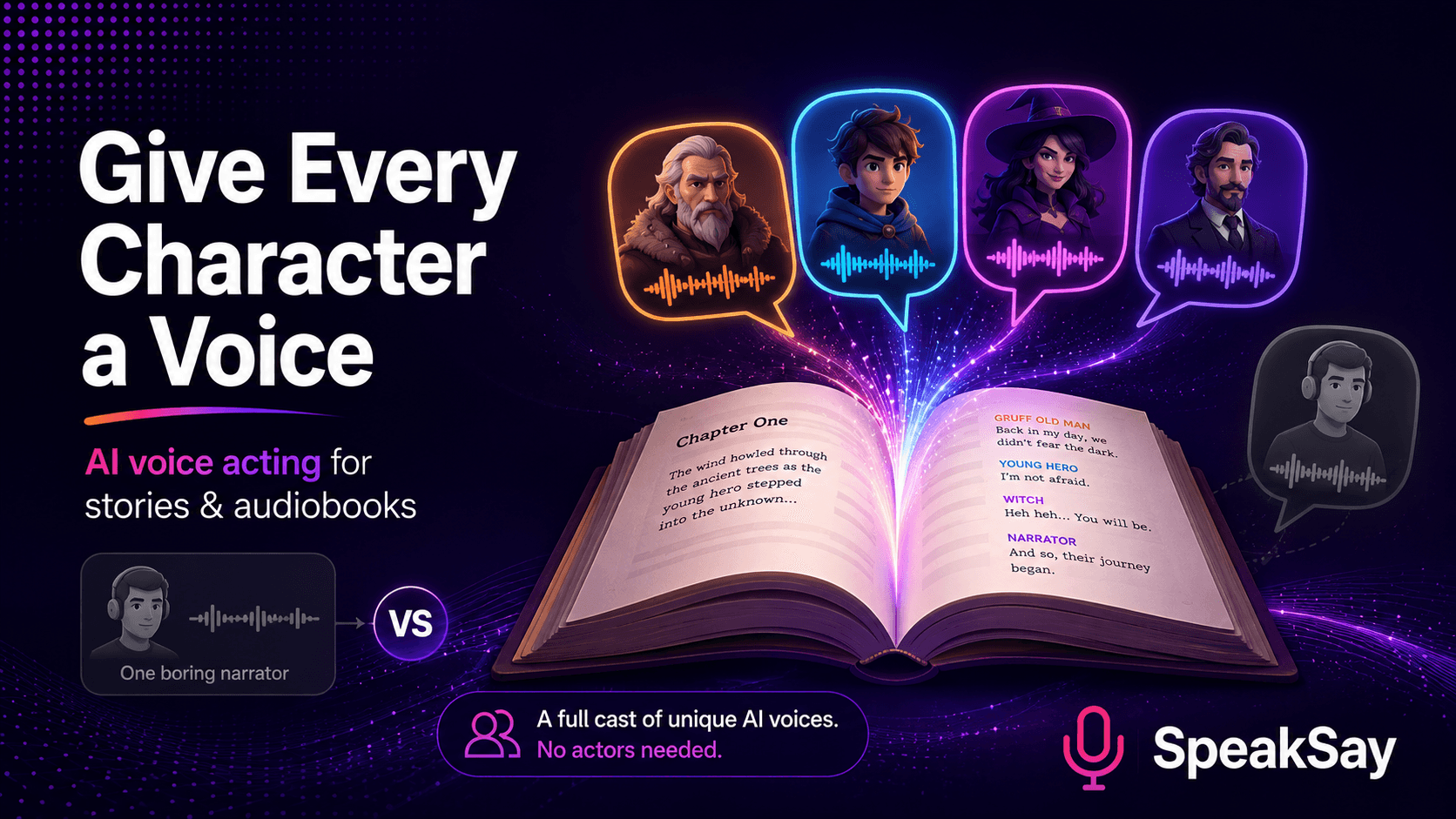
How to Create Multiple AI Character Voices for Story Videos & Audiobooks (No Voice Actors Needed, 2026)
A single monotone narrator kills immersion. Here's how to give every character in your story videos or audiobook its own distinct AI voice — a full cast, no actors, consistent across a whole series.
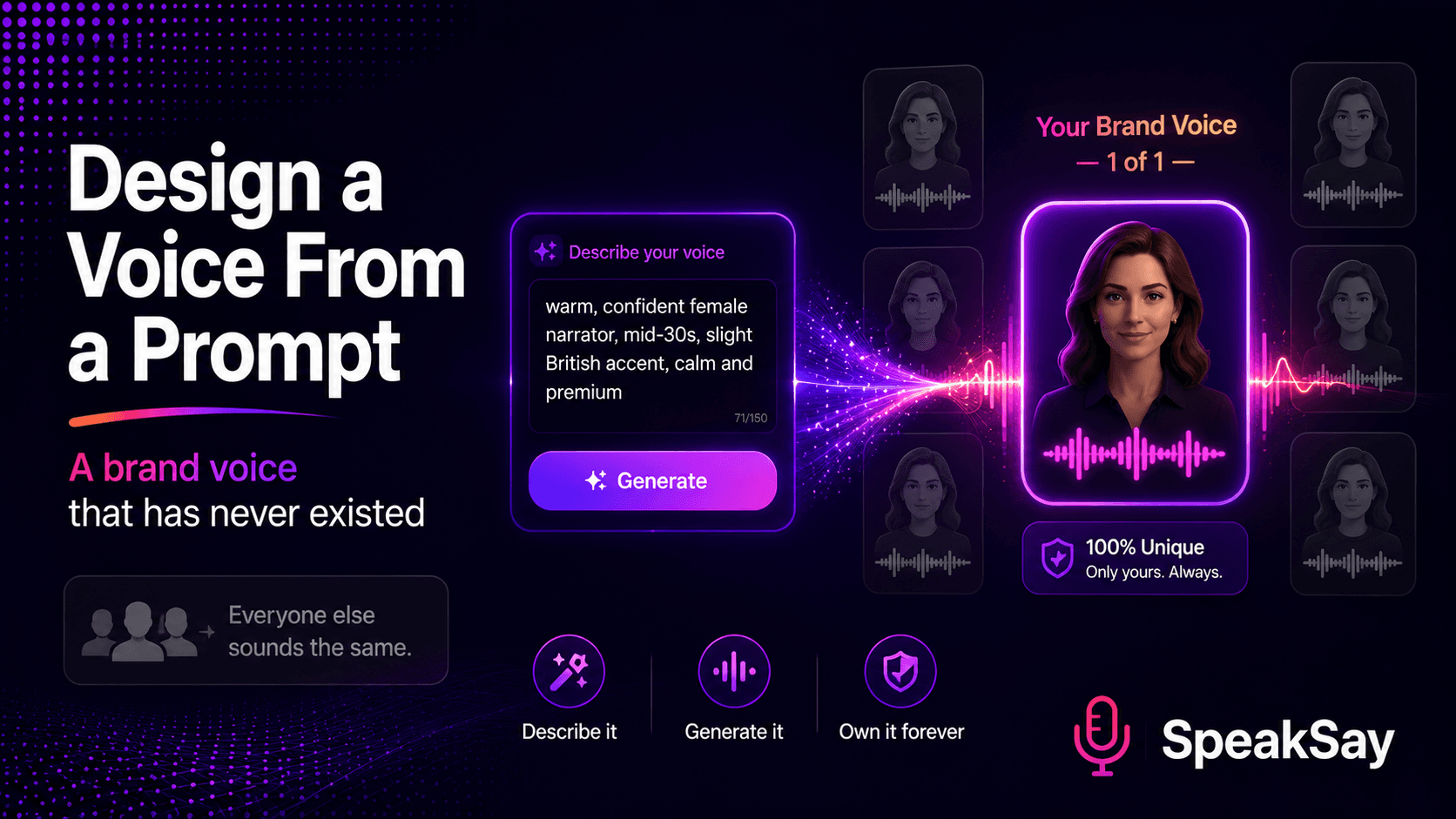
How to Create a Custom AI Voice for Your Brand From a Text Prompt (Voice Design Studio, 2026)
: Stock AI voices make every channel sound the same, and cloning needs a real person to record. Voice Design Studio lets you describe a voice in a prompt and generate an original, brand-owned voice in seconds.
Best ElevenLabs Alternatives in 2026 (Ranked by Price, Voice Quality & Commercial Rights)
ElevenLabs raised prices roughly 239% year over year. Here are the best alternatives in 2026, ranked honestly by price-per-hour, voice quality, voice cloning, and commercial rights — so you can switch without guessing.
Best Murf AI Alternatives for Faceless YouTube Channels (2026 Comparison)
Murf AI is a solid studio editor, but at $0.30/minute or capped subscriptions it gets expensive when you're publishing 10+ faceless videos a week. Here are the best Murf AI alternatives in 2026 for high-volume faceless YouTube — compared on cost at scale, voice consistency, and repurposing.
Best ElevenLabs Alternative for Voice Cloning in 2026 (Free vs Paid, Tested)
ElevenLabs locks voice cloning behind its paid Creator plan and restricts commercial use on lower tiers. We tested the best free and paid voice cloning alternatives in 2026 — open-source models, hosted tools, and the no-GPU middle ground — so you can clone your voice without overpaying or fighting setup.
Play.ht Shut Down — 7 Best Alternatives & How to Migrate Your Voices (2026)
Meta acquired Play.ht and shut it down for good on December 31, 2025 — taking accounts, files, and API access with it. Here are the 7 best Play.ht alternatives in 2026 and a step-by-step plan to migrate your voices and projects without losing work.Play.ht Shut Down: 7 Best Alternatives & Migration Guide (2026)
Tired of AI Voice Subscriptions? Best ElevenLabs Alternatives With a One-Time / Lifetime Payment (2026)
ElevenLabs raised prices roughly 239% and capped what you get per month. If you're sick of stacking voice subscriptions, here are the best one-time and lifetime AI voice alternatives in 2026 — with the real math on what three years of subscriptions actually costs.
YouTube Automation 2025 Guide: Strategy, SEO, Monetization & AI Tools
Step-by-step YouTube automation blueprint for 2025. Validate niches, script with AI, pick voices, edit faster, rank videos, monetize, and scale with systems.
Give your words a voice
Start free with 10,000 credits. No credit card required.