Class Notes Nobody Reads: How Alumni Offices Can Turn Updates Into a Short Audio Digest With an AI Podcast (2026)
Class notes are some of the most-wanted and least-read content an alumni office produces. Here is how to turn them into a five-minute audio digest, with consent and fact-checking built in.
1) The problem with the column of names
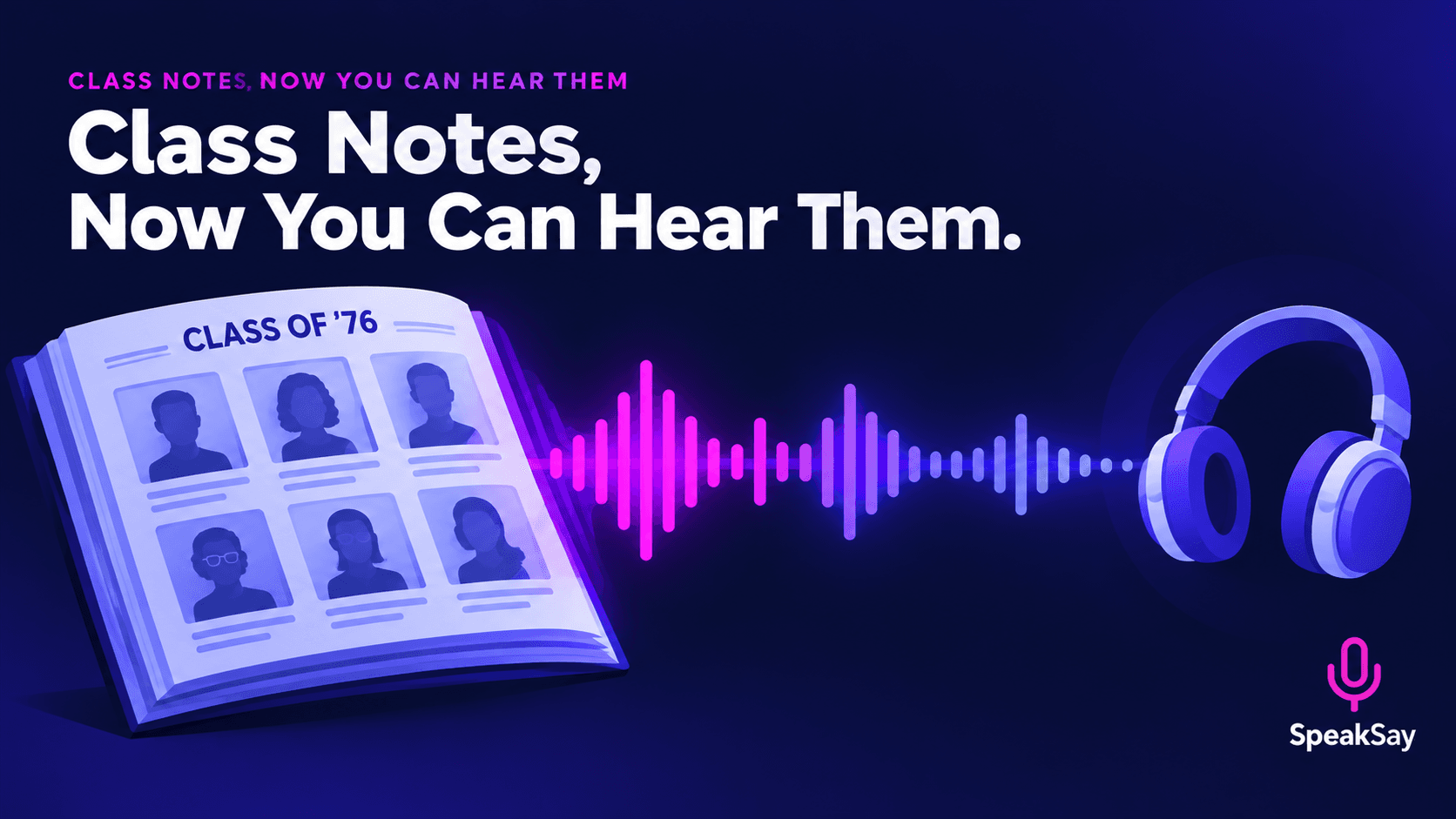
A print or email class-notes section is organised by graduation year, which is how alumni think, but it reads like a directory. Readers scan for their own cohort, find nothing, and stop. Alumni teams are usually one to three people, so a fully produced show is out of reach.
An AI podcast tool can turn the same submitted text into a conversational recap. It does not replace the written notes. It gives a different group of alumni, the ones who never open the newsletter, a way to hear what their classmates are doing.
2) Consent and accuracy come first
- Use only what was submitted for publication. If a classmate sent a note for the class column, it is fair to include. Do not add details from social media or other sources.
- Handle sensitive news with care. Deaths, illnesses and family news deserve a human voice and the family's permission. Leave these in the written column or have a staff member read them.
- Check names and pronunciations. Put difficult names in a short pronunciation list before generating audio, and listen to the whole episode once.
- Check your institution's privacy policy. Some schools restrict what can be put into third-party tools. Confirm what you may upload.
- Label the audio. Say at the start that the episode is produced with AI voices.
3) The monthly workflow
- Collect. Gather the month's approved notes in one document, grouped by decade or by cohort.
- Trim. Cut each note to one or two sentences. Remove lists of attendees and long titles.
- Add a framing line per group. For example: "Class of 1998: three updates this month."
- Generate. Use SpeakSay AI Podcast to create a two-voice episode from the document.
- Review. Listen once for names, dates and tone. Fix and regenerate.
- Publish. Post the episode on the alumni page and link it from the newsletter.
Make your first alumni episode
Paste a month of approved class notes and turn them into a short conversational digest.
4) An episode template
| Segment | Length | Content |
|---|---|---|
| Welcome | 20 seconds | Name of the school, the month, a note that the episode uses AI voices. |
| Class highlights | 3 minutes | Six to ten short updates, grouped by decade. |
| Campus news | 1 minute | One or two items alumni will care about. |
| What is coming | 30 seconds | Reunion date, regional event, or a call to submit a note. |
End with the address where classmates can send their own update. Submissions rise when people hear their cohort mentioned.
5) Reunion season: audio that sells the trip
Before a reunion, a cohort-specific episode is a personal invitation: who has confirmed, which house is hosting the dinner, what has changed on campus. Keep it short and factual, and only name people who have agreed to be named.
If your office has a small budget, the Lifetime plan lets you run monthly and reunion episodes without watching a credit meter.
Run a monthly show without a monthly bill to explain
Small teams do better with a predictable cost. See the Lifetime plan.
6) What to measure
- Plays and completion rate, compared with newsletter open rate.
- Number of new class-note submissions the month after the first episode.
- Click-through from episode page to the reunion registration page.
7) Frequently Asked Questions
Do we need alumni permission to include their notes?Include notes that were submitted for publication. For anything else, ask first, and check your institution's privacy policy.
Should sad news be in the audio?Leave it to a human. A short staff-read segment or the written column is more respectful than an AI voice.
Can we use our own staff voice instead?Yes. With the staff member's written consent you can use a cloned voice for consistent narration. See the voice cloning page.
How long should the episode be?Four to six minutes keeps it listenable on a short walk.