Rehearsal Notes, Out Loud: A Weekly Audio Briefing for Choir and Community Band Members Who Skip the Email (2026)
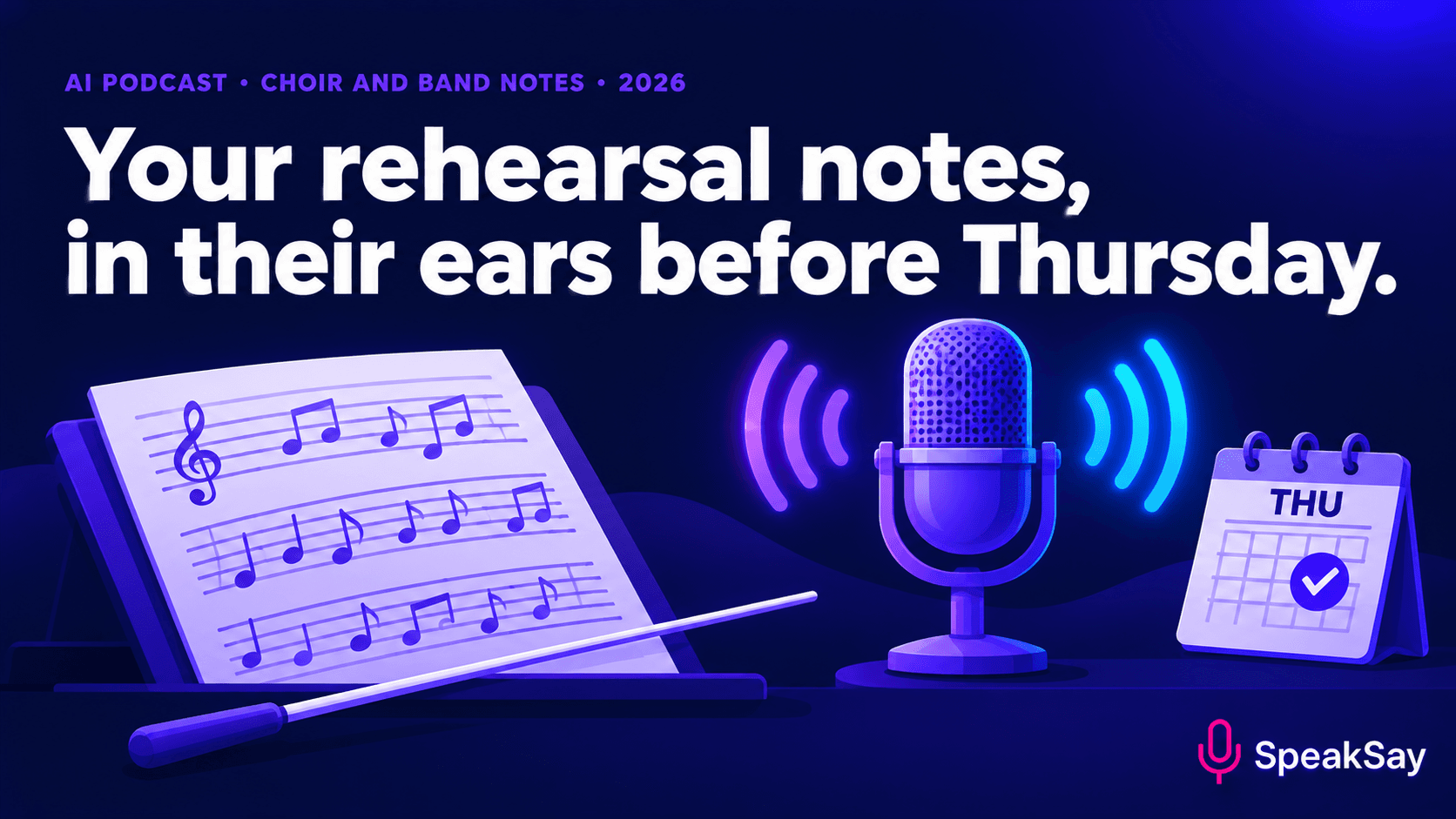
Every director repeats the same notes: bar numbers, dates, dress, who is out. Members skim the email. A three-minute weekly audio briefing gets the same information into their ears on the drive to rehearsal. Here is the format, a script template and what to keep in writing.
1. The email nobody finishes
Volunteer ensembles run on short rehearsal windows and busy members. A weekly email must carry dates, music, dress, logistics and sometimes sensitive news. People skim it, then rely on the person next to them.
Audio fits where members already have time: commuting, walking, cooking. It also lets the director say a tricky passage the way it should sound, which text cannot do. Audio carries tone and emphasis; the written note carries the details people need to look up.
2. A three-minute format
Keep it short and the same every week so members know what to expect.
- Thirty seconds: the headline. What is happening this week and the one thing to do before Thursday.
- Ninety seconds: the music. Two or three specific places to fix, by page, bar and part.
- Thirty seconds: logistics. Dates, venue changes, who brings what.
- Thirty seconds: thanks and a closing line. A real thank-you, not a slogan.
Over three minutes, attention drops. If you have more to say, move it to the written note.
3. A script template
Fill in the brackets and read it aloud once before generating audio.
| Segment | Example wording |
|---|---|
| Opening | "This is the [group name] rehearsal brief for the week of [date]. One thing to do before Thursday: [action]." |
| Music | "In [piece], page [number], bar [number]: sopranos, the entry is on the second beat. Altos, watch the rest." |
| Logistics | "Thursday rehearsal is at [time] in [room]. Concert dress is [description]." |
| Close | "Thank you [name] for [specific thing]. See you Thursday." |
Say page and bar numbers slowly and spell out anything that could be misheard. Check the audio once before you send it.
4. Who should speak
Members hear a rehearsal brief best from a voice they trust. There are three choices, and each has trade-offs.
- The director's own voice, recorded. Warmest, but it takes time each week.
- The director's cloned voice, with their permission. Saves time, but tell members it is a synthetic version of the director's voice.
- A neutral synthetic voice. Fastest and consistent. Members know it is a briefing, not a message from the director.
Whichever you choose, do not use a voice that sounds like a real person without their consent. See our consent script template if you clone a voice.
Short weekly shows are what SpeakSay AI Podcast is built for: paste the notes, choose the format, listen, and publish.
Turn this week's notes into audio
Paste your rehearsal notes and hear a three-minute briefing before you send it.
5. A 20-minute weekly workflow
- Monday evening: write the notes in your usual place. Five minutes.
- Edit for the ear: shorten sentences and spell out bars and pages. Five minutes.
- Generate and listen once: fix mispronounced composer or piece names. Five minutes.
- Send a link, not a file. Put the audio in the same message as the written notes. Five minutes.
Use the same link each week or a simple private feed so members can subscribe once. Check how your group shares private links.
6. What stays in writing
Audio is easy to miss details in, so keep the following in the email or on your members' page:
- Dates, times, addresses and phone numbers.
- Payment or fee information.
- Safeguarding or sensitive news, which should come from a person.
- Any change that members must confirm.
A weekly show also costs something every week. If your group uses it all season, compare monthly pricing with the Lifetime Plan and the pricing page.
7. FAQ
Will members actually listen?Some will not, which is why the written note stays. Ask for a quick show of hands after three weeks and adjust.
How long should the audio be?About three minutes. If it grows past five, split it or move detail to the written note.
Can I include a recording of the passage?If you are allowed to share it, a short clip of your own group is helpful. Check licensing for published recordings before sharing.
Do I need to tell members it is synthetic?Yes. Say it in the first episode and in the description.