Giving Tuesday Is December 1: How a Small Nonprofit Can Turn Its Impact Report Into a 5-Minute Audio Update Donors Actually Finish (AI Podcast, 2026)
Impact reports are long, and most donors skim them. This guide shows small nonprofits how to turn a one-page impact summary into a short audio update before Giving Tuesday on December 1, 2026, with a script structure, consent rules for stories and a send plan.
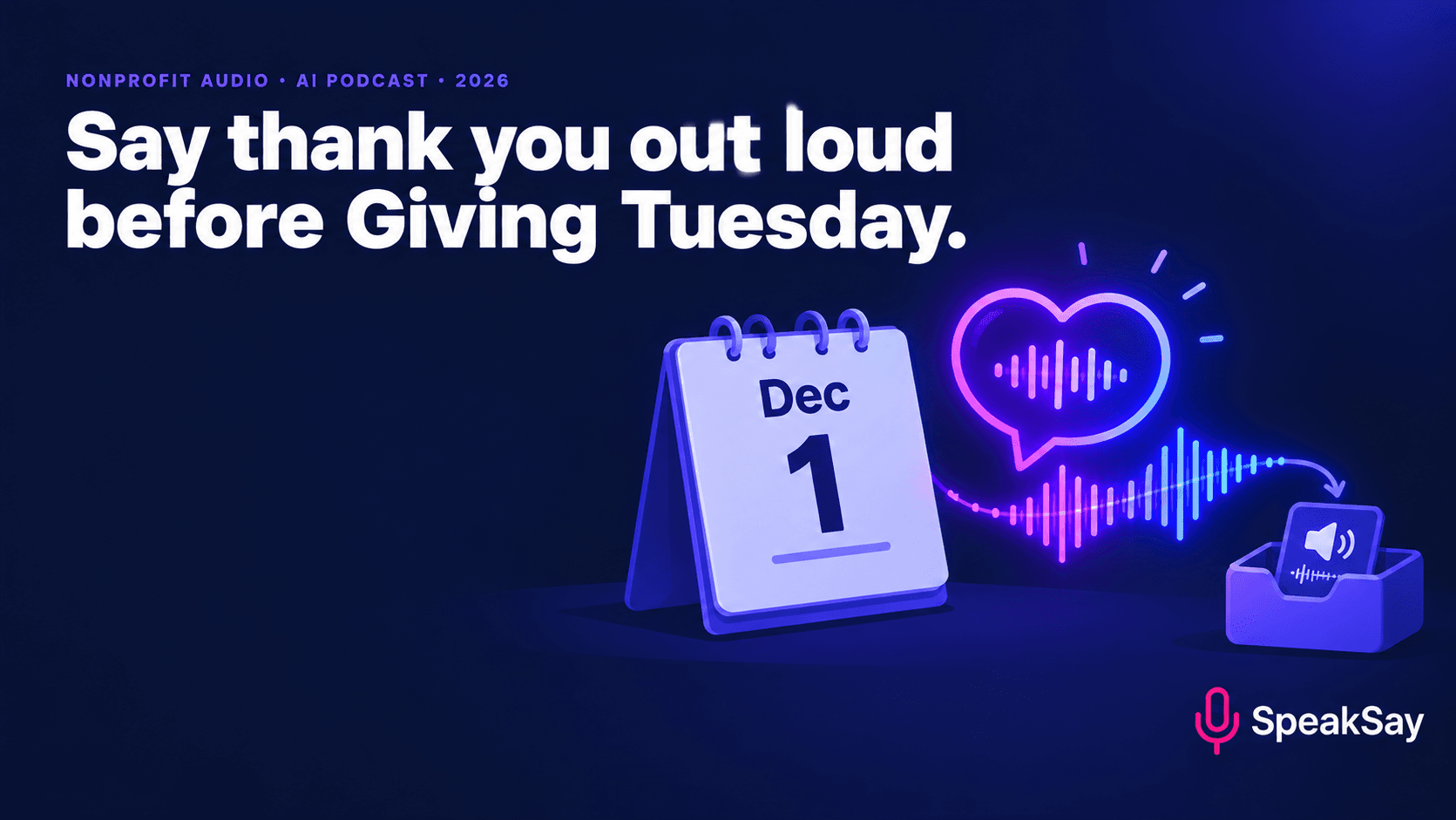
1) Why audio suits donor updates
Donors who give once a year rarely read the annual report. They do open short messages from an organization they trust. A spoken update is a thank-you with a number in it, and it can be played while someone walks the dog or does the dishes.
It also helps a small team. You probably do not have a producer or a voice actor. An AI podcast workflow lets one person produce a clean episode from a document they already have. We make no claim here about open rates or donation lift; track plays and replies against your last email.
This post is about stewardship (thanking and reporting), not asking. If you want the video side of fundraising, see our guide on AI voice for fundraising and donor videos.
2) Start with a one-page source
The audio is only as good as the page it comes from. Write one page with these parts:
- Three numbers you can prove: people served, meals, hours, trees, whatever your measure is.
- One story with permission (see below).
- One thing that is not finished, so the update is honest.
- One specific next step for Giving Tuesday.
Upload that page to the SpeakSay AI podcast tool and generate the episode from it. Do not upload donor lists, addresses or anything private.
3) The five-minute structure
| Minute | What it says |
|---|---|
| 0:00 to 0:30 | Thank you, and what this episode is |
| 0:30 to 1:30 | The three numbers, explained in plain words |
| 1:30 to 3:30 | The story |
| 3:30 to 4:15 | What is still unfinished |
| 4:15 to 5:00 | The Giving Tuesday step and a thank-you |
Keep the ask to a single sentence. The episode is a thank-you first. People notice when an update turns out to be an appeal.
4) Handle stories and names with care
Stories about the people you serve are the most powerful part and the riskiest. Get these things settled before you write them in:
- Written permission from the person, in a form they understand, for audio use as well as print.
- No identifying details unless they asked for them. First names can be enough, or none.
- A check with the person, or a trusted representative, that the audio version still feels right.
Do not use a synthetic voice to speak as a beneficiary or to "re-enact" their words. Use the host voices to tell the story in the third person, or use their own recording with permission. Label the episode as AI-generated narration in the show notes and spoken intro.
5) Make the episode
- Generate the episode from your one-page source.
- Listen for numbers, names and place names, and fix any that are wrong. Our pronunciation guide shows how.
- Check that the story section says only what the page says. If the host adds details, remove them.
- Even out the loudness with the free audio normalizer before sending.
- Add a written transcript below the player.
Make your donor update
Turn one page of impact into a five-minute episode, then compare plans if you want a monthly series.
6) When and how to send it
- Around November 24 to 27: send the update as a thank-you before the appeal wave. Link the audio and a transcript, with no donation button on the same email if you can avoid it.
- On December 1: a short reminder pointing to the same audio, with your ask.
- In the week after: a thank-you message with the result, and the audio if you want to share the final number.
Treat these dates as a plan, not a promise. Check your own list's habits.
7) Pre-send checks
- Every number matches your records.
- Every story has written permission.
- The episode says it uses AI-generated narration.
- A transcript is linked for people who cannot play audio.
- A real person from your team has listened to the whole episode.
8) FAQ
When is Giving Tuesday in 2026?It falls on the Tuesday after Thanksgiving, which is December 1, 2026.
Is a synthetic voice appropriate for donor updates?For reporting and thanks, many small teams find it acceptable when it is labeled. Use a human voice for anything personal, such as a message from your director.
How long should the update be?Five minutes or less. If you need more, split it into two episodes.
Can I use the donor's name in the audio?Only if your own data policy allows it and the donor expects it. Generic thanks are safer for a mass send.