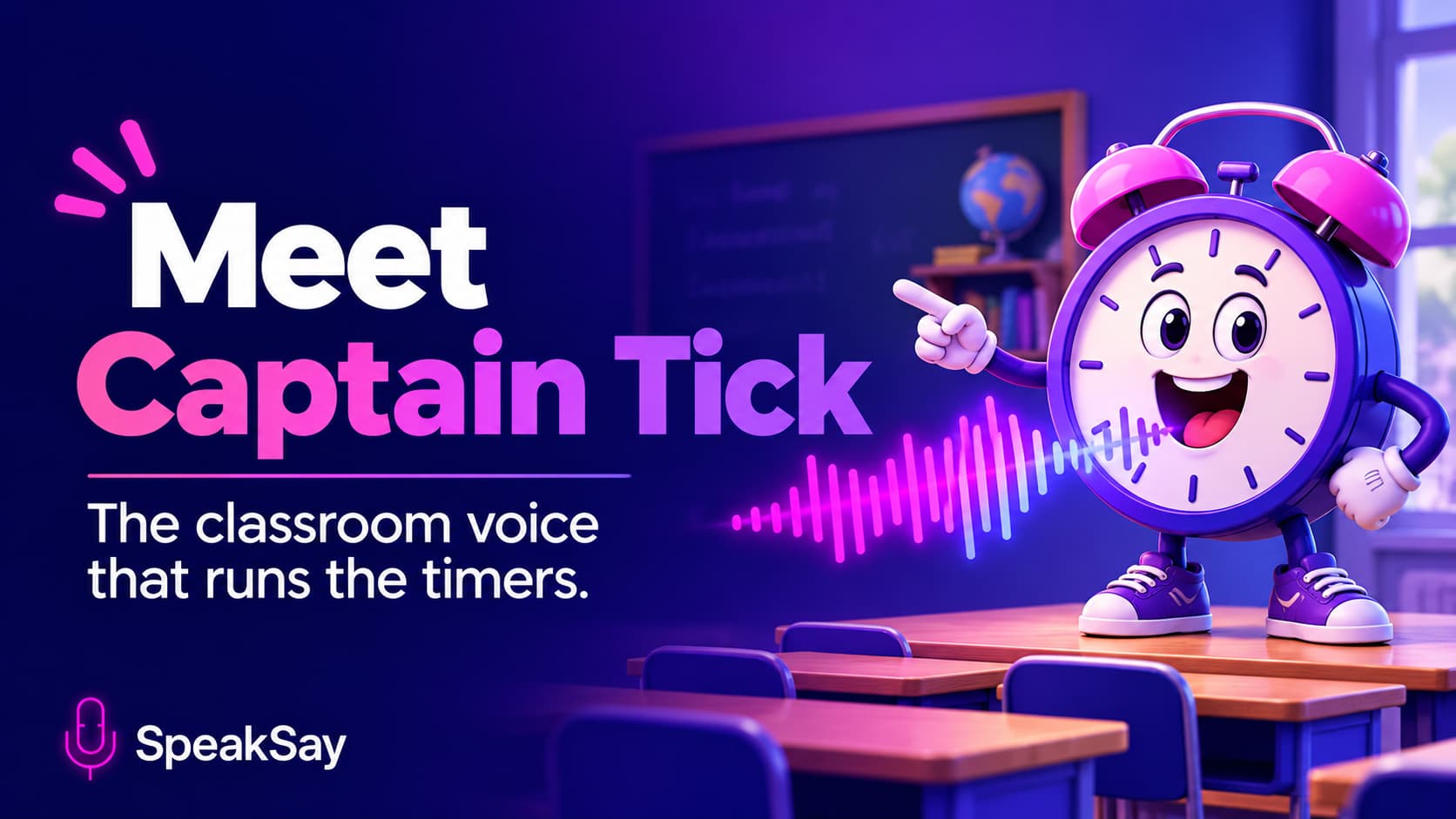
Meet Captain Tick: How Teachers Build an Original Character Voice That Runs the Timers, Transitions and Morning Message (Voice Remix, 2026)
A recorded character voice can handle the repeated lines of a school day: timers, clean-up, line-up and the morning message. Here is how to design one that is original and kind.
1) The Idea in One Paragraph
Pick the handful of moments that repeat every day: starting the day, starting work, switching activities, tidying up, lining up, ending the day. Write a short line for each. Record them in one original character voice. Play them from your computer or speaker at the right moment. Students learn the cues quickly, and the character, not you, is the one who says "time's up".
2) Ground Rules: Original and Kind
- Original only. Do not imitate a cartoon character, a celebrity, a streamer or a known brand mascot. Invent your own.
- Kind, never sarcastic. The voice should never shame, tease or single out a student.
- Short lines. Under ten words each. Students stop listening to long ones.
- You are still in charge. The character helps with routines. It does not replace your judgment, discipline or relationships.
3) Design the Character
Decide on three things before you record anything.
- A job and a name. "Captain Tick, keeper of the clock." The job tells you what the character says.
- A sound. Warm, bright and clear works best. Avoid anything harsh or too high.
- A catchphrase. One short line used at the start of every cue, such as "Tick tock, team."
Use Voice Remix to shape a voice from scratch. Adjust pitch and tone until it sounds like a character, not like you with an effect on top.
Shape a character voice of your own
Start with a base voice and remix it into something original. Try it free before you commit.
4) The Script Bank
Write the lines first. About twenty will cover most days.
| Moment | Example line |
|---|---|
| Morning message | "Tick tock, team. Good morning. Today's plan is on the board." |
| Start work | "Pencils ready. Let's begin." |
| Five minutes left | "Five minutes on the clock." |
| One minute left | "One minute. Finish your sentence." |
| Switch activities | "Time to switch. Eyes up." |
| Tidy up | "Clean-up time. Beat the clock." |
| Line up | "Walking feet. Quiet voices." |
| End of day | "Great work, team. See you tomorrow." |
Record two or three versions of the most-used lines so it does not feel like the same clip all day.
5) Build It in One Hour
- Choose a base voice from the voice library.
- Remix it until it sounds like your character.
- Generate each line from your script bank.
- Trim the files so each starts right at the first word.
- Name them by moment, for example "05-five-minutes-left".
- Put them in one folder on your computer, or in a playlist, and test them on your classroom speaker.
Check the volume in the real room. A line that sounds fine on headphones can disappear in a noisy classroom or boom in an empty one.
6) Using It Without Overusing It
- Introduce it as a game. Let students suggest new lines or a name.
- Use it for routines, not for correction. It should never be the voice that tells a child off.
- Refresh it each term with a few new lines so it stays fun.
- Keep a silent day sometimes. Variety keeps the cues meaningful.
- Watch for students who find it distracting or upsetting, and adjust or switch it off.
7) Before You Use It at School
Rules differ between schools and districts. A few sensible checks:
- Ask whether your school has a policy on AI tools or recorded audio in class.
- Do not use any student's real voice or name in the audio without permission.
- Keep student personal information out of anything you generate.
- Tell parents about the character if your school expects you to share classroom tools.
A character for the whole school year
Twenty lines, refreshed each term, is easy to keep up on a plan. See what fits.
8) Frequently Asked Questions
Can I use a voice that sounds like a cartoon character?No. Build an original character instead. Imitating an existing character or a real person is not what this is for.
How many lines do I need?Around twenty covers the routine moments of most days, with two or three versions of the most-used lines.
Will students get tired of it?They can, so rotate the lines, refresh each term and leave some moments unvoiced.
Can students help write it?Yes, and it is a good class activity. You review the final lines before anything is generated.
Does it work for homeschool?Yes. A smaller set of lines for starting lessons, breaks and clean-up works well at home.