AI & Machine Learning
Articles about artificial intelligence and machine learning
Your Team's Year in Review as a 10-Minute "Wrapped" Episode: AI Podcast for Small Businesses and Clubs (2026)
The year-end email gets skimmed. A ten-minute two-host recap built from your real numbers and wins gets played. Here is how to build one with an AI podcast.
Hear Your Thesis Before Your Committee Does: Listen-Back Proofreading and Defense Prep With Text to Speech (2026)
Your eyes skip the errors your ears catch. Here is a chapter-by-chapter listen-back routine for theses and dissertations, plus how to use it to rehearse your defense.
Publishing Your Writing Group's Anthology as an Audiobook: Many Authors, One Consistent Narration (2026
Ten contributors cannot afford ten narrators. Here is how a writing group can turn an anthology into one consistent audiobook, with consent, casting and loudness handled.
Your Own Edition of a Public-Domain Classic: How to Make an Annotated Audiobook With AI Narration (2026)
A public-domain text is free to use, but a free audiobook edition is not free of decisions. Learn how to check status, add original value with notes and intros, and publish an edition that is yours
Your Lesson, Between Lessons: How Private Tutors Can Send Practice Recaps in Their Own Cloned Voice (2026)
Students forget most of a lesson by midweek. A two-minute recap in the tutor's own voice keeps practice on track without extra teaching hours. Workflow, consent and privacy rules included.
Give Your DIY Smart Home Its Own Voice: Original Announcement Voices for Home Automation Projects With Voice Remix (2026)
Home automations announce doorbells, laundry and timers in a default voice. Here is how makers can design an original voice, generate a reusable library of short clips, and avoid soundalike pitfalls.
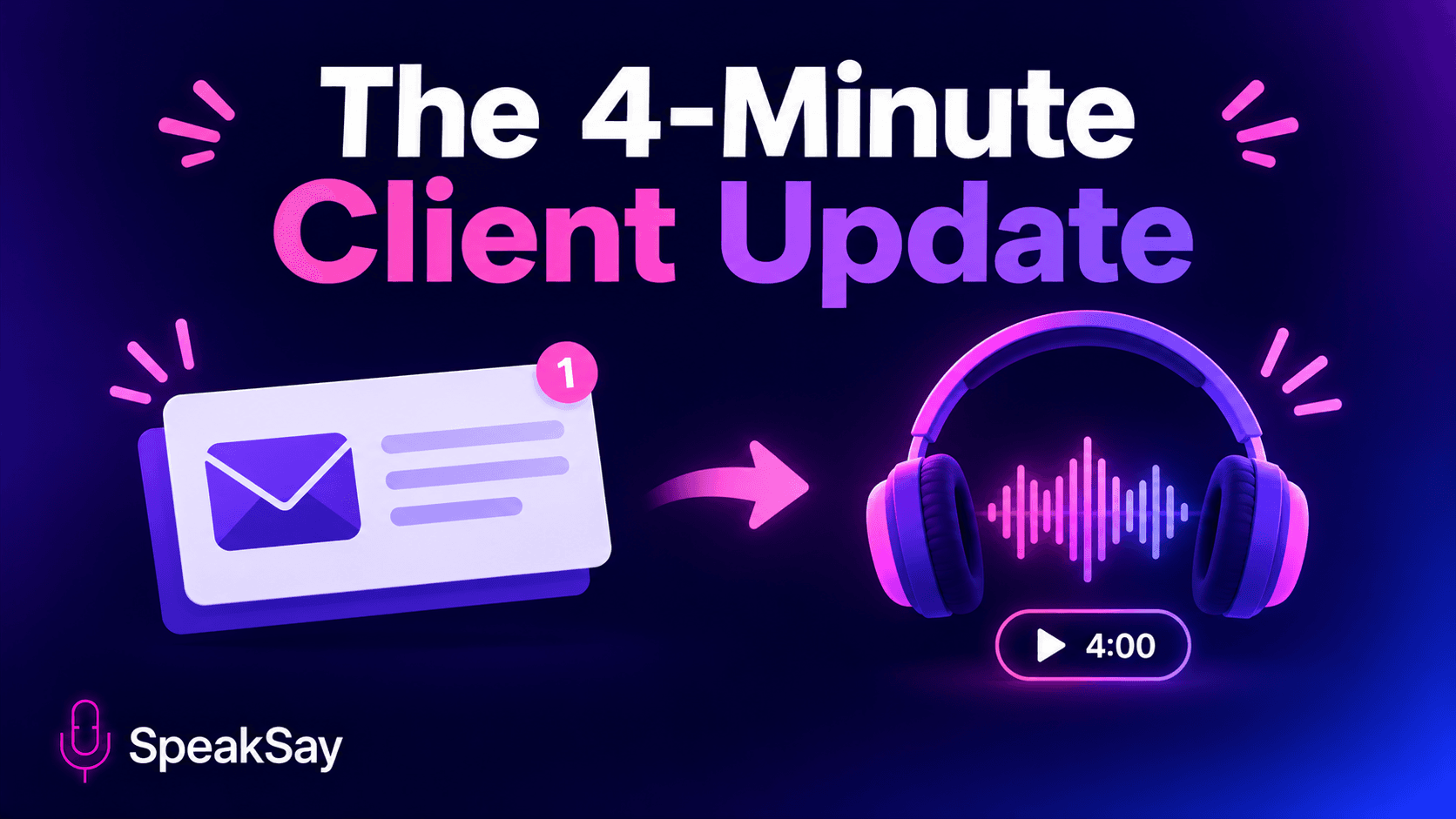
The 4-Minute Client Update: How Consultants, Lawyers and Accountants Can Turn a Monthly Email Into a Private Audio Briefing With an AI Podcast (2026)
Your monthly client email is probably skimmed. A four-minute private audio briefing, made from the same notes, is easier to consume. Here is the format, the script, and the confidentiality rules.
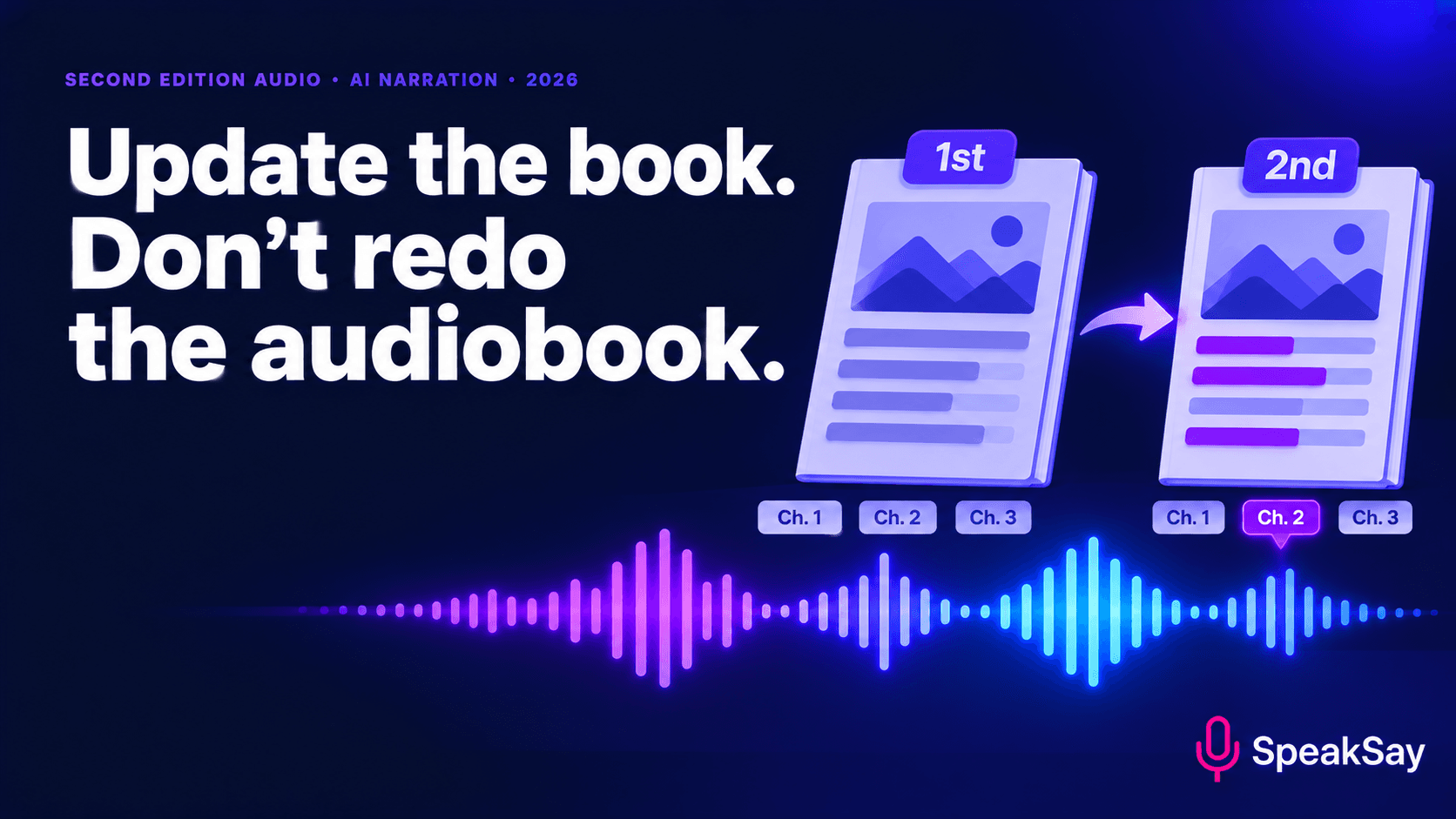
Second Edition, Stale Audiobook: How to Update an AI-Narrated Audiobook When Your Book Changes, Without Re-Recording Everything (2026)
When you revise a nonfiction book, the audiobook quietly goes out of date. This guide shows how to find what changed, re-render only the affected passages in the same voice, proof just those spots, and re-publish the update.
Your Readers Are Aging Out of Print: How a Small Local Newspaper or Town Newsletter Can Publish a 10-Minute Weekly Audio Edition With an AI Podcast (2026)
Many small papers and town newsletters have readers who struggle with small print, and no audio at all. This guide shows a small publisher how to turn the week's best stories into a short audio edition with an AI podcast, with a human editor still responsible for every name and fact.
The Weekly Team Email Parents Skip: How a Youth Sports Coach or League Can Send a 3-Minute Audio Recap With an AI Podcast (2026)
Schedules, snack rotas and field changes get buried in group chats. A three-minute weekly audio recap, made from notes you already have, gets the message through without adding hours to a coach's week.
Your ARC Readers Don't Have Time to Read: How Indie Authors Can Give Reviewers and Launch Teams an Audio Advance Copy With AI Narration (2026)
Advance readers say yes and then run out of time. An audio ARC, even of just the first chapters, fits commutes and chores and can raise the number of early reviews. Here is how to make one safely and fairly.
A Poem Is Not a Paragraph: How to Make a Poetry Collection Audiobook With AI Narration (Line Breaks, Pauses and White Space, 2026)
AI narration tends to read a poem like prose, flattening line breaks and swallowing the silence between stanzas. This guide shows how to score each poem for the ear, produce one poem per file, test a sample, and decide what still needs a human reader.
Nobody Reads the HOA Newsletter: How a Community Association Can Turn Board Decisions Into a 4-Minute Monthly Audio Digest With an AI Podcast (2026)
Residents skip the monthly HOA newsletter and then say nobody told them. A 4-minute audio digest, built from the same board notes, reaches the people who never open the PDF. Here is the format, the script and the limits.
Hands in the Dough, Eyes Off the Page: How to Turn a Cookbook Into an Audiobook With AI Narration (Measurements, Ingredient Lists and Steps, 2026)
A cookbook is built for the eye, with lists, tables and fractions. This guide shows food writers and self-published cooks how to rewrite recipes for the ear, say measurements correctly with AI narration, and decide what stays in the printed book for the holiday gift season.
Hear Your Toast Before the Room Does: How to Rehearse a Wedding Speech or Best Man Toast With a Clone of Your Own Voice (Timing, Jokes and Nerves, 2026)
Most people rehearse a toast in their head and discover its problems at the microphone. This guide shows how to hear your speech in a clone of your own voice, check timing and jokes, and then practise the real delivery out loud, without ever using the clone at the wedding itself.
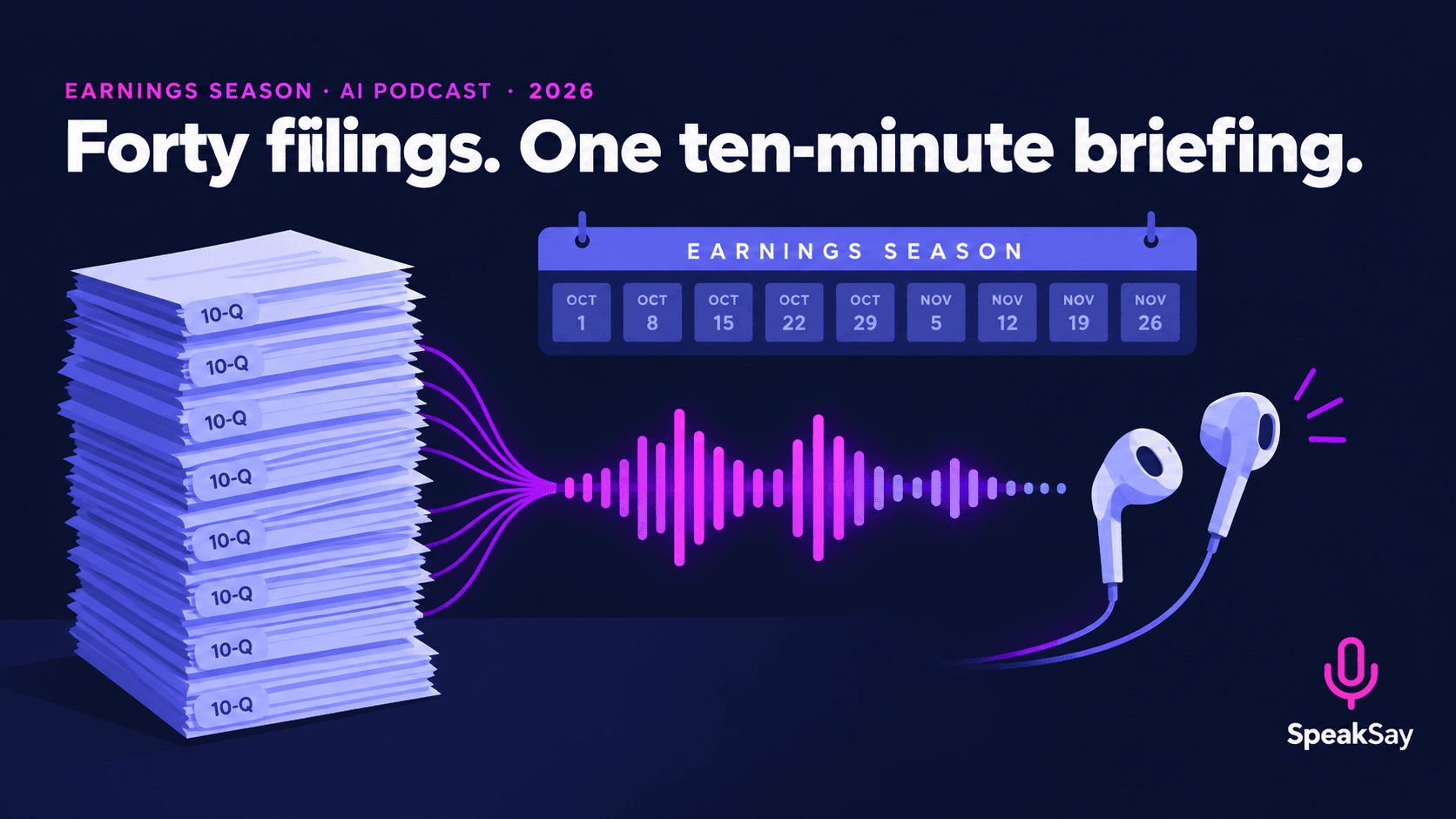
Earnings Season Is Here and Nobody Can Read 40 Filings: Turn 10-Qs and Earnings Releases Into a Weekly Audio Briefing With AI Podcast (2026)
Q3 earnings season began this week with the big banks, and the filings keep coming through early November. This guide shows how to turn the public documents you follow into a short audio briefing, what to put in it, how to check the numbers, and where the line sits between a briefing and advice.
Record the Thanksgiving Table, Keep the Stories: Turn Family Recipes and Memories Into a Short Audio Episode Everyone Can Replay (AI Podcast Method, 2026)
Every family has a recipe nobody wrote down and a story only one person tells properly. This guide shows how to record both at the table, get consent, turn the notes into a short audio episode with an AI podcast tool, and share it with relatives who couldn't be there.
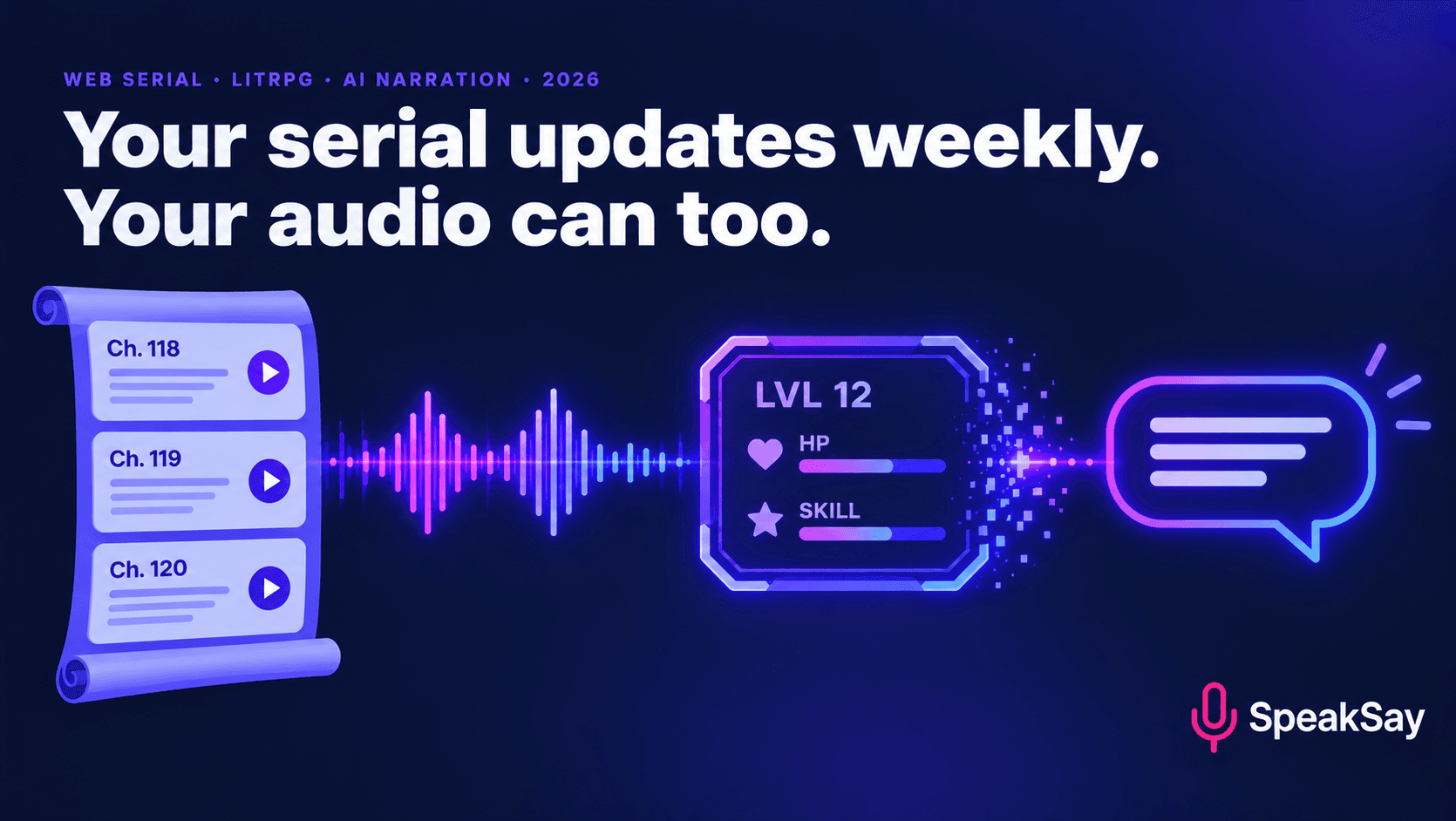
Your Web Serial Updates Every Week and a Narrator Can't: How LitRPG and Web Serial Authors Can Offer Chapter Audio Without a Studio (2026)
Web serial and LitRPG authors publish a chapter or two a week, often for hundreds of chapters. Traditional audiobook production is built for finished books. This guide covers how to voice a serial on its own schedule, how to handle stat blocks and system messages, and how to keep audio in step with chapters you keep editing.
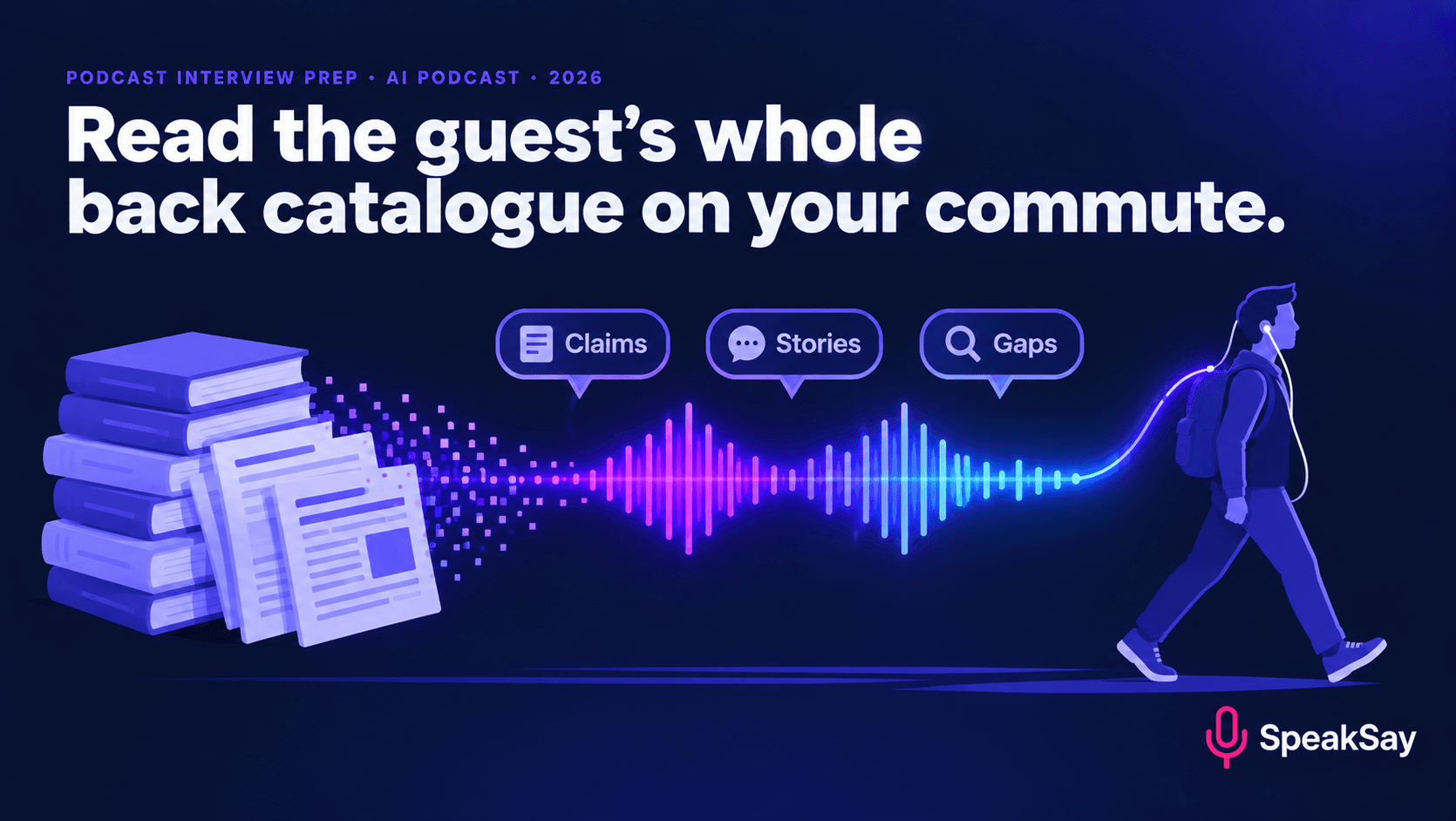
Prepping for a Guest You Haven't Had Time to Read: Turn Their Book, Articles and Past Interviews Into a Briefing You Can Listen to on Your Commute (AI Podcast Method, 2026)
Good interviews depend on host prep, and prep takes time hosts don't have. This guide shows how to turn a guest's public work into a private audio briefing, what to put in it, how to check it for errors, and how to turn it into better questions.
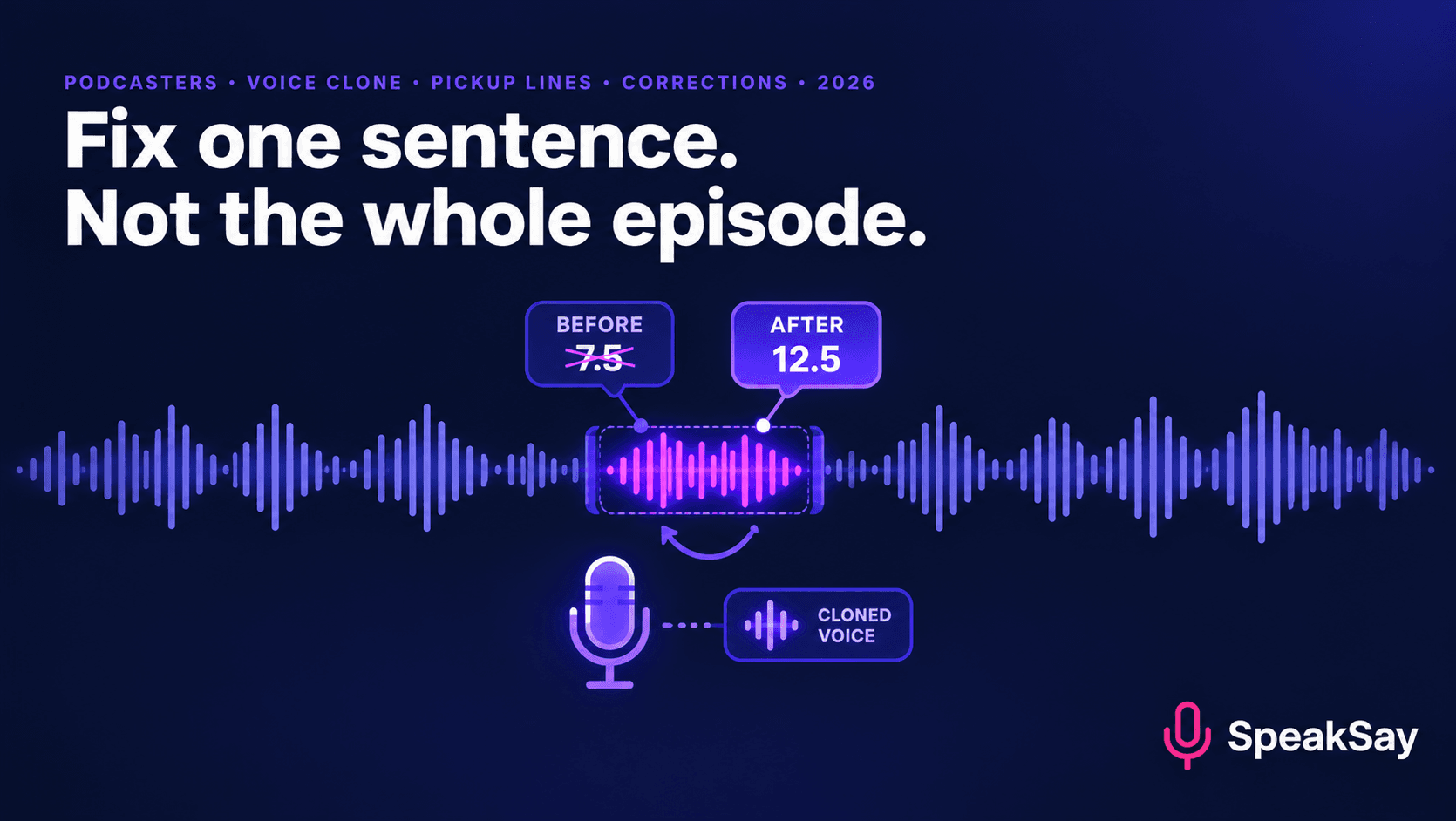
You Said the Wrong Price in Episode 41 and It Already Has Thousands of Downloads: How to Fix One Sentence in a Published Episode With a Pickup Line in Your Own Cloned Voice (2026)
A wrong price, a sponsor who changed their offer, a name you mispronounced. Re-recording the whole episode is overkill, and leaving it up is worse. Here is a careful workflow for replacing a single sentence with a pickup line in your own cloned voice, plus when you should add a spoken correction instead.
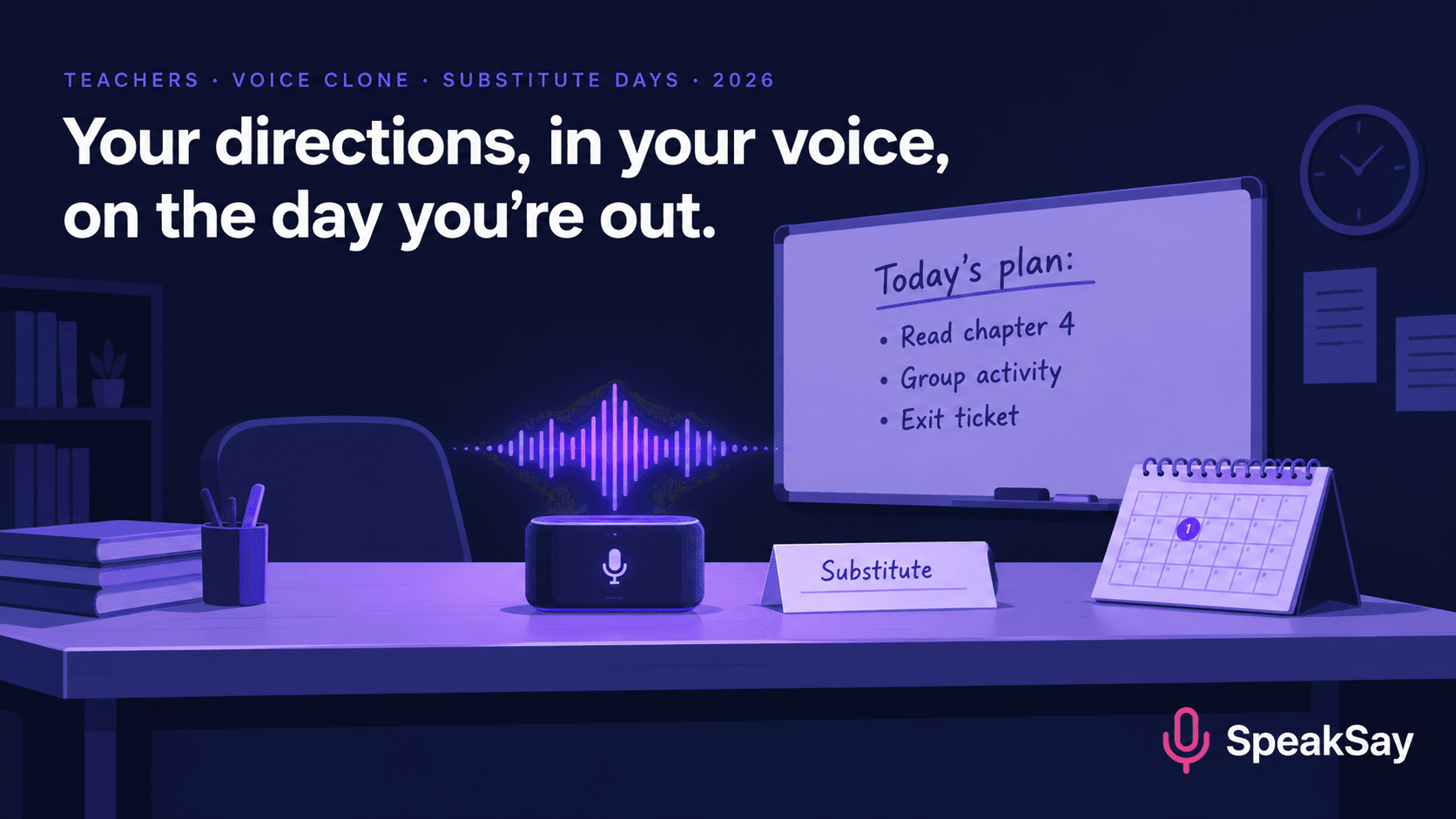
Teachers Miss About 11 of 186 School Days a Year: Record Your Directions Once and Let Your Own Voice Guide the Substitute Day (2026)
cher-voice-clone-substitute-day-audio-directions-2026 Excerpt: US teachers miss around 11 school days a year, and last-minute absences are the ones least likely to get a substitute. A teacher's voice clone, used only for routines and directions, can keep the class on track when the teacher can't be there. Here is what to voice, what not to, and what to check with your school first.
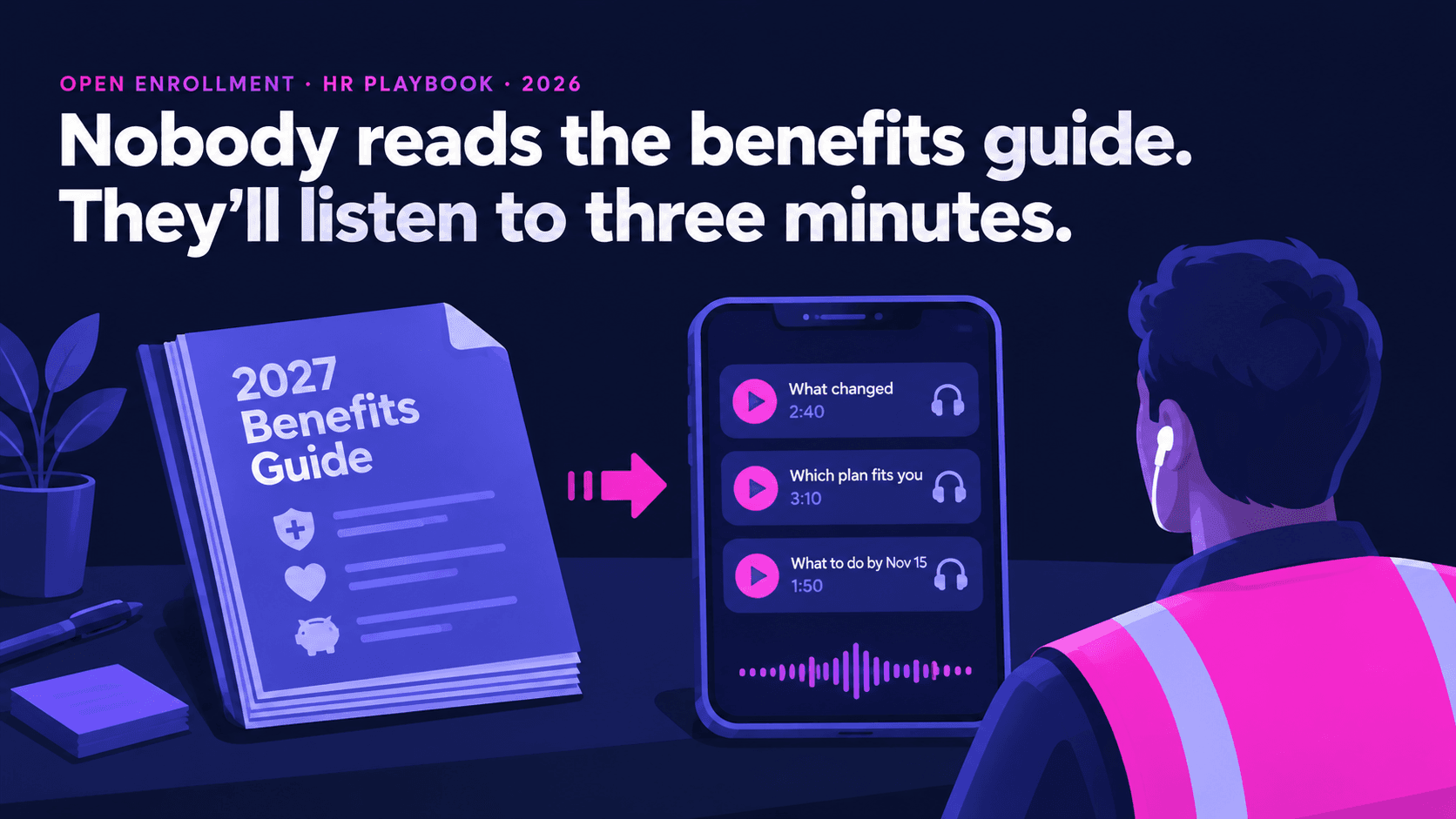
38% of Employees Struggle With Open Enrollment Emails: Turn Your Benefits Guide Into 3-Minute Audio Explainers (2026 HR Playbook)
More than a third of employees struggle to understand open enrollment communications, and 35% regret the choices they make. The benefits guide isn't the problem. The format is. Here's how HR teams turn the guide into short, phone-friendly audio explainers, in every language their workforce speaks, without recording a thing.
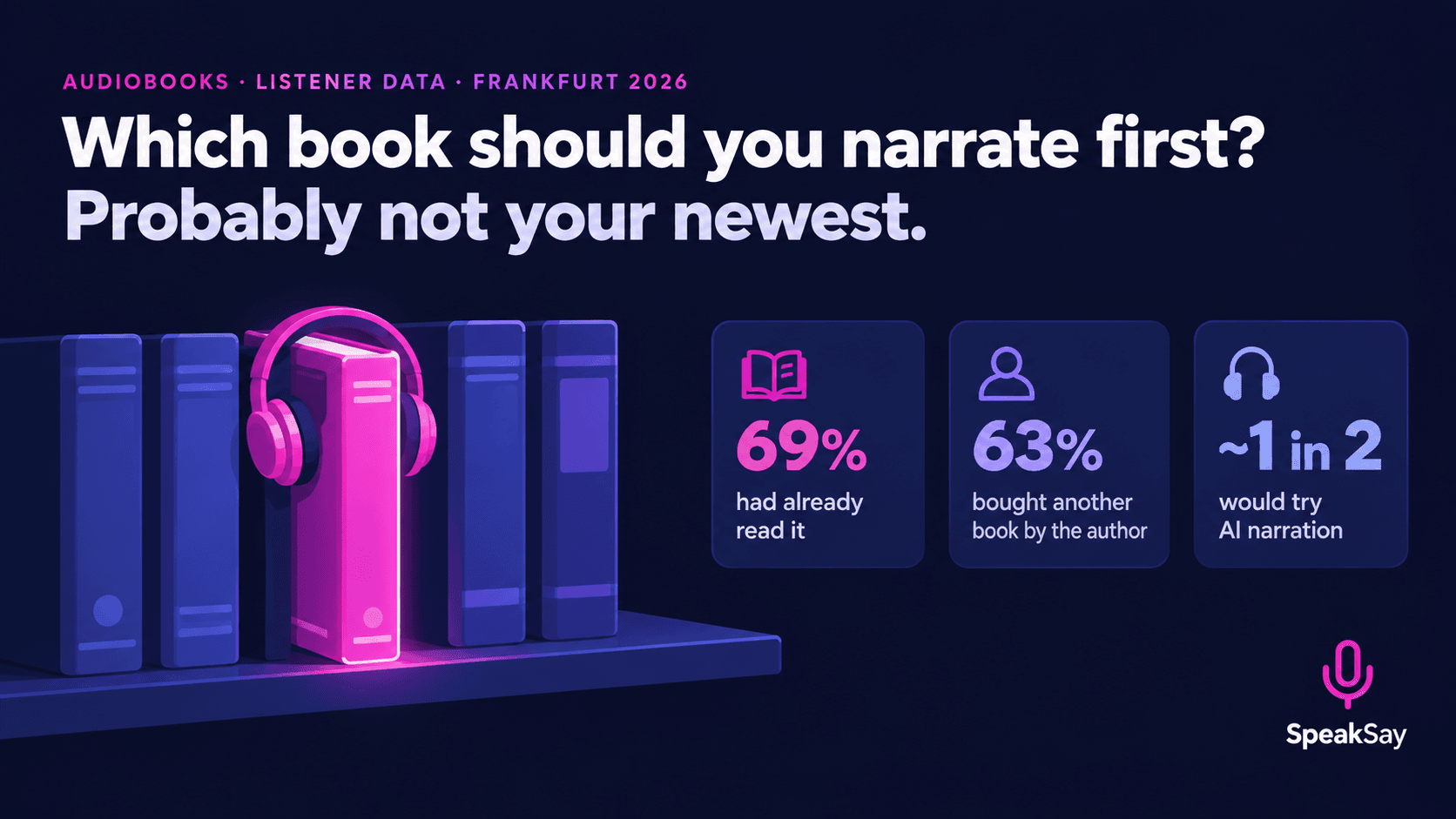
69% of Audiobook Listeners Had Already Read the Book: What Audible's 18,000-Listener Survey Says About Which Title to Narrate First (2026)
Most authors narrate their newest book first. A new Audible-commissioned survey of 18,000 consumers suggests that's backwards: most listeners had already read the book, audio sends them on to an author's other titles, and openness to AI narration is higher for fiction. Here's a scoring method for picking the title that earns its audio edition.
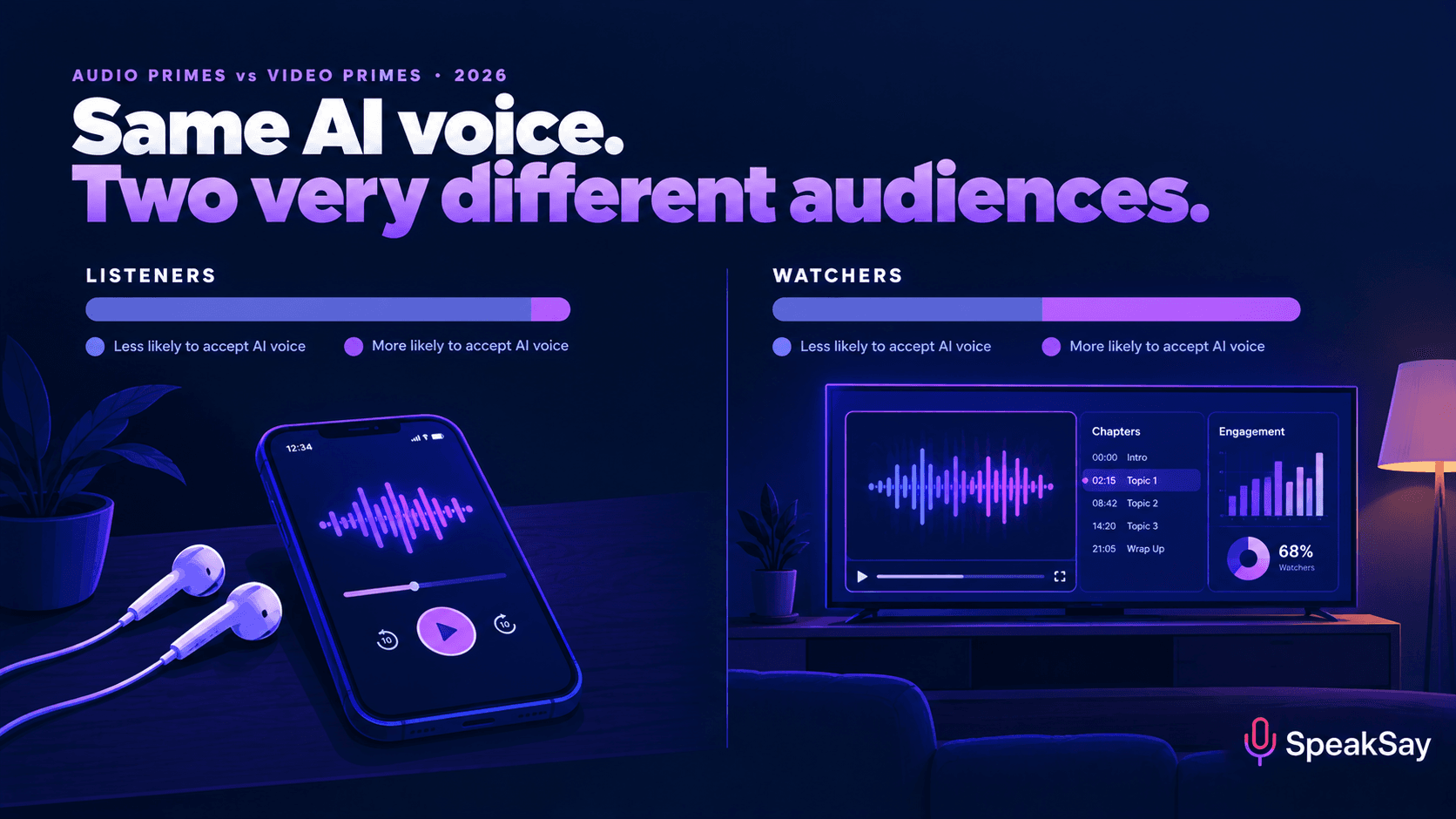
AI Voices Cost You Listeners Everywhere, but Three Times Less on Video: What Audio Primes vs Video Primes Means for an AI-Voiced Podcast (2026)
New audience research splits podcast fans into people who mostly listen and people who mostly watch. Both groups lean against AI voices, but listeners lean against them more than three times as hard. If you make an AI-voiced show, that changes where you publish first, what the screen has to do, and how you disclose.
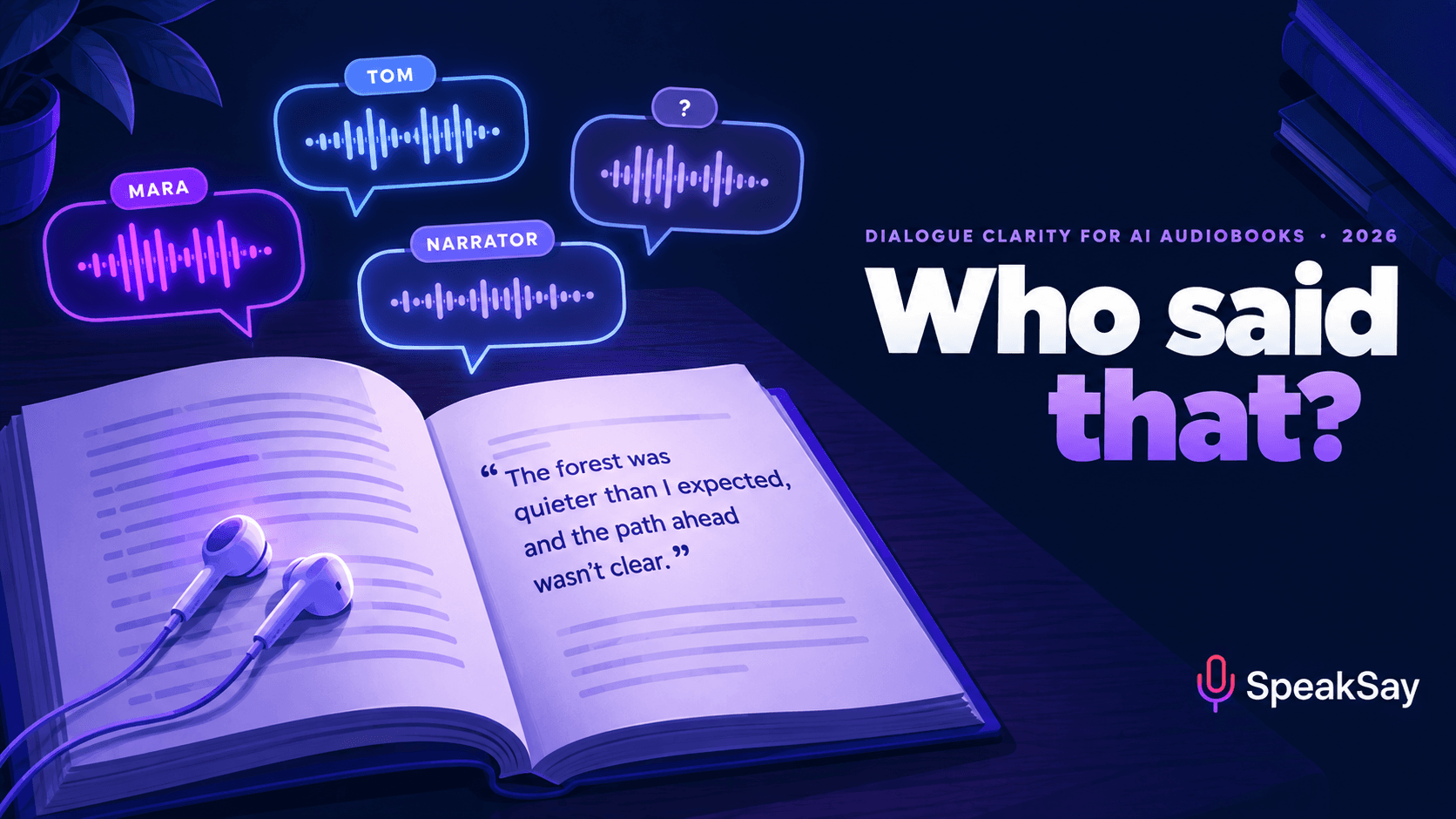
Audible Just Built a Screen to Show Who's Talking. Your AI-Narrated Audiobook Has to Do It With Sound Alone (2026)
Audible's new Character Guide shows listeners who is speaking in real time, because following a cast by ear is hard. Your indie audiobook won't get that screen. Here is the "ear edit" that makes dialogue followable by sound alone: tagging rules, how to voice thoughts, scene-break pauses, character contrast, and a ten-minute test.
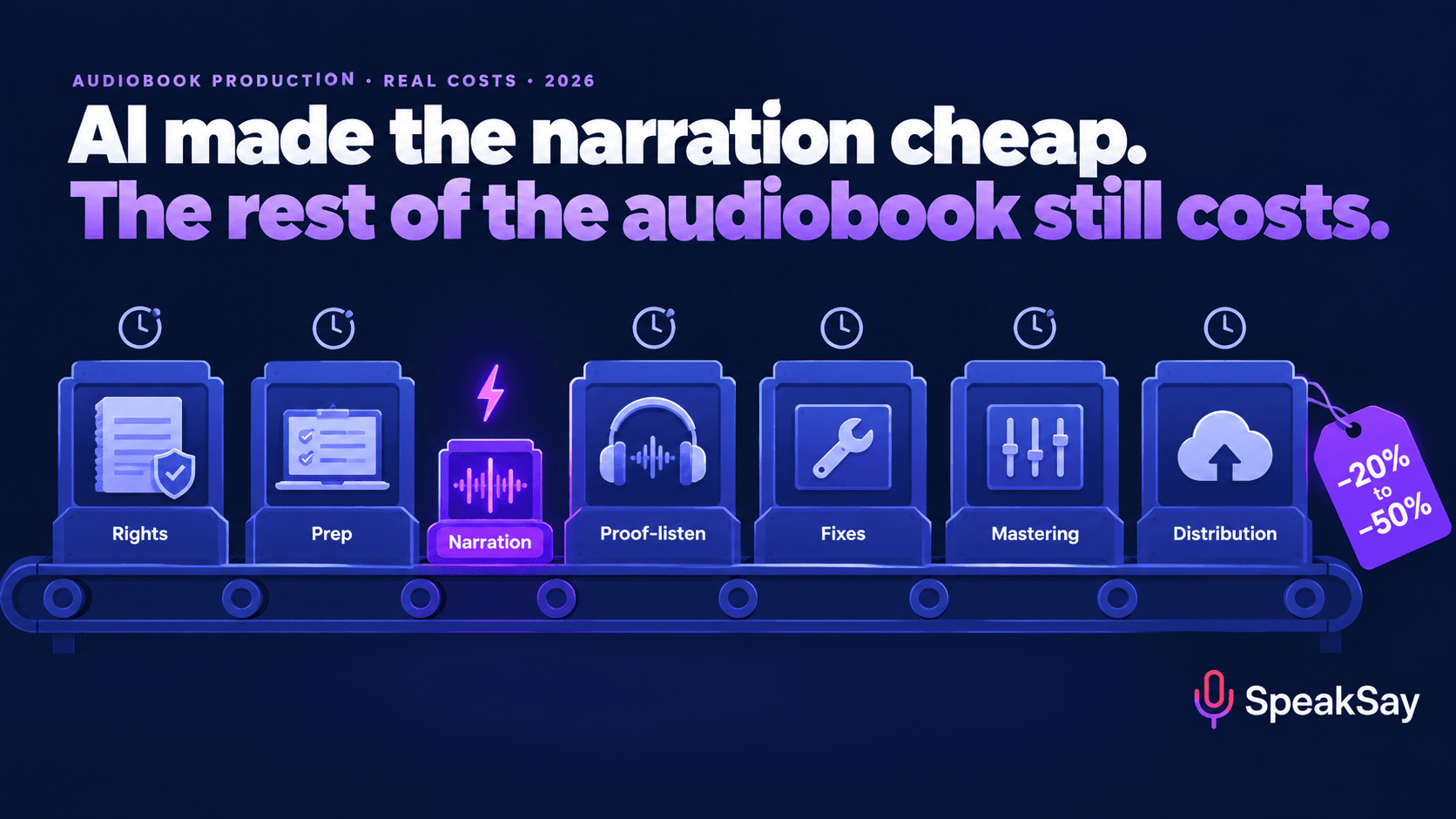
AI Narration Was Supposed to Cut Audiobook Costs by 90%. Producers Report 20–50%: Where the Savings Leak and How to Keep Them (2026)
Vendors promise 85–95% savings from AI narration. The Frankfurt Book Fair's 2026 white paper found producers reporting 20% in their second year of using AI and 50% in their third. The gap isn't a scam. It's everything around the narration that AI doesn't replace. Here's a stage-by-stage map of where audiobook money goes, five places savings leak, and how an indie author or small publisher keeps more of them.
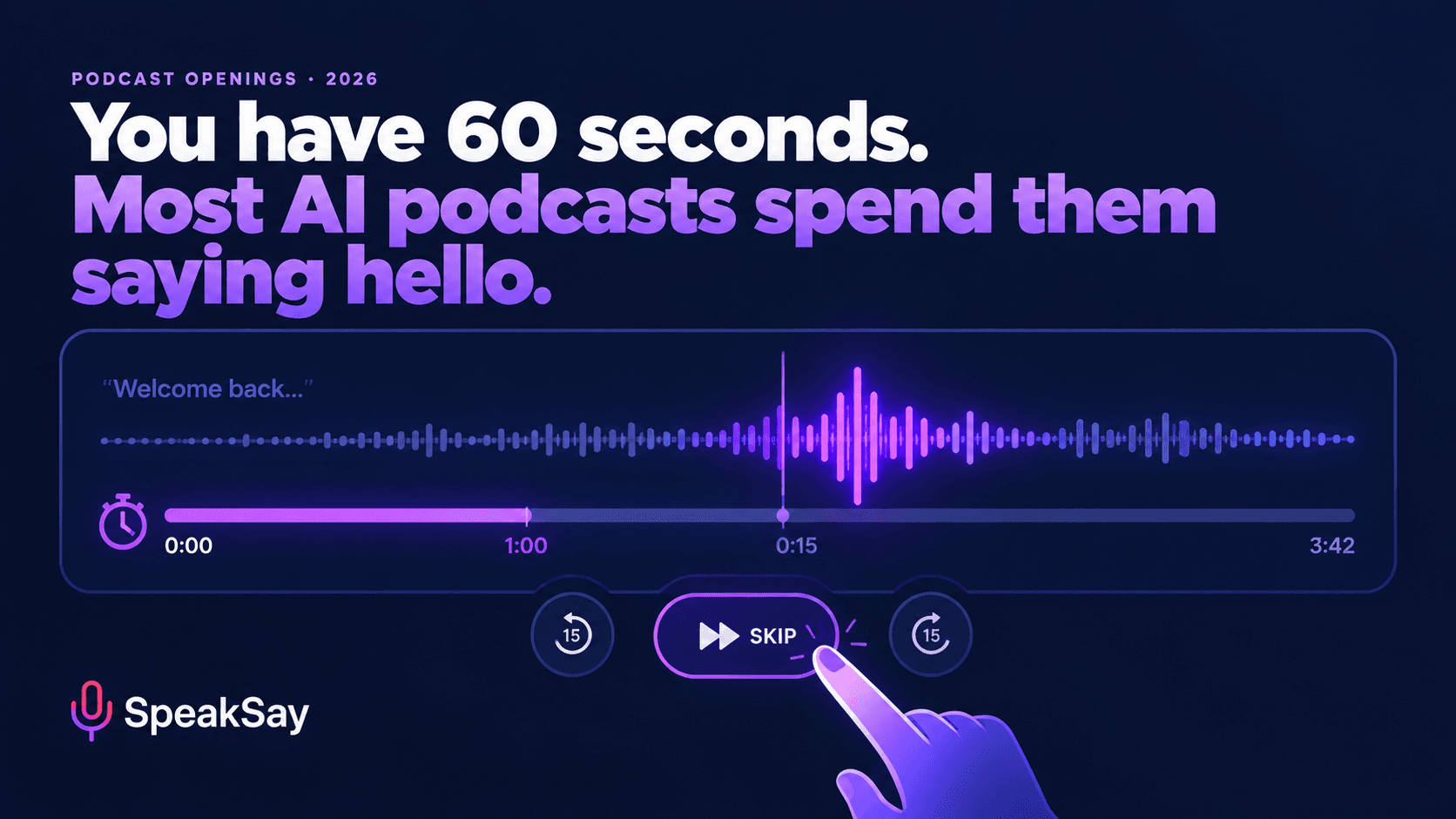
18% of Podcast Superfans Quit a New Show in the First Minute: Rebuild the Opening of Your AI-Produced Episodes (2026)
The Podcast Study 2026 found that even superfans, the most patient listeners there are, give up on a new podcast within 60 seconds 18% of the time, and 21% would definitely leave a favourite show if its host left. AI-produced episodes are especially prone to slow, generic openings. Here's a 60-second audit, four openings that work and a fix you can apply to your next episode.
Your Students Can Tell It's You: Record Multi-Speaker Listening Dialogues Alone With Voice Remix (2026 Guide for Language Teachers)
When one teacher records every part of a listening dialogue, every speaker sounds like the teacher, and "What does the man suggest?" stops being a listening question. Text-to-speech fixes the voices but gives you tidy textbook speech. Here's a third way: perform the conversation with real hesitations and interruptions, then use Voice Remix to make each part a different speaker.
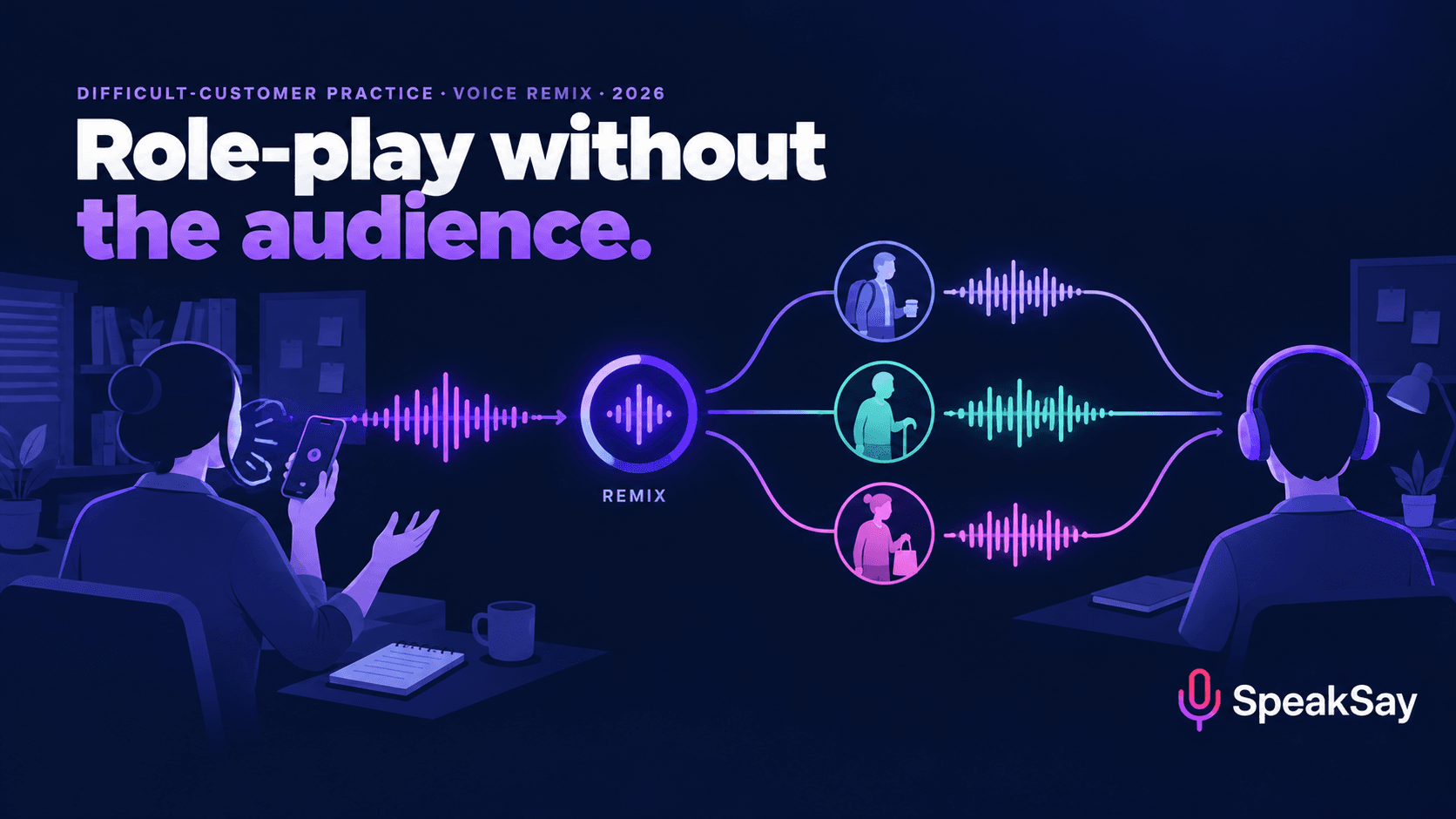
Everyone Hates Role-Play: Build a Difficult-Customer Call Library Your Team Can Practise Alone (Voice Remix, 2026)
Role-play is the training method everyone groans at. It's exposing in front of colleagues, and the "customer" is obviously a co-worker. Here's a different way: the trainer performs realistic difficult customers, Voice Remix turns each performance into a stranger's voice, and trainees practise their replies privately. Includes scenario design, a casting table, the pause-and-respond format and a simple scoring sheet.
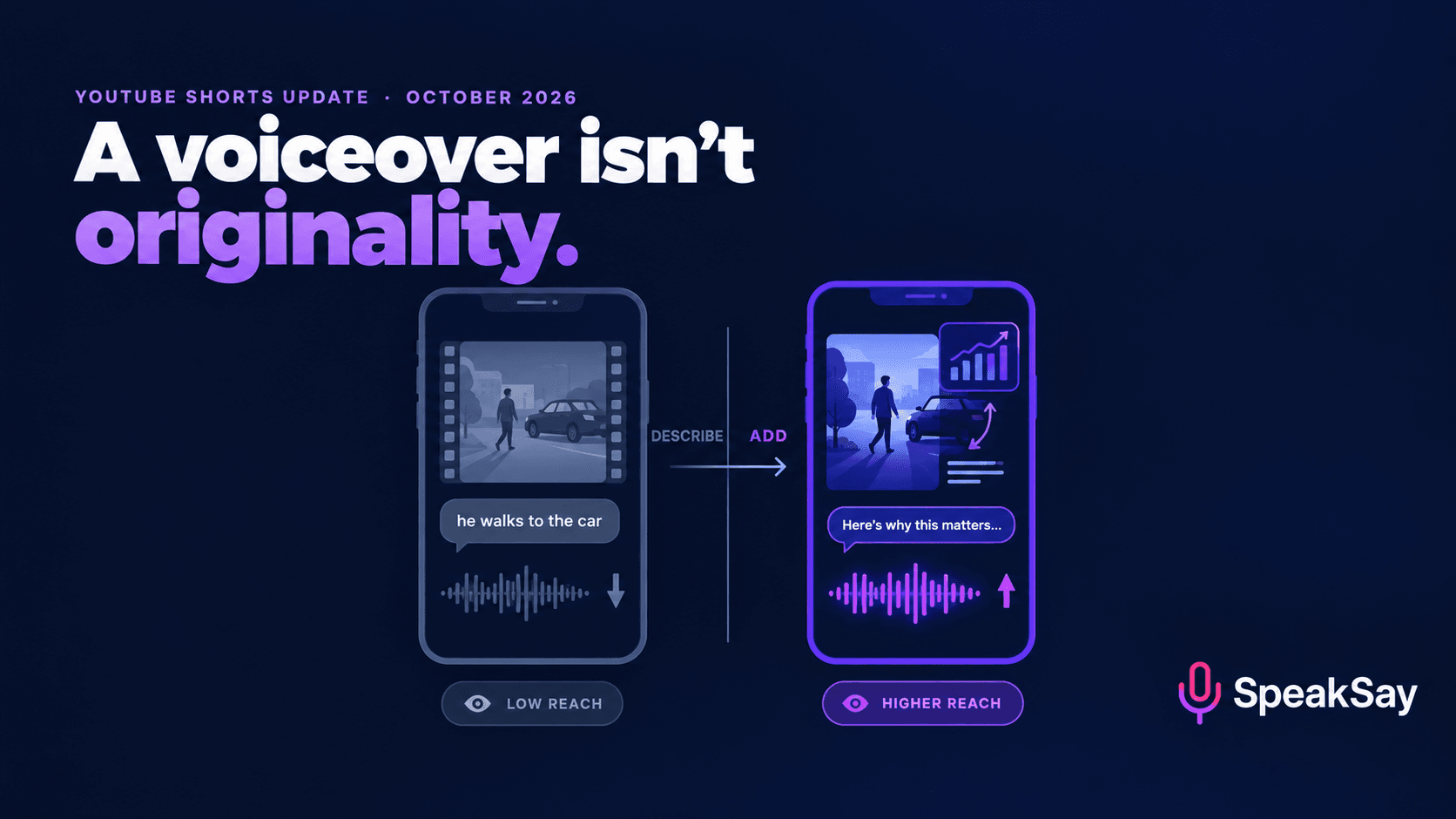
YouTube Says a Voiceover Doesn't Make a Clip Original: What Faceless Shorts Channels Must Change After the October 1 Update (2026)
On October 1, 2026, YouTube said the Shorts feed will cut reach for channels that mostly re-upload other people's clips, and that a voiceover describing what's on screen doesn't count as adding value. Here's what the update says and what it leaves unsaid. You'll also get a line-by-line "describe vs add" test for your scripts and a plan to move a clip channel onto original work.
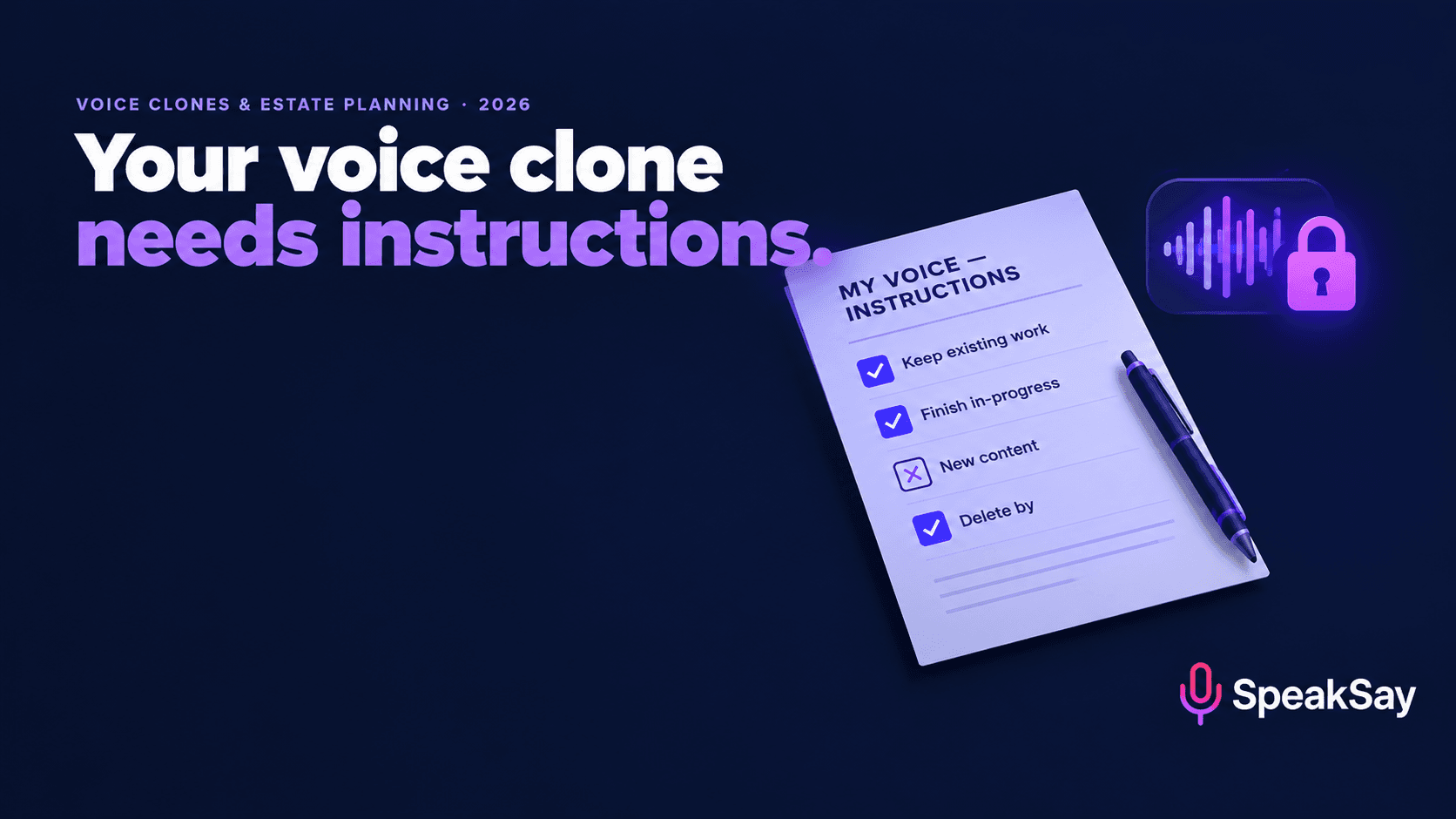
Nobody Watches the Four-Hour Council Meeting: Turn Public Meetings Into an Accurate Five-Minute Audio Recap (2026)
City councils, school boards and HOAs make decisions in meetings almost nobody watches. AI recaps are spreading, and the early ones show the risks: invented tone, missing votes, wrong budget figures. A civic recap needs a different spec from a podcast. Here it is: one neutral narrator, motions read verbatim, votes by name, every number checked, and a link back to the record.
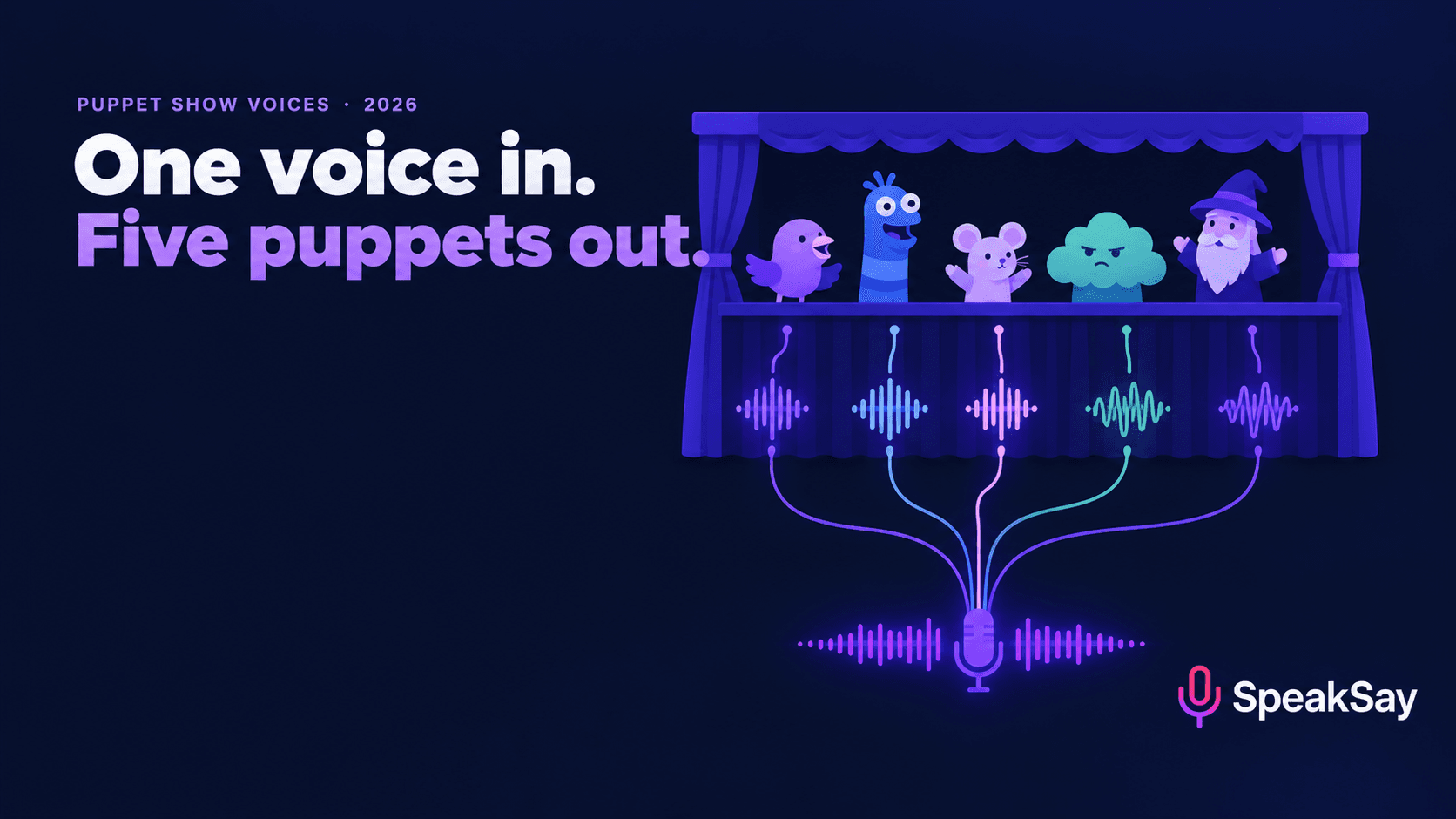
One Puppeteer, Five Puppet Voices: Pre-Record Your Puppet Show Tracks With Voice Remix (2026)
Many puppet teams already perform to pre-recorded tracks, so puppeteers can focus on movement instead of microphones and lines. The hard part is the recording: two good voices, five characters, and everyone sounding like everyone. Here's how to record every part yourself, remix each character into a distinct voice, and build a track your puppeteers can sync to.
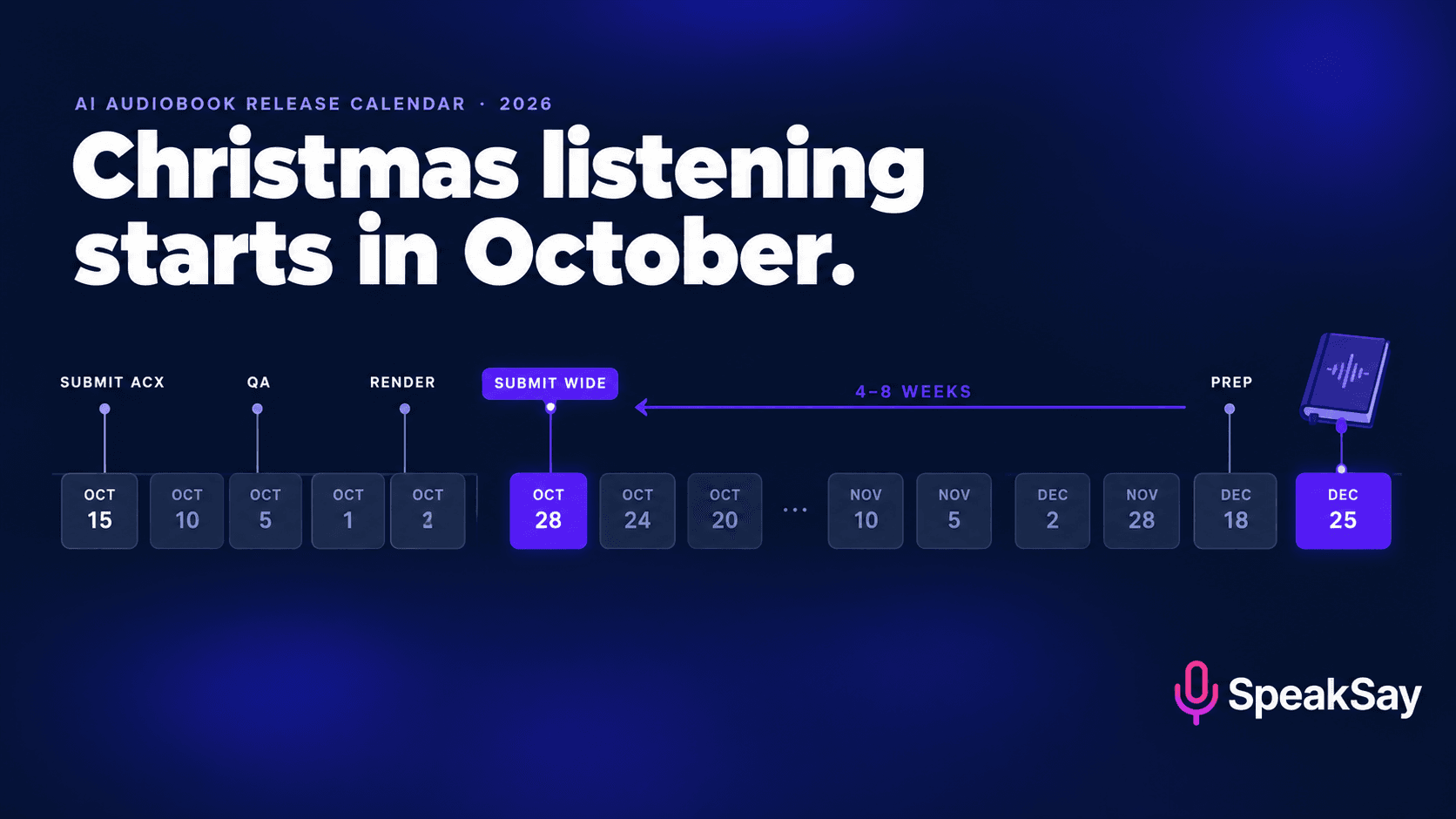
Want Your AI-Narrated Audiobook Live by Christmas? Work Backwards From December 25 — the Window Closes in October (2026)
The narration takes days. Getting it onto every store takes weeks. If you want an AI-narrated audiobook available when people unwrap new devices and subscriptions on December 25, the real deadline is your distributor's processing time, not your production time. A backwards calendar for 2026, plus the late plan if you miss it.
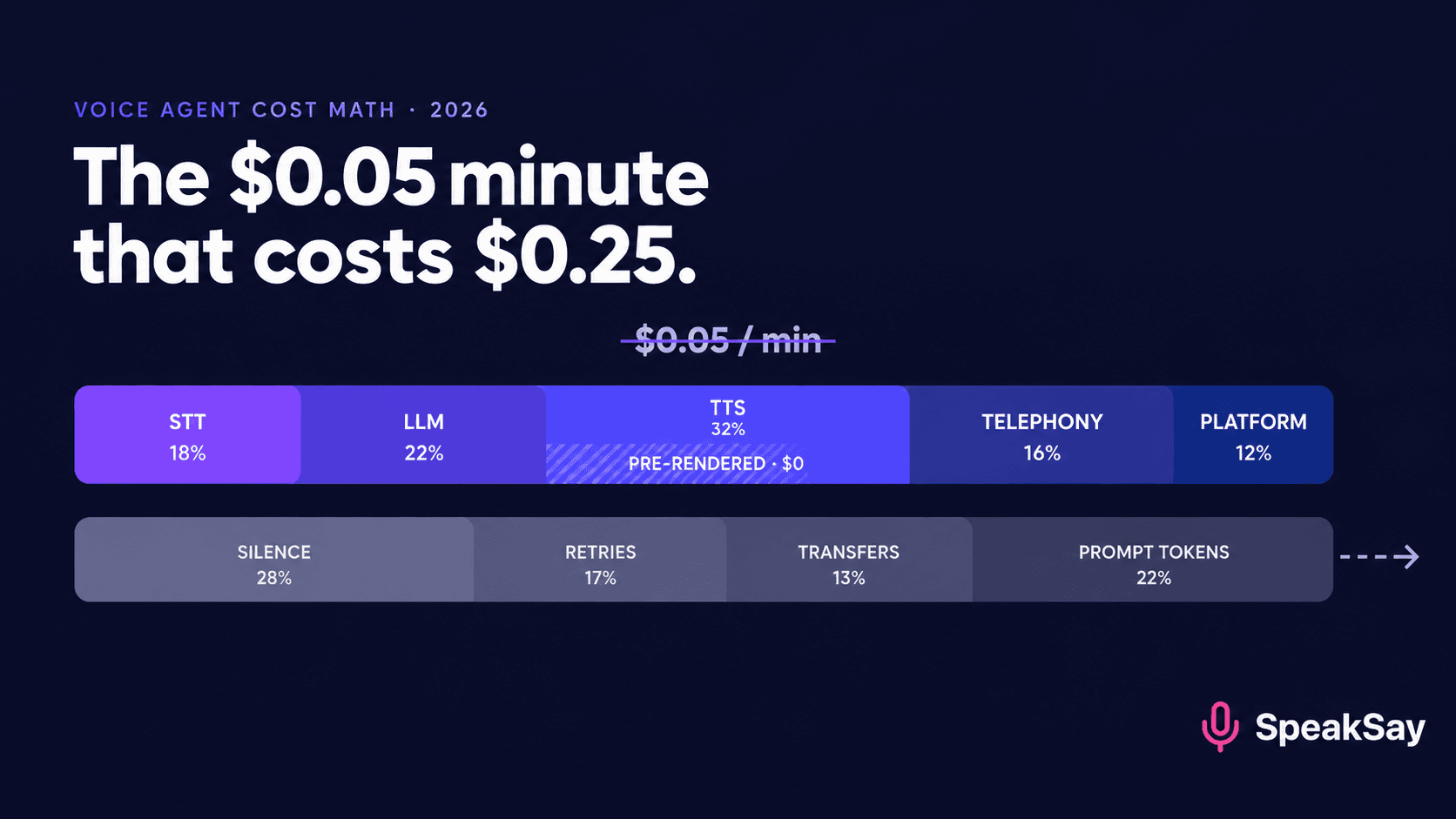
Your Voice Agent Doesn't Cost $0.05 a Minute: The Real Cost-Per-Minute Math at Scale (2026)
The advertised price of a voice agent is the platform fee. The real cost is five vendors, billed silence, long prompts and retries — usually three to five times the headline. Here is a line-by-line cost model, a worked 40,000-minute month, and the seven levers that actually move the number, starting with the speech you never needed to generate live.
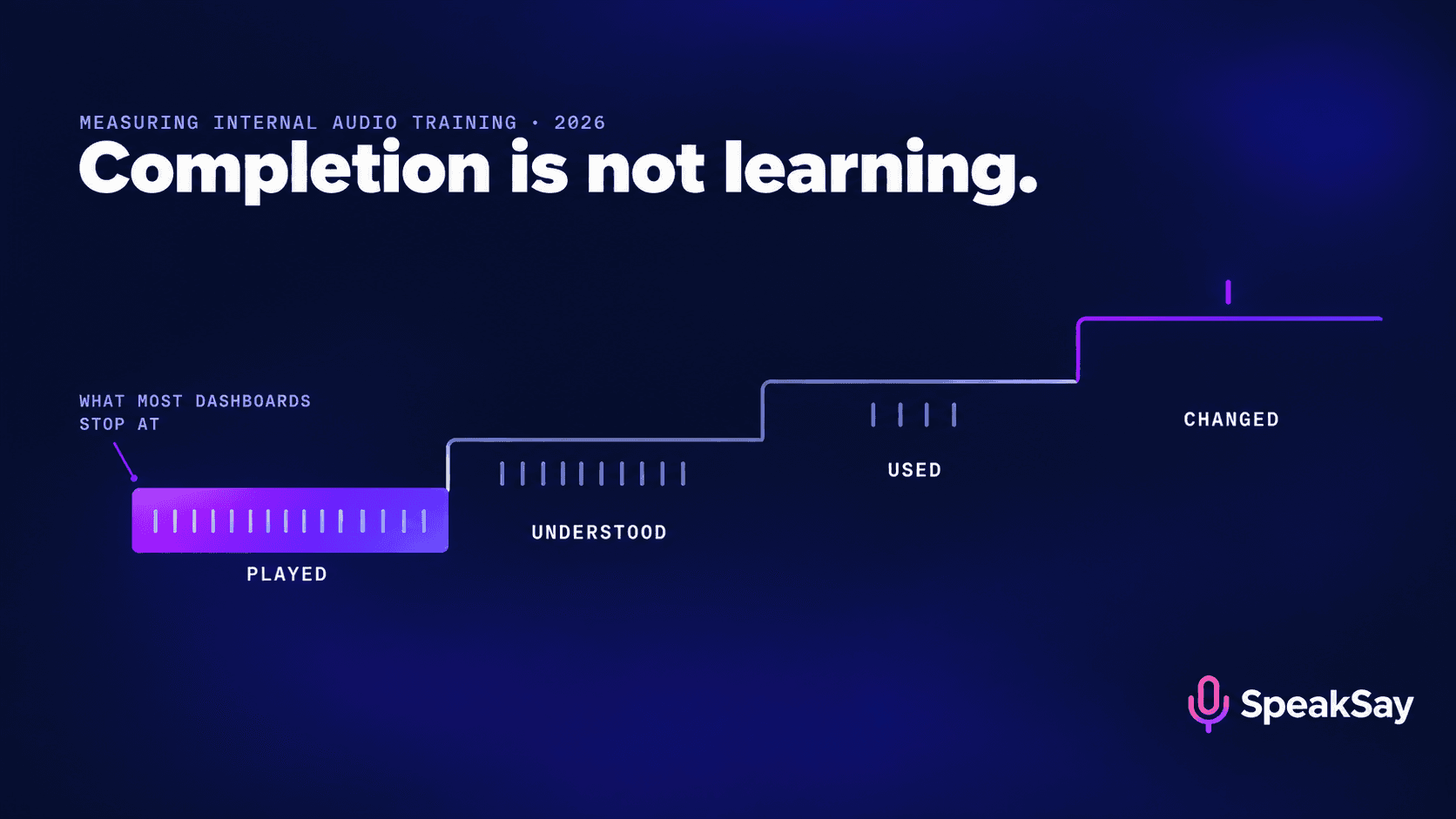
Completion Is Not Learning: How to Measure Whether Internal Audio Training Actually Worked (2026)
Audio training reports great completion numbers, and completion tells you almost nothing. Here is a four-level measurement ladder built for audio specifically — played, understood, used, changed — the signals to collect at each level, and the one experiment only cheap-to-regenerate audio makes possible.
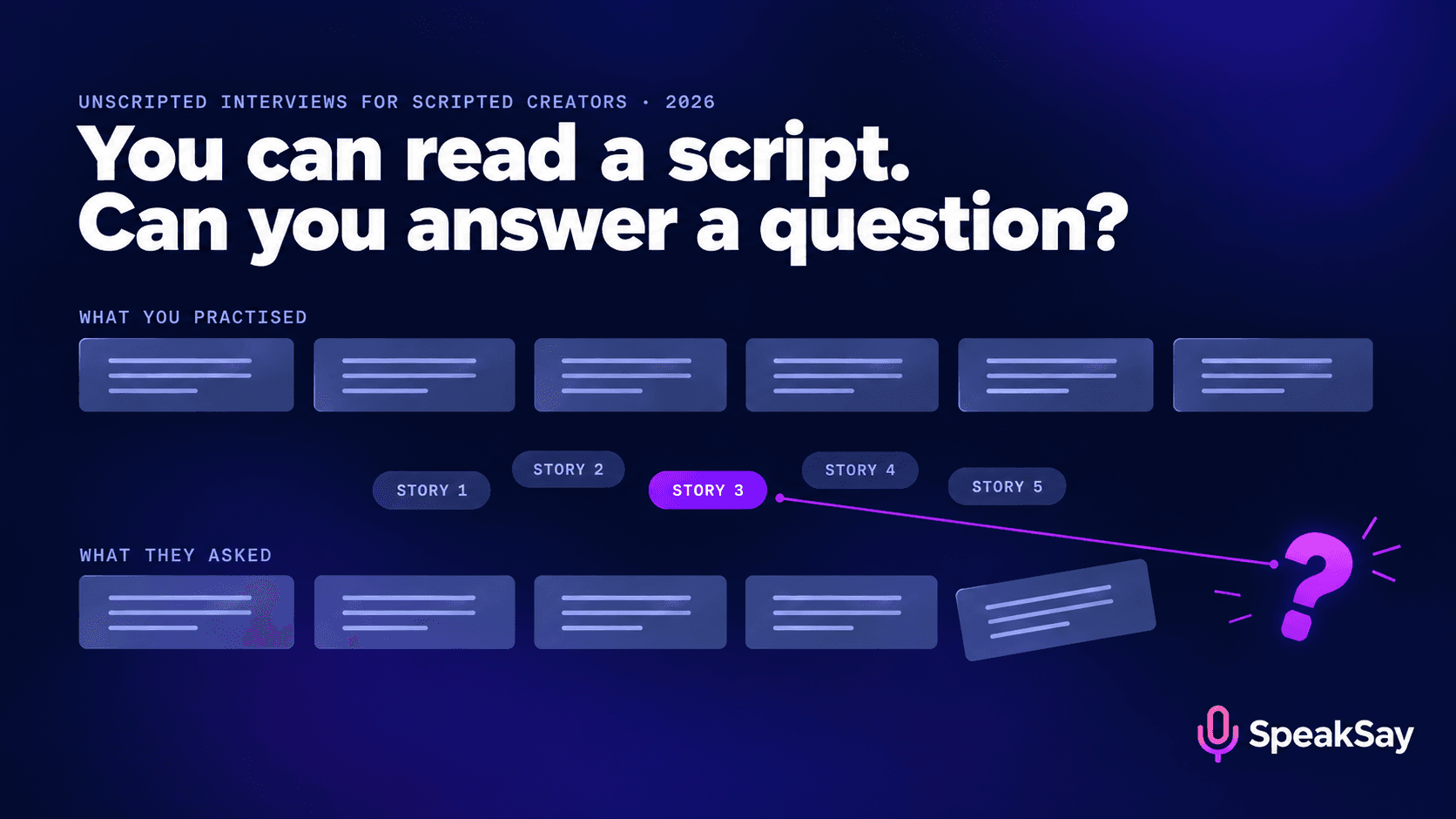
You Can Read a Script. Can You Answer a Question? Unscripted Interviews and Q&A for Scripted Creators (2026)
Creators who are excellent on script often freeze the first time a host asks something sideways. Here is why reading and answering are different skills, the anchor-story method that replaces memorised answers, and a rehearsal loop that uses your own cloned voice as a reference — not a stand-in.
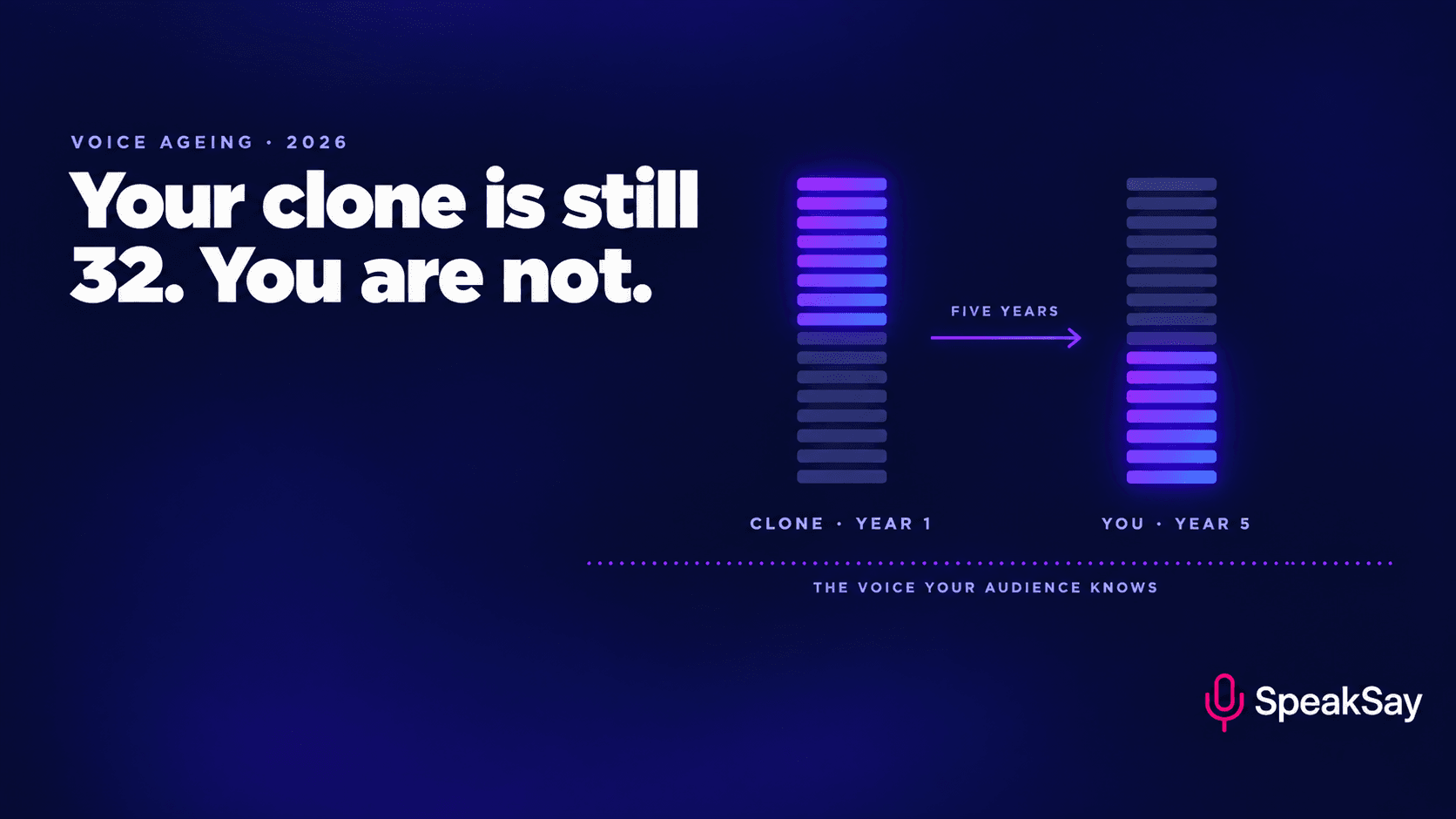
Your Clone Is Still 32 and You Are Not: Managing Voice Ageing Across a Multi-Year Channel (2026)
Everyone worries about the model changing underneath their voice clone. Almost nobody plans for the opposite problem — the model holds perfectly still while the person it was built from changes. Five years in, the gap between your recorded voice and your rendered one is audible, and it shows up in the worst possible place: a live appearance.
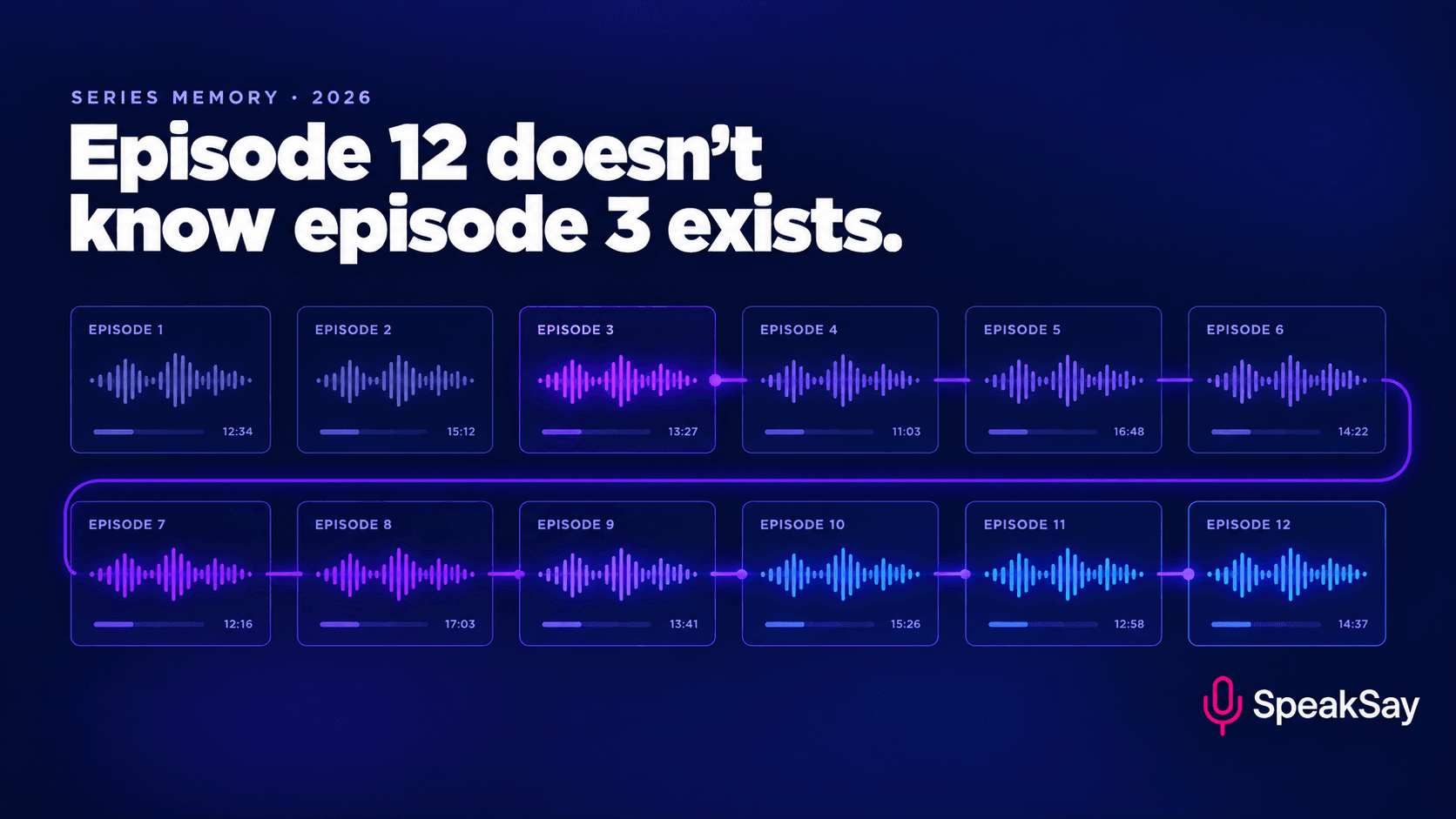
Your AI Podcast Forgets Every Episode: Building a Series Memory So Episode 12 Can Reference Episode 3 (2026)
Generated podcasts are produced one episode at a time from one source set, so nothing accumulates between them — no shared vocabulary, no callbacks, no position, no relationship. Here is the artefact stack that gives a generated show a memory: a series canon, an episode ledger, callback mechanics and locked voices.
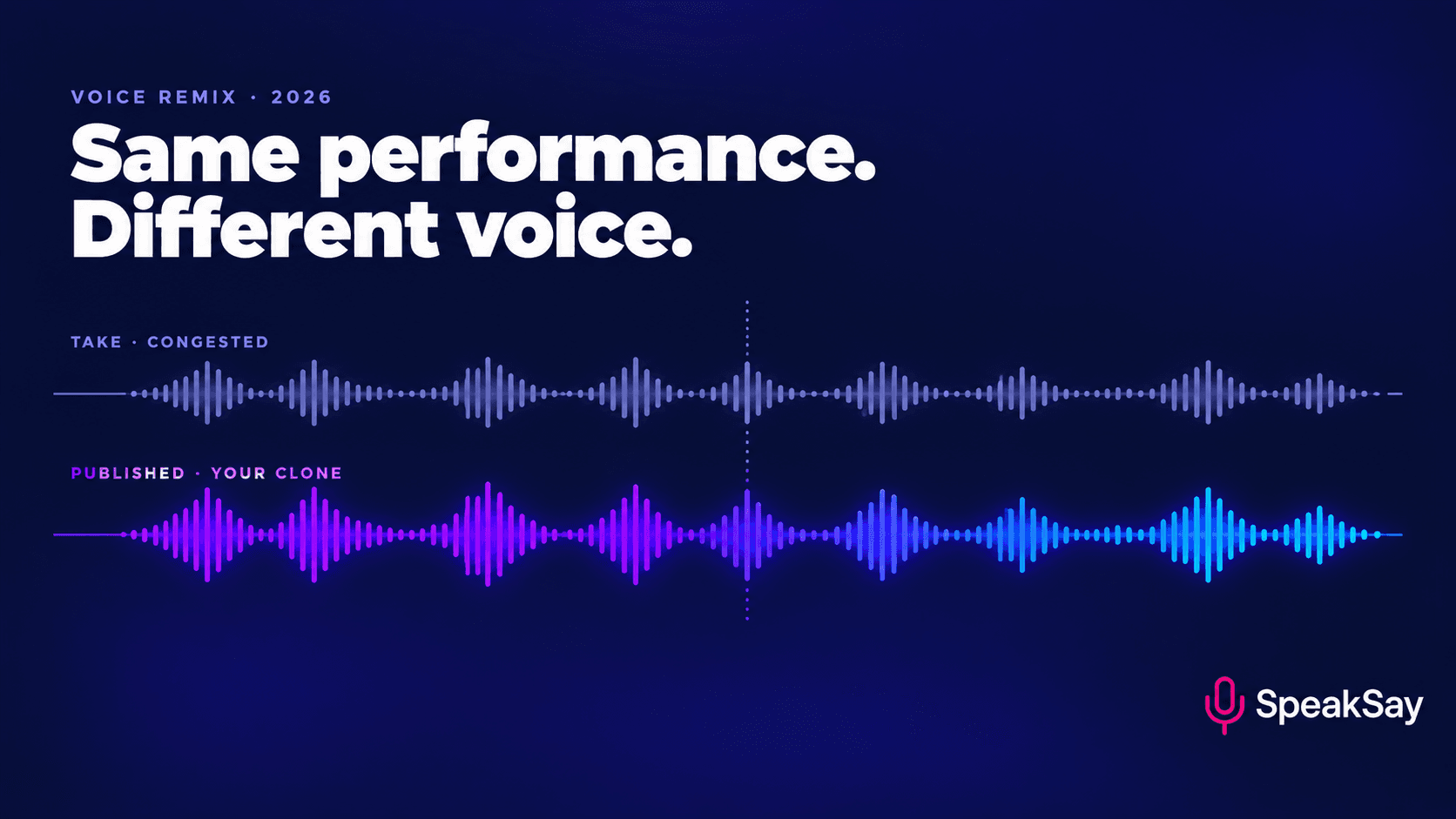
You Recorded the Whole Script With a Cold: Publishing in Your Own Voice When Your Voice Is Gone (2026 Voice Remix Guide)
The entire voiceover internet answers "I have a cold and I publish Thursday" with "reschedule." That is not advice, it is a shrug. A cold breaks your timbre and usually leaves your performance completely intact — which means the take you just recorded is more salvageable than it sounds.
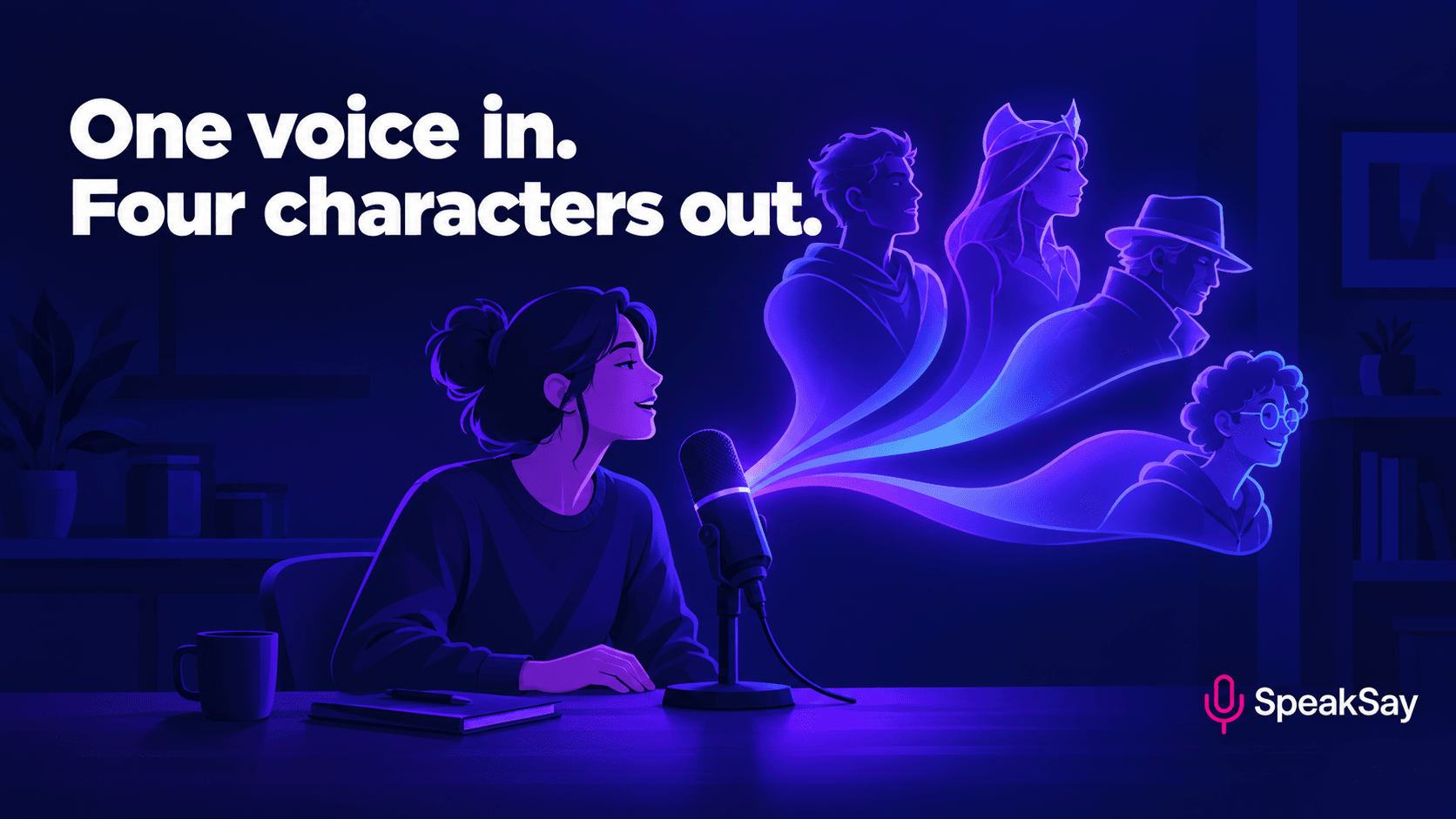
You Don't Need a Cast, You Need One Good Take: Voicing Every Character Yourself With AI Voice Conversion (2026)
Preset-cast AI dialogue sounds wrong because text-to-speech has to guess the interpretation, and interpretation is the whole of dialogue. Speech-to-speech voice conversion flips the process: you act every part yourself, then swap the vocal identity, keeping your timing, breath and subtext intact.
Listeners Are Returning AI-Narrated Audiobooks: The 2026 Guide to Returns, Refunds and the Seven-Day Royalty Clawback
Returns are the one audiobook metric almost no indie author watches, and the only one that can take back money you have already earned. Here is how the windows work, why "I found out it was AI" is a stated return reason, and the three places you control that decide your return rate.
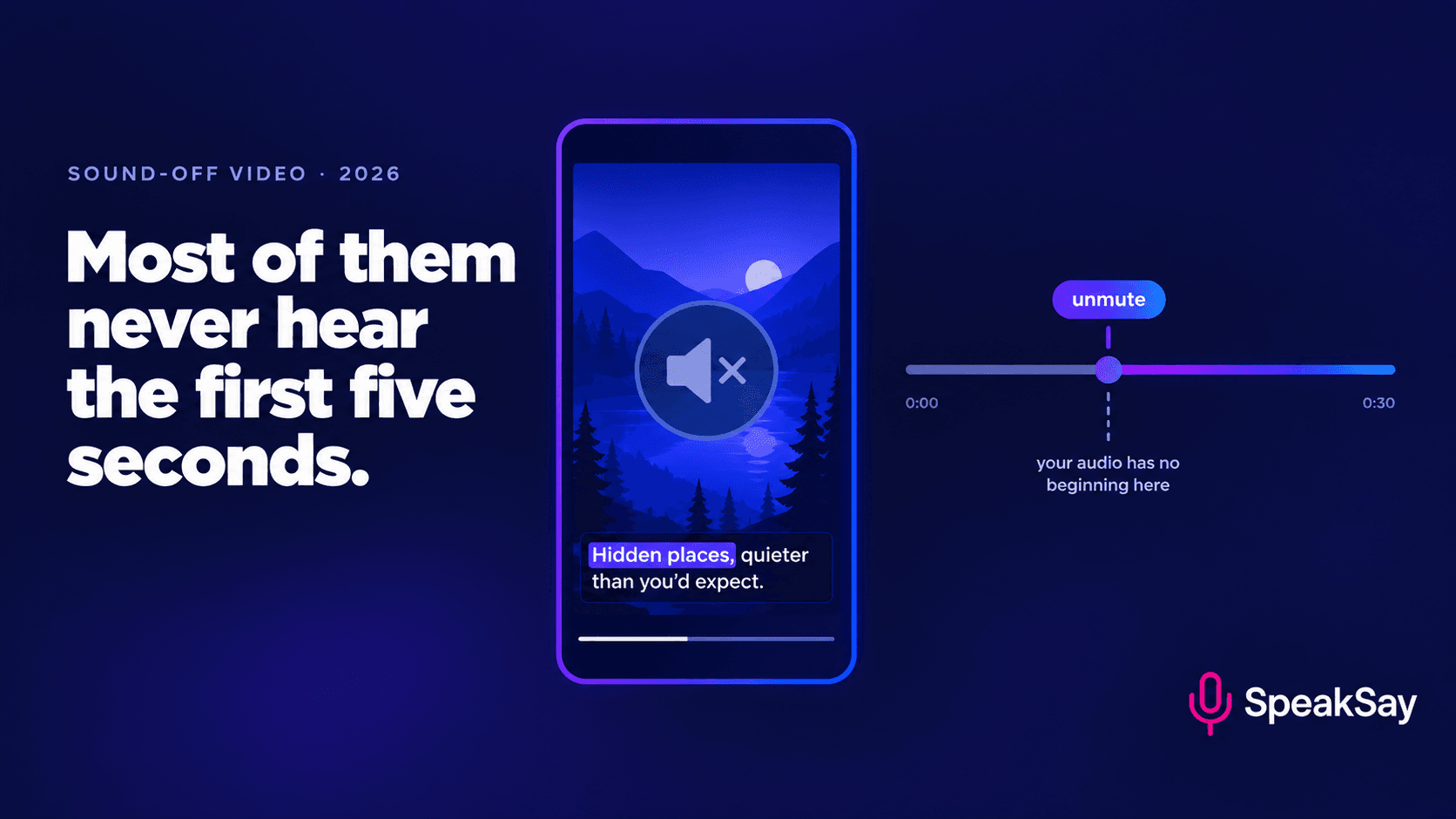
Gemini Notebook Now Meters You in Five-Hour Windows: What That Does to an AI Podcast Schedule (2026)
On 2 September 2026, Gemini Notebook replaced fixed daily caps with a compute budget that refreshes every five hours under a weekly ceiling — and never tells you how many generations you have left. For anyone producing on a schedule, that is not a pricing change. It is a capacity-planning problem.
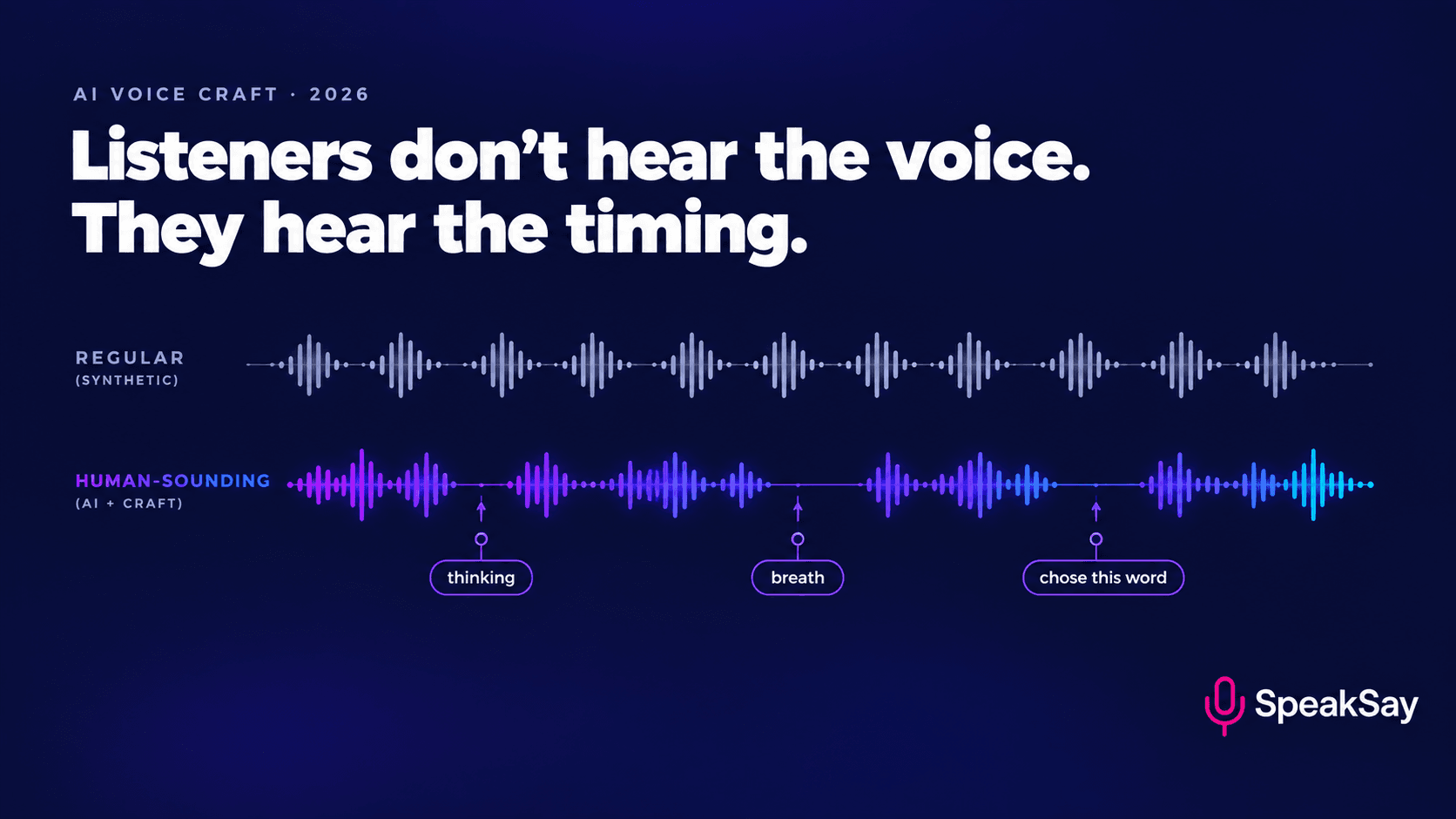
Make It Sound Human" Is the Wrong Instruction: What Listeners Actually Detect in an AI Voice (2026)
The timbre problem was solved years ago. In 2026, people who say an AI voice "sounds fake" are almost never reacting to the sound — they are reacting to timing, to emphasis landing on the wrong word, and to a read that never changes its mind. Here is how to test for each, and fix them.
Architecture & Interiors Faceless Channels in 2026: The AI Narrator Playbook for a Niche Where the Picture Is the Information
In most faceless niches the voice carries the information and the footage illustrates it. In architecture and interiors it is the other way round — and that inversion breaks almost every AI narration habit you have. Here is the casting spec, the speech-density budget, the pronunciation lexicon and the footage-rights boundary
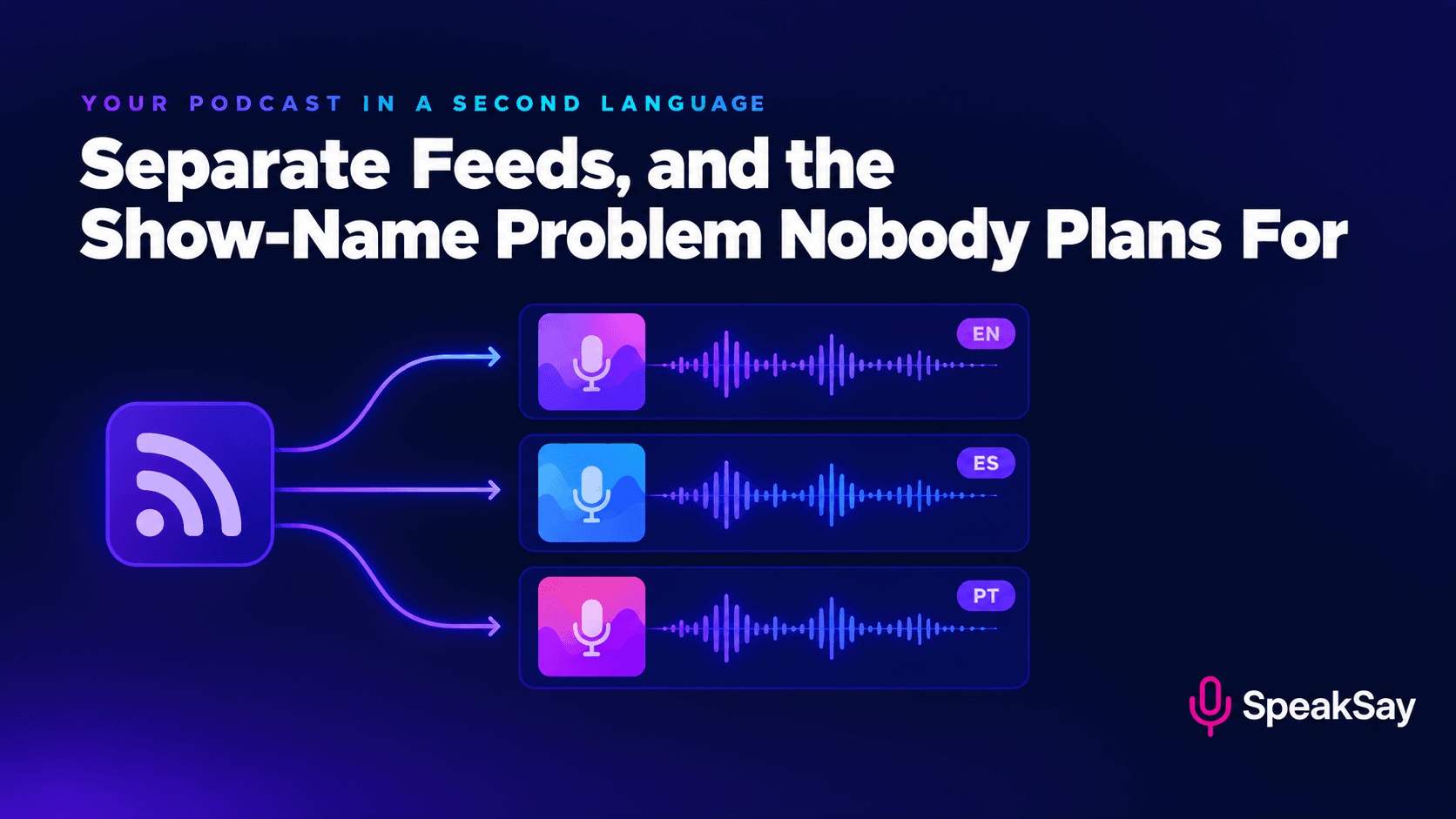
Launching Your Podcast in a Second Language (2026): Separate Feeds, and the Show-Name Problem Nobody Plans For
Producing your show in another language is now a rendering job, not a hiring job. The hard parts are structural: one feed or several, which language second, and whether a synthetic host in Japanese can actually say your show's name. Here is the feed architecture, the three naming strategies, and the per-language lexicon.
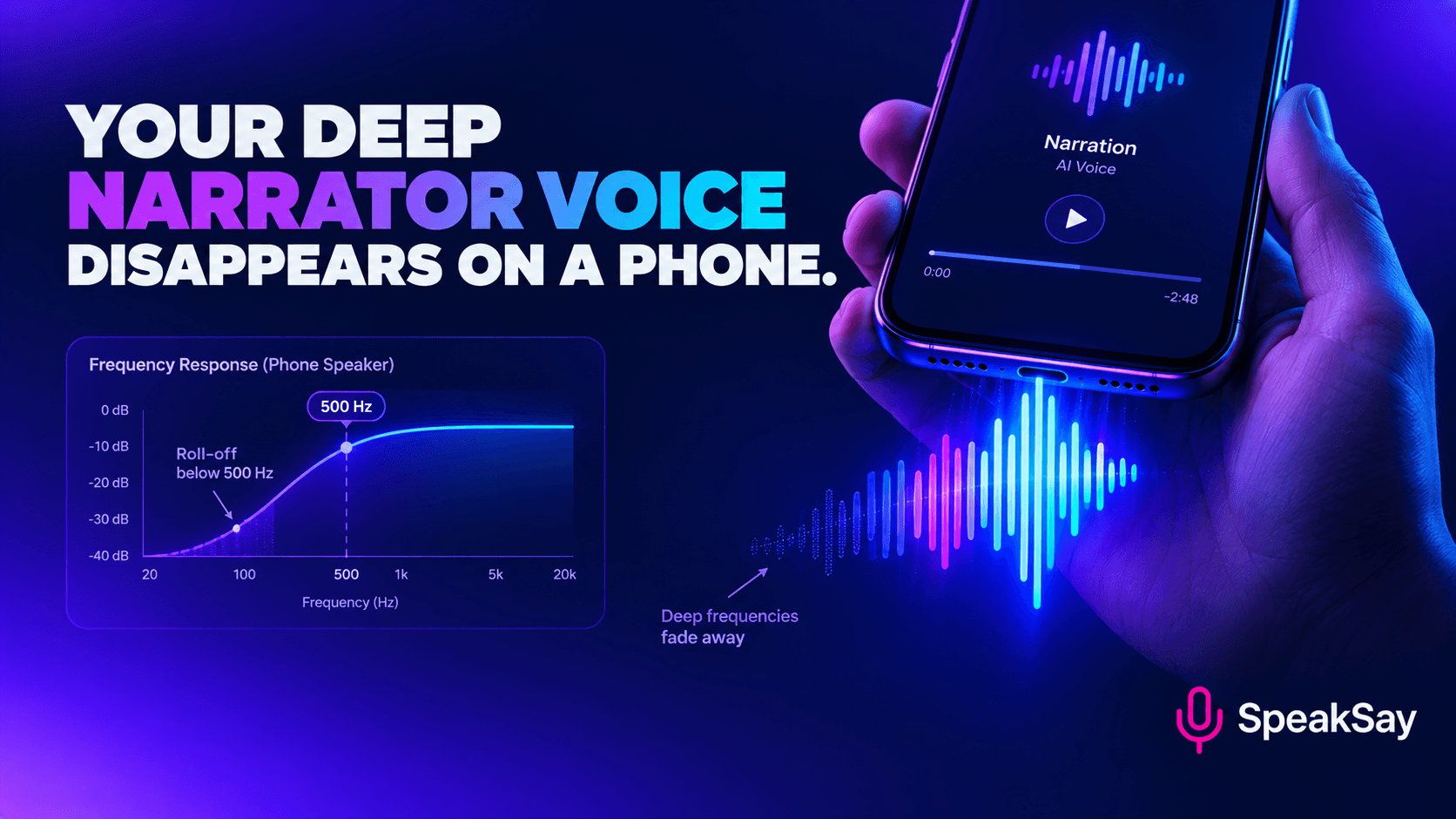
Your Synthetic Host Sounds Perfect and Your Real Guest Sounds Terrible: Interviewing Humans on an AI-Made Podcast (2026)
A generated host track has no room, no breath pile-up and a clean noise floor. A guest on a laptop mic has all three. Listeners don't hear "two different setups" — they hear the guest as lower status and harder to listen to. The fix runs in the opposite direction from what you'd expect.
Most of Your Listeners Play It at 1.5x: How Speed Listening Changes What You Should Produce (2026 AI Audiobook Guide)
You master an audiobook at 1.0x and almost nobody hears it that way. Speed listening breaks specific things — consonants, pauses, music beds, chapter transitions — and it breaks AI narration differently from human narration. Here's what to change.
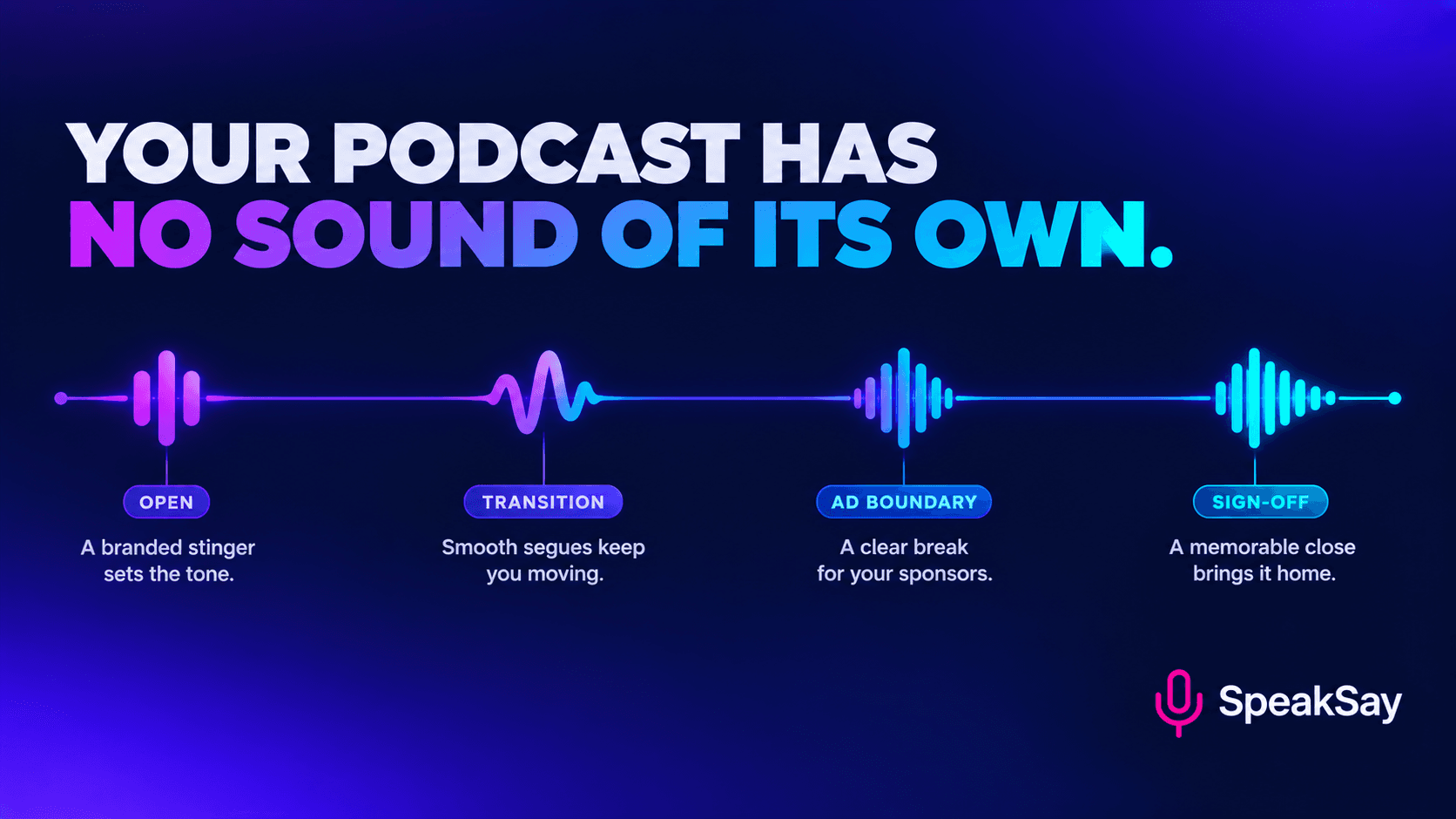
Your AI Podcast Sounds Like Everyone Else's Because It Has No Sonic Identity — The 2026 Audio Branding Playbook
Stock voice, stock intro music, stock structure. Listeners can't tell your show from the twenty others in their feed because there is nothing to tell apart. Here's how to build an audio identity — stinger, tag, transitions, sign-off — for a show made with AI voices.
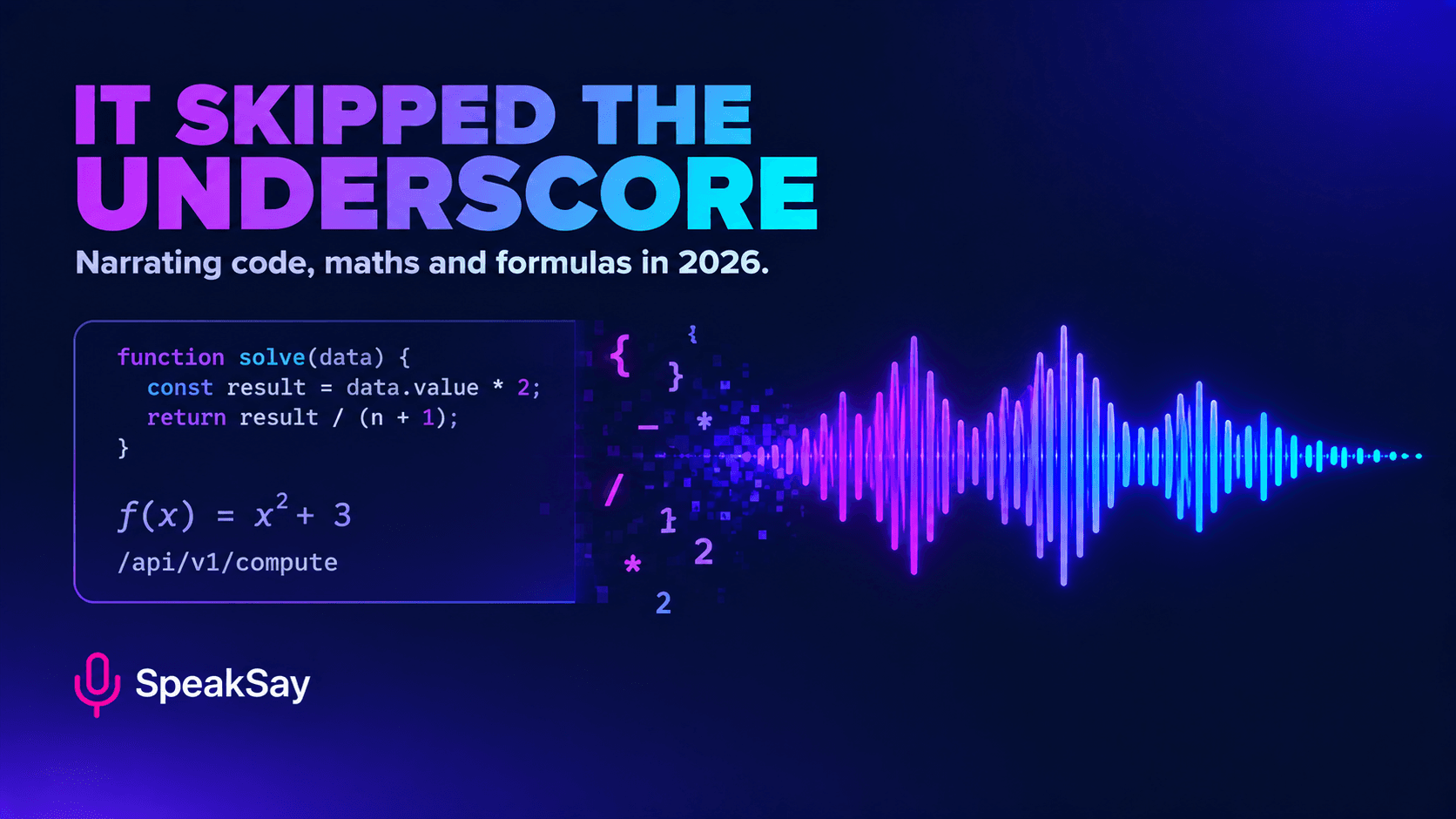
Your AI Voice Reads Code as Gibberish: How to Narrate Code, Formulas and Maths Aloud (2026 Guide)
Generated voices silently drop underscores, read slashes as pauses, turn x squared into "x two" and pronounce camelCase as one mangled word. For programming, maths and data channels that is not a cosmetic bug — it makes the tutorial wrong. Here is the full transcription ruleset, with tables you can copy.
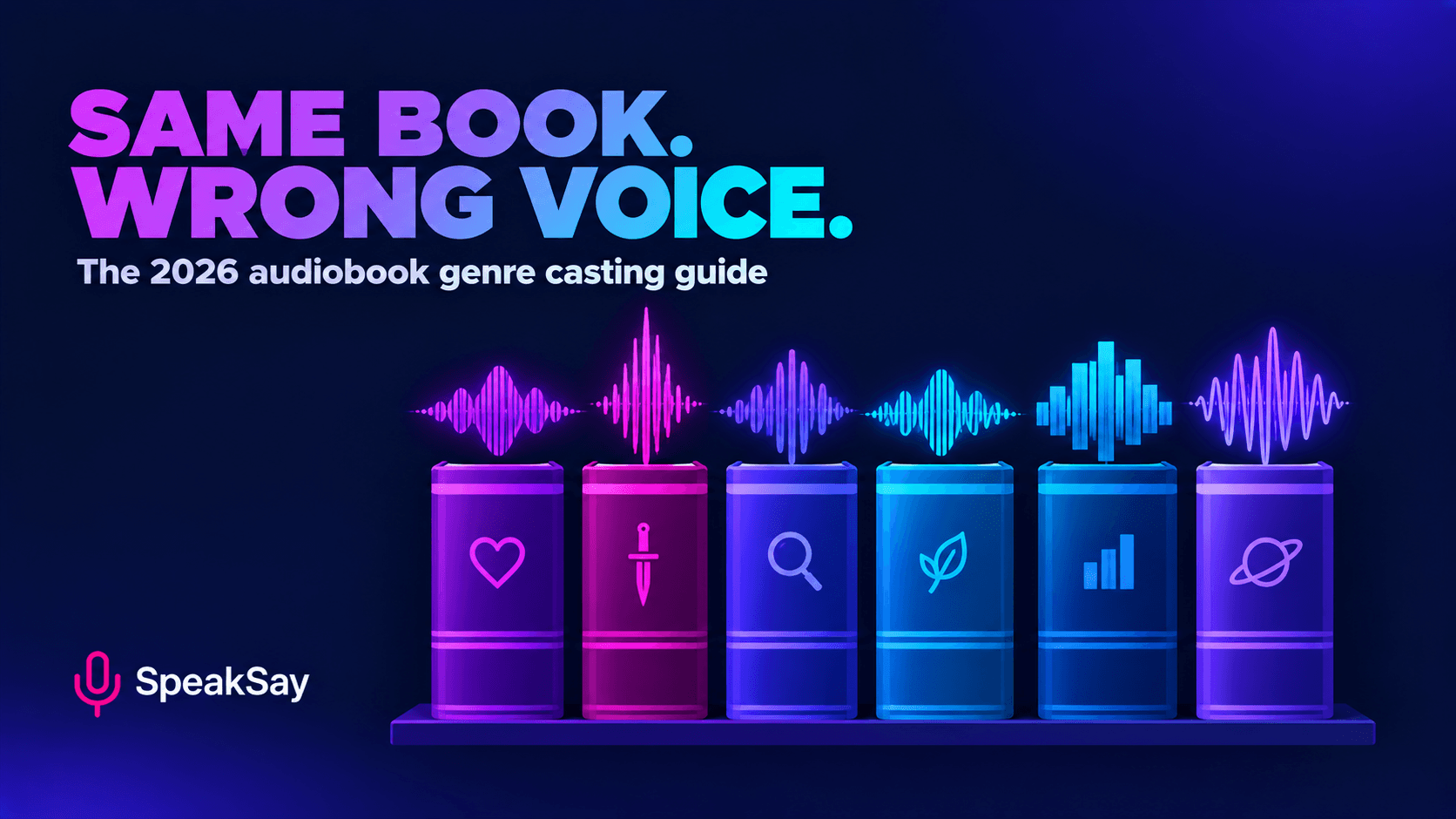
Apple Shipped Romance-Tuned AI Voices. Here Is the 2026 Genre Casting Guide for AI Audiobook Narration
Production stopped being the bottleneck for indie audiobooks. Casting became it. Retailers now ship genre-tuned narration voices, but the choice is still yours to get wrong — and a thriller read in a memoir voice will not sell. Here is the genre-by-genre casting spec, with rate, warmth, register and sample-test protocol.
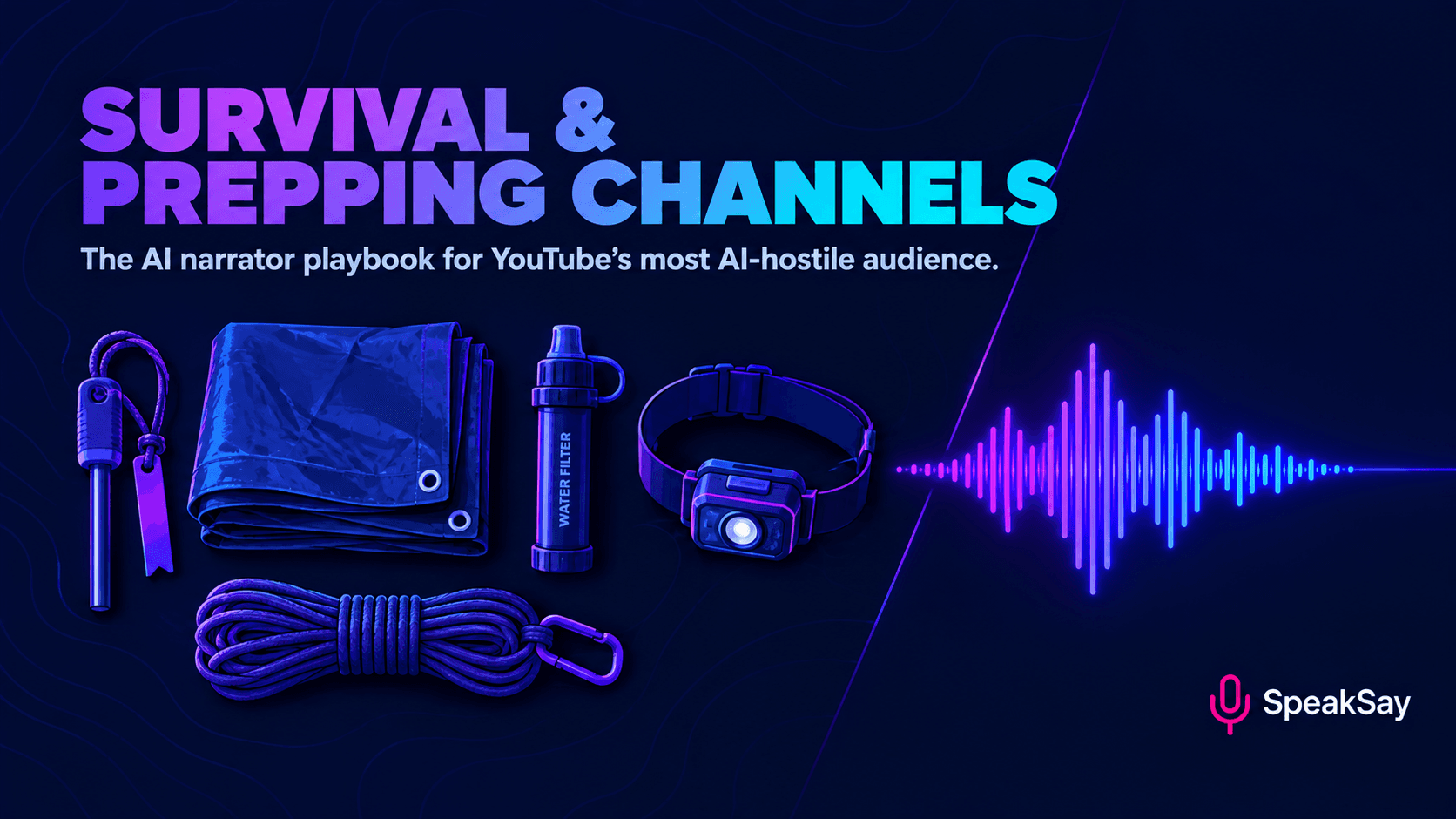
Survival & Prepping Faceless Channels in 2026: The Earned-Authority AI Narrator Playbook
Survival audiences punish narration that claims experience it hasn't earned — and they spot a stock AI voice instantly. Here is the register split, script rules and voice spec that let a faceless survival channel sound credible in 2026.
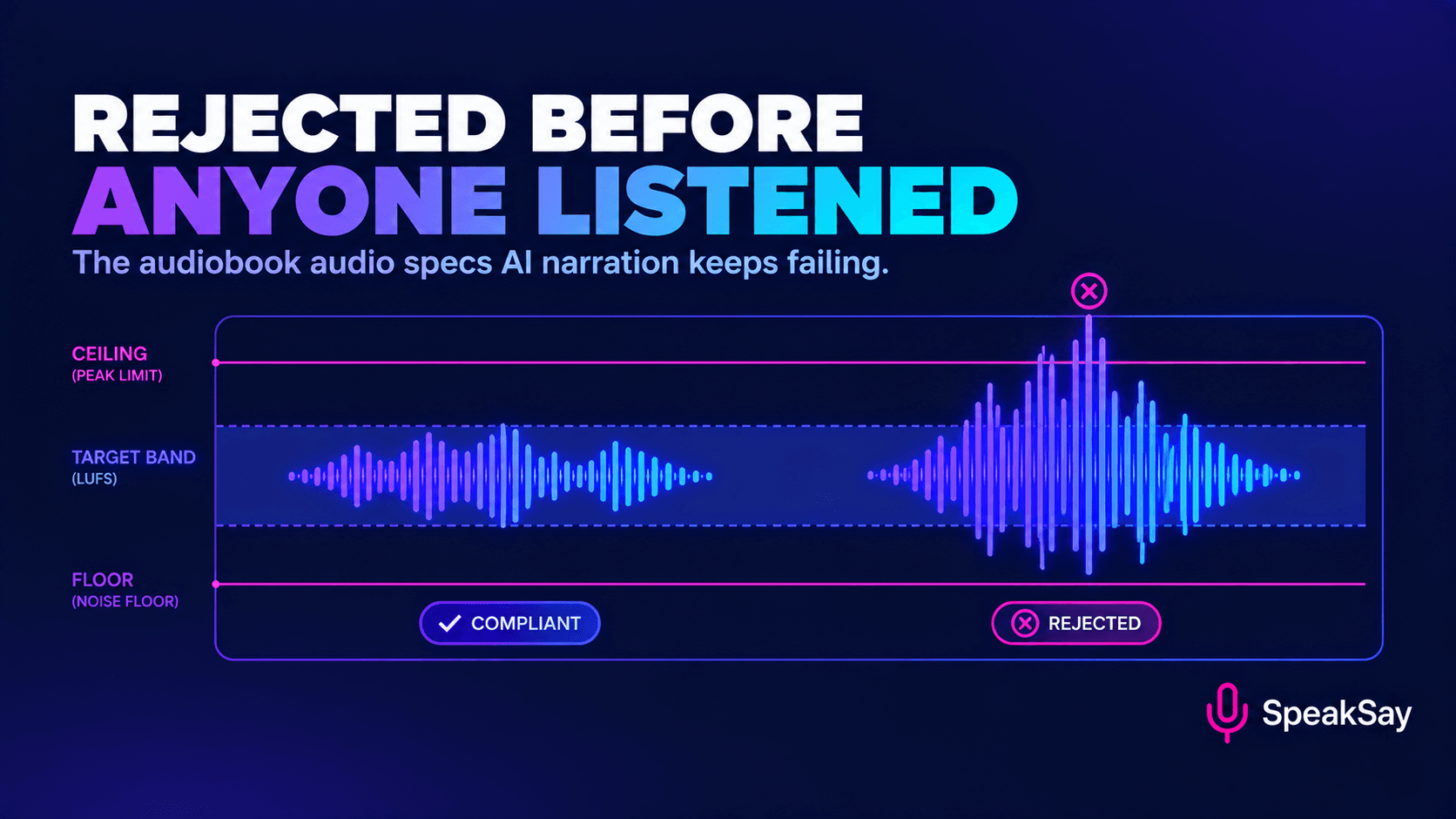
Your AI Audiobook Was Rejected for Audio, Not Narration: The 2026 Loudness, Peak and Noise Floor Guide
Audiobook retailers run an automated technical check before a human hears a second of your book. Most AI-narrated submissions that bounce do not bounce because the voice was synthetic — they bounce on RMS, peak or noise floor. Here is what each number means, why generated speech fails them in a predictable way, and the mastering order that fixes it.
Your AI Podcast Is Invisible Before Anyone Hears It: The 2026 Naming, Category and Episode-Title Playbook
You can produce a genuinely good AI-hosted show and still get zero discovery, because everything that decides whether a listener or an AI assistant ever reaches you is text — show name, category, episode titles, description. AI-made shows are worse at this than human ones for a specific and fixable reason. Here is the playbook.
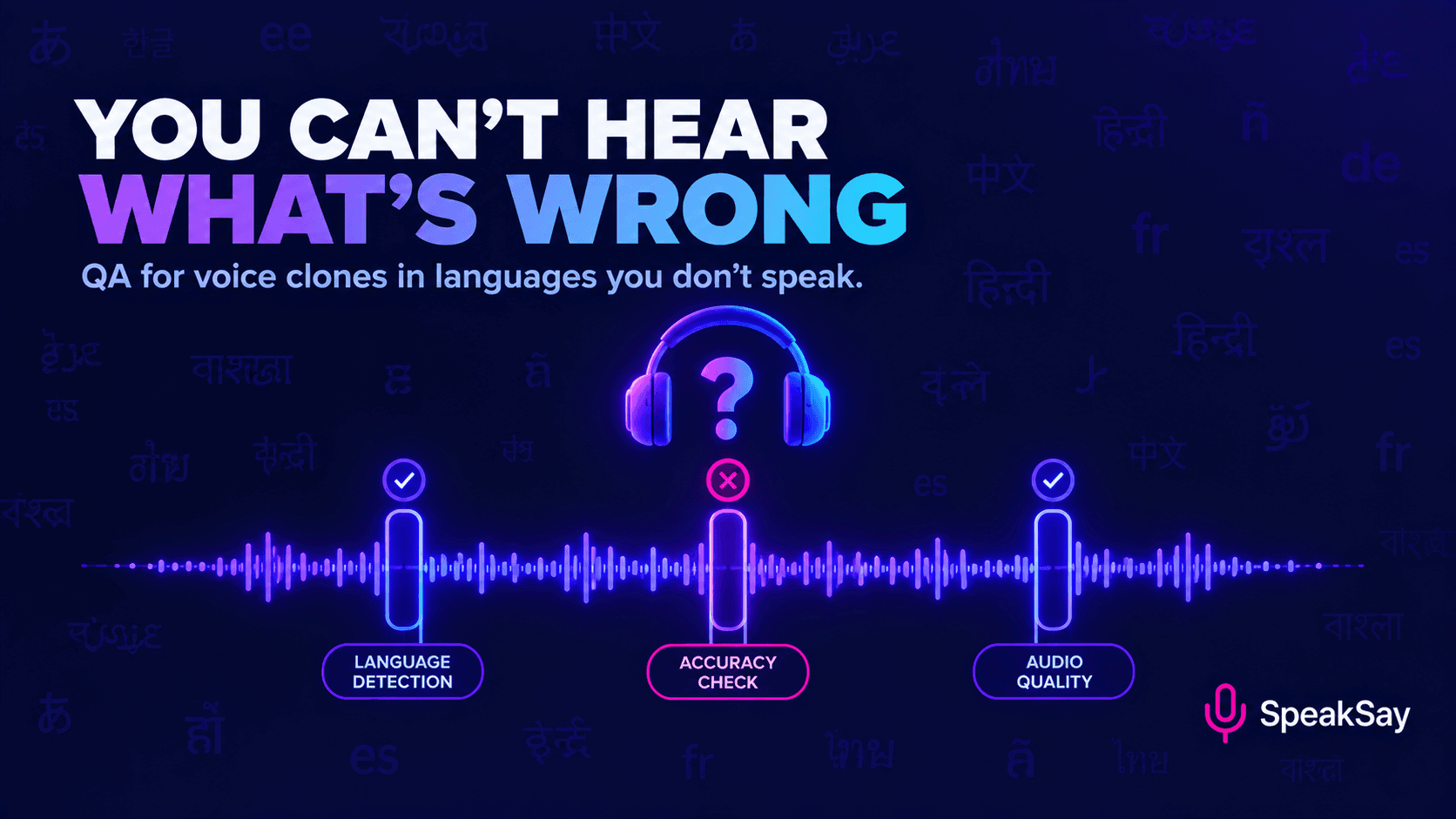
Your Voice Clone Just Spoke Japanese and You Have No Idea If It Was Right: The 2026 QA Protocol for Languages You Don't Speak
Cross-lingual voice cloning lets your own voice speak languages you have never studied. The obvious problem is the one nobody plans for: you cannot hear the errors. Here is what actually goes wrong in cross-lingual synthesis, the four failure classes that native listeners notice first, and a review protocol you can run without speaking a word of the target language
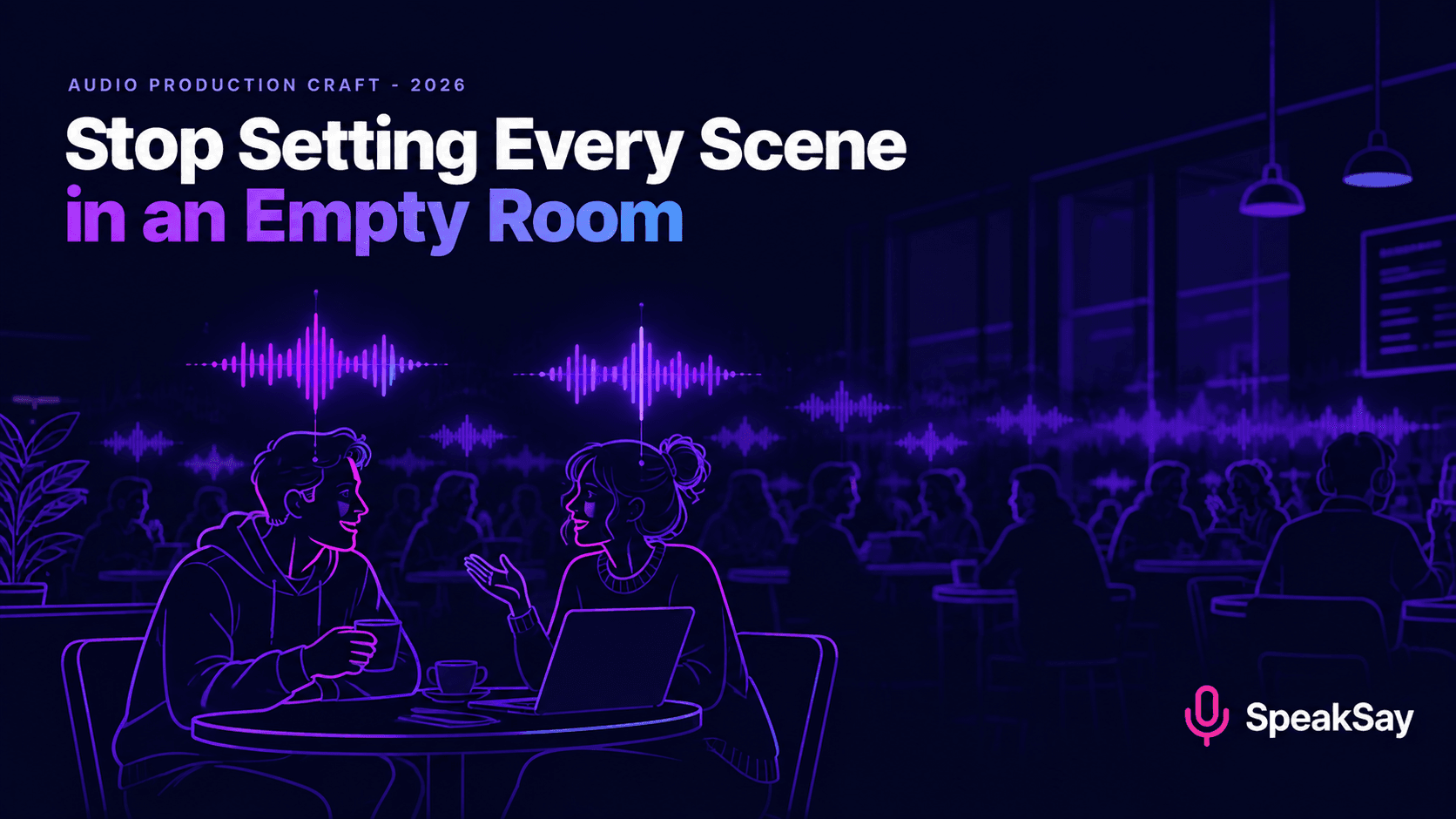
Your Story Videos Sound Like They're Set in an Empty Room: How to Build Crowd Voices, Background Chatter and Announcements With AI (2026)
Everyone casts the characters and nobody builds the world. A cafe scene with two clean voices and silence behind them sounds like a recording booth. Here is how to build walla - crowd beds, background chatter, PA announcements - with AI voices, including the unintelligibility rule that makes or breaks it.
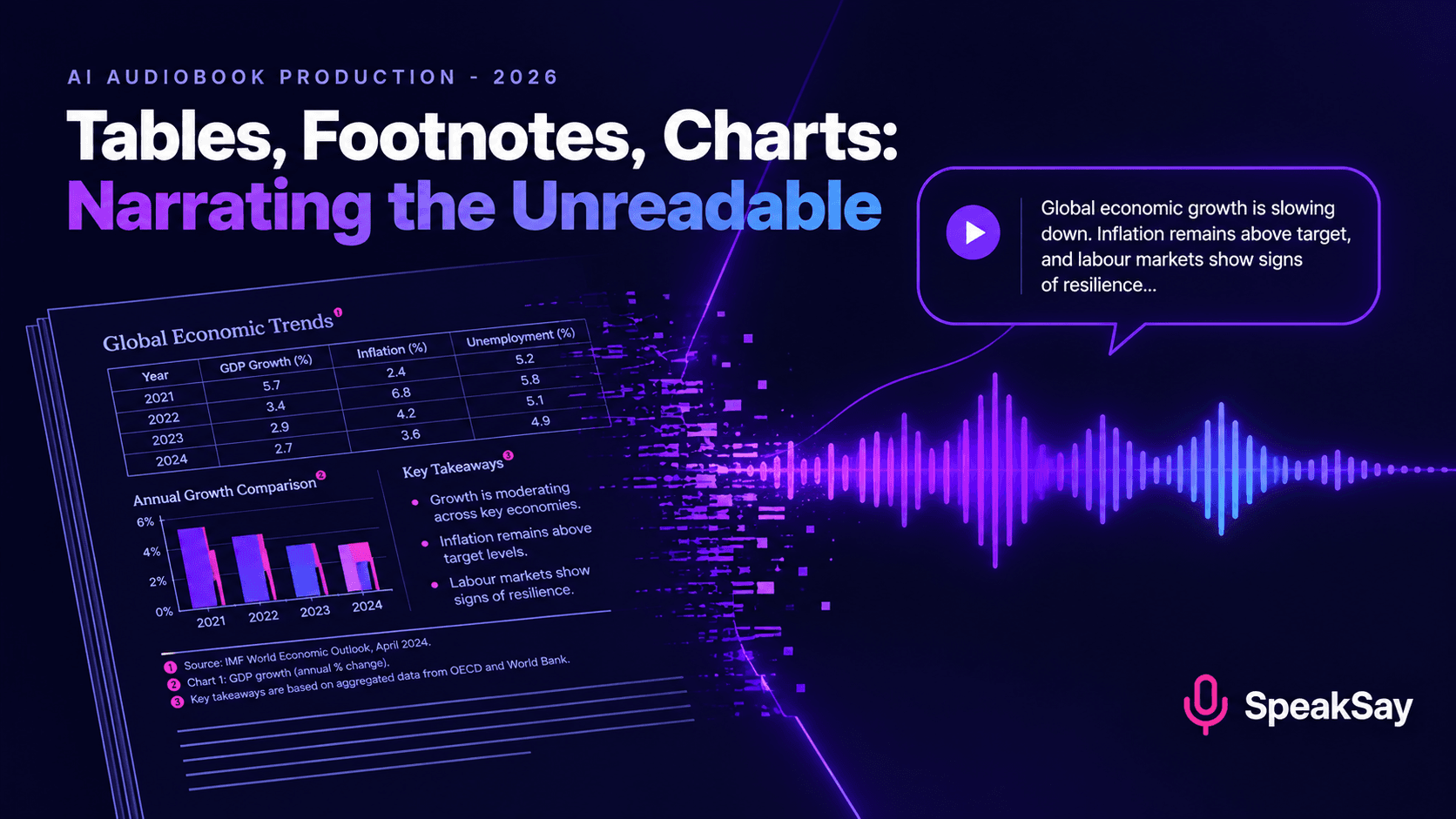
Your Nonfiction Book Has Tables, Footnotes and Charts: How to Narrate the Parts That Don't Read Aloud (2026 AI Audiobook Guide)
Fiction narrates straight through. Nonfiction stalls at the first table. Here is the element-by-element decision framework for footnotes, tables, charts, lists, URLs and cross-references - what to read, what to rewrite, what to summarise, and what belongs in the companion PDF
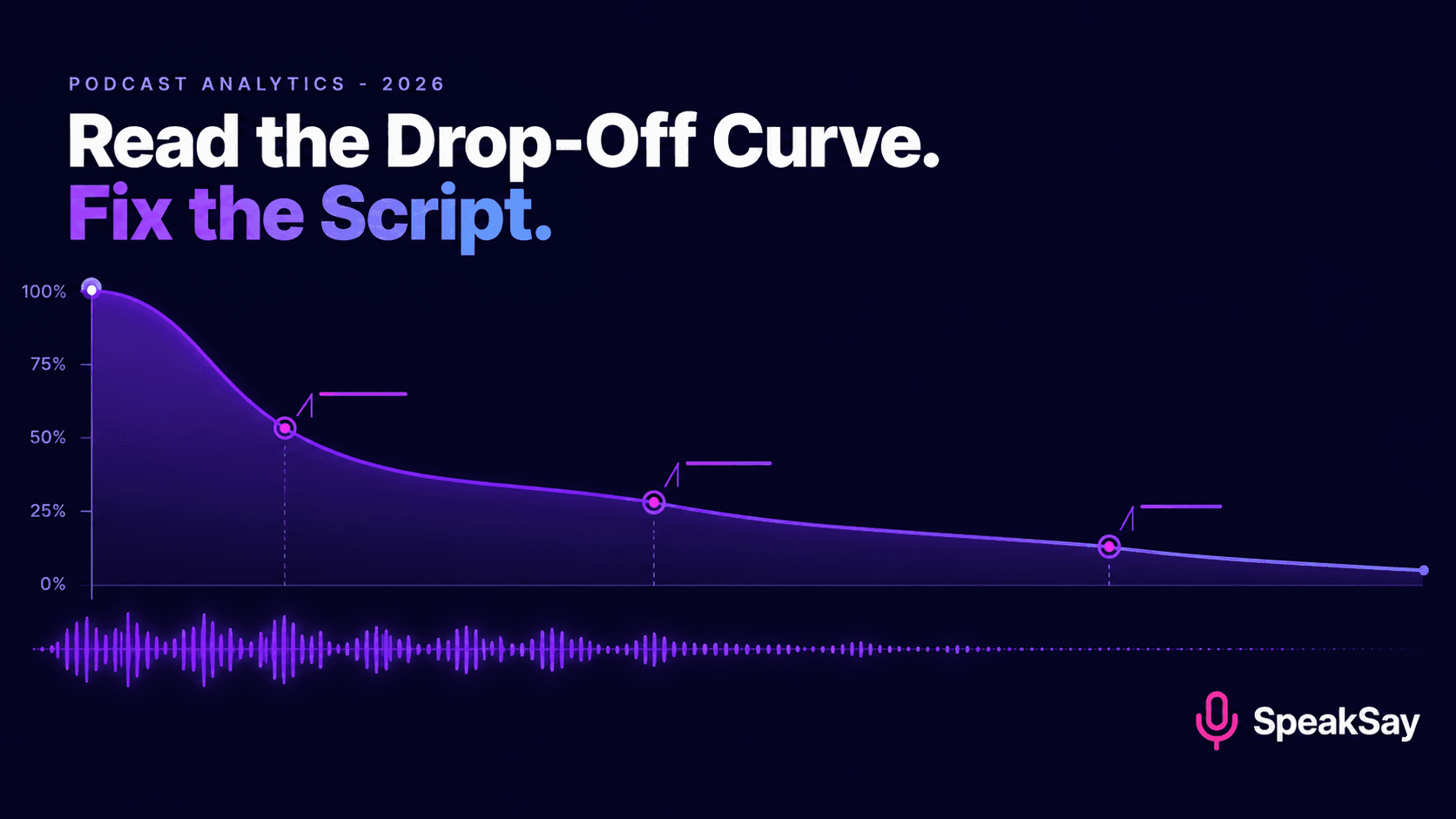
Half Your Listeners Leave at Minute Four: How to Read Your Podcast Drop-Off Curve and Fix the Script (2026)
Your podcast host gives you a retention graph and no interpretation layer, so most people react by shortening episodes at random. Here is the curve-shape-to-cause-to-fix table, a six-point script triage, and the AI-specific failure mode that puts a sag in the middle of every generated show.
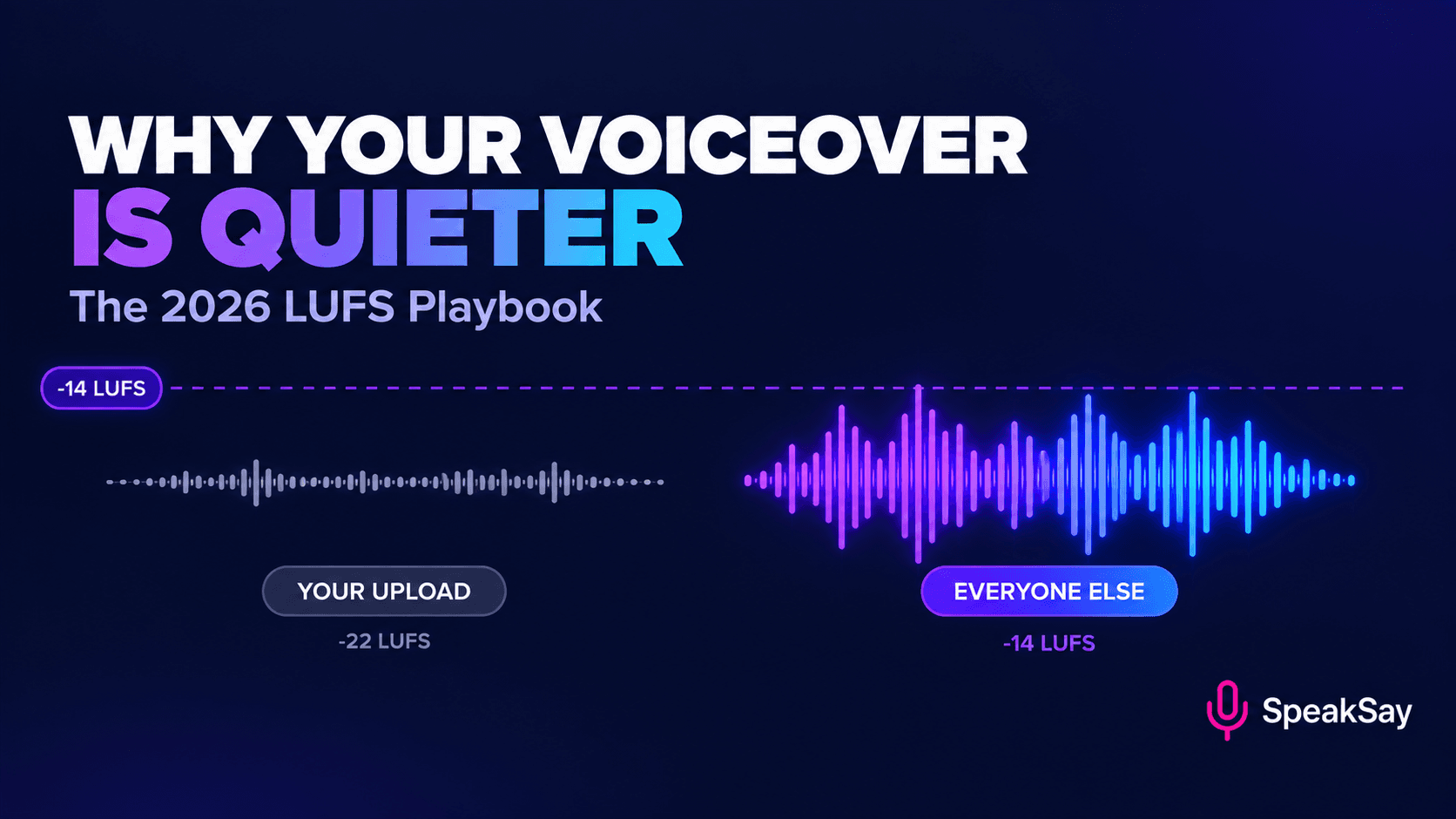
Your AI Voiceover Sounds Quieter Than Everyone Else's: The 2026 Loudness Playbook
Your video sounds fine on your laptop and then plays back noticeably quieter than every other video in the feed. That is loudness normalisation, and every platform does it differently. Here are the targets, the measure-then-fix order, and why AI voiceover trips this more than recorded audio.
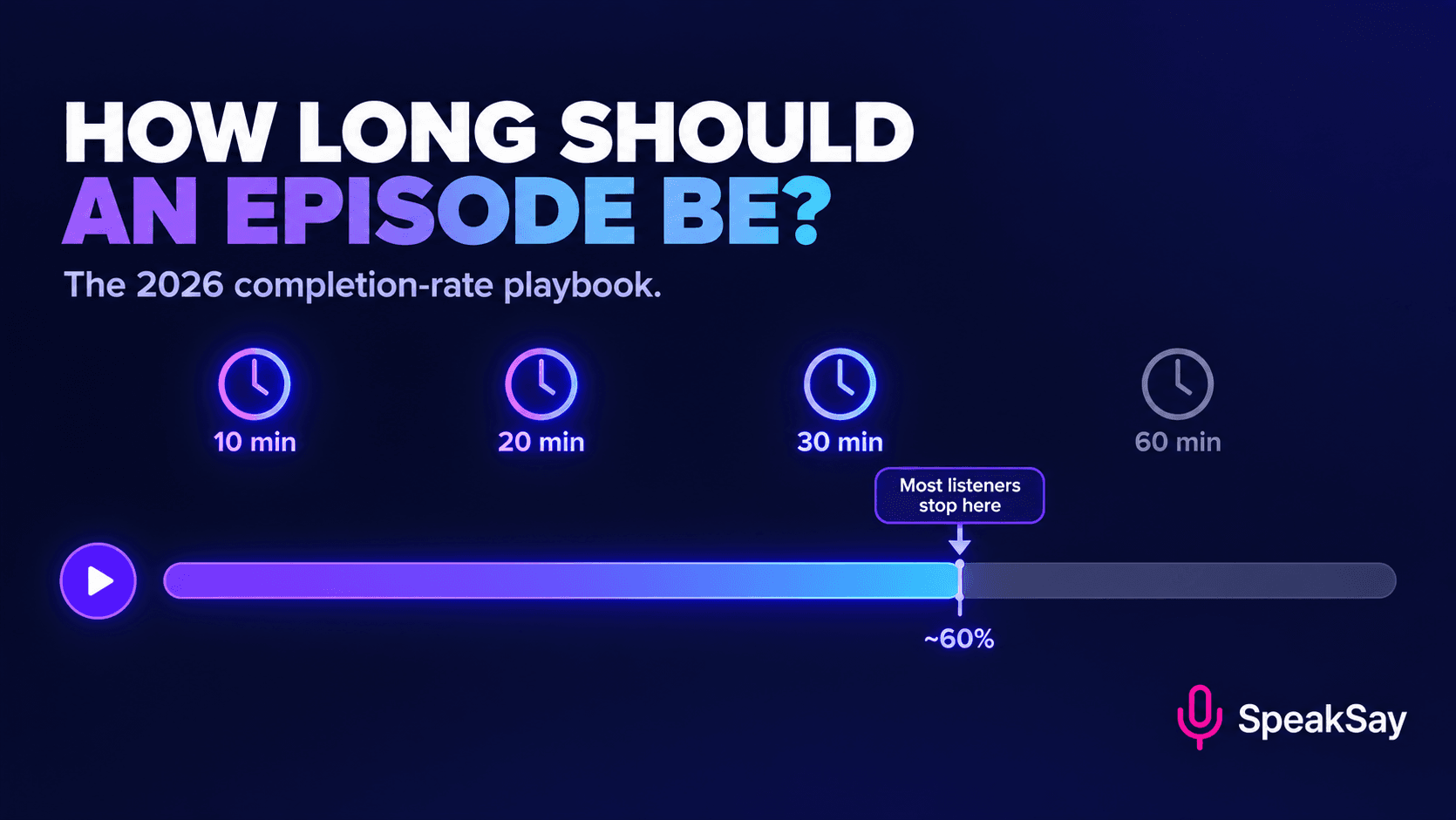
How Long Should a Podcast Episode Be in 2026? The Completion-Rate Playbook
Most new podcasters copy the hour-long format of shows that earned the right to it, and most AI-generated shows pad to hit a runtime. Both lose listeners in the same place. Here is how to choose a length from your format rather than from habit, and how to plan it at script stage.
Bank Your Voice While You Still Have It: The 2026 Guide to Preserving Your Voice Before Surgery, Treatment or Time Takes It
Voice banking has been available for years and almost nobody hears about it until it is nearly too late. Here is what it is, where to get it free if you have a medical diagnosis, and how to record a usable archive of your own voice this weekend.
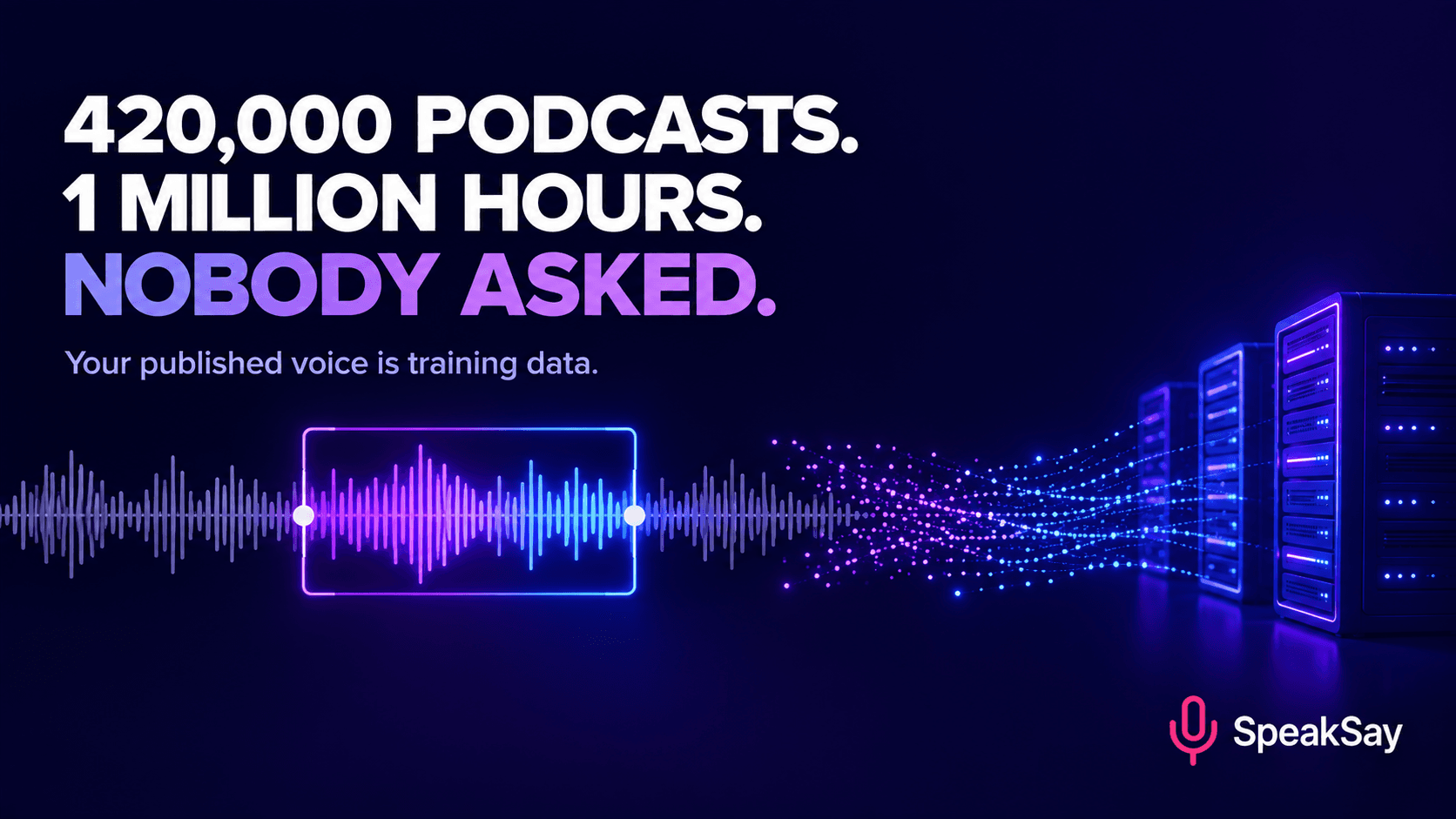
Your Published Voice Is Training Data: How AI Companies Harvested 420,000 Podcasts — and What Creators Can Actually Do (2026)
An AI music company pulled roughly a million hours of audio from 420,000 podcasts through a public directory. If you have ever published your voice, you are probably in a dataset. Here is what is realistically defensible now — and what is not.
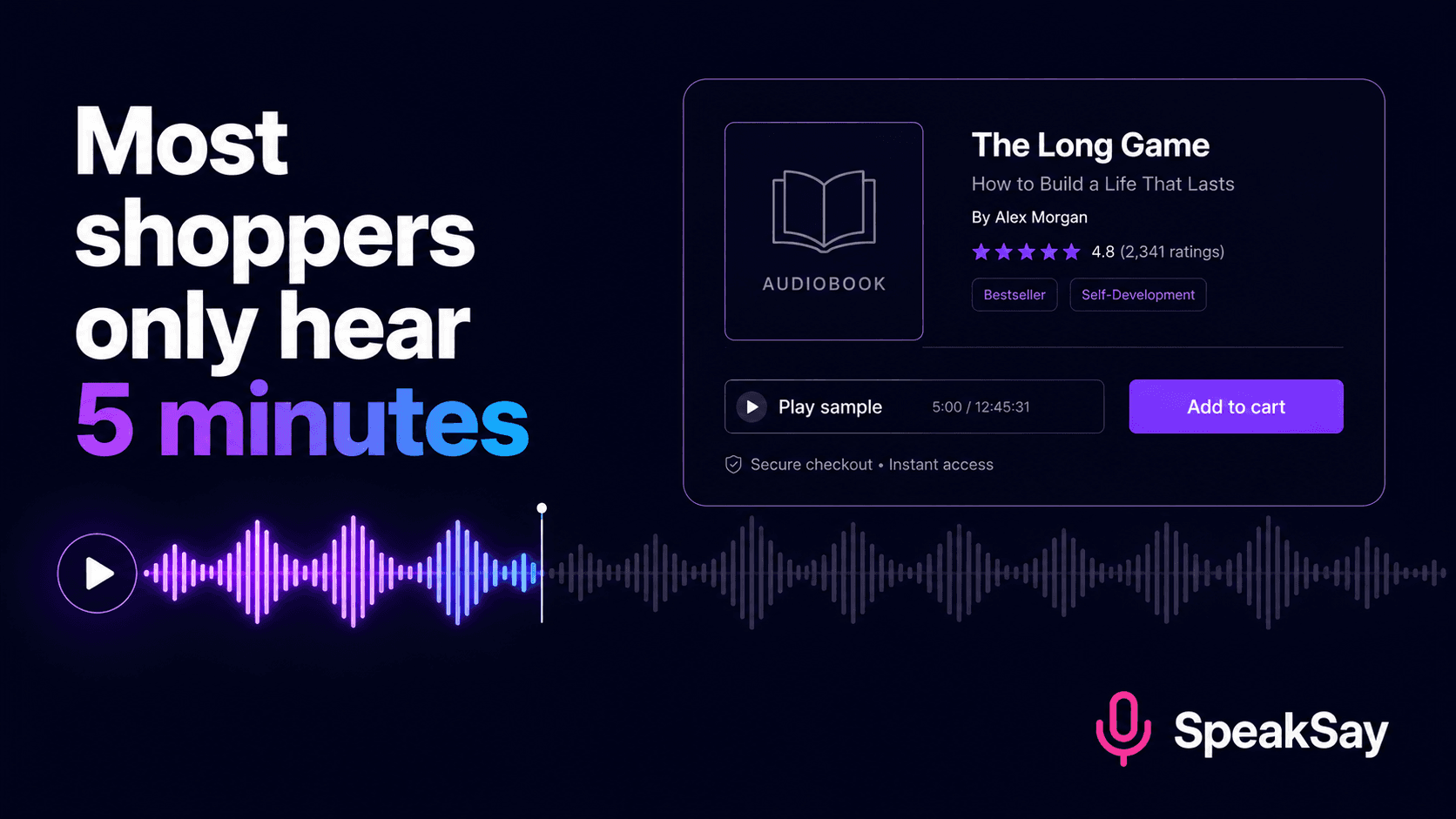
The First Five Minutes Sell the Book: How to Produce an Audiobook Retail Sample That Converts (2026)
AI narration made audiobook production cheap and fast, which means the bottleneck moved from recording to converting browsers into buyers. This guide gives you a scoring rubric, format specs, a production checklist and a testable A/B protocol for the one clip most shoppers will ever hear.
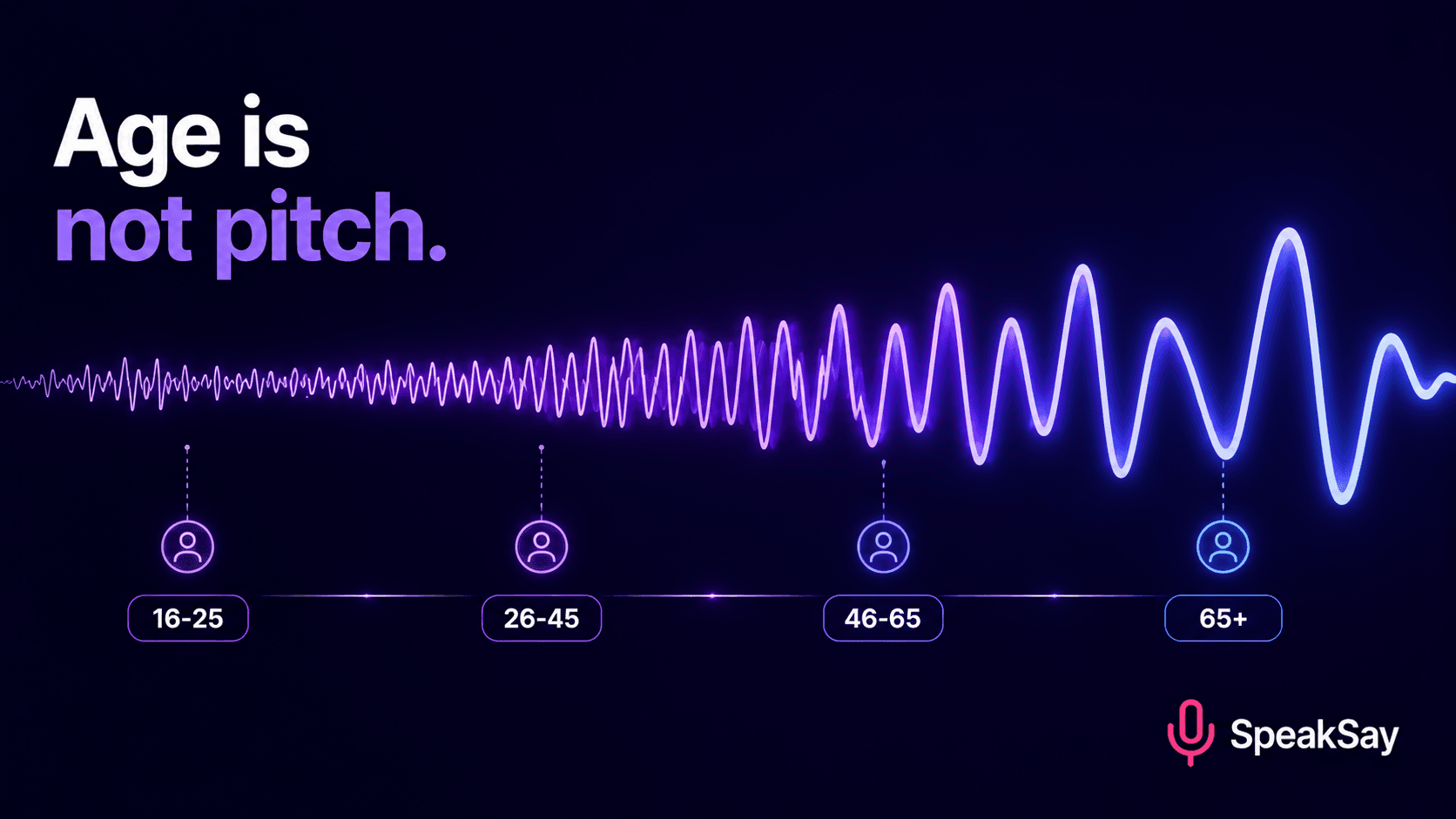
Make an AI Voice Sound Older or Younger: The 2026 Voice-Age Casting Guide (and the One Line You Must Not Cross)
Pitch-shifting does not age a voice — it resizes the body it came from, which is why the results sound like a chipmunk or a slowed record. This guide covers the five markers that actually read as age, a casting sheet for four ranges, script-level ageing, timeline continuity, and the boundary you must not cross.
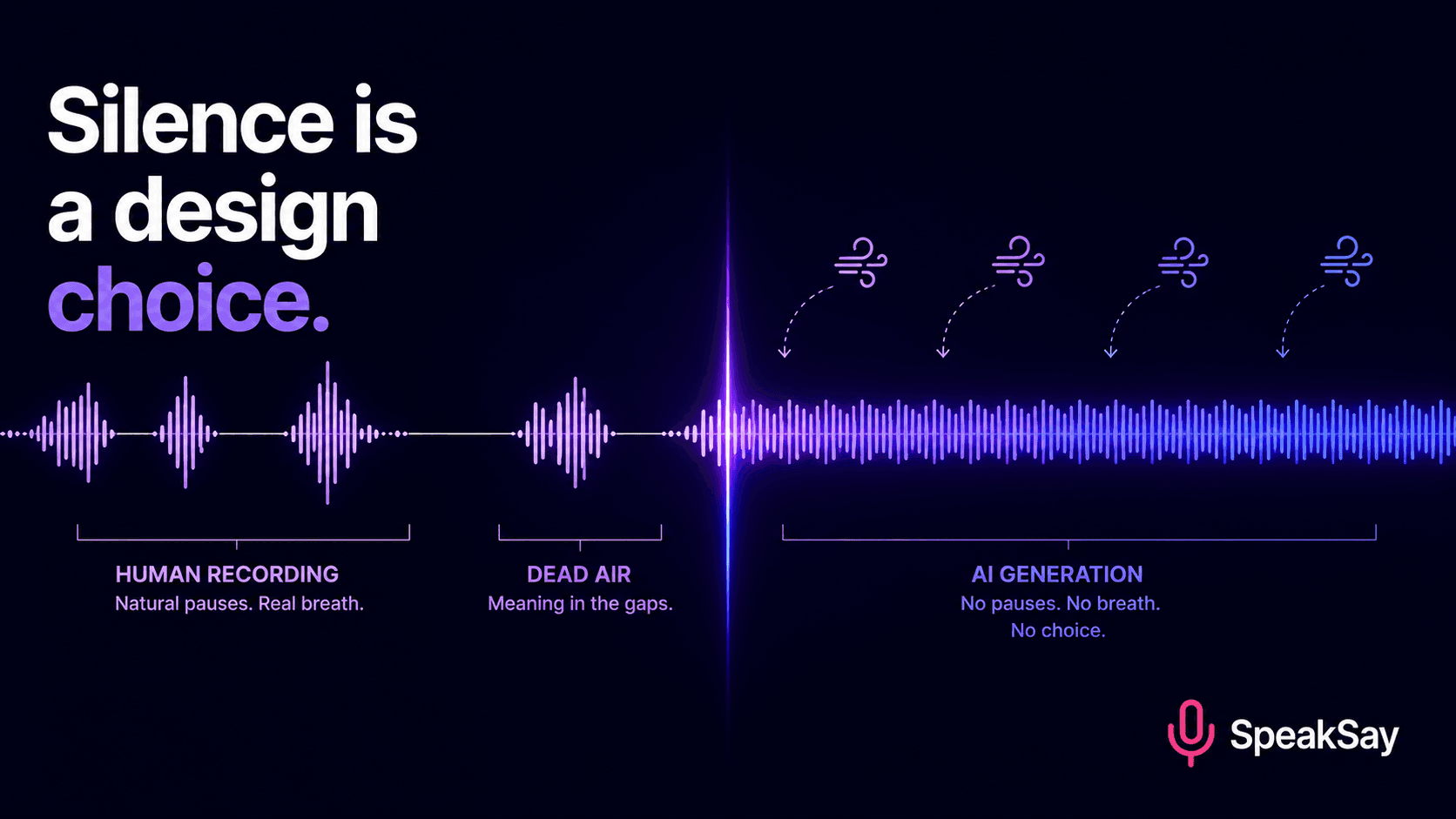
Dead Air Is Costing You Retention — and Your AI Voice Isn't Breathing: The 2026 Silence Playbook
Creators have two opposite silence problems: recorded audio full of dead air listeners skip, and AI narration that never breathes and quietly wears people out. This playbook gives you the durations, the trim settings and the breath placement rules to fix both.
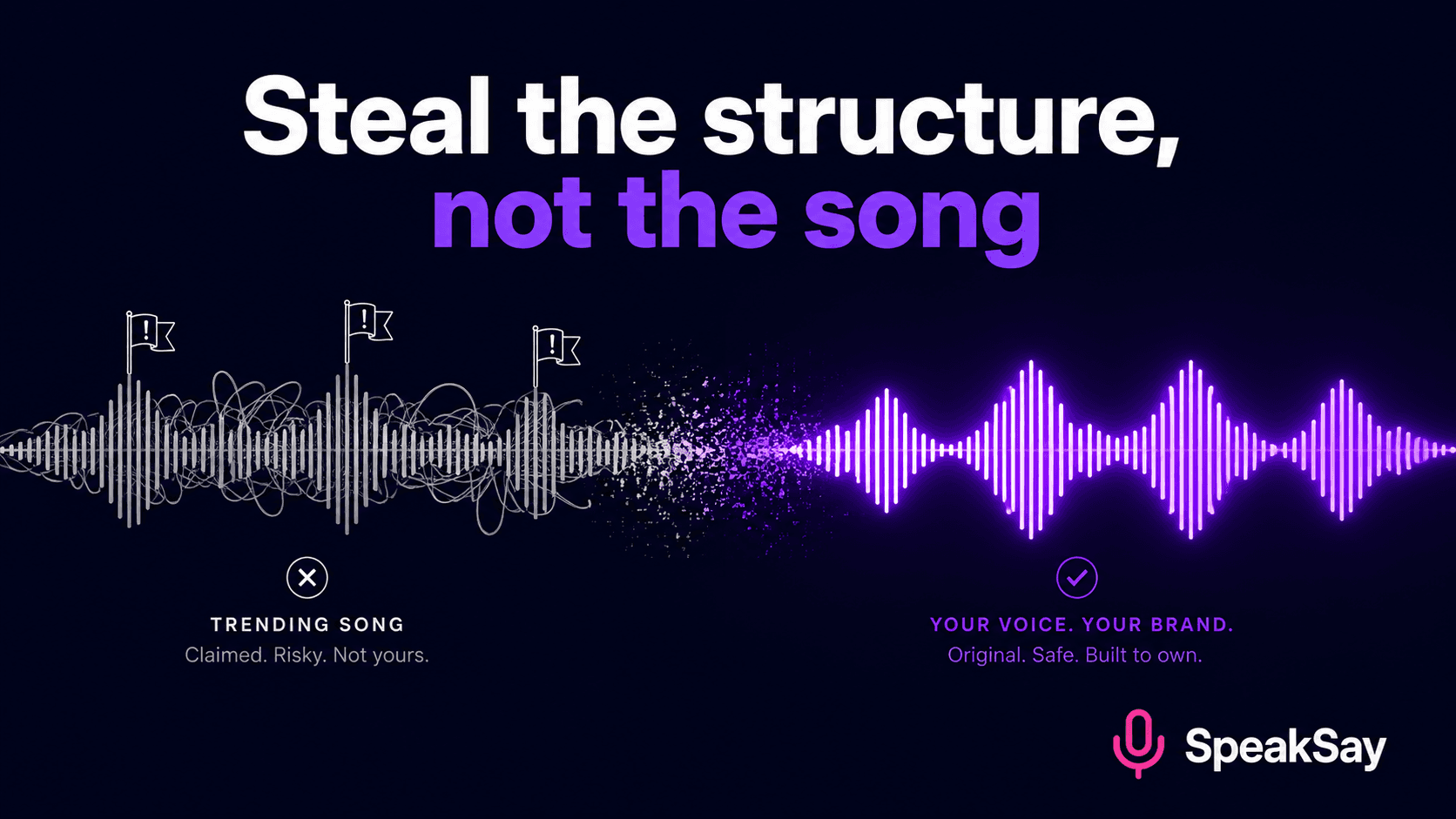
Trending Audio Is a Copyright Claim Waiting to Happen: How to Build Original Voice Hooks That Ride the Trend Without the Track (2026)
Trending sounds feel free until a video performs and the claim arrives. This 2026 playbook shows how to transpose a trending sound's beat grid and emotional arc into an original voice hook you own outright - with copy-paste templates, a claim-safe checklist, and a signature-sound strategy.
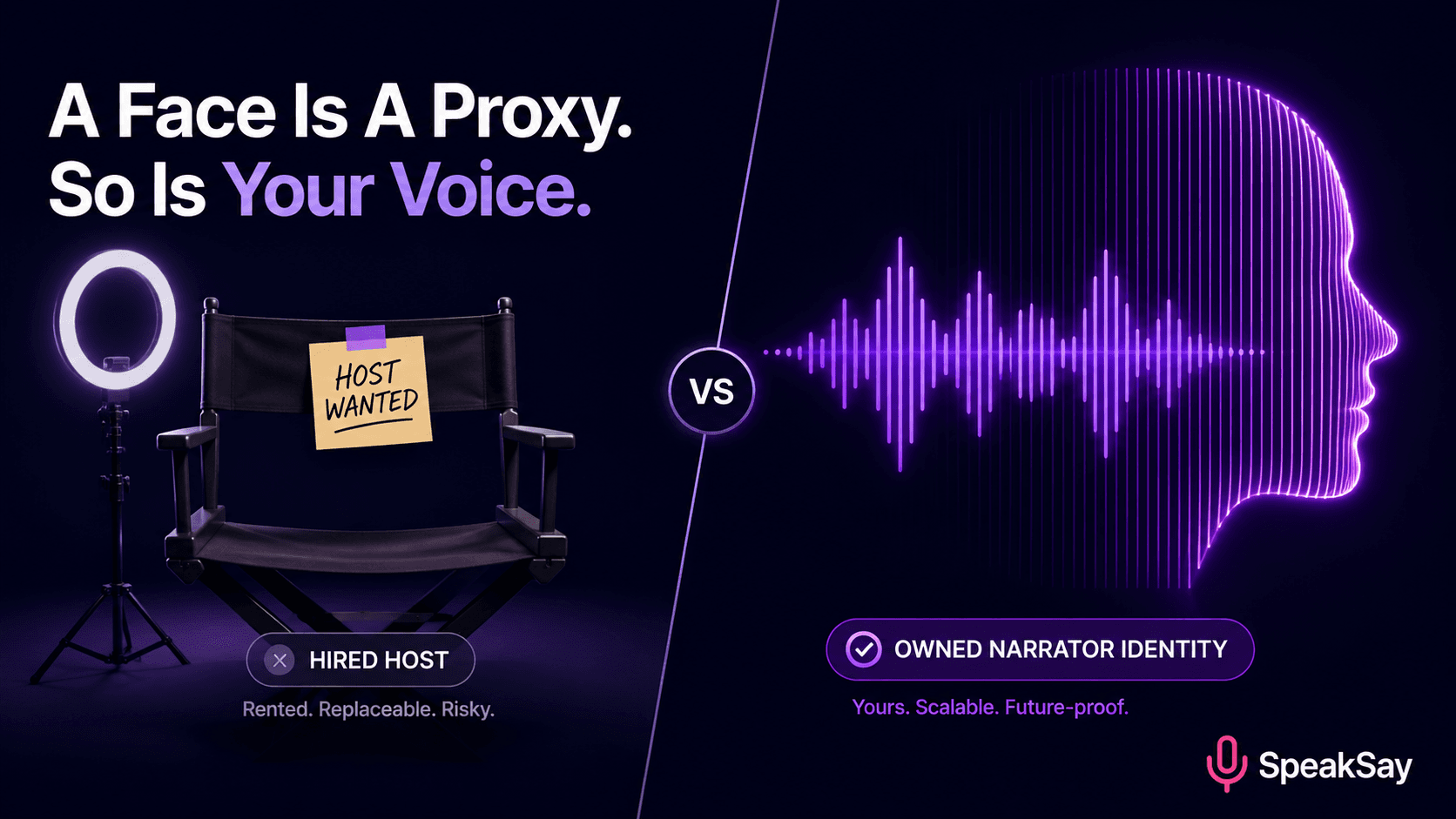
YouTube Now Favors Videos With Human Faces: The 2026 "Human Signal" Playbook for Faceless Channels (No Fiverr Host Required)
YouTube's recommendations reportedly now favor videos with a real human face, and faceless creators are caught in an AI slop crackdown they did not cause. A face is only a proxy for human involvement. Here are the two other proxy families you can win, priced against the hired-host route.
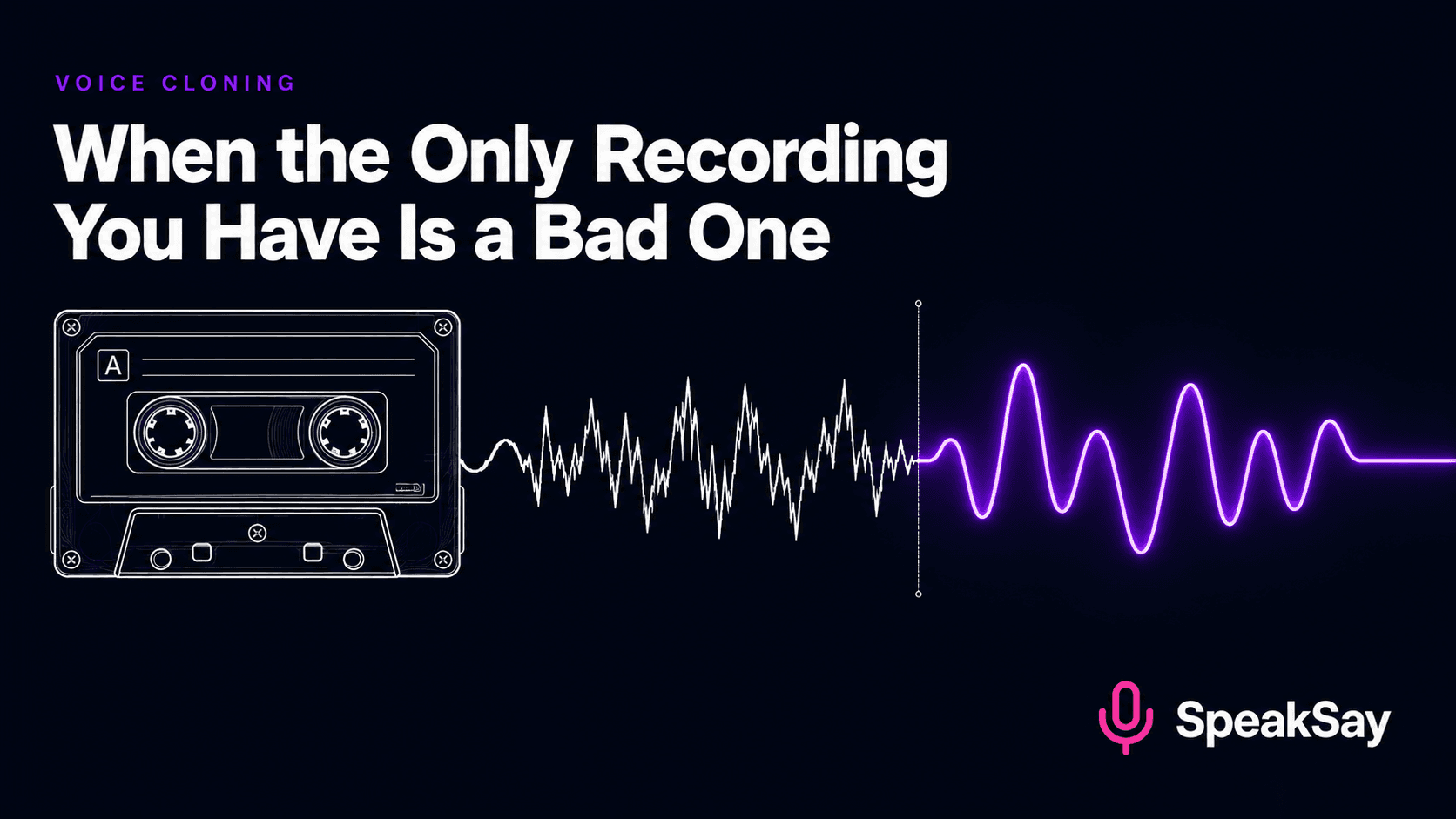
The Only Recording You Have Is Bad: How to Clone a Voice From Old Tapes, Zoom Calls and Phone Audio (2026)
Every voice-cloning guide assumes a quiet room and a good microphone. But the people who need cloning most — families with one cassette, publishers with a 1998 interview, teams whose founder has left — cannot re-record anything. Here is the triage flow, the repair order, and the honest expectations by source type.
Phone Calls, Radios and Voicemails: How to Make AI Voices Sound Like They're Coming Through Something (2026 FX Guide)
True-crime 911 segments, horror phone calls, gaming comms, micro-dramas — half of short-form storytelling needs a voice that arrives through a device. Here are the actual frequency ranges, artefact layers and casting rules for eight device types, plus the one line you must never process.
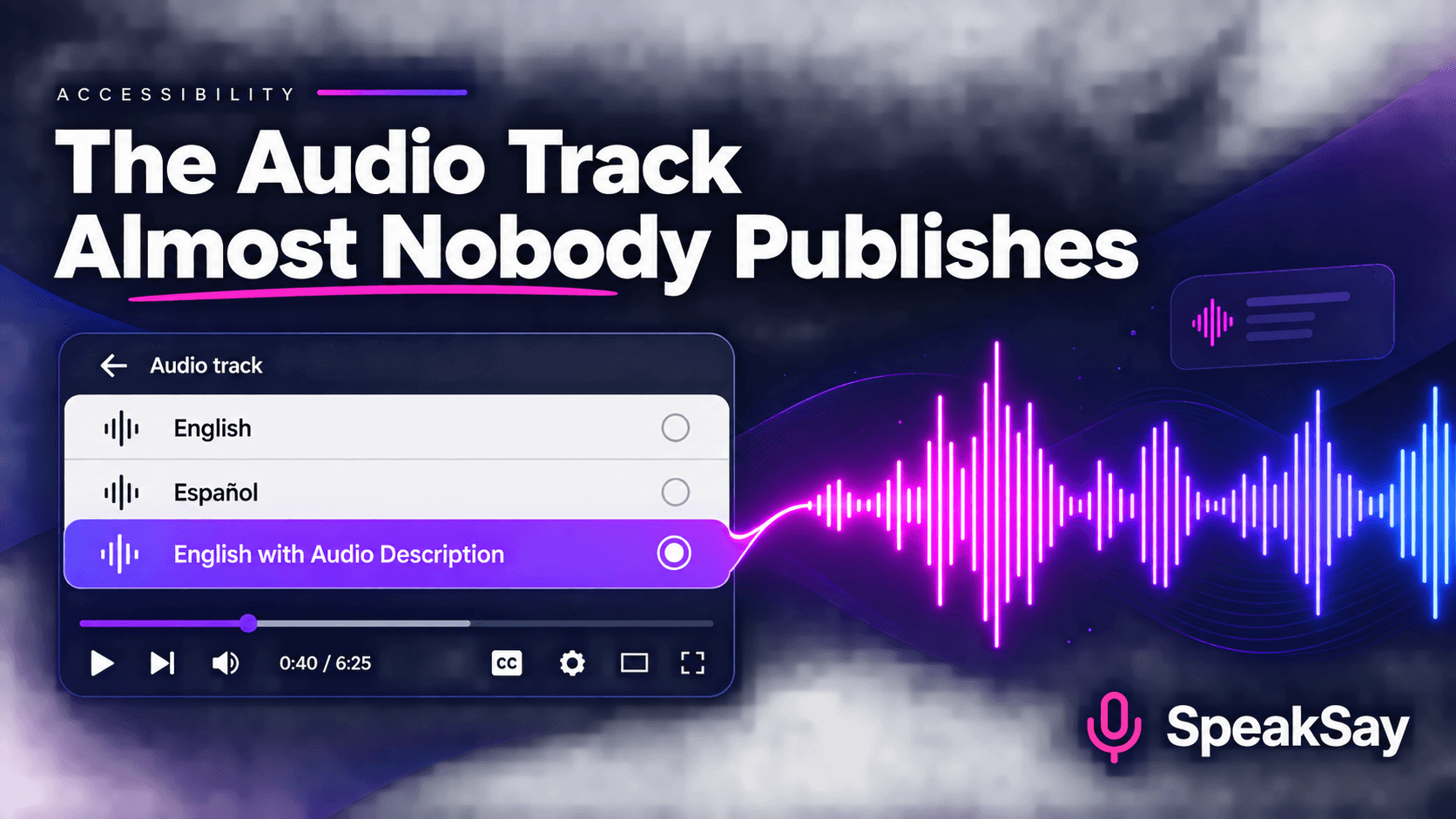
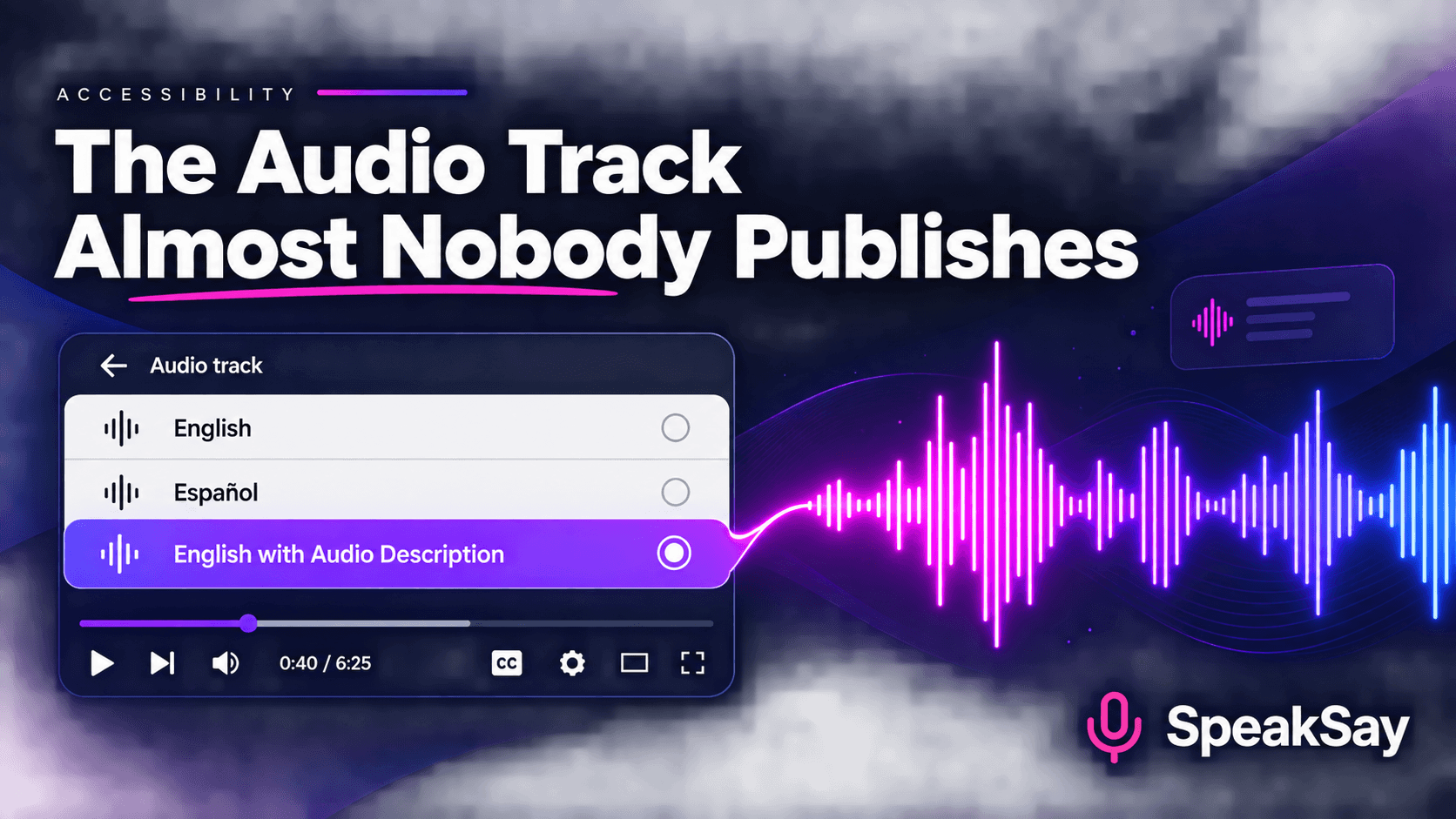
YouTube Now Has an Audio Description Track — and Almost Nobody Uses It: The 2026 Guide for Faceless and Visual Channels
Viewers can now select "English with Audio Description" from the audio menu the same way they select a language. Producing that track used to mean a studio, a describer and a mixing session. It is now a script-and-voice job — and script-first creators already have most of what they need.
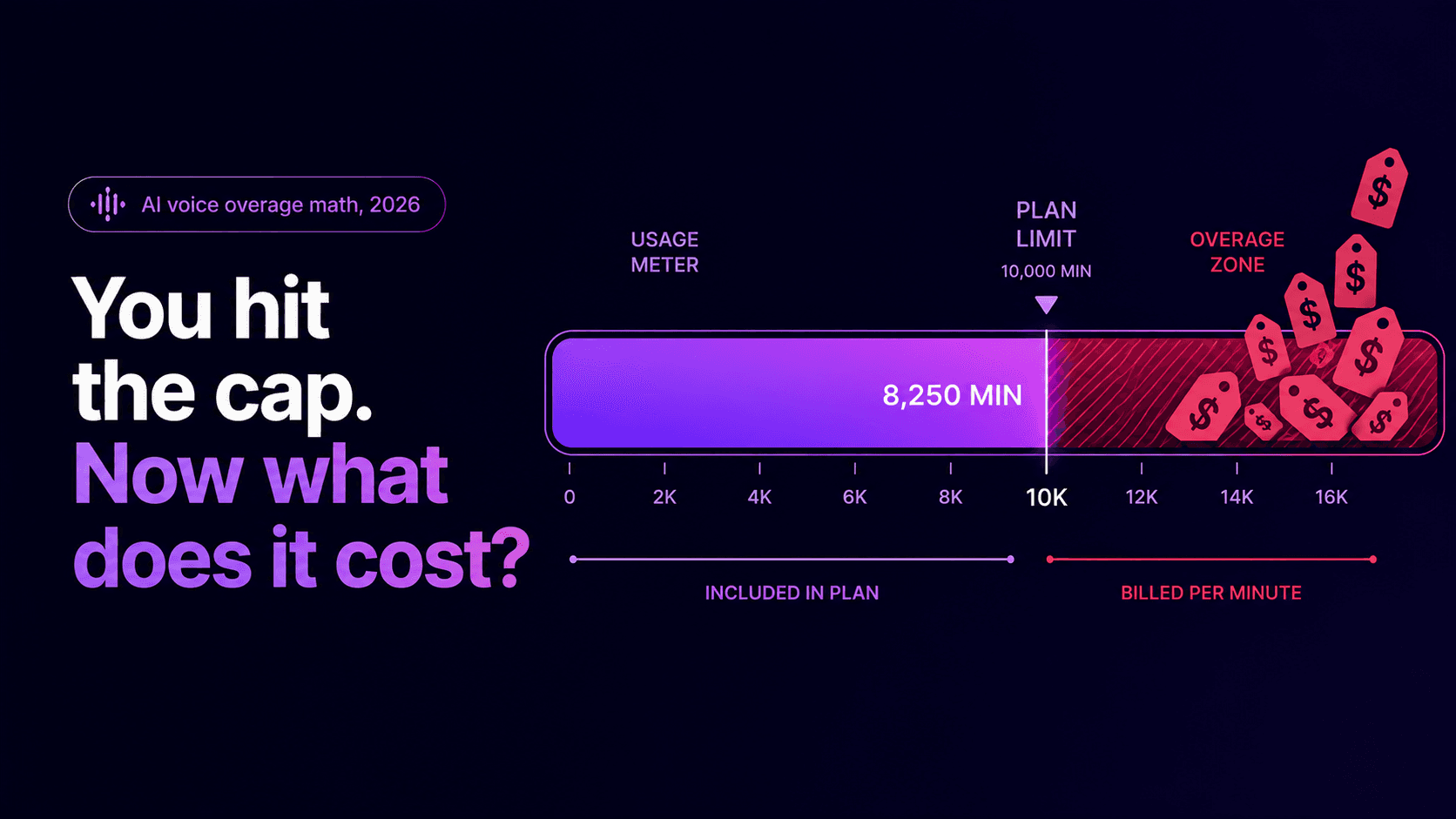
What Happens When You Hit Your AI Voice Character Limit Mid-Project? The 2026 Overage Math Nobody Shows You
Your plan says 100,000 characters. Your audiobook needs 480,000. Here is exactly what the extra 380,000 costs on every pricing model in 2026, why your bill moves without a plan change, and the three ways to stop paying by the meter.
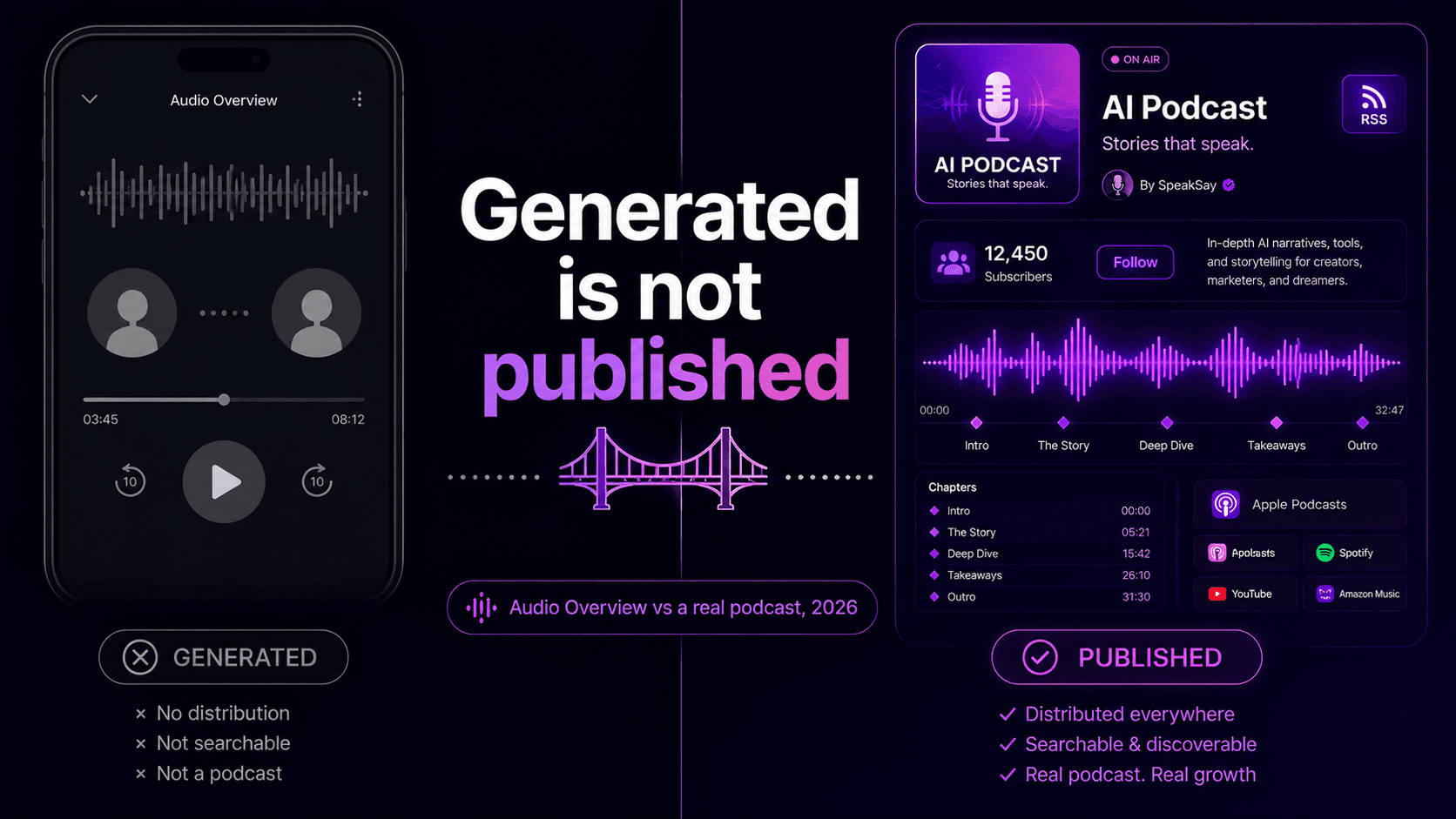
Audio Overview Is Now Inside the Gemini App: Free AI Podcasts for Everyone, and the 6 Things It Still Cannot Do
Google put its AI podcast maker in the Gemini app, and millions of people now have a two-host show they can generate in thirty seconds. Here is exactly where the free tool ends, what the gap between generating audio and publishing a podcast actually contains, and how to decide whether you need to cross it.
Overproduced Audio Is Killing Your Reach: The Lo-Fi AI Voice Aesthetic Winning Shorts in 2026
Every AI voice guide teaches you to sound more polished. The feed is rewarding the opposite. Single-take, badly-lit, phone-mic content is outperforming studio-grade production, and the audio is a large part of why. Here is how to deliberately un-polish an AI voice without making it sound broken.
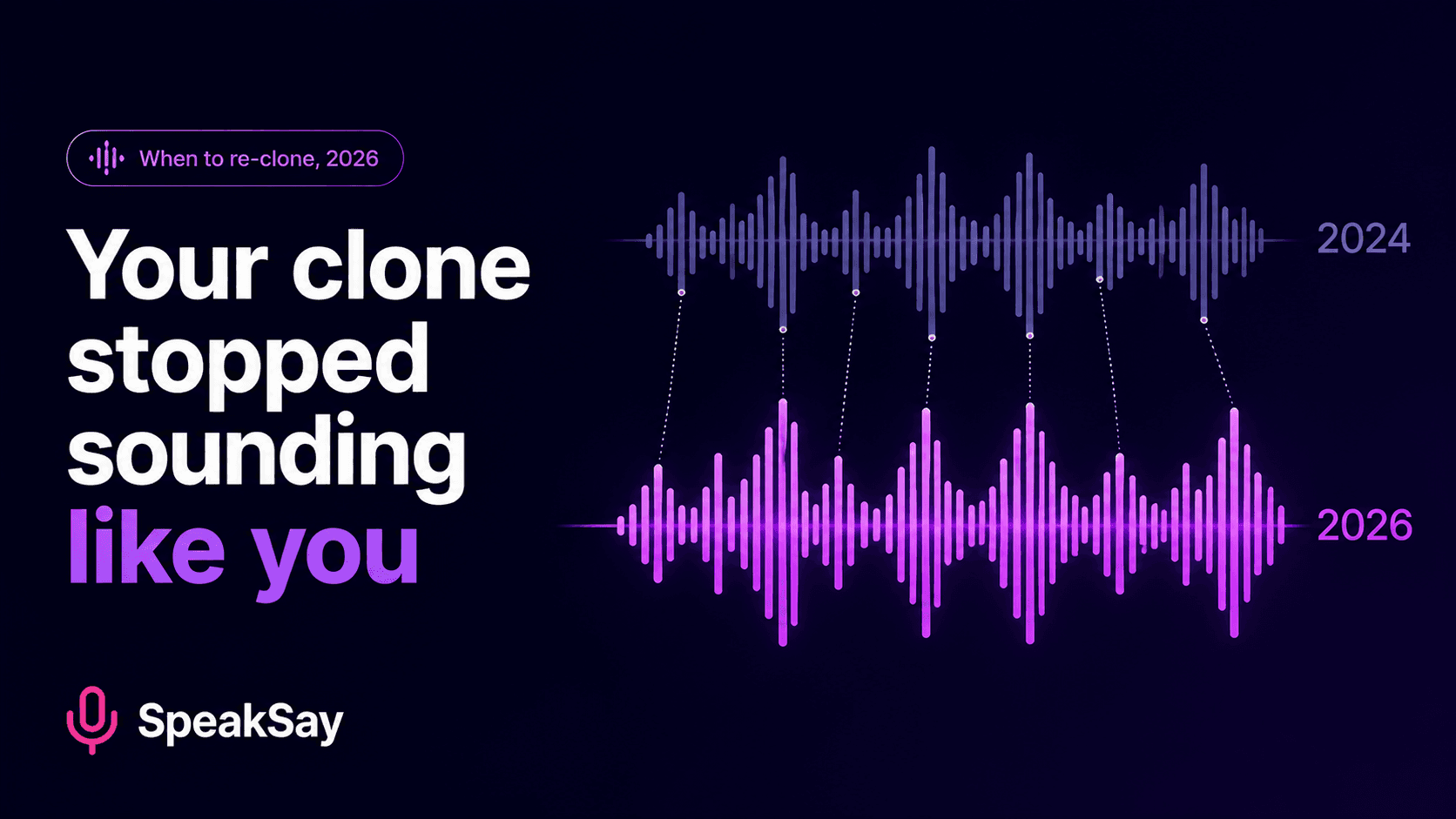
Your Voice Clone Is Two Years Old: When to Re-Clone, and How to Swap It Without Listeners Noticing
Everybody writes about making a voice clone. Nobody writes about maintaining one. Your voice changed, your mic changed, the model got replaced, and the sample you trained on was recorded on gear you no longer own. Here are the five signals that say re-clone, and the migration plan that stops the swap sounding like a new narrator.
Researchers Read 40 Papers a Week — By Listening: Turn PDFs, Preprints and Journal Articles Into Audio That Actually Makes Sense (2026)
Academic PDFs are the worst possible input for text-to-speech: two columns read across the gutter, citations interrupt every third sentence, equations become symbol soup. Here's the pre-processing recipe and the two-mode workflow that makes listening to papers actually work.
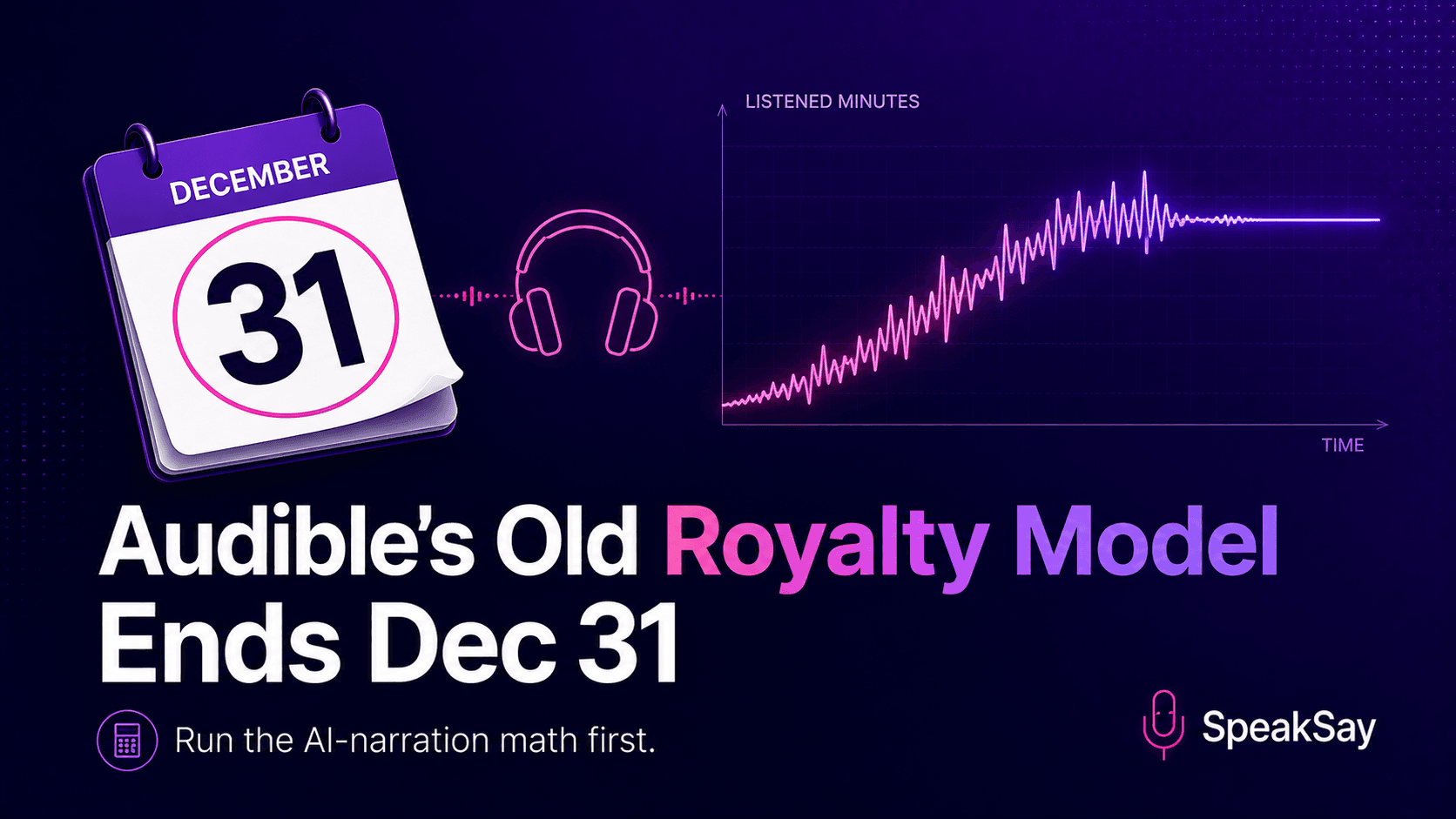
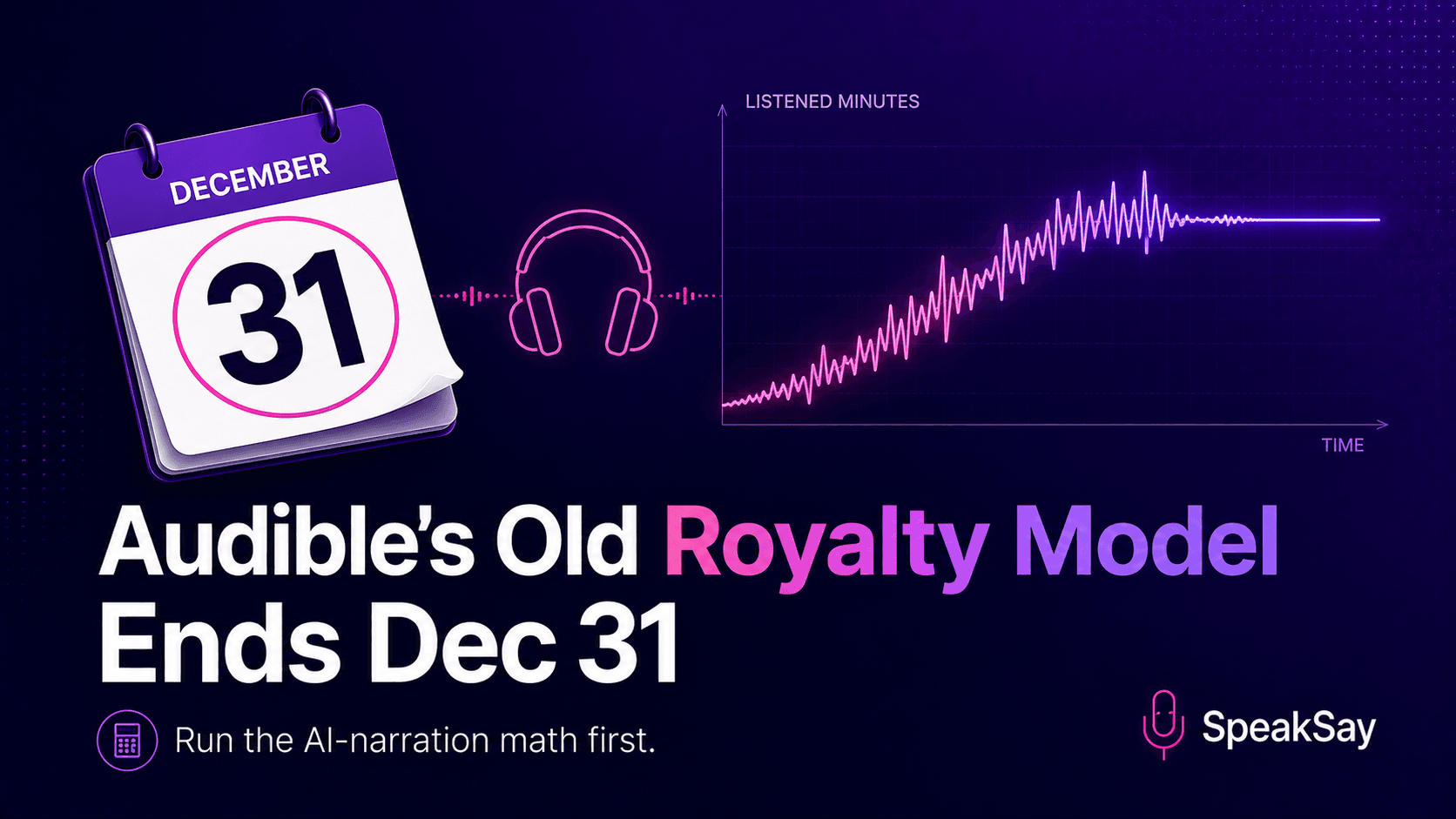
Audible's Old Royalty Model Dies December 31, 2026: The AI-Narration Math Indie Authors Need to Run Before Then
Audible's legacy royalty model is being retired at the end of 2026 and the replacement pays on listened minutes, not sales. That changes which books are worth producing, how long they should be, and whether AI narration still pencils out. Here's the math.
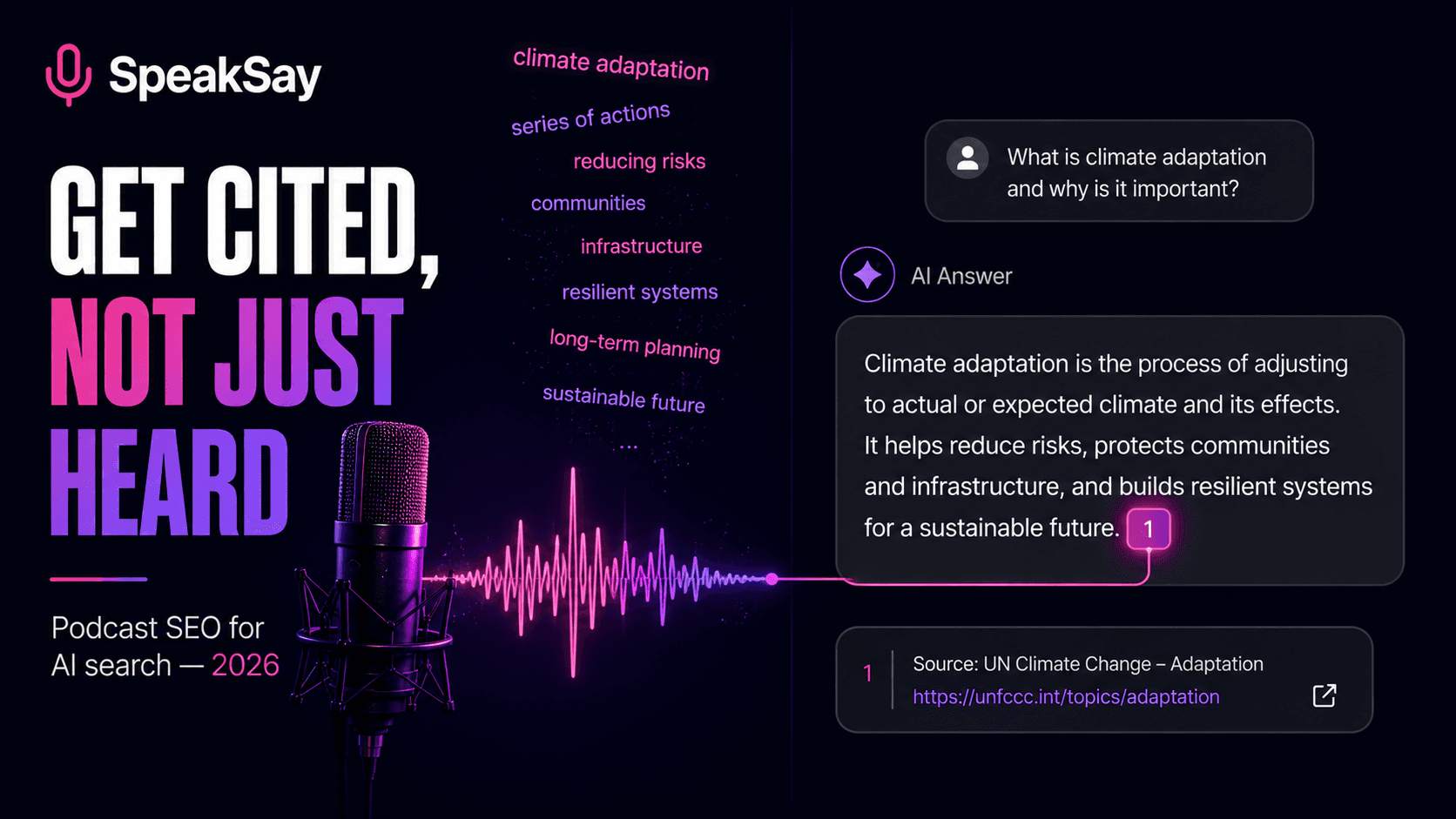
Nobody Browses Apple Podcasts Anymore — They Ask ChatGPT: How to Get Your AI Podcast Cited in AI Search (2026)
Podcast discovery moved. People ask an assistant a question and get an answer with three sources — and a podcast without a transcript is invisible in that layer. Here's the full citation stack: transcripts, episode pages, schema, show notes and the question-first structure that gets your show quoted.
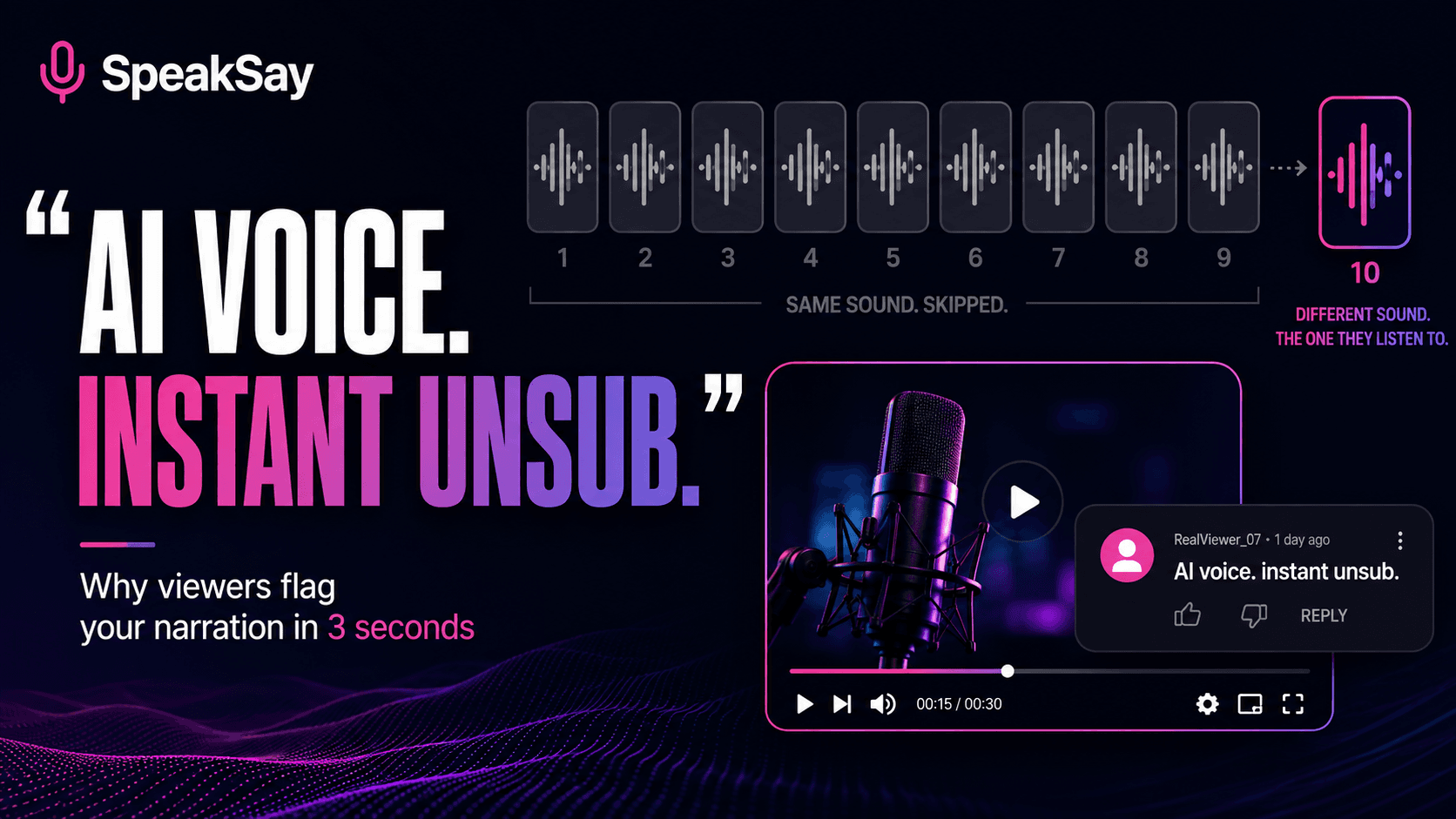
Instant Unsub — AI Voice": Why Viewers Flag Your Narration in 3 Seconds, and How to Fix It in 2026
Viewers aren't detecting that your voice is synthetic. They're recognising it — the same handful of default voices narrate thousands of channels. A 2026 Nielsen finding puts long-exposure irritation 28% higher with unchanging AI narration. Here's what actually triggers the backlash and the five fixes that stop it.
Tech & Gadget Review Faceless Channels in 2026: The Buyer-Trust AI Narrator Playbook ($15-40 CPM + the Affiliate Stack)
Tech reviews are one of the highest-paying faceless niches on YouTube - but review content is buyer-intent content, and the hyped-up AI narrator voice most creators pick is the exact thing killing their affiliate clicks. Here's the voice-casting and scripting playbook that builds trust instead.
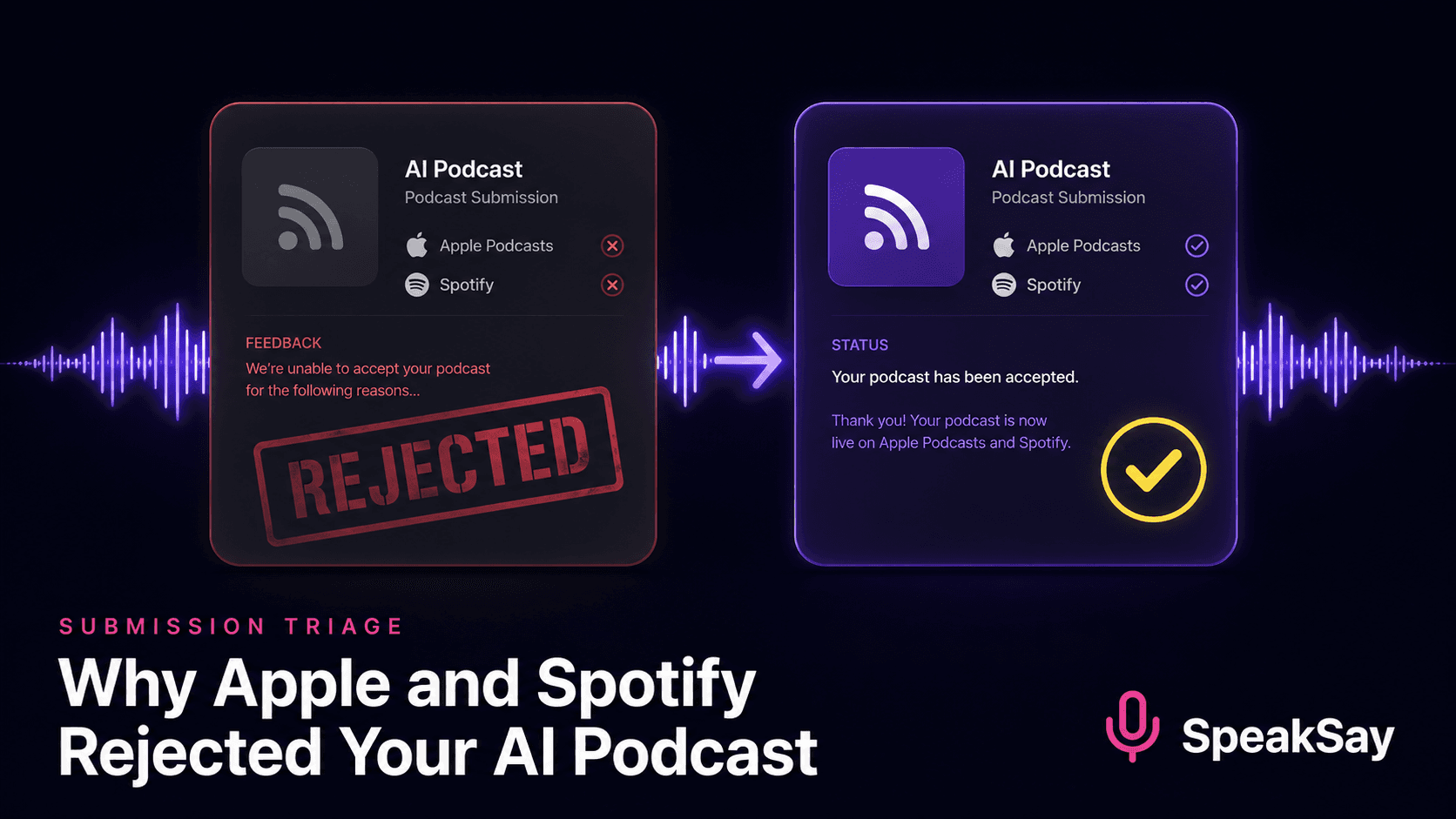
Your AI Podcast Got Rejected by Apple or Spotify? The 2026 Submission Fix List (RSS, Art, Disclosure & Detection Signals)
Directories tightened podcast intake in 2026 as AI-generated shows flooded the catalogue. Most rejections are still boring and fixable - invalid feeds and non-compliant artwork - but a growing share are quality and disclosure signals. Here's the full triage list.
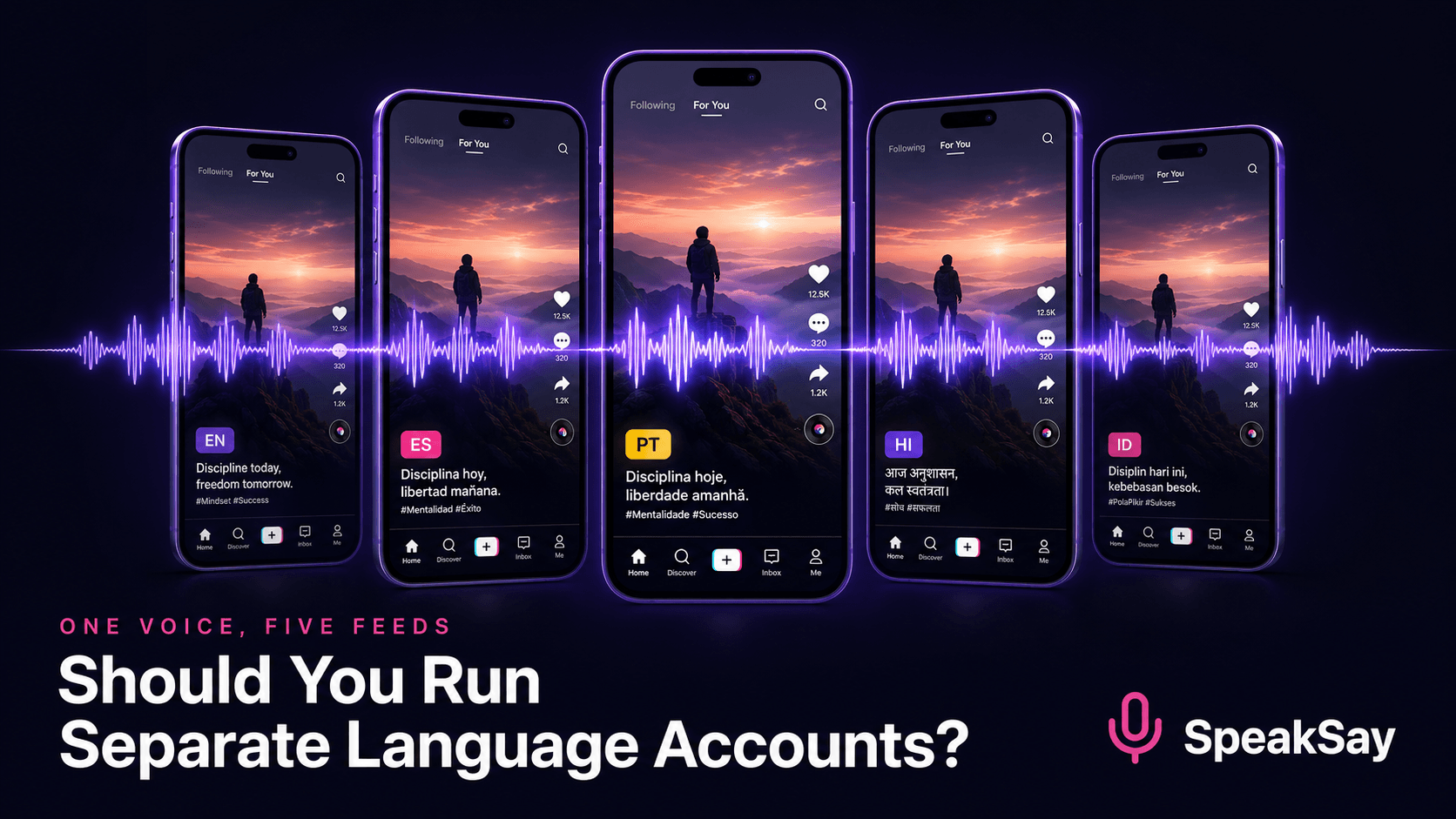
One Account or Five? How Creators Localize Short-Form Video Into 5 Languages Without Losing the Algorithm (2026)
TikTok still gives creators no built-in dubbing, Instagram's translations can't be exported and aren't available everywhere, and the feed now cross-references device and app language - which caps single-language creators. Here's the account architecture and the dubbing workflow that actually scales.
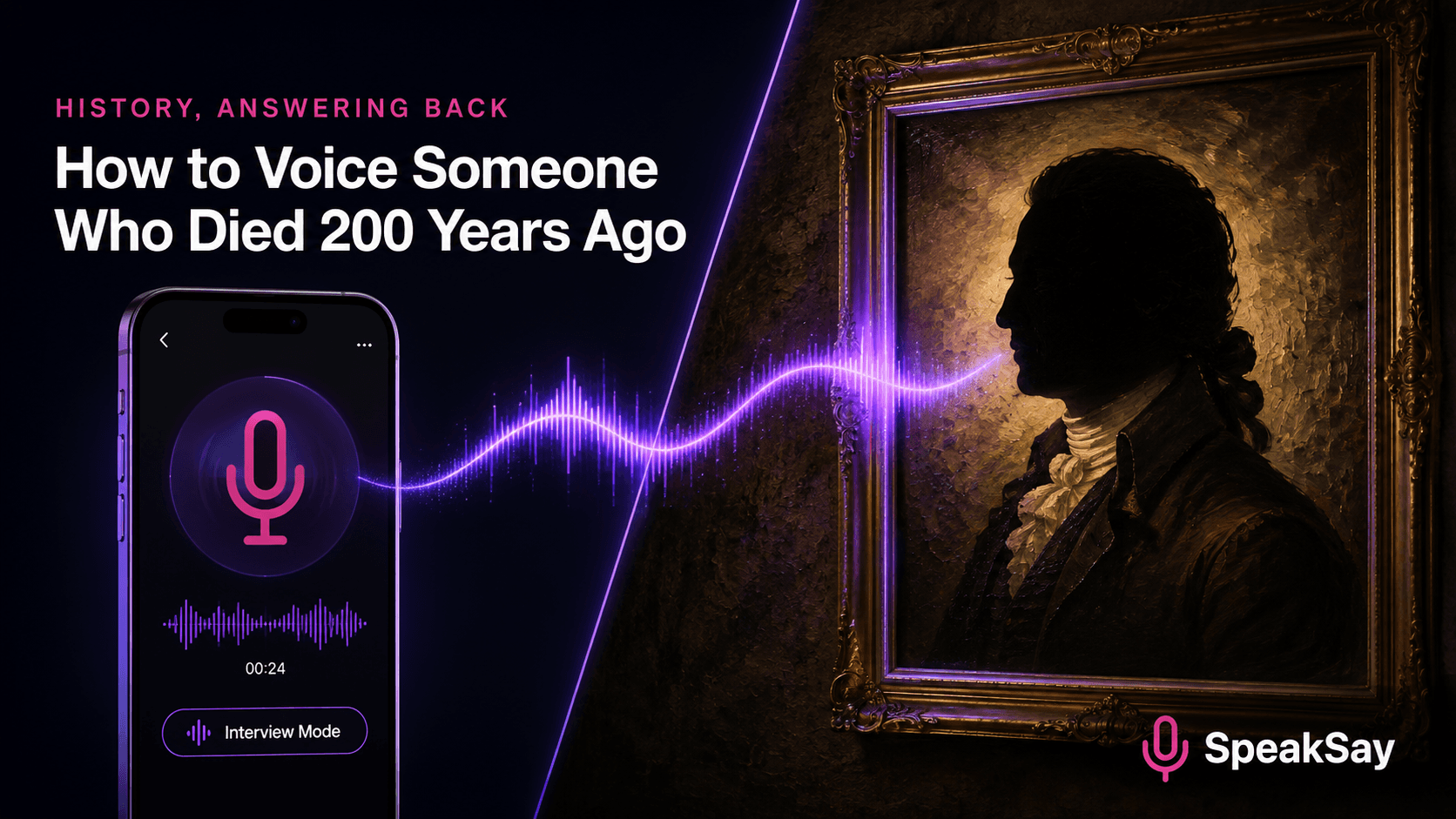
Interview a Historical Figure" Is Shorts' Smartest New Format: How to Voice Someone Who Died 200 Years Ago (2026 Guide)
The format is simple - ask a question, let a historical figure answer - and it works because it turns a lecture into a conversation. The hard part is the voice. Most attempts sound like a present-day American narrator wearing a costume. Here's how to build era-accurate character voices, and where the legal line actually sits.
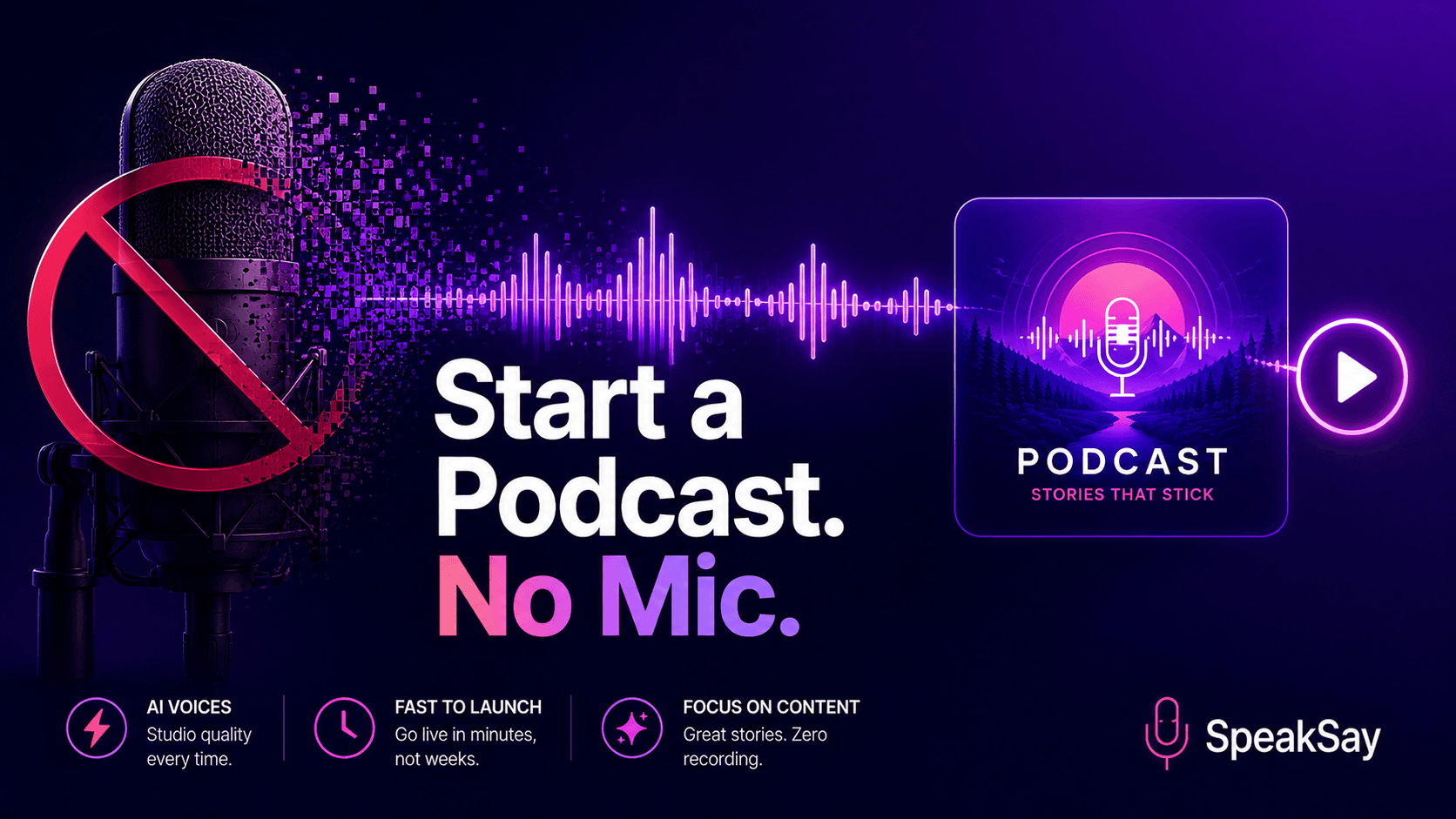
How to Start a Podcast With AI in 2026: No Mic, No Editing, No Co-Host (Complete Beginner Guide)
You don't need a microphone, an editing suite, or a co-host to launch a podcast in 2026. Here's the complete beginner workflow — idea to published RSS feed — using AI voices, plus the honest limits of the free tools everyone recommends.
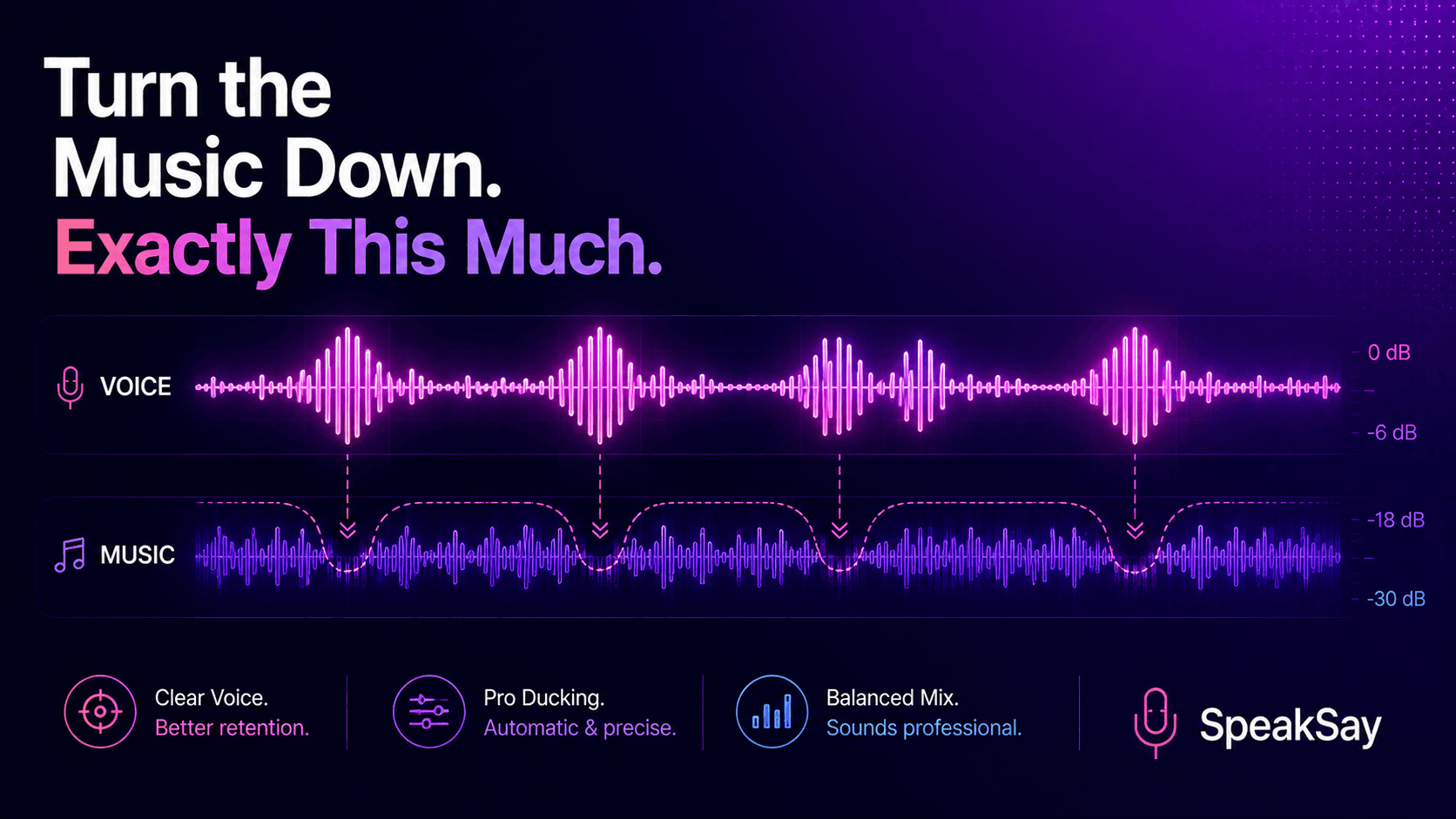
Background Music Is Drowning Your Voiceover: The 2026 Mixing Guide (Levels, Ducking & Free Tools)
"I can't hear the narrator" is the most common complaint on faceless videos — and the fix is four numbers and one technique. Here are the exact dB targets, the EQ carve that clears space for speech, and the free tools to do it.
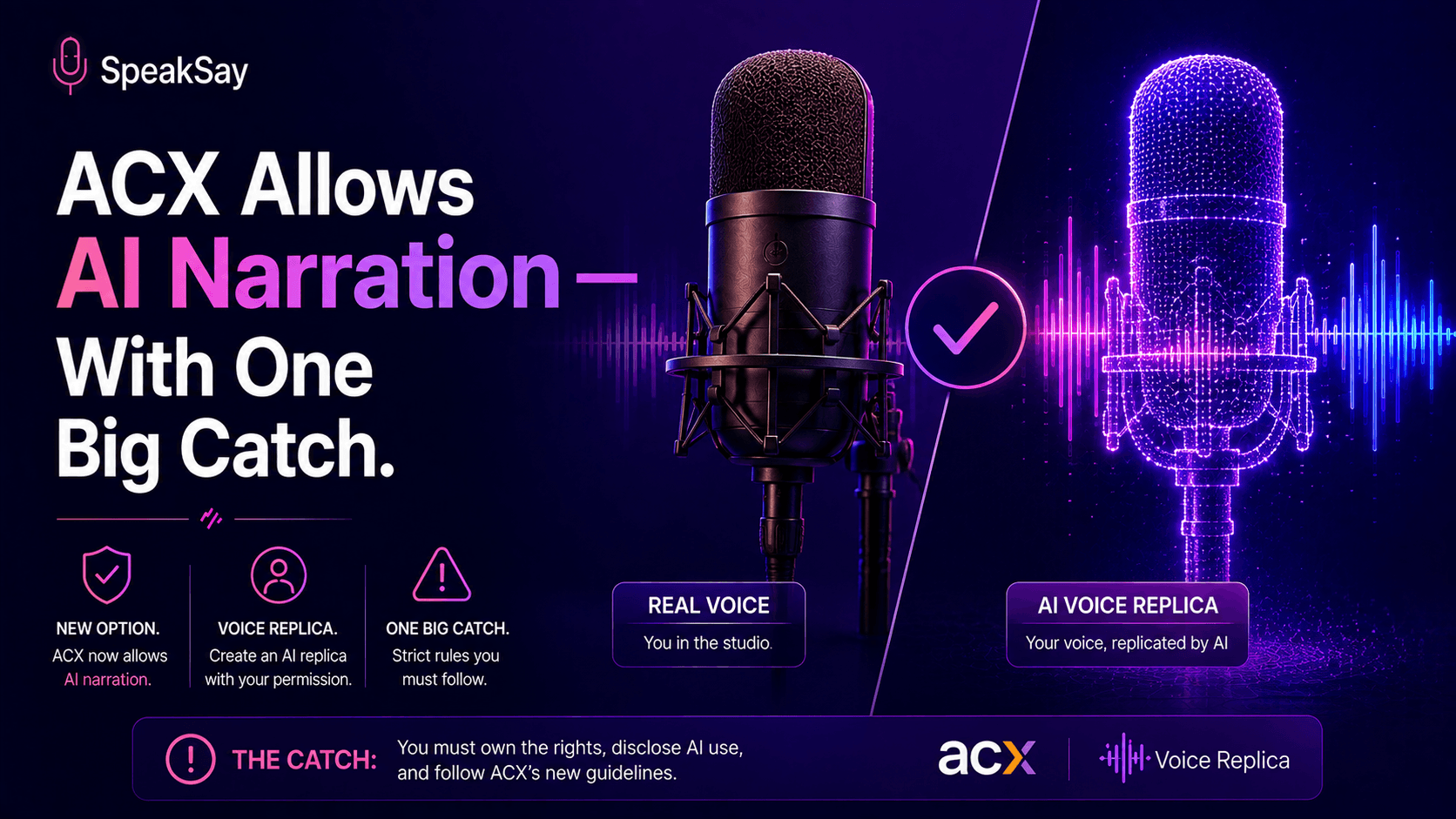
ACX Now Allows AI Narration — but Only Voice Replicas: The 2026 Rules for Authors & Narrators
ACX's 2026 rules still ban unauthorized AI narration — but its new Voice Replica program lets narrators use authorized clones of their own voices. Here's what's legal where, and the decision map for authors and narrators.
Can an AI Podcast Get Sponsors? How to Land Ads & Sponsorships for an AI-Made Show (2026)
53% of podcasters expect more sponsorship deals in 2026 thanks to AI audience matching — but AI-made shows face disclosure rules and "podslop" stigma. Here's the qualification playbook that gets an AI podcast paid.
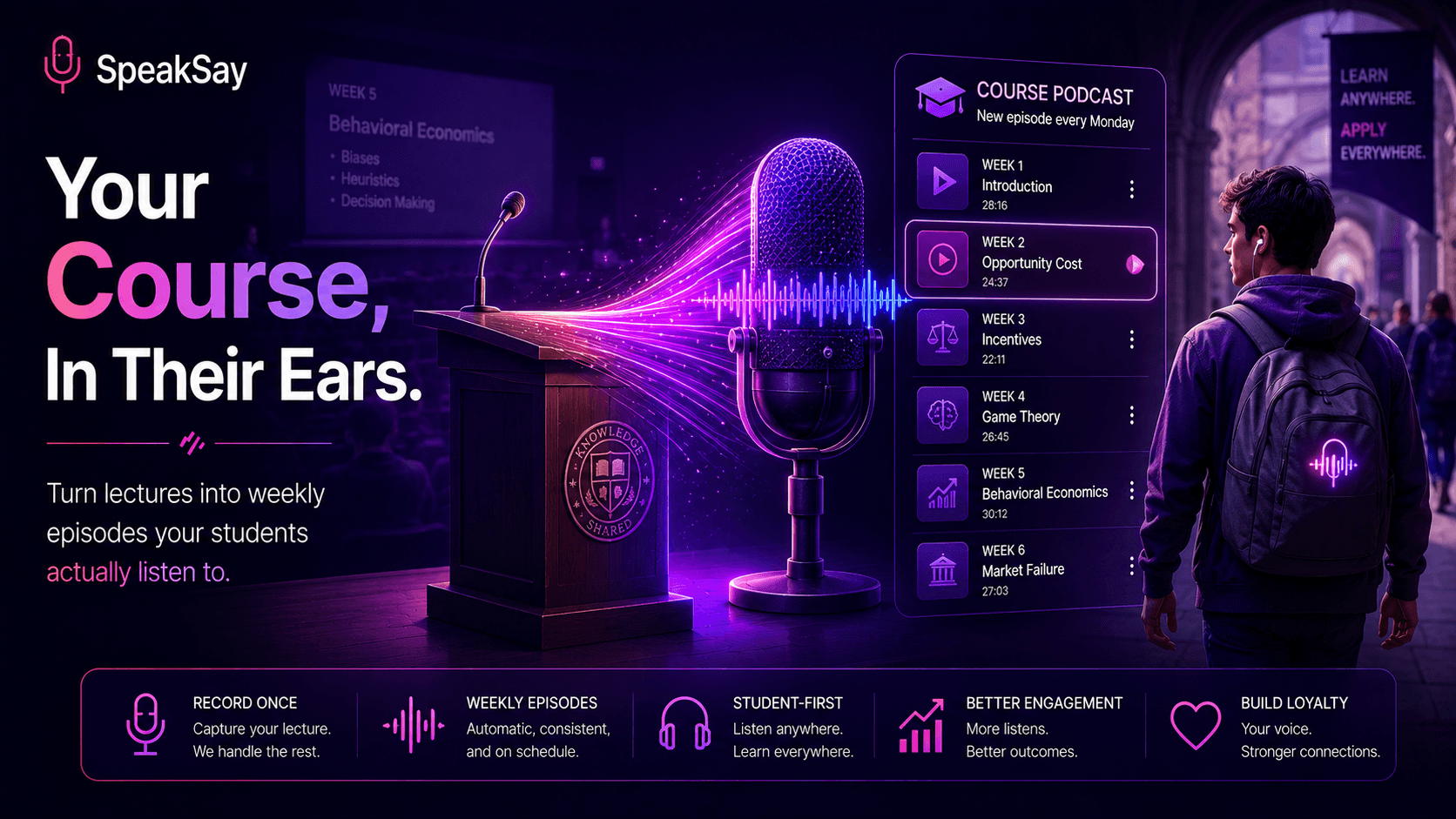
Professors: Give Your Course a Companion Podcast Students Actually Use (2026 Higher-Ed Guide)
Lecture recordings go unwatched and students cram from AI summaries of dubious accuracy. The fix: a weekly 15-minute companion podcast generated from YOUR lecture notes — accurate by construction, consumed voluntarily.
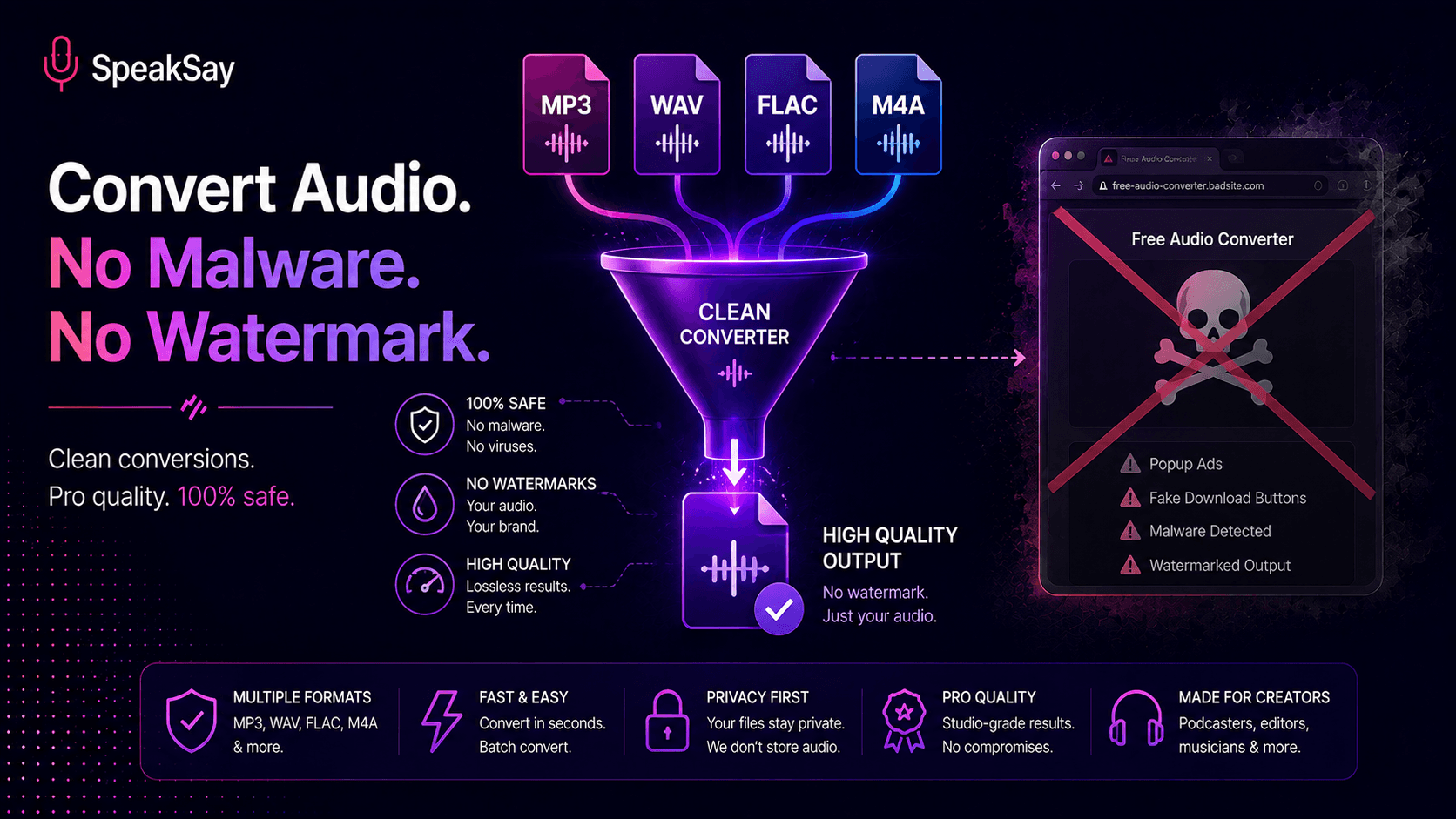
Free Audio Converter Guide (2026): MP3, WAV, FLAC, M4A — What Every Creator Actually Needs to Know
Your DAW won't import M4A, the platform rejects WAV, and the top Google result for "free audio converter" wants to install a toolbar. Here's the clean way to convert — plus the format cheat sheet that ends the guessing.
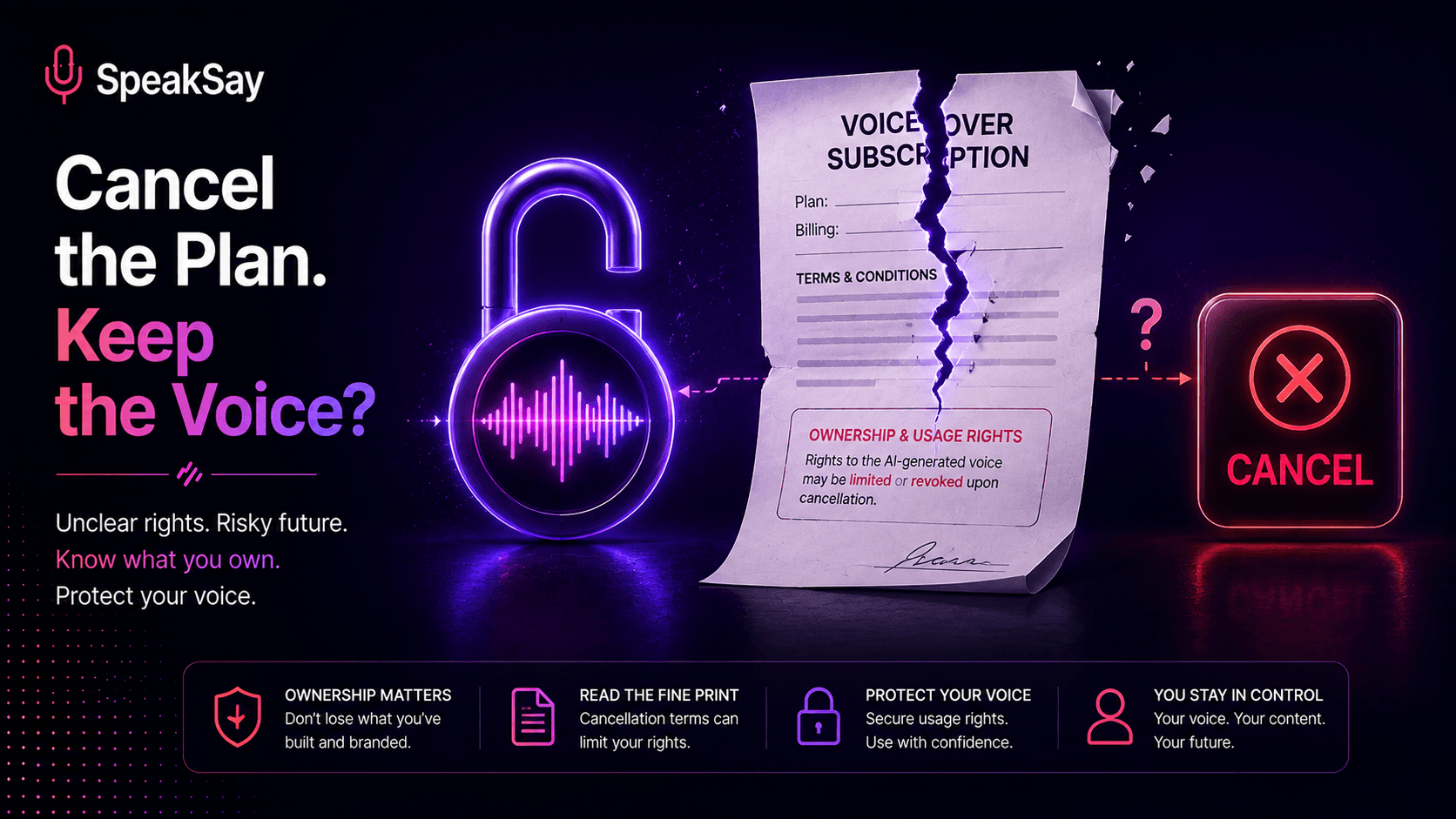
Do You Keep the Rights to Your AI Voiceovers After You Cancel? AI Voice Ownership Rules Explained (2026)
You cancelled your AI voice subscription — can you still monetize the 200 videos you made with it? The 2026 plain-language guide to AI voiceover ownership: paid vs free tiers, attribution traps, platform differences, and how to end license anxiety for good.
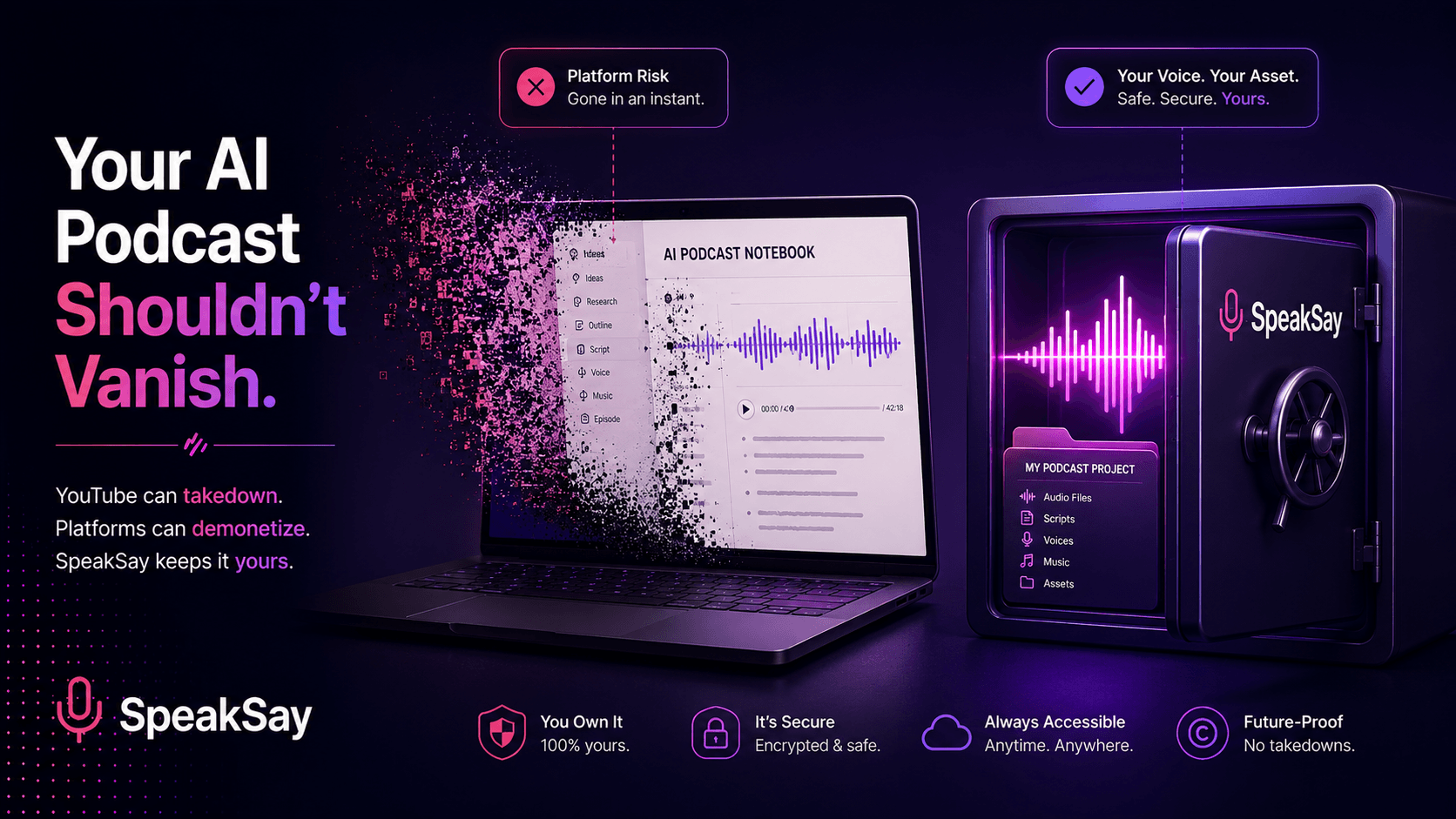
Gemini Notebook Keeps Eating Your Podcasts: Vanishing Notebooks, Failed Audio Generations — and How to Build an AI Podcast Pipeline You Actually Own (2026)
Notebooks disappearing, Audio Overviews cutting off mid-sentence, and zero error logs — Gemini Notebook (formerly NotebookLM) has a reliability problem. Here's how to protect your work today and build an AI podcast pipeline you actually own.
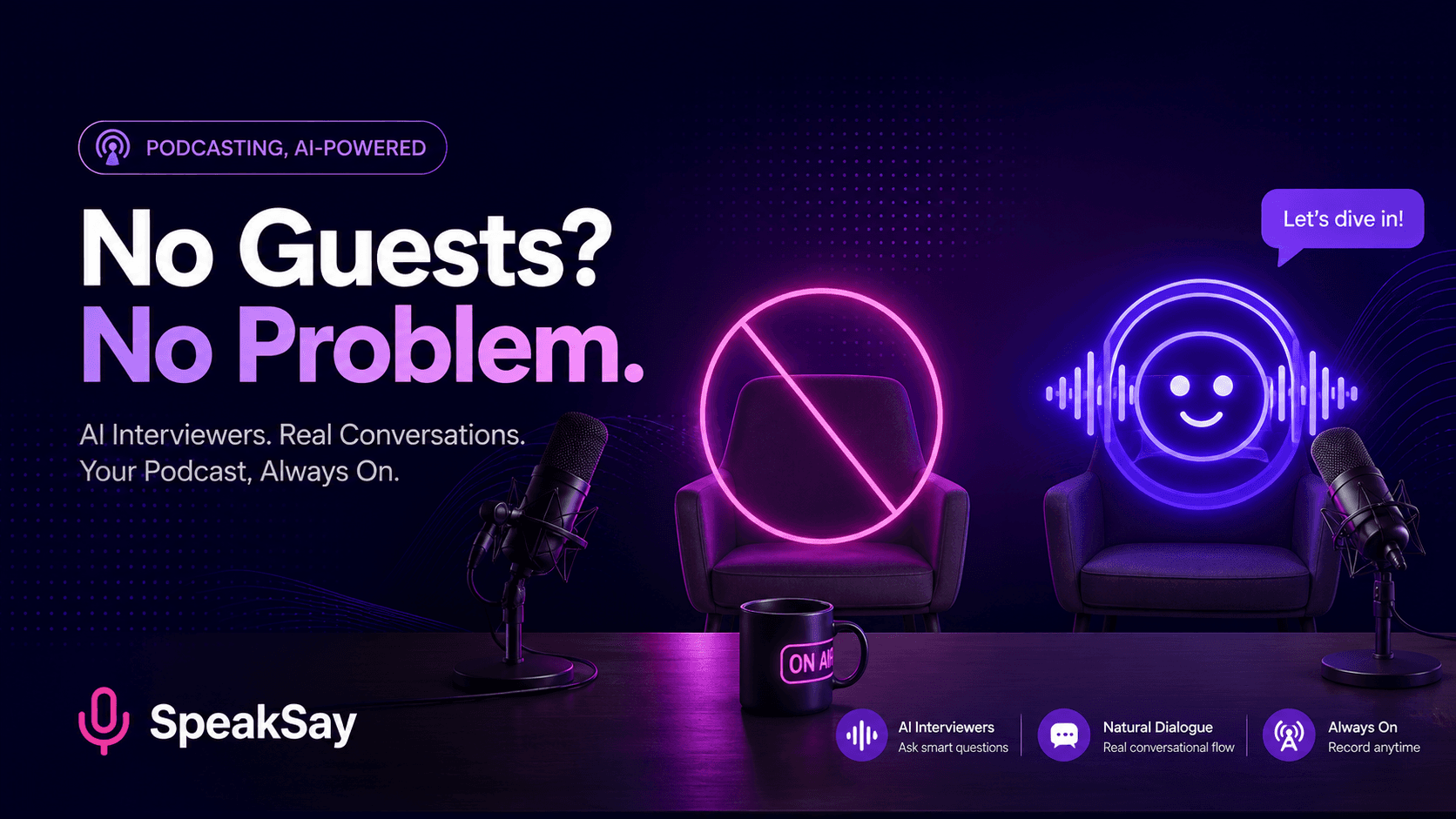
Can't Book Podcast Guests? Flip It: Let an AI Host Interview YOU (2026 Guestless Interview Workflow)
Guest booking is one of the top reasons podcasts die by episode three. The 2026 fix: flip the format — an AI interviewer asks the questions your audience would, and you deliver the expertise. Here's the full workflow.
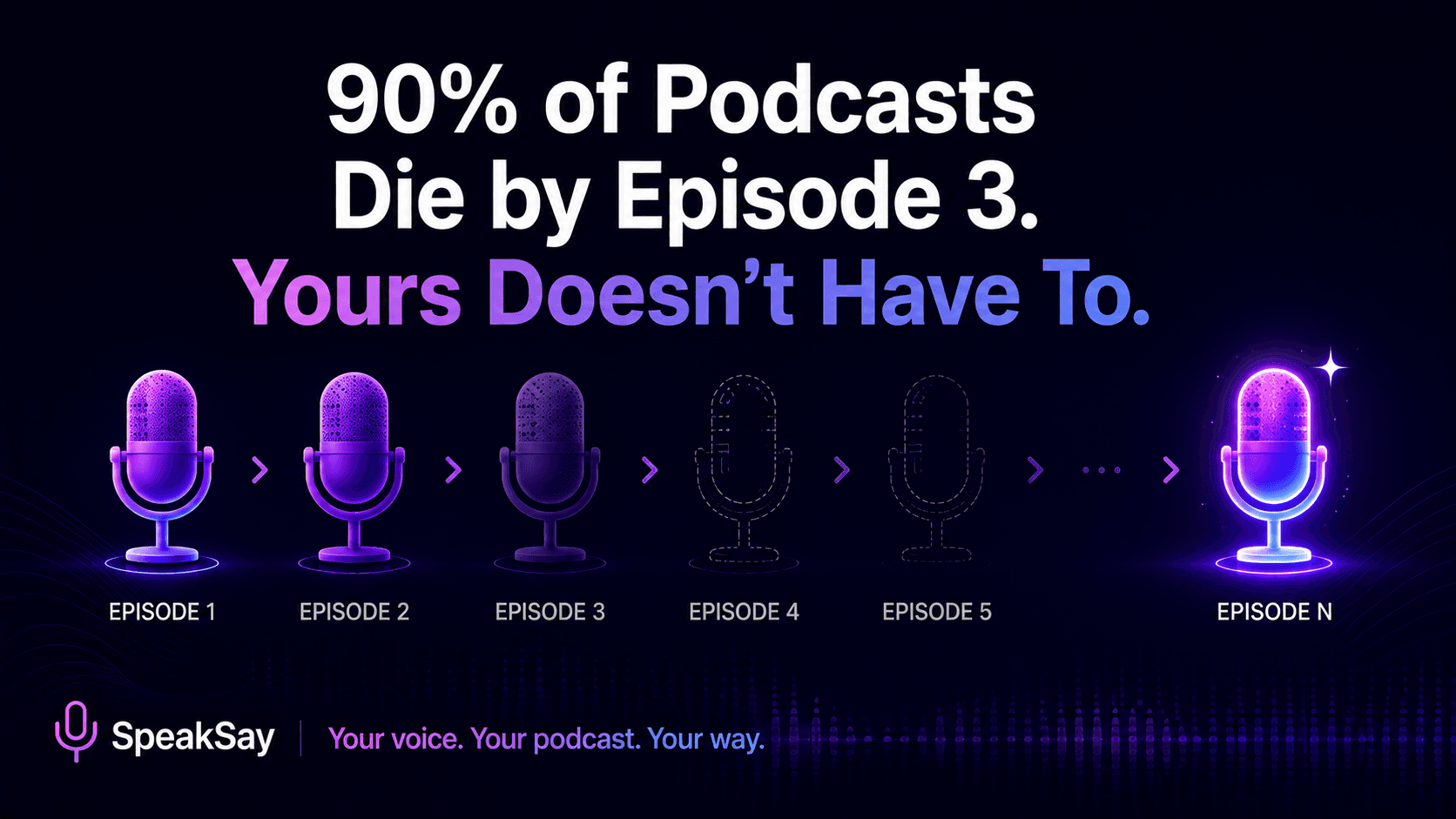
90% of Podcasts Die by Episode 3: The AI Production Workflow That Beats Podfade (2026)
Podcasters don't quit because they run out of ideas — they quit because production becomes a grind. Here's the 2026 AI workflow that cuts an episode to about two hours of real work, builds a four-week buffer, and keeps your show alive past the point where 90% of podcasts die.
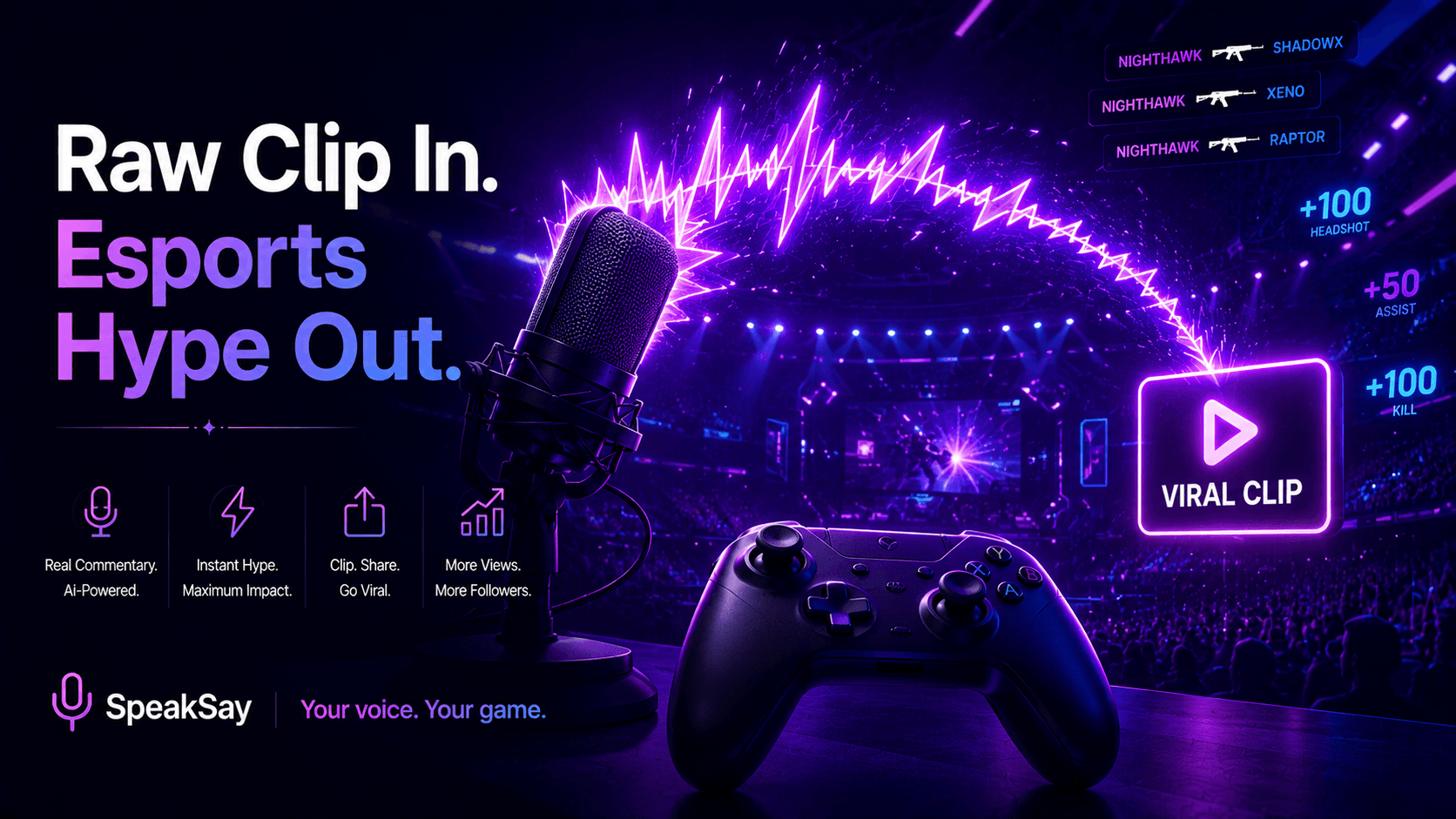
Turn Raw Gameplay Into Esports-Style Hype: How to Add an AI Commentary Voice to Gaming Clips (2026)
Silent gameplay clips die in the algorithm — and in 2026 they can get flagged as reused content too. Here's how to add an esports-caster AI commentary voice to your gaming clips, even if you hate your own mic.
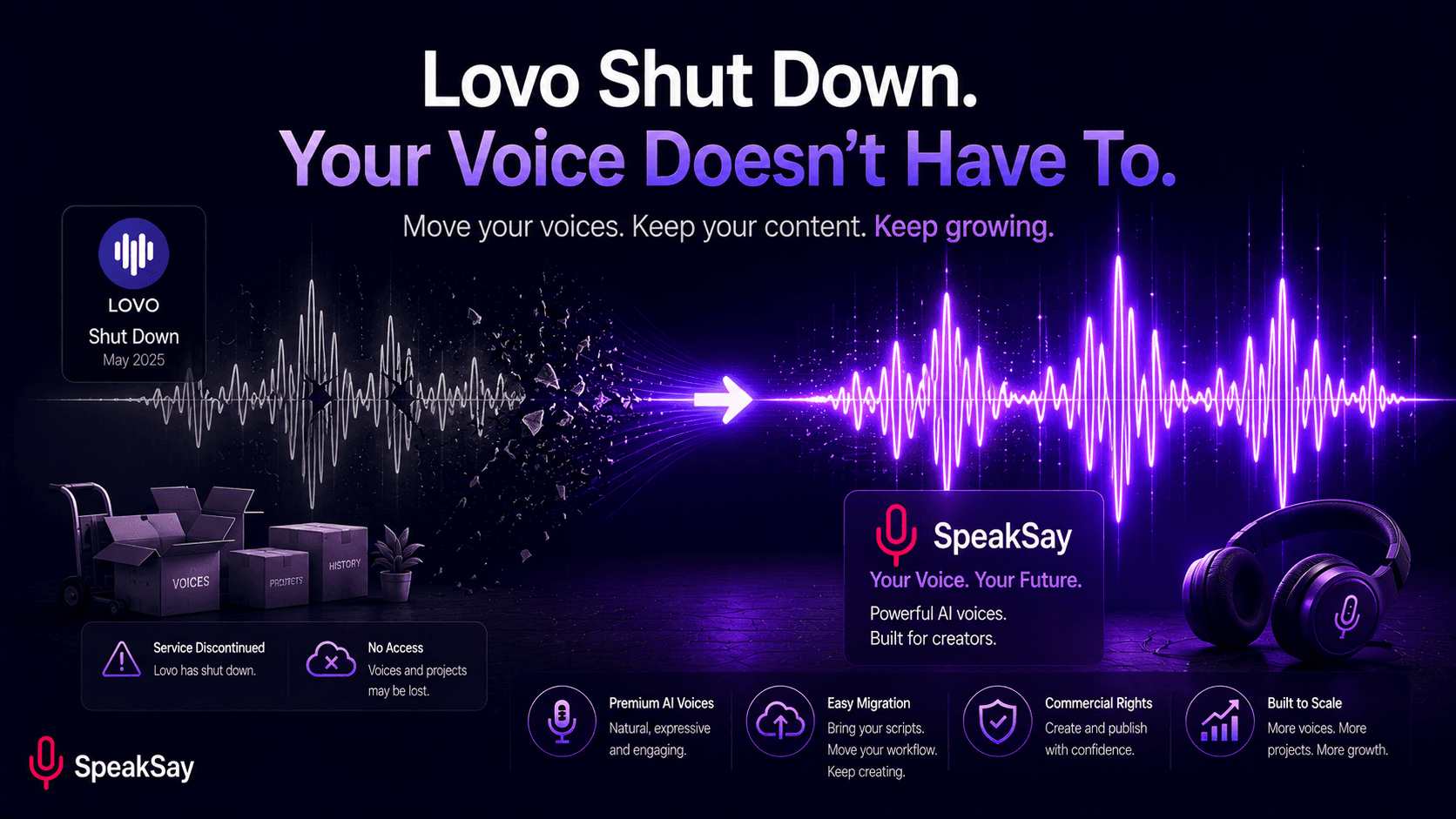
Lovo Filed for Bankruptcy: What Happens to Your Voices & Projects — and the Best Lovo Alternatives (2026)
Lovo Inc. filed Chapter 7 bankruptcy in late May 2026, weeks before the Lehrman v. Lovo hearing. Here's what liquidation means for your Genny projects, custom voices and prepaid credits — the export-everything checklist to run today — and how to pick a shutdown-proof alternative.
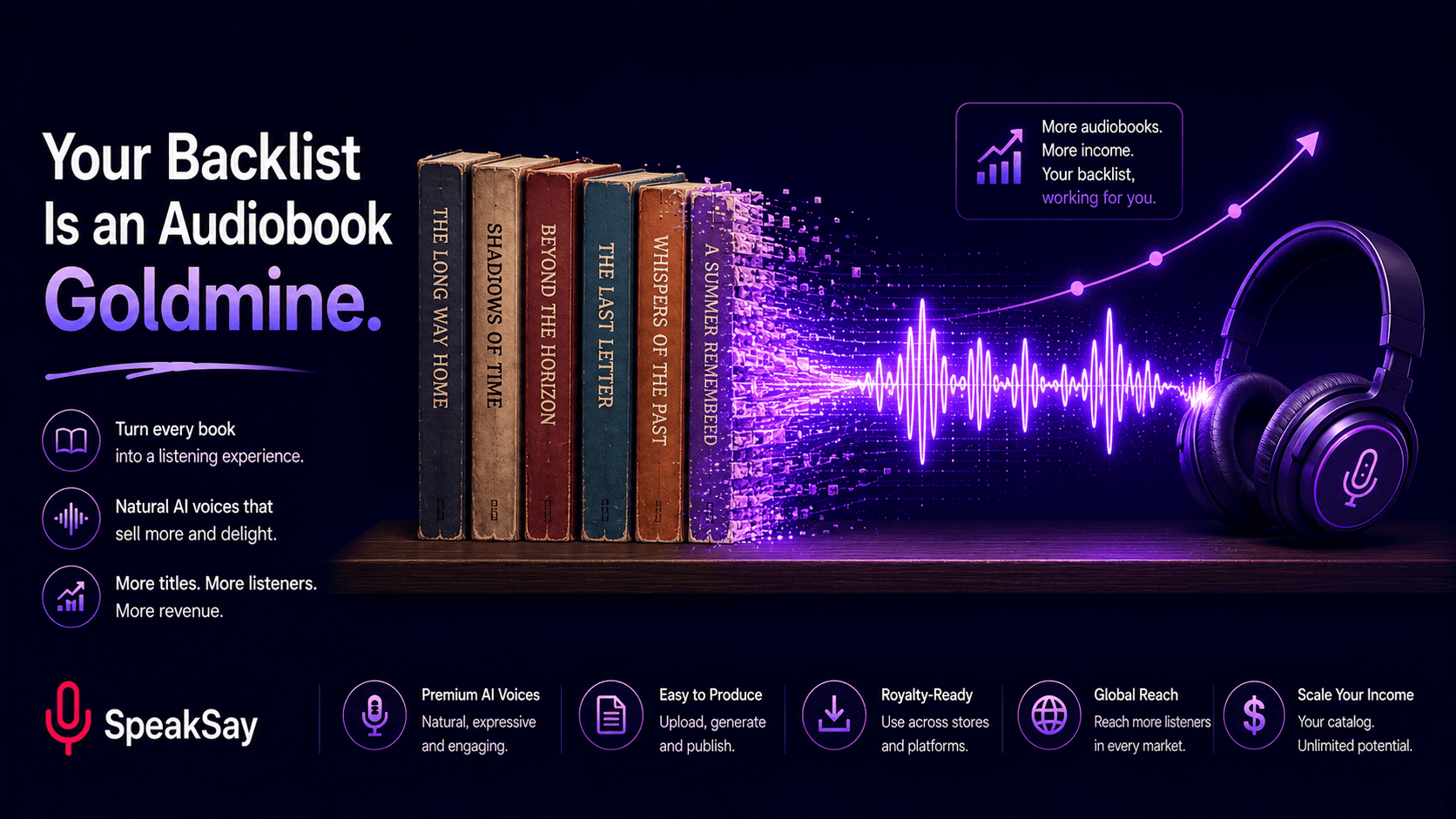
Your Backlist Is an Untapped Audiobook Goldmine: How Indie Authors Convert 5–20 Old Books to Audio in a Month (2026)
Human narration at $2,000–$5,000 per title meant your backlist never earned audio editions. In 2026, AI narration produces a finished audiobook in about a day for under $100 — and wide platforms accept disclosed digital narration. Here's the batch pipeline for converting an entire backlist in 30 days, with one consistent series narrator and margin math that actually works.
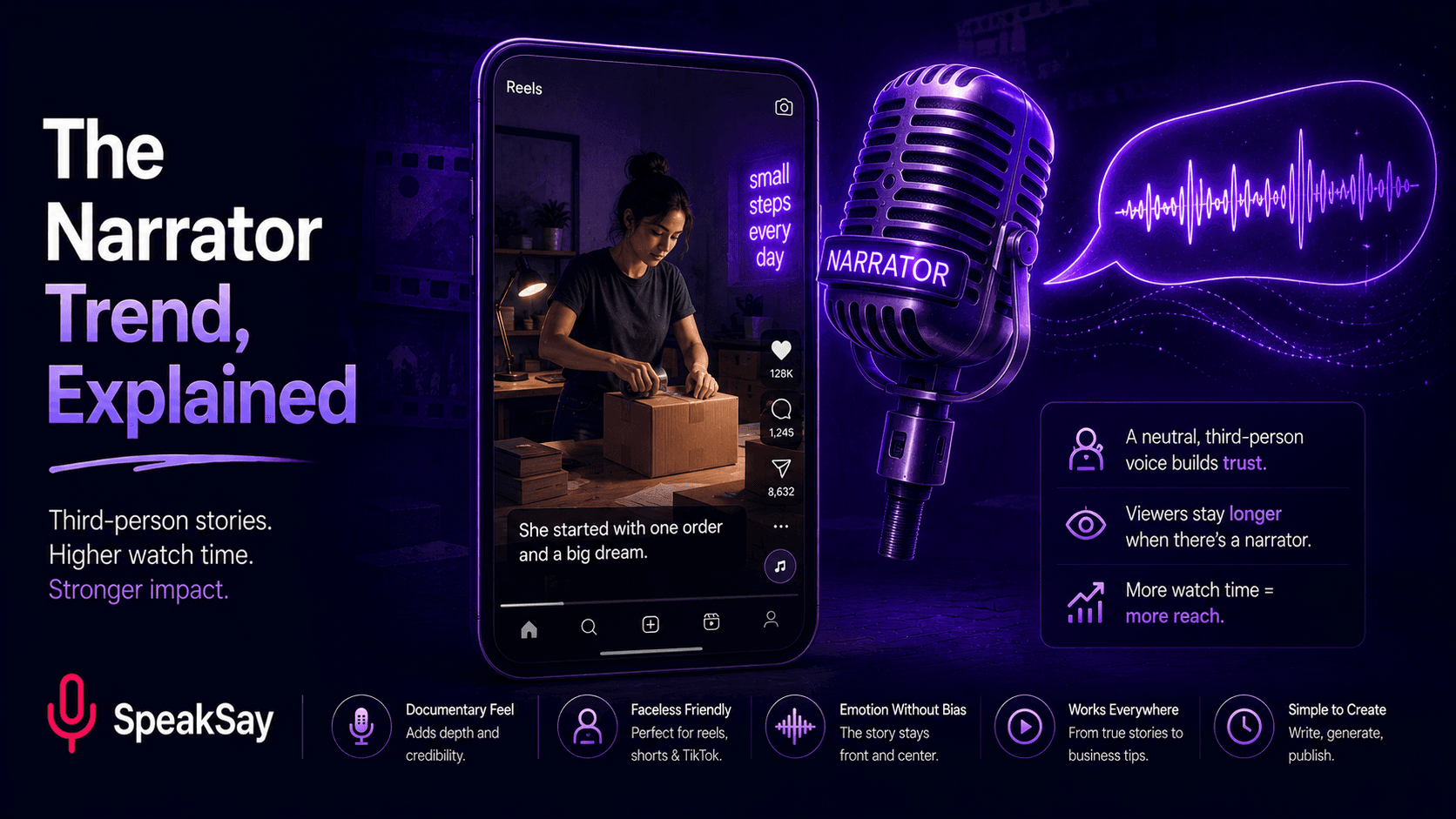
The "Third-Person Narrator" Format Is Taking Over Reels & TikTok: How to Narrate Your Own Life With an AI Voice (2026 Trend Guide)
The deadpan third-person narrator format is everywhere on TikTok and Reels in 2026 — one AI-narrated reel hit 14 million views. Here's how the format works beat by beat, how to build a signature narrator voice instead of the same CapCut default everyone uses, and how small businesses are riding it.
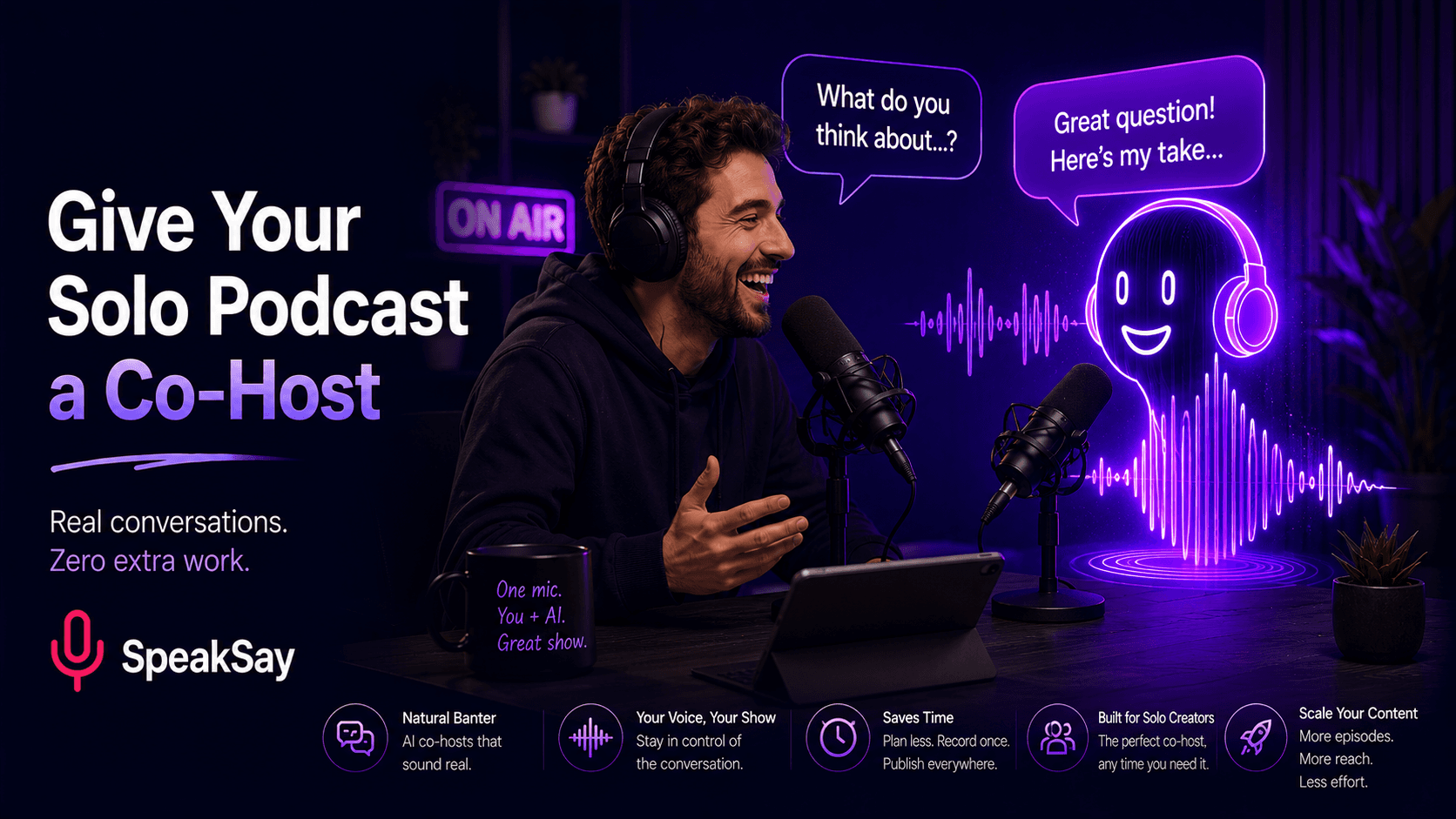
Solo Podcasts Have a Retention Problem: How to Add an AI Co-Host That Actually Banters Back (2026 Guide)
Solo monologues are the hardest format in podcasting — for listeners and hosts alike. Here's the 2026 hybrid workflow: keep your own voice as the anchor and add a designed AI co-host with a real personality, turning your outline into two-voice dialogue that holds attention without surrendering your show to two AI strangers.
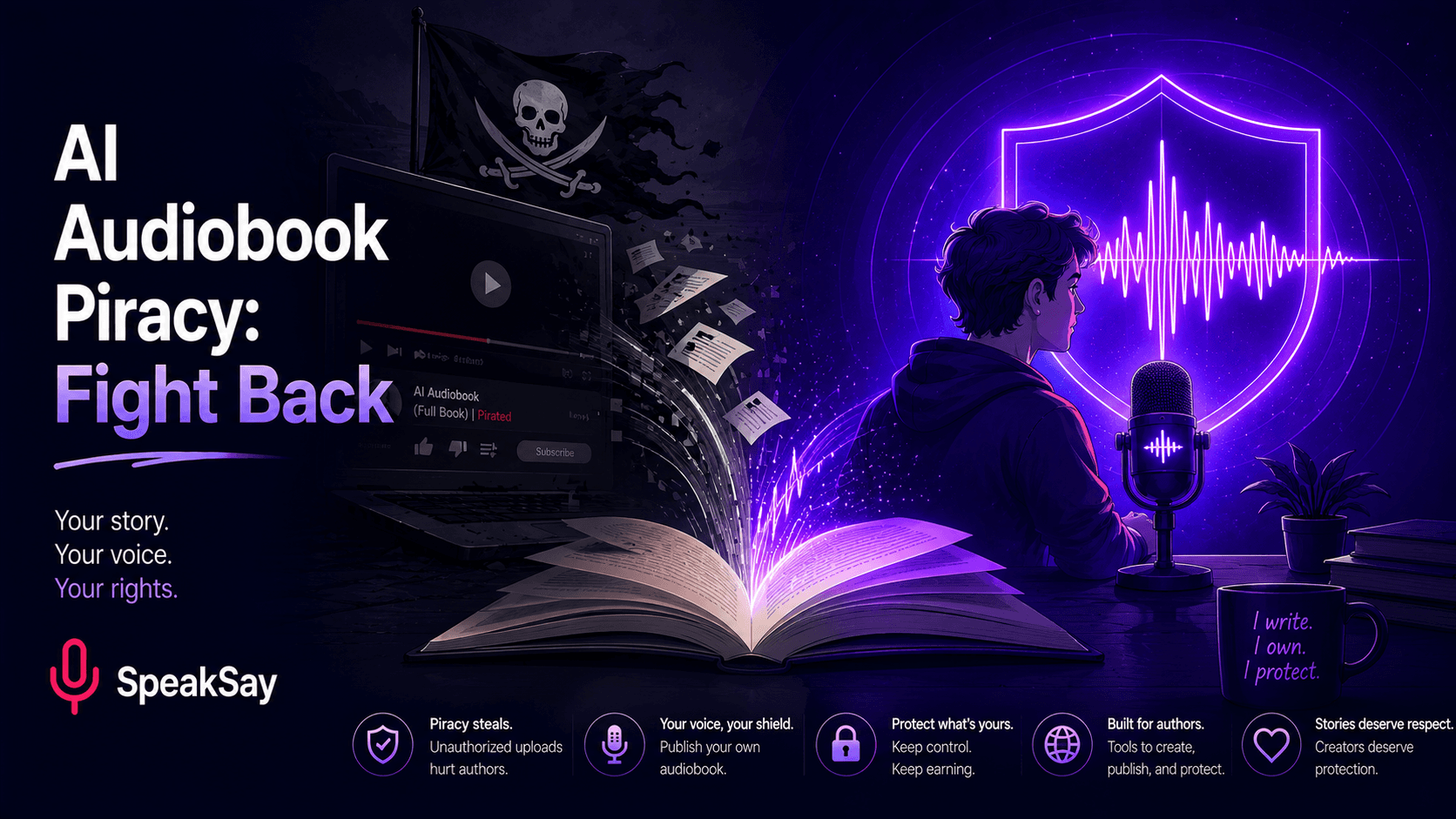
AI Pirates Are Uploading Stolen Audiobooks to YouTube: How Indie Authors Fight Back in 2026 (Takedowns + the Own-Voice Advantage)
A New York Times exposé revealed AI-enabled audiobook piracy at massive scale on YouTube — from literary fiction to Harry Potter. Here's the indie author's 2026 defense playbook: the takedown workflow that works, why your own cloned voice is a moat pirates can't fake, and how going wide fast leaves no vacuum for thieves to fill.
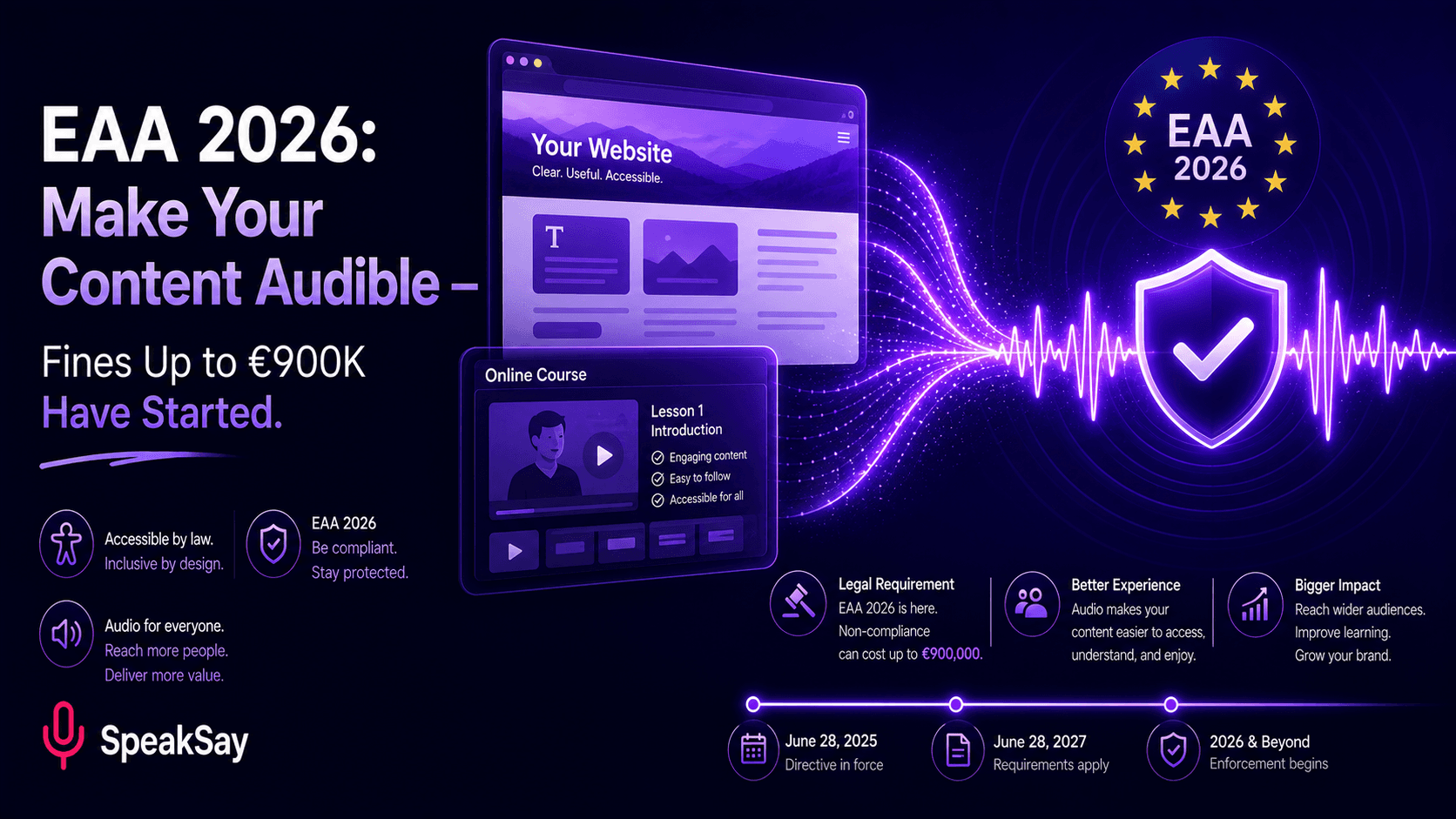
The EAA Fines Have Started (Up to €900K): How to Add Audio & TTS Accessibility to Your Website, Courses and Docs in 2026
EAA enforcement is live — the first lawsuits were filed in late 2025 and fines range from €60K to roughly €900K. Here's how audio versions and text-to-speech make your website, courses and documents accessible fast, without an agency-sized budget.
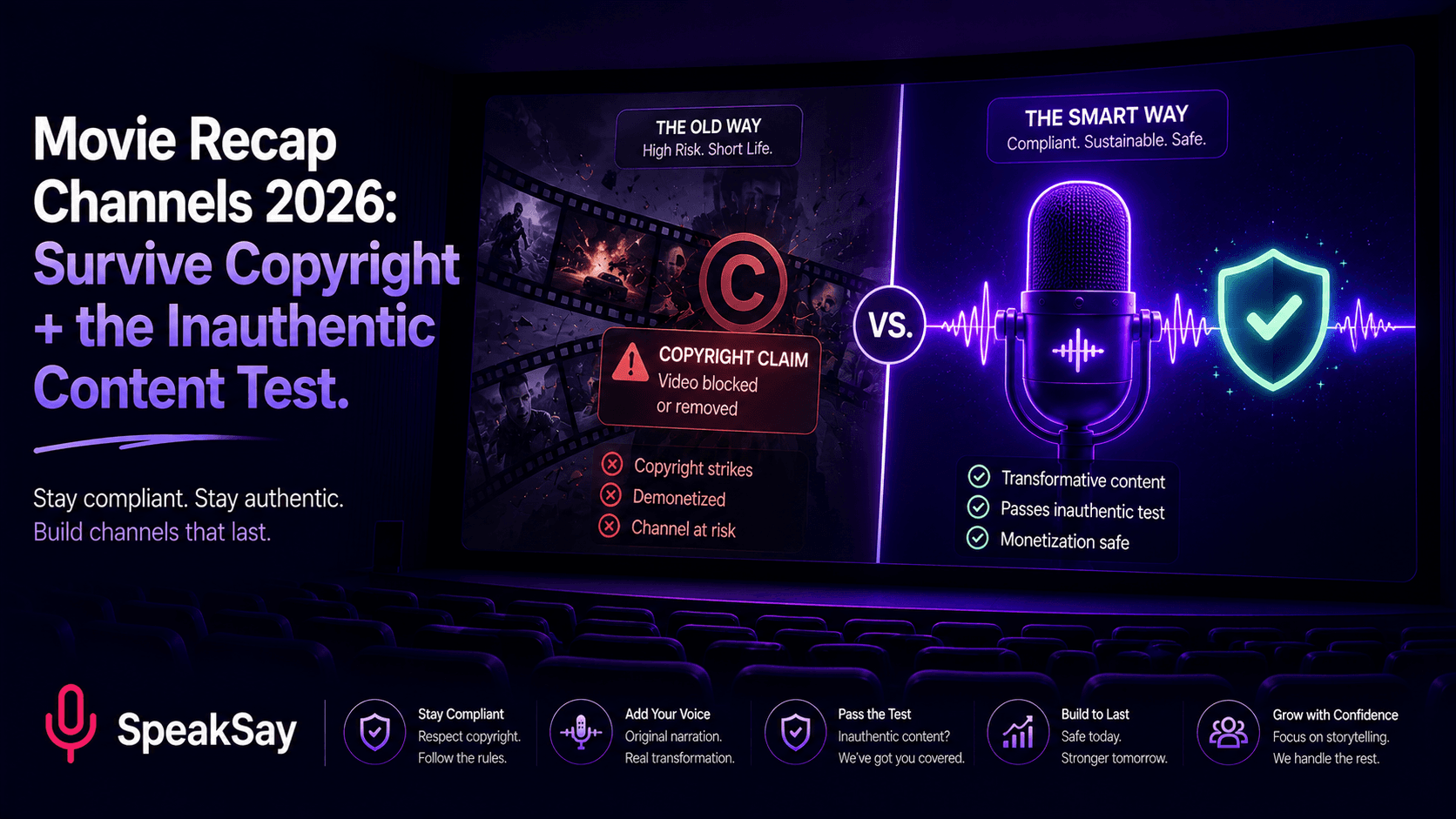
Movie Recap Channels in 2026: Copyright Claims, the "Inauthentic Content" Test, and the AI Narrator Setup That Survives Both
Movie recap channels get squeezed from two sides — copyright claims on footage and YouTube's July 2026 "inauthentic content" policy. Here's the originality stack and AI narrator setup that keeps recap channels claimed less and monetized.
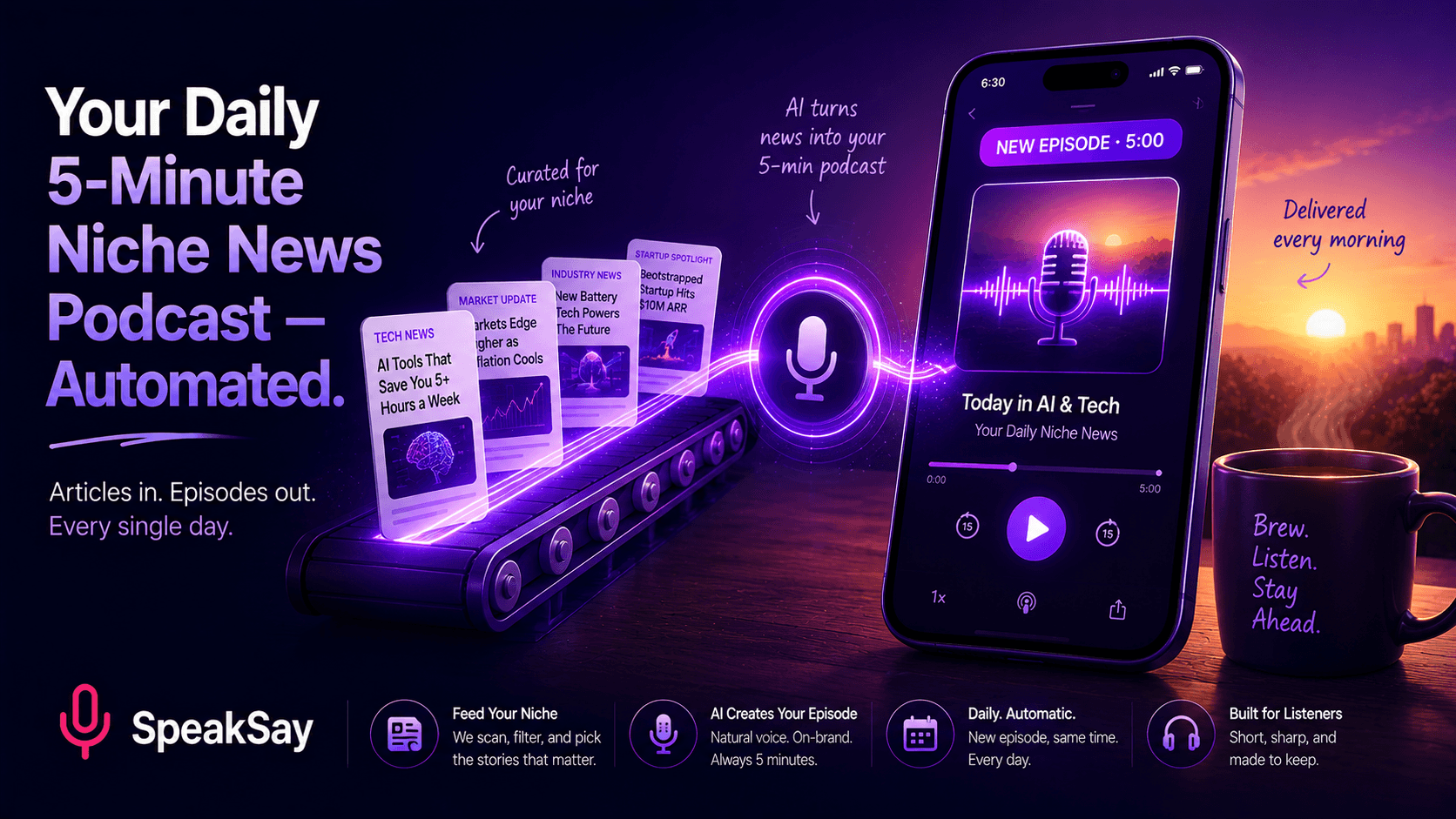
Launch a Daily 5-Minute Niche News Podcast With AI (2026): The Automation Workflow That Publishes Every Morning
Daily shows build the most loyal podcast audiences — but producing one manually burns creators out in weeks. Here's the AI workflow that turns your niche's news into a publishable 5-minute episode every morning, in your own voice
Your Podcast Only Reaches English Listeners: How to Localize Episodes Into 20+ Languages in Your OWN Voice (2026)
Re-recording every episode per language is impossible and hiring per-language voice actors kills your margins. Here's the 2026 workflow podcasters use to clone their voice once and publish natural-sounding episodes in 20+ languages.
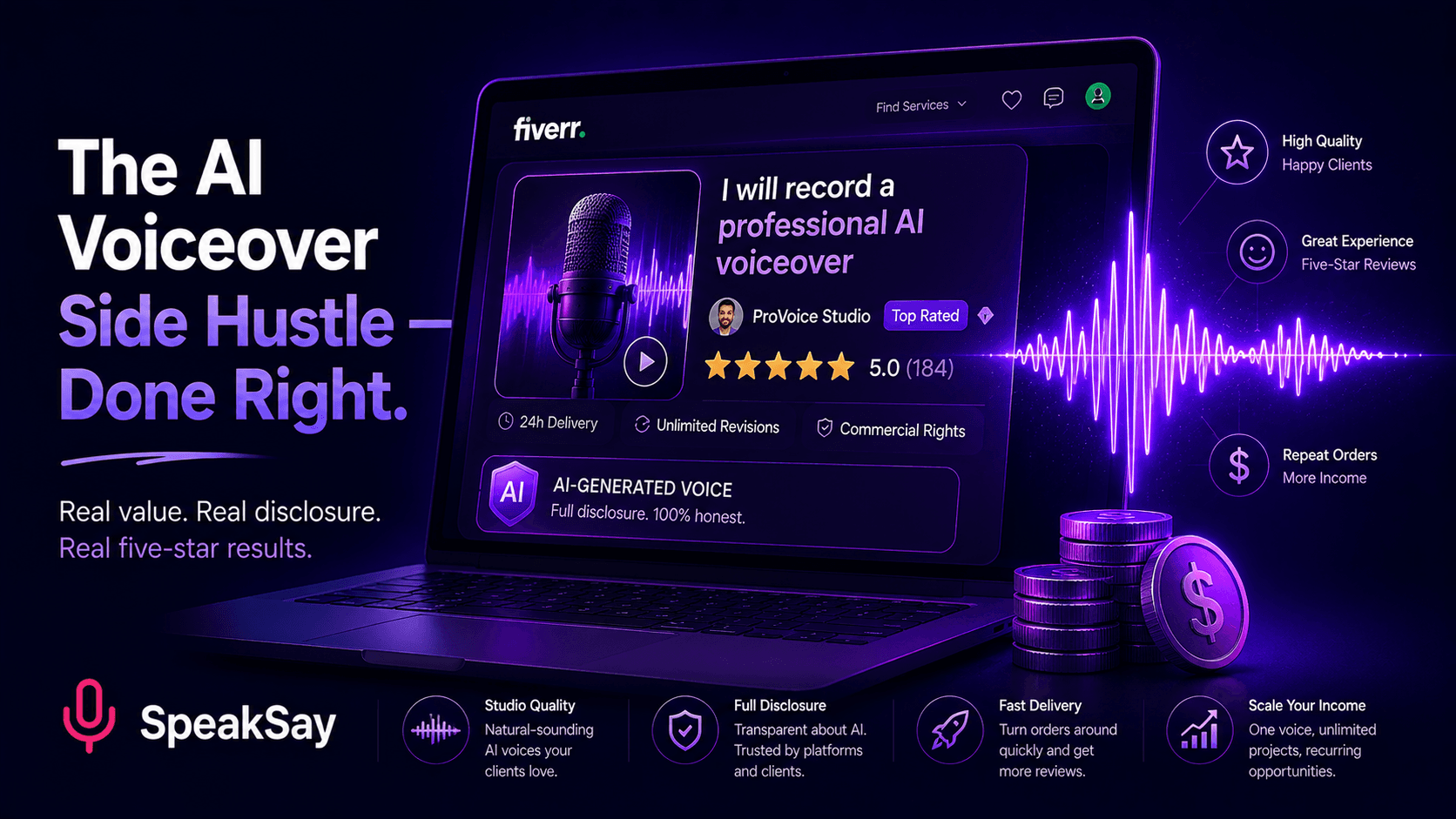
Selling AI Voiceovers on Fiverr in 2026: The Disclosure Rules, the $2K–$5K/Month Workflow, and What Gets Gigs Banned
Fiverr allows AI voiceover gigs — if you follow its disclosure and rights rules. Here's what's allowed, what gets sellers banned, and the workflow behind the sellers quietly earning $2,000–$5,000 a month
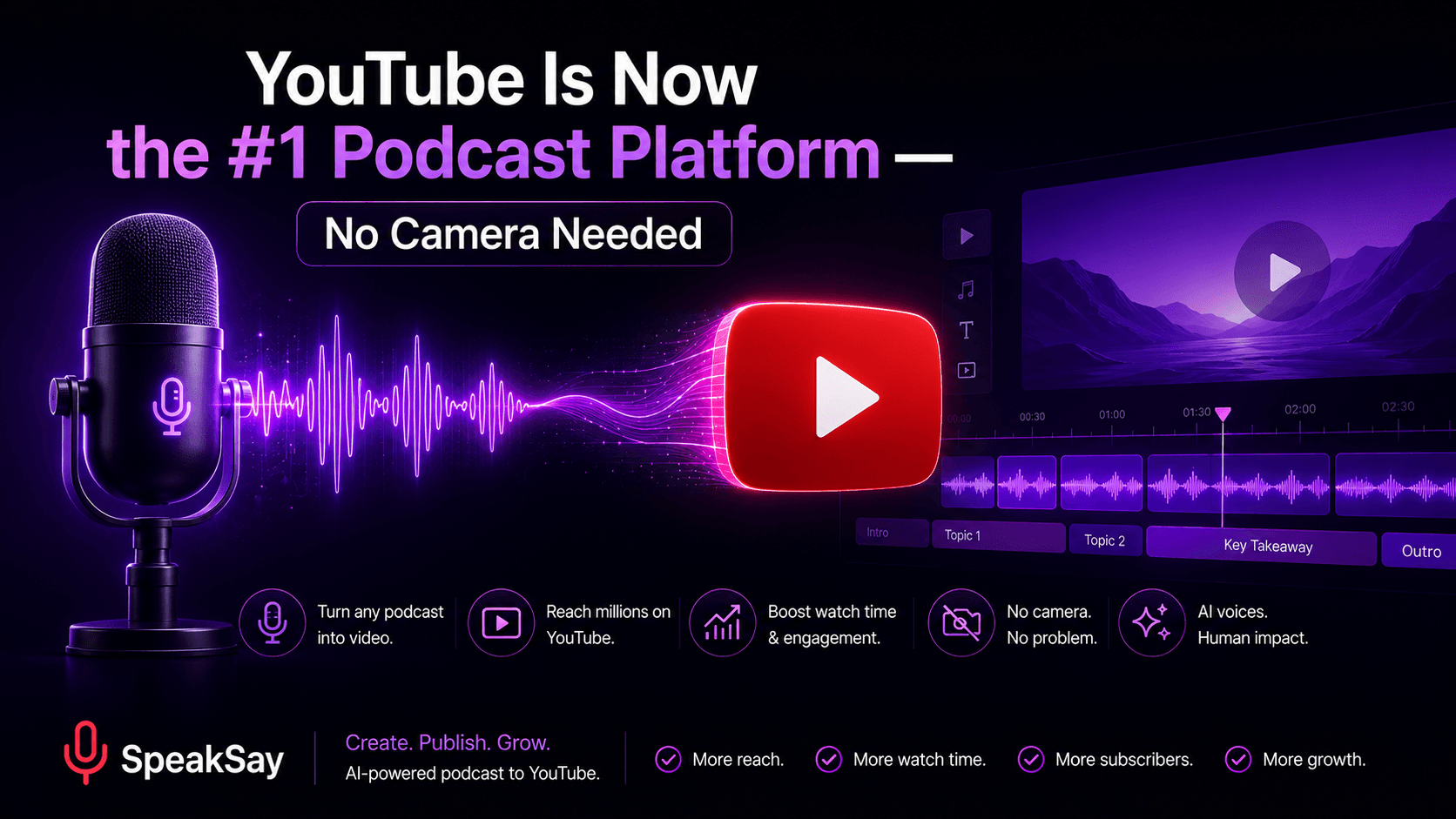
YouTube Is Now the #1 Podcast Platform: How to Turn Your AI Podcast Into a Video Podcast (No Camera, 2026)
YouTube now beats Spotify and Apple for podcast listening — and audio-only shows are paying the price. Here's how to turn your AI podcast into a real video podcast without ever turning on a camera.
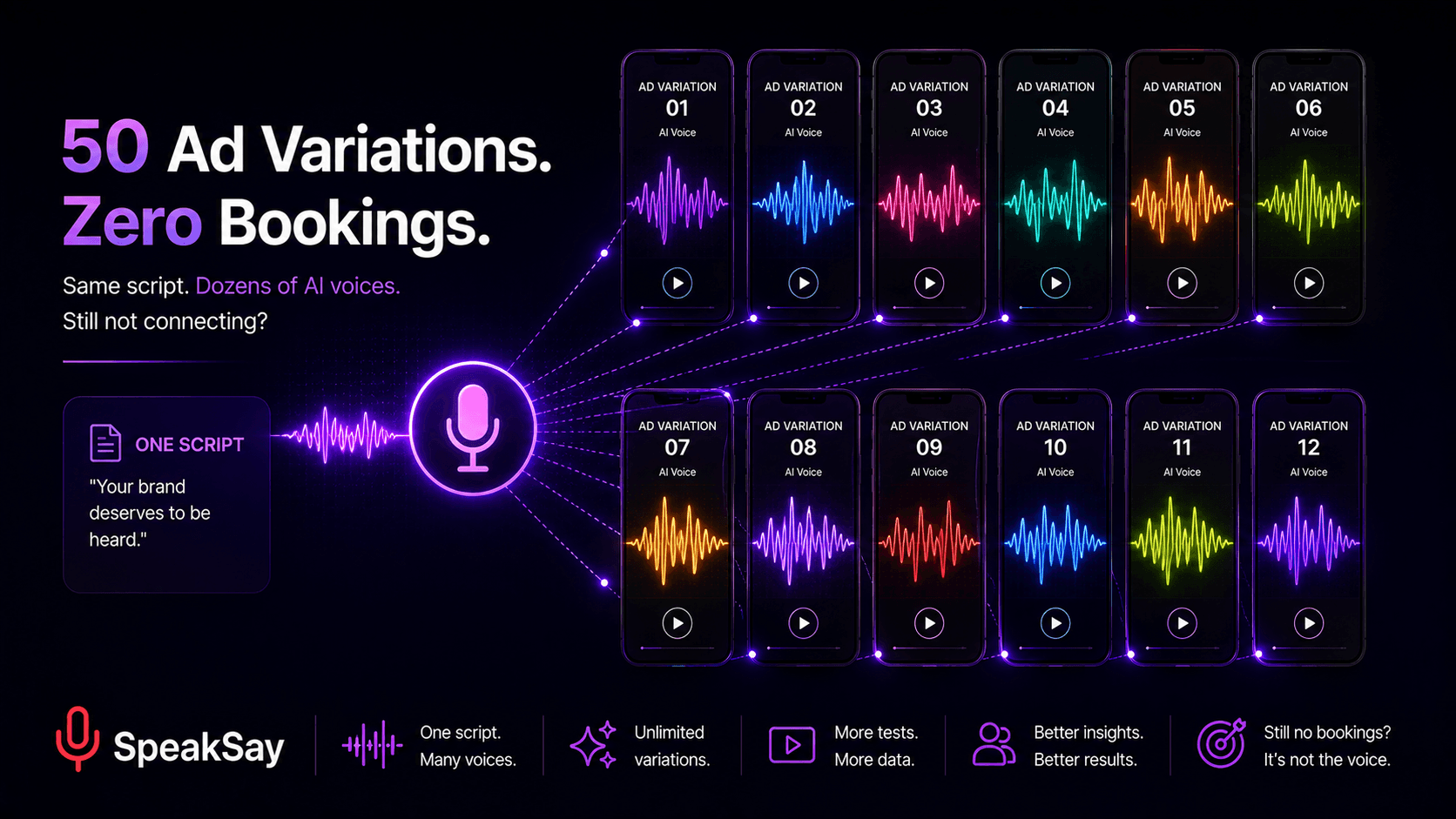
AI Voiceovers for UGC-Style Ads: How Brands Test 50 Ad Variations Without Booking a Single Creator (2026)
58% of AI marketing videos now use AI voiceovers — but most still sound like corporate reads. Here's the workflow performance marketers use to batch 50 native-sounding ad variations in an afternoon.
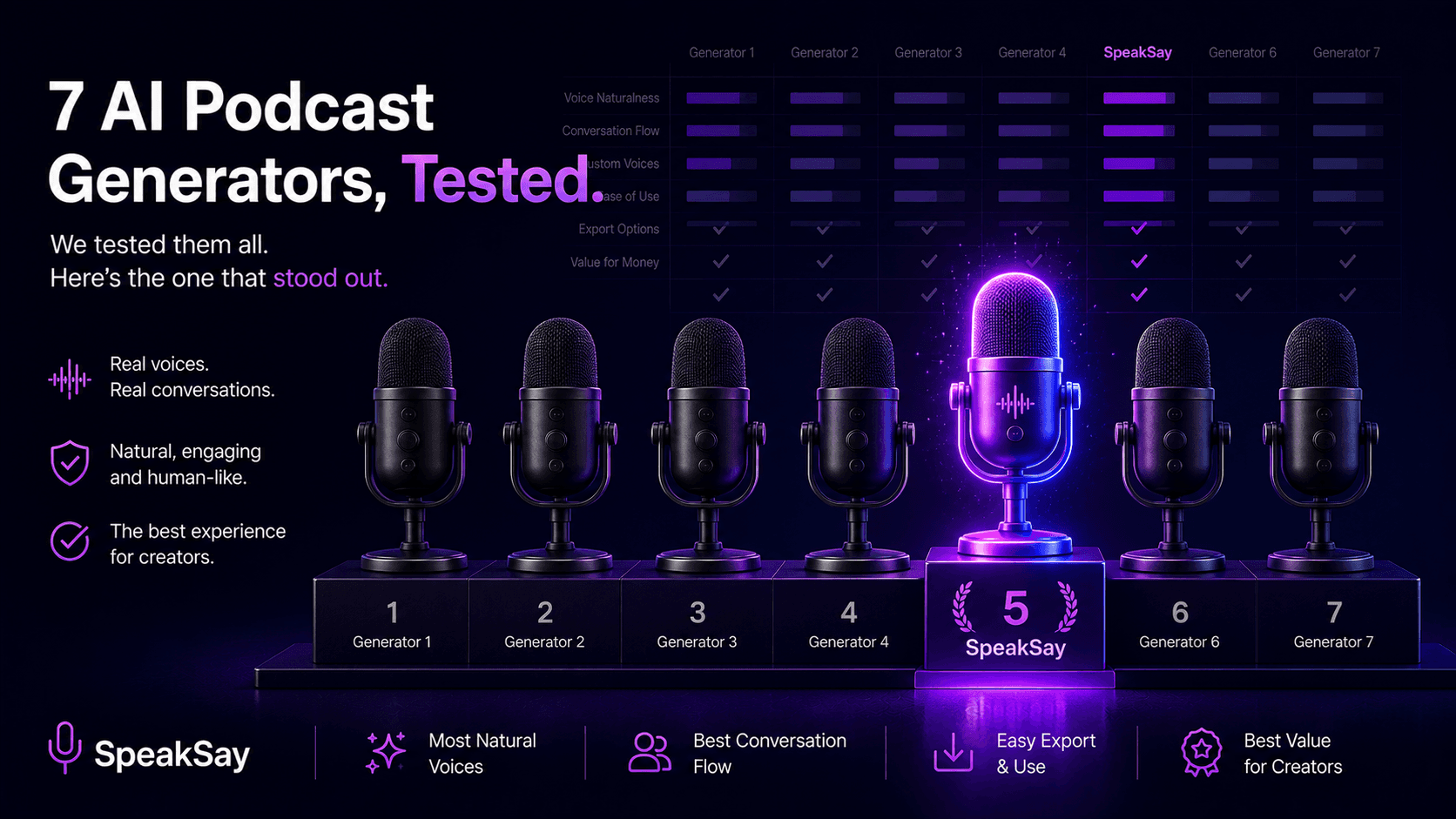
Best AI Podcast Generators in 2026: NotebookLM, Jellypod & 5 More, Tested Head-to-Head
We tested 7 AI podcast generators on the things users actually complain about — host-voice control, script editing, length caps, languages, and price per finished minute. Here's the honest ranking.
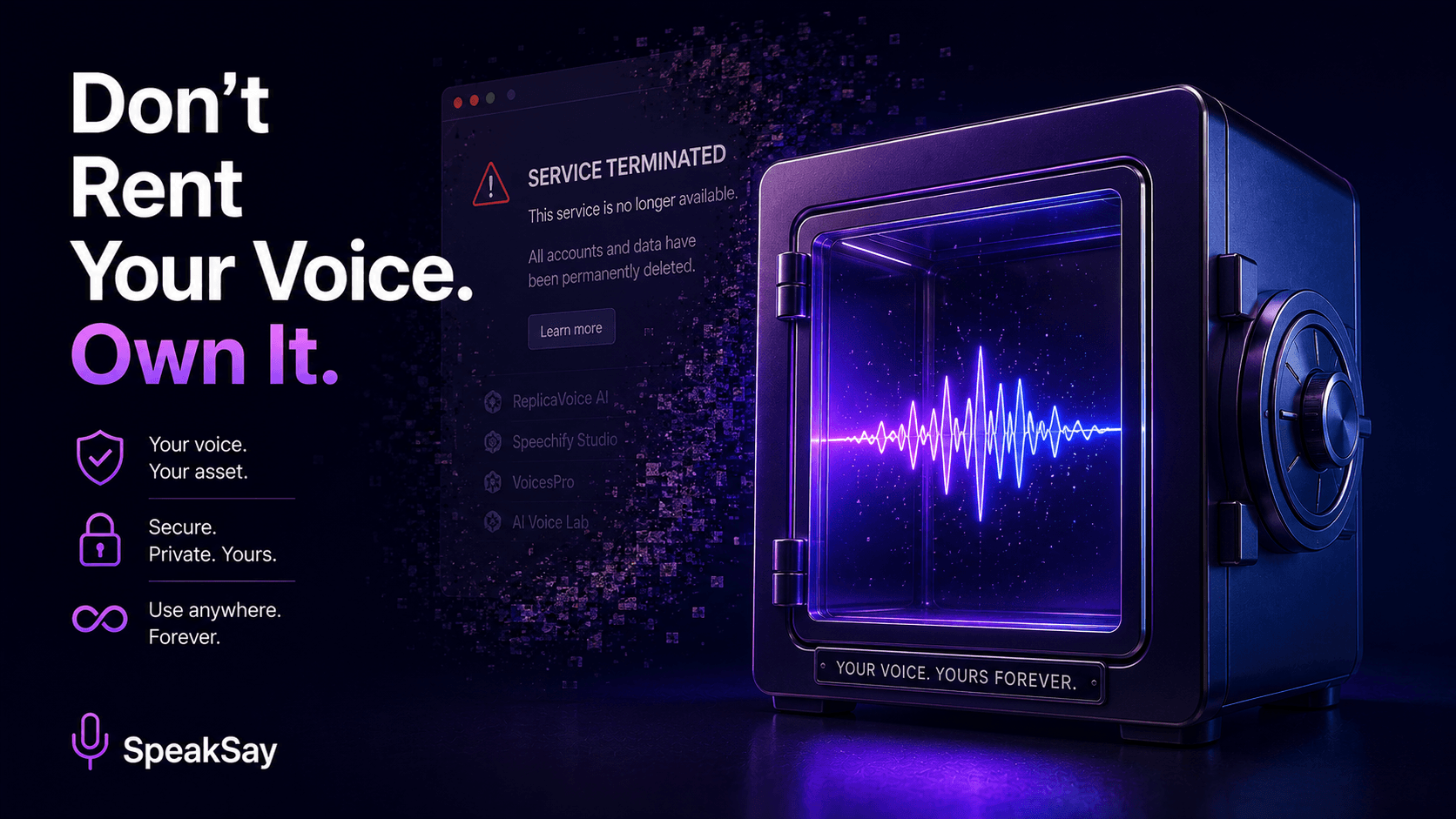
Your AI Voice App Could Vanish Overnight: How to Lawsuit-Proof and Shutdown-Proof Your Channel's Voice (2026)
PlayHT deleted every voice clone with no migration path. Nine class actions hit voice AI companies in May 2026. Here's how to make sure your channel's voice survives whatever happens to the platform behind it.
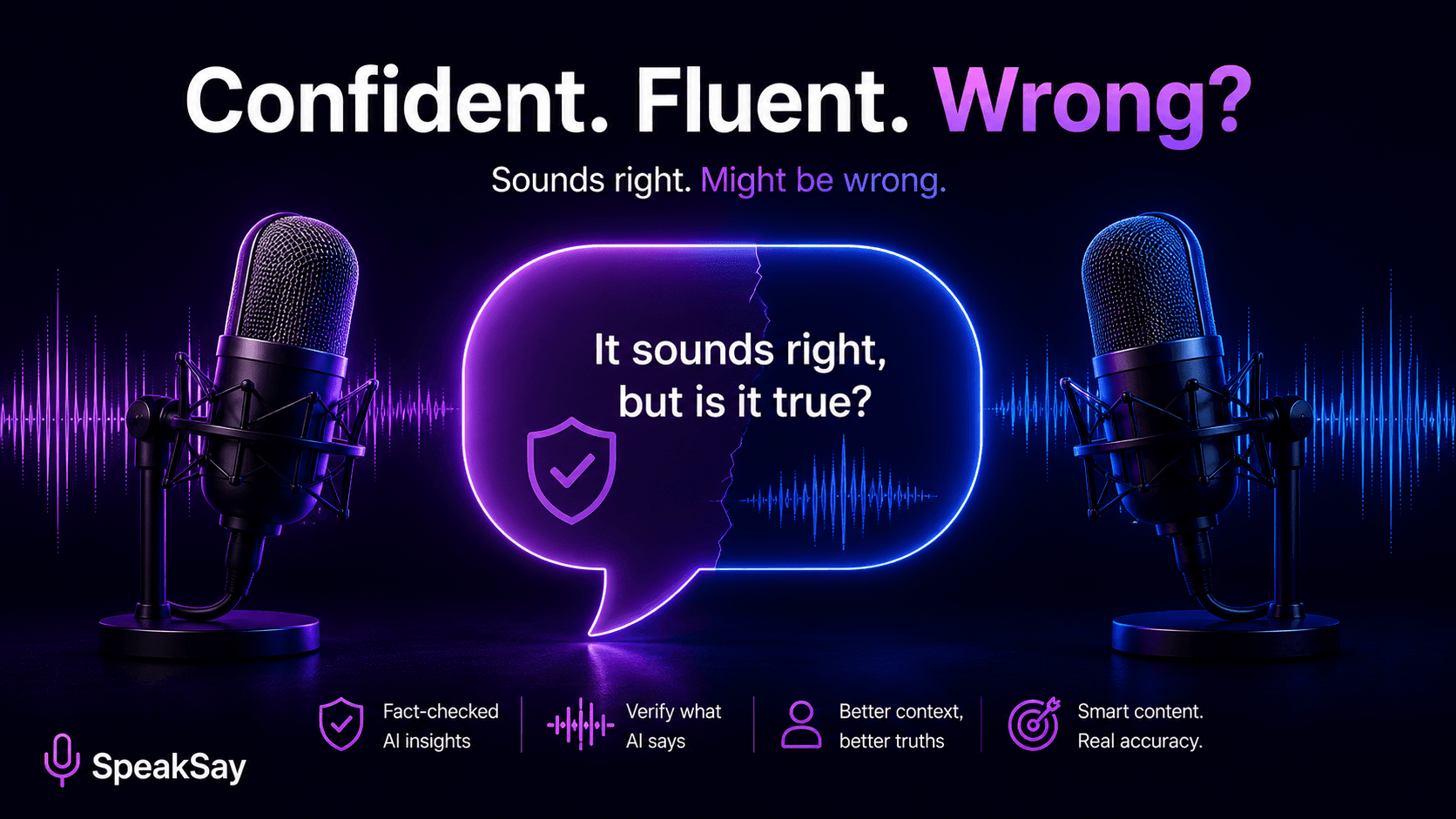
Your AI Podcast Sounds Confident but Wrong: How to Stop Hallucinations and Make Fact-Accurate Episodes From Your Own Sources (2026)
AI podcast hosts now sound so human that listeners believe whatever they say — including the errors. One-click generators mangle complex sources and give you no way to check the script before it becomes audio. Here's the script-first workflow that keeps your AI podcast factually accurate.
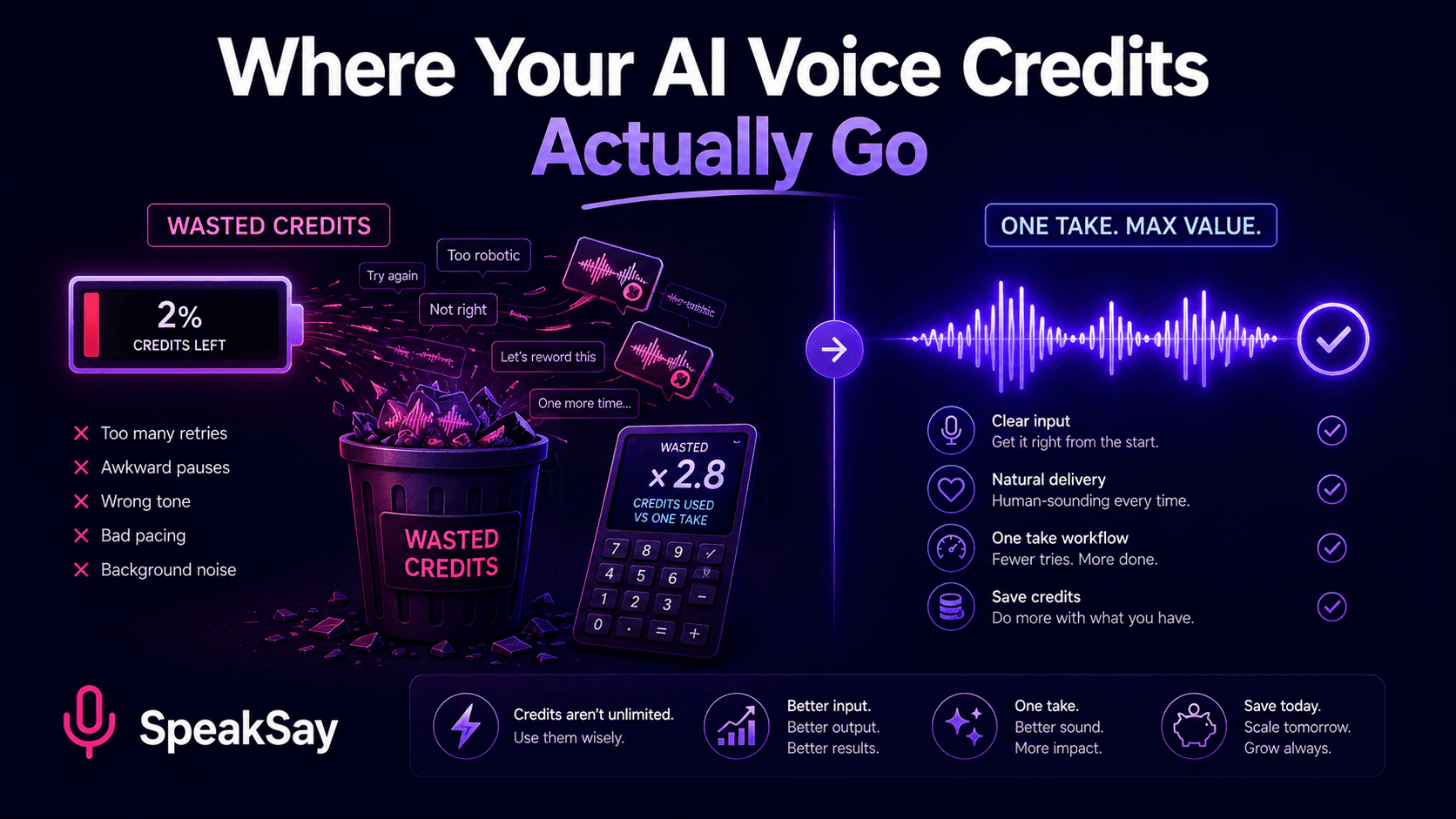
Why AI Voiceovers Use 2–3x More Credits Than Advertised — and the One-Take Workflow That Stops the Waste (2026)
Users report their real AI voiceover cost is ~2.8x the advertised rate because glitched takes, language switches, and volume jumps force paid regenerations. Here's the proofing workflow that gets clean audio in one take.
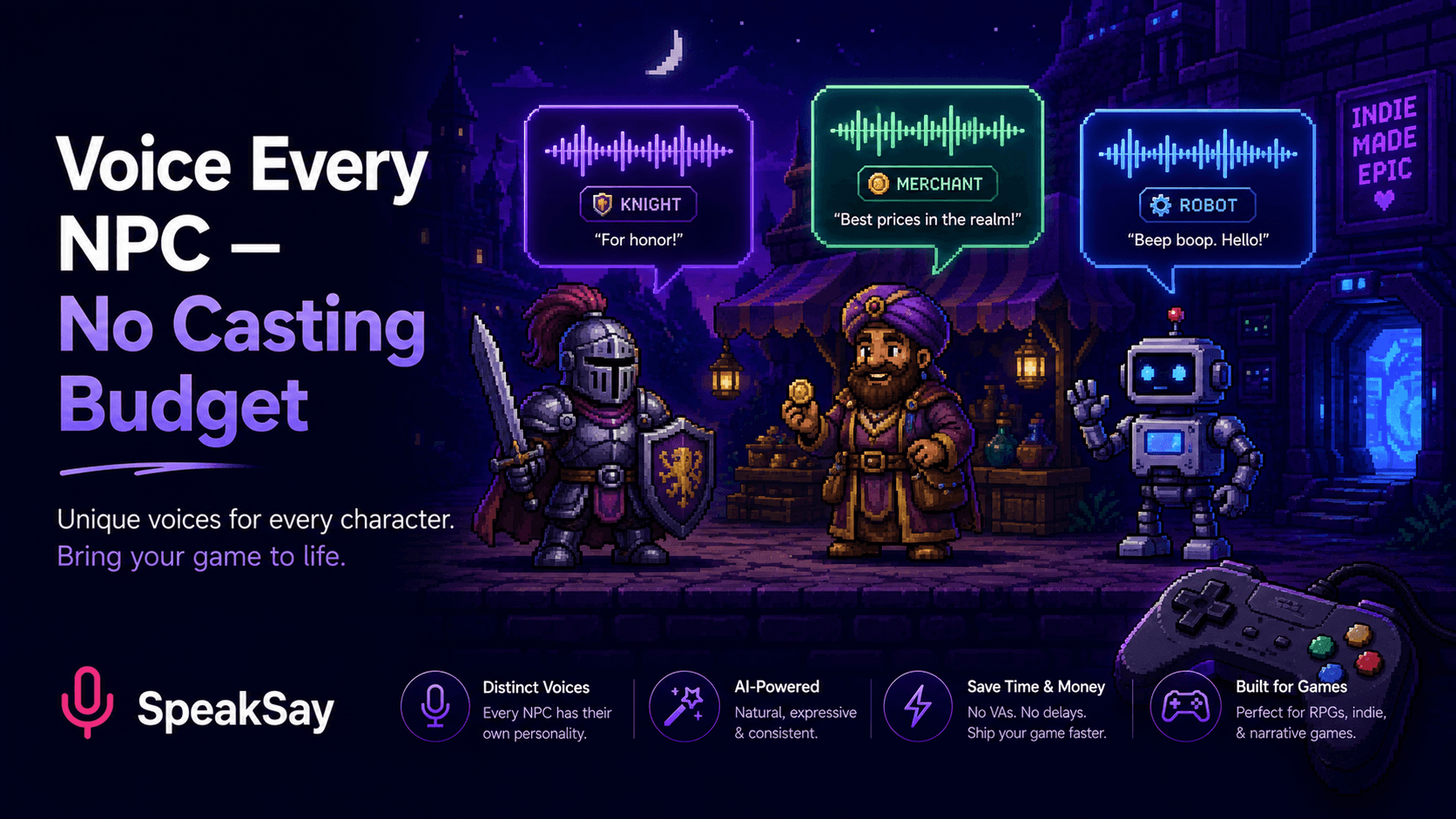
AI Voices for Indie Games in 2026: How to Voice Every NPC and Character Without Hiring Voice Actors
Per-line voice acting rates make fully-voiced indie games unaffordable — and every script rewrite means re-booking actors. Here's the 2026 AI pipeline for designing distinct character voices, batch-generating dialogue trees, and re-generating lines instantly when the script changes.
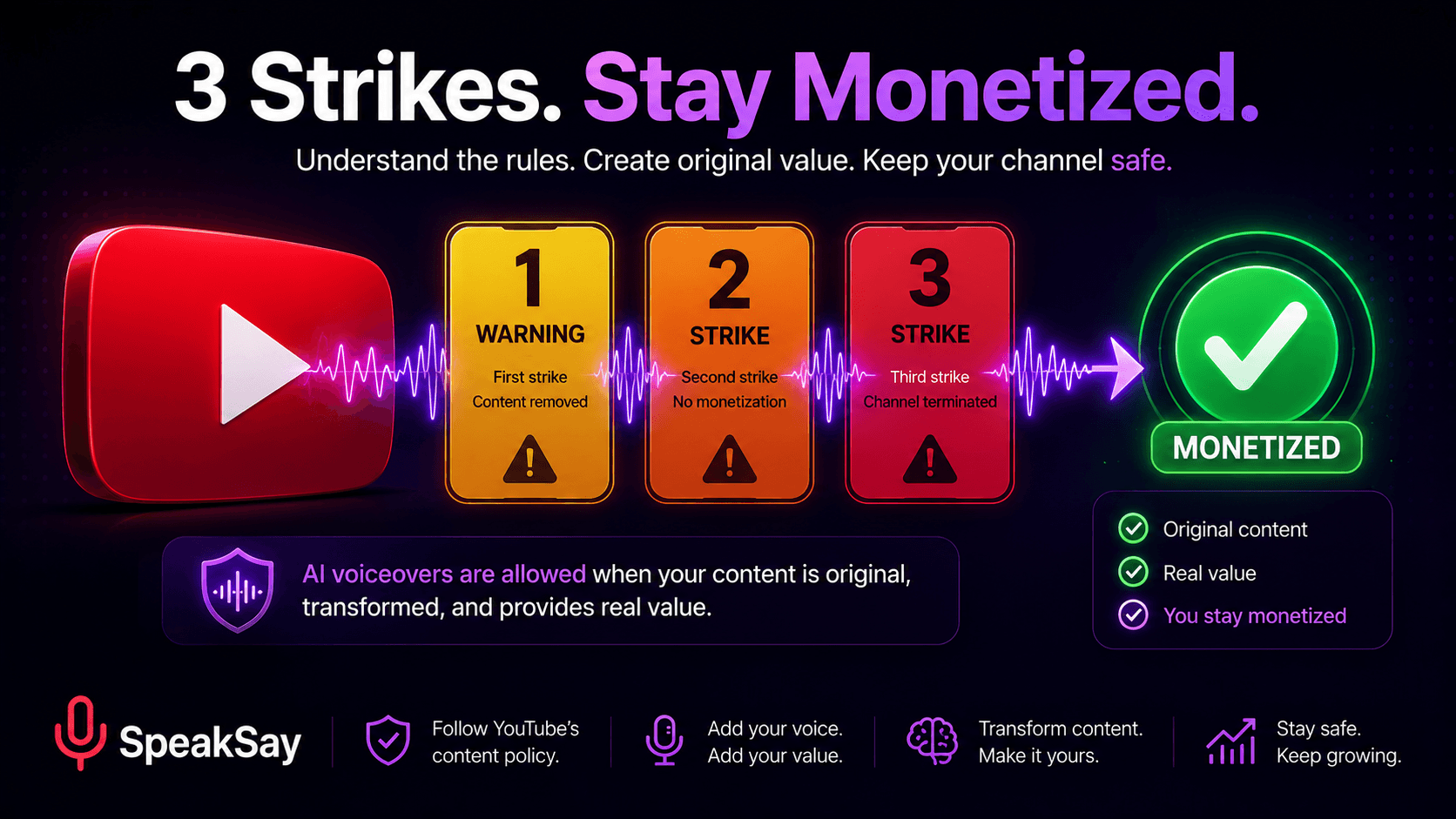
YouTube's 3-Strike Rule for Mass-Produced AI Content (2026): How to Upload Daily With AI Voiceovers and Stay Monetized
YouTube's 2026 spam policy now hits "mass-produced" AI channels with a three-strike system ending in permanent YPP removal. Here's exactly what triggers strikes — and the production stack that lets you upload daily without becoming a target.
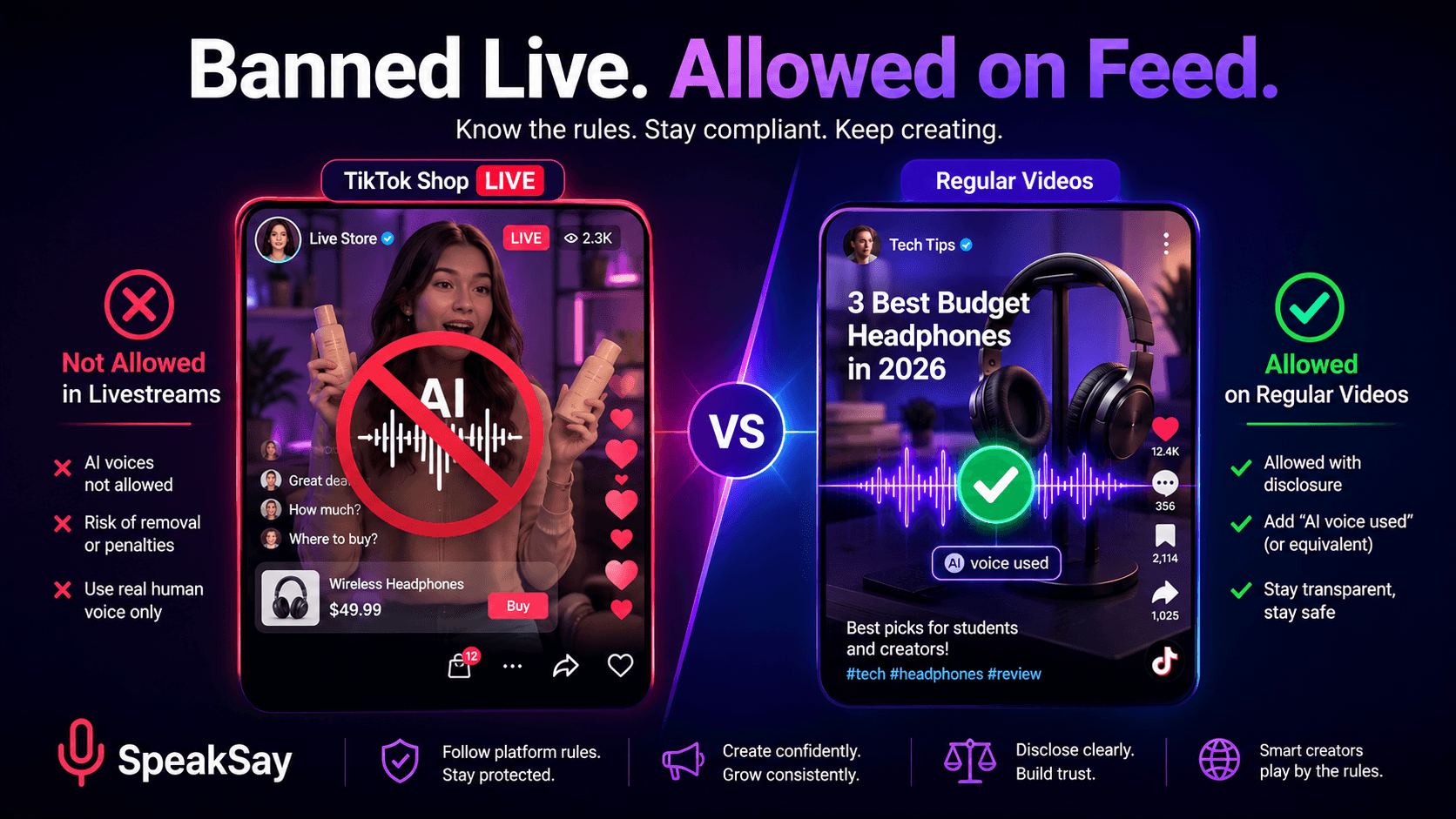
TikTok's AI Voice Ban Explained (2026): Where AI Voices Are Banned, Where They're Allowed, and How Shop Affiliates Still Scale
TikTok now prohibits AI voices in Shop livestreams, enforced through Creator Health Ratings — and sellers are panicking about their AI-voiced product videos. The ban is narrower than the headlines. Here's the actual rulebook and the workflow that still scales.
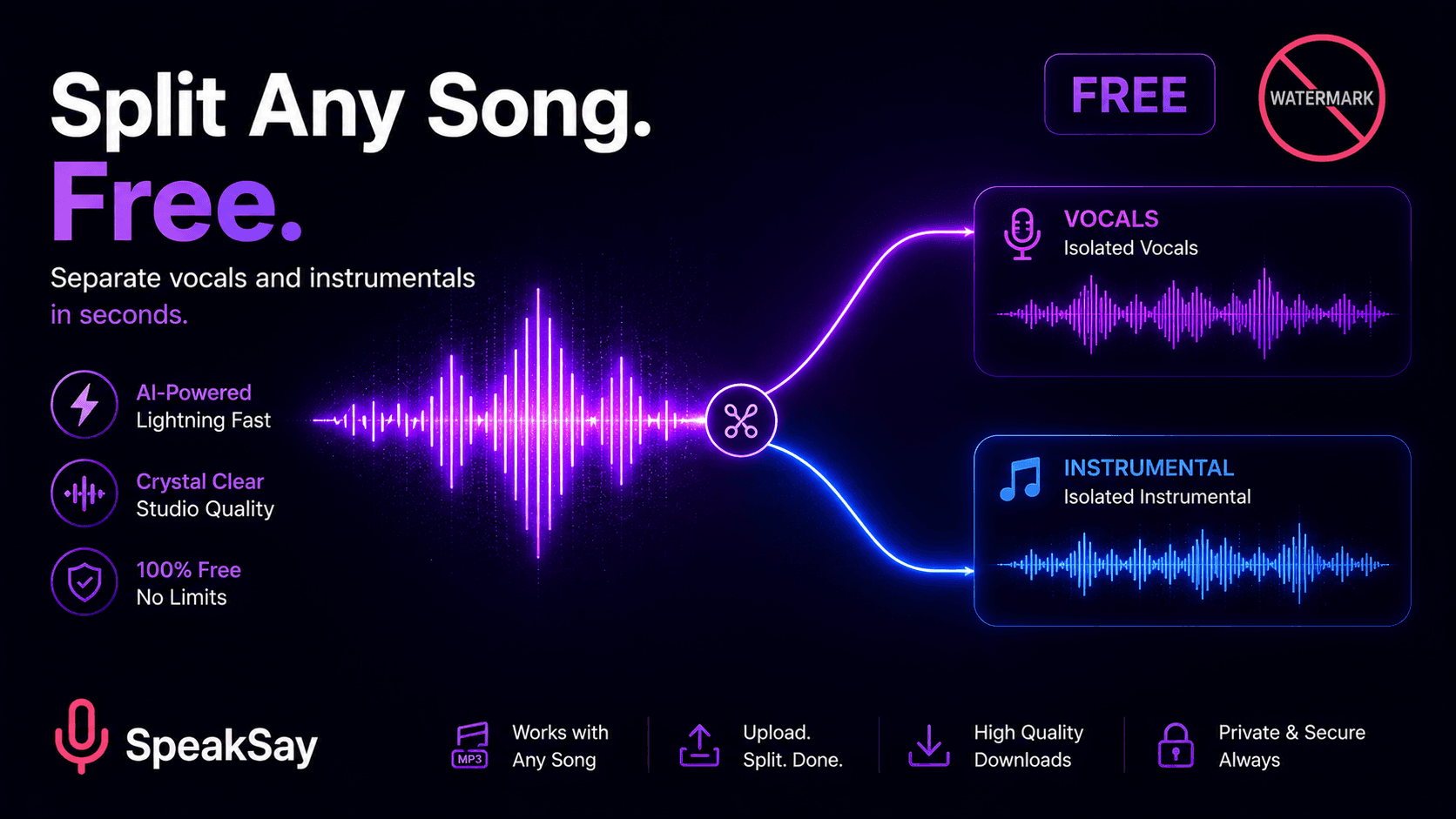
How to Remove Vocals From Any Song or Video for Free (2026): Karaoke Tracks, Remixes & Voice Edits
Most "free" vocal removers cap your file length, stamp a watermark on the output, or hide the download behind a paywall. Here's how to actually remove vocals from any song or video for free in 2026 — and what creators do next with the acapella and instrumental.
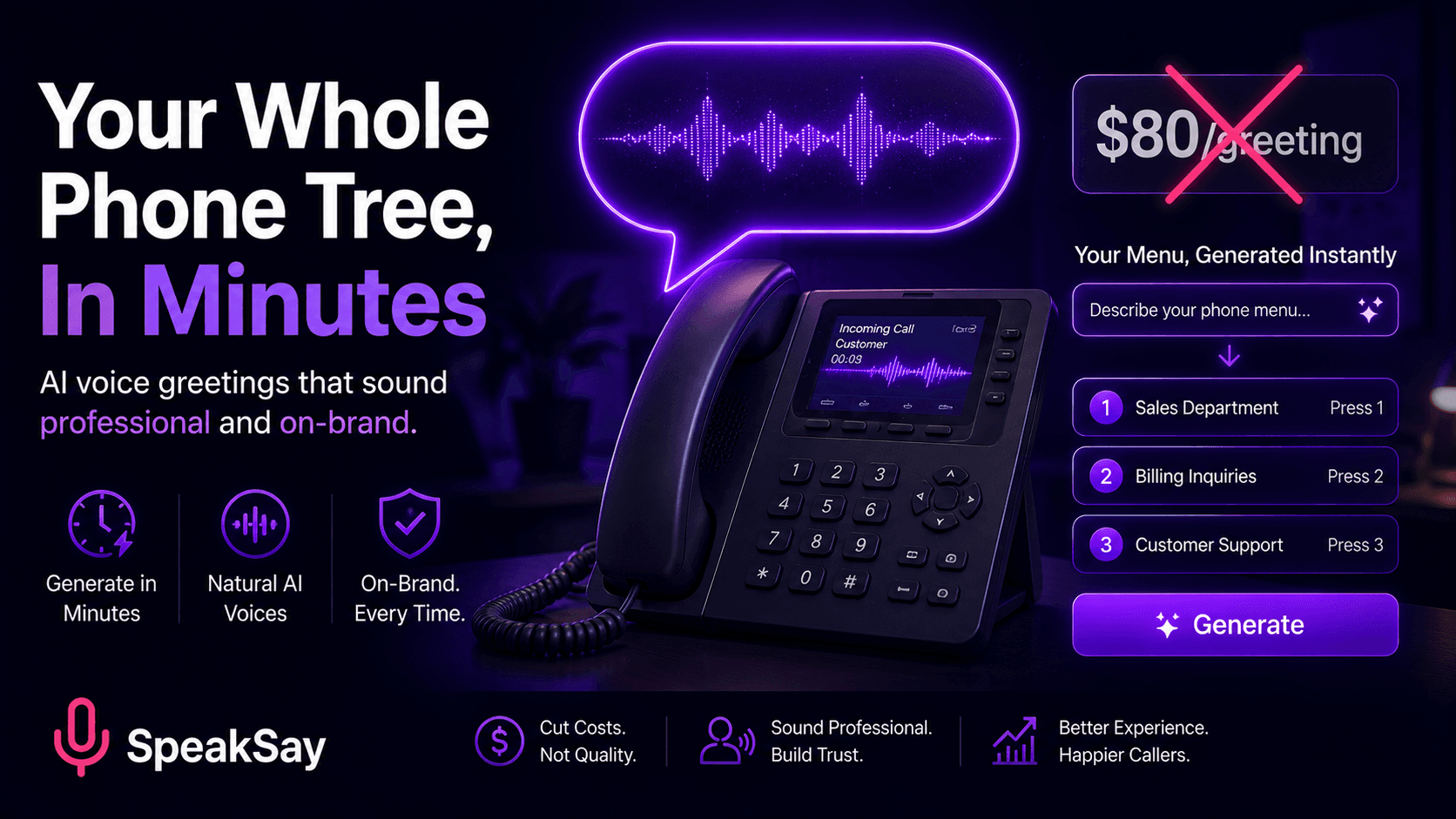
Stop Paying $80 Per Phone Greeting: AI Voices for IVR, Voicemail & On-Hold Messages (2026 Small-Business Guide)
Voice actors charge $75–$200+ per phone greeting and take days to deliver — then you pay again every time your hours change. Here's how small businesses record entire phone systems with AI voices in 2026: IVR menus, voicemail, and on-hold messages, updated in minutes for the cost of a coffee.
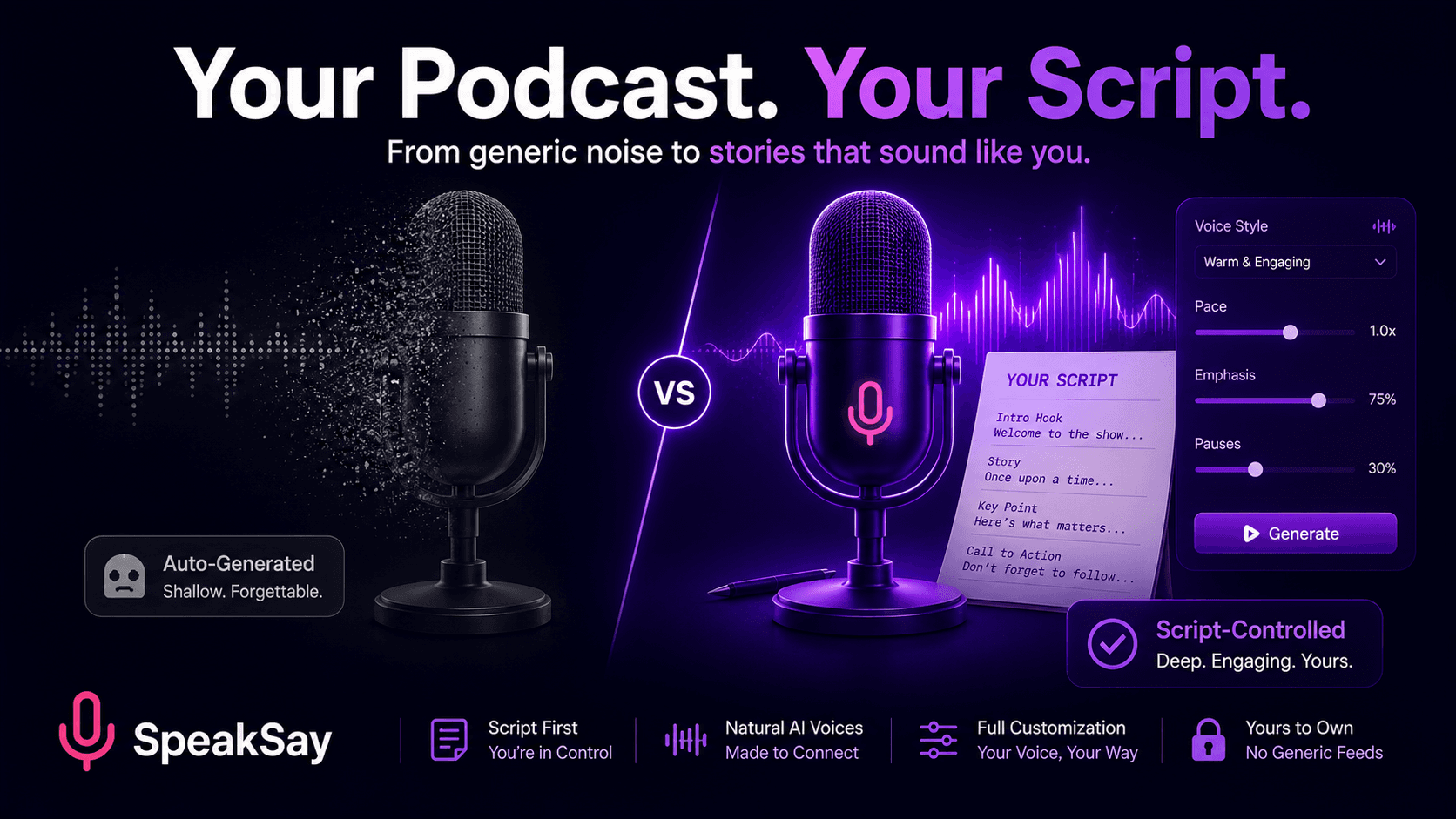
NotebookLM's Podcasts Are Getting Shallower — How to Control the Script, Depth & Voices of Your AI Podcast (2026)
NotebookLM's Audio Overviews wowed everyone in 2024 — but by 2026 users report increasingly shallow episodes, no transcript, no speed control, and zero say over depth or tone. Here's why the black-box approach hit its ceiling, and how to make an AI podcast where you control every line.
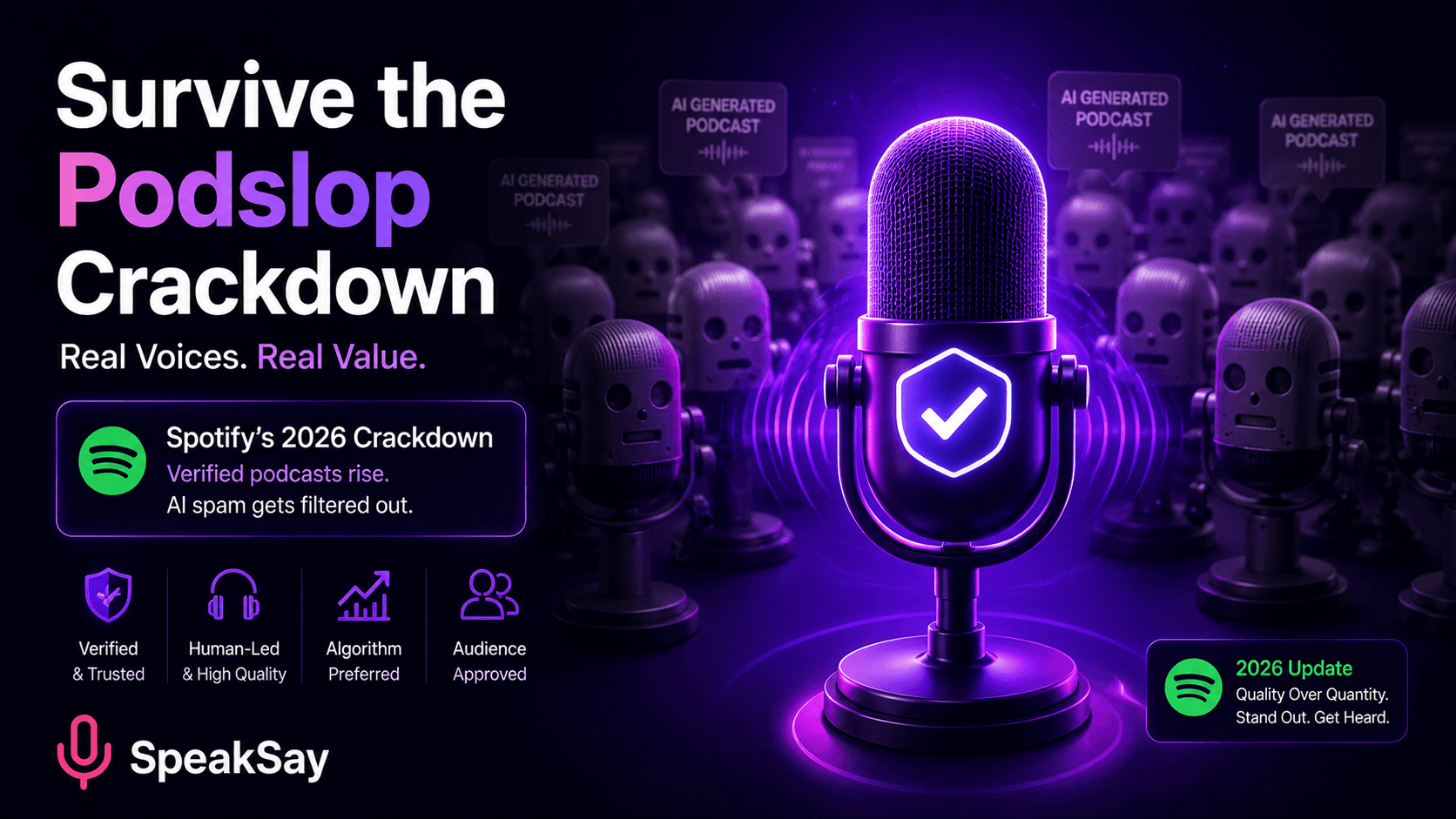
Spotify Is Verifying Podcasters and Banning AI Impersonators: How to Keep Your AI Podcast Monetized in the "Podslop" Crackdown (2026)
Spotify now verifies podcasters and bans AI impersonation, and hosts like RSS.com are demonetizing "podslop." Here's exactly what gets AI podcasts flagged in 2026 — and the workflow that keeps yours verifiable, trusted, and earning.
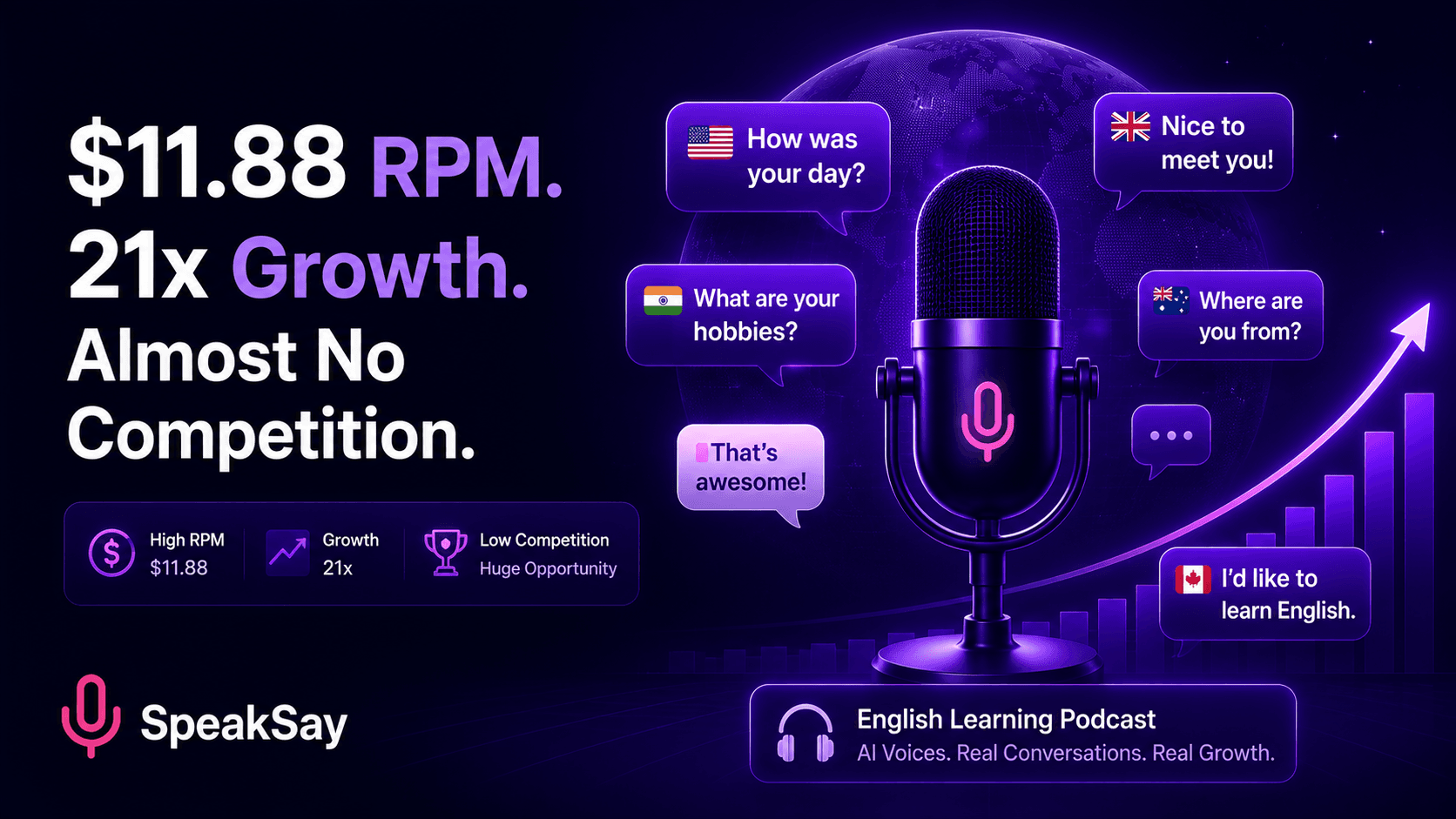
English-Learning Podcasts Earn $11.88 RPM With 21x Growth: Launch One With AI Voices — No Native Speaker Needed (2026)
English-learning podcasts pay $11.88 RPM with 21x growth and only ~10K competing channels — but most would-be creators aren't native speakers. Here's the 2026 AI-voice workflow that removes that blocker entirely.
Your Voice Clone Sounds Nothing Like You? 9 Recording Mistakes That Ruin AI Voice Clones (2026 Fix Guide)
Voice clones don't fail in the AI — they fail at the microphone. Monotone reads, noisy rooms, wrong-language samples and six more input mistakes starve the model of what makes you sound like you. Here's the fix checklist.
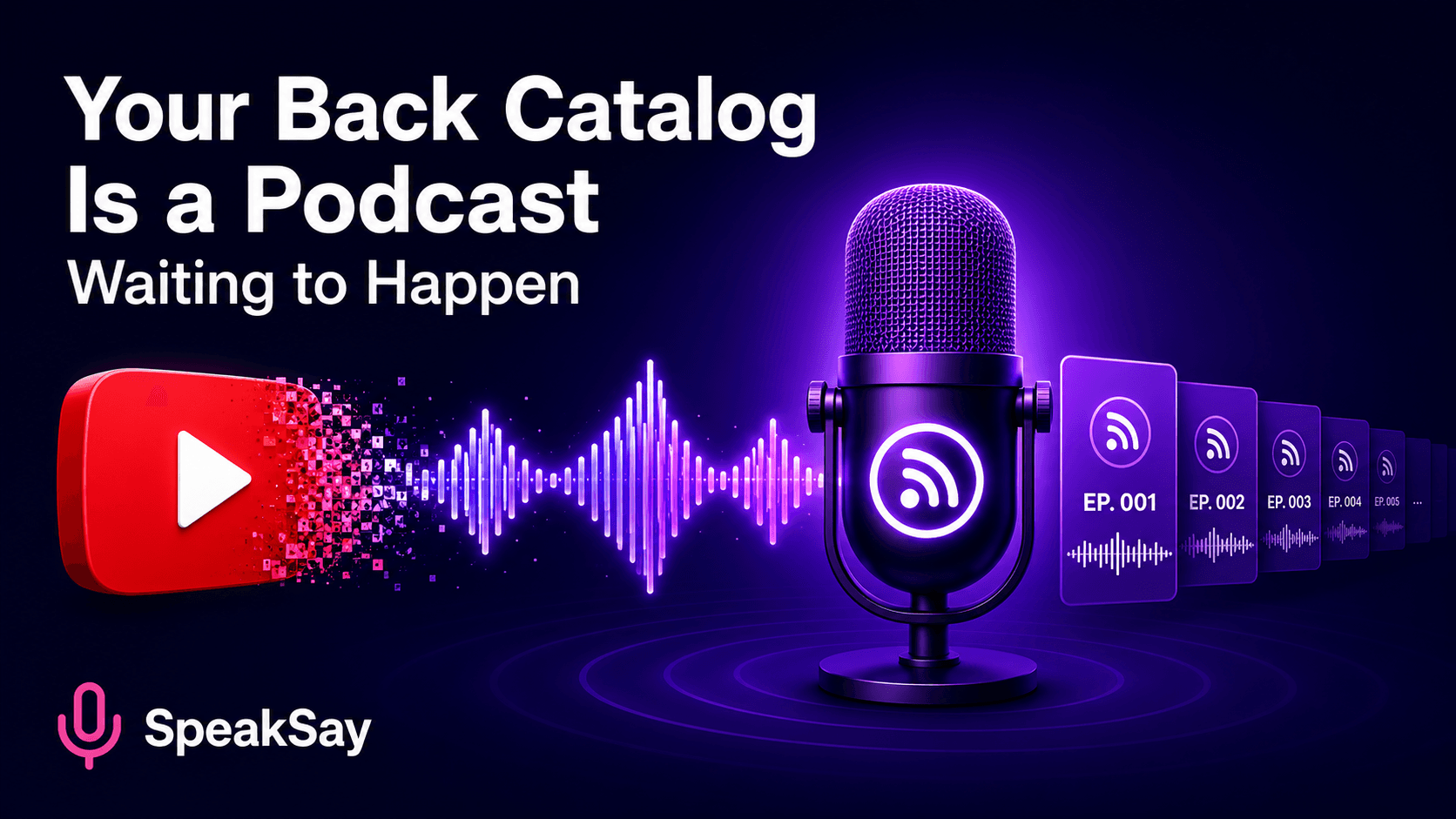
Turn Your YouTube Channel Into a Podcast: Repurpose Your Back Catalog Into Real Audio Episodes With AI (2026)
Ripping your video audio into an RSS feed makes a bad podcast — and Spotify's podslop crackdown punishes lazy rips. Here's the 2026 workflow: restructure transcripts into audio-native episodes and re-narrate them in your own cloned voice.
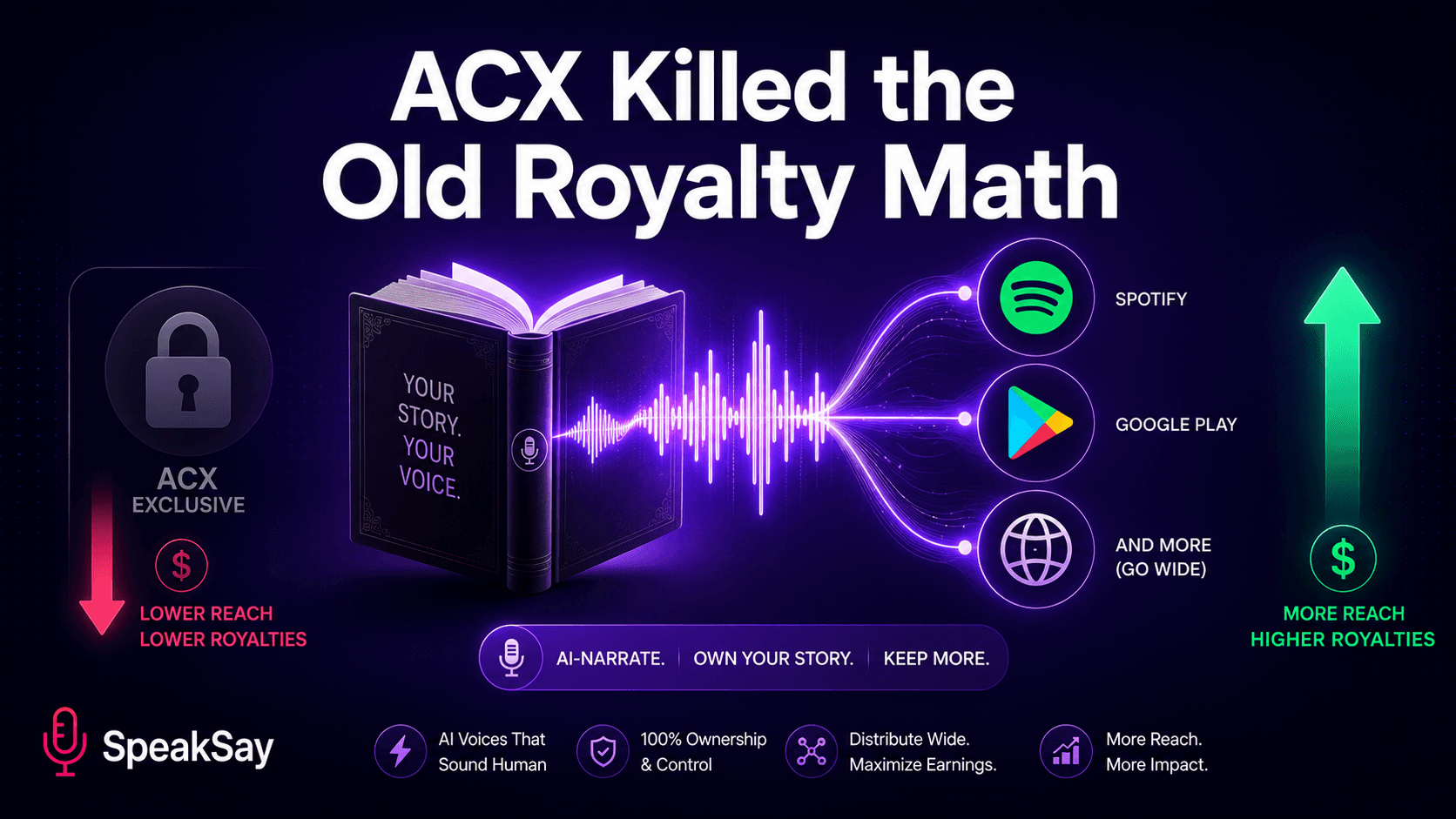
ACX Killed the Old Royalty Math (2026): Should You AI-Narrate Your Audiobook and Go Wide Instead?
Audible's new "Member Value" model pays on listening time, not sales — and indie authors are watching per-listen earnings shrink. Here's how the change works, whether AI narration plus wide distribution is now the smarter play, and a workflow to narrate your whole backlist once.
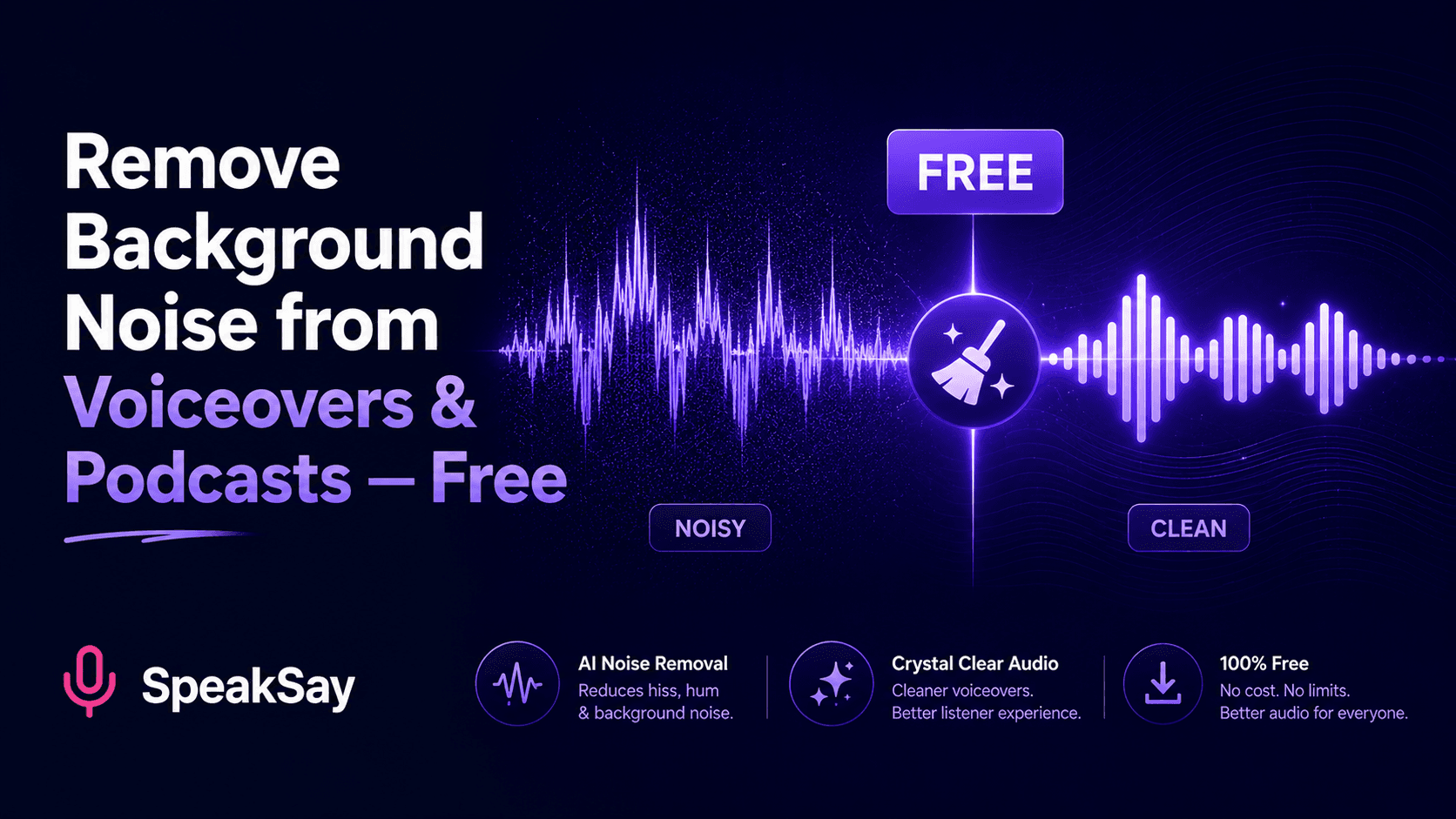
How to Remove Background Noise From Voiceovers & Podcasts for Free (2026)
Hiss, hum, and room noise are the fastest way to sound amateur. Here's how to clean up your voiceovers and podcasts for free in 2026 — and how to skip cleanup entirely with clean AI narration.
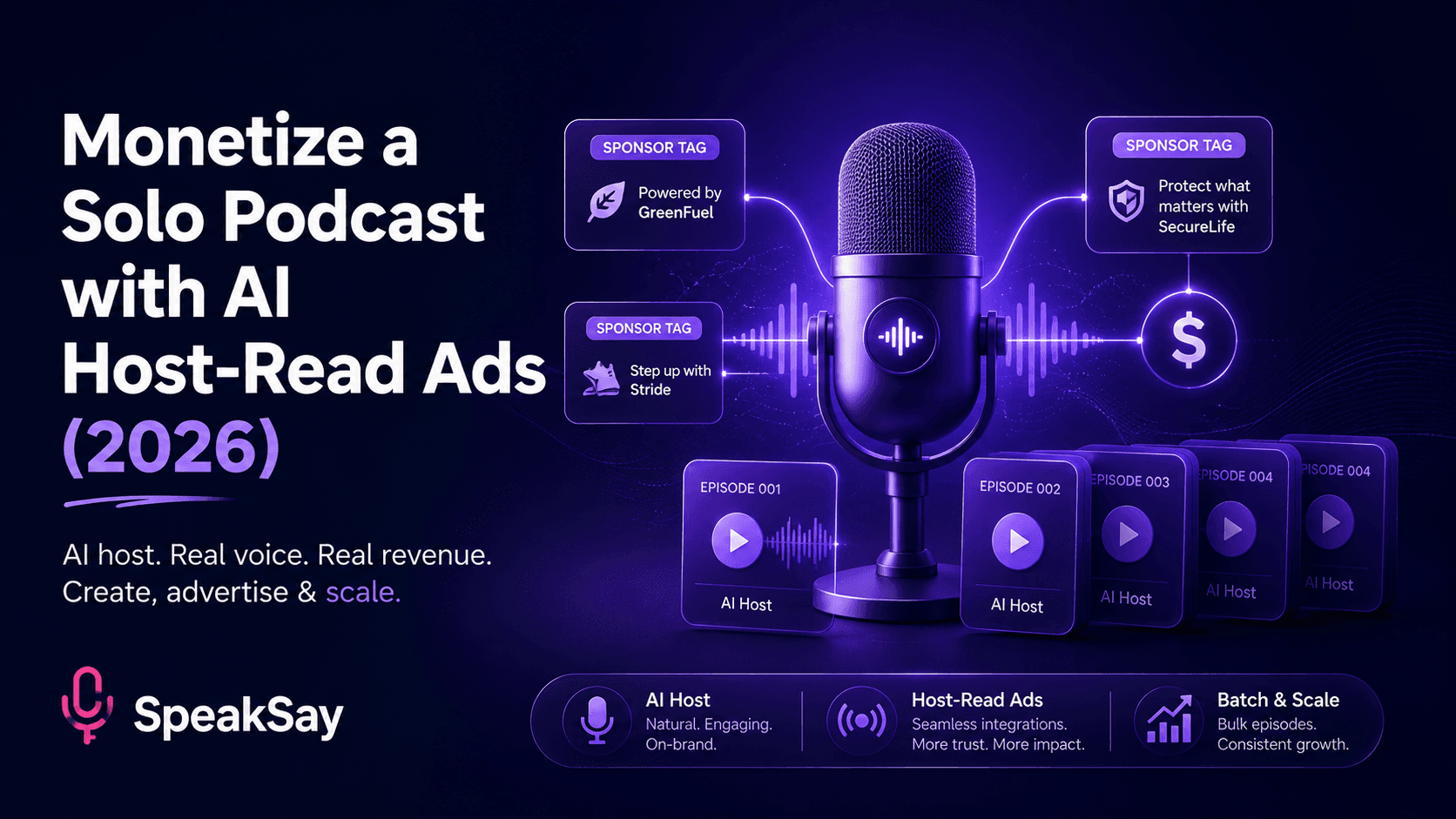
How Solo Podcasters Are Monetizing With AI Host-Read Ads (2026 Workflow)
Host-read ads pay the best in podcasting — but recording every spot by hand is a bottleneck for solo creators. Here's the 2026 workflow to batch episodes and generate sponsor reads in your own voice.
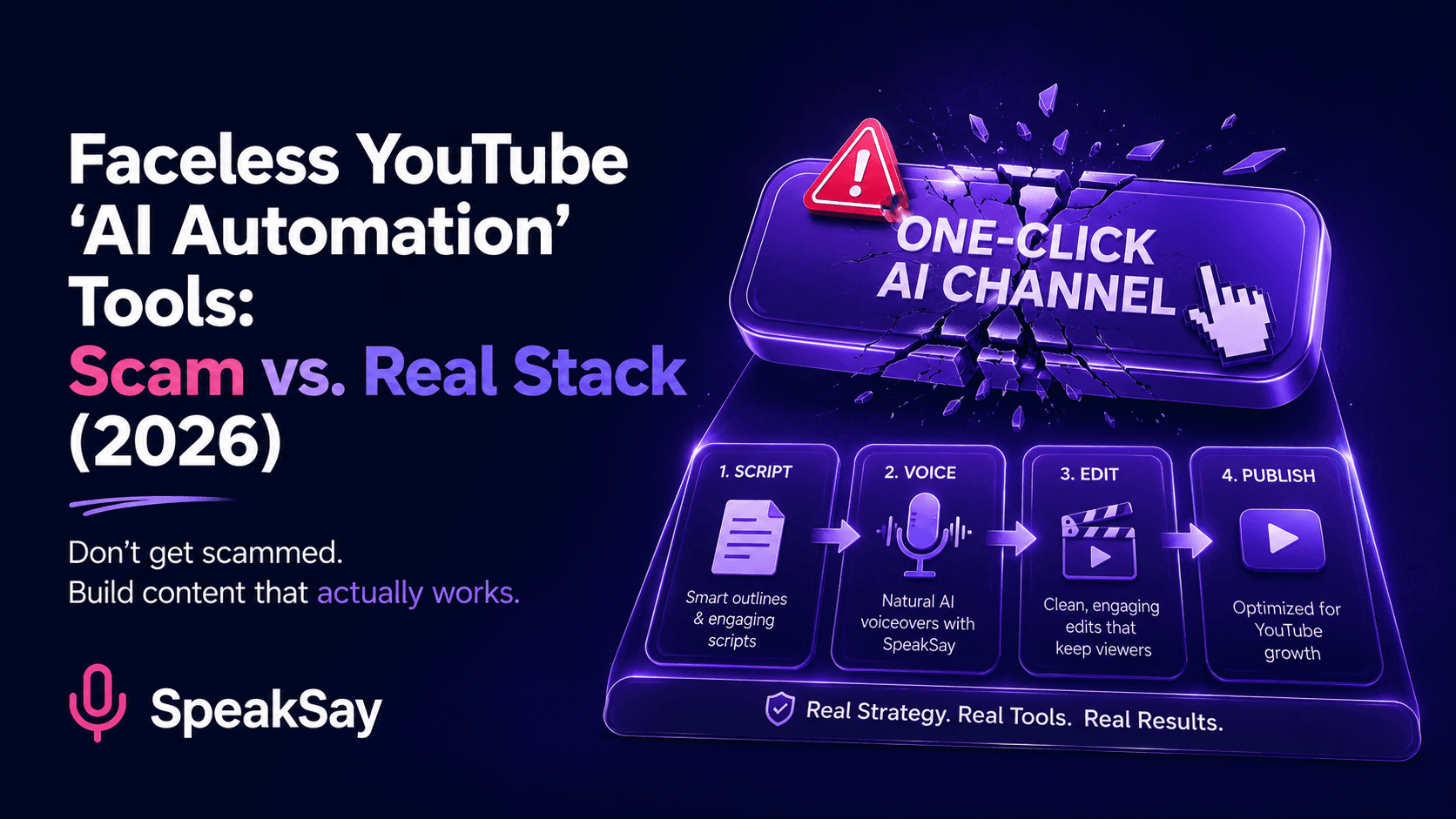
The Faceless YouTube "AI Automation" Tools That Are Scams in 2026 — and the Real Stack That Actually Works
"One-click faceless channel" apps are burning creators with monthly charges and dead videos. Here's how to spot the scams — and the real, reliable stack that actually gets watch time in 2026.
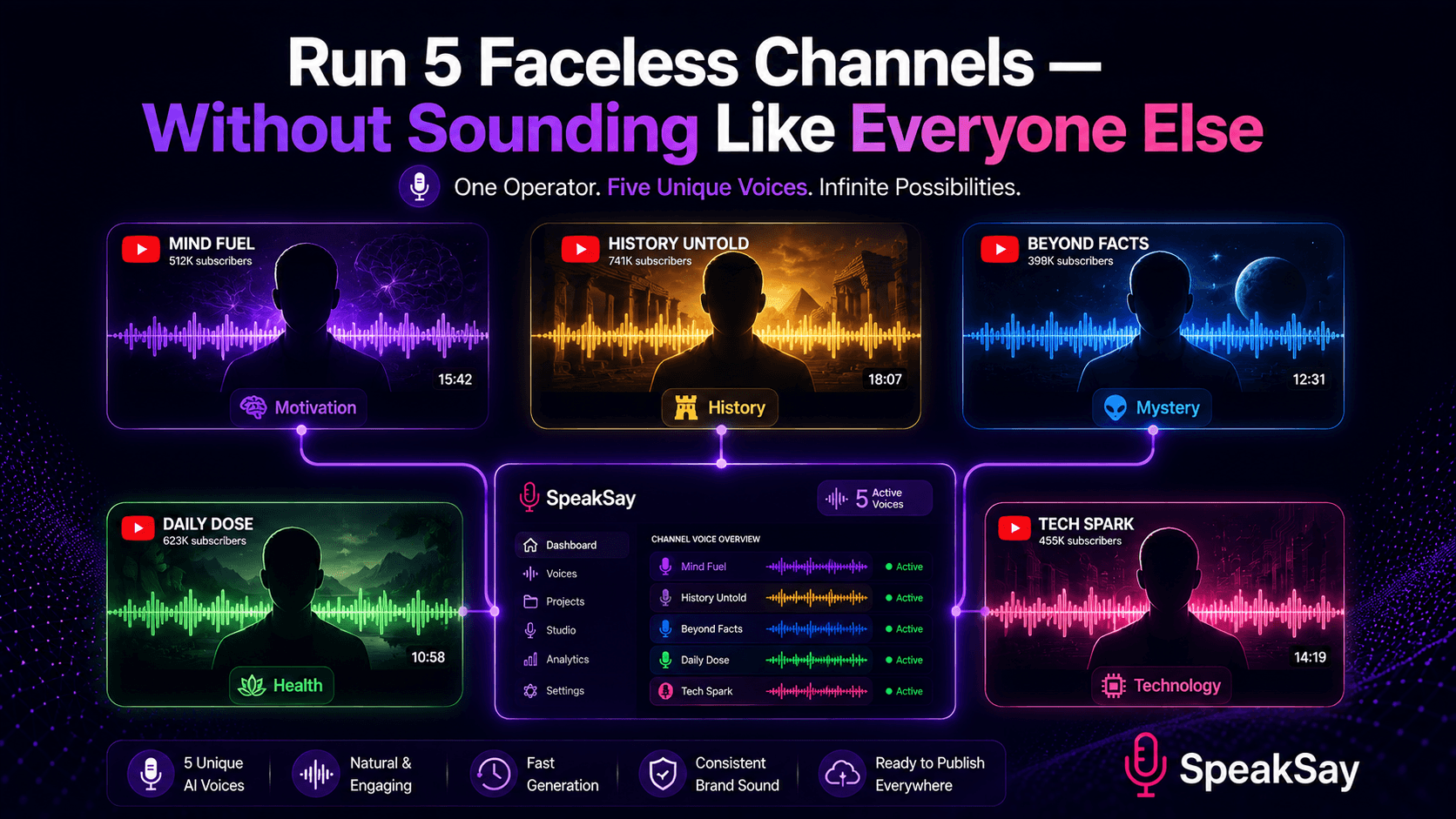
How to Run Multiple Faceless YouTube Channels in 2026 (Without Sounding Like Every Other AI Channel)
Copy-paste automation channels are getting demonetized in 2026. Here's how to scale a portfolio of faceless channels where each one has its own signature AI voice — so YouTube treats you as many creators, not one spam farm.
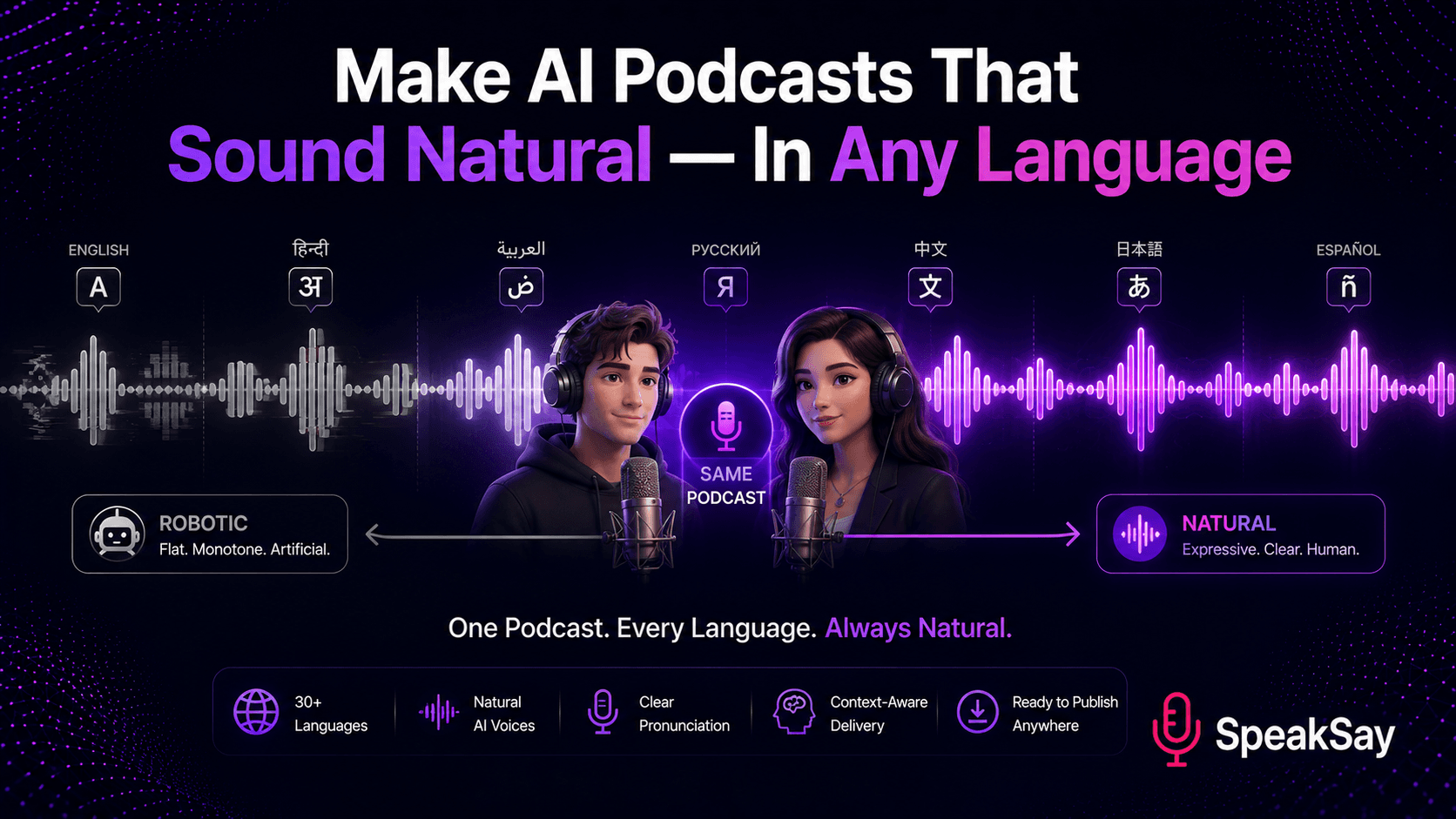
NotebookLM Sounds Robotic in Your Language? How to Make Natural Multilingual AI Podcasts (2026)
NotebookLM's Audio Overviews shine in English and stumble in everything else — and the length controls are English-only. Here's how to turn any source into a natural-sounding AI podcast in your language.
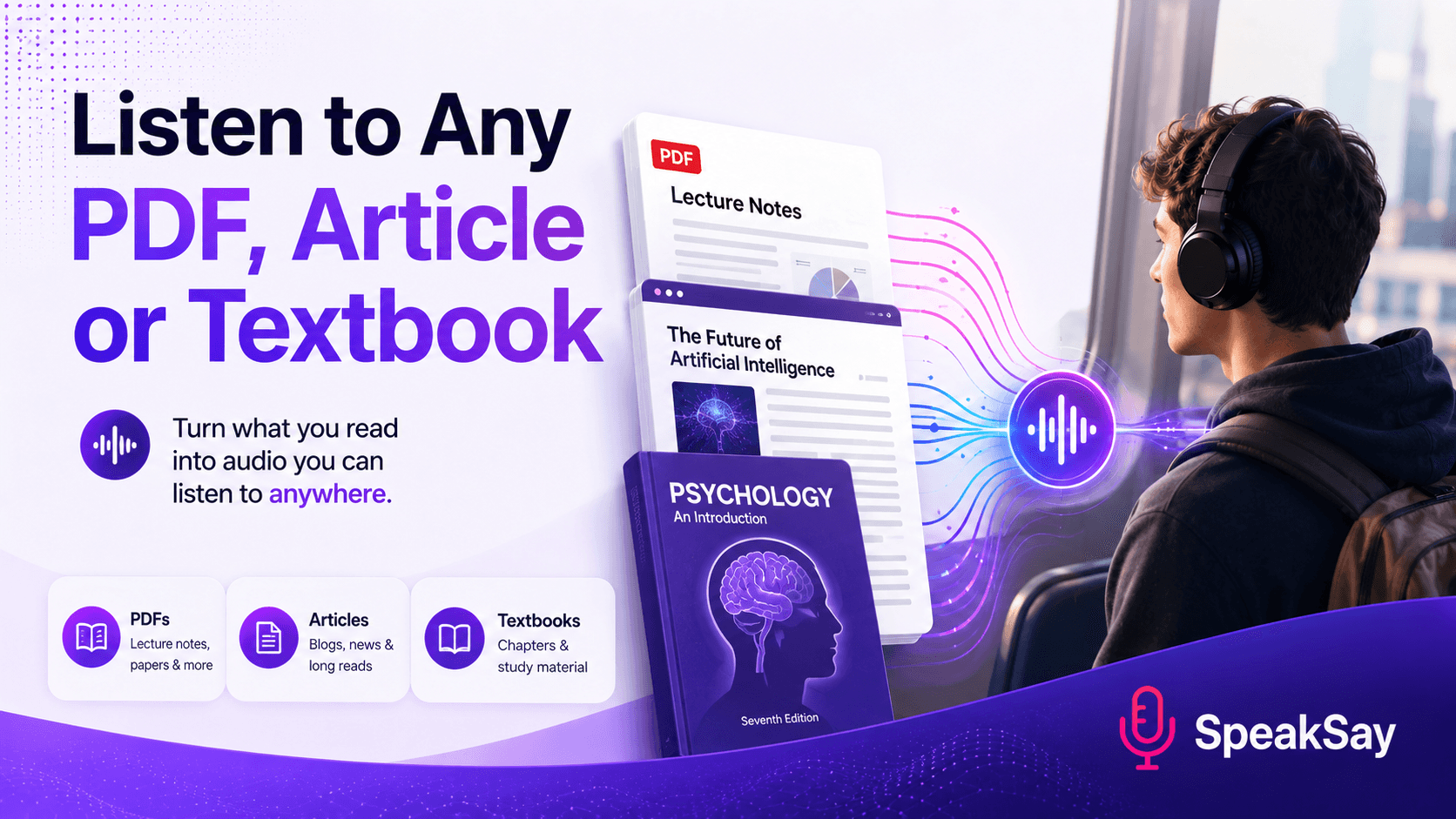
Best Free Text-to-Speech Reader in 2026: Turn PDFs, Articles & Textbooks Into Audio
ant to listen to your readings instead of staring at a screen? Here's how to turn PDFs, articles, and textbooks into natural-sounding audio with a free text-to-speech reader — plus what to look for and when free stops being enough.
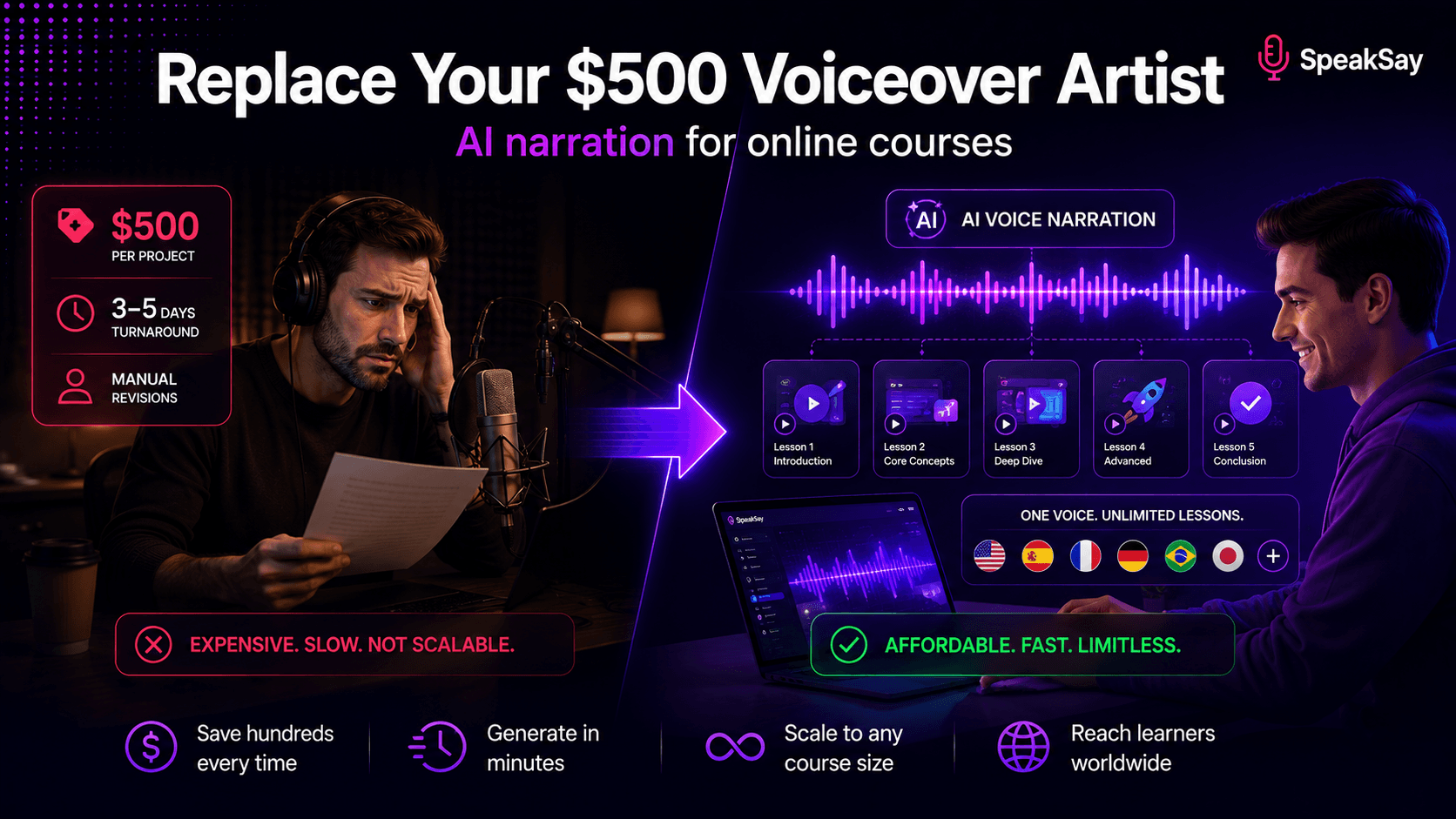
How Course Creators Are Replacing $500 Voiceover Artists With AI Narration (2026 Workflow)
Hiring a voiceover artist for every lesson is slow and expensive — and re-records cost you again. Here's the 2026 workflow course creators use to narrate entire courses with AI, edit instantly, and go multilingual.
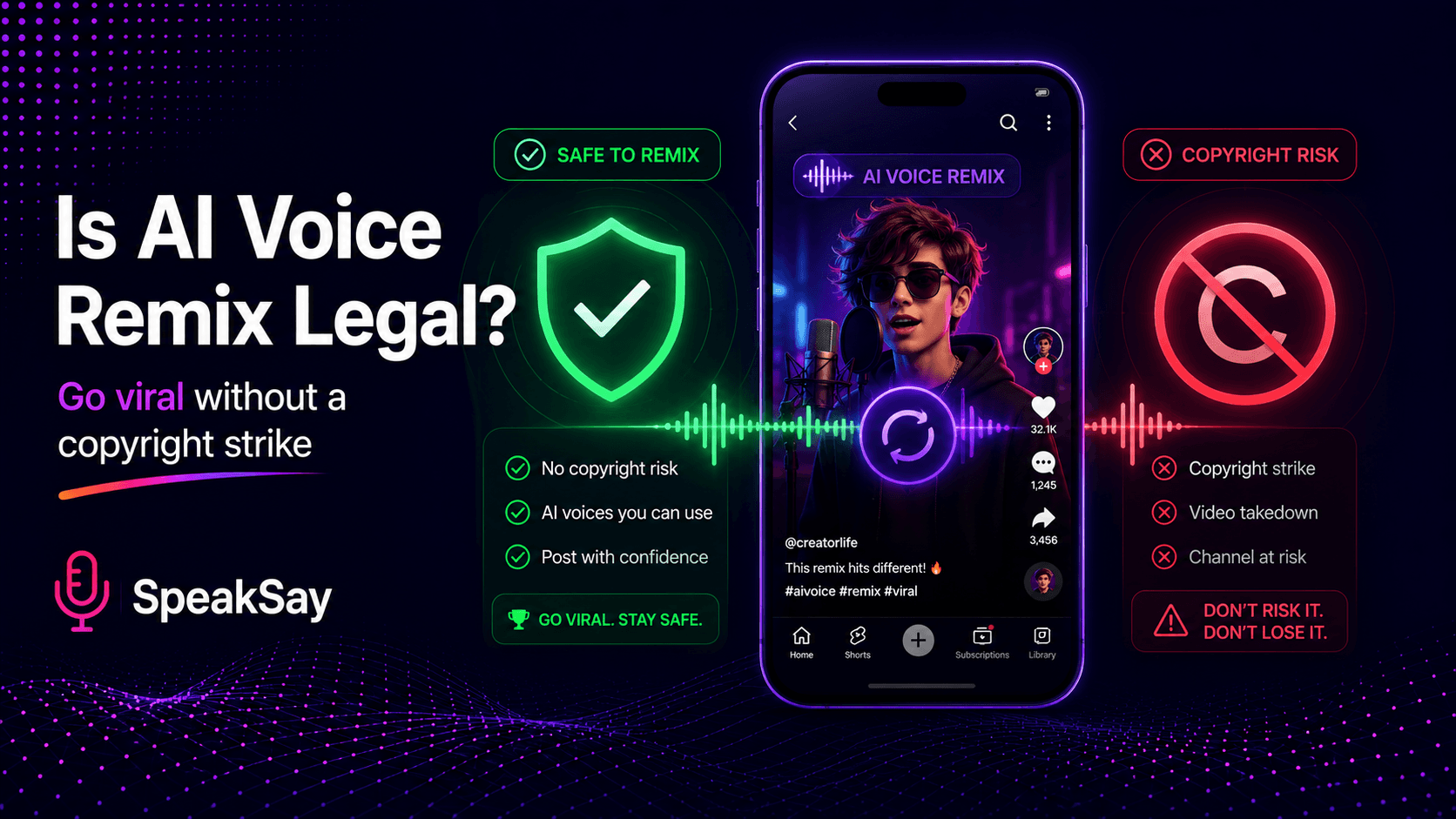
Is AI Voice Remix Legal on YouTube & TikTok? How to Make Viral Voice Edits Without a Copyright Strike (2026)
AI voice remixes are everywhere — and so are copyright strikes and takedowns. Here's what's actually risky, what's safe, and how to make viral voice edits in 2026 without endangering your channel.
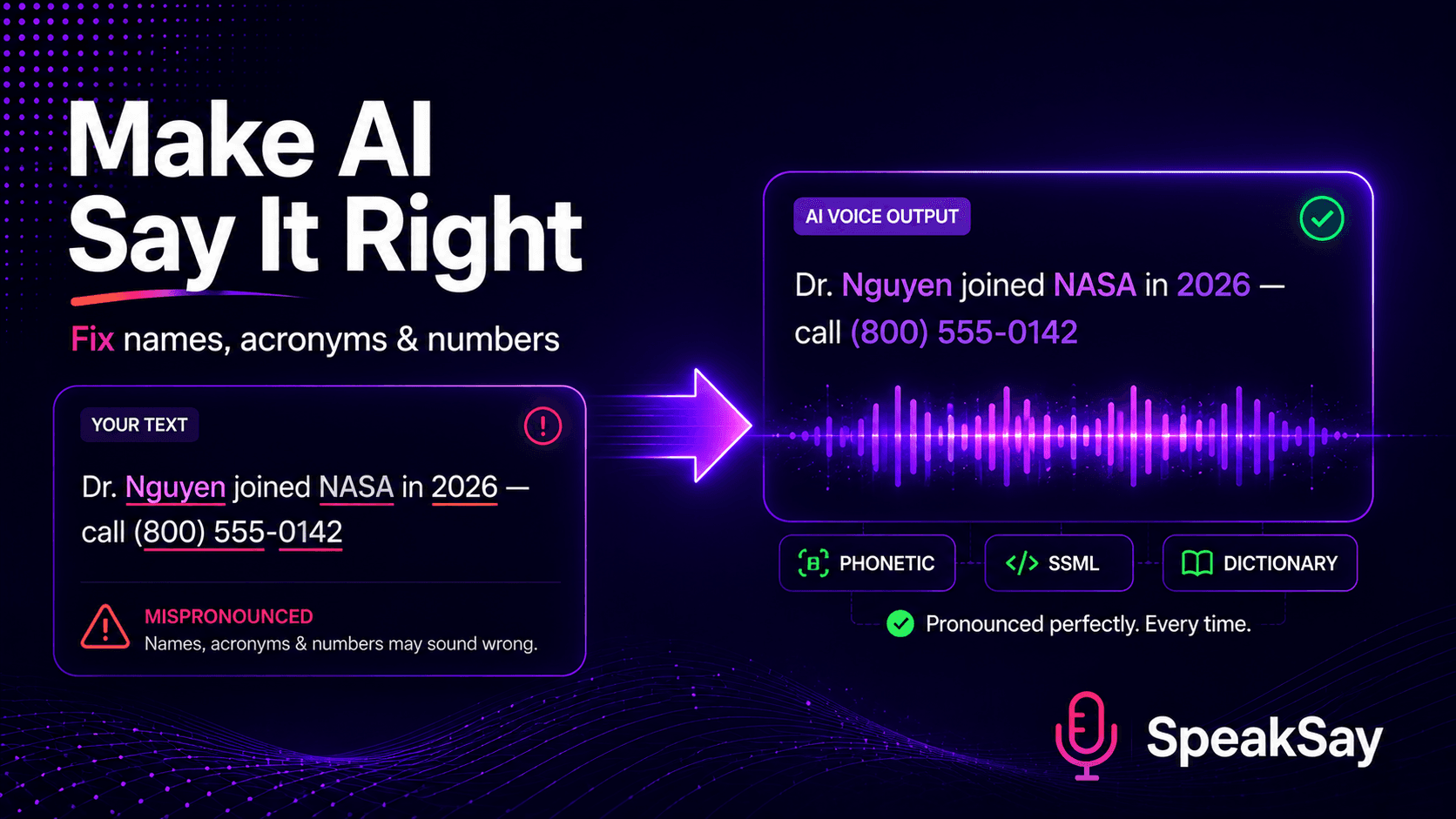
AI Voiceover Mispronouncing Names, Acronyms & Numbers? 7 Fixes for Perfect Pronunciation (2026)
Your AI voice nails the script then butchers a brand name, spells out the wrong acronym, or reads "2026" as a phone number. Here are 7 concrete fixes to get perfect pronunciation every time.
Give your words a voice
Start free with 10,000 credits. No credit card required.