Speech Recognition
Speech recognition and processing
A Station Announcer for Your Model Railroad: Original Voices for Hobby Layouts With Voice Remix (2026)
A silent layout feels like a diorama. A believable announcer makes it a station. Here is how to create an original announcer voice for a model railroad.
Design a Sleep Story Voice: How to Shape a Slow, Calm Narrator Voice With Voice Remix (2026)
Default AI voices are too bright and too fast for a sleep story. Here is how to shape an original slow, low, warm narrator voice with Voice Remix, and keep it consistent across a series.
Game Night With a Host: How to Run a Holiday Family Trivia Night With an Original Game-Show Host Voice (Voice Remix, 2026)
Family trivia works better when somebody other than the organiser is in charge of the questions. This guide shows how to build an original game-show host voice with Voice Remix, record the intros, questions and reactions, and run a holiday trivia night from a phone and a speaker.
A Voicemail From a Very Silly Monster: How to Make a Kid's Birthday Surprise Message With an Original Character Voice (Voice Remix, 2026)
A short voicemail from an invented character can be the best part of a child's birthday. This guide shows parents, grandparents and party hosts how to write a 30-second message, build an original character voice with voice remix, and send it safely without using any known cartoon character.
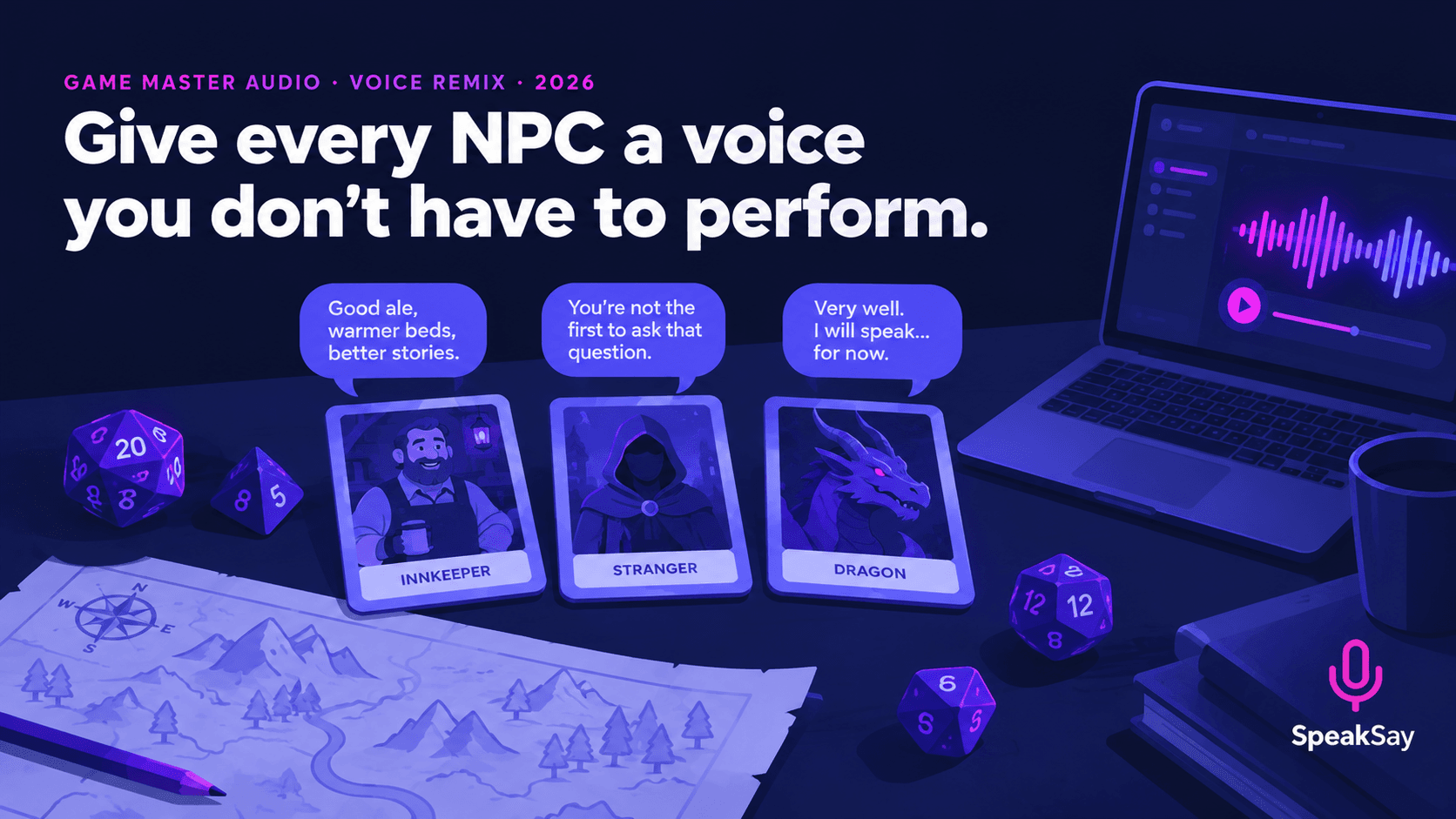
Every NPC Sounds Like You: How Game Masters Can Give Tabletop Characters Distinct Voices and Pre-Recorded Scene Audio With Voice Remix (2026)
A game master voices the innkeeper, the villain and the dragon, and by the third hour they all sound the same. This guide shows how to build a cast of distinct NPC voices from your own recordings, prepare key scene audio before the session, and use it without slowing the table down.
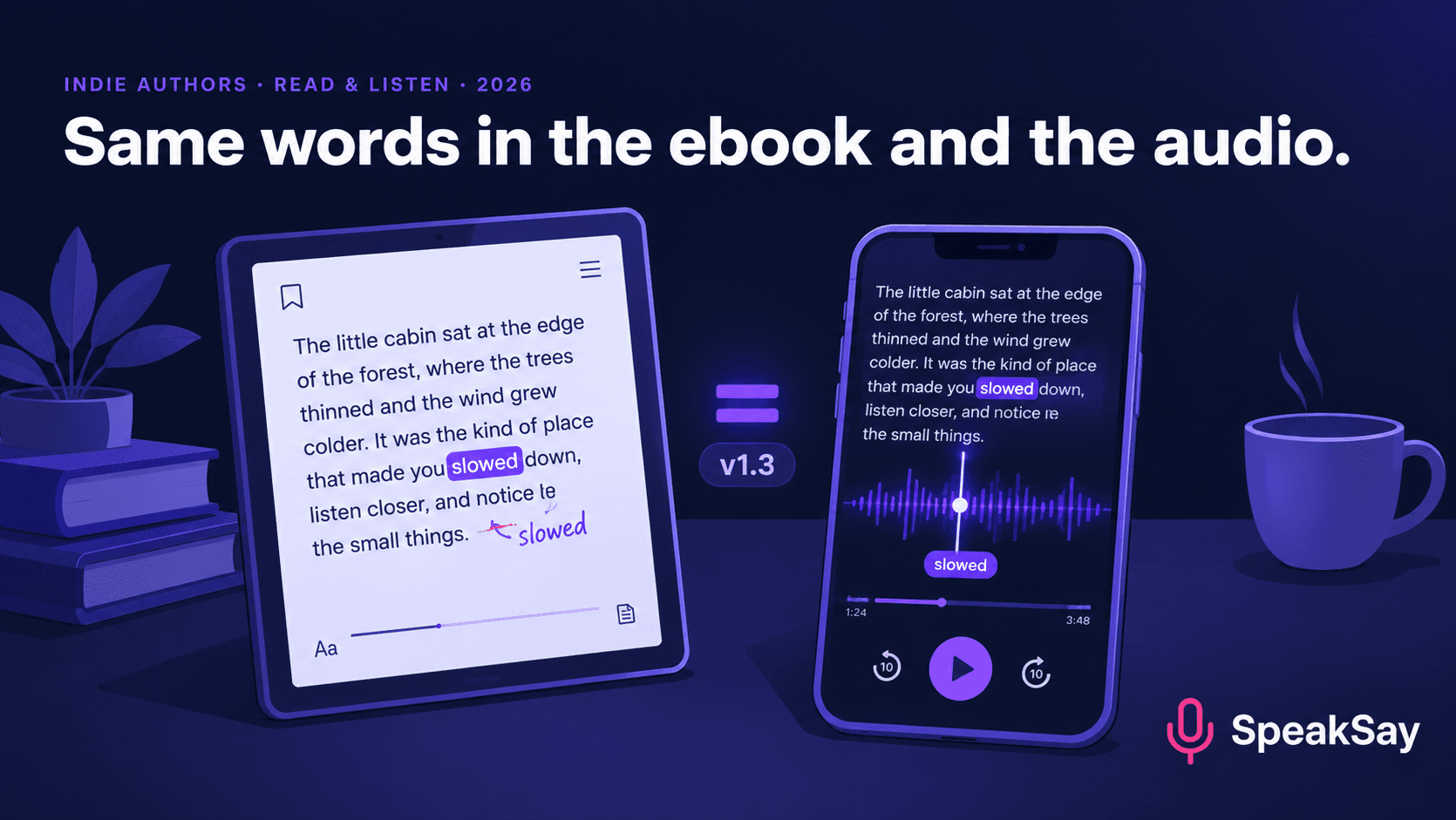
Audible's Read & Listen Pairs Your Ebook With Your Audiobook. Here's How Indie Authors Keep the Two Editions Matching After Launch (2026)
Audible's Read & Listen highlights ebook text while the audiobook plays, and listeners need to own both editions. That makes one old authorial habit expensive: fixing the ebook after launch and leaving the audio behind. Here is a version-control routine for authors who narrate with AI.
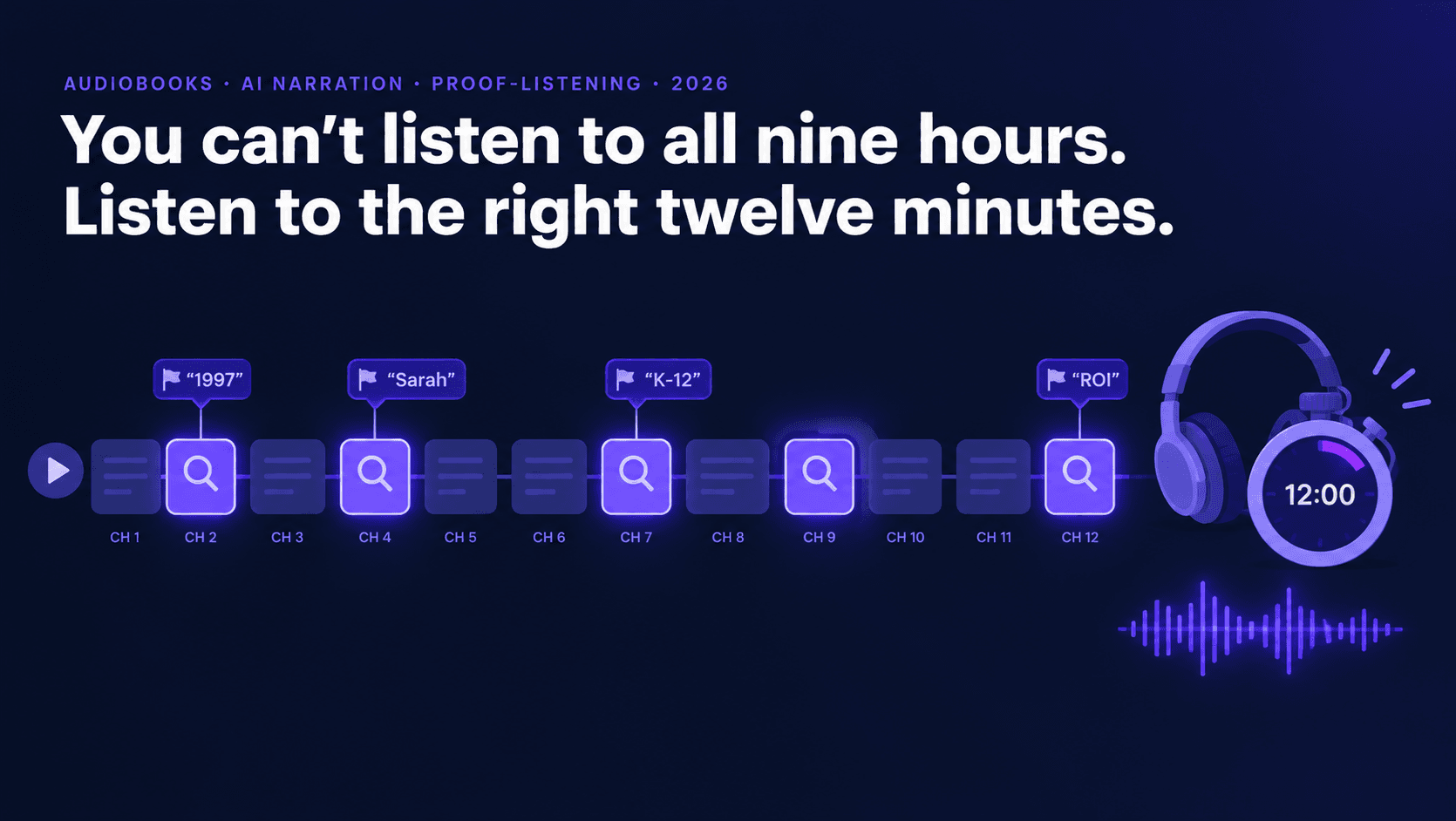
Nobody Has Time to Proof-Listen a 9-Hour AI Audiobook at 1x: A Risk-First Sampling Method That Catches the Errors Listeners Actually Notice (2026)
A nine-hour audiobook holds roughly 84,000 spoken words, and every mispronounced name or misread number is yours to catch before listeners do. Here is a risk-first sampling method for indie authors using AI narration: find the words most likely to go wrong, test them first, then listen to a planned sample instead of hoping.
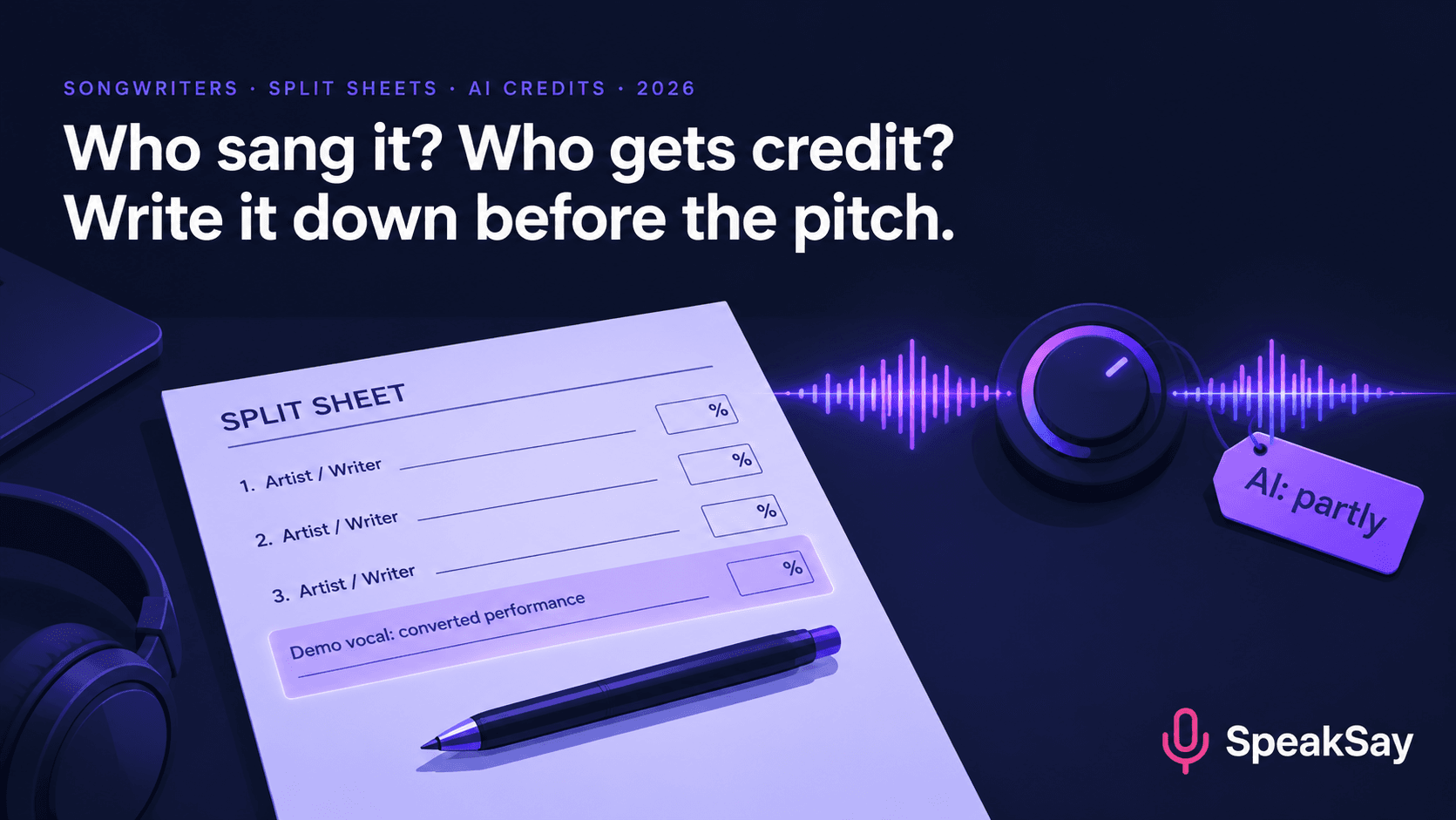
Your Co-Writer Sang the Demo and AI Turned It Into the Artist's Register: Who Gets Credited? Split Sheets and AI Credits for Songwriters (2026)
AI credit fields arrived in music metadata in 2026, and most songwriters' split sheets still have no line for a converted demo vocal. Here is what to write down before you pitch: who performed, which tool changed it, what the split sheet should say and what it should not claim. Not legal advice.
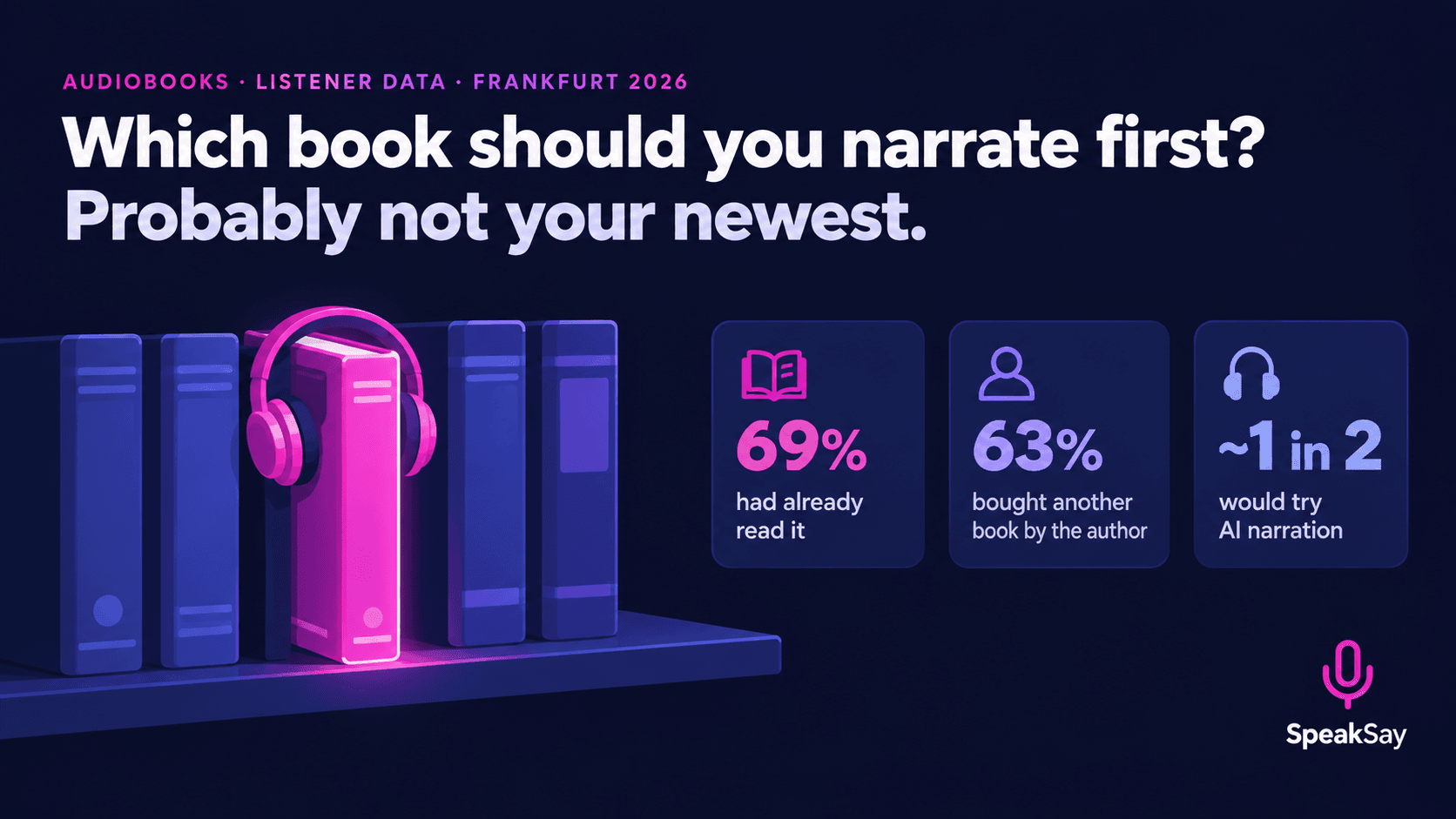
69% of Audiobook Listeners Had Already Read the Book: What Audible's 18,000-Listener Survey Says About Which Title to Narrate First (2026)
Most authors narrate their newest book first. A new Audible-commissioned survey of 18,000 consumers suggests that's backwards: most listeners had already read the book, audio sends them on to an author's other titles, and openness to AI narration is higher for fiction. Here's a scoring method for picking the title that earns its audio edition.
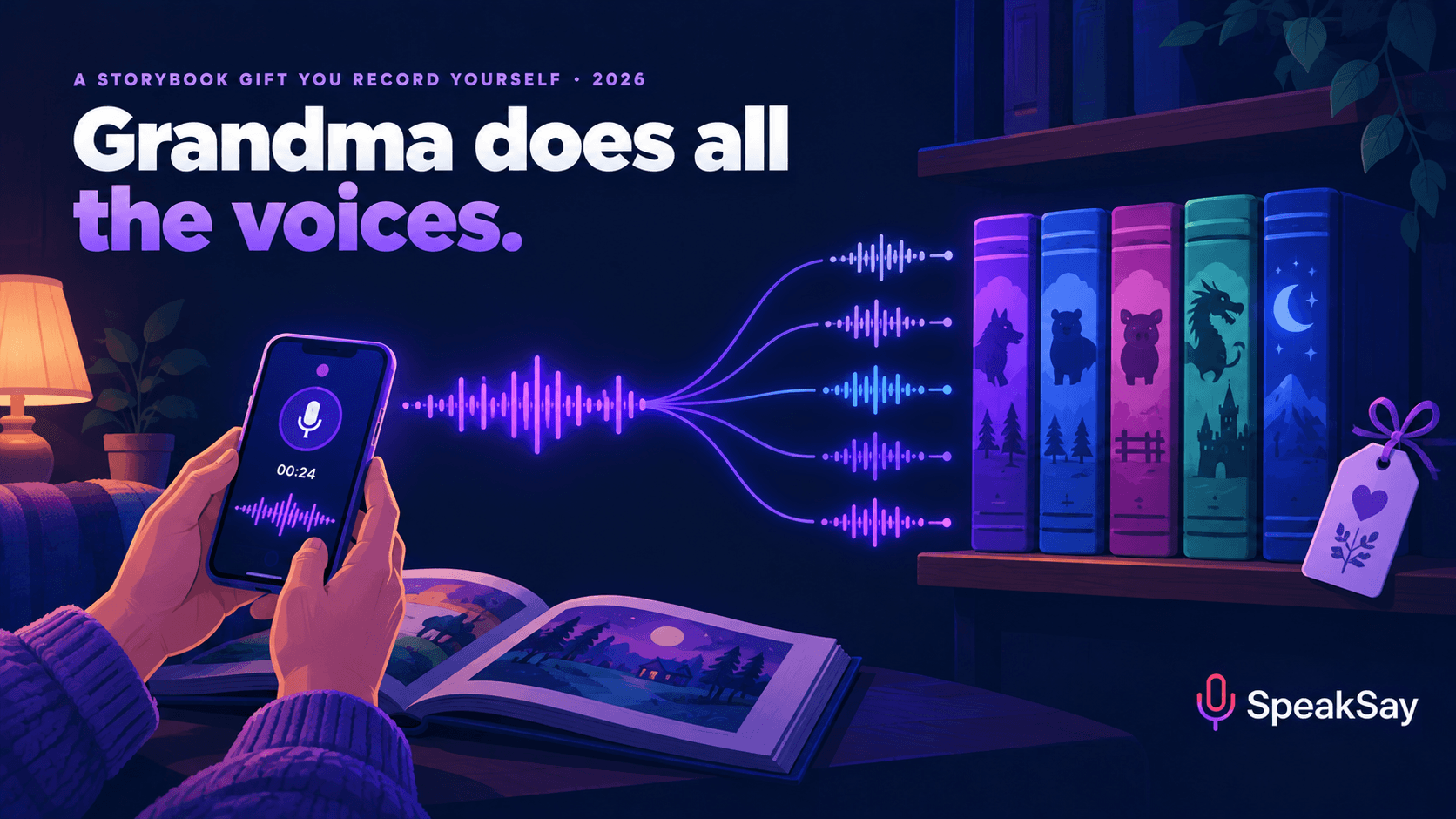
Grandma Does All the Voices: Record a Storybook Gift for the Grandkids and Voice Every Character Yourself (2026)
A recordable storybook holds one story. With a phone and an afternoon, a grandparent can record a whole shelf of bedtime stories in their own voice, and with Voice Remix they can voice the wolf, the bear and the dragon too while keeping their own timing. Here's how to choose the stories, record them, make the character voices, package the gift and finish before Christmas.
Your Students Can Tell It's You: Record Multi-Speaker Listening Dialogues Alone With Voice Remix (2026 Guide for Language Teachers)
When one teacher records every part of a listening dialogue, every speaker sounds like the teacher, and "What does the man suggest?" stops being a listening question. Text-to-speech fixes the voices but gives you tidy textbook speech. Here's a third way: perform the conversation with real hesitations and interruptions, then use Voice Remix to make each part a different speaker.
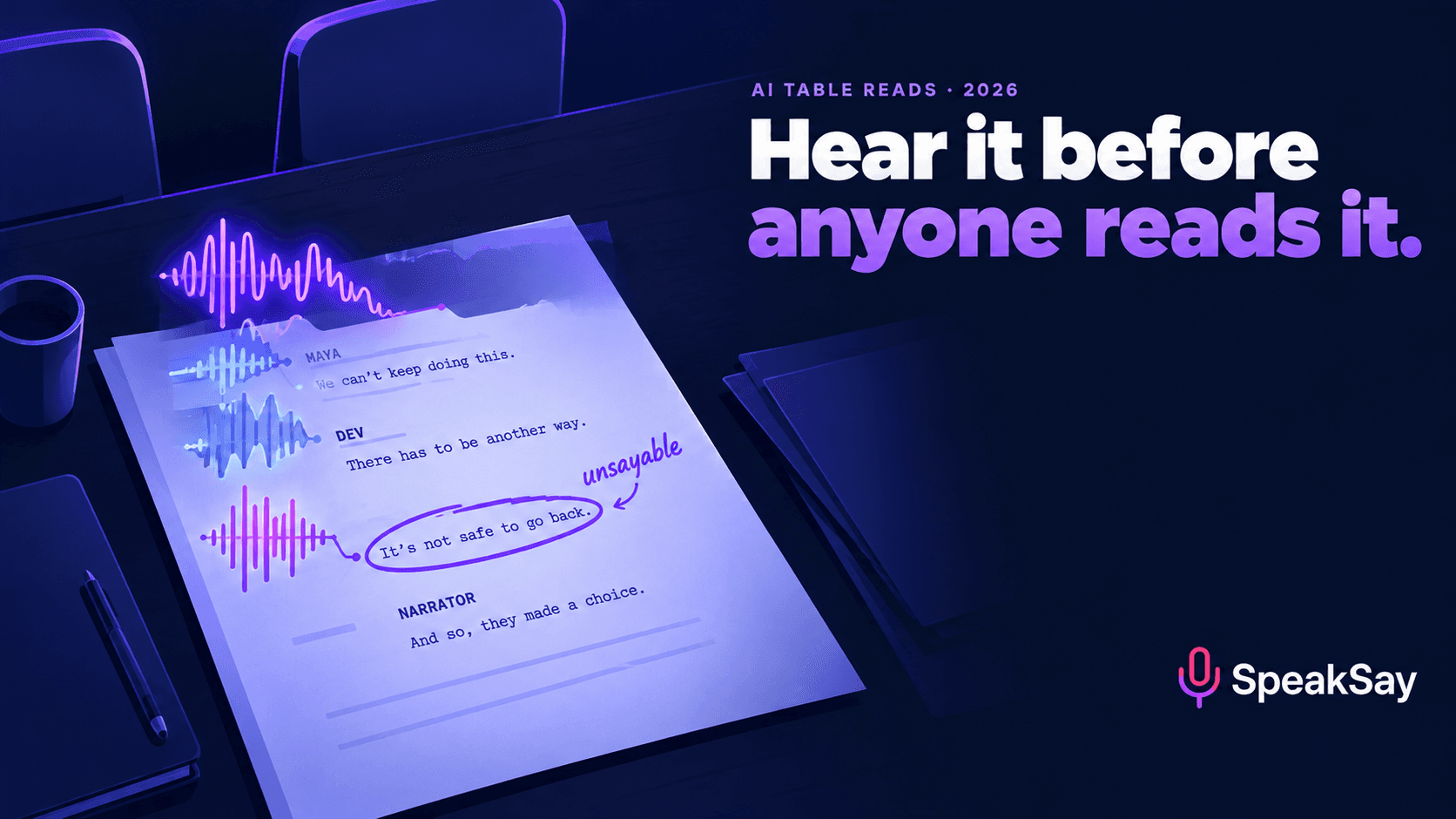
No Actors for a Table Read? Hear Your Screenplay in Distinct AI Voices Before Anyone Else Does (2026)
A table read is the cheapest way to find out your dialogue doesn't work, and most writers can't get one. An AI table read won't give you a performance, but it will tell you which characters all sound like you, which lines can't be said aloud and which scenes run long. Here is how to cast it, what to listen for and where it misleads you
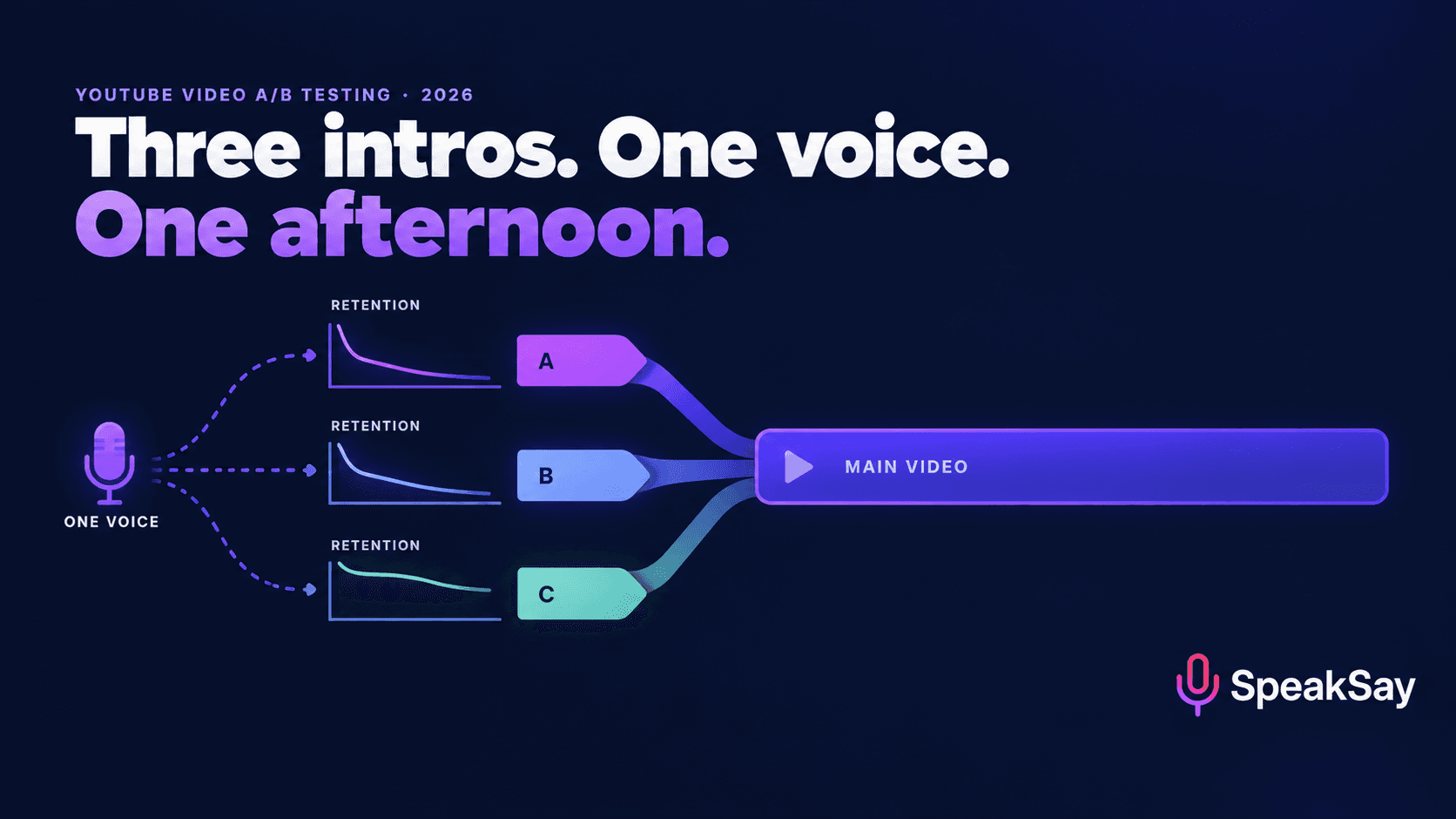
YouTube Music Is About to Pitch Your Podcast in a Synthetic Voice: Write a Show Description That Survives Being Read Aloud (2026)
YouTube Music announced Your Podcast Lineup, a weekly AI-voiced preview that tells listeners which shows they'd like and why. A machine will soon describe your podcast to strangers out loud. Here's what's confirmed, why most show descriptions fall apart when spoken, a rewrite pattern and title audit you can do in 20 minutes, and a spoken pitch you control.
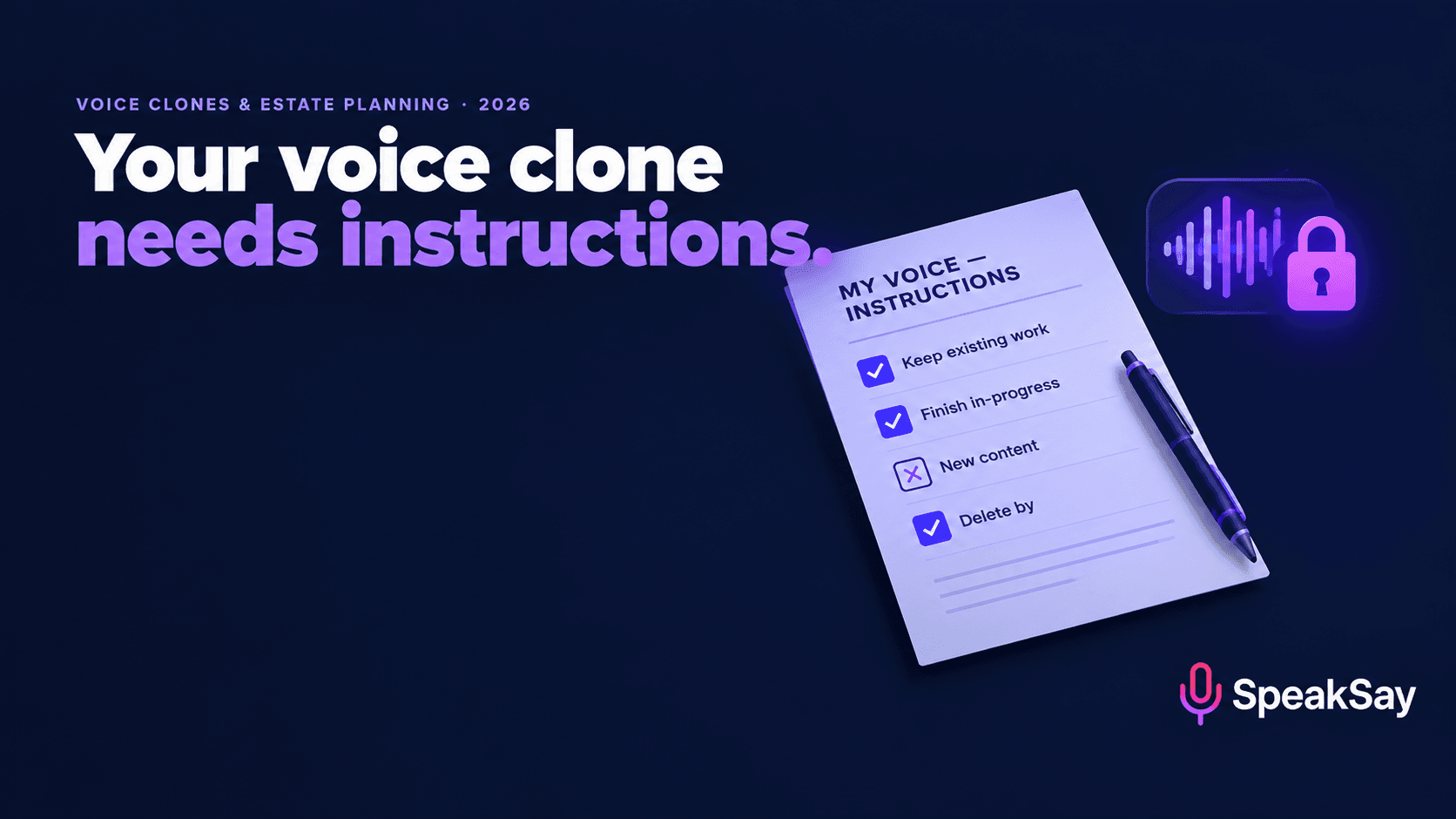
Who Controls Your Voice Clone After You Die? Write the Instructions Now (2026)
If you've cloned your own voice, it will outlast you unless someone deletes it, and right now nobody knows what you'd want. State laws give your heirs control, a federal bill would add registration and renewals, and none of it records your wishes. Here are the four decisions to make, the inventory to write down, and a one-page template.
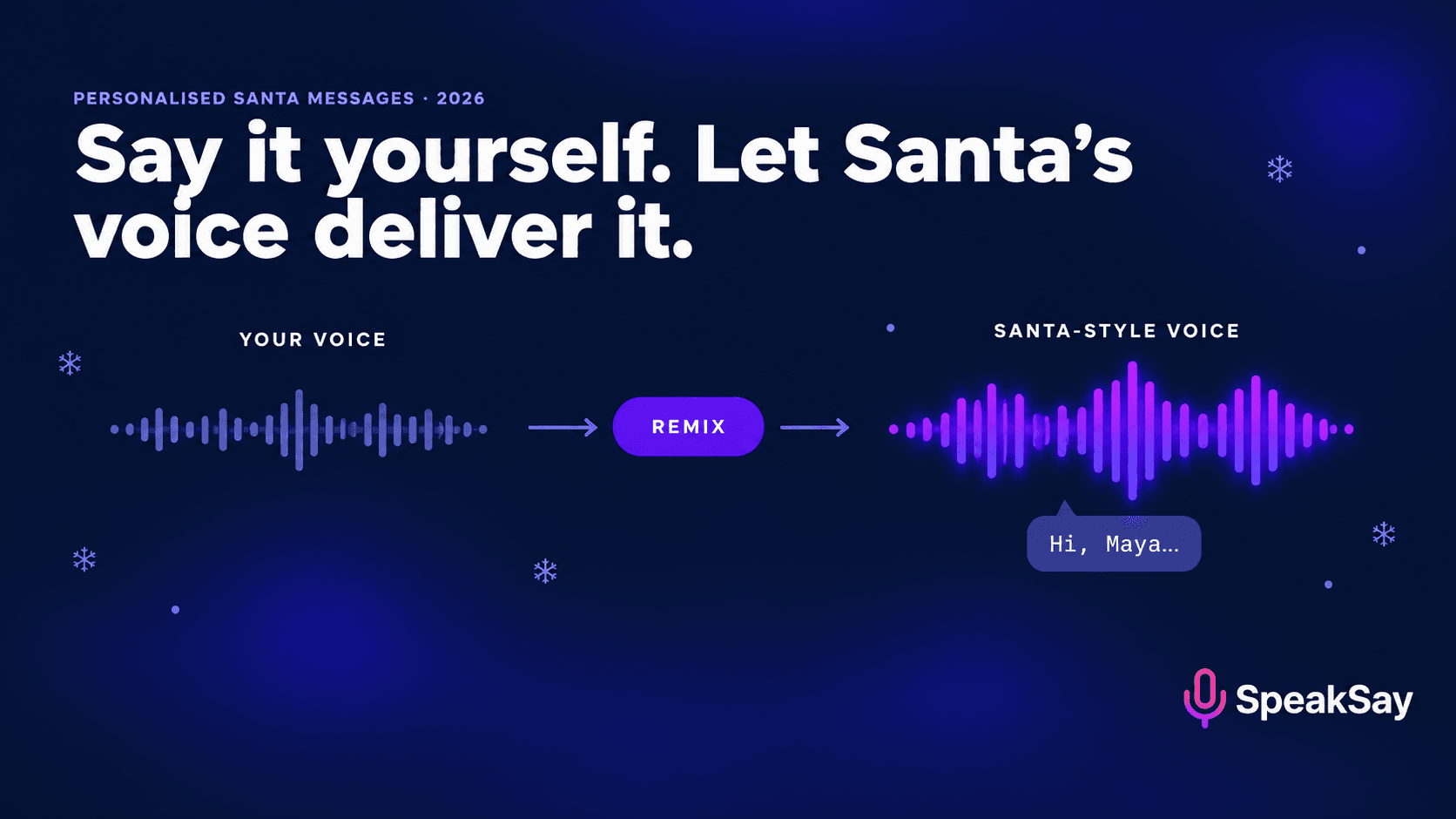
The Santa Message That Gets Your Child's Name Right: Record It Yourself, Remix It Into Santa's Voice (2026)
Template Santa apps mispronounce names, guess at details, and sound like every other kid's message. Recording the message yourself and remixing it into a warm, deep Santa-style voice fixes all three — and keeps your child's details off yet another app. A step-by-step guide with scripts.
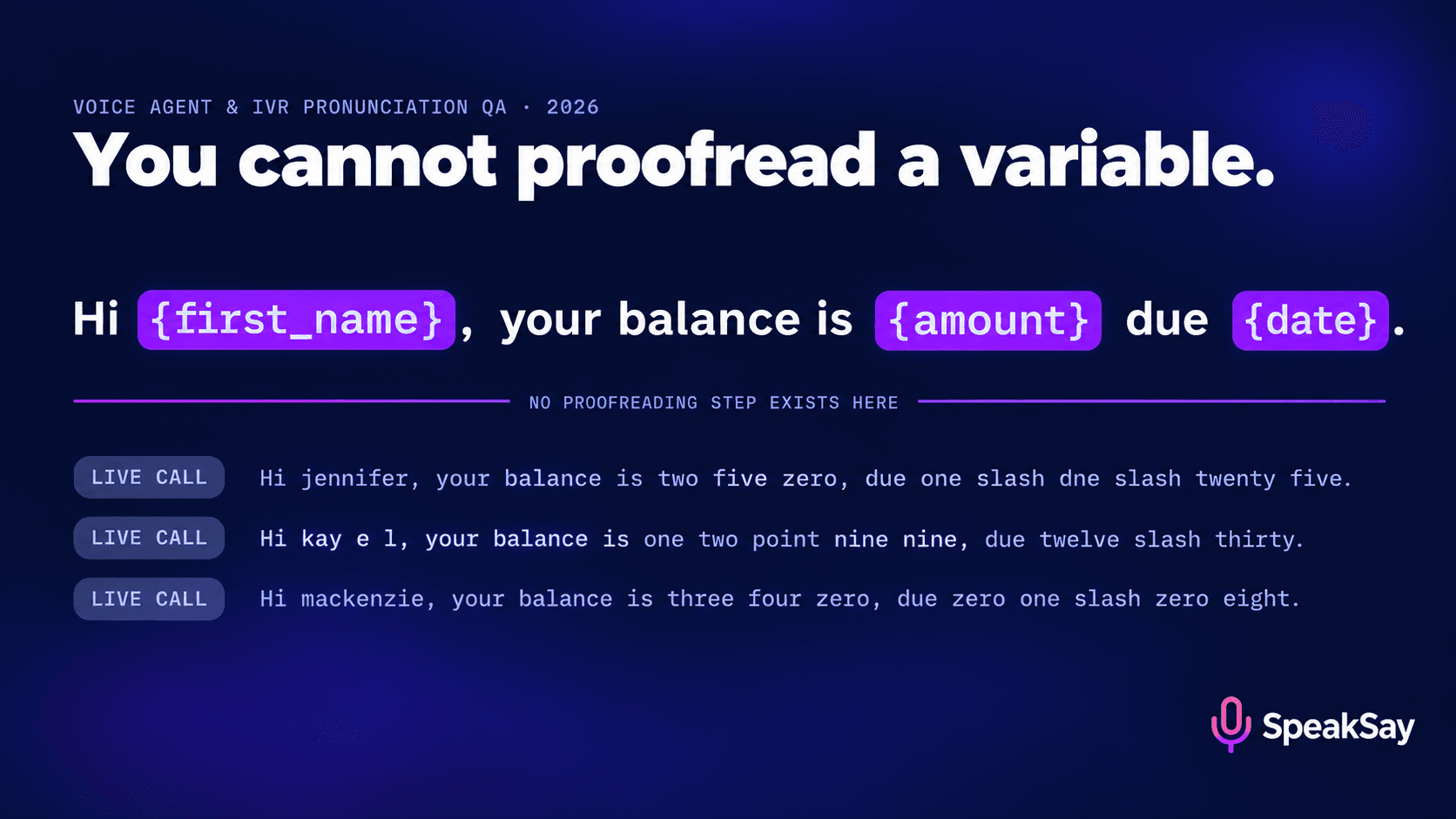
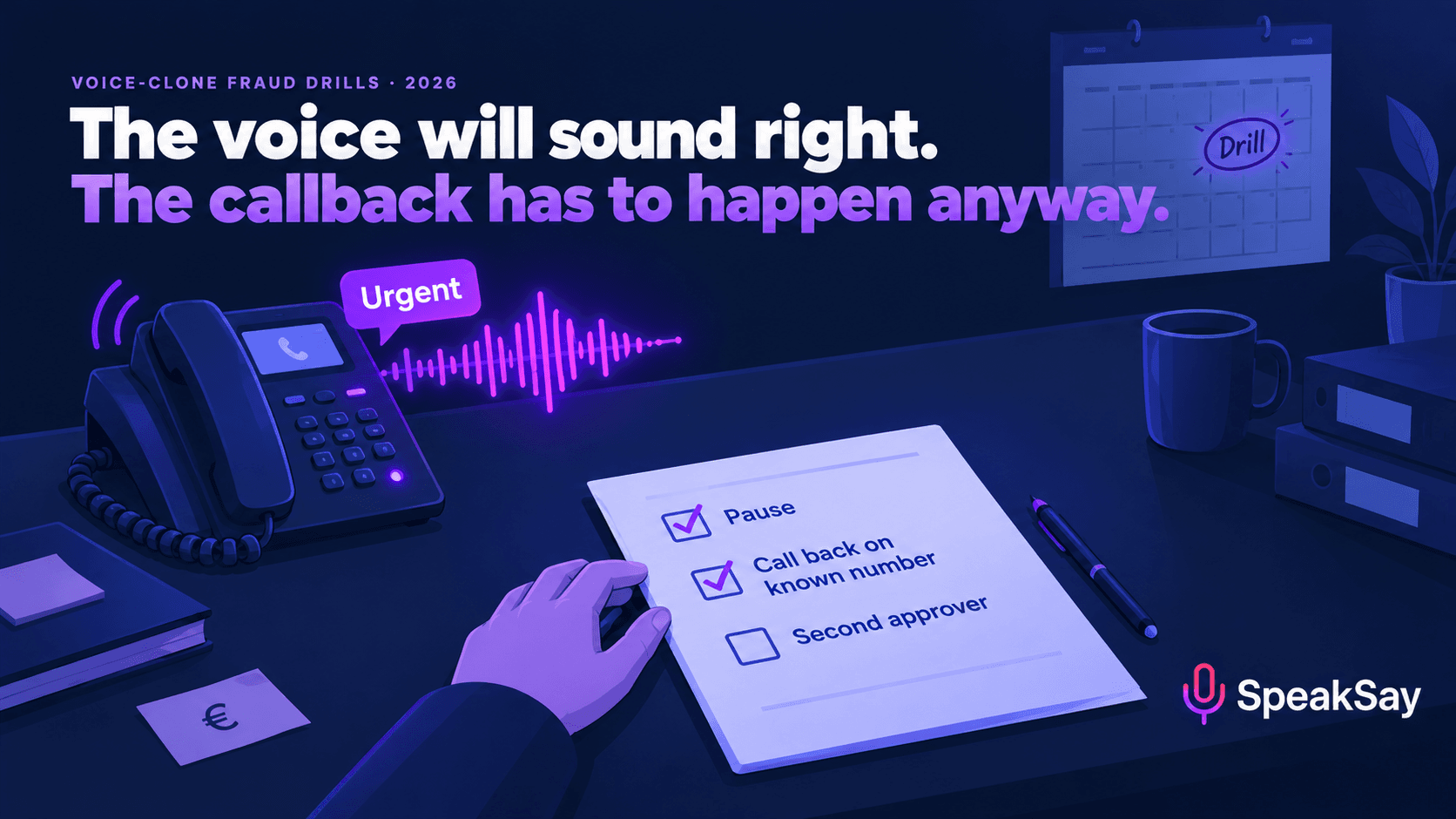
You Cannot Proofread a Variable: Pronunciation and Locale QA for Voice Agents, IVR and Phone Systems (2026)
Your voice agent demo sounded perfect because you wrote the demo text. In production the sentences are assembled at runtime from customer names, amounts, dates, medication names and addresses — strings nobody will ever read before they are spoken. Overall audio quality scores hide this completely. Here is the metric that exposes it, and the QA process that fixes it at the data boundary instead of the text boundary.
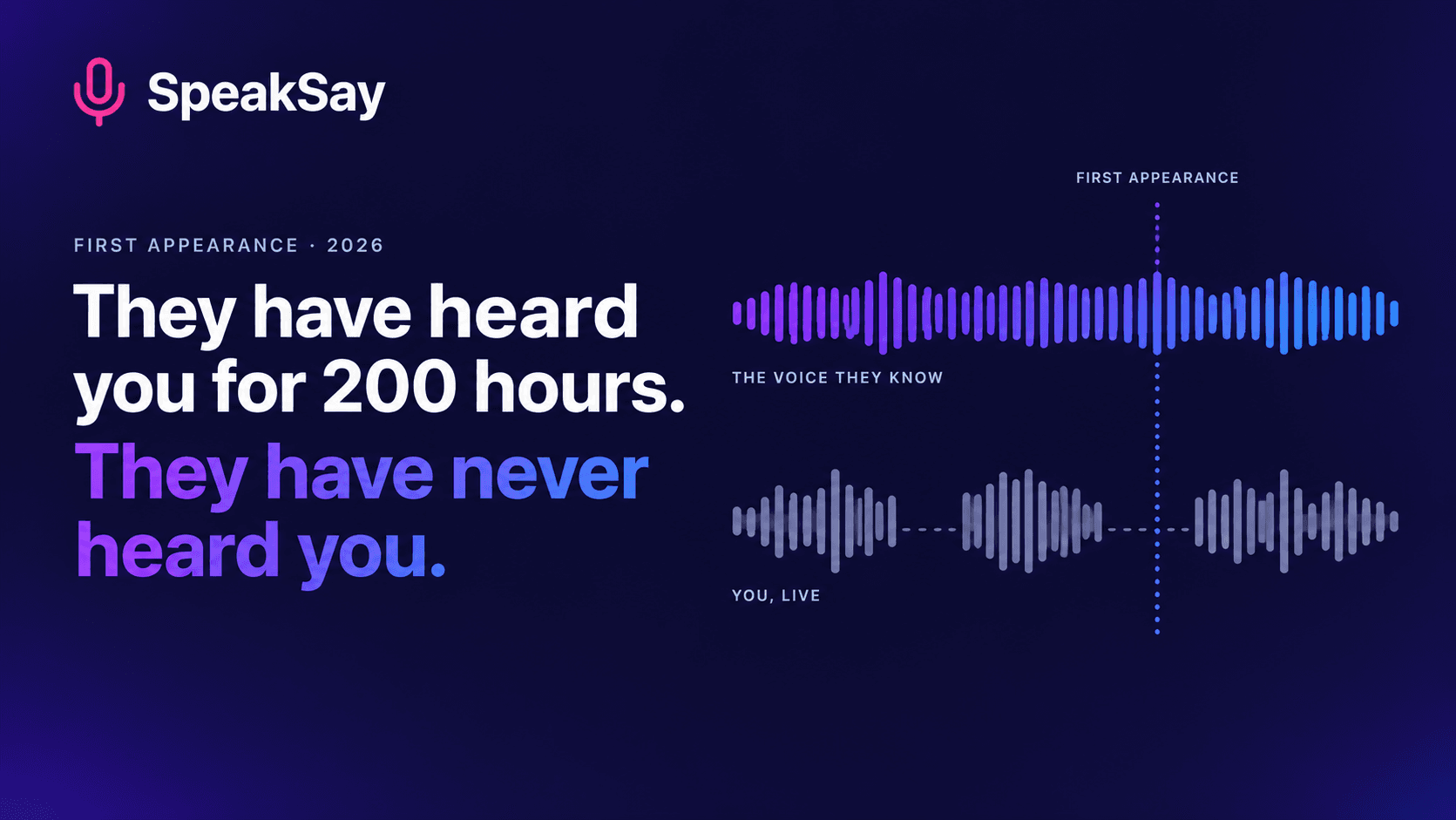
Your Audience Has Never Heard You: What Happens the First Time a Faceless Channel Goes Live (2026)
The fear is that people will be angry you used an AI voice. That is almost never what happens. What happens is a continuity problem: the voice your audience has spent two hundred hours with turns out to belong to nobody, and they find out by accident, mid-livestream. The fix is sequencing, not ethics — and it has a deadline set by whether you own the voice.
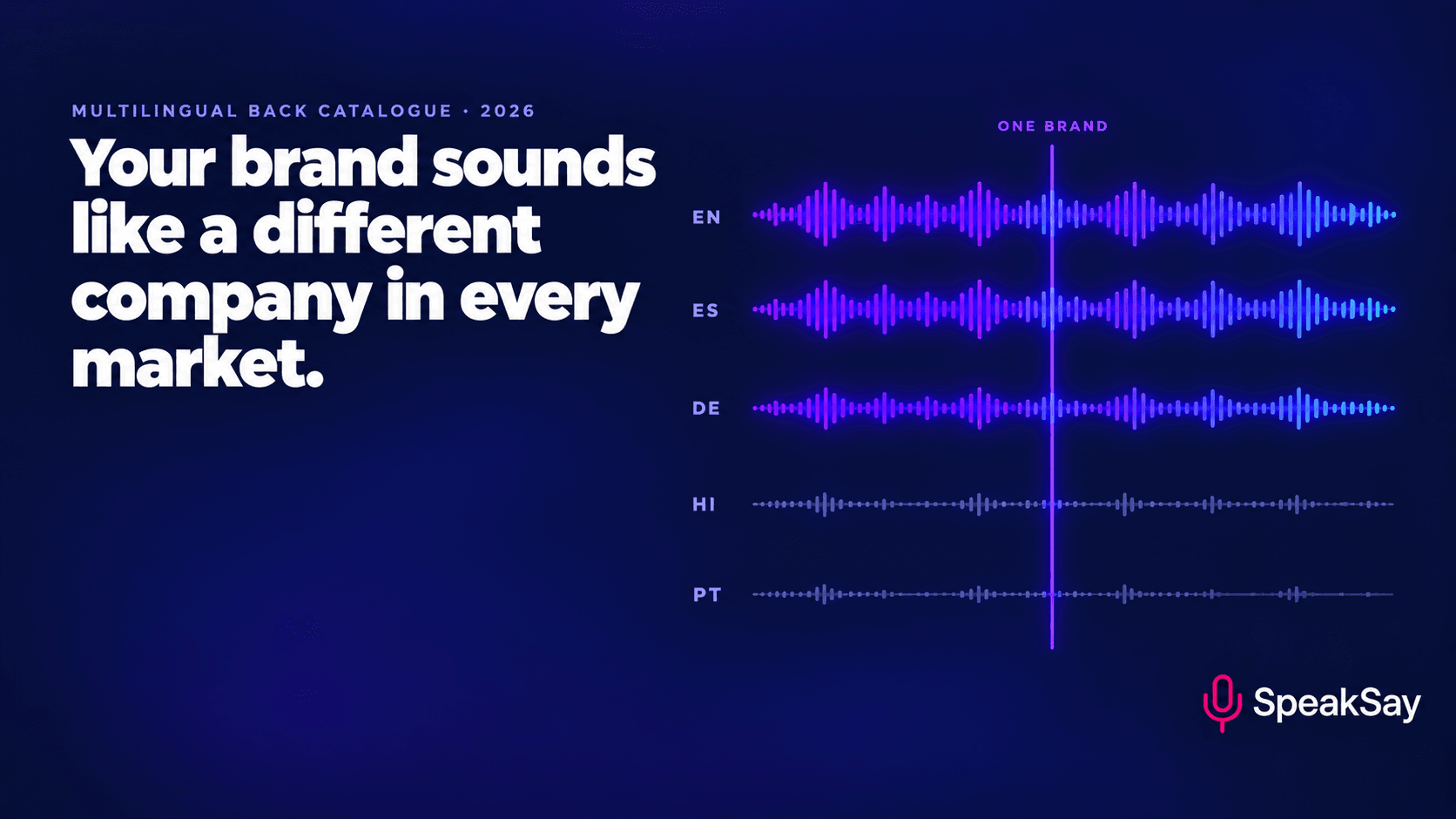
Your Spanish Channel and Your Hindi Channel Are Not on the Same Model: Auditing Multilingual Voice Drift Across a Back Catalogue (2026)
Every dubbing platform advertises a hundred languages. Quality is genuinely comparable in about ten of them. If you have been publishing in five or six markets for a year, your catalogue is now sitting on several different model generations at once — and you have almost certainly never listened to the weakest one.
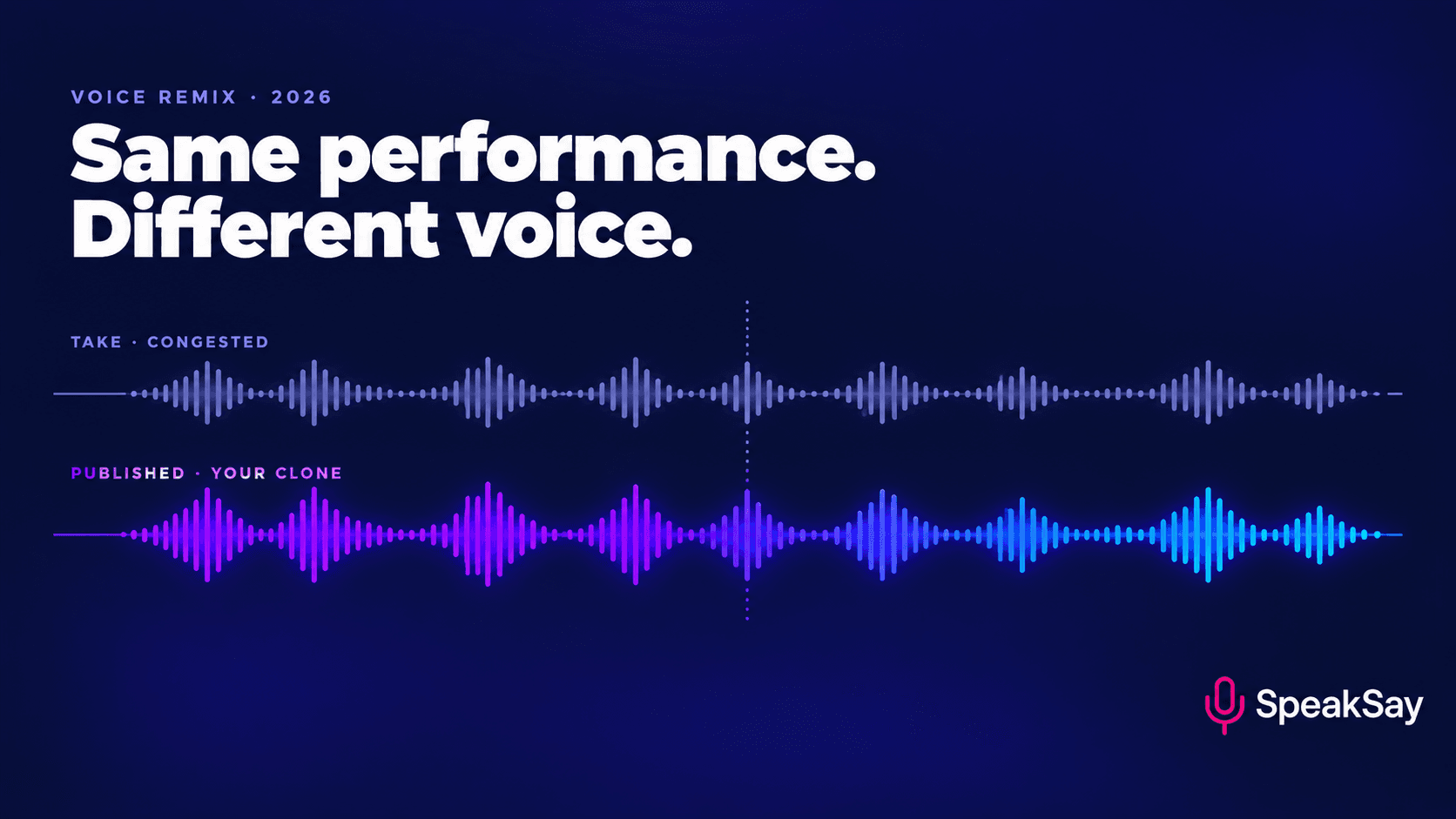
You Recorded the Whole Script With a Cold: Publishing in Your Own Voice When Your Voice Is Gone (2026 Voice Remix Guide)
The entire voiceover internet answers "I have a cold and I publish Thursday" with "reschedule." That is not advice, it is a shrug. A cold breaks your timbre and usually leaves your performance completely intact — which means the take you just recorded is more salvageable than it sounds.
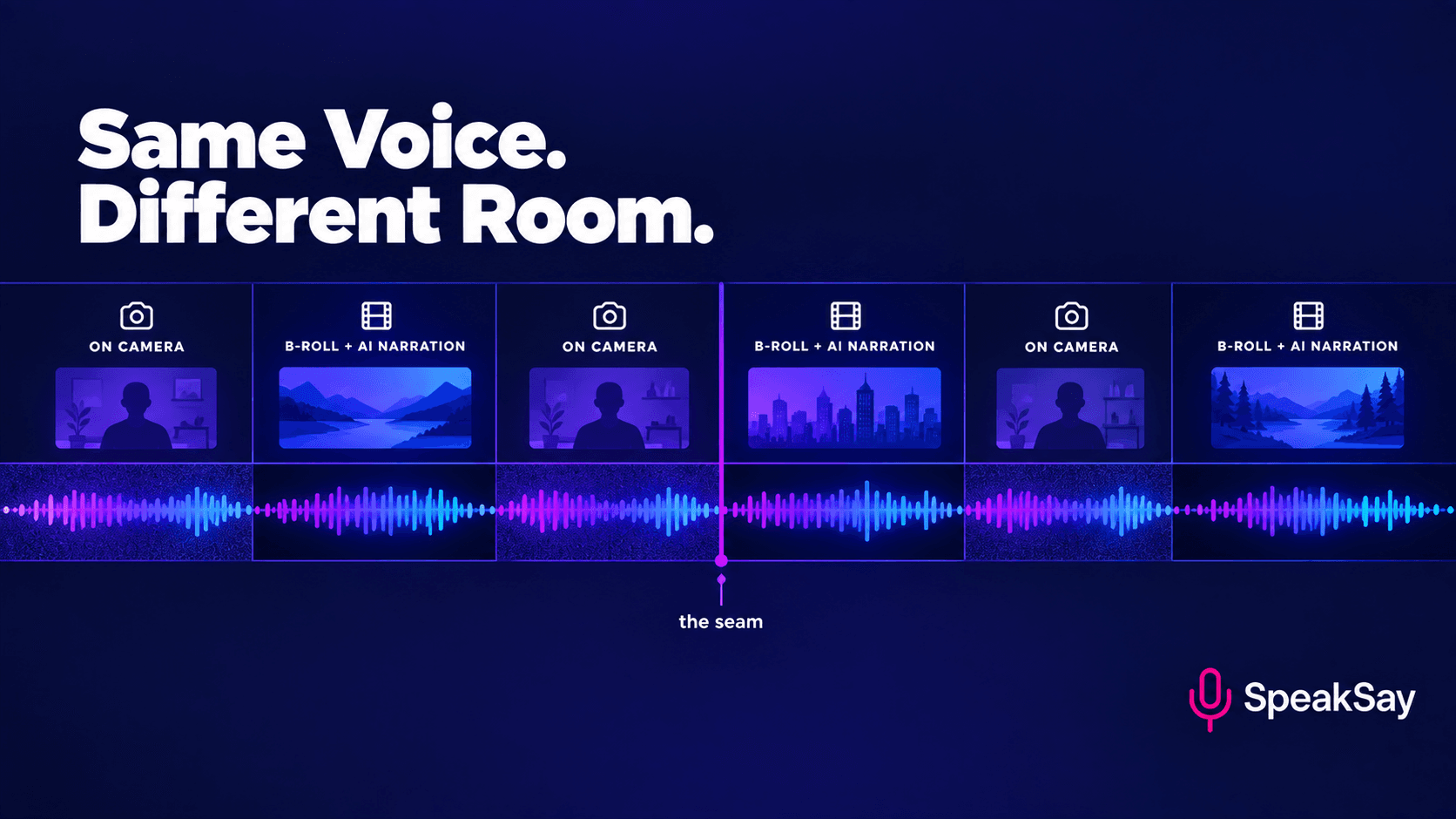
You're On Camera in Half the Video. Why Your AI Voiceover Sounds Like a Different Person in the Other Half (2026)
Viewers comment that the voice changes halfway through, so creators conclude the clone is bad and go shopping for a better one. It almost never is the clone. The hybrid video — talking head cut with b-roll narration — is the only place a voice clone is judged against the real thing eleven seconds later, and what fails at the cut is overwhelmingly acoustic: room tone, proximity, spectral balance and loudness, not timbre. Here is how to tell which of the three mechanisms is yours, and why the fix runs toward the room rather than toward the studio.
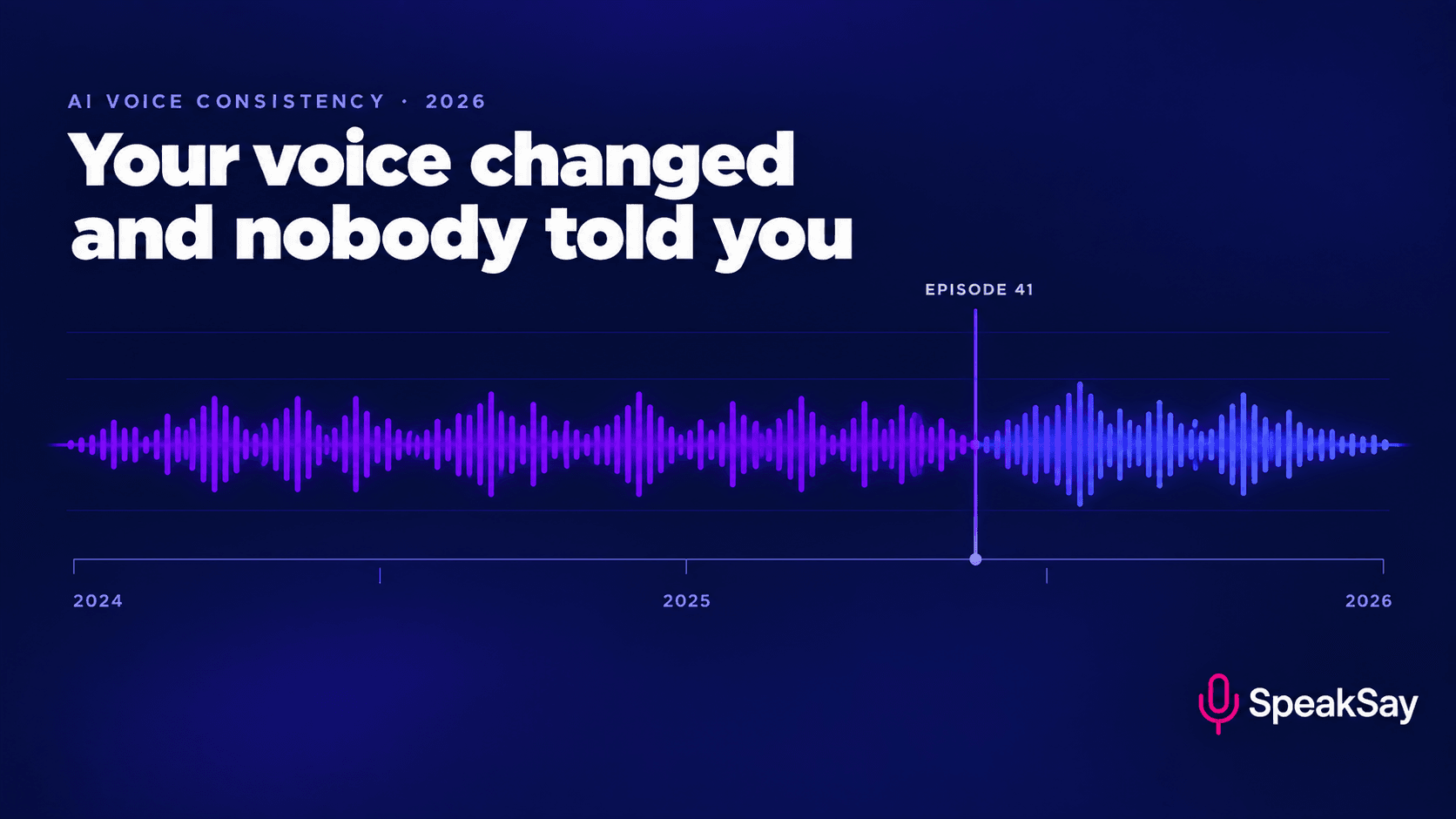
You Upgraded the Voice Model and Broke Your Back Catalogue: AI Voice Consistency Across a Multi-Year Channel (2026)
Your AI narrator sounds slightly different in episode 41 than it did in episode 12 — and you never changed the voice. Model versions move underneath you. Here is what actually drifts, why listeners register it without being able to name it, and how to decide what to re-render.
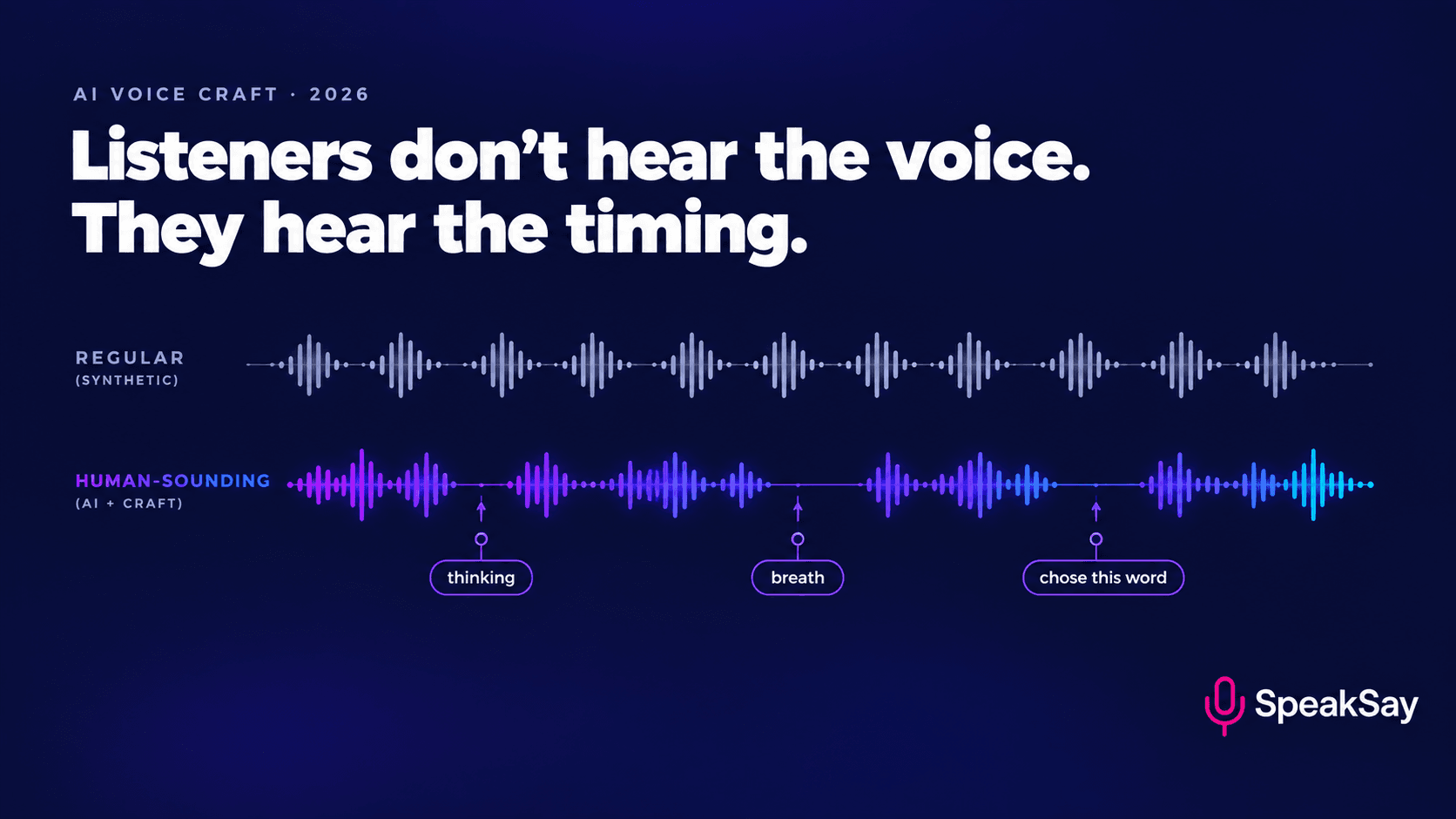
Make It Sound Human" Is the Wrong Instruction: What Listeners Actually Detect in an AI Voice (2026)
The timbre problem was solved years ago. In 2026, people who say an AI voice "sounds fake" are almost never reacting to the sound — they are reacting to timing, to emphasis landing on the wrong word, and to a read that never changes its mind. Here is how to test for each, and fix them.
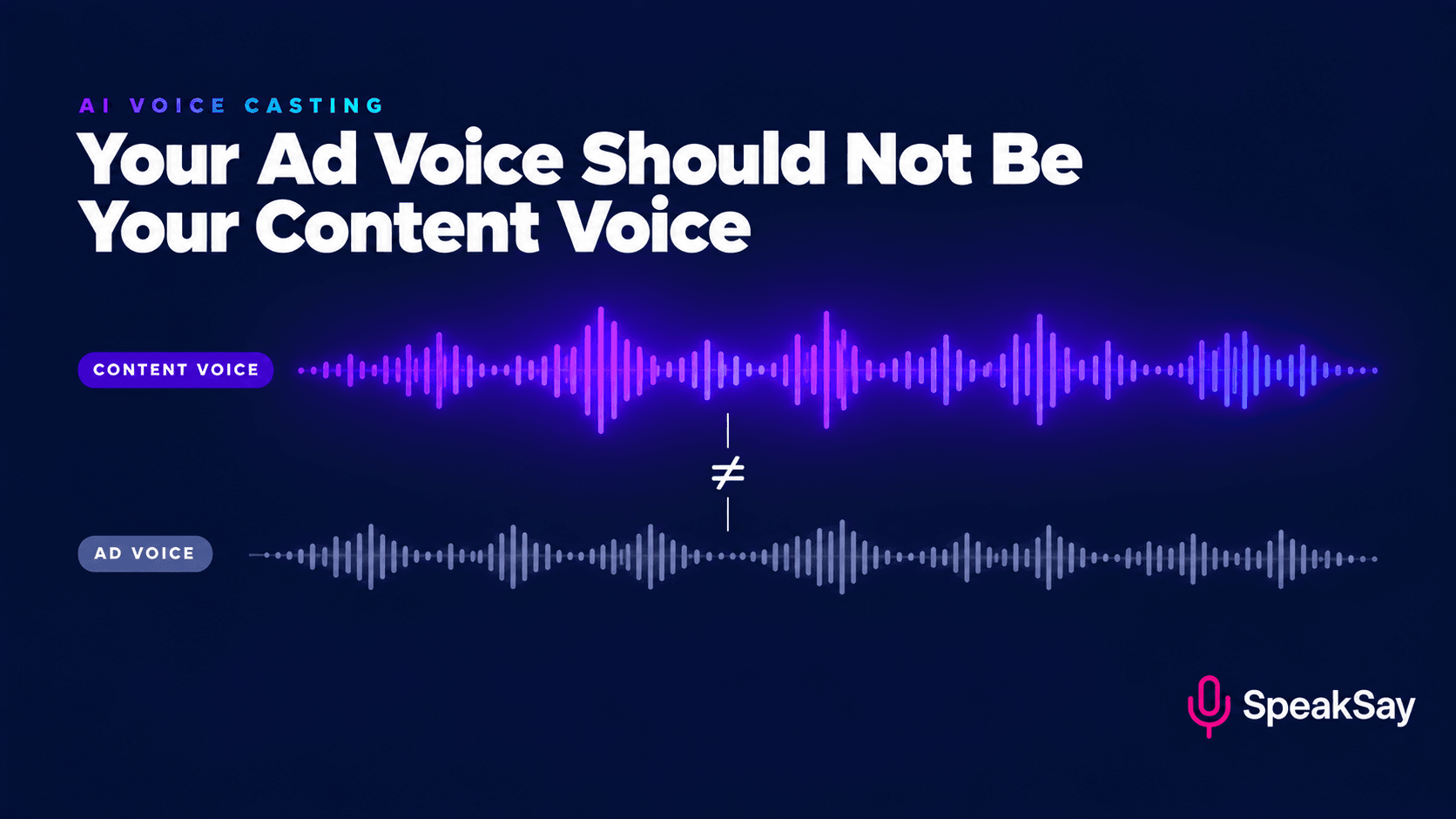
Should Your Ads Use the Same Voice as Your Content? The 2026 AI Voice Casting Decision (With the Trust Data)
One 2026 study found AI-voiced audio ads perform as well as human-voiced ones — and that regional AI accents beat a neutral human voice three to one on recommendation. Another found human voices outperform AI by 34% on trust. Both are right. Here is what they actually mean for how you cast.
Your AI Voice Says the Number Before Anyone Has Found the Axis: How to Narrate Charts and Data Videos (2026)
A viewer reads a chart in two stages — shape in about two seconds, detail in five to ten. Most data narration talks straight through the first stage and dumps numbers into the second. Here is the orientation beat, the shape-before-number rule, the percent-versus-percentage-point trap, and a chart-type-by-chart-type voice playbook.
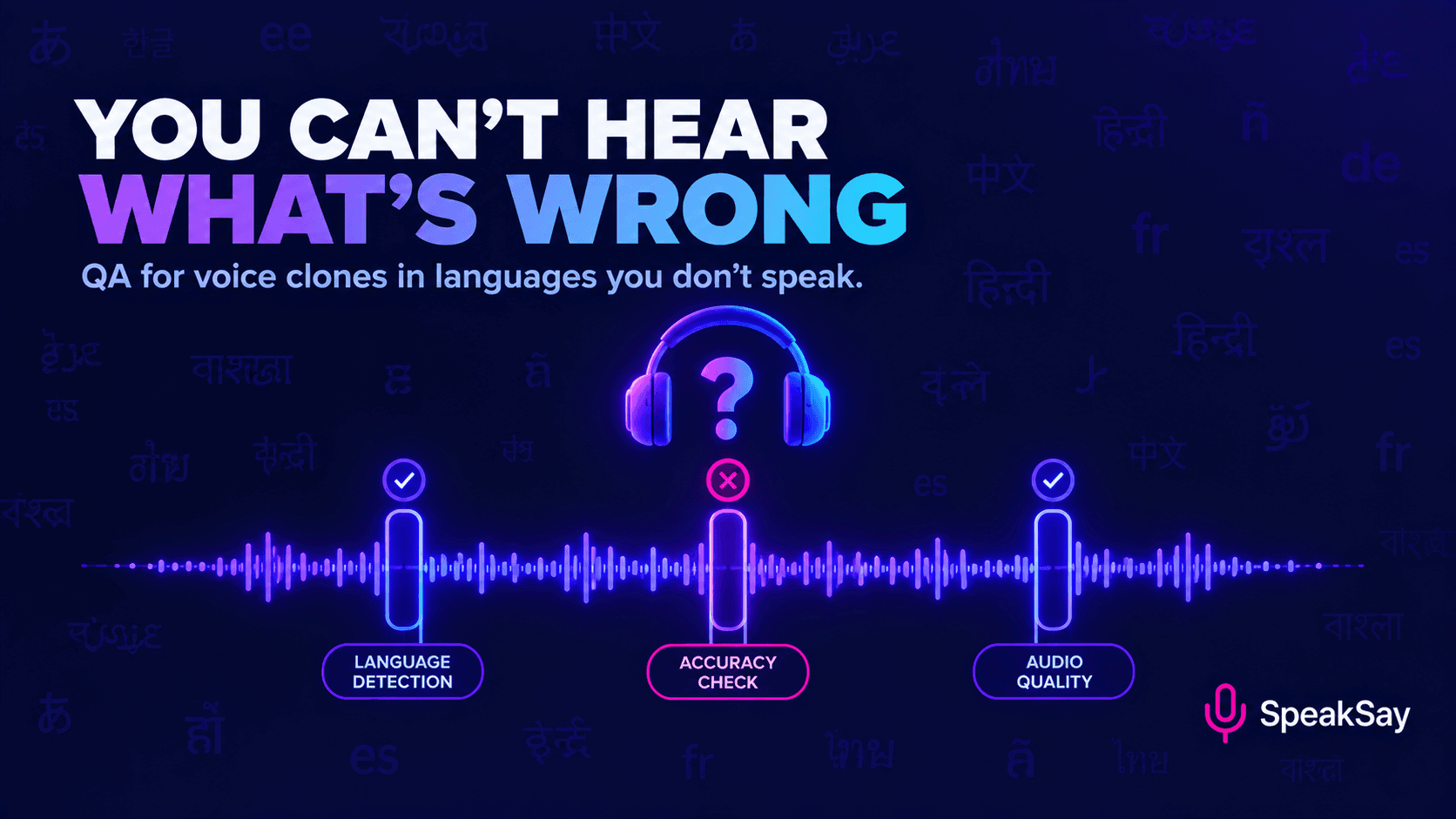
Your Voice Clone Just Spoke Japanese and You Have No Idea If It Was Right: The 2026 QA Protocol for Languages You Don't Speak
Cross-lingual voice cloning lets your own voice speak languages you have never studied. The obvious problem is the one nobody plans for: you cannot hear the errors. Here is what actually goes wrong in cross-lingual synthesis, the four failure classes that native listeners notice first, and a review protocol you can run without speaking a word of the target language
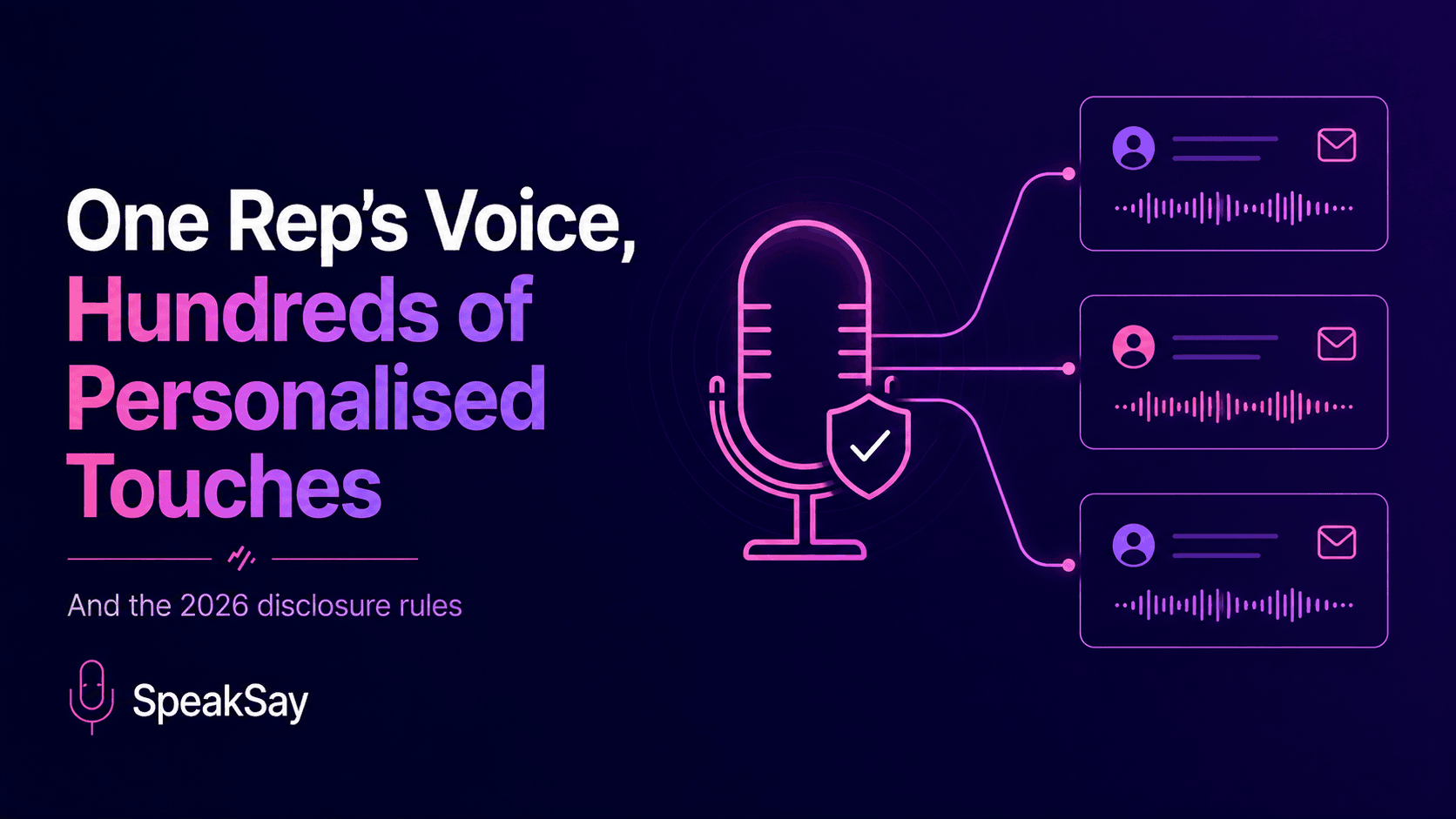
Prove the Voice Is Yours: Content Credentials, SynthID & the 2026 Voice-Provenance Setup Every Creator Should Have
C2PA is now an ISO standard, OpenAI joined its steering committee in May 2026, and voice clones are being argued over as evidence in court. Almost no creator has provenance switched on. Here is the four-layer setup that actually holds up.
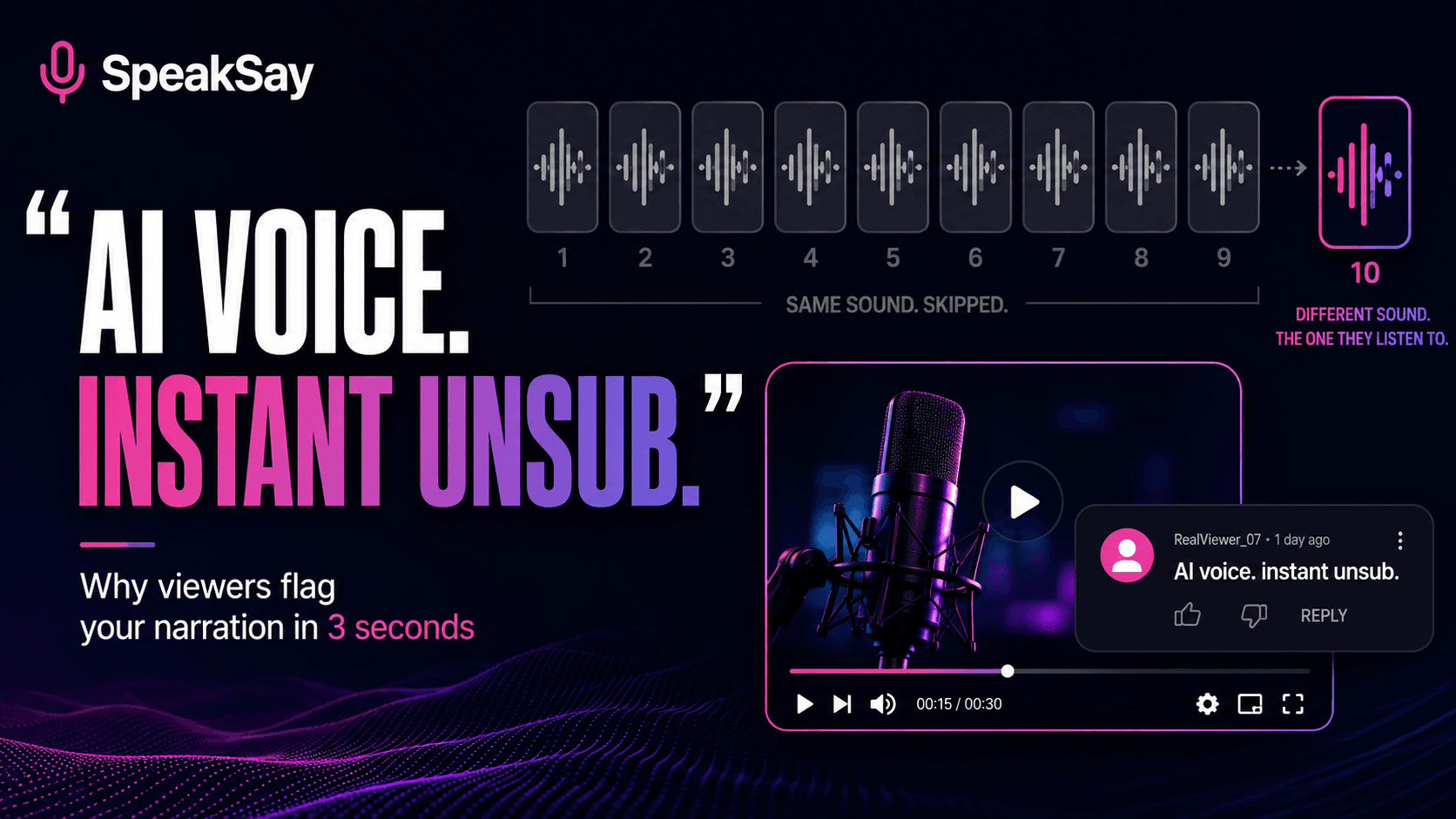
YouTube Just Deleted 16 AI Channels and 4.7 Billion Views: What They Had in Common — and the Human-Input Test Your Faceless Channel Must Pass (2026)
YouTube wiped 16 major AI channels, 4.7 billion views and roughly $10 million a year in revenue. AI wasn't the reason. Here is the pattern the deleted channels shared, and the seven-point human-input test your faceless channel needs to pass before the next sweep.
Your Employer May Already Own an AI Clone of Your Voice: The Contract Clauses Radio Hosts, Podcasters & In-House Talent Must Read (2026)
An entertainment attorney warned in August 2026 that broadcast employment agreements are a blind spot on AI voice cloning - most are silent on synthetic replicas, and standard likeness language may already permit them. Here are the exact clauses to find in your contract tonight, and what to do about them.
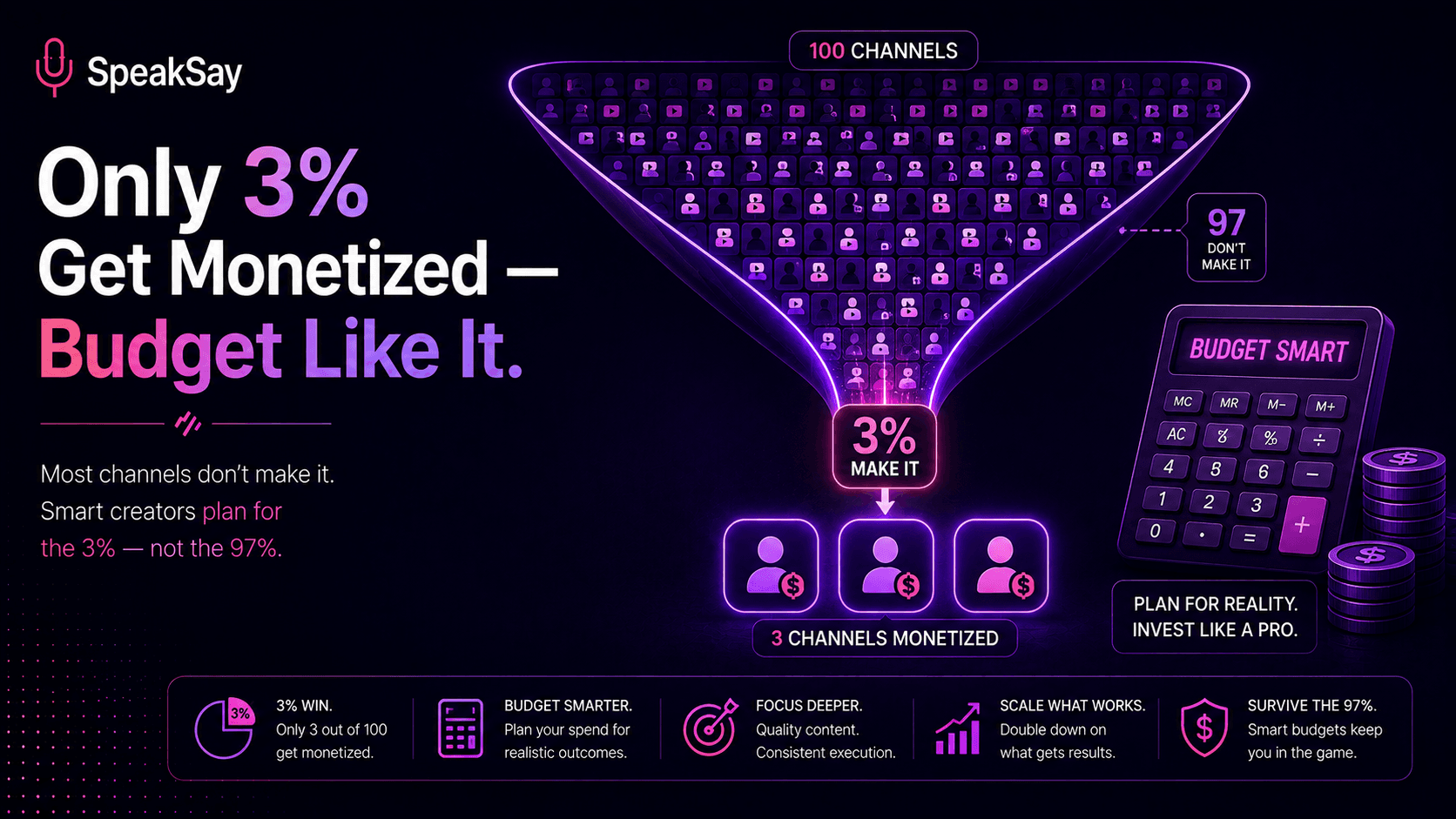
Your Twitch Alerts All Sound the Same Robot: Custom TTS Voices for Donations, Alerts & Channel Points (2026)
Every stream's donation TTS is the same default voice — a meme, but zero brand identity. Here's how streamers build custom alert voices and donation-tier voice drops without real-time CPU cost.
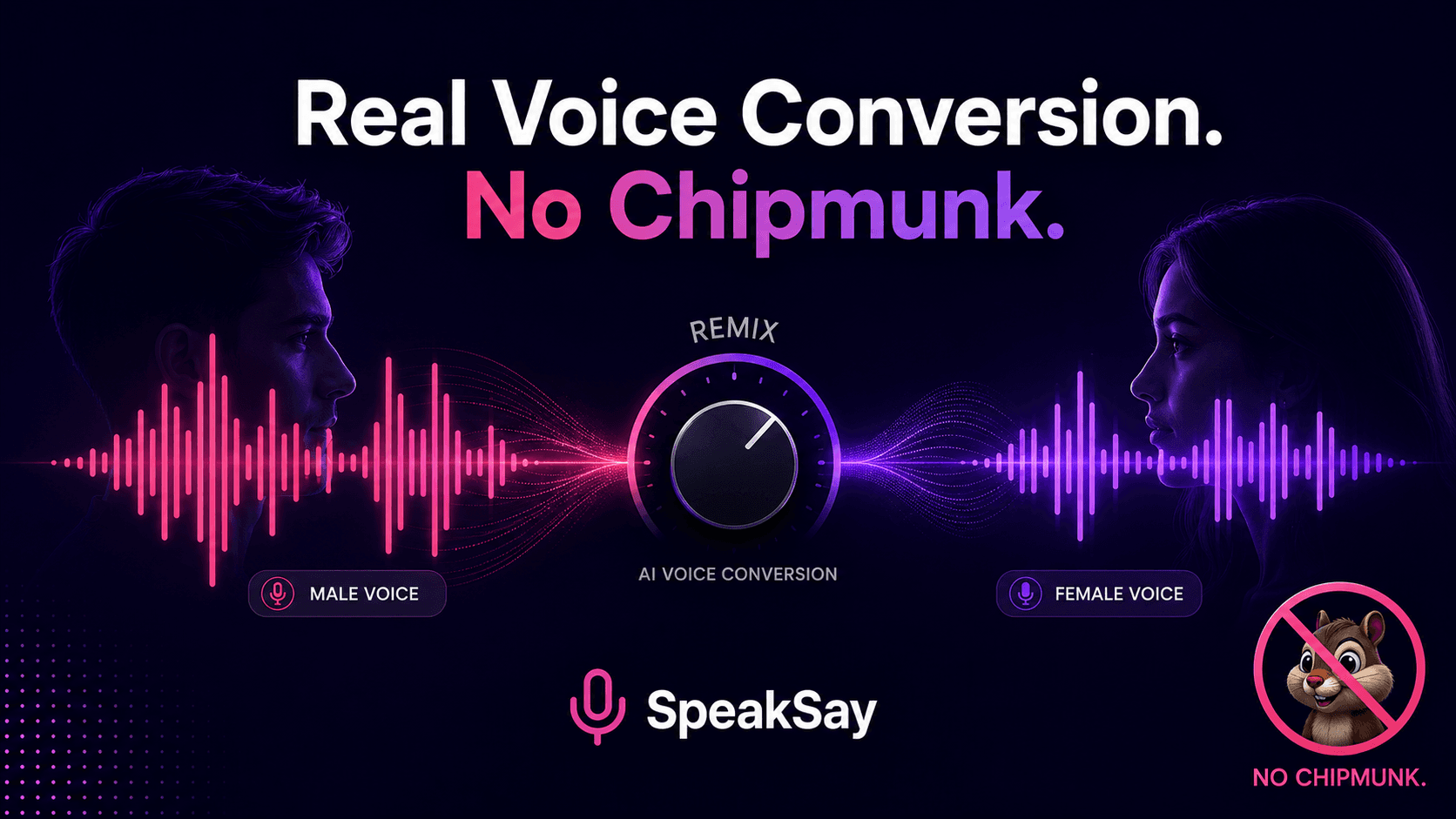
Male-to-Female AI Voice Changer That Doesn't Sound Like a Chipmunk: Character Voices for VTubers, Story Accounts & Skits (2026)
Pitch-shift voice changers give you two settings: chipmunk and demon. Here's how AI voice conversion actually works in 2026 — keeping your performance and timing while swapping the voice identity completely.
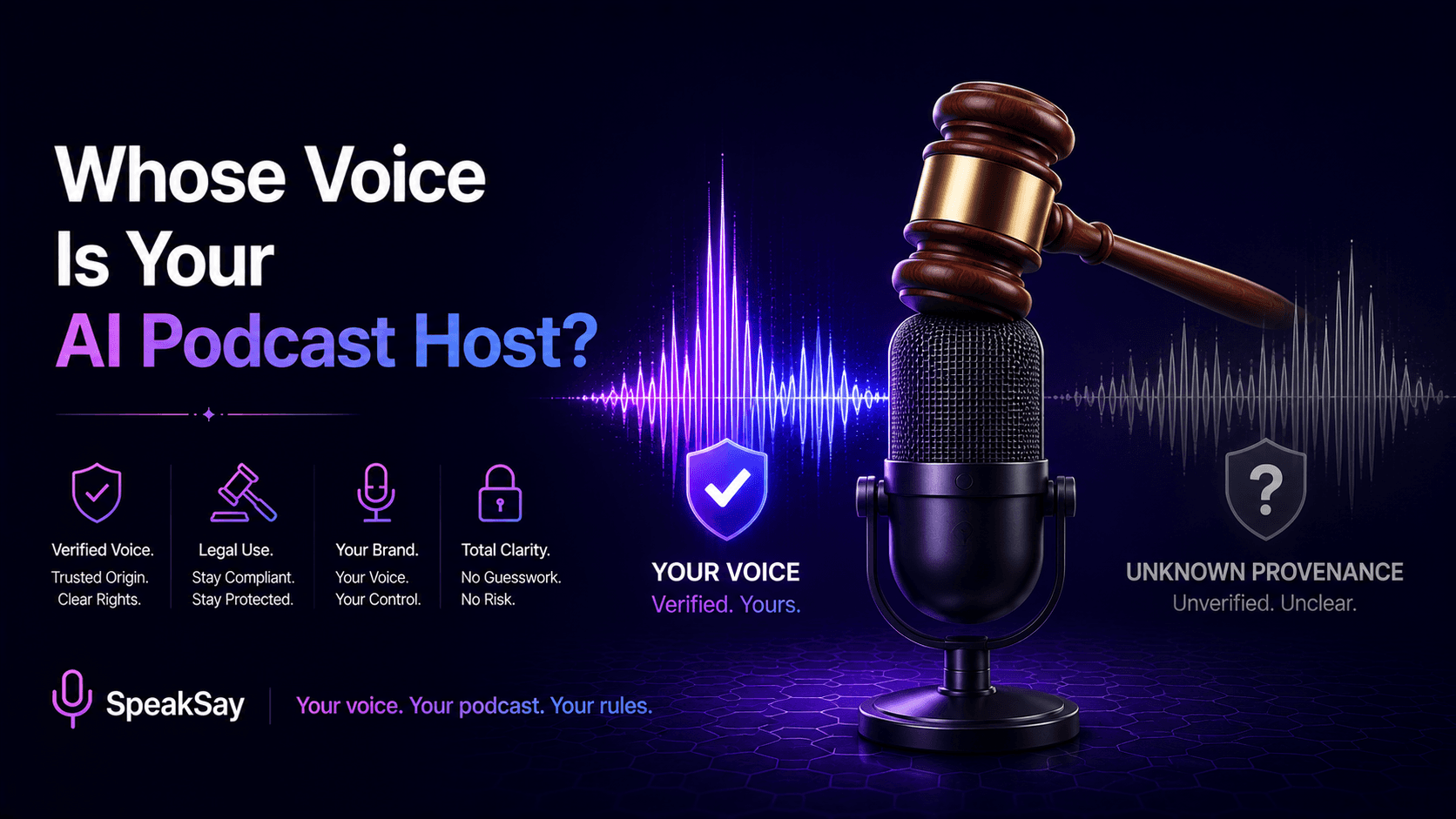
Google Got Sued Over Its AI Podcast Host's Voice: How to Make Sure YOUR Podcast Voice Is Legally Yours (2026)
NPR's David Greene says Google's AI podcast host is a dead ringer for his voice — and he's suing. If you publish AI podcasts with stock host voices, here's what the case means for you, and the two ways to make your podcast voice legally yours.
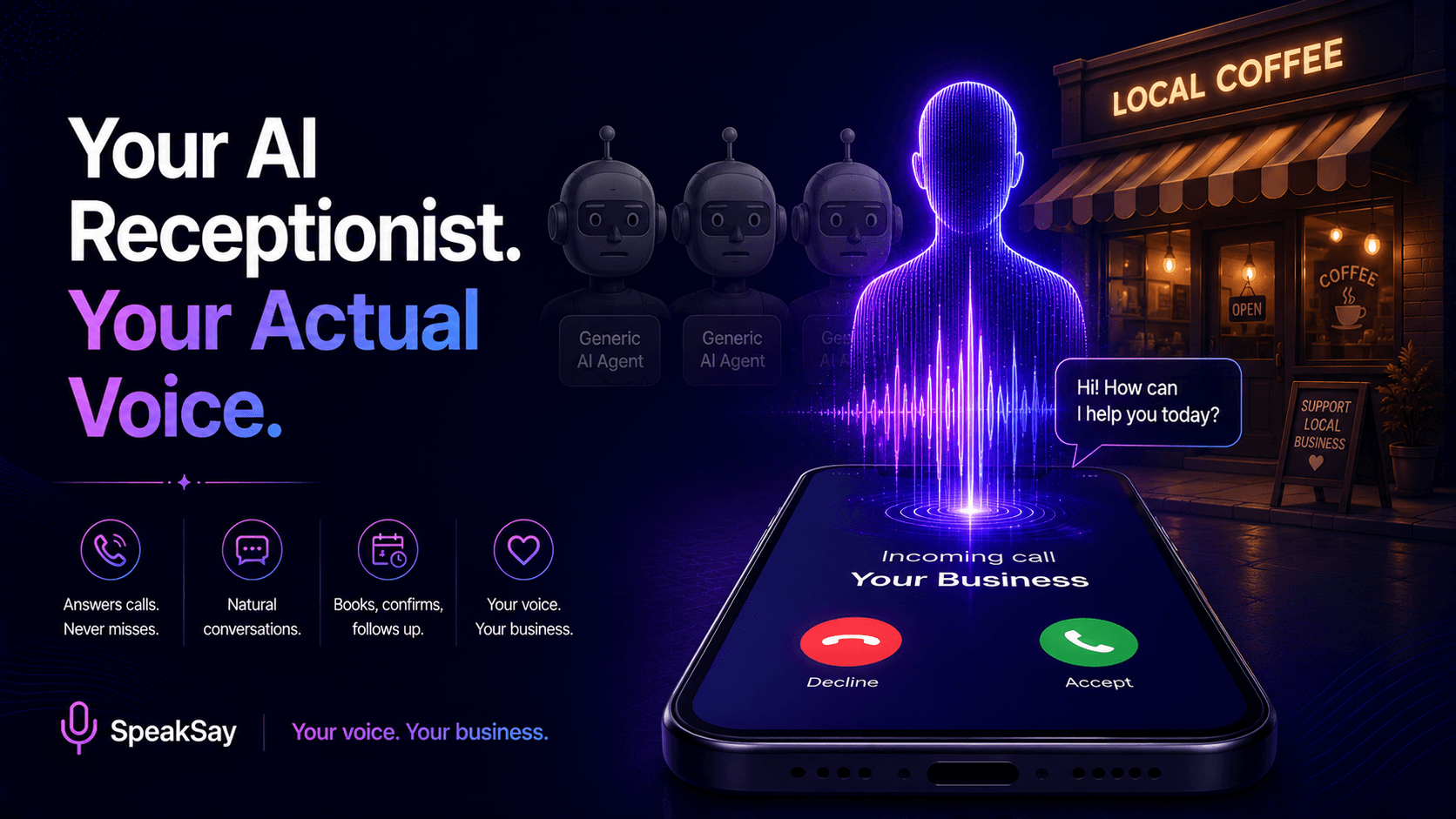
AI Phone Agents Are Here, but They All Sound the Same: Give Yours Your OWN Voice (2026 Small-Business Guide)
Every business is getting an AI receptionist in 2026 — and they all sound like the same robot. Here's how to clone your own voice so your AI phone agent, voicemail, and after-hours line sound like the human your customers actually know.
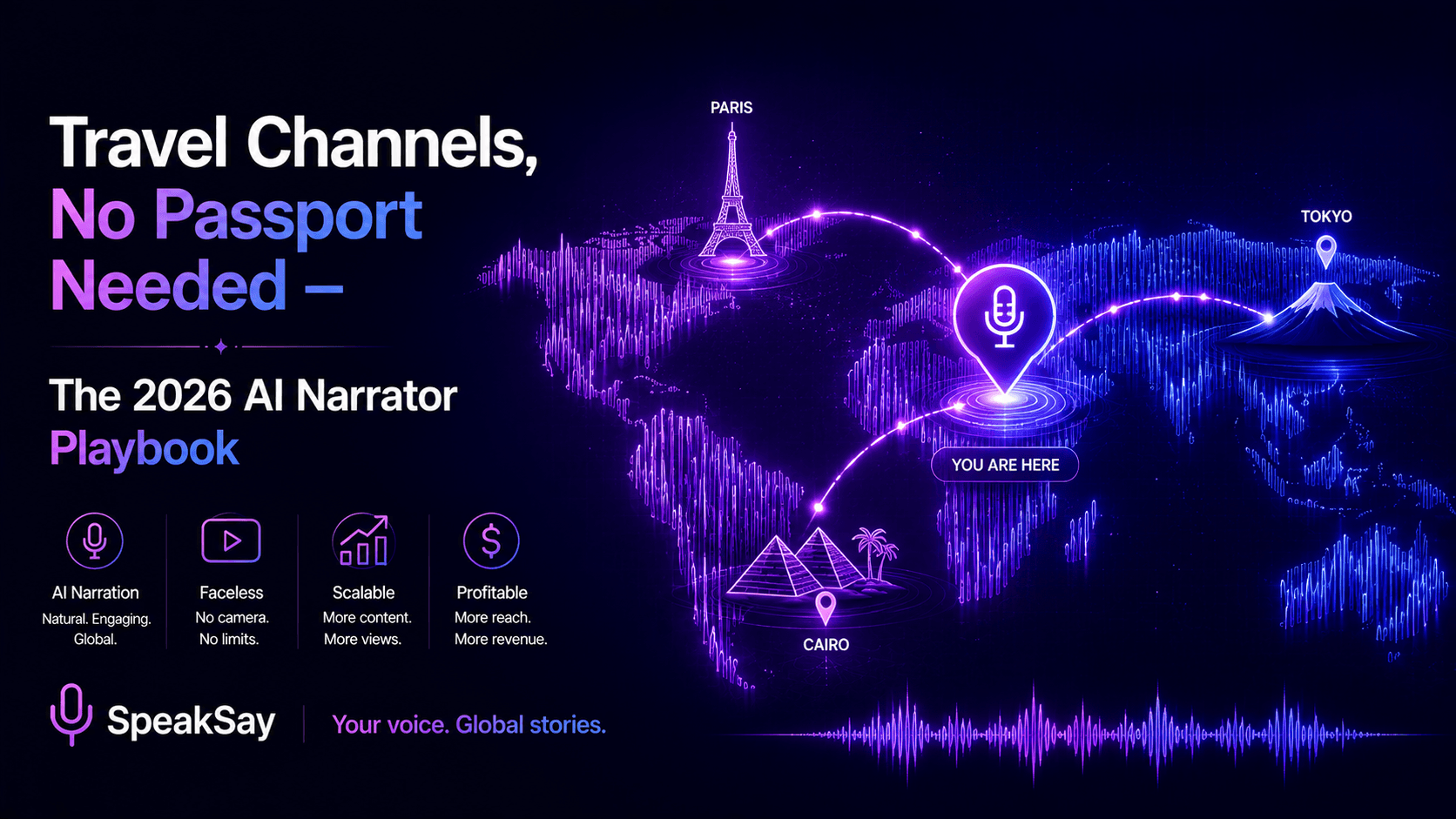
Travel & Geography Faceless Channels in 2026: The AI Narrator Playbook That Passes the "Inauthentic Content" Test
Travel is one of YouTube's most-watched niches, but stock-clip slideshows with robotic narration now get flagged as inauthentic content. Here's how to build a travel or geography channel — without traveling — using original scripts and a signature AI narrator that viewers actually binge.
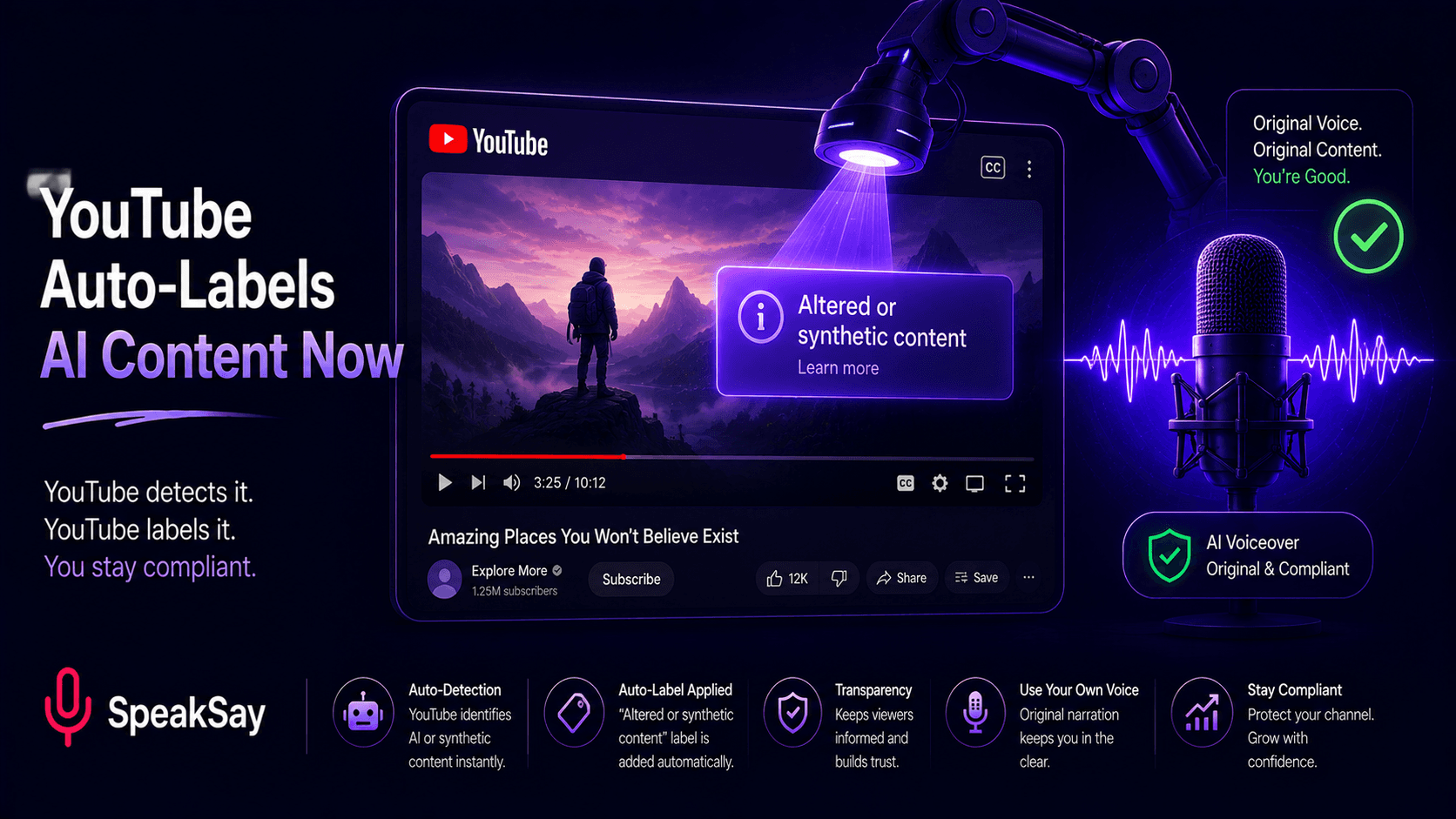
YouTube Now Auto-Labels AI Content (2026): What Triggers Detection, the Disclosure-Box Mistake That Flags Your Channel, and How Voiceover Creators Stay Clean
YouTube now uses internal detection to auto-apply AI labels to undisclosed synthetic content — and thousands of creators are flagging themselves by checking the disclosure box when they don't need to. Here's exactly what triggers detection, when the box is required, and the AI voiceover workflow that stays clean.
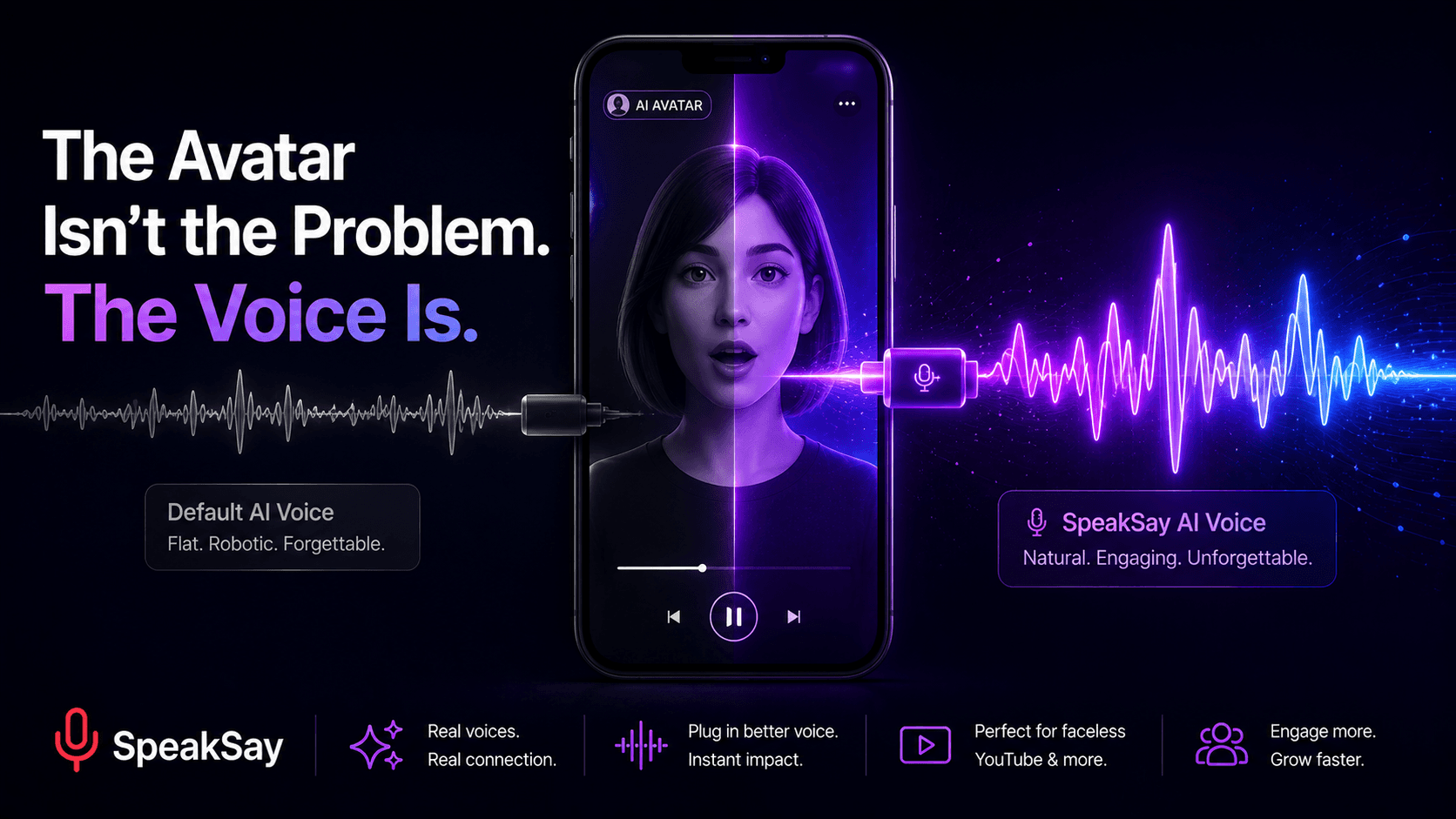
AI Lip-Sync Videos Are 2026's Top Shorts Format — Why Default Avatar Voices Flop and How to Give Yours a Real One
AI avatar videos are one of the highest-volume viral formats of 2026 — and most of them die in two seconds because of the voice. Here's the voice-first workflow that fixes it.
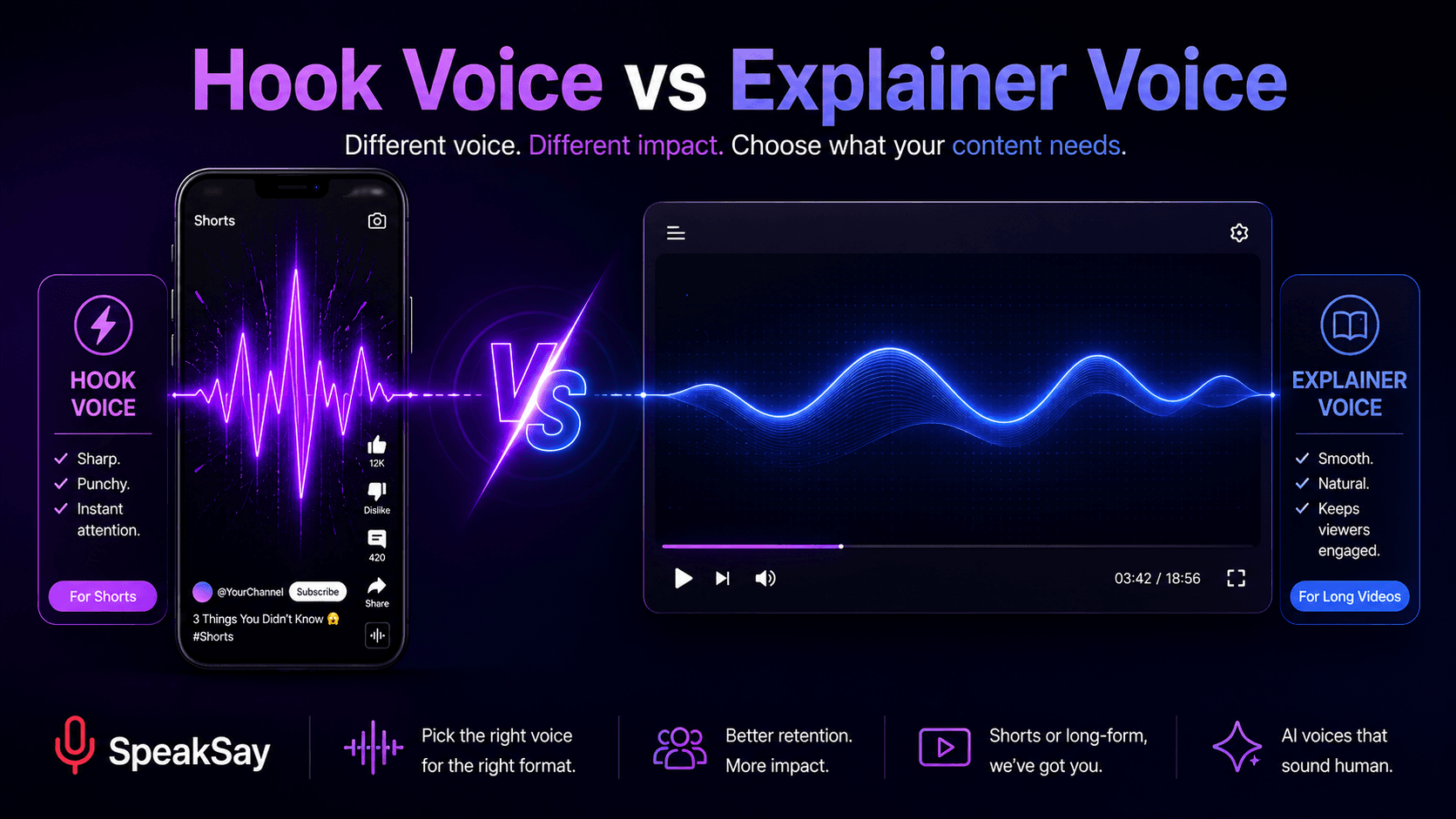
Hook Voice vs Explainer Voice: Why the Same AI Voice Fails on Shorts and Long-Form (2026 Voice-Pairing Guide)
The voice that stops a scroll in 2 seconds will exhaust viewers over 10 minutes — and the voice that carries a documentary dies on Shorts. Here's the 2026 voice-pairing framework serious channels use.
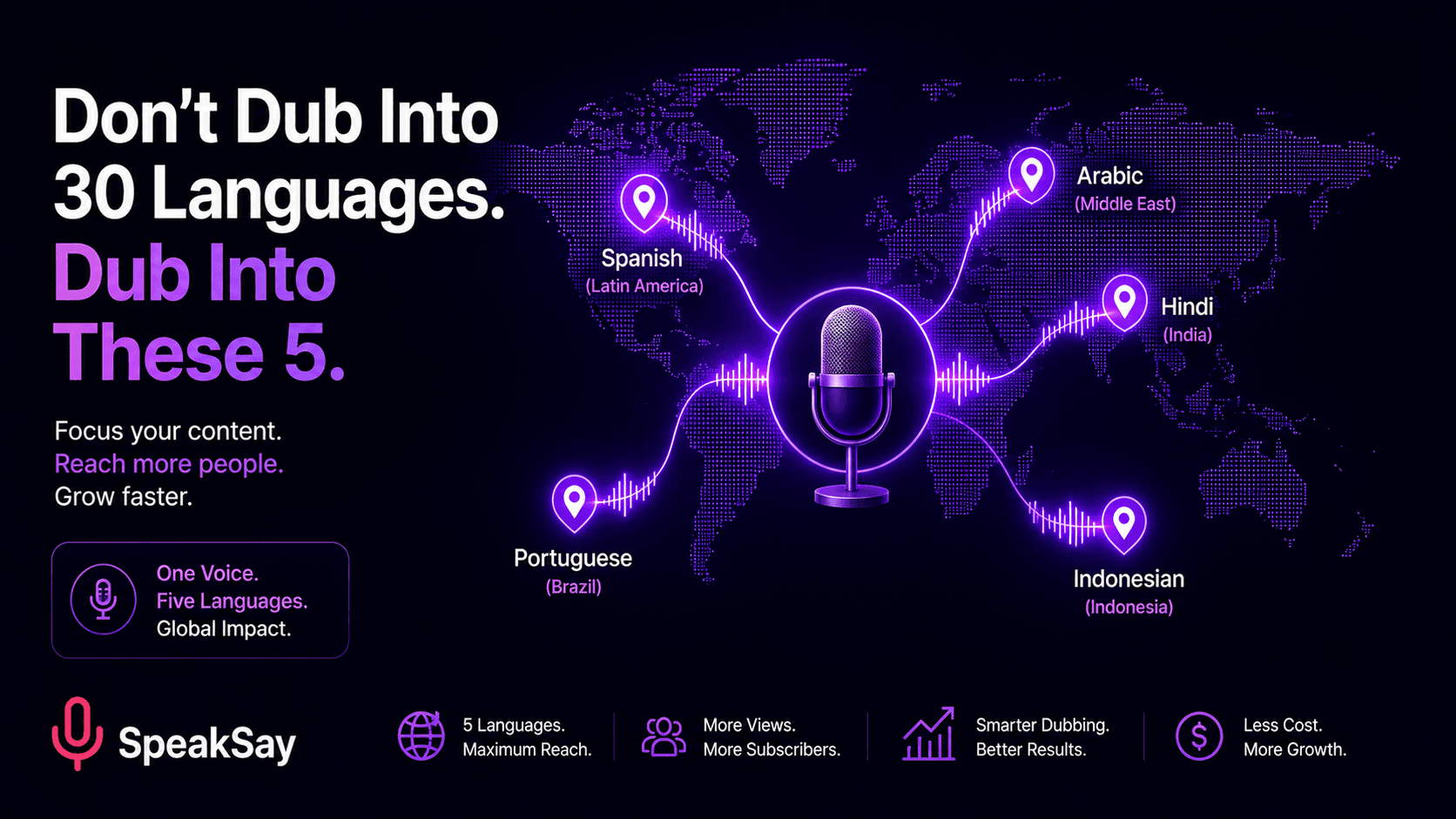
The 5 Best Languages to Dub Your YouTube Videos Into First (2026 Data: Audience Size, RPM & Competition)
Dubbing tools promise 100+ languages, but nobody can QA thirty dubs. Here's the data-ranked shortlist — audience size, RPM, and competition — and the one-language-a-week workflow that actually grows international revenue.
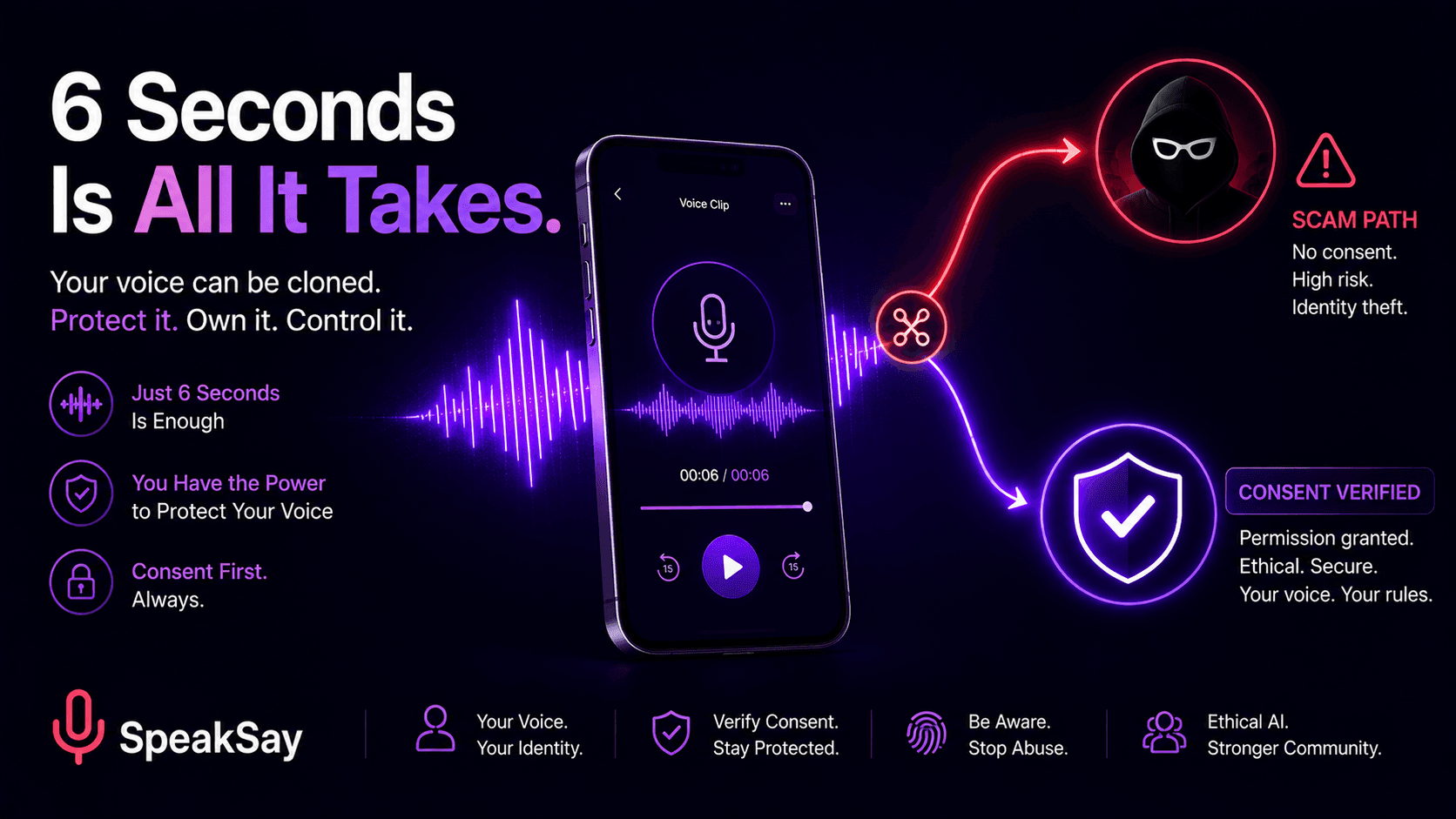
Can Someone Clone Your Voice From a 6-Second Clip? How Creators Protect Their Voice From AI Scams (2026)
One in four people has now encountered an AI voice-clone scam, and a 6-second clip from TikTok or a voicemail greeting is enough raw material. Here's how cloning actually works, why creators are the most exposed, and the protection checklist that works in 2026.
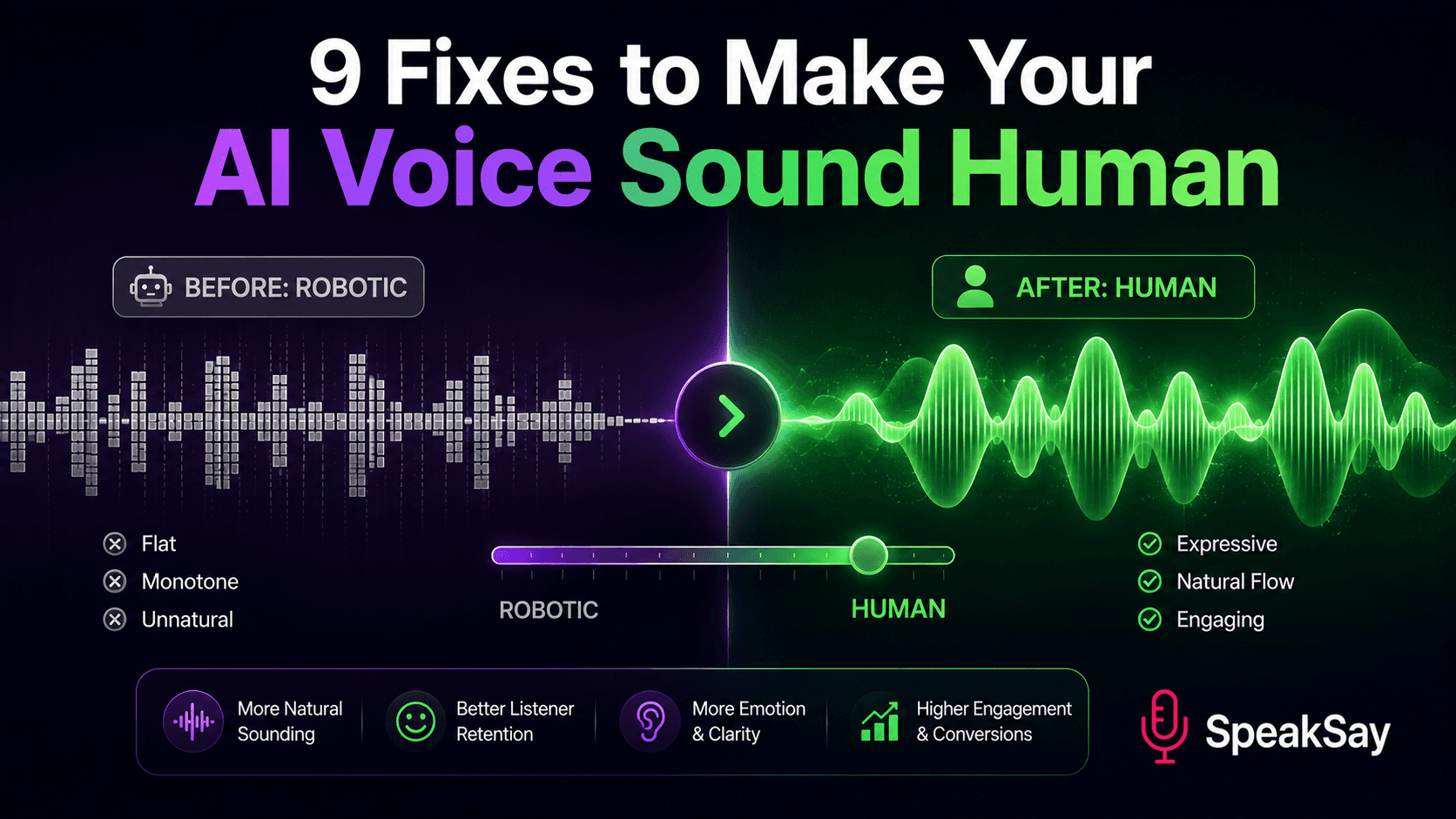
Why Your AI Voiceover Sounds Robotic — 9 Fixes That Make It Sound Human
Flat, monotone, comma-choppy delivery is the #1 reason viewers click away from AI-narrated videos. These 9 fixes — from SSML pauses to post-processing — turn robotic TTS into narration people actually want to listen to.
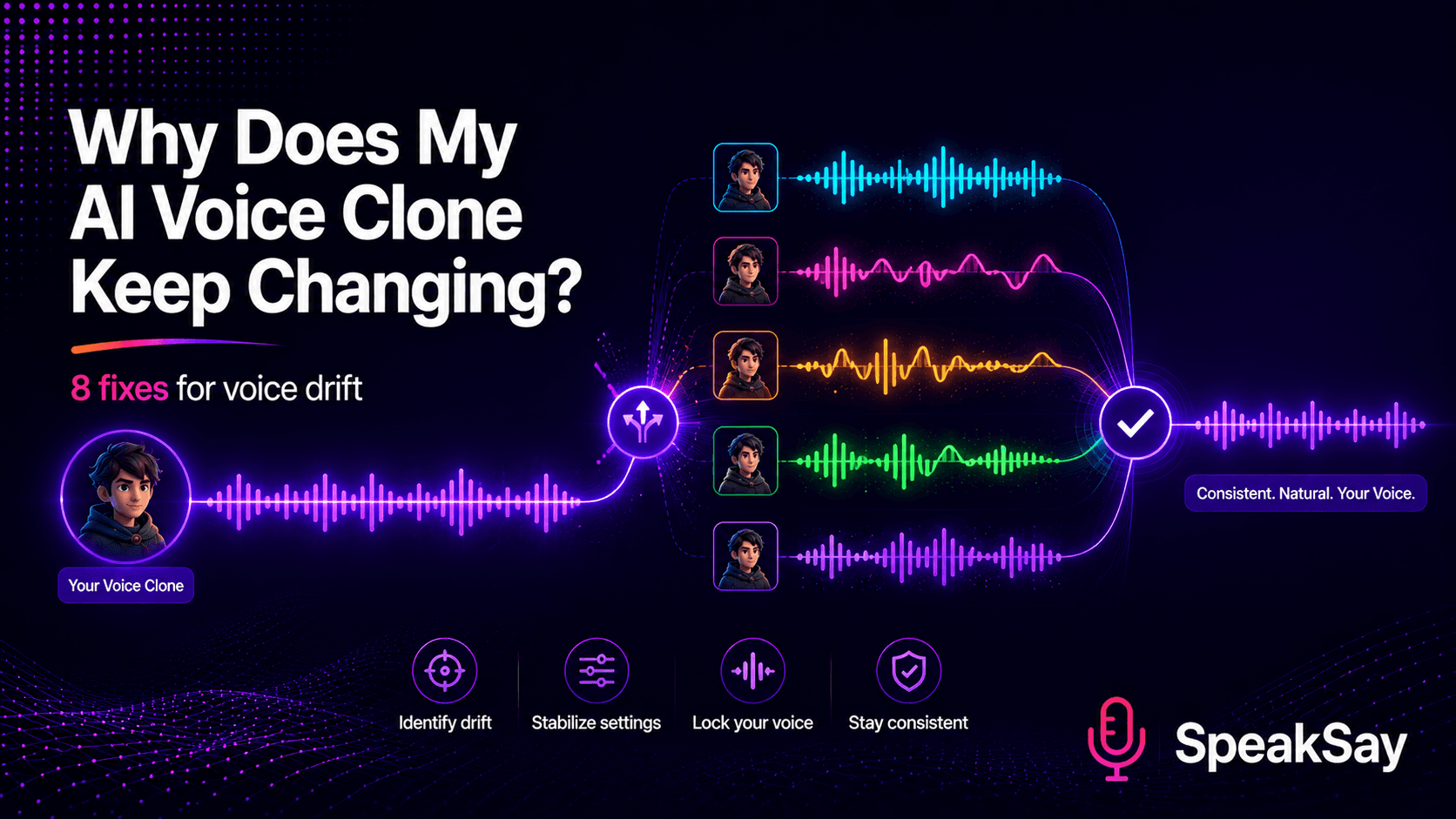
Why Does My AI Voice Clone Sound Different in Every Video? 8 Fixes for Voice Drift (2026)
Your cloned voice sounds perfect in one clip and "off" in the next. Here's why AI voice drift happens — and 8 concrete fixes to keep your narration consistent across every video.
Play.ht Shut Down — 7 Best Alternatives & How to Migrate Your Voices (2026)
Meta acquired Play.ht and shut it down for good on December 31, 2025 — taking accounts, files, and API access with it. Here are the 7 best Play.ht alternatives in 2026 and a step-by-step plan to migrate your voices and projects without losing work.Play.ht Shut Down: 7 Best Alternatives & Migration Guide (2026)
Give your words a voice
Start free with 10,000 credits. No credit card required.