After the Appointment, Still in Your Chair: How Hair Stylists and Barbers Can Send Colour and Cut Aftercare as a 60-Second Voice Note in Their Own Cloned Voice (2026)
Stylists explain aftercare in the chair, and clients forget most of it by the next wash. This guide shows independent stylists and barbers how to send a short voice note in their own consented, cloned voice, with scripts for colour, cut and a first-visit welcome.
1) Why aftercare gets forgotten
The moment of explanation is the wrong moment. The client is looking at the result, thinking about the price, and half listening. The instructions that matter, such as how long to wait before the first wash or which products to avoid, are said once and never heard again.
- It is said at the peak of distraction. The mirror reveal is not a learning moment.
- It repeats for every client. You say nearly the same thing many times, so it is tempting to shorten it.
- A product card does not sound like you. Printed cards are generic, and clients rarely read them.
This is a common pattern for independent stylists, not a measured statistic. You can test it: track how many "what do I do now?" messages you get in the week after appointments.
2) Why your own voice beats a generic sheet
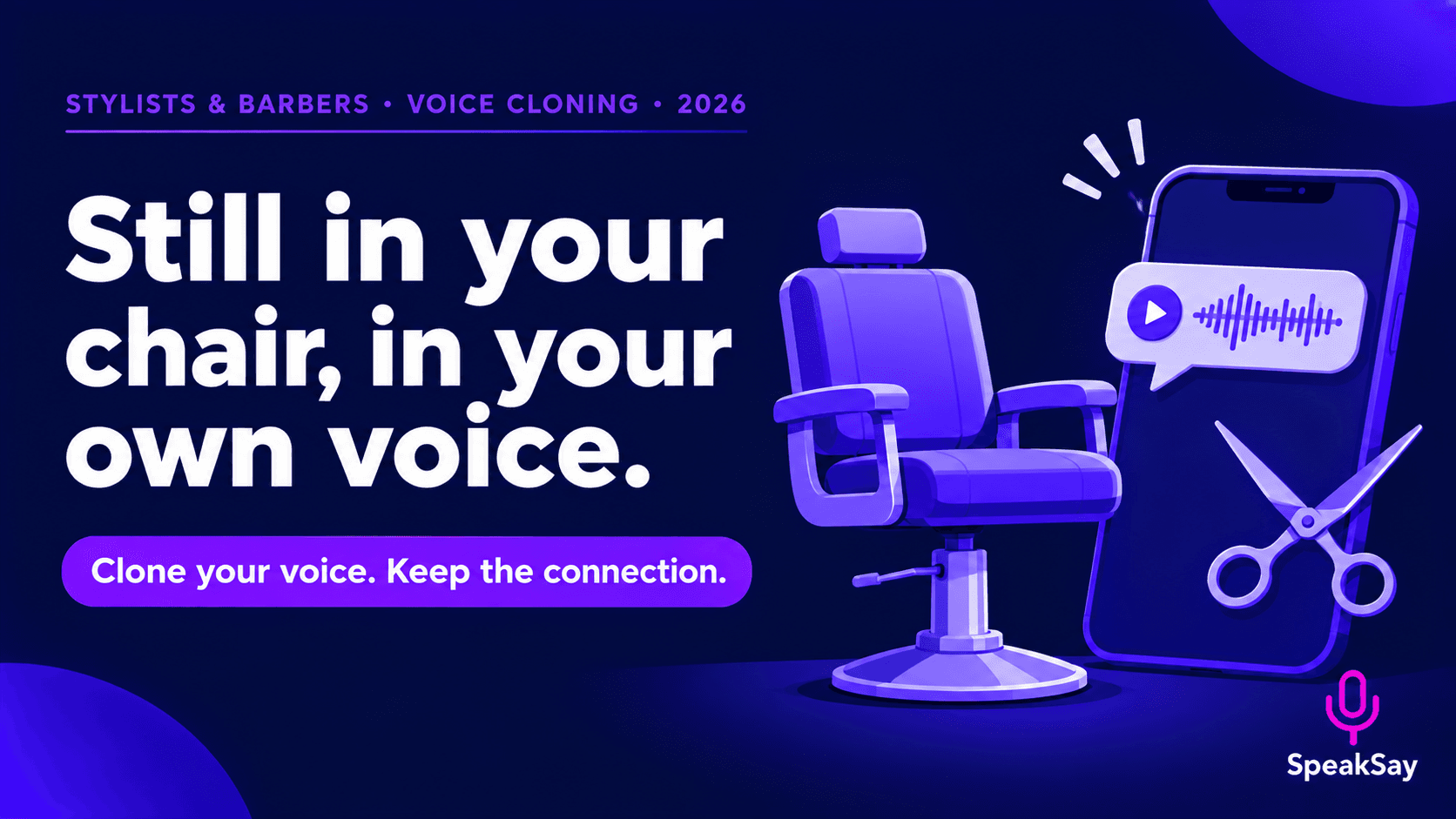
Clients book you, not a salon brand. A voice note from you carries the same tone as the chair: reassuring, practical, personal. It also arrives when they need it, in the shower queue or the night before the first wash.
A cloned voice means you can record a few minutes once, then generate notes for each service type without re-recording them every time. It is a time saver, not a way to pretend to be somewhere you are not.
3) Consent and boundaries for cloning your voice
Clone only your own voice, and only with your own consent.
- Your voice only. Do not clone a colleague, a former employee or anyone else without their written permission.
- Record a clean sample. A quiet room, a steady distance from the microphone, and a few minutes of natural speech. Avoid recording at the salon during opening hours with dryers running.
- Say it is a voice note you generated. A short line such as "this note is read by an AI version of my voice" keeps trust intact. Many clients will not mind; some will want to know.
- Keep the sample and the generated files private. Store them somewhere only you can access.
SpeakSay's voice cloning is designed around a consent step for your own voice. Follow it, and keep a copy of your consent recording.
4) Three 60-second scripts
Each script is about 130 to 150 words. Replace the bracketed parts with your own wording and recommendations, and base the advice on what you already teach clients.
Colour aftercare
"Hi [name], it's [your name]. Quick note about your colour. For the first [X days, whatever you recommend], try to [wait before the first wash]. When you do wash, [use the products you recommend]. If anything feels off, send me a photo and I'll tell you what I'd do. Your next toner is around [timeframe], and I'll message you then. Thanks for sitting with me today."
Cut and style aftercare
"Hi [name], it's [your name]. For your new cut, the one thing I'd do is [your main styling tip]. Use [product or technique you recommend], and it should fall into place. Your next trim is about [timeframe] away. If you want to move it sooner, just text me."
First-visit welcome
"Hi [name], it's [your name]. Thanks for coming in. Next time, bring [photos, past colour details, whatever helps], and tell me about anything you've changed at home. I can usually fit in a quick check if you are not sure about something."
Write the real instructions yourself. SpeakSay only voices the words you give it, and it cannot know your products or your clients' hair.
5) Build the notes with voice cloning
- Create your voice. Follow the consent and recording steps in the voice cloning tool.
- Generate each script. Paste the text, generate, and listen back. Fix anything that sounds off by adjusting the punctuation or spelling of names.
- Add the client's first name by hand if you want. A generic note with a short personal opening line recorded or generated separately feels more personal.
- Save a library. Keep one file per service: colour, balayage, men's cut, beard trim, perm, and so on.
Make your first aftercare note
Create your own consented voice clone, paste your colour aftercare script and hear it back before you send it.
6) Send and organise them
- Right after the appointment. Send the note with the receipt or the rebooking link, while the client is still thinking about the visit.
- Keep the file names tidy. Name by service and version, such as "colour-aftercare-v2", not by client.
- Use the channel the client already uses. A message thread or a booking-app message usually works better than email.
- Update when your advice changes. If you change a recommendation, regenerate the note the same day.
7) What not to say
- No medical or skin advice. If a client reports irritation or a reaction, tell them to contact a medical professional. Do not diagnose over audio.
- No guarantees about results. Hair varies; avoid promising how long colour will last.
- Do not impersonate. The voice is yours. Do not use it to make notes that sound like they come from someone else.
- Follow product and local rules. If you recommend retail products, say so plainly, and check any rules about promotion in your area.
Set it up once and reuse it
See plans for regular use, or the one-time option if you would rather not pay monthly.
8) FAQ
Do I need to tell clients it is a cloned voice?It is good practice and builds trust. One line at the start of the note, or in your booking confirmation, is enough.
Can I clone my business partner's voice?Only with their clear, written consent, and ideally they record their own sample.
How long should the note be?About 60 seconds, or 130 to 150 words.
What if the voice mispronounces a product name?Respell it phonetically in the script, for example splitting an unusual word into syllables, then regenerate.
Does this replace talking to the client in the chair?No. Keep the conversation. The note is a reminder, not a substitute.