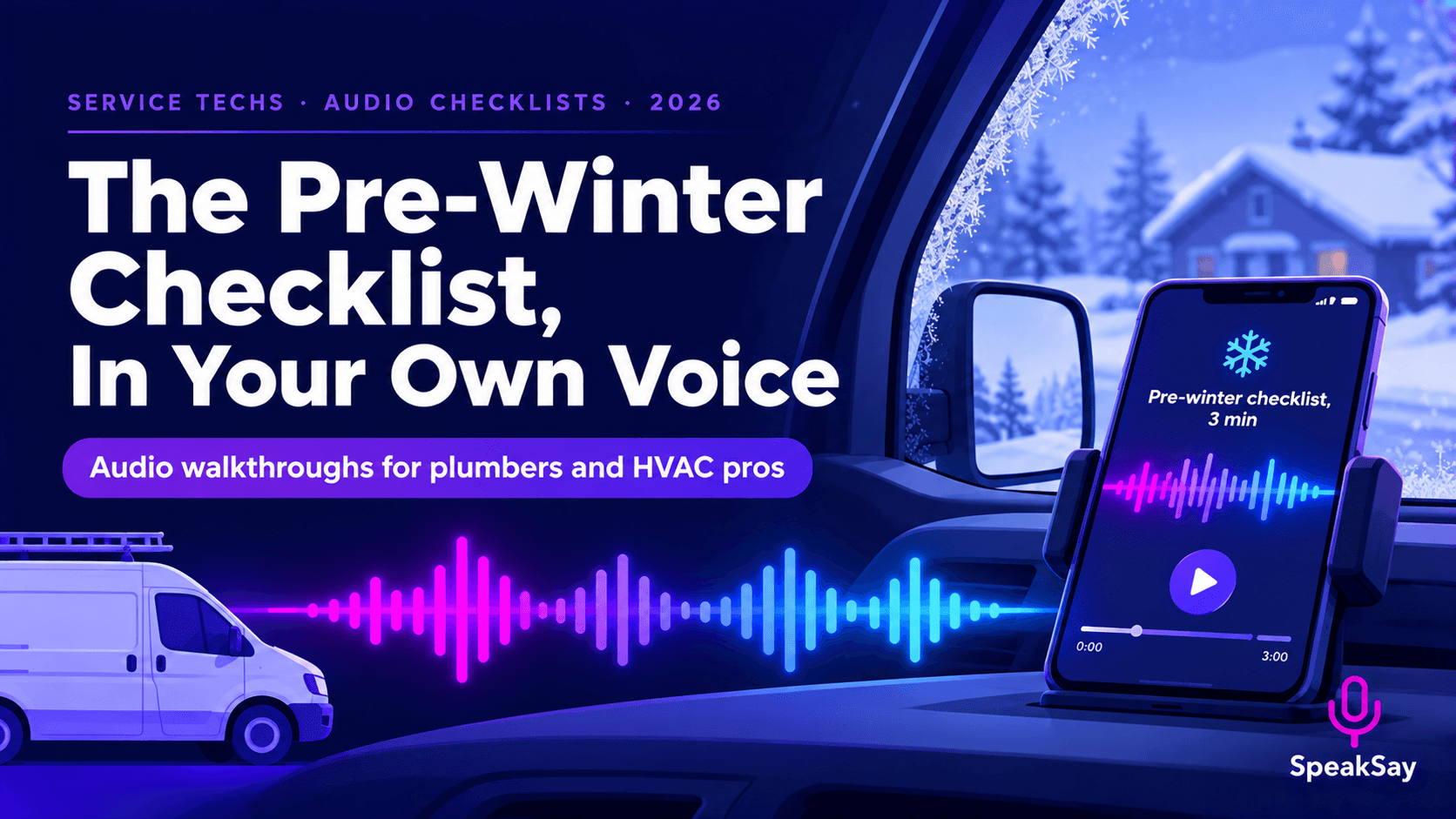
The Pre-Winter Checklist Homeowners Don't Read: How Plumbers and HVAC Technicians Can Send a 3-Minute Audio Walkthrough in Their Own Cloned Voice (2026)
Every autumn the same questions flood in. Record your own consented voice once, turn your pre-winter checklist into a three-minute audio walkthrough, and send it to customers before the cold arrives.
1) Why the PDF checklist gets ignored
A checklist attachment is one more document in an inbox. A customer standing in the garage with cold hands does not want to scroll a PDF. They want to hear someone they trust say, “First, turn off this valve.”
- Seasonal spike: the same calls arrive within a few weeks of each other.
- Repeated explanations: you say the same five things on every call.
- Trust: your voice is part of why customers call you back.
- Hands busy: customers can listen while they walk around the property.
2) Safety wording comes first
An audio checklist is a reminder, not a substitute for a professional inspection, local regulations, manufacturer instructions or your insurer’s requirements. Say so at the start and again at the end.
- Opening line: “This is a general reminder, not a replacement for an inspection or your equipment’s manual.”
- Urgent situations: tell listeners to call you or the relevant emergency service if they smell gas, see sparks, find an active leak or have no heat in dangerous cold, according to your local guidance.
- No guarantees: do not promise that following the checklist prevents freezing, leaks or breakdowns.
- Scope: include only steps a homeowner can safely do. Leave anything involving gas lines, electrical panels or pressurised systems to a qualified technician.
Have your own insurer or licensing body’s guidance in hand when you finalise the wording. This article cannot give trade-specific safety advice.
3) A three-minute outline
| Segment | Length | Content |
|---|---|---|
| Welcome and disclaimer | 20 seconds | Who you are, what this is, and what it is not |
| Outside | 45 seconds | Disconnect hoses, outdoor taps and shut-off steps that are safe for homeowners |
| Inside | 45 seconds | Where to find the main shut-off, how to check exposed pipes |
| Heating | 45 seconds | Filter reminder, vents clear of furniture, thermostat settings when away |
| When to call us | 25 seconds | Signs that need a technician; how to book |
Keep each segment to the steps you repeat most often on the phone.
4) Writing the script for your own voice
Write the way you talk to customers on a visit. Short sentences, plain words, no jargon the customer has to look up.
- Record yourself explaining the checklist once on your phone, then type out what you said.
- Trim to your three most important steps per segment.
- Spell out brand names and model terms phonetically if they are mispronounced in test.
- End with how to reach you, said slowly, and the safety line again.
Example: “Hi, this is Sam from Northside Plumbing and Heating. Quick reminder before the cold arrives. This is a general guide, not a replacement for an inspection or your manual…”
Hear your own voice read the checklist
Set up a consented clone of your own voice and listen to a 30-second draft of your first segment.
5) Cloning your own voice, with consent
Clone only your own voice, from a recording you made. Do not clone an employee, an ex-employee or a customer without clear written permission, and do not imitate anyone else.
- Record in a quiet room (a parked van with the doors closed works).
- Speak naturally, at the pace you use with customers.
- Test pronunciations of local street names and equipment brands before generating the full walkthrough.
- Tell listeners it is AI-generated from your recorded voice. Something like “This message is voiced with my cloned voice” keeps trust high.
Browse the voice options if you prefer a stock voice for the checklist and keep your clone for personal messages.
6) Delivering it to customers
- Existing customer list: send a link by text or email with one line: “Your three-minute pre-winter checklist. Tap to listen.”
- On the invoice or service sticker: add a QR code that opens the audio.
- On your website and voicemail: a short version while the phones are busy.
- Before the first cold forecast, not during it. Send it when customers can still act.
Follow marketing consent rules for each channel, and keep an easy way to opt out.
7) Using it to book the work, honestly
The audio’s main job is to reduce repeated calls and help customers take simple steps. A light, honest booking line at the end is fine: “If you would like us to check your system, call or book online.” Avoid scare language or implied guarantees.
Record once, use every autumn
See plans for voice cloning, or the lifetime option if you will reuse the tool across seasons.
8) Frequently Asked Questions
Is it safe to give DIY steps in an audio message?Only include steps that are safe for homeowners and consistent with local rules and manufacturer guidance, and say clearly that the message is a general reminder, not an inspection. Check wording with your insurer or licensing body.
Can I clone a colleague’s voice for the checklist?Not without clear written permission. Clone your own voice, or use a stock voice instead.
Should I tell customers it is a cloned voice?Yes. A short line such as “this message uses my AI-cloned voice” keeps things transparent and protects trust.
How long should the audio be?About three minutes. Customers will finish it, and you can link a longer page for details.
When should I send it?Before the first cold forecast in your area, so customers have time to act.