The Five Minutes That Sell Your Audiobook: How to Choose and Polish the Retail Sample Before Holiday Gift Buyers Press Play (AI Narration, 2026)
Most listeners decide on an audiobook in the first few minutes of the sample. This guide shows indie authors how to pick the right passage, fix the problems a sample exposes, and prepare it for gift shoppers before the holiday buying season.
1. Who is listening to your sample
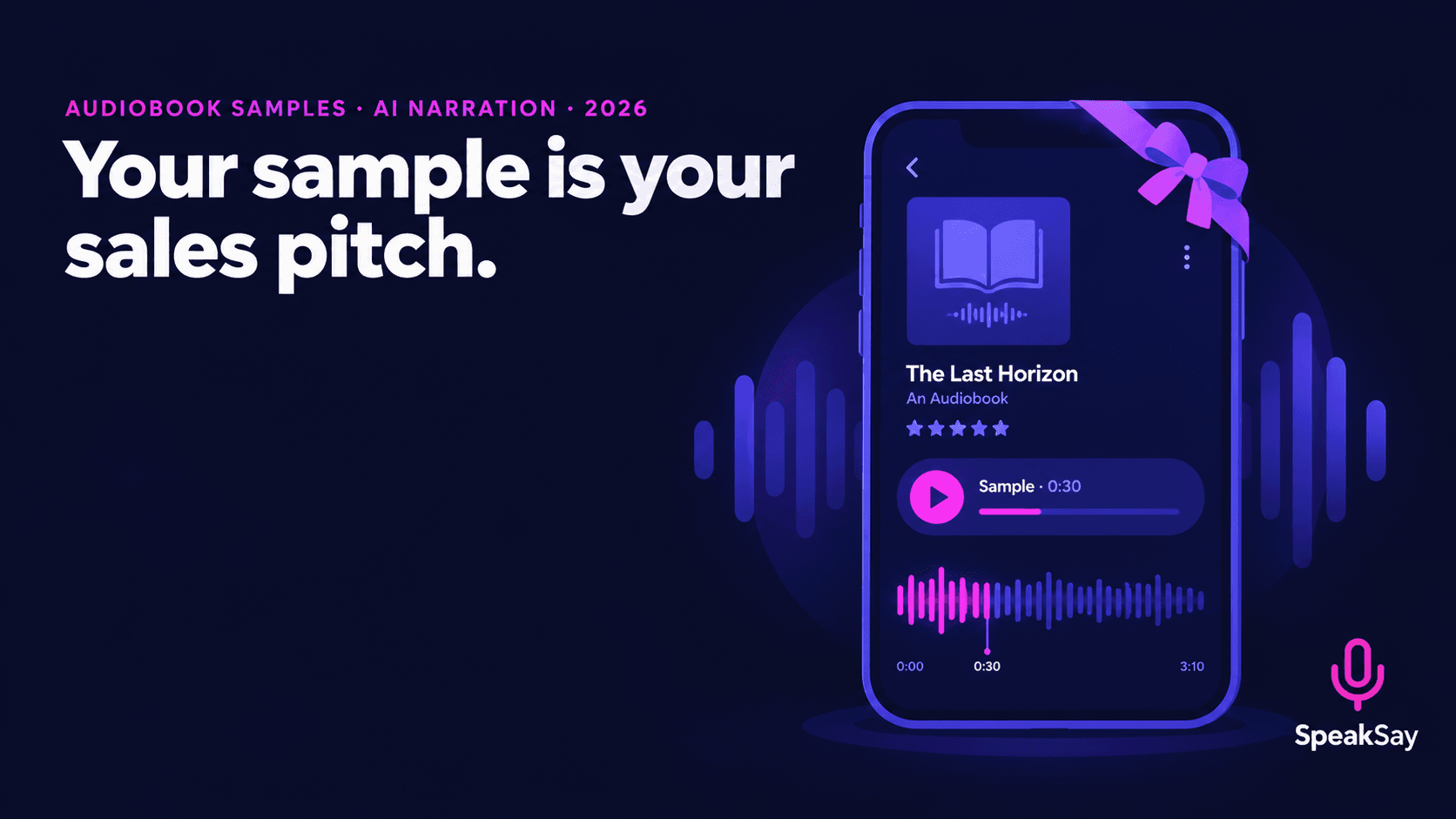
There are two kinds of listener. The browser is deciding whether the book is for them. The gift buyer is deciding whether it is for someone else, usually without having read the genre. Both want to know quickly three things: what is this about, does the narrator sound right, and is it pleasant to listen to for hours.
The sample is also the only part of your audiobook many people will ever hear. It deserves more attention than any other five minutes in the file.
2. Choose the passage on purpose
Many retailers create a sample automatically from the start of the book, which may be front matter, a long copyright notice or a slow opening chapter. Check how each store you publish to chooses its sample, and whether you can influence it. Rules differ, and they change, so read the current guidance from each store and don't assume.
Where you have a choice, or where you can shape the opening of the file, aim for a passage that:
- Starts with the book's voice, not with credits. Keep the spoken opening short.
- Contains a complete moment: a hook, a joke, a surprising fact or a scene with a turn.
- Is clear about who is speaking. Dialogue-heavy openings need care. See our guide on dialogue clarity in AI narration.
- Avoids lists of names and numbers in the first minute, which are hard to follow by ear.
- Ends on a reason to continue, not mid-sentence.
3. What a sample exposes
A short sample magnifies small problems. These are the ones to listen for:
| Problem | Why it hurts in a sample |
|---|---|
| A mispronounced title, author or main character name | It is heard in the first minute and it signals carelessness. |
| Flat or uneven pacing | Listeners judge the narrator by the opening paragraph. |
| A confusing dialogue exchange | The buyer cannot tell who is talking and moves on. |
| An awkward breath or pause | It stands out when nothing else is happening. |
| Loudness that jumps between sections | It sounds unprofessional on a phone speaker. |
4. Fix it before you publish
- Generate the sample passage first, before the full book, so you can listen carefully and change voice, pace or settings while it is cheap to do so.
- Fix names with a respelling list. The pronunciation guide shows how, and the same list then applies to the whole book.
- Adjust pauses and emphasis with punctuation and short tags. Our guide to making an AI voice more expressive covers the options.
- Even out the loudness with the free audio normalizer.
- Compare two voices on the same 90 seconds and pick the one a stranger would trust. Browse options in SpeakSay voices.
Hear your opening in more than one voice
Paste your first page, compare voices and settle on the one that fits your book before you narrate the rest.
5. Test it the way buyers will hear it
- Play it on a phone speaker, then in cheap earbuds, then in a car if you can. Many sample plays happen on a phone.
- Ask someone who hasn't read the book to listen to the first three minutes and tell you what the book is about. If they can't, change the passage.
- Listen without looking at the text. You will hear problems you skip when reading.
- Check the first ten seconds separately. That is where many people stop.
For the full book, the risk-first sampling method shows how to check a long file without listening to every minute.
6. Make the listing match the sample
The sample promises something and the description should confirm it. If the sample is a tense scene, a bright cheerful description will confuse people. Check that the narrator's voice type fits the genre, that the title and subtitle in the sample match the listing, and that the cover and the sample give the same impression.
Also check each store's current rules on disclosing AI narration, and follow them. Do not assume a rule that applies in one store applies in another.
7. A four-week plan to the holidays
- Week 1: choose the opening passage and audition voices on it.
- Week 2: fix names, pacing and loudness, and test on three devices.
- Week 3: generate the full book and check the first and last minutes.
- Week 4: upload with time for each store's review. Our Christmas release deadline calendar shows the dates to work back from.
Once the book is live, short clips from the same passage also work on social media. See how to make audiobook clips for short-form video.
8. FAQ
What makes a good audiobook sample?A short, complete moment that shows the book's voice, is clear about who is speaking, avoids long lists of names, and ends with a reason to continue.
Can I choose my audiobook sample?It depends on the store. Some create it automatically from the start of the file. Read each store's current guidance, and where you cannot choose, shape the opening of the file instead.
How long should I spend on the first five minutes?More than any other section. Generate and audition it first, fix names and pacing, and test it on a phone before you narrate the rest of the book.
Do I have to say the narration is AI?Check each store's current rules on AI narration disclosure and follow them for every store you publish to.
Should the sample match the description?Yes. If the sample sets one tone and the description another, listeners are confused and may not buy.