Getting Started
Beginner guides and tutorials
Publishing Your Writing Group's Anthology as an Audiobook: Many Authors, One Consistent Narration (2026
Ten contributors cannot afford ten narrators. Here is how a writing group can turn an anthology into one consistent audiobook, with consent, casting and loudness handled.
Your Readers Are Aging Out of Print: How a Small Local Newspaper or Town Newsletter Can Publish a 10-Minute Weekly Audio Edition With an AI Podcast (2026)
Many small papers and town newsletters have readers who struggle with small print, and no audio at all. This guide shows a small publisher how to turn the week's best stories into a short audio edition with an AI podcast, with a human editor still responsible for every name and fact.
A Poem Is Not a Paragraph: How to Make a Poetry Collection Audiobook With AI Narration (Line Breaks, Pauses and White Space, 2026)
AI narration tends to read a poem like prose, flattening line breaks and swallowing the silence between stanzas. This guide shows how to score each poem for the ear, produce one poem per file, test a sample, and decide what still needs a human reader.
Hands in the Dough, Eyes Off the Page: How to Turn a Cookbook Into an Audiobook With AI Narration (Measurements, Ingredient Lists and Steps, 2026)
A cookbook is built for the eye, with lists, tables and fractions. This guide shows food writers and self-published cooks how to rewrite recipes for the ear, say measurements correctly with AI narration, and decide what stays in the printed book for the holiday gift season.
ElevenLabs' 3x Credit Promo Ended October 12: How to Price a Month of AI Voiceover at the Real Rate Before You Commit a Channel or Client Budget (2026)
A launch promotion made one popular AI voice platform look three times as generous until October 12. This guide shows how to work out what a finished minute of voiceover really costs once a promotion ends, including retakes, and how to decide whether the plan you are on still fits.
The Five Minutes That Sell Your Audiobook: How to Choose and Polish the Retail Sample Before Holiday Gift Buyers Press Play (AI Narration, 2026)
Most listeners decide on an audiobook in the first few minutes of the sample. This guide shows indie authors how to pick the right passage, fix the problems a sample exposes, and prepare it for gift shoppers before the holiday buying season.
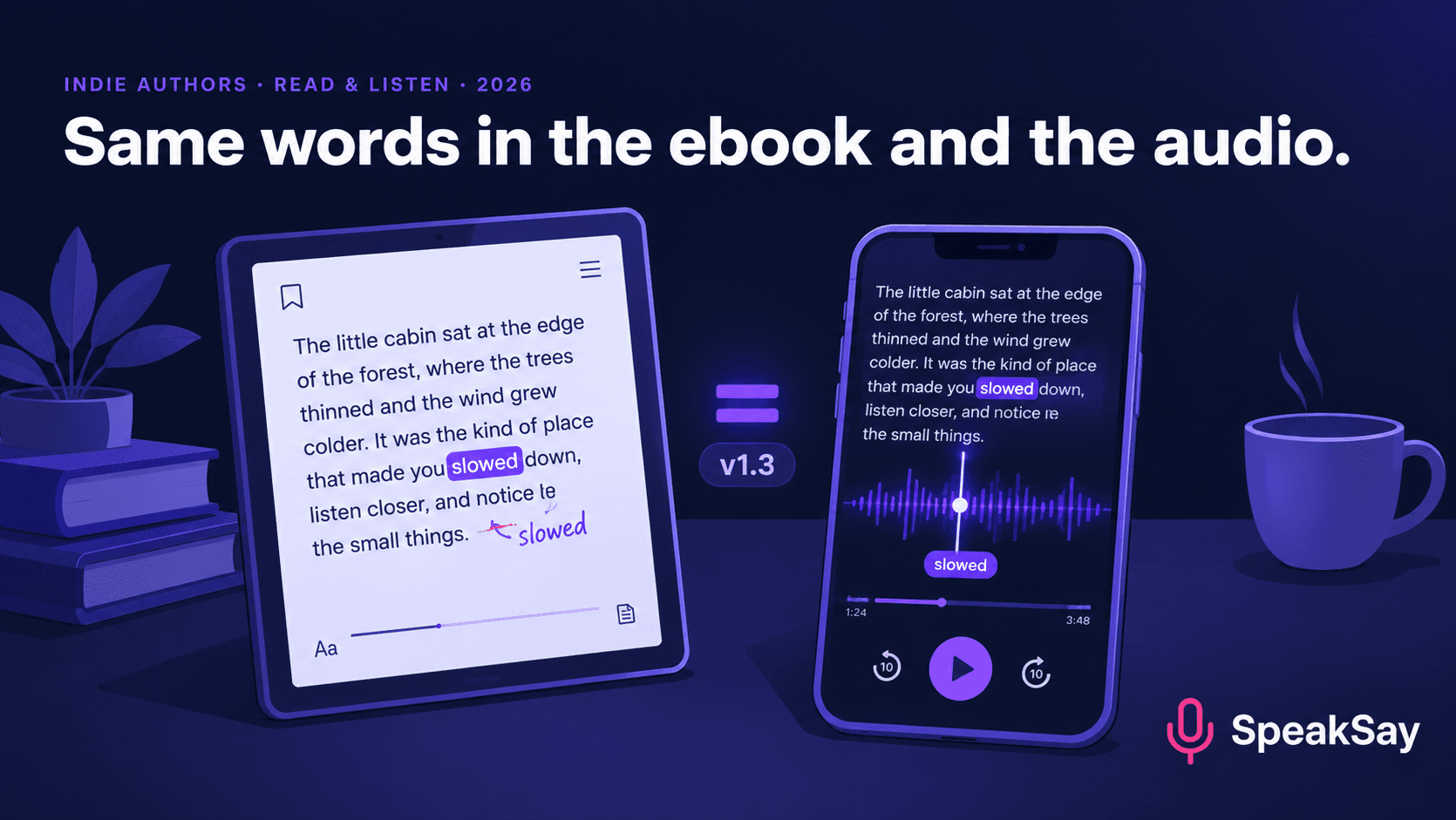
Audible's Read & Listen Pairs Your Ebook With Your Audiobook. Here's How Indie Authors Keep the Two Editions Matching After Launch (2026)
Audible's Read & Listen highlights ebook text while the audiobook plays, and listeners need to own both editions. That makes one old authorial habit expensive: fixing the ebook after launch and leaving the audio behind. Here is a version-control routine for authors who narrate with AI.
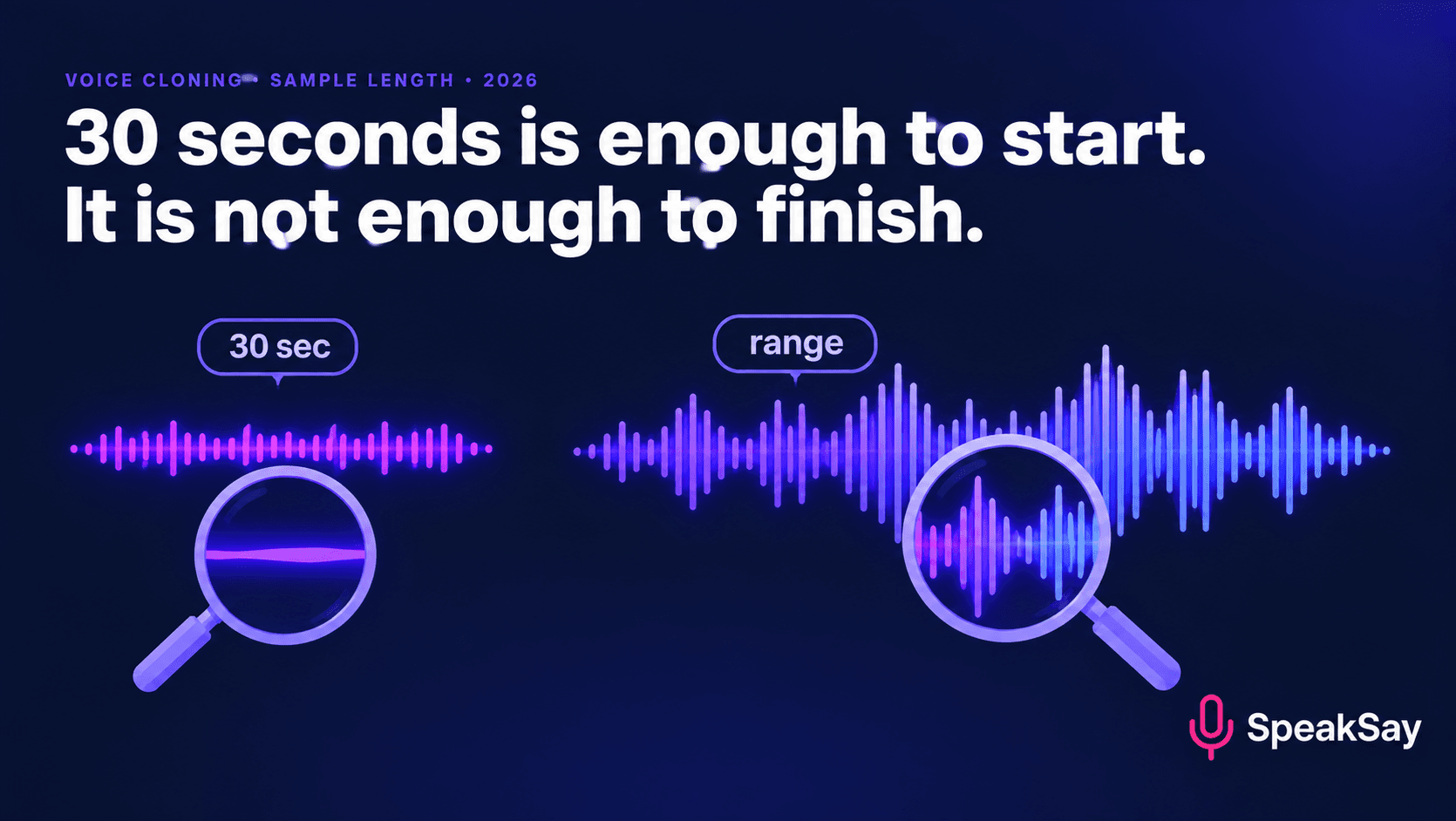
A 30-Second Sample Can Now Clone a Voice: What Those 30 Seconds Capture, What They Miss, and a Five-Line Test to Decide If You Need More (2026)
Google's new Gemini TTS can reportedly clone a voice from a 30-second sample. A short sample captures how you sound. It does not capture how you sound when you are excited, quiet, fast or reading for three hours. Here is what to expect from a short sample, how to record a good one, and a five-line test that tells you whether you need more audio
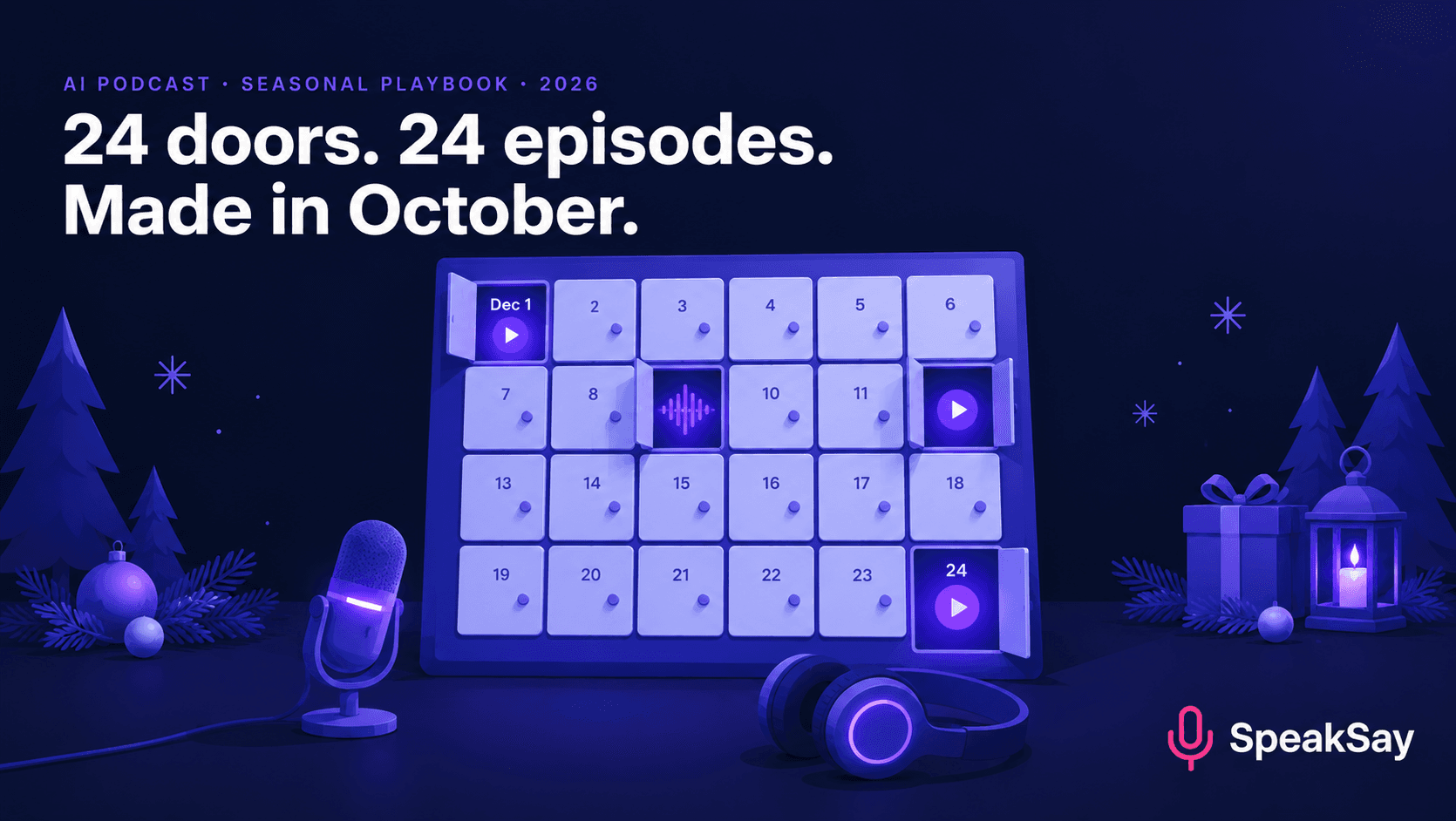
Make an Advent Calendar Podcast: 24 Daily Episodes for December, Produced Before November (2026 Playbook)
A daily advent podcast is one of the few shows listeners actively come back to every morning in December. It's also the show most likely to collapse by December 9 if you record it day by day in the busiest month of the year. Here's how churches, schools, shops, authors and families plan and produce all 24 episodes in October, then let the calendar run itself.
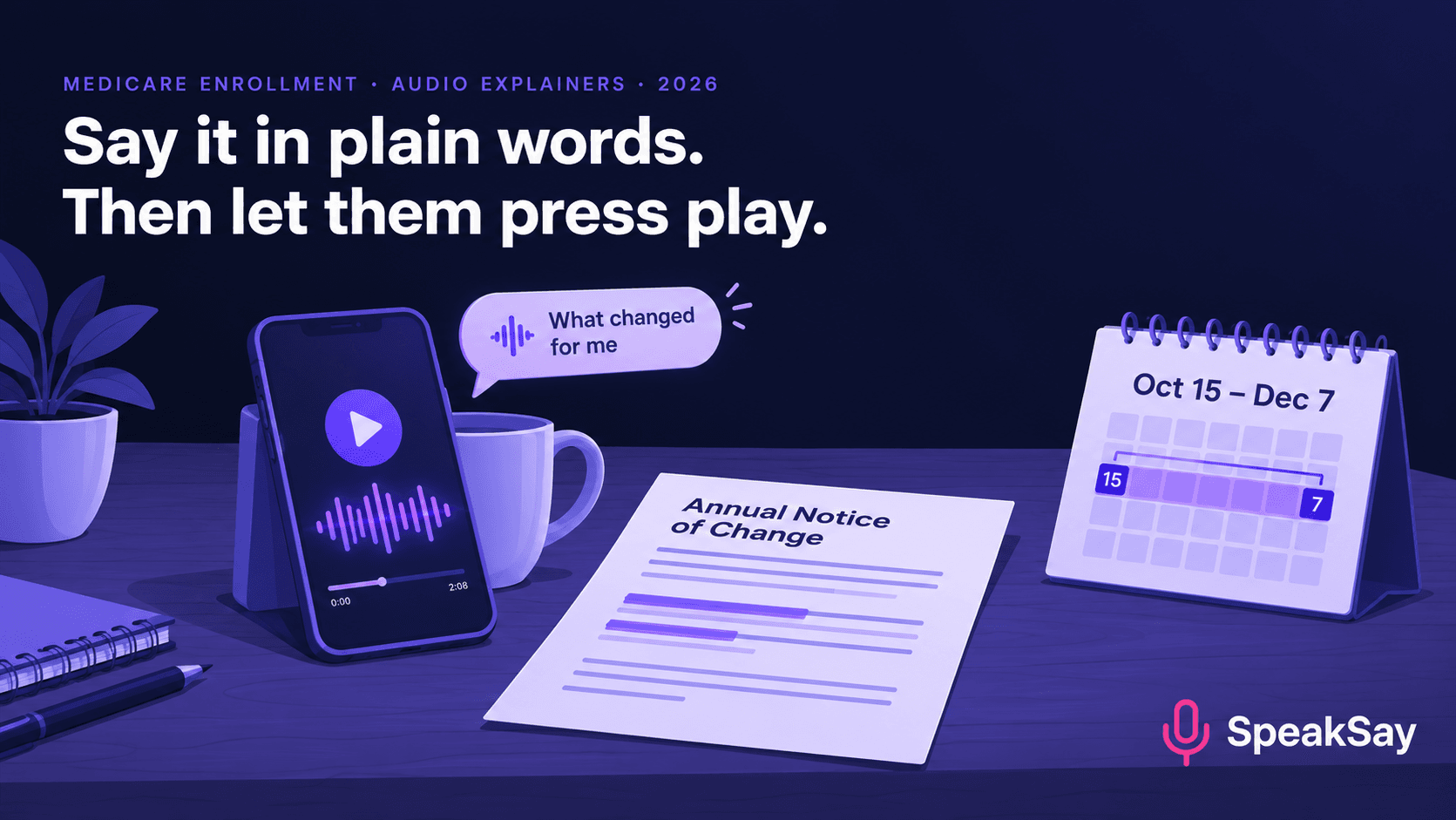
75% of People on Medicare Find Choosing a Plan Confusing: Plain-Language Audio Explainers for Brokers and Community Organizations (2026 Enrollment Playbook)
Medicare's Annual Enrollment Period runs October 15 to December 7, and a large 2025 eHealth survey found three in four beneficiaries call plan choice confusing. Here is how brokers, SHIP-style counselling teams and community health organizations can turn approved plan-change explainers into short audio people can replay, in more than one language, without replacing a counsellor.
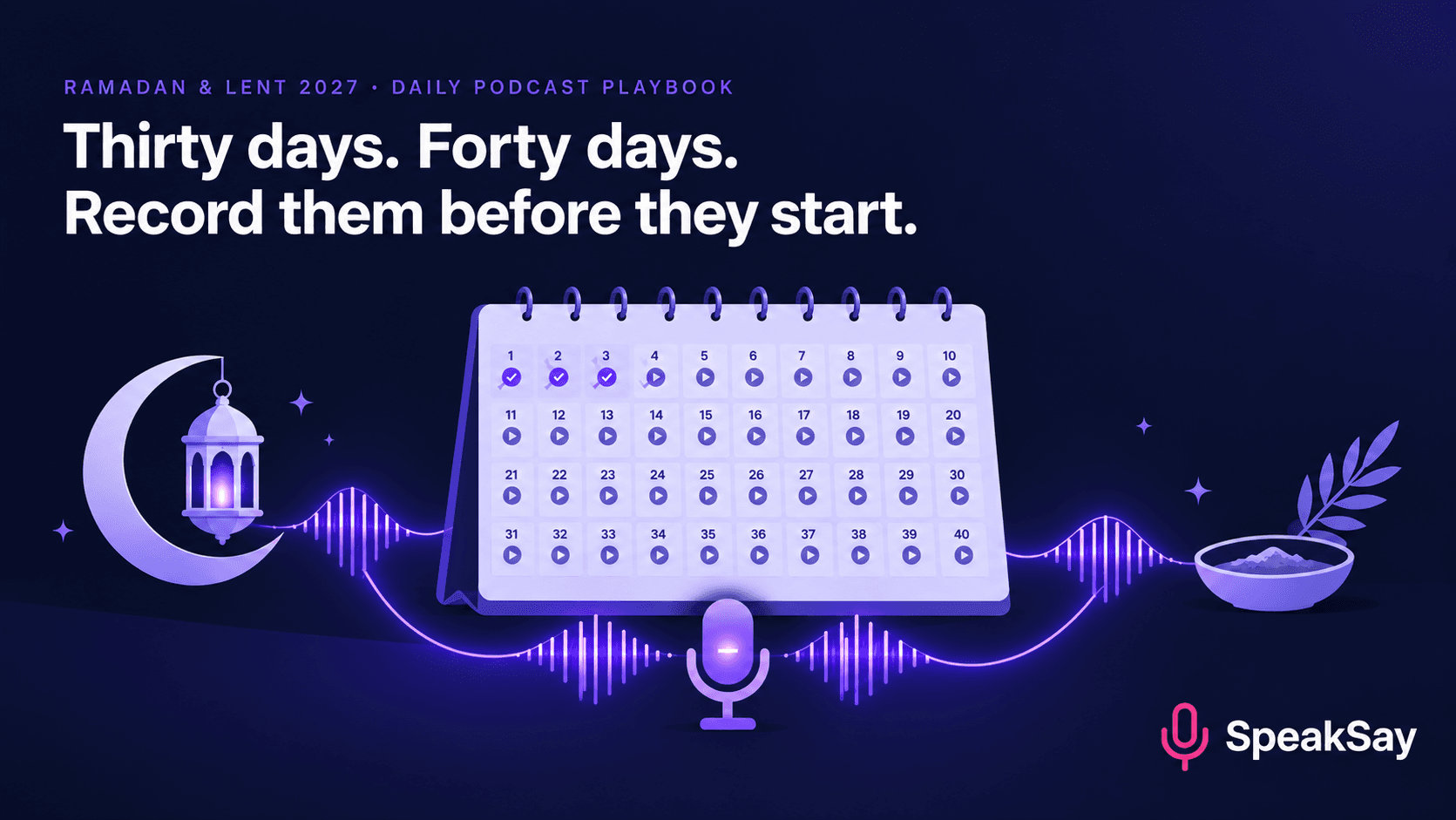
Ramadan Starts Feb 8, Lent Feb 10: How to Plan a 30- or 40-Day Daily Podcast With AI Voices (2027 Playbook for Mosques, Parishes, Schools and Creators)
Ramadan is projected to begin February 8, 2027 and Lent begins February 10. A daily series is a promise to publish 30 or 40 days in a row, and the weeks before are when it is easiest to produce. Here is a calendar, a script structure, the moon-sighting problem and the parts of a faith series AI should not voice.
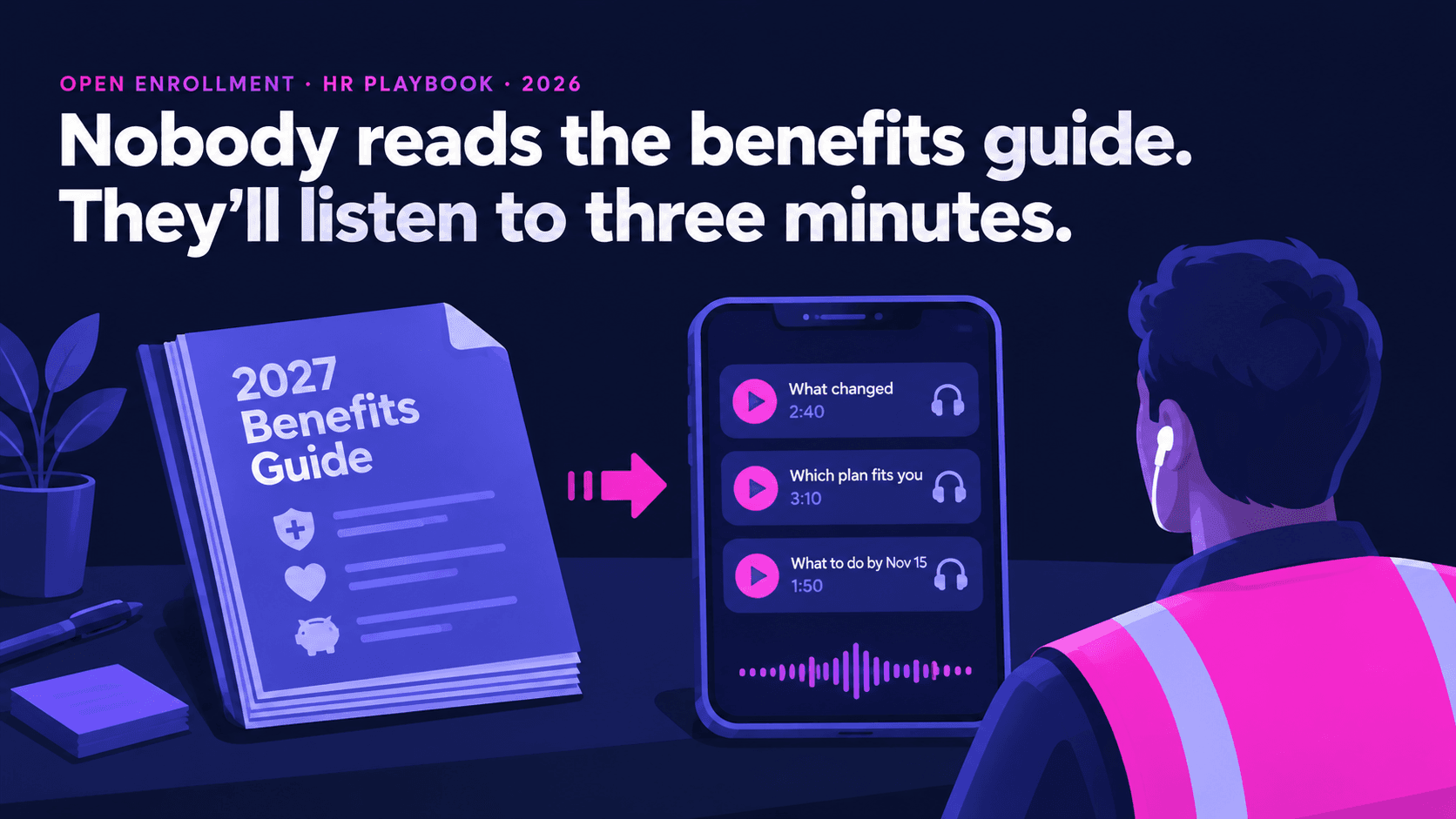
38% of Employees Struggle With Open Enrollment Emails: Turn Your Benefits Guide Into 3-Minute Audio Explainers (2026 HR Playbook)
More than a third of employees struggle to understand open enrollment communications, and 35% regret the choices they make. The benefits guide isn't the problem. The format is. Here's how HR teams turn the guide into short, phone-friendly audio explainers, in every language their workforce speaks, without recording a thing.
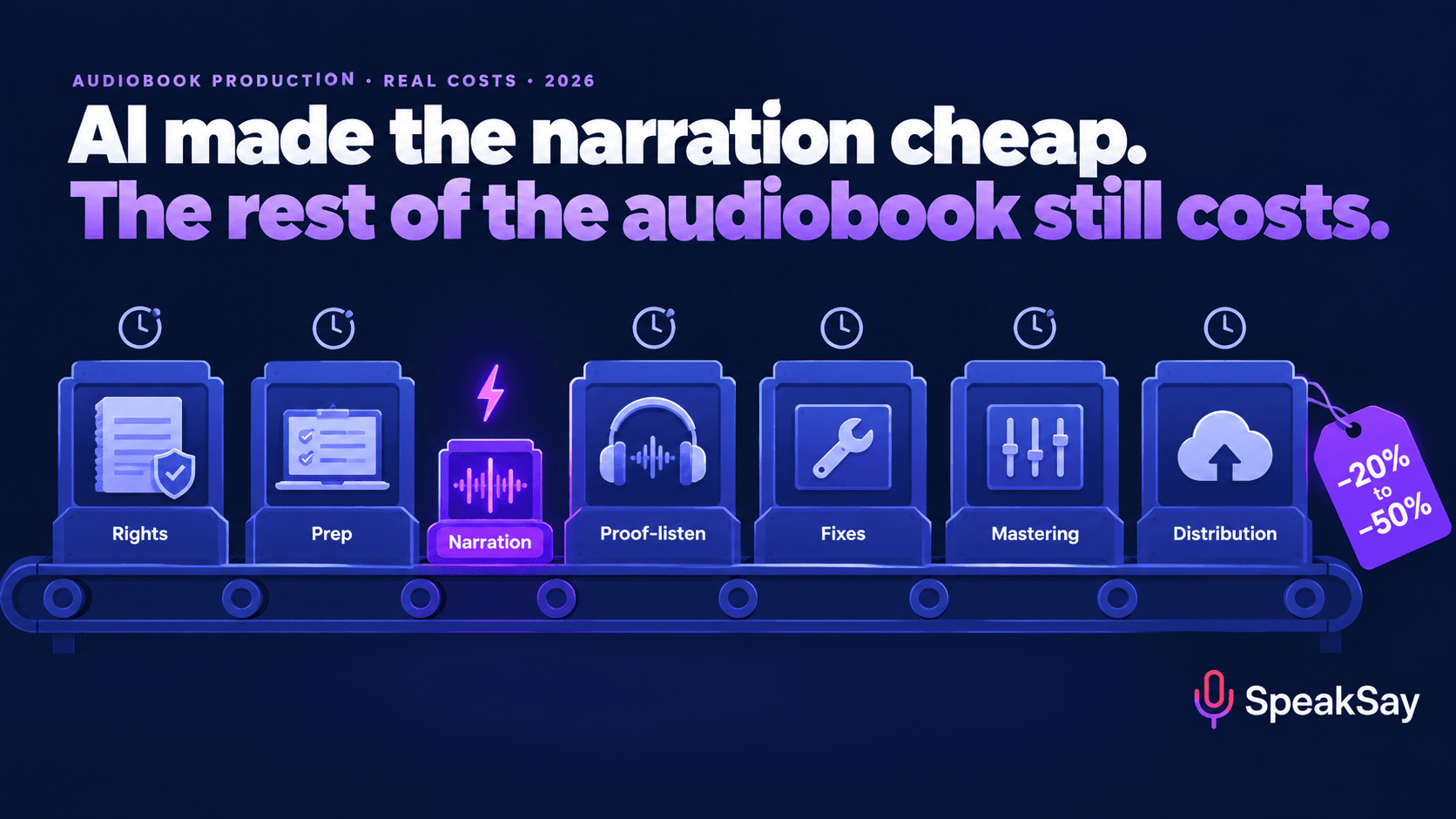
AI Narration Was Supposed to Cut Audiobook Costs by 90%. Producers Report 20–50%: Where the Savings Leak and How to Keep Them (2026)
Vendors promise 85–95% savings from AI narration. The Frankfurt Book Fair's 2026 white paper found producers reporting 20% in their second year of using AI and 50% in their third. The gap isn't a scam. It's everything around the narration that AI doesn't replace. Here's a stage-by-stage map of where audiobook money goes, five places savings leak, and how an indie author or small publisher keeps more of them.
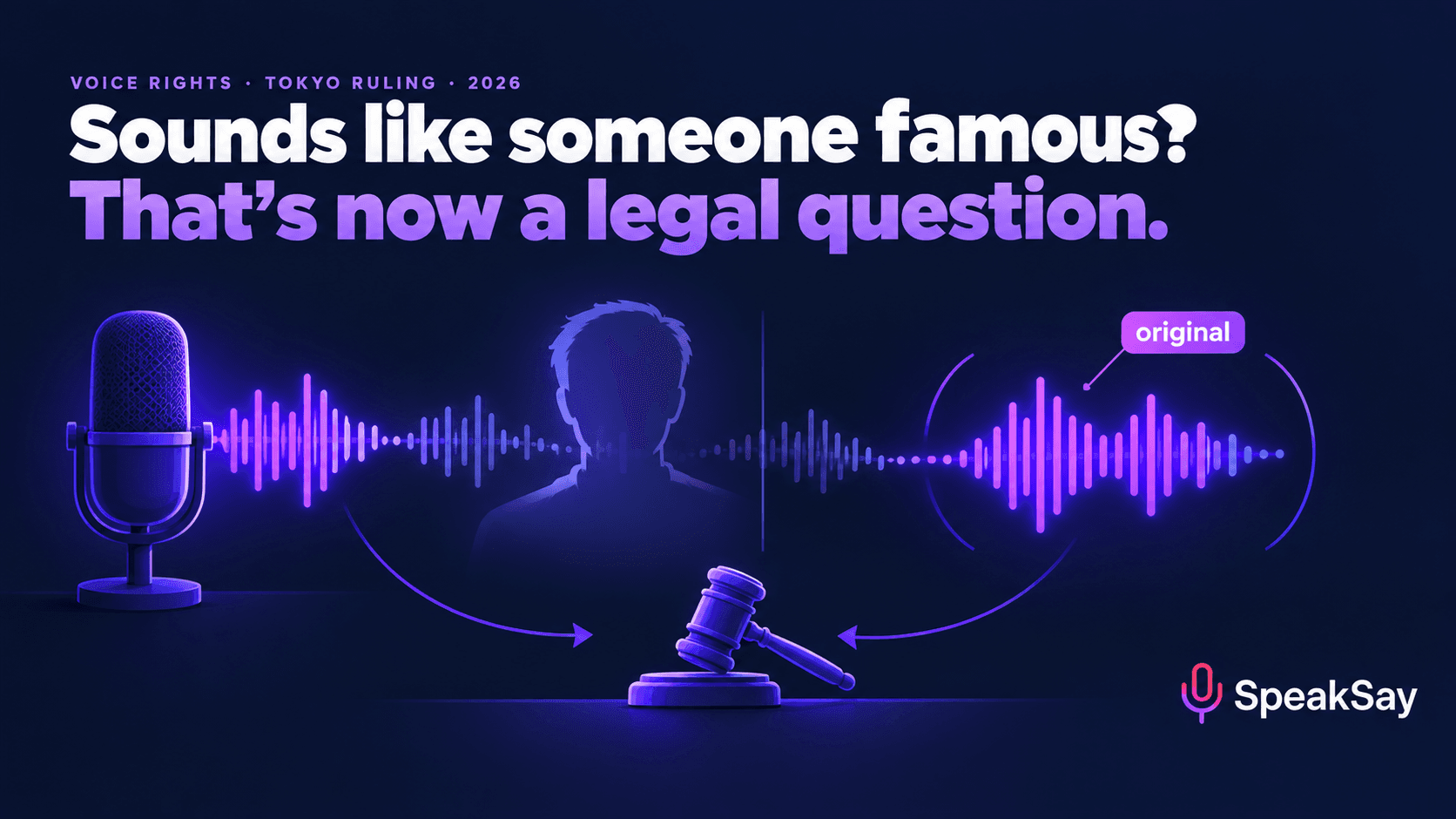
A Tokyo Court Says a Voice Can Be Protected Like a Face: If Your AI Narrator Sounds Like a Famous Voice Actor, Change It Before You Monetize (2026)
On September 30, 2026, a Tokyo court recognised that a voice can be protected by publicity rights when it's used for its commercial appeal. The case involved a monetized narration account in a very common faceless niche. Here's what was decided, why "it's a generic voice" isn't a plan, and a six-check audit to make sure your narrator is yours.
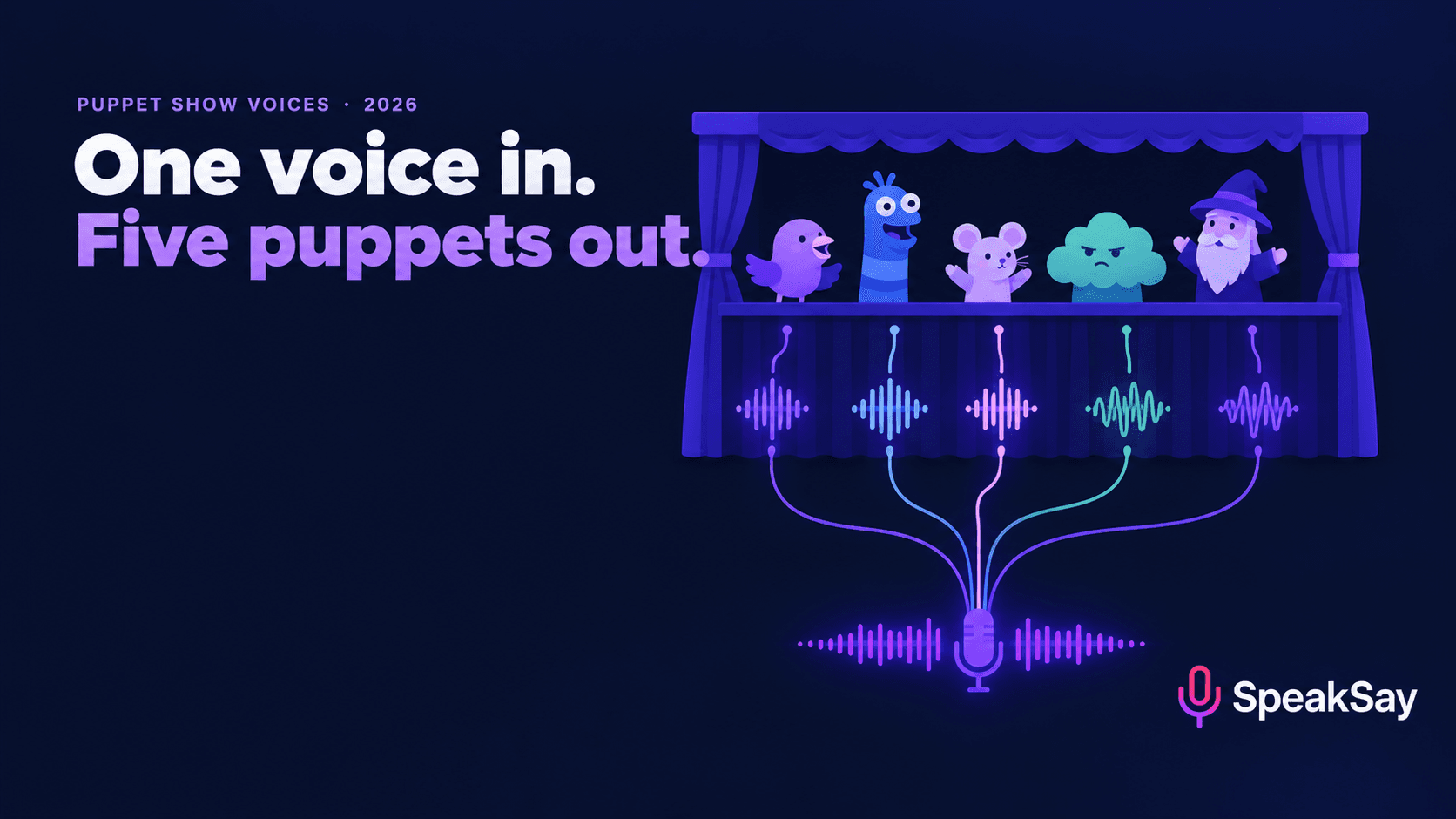
One Puppeteer, Five Puppet Voices: Pre-Record Your Puppet Show Tracks With Voice Remix (2026)
Many puppet teams already perform to pre-recorded tracks, so puppeteers can focus on movement instead of microphones and lines. The hard part is the recording: two good voices, five characters, and everyone sounding like everyone. Here's how to record every part yourself, remix each character into a distinct voice, and build a track your puppeteers can sync to.
Q4 Is When Your Podcast Ad Slots Are Worth the Most: Price, Package and Produce Holiday Inventory Before November (2026)
Advertisers spend more on podcasts in Q4 than in any other quarter, and most small shows sell those weeks at the same rate as February — or don't sell them at all. Here is how to count your real holiday inventory, set a Q4 rate card, build packages advertisers can buy in one email, and produce dated host-read variants without recording every one.
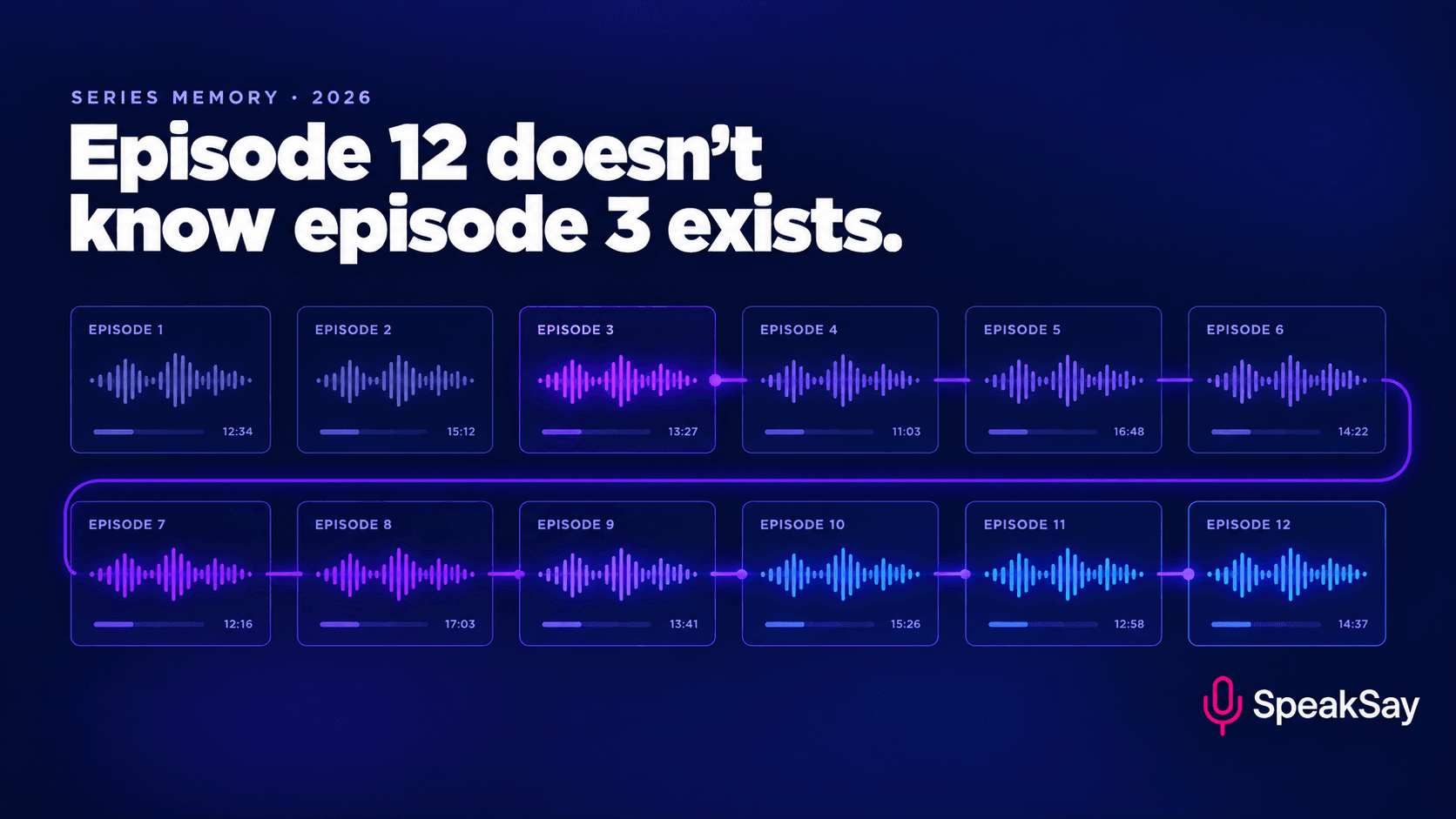
Your AI Podcast Forgets Every Episode: Building a Series Memory So Episode 12 Can Reference Episode 3 (2026)
Generated podcasts are produced one episode at a time from one source set, so nothing accumulates between them — no shared vocabulary, no callbacks, no position, no relationship. Here is the artefact stack that gives a generated show a memory: a series canon, an episode ledger, callback mechanics and locked voices.
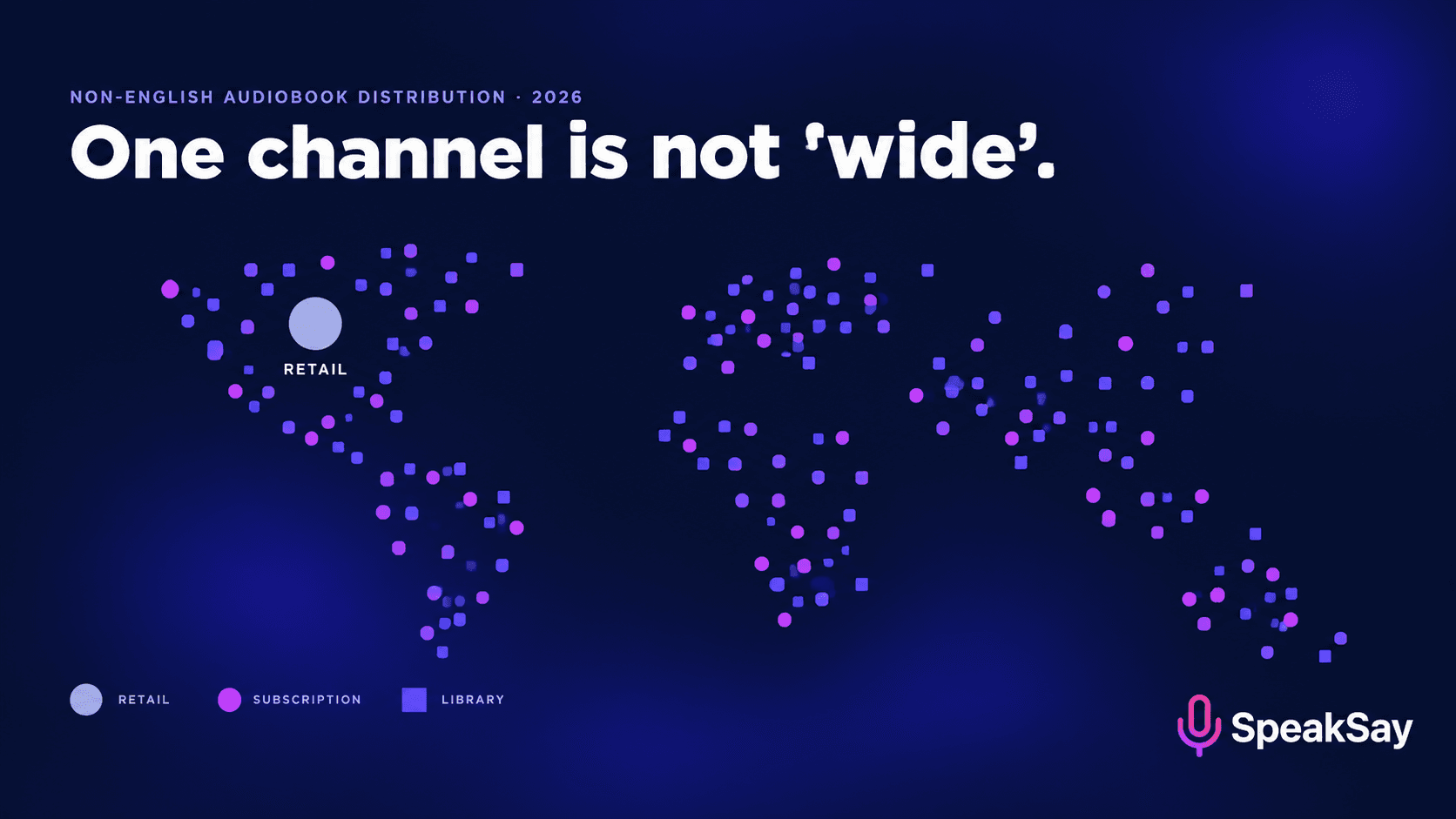
You Translated Your Audiobook and Nobody Found It (2026): Per-Market Metadata for Non-English AI-Narrated Editions
AI narration made foreign-language audiobook editions affordable, so authors are producing them. Then they list them with a machine-translated blurb, English-market categories and a sample chosen for an English listener — and the edition sells eleven copies. The production was never the hard part.
Gemini Notebook Now Meters You in Five-Hour Windows: What That Does to an AI Podcast Schedule (2026)
On 2 September 2026, Gemini Notebook replaced fixed daily caps with a compute budget that refreshes every five hours under a weekly ceiling — and never tells you how many generations you have left. For anyone producing on a schedule, that is not a pricing change. It is a capacity-planning problem.
Stop Pre-Producing Q4 in September: The Late-Decision Content Calendar AI Audio Makes Possible (2026)
Every seasonal guide tells creators to lock Q4 in September and batch it all now. That advice is a fossil — it encodes production lead time, not anything anybody learned about audiences. Remove the lead time and the constraint stops binding, but the habit survives, and it makes you publish decisions taken before the season existed. Here is the alternative: lock the slot, hold the content, render last — with an honest account of which parts of a Q4 calendar genuinely cannot be decided late.
You Can't Record Loud at 11 PM: How to Perform Quietly and Still Publish a Full-Voice Read (2026 Voice Remix Guide)
If you record in a shared flat, a family home, a hotel room or an open-plan office, you are not fighting noise — you are fighting volume, and volume is a performance variable, not an acoustics one. A restrained read is clean and dead, and no EQ, compressor or noise remover puts the life back. This guide covers how to perform at low volume so there is something worth carrying, and how speech-to-speech conversion supplies the projection you physically could not.
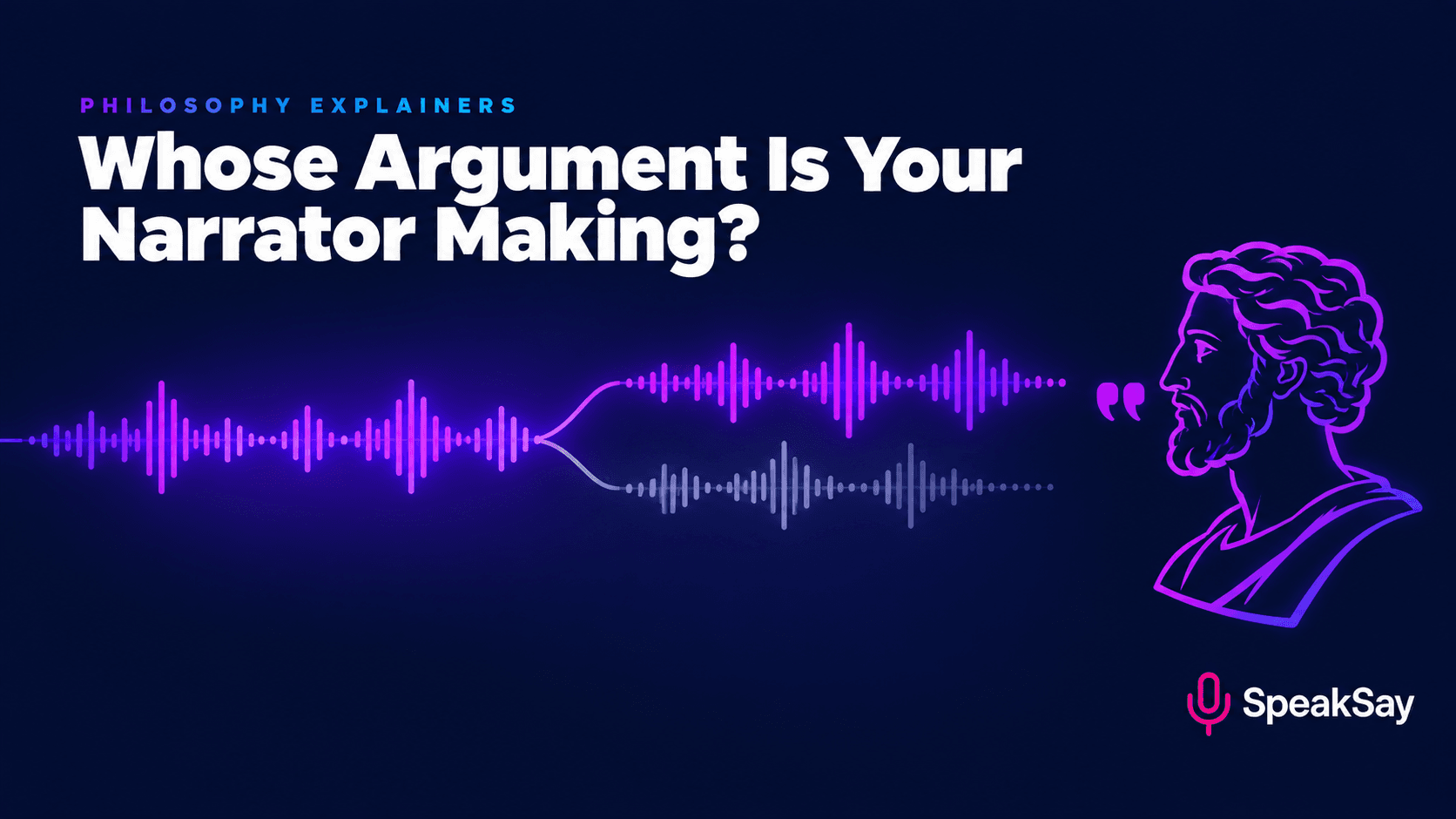
Philosophy Explainer Channels in 2026: The AI Narrator Playbook for a Niche Where the Content Is an Argument
Philosophy audiences are engaged, the category is still dominated by academic channels, and there is real room for well-produced faceless work. But there is one failure mode that sinks AI-narrated philosophy videos, and it is not the voice quality. It is that listeners cannot hear where the quotation marks are.
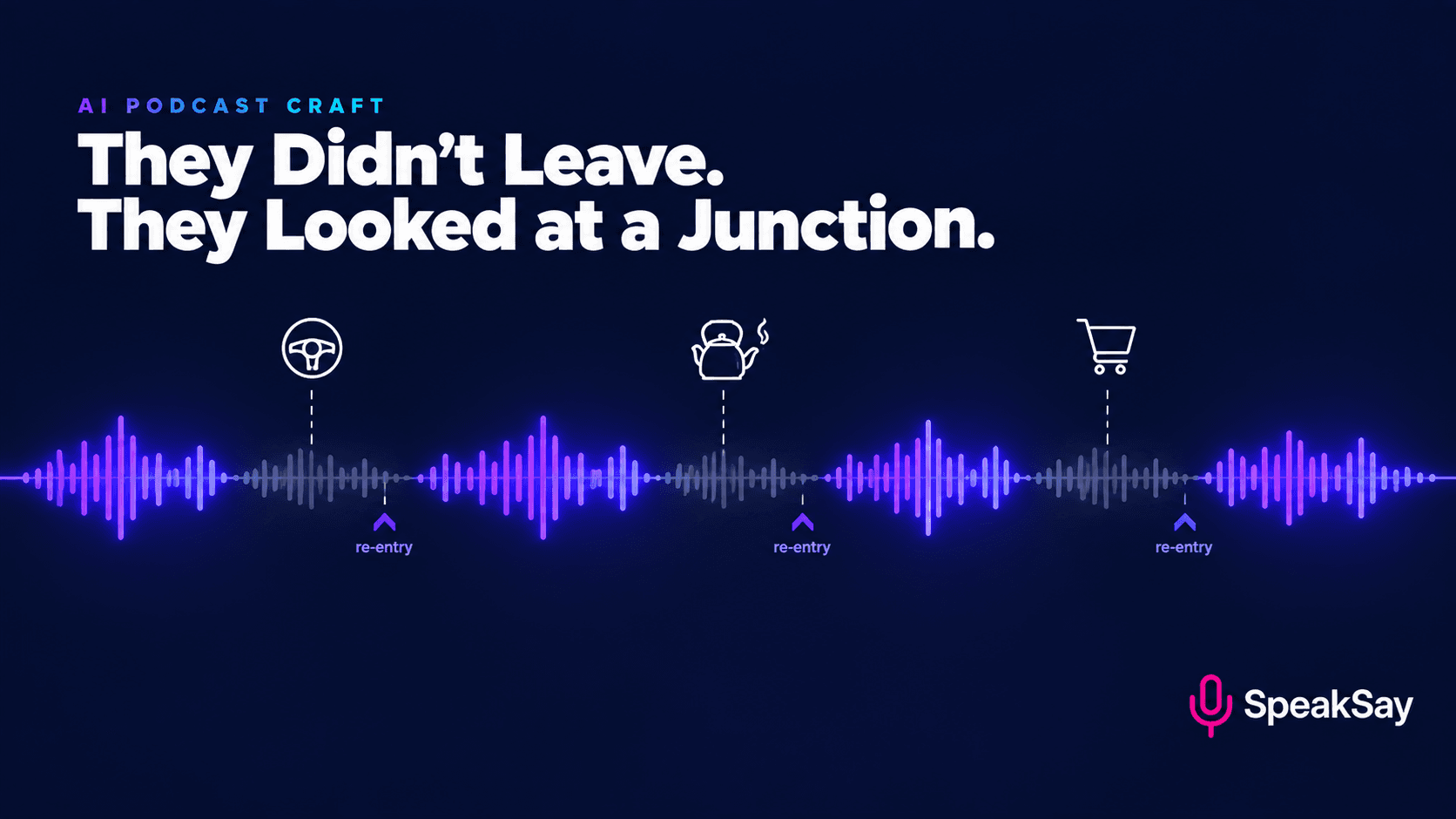
Most of Your Listeners Are Driving: Writing an AI-Hosted Podcast for Divided Attention (2026)
Your drop-off isn't a content problem. A listener glanced at a junction, missed twenty seconds, and couldn't find their way back in — and a synthetic host, whose prosody is uniform by construction, gave them nothing to find their way back with. Here is how to build re-entry cues into a generated show.
Architecture & Interiors Faceless Channels in 2026: The AI Narrator Playbook for a Niche Where the Picture Is the Information
In most faceless niches the voice carries the information and the footage illustrates it. In architecture and interiors it is the other way round — and that inversion breaks almost every AI narration habit you have. Here is the casting spec, the speech-density budget, the pronunciation lexicon and the footage-rights boundary
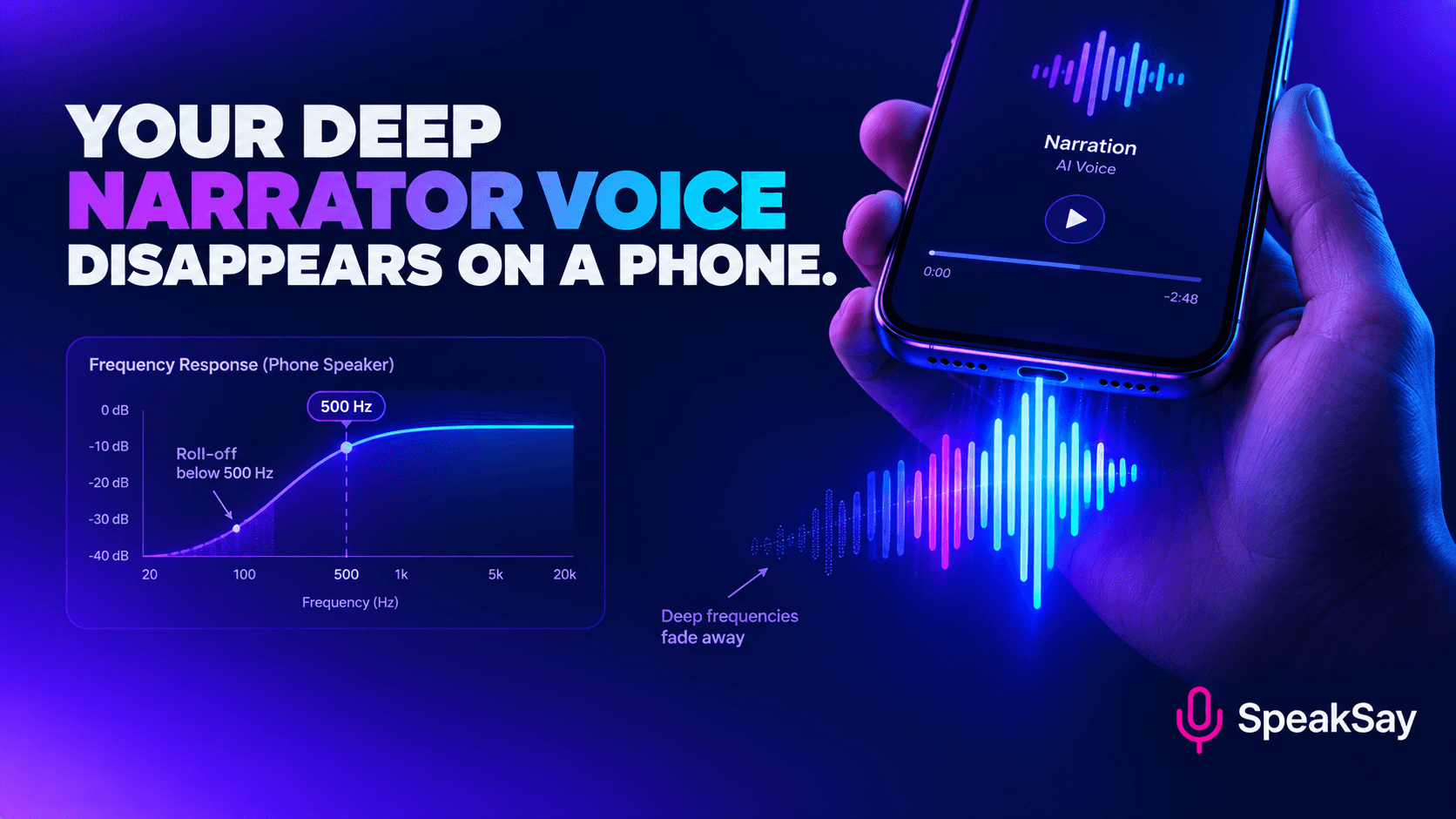
Maritime & Shipping Faceless Channels in 2026: The Ocean-Scale AI Narrator Playbook
Maritime channels have no visual drama to hide behind — a hull, a crane, a chart. The voice carries everything. Here is the casting spec, the two-register split, the TEU/DWT/port-name lexicon and the speculation boundary that separates a shipping channel people subscribe to from one that feels empty.
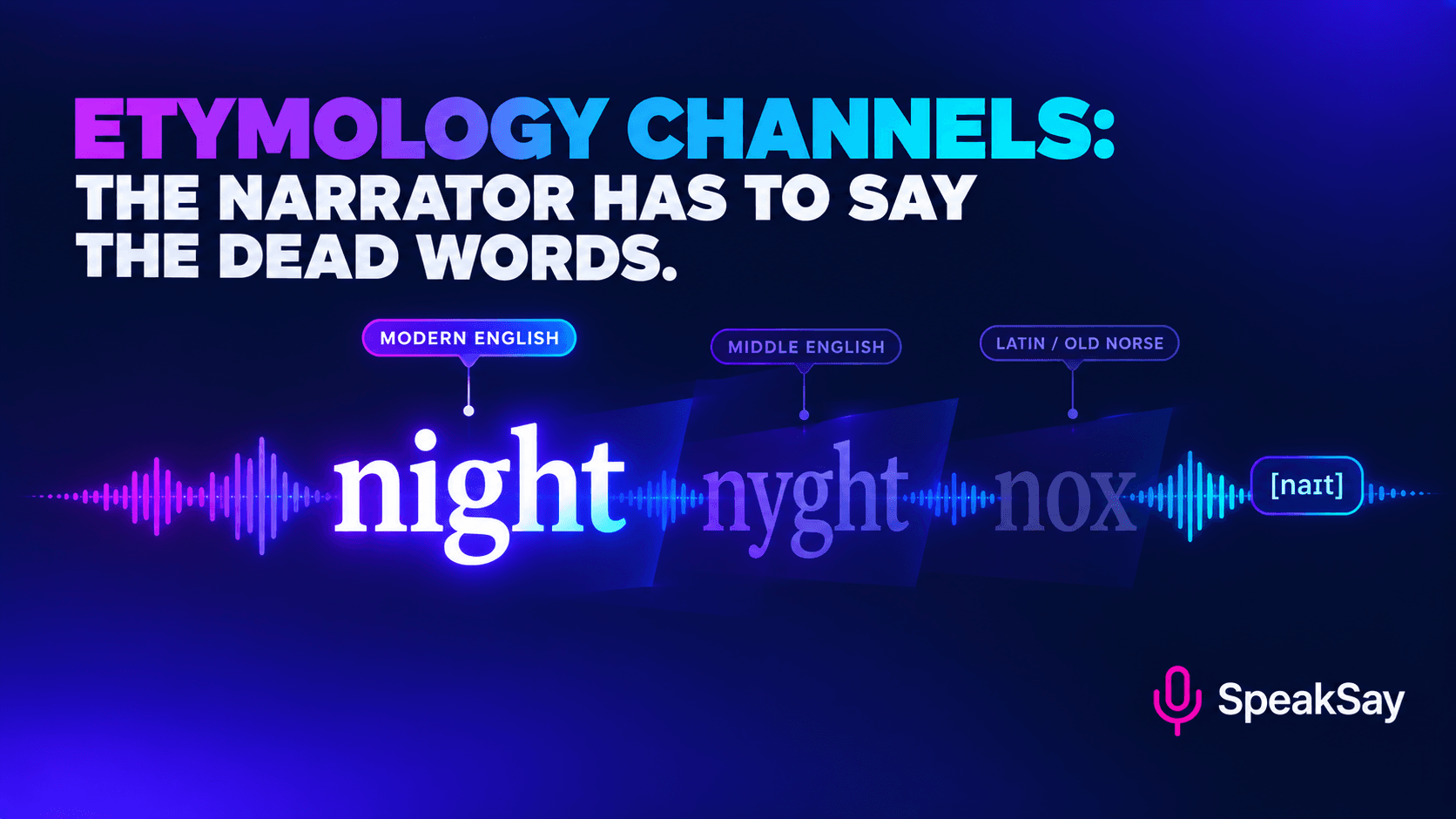
Etymology & Word Origins Faceless Channels in 2026: The AI Narrator Playbook for a Niche Where Pronunciation IS the Content
Every faceless niche has a pronunciation problem. Etymology channels have a pronunciation *product* — the whole video is the narrator saying words that no living person speaks. Here's the casting spec, the reconstructed-form workflow, and the credibility rules for 2026.
Nobody Writes In to a Robot: How to Build a Listener Community Around an AI-Made Podcast (2026)
AI-produced shows solve production and then stall at about 200 listeners, because the growth levers that work in podcasting — reviews, listener mail, mailbag episodes, a host people feel they know — all assume a human at the microphone. They do not. Here is how to run the community loop on a synthetic show without pretending.
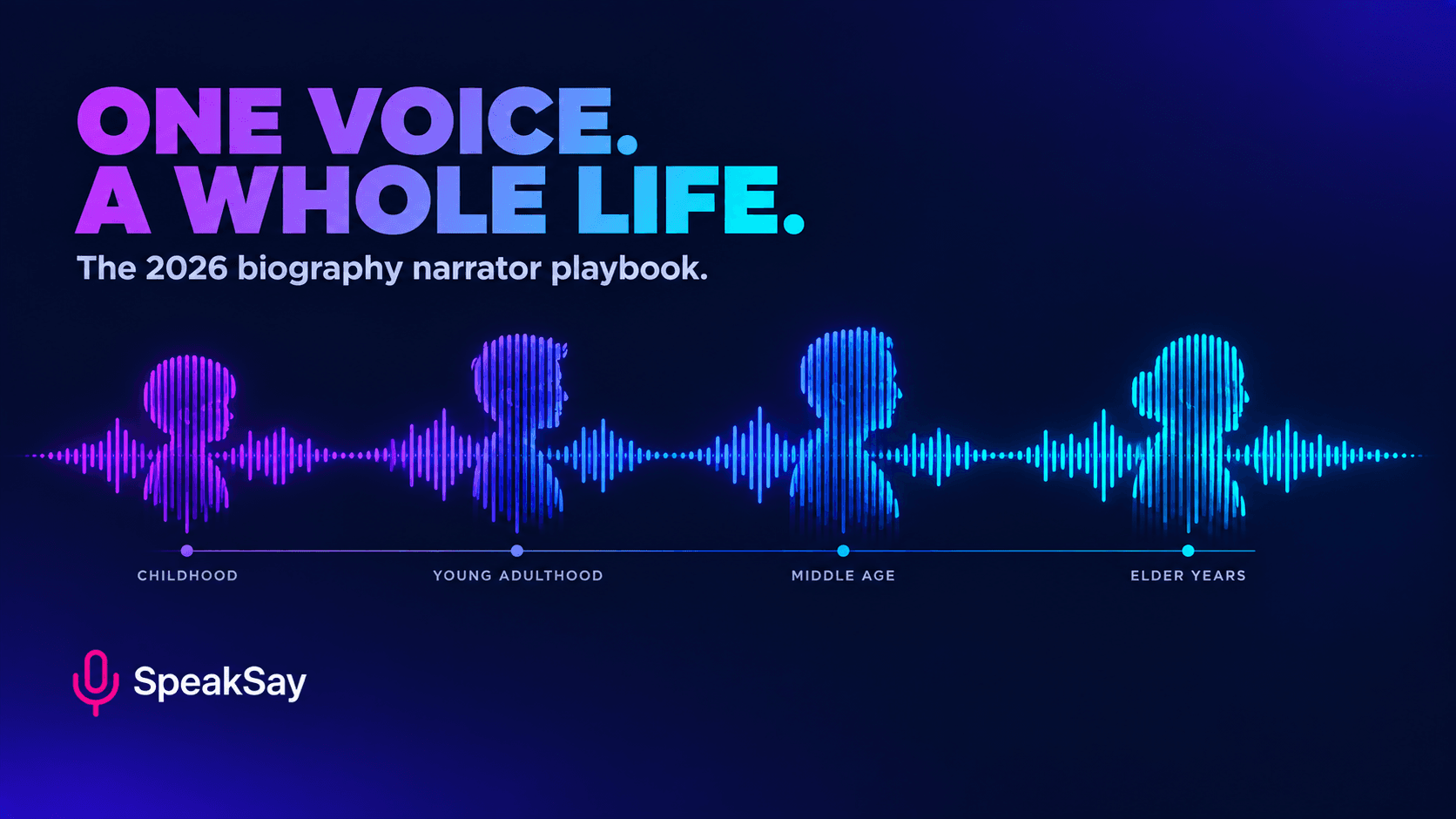
Biography and Life Story Faceless Channels in 2026: The Chronicler AI Narrator Playbook (and the Impersonation Line You Must Not Cross)
Biography channels tell one person's whole life in twelve minutes — and the narrator has to sound like a chronicler, not a fan, not a tabloid and never like the subject. Here is the voice casting spec, the lifespan pacing map, the name pronunciation workflow and the impersonation boundary that keeps the channel monetised.
Survival & Prepping Faceless Channels in 2026: The Earned-Authority AI Narrator Playbook
Survival audiences punish narration that claims experience it hasn't earned — and they spot a stock AI voice instantly. Here is the register split, script rules and voice spec that let a faceless survival channel sound credible in 2026.
Manufacturing & "How It's Made" Faceless Channels in 2026: The Process-Narration AI Voice Playbook
Factory and how-it's-made channels fail for a reason nobody talks about: the narration fights the footage instead of following it. Here is the step-boundary script structure, the units-and-tolerances pronunciation lexicon, and the footage-sourcing rules that keep a manufacturing channel monetised in 2026.
Urban Exploration & Abandoned Places Faceless Channels in 2026: The On-Site Presence AI Narrator Playbook (Plus the Footage Sourcing Rules)
Urbex is a first-person format built on a hushed voice inside a real building. Here is how to make an AI narrator sound co-located with the footage instead of floating above it - two-register casting, acoustic place-matching, a decay pronunciation lexicon, and a legal footage sourcing ledger.
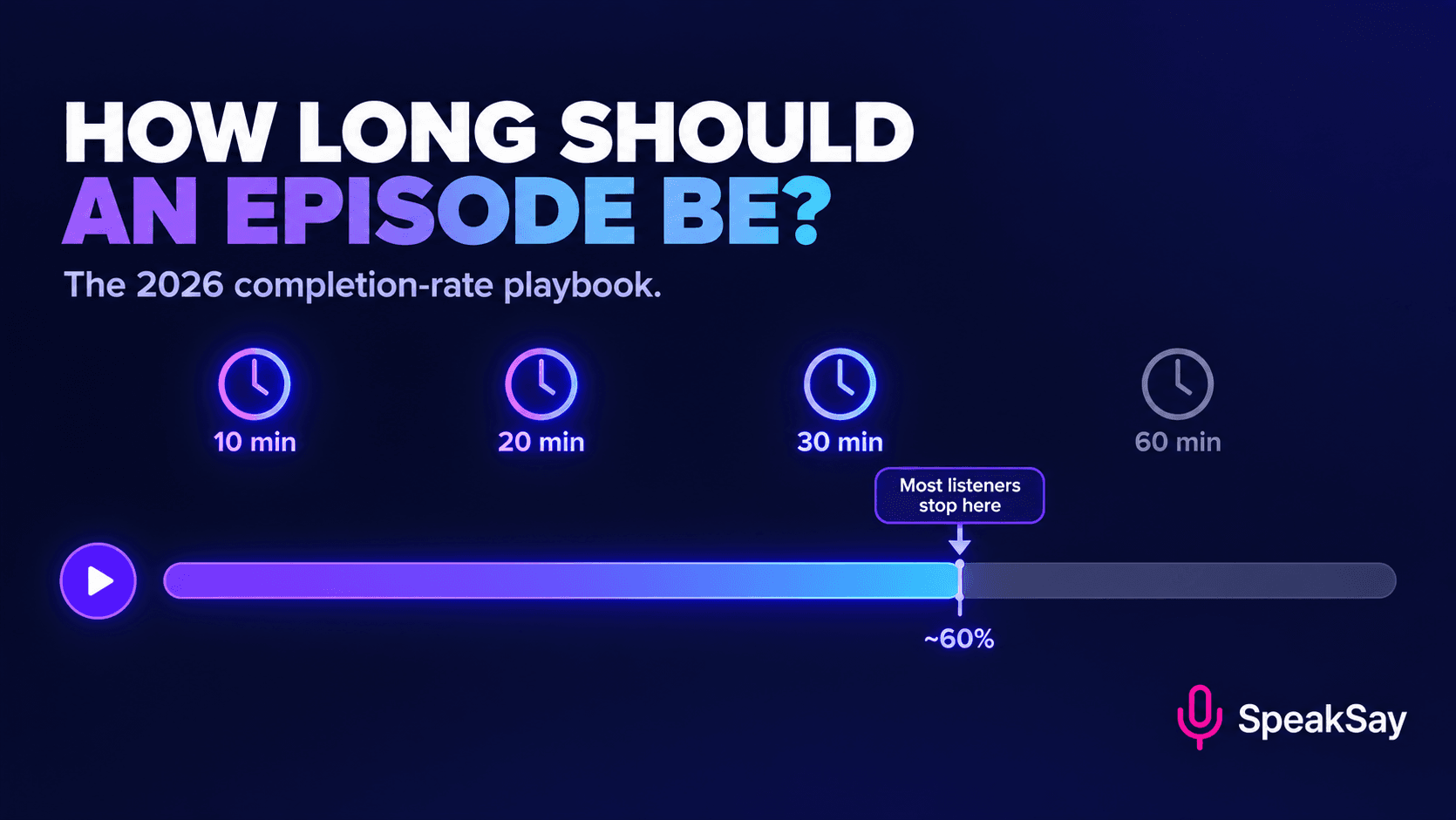
How Long Should a Podcast Episode Be in 2026? The Completion-Rate Playbook
Most new podcasters copy the hour-long format of shows that earned the right to it, and most AI-generated shows pad to hit a runtime. Both lose listeners in the same place. Here is how to choose a length from your format rather than from habit, and how to plan it at script stage.
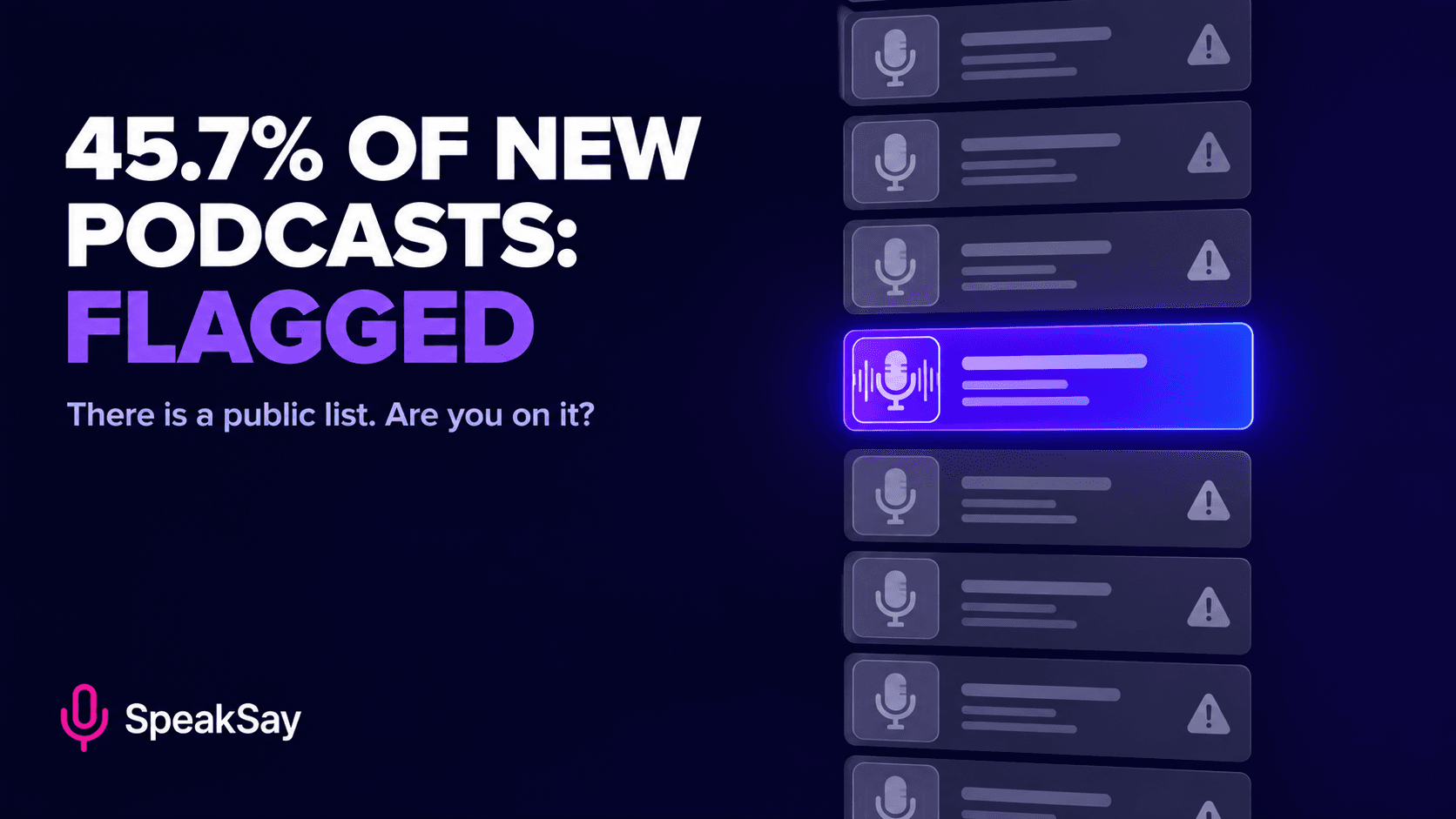
45% of New Podcasts Are Flagged as AI — and There's a Public List: How to Stay Off the Podcast Index "Problematic" Feed (2026)
The Podcast Index publishes an API listing new shows marked as spam, phishing or "low-effort AI" — and apps and hosts use it to curate. Here is what triggers the flag, how to check, and how an AI-assisted show reads as a real one.
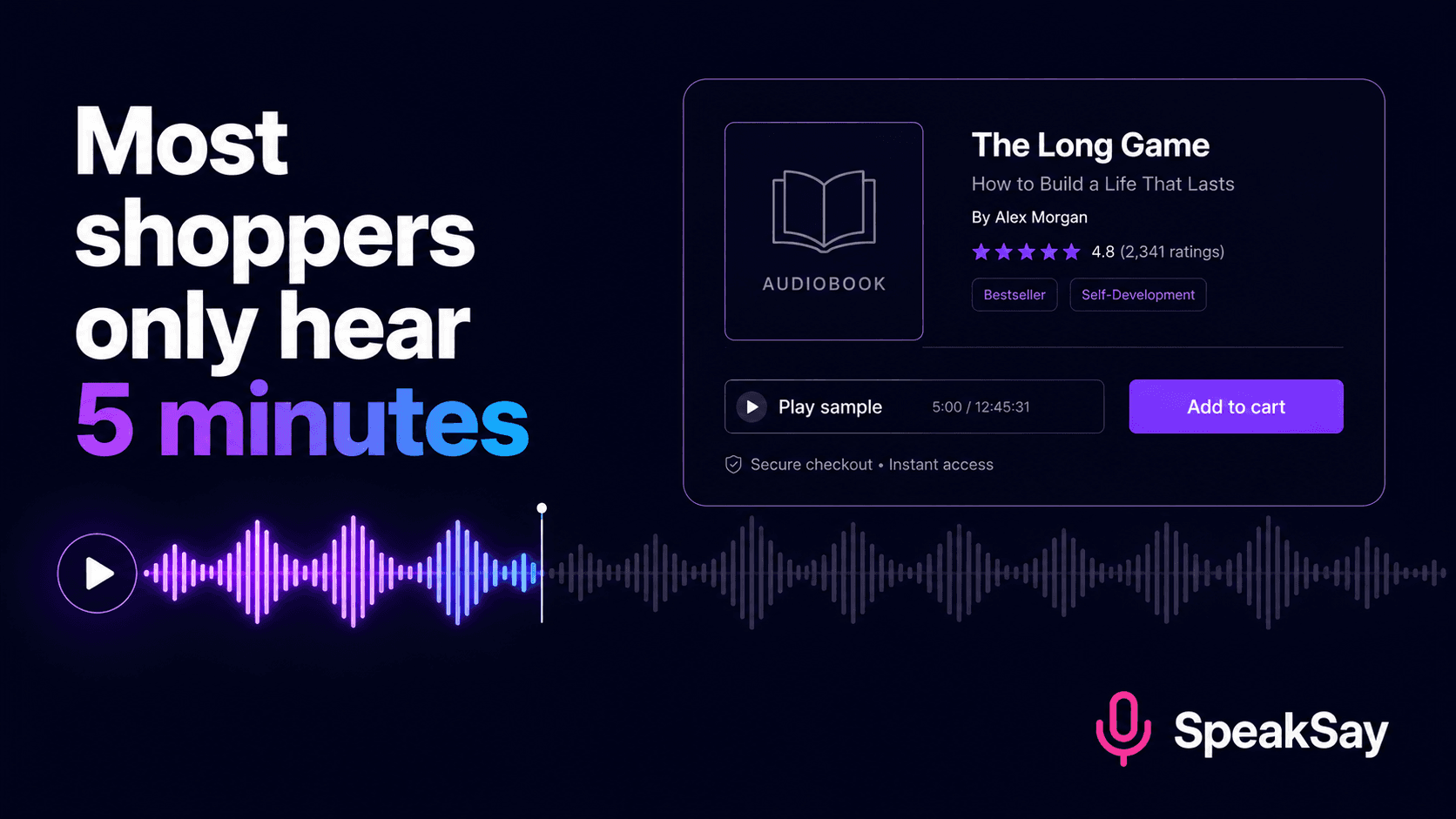
The First Five Minutes Sell the Book: How to Produce an Audiobook Retail Sample That Converts (2026)
AI narration made audiobook production cheap and fast, which means the bottleneck moved from recording to converting browsers into buyers. This guide gives you a scoring rubric, format specs, a production checklist and a testable A/B protocol for the one clip most shoppers will ever hear.

Extreme Weather & Natural Disaster Faceless Channels in 2026: The Calm-Under-Pressure AI Narrator Playbook
Weather and natural-disaster documentary content is one of the few faceless niches with abundant public-domain footage, strong documentary retention and almost no serious casting guidance. This playbook covers the two-register voice model, a meteorological pronunciation lexicon, two production lanes and the safety policy that keeps the channel monetisable.
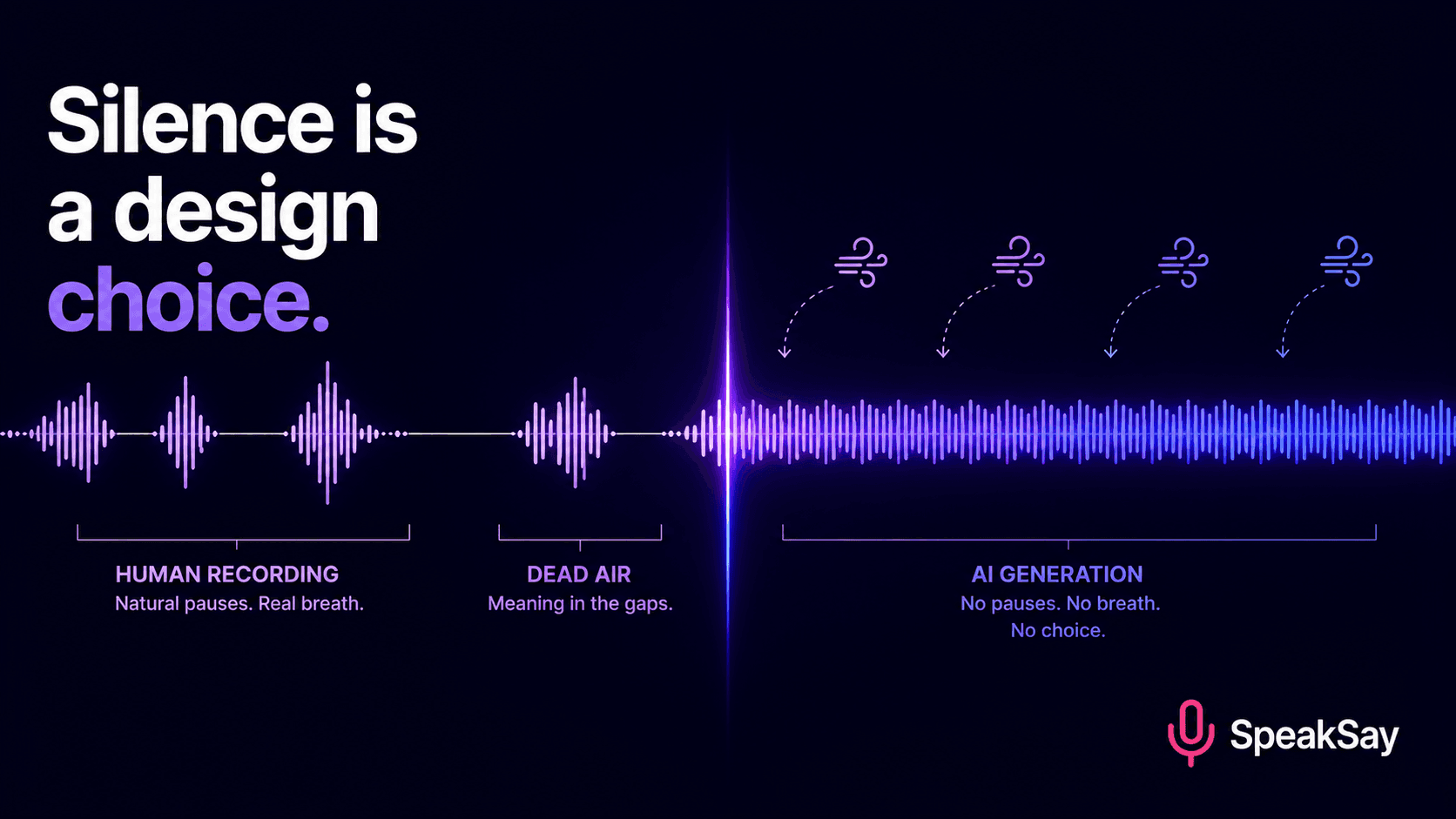
Your Podcast Back Catalog Is Unsold Ad Inventory: The 2026 Dynamic Ad Insertion Playbook for AI-Made Shows
Every evergreen episode you have already published is still being downloaded, and most of them carry either silence or a dead promo code for a sponsor who left two years ago. This playbook covers dynamic ad insertion mechanics, ad marker placement by episode length, a back-catalogue audit template, and how to keep host-read ads sounding like your show.
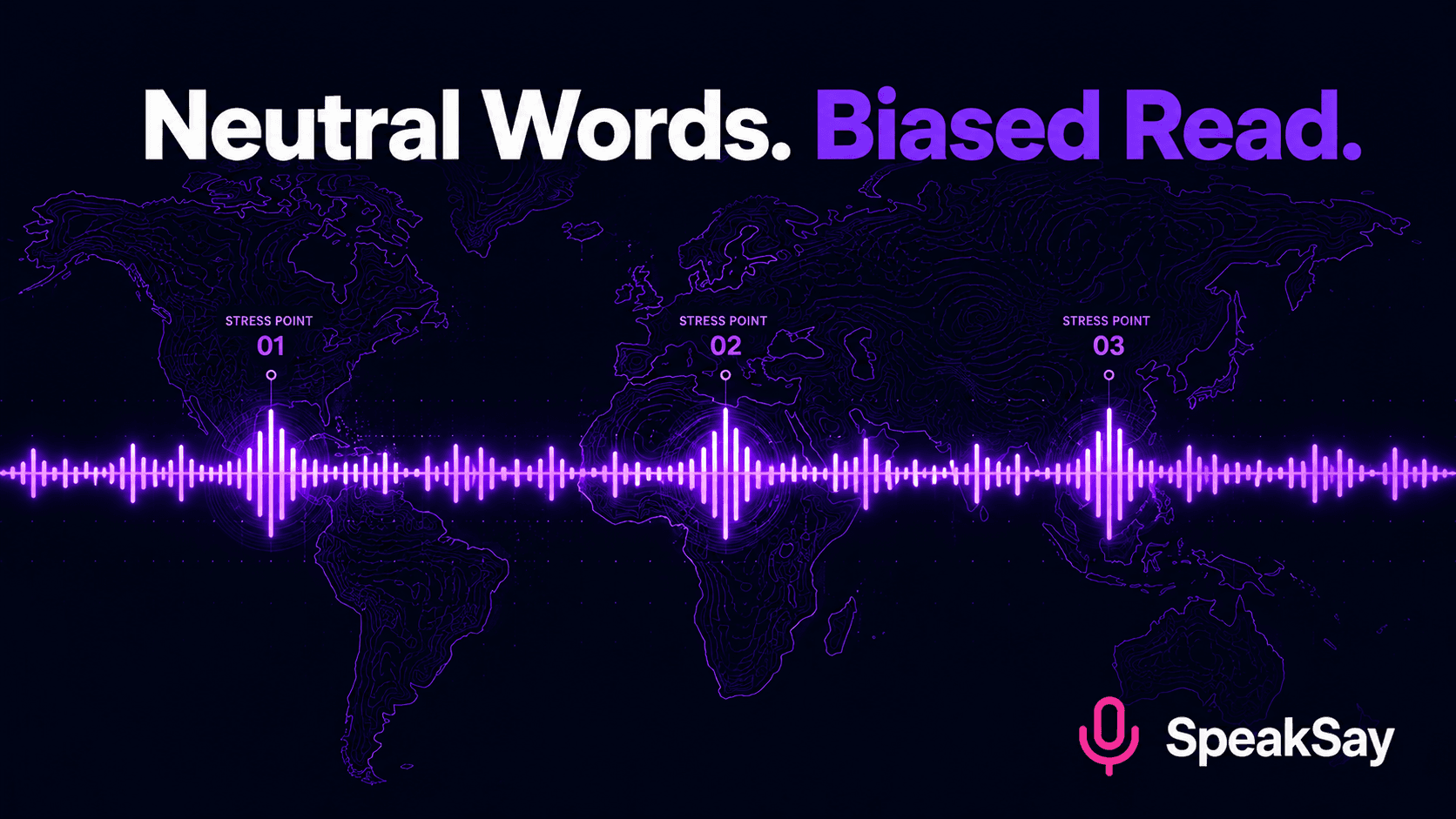
Geopolitics & World Affairs Faceless Channels in 2026: The Neutral-Authority AI Narrator Playbook (and the Emphasis Bias Nobody Talks About)
Geopolitics explainers are one of 2026's biggest faceless niches - and one of the easiest to get wrong at the microphone. This playbook gives you a neutral-authority casting spec, an emphasis bias table, a hedging script layer, a rapid-response split, and a monetization-safe voice policy.
Engineering & Megaproject Faceless Channels in 2026: The Authority AI Narrator Playbook (Plus the Pronunciation Problem Nobody Solves)
Engineering and megaproject channels have an audience that fact-checks you in the comments — and a script full of words most AI voices get wrong. Here is the two-register casting model, the pronunciation lexicon workflow, and the chapter-level narration system that makes a 20-minute documentary survivable.
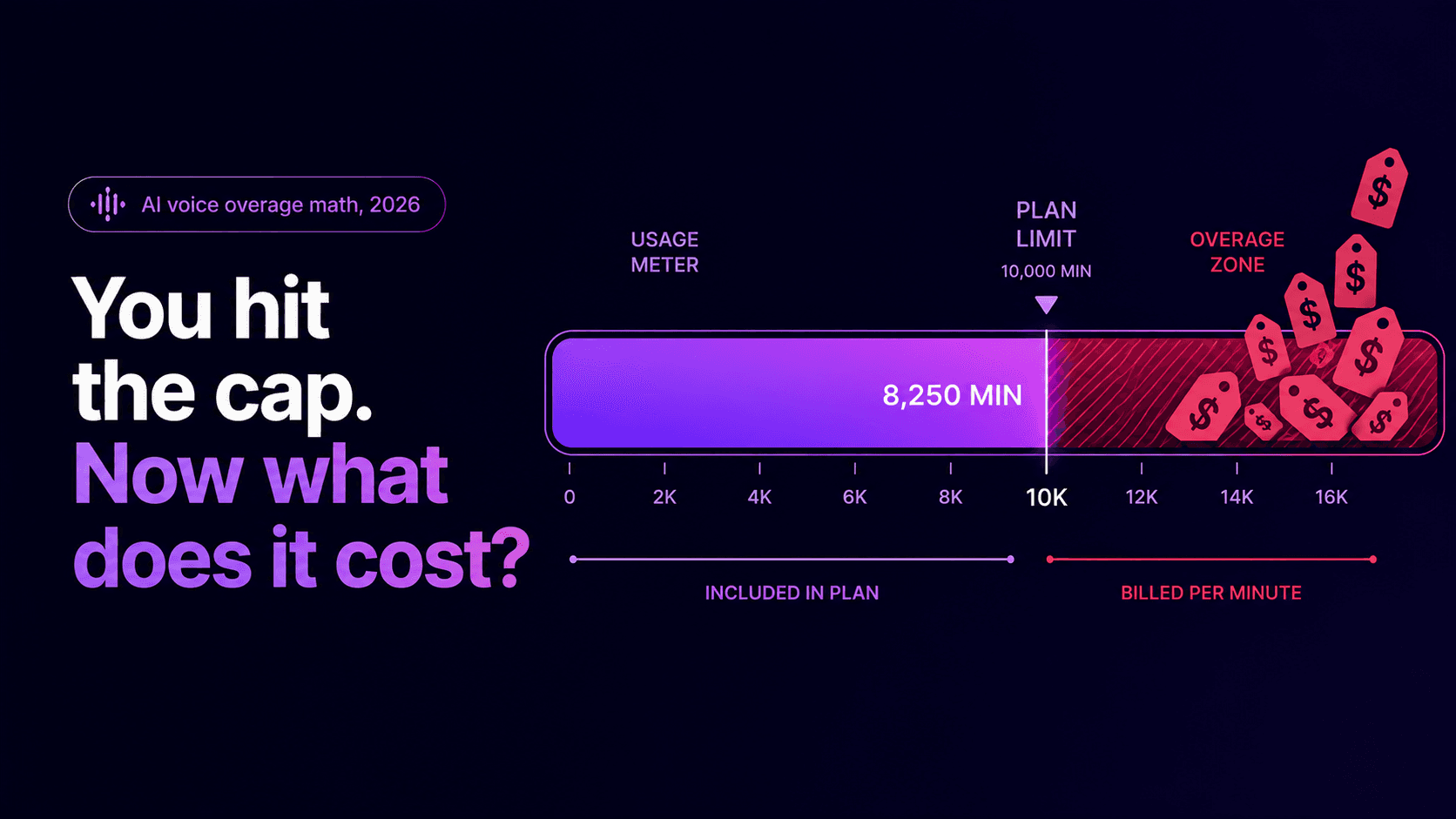
What Happens When You Hit Your AI Voice Character Limit Mid-Project? The 2026 Overage Math Nobody Shows You
Your plan says 100,000 characters. Your audiobook needs 480,000. Here is exactly what the extra 380,000 costs on every pricing model in 2026, why your bill moves without a plan change, and the three ways to stop paying by the meter.
DIY and Home Improvement Faceless Channels in 2026: The Trusted Instructor AI Narrator Playbook (Plus the Fall Project Spike)
DIY narration is not storytelling narration. A viewer holding a drill needs step boundaries, unambiguous measurements and a voice that sounds like it has done this before. Here is the casting model, the pronunciation lexicon and the autumn content calendar for a faceless home improvement channel.
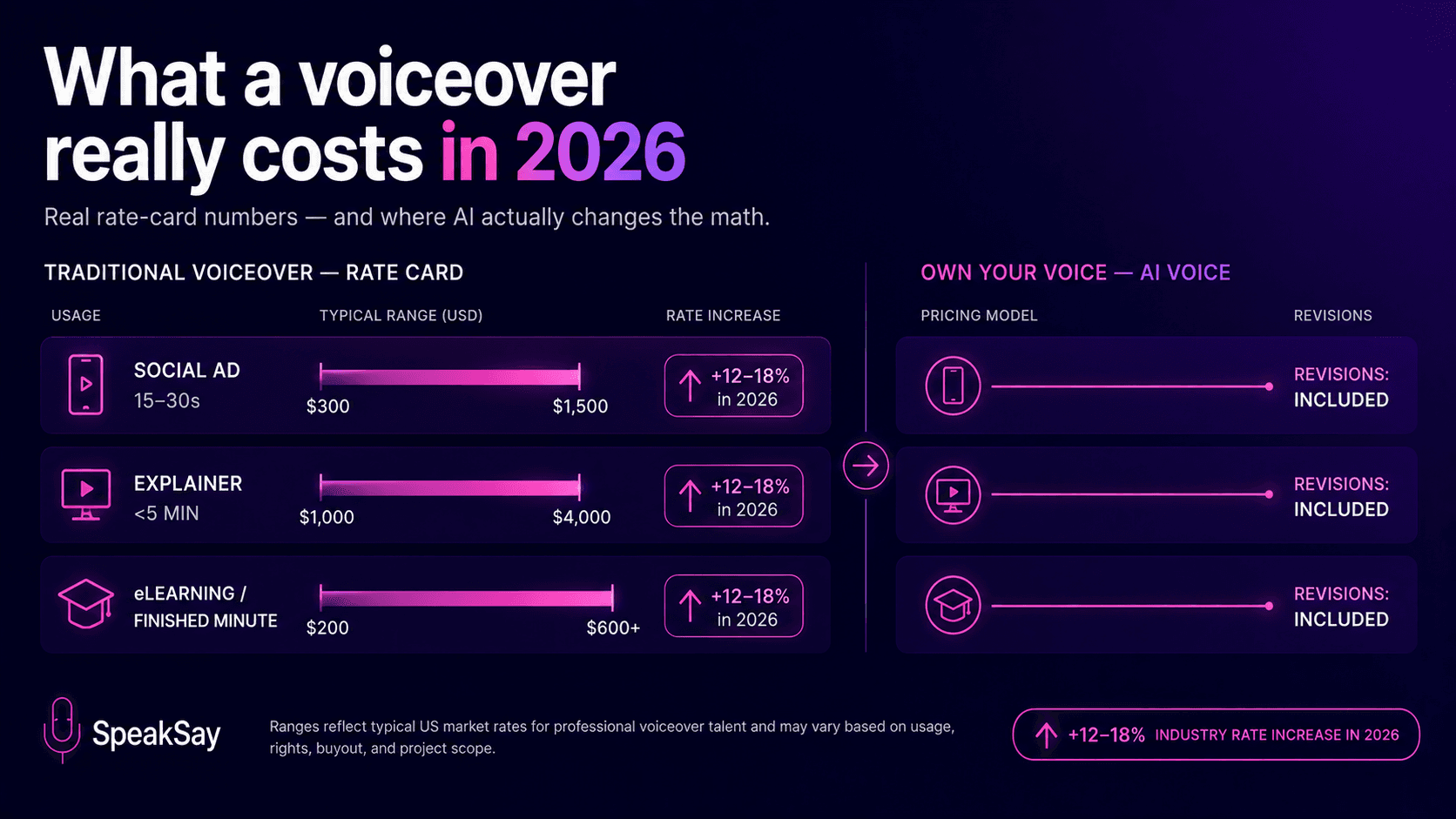
How Much Does a Voiceover Cost in 2026? Real Rate-Card Numbers (and What Changes When You Use AI)
Non-union voiceover rates rose 12–18% across the board in the 2026 GVAA update, and most buyers are still budgeting from three-year-old blog posts. Here are the real numbers by project type, how usage and buyouts work, and an honest breakdown of where AI wins and where a human is still worth every cent.
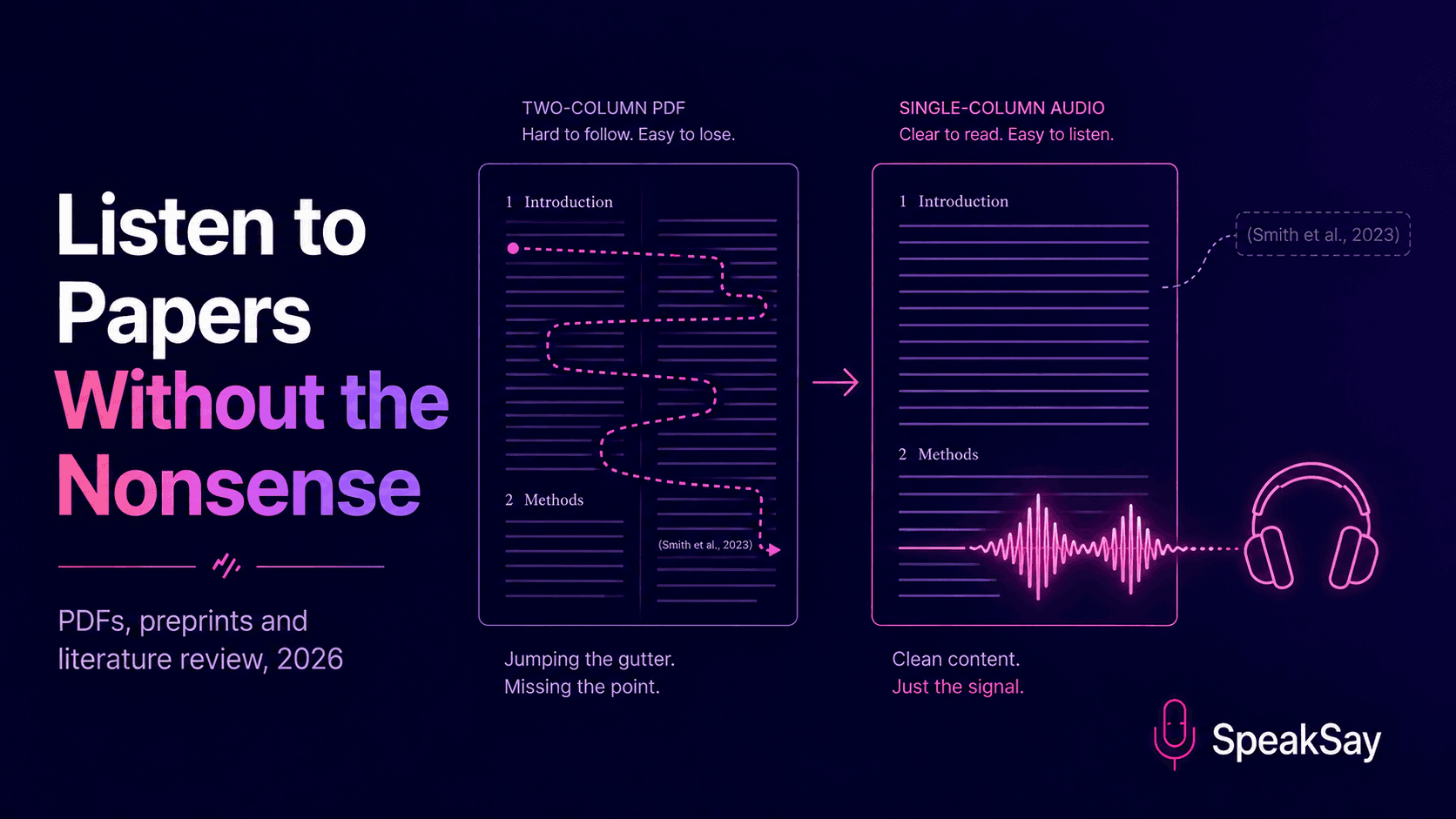
Stop Podcasting Forever: Why 8-Episode Limited Series Beat Weekly Shows in 2026 (The AI Season Playbook)
Around nine in ten podcasts stop before episode four. The problem usually isn't discipline — it's that the weekly-forever format is a commitment nobody should have signed. Here is how to design, batch-produce and finish an eight-episode season instead.
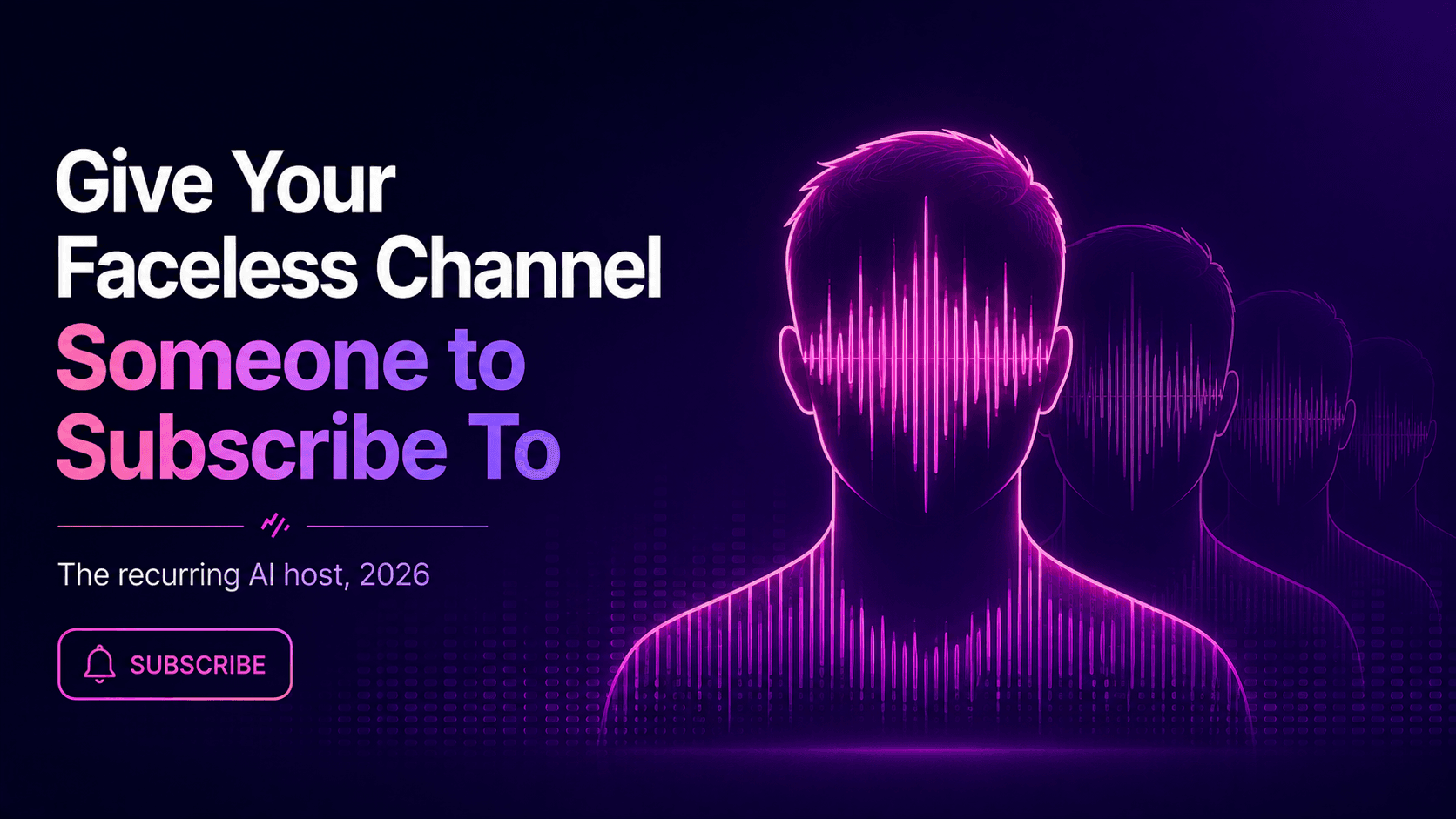
Faceless Channels Have Nothing to Subscribe To: Build a Recurring AI Character Host Viewers Actually Follow (2026)
Faceless channels convert views into subscribers at a fraction of the rate of on-camera ones, because there's nobody to follow. The fix isn't a better voice — it's a character. Here's the character bible, the voice-design recipe, and the continuity rules.
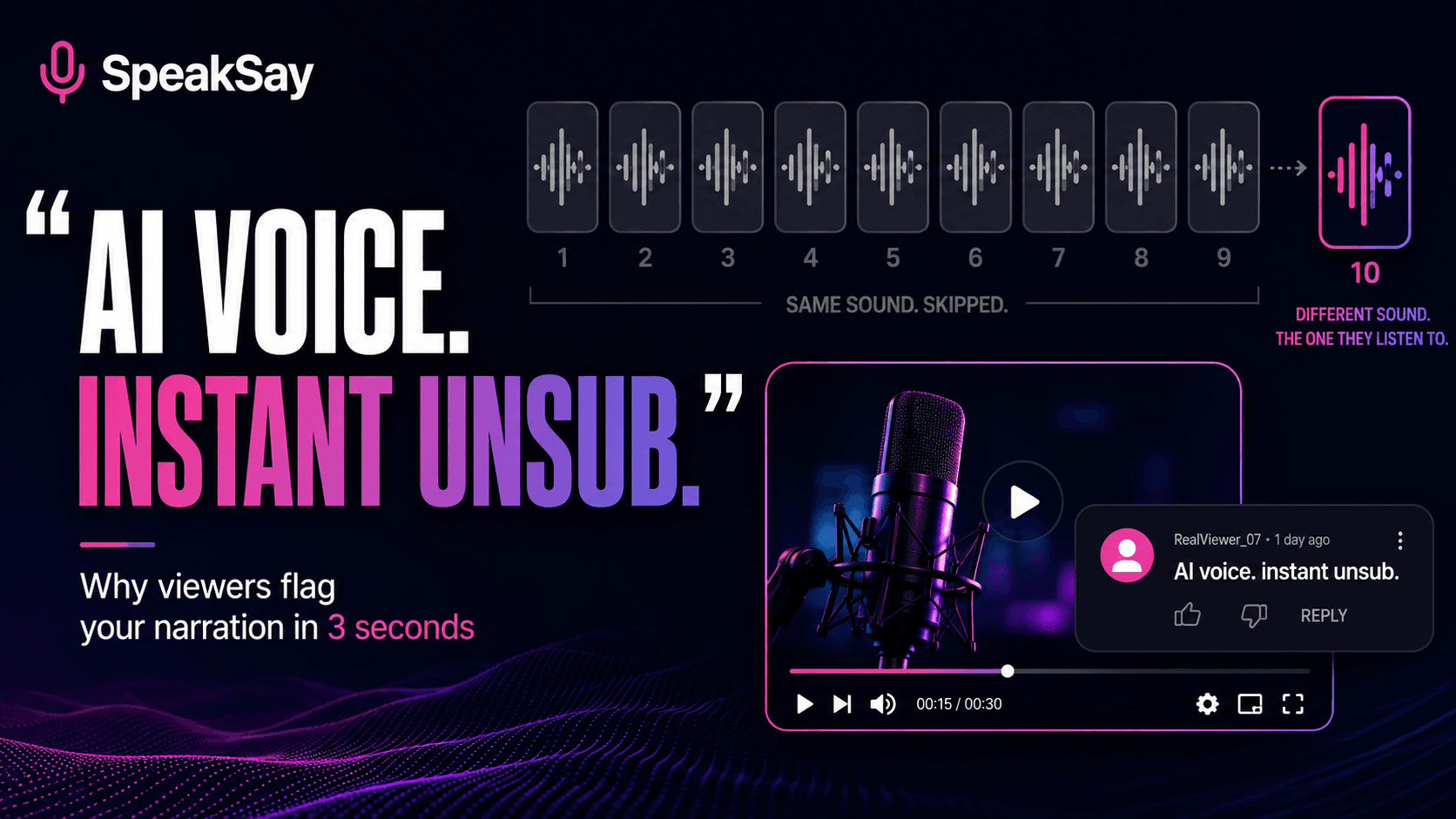
YouTube Just Deleted 16 AI Channels and 4.7 Billion Views: What They Had in Common — and the Human-Input Test Your Faceless Channel Must Pass (2026)
YouTube wiped 16 major AI channels, 4.7 billion views and roughly $10 million a year in revenue. AI wasn't the reason. Here is the pattern the deleted channels shared, and the seven-point human-input test your faceless channel needs to pass before the next sweep.
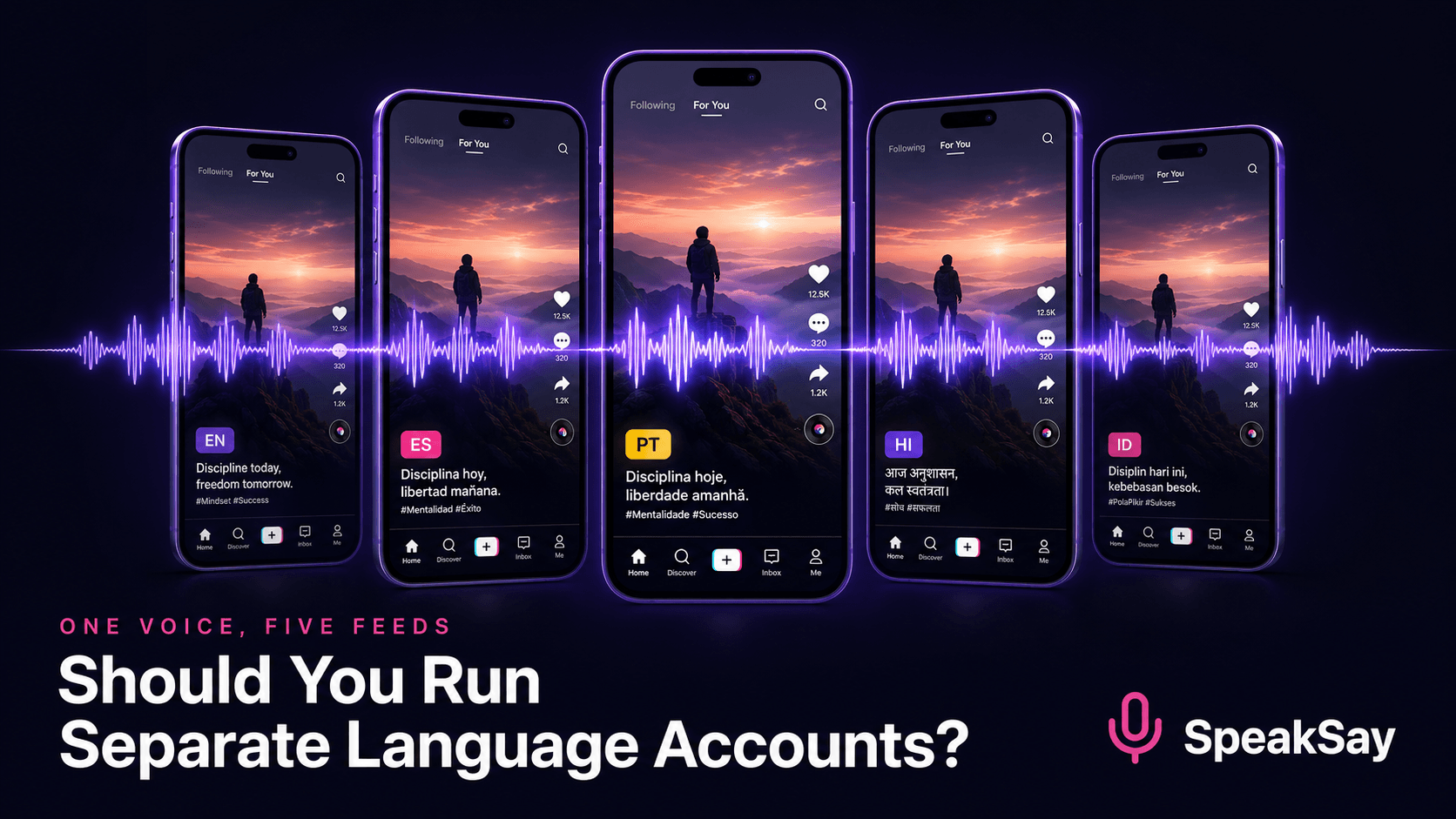
One Account or Five? How Creators Localize Short-Form Video Into 5 Languages Without Losing the Algorithm (2026)
TikTok still gives creators no built-in dubbing, Instagram's translations can't be exported and aren't available everywhere, and the feed now cross-references device and app language - which caps single-language creators. Here's the account architecture and the dubbing workflow that actually scales.
How to Start a Podcast With AI in 2026: No Mic, No Editing, No Co-Host (Complete Beginner Guide)
You don't need a microphone, an editing suite, or a co-host to launch a podcast in 2026. Here's the complete beginner workflow — idea to published RSS feed — using AI voices, plus the honest limits of the free tools everyone recommends.
We Had ChatGPT Write the Script": Turn AI Scripts Into Fully Voiced Comedy Skits (2026 Trend Guide)
The "we had ChatGPT write us a script" format is everywhere in August 2026 — but it assumes you have a friend group to cast. Here's how solo creators voice an entire ensemble with AI, and why deadpan delivery is the whole joke.
Car & Automotive Faceless Channels in 2026: The AI Narrator Playbook for YouTube's Most Loyal Gearhead Audience
Automotive is one of YouTube's biggest, most loyal audiences — and one of the least crowded faceless niches. Here's the full 2026 playbook: sub-niches, formats, monetization math, and the AI narrator voice that makes gearheads trust you.
Dark Psychology & Human Behavior Channels Are Faceless YouTube's Stickiest Niche: The 2026 AI Narrator Playbook
Psychology content gets shared, binged and rewatched like almost nothing else on YouTube — but it sits near YMYL territory where 2026's AI rules bite hardest. Here's the niche playbook: formats, voice choice, originality checklist and monetization math.
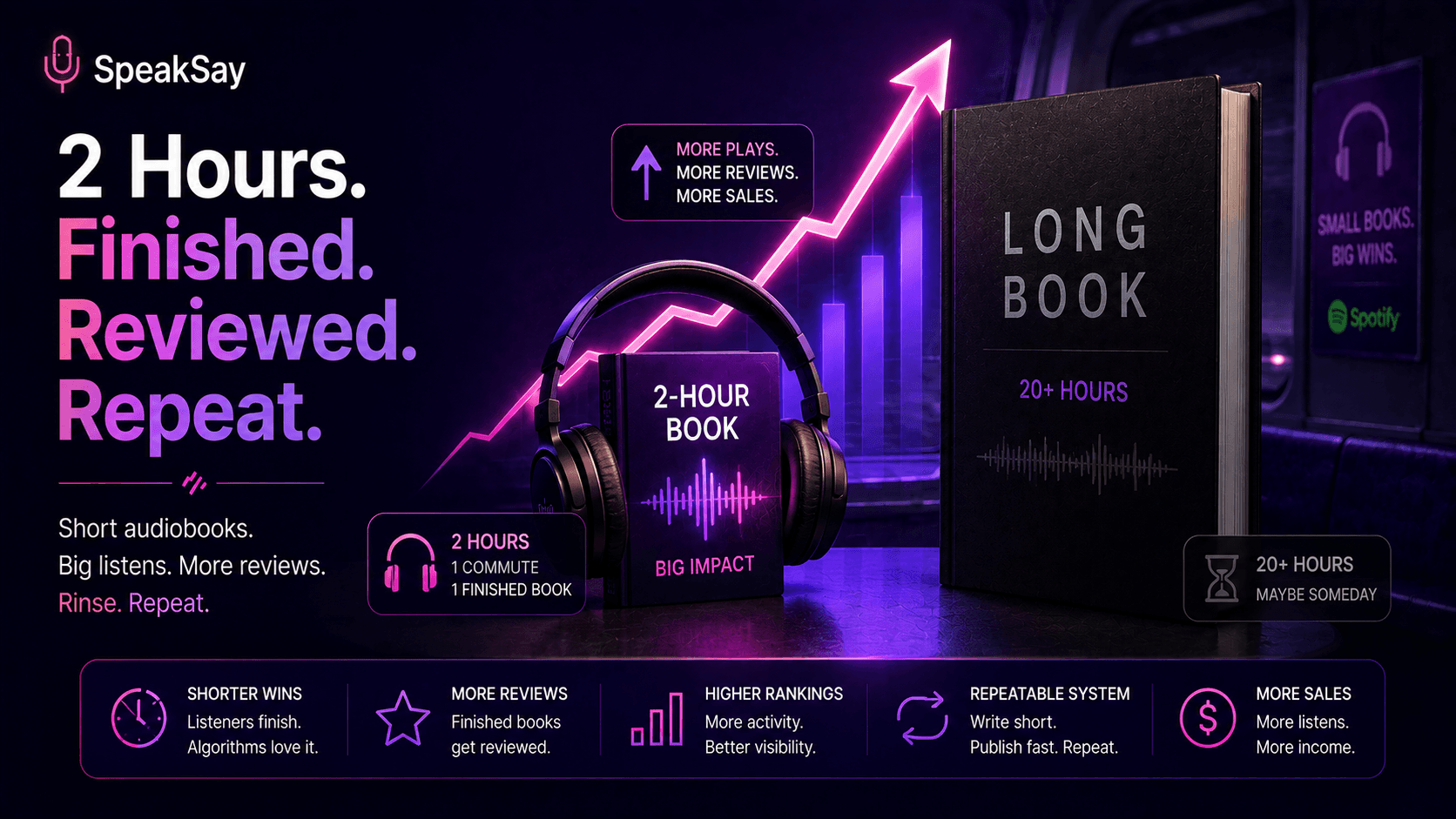
The 2-Hour Audiobook Is Outselling the 12-Hour Epic: Micro-Audiobooks & Short Nonfiction Audio (2026)
Spotify's audiobook boom rewards titles listeners can actually finish. Your novellas, guides, and long essays aren't "too short" — with AI narration they're finally profitable. Here's the micro-audiobook strategy.
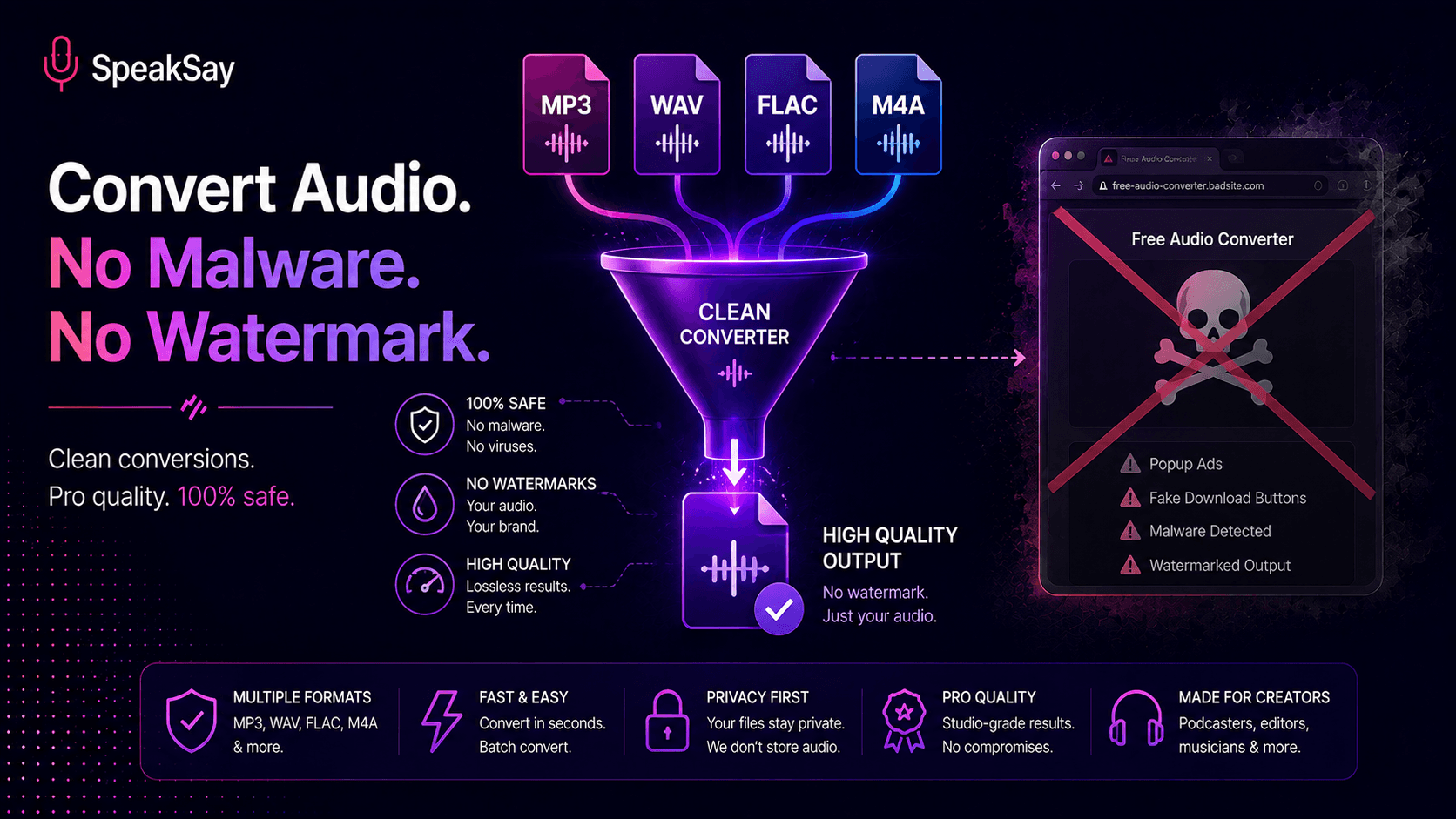
Free Audio Converter Guide (2026): MP3, WAV, FLAC, M4A — What Every Creator Actually Needs to Know
Your DAW won't import M4A, the platform rejects WAV, and the top Google result for "free audio converter" wants to install a toolbar. Here's the clean way to convert — plus the format cheat sheet that ends the guessing.
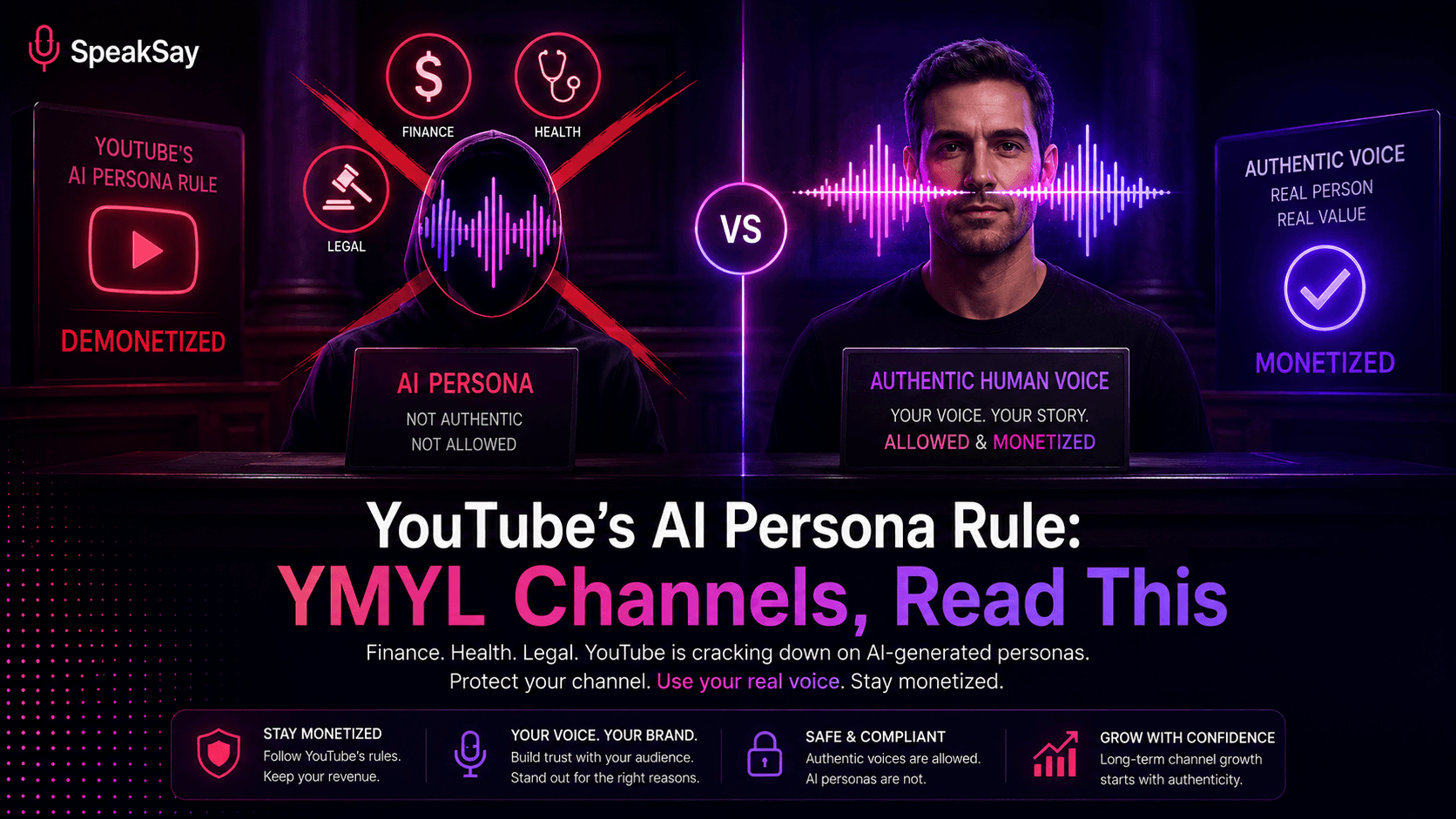
YouTube's New "AI Persona" Rule Hits Finance, Health & Legal Channels Hardest (2026): How YMYL Faceless Creators Stay Monetized
YouTube's 2026 "inauthentic content" enforcement singles out AI personas discussing finance, health and legal topics. Here's exactly what the policy says, why high-RPM YMYL niches are the bullseye, and the own-voice workflow that keeps your channel monetized.
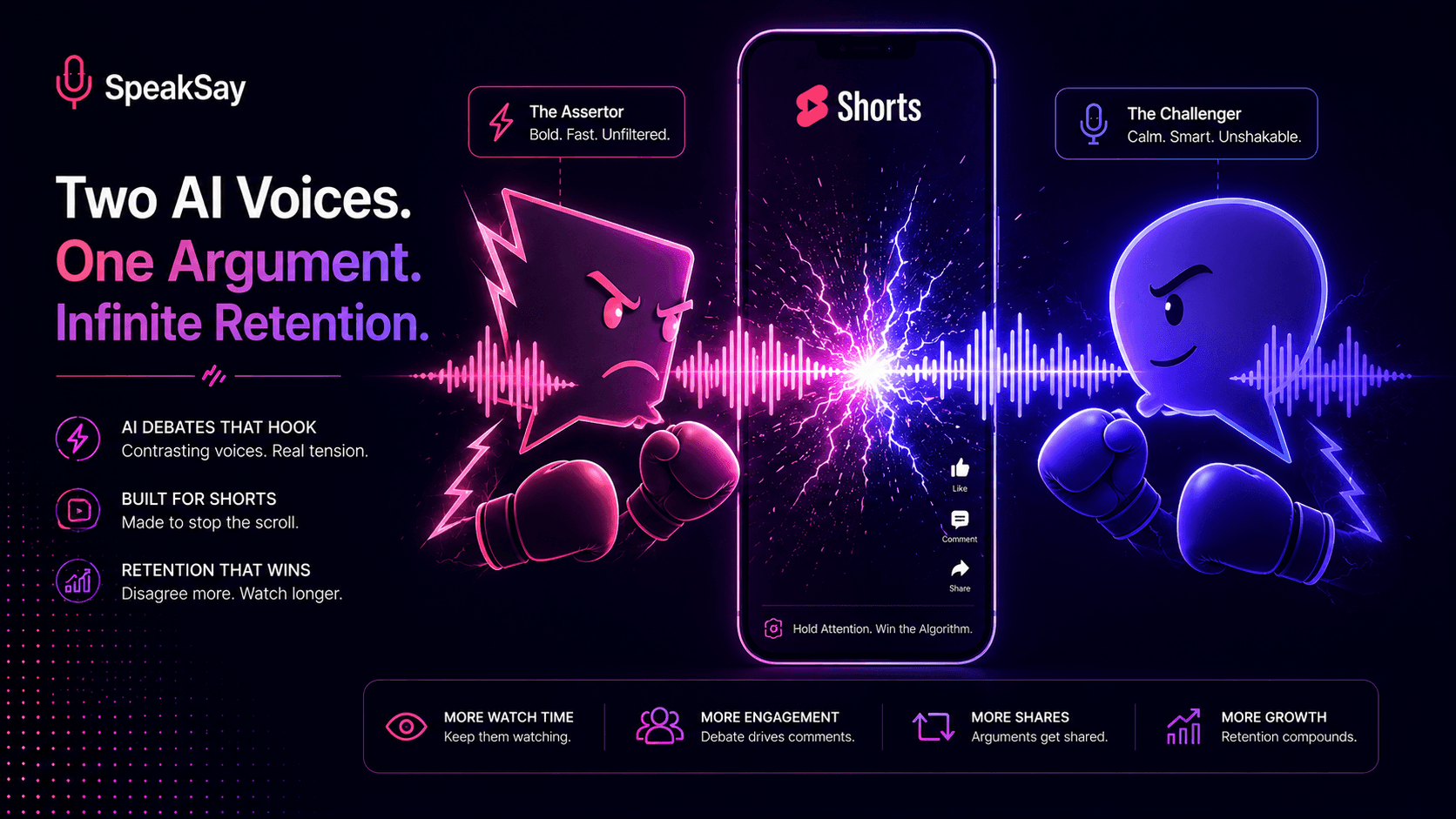
Two AI Voices Arguing Is the Most Watchable Format on Shorts: Build a Debate/Dialogue Show With Voices You Control (2026)
Debate-style AI audio is everywhere — but stock two-host tools give you zero control over the voices or the takes. Here's how to design two original characters, script 45-second arguments, and produce a debate Shorts series people fight about in the comments.
NFL Season Starts in September: Launch a Daily Fantasy Football AI Podcast in August (2026 Playbook)
Fantasy football content has a brutal daily cadence — waiver wires, injuries, and start/sit calls change every morning. Here's the AI podcast workflow that lets one fan publish a sharp daily show through all 18 weeks without burning out, and why August is the build window.
You're Paying for 5 AI Audio Tools: The 2026 Consolidation Math (TTS + Cloning + Podcast + Remix in One Bill)
A TTS subscription here, a voice cloner there, a podcast generator, a voice changer, a grab-bag of one-off utilities — creator audio stacks quietly hit $100+/month. Here's the audit worksheet, the real math for a typical faceless creator, and when consolidation (or a lifetime plan) beats the stack.
Book Summary Channels Are Faceless YouTube's Evergreen Compounder: The 2026 AI Narrator Playbook
Book summary videos rank for years and sell to the best ad demographics on YouTube — but most channels die of narration burnout or the "inauthentic content" test. Here's the 2026 playbook.
Gaming Lore Channels Are Faceless YouTube's Most Loyal Audience: The Epic AI Narrator Playbook (2026)
Gaming lore and "mockumentary" videos are 2026's breakout faceless format, with fandoms that binge 40-minute deep dives. Here's how to build a documentary-grade AI narrator, structure fair-use commentary, and keep one consistent voice across a 40-video series.
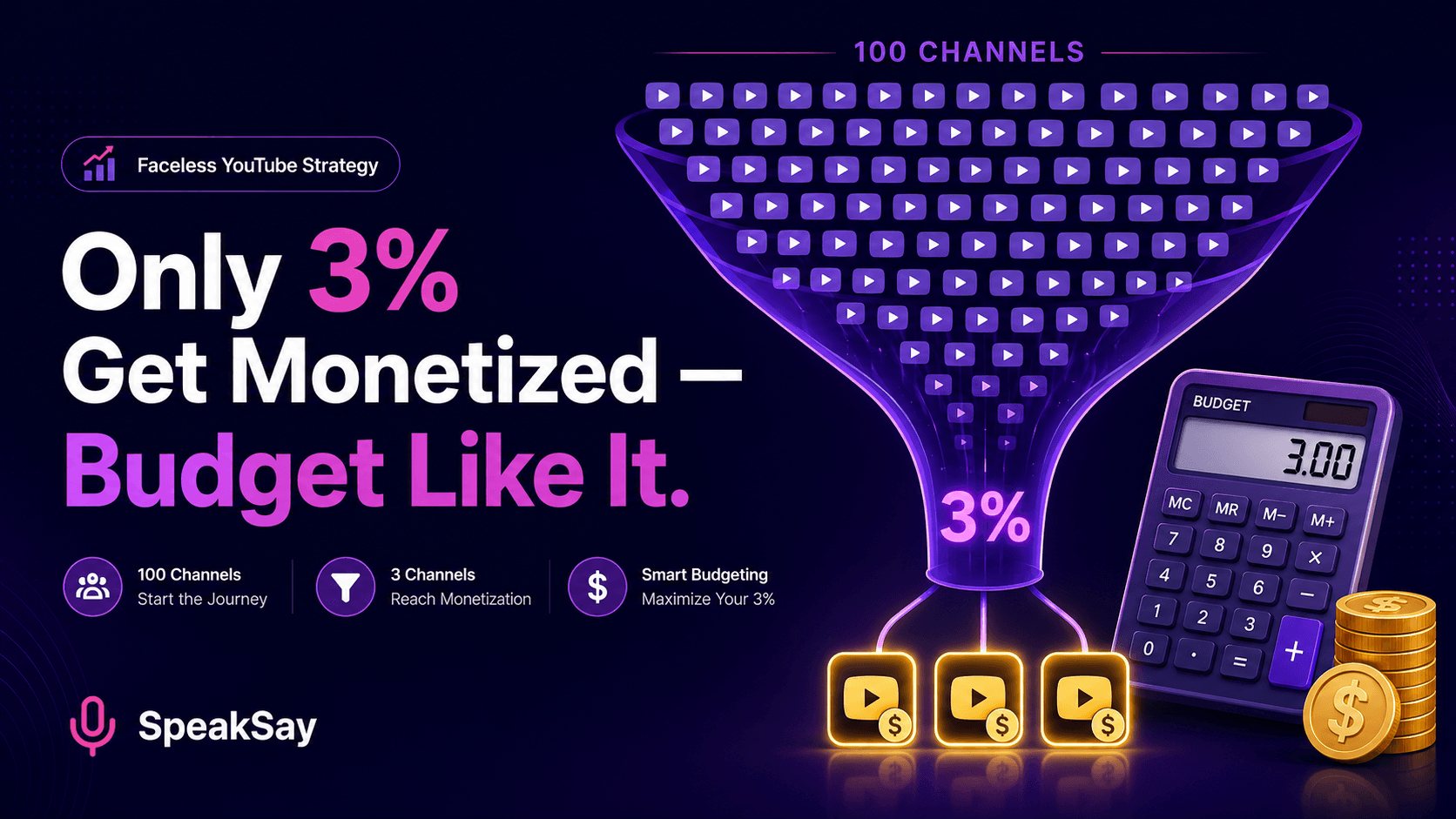
Only 3% of Faceless YouTube Channels Ever Get Monetized: The 2026 Startup Cost & Budget Math That Puts You in the 3%
97% of faceless channels never break even — usually because they overspend on tools before earning a cent. Here's the real 2026 startup budget, line by line, and how to keep your voice costs from killing the channel.
Cooking & Recipe Channels Are Quietly Winning Faceless YouTube: The Appetizing AI Narrator Playbook — Plus the 3x International Dubbing Bonus (2026)
Food is the biggest evergreen vertical on YouTube, and hands-only recipe videos never need your face. Here's the 2026 playbook: formats, the narrator voice that makes food sound delicious, scripts, monetization — and the dubbing strategy giving culinary channels up to 3x international growth.
Nature & Wildlife Channels Are Faceless YouTube's Most Reliable Niche: The Documentary AI Narrator Playbook (2026)
Nature content never stops getting watched — 2026 niche reports rank wildlife among the most stable faceless niches for beginners. But everyone wants "the Attenborough voice," and that instinct is a trap. Here's how to build an original documentary narrator, structure episodes, and collect the international dubbing bonus.
Mythology Channels Are YouTube's Most Bingeable Faceless Niche: The Epic AI Narrator Playbook (2026)
Greek gods, Norse ragnarok, Egyptian underworlds — mythology is evergreen, global, and binge-watched for hours. Here's the 2026 playbook for building a mythology channel with an epic AI narrator that passes YouTube's originality review.
Do Unused AI Voice Credits Roll Over? The Use-It-or-Lose-It Subscription Trap Costing Creators Hundreds (2026)
Most AI voice subscriptions quietly delete your unused credits every month. Here's the real math on what the use-it-or-lose-it trap costs creators per year — and how to escape it for good.
How to Tell If a Voice Is AI-Generated (2026): 7 Signs, Detection Tools, and Why $893M Was Lost to Voice Scams
AI voices are now good enough to fool family members — and fraudsters know it, with AI-enhanced scams costing Americans $893 million. Here are the 7 audible tells of a synthetic voice, how detection tools actually perform, and the verification habits that beat any deepfake.
Motivation & Discipline Channels Pull Billions of Views: The Intense AI Narrator Playbook (2026)
Motivational and discipline content is one of 2026's fastest-growing faceless niches — but every channel uses the same recycled "hustle" voice, and a flat AI read kills the intensity that makes these clips shareable. Here's the voice craft, pacing curves and originality playbook for narration that actually hits.
Best Free AI Voice Generators in 2026 (No Signup, No Watermark): Tested for YouTube, TikTok & Podcasts
Most "free" AI voice generators gate the download behind a signup, cap you at 30 seconds, or stamp a watermark on your audio. We tested what's actually free in 2026 — and when paying finally makes sense.
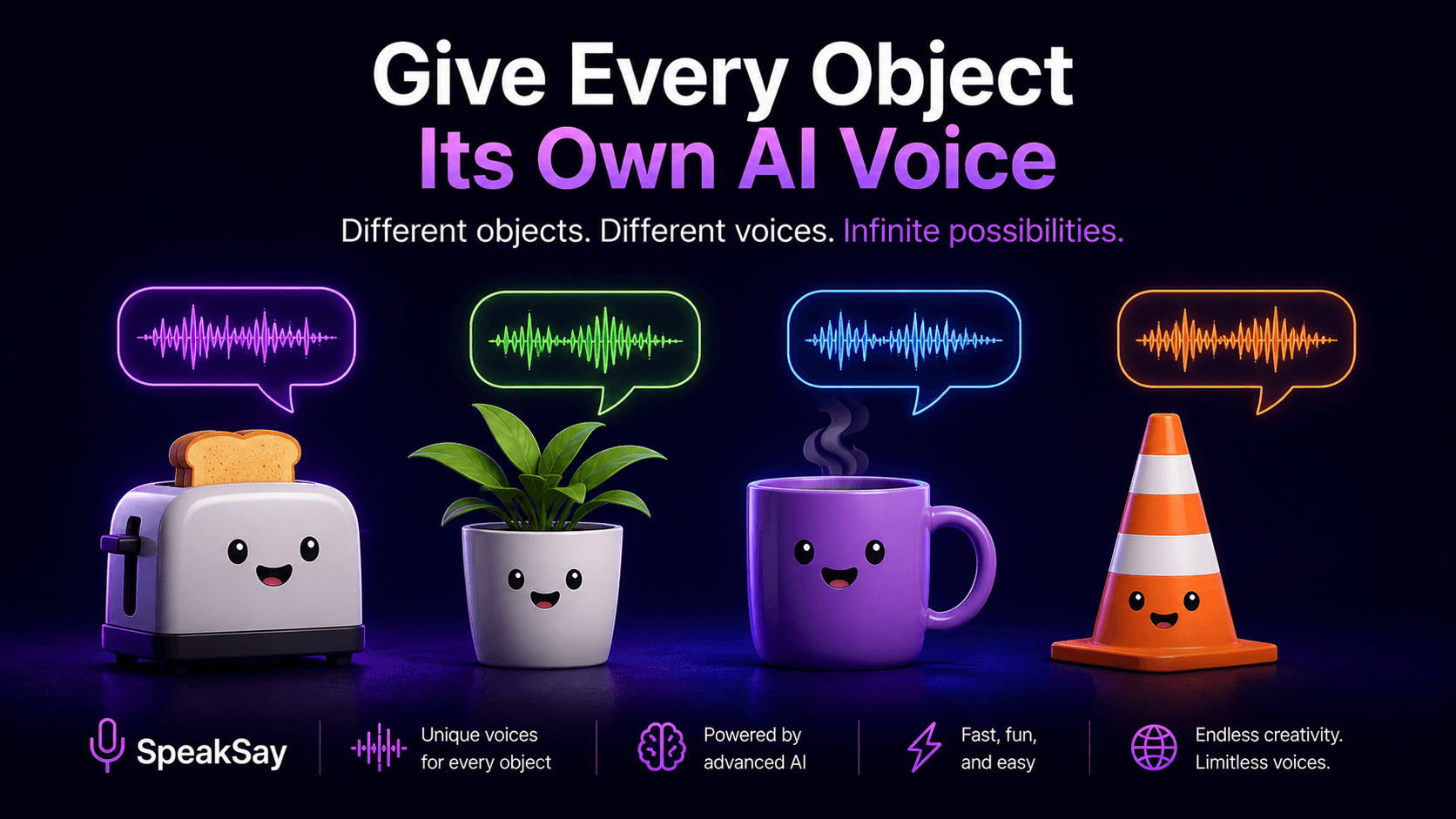
Talking Objects Are 2026's Fastest-Growing Faceless Format: How to Give Every Object Its Own AI Voice (Object POV Guide)
Object POV videos — where a toaster complains about Mondays or a traffic cone narrates its week — are one of the fastest-growing faceless formats on Shorts and TikTok in 2026. The channels that win give every object a distinct, consistent voice. Here's the full workflow.
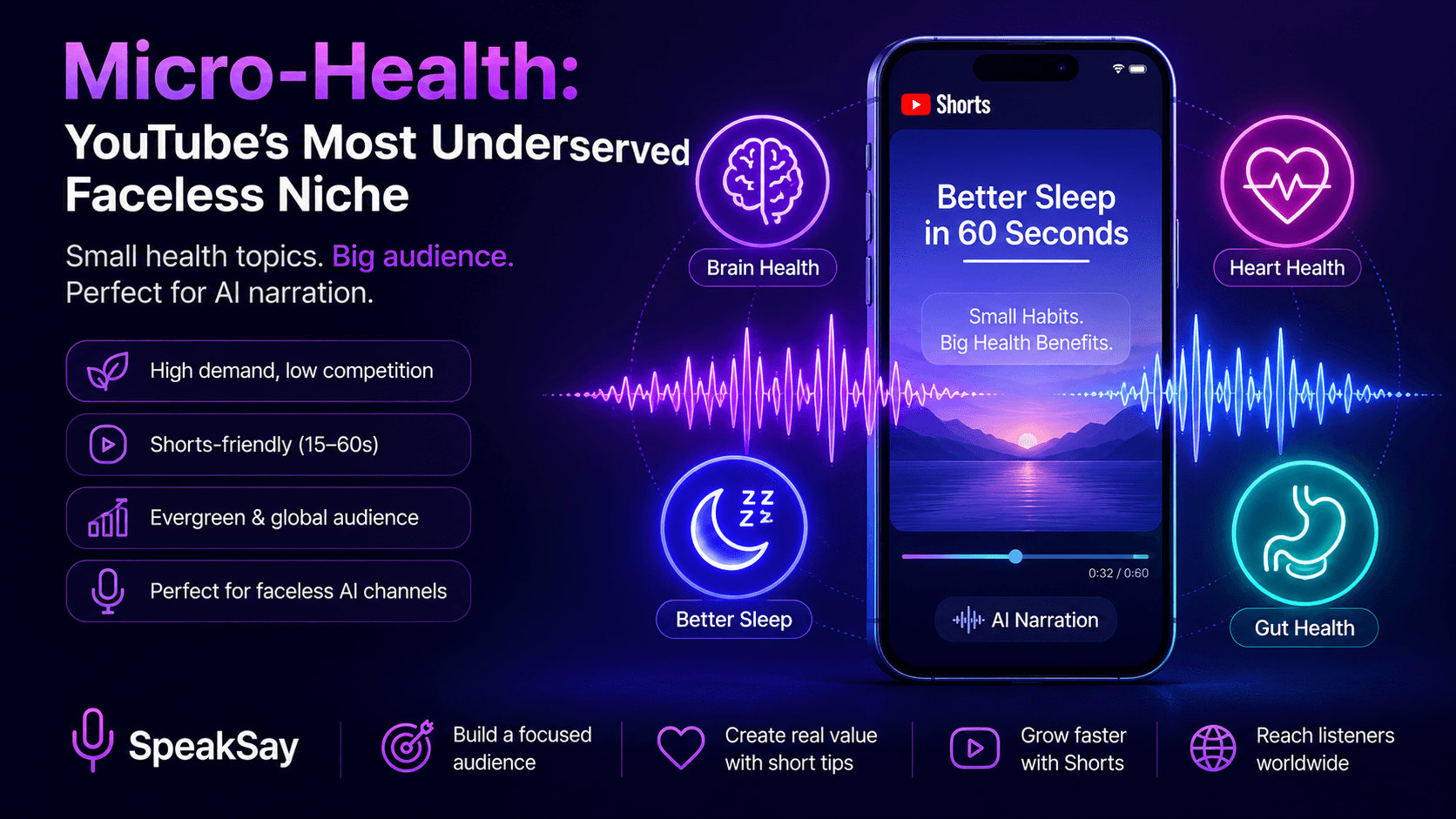
Micro-Health Is YouTube's Most Underserved Faceless Niche (2026): The AI Voice Playbook for 30–60 Second Health Facts
Health content is one of YouTube's biggest categories — and almost all of it is face-cam doctors. The faceless micro-health Shorts space is wide open in 2026. Here's the niche data, the formats that work, and the AI voice setup that makes viewers trust a channel with no face.
True Crime Faceless YouTube Channels in 2026: Best AI Narrator Voices + the Originality Rules That Keep You Monetized
True crime is still one of YouTube's highest-retention, highest-CPM faceless niches — but the July 2026 "inauthentic content" rules punish template narration. Here's the AI narrator voice playbook that keeps you original and monetized.
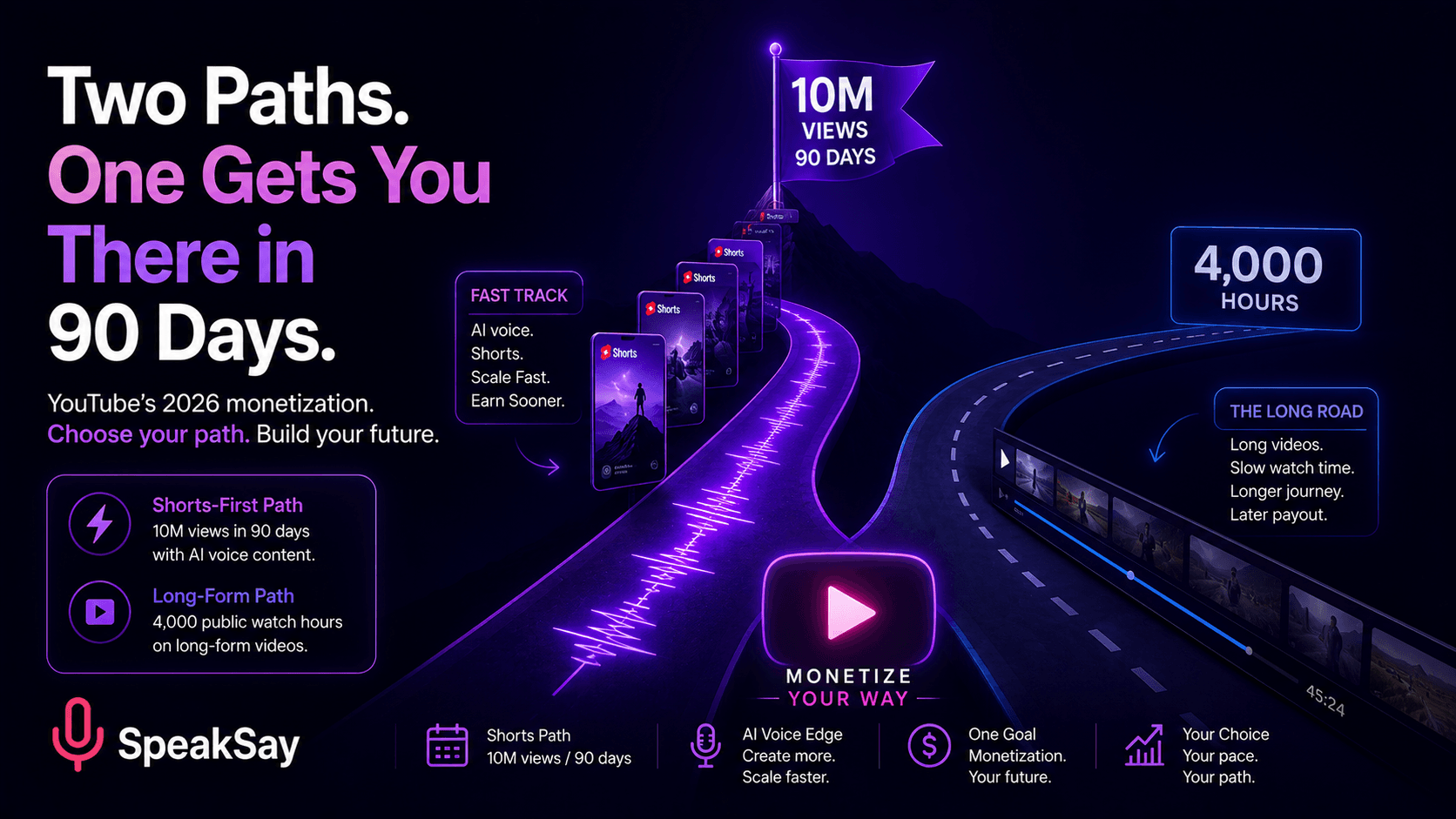
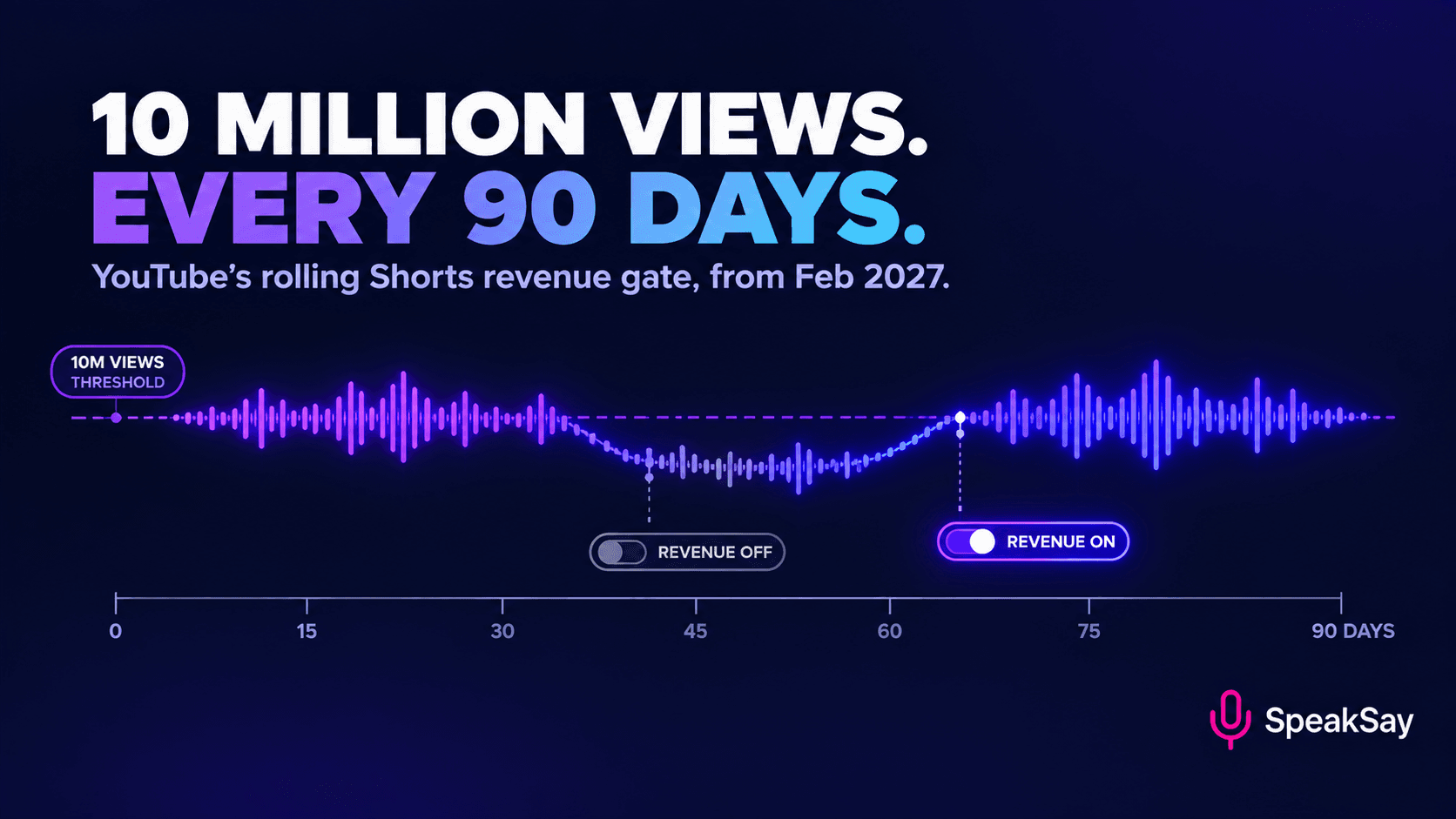
YouTube's Two Monetization Paths in 2026: The Shorts-First Strategy to Get a Faceless Channel Monetized in 90 Days
YouTube's 2026 Partner Program has two doors: 4,000 watch hours, or 1,000 subscribers plus 10 million Shorts views in 90 days. Here's the math on which path fits a faceless channel, and the daily AI-voice production system that makes Shorts-first actually achievable.
Give your words a voice
Start free with 10,000 credits. No credit card required.