Best ElevenLabs Alternative for Voice Cloning in 2026 (Free vs Paid, Tested)
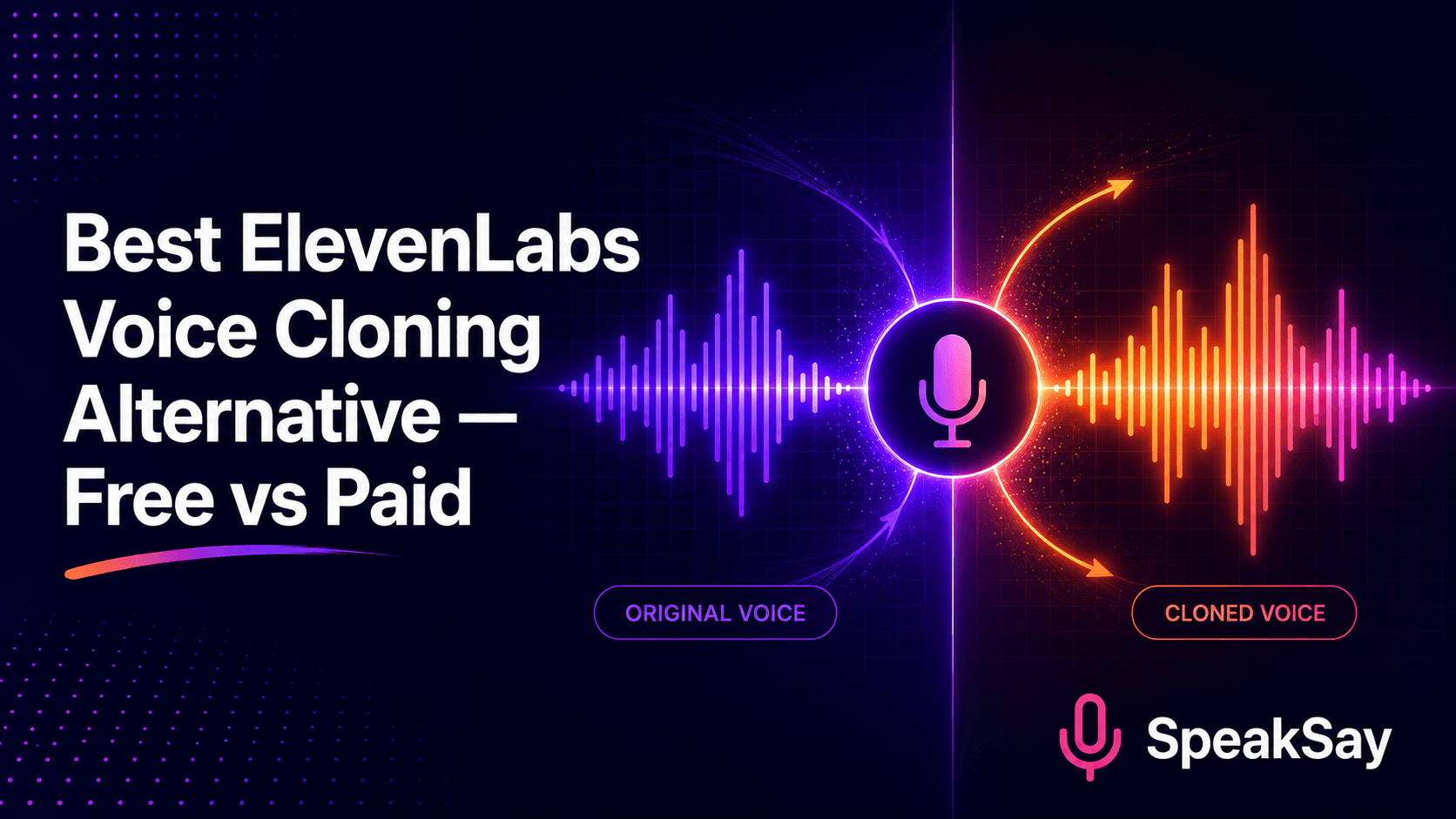
ElevenLabs locks voice cloning behind its paid Creator plan and restricts commercial use on lower tiers. We tested the best free and paid voice cloning alternatives in 2026 — open-source models, hosted tools, and the no-GPU middle ground — so you can clone your voice without overpaying or fighting setup.
1. Why look beyond ElevenLabs for cloning
ElevenLabs' cloning is good — that's not in dispute. The friction is structural. To clone a voice you need the Creator plan, and to safely monetize the output you often need to go higher. For a creator who just wants a consistent narration voice across a hundred videos, that's a recurring cost stacked on top of the character caps you're already paying for.
At the same time, the open-source world caught up. Models like Chatterbox win some blind tests against ElevenLabs, and several clone convincingly from just a few seconds of audio. So the real 2026 question isn't "can I clone for less" — you clearly can — it's "which option gives me good cloning, commercial rights, and a workflow I'll actually stick with."
2. What actually matters in voice cloning
- Clone fidelity — does it sound like you, including across long narration, not just one good sentence?
- Sample length required — modern tools range from ~5 seconds (zero-shot) to 30 seconds; less is more convenient, but a slightly longer, cleaner sample usually clones better.
- Setup cost — "free" open-source often means installing dependencies and owning a GPU. That's a real cost in time.
- Commercial rights — can you legally publish and monetize the cloned voice on the plan you're using?
- Languages — does your clone speak the languages you publish in?
3. The best free & open-source clones
Chatterbox is the standout. It clones from 5–10 seconds of audio, supports 17 languages, wins some blind tests against ElevenLabs, runs offline, has no usage caps, and ships under the permissive MIT license — meaning commercial use is allowed. The catch: you need a GPU and the willingness to run your own setup.
GPT-SoVITS and XTTS v2 clone from roughly 5–6 seconds and are popular with technical users who want fine control. F5-TTS clones from about 10 seconds. All are free and capable, and all assume you're comfortable with a Python environment.
Qwen3 / Quasar Voice is the most generous "free hosted" option, advertising unlimited voice clones, free monthly characters, and commercial rights on the free plan from a ~3-second sample — no card required. Worth testing if you want free without self-hosting.
4. The best paid & hosted clones
SpeakSay targets the gap most creators actually live in: instant, browser-based cloning with no GPU and commercial rights included on paid plans, plus the rest of the toolkit (TTS, remix, podcasts) in the same place. You clone once and use that voice everywhere.
Fish Audio clones from 10–30 seconds, ranks at the top of community quality leaderboards, and is roughly six times cheaper than ElevenLabs on the API — strong if you're building something.
Typecast is known for fast, easy instant cloning from short samples with a friendly interface. Inworld AI offers instant cloning at a very low per-character price for high-volume or real-time use.
5. Free vs paid: the tested comparison
| Tool | Type | Sample needed | Setup | Commercial rights |
|---|---|---|---|---|
| SpeakSay | Paid hosted | Short clip | None (browser) | Included (paid) |
| Chatterbox | Free open source | 5–10s | GPU + install | Yes (MIT) |
| Qwen3 / Quasar | Free hosted | ~3s | None | Yes (free plan) |
| Fish Audio | Paid API | 10–30s | API | Plan-dependent |
| Typecast | Paid hosted | Short clip | None | Plan-dependent |
| Inworld AI | Paid API | Instant | API | Plan-dependent |
| ElevenLabs | Paid hosted | Short clip | None | Higher tiers |
The honest summary: open-source wins on price and freedom but costs you setup time; hosted paid tools win on convenience and clear commercial rights. The right pick depends on whether your scarce resource is money or time.
Clone your voice in the browser — no GPU, no setup
SpeakSay clones your voice from a short clip and lets you use it across narration, dubbing, and podcasts, with commercial rights on paid plans.
6. The no-GPU middle ground
Here's the trap most "free voice cloning" guides skip: the free open-source models are excellent, but running them well assumes you own a capable GPU and can troubleshoot a Python environment. For a developer, that's a Saturday. For a working creator, that's a wall.
The middle ground is a hosted tool that clones in the browser. You give up the theoretical zero cost of self-hosting, but you get the clone in two minutes instead of two hours, and you don't maintain anything. For most creators whose actual goal is publishing — not running ML infrastructure — that trade is overwhelmingly worth it. This is exactly the slot SpeakSay aims at: ElevenLabs-style convenience without ElevenLabs-style pricing, and without the GPU homework that open-source demands.
7. How to clone your voice well
Tool choice matters less than sample quality. To get a clone that holds up across long narration:
- Record in a quiet room with no background noise, echo, or music. Clean input beats a longer sample every time.
- Speak naturally at the pace and tone you'll actually publish in — not a stiff "audition" voice.
- Give it slightly more than the minimum. If a tool accepts 5 seconds, 20–30 seconds of varied speech usually clones noticeably better.
- Keep the original recording. It's your master key — you can re-clone on any platform later if you ever switch.
- Test on a long script. Anything sounds fine for one sentence; generate a full paragraph to hear where it breaks.
8. FAQ
What's the best free ElevenLabs voice cloning alternative?Chatterbox (open source, MIT-licensed) if you have a GPU and don't mind setup. If you want free without self-hosting, Qwen3/Quasar Voice offers free hosted cloning. For the convenience of paid hosting without ElevenLabs pricing, test SpeakSay.
How much audio do I need to clone my voice?As little as 3–10 seconds on modern tools, though 20–30 seconds of clean, natural speech usually produces a more reliable clone for long-form narration.
Can I legally use a cloned voice commercially?Yes, but it depends on the tool and tier. MIT-licensed open-source models like Chatterbox allow commercial use; hosted tools vary, so confirm it's included on your plan. SpeakSay includes commercial rights on paid plans. Only clone voices you have the right to clone — your own, or one you have explicit permission to use.
Do I need a GPU to clone a voice?For self-hosted open-source models, effectively yes. For hosted tools like SpeakSay or Typecast, no — the cloning runs in the cloud and works from your browser.
Will a cloned voice sound robotic?Not if the sample is clean and you test on long text. Most cloning quality problems come from noisy input or judging the clone on a single sentence rather than a full paragraph.