The Garden Club Email That Gets Skipped: A Four-Minute Weekly "This Week in the Garden" Audio Episode for Community Gardens and Garden Clubs With an AI Podcast (2026)
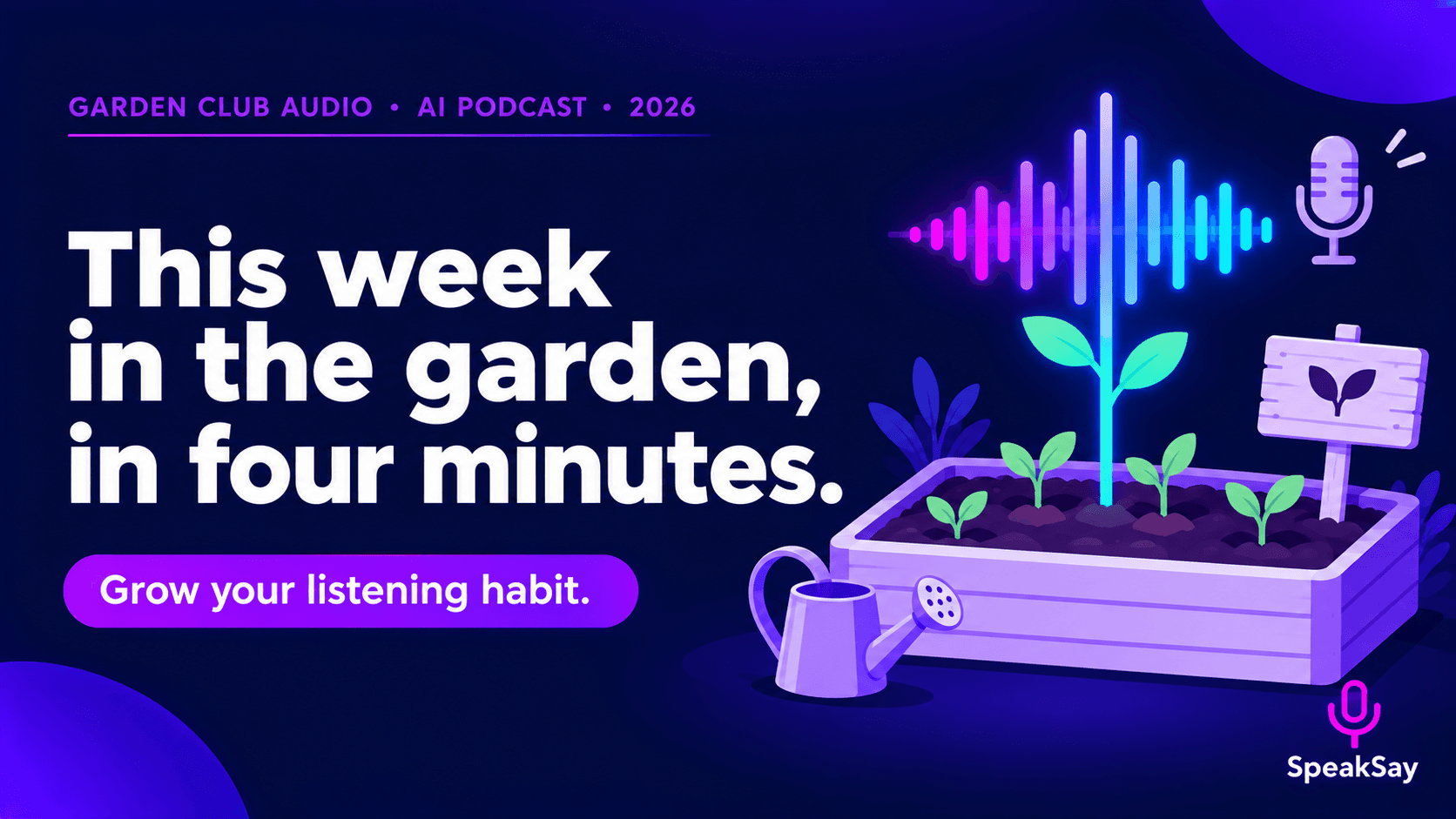
Community gardens and garden clubs send long emails about watering rotas, work parties and what to plant. This guide shows how to turn that weekly update into a four-minute AI podcast episode members can listen to on the way to the plot.
1) Why the garden email gets skipped
The weekly garden message tries to do too much. A watering rota, a plea for volunteers, a tool-shed reminder and a planting tip sit in the same block of text. Members who check email on a phone scroll past it. The message that reaches them is usually the one a friend mentions at the gate.
Audio changes the job. A person who would not read 600 words will often listen to four minutes while doing something else, especially if the episode always follows the same order.
2) A four-minute episode format
Keep the same structure every week so members know what is coming and can skip ahead.
- Welcome and date (15 seconds): "This is your weekly update for the week of the ninth of November."
- Jobs this week (60 seconds): watering rota, work party time and place, anything that needs doing before the weekend.
- What to plant or tidy (60 seconds): two or three suggestions suited to your climate and the time of year.
- Shed and shared tools (30 seconds): a reminder or a change to the rules.
- One member spotlight or tip (45 seconds): a plot, a harvest, a question answered.
- Dates and close (30 seconds): the next three dates and how to reach the coordinator.
3) Write the script from your existing update
Do not write a new document. Take the email you already send and rewrite it for the ear.
- Use short sentences and put the day before the task: "On Saturday at ten, we clear the north beds."
- Spell out times, dates and plot numbers: "plot twelve," not "plot 12."
- Read it out loud once. Anywhere you run out of breath, split the sentence.
- Keep advice general, such as "Many gardeners cut back dead stems now." Local conditions vary, so avoid specific chemical or treatment advice in audio unless it comes from a trusted local source.
Make the first episode this week
Paste your latest club update into the SpeakSay AI podcast tool and listen to a draft. If the format works, plans are priced for small clubs and a lifetime option is available for groups that publish every week.
4) Produce and publish the episode
- Put the script into the AI podcast tool and choose a single host voice for consistency. A two-voice conversation is possible, but one voice is faster to edit.
- Listen once at normal speed. Fix any plant names or place names that sound wrong with a phonetic spelling.
- Export the audio and share it. The simplest option is a link in the same email, with the first line of the email saying "Press play, or read below."
- If you want members to subscribe, publish to a podcast host and share the feed link on the club notice board and website.
- Keep the text version at the bottom of the email for members who prefer to read, and for accessibility.
5) Members, names and consent
A small group is still a group of people. Before you read names or plot details aloud:
- Ask members whether they are comfortable being named in a spotlight, and keep a simple list.
- Do not read out addresses, phone numbers or anything that would let a stranger find a member.
- Keep children's names out unless a parent has agreed.
- Say plainly at the start of the feed that the voice is text to speech.
The same guidance applies to other volunteer-run updates. See how a senior community does it in our weekly audio digest guide.
6) Seasonal rhythm: what changes through the year
- Late autumn and winter: clearing beds, protecting tools, planning next year's rota, seed catalogues.
- Spring: sowing weeks, plot allocation, water-butt checks, the first work parties.
- Summer: watering rota, harvest sharing, holiday cover.
- Early autumn: harvest festival, saving seed, bulb planting.
Keep a one-page "year plan" so each week's script starts from a few bullet points instead of a blank page.
7) FAQ
Is four minutes the right length?It is a good starting point. If members tell you it is too long, cut the spotlight first and keep the jobs.
Do I need a podcast feed?No. A link in your regular email is enough. A feed is useful if members want episodes to download automatically.
Can the voice read plant names correctly?Common names usually work. Latin names and local place names may need a phonetic spelling in the script.
What if we only have a monthly update?The same format works. Make it eight minutes and keep the same order of sections.