B-7, Read Clearly: How to Run a Bingo Night for a Fundraiser, Senior Center or Classroom With an Original Character Voice as the Caller (Voice Remix, 2026)
A bingo caller has to be clear, steady and fun for two hours. This guide shows how to create an original character voice with voice remix, pre-record the calls and the banter, and keep control of the pace at your next fundraiser, senior center social or classroom game.
1) Why a recorded caller helps
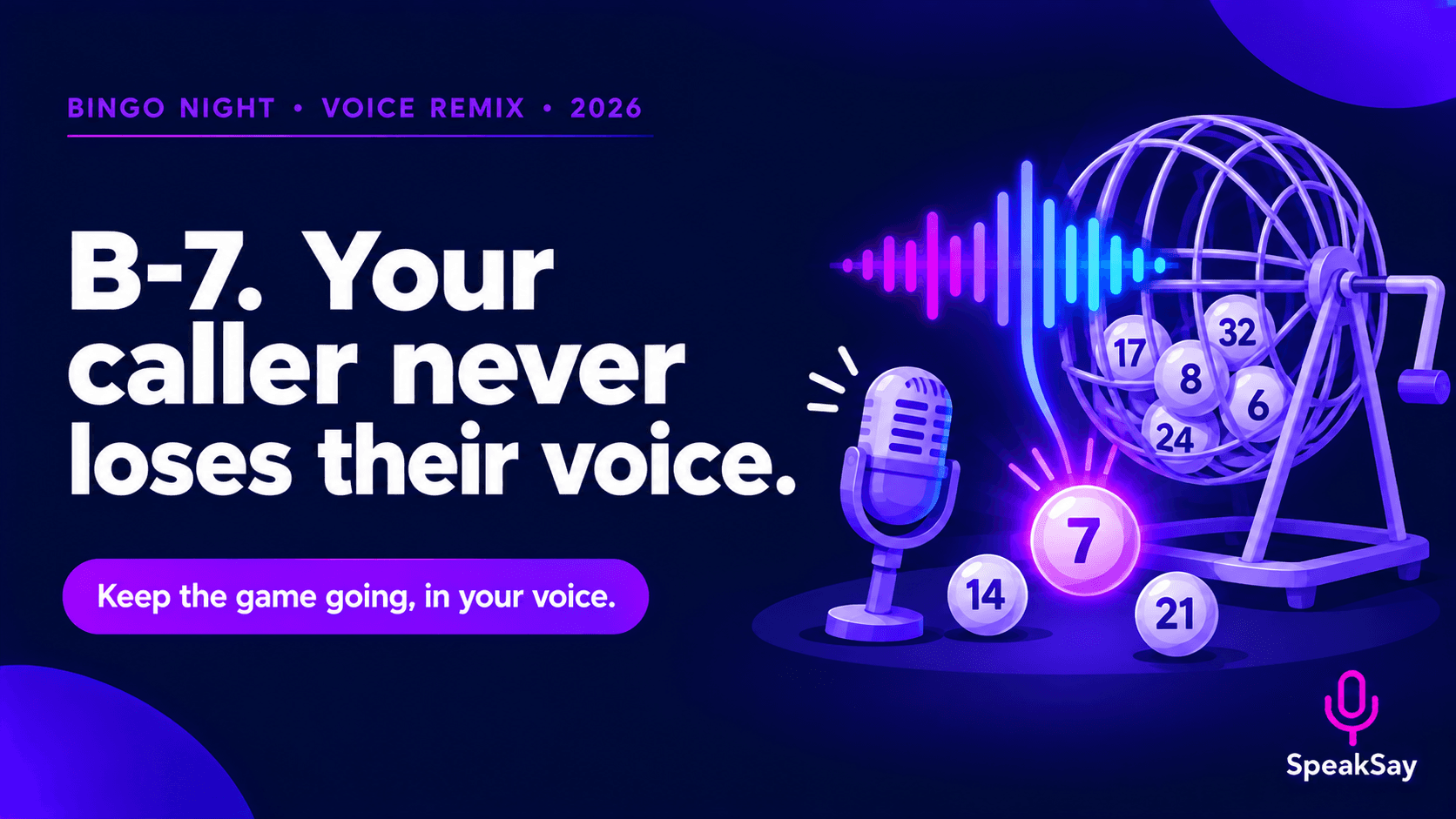
A live caller has to read each number clearly, keep a steady pace, answer questions, check winners and keep the room entertained, all at once. A recorded caller handles the first part. The volunteer in charge can walk the room, check cards and run the raffle.
Pre-recorded calls are also the same every time. Players with hearing difficulties know what to expect, and the pace does not speed up after the second hour.
2) Design an original character
Make a character of your own invention, not an impression of a real person or a known character. Think of a role rather than a celebrity: "Captain Marlow, the retired ship's radio operator," "Professor Pip, who is very excited about numbers," or "The Night Owl, calm and slightly sleepy."
- Choose a voice that is clear and not too fast. Avoid heavy effects that make numbers hard to hear.
- Use voice remix to adjust the base voice until it fits the role.
- Write a two-line profile for the character so the banter stays consistent.
- Test on a speaker the size of the one in your hall. Effects that sound fine on headphones can be muffled in a large room.
See our guide to character hosts for trivia nights for more on writing a host voice.
3) Record the number calls
A standard 75-ball game uses the letters B, I, N, G and O with numbers 1 to 75. Prepare each call as a short clip.
- Write each call in full: "B, seven. B-seven."
- Repeat the call twice, because many players hear the second one more clearly.
- Spell out numbers that sound alike, such as fifteen and fifty, with a short pause between the letter and the number.
- Generate all 75 clips in the same voice and settings.
- Name the files so they sort in order: B01, B02, and so on.
Listen to a sample of 20 clips on the hall's speaker before you finalise the set.
Build your caller in an afternoon
Create your original character voice with voice remix and generate the 75 calls plus your banter lines. Plans are priced for occasional events, and a lifetime option is available for groups that run bingo every month.
4) Add banter, rules and breaks
Numbers alone get dull after twenty minutes. Record a small set of extra lines.
- Welcome (30 seconds): the rules of the night, how to claim a win and the prize details.
- Between games (10 to 15 seconds): "New card, new luck. Dabbers ready?"
- Check-the-card prompts: "If you have a line, call out when the next number is read."
- Break announcements: where the restrooms and refreshments are, and when the next game begins.
- Wrap-up (30 seconds): thanks, the next date and any fundraising totals the organiser wants announced.
Keep the humour gentle and inclusive. Avoid jokes about age, ability or anyone in the room.
5) Run the night
- Play the calls from a laptop or phone connected to a speaker, using a simple playlist with a short gap after each clip.
- Have a second person keep a written list of called numbers so you can verify a win quickly.
- Pause the playlist when a player calls bingo. Check the card and restart.
- Shuffle the order of the numbers before each game so the sequence differs.
- Have a back-up caller ready in case the speaker fails.
Keep the voice at a steady volume. Check the sound from the farthest table before the doors open.
6) Make it work for everyone in the room
- Offer large-print cards.
- Provide a display of the last five numbers called.
- Slow the gap between calls for rooms with many players who need time to scan cards.
- Seat people with hearing difficulties near the speaker.
- Say plainly at the start that the caller is a computer-generated character voice, so nobody is confused.
For a senior center, check the schedule against our guide to audio for senior communities if you want a weekly digest to promote the games.
7) Local rules and fairness
This guide is about the audio, not legal advice. Bingo, raffles and prizes are regulated, and the rules differ by country, state and county. Check:
- Whether you need a licence or permit for the event.
- Limits on prizes and how proceeds are used.
- Age restrictions for players.
- Whether the use of a recorded caller is allowed, for example with the use of a random number process.
If in doubt, ask your local licensing office or the organisation that sponsors the event.
8) FAQ
Is a recorded caller fair?Fairness comes from the order of the numbers, not the voice. Shuffle the sequence before each game and keep a record of numbers called. Check your local rules.
Can I make the voice sound like a famous caller or character?No. Create an original character. Do not imitate real people or well-known characters.
Does a recorded caller replace the volunteer?No. It frees them to run the room. A person should still check winners and look after players.
How long does it take to prepare?Plan an afternoon for the character, the 75 calls and a handful of banter lines. After that you can reuse everything.