A Station Announcer for Your Model Railroad: Original Voices for Hobby Layouts With Voice Remix (2026)
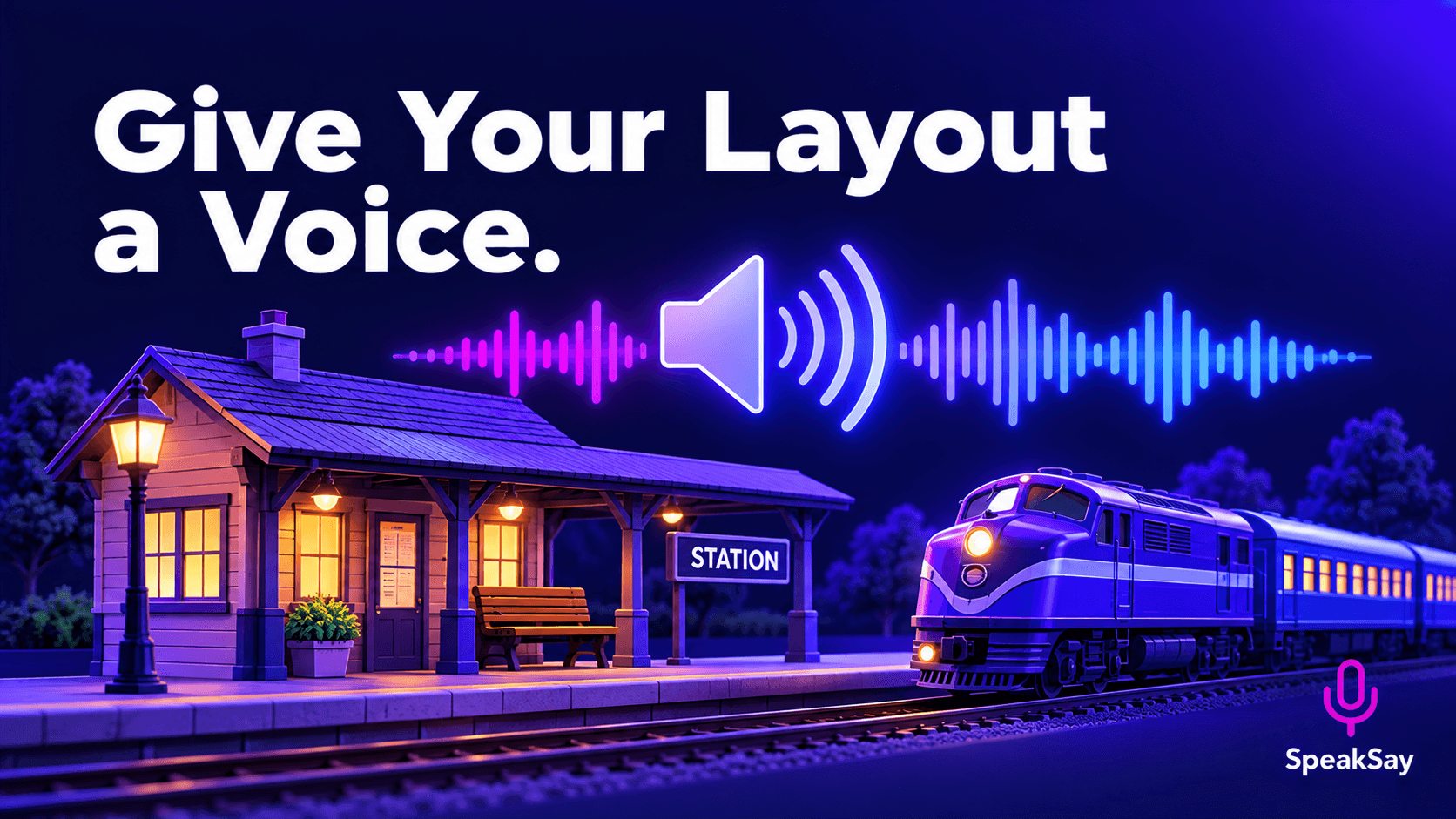
A silent layout feels like a diorama. A believable announcer makes it a station. Here is how to create an original announcer voice for a model railroad.
1) Why an Original Voice Beats a Copy
It is tempting to imitate a real transit announcer you remember from a favorite line. Do not. Real announcers are real people, and agencies may have rights in their recorded voices. An imitation also tends to sound slightly wrong, which hurts the illusion more than a distinct voice would.
An original announcer can be calm, a little formal and a little funny. It becomes part of your railway's identity. Give it a name, a period and a personality.
2) Design Your Announcer
- Pick the era and region. A 1950s branch line sounds different from a modern commuter terminus.
- Choose a base voice in the Voice Remix studio and shape pitch, tone and character until it suits your world.
- Set the pace. Slow and clear for a big terminus, brisk for a commuter halt.
- Save it and use the same voice for every announcement so visitors learn it.
Design a voice that is only yours
Shape an original announcer voice for your railway in the Voice Remix studio.
3) Write Announcements That Fit Your Layout
Use your own invented station names and timetable. Short lines work best because visitors stand at a table for a minute, not an hour.
| Type | Example idea |
|---|---|
| Arrival | "The next train arriving at platform two is the afternoon local from Millbrook." |
| Departure | "The freight service now leaving the yard sounds its whistle at the crossing." |
| Delay | "We apologize for the delay, caused by a very determined flock of sheep." |
| Ambient | "Please keep your luggage with you at all times." |
Write ten to twenty lines and generate each as its own file with a little silence at the start and end. Use invented place names to avoid mixing in real transit branding.
4) Playback Options
- Sound module or microcontroller that plays a file on a trigger, such as a sensor under a track section.
- A small speaker or old phone hidden in the station building for a simple setup.
- A looping playlist for exhibitions, with random gaps between lines.
Keep volume low at shows. Export files in the format your player supports, and level them first with the free audio normalizer. Check your player's file format limits before generating a large batch.
5) Mistakes to Avoid
- Imitating a real announcer or agency voice. Stay original.
- Using real station names and branding that imply an official recording.
- Making lines too long. People walk away mid-sentence.
- Forgetting safety. This is for fun on a hobby layout, never a real-world safety or emergency system.
Build a full soundscape
Compare plans if you want several voices for stations, guards and onboard announcements.
6) Frequently Asked Questions
Can I make my announcer sound like a famous transit announcer?No. Create an original voice instead. Imitating a real person's voice raises rights and ethical problems.
Can I use this at a public model railway show?Yes, for original announcements of your invented railway. Keep volume considerate of neighbors.
How many announcements do I need?Ten to twenty short lines with a random shuffle feels varied for most layouts.
Can the announcer speak another language?If your layout is set abroad, you can generate lines in another language. Have a speaker check them.