How Solo Podcasters Are Monetizing With AI Host-Read Ads (2026 Workflow)
Host-read ads pay the best in podcasting — but recording every spot by hand is a bottleneck for solo creators. Here's the 2026 workflow to batch episodes and generate sponsor reads in your own voice.
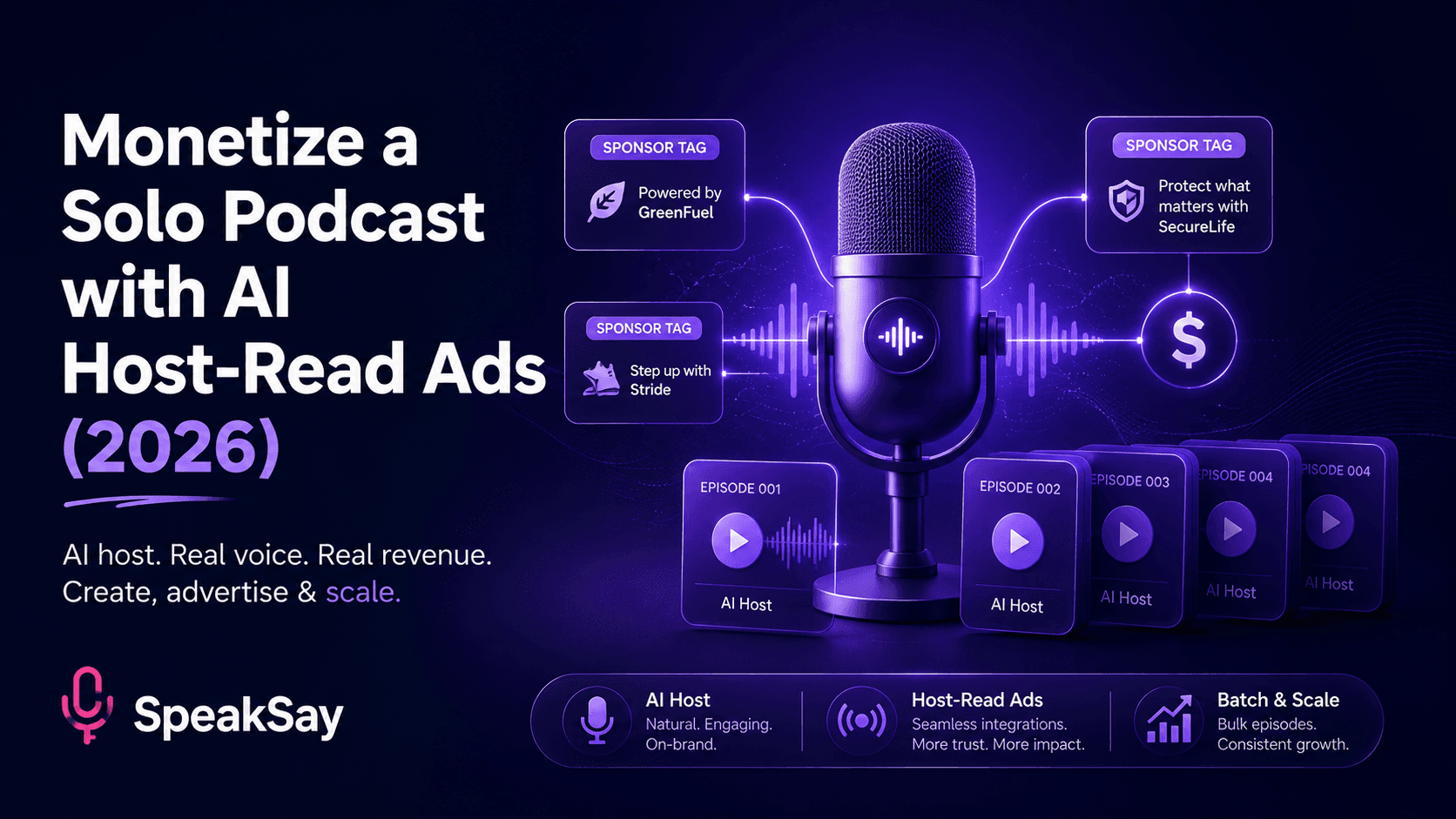
1. Why host-read ads still pay best
Programmatic ads pay pennies. Host-read ads — where the sponsor message comes in the host's own voice, in the flow of the show — convert far better because listeners trust the voice they tune in for. That trust is why sponsors pay a premium for them, and why they remain the most reliable way for independent shows to earn.
The catch has always been production. Host-read means the host reads it — every spot, every campaign refresh, every regional variant.
2. The 2026 shift: AI host-read ads go mainstream
The big platforms have made this an explicit strategy. Spotify used its 2026 Investor Day to put podcasting at the center of an AI-powered push, and it has been developing technology to produce host-read ads in a host's voice without the host recording each spot. New entrants like Rebel Audio offer AI voice cloning specifically for host-read ads. Meanwhile, AI podcast tools now let solo creators write and voice full multi-speaker episodes and cut per-episode production time dramatically.
Translation: what used to require a studio and a standing ad-read session is now a workflow a solo creator can run from a laptop.
Turn your voice into your most scalable asset
Clone your voice once with SpeakSay, then generate narration and sponsor reads on demand — the same voice your audience already trusts.
3. The solo-creator bottleneck
If you run a show alone, the math is brutal. A single sponsor might send updated copy weekly; a mid-roll swap across your last 40 episodes means 40 re-records. Add regional variants or a second sponsor and the recording time eclipses the time you spend actually making the show. Most solo podcasters simply leave money on the table — they cap the number of sponsors they can serve because they can't produce the reads fast enough.
The fix isn't to work faster at the mic. It's to remove the mic from the equation for repetitive reads.
4. The batch + clone workflow
Here's the loop solo creators are using in 2026:
- Clone your voice once. Record a clean sample and build a high-quality voice clone you control.
- Batch your episodes. Write or outline a month of episodes at once; generate narration and any co-host lines with AI so you produce several shows in a single session.
- Templatize your ad slots. Mark mid-roll and pre-roll positions in each episode so sponsor spots can be dropped in cleanly.
- Generate the sponsor read from the sponsor's copy in your cloned voice — no studio time.
- Refresh on demand. When copy changes, regenerate just the ad segment and re-insert it. No full re-record.
| Task | Old way (manual) | Batch + clone way |
|---|---|---|
| Update one ad across 40 episodes | 40 re-records | Regenerate + swap segment |
| Add a second sponsor | New session per episode | Generate spot, drop in |
| Produce a month of shows | Multiple recording days | One batched session |
5. Generating sponsor spots in your own voice
The point of a host-read ad is that it's your voice — so a generic stock narrator defeats the purpose. This is exactly where a cloned voice earns its keep: paste the sponsor's approved copy, generate the read in the same voice your listeners hear every week, and it slots naturally into the episode. You keep consistency across your whole catalog, and you can serve more sponsors because production is no longer the limit.
Batch a month of episodes in an afternoon
SpeakSay's AI podcast tools plus your cloned voice let you produce full episodes and sponsor reads on your schedule — not the studio's.
6. Keeping it honest: disclosure & consent
Two rules keep this workflow on the right side of trust and the law:
- Clone only your own voice (or a co-host who has given written permission). Using your own voice sidesteps the consent problems that surround unauthorized voice cloning.
- Disclose ads clearly as sponsored, the same way you would for any host-read spot, and follow your sponsors' approval process for the copy. AI generating the audio doesn't change your advertising-disclosure obligations.
Handled this way, AI host-read ads are just a faster path to the same honest, trusted read your audience already expects.
7. Frequently asked questions
Do listeners mind AI-voiced host-read ads?When it's your own cloned voice and clearly disclosed as an ad, it sounds like your normal read. The trust comes from it being your voice and an honest disclosure — not from whether you sat at the mic that day.
Can I really batch a month of episodes?Yes. Writing/outlining in bulk and generating narration with AI is how solo creators are cutting production time dramatically and shipping same-day.
Is it legal to use my cloned voice for ads?Cloning and using your own voice is the low-risk path. Keep standard sponsorship disclosures and follow your sponsor's copy approval. (This isn't legal advice — check your local ad rules.)
What if a sponsor updates their copy?Regenerate just the ad segment in your cloned voice and swap it into the episode — no need to re-record the whole show.