Voice Selection
Choosing the right voice based on your video niche
A Voicemail From a Very Silly Monster: How to Make a Kid's Birthday Surprise Message With an Original Character Voice (Voice Remix, 2026)
A short voicemail from an invented character can be the best part of a child's birthday. This guide shows parents, grandparents and party hosts how to write a 30-second message, build an original character voice with voice remix, and send it safely without using any known cartoon character.
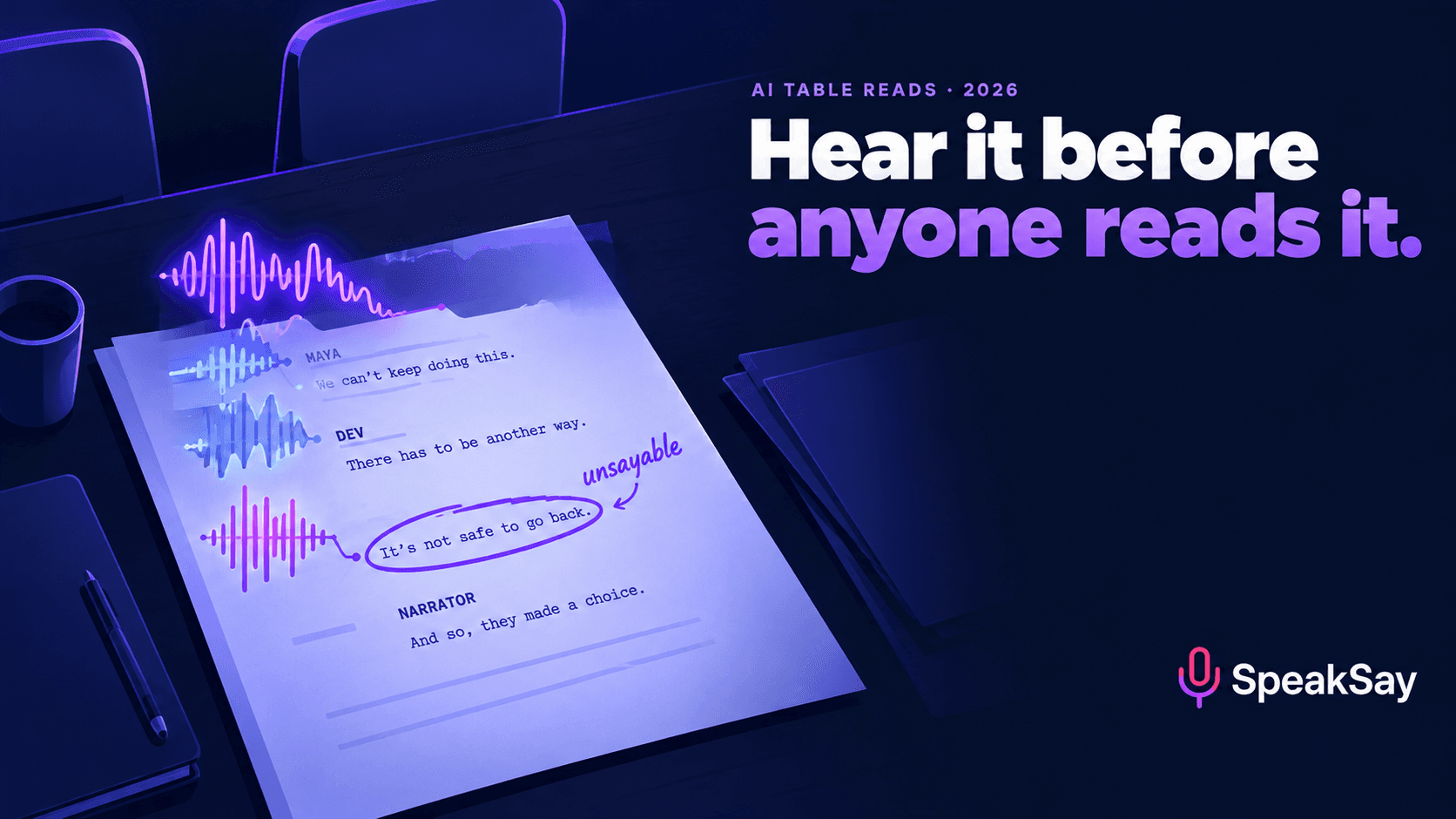
No Actors for a Table Read? Hear Your Screenplay in Distinct AI Voices Before Anyone Else Does (2026)
A table read is the cheapest way to find out your dialogue doesn't work, and most writers can't get one. An AI table read won't give you a performance, but it will tell you which characters all sound like you, which lines can't be said aloud and which scenes run long. Here is how to cast it, what to listen for and where it misleads you
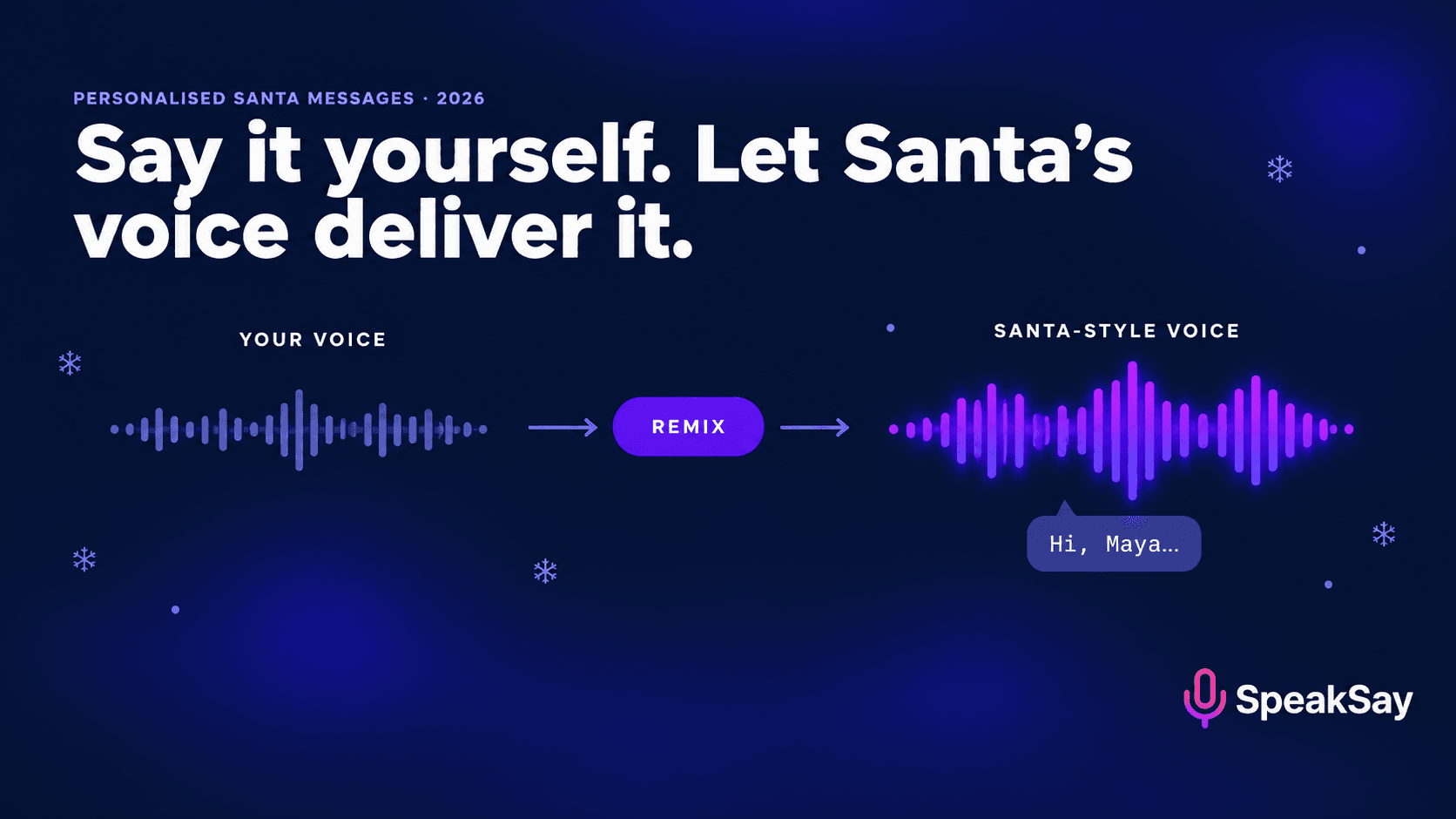
The Santa Message That Gets Your Child's Name Right: Record It Yourself, Remix It Into Santa's Voice (2026)
Template Santa apps mispronounce names, guess at details, and sound like every other kid's message. Recording the message yourself and remixing it into a warm, deep Santa-style voice fixes all three — and keeps your child's details off yet another app. A step-by-step guide with scripts.
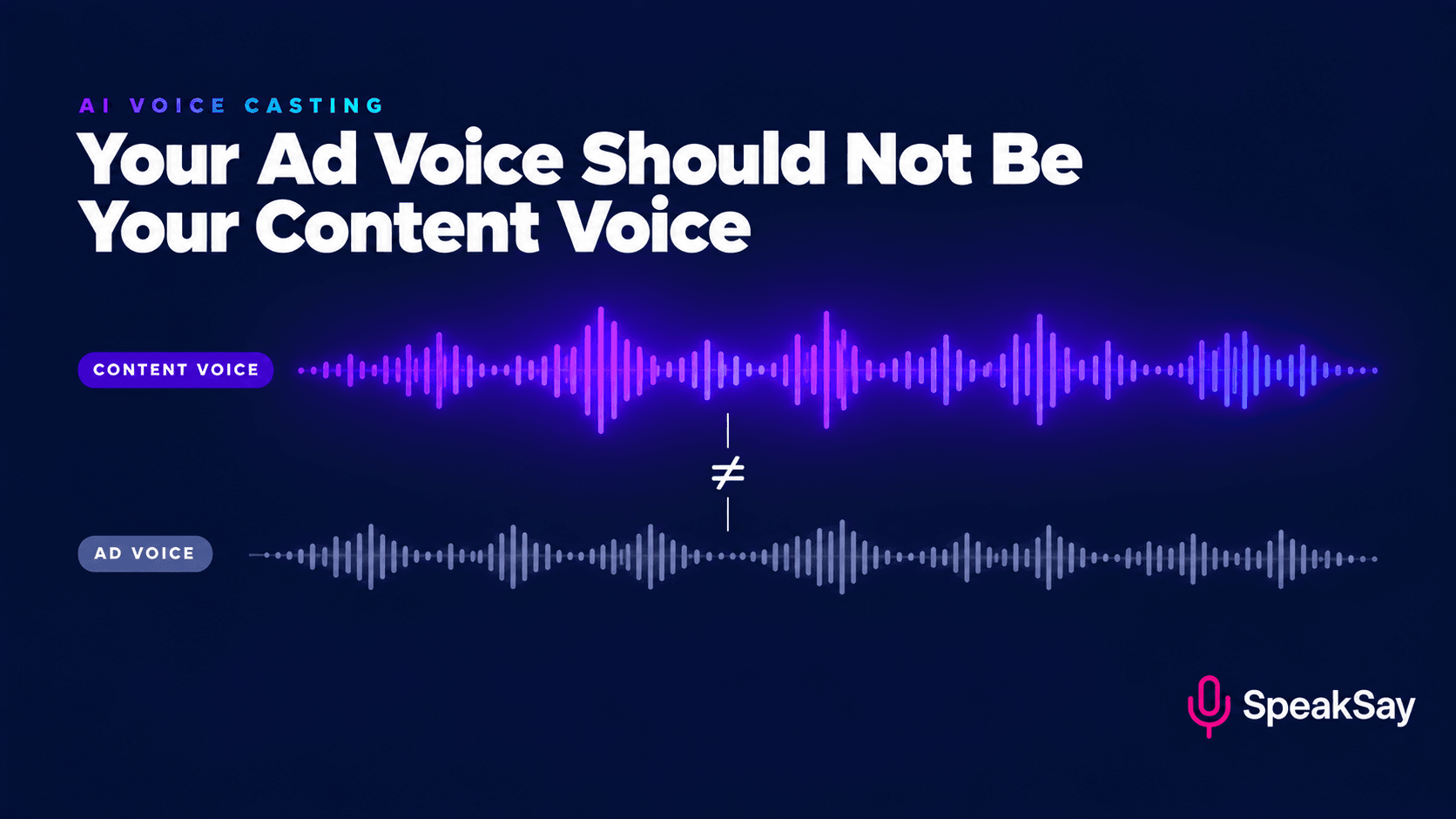
Should Your Ads Use the Same Voice as Your Content? The 2026 AI Voice Casting Decision (With the Trust Data)
One 2026 study found AI-voiced audio ads perform as well as human-voiced ones — and that regional AI accents beat a neutral human voice three to one on recommendation. Another found human voices outperform AI by 34% on trust. Both are right. Here is what they actually mean for how you cast.
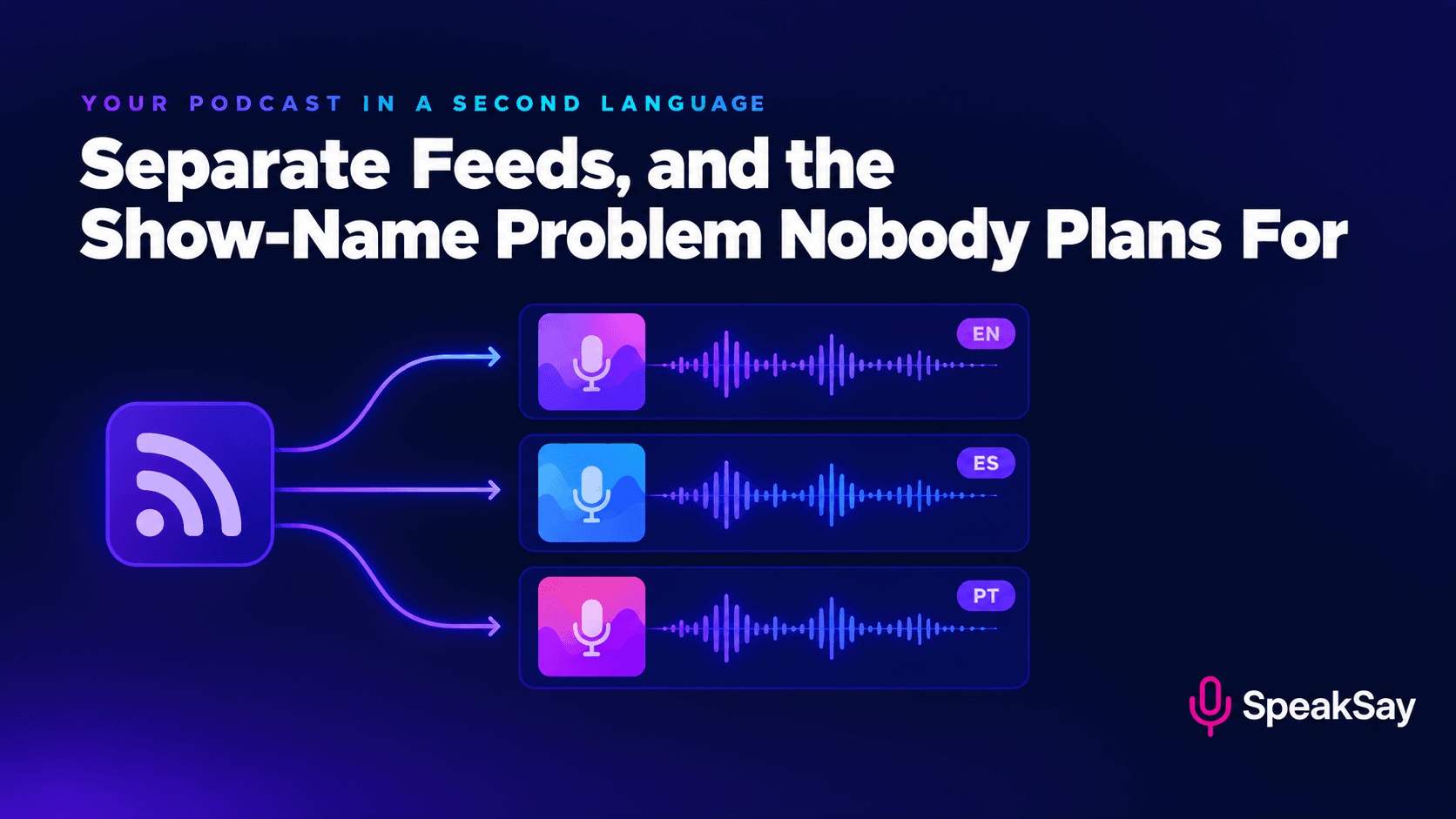
Launching Your Podcast in a Second Language (2026): Separate Feeds, and the Show-Name Problem Nobody Plans For
Producing your show in another language is now a rendering job, not a hiring job. The hard parts are structural: one feed or several, which language second, and whether a synthetic host in Japanese can actually say your show's name. Here is the feed architecture, the three naming strategies, and the per-language lexicon.
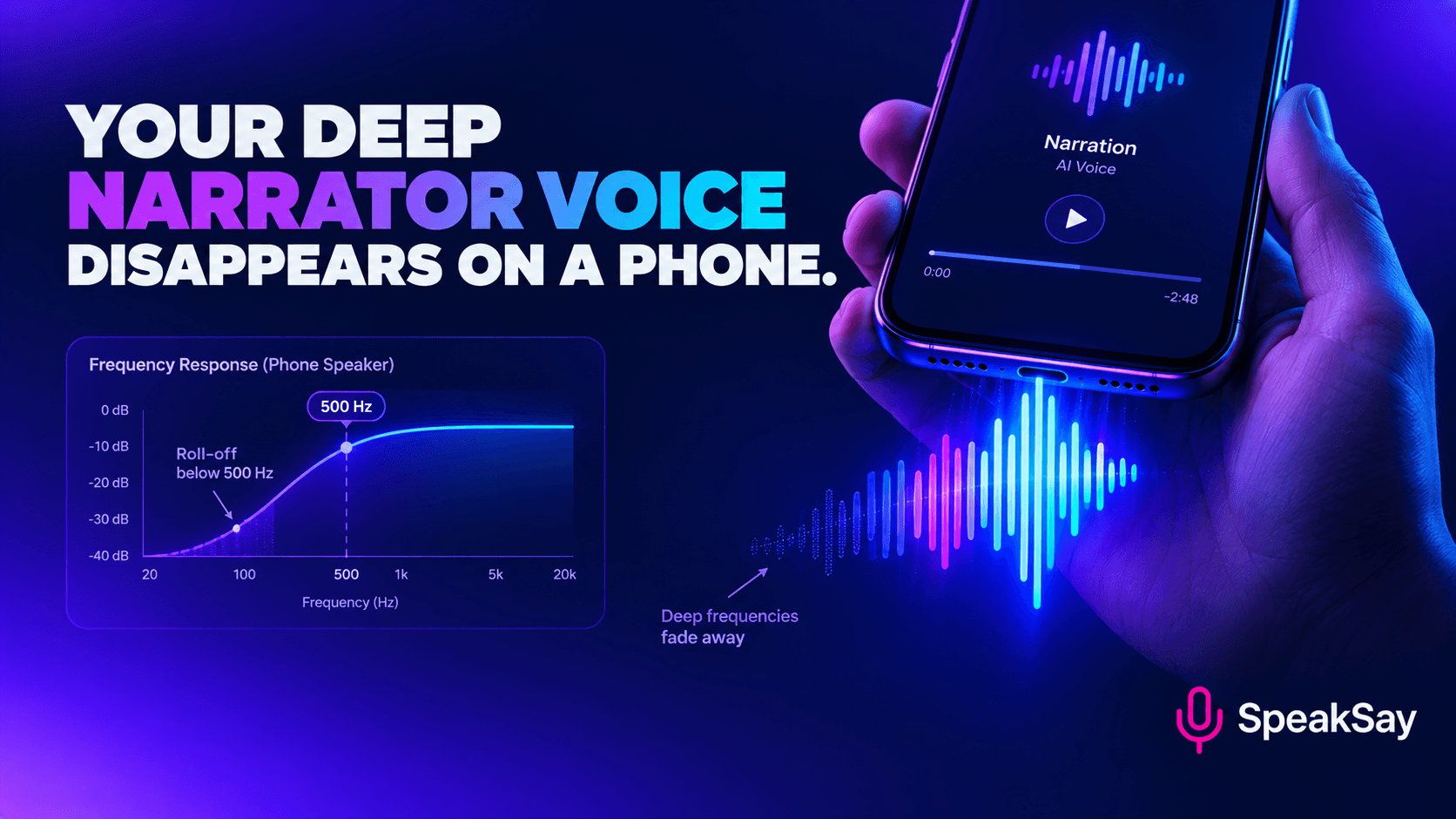
Your Synthetic Host Sounds Perfect and Your Real Guest Sounds Terrible: Interviewing Humans on an AI-Made Podcast (2026)
A generated host track has no room, no breath pile-up and a clean noise floor. A guest on a laptop mic has all three. Listeners don't hear "two different setups" — they hear the guest as lower status and harder to listen to. The fix runs in the opposite direction from what you'd expect.
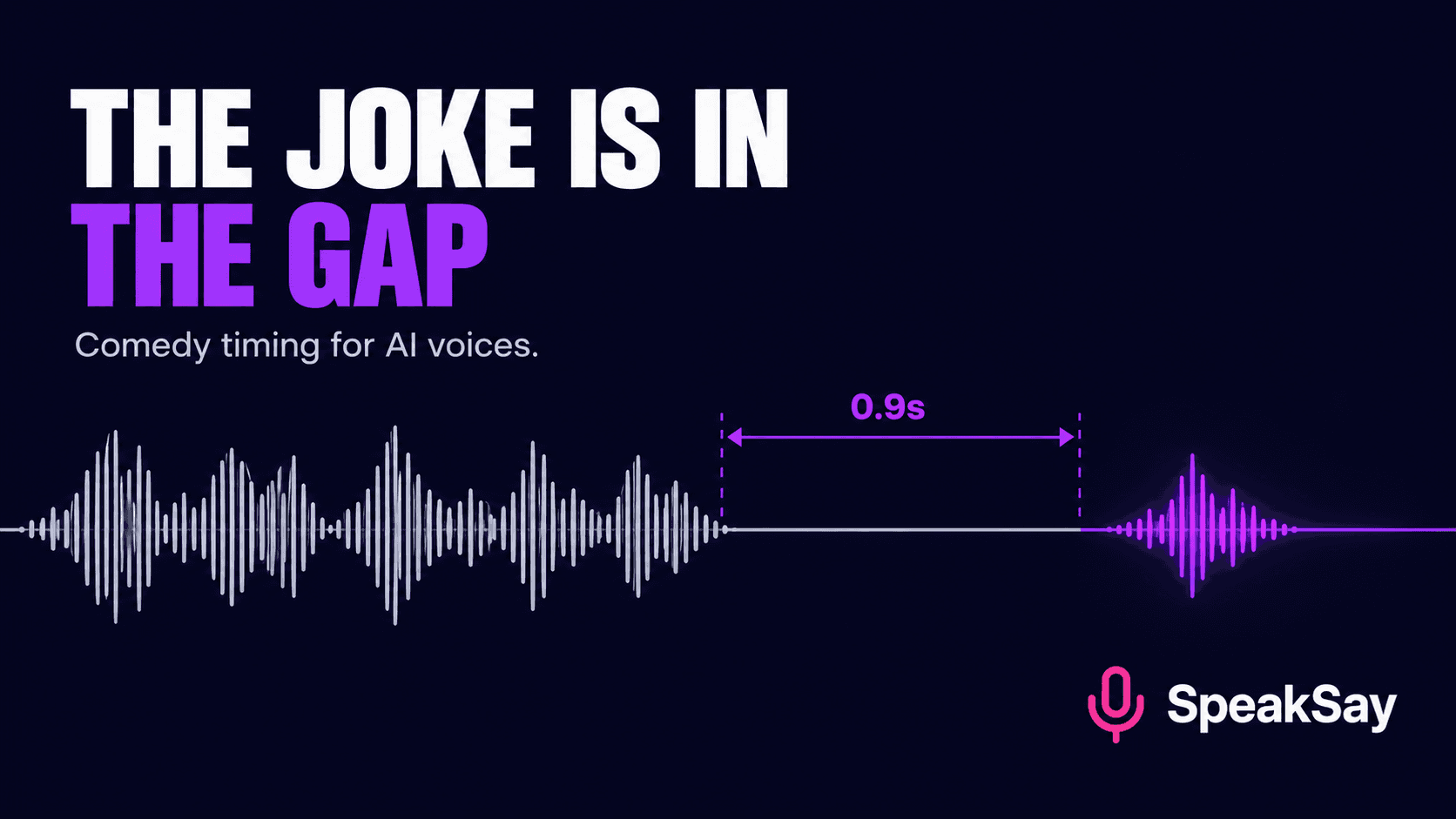
Your AI Voice Can't Land a Punchline: The 2026 Comedy Timing Playbook for Sarcasm, Irony and the Beat Before the Joke
Comedy is the biggest short-form format and the one AI voice fails hardest at — because creators keep reaching for emotion presets when the problem is timing. Beat maps, the straight-read rule, and why sarcasm is contour, not attitude.
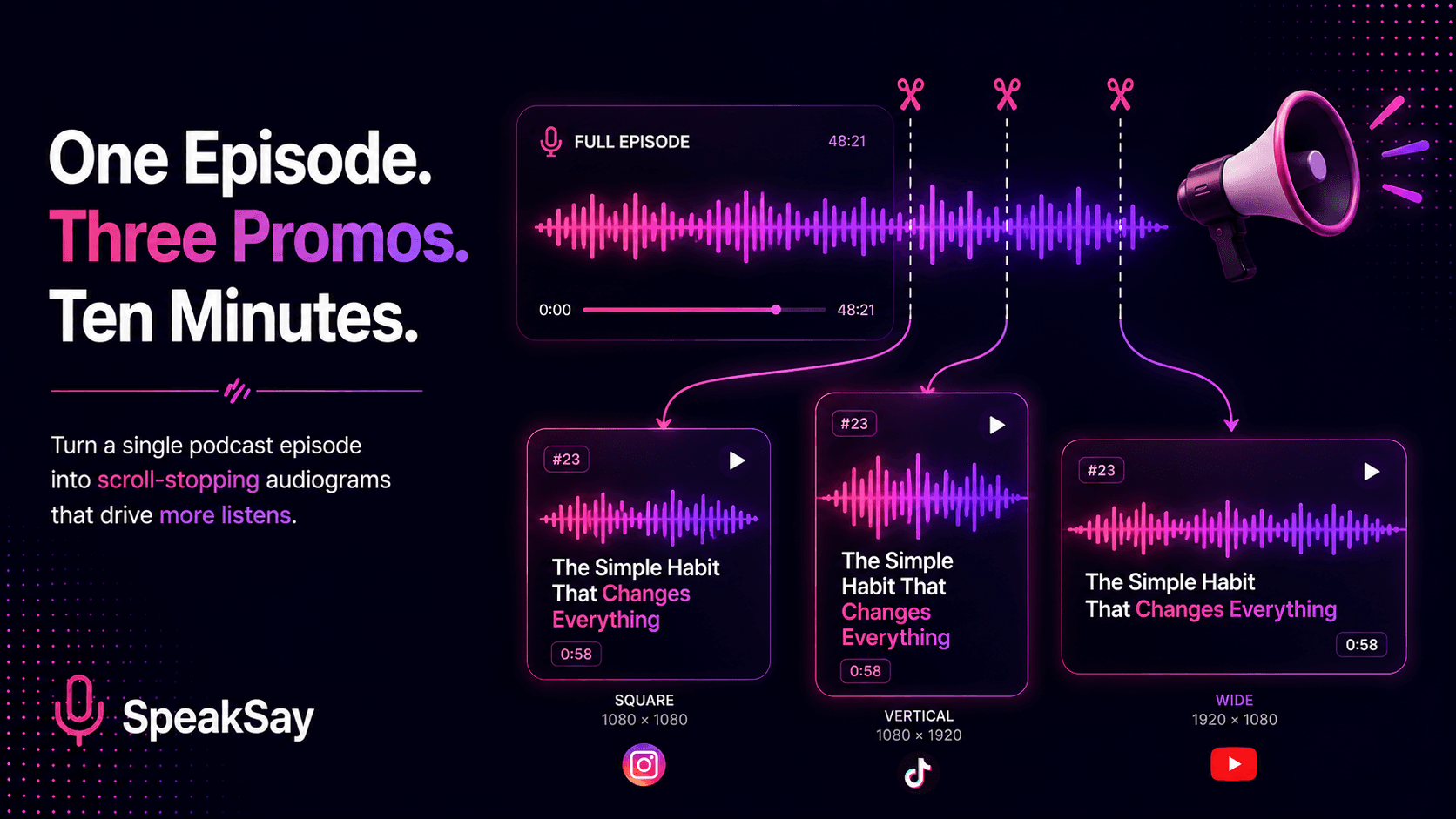
Nobody Hears Your Best Episode: Podcast Trailers & Audiograms With AI Voices (2026 Promotion Playbook)
You spent ten hours on the episode and zero on promoting it. Trailers and audiograms are the highest-converting podcast promo assets — and with AI voices they take minutes, not sessions. Here's the system.
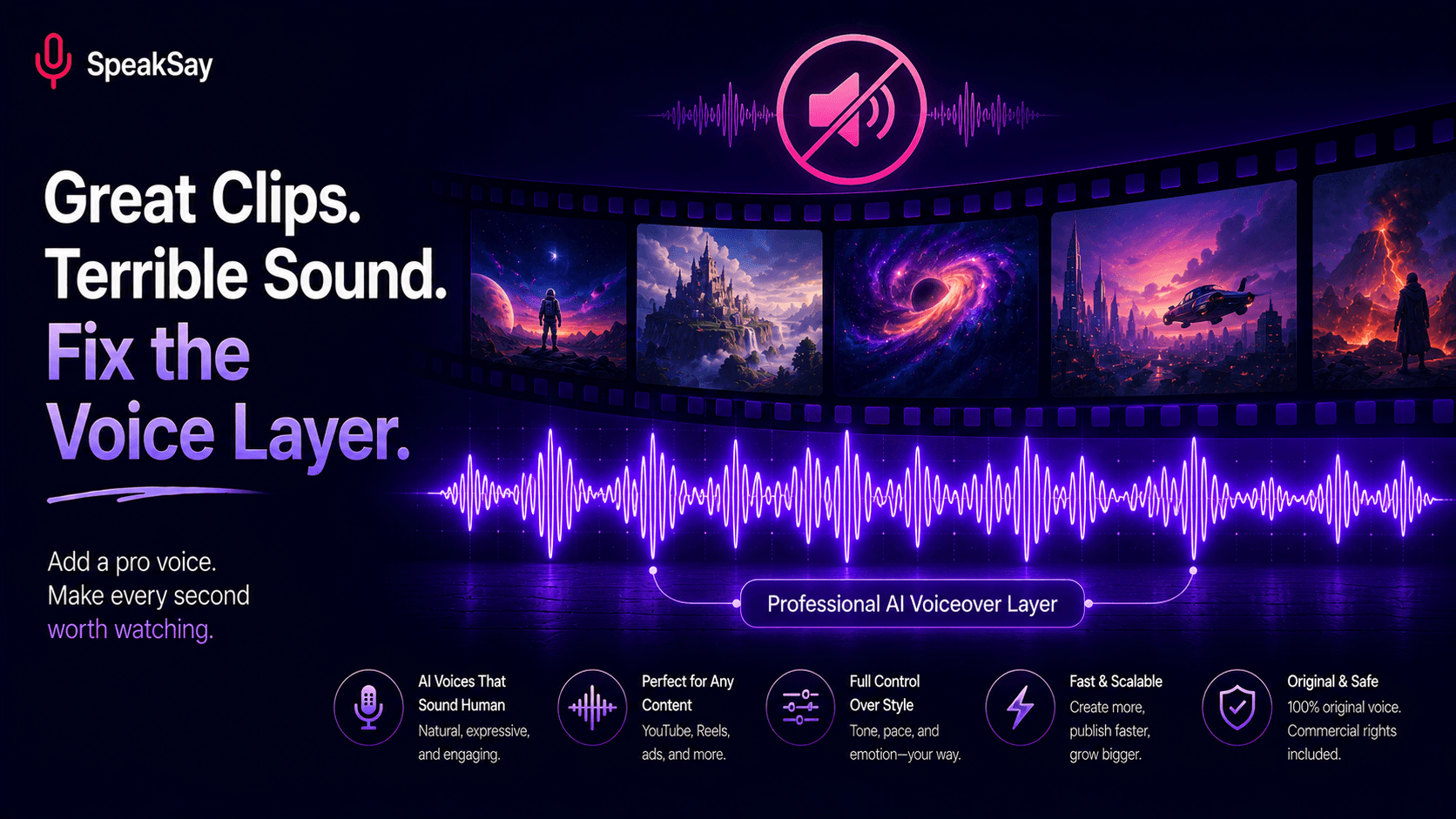
Your Veo & Sora Clips Look Amazing but Sound Terrible: The AI Voiceover Workflow for AI-Generated Videos (2026)
AI video generators create stunning clips with silent, garbled or wildly inconsistent audio — and a narrator that changes tone every 8 seconds kills retention. Here's the script-first voice-layer workflow that makes stitched AI clips sound like one continuous, professional video.
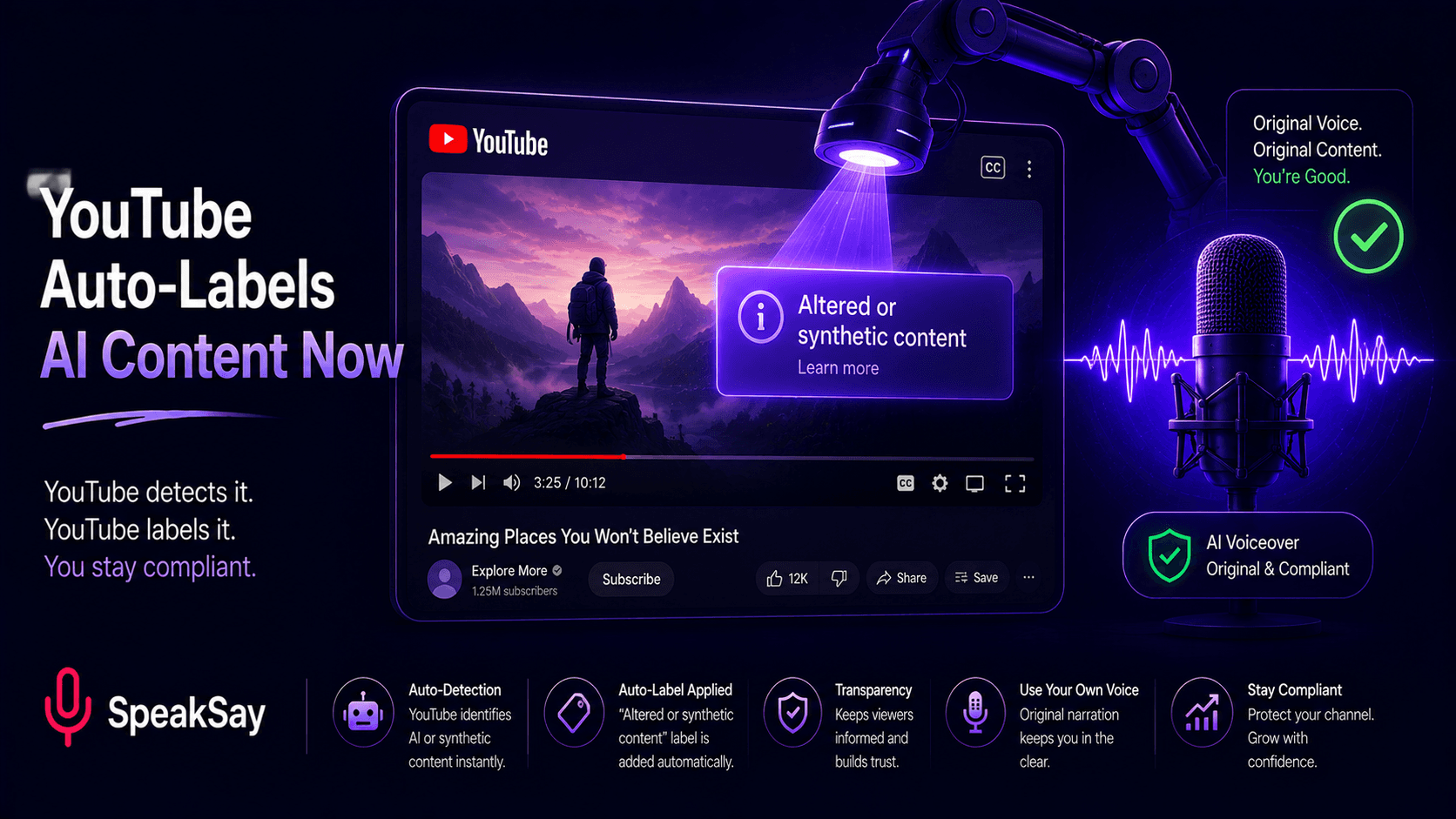
YouTube Now Auto-Labels AI Content (2026): What Triggers Detection, the Disclosure-Box Mistake That Flags Your Channel, and How Voiceover Creators Stay Clean
YouTube now uses internal detection to auto-apply AI labels to undisclosed synthetic content — and thousands of creators are flagging themselves by checking the disclosure box when they don't need to. Here's exactly what triggers detection, when the box is required, and the AI voiceover workflow that stays clean.
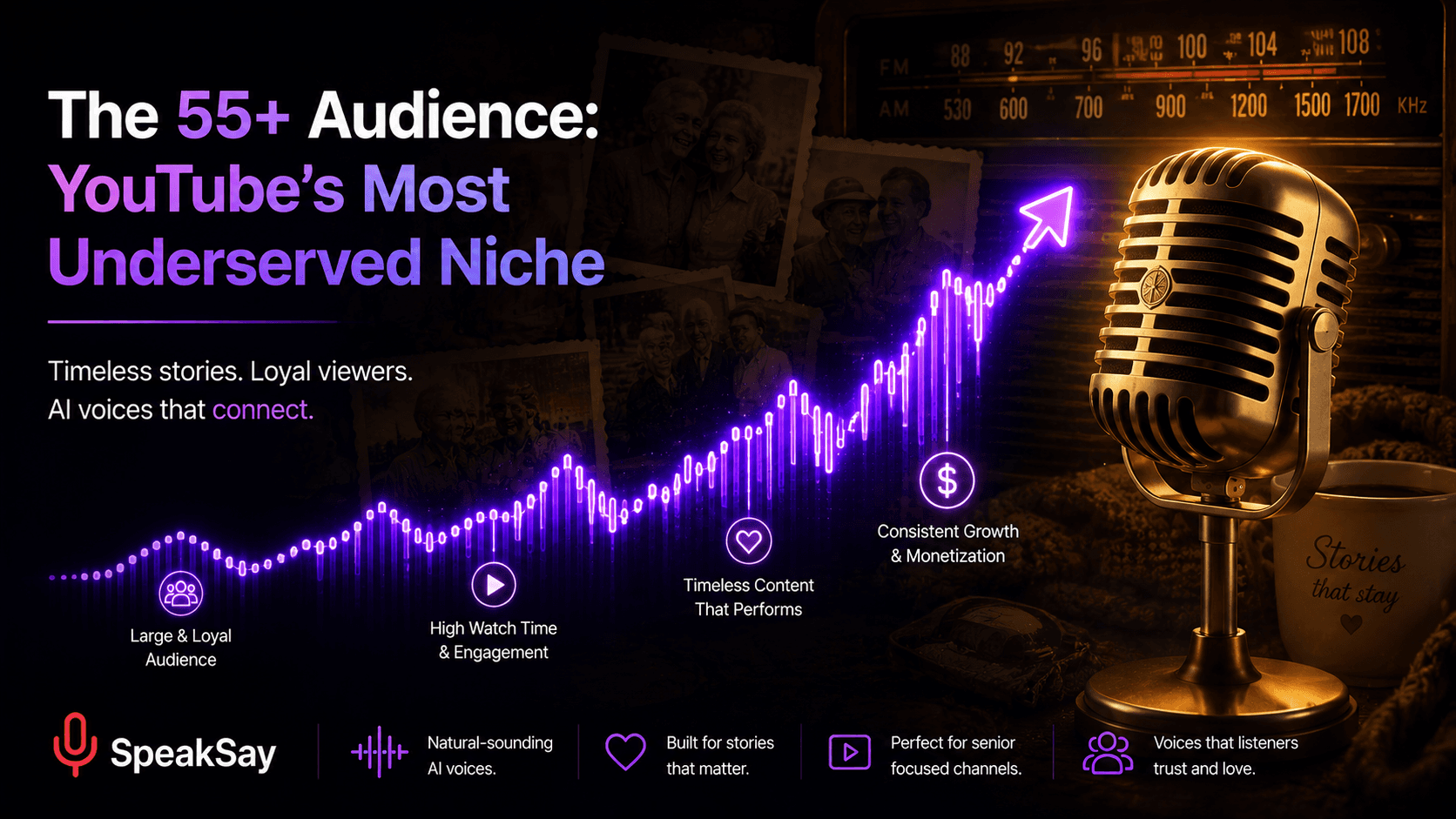
YouTube's Fastest-Growing Underserved Audience: Senior-Focused Channels ($6+ RPM, 19x Growth) and the AI Voices That Hold 55+ Viewers (2026)
Every faceless niche feels saturated — except the fastest-growing one nobody targets. Senior-focused content shows $6+ RPM and 19x growth potential in 2026. Here's the full playbook, including which AI voices actually hold 55+ viewers.
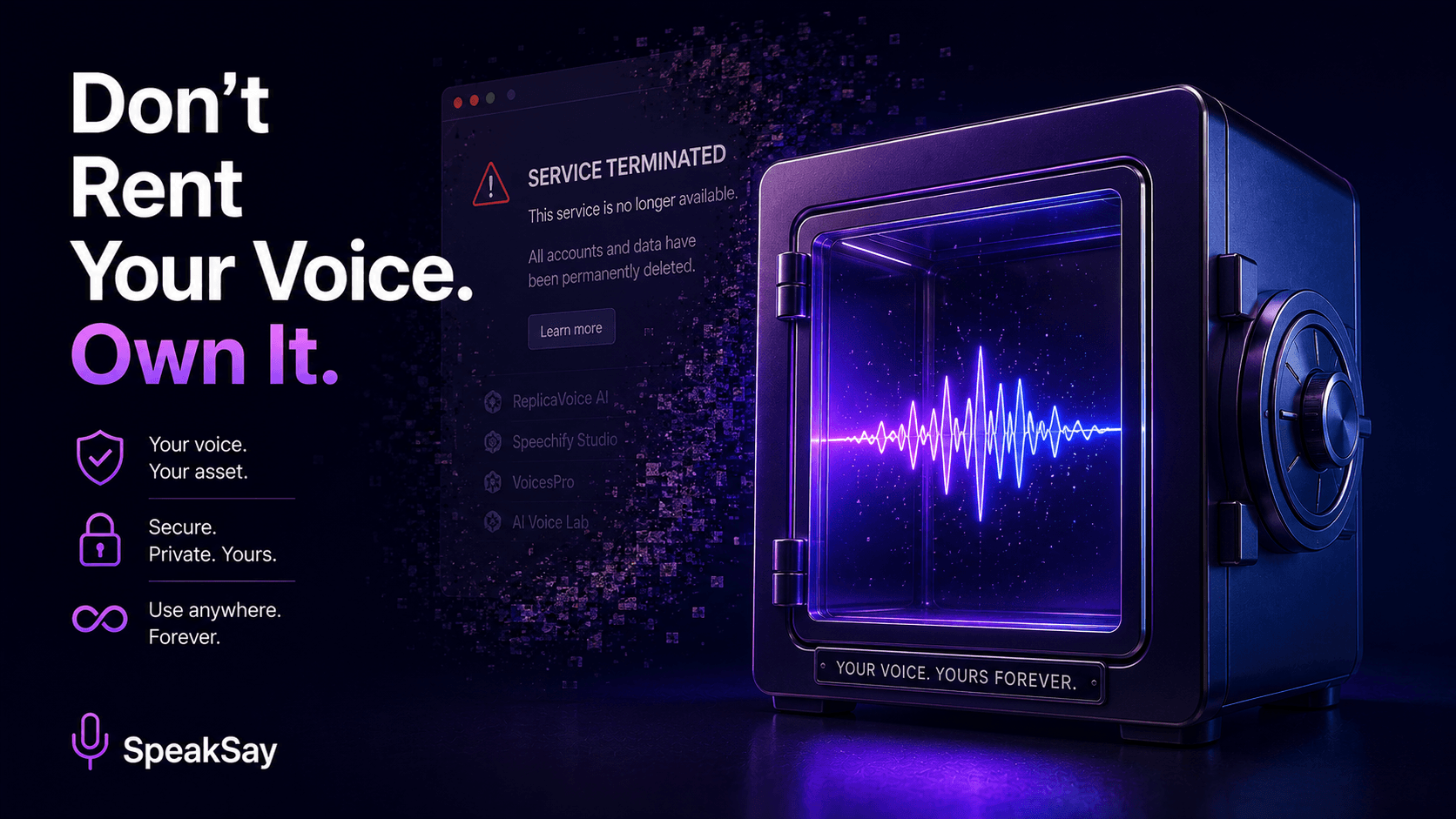
Your AI Voice App Could Vanish Overnight: How to Lawsuit-Proof and Shutdown-Proof Your Channel's Voice (2026)
PlayHT deleted every voice clone with no migration path. Nine class actions hit voice AI companies in May 2026. Here's how to make sure your channel's voice survives whatever happens to the platform behind it.
Your AI Podcast Sounds Confident but Wrong: How to Stop Hallucinations and Make Fact-Accurate Episodes From Your Own Sources (2026)
AI podcast hosts now sound so human that listeners believe whatever they say — including the errors. One-click generators mangle complex sources and give you no way to check the script before it becomes audio. Here's the script-first workflow that keeps your AI podcast factually accurate.
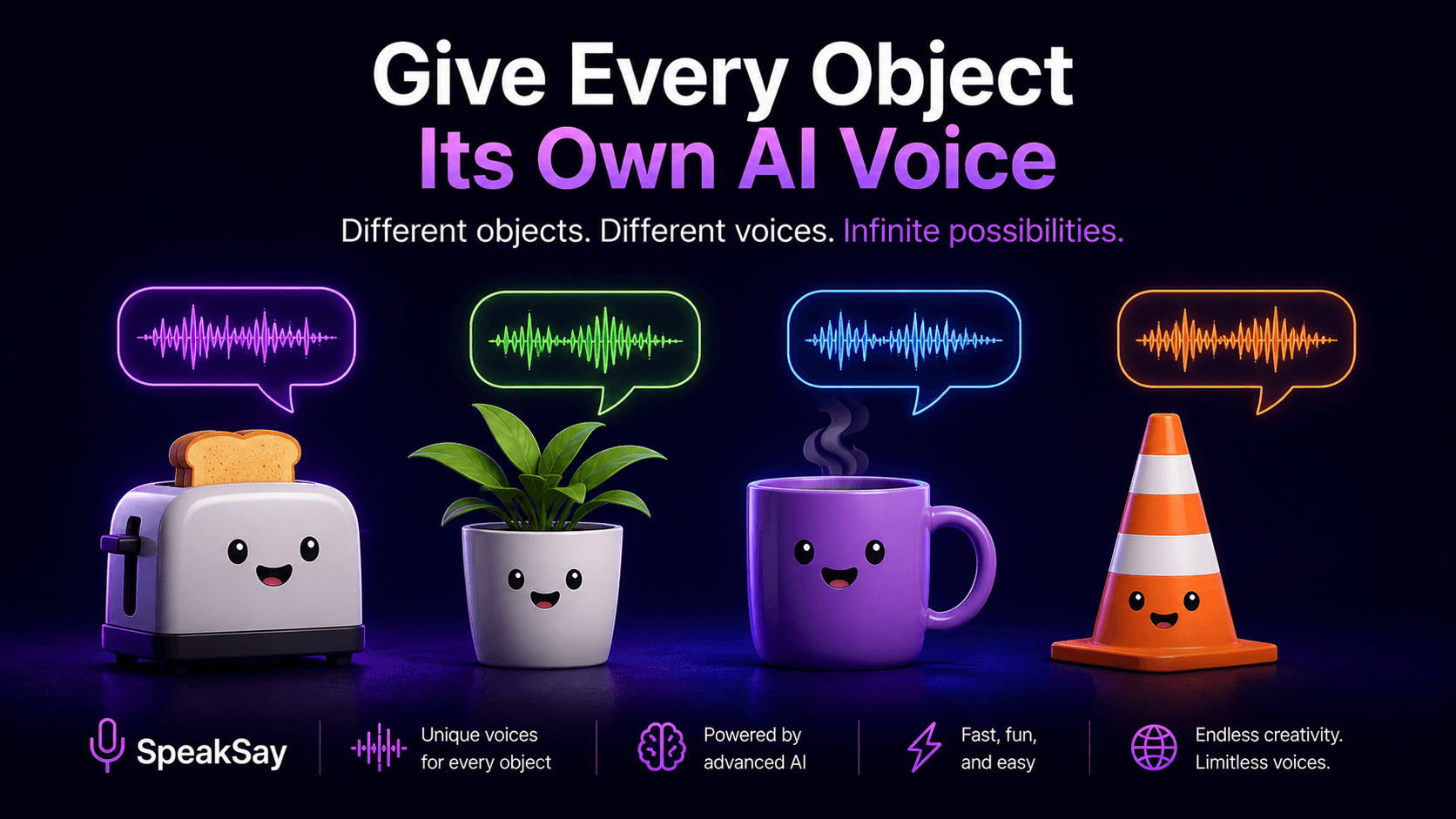
Talking Objects Are 2026's Fastest-Growing Faceless Format: How to Give Every Object Its Own AI Voice (Object POV Guide)
Object POV videos — where a toaster complains about Mondays or a traffic cone narrates its week — are one of the fastest-growing faceless formats on Shorts and TikTok in 2026. The channels that win give every object a distinct, consistent voice. Here's the full workflow.
True Crime Faceless YouTube Channels in 2026: Best AI Narrator Voices + the Originality Rules That Keep You Monetized
True crime is still one of YouTube's highest-retention, highest-CPM faceless niches — but the July 2026 "inauthentic content" rules punish template narration. Here's the AI narrator voice playbook that keeps you original and monetized.
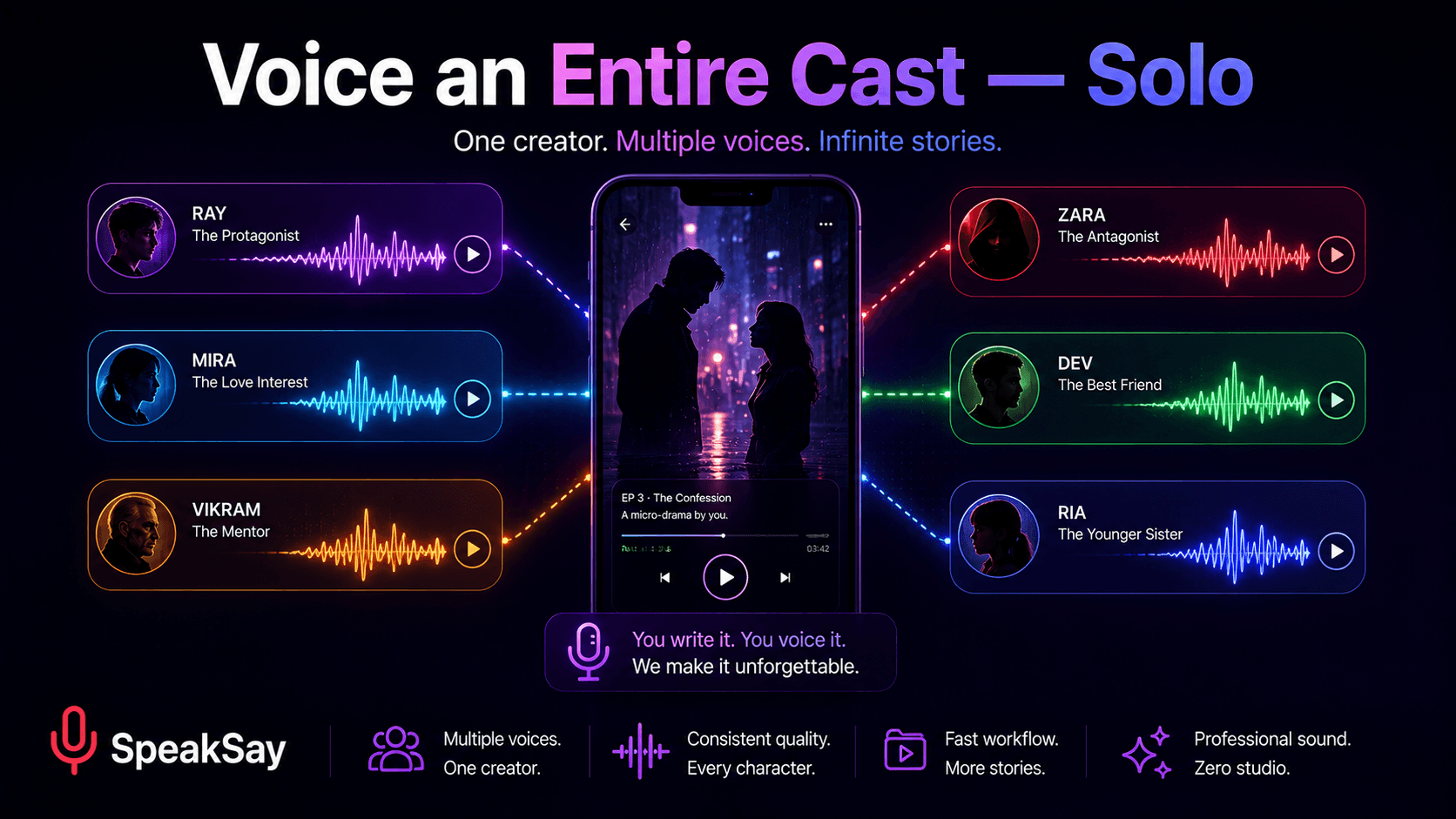
Vertical Micro-Dramas Are 2026's Breakout Shorts Format: How to Voice an Entire AI Cast for a Serialized Series
ReelShort-style vertical micro-dramas are the breakout serialized format of 2026 — but a series needs 4-8 distinct, consistent character voices. Here's how solo creators build and manage an entire AI voice cast.
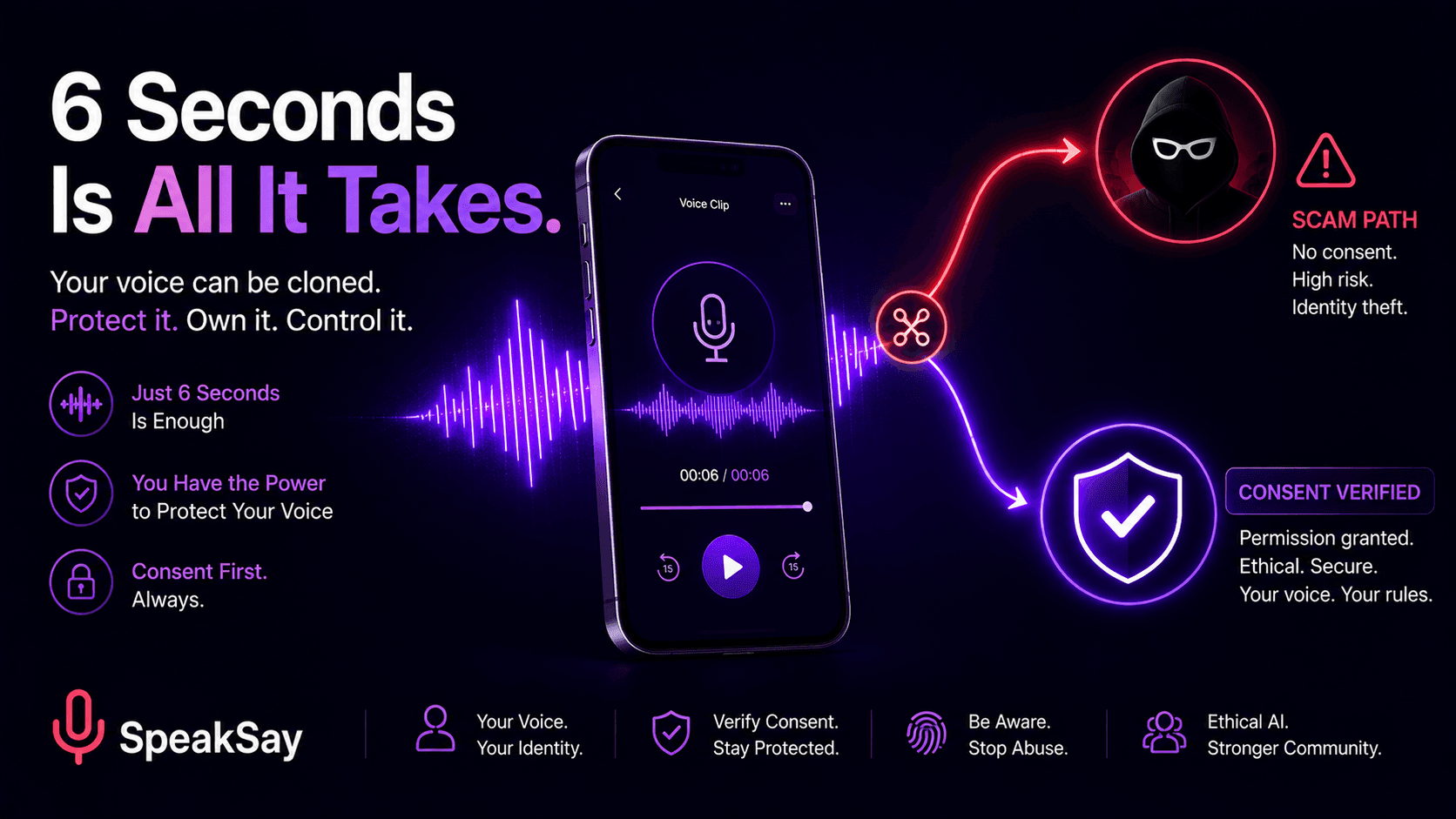
Can Someone Clone Your Voice From a 6-Second Clip? How Creators Protect Their Voice From AI Scams (2026)
One in four people has now encountered an AI voice-clone scam, and a 6-second clip from TikTok or a voicemail greeting is enough raw material. Here's how cloning actually works, why creators are the most exposed, and the protection checklist that works in 2026.
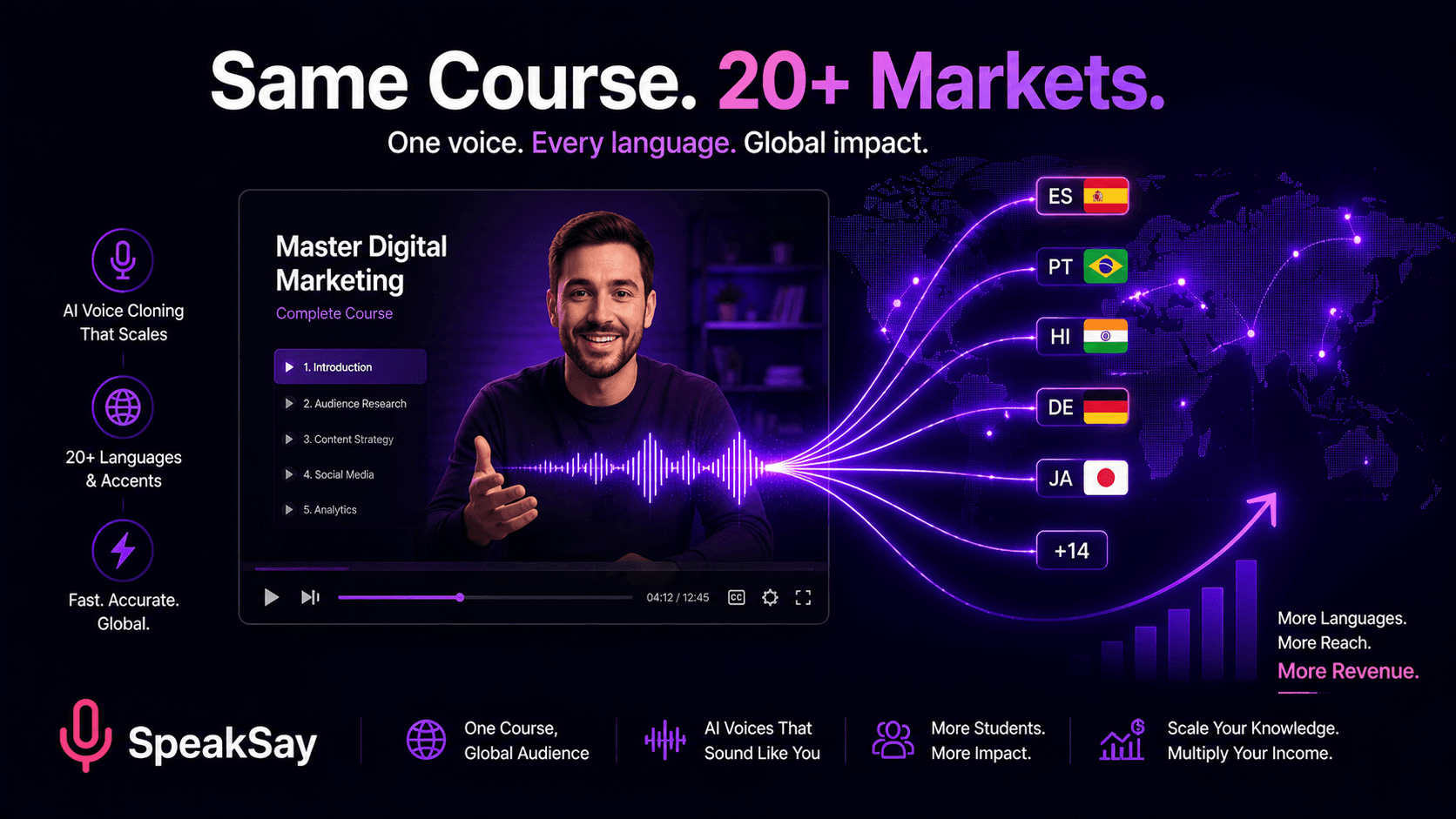
Your Course Only Sells in English: How Creators Localize Courses Into 20+ Languages With AI Dubbing (2026)
You spent months building a course — and it only sells in one language. AI dubbing now cuts localization costs by 70–90%, and voice cloning means every translated lesson is still taught in YOUR voice. Here's the 2026 workflow course creators use to open 20+ new markets without re-recording a single lesson.
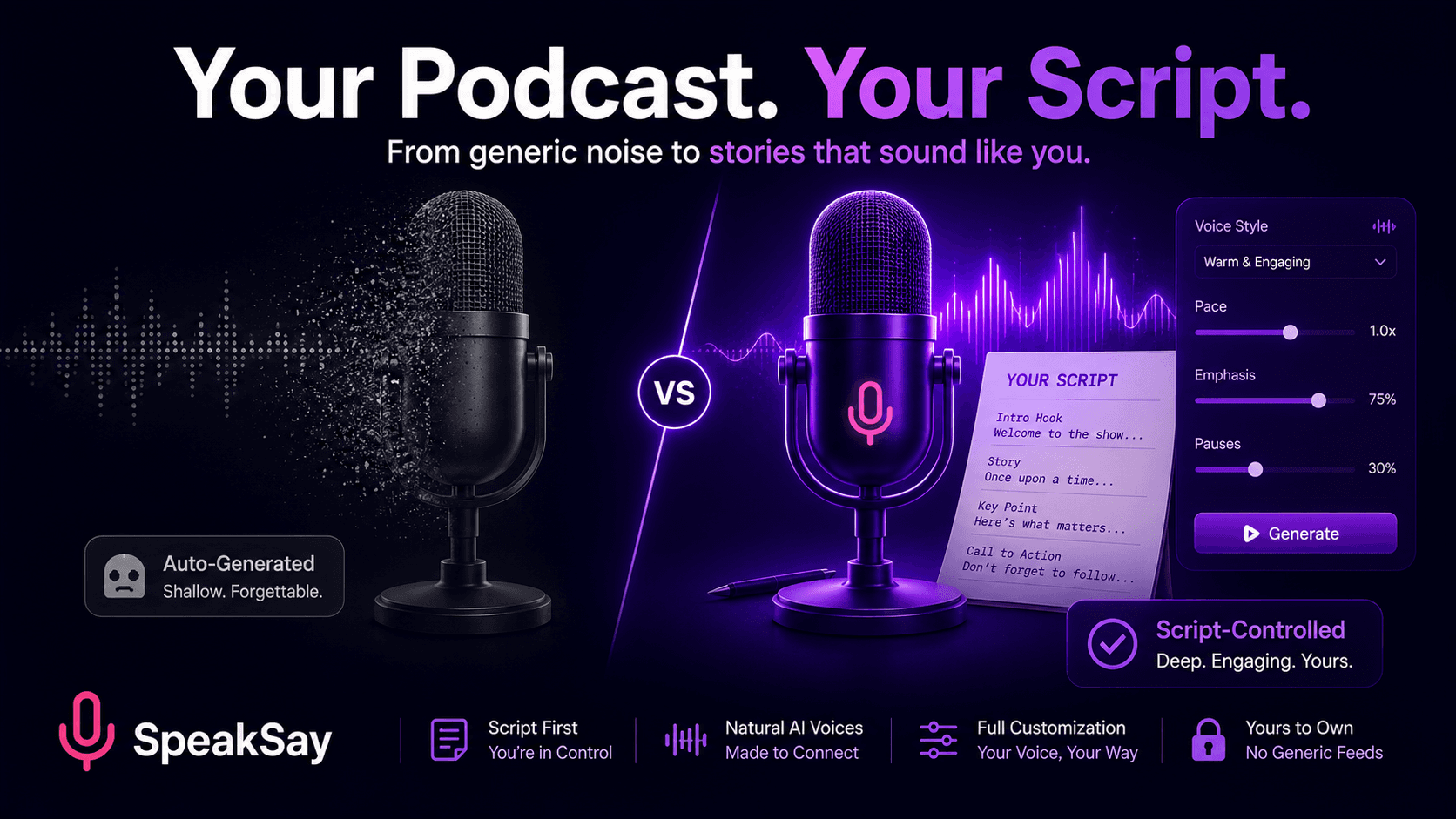
NotebookLM's Podcasts Are Getting Shallower — How to Control the Script, Depth & Voices of Your AI Podcast (2026)
NotebookLM's Audio Overviews wowed everyone in 2024 — but by 2026 users report increasingly shallow episodes, no transcript, no speed control, and zero say over depth or tone. Here's why the black-box approach hit its ceiling, and how to make an AI podcast where you control every line.
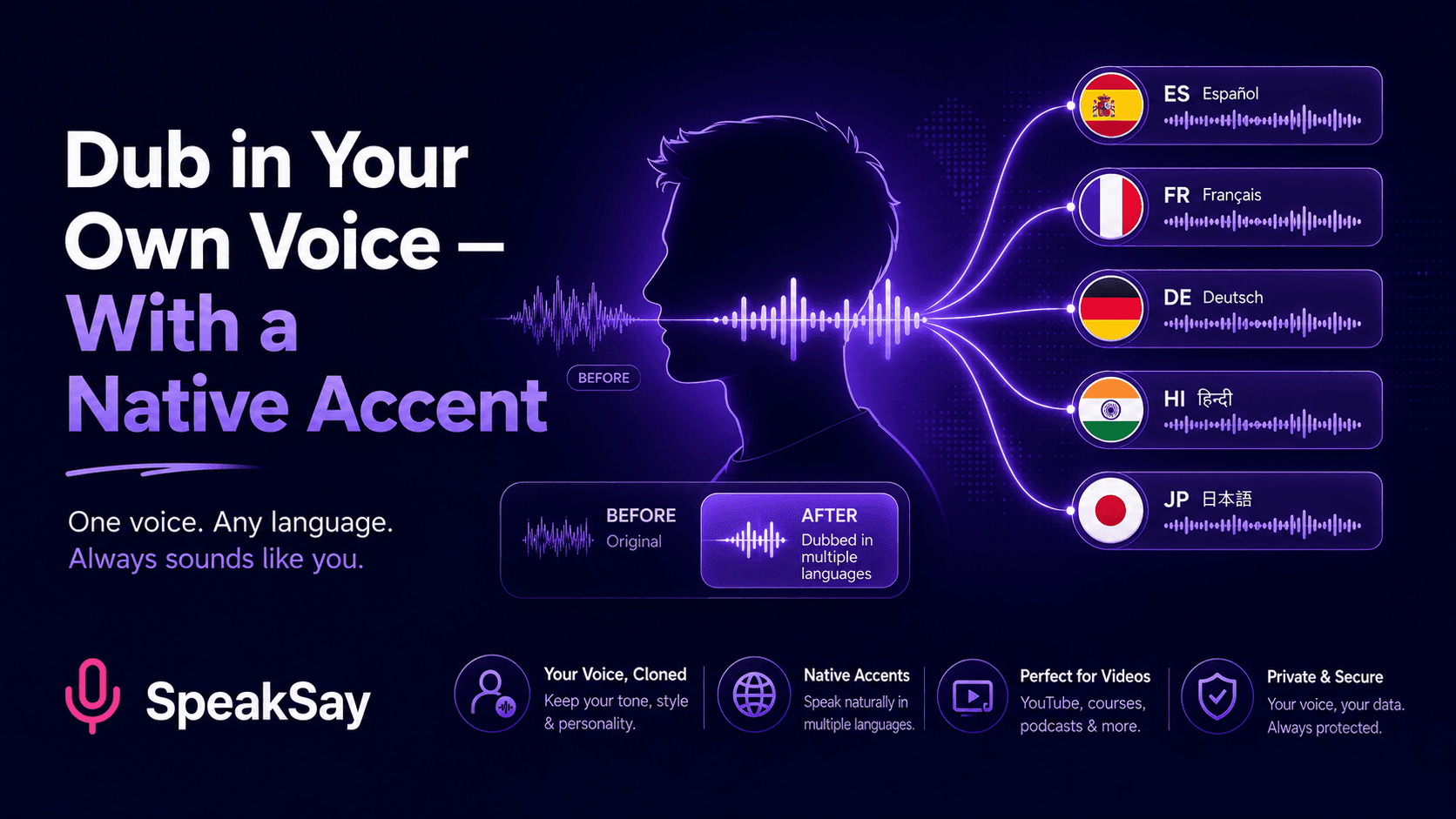
Why Your Dubbed Videos Sound Like a Foreigner Reading a Script — and How to Dub in Your Own Voice With a Native Accent (2026)
Most AI dubs sound like a foreigner reading a script — the tool copies your source accent instead of speaking natively. Here's why it happens and how to dub in your own voice with a genuinely native accent.
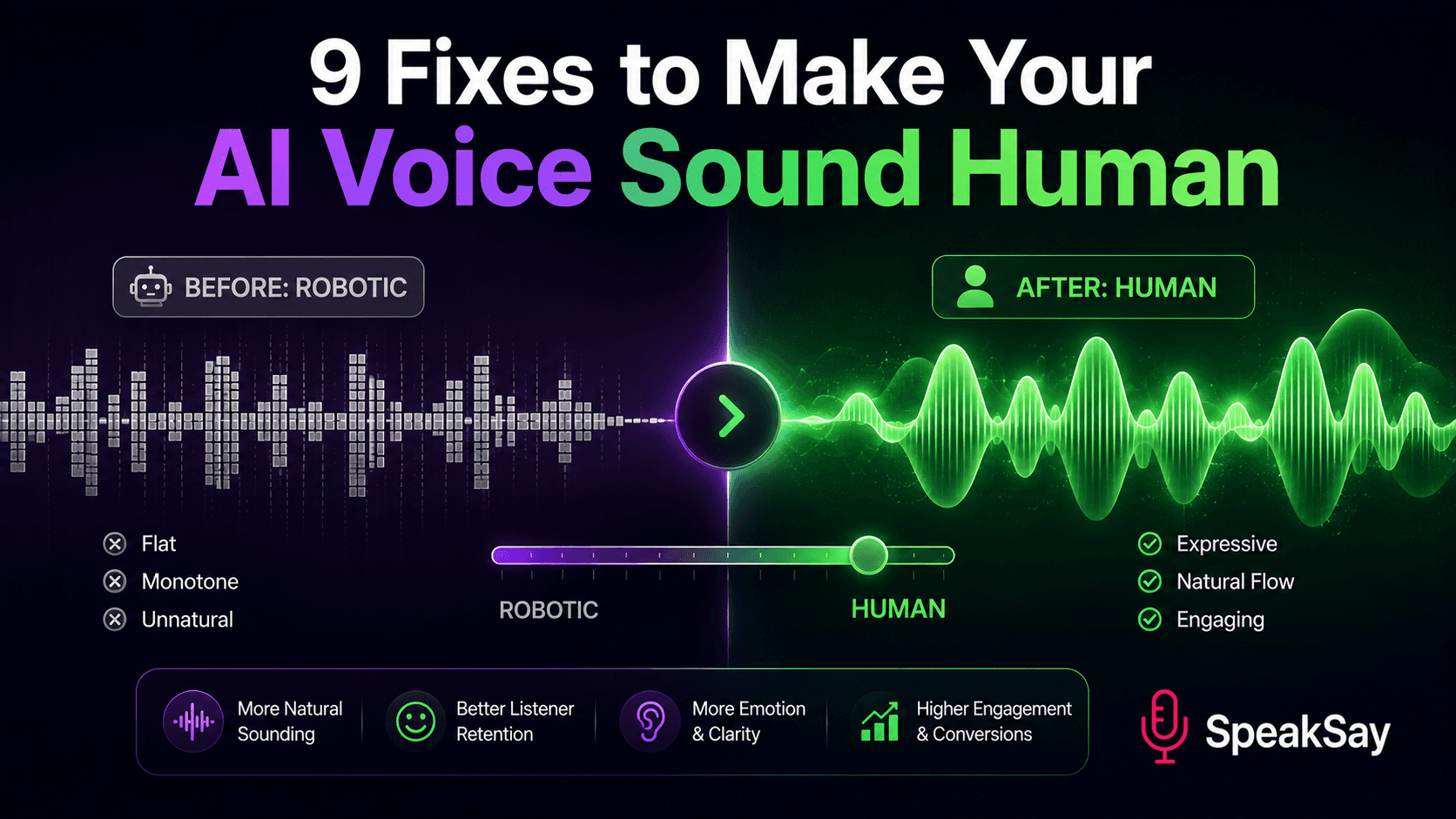
Why Your AI Voiceover Sounds Robotic — 9 Fixes That Make It Sound Human
Flat, monotone, comma-choppy delivery is the #1 reason viewers click away from AI-narrated videos. These 9 fixes — from SSML pauses to post-processing — turn robotic TTS into narration people actually want to listen to.
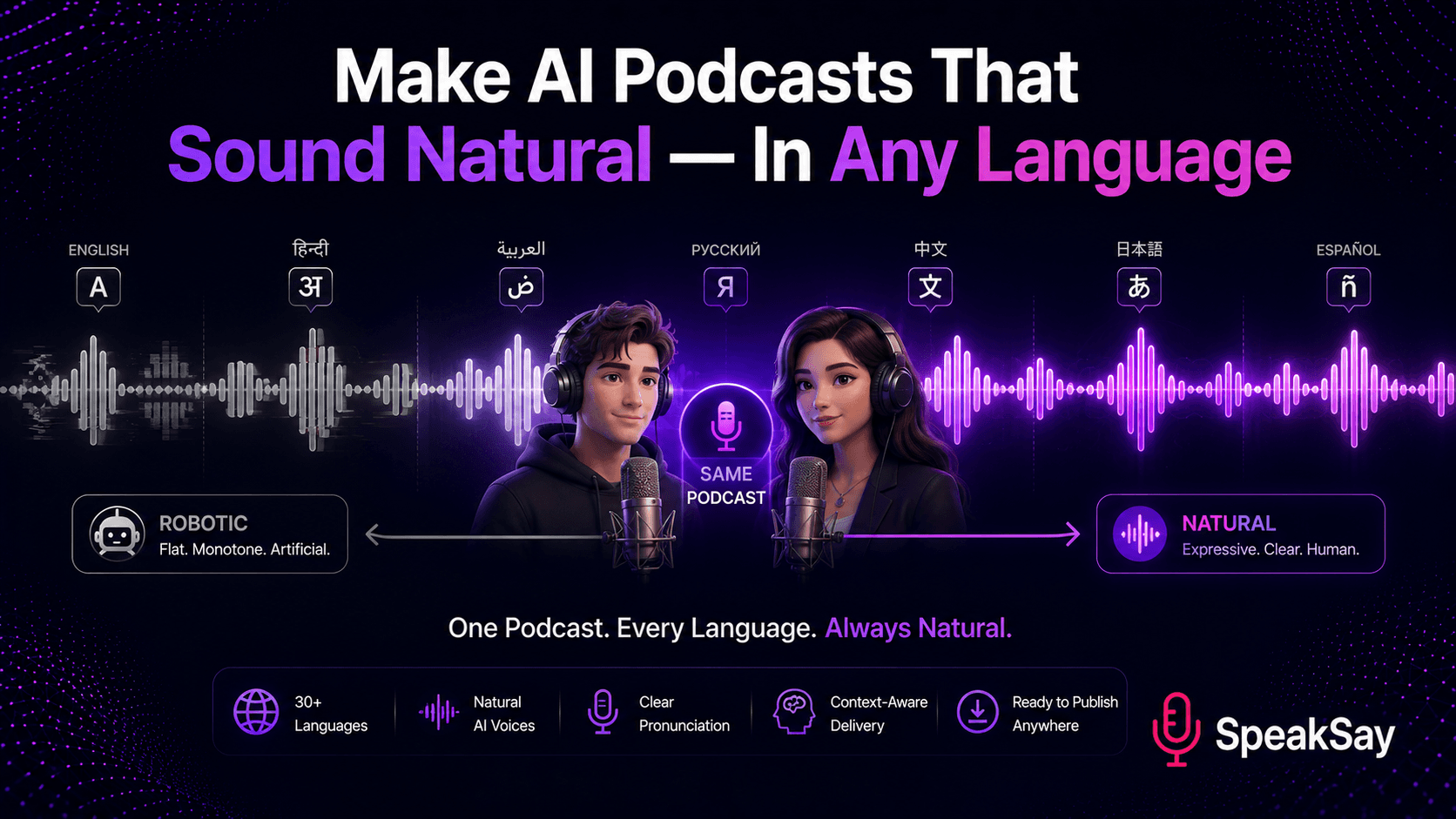
NotebookLM Sounds Robotic in Your Language? How to Make Natural Multilingual AI Podcasts (2026)
NotebookLM's Audio Overviews shine in English and stumble in everything else — and the length controls are English-only. Here's how to turn any source into a natural-sounding AI podcast in your language.
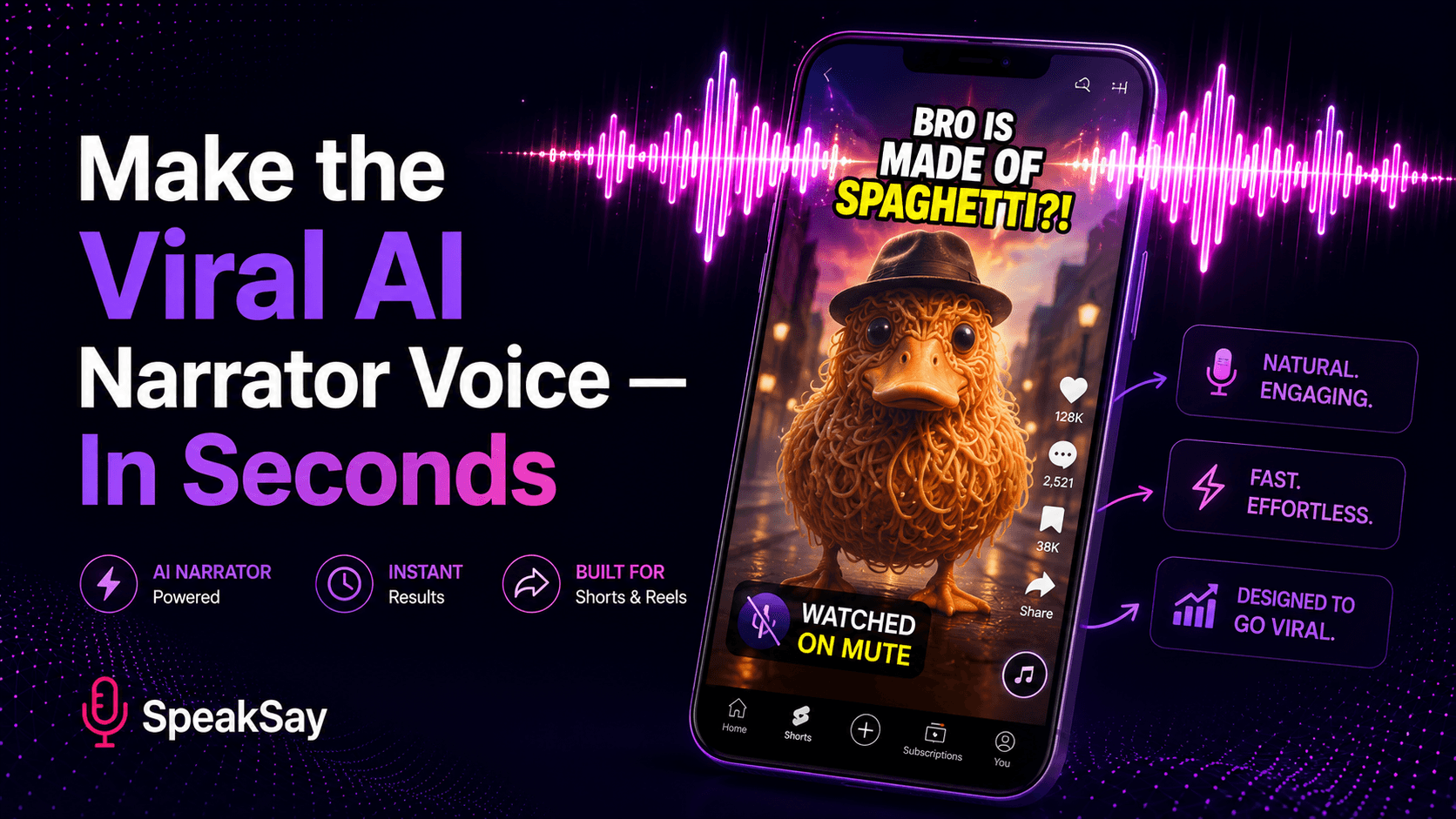
How to Make the Viral AI Narrator Voice Behind 2026's Weirdest Shorts (Step by Step)
The surreal AI-creature Shorts flooding your feed all share one thing: a distinctive narrator voice. Here's how to make that voice yourself and ship dozens of variations fast.
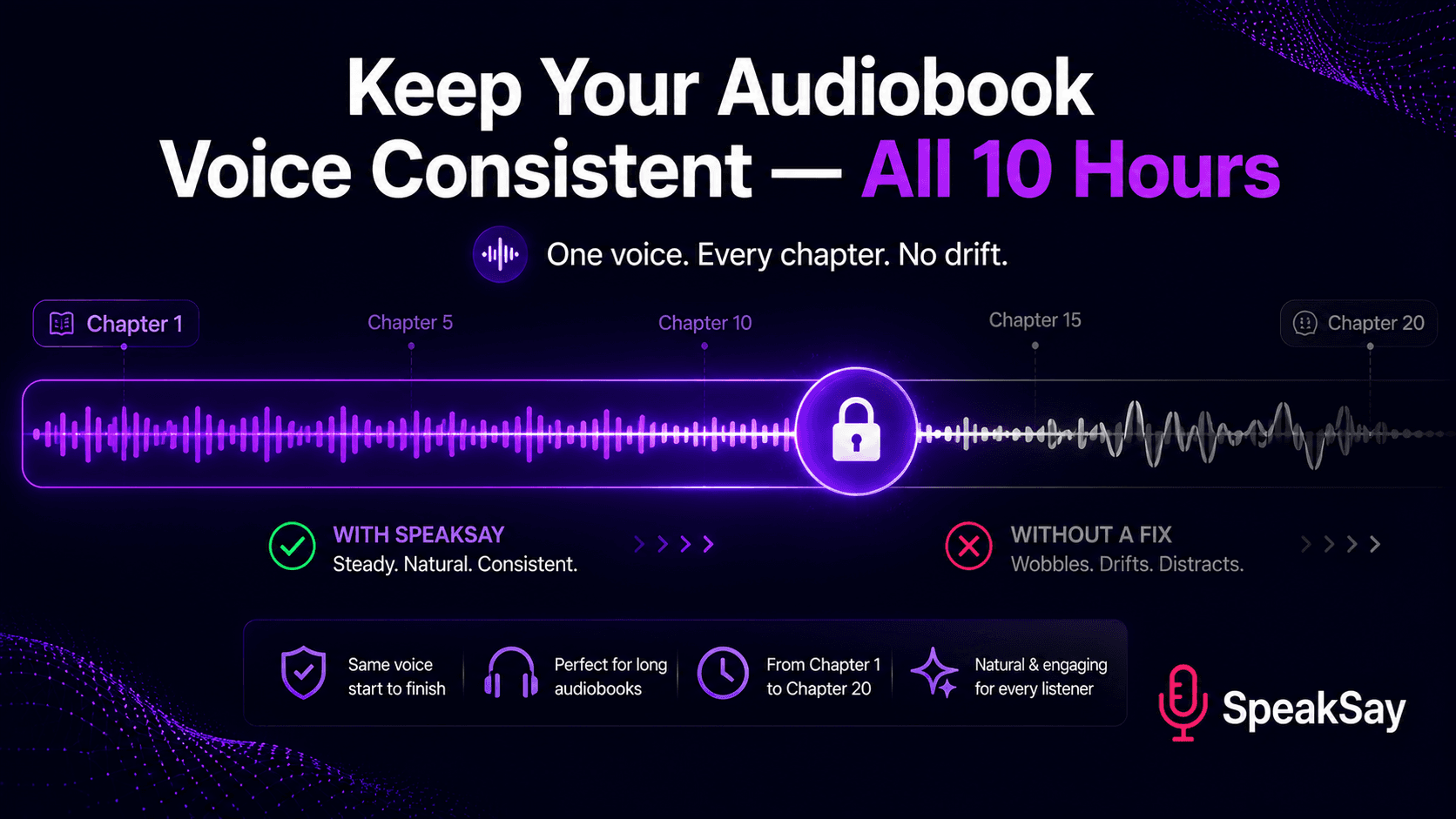
Why AI Audiobook Voices Drift Over 10+ Hours — and How to Keep Yours Consistent (2026)
A voice that sounds perfect for 500 words can drift in tone and speed across a full audiobook. Here's why AI narration drifts over long-form projects — and the workflow that keeps hour nine sounding like minute one.
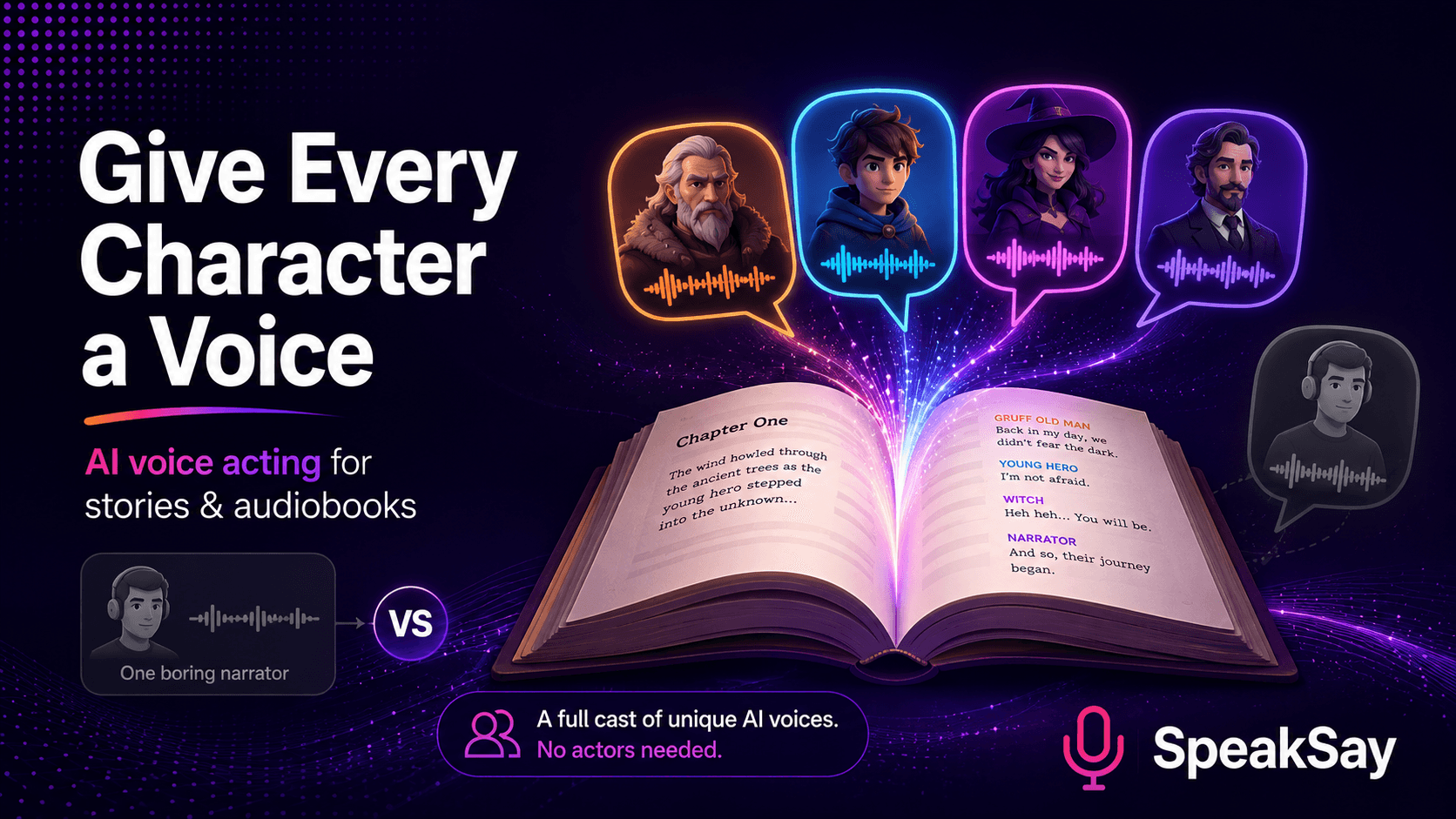
How to Create Multiple AI Character Voices for Story Videos & Audiobooks (No Voice Actors Needed, 2026)
A single monotone narrator kills immersion. Here's how to give every character in your story videos or audiobook its own distinct AI voice — a full cast, no actors, consistent across a whole series.
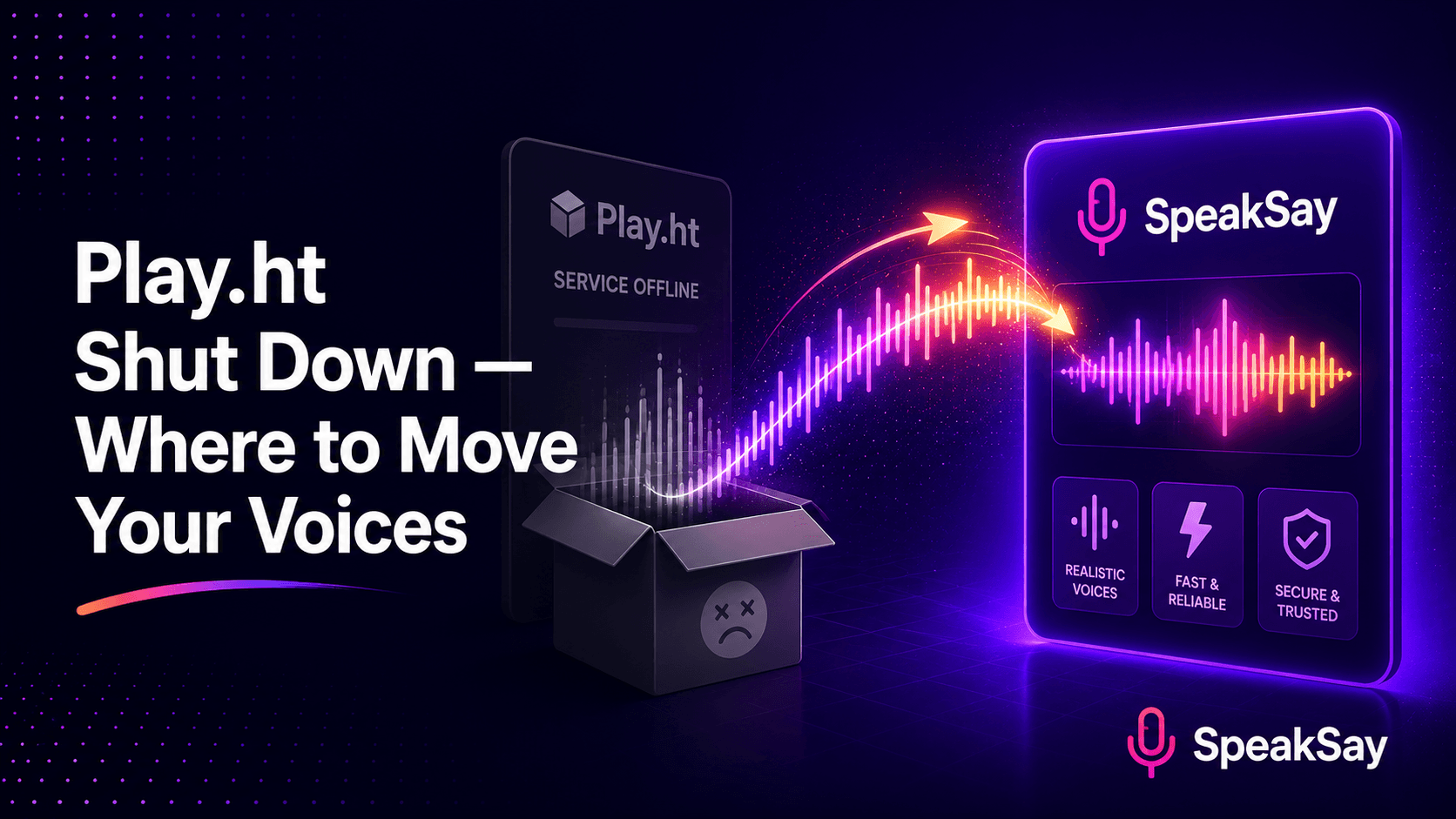
Play.ht Shut Down — 7 Best Alternatives & How to Migrate Your Voices (2026)
Meta acquired Play.ht and shut it down for good on December 31, 2025 — taking accounts, files, and API access with it. Here are the 7 best Play.ht alternatives in 2026 and a step-by-step plan to migrate your voices and projects without losing work.Play.ht Shut Down: 7 Best Alternatives & Migration Guide (2026)
How to Choose the Right Voice Based on Your Video Niche
Learn how to select the perfect voice style that resonates with your video content and audience.
Give your words a voice
Start free with 10,000 credits. No credit card required.