Read-Aloud Ready: How to Make a Middle-Grade Chapter Book Audiobook With AI Narration for Parents, Classrooms and Car Rides (2026)
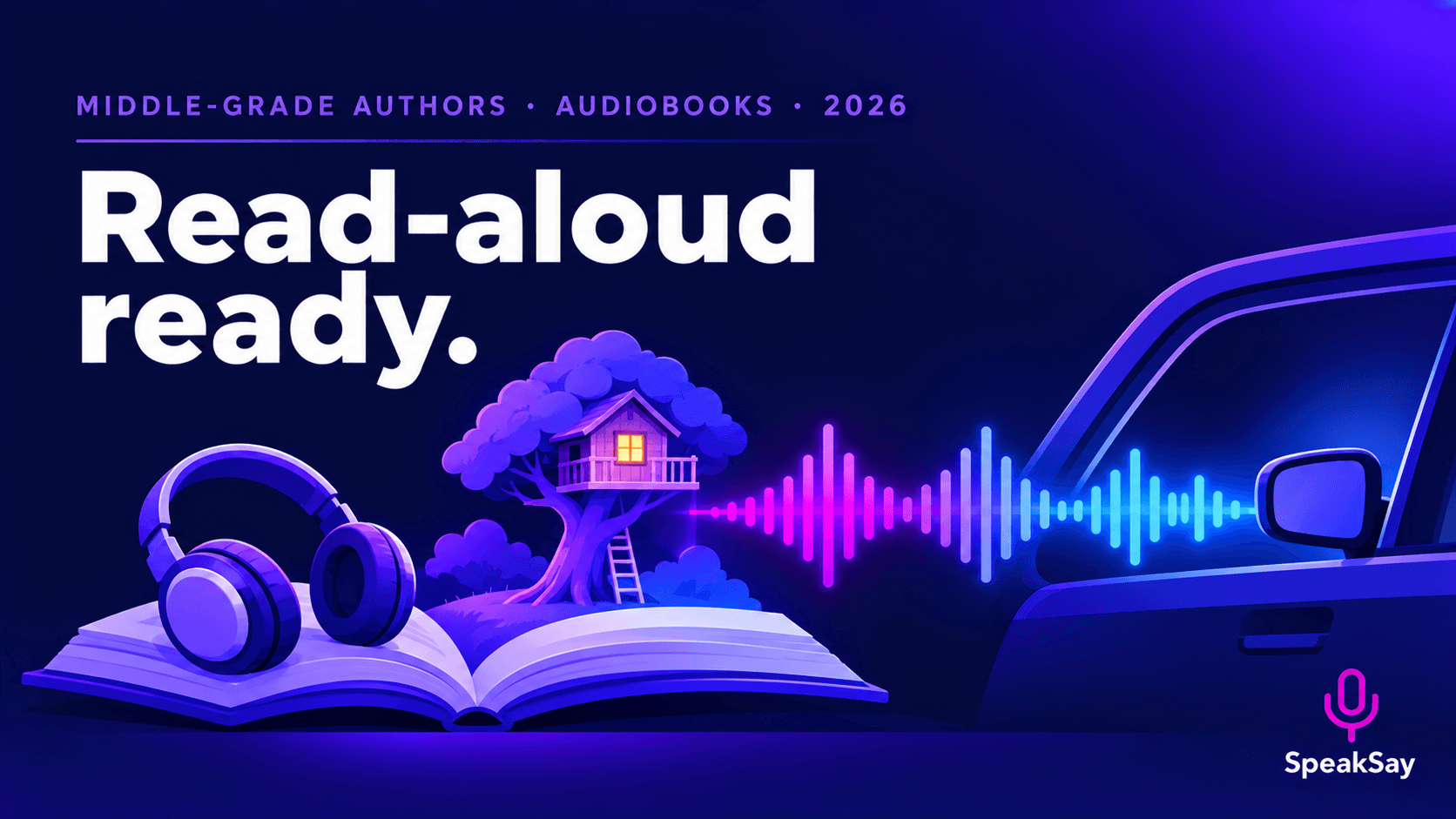
Parents and teachers look for chapter books that work as read-aloud audio. This guide shows indie middle-grade authors how to prepare a manuscript, pace the narration for 8 to 12 year old listeners and check an AI-narrated audiobook before it goes to retailers.
1) Who is actually listening
The buyer of a children's audiobook is often an adult, and the listener is a child. The adult wants something safe, clear and easy to start. The child wants a story that keeps moving.
- The parent in the car needs clear audio over road noise and chapters of a sensible length.
- The teacher or librarian needs reliable pronunciation and a voice they would be comfortable playing to a class.
- The child needs to follow who is speaking and what is happening.
Keep all three in mind when you listen to a draft.
2) Prepare the manuscript for the ear
A book that reads well on the page can sound awkward aloud. Before you generate anything, read a chapter aloud yourself and mark:
- Sentences that are hard to say without a breath.
- Pronoun chains where it is unclear who "he" or "she" is.
- Visual jokes: typographic tricks, drawings or footnotes that only work on the page.
- Made-up names and words that need a pronunciation note.
Make a short pronunciation list and keep it with the manuscript. Our pronunciation fixes guide shows how to respell tricky names so a voice reads them correctly.
3) Pace, pauses and chapter length
Children follow a story better at a calm pace. A narration that races through action scenes can lose a young listener.
| Element | What to aim for |
|---|---|
| Reading pace | Slightly slower than an adult nonfiction audiobook. Test at a few speeds with a young listener. |
| Chapter length | Often 8 to 15 minutes works for car rides and bedtime; check your own chapters. |
| Chapter breaks | Leave a clear pause and, if possible, a short audio cue so the change is obvious. |
| Cliffhangers | Pause after them. Do not rush into the next chapter. |
Use punctuation to shape pauses: commas for small breaths, full stops for beats, paragraph breaks for scene shifts. Our playback speed guide covers how narration speed interacts with listener speed controls.
Hear chapter one in a read-aloud voice
Browse warm, clear voices and test your first chapter before you commit.
4) Choose the voice
For this age group, warmth and clarity matter more than drama. When you audition voices:
- Use the same two pages for every voice: one narration-heavy and one dialogue-heavy.
- Listen on a phone speaker and in a car if you can.
- Ask a parent or teacher for their reaction, not just a fellow writer.
- Choose one narrator for the whole book. Switching voices mid-series is jarring.
Avoid voices that sound like a known actor or character. Choose a voice you can license for commercial audiobooks under SpeakSay's terms.
5) Dialogue, names and made-up words
Young listeners need to know who is speaking. In print a new paragraph does the work; in audio you need cues.
- Use dialogue tags more often than you would on the page: "said Mara," "Jonah whispered."
- Avoid long stretches of untagged back-and-forth.
- Keep character names distinct in sound as well as in spelling: Ben and Ken sound close; Ben and Priya do not.
- For fantasy names, test the pronunciation and fix with a respelling note.
Our dialogue clarity guide goes deeper into the tagging approach. This post focuses on what is specific to chapter books for children.
6) Proof-listen like a parent
Do a full listen before publishing. A good method:
- Listen to every chapter at normal speed with the manuscript open.
- Mark mispronounced names, odd stresses and awkward pauses.
- Check every chapter start and end, since children often start and stop at those points.
- Have one adult who does not know the book listen to the first chapter and tell you what confused them.
Our risk-first sampling method helps if the book is long and you need to prioritise.
7) Before you publish
- Check retailer rules on AI-narrated audiobooks and disclosure. Policies differ and change, so read the current terms for each platform you use.
- Write an honest description. Say the audiobook is narrated with AI voice.
- Prepare a short retail sample from the best first minutes. Our retail sample guide explains how.
- Keep the text edition available. Some families will want to read along.
Planning a whole series?
Series add up quickly. Compare per-minute costs with a one-time plan before you commit to book two.
8) FAQ
Is AI narration suitable for children's books?It can be, if you choose a warm voice, pace it for young listeners and proof-listen carefully. Some authors prefer a human narrator for picture books and younger readers; for chapter books, many indie authors start with AI and review the feedback.
Should I do different character voices?With one AI narrator you get a single voice. Good dialogue tags and clear writing do more for comprehension than trying to fake many voices.
How long is a typical middle-grade audiobook?It varies widely, but many run several hours. Check your own word count and listen to a sample chapter to estimate runtime.
Can schools use my audiobook?Possibly, depending on how you distribute it. Check each retailer's terms and licence arrangements for educational use.
Do I need to disclose AI narration?Follow the platform's current rules and be honest in the description. Disclosure builds trust with parents and teachers.